# Peptides 101: Everything a Beginner Needs to Know
*This article is intended for educational and research purposes only. Peptides discussed here are research compounds, not approved drugs. Nothing in this article constitutes medical advice. Always consult a licensed healthcare professional before making any health-related decisions.*
---
Peptides are among the most fascinating molecules in biochemistry — simultaneously ancient (your body has been producing them since before you were born) and cutting-edge (researchers are discovering new therapeutic applications almost monthly). Yet for most people, the word "peptide" still conjures vague associations with skincare serums or gym culture. The reality is far richer, more nuanced, and more scientifically grounded than the marketing hype suggests.
This guide is designed to give you a genuine, deep understanding of what peptides are, how they function at the molecular level, where they come from, how researchers work with them, and what the current science says about their potential. Whether you're a curious layperson who just heard the term for the first time, a fitness researcher exploring recovery compounds, or a biology student trying to connect classroom theory to real-world applications, this is your comprehensive starting point.
Let's start from the beginning — and go much deeper than most introductions dare.
---
What Exactly Is a Peptide? The Molecular Foundation
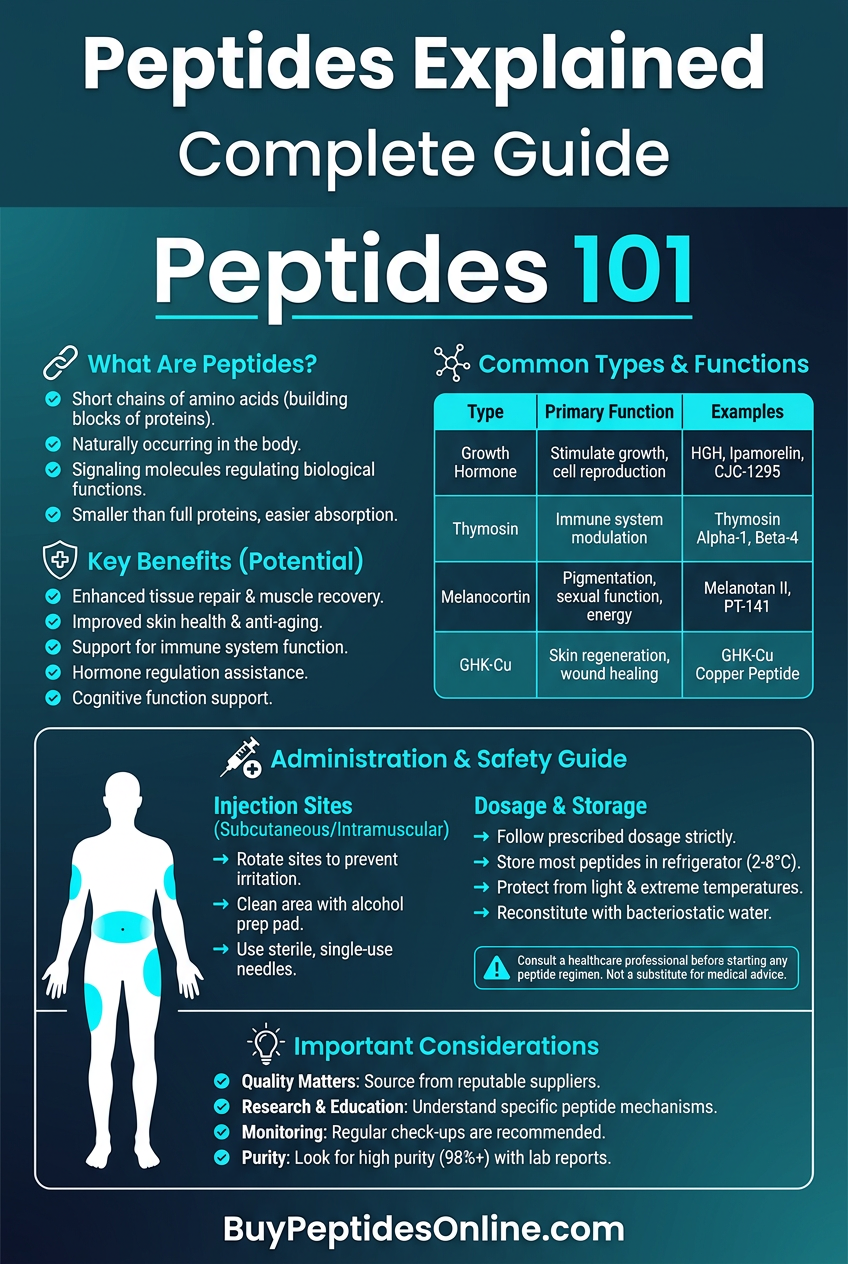
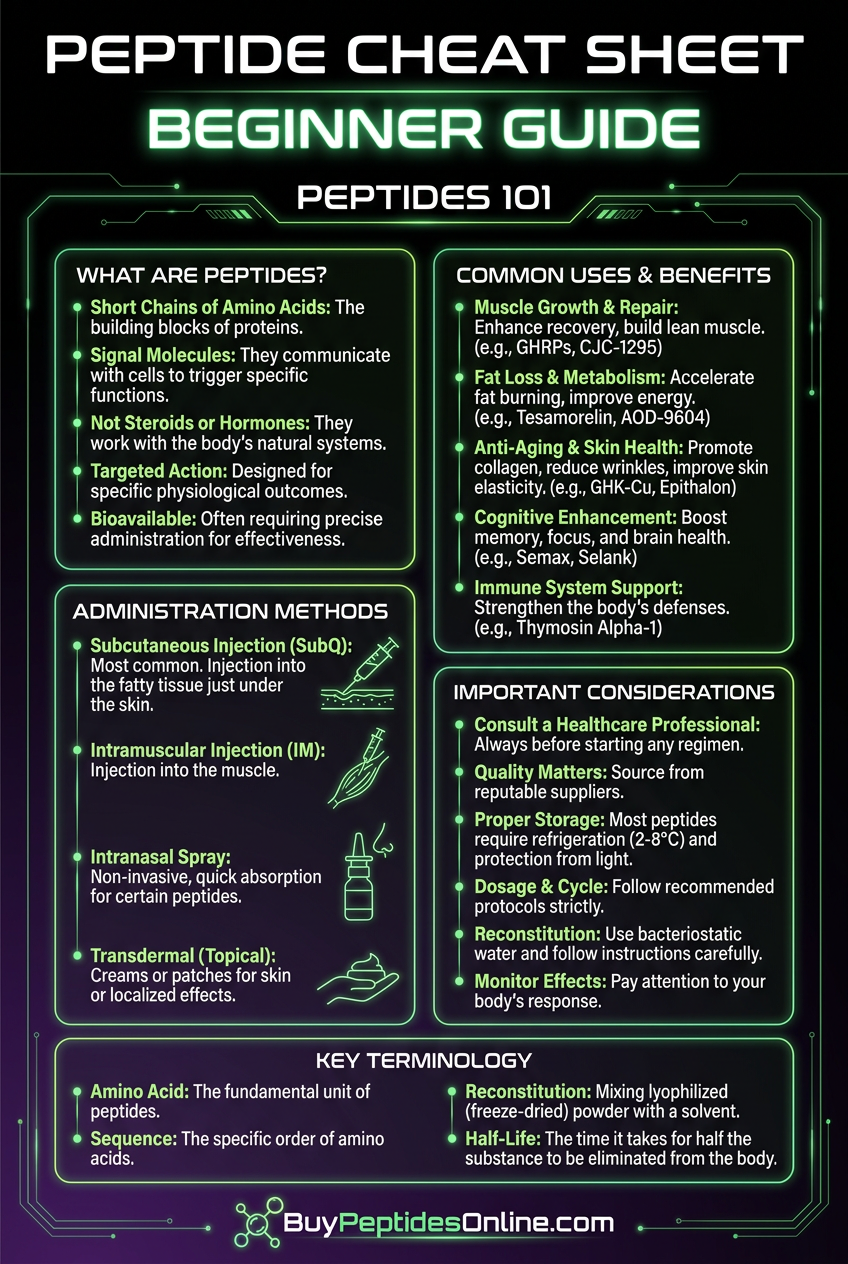
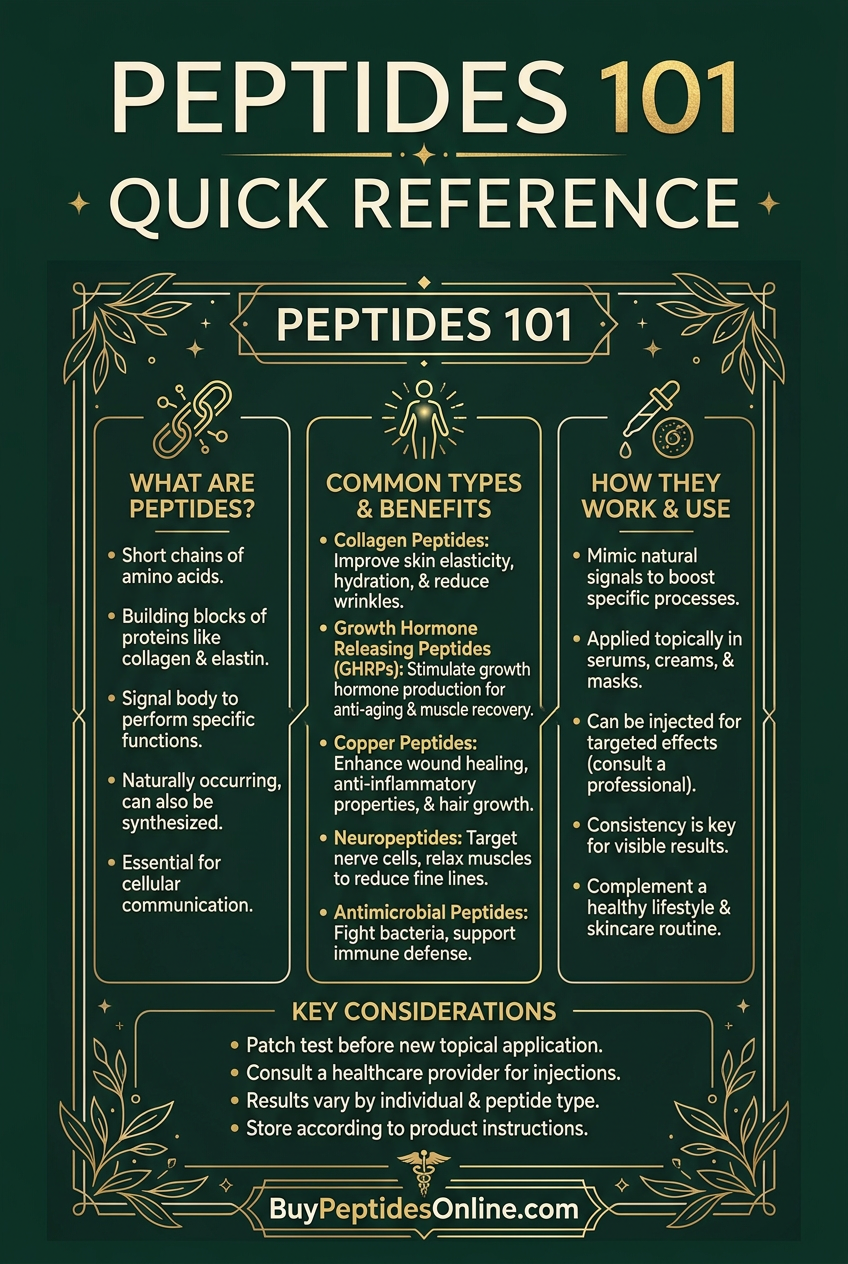
Peptides are short chains of amino acids — the same building blocks that make up proteins. While proteins can contain hundreds or thousands of amino acids folded into complex three-dimensional structures, peptides typically contain between 2 and 50 amino acids linked together by peptide bonds.
A peptide bond is a covalent chemical bond formed when the carboxyl group (–COOH) of one amino acid reacts with the amino group (–NH₂) of another, releasing a water molecule in a process called condensation. This gives peptides their characteristic backbone: a repeating pattern of nitrogen, alpha-carbon, and carbonyl carbon atoms, with variable side chains (the "R groups") extending outward. Those side chains determine each amino acid's chemical character — whether it's hydrophobic, hydrophilic, acidic, basic, or aromatic — and they ultimately determine how the peptide interacts with its biological targets.
The size distinction between peptides and proteins isn't perfectly rigid. Scientists use several overlapping terms:
Dipeptides: 2 amino acids
Tripeptides: 3 amino acids
Oligopeptides: 2–20 amino acids
Polypeptides: 20–50+ amino acids (the line blurs into protein territory here)
Proteins: generally considered to be polypeptide chains that fold into defined tertiary structures, typically 50+ amino acids
This smaller size gives peptides unique advantages over proteins. They're often more targeted in their biological activity, more easily absorbed across biological membranes, faster to synthesize in the laboratory, and can be designed with remarkable precision to interact with specific receptors in the body.
Your body naturally produces thousands of distinct peptides that serve as hormones, neurotransmitters, signaling molecules, antimicrobial agents, and structural components. Insulin is a peptide. So is oxytocin. So are the endorphins released during exercise. Research peptides are synthetic versions of these natural compounds — or deliberately modified versions engineered for improved stability, receptor selectivity, or duration of action.
---
A Brief History: From Discovery to Modern Research
The story of peptide science is one of the most productive chapters in the history of biochemistry. Understanding this history helps contextualize why researchers are so excited about synthetic peptides today.
Early Discoveries (1900s–1950s)
The concept of the peptide bond was formalized by Emil Fischer and Franz Hofmeister around 1902, and Fischer himself synthesized the first artificial dipeptide shortly after. This was a landmark moment — for the first time, chemists could construct, not just isolate, amino acid chains.
The first peptide hormone to be identified and characterized was secretin, discovered in 1902 by Bayliss and Starling. It was also, notably, the first substance ever called a "hormone." Insulin followed in 1921, when Banting and Best isolated it from pancreatic extracts — a discovery that transformed the treatment of diabetes and won the Nobel Prize.
Frederick Sanger sequenced the complete amino acid structure of insulin in 1955, another Nobel Prize-winning achievement that proved proteins and peptides have defined, deterministic sequences. This laid the groundwork for the idea that you could *design* a peptide with a specific sequence to achieve a specific biological effect.
The Solid-Phase Revolution (1960s–1980s)
The real explosion in peptide research came with Robert Bruce Merrifield's development of solid-phase peptide synthesis (SPPS) in 1963, for which he received the Nobel Prize in Chemistry in 1984. SPPS allowed researchers to attach an amino acid to a solid resin bead and build a peptide chain one residue at a time, washing away reagents between each step. What had previously taken months or years to synthesize could now be accomplished in days.
This technological leap opened the floodgates. Researchers could now synthesize virtually any peptide sequence they imagined, test it, modify it, and test it again. The 1970s and 1980s saw the identification of endorphins, enkephalins, substance P, and dozens of other neuropeptides. Growth hormone-releasing hormone (GHRH) was characterized. The ghrelin receptor system began to be mapped.
The Modern Era (1990s–Present)
The 1990s brought combinatorial chemistry and high-throughput screening, allowing researchers to test thousands of peptide variants simultaneously. Computational modeling began allowing scientists to predict how a peptide would fold and bind to a receptor before synthesizing it.
The 2000s and 2010s saw the rise of therapeutic peptides as a drug class. GLP-1 receptor agonists like semaglutide and liraglutide emerged from research into the gut hormone GLP-1. Tesamorelin was approved for HIV-associated lipodystrophy. Sermorelin entered clinical use as a growth hormone secretagogue. The peptide drug market is now one of the fastest-growing segments of the pharmaceutical industry.
Today, research peptides occupy a fascinating middle ground: compounds with substantial preclinical and sometimes clinical research behind them, available to researchers for investigational use, but not yet approved as pharmaceutical drugs in most jurisdictions. This is where the majority of the compounds discussed in this guide live.
---
How Do Peptides Work? Mechanism of Action in Depth
The fundamental mechanism is elegant: peptides function by binding to specific receptors on cell surfaces (or occasionally intracellularly), triggering cascades of biological responses. Think of them as very precise keys that only fit certain locks — and when they turn those locks, they set off elaborate downstream signaling events.
Receptor Binding and Signal Transduction
Most research peptides interact with G protein-coupled receptors (GPCRs), which are seven-transmembrane domain proteins embedded in the cell membrane. When a peptide binds to a GPCR, it causes a conformational change in the receptor that activates an intracellular G protein. That G protein then modulates second messenger systems — cyclic AMP (cAMP), phospholipase C, calcium ions — which ultimately alter gene expression, enzyme activity, or cellular behavior.
Other peptides interact with:
Receptor tyrosine kinases (RTKs): Common for growth factors like IGF-1
Ion channels: Some neuropeptides directly modulate channel opening
Nuclear receptors: Less common for peptides due to membrane permeability challenges
Cytokine receptors: Relevant for immune-modulating peptides
Specificity: Why Peptides Are So Targeted
The specificity of peptide-receptor interactions comes down to complementary molecular geometry and charge distribution. The three-dimensional shape of a peptide — even a short one — creates a unique surface topology that either fits a receptor's binding pocket or doesn't. Minor changes in amino acid sequence can dramatically alter binding affinity, selectivity, and downstream signaling bias.
This specificity is both a strength and a complexity. It means peptides can be designed to activate only certain receptor subtypes, potentially minimizing off-target effects. But it also means that structural modifications — which researchers use to improve stability or bioavailability — can shift receptor pharmacology in ways that require careful characterization.
Key Examples Across Categories
Growth hormone secretagogues: like GHRP-6 and Ipamorelin bind to ghrelin receptors (specifically the GHS-R1a receptor), signaling the pituitary gland to release growth hormone. The distinction between them is important: GHRP-6 is a relatively "dirty" secretagogue that also stimulates cortisol and prolactin release and strongly activates appetite via ghrelin pathways. Ipamorelin, by contrast, is highly selective — it stimulates GH release with minimal effect on cortisol, prolactin, or appetite, making it one of the most studied secretagogues in the research context.
BPC-157: (Body Protection Compound-157) interacts with growth factor receptors, the nitric oxide system, and appears to modulate dopaminergic and serotonergic pathways. Its tissue-repair effects are thought to involve upregulation of growth hormone receptors locally, promotion of angiogenesis (new blood vessel formation), and direct cytoprotective effects on gut epithelium.
GLP-1 agonists: like semaglutide bind to GLP-1 receptors in the pancreas (stimulating insulin secretion and suppressing glucagon), the brain (reducing appetite and food reward), the gut (slowing gastric emptying), and the heart (cardioprotective effects). The multi-organ nature of GLP-1 receptor expression explains why these compounds have such broad metabolic effects.
Melanocortin peptides: like PT-141 (bremelanotide) activate melanocortin receptors — specifically MC3R and MC4R — in the central nervous system, particularly in hypothalamic regions involved in sexual arousal and motivation. Unlike PDE5 inhibitors that work peripherally on blood flow, PT-141 works centrally on desire itself.
Epithalon: (Epitalon), a tetrapeptide derived from the pineal gland bioregulator epithalamin, is studied for its effects on telomerase activation and circadian rhythm regulation, with research suggesting interactions with chromatin and gene expression patterns associated with aging.
---
Pharmacokinetics: How Peptides Move Through the Body
Understanding how a peptide is absorbed, distributed, metabolized, and eliminated (ADME) is critical for interpreting research protocols and understanding why different administration routes are used.
Absorption
This is the primary challenge for peptides. The gastrointestinal tract is a hostile environment for most peptide sequences:
Proteolytic enzymes: (pepsin, trypsin, chymotrypsin, peptidases) in the stomach and small intestine rapidly cleave peptide bonds
The intestinal epithelium: presents a physical barrier — most peptides are too large and too hydrophilic to passively diffuse across cell membranes
First-pass metabolism: in the liver further degrades absorbed peptides before they reach systemic circulation
This is why most research peptides are administered via subcutaneous (SubQ) or intramuscular (IM) injection, bypassing the GI tract entirely. Subcutaneous injection delivers the peptide into the fatty tissue just below the skin, from which it diffuses into capillaries and reaches systemic circulation. Bioavailability via this route is typically 70–100% for most peptides.
Notable exceptions exist:
BPC-157: appears to retain significant activity when administered orally in animal models, possibly due to its unusual stability or local gut effects
Semaglutide: has been formulated as an oral tablet (Rybelsus) using a specialized absorption enhancer (sodium N-(8-[2-hydroxybenzoyl]amino)caprylate, or SNAC) that transiently increases local pH and facilitates absorption through the gastric mucosa
Nasal administration: works for smaller peptides like Semax and Selank, which can cross the nasal mucosa and potentially access the brain via olfactory pathways
Distribution
Once in systemic circulation, peptides distribute according to their molecular size, charge, and lipophilicity. Most peptides have a relatively small volume of distribution — they don't penetrate deeply into tissues or cross the blood-brain barrier easily. This is why peptides designed to act centrally (like Semax, Selank, and Dihexa) often require intranasal administration or have been specifically engineered for CNS penetration.
Metabolism
Peptides are metabolized primarily by peptidases — enzymes present in blood, tissues, and the kidneys. The half-life of unmodified peptides is often very short: minutes to a few hours. This is why researchers have developed various strategies to extend peptide half-life:
PEGylation: Attaching polyethylene glycol chains to the peptide increases molecular size and reduces renal clearance
Fatty acid conjugation: Used in semaglutide (C18 fatty diacid chain) and liraglutide to promote albumin binding, dramatically extending half-life
D-amino acid substitution: Using D-form amino acids (mirror images of natural L-amino acids) that proteases don't recognize
Cyclization: Forming a ring structure that resists enzymatic attack
DAC (Drug Affinity Complex): Used in CJC-1295 with DAC, which reacts with albumin in the bloodstream to create a long-lasting depot
Elimination
Most peptides and their metabolic fragments are eliminated renally — filtered by the kidneys and excreted in urine. This means renal function can significantly affect peptide pharmacokinetics, an important consideration in research contexts.
---
Common Peptide Categories: A Deep Dive
Healing & Repair Peptides
This is arguably the most active area of research peptide investigation, driven by the compelling preclinical data and the clear unmet need for better tissue repair agents.
**BPC-157** deserves extended discussion. Originally isolated from a fraction of human gastric juice, this 15-amino acid peptide has been studied extensively in rodent models of tissue injury — tendon tears, ligament damage, muscle injury, gut ulceration, brain injury, and more. The breadth of its apparent effects is unusual and has led some researchers to hypothesize a fundamental role in the body's healing cascade. Mechanistically, BPC-157 appears to upregulate growth hormone receptor expression, promote angiogenesis through VEGF pathways, modulate nitric oxide synthesis, and interact with the dopaminergic system. It can be administered subcutaneously, intramuscularly, or orally depending on the research target — systemic effects are studied with injectable administration, while local gut effects may be achievable orally. For researchers interested in exploring this compound, lab-certified BPC-157 from verified research suppliers with documented CoA testing is essential.
**TB-500** is the synthetic analog of Thymosin Beta-4, a naturally occurring 43-amino acid peptide found in virtually every cell of the body. Its primary mechanism involves binding to G-actin (monomeric actin) and regulating actin polymerization — a fundamental process in cell migration, wound healing, and tissue remodeling. TB-500 has been studied for its anti-inflammatory properties, promotion of angiogenesis, and acceleration of wound closure. Unlike BPC-157, which appears to work through growth factor receptor pathways, TB-500 works at the cytoskeletal level, making the two compounds mechanistically complementary. This is the scientific basis for the popular BPC-157/TB-500 research stack.
**GHK-Cu** (copper peptide GHK-Cu) is a tripeptide — glycine-histidine-lysine — complexed with copper(II). It was first identified in human plasma in the 1970s by Loren Pickart, who noticed it had remarkable effects on liver cell function. Subsequent research revealed it to be one of the most potent known activators of wound healing, skin regeneration, and anti-inflammatory pathways. GHK-Cu appears to work by activating a broad program of tissue remodeling genes, upregulating antioxidant enzymes, and promoting collagen and glycosaminoglycan synthesis. Its safety profile is among the best-documented of any research peptide, making it an excellent starting point for researchers new to the field. Third-party tested GHK-Cu from trusted suppliers is widely available and represents a practical entry point.
Growth Hormone Axis Peptides
The growth hormone (GH) axis is one of the most targeted systems in peptide research, for good reason: GH plays central roles in body composition, metabolism, tissue repair, immune function, and aging. Rather than administering GH directly (which carries significant regulatory and safety considerations), researchers have developed peptides that stimulate the body's own GH production.
**GHRP-6 and GHRP-2** are first-generation growth hormone-releasing peptides. They work by mimicking ghrelin at the GHS-R1a receptor, stimulating pulsatile GH release from the pituitary. GHRP-6 is notable for its strong appetite-stimulating effect (a direct consequence of ghrelin receptor activation) and its ability to also release cortisol and prolactin at higher doses. GHRP-2 is somewhat more potent for GH release but similarly stimulates cortisol. Both are useful research tools for studying the GH axis.
**Ipamorelin** represents a significant advance in selectivity. It binds to the GHS-R1a receptor with high affinity but produces minimal cortisol or prolactin stimulation, and has little appetite effect. This cleaner pharmacological profile makes it the preferred secretagogue in many research contexts. Explore Ipamorelin vendor options with appropriate CoA documentation.
**CJC-1295** is a GHRH analog — it mimics growth hormone-releasing hormone rather than ghrelin, working through a different receptor (the GHRH receptor on pituitary somatotrophs) to amplify GH pulses. The DAC version of CJC-1295 has a dramatically extended half-life (days rather than minutes) due to its albumin-binding chemistry. The combination of a GHRH analog with a ghrelin mimetic is a well-studied research approach, as the two pathways are synergistic — GHRH amplifies the amplitude of GH pulses while ghrelin mimetics increase their frequency.
**Sermorelin** is a truncated form of GHRH (the first 29 amino acids of the 44-amino acid native hormone), representing the shortest fragment with full GHRH receptor activity. It was actually the first GHRH analog to receive FDA approval (for pediatric GH deficiency), giving it a more established safety and pharmacology profile than many research peptides.
**Tesamorelin** is another GHRH analog, distinguished by a trans-3-hexenoic acid modification at the N-terminus that improves stability. It received FDA approval for HIV-associated lipodystrophy and has been extensively studied for its effects on visceral fat reduction.
Metabolic Peptides
The metabolic peptide category has been transformed in recent years by the extraordinary clinical success of GLP-1 receptor agonists.
**Semaglutide** has become arguably the most clinically significant peptide drug in history. Originally developed for type 2 diabetes, it demonstrated weight loss effects in clinical trials that were unprecedented for a pharmacological agent — 15-20% body weight reduction in phase 3 trials. Its mechanism involves GLP-1 receptor activation in the pancreas (insulin secretion, glucagon suppression), brain (appetite reduction, food reward modulation), and gut (gastric emptying delay). The once-weekly dosing made possible by its fatty acid conjugation and albumin binding has transformed patient adherence.
**Tirzepatide** represents the next generation — a dual GIP/GLP-1 receptor agonist that demonstrated even greater weight loss (up to 22.5% in some trials) than semaglutide alone. The addition of GIP (glucose-dependent insulinotropic polypeptide) receptor activity appears to provide synergistic metabolic benefits, including improved insulin sensitivity and potentially more favorable effects on lean mass preservation.
**Retatrutide** pushes further still, acting as a triple agonist at GLP-1, GIP, and glucagon receptors simultaneously. The addition of glucagon receptor activity increases energy expenditure, potentially explaining the even greater weight loss observed in early clinical trials.
**AOD-9604** takes a different approach: it's a fragment of human growth hormone (amino acids 176-191) that retains the fat-metabolizing properties of GH without the growth-promoting effects. It interacts with beta-3 adrenergic receptors in adipose tissue to stimulate lipolysis (fat breakdown) and inhibit lipogenesis (fat synthesis). Its lack of effect on IGF-1 levels or blood glucose distinguishes it from full-length GH.
Cognitive and Nootropic Peptides
The brain is rich in peptide receptors, and several research compounds target cognitive function, neuroprotection, and neuroplasticity.
**Semax** is a synthetic heptapeptide analog of ACTH(4-10), originally developed in Russia. Unlike ACTH itself, Semax doesn't stimulate cortisol production — it appears to work primarily by increasing BDNF (brain-derived neurotrophic factor) expression, modulating dopaminergic and serotonergic systems, and providing neuroprotective effects against oxidative stress. It's typically administered intranasally, where it can access the brain via olfactory transport pathways. Research has explored its potential in stroke recovery, cognitive enhancement, and ADHD-like symptom patterns.
**Selank** is a synthetic analog of tuftsin (an endogenous tetrapeptide with immune-modulating properties) with an added stabilizing sequence. It has been extensively studied in Russian research for anxiolytic effects without sedation or dependence, and for cognitive enhancement — particularly in memory consolidation and attention. Like Semax, it's typically administered intranasally. The combination of anxiolytic and nootropic properties makes it a unique research subject.
**Dihexa** is one of the most potent nootropic peptides studied to date, with research suggesting it's orders of magnitude more potent than BDNF itself at promoting synaptogenesis (new synapse formation). It works by activating the HGF/Met signaling system, which plays crucial roles in neural development and plasticity. Its ability to cross the blood-brain barrier orally is unusual among peptides and makes it a particularly interesting research subject.
**Noopept** (technically a dipeptide-derived compound — a glycine-proline diketopiperazine) is one of the most widely studied nootropic compounds. It appears to increase BDNF and NGF expression, modulate AMPA receptors (involved in fast synaptic transmission), and provide neuroprotective effects. Unlike many peptides, it is orally bioavailable due to its small size and chemical stability.
Immune-Modulating Peptides
**Thymosin Alpha-1** is a 28-amino acid peptide naturally produced by the thymus gland, where it plays a central role in T-cell maturation and immune education. Synthetic thymosin alpha-1 has been studied extensively for immune modulation in the context of cancer, chronic infections, and immunodeficiency states. It has received regulatory approval in several countries for hepatitis B and C treatment.
**LL-37** is the only member of the cathelicidin family of antimicrobial peptides found in humans. It's produced by neutrophils, epithelial cells, and other immune cells and serves as a first-line defense against bacterial, viral, and fungal pathogens. Beyond direct antimicrobial activity, LL-37 modulates inflammatory responses, promotes wound healing, and may have antitumor properties. Research interest has grown significantly given the rise of antibiotic-resistant organisms.
Longevity and Bioregulator Peptides
A fascinating category of short peptides — primarily 2-4 amino acids — known as bioregulators or cytomedines emerged from Soviet-era research, primarily through the work of Vladimir Khavinson at the St. Petersburg Institute of Bioregulation and Gerontology.
**Epithalon** (Epitalon) is perhaps the most studied of these. This tetrapeptide (Ala-Glu-Asp-Gly) was developed from epithalamin, a polypeptide extract of the pineal gland. Research has explored its effects on telomerase activation, melatonin production, circadian rhythm regulation, and longevity in animal models. Some human studies from the Russian research program have reported improvements in various biomarkers of aging.
---
How Peptides Are Supplied: Forms and Formulations
Research peptides typically come in several distinct physical forms, each with different handling requirements and research applications:
1. Lyophilized Powder (Most Common)
The vast majority of research peptides are supplied as lyophilized (freeze-dried) powder in sealed glass vials. Lyophilization removes water from the peptide solution under vacuum, leaving behind a dry powder that is dramatically more stable than the reconstituted form. The process preserves the peptide's structure and activity while eliminating the primary driver of degradation: hydrolysis.
Lyophilized peptides typically appear as a white or off-white powder, sometimes fluffy and sometimes more compact depending on the lyophilization process and excipients used. The vial is sealed under inert gas (usually nitrogen or argon) and capped with a rubber stopper and aluminum crimp cap.
2. Pre-Mixed Solutions
Some vendors supply peptides pre-dissolved in bacteriostatic water or other appropriate solvents. This is convenient but comes with significant drawbacks: shorter shelf life, greater sensitivity to temperature fluctuations, and the inability to verify concentration visually. Pre-mixed solutions are generally less preferred for serious research applications.
3. Nasal Sprays
For peptides with established intranasal bioavailability — particularly Semax, Selank, and some other neuropeptides — nasal spray formulations are available. These typically use a preservative-containing aqueous solution delivered via a metered-dose nasal pump. The nasal route offers the advantage of bypassing the GI tract and potentially accessing the CNS via olfactory pathways.
4. Oral Capsules and Tablets
For orally active peptides, capsule formulations are available. BPC-157 in arginate salt form has been studied for oral administration targeting gut-specific effects. Semaglutide's oral formulation (using SNAC technology) is a pharmaceutical product. Noopept, due to its small size and stability, is commonly supplied in oral capsule form.
5. Transdermal and Topical
Certain peptides — particularly cosmetic peptides like GHK-Cu, Matrixyl (palmitoyl pentapeptide), and Argireline — are formulated in topical creams, serums, and gels. The molecular weight cutoff for significant transdermal penetration is generally considered to be around 500 Daltons, which limits which peptides can be effectively delivered this way.
---
Storage Guidelines: Protecting Your Research Compounds
Proper storage is not optional — it's essential for maintaining peptide integrity and research validity. Peptide degradation can occur through several mechanisms: hydrolysis (water-mediated cleavage of peptide bonds), oxidation (particularly of methionine, cysteine, and tryptophan residues), aggregation, and microbial contamination.
Comprehensive Storage Table
| Form | Temperature | Light | Duration | Notes |
|---|---|---|---|---|
| Lyophilized powder (sealed) | -20°C (freezer) | Protected | 18–24 months | Ideal long-term storage |
| Lyophilized powder (opened) | 2–8°C (fridge) | Protected | 4–6 weeks | Once vial is punctured |
| Reconstituted in bacteriostatic water | 2–8°C (fridge) | Protected | 3–4 weeks | Most peptides |
| Reconstituted in sterile water | 2–8°C (fridge) | Protected | 24–72 hours | No preservative |
| Nasal spray formulation | 2–8°C (fridge) | Protected | Per manufacturer | Usually 4–8 weeks |
| Oral capsules | Room temp or fridge | Protected | Per label | Varies by compound |
Critical Storage Rules
Never freeze reconstituted peptides. Ice crystal formation during freezing physically damages peptide structure. If you've already mixed a peptide with bacteriostatic water, it should stay refrigerated, not frozen.
Minimize freeze-thaw cycles for lyophilized powder. While lyophilized peptides are far more stable than reconstituted ones, repeated temperature cycling can still cause degradation. If you have a large quantity, consider aliquoting into smaller vials before freezing.
Protect from light. Ultraviolet light can cause photodegradation of aromatic amino acid residues (tryptophan, tyrosine, phenylalanine). Store vials in their original packaging or in amber glass when possible.
Use desiccant. Even sealed lyophilized vials can absorb moisture over time if stored in humid environments. Keeping vials in a container with silica gel desiccant packets is good practice.
Check for contamination. Reconstituted peptide solutions should be clear and particle-free. Cloudiness, visible particles, or unusual coloration are grounds for discarding the vial.
---
Reconstitution: A Step-by-Step Technical Guide
Reconstitution is the process of dissolving lyophilized peptide powder in an appropriate solvent to create an injectable solution. Done incorrectly, it can damage the peptide, introduce contamination, or create inaccurate concentrations. Here's a comprehensive protocol:
What You'll Need
Lyophilized peptide vial
Bacteriostatic water (BW) — sterile water containing 0.9% benzyl alcohol as a preservative
Insulin syringe (typically 1 mL, 28–31 gauge) for drawing and injecting
Alcohol swabs
A calculator (for concentration math)
Why Bacteriostatic Water?
Bacteriostatic water contains 0.9% benzyl alcohol, which inhibits bacterial growth and allows the reconstituted solution to be used over multiple draws (typically up to 28 days when refrigerated). Sterile water (no preservative) should only be used if the entire vial will be used in a single session, as it has no protection against microbial growth.
Some peptides — particularly those containing cysteine residues — may require acetic acid (0.6% acetic acid in water) for reconstitution, as acidic conditions improve solubility. This is less common but worth checking for specific compounds.
Concentration Calculation
Before reconstituting, decide on your target concentration. Common choices:
A 5 mg vial reconstituted with 2.5 mL bacteriostatic water = 2 mg/mL (2000 mcg/mL)
A 5 mg vial reconstituted with 5 mL bacteriostatic water = 1 mg/mL (1000 mcg/mL)
For insulin syringes marked in "units" (100 units = 1 mL):
At 1 mg/mL: 10 units = 0.1 mL = 100 mcg
At 2 mg/mL: 10 units = 0.1 mL = 200 mcg
Step-by-Step Protocol
1. Allow the peptide vial to reach room temperature. Cold glass is more prone to cracking, and temperature equilibration reduces condensation inside the vial.
2. Wipe the rubber stopper of both the peptide vial and the bacteriostatic water vial with a fresh alcohol swab. Allow to air dry for 30 seconds.
3. Draw your calculated volume of bacteriostatic water into the syringe.
4. Insert the needle through the rubber stopper of the peptide vial at a slight angle, directing the needle tip toward the glass wall (not straight down toward the powder).
5. Inject the water slowly along the vial wall — never squirt directly onto the powder. Forceful direct injection can damage peptide structure through mechanical shear and localized concentration effects.
6. Remove the syringe and gently swirl the vial between your palms. Do not shake vigorously — this creates bubbles and can cause peptide aggregation through mechanical stress.
7. Allow 5–10 minutes for complete dissolution. Some peptides dissolve immediately; others take longer. Gentle warming in your palm can help.
8. Inspect the solution. It should be clear and colorless (or very slightly yellow for some peptides). Cloudiness, white precipitate, or visible particles indicate a problem — either the peptide didn't dissolve properly, it has degraded, or contamination has occurred. Discard if in doubt.
9. Label the vial with the peptide name, concentration, reconstitution date, and your initials.
10. Refrigerate immediately at 2–8°C.
---
Administration Routes: Understanding the Options
Different research peptides are studied via different administration routes, each with distinct pharmacokinetic profiles and practical considerations.
Subcutaneous (SubQ) Injection
The most common route for research peptides. The needle is inserted at a 45° angle into the fatty tissue just below the skin — typically the abdomen, thigh, or upper arm. This creates a depot from which the peptide gradually absorbs into systemic circulation over 30–60 minutes. SubQ injection is generally less painful than IM and produces more consistent absorption.
Intramuscular (IM) Injection
Used when faster absorption is desired or when the compound requires it. The needle is inserted at a 90° angle into a muscle mass — typically the deltoid, vastus lateralis (outer thigh), or gluteus medius. Absorption is faster than SubQ due to higher blood flow in muscle tissue.
Intranasal
Particularly relevant for neuropeptides like Semax and Selank. The nasal mucosa is highly vascularized and lacks the enzymatic barrier of the GI tract. Additionally, the olfactory epithelium provides a potential pathway for direct nose-to-brain transport, bypassing the blood-brain barrier. Intranasal administration is non-invasive and can achieve meaningful bioavailability for appropriately sized peptides.
Oral
Limited to peptides with unusual stability or those formulated with absorption enhancers. BPC-157 in arginate salt form, Noopept, and pharmaceutical GLP-1 agonists with SNAC technology are the primary examples in the research context.
Topical
For cosmetic peptides like GHK-Cu, Matrixyl, and Argireline. Penetration is limited to the skin and superficial tissues, which is appropriate for dermatological research applications.
---
Stacking Considerations: Combining Peptides in Research
Researchers often investigate combinations of peptides that may work synergistically through complementary mechanisms. Understanding the rationale for common stacks helps researchers design more meaningful protocols.
The GH Axis Stack: CJC-1295 + Ipamorelin
The combination of a GHRH analog (CJC-1295) with a ghrelin mimetic (Ipamorelin) is one of the most well-studied research combinations. GHRH analogs work on the GHRH receptor to increase the amplitude of GH pulses, while ghrelin mimetics work on the GHS-R1a receptor to increase pulse frequency and further amplify amplitude. The two pathways are genuinely synergistic — the combination produces greater GH release than either compound alone. This stack is detailed in depth in the CJC-1295 Ipamorelin stack guide.
The Healing Stack: BPC-157 + TB-500
As mentioned earlier, BPC-157 and TB-500 work through different but complementary mechanisms — BPC-157 through growth factor receptor pathways and angiogenesis, TB-500 through actin regulation and cell migration. The combination is theorized to address multiple aspects of tissue repair simultaneously. This is one of the most popular research combinations in the musculoskeletal repair context.
Cognitive Combinations: Semax + Selank
Semax and Selank have complementary profiles — Semax tends toward stimulating/activating cognitive effects (increased focus, alertness, BDNF upregulation), while Selank has more anxiolytic and mood-stabilizing properties. Some researchers study them together for a balanced cognitive enhancement profile. The Selank vs Semax comparison article explores their differences in detail.
Important Cautions About Stacking
Combining peptides increases complexity in several ways:
Additive side effects: may emerge that aren't present with either compound alone
Interactions: between compounds may be unpredictable
Attribution of effects: becomes more difficult — if something unexpected occurs, it's harder to identify which compound is responsible
Dose management: becomes more complex
For these reasons, research protocols typically start with individual compounds before combining them, and each compound is characterized individually before stacking is attempted.
---
Safety Profile and Documented Side Effects
Research peptides vary considerably in their safety profiles. Here's an overview of what the literature documents for major categories:
Growth Hormone Secretagogues
Water retention: Elevated GH increases IGF-1, which promotes sodium and water retention. Mild edema (particularly in the extremities) is commonly reported.
Carpal tunnel syndrome: A known effect of elevated GH/IGF-1, due to nerve compression from fluid retention
Cortisol/prolactin elevation: More pronounced with GHRP-6 and GHRP-2 than with Ipamorelin
Hypoglycemia: GH secretagogues can transiently lower blood glucose, particularly when taken without food
GLP-1 Receptor Agonists
GI effects: Nausea, vomiting, diarrhea, constipation are the most commonly reported side effects, particularly during dose escalation. These are mechanism-related (gastric emptying delay) and typically improve over time.
Pancreatitis: A rare but serious concern; research subjects with a history of pancreatitis are typically excluded from studies
Thyroid C-cell effects: Observed in rodent studies; human relevance remains under investigation
Gallbladder issues: Rapid weight loss (from any cause) increases gallstone risk
Healing Peptides (BPC-157, TB-500, GHK-Cu)
These compounds have generally favorable safety profiles in animal research. Documented side effects are relatively few:
BPC-157: Rare reports of nausea, dizziness, or injection site reactions; theoretical concern about tumor growth promotion given its angiogenic properties (not established in research)
TB-500: Generally well-tolerated; same theoretical concern about angiogenesis and cancer
GHK-Cu: Excellent safety profile; copper toxicity is theoretically possible with extremely high doses but not documented at research doses
Cognitive Peptides
Semax: Generally well-tolerated; some reports of increased anxiety or irritability at higher doses; nasal irritation with prolonged intranasal use
Selank: Very well-tolerated in research; mild sedation reported by some subjects
Dihexa: Limited human safety data; its extreme potency requires careful dose management
General Principles
| Risk Category | Examples | Key Concerns |
|---|---|---|
| Low risk | GHK-Cu, Selank, Semax | Mild local reactions, minor CNS effects |
| Moderate risk | BPC-157, TB-500, Ipamorelin, Epithalon | Theoretical growth promotion, hormonal effects |
| Higher complexity | GHRP-6, CJC-1295, Semaglutide, Tirzepatide | Significant systemic hormonal effects, GI effects |
| Requires expertise | Dihexa, IGF-1 analogs, Follistatin | Potent systemic effects, limited human safety data |
---
Source Quality: Why It Matters More Than You Think
The research peptide market is largely unregulated, which means quality varies enormously between suppliers. Purchasing low-quality peptides doesn't just waste money — it can invalidate research results and introduce unknown compounds into research protocols.
What to Look For in a Supplier
Third-party Certificate of Analysis (CoA): This is the minimum standard. A CoA from an independent laboratory (not the vendor's own lab) confirms the peptide's identity, purity, and concentration. Reputable suppliers will have CoAs readily available for every batch of every product.
HPLC Purity Verification: High-performance liquid chromatography separates the peptide from impurities and provides a purity percentage. Minimum acceptable purity for research use is generally considered 98%. Anything below this indicates significant impurities that could confound results.
Mass Spectrometry Confirmation: HPLC tells you how pure the compound is; mass spectrometry tells you *what it is*. A mass spec result confirming the correct molecular weight of the peptide provides strong evidence that you have the compound you ordered, not a substitute or counterfeit.
Endotoxin Testing: Bacterial endotoxins (lipopolysaccharides from gram-negative bacteria) can cause severe inflammatory reactions when injected. Reputable suppliers test for endotoxin levels using the LAL (Limulus Amebocyte Lysate) assay.
Sterility Testing: For injectable peptides, sterility testing confirms the absence of viable microorganisms.
Red Flags
No CoA available, or CoA appears to be from the vendor's own lab
Purity listed as "99%+" without supporting documentation
Unusually low prices (quality peptide synthesis and testing costs money)
No contact information or customer service
Vague or absent product information
For beginners, starting with compounds that have extensive research backing and well-established safety profiles — like GHK-Cu or BPC-157 — from suppliers with transparent third-party testing is the most prudent approach.
---
Starting Safely: A Framework for Research Protocol Design
Step 1: Literature Review
Before working with any peptide, invest time in understanding what the published research actually says. PubMed (pubmed.ncbi.nlm.nih.gov) is the primary database for biomedical research and contains tens of thousands of peptide-related studies. When reviewing research:
Distinguish between in vitro (cell culture), in vivo (animal), and human studies. Effects seen in cell culture don't always translate to animals, and animal effects don't always translate to humans.
Note the doses used in studies — animal doses are typically expressed per kilogram of body weight and often need to be scaled for human research contexts using body surface area conversion factors
Look for safety data, not just efficacy data
Be appropriately skeptical of studies with small sample sizes or industry funding
Step 2: Mechanism Understanding
Know *how* a peptide works before studying it. Understanding the mechanism of action helps you:
Predict likely effects and side effects
Understand why timing matters (e.g., why GH secretagogues are often studied in the morning or before bed, when natural GH pulses occur)
Anticipate interactions with other compounds
Interpret unexpected results
Step 3: Source Verification
Apply the quality criteria described above. Verify CoAs, confirm HPLC purity, and check for mass spectrometry confirmation before proceeding.
Step 4: Start Low and Characterize
Always begin at the lowest dose range studied in the relevant research literature. Individual variability in receptor sensitivity, metabolism, and baseline hormonal status is significant. A dose that produces modest effects in one research subject may produce pronounced effects in another.
Document everything: dose, timing, administration route, and any observed effects. This systematic approach is what separates meaningful research from anecdote.
Step 5: Single-Compound Before Stacking
As discussed in the stacking section, characterize individual compounds before combining them. This allows proper attribution of effects and identification of any individual sensitivity issues.
---
Common Mistakes in Peptide Research
Even experienced researchers make mistakes. Here are the most common errors and how to avoid them:
Mistake 1: Poor Reconstitution Technique
Squirting bacteriostatic water directly onto the peptide powder, shaking the vial vigorously, or using too much force during reconstitution can all damage peptide structure. Always inject water slowly along the vial wall and swirl gently.
Mistake 2: Incorrect Storage
Leaving reconstituted peptides at room temperature, freezing reconstituted solutions, or failing to protect vials from light are all common errors that degrade peptide quality and compromise research validity.
Mistake 3: Concentration Calculation Errors
Mistakes in the concentration math — particularly when converting between mg, mcg, mL, and insulin syringe units — can result in dramatically incorrect doses. Always double-check calculations before drawing a dose.
Mistake 4: Ignoring Half-Life and Timing
Different peptides have dramatically different half-lives, and timing relative to meals, sleep, and other activities can significantly affect results. For example, GH secretagogues are often studied at specific times to align with natural GH pulsatility patterns.
Mistake 5: Purchasing Without CoA Verification
Buying peptides without verifying third-party CoA documentation is perhaps the single most consequential mistake. Without quality verification, you don't know what you actually have.
Mistake 6: Extrapolating Animal Data Directly to Human Contexts
Animal studies are valuable but not directly translatable. Rodent doses expressed in mg/kg often need significant adjustment when considering human research contexts, and some effects seen in animal models don't reproduce in humans.
Mistake 7: Neglecting Baseline Assessment
Failing to establish baseline measurements before beginning a research protocol makes it impossible to objectively assess what changes, if any, occurred during the study period.
---
The Research Outlook: Where Peptide Science Is Heading
The peptide therapeutics field is advancing rapidly on multiple fronts:
Oral Delivery Innovation
The success of oral semaglutide has demonstrated that oral peptide delivery is achievable with the right formulation technology. Multiple groups are now working on next-generation oral delivery systems — including lipid nanoparticles, cyclodextrin complexes, and novel permeation enhancers — that could make oral administration feasible for a much broader range of peptides.
Longer-Acting Formulations
The trend toward extended half-lives continues. Compounds like retatrutide and cagrilintide are designed for once-weekly or even less frequent dosing. Researchers are exploring depot formulations (subcutaneous implants that release peptide over weeks or months) for applications where consistent levels are important.
Peptide-Drug Conjugates
Inspired by antibody-drug conjugates in oncology, researchers are developing peptide-drug conjugates that use a targeting peptide to deliver a cytotoxic or therapeutic payload specifically to disease tissue. This approach leverages the targeting specificity of peptides while delivering drugs that wouldn't otherwise reach their target effectively.
Computational Design
Artificial intelligence and machine learning are transforming peptide design. Algorithms can now predict how a peptide sequence will fold, what receptors it will bind, and what its likely pharmacokinetic properties will be — before a single molecule is synthesized. This dramatically accelerates the discovery of novel research compounds.
Longevity and Aging
The intersection of peptide research with longevity science is particularly active. Compounds like Epithalon, the mitochondrial peptides MOTS-c and Humanin, and senolytic peptides like FOXO4-DRI are being studied for their potential to address fundamental mechanisms of biological aging. This area is likely to see significant research progress in the coming decade.
The Incretin Revolution Continues
The success of GLP-1 agonists has opened the door to an entire class of multi-receptor metabolic peptides. Tirzepatide, retatrutide, and combination approaches like CagriSema represent just the beginning of what researchers are calling the "incretin revolution." The field is moving toward increasingly sophisticated multi-target approaches that can simultaneously address obesity, diabetes, cardiovascular risk, and potentially neurodegeneration.
---
Key Terms Glossary
Lyophilized: Freeze-dried powder form, produced by removing water under vacuum from a frozen solution
Reconstitution: The process of dissolving lyophilized powder in an appropriate solvent (typically bacteriostatic water) to create an injectable solution
Subcutaneous (SubQ): Injection just under the skin, into the fatty subcutaneous tissue layer
Intramuscular (IM): Injection directly into muscle tissue, producing faster absorption than SubQ
Half-life: The time required for the concentration of a compound in the body to fall to half its initial value through metabolism and elimination
Secretagogue: A substance that stimulates the secretion of another substance — growth hormone secretagogues stimulate GH release from the pituitary
Bioavailability: The proportion of an administered compound that reaches systemic circulation in an active form
GPCR: G protein-coupled receptor — the most common receptor type for peptide hormones
Peptide bond: The covalent bond between the carboxyl group of one amino acid and the amino group of another, formed with loss of water
HPLC: High-performance liquid chromatography — an analytical technique used to determine peptide purity
CoA: Certificate of Analysis — documentation from a laboratory confirming the identity, purity, and other characteristics of a compound
Bacteriostatic water: Sterile water containing 0.9% benzyl alcohol, used for reconstituting peptides intended for multi-use
Angiogenesis: The formation of new blood vessels — a mechanism relevant to several healing peptides
Lyophilization: The freeze-drying process used to produce stable peptide powder
Endotoxin: Bacterial lipopolysaccharide that can cause inflammatory reactions if present in injectable solutions
GHS-R1a: Growth hormone secretagogue receptor 1a — the ghrelin receptor targeted by GHRP-6, Ipamorelin, and related compounds
BDNF: Brain-derived neurotrophic factor — a key mediator of neuroplasticity targeted by several nootropic peptides
IGF-1: Insulin-like growth factor 1 — the primary mediator of growth hormone's anabolic effects
---
Frequently Asked Questions
### Are research peptides the same as steroids?
No — peptides and anabolic steroids are completely different classes of compounds with different mechanisms of action, chemical structures, and risk profiles. Anabolic steroids are synthetic derivatives of testosterone, a steroid hormone that works by binding to androgen receptors inside cells and directly altering gene transcription. Peptides are chains of amino acids that work by binding to cell-surface receptors and triggering signaling cascades. Some peptides (like growth hormone secretagogues) can indirectly affect body composition by stimulating GH and IGF-1, but their mechanism, pharmacology, and risk profile are entirely distinct from anabolic steroids. The regulatory status of the two compound classes also differs significantly.
### How do I know if a peptide vendor is legitimate?
Legitimate research peptide suppliers will provide: (1) third-party Certificates of Analysis (CoA) for every product batch, (2) HPLC purity results showing ≥98% purity, (3) mass spectrometry confirmation of molecular identity, (4) ideally endotoxin and sterility testing results, and (5) transparent contact information and responsive customer service. Red flags include CoAs that appear to be self-generated, purity claims without supporting documentation, unusually low prices, and vague product information. For a comprehensive guide to evaluating vendors, see the complete research buyer guide.
### Can peptides be taken orally instead of injected?
Most research peptides require injection (subcutaneous or intramuscular) because they are rapidly degraded by digestive enzymes in the GI tract and cannot adequately cross the intestinal epithelium. However, there are notable exceptions: BPC-157 in arginate salt form shows activity in animal models when administered orally (particularly for gut-specific effects); Noopept is orally bioavailable due to its small size and chemical stability; semaglutide has been formulated as an oral tablet using specialized absorption-enhancing technology; and some neuropeptides like Semax and Selank can be administered intranasally. The appropriate administration route depends on the specific peptide and the research target — always consult the relevant literature for guidance.
### How long does it take to see effects in research studies?
This varies enormously by peptide and endpoint. Some effects are acute and observable within hours — GH secretagogues produce measurable GH pulses within 30–60 minutes of administration, and PT-141 produces effects on arousal within 1–2 hours. Other effects are cumulative and develop over weeks to months — tissue repair with BPC-157 or TB-500 typically shows meaningful progress over 4–12 weeks in animal models; skin changes with GHK-Cu develop over similar timeframes; and metabolic effects of GLP-1 agonists continue to develop over months. Cognitive effects of nootropic peptides can be variable — some subjects report acute effects, while others notice gradual improvement over weeks of consistent use.
### What is the difference between a peptide and a protein?
The distinction is primarily one of size and structural complexity. Both peptides and proteins are chains of amino acids linked by peptide bonds. Peptides are generally shorter (2–50 amino acids) and often remain relatively linear or adopt simple secondary structures. Proteins are longer chains (typically 50+ amino acids) that fold into complex three-dimensional tertiary and quaternary structures that are essential for their function. In practice, the boundary is fuzzy — insulin is only 51 amino acids but is universally called a protein. The key functional difference is that proteins' biological activity usually depends critically on their three-dimensional folded structure, while many peptides are active as relatively simple linear sequences.
### Is it safe to combine multiple peptides?
Combining peptides (stacking) is a common research approach when the compounds have complementary mechanisms, but it introduces additional complexity and potential risks. Some combinations have a strong scientific rationale and have been studied together — CJC-1295 with Ipamorelin is a classic example, as is BPC-157 with TB-500. Others are less well-characterized. General principles for safe research with combinations include: thoroughly characterize each compound individually before combining; start at lower doses of each compound when combining; be aware that side effects may be additive; maintain careful documentation so effects can be attributed appropriately; and consult the available literature for any known interactions. The BPC-157 and TB-500 stack guide is a good example of how to approach a well-studied combination.
### Why are some peptides so expensive?
Peptide synthesis costs vary significantly based on several factors: the length of the peptide (longer sequences require more synthesis steps and more raw materials), the difficulty of the synthesis (certain amino acid sequences are harder to assemble cleanly), the presence of unusual modifications (cyclization, PEGylation, fatty acid conjugation), the required purity level (achieving 99%+ purity requires more extensive purification), and the scale of production. Additionally, rigorous third-party testing — HPLC, mass spectrometry, endotoxin testing, sterility testing — adds meaningful cost. Unusually cheap peptides are a red flag for compromised quality, inadequate testing, or misrepresented compounds. The cost of quality synthesis and verification is a feature, not a bug.
### Do peptides require a prescription?
The regulatory status of research peptides varies by country and by specific compound. In the United States, most research peptides are not FDA-approved drugs and are sold legally for research purposes, not for human use. Some compounds — like semaglutide and tesamorelin — are FDA-approved drugs that require a prescription when used in a clinical/medical context. The distinction between "research compound" and "drug" is legally significant: research compounds are sold with the explicit understanding that they are for laboratory and scientific investigation, not for human administration. Researchers should familiarize themselves with the specific regulatory status of any compound in their jurisdiction. For a detailed discussion of the legal landscape, see the legal loophole explained article.
---
What's Next? Continuing Your Peptide Research
You now have a foundation that goes well beyond what most introductory resources provide. You understand the chemistry, the history, the mechanisms, the pharmacokinetics, the practical protocols, and the safety considerations. But peptide science is vast — there are hundreds of individual compounds with their own unique biology, and the field is advancing rapidly.
Here are the most productive next steps:
Explore specific compound profiles. Our database contains profiles on 500+ individual peptides with mechanisms of action, dosing protocols used in research, and summaries of the clinical evidence. Whether you're interested in BPC-157 for tissue repair, Ipamorelin for GH axis research, or Selank for cognitive and anxiolytic effects, the database is your primary reference.
Dive into comparison guides. Understanding how related compounds differ from each other — like Sermorelin vs Ipamorelin or Selank vs Semax — helps researchers make more informed decisions about which compounds to study for specific research questions.
Stay current with the research. PubMed alerts for specific peptide names will notify you when new studies are published. The field moves quickly, and last year's understanding of a compound may be significantly updated by new research.
Verify before you buy. Use the quality criteria discussed in this guide every time you source a research compound. The verified vendor shop lists suppliers with documented third-party testing standards.
---
🔬 Explore our peptide database — Browse 500+ research peptide profiles with mechanisms of action, dosing protocols, and clinical evidence summaries.
🛒 Ready to buy? — Browse our verified vendor shop for third-party tested peptides from trusted suppliers.
🤖 Have questions? — Ask PeptideAI, our research assistant, for personalized peptide guidance based on the latest studies.
---
Related Articles on BuyPeptidesOnline.com
Continue your research with these in-depth guides: