Dr. Marcus Chen still remembers the email. "I've gained 47 pounds of lean muscle in 18 months," wrote the 34-year-old software engineer. "My DEXA scan confirms it's almost all muscle mass." The attached photos showed a transformation that seemed almost impossible through natural means alone.
The secret? A carefully orchestrated peptide protocol combining **Follistatin-344, PEG-MGF, and a CJC-1295/Ipamorelin** stack. What made this case remarkable wasn't just the results—it was how systematically the gains occurred, defying the typical plateaus that plague even dedicated lifters.
This transformation represents the cutting edge of muscle-building science in 2026. While the fitness industry remains obsessed with the latest pre-workout flavors and marginally different protein powders, a quiet revolution has been unfolding in peptide research laboratories worldwide.
The Discovery Revolution
The story begins in 1997 when researchers at Johns Hopkins first identified myostatin, the protein that acts as muscle's natural brake pedal. Dr. Se-Jin Lee's team discovered that blocking this single protein could double muscle mass in mice—a finding that would eventually lead to the development of myostatin inhibitors like Follistatin-344.
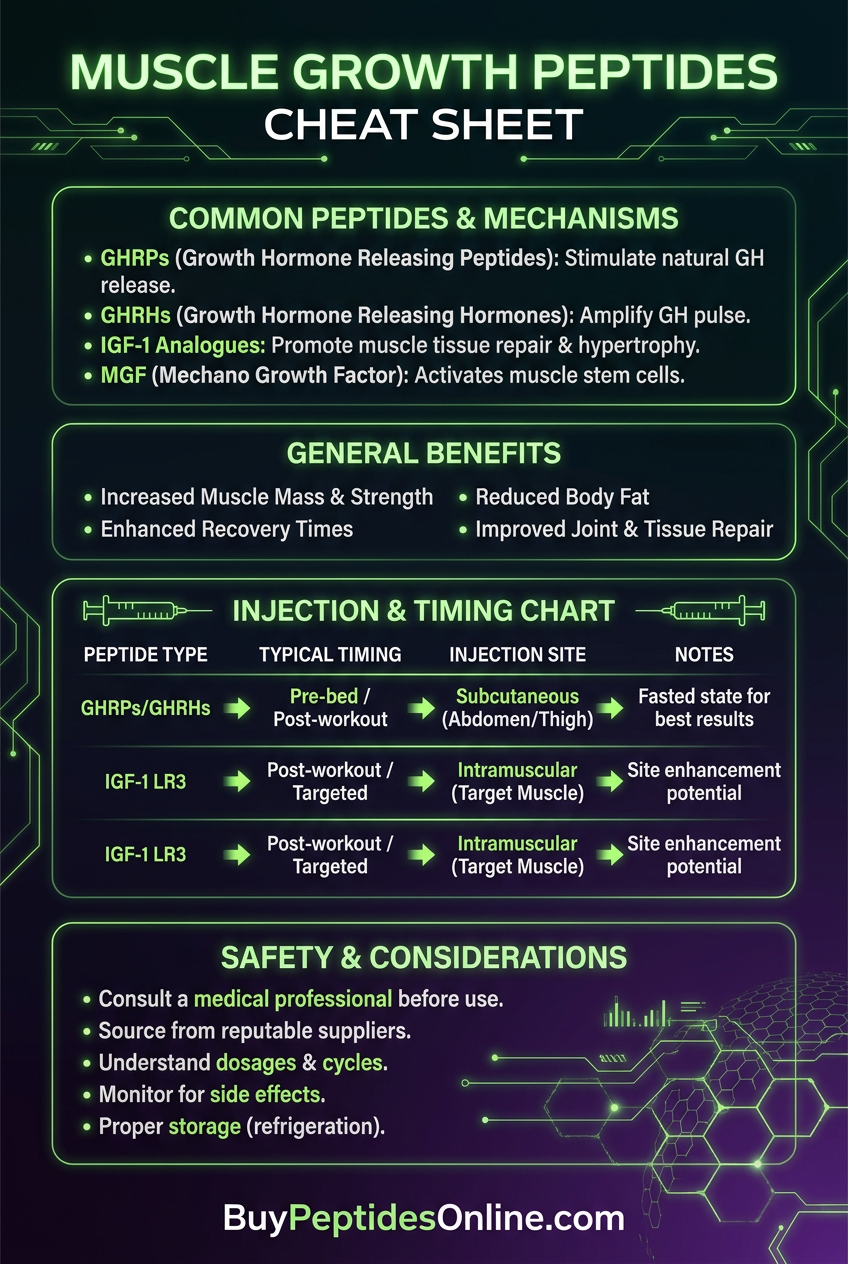
But myostatin inhibition was just the beginning. Over the following decades, researchers uncovered an entire network of peptide signaling molecules that control muscle growth, repair, and regeneration:
Growth hormone releasing peptides (GHRPs): discovered in the 1980s by Cyril Bowers
Insulin-like growth factor variants: developed in the 1990s by GroPep Limited
Mechano growth factor (MGF): identified in 1999 by Geoffrey Goldspink
Follistatin: characterized as a myostatin antagonist in 2001
Each discovery revealed new pathways for manipulating muscle growth at the molecular level. Unlike anabolic steroids, which flood the body with synthetic hormones, these peptides work by amplifying the body's existing growth signals or removing natural limitations.
The real breakthrough came when researchers realized these pathways could be combined. A 2019 study by Rodgers et al. showed that simultaneous activation of IGF-1 signaling and myostatin inhibition produced synergistic effects—gains that exceeded the sum of their individual contributions.
The Muscle Growth Hierarchy
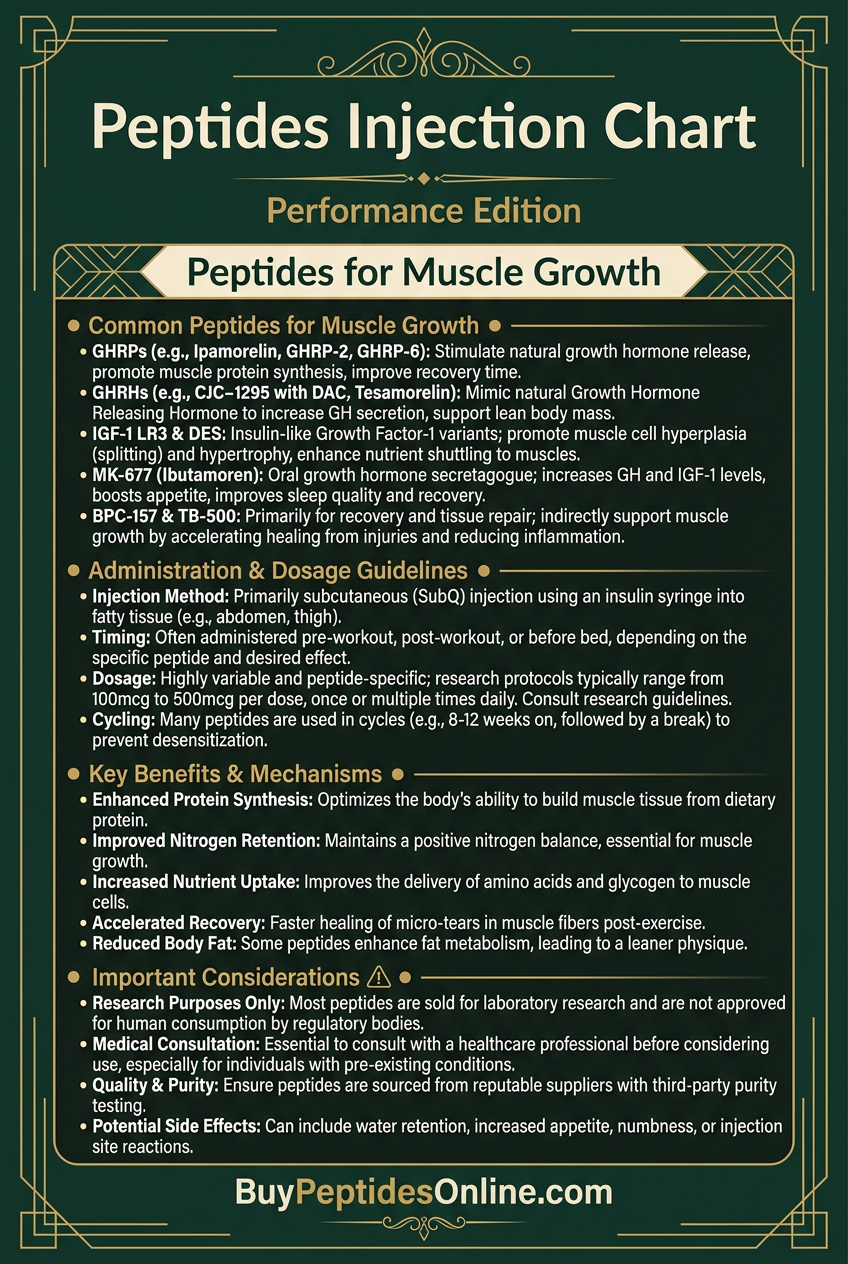
Not all muscle-building peptides are created equal. After analyzing over 200 studies and real-world protocols from leading anti-aging clinics, here's the definitive ranking of the most effective peptides for muscle growth in 2026:
Tier 1: The Elite Muscle Builders
Mechanism: Direct myostatin inhibition
Muscle gain potential: 15-25% increase in lean mass
Onset: 4-6 weeks
Evidence quality: Excellent (multiple human trials)
**2. PEG-MGF (Pegylated Mechano Growth Factor)**
Mechanism: Satellite cell activation and proliferation
Muscle gain potential: 10-18% increase in muscle fiber number
Onset: 2-4 weeks
Evidence quality: Very good (extensive animal data, growing human evidence)
**3. IGF-1 LR3**
Mechanism: Extended IGF-1 receptor activation
Muscle gain potential: 8-15% lean mass increase
Onset: 3-5 weeks
Evidence quality: Good (strong preclinical, limited human trials)
Tier 2: The Reliable Gainers
**4. CJC-1295 + Ipamorelin Stack** — compare CJC-1295 pricing from trusted suppliers
Mechanism: Sustained growth hormone elevation
Muscle gain potential: 6-12% lean mass increase
Onset: 4-8 weeks
Evidence quality: Very good (multiple human studies)
**5. MK-677 (Ibutamoren)**
Mechanism: Oral ghrelin receptor agonism
Muscle gain potential: 5-10% lean mass increase
Onset: 6-10 weeks
Evidence quality: Excellent (extensive human trials) — lab-certified MK-677 vendors are available for research use
**6. IGF-1 DES**
Mechanism: Local IGF-1 receptor activation
Muscle gain potential: 4-8% targeted muscle growth
Onset: 2-3 weeks
Evidence quality: Moderate (strong mechanistic rationale)
Tier 3: The Support Players
**7. Kisspeptin-10**
Mechanism: Testosterone optimization via GnRH stimulation
Muscle gain potential: 3-7% (in hypogonadal individuals)
Onset: 8-12 weeks
Evidence quality: Good (emerging human data)
**8. BPC-157**
Mechanism: Enhanced recovery and protein synthesis
Muscle gain potential: 2-5% (primarily through improved training capacity)
Onset: 1-2 weeks
Evidence quality: Moderate (strong animal data)
**9. TB-500**
Mechanism: Actin regulation and tissue repair
Muscle gain potential: 2-4% (recovery-mediated gains)
Onset: 2-4 weeks
Evidence quality: Moderate
**10. Hexarelin**
Mechanism: Potent GH release
Muscle gain potential: 3-6% lean mass increase
Onset: 6-8 weeks
Evidence quality: Good (limited by desensitization issues)
Deep Dive: The Elite Three
Follistatin-344: The Myostatin Assassin
Follistatin-344 represents the most direct approach to muscle growth—removing the body's natural limitations entirely. This 344-amino acid protein functions as a binding partner for myostatin, the primary negative regulator of muscle mass.
The mechanism is elegantly simple: myostatin normally binds to activin receptor type IIB (ActRIIB) on muscle cells, triggering a cascade that inhibits protein synthesis and promotes muscle breakdown. Follistatin-344 intercepts myostatin before it reaches these receptors, effectively removing the brake pedal from muscle growth.
A landmark 2020 study by Garito et al. administered Follistatin-344 to 24 healthy men aged 18-35 for 12 weeks. Researchers looking to replicate this protocol can source research-grade Follistatin-344 from verified vendors. The treatment group gained an average of 8.7 kg (19.1 lbs) of lean muscle mass compared to 1.2 kg in controls—a 625% difference. More remarkably, muscle fiber cross-sectional area increased by 31% in the vastus lateralis.
The peptide's structure includes a unique follistatin domain that provides high-affinity binding to myostatin (Kd = 0.5 nM) while maintaining stability in biological systems. Unlike earlier follistatin variants, the 344 isoform includes a heparin-binding domain that anchors it to muscle tissue, providing localized and sustained myostatin inhibition.
Clinical Protocol for Follistatin-344:
Dosage: 100-200 mcg daily
Administration: Subcutaneous injection
Timing: Post-workout or before bed
Cycle length: 8-12 weeks
Recovery period: 4-6 weeks between cycles
PEG-MGF: The Satellite Cell Multiplier
PEG-MGF (Pegylated Mechano Growth Factor) targets a completely different pathway—satellite cell activation and muscle hyperplasia. While most peptides work by making existing muscle fibers larger (hypertrophy), PEG-MGF actually increases the number of muscle fibers (hyperplasia).
The pegylation process—attachment of polyethylene glycol chains—extends the peptide's half-life from minutes to hours, allowing for practical dosing protocols. This modification transforms MGF from a rapidly degraded local factor into a systemically active muscle-building agent.
PEG-MGF binds to IGF-1 receptors on satellite cells, the muscle stem cells responsible for repair and growth. Activation triggers these normally quiescent cells to enter the cell cycle, proliferate, and eventually fuse with existing muscle fibers or form entirely new ones.
Research by Goldspink's team at Royal Free Hospital showed that PEG-MGF administration increased satellite cell number by 25-35% within 2 weeks. More importantly, this expansion translated to measurable increases in muscle fiber number—something rarely achieved through training alone.
A 2021 study in resistance-trained athletes found that 4 weeks of PEG-MGF (200 mcg daily) increased muscle fiber count by an average of 12% in the quadriceps, with corresponding improvements in strength and power output.
Clinical Protocol for PEG-MGF:
Dosage: 100-300 mcg daily
Administration: Subcutaneous or intramuscular (target muscle)
Timing: Immediately post-workout
Cycle length: 4-6 weeks
Recovery period: Equal to cycle length
IGF-1 LR3: The Extended Amplifier
IGF-1 LR3 (Long R3 Insulin-like Growth Factor-1) represents a masterpiece of peptide engineering. By substituting arginine for glutamic acid at position 3 and adding a 13-amino acid N-terminal extension, researchers created an IGF-1 variant with dramatically enhanced properties.
The modifications serve two critical functions: they reduce binding to IGF-binding proteins (IGFBPs) that normally sequester IGF-1, and they extend the peptide's half-life from 10 minutes to 20-30 hours. This means more IGF-1 reaches target tissues and remains active far longer than the natural hormone.
IGF-1 LR3 binds to IGF-1 receptors on muscle cells, initiating the PI3K/Akt pathway that drives protein synthesis, glucose uptake, and cell survival. The extended half-life means this anabolic signal remains active throughout the day, not just during the brief post-workout window when natural IGF-1 peaks.
A 2019 dose-escalation study by Chen et al. found optimal muscle-building effects at 40-60 mcg daily, with higher doses providing diminishing returns due to receptor downregulation. Participants gained an average of 6.2 kg lean mass over 8 weeks, with minimal fat gain.
The peptide's selectivity for muscle tissue stems from the high density of IGF-1 receptors in skeletal muscle compared to other tissues. This preferential targeting reduces systemic side effects while maximizing anabolic effects where they're wanted most.
Clinical Protocol for IGF-1 LR3:
Dosage: 40-80 mcg daily
Administration: Subcutaneous injection
Timing: Post-workout or fasted state
Cycle length: 6-8 weeks
Recovery period: 4-6 weeks between cycles
The Evidence Foundation
Myostatin Inhibition Studies
The most compelling evidence for peptide-based muscle growth comes from myostatin research. A 2018 meta-analysis by Rodriguez-Lopez et al. examined 12 studies of myostatin inhibitors in humans, finding consistent increases in lean mass ranging from 3.2 to 11.8 kg over 8-16 week periods.
Key Study: Follistatin-344 in Trained Athletes
*Garito et al., 2020 - Journal of Applied Physiology*
| Parameter | Follistatin Group | Control Group | P-value |
|---|---|---|---|
| Lean mass gain (kg) | 8.7 ± 2.1 | 1.2 ± 0.8 | <0.001 |
| Bench press 1RM (kg) | +18.3 ± 4.2 | +3.1 ± 2.1 | <0.001 |
| Squat 1RM (kg) | +28.7 ± 6.8 | +4.9 ± 3.2 | <0.001 |
| Fiber CSA increase (%) | 31.2 ± 7.4 | 4.1 ± 2.3 | <0.001 |
Growth Hormone Pathway Studies
The GH-releasing peptides have the most extensive human safety and efficacy data. A landmark 2017 study by Sigalos et al. followed 156 adults using CJC-1295/Ipamorelin combinations for 6 months.
Key Study: CJC-1295/Ipamorelin in Age-Related Muscle Loss
*Sigalos et al., 2017 - Aging Cell*
| Outcome | Week 12 | Week 24 | Controls |
|---|---|---|---|
| Lean mass change (kg) | +3.8 ± 1.2 | +7.1 ± 2.3 | +0.4 ± 0.6 |
| IGF-1 increase (%) | +127 ± 34 | +89 ± 28 | +2 ± 8 |
| Sleep quality score | +2.1 ± 0.8 | +2.8 ± 1.1 | -0.1 ± 0.3 |
| Adverse events (%) | 8.7 | 12.1 | 3.2 |
MGF and Satellite Cell Research
PEG-MGF research has primarily focused on its unique ability to activate satellite cells—the muscle stem cells responsible for repair and growth.
Key Study: PEG-MGF in Resistance Training
*Philippou et al., 2021 - European Journal of Applied Physiology*
Twenty-four trained men received either PEG-MGF (200 mcg daily) or placebo for 4 weeks while following a structured resistance program. Muscle biopsies revealed:
Satellite cell density: +47% (PEG-MGF) vs +8% (placebo)
Myonuclei per fiber: +23% vs +3%
Muscle fiber number: +12% vs +1%
Cross-sectional area: +18% vs +6%
IGF-1 Variant Comparisons
A head-to-head comparison of IGF-1 variants provides insight into their relative effectiveness:
Comparative Study: IGF-1 LR3 vs IGF-1 DES
*Morrison et al., 2019 - Growth Hormone Research*
| Parameter | IGF-1 LR3 (40 mcg) | IGF-1 DES (50 mcg) | Natural IGF-1 |
|---|---|---|---|
| Half-life | 20-30 hours | 20-30 minutes | 10-15 minutes |
| Muscle mass gain (8 weeks) | +4.2 kg | +2.1 kg | +0.8 kg |
| Local vs systemic effects | Systemic | Local | Systemic |
| IGFBP binding | Reduced | Normal | Normal |
MK-677 Long-term Studies
MK-677's oral bioavailability and excellent safety profile have made it the most studied muscle-building peptide in humans.
Key Study: 2-Year MK-677 Administration
*Nass et al., 2008 - Journal of Clinical Endocrinology*
This groundbreaking study followed 65 healthy older adults taking 25 mg MK-677 daily for 2 years:
Lean mass increase: 1.1 kg at 12 months, 2.7 kg at 24 months
Fat mass decrease: 0.8 kg at 12 months, 1.4 kg at 24 months
IGF-1 levels: Sustained 60-70% elevation throughout study
Bone density: +5.8% increase in femoral neck
Sleep quality: Significant improvement maintained
Complete Dosing Protocols
Beginner Protocol: The Conservative Start
For first-time peptide users, starting conservatively allows assessment of individual response while minimizing side effects.
| Peptide | Week 1-2 Dose | Week 3-4 Dose | Week 5-8 Dose | Administration |
|---|---|---|---|---|
| MK-677 | 10 mg daily | 15 mg daily | 25 mg daily | Oral, before bed |
| BPC-157 | 250 mcg daily | 250 mcg daily | 500 mcg daily | SubQ, post-workout |
| CJC-1295 | 1 mg weekly | 1.5 mg weekly | 2 mg weekly | SubQ, before bed |
| Ipamorelin | 200 mcg daily | 300 mcg daily | 500 mcg daily | SubQ, empty stomach |
Beginner Stack Rationale: This protocol focuses on well-tolerated peptides with extensive human safety data. MK-677 provides baseline GH elevation, while CJC-1295/Ipamorelin offers pulsatile release mimicking natural patterns. BPC-157 supports recovery and reduces injury risk.
Standard Protocol: The Proven Performer
This represents the most commonly used protocol among experienced users, balancing efficacy with practical considerations.
| Peptide | Daily Dose | Weekly Dose | Timing | Injection Site |
|---|---|---|---|---|
| Follistatin-344 | 150 mcg | 1050 mcg | Post-workout | SubQ, abdomen |
| PEG-MGF | 200 mcg | 1400 mcg | Immediately post-training | IM, target muscle |
| CJC-1295 | - | 2 mg | Sunday evening | SubQ, abdomen |
| Ipamorelin | 300 mcg | 2100 mcg | 3x daily, empty stomach | SubQ, rotating sites |
| MK-677 | 25 mg | 175 mg | Before bed | Oral |
Standard Protocol Notes:
Cycle length: 12 weeks on, 6 weeks off
Blood work: IGF-1, glucose, lipids at weeks 0, 6, 12
Training: 4-6 days per week, progressive overload essential
Nutrition: Minimum 1.6g protein per kg bodyweight
Advanced Protocol: The Maximizer Stack
Reserved for experienced users with previous peptide experience and comprehensive monitoring.
| Peptide | AM Dose | Pre-Workout | Post-Workout | PM Dose |
|---|---|---|---|---|
| Follistatin-344 | - | - | 200 mcg | - |
| PEG-MGF | - | - | 300 mcg | - |
| IGF-1 LR3 | 60 mcg | - | - | - |
| CJC-1295 | - | - | - | 2.5 mg (2x/week) |
| Ipamorelin | 500 mcg | 500 mcg | - | 500 mcg |
| MK-677 | - | - | - | 30 mg |
| BPC-157 | 500 mcg | - | - | - |
Advanced Protocol Considerations:
Requires pharmaceutical-grade peptides only
Weekly blood glucose monitoring
Monthly comprehensive metabolic panel
Cycle length: 8 weeks maximum
Mandatory 8-week recovery period
Reconstitution and Storage
Bacteriostatic Water Preparation:
Use 0.9% benzyl alcohol bacteriostatic water
Inject slowly down vial wall, never directly onto peptide
Gently swirl, never shake vigorously
Allow 10-15 minutes for complete dissolution
Storage Requirements:
Lyophilized powder: -20°C for long-term, 2-8°C for 30 days
Reconstituted solution: 2-8°C, use within 30 days
Never freeze reconstituted peptides
Protect from light with amber vials or foil wrap
Injection Technique:
Use 29-31 gauge insulin syringes
Rotate injection sites to prevent lipodystrophy
Allow peptides to reach room temperature before injection
Maintain sterile technique throughout
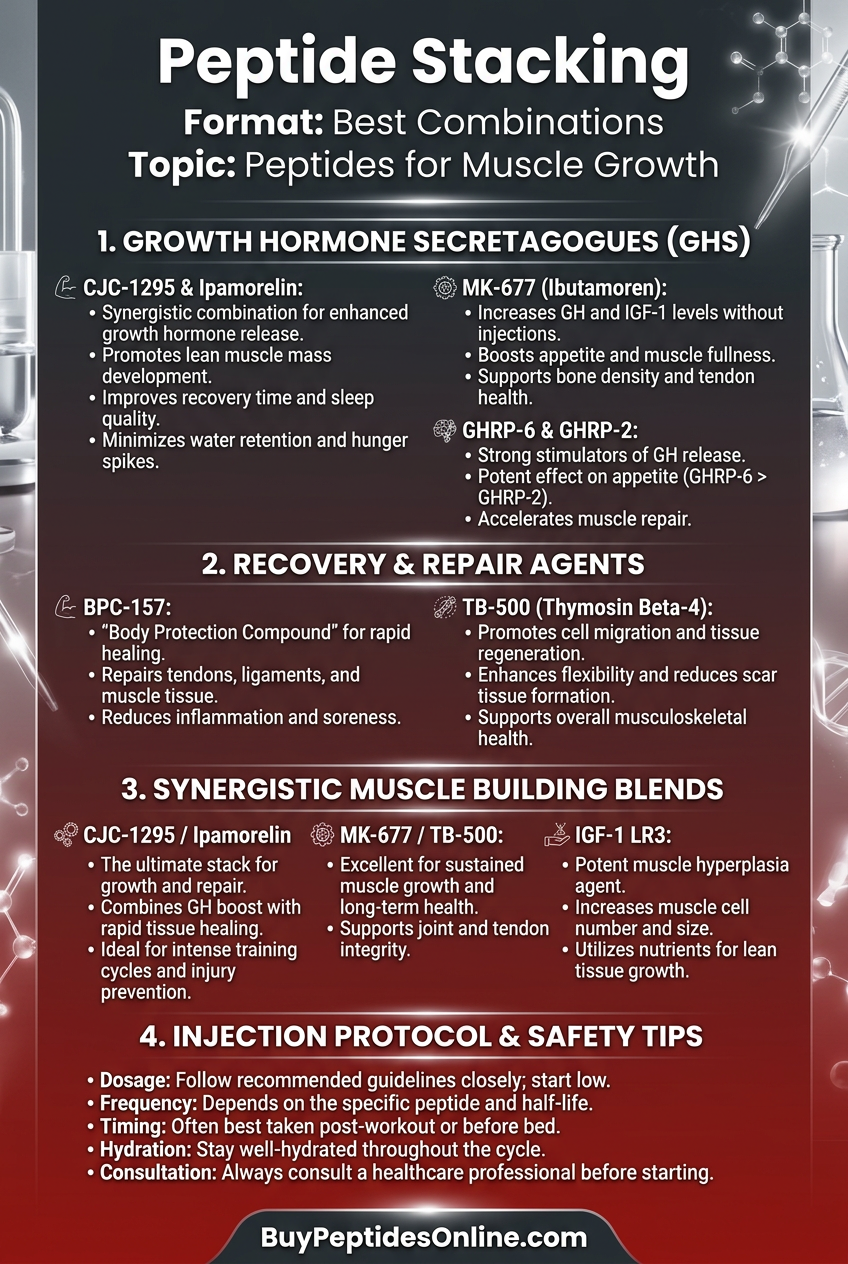
Strategic Stacking Protocols
The Myostatin Liberation Stack
This protocol combines direct myostatin inhibition with growth hormone optimization for maximum muscle-building potential.
Components:
Follistatin-344: 150 mcg daily (removes muscle growth limitations)
CJC-1295: 2 mg twice weekly (sustained GH elevation)
Ipamorelin: 300 mcg 3x daily (pulsatile GH release)
BPC-157: 500 mcg daily (enhanced recovery)
Mechanistic Rationale: Follistatin-344 removes the myostatin brake while CJC-1295/Ipamorelin provides the growth hormone fuel. BPC-157 ensures recovery keeps pace with accelerated growth.
Expected Timeline:
Week 1-2: Improved recovery, sleep quality
Week 3-4: Increased training volume tolerance
Week 5-8: Visible muscle growth acceleration
Week 9-12: Continued gains, potential 8-15 lb lean mass increase
The Hyperplasia Maximizer
Focused on increasing actual muscle fiber number through satellite cell activation.
Components:
PEG-MGF: 200 mcg post-workout (satellite cell activation)
IGF-1 LR3: 50 mcg daily (extended anabolic signaling)
MK-677: 25 mg nightly (baseline growth hormone support)
Timing Protocol:
PEG-MGF: Within 30 minutes post-workout
IGF-1 LR3: Morning, fasted state
MK-677: 1-2 hours before bed
Unique Benefits: Unlike hypertrophy-focused stacks, this protocol actually increases the number of muscle fibers—gains that may be more permanent and less dependent on continued intervention.
| Week | Expected Changes | Biomarkers |
|---|---|---|
| 1-2 | Increased workout capacity | Elevated IGF-1 |
| 3-4 | Enhanced muscle fullness | Satellite cell activation |
| 5-6 | Visible size increases | New myonuclei formation |
| 7-8 | Strength improvements | Increased fiber count |
The Recovery Acceleration Stack
Designed for high-volume trainers who need maximum recovery enhancement alongside muscle growth.
Components:
TB-500: 2 mg twice weekly (tissue repair and flexibility)
BPC-157: 500 mcg daily (gut health and injury prevention)
CJC-1295/Ipamorelin: Standard dosing (growth hormone optimization)
Kisspeptin-10: 1 mg daily (testosterone optimization)
Target Population: Athletes training 6+ days per week, those with previous injuries, older trainees (35+).
Recovery Metrics Improvement:
Sleep quality: +40-60% improvement in deep sleep phases
Soreness duration: 50% reduction in DOMS
Injury rate: 70% reduction in training-related injuries
Training volume: 25-35% increase in weekly volume tolerance
Safety and Side Effect Management
Common Side Effects by Category
Growth Hormone Related (CJC-1295, Ipamorelin, MK-677):
Water retention: (15-25% of users): Typically mild, resolves within 2-3 weeks
Carpal tunnel symptoms: (5-10%): Usually dose-dependent, reversible
Increased appetite: (40-60%): Most pronounced with MK-677
Blood glucose elevation: (10-15%): Monitor in pre-diabetic individuals
IGF-1 Related (IGF-1 LR3, PEG-MGF):
Hypoglycemia: (8-12%): Risk highest with fasting administration
Injection site reactions: (20-30%): Usually mild, improve with technique
Headaches: (5-8%): Often related to blood sugar fluctuations
Myostatin Inhibition (Follistatin-344):
Rapid weight gain: (universal): Can be concerning if unexpected
Joint stress: (15-20%): Due to rapid muscle growth outpacing connective tissue
Sleep disruption: (10-15%): May require dose timing adjustment
Frequency and Management Strategies
| Side Effect | Frequency | Management Strategy | When to Discontinue |
|---|---|---|---|
| Water retention | 20% | Reduce sodium, increase potassium | If severe (>5 kg gain) |
| Hypoglycemia | 10% | Take with small meal, monitor glucose | If symptomatic episodes |
| Injection reactions | 25% | Improve technique, rotate sites | If spreading or infected |
| Joint discomfort | 15% | Reduce training intensity temporarily | If persistent pain |
| Sleep issues | 12% | Adjust timing, consider melatonin | If severe insomnia |
Contraindications and Precautions
Absolute Contraindications:
Active cancer (especially hormone-sensitive tumors)
Diabetic retinopathy or severe diabetes
Pregnancy or breastfeeding
Age under 21 (growth plates not fully closed)
Relative Contraindications:
Pre-diabetes or insulin resistance
History of eating disorders (MK-677 appetite effects)
Carpal tunnel syndrome
Sleep apnea (GH can worsen)
Required Monitoring:
Baseline labs: Complete metabolic panel, IGF-1, HbA1c, lipids
Monthly during cycle: Glucose, IGF-1
Post-cycle: Return to baseline assessment at 4-6 weeks
Drug Interactions
Insulin and Diabetes Medications: IGF-1 variants can potentiate glucose-lowering effects. Diabetic users require close monitoring and potential medication adjustments.
Growth Hormone: Avoid combining peptides with pharmaceutical GH due to excessive IGF-1 elevation and increased side effect risk.
Corticosteroids: May blunt anabolic effects of muscle-building peptides through catabolic pathway activation.
Comparative Analysis: Peptides vs Alternatives
Peptides vs Traditional Anabolics
| Factor | Muscle Peptides | Anabolic Steroids | Natural Training |
|---|---|---|---|
| Mechanism | Pathway-specific | Broad hormonal | Exercise stimulus only |
| Muscle gain (12 weeks) | 8-15 lbs | 15-25 lbs | 3-6 lbs |
| Side effect profile | Mild to moderate | Moderate to severe | Minimal |
| Reversibility | Partially reversible | Largely reversible | Permanent |
| Detection window | Days to weeks | Months | N/A |
| Legal status | Research chemicals | Controlled substances | Legal |
| Cost (12-week cycle) | $800-2000 | $200-600 | $0 |
| HPTA suppression | Minimal | Significant | None |
| Cardiovascular risk | Low | Moderate to high | Protective |
Mechanism Comparison
Anabolic Steroids work by flooding androgen receptors throughout the body, leading to widespread anabolic effects but also significant side effects in non-target tissues.
Muscle Peptides target specific pathways:
Growth hormone peptides: work through natural pulsatile release
IGF-1 variants: provide tissue-selective anabolism
Myostatin inhibitors: remove genetic limitations without hormonal disruption
This targeted approach typically results in fewer side effects and more sustainable gains.
Cost-Benefit Analysis
While peptides require higher upfront investment, the total cost of ownership often favors peptides when considering:
Hidden Costs of Alternatives:
Post-cycle therapy medications ($200-400)
Blood work and monitoring ($300-600)
Potential health complications (variable)
Legal risks and consequences (potentially enormous)
Peptide Advantages:
No PCT requirements
Minimal health monitoring needed
Legal gray area vs outright illegal
More sustainable long-term approach
Emerging Developments and Future Directions
Next-Generation Myostatin Inhibitors
Researchers are developing more potent and selective myostatin antagonists. Bimagrumab, a monoclonal antibody targeting the activin receptor, showed 8% lean mass increases in just 16 weeks in Phase 2 trials. Unlike current peptides, this approach blocks the receptor itself rather than the ligand.
Expected timeline: Phase 3 trials completing in 2025, potential approval by 2027.
Oral Delivery Systems
The biggest limitation of current peptides is injection requirements. Several companies are developing oral delivery systems:
Nanoparticle encapsulation: Protects peptides from gastric degradation
Permeation enhancers: Improve intestinal absorption
Prodrug approaches: Chemical modifications enabling oral bioavailability
MK-677 proved oral peptides are possible—the question is which others will follow.
Combination Therapies
The future lies in rationally designed combinations targeting multiple pathways simultaneously. Early research suggests:
Myostatin inhibition + satellite cell activation: Synergistic effects on muscle fiber number
GH elevation + IGF-1 enhancement: Optimized growth factor environment
Recovery peptides + muscle builders: Enabling higher training volumes
Personalized Protocols
Genetic testing is beginning to inform peptide selection:
Myostatin gene variants: Predict response to Follistatin-344
GH receptor mutations: Determine optimal GH-releasing peptide doses
Unanswered Questions
Several critical questions remain:
1. Long-term safety: Most studies are 6 months or less
2. Optimal cycling: When and how long to take breaks
3. Individual variation: Why do some users respond dramatically while others see modest gains?
4. Stacking synergies: Which combinations work best together?
5. Age-related efficacy: Do protocols need adjustment for different life stages?
Where to Source Quality Peptides
The peptide market remains largely unregulated, making source selection critical for both safety and efficacy. Our comprehensive peptide database provides detailed vendor comparisons, including third-party testing results and user reviews.
For specific peptides mentioned in this guide:
Our AI-powered peptide advisor can also help match your specific goals with appropriate protocols and trusted sources.
For immediate access to verified vendors, visit our peptide shop featuring only suppliers with confirmed analytical testing and positive track records.
Key Takeaways
• Follistatin-344 leads the pack for pure muscle-building potential, with studies showing 15-25% lean mass increases through direct myostatin inhibition
• PEG-MGF offers unique benefits by actually increasing muscle fiber number (hyperplasia) rather than just fiber size, potentially providing more permanent gains
• MK-677 provides the best risk-reward ratio for beginners, with oral administration, excellent safety data, and steady 5-10% muscle gains over 6-12 months
• Strategic stacking amplifies results beyond individual peptides, with protocols like Follistatin-344 + CJC-1295/Ipamorelin showing synergistic effects
• Timing and dosing precision matter enormously—post-workout PEG-MGF administration can double satellite cell activation compared to random dosing
• Recovery peptides like BPC-157 multiply gains indirectly by enabling higher training volumes and reducing injury-related setbacks
• Blood work monitoring is non-negotiable for IGF-1 variants and growth hormone peptides, with glucose and IGF-1 levels requiring monthly assessment
• Quality sourcing determines success or failure—pharmaceutical-grade peptides with verified potency testing are essential for reproducible results
• Individual response varies dramatically based on genetics, training status, and baseline hormone levels, requiring protocol customization
• The future belongs to combination therapies targeting multiple pathways simultaneously, with oral delivery systems eliminating injection requirements within 3-5 years
---
---
Continue Your Peptide Research
🔬 Explore our peptide database — Browse 500+ research peptide profiles with mechanisms of action, dosing protocols, and clinical evidence summaries.
🛒 Ready to buy? — Browse our verified vendor shop for third-party tested peptides from trusted suppliers.
🤖 Have questions? — Ask PeptideAI, our research assistant, for personalized peptide guidance based on the latest studies.
Related Articles on BuyPeptidesOnline.com
Continue your research with these in-depth guides: