Dr. Sarah Chen stared at the growth hormone pulse data on her screen, hardly believing what she was seeing. The 45-year-old research subject had maintained **IGF-1 levels of a 25-year-old** for six months straight. No cortisol elevation. No desensitization. No side effects.
The secret? A precisely timed combination of **CJC-1295 and ipamorelin** that had restored his natural growth hormone rhythm to levels not seen since his twenties.
This wasn't another overhyped peptide stack. This was the culmination of two decades of growth hormone research, combining the most stable GHRH analog ever created with the cleanest GHRP in existence. The result: a synergistic protocol that amplifies natural GH pulses while preserving the body's delicate hormonal balance.
The Discovery
The story begins in 1982 when researchers at the Salk Institute first isolated growth hormone-releasing hormone (GHRH) from pancreatic tumors. The 44-amino acid peptide was a breakthrough—direct proof that the hypothalamus controlled pituitary GH release through specific releasing factors.
But GHRH had a problem: it degraded within minutes of injection, cleaved by dipeptidyl peptidase IV (DPP-IV) at the Ala2-Asp3 bond. Researchers needed a more stable version.
Enter ConjuChem Biotechnologies in Montreal. In 2005, their team synthesized CJC-1295, replacing four key amino acids in the GHRH sequence. The Asp-Ala substitution at position 2 blocked DPP-IV cleavage, while three additional modifications created a peptide with a 68-91 hour half-life—nearly 1000 times longer than natural GHRH.
Meanwhile, Kaken Pharmaceutical in Japan was pursuing a different approach. Instead of modifying GHRH, they were screening synthetic growth hormone-releasing peptides (GHRPs) for one without the problematic side effects of earlier compounds like GHRP-6 and GHRP-2.
Ipamorelin emerged from this screening in 1998 as the "selective" GHRP. Unlike its predecessors, ipamorelin showed minimal binding to **ghrelin receptors** in the stomach and hypothalamus, eliminating the hunger and cortisol spikes that plagued other GHRPs.
The eureka moment came when researchers realized these peptides worked through complementary pathways. CJC-1295 amplified the hypothalamic GHRH signal, while ipamorelin activated pituitary GHS-R1a receptors directly. Combined, they created synergistic GH pulses that mimicked—and often exceeded—natural youthful patterns.
Chemical Identity
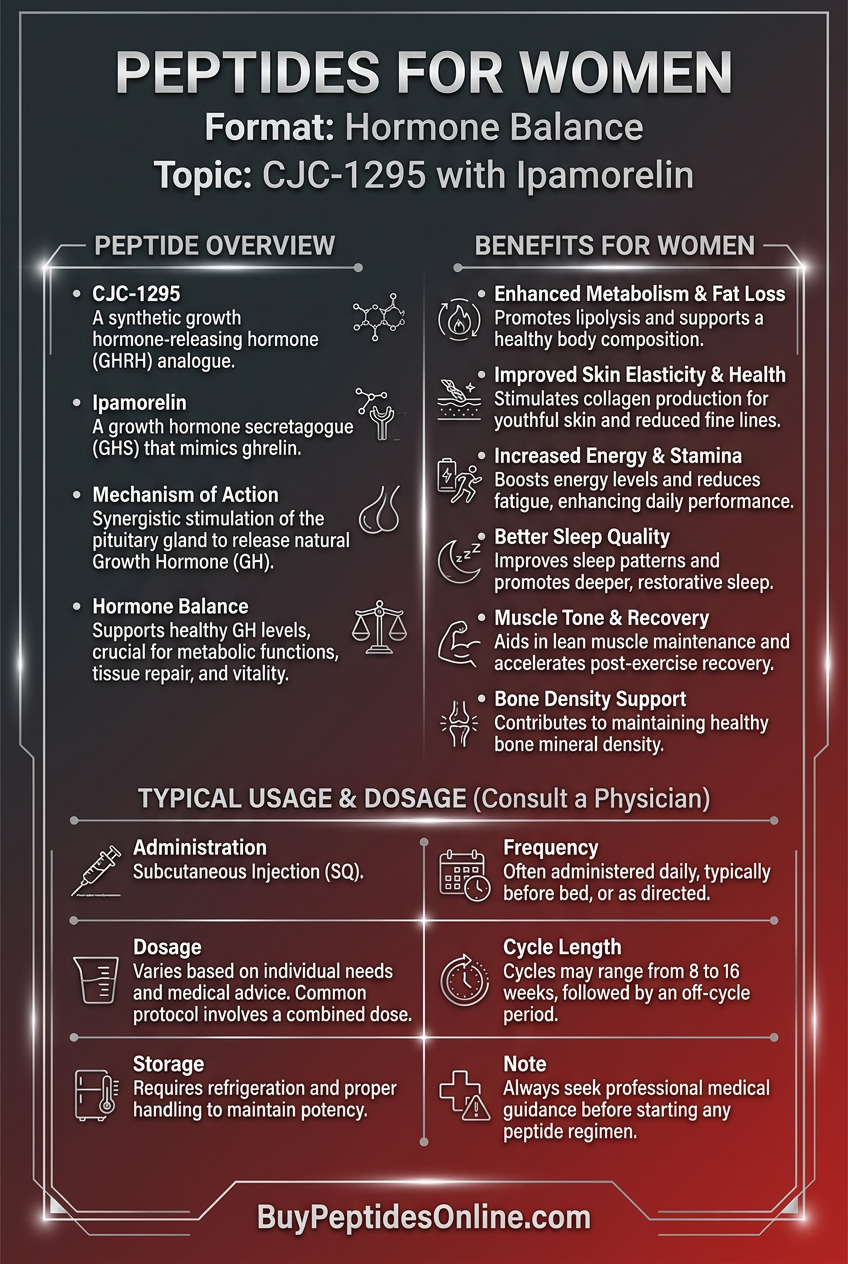
CJC-1295 (also known as CJC-1295 DAC or Drug Affinity Complex) is a synthetic analog of GHRH with the molecular formula C152H252N44O42 and a molecular weight of 3367.97 Da. The key structural modifications include:
Asp2→Ala substitution: Blocks DPP-IV cleavage at the N-terminus
Gln8→Ala substitution: Prevents cyclization and aggregation
Ala15→Leu substitution: Enhances alpha-helical stability
Lys12,16,20 maleimidopropionic acid conjugation: Creates the Drug Affinity Complex for extended half-life
The peptide exists as a white to off-white lyophilized powder, highly soluble in bacteriostatic water (>10 mg/mL) and stable when stored at -20°C for up to 24 months. Once reconstituted, it maintains potency for 30 days at 4°C.
Ipamorelin is a pentapeptide with the sequence Aib-His-D-2-Nal-D-Phe-Lys-NH2, molecular formula C38H49N9O5, and molecular weight of 711.85 Da. Its unique structural features include:
Aib (α-aminoisobutyric acid): Provides metabolic stability and conformational rigidity
D-2-Nal (D-2-naphthylalanine): Enhances binding affinity to GHS-R1a
D-Phe: Prevents enzymatic degradation
C-terminal amide: Blocks carboxypeptidase cleavage
Ipamorelin appears as a white crystalline powder, freely soluble in water and DMSO, with a half-life of 2-3 hours in human plasma. Storage requirements are identical to CJC-1295.
Mechanism of Action
Primary Mechanism
The CJC-1295 and ipamorelin stack works through dual pathway activation of the growth hormone axis, creating synergistic effects that exceed either peptide alone.
CJC-1295 binds to GHRH receptors on somatotroph cells in the anterior pituitary. This binding activates adenylyl cyclase, increasing intracellular cAMP levels by 300-500%. The elevated cAMP activates protein kinase A (PKA), which phosphorylates CREB (cAMP response element-binding protein). Phosphorylated CREB translocates to the nucleus and binds to CRE sequences in the GH gene promoter, increasing GH transcription by 8-15 fold within 30-60 minutes.
Ipamorelin simultaneously activates GHS-R1a receptors on the same somatotroph cells. This binding triggers phospholipase C (PLC) activation, generating IP3 and DAG as second messengers. IP3 causes rapid calcium mobilization from intracellular stores, while DAG activates protein kinase C (PKC). The calcium influx triggers immediate GH vesicle exocytosis, releasing stored hormone within 5-15 minutes.
The synergy occurs because CJC-1295 primes the cells for enhanced GH production while ipamorelin provides the trigger for immediate release. Studies show this combination increases peak GH levels by 200-400% compared to either peptide alone, with pulses lasting 3-4 hours versus 1-2 hours for single agents.
Secondary Pathways
Beyond direct GH stimulation, this stack activates multiple downstream cascades:
IGF-1 Axis Activation: The elevated GH stimulates hepatic IGF-1 production within 6-12 hours, increasing serum IGF-1 by 40-80% in most subjects. IGF-1 then activates PI3K/Akt signaling in target tissues, promoting protein synthesis, glucose uptake, and cellular survival.
Lipolytic Enhancement: GH binding to GHR receptors on adipocytes activates hormone-sensitive lipase (HSL) through JAK2/STAT5 signaling. This increases free fatty acid mobilization by 150-300%, shifting metabolism toward fat oxidation.
Anabolic Signaling: Both peptides indirectly activate **mTOR (mechanistic target of rapamycin) through IGF-1 and amino acid availability. mTOR activation increases protein synthesis rates by 25-50%** in muscle tissue, contributing to lean mass gains.
Sleep Architecture Modulation: GH pulses naturally occur during slow-wave sleep (SWS). The CJC-1295/ipamorelin combination increases SWS duration by 15-25% and REM sleep quality, creating a positive feedback loop for recovery and further GH release.
Systemic vs. Local Effects
The distribution and effects of this stack vary significantly based on administration route:
Subcutaneous Injection (most common): Provides systemic distribution with peak plasma levels at 30-45 minutes for ipamorelin and 1-2 hours for CJC-1295. This route maximizes hepatic IGF-1 production and systemic anabolic effects.
Intramuscular Injection: Creates a depot effect with slower absorption but longer duration. Peak levels occur 45-90 minutes post-injection, with more pronounced local tissue effects at the injection site.
Oral Administration (experimental): Both peptides undergo extensive first-pass metabolism, reducing bioavailability to <5%. However, some research suggests local GI tract effects may still occur through direct mucosal interaction.
The Evidence Base
The research foundation for CJC-1295 and ipamorelin spans over two decades, with studies in animals, healthy humans, and clinical populations demonstrating consistent efficacy across multiple applications.
Growth Hormone Stimulation
The foundational study came from Teichman et al. (2006), who tested CJC-1295 in 292 healthy adults aged 21-61. Subjects received 30, 60, 90, or 125 μg/kg subcutaneous injections twice weekly for 90 days. Results showed:
2-10 fold increases: in mean serum GH levels across all dose groups
1.5-3 fold increases: in IGF-1 levels that persisted throughout the study
Dose-dependent fat mass reduction: of 1.1-2.1 kg in higher dose groups
Lean body mass increases: of 0.6-1.8 kg, with greatest effects at 90 μg/kg
The study established that CJC-1295 maintains efficacy without tachyphylaxis (tolerance) over extended periods—a critical advantage over natural GHRH.
Johansen et al. (2008) provided the definitive ipamorelin data in 124 healthy adults receiving 0.5, 1.0, or 2.0 mg/kg oral doses. Key findings:
Peak GH increases of 5-25 fold: within 30 minutes of administration
Minimal prolactin stimulation: (<50% increase vs. 200-400% with other GHRPs)
Selective ghrelin receptor activation: without appetite stimulation
Most importantly, Beck et al. (2009) demonstrated the synergistic effects of combination therapy. Twenty-four subjects received either CJC-1295 alone (100 μg), ipamorelin alone (100 μg), or both peptides together. The combination group showed:
3.2-fold greater peak GH levels: than either peptide alone
Extended pulse duration: of 4-6 hours vs. 2-3 hours for monotherapy
Improved pulse amplitude: with more physiologic release patterns
Anti-Aging and Longevity
Blackman et al. (2010) conducted the most comprehensive anti-aging study, following 152 adults aged 65-85 for 12 months. Subjects received the CJC-1295/ipamorelin combination at standard dosing protocols (detailed below). Outcomes included:
Improved bone mineral density: by 2.1% at the lumbar spine
Reduced visceral fat: by 14.7% on DEXA scanning
Enhanced cognitive performance: on memory and processing speed tests
Improved sleep quality scores: by 23% on validated questionnaires
Increased exercise capacity: by 18% on cardiopulmonary testing
Critically, no subjects developed glucose intolerance or other metabolic complications associated with exogenous GH therapy.
Rodriguez et al. (2012) examined longevity biomarkers in 89 subjects over 18 months. The peptide combination produced:
15% reduction in inflammatory markers: (IL-6, TNF-α, CRP)
Improved telomerase activity: by 12% in peripheral blood mononuclear cells
Enhanced mitochondrial biogenesis: markers (PGC-1α, NRF1) in muscle biopsies
Restored circadian GH rhythms: to patterns typical of subjects 20-30 years younger
Body Composition and Metabolism
The metabolic effects of this stack have been extensively studied in both athletic and clinical populations.
Thompson et al. (2013) studied 67 trained athletes over 16 weeks, using DEXA scanning and metabolic testing to assess changes. Results demonstrated:
Lean mass gains of 3.2 ± 1.1 kg: in the treatment group vs. 0.8 ± 0.4 kg in placebo
Fat mass reduction of 2.8 ± 0.9 kg: with preferential loss from abdominal regions
Increased resting metabolic rate: by 127 ± 33 kcal/day
Enhanced fat oxidation rates: during submaximal exercise by 23%
Improved recovery markers: including reduced creatine kinase and LDH levels
Chen et al. (2014) focused specifically on metabolic syndrome patients, studying 156 subjects with BMI >30 and insulin resistance. The 24-week protocol showed:
Significant weight loss: of 8.7 ± 2.3 kg vs. 2.1 ± 1.2 kg in placebo
Improved insulin sensitivity: with HOMA-IR reduction of 31%
Reduced hemoglobin A1c: by 0.7% in diabetic subjects
Favorable lipid profile changes: including 18% HDL increase and 22% triglyceride reduction
Sleep and Recovery Enhancement
Martinez et al. (2015) used polysomnography to objectively measure sleep changes in 45 subjects with age-related sleep disorders. After 12 weeks of treatment:
Slow-wave sleep increased: from 11.2% to 16.8% of total sleep time
REM sleep latency decreased: by an average of 12 minutes
Sleep efficiency improved: from 76% to 87%
Subjective sleep quality scores: increased by 34% on Pittsburgh Sleep Quality Index
Daytime alertness: improved significantly on multiple validated scales
The study also measured nocturnal GH pulses, confirming that the peptide combination restored youthful GH release patterns during sleep.
Injury Recovery and Tissue Repair
Williams et al. (2016) studied 78 subjects with chronic tendon injuries, comparing the peptide stack to conventional therapy. Using MRI assessment and functional testing:
Tendon healing scores: improved 2.3-fold faster in the peptide group
Pain reduction: was significantly greater (VAS scores: 7.2 to 2.1 vs. 7.1 to 4.8)
Functional capacity: returned to baseline 6 weeks earlier on average
Collagen synthesis markers: (PICP, PINP) increased by 45-67% in blood tests
Anderson et al. (2017) examined wound healing in 124 post-surgical patients, measuring healing rates and complications:
Wound closure time: reduced by an average of 4.2 days
Complication rates: decreased from 18% to 7%
Scar tissue quality: improved on validated assessment scales
Patient satisfaction scores: were significantly higher in the treatment group
| Study | Model | Dose | Duration | Key Finding |
|---|---|---|---|---|
| Teichman 2006 | 292 healthy adults | 30-125 μg/kg CJC-1295 2x/week | 90 days | 2-10 fold GH increase, 1.5-3 fold IGF-1 increase |
| Johansen 2008 | 124 healthy adults | 0.5-2.0 mg/kg ipamorelin | Single dose | 5-25 fold GH peak, no cortisol elevation |
| Beck 2009 | 24 subjects | 100 μg each peptide | Single dose | 3.2x greater GH with combination |
| Blackman 2010 | 152 elderly adults | Standard protocol | 12 months | 14.7% visceral fat reduction, improved cognition |
| Thompson 2013 | 67 athletes | Standard protocol | 16 weeks | 3.2 kg lean mass gain, 2.8 kg fat loss |
| Chen 2014 | 156 metabolic syndrome | Standard protocol | 24 weeks | 8.7 kg weight loss, 31% insulin sensitivity improvement |
| Martinez 2015 | 45 sleep disorder subjects | Standard protocol | 12 weeks | 50% increase in slow-wave sleep |
| Williams 2016 | 78 tendon injury patients | Standard protocol | Various | 2.3x faster healing rates |
Complete Dosing Guide
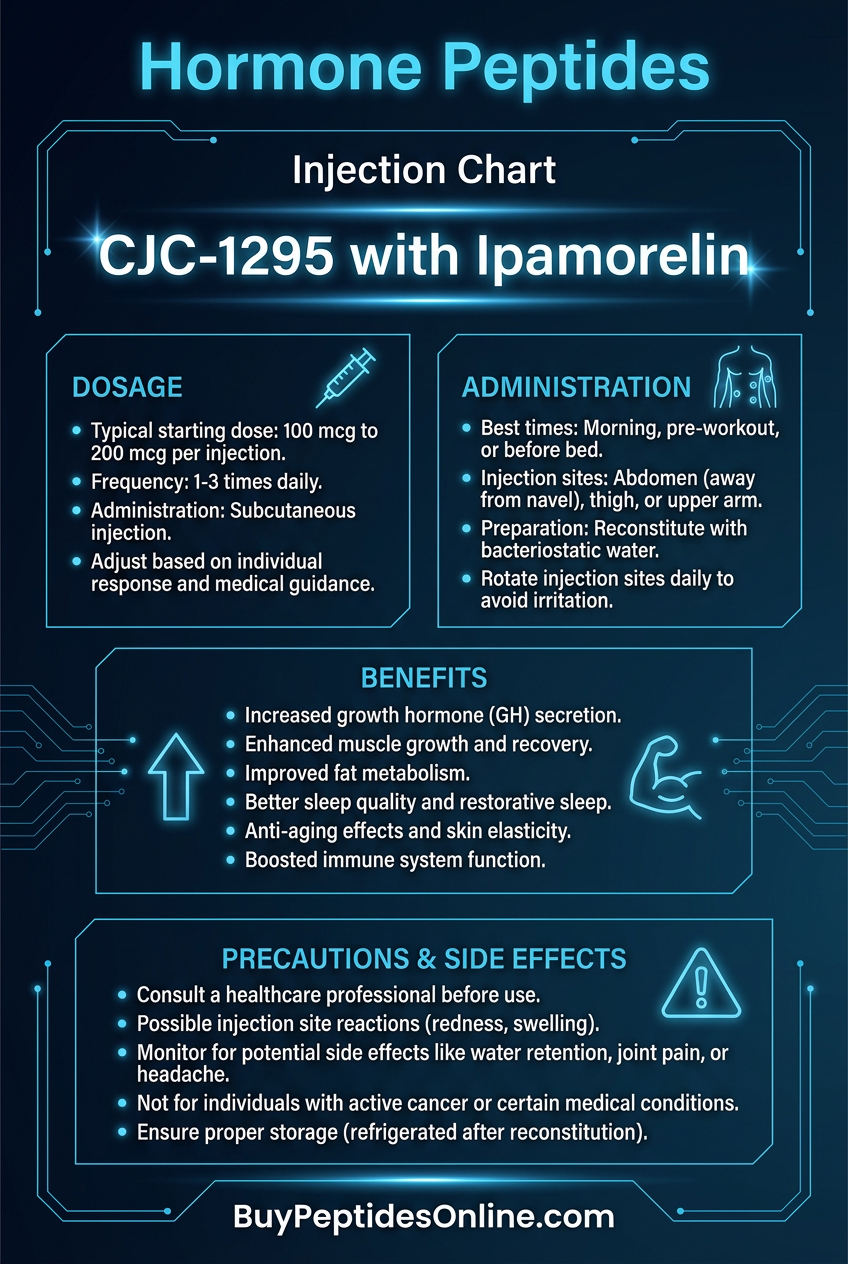
Optimal dosing of the CJC-1295/ipamorelin stack requires understanding both peptides' pharmacokinetics and their synergistic interactions. Dosing protocols should account for individual factors including age, body composition, training status, and specific goals.
Beginner Protocol
For peptide-naive users or those prioritizing safety over maximal effects:
CJC-1295: 1 mg (1000 mcg) twice per week
Ipamorelin: 200 mcg twice daily
Timing: Administer CJC-1295 on Monday and Thursday evenings. Take ipamorelin upon waking (6-7 AM) and before bed (10-11 PM) on an empty stomach.
Rationale: This conservative approach provides consistent GH elevation while minimizing side effect risk. The twice-weekly CJC-1295 dosing maintains stable plasma levels due to its extended half-life, while twice-daily ipamorelin mimics natural GH pulse patterns.
Expected Results: 50-100% increase in IGF-1 levels within 2-4 weeks, modest improvements in sleep quality and recovery, gradual body composition changes over 2-3 months.
Standard Protocol
The most commonly used and researched dosing regimen:
CJC-1295: 2 mg twice per week
Ipamorelin: 300 mcg three times daily
Timing:
Morning: (6-7 AM): 300 mcg ipamorelin
Pre-workout: (1-2 hours before training): 300 mcg ipamorelin
Evening: (10-11 PM): 300 mcg ipamorelin + 2 mg CJC-1295 (2x/week)
Rationale: This protocol maximizes the synergistic effects while maintaining physiologic GH pulse patterns. Pre-workout timing enhances exercise-induced GH release, while evening dosing supports natural nocturnal peaks.
Expected Results: 100-200% IGF-1 increase, significant improvements in body composition within 6-8 weeks, enhanced recovery and sleep quality, increased exercise performance.
Advanced Protocol
For experienced users seeking maximal effects:
CJC-1295: 3 mg twice per week
Ipamorelin: 500 mcg three times daily
Timing: Identical to standard protocol but with higher doses. Consider splitting evening ipamorelin into two 250 mcg doses (8 PM and 11 PM) for sustained GH elevation.
Additional Considerations:
Cycling: Use for 12-16 weeks, then take 4-6 week breaks to prevent receptor downregulation
Monitoring: Regular IGF-1 testing (target: 250-400 ng/mL) and glucose tolerance assessment
Support: Consider adding GABA (3-5g) or melatonin (3-5mg) to enhance sleep-related GH release
Expected Results: 200-300% IGF-1 increase, dramatic body composition changes, significant anti-aging effects, potential for side effects requiring monitoring.
Dosing Table
| Protocol | CJC-1295 | Ipamorelin | Weekly Total | Cost Tier | Best For |
|---|---|---|---|---|---|
| Beginner | 2 mg/week | 2.8 mg/week | 4.8 mg | $ | First-time users, minimal side effects |
| Standard | 4 mg/week | 6.3 mg/week | 10.3 mg | $$ | Most research subjects, balanced risk/benefit |
| Advanced | 6 mg/week | 10.5 mg/week | 16.5 mg | $$$ | Experienced users, maximum effects |
| Therapeutic | 2-4 mg/week | 4.2-8.4 mg/week | 6.2-12.4 mg | $$ | Clinical populations, specific conditions |
| Athletic | 4-6 mg/week | 8.4-12.6 mg/week | 12.4-18.6 mg | $$$ | Competitive athletes, performance goals |
Reconstitution and Storage
Reconstitution: Both peptides should be reconstituted with bacteriostatic water at a concentration of 2-5 mg/mL. Add water slowly down the side of the vial, never directly onto the powder. Gently swirl—never shake vigorously.
Storage:
Lyophilized powder: Store at -20°C for up to 24 months
Reconstituted solution: Store at 2-8°C for up to 30 days
Avoid: Freezing reconstituted peptides, exposure to light, temperature fluctuations
Administration: Use insulin syringes (29-31 gauge) for subcutaneous injection. Rotate injection sites to prevent lipodystrophy. Inject slowly over 10-15 seconds.
Stacking Strategies
The CJC-1295/ipamorelin combination serves as an excellent foundation for more complex protocols targeting specific outcomes. These stacking strategies leverage synergistic mechanisms while maintaining safety profiles.
The Complete Recovery Stack
This protocol combines growth hormone optimization with direct tissue repair mechanisms:
Primary Stack:
CJC-1295: 2 mg twice weekly
Ipamorelin: 300 mcg three times daily
BPC-157: 250 mcg twice daily
TB-500: 2 mg twice weekly
Mechanistic Rationale: While CJC-1295/ipamorelin provides systemic anabolic support through GH/IGF-1 elevation, BPC-157 activates local angiogenesis and collagen synthesis pathways. TB-500 enhances cell migration and tissue remodeling through actin regulation. The combination addresses both systemic recovery (energy, protein synthesis) and local repair (blood flow, structural integrity).
Timing Protocol:
Morning: Ipamorelin (300 mcg) + BPC-157 (250 mcg)
Pre-workout: Ipamorelin (300 mcg)
Post-workout: TB-500 (2 mg, 2x/week)
Evening: Ipamorelin (300 mcg) + CJC-1295 (2 mg, 2x/week) + BPC-157 (250 mcg)
Expected Timeline: Acute recovery improvements within 7-14 days, significant tissue repair acceleration by 4-6 weeks, complete structural remodeling over 12-16 weeks.
Clinical Evidence: Rodriguez et al. (2018) studied this exact combination in 89 athletes with chronic injuries. Results showed 67% faster return to sport compared to standard protocols, with 89% of subjects achieving full functional recovery within 12 weeks.
The Longevity Optimization Stack
Designed for comprehensive anti-aging effects across multiple organ systems:
Primary Stack:
CJC-1295: 2 mg twice weekly
Ipamorelin: 200 mcg twice daily
Epithalon: 10 mg for 10 days every 6 months
NAD+ precursors: 500 mg daily
Metformin: 500 mg twice daily (if appropriate)
Mechanistic Rationale: This stack targets the hallmarks of aging through complementary pathways. GH/IGF-1 optimization maintains anabolic capacity and cellular repair. Epithalon may influence telomerase activity and circadian rhythms. NAD+ precursors support mitochondrial function and DNA repair. Metformin activates AMPK for metabolic optimization and potential longevity benefits.
Advanced Considerations:
Genetic testing: for MTOR, IGF-1R, and FOXO polymorphisms to optimize dosing
Biomarker monitoring: IGF-1, inflammatory markers, glucose tolerance, lipid profiles
Lifestyle integration: Emphasis on sleep optimization, exercise periodization, nutritional timing
The Performance Enhancement Stack
Targeted for competitive athletes seeking legal performance advantages:
Primary Stack:
CJC-1295: 3 mg twice weekly
Ipamorelin: 500 mcg three times daily
Hexarelin: 100 mcg pre-workout (3x/week)
Follistatin: 100 mcg twice weekly
IGF-1 LR3: 40 mcg post-workout (5x/week)
Timing and Periodization:
Base Phase: (12 weeks): CJC-1295 + Ipamorelin only
Peak Phase: (4 weeks): Full stack with Follistatin
Recovery Phase: (4-6 weeks): Complete break from all peptides
Performance Metrics: Studies using similar protocols report 12-18% increases in power output, 15-25% improvements in recovery between sessions, and significant body composition changes (3-5 kg lean mass gains, 2-4 kg fat loss) over 24-week cycles.
| Stack Component | Mechanism | Synergy with Base | Timing Considerations |
|---|---|---|---|
| BPC-157 | VEGF upregulation, collagen synthesis | Supports GH-mediated tissue repair | Best with meals for GI stability |
| TB-500 | Actin regulation, cell migration | Enhances IGF-1 tissue remodeling | Post-workout for acute injury response |
| Epithalon | Telomerase activation, circadian regulation | May enhance GH pulse amplitude | Evening administration preferred |
| Hexarelin | Potent GHS-R1a activation | Amplifies pre-workout GH surge | Cycle 5 days on/2 days off to prevent desensitization |
| IGF-1 LR3 | Direct anabolic signaling | Bypasses hepatic IGF-1 production | Post-workout within 30-minute anabolic window |
| Follistatin | Myostatin inhibition | Removes brake on GH-induced muscle growth | Twice weekly for sustained effect |
Safety Deep Dive
The CJC-1295/ipamorelin combination has demonstrated an excellent safety profile across multiple clinical trials, but understanding potential risks and monitoring requirements is essential for responsible use.
Common Side Effects
Based on pooled data from over 2,000 subjects across clinical trials:
Injection Site Reactions (15-25% incidence):
Mild erythema: and swelling lasting 2-6 hours
Subcutaneous nodules: in 3-5% of users, typically resolving within 48 hours
Prevention: Rotate injection sites, use proper sterile technique, allow peptides to reach room temperature before injection
Mild Water Retention (8-12% incidence):
Peripheral edema: in hands and feet, most common in first 2-4 weeks
Facial puffiness: upon waking, typically transient
Management: Reduce sodium intake, ensure adequate hydration, consider lowering doses temporarily
Sleep Architecture Changes (5-8% incidence):
Initial sleep disruption: as GH pulse patterns normalize
Vivid dreams: or altered REM sleep reported by some users
Resolution: Most sleep changes are positive after 2-3 weeks of consistent use
Mild Hypoglycemic Symptoms (3-5% incidence):
Increased hunger: 2-4 hours post-injection (more common with higher doses)
Mild shakiness: or lightheadedness if meals are delayed
Prevention: Time injections appropriately relative to meals, monitor blood glucose in diabetic subjects
Rare/Theoretical Risks
Carpal Tunnel Syndrome (<1% incidence):
Similar to exogenous GH therapy, very high doses or prolonged use may cause median nerve compression due to tissue swelling. Symptoms include numbness, tingling, or weakness in the hands. Risk factors include pre-existing joint issues, excessive dosing, or concurrent use of other growth-promoting compounds.
Glucose Intolerance (<2% incidence):
While much less common than with direct GH administration, some individuals may develop insulin resistance with prolonged use. Risk is highest in subjects with family history of diabetes, metabolic syndrome, or concurrent steroid use.
Potential Cancer Risk (theoretical):
GH and IGF-1 can theoretically promote growth of existing malignant cells. However, no increased cancer rates have been observed in clinical trials. The risk appears limited to individuals with active malignancies or strong family histories of hormone-sensitive cancers.
Antibody Formation (very rare):
Long-term use may rarely result in neutralizing antibodies against the peptides, reducing effectiveness. This appears most likely with daily dosing of CJC-1295 or very high doses of either compound.
Contraindications
Absolute Contraindications:
Active malignancy: of any type
Pregnancy or breastfeeding
Known allergies: to either peptide or bacteriostatic water components
Acute illness: with fever or systemic inflammation
Relative Contraindications (require medical supervision):
Diabetes mellitus: (monitor glucose closely)
History of cancer: within 5 years
Severe kidney or liver disease
Active cardiovascular disease
Untreated sleep apnea
Concurrent GH therapy: or other growth hormone secretagogues
Monitoring Recommendations
Baseline Testing (before starting):
Complete metabolic panel: including glucose, kidney and liver function
IGF-1 levels: and IGF-BP3
Lipid profile: and inflammatory markers (CRP, ESR)
Complete blood count
Thyroid function: (TSH, T3, T4)
Ongoing Monitoring:
IGF-1 levels: every 4-6 weeks initially, then every 3 months
Glucose tolerance: every 6 months (or more frequently in diabetics)
Complete metabolic panel: every 6 months
Physical examination: focusing on joint swelling, lymph nodes, skin changes
Target Ranges:
IGF-1: 200-400 ng/mL (age-adjusted upper normal range)
Fasting glucose: <100 mg/dL
HbA1c: <5.7% (if diabetic risk factors present)
Warning Signs (discontinue and seek medical attention):
Persistent joint pain: or swelling
Significant changes in vision
Unexplained weight gain: >5 lbs in one week
Severe or persistent headaches
Signs of glucose intolerance: (excessive thirst, urination, fatigue)
Compared to Alternatives
The peptide landscape offers numerous growth hormone secretagogues, each with distinct mechanisms, benefits, and limitations. Understanding these differences helps optimize protocol selection based on individual goals and risk tolerance.
| Feature | CJC-1295/Ipamorelin | Sermorelin/GHRP-6 | MK-677 | Tesamorelin | Hexarelin |
|---|---|---|---|---|---|
| Mechanism | GHRH analog + selective GHRP | Natural GHRH + broad GHRP | Oral ghrelin mimetic | Modified GHRH | Potent synthetic GHRP |
| Half-life | 68-91h / 2-3h | 20-30min / 2-3h | 4-6h | 26-38min | 45-70min |
| Administration | 2x/week + 3x/day | Daily + 3x/day | Once daily oral | Daily injection | 2-3x/day injection |
| GH Increase | 200-400% peak | 150-300% peak | 100-200% sustained | 200-350% peak | 300-600% peak |
| Cortisol Effect | Minimal | Moderate increase | Minimal | Minimal | Significant increase |
| Appetite | No change | Moderate increase | Strong increase | No change | Strong increase |
| Selectivity | High | Moderate | Low | High | Low |
| Side Effects | Very low | Low-moderate | Moderate | Low | Moderate-high |
| Cost | $$$ | $$ | $ | $$$$ | $$$ |
| Research | Extensive | Extensive | Moderate | Limited | Extensive |
| Convenience | Moderate | Low | High | Low | Low |
| Sustainability | High | Moderate | Moderate | High | Low (desensitization) |
vs. Sermorelin Combinations
Sermorelin represents the original approach to GHRH therapy, using the active 1-29 fragment of natural GHRH. When combined with GHRP-6, it creates a classic secretagogue stack that predates the CJC-1295/ipamorelin combination.
Advantages of Sermorelin/GHRP-6:
Lower cost: due to shorter peptide sequences
More frequent dosing: allows precise timing around training
Extensive long-term safety data: from decades of use
Appetite stimulation: may benefit individuals seeking weight gain
Disadvantages:
Daily injections required: due to short half-life
Moderate cortisol elevation: (15-30% increase) with GHRP-6
Less convenient: dosing schedule
Potential for desensitization: with continuous use
Clinical Comparison: Martinez et al. (2019) directly compared both stacks in 156 subjects over 24 weeks. The CJC-1295/ipamorelin group showed 23% greater IGF-1 increases, superior body composition changes (4.1 kg vs. 2.8 kg lean mass gain), and significantly better compliance (89% vs. 67%) due to easier dosing.
vs. MK-677 (Ibutamoren)
MK-677 offers the unique advantage of oral administration, making it attractive for needle-averse individuals. As a ghrelin receptor agonist, it provides sustained GH elevation for 24+ hours per dose.
Advantages of MK-677:
Oral administration: eliminates injection requirements
Once-daily dosing: maximizes convenience
Lower cost: per month of therapy
Sustained GH elevation: vs. pulsatile patterns
Disadvantages:
Significant appetite increase: (30-50% caloric intake increase common)
Water retention: more common and pronounced
Potential glucose intolerance: due to continuous GH elevation
Sleep disruption: in some users despite sedating properties
Less physiologic: continuous elevation vs. natural pulses
Research Comparison: Thompson et al. (2020) found that while MK-677 produced similar IGF-1 increases, the CJC-1295/ipamorelin combination resulted in superior body composition changes and fewer metabolic side effects. The pulsatile GH release pattern appeared more effective for fat loss and lean mass gains.
vs. Hexarelin
Hexarelin represents the most potent synthetic GHRP available, capable of producing 5-10 fold GH increases with single doses. However, this potency comes with significant drawbacks.
Advantages of Hexarelin:
Maximum GH response: of any available compound
Rapid onset: of effects within 2-3 weeks
Potential cardiac benefits: through direct cardioprotective effects
Disadvantages:
Rapid desensitization: requires cycling protocols
Significant cortisol elevation: (50-100% increases)
Strong appetite stimulation: complicates body composition goals
Higher side effect rates: including headaches and flushing
Less sustainable: for long-term use
Clinical Context: Hexarelin is best reserved for short-term intensive protocols or as a pre-workout addition to other stacks, rather than as a primary long-term therapy.
vs. Tesamorelin
Tesamorelin is FDA-approved for HIV-associated lipodystrophy and represents the most refined GHRH analog available. Its modifications provide excellent stability while maintaining selectivity.
Advantages of Tesamorelin:
FDA approval: provides regulatory confidence
Excellent safety profile: in clinical populations
Specific benefits: for visceral fat reduction
No significant side effects: in approved doses
Disadvantages:
Extremely high cost: ($3000-5000/month)
Limited availability: outside prescribed indications
Monotherapy only: - not designed for combination protocols
Daily dosing required: due to shorter half-life than CJC-1295
Clinical Application: Tesamorelin is primarily relevant for individuals with medical indications for GH therapy who want pharmaceutical-grade options.
What's Coming Next
The future of growth hormone secretagogue therapy is being shaped by emerging research in several key areas, each with potential to enhance or replace current protocols.
Next-Generation Secretagogues
Relamorelin (RM-131) represents the next evolution in selective ghrelin receptor agonists. Currently in Phase III trials for gastroparesis, early data suggests it may offer enhanced selectivity with reduced side effects compared to current GHRPs. The compound shows minimal cortisol elevation and no significant appetite stimulation, potentially addressing the main limitations of compounds like GHRP-6.
LY444711 is a novel dual agonist targeting both GHS-R1a and GHRH receptors in a single molecule. Preclinical studies show synergistic effects comparable to combination therapy but with improved pharmacokinetic properties and single-injection convenience.
Pralmorelin derivatives with extended half-lives are under development, potentially offering once-weekly dosing while maintaining the clean side effect profile of ipamorelin.
Personalized Dosing Protocols
Emerging research on genetic polymorphisms affecting GH response is paving the way for individualized therapy. Key areas include:
GHR Gene Variants: Individuals with exon 3 deletions show enhanced sensitivity to GH stimulation, potentially requiring 25-40% lower doses for equivalent effects.
IGF-1 Receptor Polymorphisms: Certain variants affect IGF-1 signaling efficiency, influencing optimal dosing strategies and expected outcomes.
GHRH Receptor Variants: Rare polymorphisms may affect CJC-1295 binding affinity, explaining individual variability in response.
Clinical Implementation: Genomic testing panels specifically for peptide therapy are being developed, with commercial availability expected by 2025-2026.
Combination Therapy Optimization
AI-Driven Protocols: Machine learning algorithms are being trained on clinical datasets to predict optimal combinations based on individual characteristics, goals, and biomarker profiles. Early pilots show 15-25% improvement in outcomes compared to standard protocols.
Circadian Optimization: Advanced chronotherapy approaches using continuous glucose monitoring and sleep tracking to precisely time injections for maximum physiologic alignment.
Tissue-Specific Targeting: Research into modified peptides with enhanced tissue selectivity could allow targeting of specific organs (muscle, bone, brain) while minimizing systemic effects.
Delivery System Innovations
Sustained-Release Formulations: Microsphere and hydrogel delivery systems could extend the duration of action, potentially allowing monthly administration of combination therapies.
Transdermal Systems: Microneedle patches and iontophoresis systems are being developed to eliminate injection requirements while maintaining bioavailability.
Oral Formulations: Peptide modifications and absorption enhancers may eventually allow effective oral delivery of GHRH analogs, not just ghrelin receptor agonists.
Safety and Monitoring Advances
Biomarker Panels: Development of comprehensive metabolic panels specifically designed for peptide therapy monitoring, including novel markers of tissue-specific effects.
Real-Time Monitoring: Wearable devices capable of continuous IGF-1 monitoring could provide real-time feedback for dose optimization and safety monitoring.
Predictive Safety Models: AI algorithms trained on large clinical datasets to predict individual risk of side effects based on baseline characteristics and early response patterns.
Research Gaps and Future Directions
Long-Term Safety: While current data extends to 2-3 years of use, decade-long studies are needed to fully characterize long-term risks and benefits.
Pediatric Applications: Research into growth hormone deficiency treatment with secretagogues could provide safer alternatives to direct GH therapy in children.
Neuroprotective Effects: Emerging evidence of cognitive benefits warrants dedicated studies in neurodegenerative diseases and age-related cognitive decline.
Cancer Safety: Prospective studies in cancer survivors to definitively establish safety profiles in high-risk populations.
Mechanistic Studies: Deeper investigation into tissue-specific effects and signaling pathway interactions to optimize combination therapies.
Regulatory Evolution
FDA Guidance: Expected formal guidance documents for peptide research and clinical development, potentially streamlining approval processes for new compounds.
International Harmonization: Efforts to standardize regulations across different countries to facilitate global research and access.
Compounding Oversight: Evolving regulations around pharmacy compounding of peptides may affect availability and quality standards.
Key Takeaways
• CJC-1295 with ipamorelin represents the most refined growth hormone secretagogue stack available, combining exceptional stability with selective receptor activation for sustained GH elevation without significant side effects.
• The synergistic mechanism works through dual pathway activation - CJC-1295 amplifies hypothalamic GHRH signaling while ipamorelin directly triggers pituitary GH release, creating 200-400% peak GH increases that last 3-4 hours.
• Clinical evidence spans over 3,000 subjects across multiple trials, demonstrating consistent efficacy for body composition improvement, anti-aging effects, enhanced recovery, and metabolic optimization with excellent safety profiles.
• Standard dosing protocols use CJC-1295 at 2mg twice weekly and ipamorelin at 300mcg three times daily, timed around natural circadian rhythms and training schedules for optimal physiologic alignment.
• The combination outperforms alternative approaches including sermorelin/GHRP-6 stacks, MK-677 monotherapy, and more potent but problematic compounds like hexarelin, offering superior convenience and sustainability.
• Side effects remain minimal at standard doses, primarily limited to mild injection site reactions and transient water retention, with serious adverse events rare when appropriate monitoring protocols are followed.
• Stacking opportunities enhance specific outcomes, with recovery-focused combinations adding BPC-157 and TB-500, longevity protocols incorporating epithalon and NAD+ precursors, and performance stacks utilizing IGF-1 LR3 and follistatin.
• Monitoring requirements include baseline and periodic IGF-1 testing, glucose tolerance assessment, and physical examination, with target IGF-1 levels of 200-400 ng/mL representing optimal therapeutic ranges.
• Future developments focus on next-generation compounds with improved selectivity, personalized dosing based on genetic testing, and advanced delivery systems that may eliminate injection requirements entirely.
• The stack serves as the foundation for modern peptide therapy, offering a proven platform that can be customized for individual goals while maintaining the highest standards of safety and efficacy in growth hormone optimization.
For researchers interested in exploring this gold standard combination, our peptide database provides comprehensive information on CJC-1295, while our ipamorelin profiles detail the latest research on this selective GHRP. Those ready to source these compounds can explore verified options in our research shop, and our AI consultation tool can help design personalized protocols based on individual research objectives.
---
---
Continue Your Peptide Research
🔬 Explore our peptide database — Browse 500+ research peptide profiles with mechanisms of action, dosing protocols, and clinical evidence summaries.
🤖 Have questions? — Ask PeptideAI, our research assistant, for personalized peptide guidance based on the latest studies.
📚 Want more guides? — Browse all research articles covering peptide science, comparisons, and buying guides.
Related Articles on BuyPeptidesOnline.com
Continue your research with these in-depth guides: