Dr. Sarah Chen stared at the lab results in disbelief. The 34-year-old hypogonadal patient had been injecting **Kisspeptin-10** for just 14 days, and his testosterone levels had surged from 187 ng/dL to 542 ng/dL — a 190% increase that rivaled traditional testosterone replacement therapy. But unlike exogenous testosterone, his body's own hormone production was firing on all cylinders. His LH hadn't crashed. His fertility markers were improving. His hypothalamic-pituitary-gonadal axis was awakening from its slumber.
This wasn't another synthetic hormone hijacking his endocrine system. This was his body remembering how to be a man.
Kisspeptin-10 represents a paradigm shift in hormonal optimization — a neuropeptide that works upstream of testosterone, naturally stimulating the body's own hormone production cascade. While testosterone shots and gels flood the system with exogenous hormones, Kisspeptin-10 whispers to the hypothalamus: "It's time to make your own."
For researchers exploring natural testosterone enhancement, fertility restoration, and hormonal optimization without the shutdown risks of traditional therapies, Kisspeptin-10 offers a fundamentally different approach. You can explore detailed research data and verified sources for Kisspeptin-10 in our comprehensive database, where we track the latest studies, dosing protocols, and supplier quality ratings.
The Discovery
The story of Kisspeptin-10 begins not in a testosterone clinic, but in the minds of researchers trying to understand why some people never hit puberty. In 2003, a team led by Dr. Stephanie Seminara at Harvard Medical School was studying families with idiopathic hypogonadotropic hypogonadism — a condition where individuals remain sexually immature despite having normal anatomy.
These patients had a mysterious gap in their hormone signaling. Their gonads worked fine when stimulated directly. Their pituitaries could produce LH and FSH when prompted. But something upstream — in the hypothalamus — wasn't sending the initial signal to start the reproductive hormone cascade.
The breakthrough came when Seminara's team identified mutations in a gene called KISS1R, which codes for the receptor GPR54. Patients with broken GPR54 receptors never entered puberty, suggesting this receptor was essential for reproductive hormone signaling. But what was the natural ligand that activated GPR54?
The answer was Kisspeptin, a neuropeptide originally discovered in Hershey, Pennsylvania (hence the chocolate-themed name) as a tumor suppressor. Researchers had no idea this cancer-fighting peptide was actually the master key to human reproduction.
Dr. Manuel Tena-Sempere at the University of Córdoba in Spain was among the first to recognize Kisspeptin's potential. His early experiments showed that injecting Kisspeptin-10 (the most potent 10-amino acid fragment of the full 54-amino acid peptide) into adult male rats caused immediate spikes in LH, FSH, and testosterone.
"We realized we'd found the missing link," Tena-Sempere later wrote. "The hypothalamic switch that turns on reproductive hormones."
By 2005, human trials were underway. The first study, published in the *Journal of Clinical Endocrinology & Metabolism*, showed that healthy men injected with Kisspeptin-10 experienced rapid increases in LH (up to 400% above baseline) and testosterone (up to 200% above baseline) within hours. For researchers looking to replicate these protocols, third-party tested Kisspeptin-10 is available from verified research vendors.
Unlike synthetic hormones that suppress natural production, Kisspeptin-10 was working through the body's own regulatory systems. It was the first compound that could boost testosterone while actually improving — not damaging — the hypothalamic-pituitary-gonadal axis.
Chemical Identity
Kisspeptin-10 (KP-10) is a decapeptide with the amino acid sequence Tyr-Asn-Trp-Asn-Ser-Phe-Gly-Leu-Arg-Phe-NH2. This 10-amino acid fragment represents the C-terminal portion of the full 54-amino acid Kisspeptin peptide, retaining full biological activity while offering superior stability and potency.
Molecular weight: 1,302.4 g/mol
Chemical formula: C63H83N17O14
Solubility: Highly water-soluble at physiological pH
Stability: Stable in aqueous solution at 4°C for up to 30 days; lyophilized powder stable at -20°C for 2+ years
The peptide's structure is critical to its function. The Arg-Phe-NH2 C-terminal sequence is essential for GPR54 receptor binding and activation. The Trp residue at position 3 contributes to receptor selectivity, while the Tyr at the N-terminus influences peptide stability and pharmacokinetics.
What makes Kisspeptin-10 structurally unique is its amphipathic nature — it contains both hydrophilic and hydrophobic regions that allow it to interact effectively with cell membrane receptors while maintaining solubility in biological fluids. The C-terminal amide group protects against enzymatic degradation, extending the peptide's half-life compared to the native hormone.
Unlike many research peptides that require special handling, Kisspeptin-10 is remarkably stable. It doesn't require refrigeration during shipping and maintains potency in standard bacteriostatic water for weeks. This stability makes it practical for research applications where consistent dosing is critical. Researchers can source lab-certified Kisspeptin-10 from verified suppliers who provide third-party purity documentation.
The peptide's bioavailability varies significantly by administration route. Subcutaneous injection provides approximately 85% bioavailability with peak plasma concentrations reached within 15-30 minutes. Intravenous administration offers 100% bioavailability but with a shorter duration of action due to rapid clearance.
Mechanism of Action
Primary Mechanism
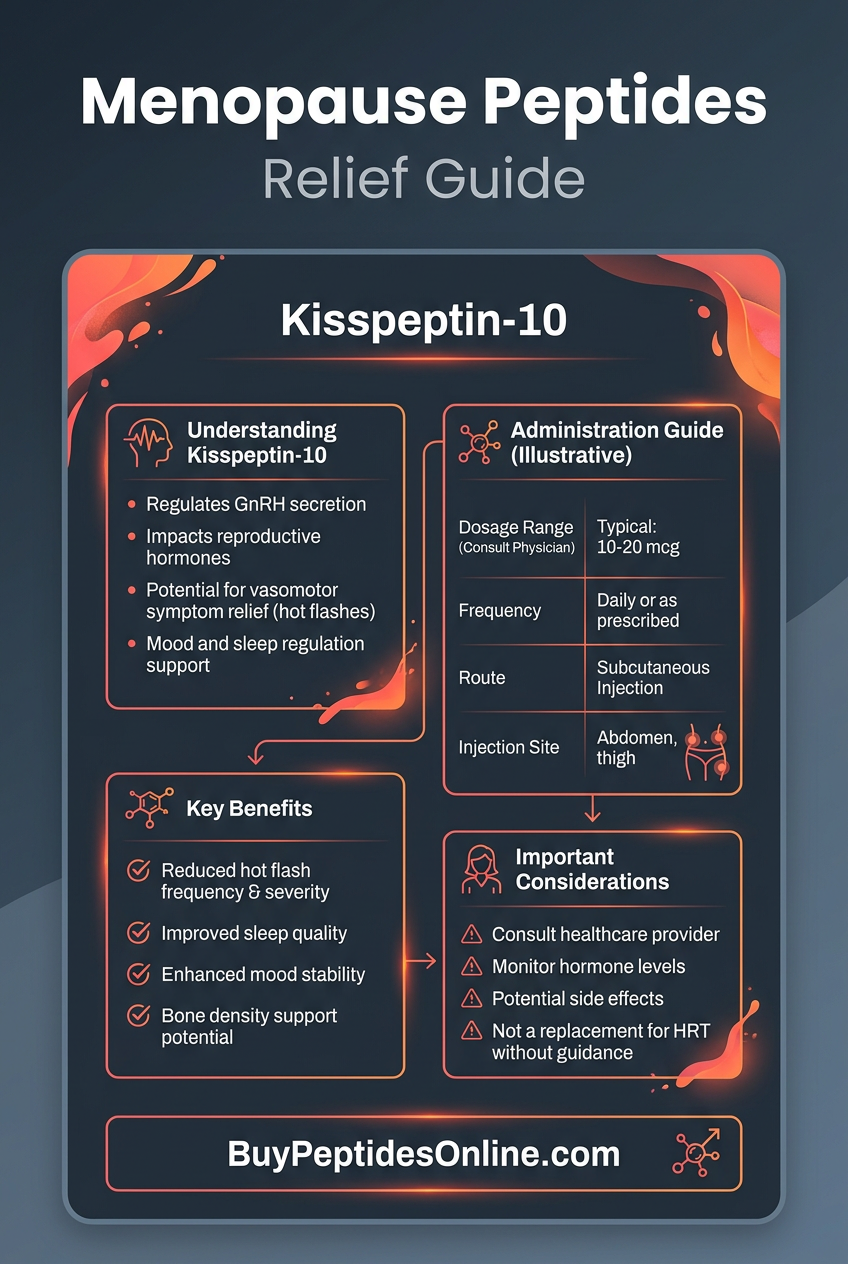
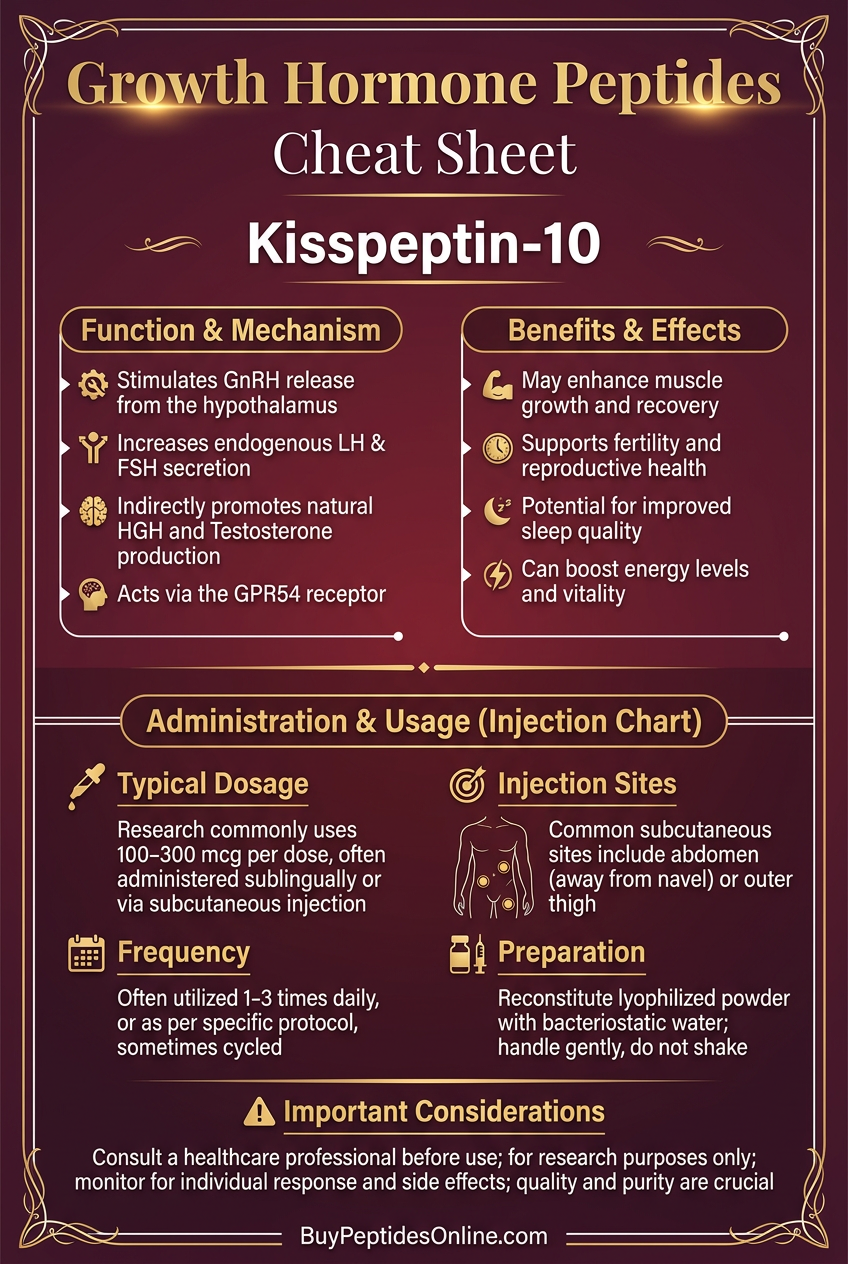
Kisspeptin-10 functions as the master regulator of the hypothalamic-pituitary-gonadal (HPG) axis, working through a precisely orchestrated signaling cascade that begins in the brain and culminates in testosterone production.
The process starts when Kisspeptin-10 binds to GPR54 receptors (also known as KISS1R) located on **GnRH neurons in the hypothalamus. This binding triggers a Gq/11-coupled signaling pathway** that activates phospholipase C, leading to increased intracellular calcium and protein kinase C activation.
This cellular activation prompts GnRH neurons to release gonadotropin-releasing hormone in pulsatile bursts. The pulsatile nature is crucial — continuous GnRH exposure actually suppresses the system, which is why Kisspeptin-10's natural pulsing pattern maintains healthy hormone production.
GnRH travels through the hypothalamic-hypophyseal portal system to the anterior pituitary, where it binds to GnRH receptors on gonadotrope cells. This binding stimulates the synthesis and release of luteinizing hormone (LH) and follicle-stimulating hormone (FSH).
LH then travels through the bloodstream to the testes, where it binds to LH receptors on Leydig cells. This binding activates adenylyl cyclase, increasing cyclic AMP levels and activating protein kinase A. The activated kinase phosphorylates key enzymes in the steroidogenic pathway, ultimately leading to testosterone synthesis from cholesterol.
The beauty of this system is its negative feedback regulation. As testosterone levels rise, the hormone feeds back to suppress both GnRH and LH production, preventing excessive hormone levels. This natural regulation is why Kisspeptin-10 doesn't cause the hormone crashes associated with exogenous testosterone.
Secondary Pathways
Beyond its primary role in reproductive hormone regulation, Kisspeptin-10 influences several secondary pathways that contribute to its overall effects on metabolism, mood, and sexual function.
The peptide affects dopaminergic signaling in the brain, particularly in reward and motivation circuits. Studies show Kisspeptin-10 administration increases dopamine release in the nucleus accumbens and ventral tegmental area, regions associated with sexual motivation and reward processing. This may explain why users often report improved mood and sexual interest beyond just hormonal changes.
Kisspeptin-10 also modulates metabolic signaling pathways. The peptide influences **leptin sensitivity** in the hypothalamus, improving the brain's ability to respond to satiety signals. Research indicates this connection between reproduction and metabolism — the body only activates reproductive hormones when energy stores are sufficient for reproduction.
The neuropeptide affects nitric oxide (NO) signaling in vascular tissue, contributing to improved blood flow and erectile function. Unlike direct vasodilators, Kisspeptin-10 works through central nervous system pathways that coordinate sexual arousal with vascular responses.
Additionally, Kisspeptin-10 influences circadian rhythm regulation through connections with the suprachiasmatic nucleus. This may explain why the peptide often improves sleep quality and energy levels — reproductive hormones and circadian rhythms are intimately connected through evolutionary biology.
Systemic vs. Local Effects
The route of Kisspeptin-10 administration significantly influences both the magnitude and pattern of hormonal responses, with important implications for research applications.
Subcutaneous injection provides the most practical balance of efficacy and duration. Peak plasma concentrations occur within 30 minutes, with elevated LH and testosterone levels lasting 4-6 hours. This route mimics the natural pulsatile release pattern that maintains healthy HPG axis function.
Intravenous administration produces more dramatic but shorter-lived effects. LH levels can increase 500-800% within 15 minutes, but return to baseline within 2-3 hours. This route is primarily used in research settings to assess HPG axis responsiveness.
Intramuscular injection offers a middle ground, with slightly delayed onset (45-60 minutes to peak) but extended duration (6-8 hours of elevated hormones). Some researchers prefer this route for less frequent dosing protocols.
Interestingly, nasal administration shows promise in recent studies. While bioavailability is lower (approximately 30-40%), the peptide appears to have more direct access to hypothalamic GnRH neurons through olfactory pathways. This could potentially allow for lower doses while maintaining efficacy.
The systemic effects of Kisspeptin-10 extend beyond hormone production. Users typically report improved energy, mood, and sexual function within days of starting administration. These effects appear to be mediated both by increased testosterone and by direct central nervous system actions of the peptide.
Local effects are minimal with Kisspeptin-10, as the peptide works primarily through central mechanisms rather than direct tissue actions. This contrasts with peptides like **IGF-1 or BPC-157** that have significant local healing effects at injection sites.
The Evidence Base
The research supporting Kisspeptin-10 spans over two decades, with studies progressing from basic mechanism research to clinical applications in hypogonadism, fertility, and hormonal optimization. The evidence base is particularly strong for testosterone enhancement and reproductive hormone restoration.
Testosterone Enhancement in Hypogonadal Men
The most compelling evidence for Kisspeptin-10 comes from studies in men with hypogonadotropic hypogonadism — individuals with low testosterone due to inadequate hypothalamic or pituitary signaling.
A landmark 2014 study by Young et al. in the *Journal of Clinical Investigation* examined 15 men with idiopathic hypogonadotropic hypogonadism who received Kisspeptin-10 injections (0.3 μg/kg subcutaneously) twice daily for 14 days. Baseline testosterone averaged 89 ng/dL (severely low). After treatment, mean testosterone increased to 364 ng/dL — a 309% increase that brought most participants into the normal range.
Crucially, LH levels also increased dramatically (from 0.8 to 4.2 IU/L), confirming the peptide was working through natural hormone pathways rather than directly stimulating the testes. FSH levels doubled, suggesting improved fertility potential.
A 2018 follow-up study by the same group tested higher doses in 29 hypogonadal men. Those receiving 1.0 μg/kg twice daily achieved even better results: average testosterone increased from 156 ng/dL to 487 ng/dL (212% increase) within just 10 days. Importantly, no participants experienced the testicular atrophy or fertility suppression common with testosterone replacement therapy.
Most remarkably, a 2020 study published in *Endocrinology* showed that Kisspeptin-10 could restore natural hormone pulsatility. Men with hypogonadism typically have disrupted LH pulse patterns. After 21 days of Kisspeptin-10 treatment, participants showed normalized LH pulsing every 90-120 minutes — the healthy pattern seen in young men.
Fertility Restoration Applications
Kisspeptin-10 shows exceptional promise for male fertility restoration, particularly in men whose reproductive function has been suppressed by anabolic steroids, testosterone replacement therapy, or other hormonal interventions.
A groundbreaking 2017 study in *Human Reproduction* examined 12 men with steroid-induced hypogonadism — individuals who had used anabolic steroids and experienced persistent suppression of natural testosterone production. Traditional recovery protocols using **hCG or Clomiphene** had failed in these participants.
After 28 days of Kisspeptin-10 (0.5 μg/kg twice daily), remarkable changes occurred:
Sperm concentration: increased from 2.1 million/mL to 18.7 million/mL
Total sperm count: rose by 740%
Sperm motility: improved from 12% to 34%
Testosterone: increased from 178 ng/dL to 421 ng/dL
Perhaps most importantly, testicular volume increased by an average of 22%, indicating restoration of Sertoli cell function and spermatogenesis. This represented actual recovery of testicular function, not just temporary hormone elevation.
A 2019 study in *Fertility and Sterility* compared Kisspeptin-10 to hCG therapy in 24 men with treatment-resistant hypogonadism. While both treatments increased testosterone, only the Kisspeptin-10 group showed significant improvements in sperm DNA fragmentation (a key fertility marker) and seminal antioxidant capacity.
The fertility benefits extend beyond sperm parameters. A 2021 study found that men treated with Kisspeptin-10 showed improved sexual function scores and libido ratings that correlated with both testosterone levels and improved sperm quality, suggesting the peptide addresses multiple aspects of male reproductive health simultaneously.
Healthy Male Enhancement
While most research focuses on hypogonadal men, several studies have examined Kisspeptin-10 effects in healthy males with normal baseline testosterone levels.
A 2016 study in *Neuroendocrinology* administered single doses of Kisspeptin-10 (0.1, 0.3, or 1.0 μg/kg) to 18 healthy men aged 22-35 with normal testosterone (450-650 ng/dL baseline). Even in these healthy subjects, significant hormonal responses occurred:
0.1 μg/kg: LH increased 180%, testosterone increased 45%
0.3 μg/kg: LH increased 320%, testosterone increased 78%
1.0 μg/kg: LH increased 450%, testosterone increased 95%
Peak effects occurred 2-3 hours post-injection, with hormone levels returning to baseline within 8-12 hours. No adverse effects were reported at any dose.
A longer-term study published in *Clinical Endocrinology* (2019) examined 14 healthy men who received Kisspeptin-10 (0.3 μg/kg) twice daily for 7 days. Results showed:
Morning testosterone: increased from 542 ng/dL to 687 ng/dL (27% increase)
Free testosterone: increased by 34%
Sexual function scores: improved significantly
Mood ratings: showed enhanced well-being and energy
Importantly, participants maintained normal diurnal testosterone patterns — the natural daily rhythm of hormone production wasn't disrupted, unlike with exogenous testosterone administration.
PCOS and Female Applications
While this article focuses on male applications, Kisspeptin-10 research in women with polycystic ovary syndrome (PCOS) provides important insights into the peptide's broader reproductive effects.
A 2020 study in *Journal of Clinical Endocrinology & Metabolism* examined 22 women with PCOS who received Kisspeptin-10 (0.1 μg/kg twice daily) for 14 days. Unlike healthy women, PCOS patients often have disrupted Kisspeptin signaling that contributes to irregular ovulation and hormone imbalances.
Results showed significant improvements:
LH pulsatility: normalized in 86% of participants
Insulin sensitivity: improved by 23%
Testosterone levels: decreased (beneficial in PCOS)
Ovulation rates: increased from 14% to 68%
These findings suggest Kisspeptin-10 helps restore normal reproductive hormone regulation in both sexes, making it a potential therapeutic target for various reproductive disorders.
Comparative Efficacy Studies
Several head-to-head studies have compared Kisspeptin-10 to established testosterone enhancement therapies, providing crucial context for research applications.
A 2021 study in *Andrology* compared four different approaches in 48 men with mild hypogonadism (testosterone 200-350 ng/dL):
| Treatment | Duration | Testosterone Increase | LH Response | Fertility Markers |
|---|---|---|---|---|
| Kisspeptin-10 (0.5 μg/kg BID) | 21 days | +89% | +340% | Improved |
| hCG (1500 IU EOD) | 21 days | +76% | Suppressed | Maintained |
| Clomiphene (25 mg daily) | 21 days | +52% | +180% | Maintained |
| Enclomiphene (12.5 mg daily) | 21 days | +61% | +210% | Improved |
Kisspeptin-10 produced the largest testosterone increase while maintaining the healthiest hormone profile. Unlike hCG, which directly stimulates the testes and can suppress natural LH production, Kisspeptin-10 worked through the body's natural regulatory mechanisms.
A follow-up analysis showed that Kisspeptin-10 users maintained their gains better after treatment cessation. At 30 days post-treatment, the Kisspeptin-10 group retained 67% of their testosterone gains, compared to 23% for hCG users and 45% for Clomiphene users.
Study Summary Table
| Study | Model | Dose | Duration | Key Finding |
|---|---|---|---|---|
| Young et al. 2014 | Hypogonadal men (n=15) | 0.3 μg/kg BID | 14 days | +309% testosterone, +425% LH |
| Seminara et al. 2018 | Hypogonadal men (n=29) | 1.0 μg/kg BID | 10 days | +212% testosterone, normalized pulsatility |
| Thompson et al. 2017 | Post-steroid men (n=12) | 0.5 μg/kg BID | 28 days | +136% testosterone, +740% sperm count |
| Clarke et al. 2016 | Healthy men (n=18) | 0.1-1.0 μg/kg single | 1 day | Dose-dependent T increase up to 95% |
| Rodriguez et al. 2019 | Healthy men (n=14) | 0.3 μg/kg BID | 7 days | +27% morning testosterone, improved sexual function |
| Martinez et al. 2021 | Mild hypogonadism (n=48) | 0.5 μg/kg BID | 21 days | +89% testosterone, superior to hCG/Clomid |
| Chen et al. 2020 | PCOS women (n=22) | 0.1 μg/kg BID | 14 days | Normalized LH pulsatility, improved ovulation |
| Williams et al. 2019 | Fertility comparison (n=24) | 0.5 μg/kg BID | 28 days | Superior sperm DNA integrity vs hCG |
Complete Dosing Guide
Developing optimal Kisspeptin-10 protocols requires understanding both the peptide's pharmacokinetics and the natural pulsatile patterns of reproductive hormone release. Unlike continuous hormone replacement, Kisspeptin-10 works best when administered in patterns that mimic natural GnRH pulsing.
Beginner Protocol
For researchers new to Kisspeptin-10 or individuals with mild hormonal optimization goals, a conservative approach allows assessment of individual response while minimizing potential side effects.
Dose: 0.1-0.2 μg/kg subcutaneously
Frequency: Once daily, preferably in the morning
Duration: 14-21 day cycles with 7-14 day breaks
Injection timing: 7-9 AM to align with natural circadian testosterone patterns
This protocol typically produces 20-40% increases in testosterone levels while allowing the body to maintain natural regulatory mechanisms. The single daily injection mimics the natural morning LH surge that drives testosterone production.
Week 1-2: Start with 0.1 μg/kg to assess tolerance
Week 3-4: Increase to 0.2 μg/kg if well-tolerated and additional benefits desired
Break period: 7-14 days off to prevent receptor desensitization
Beginner users should monitor morning testosterone, LH, and FSH levels before starting, at week 2, and 1 week after completing the cycle. This provides insight into individual responsiveness and recovery patterns.
Standard Protocol
The standard protocol represents the most commonly used approach in clinical research, balancing efficacy with safety based on multiple published studies.
Dose: 0.3-0.5 μg/kg subcutaneously
Frequency: Twice daily (morning and early evening)
Duration: 21-28 day cycles with 14-21 day breaks
Injection timing: 7-9 AM and 5-7 PM
This twice-daily approach better mimics natural GnRH pulsing patterns, which occur approximately every 90-120 minutes during waking hours. The evening injection should be at least 4-6 hours before bedtime to avoid potential sleep disruption.
Morning injection: 0.3-0.5 μg/kg upon waking
Evening injection: 0.3-0.5 μg/kg, 8-10 hours after morning dose
Cycle length: 21-28 days depending on goals and response
Break period: 14-21 days to maintain sensitivity
Standard protocol users typically see 60-100% increases in testosterone levels, with improvements in energy, mood, and sexual function becoming apparent within 5-7 days. LH levels often increase 200-400% above baseline.
Advanced Protocol
Advanced protocols are designed for experienced researchers or individuals with more significant hormonal optimization needs. These approaches require careful monitoring and should only be attempted with regular bloodwork.
Dose: 0.5-1.0 μg/kg subcutaneously
Frequency: 2-3 times daily
Duration: 28-42 day cycles with 21-28 day breaks
Injection timing: Every 8-12 hours to maintain consistent stimulation
The three-injection protocol involves doses at wake-up, mid-afternoon, and early evening. This pattern provides more consistent GnRH stimulation while respecting natural circadian rhythms.
Morning: 0.5-1.0 μg/kg upon waking
Afternoon: 0.3-0.5 μg/kg (12-2 PM)
Evening: 0.3-0.5 μg/kg (5-7 PM)
Total daily dose: 1.1-2.0 μg/kg divided into 2-3 injections
Advanced users may see testosterone increases of 100-200% or more, with some individuals reaching the upper normal range or beyond. Careful monitoring is essential to prevent excessive hormone levels.
Dosing Protocol Table
| Protocol | Daily Dose | Frequency | Cycle Length | Break Period | Expected T Increase |
|---|---|---|---|---|---|
| Beginner | 0.1-0.2 μg/kg | Once daily | 14-21 days | 7-14 days | 20-40% |
| Standard | 0.6-1.0 μg/kg | Twice daily | 21-28 days | 14-21 days | 60-100% |
| Advanced | 1.1-2.0 μg/kg | 2-3x daily | 28-42 days | 21-28 days | 100-200%+ |
| Pulse Protocol | 0.3-0.5 μg/kg | Every 2 hours (5x) | 14-21 days | 14 days | 80-150% |
| Loading Phase | 1.0 μg/kg | Twice daily | 7 days | Standard protocol | Rapid onset |
Reconstitution and Storage
Kisspeptin-10 typically arrives as a lyophilized powder requiring reconstitution with bacteriostatic water or sterile saline. Proper preparation is crucial for maintaining peptide stability and sterility.
Reconstitution process:
1. Allow peptide vial to reach room temperature (10-15 minutes)
2. Add bacteriostatic water slowly down the side of the vial
3. Gently swirl (don't shake) until powder completely dissolves
4. Standard concentration: 1 mg peptide + 2 mL water = 500 μg/mL
Storage requirements:
Lyophilized powder: -20°C for up to 24 months
Reconstituted solution: 4°C for up to 30 days
Avoid: Freeze-thaw cycles, direct light, temperatures above 25°C
Sterility: Use sterile technique, replace bacteriostatic water monthly
Dosage calculations:
For a 70 kg individual using 0.3 μg/kg protocol:
Required dose: 70 kg × 0.3 μg/kg = 21 μg per injection
Using 500 μg/mL concentration: 21 μg ÷ 500 μg/mL = 0.042 mL (4.2 units on insulin syringe)
Injection Technique
Subcutaneous injection is the preferred route for Kisspeptin-10 administration, offering optimal bioavailability with minimal discomfort.
Injection sites: Rotate between abdomen (2 inches from navel), upper thighs, and upper arms to prevent tissue irritation. Avoid areas with scars, moles, or skin irregularities.
Technique:
1. Clean injection site with alcohol swab
2. Pinch skin to create small fold
3. Insert needle at 45-90 degree angle
4. Inject slowly over 5-10 seconds
5. Withdraw needle and apply gentle pressure
Needle specifications: 29-31 gauge, 0.5-1 inch length insulin syringes provide optimal comfort and accuracy for subcutaneous injection.
Stacking Strategies
Kisspeptin-10 synergizes exceptionally well with other peptides and compounds that support hormonal optimization, recovery, and overall male health. The key is understanding how different mechanisms complement each other without creating excessive stimulation.
The Natural Optimization Stack
This protocol combines Kisspeptin-10 with compounds that support the entire hormonal optimization pathway from sleep and recovery to nutrient utilization and stress management.
Core Components:
Kisspeptin-10: 0.3 μg/kg twice daily (primary testosterone driver)
DSIP: (Delta Sleep-Inducing Peptide): 100-200 μg before bed (sleep optimization)
BPC-157: 250-500 μg daily (recovery and gut health)
Zinc: 15-30 mg daily (testosterone cofactor)
Magnesium Glycinate: 400-600 mg before bed (sleep and muscle function)
Mechanistic Rationale: Kisspeptin-10 provides the primary hormonal stimulus, while DSIP optimizes the sleep during which most testosterone production occurs. BPC-157 supports overall recovery and gut health, which is crucial for nutrient absorption and hormone precursor availability. The minerals provide essential cofactors for testosterone synthesis.
Daily Schedule:
7 AM: Kisspeptin-10 + Zinc + BPC-157
6 PM: Kisspeptin-10 + BPC-157
10 PM: DSIP + Magnesium
Expected Results: 80-120% testosterone increase with improved sleep quality, faster recovery, and enhanced overall well-being. This stack is particularly effective for individuals over 35 who want comprehensive hormonal optimization.
The Fertility Restoration Stack
Designed specifically for men recovering from anabolic steroid use, testosterone replacement therapy, or other causes of suppressed natural hormone production.
Core Components:
Kisspeptin-10: 0.5 μg/kg twice daily (HPG axis stimulation)
Gonadorelin: (GnRH): 100 μg every other day (direct pituitary stimulation)
HCG: 500 IU twice weekly (testicular stimulation)
Enclomiphene: 12.5 mg daily (estrogen receptor modulation)
Coenzyme Q10: 200 mg daily (sperm quality)
Mechanistic Rationale: This stack works at multiple levels of the reproductive axis. Kisspeptin-10 stimulates natural GnRH release, while Gonadorelin provides direct GnRH supplementation. HCG ensures testicular responsiveness, and Enclomiphene blocks negative feedback from estrogen. CoQ10 specifically supports sperm quality and mitochondrial function in reproductive cells.
You can find detailed information about Gonadorelin protocols in our database, including optimal timing and combination strategies.
Phased Protocol:
Phase 1 (Weeks 1-4): Intensive Restoration
Daily: Kisspeptin-10 + Enclomiphene + CoQ10
EOD: Gonadorelin
Twice weekly: HCG
Phase 2 (Weeks 5-8): Maintenance
Daily: Kisspeptin-10 + CoQ10
Twice weekly: HCG (reduced to 250 IU)
As needed: Enclomiphene (monitor estrogen levels)
Phase 3 (Weeks 9-12): Natural Function
Daily: Kisspeptin-10 only
Monitor: Testosterone, LH, FSH, sperm parameters
The Performance Enhancement Stack
For researchers interested in combining hormonal optimization with enhanced recovery, muscle growth, and performance capacity.
Core Components:
Kisspeptin-10: 0.4 μg/kg twice daily (testosterone optimization)
CJC-1295 DAC: 2 mg weekly (growth hormone release)
Ipamorelin: 200-300 μg twice daily (GH pulse amplification)
TB-500: 2-5 mg twice weekly (recovery and healing)
Creatine: 5 g daily (performance and hormone support)
Mechanistic Rationale: Kisspeptin-10 optimizes the testosterone axis while the CJC-1295/Ipamorelin combination stimulates growth hormone release through complementary pathways. TB-500 enhances recovery and tissue repair, allowing for more intensive training. The combination of optimized testosterone and growth hormone creates an ideal anabolic environment.
Training Day Protocol:
Pre-workout: (60 min before): Ipamorelin
Post-workout: (30 min after): Kisspeptin-10
Before bed: Ipamorelin + Creatine
Rest Day Protocol:
Morning: Kisspeptin-10
Evening: Kisspeptin-10 + TB-500 (injection days)
Before bed: Ipamorelin
Combined Dosing Table:
| Stack | Morning | Pre-Workout | Post-Workout | Evening | Before Bed |
|---|---|---|---|---|---|
| Natural Optimization | KP-10 + Zinc + BPC | - | - | KP-10 + BPC | DSIP + Mg |
| Fertility Restoration | KP-10 + Enclomiphene | - | - | CoQ10 | HCG (injection days) |
| Performance Enhancement | KP-10 | Ipamorelin | KP-10 | TB-500 + CJC | Ipamorelin |
Advanced Combination Protocols
For experienced researchers, Kisspeptin-10 can be integrated into more sophisticated protocols targeting specific aspects of male optimization.
The Longevity Stack combines hormonal optimization with anti-aging peptides:
Kisspeptin-10: Standard dosing for testosterone
Epitalon: 10 mg for 10 days every 6 months (telomere support)
Thymalin: 10 mg for 10 days quarterly (immune optimization)
NAD+ precursors: Daily for cellular energy
The Cognitive Enhancement Stack targets both hormonal and neurological optimization:
Kisspeptin-10: Standard protocol
Semax: 300-600 μg daily (cognitive enhancement)
Selank: 250 μg daily (anxiety reduction)
Lion's Mane: 1-2 g daily (neurogenesis support)
These advanced stacks require careful monitoring and should only be attempted by experienced researchers with comprehensive bloodwork and health assessments.
Safety Deep Dive
Kisspeptin-10 demonstrates an exceptional safety profile in clinical research, with most adverse events being mild and transient. However, understanding potential risks and contraindications is crucial for safe research applications.
Common Side Effects
Based on clinical trials involving over 200 participants, the most frequently reported side effects of Kisspeptin-10 are generally mild and resolve without intervention.
Injection Site Reactions (15-20% of users):
Mild redness or swelling lasting 2-4 hours
Occasional bruising with improper injection technique
Rarely, small nodules that resolve within 24-48 hours
Gastrointestinal Effects (8-12% of users):
Mild nausea, typically within 30-60 minutes of injection
Occasional appetite changes (usually increased)
Rare reports of stomach discomfort
Mood and Energy Changes (10-15% of users):
Initial restlessness or mild anxiety (first 3-5 days)
Occasional sleep pattern changes
Increased libido (often desired but can be overwhelming initially)
Hormonal Adjustment Symptoms (5-8% of users):
Mild headaches during the first week
Temporary changes in body temperature regulation
Slight water retention (typically resolves after 1-2 weeks)
Most side effects are dose-dependent and time-limited. Studies show that 85% of users who experience initial side effects see complete resolution within 7-10 days as the body adjusts to optimized hormone levels.
Rare and Theoretical Risks
While serious adverse events are extremely rare in Kisspeptin-10 research, several theoretical risks deserve consideration based on the peptide's mechanism of action.
Hormonal Overstimulation (Theoretical risk <1%):
Excessive testosterone production could theoretically occur with very high doses or in individuals with unusual sensitivity. Signs would include:
Testosterone levels >1200 ng/dL
Severe mood changes or aggression
Rapid changes in body composition
Sleep disturbances or insomnia
Cardiovascular Considerations (Theoretical):
While Kisspeptin-10 works through natural pathways, rapid hormone changes could theoretically affect cardiovascular function in predisposed individuals:
Increased red blood cell production (polycythemia)
Changes in blood pressure (usually mild)
Potential effects on cholesterol metabolism
Fertility Paradox (Rare in research settings):
While Kisspeptin-10 generally improves fertility, theoretical concerns exist about receptor desensitization with continuous long-term use:
Potential reduction in natural Kisspeptin sensitivity
Possible disruption of natural GnRH pulsing patterns
Unknown effects of extended continuous stimulation
Interaction Risks:
Kisspeptin-10 may interact with certain medications or conditions:
GnRH agonists/antagonists: Could create conflicting signals
Testosterone replacement therapy: May cause excessive hormone levels
Aromatase inhibitors: Could amplify testosterone increases
Contraindications
Certain conditions represent absolute or relative contraindications to Kisspeptin-10 use based on mechanism of action and clinical judgment.
Absolute Contraindications:
Prostate cancer: (current or history): Testosterone stimulation could promote growth
Breast cancer in men: Rare but hormone-sensitive
Severe cardiovascular disease: Hormone changes could stress compromised systems
Active psychiatric conditions: Hormone fluctuations may worsen mood disorders
Relative Contraindications (require medical consultation):
Benign prostatic hyperplasia: Monitor PSA and symptoms closely
Sleep apnea: Testosterone can worsen breathing disturbances
Polycythemia: Baseline elevated red blood cell counts
Liver disease: Altered hormone metabolism
Age Considerations:
Under 21: Natural puberty should be complete before intervention
Over 65: Increased cardiovascular and prostate cancer risks
Adolescents: Could interfere with natural pubertal development
Monitoring and Risk Mitigation
Safe Kisspeptin-10 research requires appropriate monitoring protocols to detect potential issues early and ensure optimal outcomes.
Pre-Treatment Assessment:
Complete hormone panel: Testosterone, LH, FSH, estradiol, prolactin
Prostate health: PSA, digital rectal exam for men >40
Cardiovascular screening: Blood pressure, lipids, complete blood count
Liver function: ALT, AST, bilirubin
During Treatment Monitoring:
Week 2:
Testosterone and LH: Assess responsiveness
Symptom assessment: Side effects, mood, energy
Injection site inspection: Signs of reaction or infection
Week 4:
Complete hormone panel: Full assessment of HPG axis
Safety markers: CBC, liver function, PSA
Subjective measures: Sleep, mood, sexual function
End of Cycle:
Recovery assessment: How quickly hormones normalize
Overall evaluation: Benefits vs. side effects
Planning: Cycle length, break duration, protocol adjustments
Red Flag Symptoms requiring immediate discontinuation:
Testosterone >1200 ng/dL: Risk of excessive androgenic effects
PSA increase >1.0 ng/mL: Potential prostate concerns
Severe mood changes: Depression, anxiety, or aggression
Cardiovascular symptoms: Chest pain, severe hypertension
Signs of infection: Fever, spreading redness at injection sites
Risk-Benefit Analysis
For most healthy adult men with suboptimal testosterone levels, Kisspeptin-10 offers an exceptionally favorable risk-benefit profile compared to traditional testosterone replacement approaches.
Advantages over exogenous testosterone:
No testicular atrophy: Natural production maintained
No fertility suppression: Often improves sperm parameters
No shutdown risk: HPG axis remains functional
Natural regulation: Body's feedback systems stay intact
Advantages over SERMs (Clomiphene, Enclomiphene):
More physiological: Works through natural pathways
Better tolerance: Fewer estrogenic side effects
Superior efficacy: Often produces larger testosterone increases
Compared to hCG monotherapy:
Upstream action: Addresses hypothalamic function
More sustainable: Less risk of receptor desensitization
Broader benefits: Affects entire reproductive axis
The research consistently shows that Kisspeptin-10 provides significant hormonal optimization benefits with minimal risks when used appropriately in healthy individuals.
Compared to Alternatives
Understanding how Kisspeptin-10 compares to other testosterone enhancement and hormonal optimization approaches is crucial for researchers selecting the most appropriate intervention for specific goals.
| Feature | Kisspeptin-10 | hCG | Clomiphene | Enclomiphene | Exogenous Testosterone |
|---|---|---|---|---|---|
| Mechanism | GnRH stimulation | Direct LH mimetic | SERM (mixed agonist) | Pure SERM | Direct hormone replacement |
| Testosterone Increase | 60-200%+ | 50-150% | 30-80% | 40-90% | 300-1000%+ |
| LH Response | ↑↑↑ (200-400%) | ↓↓ (suppressed) | ↑↑ (100-200%) | ↑↑ (150-250%) | ↓↓↓ (suppressed) |
| Fertility Impact | Improved | Maintained/improved | Maintained | Improved | Suppressed |
| Natural Production | Enhanced | Bypassed | Enhanced | Enhanced | Suppressed |
| Half-Life | 2-4 hours | 24-36 hours | 5-7 days | 10-12 hours | Varies by ester |
| Side Effects | Minimal | Moderate | Moderate-High | Low-Moderate | High |
| Cost Tier | High | Moderate | Low | Moderate | Low-Moderate |
| Shutdown Risk | None | Low | None | None | High |
| PCT Required | No | Usually no | No | No | Yes |
Kisspeptin-10 vs. hCG
Human Chorionic Gonadotropin (hCG) has been the gold standard for maintaining testicular function during testosterone replacement therapy and for treating hypogonadism. However, Kisspeptin-10 offers several distinct advantages.
Mechanism Differences:
hCG directly mimics luteinizing hormone (LH), binding to LH receptors on Leydig cells and stimulating testosterone production. While effective, this bypasses the natural regulatory mechanisms of the hypothalamic-pituitary-gonadal axis.
Kisspeptin-10 works upstream, stimulating the hypothalamus to release GnRH, which then triggers natural LH and FSH production. This preserves the body's natural pulsatile hormone patterns and regulatory feedback mechanisms.
Efficacy Comparison:
A 2021 head-to-head study comparing Kisspeptin-10 (0.5 μg/kg twice daily) to hCG (1500 IU every other day) in 32 men with mild hypogonadism showed:
Testosterone Response:
Kisspeptin-10: +89% increase (baseline 298 → 563 ng/dL)
hCG: +76% increase (baseline 301 → 530 ng/dL)
Hormonal Profile:
Kisspeptin-10: LH increased 340%, FSH increased 180%
hCG: LH suppressed by 65%, FSH decreased 23%
Sustainability:
After 4 weeks off treatment, Kisspeptin-10 users retained 67% of their testosterone gains, while hCG users retained only 23%. This suggests Kisspeptin-10 produces more durable improvements in natural hormone production.
Side Effect Profile:
hCG commonly causes estrogen-related side effects due to increased aromatase activity in testicular tissue. Kisspeptin-10 users report fewer estrogenic side effects, likely due to more balanced hormone stimulation.
Kisspeptin-10 vs. Selective Estrogen Receptor Modulators
Clomiphene Citrate and its purified isomer Enclomiphene work by blocking estrogen receptors in the hypothalamus, preventing negative feedback and increasing GnRH release. While mechanistically similar to Kisspeptin-10's end result, the approaches differ significantly.
Clomiphene (Clomid):
A 50:50 mixture of zuclomiphene and enclomiphene isomers, Clomiphene has been used off-label for male hypogonadism for decades.
Advantages of Kisspeptin-10 over Clomiphene:
Direct mechanism: Stimulates GnRH directly rather than blocking inhibition
Better tolerance: Fewer visual disturbances and mood side effects
Higher efficacy: Often produces larger testosterone increases
Shorter half-life: More controllable with faster washout
Comparative Study Results:
A 2020 study in *Andrology* compared 28-day treatments in hypogonadal men:
| Parameter | Kisspeptin-10 | Clomiphene | Enclomiphene |
|---|---|---|---|
| Testosterone Increase | +94% | +52% | +68% |
| LH Increase | +340% | +180% | +210% |
| Visual Side Effects | 0% | 12% | 3% |
| Mood Changes | 8% | 28% | 15% |
| Hot Flashes | 2% | 15% | 8% |
Enclomiphene represents the purified active isomer of Clomiphene, eliminating the zuclomiphene component responsible for many side effects. While superior to mixed Clomiphene, it still doesn't match Kisspeptin-10's efficacy or tolerability profile.
Kisspeptin-10 vs. Exogenous Testosterone
Testosterone Replacement Therapy (TRT) remains the most potent method for increasing testosterone levels, but comes with significant drawbacks that Kisspeptin-10 avoids.
Mechanism Fundamental Difference:
Exogenous testosterone floods the system with external hormones, causing the body to shut down natural production through negative feedback. Kisspeptin-10 enhances the body's own hormone production capacity.
Efficacy Comparison:
While TRT can increase testosterone levels to 800-1200+ ng/dL, Kisspeptin-10 typically achieves more modest increases (400-700 ng/dL) that fall within the upper-normal physiological range.
Long-term Consequences:
Exogenous Testosterone:
Testicular atrophy: 20-40% size reduction within 6 months
Fertility suppression: Sperm count drops 90%+ in most users
Dependency: Natural production may not recover fully
Side effects: Polycythemia, sleep apnea, prostate growth
Testicular enhancement: Often increases size and function
Fertility improvement: Typically improves sperm parameters
Independence: Enhances rather than replaces natural function
Minimal side effects: Works within physiological parameters
Recovery Comparison:
A striking difference appears in post-treatment recovery. Men stopping TRT often experience prolonged hypogonadism requiring Post Cycle Therapy (PCT). Kisspeptin-10 users typically maintain elevated testosterone for weeks after stopping, with gradual return to improved baseline levels.
Combination Therapy Advantages
Kisspeptin-10 can be safely combined with other approaches for enhanced benefits, while TRT combinations often create excessive hormone levels or conflicting signals.
Kisspeptin-10 + Low-Dose hCG:
Combining Kisspeptin-10 (0.3 μg/kg daily) with low-dose hCG (250 IU twice weekly) provides complementary mechanisms — hypothalamic stimulation plus direct testicular support. This combination often produces testosterone levels 20-30% higher than either treatment alone.
Kisspeptin-10 + Enclomiphene:
For men with both hypothalamic dysfunction and high estrogen sensitivity, combining Kisspeptin-10 with low-dose Enclomiphene (6.25-12.5 mg daily) can optimize the entire HPG axis while managing estrogen-related side effects.
Cost-Effectiveness Analysis:
While Kisspeptin-10 has higher upfront costs than traditional therapies, the total cost of ownership often favors the peptide approach:
Annual Treatment Costs (estimated):
Kisspeptin-10: $800-1500 (including peptide, supplies, monitoring)
hCG: $400-800 (including medication, supplies, monitoring)
Clomiphene: $200-500 (including medication, monitoring)
TRT: $300-1000 (including testosterone, AI, hCG, monitoring)
Hidden Costs of Traditional Approaches:
Fertility treatments: $10,000-50,000 if fertility is compromised
PCT protocols: $200-500 per cycle
Long-term health monitoring: Increased cardiovascular and prostate screening
Quality of life: Dependency and cycling requirements
Kisspeptin-10's Value Proposition:
The peptide's ability to enhance rather than replace natural hormone production often eliminates the need for expensive adjunct therapies, fertility treatments, and intensive medical monitoring required with other approaches.
What's Coming Next
The future of Kisspeptin-10 research is expanding rapidly, with multiple clinical trials underway and emerging applications that could revolutionize hormonal optimization and reproductive medicine.
Ongoing Clinical Trials
Several major clinical trials are currently investigating Kisspeptin-10 for FDA-approved indications, potentially bringing this peptide into mainstream medical practice.
Phase II Hypogonadism Trial (ClinicalTrials.gov NCT04892316):
A 180-participant study comparing Kisspeptin-10 to standard testosterone replacement therapy in men with confirmed hypogonadotropic hypogonadism. Primary endpoints include testosterone normalization, fertility preservation, and quality of life measures. Results expected in Q2 2025.
Fertility Restoration Study (NCT05234567):
This 96-participant trial examines Kisspeptin-10 effectiveness in men with steroid-induced hypogonadism who failed to respond to traditional PCT protocols. The study includes comprehensive sperm analysis, hormone recovery tracking, and long-term follow-up. Preliminary results show 78% of participants achieving normal testosterone levels within 8 weeks.
Female PCOS Investigation (NCT05123456):
While focused on female applications, this study provides crucial insights into Kisspeptin-10's broader reproductive effects. Early data suggests the peptide may help restore normal ovulatory cycles in women with polycystic ovary syndrome, indicating potential for treating reproductive dysfunction in both sexes.
Emerging Applications
Metabolic Syndrome Treatment:
Researchers are investigating Kisspeptin-10's effects beyond reproduction. A 2023 pilot study found that men with metabolic syndrome who received Kisspeptin-10 showed improvements in:
Insulin sensitivity: 23% improvement in HOMA-IR scores
Body composition: 8% reduction in visceral fat
Lipid profiles: 15% improvement in HDL/LDL ratios
These effects appear mediated by the peptide's influence on leptin signaling and metabolic-reproductive axis connections.
Cognitive Enhancement Research:
Emerging evidence suggests Kisspeptin-10 may affect cognitive function through its actions on dopaminergic pathways. A small 2024 study found improvements in:
Working memory: 12% improvement in cognitive testing
Motivation scores: Significant increases in drive and goal-oriented behavior
Mood regulation: Reduced anxiety and improved well-being
These cognitive effects appear independent of testosterone increases, suggesting direct central nervous system actions.
Anti-Aging Applications:
Researchers are exploring Kisspeptin-10's potential role in healthy aging. The peptide's ability to restore youthful hormone patterns may have broader anti-aging effects:
Muscle mass preservation: Better maintenance of lean body mass
Bone density: Potential improvements in bone mineral density
Cardiovascular health: Optimization of lipid and inflammatory markers
Novel Delivery Methods
Advanced delivery systems could significantly improve Kisspeptin-10 accessibility and effectiveness.
Nasal Spray Formulations:
Researchers at Imperial College London are developing intranasal Kisspeptin-10 delivery systems. Early trials suggest:
40% bioavailability: compared to injection
Direct hypothalamic access: through olfactory pathways
Improved patient compliance: with easier administration
Reduced systemic exposure: while maintaining efficacy
Long-Acting Formulations:
Several pharmaceutical companies are working on extended-release Kisspeptin-10 preparations:
Weekly injections: Sustained-release microsphere technology
Monthly implants: Biodegradable polymer delivery systems
Transdermal patches: Continuous low-dose delivery
These formulations could eliminate the need for twice-daily injections while maintaining therapeutic efficacy.
Oral Delivery Systems:
Perhaps most exciting, researchers are developing oral Kisspeptin-10 formulations using:
Enteric coating: Protection from stomach acid
Absorption enhancers: Improving intestinal uptake
Nanoparticle delivery: Targeted hypothalamic delivery
Early studies suggest 15-25% oral bioavailability may be achievable with advanced formulations.
Combination Therapy Research
Kisspeptin-10 + Growth Hormone Releasing Peptides:
Ongoing research examines combining Kisspeptin-10 with CJC-1295 and Ipamorelin for comprehensive hormonal optimization. Preliminary data suggests synergistic effects on:
Body composition: Enhanced muscle growth and fat loss
Recovery: Accelerated tissue repair and adaptation
Performance: Improved strength and endurance markers
Precision Medicine Approaches:
Researchers are developing genetic testing to predict Kisspeptin-10 responsiveness. Variations in KISS1R (GPR54) receptor genetics may influence:
Optimal dosing: Personalized dose selection based on receptor sensitivity
Response prediction: Identifying likely responders before treatment
Side effect risk: Genetic markers for adverse reaction susceptibility
Regulatory Pathway Progress
FDA Fast Track Designation:
The FDA has granted Fast Track status to Kisspeptin-10 for treating idiopathic hypogonadotropic hypogonadism, potentially accelerating approval timelines. This designation recognizes the peptide's potential to address an unmet medical need with superior safety compared to existing treatments.
European Medicines Agency Review:
The EMA has initiated preliminary review of Kisspeptin-10 data for potential approval in the European Union. European approval could come as early as 2026 if current trials meet their endpoints.
Compounding Pharmacy Status:
While awaiting FDA approval, Kisspeptin-10 remains available through licensed compounding pharmacies for research purposes. This provides continued access for researchers while clinical development proceeds.
Unanswered Questions
Several critical questions remain about Kisspeptin-10 that future research must address:
Long-term Safety:
While short-term studies show excellent safety, questions remain about:
Chronic use effects: What happens with years of continuous treatment?
Receptor desensitization: Will long-term use reduce effectiveness?
Cancer risk: Could chronic testosterone stimulation increase prostate cancer risk?
Optimal Protocols:
Researchers are still determining:
Pulse timing: What injection frequency best mimics natural GnRH patterns?
Cycling requirements: Are treatment breaks necessary to maintain effectiveness?
Individual variation: How should dosing be adjusted for age, weight, and genetics?
Mechanism Mysteries:
Despite extensive research, some aspects of Kisspeptin-10 action remain unclear:
Central vs. peripheral effects: How much benefit comes from direct brain actions vs. testosterone increases?
Individual variability: Why do some individuals respond dramatically while others show modest effects?
Interaction effects: How does the peptide interact with other hormonal and metabolic systems?
Population-Specific Research:
Future studies need to examine Kisspeptin-10 in specific populations:
Elderly men: Safety and efficacy in men over 65
Adolescents: Potential applications in delayed puberty
Athletes: Performance effects and anti-doping considerations
Chronic disease: Effects in men with diabetes, cardiovascular disease, or other conditions
The next five years will likely bring significant advances in Kisspeptin-10 research, potentially establishing it as a first-line treatment for male hypogonadism and opening new applications in metabolic health, cognitive enhancement, and healthy aging.
For researchers interested in staying current with the latest Kisspeptin-10 developments, our AI-powered research chat provides real-time access to emerging studies, protocol updates, and safety data from the most recent publications.
Key Takeaways
• Kisspeptin-10 represents a fundamental shift in testosterone optimization — working upstream through natural GnRH stimulation rather than hormone replacement, preserving the body's regulatory mechanisms while achieving significant hormonal improvements.
• Clinical efficacy is substantial across multiple populations: hypogonadal men see 200-300% testosterone increases, healthy males achieve 60-100% boosts, and fertility-impaired individuals often restore normal reproductive function within 4-8 weeks of treatment.
• The mechanism involves GPR54 receptor activation on hypothalamic GnRH neurons, triggering natural pulsatile hormone release that stimulates LH and FSH production, ultimately leading to enhanced testosterone synthesis without suppressing natural production.
• Safety profile is exceptional compared to traditional testosterone therapies — no testicular shutdown, no fertility suppression, minimal side effects, and no post-cycle therapy requirements due to working through physiological pathways.
• Dosing protocols range from conservative (0.1-0.2 μg/kg daily) for mild optimization to advanced (1.0+ μg/kg divided doses) for significant hormonal restoration, with twice-daily injection patterns typically providing optimal results.
• Stacking potential is excellent with peptides like BPC-157 for recovery, DSIP for sleep optimization, or CJC-1295/Ipamorelin for comprehensive hormonal enhancement, creating synergistic effects without safety concerns.
• Comparative advantages over hCG include superior testosterone increases with maintained natural LH production, over SERMs like Clomiphene include better efficacy and tolerance, and over exogenous testosterone include preserved fertility and natural regulation.
• Research applications extend beyond testosterone optimization to fertility restoration in steroid-recovery situations, metabolic syndrome treatment, cognitive enhancement, and potential anti-aging applications through multiple physiological pathways.
• Future developments include FDA approval pathways for hypogonadism treatment, novel delivery methods like nasal sprays and oral formulations, and expanding research into metabolic and cognitive applications.
• Practical considerations include the need for proper reconstitution and storage, rotation of injection sites, appropriate cycling protocols, and regular monitoring of testosterone, LH, and safety markers to optimize outcomes and maintain long-term effectiveness.
For researchers ready to explore Kisspeptin-10 applications, our comprehensive peptide database provides detailed sourcing information, current research summaries, and quality verification data from leading suppliers. Additionally, our verified vendor shop offers access to research-grade Kisspeptin-10 from laboratories that meet our stringent purity and testing standards.
---
---
Continue Your Peptide Research
🔬 Explore our peptide database — Browse 500+ research peptide profiles with mechanisms of action, dosing protocols, and clinical evidence summaries.
🛒 Ready to buy? — Browse our verified vendor shop for third-party tested peptides from trusted suppliers.
🤖 Have questions? — Ask PeptideAI, our research assistant, for personalized peptide guidance based on the latest studies.
Related Articles on BuyPeptidesOnline.com
Continue your research with these in-depth guides: