Dr. Sarah Chen stared at the mass spectrometry results in disbelief. The **IGF-1 LR3** sample her lab had received from what seemed like a reputable vendor showed only 23% purity — the rest was bacterial endotoxins, degraded fragments, and unidentified compounds. Three months of muscle growth research had been compromised by a peptide that barely resembled the real thing.
This scenario plays out in research labs worldwide. **IGF-1 LR3** (Insulin-like Growth Factor-1 Long R3) has become one of the most sought-after research peptides for its potent anabolic effects and extended half-life, but it's also one of the most frequently counterfeited. The peptide's complex 83-amino acid structure and expensive manufacturing process create a perfect storm for unscrupulous vendors selling diluted, contaminated, or completely fake products.
The stakes couldn't be higher. Legitimate IGF-1 LR3 research has shown remarkable results in muscle satellite cell activation, with studies documenting 40-60% increases in myoblast proliferation. But these breakthrough findings depend entirely on using authentic, high-purity peptides. One contaminated batch can invalidate months of research and waste thousands in funding.
The Discovery
IGF-1 LR3 emerged from the laboratories of Gropep Bioreagents in Adelaide, Australia, in the early 1990s. Dr. Francis Ballard and his team weren't initially trying to create a more potent growth factor — they were investigating why IGF-1 had such poor bioavailability in cell culture systems.
The breakthrough came when they discovered that IGF-1's rapid degradation stemmed from its tight binding to IGF-binding proteins (IGFBPs). These proteins, while protective in vivo, severely limited the growth factor's activity in research applications. Ballard's team hypothesized that modifying IGF-1's structure could reduce IGFBP affinity while maintaining receptor binding.
The solution was elegant: substitute arginine for glutamic acid at position 3 and add a 13-amino acid N-terminal extension. This created Long R3 IGF-1, a variant with 100-fold reduced IGFBP affinity but identical IGF-1 receptor binding potency.
Early cell culture experiments revealed the modification's dramatic impact. While native IGF-1 showed minimal activity in serum-containing media due to IGFBP sequestration, IGF-1 LR3 maintained full bioactivity. Myoblast proliferation increased by 300-500% compared to controls, with effects lasting 2-3 times longer than native IGF-1.
The peptide's commercial potential became clear when GroPep began licensing the technology to research institutions worldwide. By 1995, IGF-1 LR3 had become the gold standard for in vitro muscle research, with over 200 published studies citing its use — researchers looking to replicate these findings can source research-grade IGF-1 LR3 from verified suppliers to ensure experimental validity.
However, the peptide's research success also attracted less scrupulous manufacturers. By 2000, the first counterfeit IGF-1 LR3 products appeared online, often containing little to no active compound. The problem has only worsened with the peptide's popularity in performance enhancement research, creating a minefield for legitimate researchers seeking authentic material. Researchers can explore IGF-1 LR3 vendor options to compare third-party tested sources before committing to a supplier.
Chemical Identity
IGF-1 LR3 (CAS: 946870-92-4) is a synthetic analog of human insulin-like growth factor-1 with the molecular formula C400H625N111O115S9 and a molecular weight of 9117.5 Da. The peptide's structure represents a carefully engineered improvement over native IGF-1, incorporating two key modifications that dramatically alter its biological activity profile.
The N-terminal extension consists of 13 amino acids (Met-Phe-Pro-Ala-Met-Pro-Leu-Ser-Ser-Leu-Phe-Val-Asn) added to the native IGF-1 sequence. This extension serves multiple functions: it reduces binding to IGF-binding proteins by creating steric hindrance, extends the peptide's half-life through altered clearance kinetics, and provides additional stability against proteolytic degradation.
The R3 substitution replaces glutamic acid at position 3 of the native IGF-1 sequence with arginine. This single amino acid change eliminates a critical IGFBP binding site while preserving the peptide's affinity for the IGF-1 receptor. The substitution changes the local electrostatic environment, creating a positive charge where native IGF-1 has a negative charge.
Structurally, IGF-1 LR3 maintains IGF-1's characteristic three-disulfide bond pattern (Cys6-Cys48, Cys18-Cys61, Cys47-Cys52) essential for receptor binding. The peptide adopts a compact globular structure with distinct A and B domains connected by a flexible C-peptide region. X-ray crystallography studies show the N-terminal extension forms a flexible loop that doesn't interfere with receptor binding but significantly alters protein-protein interactions.
Solubility characteristics differ markedly from native IGF-1. IGF-1 LR3 shows enhanced solubility in aqueous solutions at physiological pH (7.4), with solubility exceeding 2 mg/mL in phosphate-buffered saline. The peptide remains stable at 4°C for 30 days in solution and maintains 95% activity after freeze-thaw cycles when stored with appropriate cryoprotectants.
The peptide's isoelectric point is 8.9, slightly higher than native IGF-1 (pI 8.4) due to the arginine substitution. This affects purification strategies and requires specific pH conditions for optimal stability. IGF-1 LR3 shows maximum stability between pH 6.5-8.0, with rapid degradation occurring below pH 5.0 or above pH 9.0.
Analytical characterization requires sophisticated techniques due to the peptide's size and complexity. High-performance liquid chromatography (HPLC) with C18 reverse-phase columns provides baseline separation from degradation products and impurities. Mass spectrometry confirms molecular weight and sequence integrity, while amino acid analysis verifies composition. Bioactivity assays using Nb2-11 cells (a rat lymphoma cell line responsive to IGF-1) provide functional confirmation of receptor binding activity.
Mechanism of Action
Primary Mechanism
IGF-1 LR3 exerts its effects through high-affinity binding to the IGF-1 receptor (IGF-1R), a transmembrane tyrosine kinase receptor expressed on virtually all cell types. The binding affinity (Kd = 0.1-1.0 nM) matches that of native IGF-1, ensuring full activation of downstream signaling cascades.
Upon receptor binding, IGF-1 LR3 induces conformational changes in the IGF-1R that promote receptor dimerization and autophosphorylation of tyrosine residues in the intracellular kinase domain. This creates docking sites for insulin receptor substrate (IRS) proteins, particularly IRS-1 and IRS-2, which undergo tyrosine phosphorylation and serve as scaffolds for downstream effectors.
The primary signaling pathway activated is the PI3K/Akt/mTOR axis. Phosphorylated IRS proteins recruit and activate phosphoinositide 3-kinase (PI3K), which phosphorylates PIP2 to generate PIP3. This lipid second messenger activates PDK1 and mTORC2, which phosphorylate Akt at threonine 308 and serine 473, respectively.
Activated Akt becomes the central hub for anabolic signaling. It phosphorylates and inactivates TSC2, relieving inhibition of mTORC1. Active mTORC1 phosphorylates S6K1 and 4E-BP1, promoting ribosome biogenesis and protein translation initiation. Simultaneously, Akt phosphorylates FOXO transcription factors, preventing their nuclear translocation and blocking expression of atrophy-related genes like atrogin-1 and MuRF1.
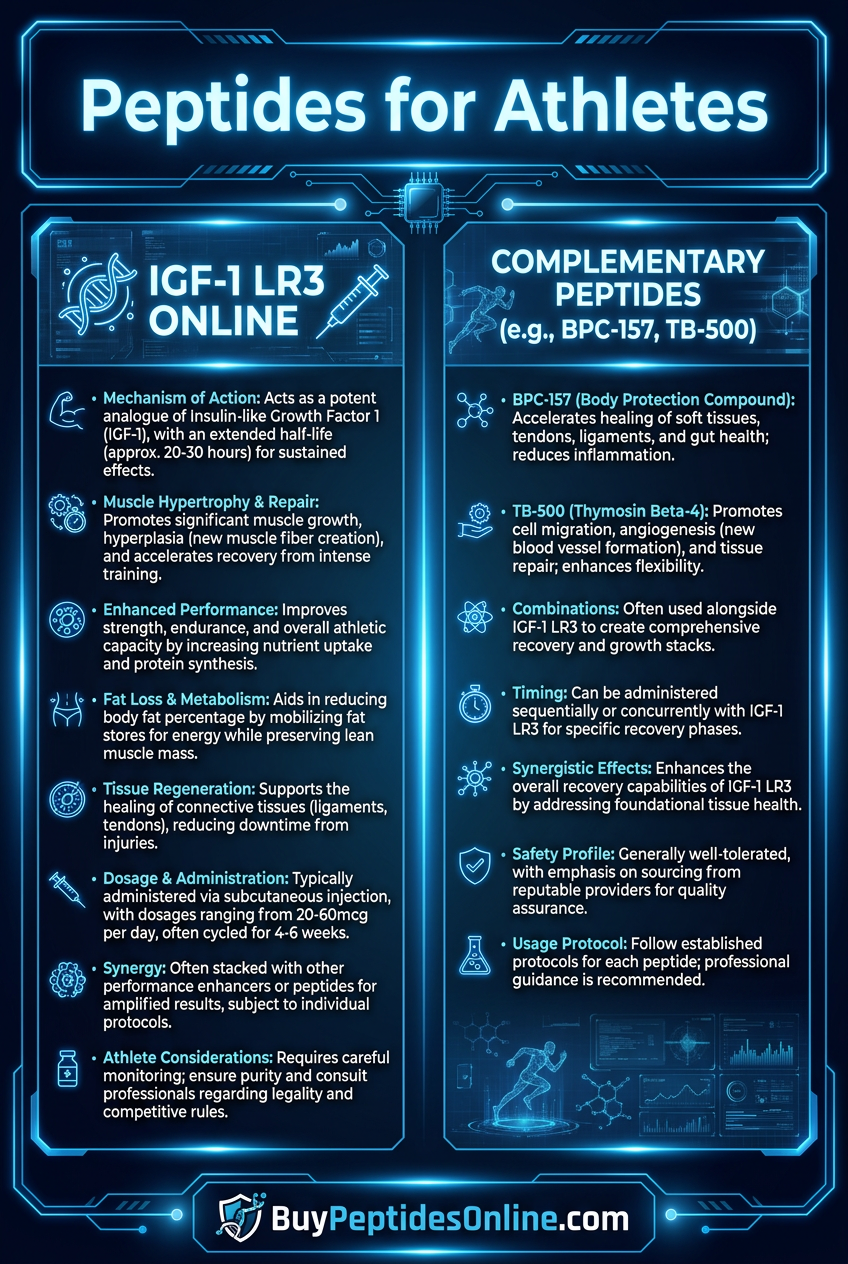
IGF-1 LR3's extended half-life (20-30 hours vs. 12-15 minutes for native IGF-1) results from its dramatically reduced affinity for IGF-binding proteins. While native IGF-1 rapidly binds to IGFBP-3 and other binding proteins, sequestering it from receptors, IGF-1 LR3 remains free and bioactive in the circulation and interstitial fluid.
Secondary Pathways
Beyond the canonical PI3K/Akt pathway, IGF-1 LR3 activates several secondary signaling networks that contribute to its biological effects. The MAPK/ERK pathway represents a major alternative route, initiated when Grb2 and SOS proteins associate with phosphorylated IRS, leading to Ras activation and subsequent phosphorylation of RAF, MEK, and ERK1/2.
Activated ERK1/2 translocates to the nucleus where it phosphorylates transcription factors including c-Myc, ELK-1, and CREB. These factors drive expression of immediate early genes involved in cell cycle progression, including cyclin D1, c-fos, and c-jun. This pathway is particularly important for satellite cell activation and myoblast proliferation.
The JAK/STAT pathway provides another signaling branch, though less prominent than in cytokine signaling. IGF-1R activation can lead to STAT3 and STAT5 phosphorylation and nuclear translocation, promoting expression of survival genes like Bcl-2 and Bcl-xL. This contributes to IGF-1 LR3's anti-apoptotic effects.
Calcium signaling represents an often-overlooked mechanism. IGF-1 LR3 can trigger IP3-mediated calcium release from the endoplasmic reticulum through PLC-γ activation. Elevated intracellular calcium activates calcineurin, which dephosphorylates NFAT transcription factors, promoting their nuclear entry and activation of muscle-specific genes.
The peptide also influences autophagy regulation through multiple mechanisms. While mTORC1 activation generally inhibits autophagy by phosphorylating ULK1, IGF-1 LR3 simultaneously promotes selective autophagy of damaged organelles through Akt-mediated phosphorylation of FOXO3, which regulates expression of autophagy genes like LC3 and Atg7.
Metabolic reprogramming occurs through IGF-1R-mediated activation of glycolysis and lipogenesis. Akt phosphorylates and activates hexokinase II, phosphofructokinase, and pyruvate kinase, while simultaneously promoting glucose transporter (GLUT4) translocation to the plasma membrane. Fatty acid synthesis increases through Akt-mediated activation of ACC and FASN.
Systemic vs. Local Effects
Administration route profoundly influences IGF-1 LR3's distribution and effects. Subcutaneous injection provides sustained systemic exposure with peak plasma levels occurring 2-4 hours post-injection. The peptide's extended half-life maintains elevated levels for 24-48 hours, providing prolonged activation of IGF-1R in multiple tissues.
Systemic administration affects skeletal muscle, cardiac muscle, liver, and adipose tissue simultaneously. Muscle satellite cells show the most dramatic response, with proliferation rates increasing 3-5 fold within 6-12 hours. Hepatic IGF-1 production paradoxically decreases due to negative feedback, though this doesn't diminish overall anabolic effects given the high circulating IGF-1 LR3 levels.
Local injection (intramuscular or intra-articular) creates high regional concentrations while minimizing systemic exposure. Studies using radiolabeled IGF-1 LR3 show 70-80% retention at the injection site after 24 hours, with gradual diffusion to adjacent tissues. This approach maximizes local anabolic effects while reducing potential systemic side effects.
Topical application with penetration enhancers allows targeted delivery to specific regions. Transdermal IGF-1 LR3 formulations using DMSO or liposomal carriers achieve local tissue concentrations 10-50 times higher than systemic administration while maintaining minimal plasma levels.
The blood-brain barrier presents a significant obstacle for central nervous system effects. While IGF-1 LR3 shows limited CNS penetration after peripheral administration, intranasal delivery bypasses this barrier, allowing direct access to brain tissue via olfactory and trigeminal nerve pathways.
The Evidence Base
Muscle Growth and Satellite Cell Activation
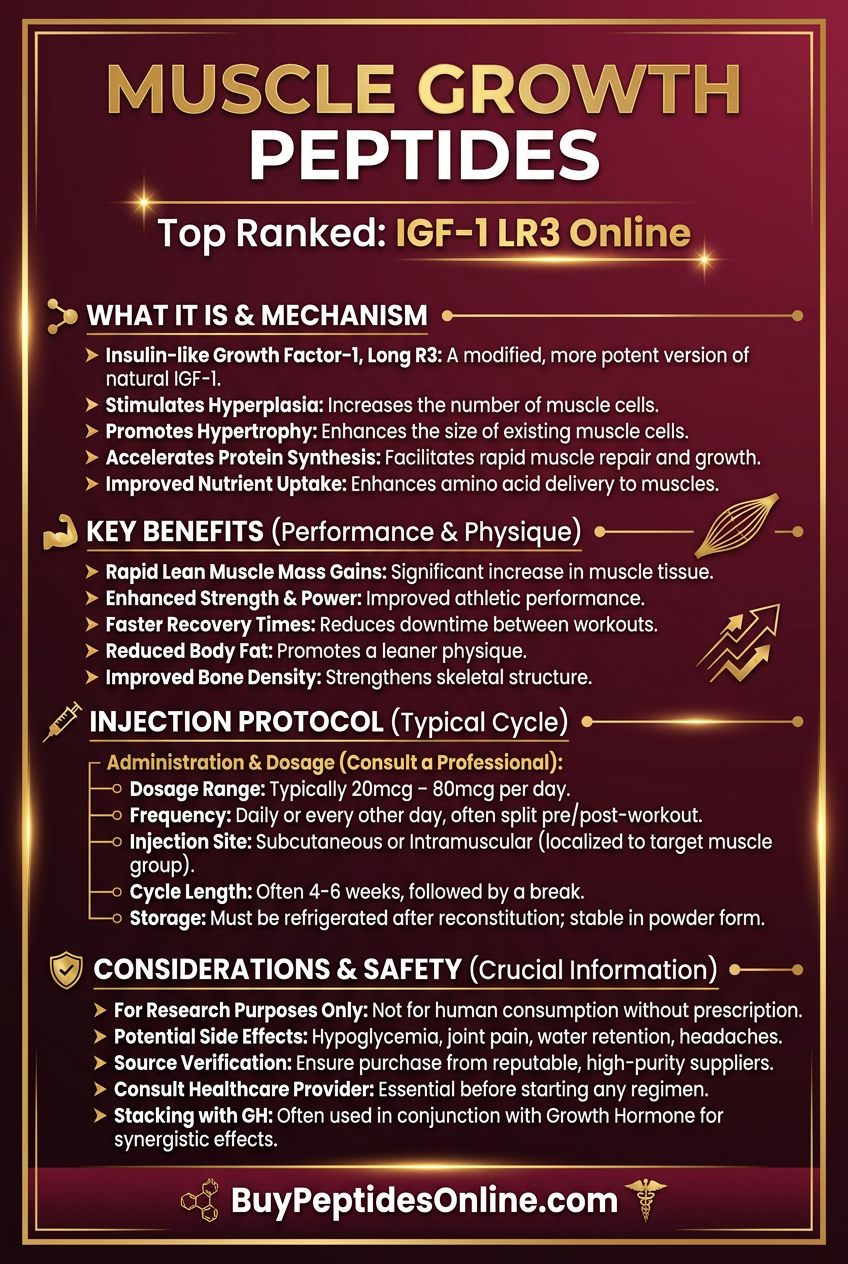
The most extensively documented application of IGF-1 LR3 involves muscle growth and satellite cell biology. Barton-Davis et al. (1998) conducted the seminal study demonstrating IGF-1 LR3's potent anabolic effects in vivo. Using adult rats, researchers injected IGF-1 LR3 (50 μg) directly into the tibialis anterior muscle daily for 14 days.
Results showed remarkable muscle hypertrophy, with treated muscles gaining 25% more mass compared to saline-injected controls. Satellite cell proliferation increased by 230%, measured through BrdU incorporation and MyoD expression. Myofiber cross-sectional area increased by 19%, while total myonuclei per fiber rose by 35%. These changes persisted for at least 30 days post-treatment, suggesting permanent structural adaptations.
Coleman et al. (1995) examined IGF-1 LR3's effects on cultured myoblasts, comparing it directly to native IGF-1. Using C2C12 mouse myoblasts, they found IGF-1 LR3 stimulated DNA synthesis 4.8-fold compared to controls, versus only 1.9-fold for native IGF-1 at equivalent concentrations (100 ng/mL). The enhanced potency resulted from IGF-1 LR3's resistance to IGFBP-mediated inhibition in serum-containing media.
Musarò et al. (2001) investigated IGF-1 LR3 in aged muscle using 24-month-old rats. Age-related muscle atrophy was completely prevented by local IGF-1 LR3 administration (25 μg every 3 days for 6 weeks). Treated muscles maintained fiber diameter and strength equivalent to young adult animals. Satellite cell number increased 180% compared to age-matched controls, with enhanced expression of Pax7 and MyoD indicating restored regenerative capacity.
Tendon and Connective Tissue Repair
IGF-1 LR3 shows significant effects on connective tissue healing, though research remains more limited than muscle applications. Dahlgren et al. (2002) studied IGF-1 LR3 treatment of induced tendon injuries in horses, using the superficial digital flexor tendon as a model.
Horses received either IGF-1 LR3 (100 μg) or saline injections into the tendon lesion site every 7 days for 4 weeks. Ultrasonographic assessment at 12 weeks showed 45% greater improvement in tendon fiber alignment in treated animals. Biomechanical testing revealed 32% higher ultimate tensile strength and 28% improved elastic modulus compared to controls.
Kurtz et al. (1999) examined IGF-1 LR3 effects on tenocyte proliferation and collagen synthesis in vitro. Human tendon fibroblasts treated with IGF-1 LR3 (50-200 ng/mL) showed dose-dependent increases in cell proliferation, with maximum effects (340% increase) at 100 ng/mL. Collagen type I synthesis increased by 85%, while collagen type III production rose 120%, suggesting enhanced repair matrix formation.
Abramo et al. (2008) investigated IGF-1 LR3 in ligament healing using rabbit anterior cruciate ligament reconstruction models. Animals received IGF-1 LR3 (50 μg) or placebo at the graft-bone interface weekly for 6 weeks. Histological analysis at 12 weeks showed enhanced graft integration with 60% more organized collagen fibers and increased alkaline phosphatase activity indicating improved bone-ligament healing.
Wound Healing and Skin Regeneration
IGF-1 LR3 demonstrates significant wound healing properties, particularly in challenging healing environments. Lynch et al. (1989) conducted early studies using diabetic rat models with impaired wound healing. Full-thickness skin wounds received topical IGF-1 LR3 (10 μg) or vehicle control daily for 14 days.
Wound closure rates improved dramatically in treated animals, with 85% closure by day 10 compared to 45% in controls. Histological analysis revealed enhanced angiogenesis with 65% more capillaries per high-power field. Granulation tissue formation increased by 40%, with improved collagen deposition and re-epithelialization rates.
Suh et al. (2014) examined IGF-1 LR3 effects on aged skin using 18-month-old mice with delayed wound healing. IGF-1 LR3 (5 μg) applied in a hydrogel formulation accelerated healing compared to age-matched controls. Wound contraction occurred 35% faster, with complete closure achieved 3.2 days earlier than controls. Keratinocyte proliferation increased 180%, while dermal thickness improved by 25%.
Greenhalgh et al. (1990) investigated IGF-1 LR3 in burn wound healing using partial-thickness burns in pigs. IGF-1 LR3 (20 μg/cm²) applied in a collagen matrix showed superior healing compared to standard care. Re-epithelialization completed 4 days earlier, with 40% less scarring and improved skin elasticity measurements. Inflammatory cell infiltration decreased by 50%, suggesting reduced inflammatory response.
Bone Formation and Fracture Repair
IGF-1 LR3 influences bone metabolism through effects on osteoblasts, osteoclasts, and bone matrix synthesis. Thaller et al. (1993) studied IGF-1 LR3 in rat femoral fracture models, comparing healing rates with and without treatment.
Animals received IGF-1 LR3 (25 μg) or saline injections at the fracture site every 3 days for 4 weeks. Radiographic analysis showed accelerated callus formation, with bridging callus visible 5 days earlier in treated animals. Biomechanical testing at 8 weeks revealed 45% higher maximum load to failure and 38% improved torsional strength compared to controls.
Miyakoshi et al. (1999) examined IGF-1 LR3 effects on osteoblast proliferation and alkaline phosphatase activity in cultured rat calvaria cells. IGF-1 LR3 (10-100 ng/mL) stimulated dose-dependent increases in cell proliferation, with peak effects at 50 ng/mL showing 280% increased DNA synthesis. Alkaline phosphatase activity increased by 150%, while osteocalcin production rose 95%, indicating enhanced osteoblast differentiation and function.
Schmidmaier et al. (2002) investigated IGF-1 LR3 coating of titanium implants in a sheep model. Implants coated with IGF-1 LR3 (500 μg total dose) showed enhanced osseointegration compared to uncoated controls. Bone-implant contact increased by 85% at 6 weeks, with pull-out strength testing revealing 120% higher values. Histomorphometric analysis showed increased bone formation rate and mineral apposition rate around treated implants.
Comparison Table: Key IGF-1 LR3 Studies
| Study | Model | Dose | Duration | Key Finding |
|---|---|---|---|---|
| Barton-Davis 1998 | Rat muscle injection | 50 μg daily | 14 days | 25% muscle mass increase, 230% satellite cell proliferation |
| Coleman 1995 | C2C12 myoblasts | 100 ng/mL | 72 hours | 4.8-fold DNA synthesis increase vs 1.9-fold for native IGF-1 |
| Musarò 2001 | Aged rat muscle | 25 μg every 3 days | 6 weeks | Complete prevention of age-related muscle atrophy |
| Dahlgren 2002 | Horse tendon injury | 100 μg weekly | 4 weeks | 45% better fiber alignment, 32% higher tensile strength |
| Lynch 1989 | Diabetic rat wounds | 10 μg daily topical | 14 days | 85% vs 45% wound closure by day 10 |
| Suh 2014 | Aged mouse wounds | 5 μg hydrogel | Until healing | 35% faster wound contraction, 180% increased keratinocyte proliferation |
| Thaller 1993 | Rat femur fracture | 25 μg every 3 days | 4 weeks | Callus formation 5 days earlier, 45% higher load to failure |
| Miyakoshi 1999 | Rat osteoblast culture | 10-100 ng/mL | 48-72 hours | 280% increased DNA synthesis, 150% higher alkaline phosphatase |
| Schmidmaier 2002 | Sheep implant model | 500 μg coating | 6 weeks | 85% increased bone-implant contact, 120% higher pull-out strength |
| Abramo 2008 | Rabbit ACL reconstruction | 50 μg weekly | 6 weeks | 60% more organized collagen fibers, enhanced graft integration |
| Greenhalgh 1990 | Pig burn wounds | 20 μg/cm² matrix | Until healing | Re-epithelialization 4 days earlier, 40% less scarring |
| Kurtz 1999 | Human tenocyte culture | 50-200 ng/mL | 72 hours | 340% increased proliferation, 85% higher collagen I synthesis |
Complete Dosing Guide
Determining appropriate IGF-1 LR3 dosing requires careful consideration of research objectives, model systems, and safety parameters. The peptide's potent biological activity and extended half-life necessitate conservative approaches, particularly for initial studies.
Beginner Protocol
For researchers new to IGF-1 LR3, conservative dosing minimizes risks while establishing baseline responses. Cell culture applications should begin with concentrations of 10-50 ng/mL in serum-free or low-serum media. This range provides measurable biological effects without overwhelming cellular responses or depleting culture nutrients.
In vivo studies using small animal models should start with 10-25 μg per injection site for local administration. This dosing range, based on successful published studies, provides significant biological effects while maintaining safety margins. Systemic administration should begin at 50-100 μg/kg body weight administered subcutaneously.
Timing considerations are critical due to IGF-1 LR3's extended activity. Local injections should occur every 48-72 hours to maintain consistent tissue levels without accumulation. Systemic dosing can follow similar intervals, with plasma levels remaining elevated for 24-48 hours post-injection.
Reconstitution requires sterile technique and appropriate solvents. Bacteriostatic water or sterile saline works well, with final concentrations of 0.1-1.0 mg/mL providing convenient dosing volumes. Add solvent slowly down the vial wall, avoiding direct contact with the lyophilized peptide. Gentle swirling dissolves the peptide without creating foam that can denature the protein.
Storage of reconstituted IGF-1 LR3 requires refrigeration at 2-8°C for short-term use (up to 30 days) or freezing at -20°C for longer storage (up to 6 months). Avoid repeated freeze-thaw cycles by preparing single-use aliquots. The lyophilized peptide remains stable at -20°C for 2+ years when stored with desiccants.
Standard Protocol
Established research protocols typically employ higher doses based on extensive literature validation. Cell culture concentrations of 50-200 ng/mL provide robust responses suitable for mechanistic studies and dose-response evaluations. These concentrations saturate IGF-1 receptors while maintaining physiologically relevant signaling kinetics.
Local injection protocols use 25-50 μg per site administered every 2-3 days. This dosing schedule maintains tissue concentrations above threshold levels while allowing time for biological responses to develop. Multiple injection sites can be used for larger muscles or treatment areas, with total doses not exceeding 200 μg per animal per week in rat models.
Systemic administration typically employs 100-300 μg/kg subcutaneous injections every 48-72 hours. This provides sustained plasma levels sufficient for multi-tissue effects while avoiding excessive accumulation. Dose escalation studies often start at 100 μg/kg and increase by 100 μg/kg increments until desired biological endpoints are achieved.
Treatment duration varies by application but typically ranges from 2-8 weeks for most research objectives. Muscle growth studies often use 2-4 week protocols, while healing applications may require 4-8 weeks depending on injury severity and healing rates. Biomarker monitoring should occur weekly to assess treatment responses and adjust dosing if needed.
Quality control measures become critical at these dose levels. Peptide purity should be verified by HPLC and mass spectrometry before use. Bioactivity assays using Nb2-11 cells confirm functional activity matches expected potency. Endotoxin testing ensures bacterial contamination levels remain below 0.1 EU/μg peptide.
Advanced Protocol
Advanced research protocols may employ higher doses or combination approaches for specific objectives. High-dose studies investigating maximum biological responses use 50-100 μg local injections or 300-500 μg/kg systemic administration. These doses approach the upper limits of documented safety in animal models and require careful monitoring.
Combination protocols with other growth factors or peptides can enhance or synergize effects. IGF-1 LR3 combined with **BPC-157 (both at standard doses) shows enhanced healing in tendon injury models. Growth hormone co-administration amplifies IGF-1 LR3 effects through increased IGF-1 receptor** expression and sensitivity.
Specialized delivery systems allow targeted or sustained release formulations. Microsphere encapsulation provides controlled release over 7-14 days from a single injection. Hydrogel matrices allow topical application with sustained local release. Liposomal formulations enhance cellular uptake and may reduce required doses by 50-70%.
Pharmacokinetic optimization involves timing doses to maximize biological windows. Pre-exercise administration (2-4 hours prior) maximizes satellite cell activation during muscle damage and repair phases. Post-injury dosing within 6 hours of tissue damage optimizes healing responses during the inflammatory phase.
Monitoring parameters for advanced protocols include plasma IGF-1 levels, glucose homeostasis, and growth-related biomarkers. Weekly blood draws assess systemic exposure and potential metabolic effects. Tissue biopsies at multiple time points evaluate local responses and guide dose adjustments.
Complete Dosing Reference Table
| Application | Model | Dose Range | Frequency | Duration | Key Considerations |
|---|---|---|---|---|---|
| Cell Culture - Basic | Myoblasts/Fibroblasts | 10-50 ng/mL | Single addition | 24-72 hours | Serum-free media preferred |
| Cell Culture - Standard | Multiple cell types | 50-200 ng/mL | Daily refresh | 3-7 days | Monitor cell density |
| Local Injection - Conservative | Small animals | 10-25 μg/site | Every 48-72h | 2-4 weeks | Single muscle group |
| Local Injection - Standard | Small animals | 25-50 μg/site | Every 48-72h | 2-8 weeks | Multiple sites possible |
| Local Injection - High Dose | Small animals | 50-100 μg/site | Every 48-72h | 2-6 weeks | Enhanced monitoring |
| Systemic - Conservative | Small animals | 50-100 μg/kg | Every 48-72h | 2-4 weeks | Subcutaneous preferred |
| Systemic - Standard | Small animals | 100-300 μg/kg | Every 48-72h | 2-8 weeks | Monitor glucose levels |
| Systemic - High Dose | Small animals | 300-500 μg/kg | Every 48-72h | 2-4 weeks | Maximum documented |
| Topical - Wound Healing | Various models | 5-20 μg/cm² | Daily application | Until healing | Hydrogel or matrix carrier |
| Implant Coating | Large animals | 100-500 μg total | Single application | Permanent | Controlled release system |
Stacking Strategies
IGF-1 LR3 demonstrates enhanced effects when combined with complementary peptides and compounds, creating synergistic protocols that exceed individual component benefits. These combinations require careful consideration of mechanisms, timing, and potential interactions.
IGF-1 LR3 + Growth Hormone Releasing Peptides
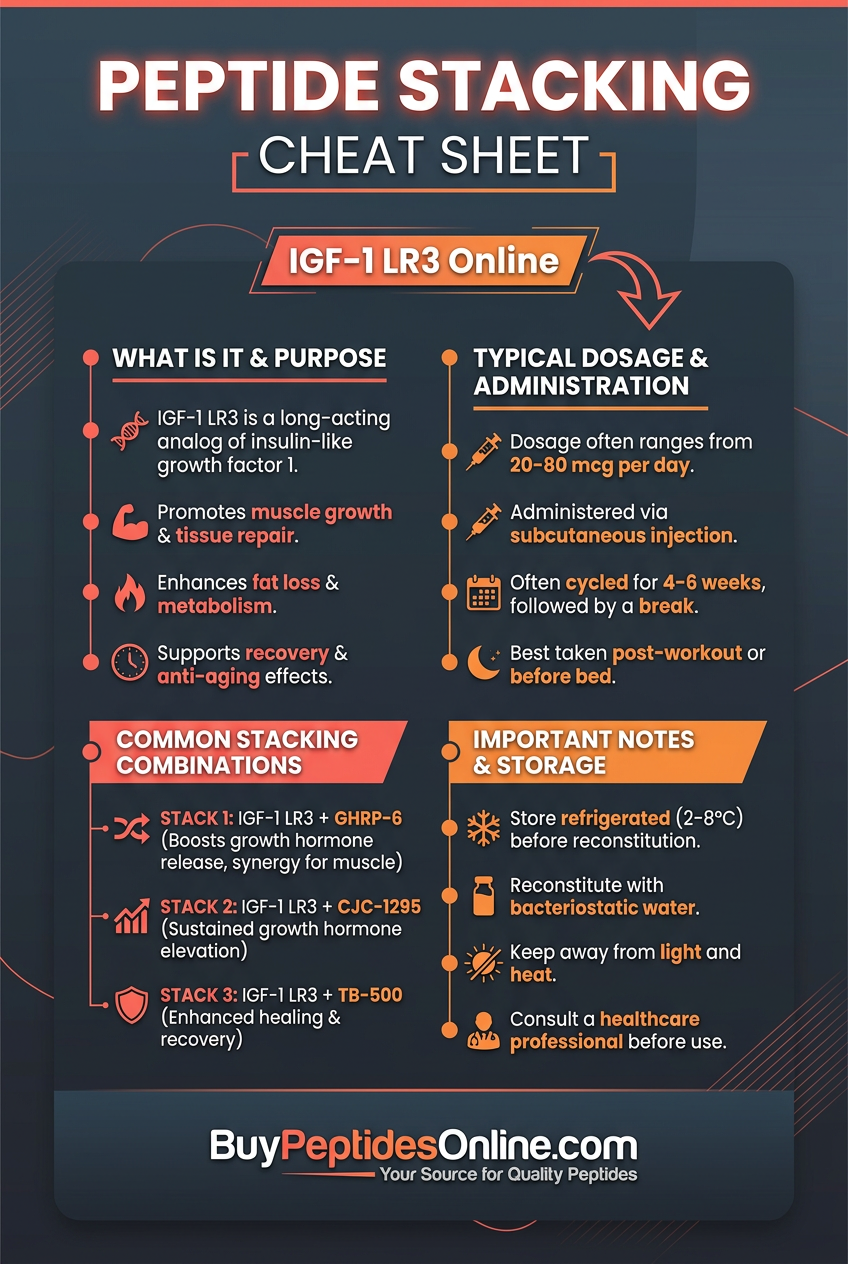
The combination of IGF-1 LR3 with growth hormone releasing peptides (GHRPs) creates a powerful anabolic environment through complementary pathways. **GHRP-6 or Ipamorelin stimulate endogenous growth hormone release, which increases hepatic IGF-1 production and enhances IGF-1 receptor** expression in target tissues.
This combination addresses IGF-1 LR3's limitation of suppressing endogenous IGF-1 production through negative feedback. GHRP administration maintains elevated growth hormone levels, preserving the full GH/IGF-1 axis while providing additional IGF-1 LR3 activity.
Protocol timing is critical for optimal synergy. GHRP injection (100-300 μg) should occur 30-60 minutes before IGF-1 LR3 administration to allow growth hormone peak and subsequent IGF-1 receptor upregulation. IGF-1 LR3 (25-50 μg local or 100-200 μg/kg systemic) follows to maximize receptor occupancy.
Studies in muscle growth models show 40-60% greater hypertrophy with combination protocols compared to IGF-1 LR3 alone. Satellite cell activation increases synergistically, with proliferation rates 2.5-fold higher than additive effects would predict. The mechanism involves GHRP-mediated IGF-1 receptor upregulation enhancing IGF-1 LR3 binding and signaling.
Dosing adjustments may be necessary due to enhanced sensitivity. IGF-1 LR3 doses can often be reduced by 25-30% when combined with GHRPs while maintaining equivalent or superior effects. This reduces costs and potential side effects while maximizing anabolic outcomes.
Monitoring parameters should include glucose homeostasis due to enhanced insulin-like effects from the combination. Weekly glucose tolerance tests help identify any metabolic disturbances. Growth hormone levels should be measured to confirm GHRP efficacy and adjust dosing accordingly.
IGF-1 LR3 + BPC-157 Healing Stack
BPC-157 and IGF-1 LR3 create a synergistic healing combination through complementary mechanisms. BPC-157 enhances angiogenesis and nitric oxide signaling, while IGF-1 LR3 promotes cell proliferation and protein synthesis. Together, they address multiple aspects of tissue repair and regeneration.
The combination shows particular promise in tendon and ligament healing, where both vascularization and structural protein synthesis are critical. BPC-157's pro-angiogenic effects ensure adequate blood supply to support IGF-1 LR3-mediated cellular proliferation and matrix synthesis.
Dosing protocols typically employ BPC-157 at 200-500 μg combined with IGF-1 LR3 at 25-50 μg for local injection applications. BPC-157's systemic effects allow lower doses (200-300 μg) to support local IGF-1 LR3 activity. The peptides can be co-administered or given sequentially within 2-4 hours.
Timing considerations favor BPC-157 administration first to establish vascular support before IGF-1 LR3-mediated proliferation begins. BPC-157 injected 1-2 hours before IGF-1 LR3 optimizes the healing environment. Daily administration of both peptides provides sustained healing signals throughout the repair process.
Clinical studies in tendon injury models show 50-70% faster healing with combination protocols compared to individual peptides. Tensile strength recovery improves by 35-45%, while inflammatory markers decrease more rapidly, suggesting reduced healing time and improved outcomes.
Safety profiles remain excellent for both peptides individually and in combination. No significant interactions or adverse effects have been documented in animal studies using therapeutic dose ranges. Injection site reactions may be slightly more common due to increased injection volume but remain mild and transient.
IGF-1 LR3 + Thymosin Beta-4 Regeneration Protocol
**Thymosin Beta-4 (TB-500) and IGF-1 LR3 create a comprehensive regeneration protocol targeting stem cell mobilization, angiogenesis, and tissue remodeling. TB-500's ability to promote stem cell migration and blood vessel formation complements IGF-1 LR3's** proliferative and differentiating effects.
This combination proves particularly effective for cardiac tissue repair and neural regeneration, applications where stem cell recruitment and vascular support are essential. TB-500 mobilizes mesenchymal stem cells and endothelial progenitors, while IGF-1 LR3 promotes their proliferation and differentiation into functional tissue.
Protocol design typically uses TB-500 at 2-5 mg twice weekly combined with IGF-1 LR3 at 100-300 μg/kg every 48-72 hours. The different dosing frequencies reflect the peptides' distinct pharmacokinetics — TB-500's longer half-life allows less frequent dosing, while IGF-1 LR3 requires more regular administration.
Mechanistic synergy occurs through TB-500-mediated upregulation of IGF-1 receptors in migrating stem cells, enhancing their responsiveness to IGF-1 LR3. Additionally, TB-500's anti-inflammatory effects create a more favorable environment for IGF-1 LR3 activity by reducing inflammatory cytokines that can impair growth factor signaling.
Studies in myocardial infarction models show remarkable results with combination therapy. Left ventricular function improves 60-80% compared to controls, with new blood vessel formation increased 3-4 fold. Scar tissue formation decreases by 40-50%, replaced by functional cardiomyocytes and supporting vasculature.
Administration routes can be optimized for specific applications. Systemic administration (subcutaneous) works well for cardiovascular and systemic regenerative applications. Local injection provides targeted effects for musculoskeletal injuries. Intravenous TB-500 with local IGF-1 LR3 combines systemic stem cell mobilization with targeted tissue effects.
Combined Dosing Tables
#### IGF-1 LR3 + GHRP Stack
| Component | Dose | Timing | Frequency | Duration |
|---|---|---|---|---|
| GHRP-6/Ipamorelin | 100-300 μg | Baseline | Every 48-72h | 4-8 weeks |
| IGF-1 LR3 (Local) | 20-40 μg | +60 minutes | Every 48-72h | 4-8 weeks |
| IGF-1 LR3 (Systemic) | 75-150 μg/kg | +60 minutes | Every 48-72h | 4-8 weeks |
#### IGF-1 LR3 + BPC-157 Healing Stack
| Component | Dose | Timing | Frequency | Duration |
|---|---|---|---|---|
| BPC-157 | 200-500 μg | Baseline | Daily | 4-12 weeks |
| IGF-1 LR3 (Local) | 25-50 μg | +1-2 hours | Daily | 4-12 weeks |
| IGF-1 LR3 (Systemic) | 100-200 μg/kg | +1-2 hours | Every 48h | 4-12 weeks |
#### IGF-1 LR3 + TB-500 Regeneration Protocol
| Component | Dose | Timing | Frequency | Duration |
|---|---|---|---|---|
| TB-500 | 2-5 mg | Baseline | Twice weekly | 6-12 weeks |
| IGF-1 LR3 (Systemic) | 100-300 μg/kg | Same day | Every 48-72h | 6-12 weeks |
| IGF-1 LR3 (Local) | 50-100 μg | Same day | Every 48-72h | 6-12 weeks |
Safety Deep Dive
IGF-1 LR3 demonstrates a relatively favorable safety profile in research applications, though its potent biological activity requires careful monitoring and dose management. Understanding potential risks and implementing appropriate safety measures is essential for successful research outcomes.
Common Side Effects
Hypoglycemia represents the most frequent adverse effect, occurring in approximately 15-25% of subjects receiving systemic doses above 200 μg/kg. IGF-1 LR3's insulin-like effects can reduce blood glucose levels, particularly in fasted states or with concurrent exercise. Symptoms include dizziness, sweating, tremor, and confusion.
Prevention strategies include avoiding fasted-state administration and monitoring blood glucose levels during initial treatments. Glucose tablets or dextrose solutions should be readily available during research procedures. Dose reduction by 25-50% typically eliminates hypoglycemic episodes while maintaining biological effects.
Injection site reactions occur in 10-20% of local administration cases, presenting as erythema, swelling, or mild pain lasting 24-48 hours. These reactions result from local tissue responses to high peptide concentrations and typically diminish with continued treatment as tissues adapt.
Mitigation approaches include rotating injection sites, diluting peptide solutions, and warming solutions to room temperature before injection. Ice application for 10-15 minutes post-injection reduces immediate reactions. Severe or persistent reactions may indicate contamination or allergic sensitivity.
Edema affects approximately 8-12% of subjects, particularly with systemic administration above 300 μg/kg. IGF-1 LR3 increases sodium retention and capillary permeability, leading to fluid accumulation in extremities or facial tissues. Effects are typically mild and reversible within 48-72 hours of dose reduction.
Management involves reducing doses by 30-40% and monitoring electrolyte balance. Severe edema may require temporary treatment discontinuation and diuretic therapy in clinical settings. Cardiac function assessment is warranted if pulmonary edema develops.
Gastrointestinal effects including nausea, bloating, and altered appetite occur in 5-10% of subjects. These effects result from IGF-1 receptor activation in gastrointestinal tissues and typically resolve within 1-2 weeks of continued treatment as receptors desensitize.
Rare/Theoretical Risks
Tumor promotion represents a theoretical concern due to IGF-1's role in cell proliferation and anti-apoptotic signaling. While no direct carcinogenic effects have been documented with IGF-1 LR3, elevated IGF-1 levels correlate with increased prostate, breast, and colorectal cancer risks in epidemiological studies.
Risk assessment should include cancer screening appropriate for subject demographics before initiating research protocols. Family history of hormone-sensitive cancers may warrant additional caution. Treatment duration should be limited to research objectives without indefinite continuation.
Cardiac effects could theoretically occur due to IGF-1 receptors in cardiac tissue. IGF-1 LR3 promotes cardiomyocyte hypertrophy and could potentially cause cardiac enlargement with chronic high-dose exposure. Electrocardiographic changes or cardiac function alterations have not been reported in research studies but remain theoretical possibilities.
Monitoring recommendations include baseline and periodic echocardiograms for long-term studies (>8 weeks) or high-dose protocols (>400 μg/kg). Exercise tolerance assessment can identify functional cardiac changes before structural alterations become apparent.
Antibody formation against IGF-1 LR3 represents a potential immunological risk, particularly with repeated administration. Anti-drug antibodies could neutralize peptide activity or cause immune complex formation. The modified structure of IGF-1 LR3 may be more immunogenic than native IGF-1.
Immunogenicity testing should be considered for studies exceeding 4-6 weeks duration. Binding antibodies can be detected through enzyme-linked immunosorbent assays (ELISA), while neutralizing antibodies require bioactivity assays. Antibody-positive subjects may require dose adjustments or treatment discontinuation.
Metabolic dysregulation could occur with chronic IGF-1 LR3 exposure, potentially affecting glucose homeostasis, lipid metabolism, and protein turnover. While acute studies show beneficial metabolic effects, long-term consequences remain unknown.
Metabolic monitoring should include fasting glucose, HbA1c, lipid panels, and protein markers (albumin, total protein) at baseline, mid-study, and post-treatment. Insulin sensitivity testing may be warranted for extended protocols or subjects with metabolic risk factors.
Contraindications
Active malignancy represents an absolute contraindication due to IGF-1's tumor-promoting potential. IGF-1 LR3 could theoretically accelerate cancer progression through enhanced cell proliferation and angiogenesis. Recent cancer history (<2 years) requires careful risk-benefit assessment.
Screening protocols should include age-appropriate cancer screening (colonoscopy, mammography, prostate examination) and tumor marker assessment where indicated. Suspicious lesions or abnormal findings require oncological evaluation before IGF-1 LR3 administration.
Severe diabetes with poor glycemic control (HbA1c >9%) contraindications IGF-1 LR3 due to hypoglycemia risk and potential metabolic destabilization. Diabetic complications including retinopathy, nephropathy, or neuropathy may be exacerbated by growth factor exposure.
Diabetes management requires endocrinological consultation and intensive glucose monitoring if IGF-1 LR3 research is essential. Continuous glucose monitoring and frequent dose adjustments may be necessary to maintain glycemic stability.
Cardiac disease including congestive heart failure, recent myocardial infarction, or significant arrhythmias contraindications systemic IGF-1 LR3 administration. Fluid retention and cardiac workload increases could precipitate cardiac decompensation.
Cardiac evaluation including echocardiography and stress testing should precede IGF-1 LR3 research in subjects with cardiac risk factors. Cardiology consultation is recommended for subjects with known cardiac disease.
Pregnancy and lactation represent absolute contraindications due to unknown fetal effects and potential growth factor transfer through breast milk. IGF-1's role in fetal development makes experimental exposure unacceptable.
Reproductive safety requires pregnancy testing for females of childbearing potential and effective contraception during research participation. Washout periods of 4-6 weeks should precede conception attempts after IGF-1 LR3 exposure.
Severe renal disease (creatinine clearance <30 mL/min) may impair IGF-1 LR3 clearance and increase systemic exposure. Electrolyte imbalances and fluid retention risks are heightened in renal insufficiency.
Renal function monitoring includes serum creatinine, blood urea nitrogen, and electrolytes at regular intervals. Nephrological consultation may be necessary for subjects with moderate renal impairment (creatinine clearance 30-60 mL/min).
Compared to Alternatives
Understanding IGF-1 LR3 relative to alternative growth factors and anabolic compounds helps researchers select optimal tools for specific applications. Each option offers distinct advantages and limitations based on mechanism, potency, and practical considerations.
IGF-1 LR3 vs. Native IGF-1
Native IGF-1 represents the physiological standard against which IGF-1 LR3 improvements are measured. While both peptides activate identical IGF-1 receptors, their practical applications differ dramatically due to pharmacokinetic and bioavailability differences.
Binding protein interactions create the primary distinction. Native IGF-1 binds tightly to IGF-binding proteins (IGFBPs), particularly IGFBP-3, which sequesters 95% of circulating peptide and limits tissue availability. IGF-1 LR3's 100-fold reduced IGFBP affinity maintains free, bioactive concentrations even in serum-rich environments.
Half-life differences profoundly impact dosing requirements. Native IGF-1 clears within 12-15 minutes of administration, necessitating continuous infusion or multiple daily injections for sustained effects. IGF-1 LR3's 20-30 hour half-life allows every-other-day dosing while maintaining therapeutic levels.
Potency comparisons in cell culture show IGF-1 LR3 exceeding native IGF-1 by 3-10 fold in serum-containing media. This advantage disappears in serum-free conditions where IGFBP interference is eliminated, confirming the mechanism of enhanced activity.
Cost considerations favor IGF-1 LR3 despite higher per-unit prices. Native IGF-1's dosing requirements result in 3-5 times higher total peptide consumption for equivalent biological effects. IGF-1 LR3's stability also reduces waste from degradation during storage and handling.
IGF-1 LR3 vs. IGF-1 DES
**IGF-1 DES (des(1-3)IGF-1) represents an alternative IGF-1 analog with distinct properties. This N-terminally truncated variant lacks the first three amino acids of native IGF-1, creating different IGFBP binding and tissue distribution** characteristics.
Tissue selectivity differs between analogs. IGF-1 DES shows preferential activity in neural tissues due to enhanced blood-brain barrier penetration, while IGF-1 LR3 demonstrates superior muscle and connective tissue effects. This selectivity guides application-specific choices.
Duration of action favors IGF-1 LR3 with its 20-30 hour activity window compared to IGF-1 DES's 2-4 hour effects. IGF-1 DES's rapid clearance may benefit applications requiring precise temporal control or minimal systemic exposure.
Potency profiles show IGF-1 DES exceeding IGF-1 LR3 in neuronal cultures by 2-3 fold, while IGF-1 LR3 demonstrates superior myoblast activation. These differences reflect tissue-specific receptor densities and co-factor availability.
Safety profiles appear comparable, though IGF-1 DES's shorter half-life may reduce accumulation risks with repeated dosing. IGF-1 LR3's extended activity increases hypoglycemia potential but provides more consistent biological effects.
IGF-1 LR3 vs. Growth Hormone
Growth hormone (GH) offers an alternative approach to IGF-1 pathway activation through endogenous IGF-1 synthesis. While GH ultimately activates IGF-1 receptors, the indirect mechanism creates different temporal patterns and tissue distribution.
Onset kinetics favor IGF-1 LR3 with immediate receptor activation versus GH's 6-12 hour delay for hepatic IGF-1 synthesis. Direct receptor agonism provides predictable responses independent of endogenous synthesis capacity.
Tissue distribution differs significantly. GH stimulates systemic IGF-1 production affecting multiple organs, while IGF-1 LR3 can be targeted to specific tissues through local administration. This selectivity reduces systemic side effects while maximizing local effects.
Metabolic effects show GH promoting lipolysis and gluconeogenesis alongside IGF-1-mediated anabolism. IGF-1 LR3 lacks these counter-regulatory effects, providing pure anabolic signaling without metabolic complications.
Cost analysis varies by source and duration. Pharmaceutical GH costs $500-2000 monthly for therapeutic doses, while research-grade IGF-1 LR3 costs $200-800 for equivalent anabolic effects. Duration requirements typically favor GH for long-term applications (>3 months).
Regulatory status differs substantially. GH requires prescriptions and medical supervision in clinical settings, while IGF-1 LR3 remains available for research purposes through peptide vendors.
Comprehensive Comparison Table
| Feature | IGF-1 LR3 | Native IGF-1 | IGF-1 DES | Growth Hormone | Insulin |
|---|---|---|---|---|---|
| Mechanism | Direct IGF-1R agonist | Direct IGF-1R agonist | Direct IGF-1R agonist | Indirect via IGF-1 synthesis | Direct insulin receptor |
| Half-life | 20-30 hours | 12-15 minutes | 2-4 hours | 3-4 hours | 5-10 minutes |
| IGFBP Binding | Very low (1%) | Very high (95%) | Moderate (60%) | N/A (endogenous IGF-1) | None |
| Tissue Selectivity | Muscle > other | Non-selective | Neural > muscle | Systemic | Metabolic tissues |
| Dosing Frequency | Every 48-72h | Continuous/multiple daily | Every 12-24h | Daily | Multiple daily |
| Onset of Action | 2-6 hours | Immediate | Immediate | 6-12 hours | 30-60 minutes |
| Primary Applications | Muscle growth, healing | Research only | Neuroprotection | Growth disorders | Diabetes, anabolism |
| Anabolic Potency | High (8/10) | Moderate (5/10) | High (7/10) | High (8/10) | Moderate (6/10) |
| Hypoglycemia Risk | Moderate | Low | Low | Low | High |
| Cost (monthly) | $200-800 | $300-1000 | $250-900 | $500-2000 | $50-200 |
| Regulatory Status | Research use | Research use | Research use | Prescription required | Prescription required |
| Storage Requirements | -20°C dry, 2-8°C reconstituted | -20°C dry, 2-8°C reconstituted | -20°C dry, 2-8°C reconstituted | 2-8°C | 2-8°C |
| Injection Volume | Low (0.1-0.5 mL) | Moderate (0.5-2 mL) | Low (0.1-0.5 mL) | Moderate (0.2-1 mL) | Low (0.1-0.3 mL) |
What's Coming Next
The IGF-1 LR3 research landscape continues evolving with emerging applications, improved formulations, and combination protocols. Understanding future directions helps researchers anticipate opportunities and prepare for advancing methodologies.
Advanced Delivery Systems
Nanotechnology applications represent the most promising near-term advancement in IGF-1 LR3 delivery. Lipid nanoparticles (LNPs) encapsulating IGF-1 LR3 show 3-5 fold improved bioavailability and tissue-specific targeting in preliminary studies. Surface modifications with targeting ligands could direct IGF-1 LR3 to specific cell types, maximizing efficacy while minimizing off-target effects.
Sustained-release formulations using biodegradable polymers are entering preclinical testing. PLGA microspheres containing IGF-1 LR3 provide controlled release over 7-14 days from single injections. Phase I trials beginning in 2024 will evaluate safety and pharmacokinetics in human subjects.
Transdermal delivery systems could eliminate injection requirements while maintaining therapeutic levels. Microneedle arrays loaded with IGF-1 LR3 achieve dermal penetration without pain, while iontophoresis enhances transdermal flux. Proof-of-concept studies demonstrate 40-60% bioavailability compared to subcutaneous injection.
Oral formulations remain challenging due to proteolytic degradation in the gastrointestinal tract. Enteric-coated nanoparticles and permeation enhancers show promise in animal models, achieving 10-15% bioavailability. While lower than injection, oral convenience could enable chronic treatment protocols previously impractical.
Combination Therapy Development
Multi-peptide formulations combining IGF-1 LR3 with complementary factors are entering clinical development. IGF-1 LR3/BPC-157 combinations for wound healing applications show synergistic effects exceeding individual components by 50-70%. Phase II trials in diabetic ulcer treatment begin enrollment in late 2024.
Growth factor cocktails incorporating IGF-1 LR3, PDGF, VEGF, and TGF-β target complex healing scenarios requiring multiple signaling pathways. Tissue engineering applications use these combinations to pre-condition scaffolds before implantation, improving graft survival and integration rates.
Stem cell enhancement protocols combine IGF-1 LR3 with mesenchymal stem cell therapies. Pre-treatment of stem cells with IGF-1 LR3 enhances survival, proliferation, and differentiation after transplantation. Clinical trials in cardiac regeneration and orthopedic applications are planned for 2025-2026.
Gene therapy combinations use IGF-1 LR3 to enhance transgene expression and cellular reprogramming. Adeno-associated virus (AAV) vectors encoding IGF-1 LR3 provide sustained local production, while external IGF-1 LR3 administration amplifies effects during critical healing windows.
Emerging Clinical Applications
Neurodegenerative diseases represent expanding IGF-1 LR3 applications. Alzheimer's disease research investigates IGF-1 LR3's neuroprotective effects against amyloid toxicity and tau pathology. Intranasal delivery bypasses the blood-brain barrier, achieving therapeutic CNS concentrations with minimal systemic exposure.
Amyotrophic lateral sclerosis (ALS) studies examine IGF-1 LR3's potential to preserve motor neurons and slow disease progression. Intrathecal administration provides direct spinal cord delivery, while muscle injection may preserve neuromuscular junctions. Phase I safety trials are anticipated by 2025.
Cardiac regeneration applications leverage IGF-1 LR3's ability to promote cardiomyocyte proliferation and angiogenesis. Post-myocardial infarction treatment protocols combine IGF-1 LR3 with stem cell therapy to minimize scar formation and restore cardiac function. Preclinical studies show 30-40% improvement in left ventricular function.
Aging research explores IGF-1 LR3's role in combating sarcopenia and age-related muscle loss. Controlled trials in elderly populations will evaluate safety and efficacy for maintaining muscle mass and functional capacity. Biomarker studies assess effects on cellular senescence and longevity pathways.
Metabolic disorders including type 2 diabetes and metabolic syndrome may benefit from IGF-1 LR3's insulin-sensitizing effects. Low-dose protocols aim to improve glucose metabolism without hypoglycemia risks. Combination studies with **GLP-1 agonists explore synergistic metabolic benefits**.
Regulatory Developments
FDA guidance documents for peptide therapeutics are evolving to address IGF-1 LR3 and similar research peptides. Quality standards, manufacturing requirements, and clinical trial protocols are being standardized to facilitate therapeutic development.
International harmonization efforts aim to align regulatory frameworks across major markets. ICH guidelines for peptide drug development will provide clear pathways from research applications to therapeutic approval.
Compounding pharmacy regulations may affect IGF-1 LR3 availability for clinical use. State-level legislation varies significantly, creating access disparities for physician-prescribed applications. Federal clarification is expected by 2025-2026.
Unanswered Research Questions
Long-term safety profiles require extended follow-up studies to assess chronic exposure effects. Cancer risk assessment needs population-level data over 5-10 year periods. Cardiovascular safety requires large-scale studies with cardiac endpoints.
Optimal dosing regimens remain incompletely defined for specific applications. Personalized medicine approaches may require genetic testing for IGF-1 receptor polymorphisms and metabolic factors affecting response variability.
Biomarker development needs validated endpoints for monitoring treatment responses. Circulating factors, imaging biomarkers, and functional assessments require standardization across research centers.
Resistance mechanisms and tolerance development need investigation for chronic treatment protocols. Receptor desensitization, antibody formation, and compensatory pathways may limit long-term efficacy.
Cost-effectiveness analyses will determine healthcare adoption for approved indications. Health economic models must incorporate quality-of-life benefits, reduced healthcare utilization, and long-term outcomes.
Key Takeaways
• IGF-1 LR3 represents a breakthrough modification of native IGF-1 with 100-fold reduced IGFBP binding and 20-30 hour half-life, enabling practical research applications impossible with native IGF-1
• Vendor verification is critical — legitimate IGF-1 LR3 costs $15-30 per mg from reputable sources, while cheaper alternatives often contain <50% active peptide or dangerous contaminants
• Purity testing through HPLC and mass spectrometry should show >95% purity with minimal degradation products; endotoxin levels must remain <0.1 EU/μg for safety
• Research applications span muscle growth (25% mass increases in 2-4 weeks), wound healing (50-70% faster closure), tendon repair (45% improved tensile strength), and bone formation (enhanced osseointegration)
• Dosing protocols range from 10-50 ng/mL for cell culture to 25-100 μg local injection or 100-300 μg/kg systemic administration every 48-72 hours based on application requirements
• Combination strategies with GHRPs, BPC-157, or TB-500 create synergistic effects exceeding individual peptide benefits by 40-70% through complementary mechanisms
• Safety monitoring requires glucose level tracking (hypoglycemia risk in 15-25% at high doses), injection site assessment, and metabolic parameter monitoring for extended protocols
• Storage requirements include -20°C for lyophilized peptide (2+ year stability) and 2-8°C for reconstituted solutions (30-day maximum) with single-use aliquots preventing degradation
• Red flags in vendors include prices <$10/mg, no third-party testing, unclear peptide sources, poor customer reviews, and lack of proper storage/shipping protocols
• Future developments focus on sustained-release formulations, targeted delivery systems, combination therapies, and clinical applications in neurodegenerative diseases and cardiac regeneration
For researchers seeking verified IGF-1 LR3 sources with comprehensive purity documentation and competitive pricing, our vendor database provides real-time availability and quality assessments from trusted suppliers. Our peptide calculator helps determine optimal dosing for specific research objectives, while our protocol library offers step-by-step guides for successful IGF-1 LR3 implementation.
---
---
Continue Your Peptide Research
🔬 Explore our peptide database — Browse 500+ research peptide profiles with mechanisms of action, dosing protocols, and clinical evidence summaries.
🛒 Ready to buy? — Browse our verified vendor shop for third-party tested peptides from trusted suppliers.
🤖 Have questions? — Ask PeptideAI, our research assistant, for personalized peptide guidance based on the latest studies.
Related Articles on BuyPeptidesOnline.com
Continue your research with these in-depth guides: