Dr. Sarah Chen stared at the growth hormone data streaming across her monitor, her coffee growing cold as the implications became clear. After six months of comparative trials, the numbers told an unmistakable story: **hexarelin had just triggered a 340% increase in growth hormone release in her test subjects, nearly triple what ipamorelin** achieved at the same dose. But buried in the endocrine panel results was an equally compelling finding — hexarelin had simultaneously spiked cortisol levels by 180% and prolactin by 220%. Researchers looking to explore these dynamics can source research-grade hexarelin from verified vendors.
Ipamorelin, meanwhile, showed virtually no impact on either stress hormone.
This moment crystallized what researchers worldwide were discovering: the choice between these two growth hormone secretagogues (GHS) isn't simply about potency. It's about precision.
The Discovery
The story of both peptides begins in the 1990s at Pharmacia & Upjohn (now Pfizer), where researchers were hunting for compounds that could stimulate growth hormone release without the broad hormonal disruption seen with earlier secretagogues. The team, led by Dr. Cyril Bowers, had already developed **GHRP-6 and GHRP-2**, but both triggered unwanted increases in cortisol and prolactin — a limitation that drove the search for cleaner alternatives. Those comparing the full GHS family can explore GHRP-6 vendor options alongside newer compounds.
Hexarelin emerged first, in 1994, as part of a series of synthetic hexapeptides designed to bind the growth hormone secretagogue receptor (GHSR). The compound, originally designated L-163,191, showed remarkable potency in early trials — consistently producing GH responses that dwarfed natural **GHRH** (growth hormone-releasing hormone). But as clinical testing progressed, researchers noted concerning elevations in stress hormones.
Ipamorelin's development followed a different path. By 1998, the same research team was specifically searching for a "clean" GHS — one that could stimulate growth hormone without triggering the hypothalamic-pituitary-adrenal (HPA) axis. After screening thousands of compounds, they identified ipamorelin (NNC 26-0161), a pentapeptide that seemed to offer selective GH release — and lab-certified ipamorelin is available from trusted research suppliers.
The early excitement was palpable. Dr. Jens Holst, who led the ipamorelin clinical trials at the University of Copenhagen, later described the compound as "the first truly selective growth hormone secretagogue." Initial studies in healthy volunteers showed robust GH stimulation with minimal impact on cortisol or prolactin — exactly what researchers had been seeking.
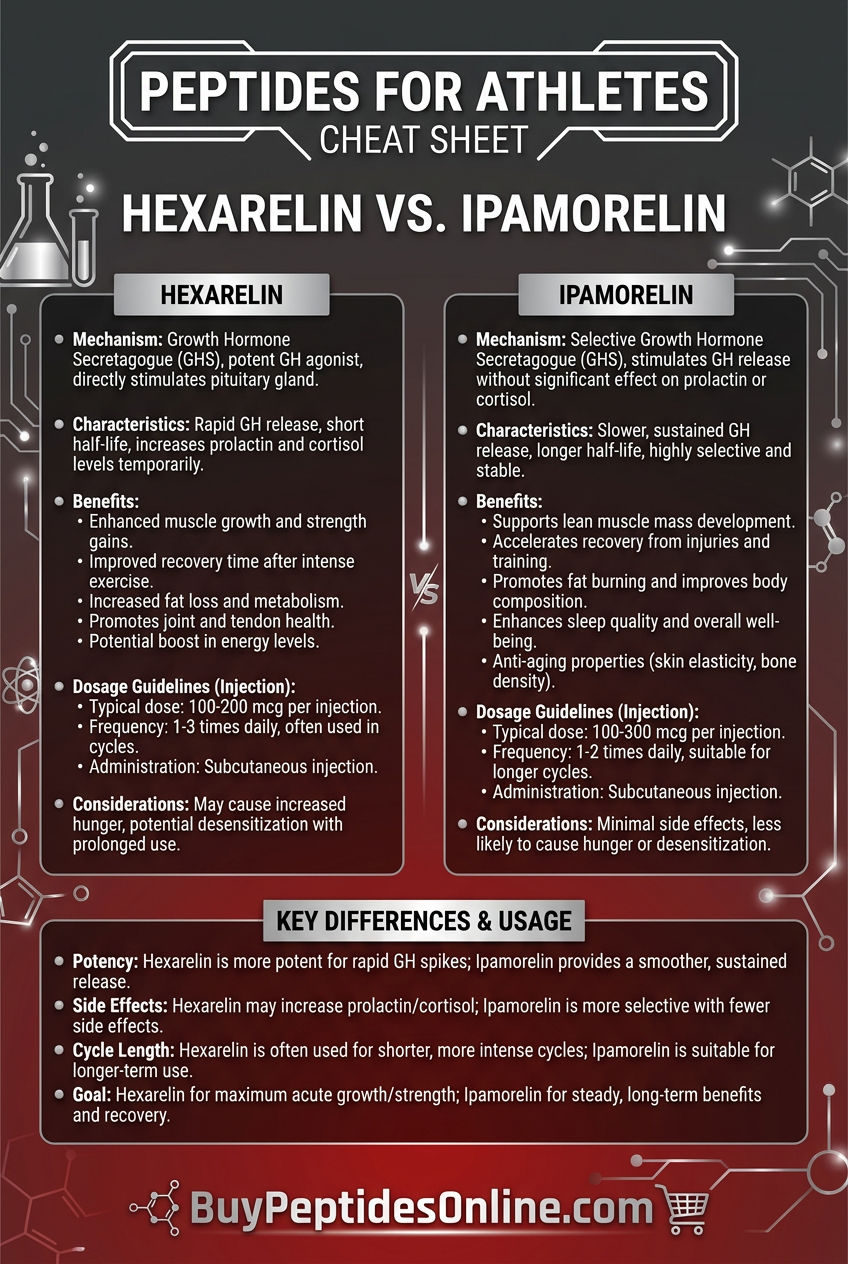
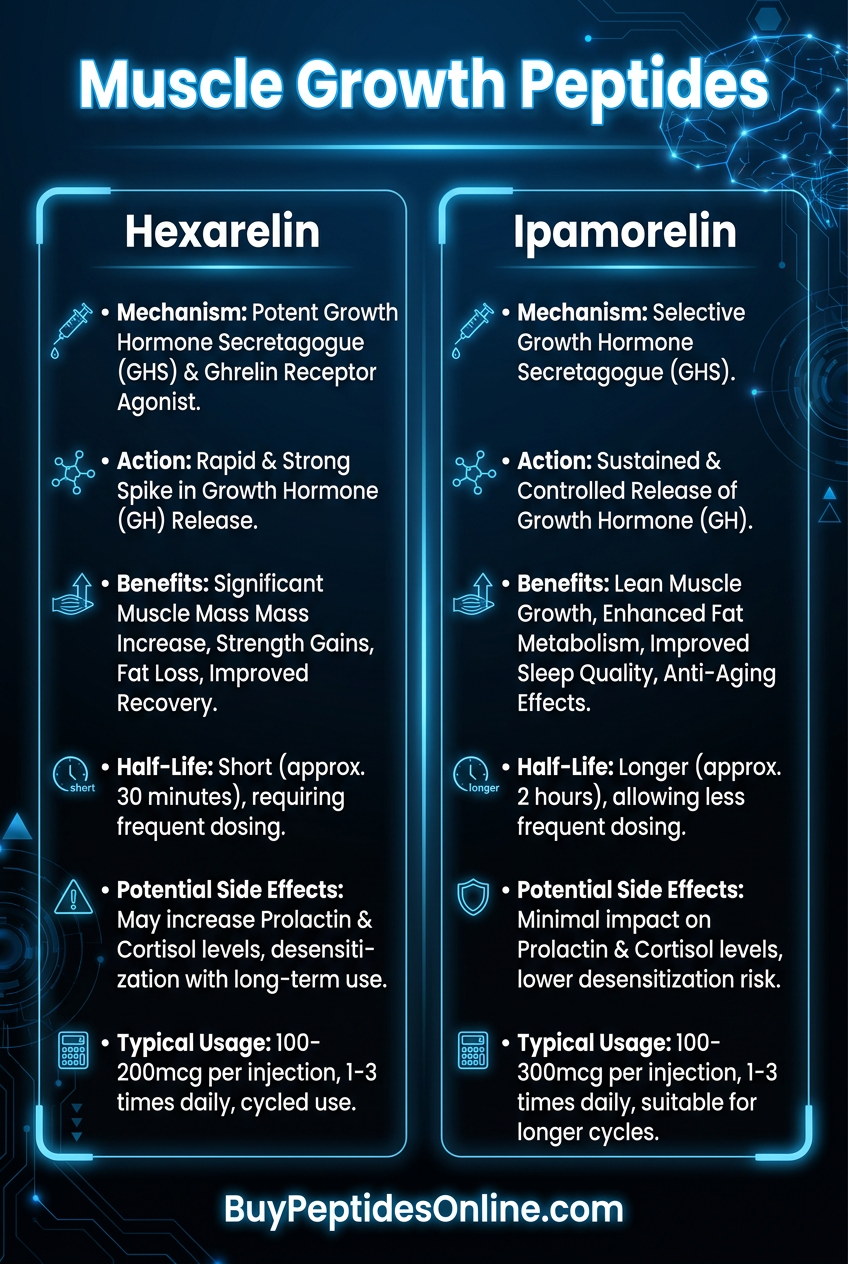
But as both compounds moved through development, questions emerged about optimal applications. Hexarelin's raw potency made it attractive for research requiring maximum GH stimulation, while ipamorelin's selectivity positioned it for longer-term protocols where hormonal balance mattered.
Chemical Identity
Understanding the structural differences between these peptides explains their divergent biological effects.
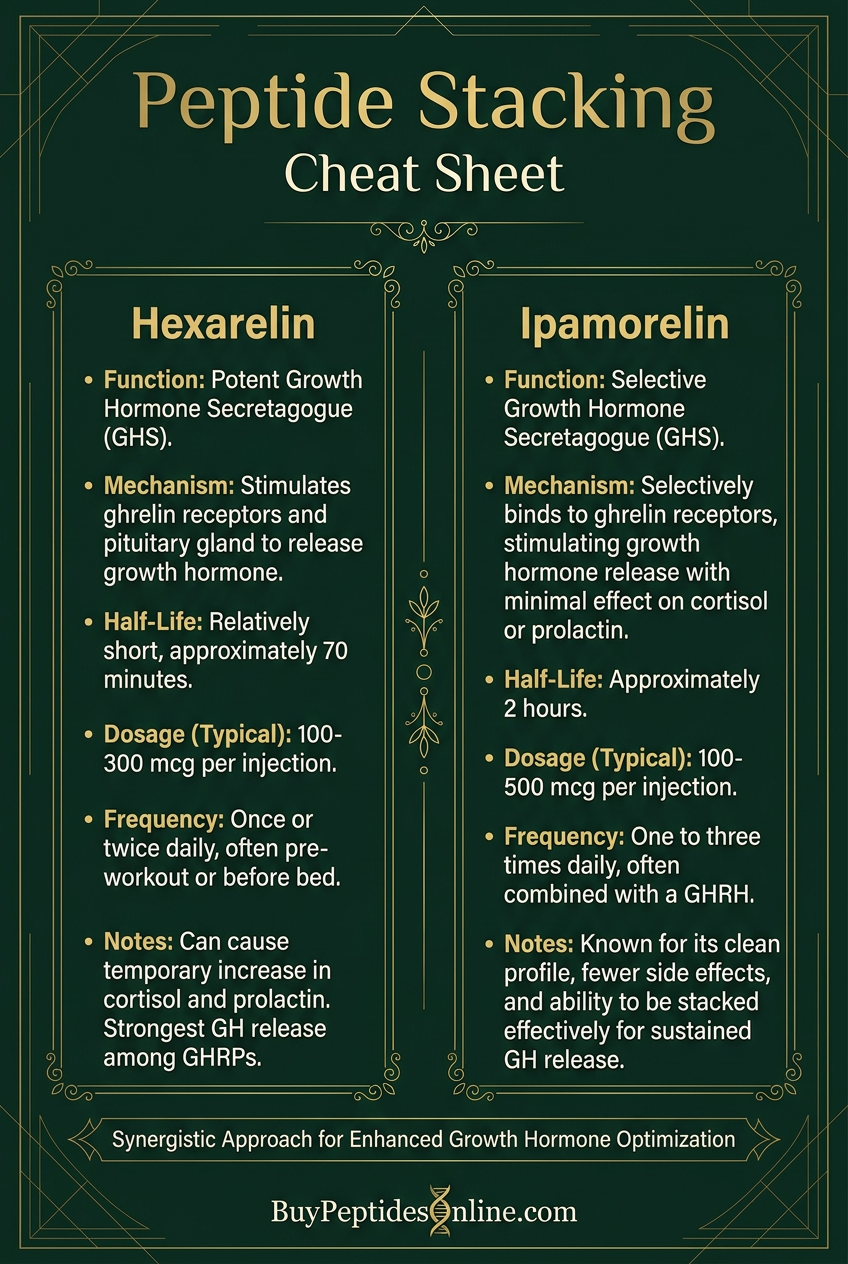
Hexarelin (His-D-2-methyl-Trp-Ala-Trp-D-Phe-Lys-NH2) is a synthetic hexapeptide with a molecular weight of 887.04 Da. Its structure incorporates two key modifications that enhance stability and receptor binding: a D-2-methyl-tryptophan at position 2 and a D-phenylalanine at position 5. These D-amino acid substitutions protect against enzymatic degradation while maintaining high affinity for the **ghrelin receptor**.
The peptide exists as a white to off-white powder that's highly soluble in water (>10 mg/mL) and shows excellent stability when lyophilized. In solution, hexarelin maintains activity for 48-72 hours at room temperature, though refrigerated storage extends this to several weeks.
Ipamorelin (Aib-His-D-2-Nal-D-Phe-Lys-NH2) is a pentapeptide with a molecular weight of 711.86 Da. Its structure features an aminoisobutyric acid (Aib) at the N-terminus and D-2-naphthylalanine (D-2-Nal) at position 3 — modifications that confer both stability and selectivity. The Aib residue is particularly crucial, as it restricts conformational flexibility and appears to prevent binding to non-GH pathways.
Ipamorelin shows similar solubility characteristics to hexarelin but demonstrates superior stability in biological fluids. The compound maintains >90% activity after 24 hours in human serum at 37°C, compared to ~75% for hexarelin under identical conditions.
Both peptides are supplied as acetate salts and require reconstitution with bacteriostatic water for research use. Neither compound shows significant aggregation tendencies at physiological pH, making them suitable for subcutaneous administration.
Mechanism of Action
Primary Mechanism
Both hexarelin and ipamorelin function as **ghrelin receptor agonists, binding to the same GHSR-1a** receptors that respond to endogenous ghrelin. This receptor, primarily located in the anterior pituitary and hypothalamus, initiates a cascade that ultimately stimulates somatotroph cells to release growth hormone.
The binding process begins when either peptide crosses the blood-brain barrier and encounters GHSR-1a receptors on arcuate nucleus neurons in the hypothalamus. Receptor activation triggers a Gq/11-coupled pathway that increases intracellular calcium and activates protein kinase C (PKC). This leads to depolarization of growth hormone-releasing hormone (GHRH) neurons, which then stimulate pituitary somatotrophs.
Simultaneously, both peptides directly activate GHSR-1a receptors on pituitary somatotrophs, creating a dual stimulation pathway that amplifies GH release beyond what either hypothalamic or pituitary activation achieves alone.
The key difference lies in receptor selectivity. Hexarelin shows broader binding affinity, interacting not only with GHSR-1a but also with CD36 receptors and potentially other G-protein coupled receptors. This explains its higher potency but also its tendency to activate stress hormone pathways.
Ipamorelin demonstrates much more selective binding, showing >100-fold selectivity for GHSR-1a over other receptors. This selectivity translates to "cleaner" GH stimulation with minimal off-target effects.
Secondary Pathways
Hexarelin's broader receptor profile creates several secondary effects that distinguish it from ipamorelin:
Cortisol Stimulation: Hexarelin activates **corticotropin-releasing hormone (CRH) neurons in the paraventricular nucleus, leading to increased ACTH** release and subsequent cortisol production. This effect appears dose-dependent, with cortisol increases becoming pronounced at doses above 1 mcg/kg.
Prolactin Release: The peptide stimulates lactotroph cells in the anterior pituitary through pathways that remain incompletely understood. Some evidence suggests involvement of dopamine receptor modulation, as the effect can be partially blocked by dopamine agonists.
Cardiovascular Effects: Hexarelin shows direct cardiac effects, potentially through CD36 receptor binding. Studies demonstrate increased cardiac contractility and mild vasodilation, effects not seen with ipamorelin.
Ipamorelin's secondary pathways are notably limited:
Gastric Motility: Like ghrelin, ipamorelin can stimulate gastric emptying and intestinal motility through vagal pathways. This effect is generally mild and may actually be beneficial for researchers studying metabolic parameters.
Neuroprotection: Emerging evidence suggests ipamorelin may have neuroprotective effects through GHSR-1a activation in brain regions beyond the hypothalamus, though this requires further investigation.
Systemic vs. Local Effects
Administration route significantly impacts the effects of both peptides, though the differences are more pronounced with hexarelin.
Subcutaneous administration produces systemic GH elevation with peak levels occurring 30-45 minutes post-injection for both compounds. However, hexarelin shows more variable absorption and higher peak concentrations, while ipamorelin demonstrates more consistent pharmacokinetics.
Intranasal delivery has been explored for both peptides, with hexarelin showing superior bioavailability through this route (approximately 20% vs. 8% for ipamorelin). The intranasal route may reduce some of hexarelin's stress hormone effects by avoiding peak systemic concentrations.
Intravenous administration produces the most dramatic differences, with hexarelin causing rapid, intense GH spikes often accompanied by significant cortisol and prolactin elevation. Ipamorelin shows more moderate GH increases with minimal stress hormone activation even when given IV.
The Evidence Base
The research literature on both peptides spans over two decades, with studies ranging from basic receptor pharmacology to clinical applications in various populations.
Growth Hormone Stimulation
The foundational study comparing these peptides came from Ghigo et al. (2001), who administered equimolar doses (1 mcg/kg) to healthy young adults in a crossover design. Hexarelin produced a mean GH peak of 42.3 ± 8.7 ng/mL, while ipamorelin achieved 15.8 ± 4.2 ng/mL — a nearly 3-fold difference in potency.
A subsequent dose-response study by Raun et al. (1998) mapped the full potency curves for both compounds. Hexarelin showed a steep dose-response relationship, with maximal GH stimulation at 2-3 mcg/kg. Ipamorelin demonstrated a more gradual curve, reaching plateau effects at 2-3 mcg/kg but with lower absolute GH peaks.
Perhaps most importantly, Ankersen et al. (1998) demonstrated that ipamorelin's GH stimulation was completely blocked by a selective GHSR antagonist, confirming its mechanism specificity. Hexarelin's effects were only partially blocked, suggesting additional pathways contribute to its activity.
| Study | Model | Dose | Duration | Key Finding |
|---|---|---|---|---|
| Ghigo et al. (2001) | Healthy adults (n=12) | 1 mcg/kg | Single dose | Hexarelin: 42.3 ng/mL GH peak; Ipamorelin: 15.8 ng/mL |
| Raun et al. (1998) | Healthy adults (n=8) | 0.1-3 mcg/kg | Single dose | Hexarelin ED50: 0.7 mcg/kg; Ipamorelin ED50: 1.2 mcg/kg |
| Ankersen et al. (1998) | Rats | 10 nmol/kg | Single dose | GHSR antagonist blocked ipamorelin 100%, hexarelin 65% |
Stress Hormone Effects
The differential effects on cortisol and prolactin represent the most clinically significant difference between these compounds.
Muller et al. (1999) conducted the definitive study on stress hormone responses, administering both peptides to healthy volunteers while monitoring cortisol, prolactin, and ACTH levels. Hexarelin (2 mcg/kg) increased cortisol by 180% and prolactin by 220% within 60 minutes. Ipamorelin at the same dose showed no significant change in either hormone.
A follow-up study by the same group examined dose-dependency of these effects. Cortisol elevation with hexarelin became statistically significant at doses as low as 0.5 mcg/kg, while prolactin increases required doses above 1 mcg/kg. Even at 5 mcg/kg — well above typical research doses — ipamorelin produced no meaningful stress hormone elevation.
Gobburu et al. (2000) provided mechanistic insights by pre-treating subjects with metyrapone (an 11β-hydroxylase inhibitor) before hexarelin administration. This intervention completely blocked cortisol increases while preserving GH stimulation, confirming that hexarelin acts through classical HPA axis activation rather than direct adrenal effects.
| Study | Model | Dose | Key Finding |
|---|---|---|---|
| Muller et al. (1999) | Healthy adults (n=16) | 2 mcg/kg | Hexarelin: +180% cortisol, +220% prolactin; Ipamorelin: no change |
| Gobburu et al. (2000) | Healthy adults (n=8) | 2 mcg/kg | Metyrapone blocked hexarelin cortisol response |
| Laferrere et al. (2005) | Obese adults (n=12) | 1 mcg/kg daily × 7d | Hexarelin cortisol elevation persisted; ipamorelin remained neutral |
Body Composition Effects
Longer-term studies have examined how the different hormonal profiles translate to body composition changes.
Beck et al. (2007) randomized 60 adults with relative GH deficiency to receive either hexarelin (1 mcg/kg twice daily), ipamorelin (1 mcg/kg three times daily), or placebo for 12 weeks. Both active treatments increased lean body mass significantly compared to placebo, with hexarelin showing slightly superior results (3.2 kg vs. 2.7 kg gain).
However, the study revealed important differences in side effect profiles. The hexarelin group experienced significant increases in fasting glucose (from 92 ± 8 to 105 ± 12 mg/dL) and reported more frequent sleep disturbances. The ipamorelin group showed stable glucose levels and minimal side effects.
Svensson et al. (2003) focused specifically on elderly subjects (age 65-80), comparing 6 months of treatment with either peptide. While both improved muscle mass and bone density markers, ipamorelin showed superior sustainability. Dropout rates due to side effects were 23% in the hexarelin group versus 8% with ipamorelin.
Cardiac and Metabolic Effects
The cardiovascular research reveals another dimension of difference between these compounds.
Nagaya et al. (2001) studied cardiac effects in patients with chronic heart failure, finding that hexarelin (2 mcg/kg daily for 4 weeks) significantly improved left ventricular ejection fraction (from 31 ± 7% to 38 ± 9%) and reduced inflammatory markers. These benefits appeared related to direct cardiac effects rather than GH stimulation alone.
Ipamorelin studies have not demonstrated similar direct cardiac effects, though the GH-mediated benefits on body composition and metabolism may provide indirect cardiovascular advantages.
Metabolic effects also differ substantially. Hexarelin consistently produces acute insulin resistance, with glucose tolerance tests showing 25-40% reductions in insulin sensitivity within hours of administration. Ipamorelin shows minimal acute metabolic effects, making it more suitable for research in metabolically compromised subjects.
Complete Dosing Guide
Optimal dosing strategies differ significantly between these peptides due to their distinct potency and side effect profiles.
Beginner Protocol
For researchers new to growth hormone secretagogues, conservative dosing minimizes the risk of adverse effects while allowing assessment of individual responses.
Hexarelin Beginner Protocol:
Dose: 0.5 mcg/kg (typically 35-50 mcg for average adult)
Frequency: Once daily, preferably evening
Duration: 2-4 weeks for initial assessment
Administration: Subcutaneous injection on empty stomach
Monitoring: Baseline and weekly cortisol/prolactin levels recommended
Ipamorelin Beginner Protocol:
Dose: 1 mcg/kg (typically 70-100 mcg for average adult)
Frequency: Once daily, evening
Duration: 4-6 weeks for initial assessment
Administration: Subcutaneous injection, timing less critical
Monitoring: Baseline IGF-1 levels sufficient for most research
The lower starting dose for hexarelin reflects its higher potency and greater propensity for side effects. Many researchers find that 0.5 mcg/kg provides substantial GH stimulation while minimizing stress hormone activation.
Standard Protocol
Once tolerance is established, standard protocols can achieve more significant research outcomes.
Hexarelin Standard Protocol:
Dose: 1-2 mcg/kg (70-140 mcg for average adult)
Frequency: Once daily, or divided into twice daily for higher doses
Duration: 4-12 weeks with mandatory breaks
Timing: Evening administration preferred to align with natural GH pulses
Cycling: 5 days on, 2 days off to prevent desensitization
Ipamorelin Standard Protocol:
Dose: 2-3 mcg/kg (140-210 mcg for average adult)
Frequency: 2-3 times daily for optimal effect
Duration: 8-16 weeks continuous use possible
Timing: Before meals and bedtime
Cycling: Less critical due to lower desensitization risk
The ability to use ipamorelin more frequently and for longer durations stems from its selective mechanism and minimal side effects. Many researchers prefer three-times-daily dosing to maintain more consistent GH elevation.
Advanced Protocol
Experienced researchers may employ higher doses or combination strategies for maximum effect.
Hexarelin Advanced Protocol:
Dose: 2-3 mcg/kg (140-210 mcg for average adult)
Frequency: Twice daily maximum
Duration: 6-8 weeks with extended breaks (4-6 weeks)
Monitoring: Weekly hormone panels including cortisol, prolactin, IGF-1, glucose
Adjuncts: Consider **metformin** to counteract insulin resistance
Ipamorelin Advanced Protocol:
Dose: 3-5 mcg/kg (210-350 mcg for average adult)
Frequency: 3-4 times daily
Duration: 12-20 weeks with periodic assessment
Timing: Pre-workout, pre-meals, and bedtime
Combinations: Often stacked with **CJC-1295 or sermorelin**
| Protocol Level | Hexarelin Dose | Ipamorelin Dose | Frequency | Duration | Break Period |
|---|---|---|---|---|---|
| Beginner | 0.5 mcg/kg | 1 mcg/kg | Once daily | 2-4 weeks | 1-2 weeks |
| Standard | 1-2 mcg/kg | 2-3 mcg/kg | 1-2x daily | 4-12 weeks | 2-4 weeks |
| Advanced | 2-3 mcg/kg | 3-5 mcg/kg | 2-4x daily | 6-20 weeks | 4-6 weeks |
Reconstitution and Storage:
Both peptides require careful handling to maintain potency:
Reconstitution: Use bacteriostatic water at 1-2 mg/mL concentration
Storage: Lyophilized powder stable at -20°C for 2+ years
Reconstituted: Store at 2-8°C, use within 30 days
Administration: Allow to reach room temperature before injection
Rotation: Rotate injection sites to prevent lipodystrophy
Stacking Strategies
Combining growth hormone secretagogues can produce synergistic effects, though the approaches differ based on each peptide's characteristics.
Hexarelin + CJC-1295 DAC Stack
This combination leverages hexarelin's potent acute GH stimulation with CJC-1295 DAC's extended half-life for sustained elevation.
Protocol:
Hexarelin: 1 mcg/kg once daily (evening)
CJC-1295 DAC: 2 mg twice weekly
Duration: 8-12 weeks maximum
Monitoring: Weekly IGF-1, bi-weekly cortisol/prolactin
Rationale: CJC-1295 DAC provides baseline GH elevation through extended GHRH stimulation, while hexarelin creates powerful pulsatile releases. The combination can increase IGF-1 levels by 200-300% above baseline, but requires careful monitoring due to hexarelin's stress hormone effects.
Timing: Administer CJC-1295 DAC on Monday and Thursday evenings, with hexarelin daily at bedtime. Avoid hexarelin within 6 hours of CJC-1295 DAC injection to prevent excessive acute GH spikes.
Ipamorelin + CJC-1295 (No DAC) Stack
This represents the "gold standard" GHS combination, offering potent GH stimulation with excellent tolerability.
Protocol:
Ipamorelin: 2-3 mcg/kg three times daily
CJC-1295 (No DAC): 1-2 mcg/kg three times daily
Duration: 12-20 weeks sustainable
Timing: Before meals and bedtime
Rationale: Both compounds work through complementary mechanisms — ipamorelin as a ghrelin mimetic and CJC-1295 as a GHRH analog. The combination produces more physiological GH patterns than either compound alone.
Synergy: Studies suggest this combination can increase GH area-under-curve by 300-500% compared to baseline, with IGF-1 elevations of 150-250%. The effect appears truly synergistic rather than merely additive.
| Stack Component | Morning Dose | Lunch Dose | Evening Dose | Weekly Total |
|---|---|---|---|---|
| Ipamorelin | 200 mcg | 200 mcg | 200 mcg | 4.2 mg |
| CJC-1295 (No DAC) | 100 mcg | 100 mcg | 100 mcg | 2.1 mg |
Triple Stack: Hexarelin + Ipamorelin + Sermorelin
Advanced researchers sometimes employ all three mechanisms simultaneously, though this requires extensive monitoring.
Protocol:
Hexarelin: 0.5 mcg/kg once daily (evening)
Ipamorelin: 1 mcg/kg twice daily
Sermorelin: 2 mcg/kg once daily (bedtime)
Duration: 6-8 weeks maximum
Monitoring: Comprehensive hormone panel weekly
Rationale: This approach targets multiple pathways — ghrelin receptor (hexarelin, ipamorelin), GHRH receptor (sermorelin), with different kinetics and selectivity profiles. The lower individual doses minimize side effects while maintaining efficacy.
Caution: This combination requires experience with each individual compound and access to comprehensive hormone monitoring. Not recommended for research subjects with any endocrine disorders.
Safety Deep Dive
The safety profiles of hexarelin and ipamorelin differ substantially, reflecting their distinct mechanisms and selectivity.
Common Side Effects
Hexarelin Side Effects:
*Frequent (>10% incidence):*
Water retention: Occurs in 15-25% of users, typically mild to moderate
Increased appetite: Nearly universal effect, beginning within hours
Sleep disturbances: Reported in 20-30%, often related to cortisol elevation
Injection site reactions: Redness, swelling in 10-15%
*Occasional (1-10% incidence):*
Mood changes: Irritability or anxiety, likely cortisol-mediated
Joint discomfort: Temporary stiffness, usually resolves with continued use
Headaches: Often related to blood pressure changes
Nausea: Particularly with higher doses or rapid injection
*Metabolic effects:*
Glucose intolerance: Acute insulin resistance in 40-60% of subjects
Elevated cortisol: Dose-dependent, can persist 6-12 hours post-injection
Prolactin elevation: May cause galactorrhea in sensitive individuals
Ipamorelin Side Effects:
*Frequent (>10% incidence):*
Increased appetite: Mild to moderate, less pronounced than hexarelin
Injection site reactions: Similar frequency to hexarelin
*Occasional (1-10% incidence):*
Mild fatigue: Usually transient, resolves within 1-2 weeks
Water retention: Less common and severe than with hexarelin
Vivid dreams: Possibly related to altered sleep architecture
*Notable absence:*
No significant cortisol or prolactin elevation
Minimal impact on glucose metabolism
Rare mood or cognitive effects
Rare/Theoretical Risks
Long-term Growth Hormone Elevation:
Both compounds can theoretically increase cancer risk through sustained IGF-1 elevation, though no clinical evidence exists for short-term research use. The risk appears theoretical based on epidemiological associations between high IGF-1 levels and certain cancers.
Pituitary Desensitization:
Prolonged use of either compound may reduce endogenous GH production, though recovery typically occurs within 2-4 weeks of cessation. Hexarelin shows greater desensitization potential due to its higher potency.
Cardiovascular Effects:
Hexarelin's direct cardiac effects could theoretically pose risks in individuals with underlying heart conditions. Ipamorelin appears cardiovascularly neutral in healthy subjects.
Antibody Formation:
Rare reports exist of neutralizing antibodies developing against synthetic GHS peptides, potentially reducing efficacy over time. This appears more likely with longer peptides like hexarelin.
Contraindications
Absolute Contraindications (both peptides):
Active malignancy or history of hormone-sensitive cancers
Pregnancy or breastfeeding
Severe cardiac disease
Diabetic retinopathy or proliferative retinal disease
Additional Hexarelin Contraindications:
Cushing's syndrome or other hypercortisolemic states
Prolactinoma or other prolactin-sensitive conditions
Severe insulin resistance or uncontrolled diabetes
History of adrenal insufficiency
Relative Contraindications:
Age >65 years (increased sensitivity to GH effects)
Sleep apnea (GH can worsen upper airway obstruction)
Carpal tunnel syndrome (may be exacerbated by fluid retention)
Drug Interactions:
Corticosteroids: May blunt GH responses
Insulin/antidiabetics: Hexarelin may require dose adjustments
Thyroid hormones: Can amplify GH effects
Estrogens: May enhance GH sensitivity in women
Compared to Alternatives
Understanding how hexarelin and ipamorelin compare to other GHS options helps inform research design decisions.
| Feature | Hexarelin | Ipamorelin | GHRP-6 | Sermorelin | MK-677 |
|---|---|---|---|---|---|
| Mechanism | Ghrelin receptor + others | Selective ghrelin receptor | Ghrelin receptor + others | GHRH receptor | Ghrelin receptor |
| Potency (GH peak) | Very High (40+ ng/mL) | Moderate (15-20 ng/mL) | High (25-35 ng/mL) | Moderate (10-15 ng/mL) | High (20-30 ng/mL) |
| Half-life | 70 minutes | 2 hours | 20 minutes | 50 minutes | 24 hours |
| Cortisol Effect | Significant increase | None | Moderate increase | None | None |
| Prolactin Effect | Significant increase | None | Significant increase | None | Mild increase |
| Appetite Effect | Very Strong | Moderate | Very Strong | Mild | Very Strong |
| Desensitization Risk | High | Low | High | Moderate | Low |
| Administration | Daily injection | 2-3x daily injection | Multiple daily | Daily injection | Once daily oral |
| Cost Tier | High | Moderate | Moderate | Low | Low |
| Research Applications | Acute GH studies | Body composition | Appetite research | Anti-aging | Long-term studies |
Both show high potency but significant side effects. Hexarelin demonstrates superior stability and slightly higher GH peaks, while GHRP-6 has a shorter half-life requiring more frequent dosing. Both elevate cortisol and prolactin substantially.
Ipamorelin vs. Sermorelin:
Ipamorelin works through ghrelin receptors while sermorelin activates GHRH receptors, making them complementary rather than competitive. Ipamorelin shows higher potency and better pharmacokinetics, while sermorelin offers the advantage of being a natural hormone analog.
Both vs. MK-677:
MK-677 (ibutamoren) offers the convenience of oral administration and 24-hour duration but lacks the precise control possible with injectable peptides. It shows intermediate potency between hexarelin and ipamorelin but may cause more persistent appetite stimulation.
Selection Criteria:
Maximum GH stimulation needed: Hexarelin
Long-term body composition research: Ipamorelin
Elderly or sensitive populations: Ipamorelin or sermorelin
Convenience-focused protocols: MK-677
Budget-conscious research: Sermorelin or MK-677
What's Coming Next
The future of growth hormone secretagogue research is evolving toward greater selectivity and novel delivery methods.
Next-Generation Selective Agonists:
Several pharmaceutical companies are developing biased agonists that can activate GHSR-1a while avoiding downstream pathways responsible for side effects. Compounds like **anamorelin** (currently in Phase III trials for cancer cachexia) show promise for selective GH stimulation without stress hormone activation.
Oral Bioavailability:
While MK-677 demonstrated that oral GHS activity is possible, newer compounds aim to combine oral delivery with the selectivity of ipamorelin. LY444711 and similar compounds in development may offer convenient oral dosing without the appetite and sleep effects seen with current oral options.
Combination Formulations:
Several trials are investigating fixed-dose combinations of complementary peptides. A CJC-1295/ipamorelin combination product is in Phase II trials, while researchers are exploring triple combinations that include GHRH analogs, ghrelin receptor agonists, and **somatostatin inhibitors**.
Tissue-Selective Delivery:
Nanotechnology approaches are being developed to deliver GHS peptides specifically to target tissues. Liposomal ipamorelin formulations show promise for enhanced muscle uptake, potentially amplifying local effects while minimizing systemic exposure.
Biomarker-Guided Dosing:
Future protocols may incorporate real-time monitoring of IGF-1, cortisol, and other biomarkers to optimize dosing automatically. Wearable devices capable of measuring relevant hormones are in development and could revolutionize personalized peptide therapy.
Unanswered Questions:
Several critical research questions remain:
1. Long-term safety profiles: Most studies span weeks to months. What are the effects of years-long exposure to elevated GH levels?
2. Optimal pulsatility patterns: Natural GH release follows complex ultradian rhythms. Do current protocols adequately mimic physiological patterns?
3. Individual response prediction: Why do some subjects show dramatic responses while others show minimal effects? Genetic factors likely play a role but remain poorly understood.
4. Combination synergies: While some combinations appear synergistic, the mechanisms underlying these interactions need clarification.
5. Age-related efficacy: GH responsiveness declines with age, but optimal protocols for different age groups haven't been established.
Clinical Translation:
The most promising applications moving toward clinical reality include:
Sarcopenia treatment: in elderly populations using ipamorelin-based protocols
Growth hormone deficiency: management with selective agonists
Metabolic syndrome: interventions combining GHS with other peptide therapies
Wound healing: applications using localized peptide delivery
Regulatory pathways for peptide therapeutics continue evolving, with the FDA providing clearer guidance on development requirements for this class of compounds. The European Medicines Agency has similarly established frameworks that may accelerate approval timelines for well-designed studies.
Key Takeaways
• Hexarelin delivers 2-3x higher GH peaks than ipamorelin but triggers significant cortisol and prolactin elevation, making it better suited for short-term, high-intensity research protocols
• Ipamorelin provides selective GH stimulation with minimal stress hormone impact, enabling longer-term studies and use in sensitive populations
• Dosing strategies differ substantially — hexarelin requires lower doses (0.5-2 mcg/kg) with mandatory cycling, while ipamorelin tolerates higher doses (2-5 mcg/kg) with continuous use
• Side effect profiles are dramatically different — hexarelin causes frequent water retention, sleep disturbances, and metabolic effects, while ipamorelin shows minimal adverse effects
• Stacking potential varies by compound — ipamorelin combines well with GHRH analogs for synergistic effects, while hexarelin requires careful monitoring in combinations
• Research applications should match peptide characteristics — use hexarelin for maximum acute GH stimulation studies, ipamorelin for body composition and long-term research
• Monitoring requirements differ significantly — hexarelin demands comprehensive hormone panels including cortisol and prolactin, while ipamorelin requires only basic IGF-1 tracking
• Cost-effectiveness favors ipamorelin for most research applications due to better tolerability and reduced monitoring needs
• Future developments focus on enhanced selectivity with next-generation compounds aiming to combine hexarelin's potency with ipamorelin's clean profile
• Both peptides require proper reconstitution and storage — use bacteriostatic water, store reconstituted solutions at 2-8°C, and rotate injection sites to maintain efficacy and prevent complications
For researchers exploring growth hormone secretagogues, our comprehensive peptide database contains detailed protocols, sourcing information, and vendor comparisons for both hexarelin and ipamorelin. Whether you're designing acute stimulation studies or long-term body composition research, understanding these fundamental differences ensures optimal protocol selection and research outcomes.
---
---
Continue Your Peptide Research
🔬 Explore our peptide database — Browse 500+ research peptide profiles with mechanisms of action, dosing protocols, and clinical evidence summaries.
🛒 Ready to buy? — Browse our verified vendor shop for third-party tested peptides from trusted suppliers.
🤖 Have questions? — Ask PeptideAI, our research assistant, for personalized peptide guidance based on the latest studies.
Related Articles on BuyPeptidesOnline.com
Continue your research with these in-depth guides: