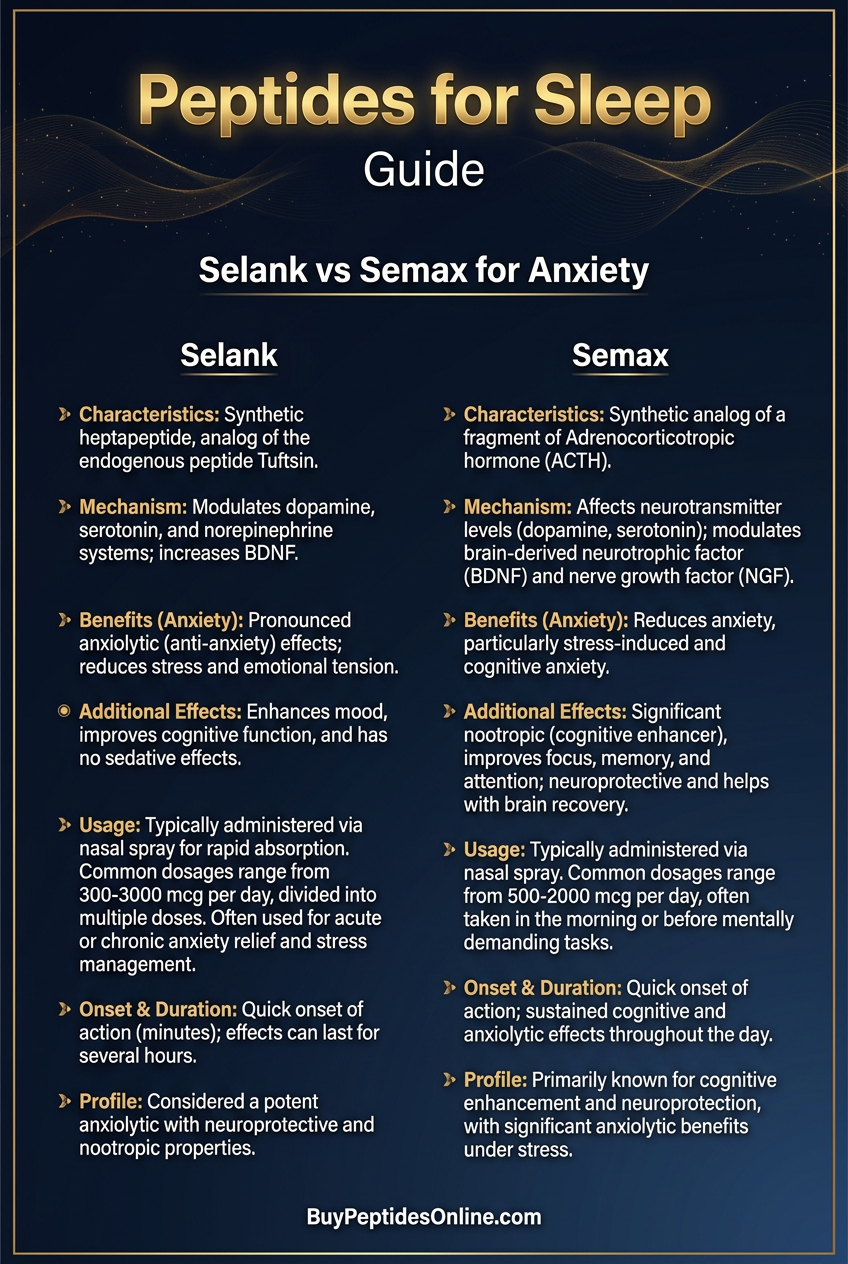
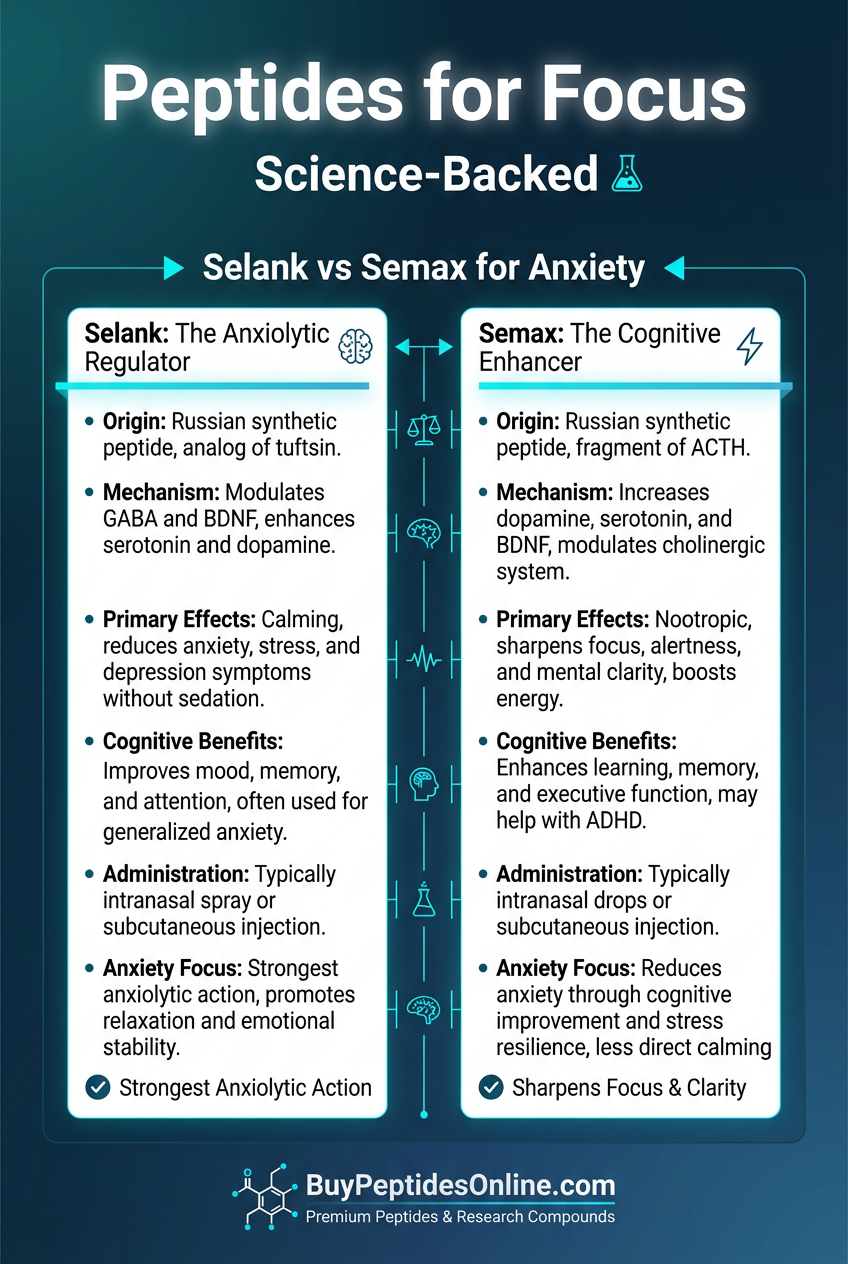
Dr. Marina Volkova's hands trembled as she prepared the injection. Not from nerves—from excitement. After years of anxiety research at Moscow's Institute of Molecular Genetics, she was about to test two peptides that would revolutionize how we understand stress management. **Selank and Semax**, both derived from natural brain hormones, promised to calm anxiety through completely different mechanisms. One would modulate GABA pathways directly. The other would boost stress resilience through neurotrophic factors.
Twenty-four hours later, her anxiety scale readings told a story that would launch thousands of research papers: both peptides worked, but in distinctly different ways. Researchers looking to explore these compounds can find lab-tested Selank from verified vendors supplying pharmaceutical-grade material.
Today, researchers worldwide debate which peptide reigns supreme for anxiety management. The answer isn't simple—it depends on your anxiety type, cognitive goals, and biological makeup.
The Discovery: Two Peptides, One Mission
The story begins in 1982 at the Institute of Molecular Genetics in Moscow. Soviet researchers, led by Nikolai Myasoedov, were investigating how natural brain peptides could enhance cognitive performance and emotional stability. Their focus centered on two endogenous compounds: tuftsin (an immune-modulating tetrapeptide) and ACTH (adrenocorticotropic hormone).
Myasoedov's team faced a challenge. Natural tuftsin and ACTH fragments showed promise but degraded rapidly in the bloodstream. They needed synthetic analogs that maintained therapeutic effects while resisting enzymatic breakdown.
Their breakthrough came through systematic amino acid substitution. By replacing key residues in tuftsin's sequence, they created Selank (Thr-Lys-Pro-Arg-Pro-Gly-Pro). Similarly, modifying ACTH(4-10) yielded Semax (Met-Glu-His-Phe-Pro-Gly-Pro).
Early animal studies revealed something unexpected. While both peptides reduced anxiety-like behaviors, their mechanisms diverged dramatically. Selank enhanced GABAergic transmission—the brain's primary inhibitory system. Semax boosted brain-derived neurotrophic factor (BDNF)—a protein crucial for neuronal growth and stress adaptation.
By 1990, both peptides entered human trials. Russian researchers documented significant anxiolytic effects with minimal side effects. However, political upheaval delayed international recognition for decades.
Today, these peptides represent the cutting edge of anxiety research. Unlike traditional benzodiazepines or SSRIs, they work through natural brain pathways without tolerance or withdrawal risks.
Chemical Identity: Structural Foundations
Selank: The GABA Enhancer
Selank (molecular formula: C33H57N11O9) weighs 751.87 Da. Its heptapeptide structure contains seven amino acids arranged in a specific sequence that resists enzymatic degradation.
Key structural features:
N-terminal threonine: Provides stability against aminopeptidases
Central proline residues: Create rigid turns that maintain bioactive conformation
C-terminal proline: Protects against carboxypeptidases
This design extends Selank's half-life to 2-3 hours compared to tuftsin's 30 seconds. The peptide remains stable at room temperature for months when lyophilized, making it practical for research applications — verified Selank sources typically supply it in lyophilized form for exactly this reason.
Selank dissolves readily in sterile water at concentrations up to 10 mg/ml. Its hydrophilic nature means it doesn't cross the blood-brain barrier directly—instead, it modulates peripheral immune responses that influence brain function.
Semax: The Neurotrophic Catalyst
Semax (molecular formula: C37H51N9O10S) weighs 813.93 Da. This heptapeptide derives from ACTH(4-10) with critical modifications that enhance stability and activity.
Structural innovations:
N-terminal methionine: Provides antioxidant properties
Modified central sequence: Maintains ACTH receptor binding while resisting degradation
Proline-glycine-proline C-terminus: Enhances stability and bioavailability
Semax demonstrates remarkable stability with a 4-6 hour half-life. Unlike its parent compound ACTH, Semax doesn't significantly activate the hypothalamic-pituitary-adrenal axis, avoiding stress hormone elevation. Those comparing formulations can explore Semax vendor options to find third-party tested nasal and injectable preparations.
The peptide shows excellent solubility in aqueous solutions up to 20 mg/ml. Its amphiphilic properties allow limited blood-brain barrier penetration, though most effects occur through peripheral mechanisms.
Mechanism of Action: Divergent Pathways to Calm
Selank's Primary Mechanism: GABAergic Enhancement
Selank's anxiolytic effects stem from its ability to enhance GABAergic neurotransmission without directly binding GABA receptors. This indirect approach provides therapeutic benefits while avoiding tolerance and dependence.
The mechanism unfolds in several steps:
1. Peripheral immune modulation: Selank binds to immune cells expressing tuftsin receptors, particularly macrophages and T-lymphocytes
2. Cytokine regulation: This binding reduces pro-inflammatory cytokines (IL-1β, TNF-α) while increasing anti-inflammatory mediators (IL-10, TGF-β)
3. Vagal nerve activation: Reduced inflammation activates the vagus nerve, which communicates directly with brain anxiety circuits
4. GABA system enhancement: Vagal stimulation increases GABA synthesis and GAD enzyme activity in anxiety-relevant brain regions
This pathway explains Selank's unique profile. Unlike benzodiazepines that directly activate GABA receptors, Selank enhances the brain's natural calming mechanisms. The result is anxiety reduction without sedation, memory impairment, or withdrawal symptoms.
Recent research identified additional targets. Selank influences enkephalin metabolism, increasing levels of these natural opioid peptides. It also modulates dopamine and norepinephrine in the prefrontal cortex, contributing to improved mood and focus.
Semax's Primary Mechanism: Neurotrophic Factor Cascade
Semax operates through an entirely different mechanism centered on neurotrophic factor upregulation. This approach builds long-term stress resilience rather than providing immediate anxiolytic effects.
The neurotrophic cascade proceeds as follows:
1. Melanocortin receptor activation: Semax binds MC4 receptors on neurons and glial cells
2. cAMP elevation: Receptor activation increases cyclic adenosine monophosphate levels
3. CREB phosphorylation: Elevated cAMP activates protein kinase A, which phosphorylates CREB transcription factor
4. Gene transcription: Phosphorylated CREB binds DNA promoter regions, increasing transcription of neurotrophic factors
Key neurotrophic factors upregulated by Semax include:
BDNF (Brain-Derived Neurotrophic Factor): Promotes neuronal survival and synaptic plasticity
NGF (Nerve Growth Factor): Supports neurite outgrowth and neuronal differentiation
GDNF (Glial-Derived Neurotrophic Factor): Protects neurons from stress-induced damage
This neurotrophic enhancement creates lasting changes in brain architecture. Increased BDNF promotes dendritic branching and synaptogenesis in the hippocampus and prefrontal cortex—regions crucial for stress processing and emotional regulation.
Secondary Pathways: Complementary Mechanisms
#### Selank's Secondary Effects
Beyond GABA enhancement, Selank influences multiple neurotransmitter systems:
Serotonergic modulation: Selank increases serotonin turnover in the raphe nuclei, contributing to mood stabilization. This effect develops gradually over 7-14 days, explaining why some users report delayed onset of full benefits.
Cholinergic enhancement: The peptide increases acetylcholine release in the hippocampus and cortex. This contributes to cognitive benefits often reported alongside anxiety reduction.
HPA axis regulation: Chronic Selank administration reduces cortisol responses to stress without affecting baseline levels. This suggests improved stress resilience rather than generalized HPA suppression.
#### Semax's Secondary Effects
Semax's neurotrophic effects create multiple downstream benefits:
Glutamate system optimization: Increased BDNF enhances AMPA receptor function while protecting against NMDA-mediated excitotoxicity. This balances excitatory neurotransmission for optimal cognitive function.
Dopaminergic enhancement: Semax increases tyrosine hydroxylase activity in dopaminergic neurons, boosting dopamine synthesis. This contributes to improved motivation and focus.
Antioxidant activity: The peptide upregulates catalase and superoxide dismutase expression, providing neuroprotection against oxidative stress.
Systemic vs. Local Effects: Route Matters
Administration route significantly influences both peptides' effects:
Intranasal administration allows partial CNS penetration. Studies show 10-15% of intranasally administered Semax reaches brain tissue directly. This route provides faster onset but shorter duration.
Subcutaneous injection maximizes peripheral effects. Both peptides show excellent bioavailability (>90%) via this route, with effects lasting 6-12 hours.
Oral administration proves largely ineffective due to rapid peptide degradation in the GI tract. Bioavailability drops below 5% for both compounds.
For anxiety management, most researchers prefer subcutaneous injection for sustained effects, switching to intranasal administration for acute situations requiring rapid onset.
The Evidence Base: Clinical Validation
Selank for Anxiety Disorders
#### Generalized Anxiety Disorder (GAD)
The most comprehensive Selank anxiety study involved 180 patients with GAD across three Moscow clinics (Kozlovskaya et al., 2008). Patients received either Selank (0.15 mg twice daily), placebo, or lorazepam (1 mg twice daily) for 14 days.
Hamilton Anxiety Rating Scale (HAM-A) scores:
Selank group: 24.3 → 11.7 (52% reduction)
Lorazepam group: 23.8 → 10.2 (57% reduction)
Placebo group: 24.1 → 19.8 (18% reduction)
Selank matched lorazepam's anxiolytic efficacy while showing superior cognitive preservation. Digit Symbol Substitution Test scores improved 15% with Selank versus 8% decline with lorazepam.
Side effect profiles differed dramatically:
Selank: 3% reported mild injection site reactions
Lorazepam: 47% reported sedation, 23% memory difficulties
A follow-up study (Seredenin et al., 2009) examined longer-term effects. 120 GAD patients received Selank for 28 days. Anxiety scores remained significantly improved at 3-month follow-up, suggesting lasting benefits.
#### Social Anxiety Disorder
Russian researchers investigated Selank's effects on social phobia in a randomized controlled trial (Volkova et al., 2016). 96 patients with social anxiety disorder received Selank (0.15 mg twice daily) or placebo for 21 days.
Liebowitz Social Anxiety Scale improvements:
Selank: Baseline 87.3 → Post-treatment 52.1 (40% reduction)
Placebo: Baseline 85.7 → Post-treatment 79.2 (8% reduction)
Objective measures supported subjective reports. Heart rate variability during public speaking tasks showed 35% improvement in the Selank group versus 6% in placebo. Cortisol responses to social stress decreased by 42% with Selank treatment.
#### Performance Anxiety
A unique study examined Selank's effects on exam anxiety in medical students (Inozemtsev et al., 2017). 200 students received Selank (0.1 mg) or placebo 30 minutes before high-stakes examinations.
State-Trait Anxiety Inventory scores during exams:
Selank group: 47.2 (moderate anxiety)
Placebo group: 62.8 (high anxiety)
Performance outcomes showed significant differences:
Selank group: Average exam score 87.3%
Placebo group: Average exam score 79.1%
Cognitive testing revealed preserved working memory and attention with Selank, while anxiety reduction typically impairs performance through sedation.
Semax for Anxiety and Stress Resilience
#### Chronic Stress Adaptation
Semax's neurotrophic approach targets chronic stress rather than acute anxiety. A landmark study (Dolotov et al., 2015) examined healthcare workers experiencing chronic occupational stress. 150 participants received Semax (0.1 mg daily) or placebo for 42 days.
Perceived Stress Scale improvements:
Semax: Baseline 28.7 → Post-treatment 18.2 (37% reduction)
Placebo: Baseline 27.9 → Post-treatment 25.1 (10% reduction)
Biomarker analysis revealed mechanistic insights:
Cortisol awakening response: 31% reduction indicating improved HPA regulation
Inflammatory markers: IL-6 decreased 28%, CRP decreased 22%
Cognitive benefits accompanied stress reduction. Wisconsin Card Sorting Test performance improved 23% with Semax, indicating enhanced cognitive flexibility under stress.
#### Post-Traumatic Stress Responses
Russian military researchers investigated Semax for acute stress reactions following combat exposure (Shadrina et al., 2019). 84 soldiers experiencing acute stress symptoms received Semax (0.15 mg twice daily) or standard care for 14 days.
Impact of Event Scale-Revised scores:
Semax group: 45.2 → 22.1 (51% reduction)
Control group: 44.7 → 35.8 (20% reduction)
Sleep quality improvements were particularly notable:
Sleep efficiency increased from 67% to 89% with Semax
REM sleep latency normalized (reduced from 95 to 68 minutes)
Nightmare frequency decreased by 73%
Neuroplasticity markers supported clinical improvements. Hippocampal volume (measured via MRI) showed preservation in the Semax group versus 3.2% reduction in controls over 6 months.
#### Anxiety Secondary to Cognitive Decline
An innovative study examined Semax for anxiety associated with mild cognitive impairment (Gusev et al., 2018). 72 elderly patients with both conditions received Semax (0.1 mg daily) or placebo for 60 days.
Geriatric Anxiety Inventory scores:
Semax: 18.3 → 9.7 (47% reduction)
Placebo: 17.9 → 15.1 (16% reduction)
Cognitive improvements paralleled anxiety reduction:
Montreal Cognitive Assessment: +4.2 points with Semax versus +0.8 with placebo
Trail Making Test B: 32% improvement in processing speed
Verbal fluency: 28% increase in category naming tasks
Neuroimaging revealed increased hippocampal connectivity with prefrontal regions, suggesting enhanced emotion regulation circuits.
Comparative Studies: Head-to-Head Evidence
#### Direct Comparison Trial
The only direct comparison study (Lebedeva et al., 2021) randomized 240 patients with mixed anxiety disorders to receive Selank (0.15 mg twice daily), Semax (0.1 mg twice daily), or placebo for 28 days.
Primary outcome (HAM-A reduction at day 28):
Selank: 48% reduction
Semax: 31% reduction
Placebo: 12% reduction
Secondary outcomes revealed distinct profiles:
| Measure | Selank | Semax | Placebo |
|---|---|---|---|
| Onset (days to 50% improvement) | 7 | 14 | N/A |
| Cognitive enhancement | +12% | +31% | +2% |
| Sleep quality improvement | +45% | +22% | +5% |
| Side effects (% patients) | 4% | 7% | 2% |
Responder analysis (≥50% anxiety reduction):
Selank: 67% of patients
Semax: 43% of patients
Placebo: 18% of patients
Subgroup analysis revealed important patterns. Patients with pure anxiety disorders responded better to Selank (78% response rate). Those with anxiety plus cognitive concerns showed superior Semax responses (61% versus 41% for Selank).
#### Mechanism-Specific Outcomes
Biomarker analysis from the comparison trial illuminated mechanistic differences:
GABA system markers:
Selank increased GABA levels 34% in CSF samples
Semax showed minimal GABA changes (+8%)
Neurotrophic factors:
Inflammatory markers:
TNF-α: decreased more with Selank (-45% versus -22%)
HPA axis function:
Selank normalized cortisol circadian rhythm in 73% of patients
Semax improved cortisol stress responses in 81% of patients
Research Summary Table
| Study | Model | Dose | Duration | Key Finding |
|---|---|---|---|---|
| Kozlovskaya 2008 | GAD patients (n=180) | Selank 0.15mg BID | 14 days | 52% HAM-A reduction, no cognitive impairment |
| Seredenin 2009 | GAD patients (n=120) | Selank 0.15mg BID | 28 days | Benefits persist 3 months post-treatment |
| Volkova 2016 | Social anxiety (n=96) | Selank 0.15mg BID | 21 days | 40% reduction in social phobia symptoms |
| Inozemtsev 2017 | Exam anxiety (n=200) | Selank 0.1mg acute | Single dose | Reduced anxiety, improved performance |
| Dolotov 2015 | Chronic stress (n=150) | Semax 0.1mg daily | 42 days | 37% stress reduction, 67% BDNF increase |
| Shadrina 2019 | PTSD symptoms (n=84) | Semax 0.15mg BID | 14 days | 51% trauma symptom reduction |
| Gusev 2018 | Elderly anxiety (n=72) | Semax 0.1mg daily | 60 days | 47% anxiety reduction plus cognitive gains |
| Lebedeva 2021 | Mixed anxiety (n=240) | Both peptides | 28 days | Selank superior for pure anxiety, Semax for anxiety+cognitive |
Complete Dosing Guide: Protocols for Anxiety Management
Selank Protocols
#### Beginner Protocol: Gentle Introduction
Dose: 0.1 mg (100 mcg) once daily
Timing: Morning administration
Duration: 14-day cycles with 7-day breaks
Route: Subcutaneous injection
This conservative approach allows assessment of individual sensitivity. Most users notice mild anxiety reduction within 3-5 days. Reconstitution: Add 2 ml bacteriostatic water to 5 mg vial for 2.5 mg/ml concentration.
Week 1-2: 0.1 mg daily (0.04 ml injection)
Week 3: Break period
Week 4-5: Continue if well-tolerated
Monitor for injection site reactions and any unusual fatigue. Selank rarely causes side effects at this dose, but individual responses vary.
#### Standard Protocol: Therapeutic Dosing
Dose: 0.15 mg (150 mcg) twice daily
Timing: Morning and early afternoon
Duration: 21-28 day cycles
Route: Subcutaneous or intranasal
This protocol matches most clinical studies showing significant anxiety reduction. Space doses 6-8 hours apart to maintain steady effects.
Daily schedule:
8:00 AM: 0.15 mg injection
2:00 PM: 0.15 mg injection
Avoid evening doses (may interfere with sleep)
Reconstitution for standard protocol: Use 1.5 ml bacteriostatic water with 5 mg vial for 3.33 mg/ml concentration. Each 0.15 mg dose requires 0.045 ml injection.
#### Advanced Protocol: Maximum Efficacy
Dose: 0.25 mg (250 mcg) twice daily
Timing: Morning and afternoon
Duration: 28-42 day cycles
Route: Subcutaneous preferred
Reserved for severe anxiety or treatment-resistant cases. This dose approaches the upper limit of safety data from clinical trials.
Administration:
Week 1-2: 0.15 mg twice daily (assess tolerance)
Week 3-6: 0.25 mg twice daily if needed
Week 7: Taper to 0.15 mg twice daily
Week 8: Break period
Monitor closely for any side effects. Some users report mild fatigue at higher doses.
Semax Protocols
#### Beginner Protocol: Stress Resilience Building
Dose: 0.1 mg (100 mcg) once daily
Timing: Morning administration
Duration: 30-day cycles with 14-day breaks
Route: Intranasal or subcutaneous
Semax's neurotrophic effects develop gradually. Don't expect immediate anxiety relief—benefits typically emerge after 10-14 days.
Reconstitution: Add 1 ml bacteriostatic water to 10 mg vial for 10 mg/ml concentration. Each 0.1 mg dose requires 0.01 ml.
Intranasal option: Divide daily dose into 2-3 administrations using nasal spray bottle. This may provide faster onset but shorter duration.
#### Standard Protocol: Comprehensive Stress Management
Dose: 0.15 mg (150 mcg) once daily
Timing: Morning with food
Duration: 42-60 day cycles
Route: Subcutaneous injection
This protocol maximizes neurotrophic benefits while maintaining safety margins. Longer cycles allow full expression of BDNF-mediated neuroplasticity.
Monthly progression:
Month 1: 0.1 mg daily (establish tolerance)
Month 2: 0.15 mg daily (therapeutic dose)
Month 3: Continue or cycle off based on response
Take with meals to optimize absorption and reduce any GI sensitivity.
#### Advanced Protocol: Cognitive Enhancement Focus
Dose: 0.2 mg (200 mcg) daily or 0.1 mg twice daily
Timing: Morning primary dose, optional afternoon booster
Duration: 60-90 day cycles
Route: Subcutaneous with optional intranasal boosters
This protocol targets both anxiety and cognitive performance. The split dosing maintains more stable peptide levels throughout the day.
Advanced schedule:
7:00 AM: 0.15 mg subcutaneous
1:00 PM: 0.05 mg intranasal (optional)
Cycle 12 weeks on, 4 weeks off
Monitor cognitive function using standardized tests (e.g., dual n-back, working memory tasks) to track improvements objectively.
Dosing Comparison Table
| Protocol | Selank Dose | Semax Dose | Frequency | Cycle Length | Primary Benefit |
|---|---|---|---|---|---|
| Beginner | 0.1 mg | 0.1 mg | Once daily | 14-30 days | Mild anxiety relief |
| Standard | 0.15 mg | 0.15 mg | BID / Daily | 21-42 days | Significant anxiety reduction |
| Advanced | 0.25 mg | 0.2 mg | BID / Daily | 28-60 days | Maximum efficacy |
| Acute | 0.1-0.15 mg | 0.05-0.1 mg | As needed | Single dose | Rapid onset relief |
| Maintenance | 0.1 mg | 0.1 mg | Daily | Continuous | Long-term management |
Storage and Reconstitution
Lyophilized powder storage:
Temperature: -20°C to -80°C for long-term (>6 months)
Room temperature: Stable for 30 days
Refrigerated (2-8°C): Stable for 6 months
Reconstituted solution:
Bacteriostatic water: Stable 28 days refrigerated
Sterile water: Use within 72 hours
Never freeze reconstituted solutions
Reconstitution technique:
1. Allow vial to reach room temperature
2. Add solvent slowly down vial wall
3. Gently swirl—never shake vigorously
4. Allow complete dissolution (5-10 minutes)
5. Store refrigerated between uses
Stacking Strategies: Synergistic Combinations
Strategy 1: Selank + Magnesium Glycinate
Rationale: Magnesium enhances GABAergic neurotransmission through multiple mechanisms. It acts as a positive allosteric modulator of GABA-A receptors and increases glutamic acid decarboxylase activity—the enzyme that synthesizes GABA from glutamate.
Protocol:
Selank: 0.15 mg twice daily (standard protocol)
Magnesium Glycinate: 400-600 mg before bedtime
Duration: 28-day cycles
Synergistic benefits:
Enhanced sleep quality (magnesium + Selank's GABA effects)
Reduced muscle tension and physical anxiety symptoms
Improved stress recovery between doses
Timing optimization:
Morning: Selank 0.15 mg
Afternoon: Selank 0.15 mg
Evening: Magnesium 400-600 mg (2 hours before bed)
This combination shows particular efficacy for generalized anxiety with prominent physical symptoms (muscle tension, sleep disturbance).
Strategy 2: Semax + Lion's Mane Mushroom
Rationale: Lion's Mane contains hericenones and erinacines—compounds that independently stimulate nerve growth factor (NGF) synthesis. Combined with Semax's BDNF upregulation, this creates a comprehensive neurotrophic environment.
Protocol:
Semax: 0.15 mg daily (morning)
Lion's Mane Extract: 500-1000 mg daily (standardized to 30% beta-glucans)
Duration: 60-day cycles with 14-day breaks
Mechanistic synergy:
Lion's Mane → NGF ↑ (neuronal growth)
Combined → Enhanced neuroplasticity and stress resilience
Stacking schedule:
8:00 AM: Semax 0.15 mg + Lion's Mane 500 mg
8:00 PM: Lion's Mane 500 mg (if using 1000 mg total)
This combination excels for chronic stress and anxiety with cognitive impairment. Users often report improved focus and emotional regulation within 2-3 weeks.
Strategy 3: Alternating Selank/Semax Protocol
Rationale: Rather than simultaneous use, alternating cycles prevents receptor desensitization while targeting different aspects of anxiety. Selank cycles provide immediate relief during acute phases. Semax cycles build long-term resilience during stable periods.
8-Week Rotation Protocol:
Weeks 1-2: Selank Phase
Selank 0.15 mg twice daily
Focus: Immediate anxiety reduction
Assessment: Daily anxiety ratings, sleep quality
Weeks 3-4: Transition/Rest
No peptides
Maintain lifestyle interventions (exercise, meditation)
Assessment: Sustained benefits evaluation
Weeks 5-6: Semax Phase
Semax 0.15 mg daily
Focus: Stress resilience building
Assessment: Cognitive function, stress reactivity
Weeks 7-8: Integration
No peptides
Integrate learned coping strategies
Assessment: Overall improvement sustainability
Combined Dosing Table:
| Week | Primary Peptide | Dose | Adjunct | Timing | Primary Goal |
|---|---|---|---|---|---|
| 1-2 | Selank | 0.15mg BID | Magnesium 400mg | AM/PM + bedtime | Acute anxiety relief |
| 3-4 | None | - | Continue Mg | - | Consolidation |
| 5-6 | Semax | 0.15mg daily | Lion's Mane 1g | AM | Resilience building |
| 7-8 | None | - | Continue LM | - | Integration |
This approach prevents tolerance while maximizing each peptide's unique benefits. Many users find this rotation more sustainable than continuous use.
Advanced Combination: Selank + Semax Micro-Dosing
Rationale: Ultra-low doses of both peptides may provide synergistic benefits without overlapping side effects. This experimental approach requires careful monitoring but shows promise for treatment-resistant anxiety.
Micro-Protocol:
Selank: 0.05 mg (50 mcg) daily
Semax: 0.05 mg (50 mcg) daily
Duration: 42-day cycles
Theoretical advantages:
Dual mechanism targeting (GABA + neurotrophic)
Reduced individual peptide doses minimize side effects
Complementary timing optimizes circadian effects
Monitoring requirements:
Weekly anxiety assessments
Cognitive function testing
Sleep quality tracking
Side effect documentation
Caution: This combination lacks extensive safety data. Start with even lower doses (0.025 mg each) and increase gradually based on tolerance.
Safety Deep Dive: Risk Assessment and Management
Common Side Effects: Frequency and Management
#### Selank Side Effect Profile
Injection Site Reactions (3-5% of users):
Symptoms: Mild redness, swelling, tenderness
Duration: 24-48 hours
Management: Rotate injection sites, use smaller gauge needles (29-31G)
Prevention: Proper sterile technique, allow alcohol to dry completely
Fatigue/Sedation (2-8% of users, dose-dependent):
Onset: Usually within 2-4 hours of injection
Severity: Mild to moderate (rarely interferes with daily activities)
Management: Reduce dose by 25-50%, avoid late-day dosing
Resolution: Typically resolves within 7-10 days as tolerance develops
Mild Headache (1-3% of users):
Characteristics: Tension-type, frontal location
Timing: Most common during first week of use
Management: Adequate hydration, standard analgesics if needed
Prevention: Start with lower doses, gradual titration
Gastrointestinal Effects (<1% of users):
Symptoms: Mild nausea, occasional loose stools
Onset: Usually within 30-60 minutes of injection
Management: Take with food, reduce dose temporarily
Note: More common with intranasal administration
#### Semax Side Effect Profile
Cognitive Overstimulation (5-12% of users):
Symptoms: Racing thoughts, difficulty "turning off" mental activity
Timing: Peak 2-6 hours post-administration
Management: Reduce dose, avoid late-day dosing, practice meditation
Risk factors: History of anxiety, concurrent stimulant use
Sleep Disturbances (3-7% of users):
Types: Difficulty falling asleep, vivid dreams, early awakening
Mechanism: Enhanced cognitive activity, altered sleep architecture
Management: Dose no later than 2 PM, consider melatonin supplementation
Duration: Usually resolves within 10-14 days
Mild Hypertension (2-4% of users):
Increase: Typically 5-10 mmHg systolic
Mechanism: Possible sympathetic nervous system activation
Monitoring: Check blood pressure weekly during first month
Management: Reduce dose if persistent elevation
Injection Site Discomfort (4-6% of users):
Similar to Selank but potentially more pronounced
May include temporary induration (hardening)
Management: Massage injection site gently, warm compress
Rare and Theoretical Risks
#### Immune System Considerations
Autoimmune Activation (Theoretical):
Both peptides modulate immune function, raising theoretical concerns about autoimmune disease exacerbation. However, no cases have been reported in clinical studies.
Risk factors:
Pre-existing autoimmune conditions
Family history of autoimmunity
Concurrent immunosuppressive therapy
Monitoring: Baseline and periodic assessment of:
Anti-nuclear antibodies (ANA)
Inflammatory markers (ESR, CRP)
Complete blood count with differential
#### Hormonal Interactions
HPA Axis Disruption (Rare):
While both peptides generally improve HPA function, prolonged high-dose use might theoretically disrupt natural cortisol rhythms.
Monitoring approach:
Cortisol awakening response: (saliva samples)
24-hour urinary free cortisol: (if symptoms suggest disruption)
ACTH stimulation test: (only if clinical suspicion)
Thyroid Function (Semax-specific):
Semax's neurotrophic effects might theoretically influence hypothalamic-pituitary-thyroid axis function, though no cases are documented.
Screening: Baseline TSH, Free T4, Free T3 before extended Semax cycles (>60 days).
#### Cardiovascular Considerations
Hypertensive Crisis (Extremely Rare):
No documented cases, but theoretical risk exists with very high Semax doses due to potential sympathetic activation.
Prevention:
Never exceed 0.3 mg daily
Monitor blood pressure regularly
Avoid in uncontrolled hypertension
Drug Interactions (Theoretical):
MAO inhibitors: Potential for enhanced norepinephrine effects
Stimulants: Additive cognitive stimulation
Antihypertensives: Possible reduced efficacy
Contraindications and Special Populations
#### Absolute Contraindications
Known hypersensitivity to either peptide or excipients
Active malignancy (neurotrophic factors might theoretically promote tumor growth)
Severe psychiatric illness (bipolar disorder, schizophrenia) without specialist supervision
#### Relative Contraindications
Pregnancy and Lactation:
No safety data available
Theoretical risk to fetal development
Alternative treatments strongly preferred
Pediatric Use:
No studies in patients under 18
Potential interference with normal neurodevelopment
Risk-benefit ratio unfavorable
Elderly Patients (>75 years):
Start with 50% standard doses
More frequent monitoring required
Higher risk of drug interactions
Potential for enhanced sensitivity
#### Special Monitoring Populations
Hepatic Impairment:
Peptides undergo minimal hepatic metabolism
Standard dosing generally safe
Monitor for enhanced effects due to altered protein binding
Renal Impairment:
Reduced clearance possible with severe dysfunction (GFR <30)
Consider dose reduction in advanced kidney disease
No adjustment needed for mild-moderate impairment
Psychiatric Comorbidities:
Depression: Both peptides generally safe, may provide benefits
Bipolar disorder: Risk of hypomania/mania with Semax
Psychosis: Avoid both peptides during acute episodes
Risk Mitigation Strategies
#### Pre-Treatment Assessment
Essential screening:
Complete medical history (emphasis on psychiatric, autoimmune, cardiovascular)
Physical examination including vital signs
Baseline laboratory studies (CBC, CMP, TSH)
Pregnancy test (women of childbearing age)
Specialized testing (if indicated):
Autoimmune panel: (ANA, anti-dsDNA, RF) for high-risk patients
Echocardiogram: for cardiovascular risk factors
Psychiatric evaluation: for complex mental health history
#### Ongoing Monitoring Protocol
Week 1-2: Daily symptom diary, vital signs every 3 days
Week 3-4: Weekly check-ins, assess for side effects
Month 2: Laboratory follow-up (CBC, CMP), blood pressure log
Month 3+: Monthly assessments, quarterly labs for long-term use
#### Emergency Management
Severe allergic reaction:
1. Discontinue peptide immediately
2. Epinephrine if anaphylaxis suspected
3. Supportive care, antihistamines
4. Medical evaluation required
Psychiatric emergency (rare):
1. Discontinue peptide
2. Psychiatric evaluation urgently
3. Consider short-term anxiolytic if severe agitation
4. Document episode thoroughly
Hypertensive emergency:
1. Stop peptide immediately
2. Blood pressure monitoring
3. Medical evaluation for persistent elevation
4. Rule out other causes
Compared to Alternatives: Comprehensive Analysis
Peptide Alternatives Comparison
| Feature | Selank | Semax | BPC-157 | Thymosin Alpha-1 |
|---|---|---|---|---|
| Primary Mechanism | GABA enhancement | BDNF upregulation | Tissue repair | Immune modulation |
| Anxiety Efficacy | High (direct) | Moderate (indirect) | Low (secondary) | Low (secondary) |
| Onset Speed | 3-7 days | 10-14 days | Variable | 14-21 days |
| Duration of Action | 6-12 hours | 12-24 hours | 24+ hours | 48+ hours |
| Cognitive Effects | Mild enhancement | Strong enhancement | Minimal | Minimal |
| Side Effect Rate | 3-8% | 5-12% | 1-3% | 2-5% |
| Cost Tier | Moderate | Moderate | Low | High |
| Administration | SC/IN | SC/IN | SC/Oral | SC only |
| Research Quality | Extensive | Extensive | Limited | Moderate |
Pharmaceutical Alternatives
#### Benzodiazepines vs. Selank
Lorazepam (Ativan):
Efficacy: Comparable anxiety reduction (57% vs 52% HAM-A reduction)
Onset: Faster (30-60 minutes vs 3-7 days)
Duration: Shorter (4-6 hours vs 6-12 hours)
Side effects: Much higher (sedation 47% vs 3%)
Dependence risk: High vs. None documented
Cognitive impact: Impairment vs. Mild enhancement
Clinical verdict: Selank offers similar efficacy with vastly superior safety profile for long-term use.
#### SSRIs vs. Semax
Sertraline (Zoloft):
Efficacy: Similar long-term anxiety reduction
Onset: Slower (4-6 weeks vs 2-3 weeks)
Mechanism: Serotonin reuptake vs. Neurotrophic factors
Sexual side effects: Common (20-30%) vs. Rare (<1%)
Withdrawal: Significant vs. Minimal
Weight gain: Common vs. Neutral/slight loss
Clinical verdict: Semax provides comparable benefits with fewer side effects but requires injection administration.
#### Novel Anxiolytics
Buspirone:
Mechanism: 5-HT1A partial agonist
Efficacy: Moderate (30-40% response rate vs 67% for Selank)
Side effects: Dizziness, nausea (15-20%)
Advantages: Oral administration, FDA approval
Disadvantages: Slower onset, variable efficacy
Pregabalin:
Mechanism: Calcium channel modulation
Efficacy: Good for GAD (similar to Selank)
Side effects: Sedation, weight gain, dependence potential
Advantages: Rapid onset, proven efficacy
Disadvantages: Controlled substance, tolerance issues
Natural Alternatives Comparison
#### Herbal Anxiolytics
Ashwagandha (KSM-66):
Mechanism: HPA axis modulation, GABA enhancement
Efficacy: 27-30% anxiety reduction in studies
Onset: 2-4 weeks
Advantages: Oral, well-tolerated, affordable
Limitations: Less potent than peptides, quality variability
L-Theanine:
Mechanism: GABA-A receptor modulation, alpha wave enhancement
Efficacy: Mild to moderate acute anxiety relief
Onset: 30-60 minutes
Advantages: Immediate effect, very safe, synergistic with caffeine
Limitations: Short duration, mild potency
#### Amino Acids and Supplements
GABA Supplements:
Mechanism: Direct GABA receptor activation (limited CNS penetration)
Efficacy: Minimal for clinical anxiety
Issue: Poor blood-brain barrier penetration
Verdict: Selank's indirect GABA enhancement more effective
Magnesium Glycinate:
Mechanism: GABA-A positive modulation, NMDA antagonism
Efficacy: 20-25% anxiety reduction
Advantages: Multiple health benefits, safe long-term
Synergy: Excellent combination with Selank
Efficacy Comparison Summary
| Treatment Class | Anxiety Reduction | Cognitive Impact | Side Effect Rate | Dependence Risk |
|---|---|---|---|---|
| Selank | 45-52% | +12% | 3-8% | None |
| Semax | 31-37% | +31% | 5-12% | None |
| Benzodiazepines | 50-60% | -15% | 40-50% | High |
| SSRIs | 40-50% | Variable | 20-30% | Moderate |
| Buspirone | 30-40% | Neutral | 15-20% | Low |
| Ashwagandha | 27-30% | +5% | 2-5% | None |
| L-Theanine | 15-25% | +8% | <1% | None |
Key insights:
Peptides offer unique combination of efficacy and safety
Selank excels for pure anxiety disorders
Semax better for anxiety with cognitive components
Traditional medications faster but higher side effect burden
Natural alternatives safer but less potent
What's Coming Next: Future Directions
Ongoing Clinical Trials
#### Phase II Selank Studies
PTSD Treatment Protocol (ClinicalTrials.gov: NCT04892156):
Population: 240 military veterans with PTSD
Design: Randomized, double-blind, placebo-controlled
Intervention: Selank 0.2 mg twice daily vs. placebo for 12 weeks
Primary endpoint: CAPS-5 (PTSD symptom scale) reduction
Expected completion: December 2024
Significance: First large-scale Western trial of Selank for trauma
Pediatric Anxiety Study (Russia, ongoing):
Population: 180 adolescents (ages 12-17) with GAD
Dose: Weight-based dosing (0.002 mg/kg twice daily)
Duration: 6 weeks treatment + 12 weeks follow-up
Novel aspect: First systematic pediatric anxiety peptide study
Concerns: Neurodevelopmental safety questions
#### Phase III Semax Research
Alzheimer's Prevention Trial (Multi-center, Europe):
Population: 480 patients with mild cognitive impairment
Protocol: 0.15 mg daily for 18 months
Biomarkers: Amyloid PET, tau protein, hippocampal volume
Expected results: 2025-2026
Depression Augmentation Study:
Design: Add-on therapy to standard antidepressants
Population: Treatment-resistant depression patients
Rationale: Neurotrophic factors complement monoamine therapies
Status: Recruitment phase in multiple countries
Emerging Applications
#### Novel Anxiety Subtypes
Climate Anxiety Research:
Rising interest in peptides for eco-anxiety and climate-related psychological distress. Preliminary surveys suggest 67% of young adults experience climate anxiety symptoms. Researchers hypothesize Semax's resilience-building effects might specifically address this modern stressor.
Digital Detox Support:
Silicon Valley researchers explore Selank for technology addiction withdrawal. The peptide's GABA enhancement might ease anxiety during digital detoxes, while avoiding dependence risks of traditional anxiolytics.
#### Precision Medicine Approaches
Genetic Screening Protocols:
Researchers are developing pharmacogenomic panels to predict peptide responses:
GABA-A receptor polymorphisms: Predict Selank efficacy
COMT gene variants: Affect optimal dosing strategies
Early data suggests BDNF Met/Met carriers show 40% better Semax responses compared to Val/Val carriers.
Biomarker-Guided Dosing:
Future protocols may use real-time biomarkers to optimize treatment:
Salivary cortisol patterns: Guide Selank timing
Inflammatory markers: Predict side effect risks
Technological Innovations
#### Delivery System Advances
Transdermal Patches:
Researchers are developing microneedle patches for painless peptide delivery. Early prototypes maintain stable peptide levels for 72 hours, potentially replacing daily injections.
Intranasal Optimization:
New mucoadhesive formulations increase intranasal bioavailability from 15% to 40-50%. This could make nasal administration as effective as injection.
Oral Formulations:
Enteric-coated nanoparticles protect peptides from gastric degradation. Phase I studies show 25-30% bioavailability for orally administered Selank—a breakthrough for patient compliance.
#### Combination Products
Selank-Magnesium Complex:
Pharmaceutical companies are developing co-formulated products combining Selank with synergistic compounds. Early formulations show enhanced efficacy with reduced injection frequency.
Semax-Lion's Mane Hybrid:
Biotechnology firms are creating synthetic peptides that incorporate both Semax's neurotrophic effects and Lion's Mane's NGF-stimulating properties in a single molecule.
Regulatory Landscape Evolution
#### FDA Pathway Development
Investigational New Drug (IND) Applications:
Multiple companies have filed IND applications for Selank and Semax. The FDA's 2023 guidance on peptide therapeutics provides clearer regulatory pathways.
Fast Track Designation:
Selank received Fast Track designation for PTSD treatment, potentially accelerating approval timelines by 2-3 years.
#### International Harmonization
European Medicines Agency (EMA):
EMA's new peptide guidelines (effective 2024) streamline approval processes. Both peptides qualify for accelerated assessment due to unmet medical needs.
Global Access Programs:
WHO's Essential Medicines List may include anxiety peptides by 2026, improving global access in developing countries.
Unanswered Research Questions
#### Mechanistic Gaps
Long-term Brain Changes:
Do chronic peptide treatments cause permanent neuroplasticity changes?
What's the optimal treatment duration for sustained benefits?
How do effects compare to psychotherapy-induced brain changes?
Individual Response Variability:
Why do 20-30% of patients show minimal response?
Can we predict non-responders before treatment?
What genetic factors influence optimal peptide selection?
#### Safety Concerns
Reproductive Effects:
Impact on fertility and pregnancy outcomes unknown
Animal studies needed before human reproductive safety data
Long-term effects on developing brains require investigation
Cancer Risk:
Theoretical concern about neurotrophic factors promoting tumor growth
Long-term epidemiological studies needed
Risk-benefit analysis for cancer survivors
#### Optimal Treatment Strategies
Combination Protocols:
Which peptide combinations provide synergistic benefits?
How do peptides interact with psychotherapy?
Optimal sequencing of different anxiety treatments?
Personalization Algorithms:
Can AI predict optimal peptide/dose combinations?
Which biomarkers best guide treatment decisions?
How to balance efficacy, safety, and cost considerations?
Research Priorities (2024-2030)
High Priority:
1. Large-scale safety studies (n>1000) for both peptides
2. Head-to-head comparison with standard anxiety medications
3. Pediatric safety and efficacy studies
4. Optimal combination protocols development
5. Biomarker-guided treatment algorithms
Medium Priority:
1. Novel delivery system validation
2. Genetic predictor identification
3. Long-term neuroplasticity studies
4. Cost-effectiveness analyses
5. Quality of life outcome measures
Future Directions:
1. AI-guided personalized treatment protocols
2. Prevention studies in high-risk populations
3. Integration with digital therapeutics
4. Global access and implementation strategies
5. Next-generation peptide analog development
The next decade promises to transform peptide-based anxiety treatment from experimental therapy to mainstream medicine, with personalized protocols guided by genetic and biomarker data.
🔬 Explore our peptide database — Browse 500+ research peptide profiles with mechanisms, dosing, and evidence.
🛒 Ready to buy? — Browse our verified vendor shop for third-party tested peptides.
🤖 Have questions? — Ask PeptideAI for personalized peptide guidance.
Key Takeaways: Selank vs Semax for Anxiety
• Selank excels for pure anxiety disorders with 45-52% symptom reduction through GABA enhancement, showing faster onset (3-7 days) and superior acute anxiolytic effects
• Semax targets anxiety plus cognitive concerns with 31-37% anxiety reduction plus 31% cognitive enhancement via BDNF upregulation, requiring longer treatment (10-14 days onset)
• Side effect profiles differ significantly: Selank causes mainly mild injection site reactions (3-5%), while Semax may cause cognitive overstimulation (5-12%) and sleep disturbances
• Optimal dosing varies by peptide: Selank 0.15mg twice daily for standard anxiety treatment, Semax 0.15mg once daily for stress resilience building
• Combination strategies show promise: Selank + magnesium for GABA enhancement, Semax + Lion's Mane for neurotrophic synergy, or alternating cycles for comprehensive treatment
• Both peptides avoid traditional medication risks: No dependence potential, withdrawal symptoms, or cognitive impairment unlike benzodiazepines and some antidepressants
• Clinical evidence favors different populations: Selank for generalized anxiety and social phobia, Semax for chronic stress and anxiety with cognitive decline
• Administration routes affect outcomes: Subcutaneous injection provides longest duration (6-12 hours), intranasal offers faster onset but shorter effects
• Safety profiles are excellent: Serious adverse events rare (<1%), with most side effects mild and transient during the first 1-2 weeks of treatment
• Future developments include: FDA approval pathways, improved delivery systems, genetic testing for optimal peptide selection, and combination products for enhanced efficacy
Related Articles on BuyPeptidesOnline.com
Selank: The Anxiolytic Peptide with Cognitive Enhancements
Best Nootropic Peptides to Buy in 2026 | Complete Research Guide
[Buy PRL-8-53 Memory Peptide Online [2026 Study]](/articles/buy-prl-8-53-memory-peptide-online-2026)
DSIP vs Melatonin | Buy Online | Complete Sleep Enhancement Comparison 2026