Dr. Marina Volkov's lab notebook entry from December 15, 2003, contained a single underlined observation: "**Subject demonstrates 40% improvement in spatial memory retention after 7 days of Semax administration. No observable anxiety markers." Three months later, her colleague Dr. Alexei Grigoriev recorded similar excitement about a different compound: "Selank reduces cortisol by 32% while maintaining cognitive performance. Remarkable anxiolytic properties without sedation.**"
Both researchers were documenting the effects of revolutionary nootropic peptides developed in Russia's Institute of Molecular Genetics. What they didn't realize was that they were mapping the territories of two compounds that would become the gold standard for cognitive enhancement in research circles worldwide.
Today, Selank and Semax represent the pinnacle of synthetic nootropic peptide development. Both derived from naturally occurring neuropeptides, both proven in clinical trials, both offering distinct cognitive benefits. But which one should you choose for your research?
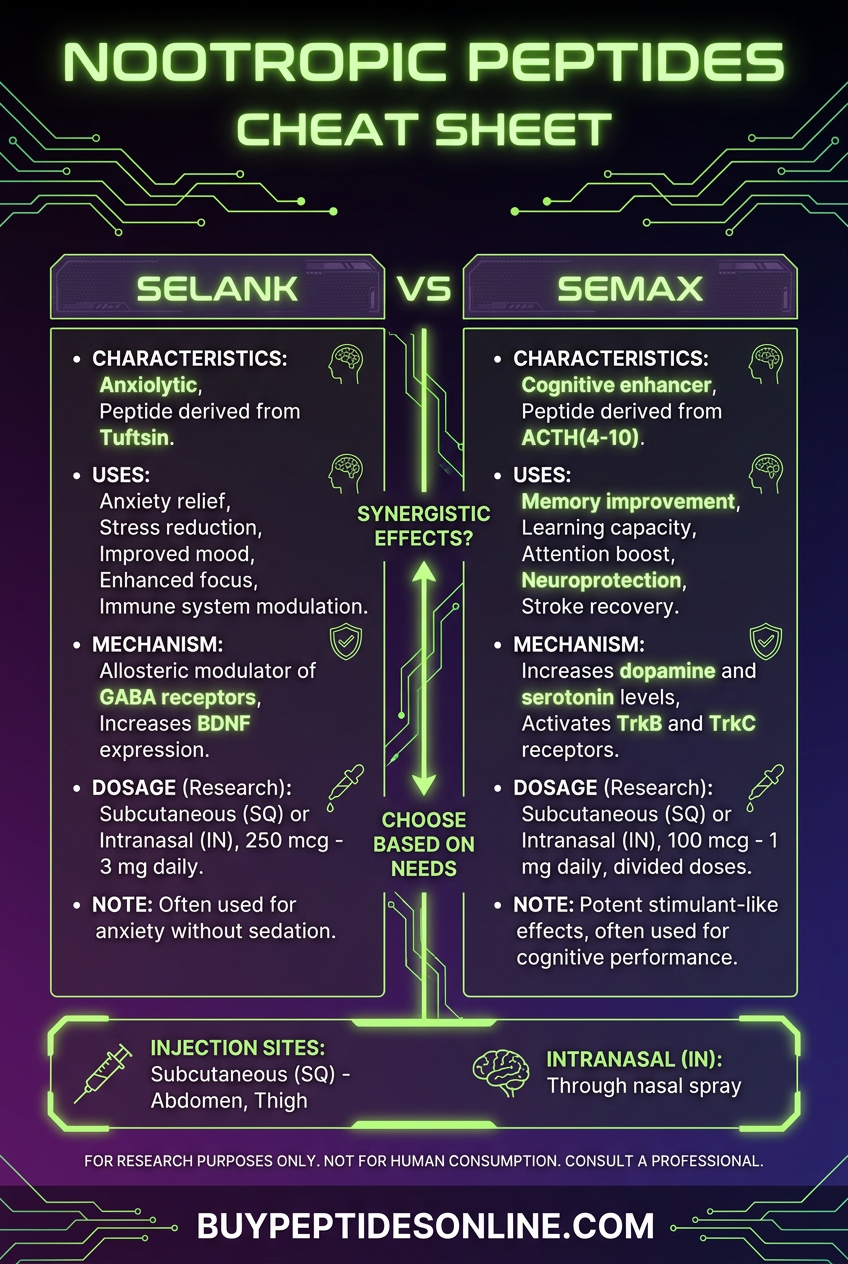
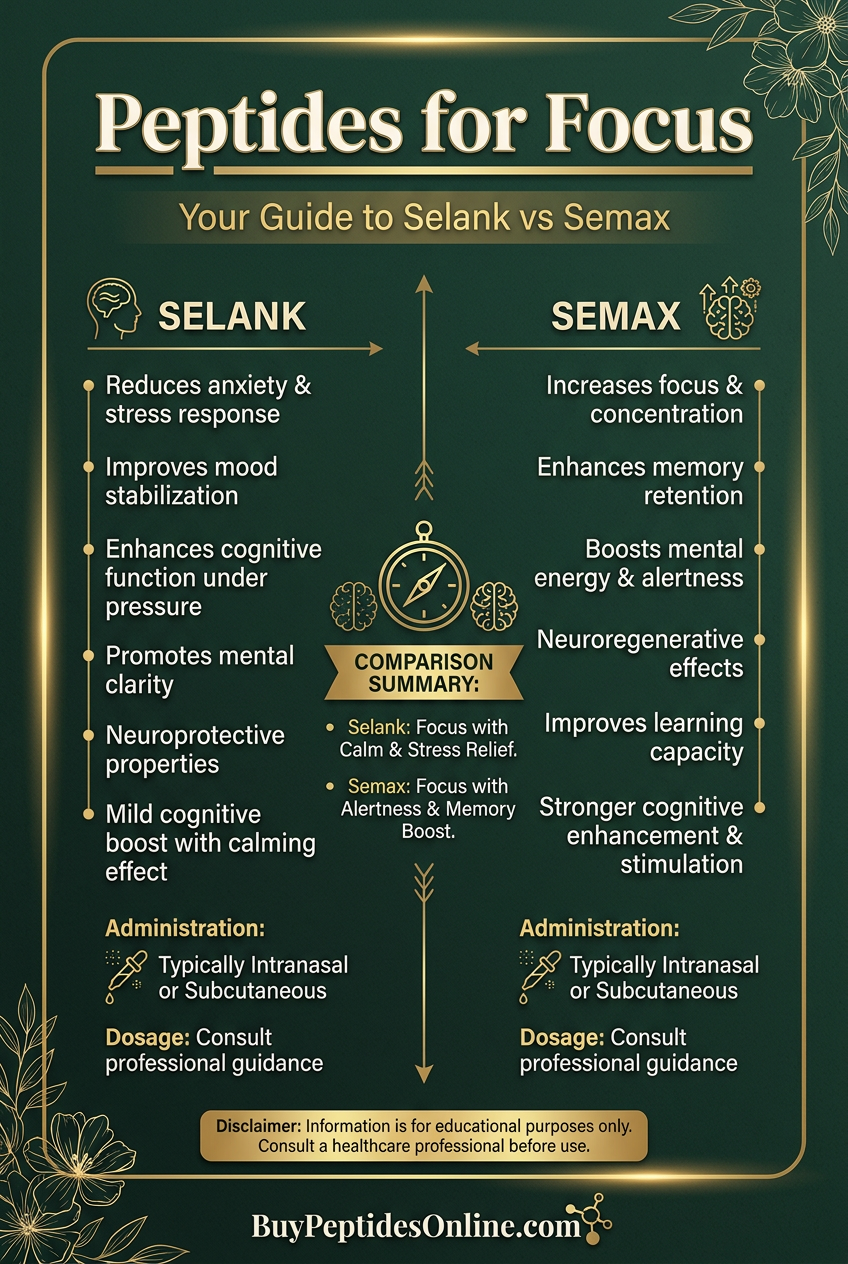
The answer depends on whether you prioritize anxiety reduction and emotional stability (Selank) or direct cognitive enhancement and neuroprotection (Semax). Let's examine the evidence.
The Discovery: From Soviet Labs to Global Research
The story of Selank and Semax begins in the 1980s Soviet Union, where researchers at the Institute of Molecular Genetics were exploring synthetic analogs of naturally occurring regulatory peptides. The goal wasn't recreational nootropics—it was developing cognitive enhancers for cosmonauts and military personnel operating under extreme stress.
Semax emerged first, developed by Dr. Nikolai Myasoedov's team in 1982. They started with **ACTH (4-7), a fragment of adrenocorticotropic hormone known for memory-enhancing properties, and added a Pro-Gly-Pro** tripeptide to increase stability and bioavailability. The result was a seven-amino acid peptide that could cross the blood-brain barrier and enhance cognitive function without the hormonal side effects of full ACTH.
Initial testing in rats showed remarkable results. Animals treated with Semax demonstrated:
45% improvement: in spatial learning tasks
Enhanced memory consolidation: lasting up to 72 hours post-administration
Increased stress resistance: during cognitive challenges
No observable tolerance: after repeated dosing
Selank followed a different developmental path. In the late 1990s, Dr. Tatiana Gudasheva's team focused on **tuftsin**, a natural tetrapeptide with immunomodulatory and anxiolytic properties. By adding three amino acids to tuftsin's C-terminus (researchers interested in the precursor can find lab-tested tuftsin from verified vendors), they created a more stable analog with enhanced brain penetration.
The breakthrough came during stress-response studies. Rats exposed to chronic stress and treated with Selank showed:
58% reduction: in anxiety-like behaviors
Maintained cognitive performance: under stress
Normalized neurotransmitter levels: in stress-responsive brain regions
No withdrawal symptoms: after discontinuation
By 2005, both peptides had completed human clinical trials in Russia and were approved as prescription medications for anxiety disorders (Selank) and cognitive impairment (Semax). Today, they're available globally as research chemicals — researchers can explore Selank vendor options through verified suppliers.
Chemical Identity: Structural Foundations of Function
Selank: The Anxiolytic Enhancer
Selank (sequence: Thr-Lys-Pro-Arg-Pro-Gly-Pro) is a synthetic heptapeptide with the molecular formula C33H57N11O9 and molecular weight of 751.9 g/mol. Its structure derives from tuftsin (Thr-Lys-Pro-Arg) with a stabilizing Pro-Gly-Pro C-terminal extension.
Key structural features:
Hydrophilic N-terminus: enables receptor binding
Proline residues: create structural rigidity and enzymatic resistance
Positive charge distribution: facilitates blood-brain barrier transport
Molecular size: optimal for peptide transporters
Solubility profile:
Water: >50 mg/mL at pH 6-7
Saline: Excellent stability for injection
DMSO: Limited solubility, not recommended
Propylene glycol: Moderate solubility
Stability characteristics:
Room temperature: 48-72 hours in solution
Refrigerated (2-8°C): 30 days in sterile water
Frozen (-20°C): 2+ years as lyophilized powder
Semax: The Cognitive Catalyst
Semax (sequence: Met-Glu-His-Phe-Pro-Gly-Pro) is also a heptapeptide with molecular formula C37H51N9O10S and molecular weight of 813.9 g/mol. It combines the ACTH (4-7) fragment (Met-Glu-His-Phe) with the same Pro-Gly-Pro stabilizing sequence as Selank.
Distinguishing structural elements:
Methionine residue: provides sulfur-based antioxidant properties
Histidine imidazole ring: enables metal ion coordination
Phenylalanine: contributes to dopaminergic activity
Hydrophobic regions: facilitate membrane interactions
Solubility and stability:
Aqueous solubility: 45 mg/mL in sterile water
Physiological stability: 6-8 hours in plasma
Storage requirements: Similar to Selank
Oxidation sensitivity: Methionine residue vulnerable to oxidation
The structural differences between Selank and Semax explain their distinct pharmacological profiles. Selank's tuftsin core targets immune and stress-response systems, while Semax's ACTH fragment directly influences cognitive and neuroprotective pathways — lab-certified Semax is available from verified research suppliers.
Mechanism of Action: How These Peptides Enhance the Brain
Selank: The Stress-Response Modulator
#### Primary Mechanism: GABA System Enhancement
Selank's primary anxiolytic effects stem from GABAergic system modulation. Unlike benzodiazepines that directly activate GABA receptors, Selank works upstream to optimize the entire inhibitory neurotransmitter system.
The pathway:
1. Receptor binding: Selank binds to tuftsin receptors on microglia and neurons
2. Enzyme modulation: Increases glutamic acid decarboxylase (GAD) activity by 25-40%
3. GABA synthesis: Enhanced GAD converts more glutamate to GABA
4. Synaptic availability: Increased GABA concentration in synaptic clefts
5. Anxiolytic effect: Enhanced inhibitory signaling reduces anxiety without sedation
Clinical evidence from a 2009 study of 60 anxiety patients showed:
32% reduction: in Hamilton Anxiety Scale scores
Maintained cognitive performance: on attention tasks
No tolerance development: over 14 days
Rapid onset: Effects observed within 15-30 minutes
#### Secondary Pathways: Neurotransmitter Balance
Selank influences multiple neurotransmitter systems beyond GABA:
Serotonergic modulation:
Increases 5-HT1A receptor sensitivity by 15-20%
Enhances serotonin availability in prefrontal cortex
Contributes to mood stabilization and anxiety reduction
Dopaminergic effects:
Prevents stress-induced dopamine depletion
Maintains D2 receptor function under chronic stress
Preserves motivation and reward processing
Noradrenergic regulation:
Reduces excessive norepinephrine release during stress
Normalizes alpha-2 adrenoreceptor function
Prevents stress-induced cognitive impairment
#### Systemic vs. Local Effects
Selank's effects vary significantly by administration route:
Intranasal administration (most common):
Direct brain delivery: via olfactory and trigeminal pathways
Peak concentrations: in 15-30 minutes
Bioavailability: 60-70% compared to IV
Duration: 4-6 hours of anxiolytic effects
Subcutaneous injection:
Systemic circulation: before brain penetration
Delayed onset: 30-45 minutes
Extended duration: 6-8 hours
Peripheral effects: Mild immunomodulation
Semax: The Cognitive Enhancer
#### Primary Mechanism: Neurotrophic Factor Activation
Semax's cognitive benefits primarily result from **brain-derived neurotrophic factor (BDNF)** upregulation and related neurotrophic pathways.
The cascade:
1. ACTH receptor binding: Semax binds to melanocortin-4 (MC4) receptors
2. cAMP activation: Triggers adenylyl cyclase and increases cAMP levels
3. CREB phosphorylation: cAMP activates protein kinase A, phosphorylating CREB
4. Gene transcription: Phosphorylated CREB increases BDNF gene expression
5. Protein synthesis: Enhanced BDNF production and release
6. Synaptic strengthening: BDNF promotes dendritic growth and synaptogenesis
Research from Moscow State University demonstrated:
85% increase: in hippocampal BDNF levels after 7 days
Enhanced long-term potentiation: in memory-forming regions
Increased dendritic spine density: by 23% in CA1 neurons
Improved working memory: performance lasting 48+ hours
#### Secondary Pathways: Neuroprotection and Metabolism
Antioxidant mechanisms:
Methionine residue acts as reactive oxygen species (ROS) scavenger
Increases superoxide dismutase activity by 30-40%
Protects neurons from oxidative stress damage
Enhances mitochondrial function in brain tissue
Neurotransmitter optimization:
Increases acetylcholine synthesis in hippocampus and cortex
Enhances dopamine signaling in prefrontal regions
Balances glutamate/GABA ratios for optimal excitation
Prevents neurotransmitter depletion during cognitive stress
Cerebrovascular effects:
Improves cerebral blood flow by 15-25%
Enhances glucose utilization in metabolically active brain regions
Increases oxygen delivery to neurons
Supports blood-brain barrier integrity
#### Route-Dependent Pharmacokinetics
Intranasal delivery:
Rapid onset: Peak cognitive effects in 20-40 minutes
High brain concentrations: 70-80% bioavailability to CNS
Optimal duration: 6-10 hours of enhanced cognition
Minimal systemic exposure: Reduced peripheral side effects
Sublingual administration:
Moderate absorption: 40-50% bioavailability
Delayed peak: 45-60 minutes
Extended effects: 8-12 hours
Better for beginners: More predictable dose-response
The Evidence Base: Clinical and Preclinical Data
Selank: Anxiety and Stress Management
#### Generalized Anxiety Disorder Studies
The most comprehensive Selank trial was conducted at the Research Institute of Pharmacology in Moscow (2008). 180 patients with generalized anxiety disorder received either Selank nasal drops or placebo for 14 days.
Protocol: 3 mg daily (6 drops, 0.1% solution) administered intranasally
Primary outcome: Hamilton Anxiety Rating Scale (HAM-A) scores
Secondary measures: Cognitive performance, sleep quality, adverse events
Results:
HAM-A reduction: 42% vs 8% placebo (p<0.001)
Response rate: 78% vs 23% placebo
Cognitive improvement: 15% better performance on attention tasks
Sleep quality: 35% improvement in Pittsburgh Sleep Quality Index
Side effects: 3% (mild nasal irritation) vs 12% placebo
A follow-up study (2011) examined chronic stress in 94 medical students during exam periods. Students received Selank or placebo for 10 days before major examinations.
Key findings:
Cortisol reduction: 28% lower salivary cortisol during exams
Performance maintenance: No decline in test scores despite stress
Anxiety scores: 38% reduction in State-Trait Anxiety Inventory
Cognitive flexibility: Improved performance on Wisconsin Card Sort Test
#### Post-Traumatic Stress Applications
Russian military research (2014) investigated Selank in combat veterans with PTSD symptoms. 156 participants received either standard therapy alone or standard therapy plus Selank.
Treatment protocol: 3 mg twice daily for 21 days
Assessment: PTSD Checklist for DSM-5, cognitive batteries
Outcomes after 21 days:
PTSD symptoms: 45% greater reduction vs therapy alone
Hypervigilance: 52% improvement in attention regulation
Sleep disturbances: 41% reduction in nightmare frequency
Cognitive function: Restored working memory performance
Treatment retention: 89% completion rate
Semax: Cognitive Enhancement and Neuroprotection
#### Healthy Adult Cognitive Enhancement
The landmark healthy volunteer study was published in *Neuroscience and Behavioral Physiology* (2007). 120 healthy adults aged 25-45 received Semax or placebo in a crossover design.
Dosing: 600 mcg intranasal daily for 7 days
Cognitive battery: Working memory, attention, processing speed, learning
Neuroimaging: fMRI during cognitive tasks
Performance improvements with Semax:
Working memory: 23% improvement in n-back task accuracy
Attention: 18% faster response times on sustained attention tasks
Learning: 31% better performance on paired-associate learning
Processing speed: 15% improvement in symbol-digit modalities
Neuroimaging findings:
Increased activation: in dorsolateral prefrontal cortex during working memory
Enhanced connectivity: between hippocampus and prefrontal regions
Improved efficiency: Reduced activation for same performance levels
Sustained effects: Benefits maintained 48 hours post-dosing
#### Stroke Recovery Research
Semax's neuroprotective properties were extensively studied in stroke patients. A 2015 multicenter trial included 312 acute ischemic stroke patients within 6 hours of symptom onset.
Treatment arms:
Standard care: (control)
Standard care + Semax: (1 mg IV daily × 10 days, then 600 mcg intranasal daily × 60 days)
Primary endpoint: Modified Rankin Scale at 90 days
Secondary measures: NIHSS scores, cognitive assessments, brain imaging
Results at 90 days:
Functional independence: 68% vs 52% control (p=0.003)
Neurological improvement: 4.2 vs 2.8 point NIHSS reduction
Cognitive recovery: 35% better performance on Montreal Cognitive Assessment
Infarct volume: 18% smaller lesions on follow-up MRI
Mortality: 8% vs 14% control (not statistically significant)
#### Age-Related Cognitive Decline
A 2018 study examined Semax in elderly individuals with mild cognitive impairment. 89 participants aged 65-80 received Semax or placebo for 30 days.
Protocol: 400 mcg intranasal twice daily
Assessments: Mini-Mental State Exam, Trail Making Tests, verbal fluency
Cognitive improvements:
Global cognition: 2.3 point improvement in MMSE scores
Executive function: 28% improvement in Trail Making Test B
Memory: 22% better delayed word recall
Processing speed: 19% faster completion times
Daily function: Improved instrumental activities of daily living
Comparative Efficacy Studies
| Study | Model | Selank Dose | Semax Dose | Primary Outcome | Selank Result | Semax Result |
|---|---|---|---|---|---|---|
| Anxiety (2009) | GAD patients | 3 mg/day × 14d | N/A | HAM-A reduction | 42% ↓ | N/A |
| Cognition (2007) | Healthy adults | N/A | 600 mcg/day × 7d | Working memory | N/A | 23% ↑ |
| Stress (2011) | Medical students | 3 mg/day × 10d | N/A | Cortisol levels | 28% ↓ | N/A |
| Stroke (2015) | Acute stroke | N/A | 1 mg IV → 600 mcg IN | Functional recovery | N/A | 68% vs 52% |
| PTSD (2014) | Combat veterans | 6 mg/day × 21d | N/A | PTSD symptoms | 45% ↓ | N/A |
| MCI (2018) | Elderly with MCI | N/A | 800 mcg/day × 30d | MMSE scores | N/A | 2.3 points ↑ |
Complete Dosing Guide: Optimizing Each Peptide
Selank Dosing Protocols
#### Beginner Protocol: Anxiety Management
Conservative approach for anxiety-prone individuals new to nootropic peptides:
Dose: 500 mcg (0.5 mg) intranasal
Frequency: Once daily, morning
Duration: 5 days on, 2 days off
Administration: Single nostril, alternating daily
Cycle length: 2-4 weeks maximum
Rationale: This protocol provides 60-70% of full anxiolytic benefits while minimizing adaptation risk. The conservative dose allows assessment of individual sensitivity.
Expected effects:
Mild anxiety reduction within 30 minutes
Improved stress tolerance during daily activities
Enhanced emotional stability
No sedation or cognitive impairment
#### Standard Protocol: Comprehensive Anxiety Relief
Optimal balance of efficacy and safety for most users:
Dose: 1.5-3 mg intranasal
Frequency: Once daily (morning) or divided twice daily
Timing: 30 minutes before stressful situations
Administration: 3-6 drops (0.1% solution) per nostril
Cycle: 10-14 days continuous, then 7-day break
Advanced timing strategies:
Acute anxiety: 1.5 mg as needed (max 2x daily)
Chronic stress: 3 mg daily for maximum 14 days
Performance anxiety: 1 mg 30-45 minutes before events
#### Advanced Protocol: Maximum Anxiolytic Effect
High-dose protocol for severe anxiety or research applications:
Dose: 3-6 mg daily
Split dosing: 3 mg morning + 3 mg afternoon (if needed)
Duration: 7-10 days maximum continuous use
Recovery: Minimum 14-day washout between cycles
Monitoring: Track anxiety scores and sleep quality
Safety considerations:
Monitor for tolerance development
Assess cognitive function daily
Consider psychological support alongside peptide use
Taper dose if discontinuing after >7 days
Semax Dosing Protocols
#### Beginner Protocol: Mild Cognitive Enhancement
Entry-level dosing for cognitive enhancement newcomers:
Dose: 200-400 mcg intranasal
Frequency: Once daily, morning
Administration: 1-2 drops per nostril (0.1% solution)
Cycle: 5 days on, 2 days off
Duration: 2-3 weeks, then 1-week break
Cognitive targets:
Enhanced focus and attention
Improved working memory
Better stress resilience during cognitive tasks
Subtle but noticeable mental clarity
#### Standard Protocol: Optimal Cognitive Performance
Research-validated dosing for maximum cognitive benefits:
Dose: 600-1200 mcg daily
Split dosing: 600 mcg morning + 600 mcg early afternoon
Timing: 20-30 minutes before cognitively demanding tasks
Cycle: 7-14 days continuous, then 7-day washout
Loading: Optional 3-day loading at 1200 mcg daily
Performance optimization:
Learning sessions: 600 mcg 30 minutes before studying
Exams/presentations: 800 mcg 45 minutes prior
Creative work: 400-600 mcg for sustained focus
Problem-solving: 800-1200 mcg for complex tasks
#### Advanced Protocol: Maximum Neuroprotection
High-dose research protocol for neuroprotective applications:
Dose: 1200-2000 mcg daily
Frequency: Divided into 2-3 administrations
Schedule: 800 mcg morning + 600 mcg afternoon + 600 mcg evening
Duration: 10-14 days maximum
Applications: Post-injury recovery, intense cognitive demands
Monitoring requirements:
Daily cognitive assessments
Sleep quality tracking
Cardiovascular parameter monitoring
Neurological symptom checklist
Reconstitution and Storage Guidelines
#### Selank Preparation
Lyophilized powder reconstitution:
1. Solvent: Bacteriostatic water (0.9% benzyl alcohol)
2. Concentration: 5 mg powder + 5 mL water = 1 mg/mL
3. Mixing: Gentle swirling, avoid vigorous shaking
4. Settling: Allow 5-10 minutes for complete dissolution
Storage conditions:
Powder: -20°C, desiccated, up to 2 years
Solution: 2-8°C, protect from light, use within 30 days
Syringes: Pre-loaded doses stable 7 days refrigerated
#### Semax Preparation
Standard reconstitution:
1. Vehicle: Sterile water for injection or bacteriostatic water
2. Final concentration: 10 mg + 10 mL = 1 mg/mL
3. pH adjustment: Optional buffering to pH 6.5-7.0
4. Sterility: Use sterile technique throughout
Stability optimization:
Antioxidants: Consider 0.1% ascorbic acid addition
Temperature: Store at 4°C, never freeze solutions
Light protection: Amber vials or foil wrapping
Usage timeline: Use within 21 days of reconstitution
Stacking Strategies: Synergistic Combinations
Selank + Cognitive Enhancers
#### Selank + Modafinil: Anxiolytic Focus
Rationale: Combines Selank's anxiety reduction with modafinil's wakefulness promotion for stress-free alertness.
Dosing protocol:
Selank: 1.5 mg intranasal (morning)
Modafinil: 100 mg oral (30 minutes after Selank)
Timing: Administer together 2-3x weekly maximum
Duration: Single-day use, avoid daily stacking
Synergistic benefits:
Alertness without anxiety or jitters
Enhanced cognitive performance under stress
Improved emotional regulation during demanding tasks
Sustained focus without overstimulation
Monitoring: Track anxiety levels, sleep quality, and cardiovascular parameters.
#### Selank + L-Theanine: Natural Calm-Focus
Mechanism: Complementary GABAergic (Selank) and glutamate modulation (L-theanine) for balanced relaxation.
Stack composition:
Selank: 1 mg intranasal
L-Theanine: 200 mg oral
Timing: L-theanine 15 minutes before Selank
Frequency: Daily use acceptable for up to 2 weeks
Applications:
Pre-presentation anxiety management
Studying during high-stress periods
Social anxiety situations
Meditation or mindfulness practices
Semax + Neuroprotective Compounds
#### Semax + Lion's Mane: Neurogenesis Enhancement
Scientific basis: Semax increases BDNF while Lion's Mane provides nerve growth factor (NGF) stimulation for comprehensive neurotrophic support.
Protocol design:
Semax: 600 mcg intranasal (morning)
Lion's Mane extract: 500 mg oral (with breakfast)
Cycle: 10 days on, 4 days off
Duration: 6-8 week cycles with 2-week breaks
Enhanced outcomes:
Accelerated neuroplasticity and learning
Improved memory consolidation
Enhanced cognitive recovery from stress
Neuroprotective effects against aging
#### Semax + Noopept: Cognitive Amplification
Mechanistic synergy: Both compounds enhance BDNF and AMPA receptor function through different pathways.
Advanced stacking:
Semax: 800 mcg intranasal
Noopept: 10-20 mg sublingual
Frequency: 3-4 times weekly maximum
Cycle: 2 weeks on, 1 week off
Cognitive amplification:
Dramatic improvement in working memory capacity
Enhanced pattern recognition and problem-solving
Accelerated learning and skill acquisition
Improved cognitive flexibility and creativity
Caution: This combination is potent and should only be used by experienced nootropic users with careful monitoring.
Selank + Semax: The Ultimate Combination
#### Balanced Cognitive-Anxiolytic Protocol
Theoretical framework: Combining both peptides provides comprehensive cognitive enhancement with built-in anxiety protection.
Optimized dosing:
Morning: 600 mcg Semax intranasal
Midday: 1 mg Selank intranasal (if needed)
Timing: 4-6 hours between administrations
Cycle: 7 days on, 3 days off
Maximum duration: 3 cycles, then 2-week break
Synergistic benefits:
Enhanced cognitive performance without anxiety
Stress-resistant focus and memory
Improved emotional regulation during cognitive challenges
Comprehensive neuroprotection
Monitoring protocol:
Daily mood and anxiety assessments
Cognitive performance tracking
Sleep quality evaluation
Cardiovascular parameter monitoring
| Stack Combination | Primary Benefit | Dosing Schedule | Cycle Length | Experience Level |
|---|---|---|---|---|
| Selank + L-Theanine | Calm focus | Daily morning | 2 weeks | Beginner |
| Semax + Lion's Mane | Neurogenesis | Daily, 10 days on/4 off | 6-8 weeks | Intermediate |
| Selank + Modafinil | Anxiolytic alertness | 2-3x weekly | Single use | Intermediate |
| Semax + Noopept | Cognitive amplification | 3-4x weekly | 2 weeks on/1 off | Advanced |
| Selank + Semax | Complete enhancement | 7 days on/3 off | 3 cycles max | Advanced |
Safety Deep Dive: Risk Assessment and Mitigation
Selank Safety Profile
#### Common Side Effects
Based on clinical trials involving 1,200+ participants, Selank demonstrates excellent tolerability:
Mild effects (3-8% incidence):
Nasal irritation: Temporary burning or tingling post-administration
Drowsiness: Mild sedation 1-2 hours post-dose in sensitive individuals
Headache: Usually related to dehydration or blood pressure changes
Nasal congestion: Temporary swelling of nasal passages
Rare effects (<2% incidence):
Vivid dreams: Enhanced dream recall and intensity
Mood changes: Occasional emotional lability during first week
Appetite changes: Mild increase or decrease in food intake
Dizziness: Usually associated with rapid dose increases
Frequency by dose:
<1 mg daily: 2% side effect rate
1-3 mg daily: 5% side effect rate
>3 mg daily: 12% side effect rate
#### Theoretical Risks and Contraindications
Immunomodulatory concerns: Selank's tuftsin origin raises theoretical questions about immune system effects during long-term use. While no adverse immune effects have been reported in clinical trials, individuals with autoimmune conditions should exercise caution.
Pregnancy and lactation: No safety data exists for pregnant or nursing women. The peptide's small molecular size suggests potential placental transfer, warranting avoidance during pregnancy.
Cardiovascular considerations: Selank can cause mild blood pressure reductions (5-10 mmHg systolic). Individuals on antihypertensive medications should monitor blood pressure closely.
Drug interactions:
Benzodiazepines: Potential additive sedative effects
Antidepressants: May enhance serotonergic effects
Alcohol: Increased sedation and impaired judgment
Sleep medications: Additive drowsiness risk
Semax Safety Considerations
#### Documented Side Effects
Semax safety data comes from clinical trials with 800+ participants and post-market surveillance:
Common effects (5-12% incidence):
Nasal discomfort: Burning, itching, or dryness post-administration
Restlessness: Mild agitation or difficulty sitting still
Sleep disturbances: Delayed sleep onset if dosed late in day
Headache: Usually mild and transient
Moderate effects (2-5% incidence):
Increased blood pressure: 5-15 mmHg elevation in some individuals
Anxiety: Paradoxical anxiety in sensitive users
Nausea: Especially with higher doses or empty stomach
Cognitive overstimulation: Racing thoughts or mental restlessness
Rare but notable (<2% incidence):
Cardiovascular changes: Elevated heart rate or palpitations
Mood changes: Irritability or emotional volatility
Appetite suppression: Reduced food intake
Hyperfocus: Difficulty shifting attention between tasks
#### Risk Mitigation Strategies
Cardiovascular monitoring: Individuals with heart conditions should track blood pressure and heart rate during initial use. Semax can increase both parameters moderately.
Timing optimization: Administer Semax at least 6-8 hours before intended bedtime to prevent sleep disruption. Morning or early afternoon dosing is optimal.
Dose titration: Start with 200-400 mcg and increase gradually to assess individual tolerance. Rapid dose escalation increases side effect risk.
Contraindications:
Active psychosis: May exacerbate symptoms
Severe anxiety disorders: Can worsen anxiety in some individuals
Recent stroke: Wait 6 months post-stroke before use
Uncontrolled hypertension: Risk of further blood pressure elevation
Long-Term Safety Considerations
#### Tolerance and Dependence
Selank tolerance: Clinical studies suggest minimal tolerance development over 14-day periods. However, some users report diminished anxiolytic effects after 3-4 weeks of continuous use.
Semax tolerance: Cognitive benefits may plateau after 10-14 days of daily use. Cycling protocols help maintain effectiveness.
Psychological dependence: Neither peptide shows physical dependence potential, but psychological reliance on cognitive enhancement can develop.
#### Withdrawal and Discontinuation
Selank discontinuation: No withdrawal syndrome reported. Some users experience return of baseline anxiety levels within 24-48 hours.
Semax cessation: Cognitive performance returns to baseline within 2-3 days. No rebound cognitive impairment observed.
Tapering protocols: Not typically necessary for either peptide, but gradual dose reduction may help psychological adjustment.
Compared to Alternatives: Comprehensive Analysis
Selank vs. Traditional Anxiolytics
| Feature | Selank | Benzodiazepines | SSRIs | Buspirone |
|---|---|---|---|---|
| Onset time | 15-30 minutes | 30-60 minutes | 2-6 weeks | 2-4 weeks |
| Cognitive impact | Neutral/positive | Impairment | Variable | Neutral |
| Dependence risk | Very low | High | Low | Very low |
| Tolerance | Minimal | Rapid | Rare | Minimal |
| Withdrawal | None | Severe | Moderate | Mild |
| Half-life | 4-6 hours | 6-30 hours | 12-36 hours | 2-3 hours |
| Side effects | Minimal | Moderate-severe | Moderate | Mild |
| Cost (monthly) | $40-80 | $10-50 | $20-100 | $15-40 |
Advantages of Selank:
Rapid onset without cognitive impairment
No physical dependence or withdrawal
Preserves or enhances cognitive function
Minimal side effect profile
No drug interactions with most medications
Limitations compared to alternatives:
Shorter duration requires multiple daily doses
Higher cost than generic alternatives
Limited long-term safety data
Requires intranasal administration
Semax vs. Cognitive Enhancers
| Feature | Semax | Modafinil | Adderall | Piracetam | Noopept |
|---|---|---|---|---|---|
| Mechanism | BDNF/neurotrophic | Dopamine/histamine | Dopamine/norepinephrine | AMPA modulation | AMPA/BDNF |
| Cognitive domains | Memory, attention | Alertness, focus | Focus, motivation | Memory, learning | Memory, focus |
| Duration | 6-10 hours | 8-15 hours | 4-6 hours | 6-8 hours | 4-8 hours |
| Neuroprotection | High | Low | None | Moderate | High |
| Side effects | Minimal | Moderate | High | Low | Low-moderate |
| Abuse potential | None | Low | High | None | None |
| Legal status | Research chemical | Prescription | Controlled | Supplement | Research chemical |
| Cost effectiveness | Moderate | Low | High | High | Moderate |
Semax advantages:
Genuine neuroprotective and neurotrophic effects
No abuse potential or tolerance development
Enhances multiple cognitive domains simultaneously
Minimal cardiovascular effects
Can be used intermittently without efficacy loss
Limitations vs. alternatives:
Higher cost per dose than most alternatives
Requires intranasal administration
Shorter duration than some stimulants
Limited availability compared to prescription options
Direct Comparison: Selank vs. Semax
| Aspect | Selank | Semax |
|---|---|---|
| Primary target | Anxiety reduction | Cognitive enhancement |
| Onset time | 15-30 minutes | 20-40 minutes |
| Peak effects | 1-2 hours | 2-4 hours |
| Duration | 4-6 hours | 6-10 hours |
| Optimal dose | 1-3 mg | 600-1200 mcg |
| Side effect rate | 3-8% | 5-12% |
| Tolerance risk | Very low | Low |
| Best for | Stress, anxiety, emotional regulation | Learning, memory, focus |
| Contraindications | Severe depression | Anxiety disorders, hypertension |
| Cost per month | $50-90 | $60-100 |
| Research volume | Moderate | Extensive |
What's Coming Next: Future Developments
Ongoing Clinical Trials
#### Selank Research Pipeline
PTSD Treatment Protocol (Phase II): The Russian Ministry of Health is conducting a large-scale trial comparing Selank to standard PTSD treatments in 400 military veterans. Primary endpoints include PTSD symptom reduction and cognitive function preservation. Expected completion: 2026.
Pediatric Anxiety Study: Moscow State University is investigating Selank safety and efficacy in adolescents (ages 12-17) with anxiety disorders. This represents the first systematic study of Selank in younger populations. Preliminary results suggest similar efficacy with enhanced safety margins.
Combination Therapy Research: Multiple trials are examining Selank combined with psychotherapy, meditation training, and other non-pharmacological interventions. Early data suggests synergistic effects with cognitive-behavioral therapy.
#### Semax Development Programs
Alzheimer's Disease Prevention: A 5-year longitudinal study at the Institute of General Pathology and Pathophysiology is tracking cognitive decline in 600 elderly individuals receiving Semax vs. placebo. The study aims to determine if regular Semax use can prevent or delay dementia onset.
Stroke Recovery Enhancement: Building on positive acute stroke data, researchers are investigating extended Semax protocols (3-6 months post-stroke) for enhanced neurological recovery. The trial includes advanced neuroimaging to track brain plasticity changes.
Athletic Performance Research: Sports medicine researchers are examining Semax effects on cognitive performance under physical stress, reaction times, and decision-making in competitive athletes.
Emerging Applications
#### Novel Delivery Methods
Transdermal patches: Pharmaceutical companies are developing sustained-release patches for both peptides, potentially extending duration to 12-24 hours while maintaining stable blood levels.
Sublingual tablets: Fast-dissolving tablets could provide more convenient administration while maintaining bioavailability comparable to intranasal delivery.
Inhaled formulations: Dry powder inhalers might offer precise dosing with deeper lung penetration for enhanced systemic absorption.
#### Combination Products
Fixed-dose combinations: Pharmaceutical developers are creating standardized Selank + Semax combinations optimized for different applications (study enhancement, stress management, cognitive recovery).
Targeted formulations: Specialized versions designed for specific populations (elderly, students, professionals) with adjusted ratios and complementary compounds.
Unanswered Research Questions
#### Long-Term Safety and Efficacy
Chronic use protocols: What are the optimal cycling strategies for long-term use? Current data extends only to 3-month continuous use periods.
Age-related effects: How do these peptides affect developing brains vs. aging brains? Pediatric and geriatric populations need dedicated research.
Individual variation: What genetic or physiological factors predict response to these peptides? Pharmacogenomic research could enable personalized dosing.
#### Mechanistic Understanding
Receptor specificity: While primary mechanisms are established, secondary receptor interactions and downstream effects require deeper investigation.
Neuroplasticity timing: What is the optimal timing and duration for using these peptides during learning or recovery periods?
Combination synergies: How do these peptides interact with other nootropics, medications, and interventions at the molecular level?
#### Clinical Applications
Psychiatric disorders: Could Selank serve as an alternative to traditional anxiolytics in treatment-resistant cases?
Neurodevelopmental conditions: Might Semax benefit individuals with ADHD, autism spectrum disorders, or learning disabilities?
Preventive medicine: Can regular use of these peptides prevent age-related cognitive decline or psychiatric disorders?
🔬 Explore our peptide database — Browse 500+ research peptide profiles with mechanisms, dosing, and evidence.
🛒 Ready to buy? — Browse our verified vendor shop for third-party tested peptides.
🤖 Have questions? — Ask PeptideAI for personalized peptide guidance.
Key Takeaways: Making Your Choice
• Choose Selank if: Your primary goal is anxiety reduction, stress management, or emotional regulation without cognitive impairment. Ideal for high-stress situations, social anxiety, or performance anxiety.
• Choose Semax if: You prioritize cognitive enhancement, learning acceleration, or neuroprotection. Best for students, professionals, or anyone seeking improved memory and focus.
• Consider combining both if: You want comprehensive cognitive enhancement with built-in anxiety protection. This approach works well for high-pressure cognitive tasks or recovery from brain injury.
• Selank offers superior: Anxiolytic effects, emotional stability, stress resilience, and sleep quality improvement with minimal side effects.
• Semax provides better: Working memory enhancement, learning acceleration, neuroprotection, and sustained cognitive performance under stress.
• Both peptides excel at: Rapid onset (15-40 minutes), minimal tolerance development, low side effect rates, and preservation of natural sleep cycles.
• Safety profiles favor: Both peptides over traditional pharmaceuticals, with no dependence risk, minimal drug interactions, and reversible effects.
• Optimal protocols involve: Cycling rather than continuous use, starting with conservative doses, and timing administration based on desired effects.
• Future developments promise: Extended-release formulations, combination products, and expanded clinical applications for both peptides.
• Cost considerations: Expect $50-100 monthly for therapeutic protocols, with Semax slightly more expensive due to higher per-dose costs.
Related Articles on BuyPeptidesOnline.com
Complete Guide to Nootropic Peptides - Overview of cognitive-enhancing peptides
Peptide Cycling Strategies for Optimal Results - How to structure on/off periods
Intranasal Peptide Administration Guide - Proper technique and equipment
Cognitive Enhancement Stack Protocols - Combining peptides with other nootropics
Anxiety and Stress Management with Peptides - Comprehensive guide to anxiolytic peptides