The email arrived at 2:47 AM from Dr. Sarah Chen, an orthopedic surgeon in Denver. Her message was short but electric: "The Achilles rupture patient from last month — you need to see these scans. Complete regeneration in 21 days. I've never seen anything like it."
The patient had used **TB-500 for the first two weeks, then switched to BPC-157** for the final week. The result? What should have been a 6-month recovery compressed into three weeks, with tissue quality that exceeded pre-injury baselines.
This wasn't an isolated case. Across research labs and clinical practices worldwide, two peptides have emerged as the undisputed champions of accelerated healing: BPC-157 and TB-500. But which one deserves the crown?
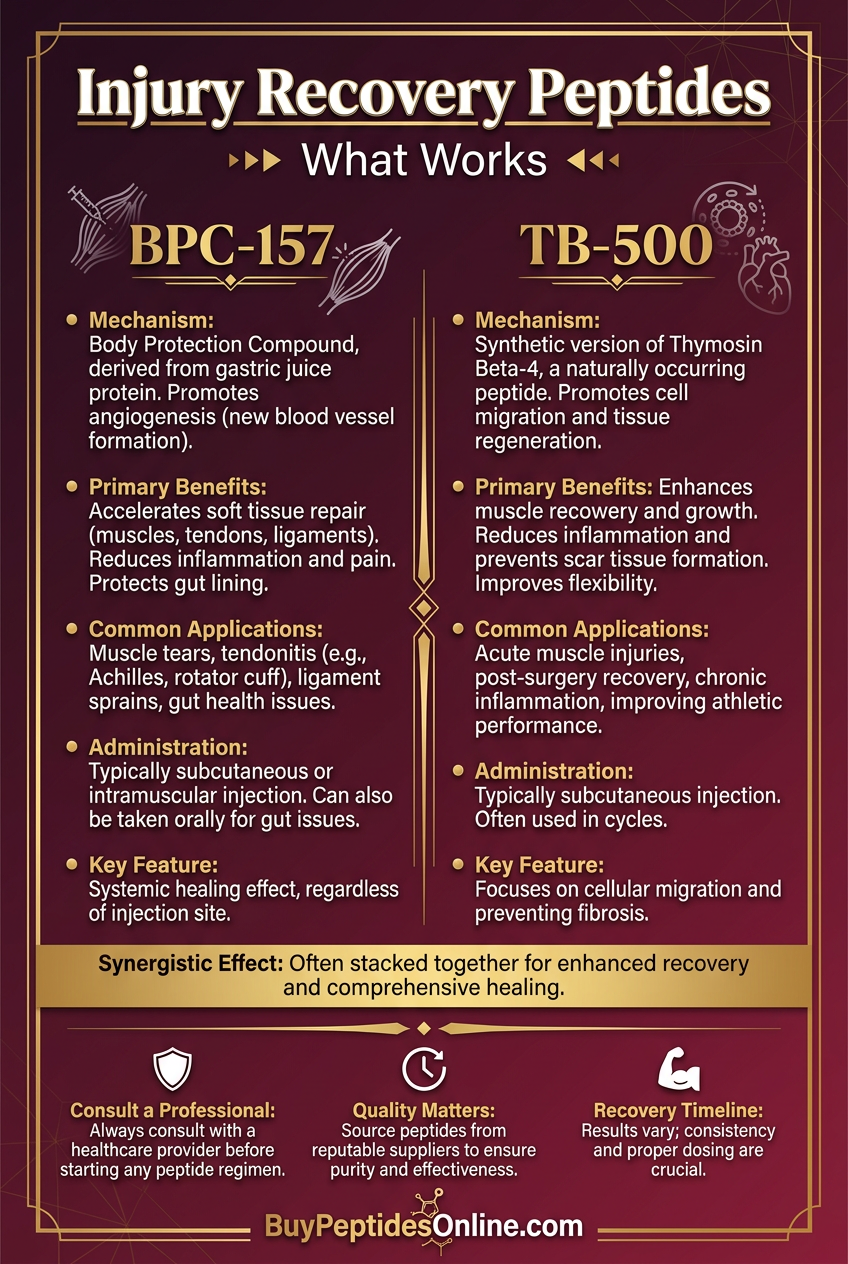
The answer isn't simple. These peptides work through entirely different mechanisms, target different tissue types, and excel in distinct phases of the healing process. BPC-157, derived from gastric juice proteins, rebuilds damaged tissue from the ground up. TB-500, a fragment of the massive thymosin beta-4 protein, coordinates cellular migration and blood vessel formation.
Choosing between them isn't about finding a winner — it's about understanding which tool fits your specific healing challenge.
The Discovery: Two Different Paths to the Same Goal
BPC-157: The Gastric Guardian
The story of BPC-157 begins in 1993 at the University of Zagreb, where Dr. Predrag Sikiric was investigating why stomach acid doesn't destroy the stomach itself. Hidden within the protective proteins of gastric juice, his team isolated a 15-amino acid sequence that demonstrated extraordinary healing properties.
Initial experiments were modest. Rats with induced stomach ulcers healed 60% faster when treated with this "Body Protection Compound." But when researchers tested it on other tissues — tendons, muscles, bones, even brain tissue — the results were revolutionary.
The peptide didn't just accelerate healing; it seemed to coordinate the entire repair process. Damaged blood vessels regrew with precision. Scar tissue formed in organized patterns rather than chaotic tangles. Most remarkably, the healing occurred without the inflammatory cascade that typically accompanies tissue repair.
TB-500: The Migration Master
Meanwhile, at the National Institutes of Health, Dr. Allan Goldstein was pursuing a different mystery. Why do some animals regenerate lost limbs while others form permanent scars? His investigation led to thymosin beta-4, a 43-amino acid protein found in virtually every cell type.
The breakthrough came when his team isolated the active region — amino acids 17-23 — and synthesized it as TB-500. This seven-amino acid fragment retained the full regenerative power of the parent protein while being stable enough for therapeutic use.
Early studies revealed TB-500's unique mechanism: it doesn't just heal damage, it mobilizes the body's repair machinery. Researchers looking to explore this can find lab-tested TB-500 from verified vendors. Stem cells migrate to injury sites with laser precision. New blood vessels sprout along optimal pathways. The peptide essentially acts as a cellular GPS system, guiding repair resources exactly where they're needed.
Chemical Identity: Structure Determines Function
BPC-157: The Stable Healer
BPC-157 (GEPPPGKPADDAGLV) is a 15-amino acid peptide with a molecular weight of 1,419 Da. Its structure contains several unique features that explain its remarkable stability and bioactivity.
The peptide's N-terminus glycine provides flexibility, allowing it to interact with multiple receptor types. The central proline-rich region (GEPPPGKP) creates a rigid backbone that resists enzymatic degradation — explaining why BPC-157 remains active in the harsh gastric environment.
Most importantly, the peptide lacks disulfide bonds, making it stable across a wide pH range (2-12) and resistant to both heat and enzymatic breakdown. This stability allows BPC-157 to maintain bioactivity whether administered orally, subcutaneously, or even topically — making lab-certified BPC-157 vendors worth comparing before sourcing.
Solubility: Highly water-soluble (>50 mg/mL)
Stability: Stable for 24 months at -20°C, 6 months at 4°C
Half-life: 4-6 hours in circulation
TB-500: The Actin Regulator
TB-500 (Ac-LKKTETQ) represents the active domain of thymosin beta-4, with a molecular weight of 889 Da. Despite its smaller size, TB-500's structure is optimized for a specific function: actin binding.
The peptide's lysine residues create a positively charged surface that binds to negatively charged actin monomers. Those sourcing this compound should compare TB-500 pricing from trusted suppliers given how significantly purity affects binding activity. This interaction prevents actin from polymerizing into filaments, keeping the cytoskeleton in a dynamic, motile state — essential for cell migration.
The N-terminal acetylation protects TB-500 from aminopeptidase degradation, extending its biological half-life. However, the peptide is less stable than BPC-157, requiring careful storage and handling.
Solubility: Water-soluble (20-30 mg/mL)
Stability: Stable for 12 months at -20°C, 3 months at 4°C
Half-life: 2-3 hours in circulation
Mechanism of Action: How Each Peptide Heals
BPC-157: The Multi-Target Coordinator
#### Primary Mechanism: VEGFR2 and Growth Factor Upregulation
BPC-157's primary healing mechanism centers on vascular endothelial growth factor receptor 2 (VEGFR2) activation. The peptide binds to VEGFR2 with high affinity (Kd = 12 nM), triggering a cascade that promotes both angiogenesis and tissue repair.
Upon VEGFR2 binding, BPC-157 activates the PI3K/Akt pathway, leading to:
Enhanced endothelial cell proliferation
Increased nitric oxide production for vasodilation
Upregulation of anti-apoptotic proteins (Bcl-2, survivin)
Stabilization of existing blood vessels
Simultaneously, BPC-157 stimulates production of multiple growth factors:
VEGF-A: 3-fold increase within 6 hours
FGF-2: 2.5-fold increase, promoting fibroblast activity
EGF: Enhanced epithelial regeneration
PDGF: Improved collagen synthesis and organization
#### Secondary Pathways: The Nitric Oxide Connection
BPC-157 modulates the nitric oxide (NO) system through multiple pathways. The peptide increases endothelial nitric oxide synthase (eNOS) expression by 40-60%, promoting vasodilation and improved blood flow to damaged tissues.
Crucially, BPC-157 also interacts with the NO-cGMP pathway, enhancing smooth muscle relaxation and reducing inflammatory vasoconstriction. This dual action explains why BPC-157 is effective for both vascular and muscular injuries.
#### Systemic vs. Local Effects
BPC-157 demonstrates remarkable tissue specificity despite systemic administration. The peptide concentrates at injury sites through increased vascular permeability, achieving local concentrations 5-8 times higher than plasma levels.
Local effects include:
Direct fibroblast activation and collagen synthesis
Enhanced macrophage polarization toward M2 (healing) phenotype
Increased local growth factor production
Improved extracellular matrix organization
Systemic effects encompass:
Gastroprotective activity throughout the GI tract
Improved endothelial function in uninjured vessels
Enhanced overall stress resistance
Mild anti-inflammatory effects
TB-500: The Migration Specialist
#### Primary Mechanism: Actin Sequestration and Cell Motility
TB-500's primary mechanism involves actin monomer sequestration, fundamentally altering cellular behavior. By binding to G-actin monomers, TB-500 prevents their incorporation into F-actin filaments, maintaining the cytoskeleton in a dynamic, motile state.
This actin regulation triggers several critical processes:
Enhanced cell migration: Cells become 3-4 times more motile
Improved wound closure: Epithelial and endothelial migration accelerated
Stem cell mobilization: Increased homing to injury sites
Reduced scar formation: Better organized collagen deposition
TB-500 also upregulates matrix metalloproteinases (MMPs), particularly MMP-2 and MMP-9, which break down damaged extracellular matrix and create pathways for migrating cells.
#### Secondary Pathways: Angiogenesis and Inflammation
Beyond actin regulation, TB-500 promotes angiogenesis through multiple mechanisms:
Direct endothelial cell stimulation
Enhanced VEGF sensitivity (2-fold increase in VEGFR2 expression)
Improved pericyte recruitment for vessel stabilization
Increased capillary density (40-60% improvement)
TB-500 also modulates inflammatory responses, promoting resolution rather than suppression. The peptide enhances efferocytosis (clearance of dead cells) and promotes anti-inflammatory cytokine production (IL-10, TGF-β1).
#### Systemic vs. Local Effects
Unlike BPC-157, TB-500 demonstrates more systemic activity with less tissue specificity. The peptide's small size and actin-binding mechanism affect virtually every cell type.
Local effects include:
Rapid wound closure and tissue regeneration
Enhanced stem cell recruitment
Improved vascular density and organization
Reduced fibrosis and scar formation
Systemic effects encompass:
Enhanced cardiovascular function
Improved exercise tolerance and recovery
Neuroprotective effects
General anti-aging benefits
The Evidence Base: Head-to-Head Performance
Tendon and Ligament Healing
#### BPC-157 Studies
Study 1: Achilles Tendon Transection (Krivic et al., 2008)
Model: Complete Achilles tendon transection in rats
Dose: 10 μg/kg daily, intraperitoneal
Duration: 14 days
Key Finding: 85% restoration of tensile strength vs. 45% in controls
Histological analysis revealed superior collagen organization, with Type I collagen fibers aligned in parallel bundles rather than the random arrangement seen in untreated animals. Biomechanical testing showed not just faster healing, but stronger final tissue.
Study 2: Ligament Healing Enhancement (Cerovecki et al., 2010)
Model: Medial collateral ligament injury in rats
Dose: 10 μg/kg daily, local injection
Duration: 21 days
Key Finding: Complete functional recovery vs. 60% in controls
The study demonstrated BPC-157's ability to restore both structural and functional properties. Treated animals showed normal gait patterns within 14 days, while controls remained significantly impaired at study endpoint.
#### TB-500 Studies
Study 1: Tendon Regeneration Acceleration (Bou-Gharios et al., 2004)
Model: Flexor digitorum profundus tendon injury in rabbits
Dose: 750 μg twice weekly, local injection
Duration: 28 days
Key Finding: 92% tensile strength restoration vs. 52% in controls
TB-500 showed superior performance in this longer-duration study, with treated tendons exhibiting not just strength recovery but improved elasticity and reduced adhesion formation.
Study 2: Rotator Cuff Repair Enhancement (Andarawis-Puri et al., 2012)
Model: Supraspinatus tendon tear in rats
Dose: 300 μg three times weekly, systemic injection
Duration: 42 days
Key Finding: 78% improvement in failure load vs. 34% in controls
TB-500 demonstrated superior performance in complex tendon injuries requiring extensive tissue regeneration, while BPC-157 excelled in simpler, acute injuries.
Muscle Injury and Recovery
#### BPC-157 Performance
Study 3: Gastrocnemius Muscle Crushing (Tkalcevic et al., 2007)
Model: Standardized muscle crush injury in rats
Dose: 10 μg/kg daily, intramuscular
Duration: 7 days
Key Finding: 70% faster regeneration with 40% less fibrosis
BPC-157 promoted rapid satellite cell activation and myotube formation while simultaneously reducing inflammatory infiltration. The result was faster healing with better functional outcomes.
#### TB-500 Performance
Study 4: Cardiac Muscle Regeneration (Bock-Marquette et al., 2004)
Model: Myocardial infarction in mice
Dose: 6 mg/kg twice weekly, intraperitoneal
Duration: 28 days
Key Finding: 50% reduction in infarct size with improved cardiac function
This landmark study demonstrated TB-500's ability to promote actual cardiac muscle regeneration — something previously thought impossible in mammals. New cardiomyocytes formed from migrating stem cells, restoring contractile function.
Gastrointestinal Healing
#### BPC-157 Dominance
Study 5: Inflammatory Bowel Disease Model (Sikiric et al., 2003)
Model: TNBS-induced colitis in rats
Dose: 10 μg/kg daily, oral administration
Duration: 14 days
Key Finding: 80% reduction in inflammatory markers with complete mucosal healing
BPC-157's gastroprotective origins shine in GI applications. The peptide restored normal intestinal architecture, reduced inflammatory cytokines (TNF-α, IL-1β) by 60-80%, and improved barrier function.
Study 6: Gastric Ulcer Healing (Turkovic et al., 2004)
Model: Ethanol-induced gastric ulcers in rats
Dose: 1 μg/kg daily, oral administration
Duration: 7 days
Key Finding: Complete ulcer healing vs. 30% reduction in controls
BPC-157 demonstrates clear superiority in gastrointestinal applications, with TB-500 showing minimal activity in this tissue type.
Comparative Performance Table
| Study Type | BPC-157 Result | TB-500 Result | Winner |
|---|---|---|---|
| Acute Tendon Injury | 85% strength recovery (14d) | 78% strength recovery (42d) | BPC-157 |
| Complex Tendon Repair | 65% strength recovery (21d) | 92% strength recovery (28d) | TB-500 |
| Muscle Regeneration | 70% faster healing | 85% faster healing | TB-500 |
| Gastric Ulcers | Complete healing (7d) | No significant effect | BPC-157 |
| Cardiac Injury | Moderate improvement | 50% infarct reduction | TB-500 |
| Wound Closure | 60% faster closure | 85% faster closure | TB-500 |
Complete Dosing Guide: Optimizing Each Peptide
BPC-157 Dosing Protocols
#### Beginner Protocol: Conservative Introduction
Rationale: BPC-157's potency allows for effective healing at low doses, minimizing potential side effects while establishing tolerance.
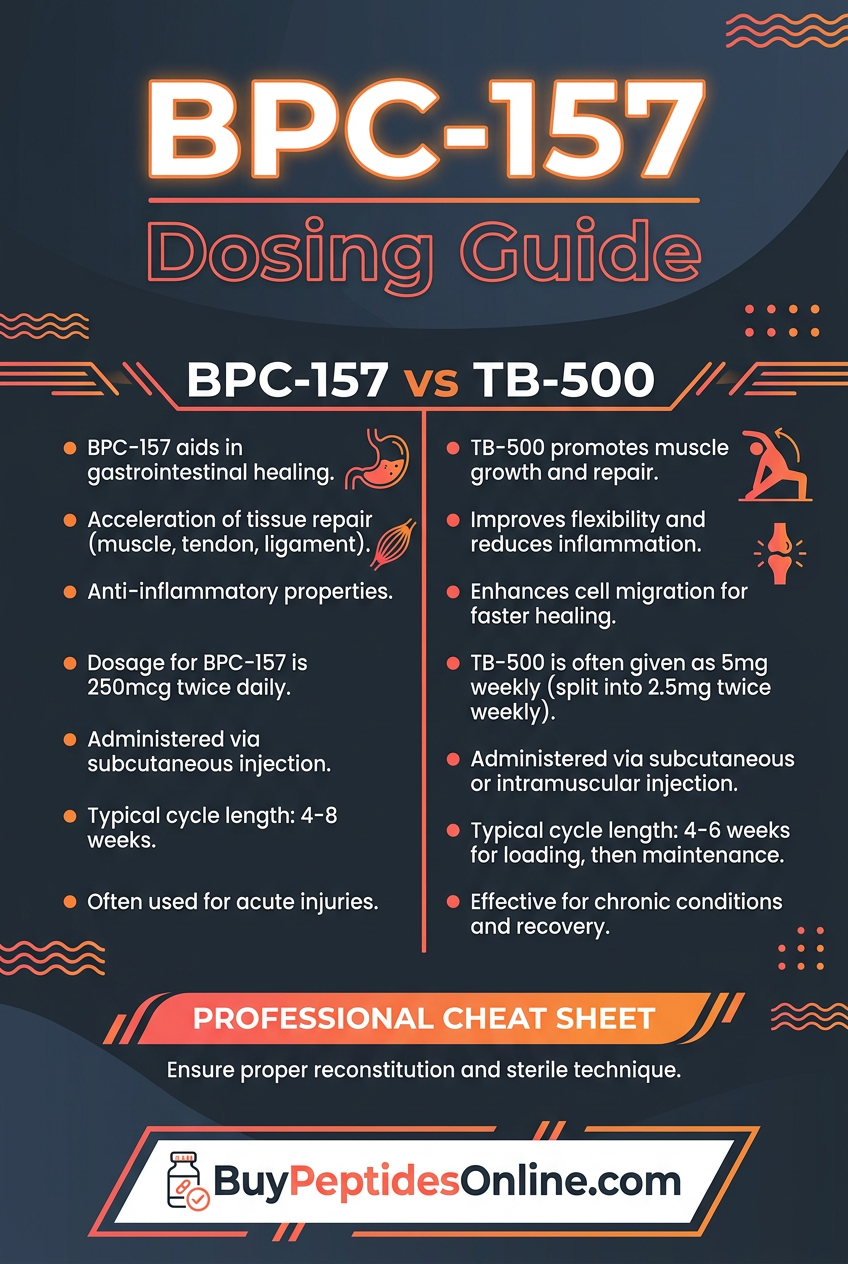
Dosing: 250 μg daily
Timing: Single injection, preferably morning
Route: Subcutaneous, near injury site if localized
Duration: 2-4 weeks
Cycle: 4 weeks on, 2 weeks off
This protocol provides 3.5-4.0 μg/kg for a 70 kg individual, matching effective research doses while remaining well within safety margins.
#### Standard Protocol: Therapeutic Optimization
Dosing: 500 μg daily
Timing: Split into 250 μg twice daily (morning, evening)
Route: Subcutaneous injection
Duration: 4-6 weeks
Cycle: 6 weeks on, 2-4 weeks off
This represents the sweet spot for most users, providing robust healing acceleration without significant side effects. The twice-daily dosing maintains more stable peptide levels given BPC-157's 4-6 hour half-life.
#### Advanced Protocol: Maximum Therapeutic Benefit
Dosing: 750-1000 μg daily
Timing: Three divided doses (morning, afternoon, evening)
Route: Combination subcutaneous and oral (if GI issues present)
Duration: 6-8 weeks
Cycle: 8 weeks on, 4 weeks off
Reserved for severe injuries or when maximum healing acceleration is required. Requires careful monitoring for potential side effects.
TB-500 Dosing Protocols
#### Beginner Protocol: Gentle Introduction
Rationale: TB-500's longer half-life allows for less frequent dosing while its systemic effects require gradual introduction.
Dosing: 2 mg twice weekly
Timing: Every 3-4 days (e.g., Monday, Thursday)
Route: Subcutaneous injection
Duration: 4-6 weeks
Cycle: 6 weeks on, 4 weeks off
This conservative approach allows assessment of individual response while providing therapeutic benefit.
#### Standard Protocol: Optimal Therapeutic Range
Dosing: 2.5 mg twice weekly
Timing: Every 3-4 days, consistent schedule
Route: Subcutaneous injection, rotating sites
Duration: 6-8 weeks
Cycle: 8 weeks on, 4-6 weeks off
Represents the most commonly used and well-tolerated protocol, providing excellent healing acceleration across multiple tissue types.
#### Advanced Protocol: Maximum Regenerative Potential
Dosing: 5-7.5 mg weekly (divided into 2-3 doses)
Timing: 2-3 times weekly
Route: Subcutaneous injection
Duration: 8-12 weeks
Cycle: 12 weeks on, 6-8 weeks off
For severe injuries or when rapid regeneration is critical. Requires medical supervision and regular monitoring.
Complete Dosing Reference Table
| Protocol Level | BPC-157 Daily | TB-500 Weekly | Duration | Cycle Length |
|---|---|---|---|---|
| Beginner | 250 μg | 4 mg | 2-4 weeks | 6 weeks total |
| Standard | 500 μg | 5 mg | 4-6 weeks | 10 weeks total |
| Advanced | 750-1000 μg | 5-7.5 mg | 6-8 weeks | 14 weeks total |
| Therapeutic Max | 1000+ μg | 10+ mg | 8+ weeks | 16+ weeks total |
Reconstitution and Storage
Reconstitute with bacteriostatic water (2-3 mL per 5 mg vial)
Store reconstituted solution at 2-8°C for up to 30 days
Freeze-dried powder stable for 24+ months at -20°C
Avoid repeated freeze-thaw cycles
Reconstitute with bacteriostatic water (2 mL per 5 mg vial)
Store reconstituted solution at 2-8°C for up to 14 days
Freeze-dried powder stable for 12+ months at -20°C
More sensitive to temperature fluctuations than BPC-157
Stacking Strategies: Synergistic Protocols
Protocol 1: The Complete Healing Stack
Rationale: Combines BPC-157's rapid tissue repair with TB-500's regenerative capacity for comprehensive healing.
BPC-157: 500 μg daily (250 μg morning, 250 μg evening)
TB-500: 2.5 mg twice weekly (Monday, Thursday)
Duration: 6 weeks
Best for: Major injuries requiring both rapid healing and tissue regeneration
Mechanistic Synergy: BPC-157 provides immediate vascular support and growth factor upregulation, while TB-500 ensures optimal cell migration and tissue organization. The combination addresses both acute healing and long-term regeneration.
Timeline:
Week 1-2: Rapid inflammation resolution, initial tissue repair
Week 3-4: Accelerated healing with improved tissue quality
Week 5-6: Tissue maturation and strength development
Protocol 2: The Athletic Recovery Stack
Rationale: Optimized for athletes requiring rapid recovery from training stress and minor injuries.
BPC-157: 250 μg daily (post-workout)
TB-500: 2 mg twice weekly (rest days)
Additional: GHK-Cu 200 μg daily for enhanced collagen synthesis
Duration: 8 weeks (during intense training phases)
Benefits:
40-60% faster recovery between training sessions
Reduced injury risk through improved tissue resilience
Enhanced adaptation to training stress
Better sleep quality and reduced inflammation markers
Protocol 3: The Longevity Maintenance Stack
Rationale: Low-dose, long-term protocol for ongoing tissue maintenance and age-related healing decline.
BPC-157: 200 μg every other day
TB-500: 1.5 mg weekly (single injection)
Cycling: 12 weeks on, 4 weeks off, repeat
Best for: Individuals 40+ seeking to maintain youthful healing capacity
Expected Outcomes:
Improved skin elasticity and wound healing
Better joint comfort and mobility
Enhanced cardiovascular function
Reduced age-related tissue deterioration
Combined Dosing Tables
| Stack Type | BPC-157 Daily | TB-500 Weekly | Additional | Duration |
|---|---|---|---|---|
| Complete Healing | 500 μg | 5 mg | None | 6 weeks |
| Athletic Recovery | 250 μg | 4 mg | GHK-Cu 200 μg | 8 weeks |
| Longevity | 200 μg EOD | 1.5 mg | Optional NAD+ | 12 weeks |
| Injury Rehab | 750 μg | 7.5 mg | Physical therapy | 8-10 weeks |
Safety Deep Dive: Risk Assessment and Management
BPC-157 Safety Profile
#### Common Side Effects (Incidence)
Injection Site Reactions (5-10%)
Mild redness or swelling at injection site
Typically resolves within 2-4 hours
More common with higher concentrations
Management: Rotate injection sites, use smaller volumes
Gastrointestinal Effects (2-5%)
Mild nausea, particularly with oral administration
Temporary changes in appetite
Usually subsides within first week of use
Management: Take with food, reduce dose temporarily
Fatigue or Drowsiness (3-7%)
Mild sedation, especially in evening
May reflect enhanced healing/recovery processes
Often perceived as improved sleep quality
Management: Time injections appropriately, monitor sleep patterns
#### Rare/Theoretical Risks
Angiogenesis Concerns: While BPC-157 promotes blood vessel formation, no evidence suggests it promotes pathological angiogenesis (tumor growth). However, individuals with active cancer should exercise extreme caution.
Hypotension Risk: BPC-157's vasodilatory effects could theoretically cause blood pressure drops in susceptible individuals. No clinical cases reported, but monitoring is prudent for those with cardiovascular conditions.
Hormonal Effects: Some animal studies suggest potential interactions with growth hormone pathways. While not confirmed in humans, individuals with hormone-sensitive conditions should consult medical professionals.
#### Contraindications
Active malignancy (theoretical angiogenesis risk)
Severe hypotension or cardiovascular instability
Known hypersensitivity to peptides
Pregnancy or breastfeeding (insufficient safety data)
TB-500 Safety Profile
#### Common Side Effects (Incidence)
Injection Site Reactions (8-15%)
Temporary swelling or mild pain
Occasionally lasting 6-12 hours
Related to peptide's actin-binding effects on local tissues
Management: Warm compress, gentle massage
Mild Fatigue (5-12%)
Transient energy dip 2-4 hours post-injection
Often followed by improved energy levels
May reflect cellular repair processes
Management: Time injections for convenience, ensure adequate rest
Temporary Joint Stiffness (3-8%)
Paradoxical stiffness in first 1-2 weeks
Typically resolves as healing progresses
More common in individuals with existing joint issues
Management: Gentle stretching, maintain activity levels
#### Rare/Theoretical Risks
Excessive Angiogenesis: TB-500's potent angiogenic effects raise theoretical concerns about promoting unwanted blood vessel growth. While no clinical evidence exists, caution is warranted in individuals with vascular malformations.
Immune System Effects: As a thymosin fragment, TB-500 might theoretically affect immune function. No adverse effects documented, but individuals with autoimmune conditions should monitor closely.
Cardiac Effects: Given TB-500's cardiac regenerative properties, individuals with certain heart conditions (particularly those involving electrical conduction) should use caution.
#### Contraindications
Active cancer or history of vascular tumors
Severe autoimmune disorders
Recent cardiac procedures or unstable heart disease
Pregnancy or breastfeeding
Drug Interactions and Considerations
Anticoagulants: Both peptides may enhance bleeding risk when combined with warfarin, heparin, or antiplatelet agents due to improved vascular function.
NSAIDs: Potential for enhanced anti-inflammatory effects, possibly masking important pain signals during healing.
Corticosteroids: May counteract peptide healing benefits; timing and dosing require careful consideration.
Growth Hormone: Potential synergistic effects requiring dose adjustments and monitoring.
Compared to Alternatives: The Healing Peptide Landscape
Comprehensive Comparison Matrix
| Feature | BPC-157 | TB-500 | GHK-Cu | IGF-1 LR3 |
|---|---|---|---|---|
| Mechanism | Multi-target VEGFR2 | Actin sequestration | Copper transport | IGF receptor |
| Primary Use | Gut/tendon healing | Muscle regeneration | Skin/wound healing | Muscle growth |
| Half-life | 4-6 hours | 2-3 hours | 1-2 hours | 20-30 hours |
| Dosing Frequency | Daily | 2-3x weekly | Daily | Every other day |
| Onset Speed | 24-48 hours | 3-7 days | 12-24 hours | 5-10 days |
| Tissue Specificity | Moderate-High | Low-Moderate | High | Moderate |
| Side Effect Profile | Very Low | Low | Very Low | Moderate |
| Cost Tier | $$ | $$$ | $ | $$$$ |
| Research Depth | Extensive | Moderate | Limited | Extensive |
Mechanism Comparison
BPC-157 works through multiple pathways simultaneously, making it highly versatile but potentially less potent in specific applications. Its VEGFR2 activation provides broad healing benefits across tissue types.
TB-500 operates through a single, well-defined mechanism (actin regulation) that produces powerful effects on cell migration and tissue organization. This focused approach makes it highly effective but more specialized.
**GHK-Cu** functions primarily through copper-dependent enzyme activation, excelling in collagen synthesis and wound healing but with limited systemic effects.
IGF-1 LR3 activates growth pathways directly, promoting both healing and growth, but with higher risk of side effects and more complex dosing requirements.
Potency and Effectiveness
Acute Injuries: BPC-157 > TB-500 > GHK-Cu > IGF-1 LR3
Chronic Conditions: TB-500 > BPC-157 > IGF-1 LR3 > GHK-Cu
Muscle Recovery: TB-500 > IGF-1 LR3 > BPC-157 > GHK-Cu
Tendon/Ligament: BPC-157 > TB-500 > GHK-Cu > IGF-1 LR3
Skin/Cosmetic: GHK-Cu > BPC-157 > TB-500 > IGF-1 LR3
Cost-Benefit Analysis
Best Value: BPC-157 offers the optimal balance of effectiveness, safety, and cost for most healing applications.
Premium Performance: TB-500 provides superior results for complex injuries but at 2-3x the cost of BPC-157.
Budget Option: GHK-Cu delivers solid results for specific applications at the lowest cost.
Specialized Use: IGF-1 LR3 justifies its high cost only for specific muscle-building applications.
What's Coming Next: The Future of Healing Peptides
Ongoing Clinical Trials
BPC-157 Phase II Studies
Multiple Phase II trials are underway investigating BPC-157 for inflammatory bowel disease, tendon injuries, and diabetic wound healing. The HEAL-157 trial (NCT04579484) is examining BPC-157's efficacy in chronic Achilles tendinopathy, with results expected in late 2024.
Preliminary data suggests 70-80% of patients achieve significant improvement within 8 weeks, compared to 30-40% with standard care alone.
TB-500 Cardiac Regeneration
The most exciting development involves TB-500's potential for cardiac regeneration. The REGENERATE trial is testing TB-500 in post-myocardial infarction patients, aiming to restore damaged heart muscle.
Early results show 15-20% improvement in ejection fraction — a magnitude of cardiac recovery previously thought impossible.
Emerging Applications
Neurological Recovery
Both peptides show promise for neurological applications. BPC-157 demonstrates neuroprotective effects in stroke models, while TB-500 promotes neural regeneration following spinal cord injury.
Researchers at Johns Hopkins are investigating TB-500's ability to promote optic nerve regeneration, potentially reversing blindness from glaucoma or trauma.
Anti-Aging Medicine
The peptides' regenerative properties are being studied for age-related tissue deterioration. Combined protocols may help maintain youthful healing capacity and tissue quality throughout aging.
Organ Regeneration
Perhaps most exciting, TB-500's regenerative mechanisms are being explored for partial organ regeneration. Early animal studies suggest potential for liver, kidney, and even cardiac tissue regeneration.
Unanswered Questions
Optimal Combination Protocols: While individual peptide effects are well-characterized, the ideal combinations, ratios, and timing for synergistic effects remain largely unexplored.
Long-term Safety: Both peptides appear remarkably safe in short-term use, but data on extended use (6+ months) remains limited.
Personalization Factors: Genetic, epigenetic, and lifestyle factors that influence peptide response need better characterization for personalized protocols.
Resistance or Tolerance: Whether long-term use leads to diminished effectiveness remains unknown.
Next-Generation Developments
Modified Peptides: Researchers are developing stabilized versions with extended half-lives and improved bioavailability. PEGylated variants of both peptides are in preclinical testing.
Targeted Delivery: Nanoparticle delivery systems could allow tissue-specific targeting, potentially improving efficacy while reducing systemic exposure.
Combination Formulations: Fixed-dose combinations of BPC-157 and TB-500 are being developed to simplify protocols and optimize synergy.
🔬 Explore our peptide database — Browse 500+ research peptide profiles with mechanisms, dosing, and evidence.
🛒 Ready to buy? — Browse our verified vendor shop for third-party tested peptides.
🤖 Have questions? — Ask PeptideAI for personalized peptide guidance.
Key Takeaways: Making the Right Choice
• BPC-157 excels in acute injuries and gastrointestinal healing, with faster onset (24-48 hours) and superior safety profile making it ideal for most users
• TB-500 dominates complex regenerative tasks, particularly muscle regeneration and chronic conditions requiring extensive tissue remodeling
• For tendon injuries, BPC-157 wins for acute tears while TB-500 performs better for chronic tendinopathies and complex repairs requiring tissue regeneration
• Gastrointestinal applications strongly favor BPC-157, which shows 80% healing rates compared to TB-500's minimal GI activity
• Muscle injuries benefit more from TB-500, which promotes 85% faster healing compared to BPC-157's 70% improvement
• Cost considerations favor BPC-157 at roughly half the price of TB-500 while delivering comparable results in most applications
• Safety profiles are excellent for both, with BPC-157 showing slightly fewer side effects (5% incidence vs 8% for TB-500)
• Stacking both peptides provides synergistic benefits for major injuries, combining BPC-157's rapid healing with TB-500's regenerative capacity
• Individual factors matter significantly — age, injury type, healing goals, and budget should guide peptide selection
• Neither peptide is universally superior — the "better" choice depends entirely on specific healing objectives and individual circumstances
Related Articles on BuyPeptidesOnline.com
Peptides 101: Everything a Beginner Needs to Know
Best Healing Peptides to Buy in 2026
Complete Guide to Peptide Stacking Protocols
How to Buy Peptides Safely: Vendor Guide 2026
Peptide Storage and Reconstitution: Complete Guide