# GHRP-6 & CJC-1295 Stack: The Ultimate GH Protocol for Researchers
Growth hormone (GH) secretion from the anterior pituitary is one of the most elegantly regulated processes in human physiology — a rhythmic, pulsatile dance between stimulatory and inhibitory signals that governs body composition, recovery, metabolic rate, and biological aging. For researchers interested in modulating this axis, the combination of GHRP-6 and CJC-1295 represents one of the most studied and mechanistically compelling dual-pathway approaches in the peptide science literature.
This article is intended as a comprehensive educational resource for researchers, science communicators, and informed enthusiasts. Nothing here constitutes medical advice, and all peptides discussed are research compounds not approved as pharmaceutical drugs for human therapeutic use in most jurisdictions. Protocol information is framed for laboratory and academic research contexts only.
With that framing established, let's go deep — into the history, the biochemistry, the pharmacokinetics, the practical protocols, and the nuanced considerations that separate a well-designed research approach from a haphazard one.
---
A Brief History: How We Learned to Stimulate GH Without Injecting GH
The Discovery of Growth Hormone Releasing Hormone
The story of GH peptide research begins not with synthetic molecules but with a clinical curiosity: some patients with pancreatic tumors exhibited paradoxical gigantism. In the early 1980s, researchers isolated the responsible factor from these tumors and identified it as a 44-amino-acid peptide — GHRH, or Growth Hormone Releasing Hormone. This discovery, led in part by Guillemin and Vale (who had already won Nobel recognition for related work on hypothalamic hormones), established the fundamental principle: the pituitary could be stimulated to release its own GH stores if given the right signal.
The implications were immediately apparent. Injecting recombinant human GH (rhGH) directly is pharmacologically blunt — it floods the system with supraphysiological levels, bypasses natural feedback loops, and carries significant risks. Stimulating the pituitary's own release machinery, by contrast, preserves pulsatility, maintains negative feedback sensitivity, and theoretically offers a safer and more physiologically coherent approach.
The Emergence of GH Releasing Peptides
Parallel to the GHRH discovery, a separate line of research was exploring synthetic enkephalin analogs. In the late 1970s and early 1980s, Cyril Bowers and colleagues at Tulane University were investigating opioid peptides when they serendipitously discovered that certain short peptide sequences could potently stimulate GH release — not through the GHRH receptor, but through a completely separate, then-unknown receptor. This discovery eventually led to the identification of the ghrelin receptor (GHSR-1a) and the endogenous ligand ghrelin, which wasn't characterized until 1999 by Kojima and colleagues.
The synthetic peptides that preceded ghrelin's discovery — GHRP-1, GHRP-2, GHRP-6, hexarelin, and others — are now understood as ghrelin mimetics. They bind the GHSR-1a receptor and trigger GH release through a mechanism entirely distinct from GHRH, meaning the two pathways can be activated simultaneously for additive or synergistic effects.
GHRP-6 specifically emerged from this early enkephalin research as a hexapeptide with robust GH-releasing activity, appetite stimulation, and a pharmacokinetic profile suitable for research use. Its full name — Growth Hormone Releasing Peptide-6 — reflects its position in the lineage of synthetic GH secretagogues.
The Development of Long-Acting GHRH Analogs
Native GHRH-1-44 has a plasma half-life of only a few minutes, rapidly degraded by dipeptidyl peptidase IV (DPP-IV) and other proteases. This made it impractical as a research or therapeutic tool. The challenge was to engineer analogs that retained GHRH receptor binding while resisting enzymatic degradation.
Sermorelin (GHRH 1-29) was an early truncated analog that retained biological activity. Then came Modified GRF 1-29 (also called CJC-1295 without DAC), which incorporated amino acid substitutions at positions 2, 8, 15, and 27 to resist DPP-IV cleavage and improve receptor affinity. These substitutions extended the half-life from minutes to approximately 30 minutes — a meaningful improvement, but still requiring multiple daily injections for sustained effect.
The breakthrough came with the addition of the Drug Affinity Complex (DAC) technology — a lysine-maleimide linker that allows the peptide to covalently bind to circulating albumin after injection. This is the defining feature of CJC-1295 with DAC. By hitching a ride on albumin (which has a half-life of approximately 19 days), CJC-1295 DAC achieves a plasma half-life of 6-8 days, transforming a peptide that would otherwise require multiple daily injections into a once-weekly research compound.
---
Understanding the Components in Depth
GHRP-6: The Ghrelin Mimetic
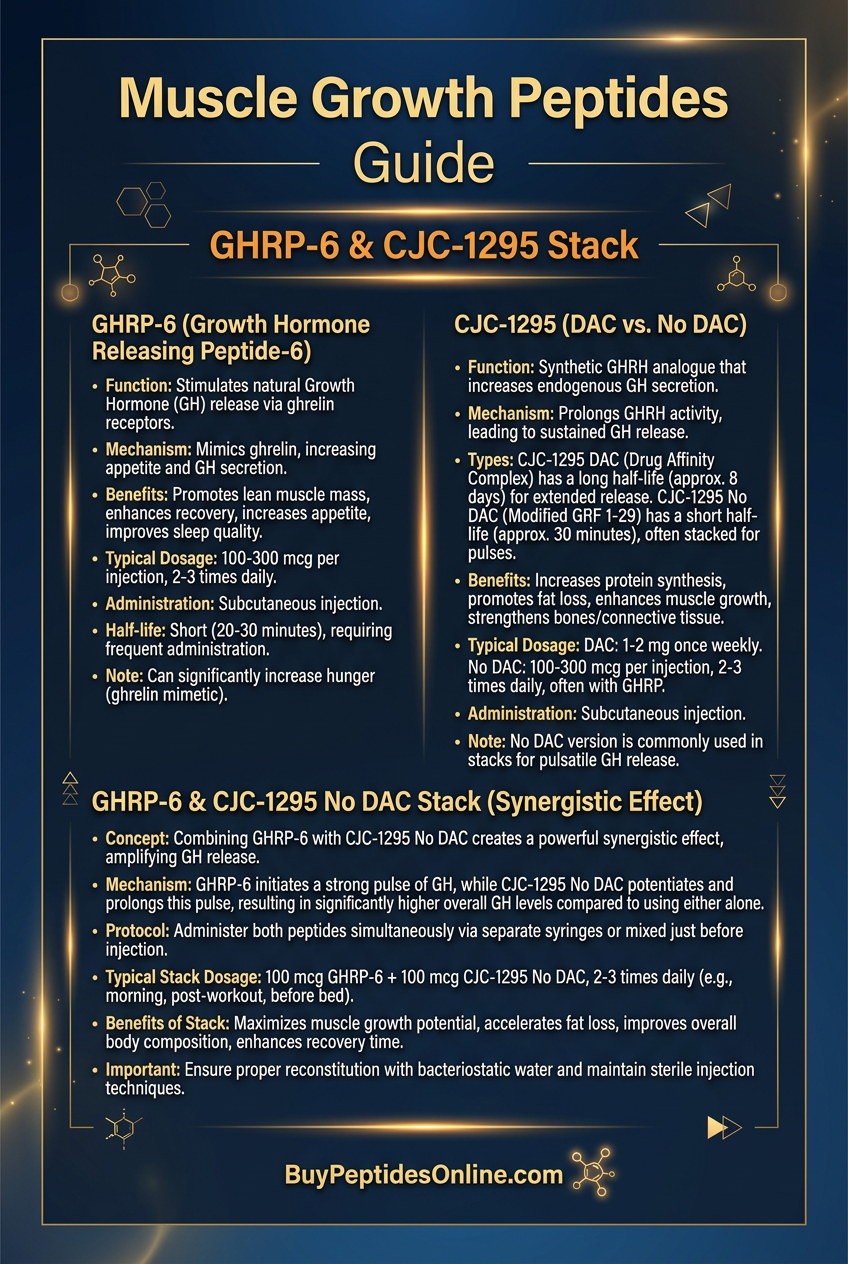
GHRP-6 is a six-amino-acid synthetic peptide with the sequence His-D-Trp-Ala-Trp-D-Phe-Lys-NH₂. Its structure was deliberately designed to mimic the GH-releasing activity of ghrelin while being resistant to enzymatic degradation compared to endogenous enkephalins.
Receptor mechanism: GHRP-6 binds the growth hormone secretagogue receptor type 1a (GHSR-1a), a G-protein coupled receptor expressed predominantly in the pituitary and hypothalamus. Activation of GHSR-1a triggers intracellular calcium mobilization and protein kinase C activation, ultimately driving GH granule exocytosis from somatotroph cells.
Dual-site action: Unlike simple pituitary stimulants, GHRP-6 acts at two anatomical levels:
1. Pituitary level: Directly stimulates somatotrophs to release stored GH
2. Hypothalamic level: Stimulates GHRH release from hypothalamic neurons and suppresses somatostatin release from periventricular neurons
This dual action is critical to understanding why GHRPs are so effective. By simultaneously hitting the accelerator (GHRH release) and releasing the brake (somatostatin suppression), GHRP-6 creates favorable conditions for maximal GH output.
Key pharmacological properties of GHRP-6:
GH pulse magnitude: Produces acute GH spikes typically 2-10x above baseline in research subjects, with the magnitude dose-dependent up to approximately 300 mcg
Hunger stimulation: One of the most clinically notable effects; GHRP-6 activates hypothalamic neuropeptide Y (NPY) and agouti-related protein (AgRP) pathways, producing significant orexigenic (appetite-stimulating) effects — a property that distinguishes it from Ipamorelin and GHRP-2
Cortisol and prolactin: At doses above 100-150 mcg, GHRP-6 produces transient, mild elevations in cortisol and prolactin via off-target receptor interactions; these are typically not clinically significant at standard research doses but are worth monitoring in long-duration protocols
Half-life: Approximately 15-60 minutes in plasma, with the GH response typically peaking at 30-45 minutes post-injection and returning to baseline within 1-2 hours
Route of administration: Subcutaneous injection is standard; some research has explored intranasal and oral routes, though bioavailability is significantly reduced for non-injectable routes
Comparison to other GHRPs:
| Peptide | GH Pulse Magnitude | Hunger Stimulation | Cortisol/Prolactin Elevation | Half-Life |
|---|---|---|---|---|
| GHRP-6 | High | Strong | Mild (dose-dependent) | 15-60 min |
| GHRP-2 | Very High | Moderate | Moderate | 15-30 min |
| Ipamorelin | Moderate-High | None | None | 2 hours |
| Hexarelin | Very High | None | Significant | 30-60 min |
| Sermorelin | Moderate | None | None | 10-20 min |
CJC-1295 with DAC: The Long-Acting GHRH Analog
CJC-1295 with DAC is a 30-amino-acid GHRH analog that incorporates both the structural modifications of Modified GRF 1-29 (to resist DPP-IV degradation) and the DAC technology (to enable albumin binding). The result is a compound that provides sustained, physiologically meaningful GHRH receptor stimulation over days rather than minutes.
Mechanism of action: CJC-1295 DAC binds the GHRH receptor (GHRHR) on pituitary somatotrophs, a Gs-protein coupled receptor that activates adenylyl cyclase and increases intracellular cAMP. Elevated cAMP activates protein kinase A (PKA), which phosphorylates transcription factors including CREB, ultimately promoting both GH gene transcription and acute GH secretion.
Importantly, sustained GHRHR activation by CJC-1295 DAC doesn't simply produce a constant elevation in GH — it primes the pituitary to release larger GH pulses when additional secretagogue stimuli arrive. Think of it as raising the baseline sensitivity and readiness of somatotrophs, so that when a GHRP-6 dose triggers a pulse, the amplitude of that pulse is dramatically amplified.
Key pharmacological properties of CJC-1295 DAC:
IGF-1 elevation: Research has documented sustained, dose-dependent increases in IGF-1 levels — the primary mediator of GH's anabolic and regenerative effects. IGF-1 elevations have been observed to persist for up to 2 weeks after a single injection in some research contexts
GH half-life effect: By maintaining elevated GHRH tone, CJC-1295 DAC effectively extends the "window" during which GH pulses can be amplified
No appetite stimulation: Unlike GHRPs, CJC-1295 has no orexigenic activity, making it a cleaner background signal
Half-life: 6-8 days with DAC technology; compare this to approximately 30 minutes for Modified GRF 1-29 (CJC-1295 without DAC)
IGF-1 as a research biomarker: Because CJC-1295 DAC produces sustained, measurable IGF-1 elevation, serum IGF-1 is a useful objective endpoint for researchers tracking the compound's biological activity
CJC-1295 with DAC vs. without DAC (Modified GRF 1-29):
| Parameter | CJC-1295 with DAC | Modified GRF 1-29 (no DAC) |
|---|---|---|
| Half-life | 6-8 days | 30 minutes |
| Injection frequency | Once weekly | With each GHRP dose (2-3x daily) |
| GH release pattern | Sustained elevation + amplified pulses | Sharp, acute pulses |
| IGF-1 effect | Sustained, significant | Transient, pulse-linked |
| Research context | Convenient for weekly protocols | Preferred for pulse-matched protocols |
| Blunting of natural rhythm | Possible with continuous use | Preserves more natural pulsatility |
---
The Synergy Effect: Why 1 + 1 = 5
When GHRP-6 and CJC-1295 are combined, the GH response is significantly greater than either peptide alone. Research shows the combination can produce GH pulses 2-3 times larger than GHRP-6 alone — and in some research contexts, the synergy is even more pronounced. This isn't merely additive; it's genuinely synergistic.
The Three-Mechanism Synergy Model
Understanding why this stack is so potent requires understanding the three distinct mechanisms that converge:
1. Pituitary priming (CJC-1295 DAC contribution)
CJC-1295 DAC maintains continuous GHRH receptor stimulation, which keeps somatotrophs in a state of elevated readiness. The pituitary's GH stores are more fully replenished, and the secretory machinery is primed. When GHRP-6 then triggers an acute release pulse, the somatotrophs have more GH to release and are more responsive to the release signal.
2. Acute pulse triggering (GHRP-6 contribution)
GHRP-6 provides the sharp, time-sensitive trigger that CJC-1295 DAC alone cannot provide. GHRH analogs stimulate GH release, but the release is gradual and sustained. GHRPs produce rapid, high-amplitude spikes that more closely mimic the natural pulsatile pattern. The combination provides both the sustained background elevation AND the acute pulsatile character.
3. Somatostatin suppression (GHRP-6 contribution)
This is perhaps the most underappreciated mechanism in the stack. Somatostatin (also called somatotropin release-inhibiting factor, SRIF) is the primary brake on GH secretion. It's released from hypothalamic periventricular neurons and acts directly on pituitary somatotrophs to inhibit GH release. GHRP-6 actively suppresses somatostatin release, removing this brake at the same time it's pressing the accelerator. CJC-1295 alone cannot do this — it only works on the stimulatory side. By combining both peptides, researchers are simultaneously stimulating GH release AND removing the primary inhibitory signal.
The result is a powerful, synergistic GH pulse that more closely mimics the high-amplitude pulses seen in youth — pulses that naturally decline with age as somatostatin tone increases and GHRH sensitivity decreases.
The Physiological Rationale for Pulsatility
It's worth pausing to understand why pulsatility matters. GH doesn't simply exert its effects in proportion to its average serum concentration. The pattern of exposure — specifically, the amplitude and frequency of pulses — determines the biological response:
High-amplitude pulses: preferentially drive anabolic effects (muscle protein synthesis, IGF-1 production)
Continuous low-level GH: tends to drive more metabolic effects and can downregulate GH receptors over time
Natural pulsatility: (8-12 pulses per 24 hours in healthy young adults, with the largest pulse occurring during slow-wave sleep) is associated with optimal body composition and metabolic health
The GHRP-6/CJC-1295 stack is designed to recreate and amplify this pulsatile pattern — maintaining the background GHRH tone with CJC-1295 while using GHRP-6 injections to time specific high-amplitude pulses around training and sleep.
---
Pharmacokinetics Deep Dive
GHRP-6 Pharmacokinetics
After subcutaneous injection, GHRP-6 is rapidly absorbed with peak plasma concentrations typically occurring within 15-30 minutes. The compound is metabolized by peptidases in plasma and tissues, with an elimination half-life of approximately 15-60 minutes depending on the research model.
The GH response, however, lasts somewhat longer than the peptide's presence in circulation — the initial receptor activation sets off an intracellular cascade that continues for 1-2 hours even as GHRP-6 plasma levels decline. This is why the practical "window" for a GHRP-6 injection's effect on GH is 1-2 hours rather than 30-60 minutes.
Dose-response relationship: GHRP-6 shows a dose-dependent increase in GH release up to approximately 100-300 mcg in most research models. Beyond this range, the incremental GH response diminishes — the receptor becomes saturated and additional doses primarily increase side effects (hunger, cortisol) without proportionally increasing GH output. This is why most research protocols cap individual GHRP-6 doses at 200-300 mcg.
Frequency considerations: Because GHRP-6 receptor desensitization can occur with too-frequent dosing, there's a practical minimum interval between injections. Research generally suggests at least 3-4 hours between doses to allow receptor resensitization, with 3 injections per day representing a reasonable upper limit for most research protocols.
CJC-1295 DAC Pharmacokinetics
CJC-1295 DAC's pharmacokinetics are dramatically different from GHRP-6's — and this difference is the key to understanding the stack's logic.
After subcutaneous injection, CJC-1295 DAC undergoes a two-phase distribution. The free peptide rapidly associates with circulating albumin via the maleimide-thiol reaction with albumin's Cys-34 residue. This albumin-bound form is the active reservoir that slowly releases the peptide over days. The terminal half-life of 6-8 days means that a single weekly injection maintains relatively stable plasma levels throughout the week.
IGF-1 kinetics: Research has documented that CJC-1295 DAC produces dose-dependent increases in serum IGF-1 that peak approximately 2-4 days after injection and remain elevated for 7-14 days. This sustained IGF-1 elevation is one of the most practically measurable outcomes of the compound and serves as a useful research biomarker.
Steady-state considerations: With weekly dosing, CJC-1295 DAC reaches approximate steady-state plasma concentrations after 3-4 weeks (approximately 4-5 half-lives). This means researchers should expect the full synergistic effect of the stack to emerge gradually over the first month of a protocol.
---
Reconstitution, Storage, and Handling
Proper handling of research peptides is essential for maintaining compound integrity and ensuring experimental reproducibility. Both GHRP-6 and CJC-1295 DAC are supplied as lyophilized (freeze-dried) powders and require reconstitution before use.
Reconstitution Protocol
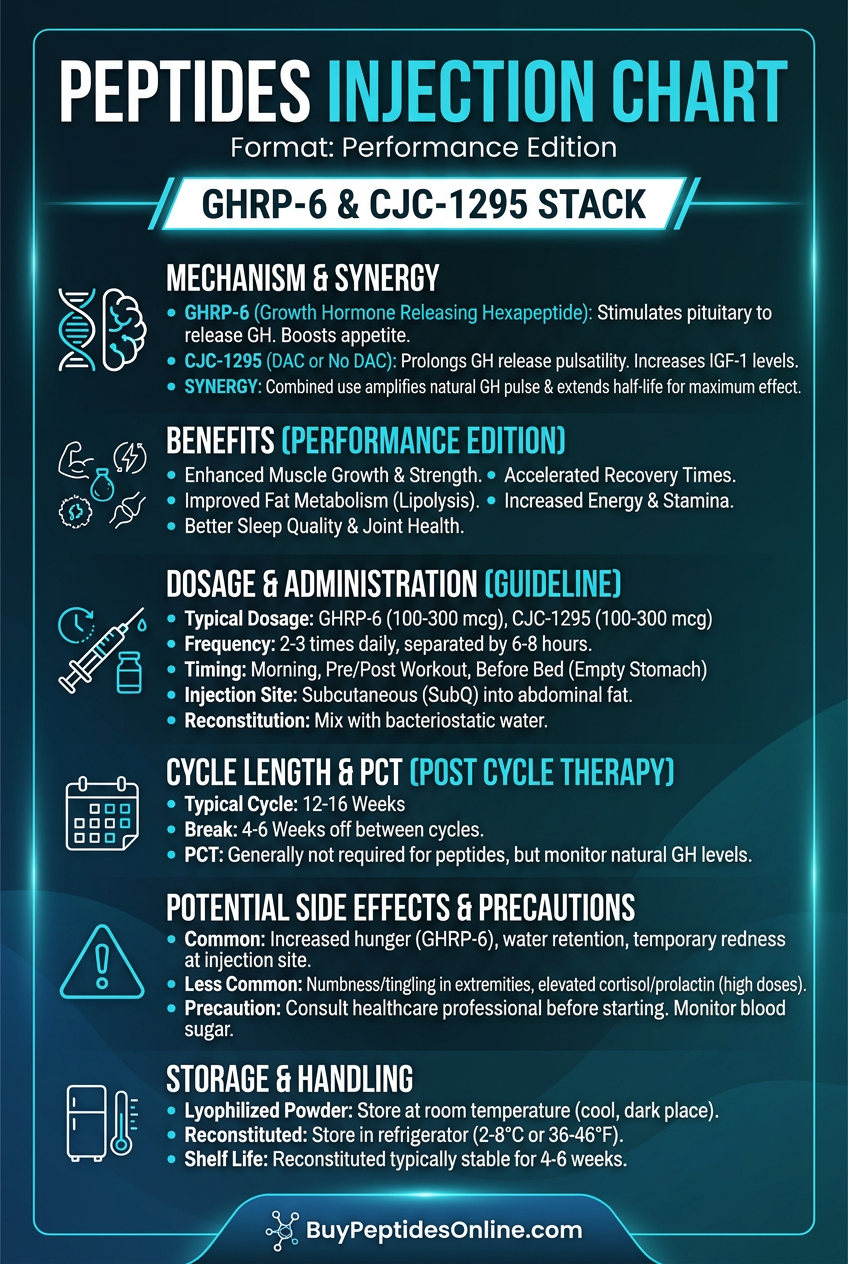
Bacteriostatic water (0.9% benzyl alcohol in sterile water) is the standard reconstitution vehicle for both peptides. Bacteriostatic water inhibits microbial growth and allows the reconstituted solution to be stored for extended periods — typically 30-60 days when refrigerated.
Step-by-step reconstitution:
1. Allow the vial to come to room temperature before opening to minimize condensation
2. Wipe the vial septum with an alcohol swab and allow to dry
3. Draw the desired volume of bacteriostatic water into a sterile insulin syringe
4. Inject the water slowly down the side of the vial — do not inject directly onto the powder
5. Gently swirl (do not shake vigorously) until the powder is fully dissolved
6. The solution should be clear and colorless; discard if cloudy or particulate matter is visible
Common reconstitution volumes:
For GHRP-6 (typically supplied in 5 mg vials): Adding 2 mL bacteriostatic water yields a concentration of 2,500 mcg/mL (2.5 mcg/µL). For a 100 mcg dose, draw 40 µL; for 200 mcg, draw 80 µL; for 300 mcg, draw 120 µL.
For CJC-1295 DAC (typically supplied in 2 mg vials): Adding 2 mL bacteriostatic water yields 1,000 mcg/mL. For a 1 mg dose, draw 1 mL; for 2 mg, draw 2 mL (or use a second vial).
Storage Guidelines
| Condition | GHRP-6 (lyophilized) | GHRP-6 (reconstituted) | CJC-1295 DAC (lyophilized) | CJC-1295 DAC (reconstituted) |
|---|---|---|---|---|
| Room temperature | Up to 30 days | Not recommended >24h | Up to 30 days | Not recommended >24h |
| Refrigerated (2-8°C) | 12-24 months | 30-60 days | 12-24 months | 30-60 days |
| Frozen (-20°C) | 2+ years | Avoid repeated freeze-thaw | 2+ years | Avoid repeated freeze-thaw |
| Light exposure | Protect from light | Protect from light | Protect from light | Protect from light |
Key handling principles:
Never use heat to dissolve peptides — room temperature swirling is sufficient
Avoid vigorous shaking, which can denature peptide structure
Use sterile technique throughout to prevent contamination
Label vials with reconstitution date and concentration
Discard any vial showing cloudiness, color change, or visible particulates
---
Dosing Protocols: From Standard to Advanced
Standard Research Protocol
The foundational protocol for GHRP-6/CJC-1295 research balances efficacy with practical manageability:
GHRP-6: 100-300 mcg per injection, 2-3 times daily
Injection 1: Upon waking (fasting state)
Injection 2: Post-workout or mid-afternoon (3+ hours after last meal)
Injection 3: Before bed (2+ hours after last meal)
CJC-1295 DAC: 1-2 mg once weekly (or 0.5-1 mg twice weekly for more stable plasma levels)
Day of week: Consistent day preferred for tracking purposes
Can be injected simultaneously with any GHRP-6 dose or separately
Food timing: This is non-negotiable for maximizing GH pulse amplitude. Both carbohydrates and dietary fats stimulate insulin and suppress somatostatin in complex ways that blunt GH release. The general rule:
Fast for at least 30 minutes before injection
Avoid eating for 30-60 minutes after injection
Protein has minimal impact on GH release and is generally acceptable
The pre-sleep injection is often the easiest to time, as it coincides with the natural nocturnal GH surge
Advanced Pulse-Matched Protocol (CJC-1295 without DAC)
For researchers who prefer sharper, more physiologically distinct GH pulses rather than sustained elevation, the "no DAC" version — Modified GRF 1-29 — is used in place of CJC-1295 DAC:
Modified GRF 1-29: 100-200 mcg per injection, co-administered with each GHRP-6 dose
GHRP-6: 200-300 mcg per injection, 2-3 times daily
This approach provides:
Sharper individual GH pulses (higher peak amplitude)
More natural pulsatile rhythm (pulses are discrete rather than continuous)
Greater flexibility (can skip doses without affecting background levels)
Potentially reduced risk of pituitary desensitization to sustained GHRH stimulation
The tradeoff is the requirement for multiple daily injections and more precise timing — both components must be injected together or within minutes of each other for optimal synergy.
Conservative Entry Protocol
For initial research phases or when establishing baseline responses, a conservative starting protocol is advisable:
GHRP-6: 100 mcg twice daily (morning and pre-sleep)
CJC-1295 DAC: 1 mg once weekly
This lower-dose approach allows researchers to assess individual responses, identify any adverse reactions, and establish baseline measurements before escalating doses. Given the significant hunger stimulation from GHRP-6, starting at 100 mcg also allows subjects to acclimate to this effect before moving to higher doses.
Cycle Structure and Duration
Research protocols for this stack are typically structured in cycles to prevent desensitization and maintain responsiveness:
Standard cycle structure:
Active phase:: 8-12 weeks
Rest phase:: 4-6 weeks minimum
Rationale:: GHRP-6 receptor (GHSR-1a) can undergo homologous desensitization with continuous stimulation; cycling prevents this and maintains robust pulse responses
Alternative cycling approach:
Rotate GHRPs every 4-6 weeks (e.g., alternate GHRP-6 with Ipamorelin)
Maintain CJC-1295 DAC continuously throughout (its GHRH receptor mechanism is less prone to rapid desensitization)
This preserves the GHRH background while allowing GHSR-1a to resensitize
Long-term research considerations:
IGF-1 levels should be monitored regularly (every 4-6 weeks during active phases)
Fasting blood glucose monitoring is advisable given GH's counter-regulatory insulin effects
Pituitary function should be periodically assessed in extended research protocols
---
Expected Results Timeline: What Research Suggests
The timeline of observable changes in research subjects follows a predictable progression that reflects the underlying biology:
Weeks 1-2: Neurological and Sleep Effects
The earliest changes are often neurological rather than physical. Subjects typically report:
Improved sleep quality: GH is predominantly released during slow-wave sleep; enhancing GH pulsatility often deepens and improves sleep architecture
Vivid dreams: A commonly reported phenomenon, possibly related to altered sleep stage distribution
Mild water retention: GH's effects on renal sodium handling can produce mild fluid retention, particularly in the first 2 weeks
Injection site reactions: Minor redness or swelling at injection sites, typically resolving within hours
The water retention in early weeks is often misinterpreted as fat gain. It is not — it represents fluid redistribution and typically resolves after the first 2-3 weeks as the body adapts.
Weeks 3-4: Metabolic and Appetite Effects
Increased hunger (GHRP-6): The orexigenic effect of GHRP-6 becomes more pronounced; this can be strategically leveraged for hypertrophy-focused research or managed through meal timing
Improved skin quality: Early signs of enhanced collagen synthesis; skin may appear more hydrated and elastic
Better recovery: Reduced muscle soreness after training, faster return to baseline performance
Improved joint comfort: Some research subjects report reduced joint discomfort, possibly related to GH's effects on collagen and proteoglycan synthesis
Weeks 5-8: Body Composition Changes
Fat loss acceleration: GH's lipolytic effects become measurable, particularly in visceral and subcutaneous abdominal fat
Improved muscle fullness: Enhanced glycogen storage and cellular hydration contribute to improved muscle appearance
Strength improvements: While GH is not directly anabolic in the way testosterone is, the improved recovery and IGF-1 elevation support progressive training adaptations
IGF-1 elevation measurable: Serum IGF-1 levels are typically significantly elevated by this point, serving as an objective measure of protocol efficacy
Weeks 8-12: Peak Effects
Measurable body composition changes: Dual-energy X-ray absorptiometry (DEXA) or skinfold measurements should show meaningful shifts in fat mass and lean mass ratios
Skin and hair changes: Enhanced collagen turnover may produce noticeable improvements in skin thickness and texture; some subjects report improved hair quality
Metabolic improvements: Fasting glucose and insulin sensitivity metrics may show changes reflecting GH's complex metabolic effects
It's important to note that individual responses vary considerably based on baseline GH status, age, body composition, training status, nutrition, and sleep quality. Older research subjects and those with lower baseline GH typically show more pronounced responses to GH secretagogue protocols.
---
Safety Profile and Documented Side Effects
Common Side Effects (Dose-Dependent)
Hunger and appetite stimulation:
The most consistently reported effect of GHRP-6 is significant appetite increase. This is mediated through hypothalamic NPY/AgRP pathways and is dose-dependent. At 100 mcg, hunger stimulation is mild to moderate; at 300 mcg, it can be substantial. This effect is generally transient (peaking 30-60 minutes post-injection) but can be practically significant in subjects not seeking caloric surplus.
Water retention:
Particularly pronounced in the first 2-4 weeks, GH-mediated water retention is typically mild and self-limiting. It manifests as mild puffiness, particularly in the extremities, and resolves as the body adapts to elevated GH levels.
Mild cortisol and prolactin elevation:
GHRP-6 at doses above 100-150 mcg produces transient, mild increases in cortisol and prolactin. These are generally not clinically significant in short-term research but may be worth monitoring in longer protocols or subjects with pre-existing hormonal concerns. Importantly, Ipamorelin does not produce this effect, making it the preferred alternative when cortisol/prolactin neutrality is a research priority.
Injection site reactions:
Subcutaneous injections can produce local redness, mild swelling, or bruising. These are typically minor and resolve within hours. Rotating injection sites minimizes cumulative tissue irritation.
Tingling or numbness:
Some subjects report mild tingling, particularly in the hands and feet, especially in the early weeks of a protocol. This is a known effect of elevated GH and IGF-1 on peripheral nerve sensitivity and typically resolves with dose adjustment or protocol continuation.
Less Common Effects
Carpal tunnel-like symptoms:
At higher doses or in predisposed individuals, fluid retention in the carpal tunnel can produce median nerve compression symptoms. This is dose-dependent and resolves with dose reduction or protocol cessation.
Insulin resistance:
GH is a counter-regulatory hormone — it opposes insulin's effects on glucose uptake in peripheral tissues. Extended high-dose protocols may produce measurable increases in fasting blood glucose and insulin resistance. Monitoring fasting glucose every 4-6 weeks during active protocols is advisable.
Pituitary fatigue (theoretical):
Whether sustained GHRH receptor stimulation from CJC-1295 DAC can cause meaningful pituitary desensitization is an important research question. Current evidence suggests that with appropriate cycling (8-12 week active phases), this risk is minimized. The GHRH receptor is generally considered more resistant to desensitization than the GHSR-1a, but long-term continuous stimulation warrants monitoring.
What the Research Does NOT Support
It's important to distinguish documented effects from theoretical concerns. The following are sometimes cited but not well-supported by current research:
Tumor promotion: GH and IGF-1 are mitogenic signals, and concern exists about their potential to accelerate growth of pre-existing neoplasms. Research in this area is ongoing, and the clinical significance in the context of short-term, physiological-range GH elevation is unclear. Subjects with personal or family history of hormone-sensitive cancers should not participate in GH secretagogue research.
Permanent pituitary suppression: There is no good evidence that cycling GHRP-6/CJC-1295 protocols cause permanent pituitary dysfunction. The axis appears to recover normally during rest phases.
Acromegaly: This condition requires years of sustained supraphysiological GH levels. Short-term research protocols targeting physiological-range GH elevation do not produce acromegalic changes.
---
Stacking Considerations: Building on the Foundation
GHRP-6/CJC-1295 + BPC-157
BPC-157 is a 15-amino-acid peptide derived from body protection compound in gastric juice, with well-documented effects on tissue repair, angiogenesis, and growth factor signaling. It pairs logically with the GHRP-6/CJC-1295 stack for research focused on injury recovery and tissue regeneration:
BPC-157's effects on tendon, ligament, and muscle repair complement GH's anabolic and regenerative signaling
The two mechanisms are largely independent and additive
BPC-157 can be administered subcutaneously or orally, providing scheduling flexibility
This combination is particularly studied in the context of musculoskeletal injury recovery research
GHRP-6/CJC-1295 + TB-500
TB-500 (Thymosin Beta-4) is another tissue repair peptide with distinct mechanisms — primarily promoting actin polymerization, cell migration, and angiogenesis. Combined with the GH-axis stimulation of GHRP-6/CJC-1295, this creates a multi-modal repair and regeneration protocol that has attracted significant research interest.
GHRP-6/CJC-1295 + IGF-1 LR3
For researchers interested in exploring the downstream effectors of GH signaling, adding IGF-1 LR3 to a GHRP-6/CJC-1295 protocol provides direct IGF-1 receptor stimulation in addition to the endogenous IGF-1 elevation produced by the stack. This approach requires careful attention to hypoglycemia risk, as IGF-1's insulin-like effects are significant.
GHRP-6/CJC-1295 + Peptides for Specific Outcomes
Depending on the research focus:
For sleep optimization: Adding DSIP (Delta Sleep-Inducing Peptide) to leverage the sleep-enhancing effects of both compounds
For metabolic research: AOD-9604 (the GH fragment responsible for lipolytic effects) can be added to specifically target fat metabolism without additional anabolic GH effects
For longevity research: Epithalon (a pineal tetrapeptide with telomere-related effects) is sometimes combined with GH secretagogue protocols in anti-aging research contexts
---
GHRP-6 vs. Ipamorelin: Choosing the Right GHRP for Your Stack
One of the most common questions in GH secretagogue research is whether to use GHRP-6 or Ipamorelin as the GHRP component of a CJC-1295 stack. The answer depends on the specific research objectives.
Choose GHRP-6 when:
Maximum absolute GH pulse amplitude is the primary objective
Appetite stimulation is a desired feature (e.g., research focused on hypertrophy or recovery from catabolic states)
Budget is a consideration (GHRP-6 is typically less expensive than Ipamorelin)
The research protocol can accommodate monitoring for cortisol/prolactin effects
Choose Ipamorelin when:
Cortisol and prolactin neutrality is important (e.g., research involving stress-sensitive outcomes)
Appetite stimulation is undesirable (e.g., research focused on fat loss or subjects with eating behavior concerns)
A cleaner, more selective GH pulse is preferred for mechanistic research
The subject population is sensitive to side effects
**The CJC-1295/Ipamorelin stack** is arguably the most widely used GH secretagogue combination in current research, precisely because of Ipamorelin's selectivity and favorable side effect profile. However, GHRP-6 stacks tend to produce larger absolute GH pulses, making them preferred when maximum GH output is the experimental goal.
**GHRP-2** occupies an interesting middle ground — it produces GH pulses intermediate between GHRP-6 and Ipamorelin in magnitude, with moderate (rather than strong) appetite stimulation and moderate cortisol/prolactin effects. Some researchers prefer it as a compromise between potency and selectivity.
---
Comparison: GH Secretagogue Stacks
Not all GH-stimulating peptide combinations are created equal. Here's how the GHRP-6/CJC-1295 stack compares to major alternatives:
vs. Sermorelin Alone
Sermorelin is GHRH 1-29, a truncated GHRH analog with a half-life of approximately 10-20 minutes. Used alone, it requires multiple daily injections and produces modest GH elevation compared to combination stacks. It lacks the somatostatin-suppressing component that GHRPs provide, meaning its GH-releasing effect is inherently limited by ambient somatostatin tone.
Verdict: The GHRP-6/CJC-1295 stack is mechanistically superior for research targeting significant GH elevation. Sermorelin may be preferred in clinical contexts where a more conservative approach is appropriate.
vs. Tesamorelin
Tesamorelin is a stabilized GHRH analog (GHRH 1-44 with a trans-3-hexenoic acid modification) that has received FDA approval for HIV-associated lipodystrophy. It produces meaningful GH and IGF-1 elevation and has the most extensive clinical trial data of any GHRH analog.
Verdict: Tesamorelin has superior clinical evidence and regulatory approval for specific indications. For general research purposes, the GHRP-6/CJC-1295 combination may produce larger GH pulses due to the dual-pathway mechanism, but Tesamorelin represents the gold standard for GHRH-only research.
vs. MK-677 (Ibutamoren)
MK-677 is an orally bioavailable, non-peptide ghrelin mimetic that provides sustained GH and IGF-1 elevation through once-daily oral dosing. Its convenience is unmatched — no injections required. However, it produces continuous rather than pulsatile GH elevation, which may not be optimal for all research objectives.
Verdict: MK-677 is significantly more convenient but mechanistically different. The injectable GHRP-6/CJC-1295 stack provides more physiologically authentic pulsatile GH release. Researchers with specific interest in pulsatile dynamics will prefer the injectable stack; those prioritizing convenience and sustained IGF-1 elevation may find MK-677 adequate for their purposes.
---
Common Research Mistakes and How to Avoid Them
Even well-designed research protocols can be compromised by avoidable errors. Here are the most frequently observed mistakes in GHRP-6/CJC-1295 research:
Mistake 1: Ignoring Food Timing
This is the single most common protocol error and one of the most impactful. Injecting GHRP-6 within 30-60 minutes of a carbohydrate or fat-containing meal can reduce the GH response by 50-70%. The pre-sleep injection is often the easiest to time correctly; the post-workout injection requires more planning, particularly if the subject is accustomed to immediate post-workout nutrition.
Solution: Establish clear fasting windows around each injection time. For the post-workout injection, delay carbohydrate/fat consumption by 45-60 minutes. Protein shakes with minimal fat and carbohydrate are generally acceptable.
Mistake 2: Using Tap Water for Reconstitution
Reconstituting research peptides with tap water or non-sterile water introduces contamination risk and lacks the bacteriostatic properties needed for safe multi-use storage.
Solution: Always use bacteriostatic water (0.9% benzyl alcohol) for reconstitution of multi-use vials. Sterile water for injection is acceptable for single-use reconstitution but should not be stored beyond 24 hours.
Mistake 3: Shaking the Vial Vigorously
Aggressive shaking can denature peptide structure, particularly for larger, more fragile molecules.
Solution: Gently swirl or roll the vial between the palms. Allow time for the powder to dissolve naturally rather than forcing it with mechanical agitation.
Mistake 4: Continuous Use Without Cycling
Running GHRP-6 continuously without rest periods leads to GHSR-1a desensitization and progressively diminishing GH pulse responses. Researchers may notice reduced hunger stimulation (an early indicator of receptor desensitization) before GH responses decline.
Solution: Implement structured 8-12 week active phases followed by 4-6 week rest periods. Alternatively, rotate between GHRP-6 and Ipamorelin every 4-6 weeks to allow GHSR-1a resensitization while maintaining the stack.
Mistake 5: Neglecting Baseline Measurements
Without baseline IGF-1, fasting glucose, and body composition measurements, it's impossible to objectively assess protocol effects.
Solution: Establish comprehensive baselines before beginning any protocol. At minimum: serum IGF-1, fasting blood glucose, and body weight/composition. Repeat at 4-6 week intervals during active phases.
Mistake 6: Confusing CJC-1295 with DAC vs. without DAC
These are fundamentally different compounds with dramatically different pharmacokinetics. Using Modified GRF 1-29 (no DAC) on a once-weekly schedule produces negligible sustained effect; using CJC-1295 DAC with each GHRP dose is inefficient and potentially wasteful.
Solution: Clearly identify which form you're working with. CJC-1295 with DAC: once weekly. Modified GRF 1-29 (CJC-1295 without DAC): with each GHRP injection.
Mistake 7: Expecting Linear, Immediate Results
GH secretagogue protocols produce gradual, cumulative changes — not overnight transformations. The most significant body composition changes typically emerge after 6-8 weeks of consistent protocol adherence.
Solution: Set realistic research timelines. Plan for 12-week protocols with objective measurements at weeks 0, 4, 8, and 12. Avoid abandoning protocols prematurely based on subjective assessments in the first 2-4 weeks.
---
Research Outlook: Where Is the Science Heading?
The field of GH secretagogue research continues to evolve rapidly. Several directions are particularly promising:
Precision Timing and Chronobiology
Emerging research is exploring how the timing of GH secretagogue administration relative to circadian rhythms affects outcomes. The natural nocturnal GH surge is the largest pulse of the day, and optimizing GHRP-6 injection timing to amplify this pulse (rather than creating artificial pulses at suboptimal times) may produce superior results with lower total doses.
Selective GHSR Agonists
The ghrelin receptor mediates both GH release and appetite stimulation, but these effects appear to be mediated by different receptor conformations and downstream signaling pathways. Research into biased agonists — compounds that selectively activate the GH-releasing pathway without the orexigenic pathway — could produce next-generation GHRPs that retain GHRP-6's GH-releasing potency without its appetite-stimulating effects.
Combination Protocols with Metabolic Peptides
The intersection of GH axis research and metabolic peptide research is increasingly active. Combinations of GH secretagogues with metabolic compounds like AOD-9604 (the lipolytic GH fragment) are being explored for body composition research, while combinations with MOTS-c and other mitochondrial peptides represent an emerging frontier in metabolic research.
Anti-Aging Applications
The decline in GH secretion with aging (somatopause) is associated with numerous age-related changes in body composition, metabolic function, cognitive performance, and physical capacity. GH secretagogue protocols that restore youthful GH pulsatility without the risks of exogenous GH administration represent a compelling research direction, with Epithalon and other longevity peptides increasingly being studied alongside GH secretagogue stacks.
Biomarker Development
One limitation of current GH secretagogue research is the difficulty of accurately measuring GH pulsatility in real-world settings. GH has a half-life of only 15-20 minutes, meaning single time-point measurements are unreliable. Development of better biomarkers — including more sensitive IGF-1 assays, GH-dependent binding protein measurements, and continuous monitoring technologies — will improve research quality and allow more nuanced protocol optimization.
---
Who Is This Research Most Relevant For?
Understanding the populations and contexts where GHRP-6/CJC-1295 research is most scientifically meaningful helps frame appropriate research questions:
Age-related GH decline (Somatopause): Adults over 40 experience a progressive decline in GH pulse amplitude and frequency. Research in this population explores whether GH secretagogue protocols can meaningfully restore GH pulsatility and whether this restoration translates to improvements in body composition, metabolic health, and quality of life markers.
Body composition research: The combination of GH's lipolytic effects and IGF-1's anabolic effects makes this stack relevant to research on fat loss, muscle mass maintenance, and metabolic rate.
Recovery and tissue repair research: GH's roles in collagen synthesis, protein metabolism, and tissue repair make GH secretagogue protocols relevant to research on recovery from exercise, injury, and surgical stress. This often intersects with research on compounds like BPC-157 and TB-500.
Sleep research: Given GH's intimate relationship with slow-wave sleep, GH secretagogue protocols are relevant to research on sleep quality, sleep architecture, and the bidirectional relationship between sleep and GH secretion.
Metabolic syndrome research: GH deficiency is associated with insulin resistance, dyslipidemia, and visceral adiposity — features of metabolic syndrome. Research exploring whether GH secretagogue protocols can improve these metabolic parameters is ongoing.
---
Practical Research Protocol Summary
For researchers designing a GHRP-6/CJC-1295 study, here is a consolidated protocol reference:
Standard 12-Week Research Protocol:
*Week 1-2 (Induction phase):*
GHRP-6: 100 mcg twice daily (morning + pre-sleep)
CJC-1295 DAC: 1 mg once weekly
Establish baseline measurements (IGF-1, fasting glucose, body composition)
*Weeks 3-12 (Full protocol):*
GHRP-6: 200 mcg three times daily (morning, post-training, pre-sleep)
CJC-1295 DAC: 2 mg once weekly (or 1 mg twice weekly)
Repeat measurements at weeks 4, 8, 12
*Post-cycle (Weeks 13-16):*
All peptides discontinued
Monitor IGF-1 and fasting glucose for return to baseline
Assess body composition changes
Advanced 12-Week Pulse-Matched Protocol:
*All phases:*
GHRP-6: 200-300 mcg three times daily
Modified GRF 1-29 (no DAC): 100-200 mcg co-administered with each GHRP-6 dose
Food timing: strict 30-60 minute fast before and after each injection
Repeat measurements at weeks 4, 8, 12
---
Frequently Asked Questions
What is the difference between CJC-1295 with DAC and without DAC, and does it matter for this stack?
Yes, it matters significantly. CJC-1295 with DAC has a half-life of 6-8 days due to its albumin-binding technology, making once-weekly injection sufficient for sustained GHRH receptor stimulation. CJC-1295 without DAC (also called Modified GRF 1-29) has a half-life of approximately 30 minutes and must be injected multiple times daily — ideally co-administered with each GHRP-6 dose — to be effective. The two compounds produce different GH release patterns: DAC produces sustained background elevation with amplified pulses, while no-DAC produces sharper, more discrete pulses. Both are valid research approaches, but they require different dosing schedules and produce somewhat different biological outcomes. Confusing the two is one of the most common protocol errors in this research area.
Why does GHRP-6 cause such significant hunger, and can it be managed?
GHRP-6's hunger stimulation is a direct consequence of its mechanism of action as a ghrelin mimetic. Ghrelin is the primary orexigenic (appetite-stimulating) hormone in the body, and GHRP-6 activates the same hypothalamic circuits — particularly NPY/AgRP neurons — that ghrelin uses to drive food intake. The effect typically peaks 30-60 minutes after injection and subsides within 2-3 hours. Management strategies include: timing injections to coincide with planned meals (so the hunger peak aligns with eating time), choosing lower doses (100-150 mcg produces less hunger than 300 mcg), or switching to Ipamorelin as the GHRP component, which produces no appetite stimulation. In hypertrophy-focused research, the hunger stimulation is often considered a beneficial feature rather than a side effect.
How long before results are measurable in a research context, and what should be measured?
Subjective changes (sleep quality, recovery) typically emerge within 1-2 weeks. Objective, measurable changes require longer timeframes. Serum IGF-1, which is the most practical research biomarker, typically shows significant elevation by weeks 3-4 and peaks around weeks 8-10 with CJC-1295 DAC. Body composition changes measurable by DEXA or skinfold assessment typically require 8-12 weeks of consistent protocol adherence. Fasting blood glucose may show changes within 4-6 weeks. For researchers designing studies, a minimum 12-week protocol with measurements at baseline, week 4, week 8, and week 12 provides a reasonable assessment timeline.
Can GHRP-6 and CJC-1295 be injected in the same syringe?
Yes, for convenience, GHRP-6 and CJC-1295 (or Modified GRF 1-29) can be drawn into the same syringe and co-administered in a single injection. The peptides are chemically compatible in solution and do not interact in ways that would reduce their individual activity. This is particularly practical when using Modified GRF 1-29 (no DAC), which requires co-administration with each GHRP-6 dose. When using CJC-1295 with DAC on a weekly schedule, it can be injected separately on its designated day or combined with one of the weekly GHRP-6 doses for convenience.
Is GHRP-6/CJC-1295 research suitable for female subjects?
GH secretagogue research has been conducted in both male and female subjects, and the fundamental mechanisms are not sex-specific. However, there are important considerations for female research subjects: baseline GH secretion is naturally higher in women than men (estrogen enhances GH pulsatility), meaning women may be more sensitive to GH secretagogue protocols and may achieve target IGF-1 elevations at lower doses. The hunger stimulation from GHRP-6 may be more pronounced in some female subjects. Prolactin monitoring is particularly important in female subjects, as even mild prolactin elevation can affect menstrual regularity. Some researchers prefer Ipamorelin for female subjects precisely because of its prolactin-neutral profile.
What happens to GH pulsatility after a GHRP-6/CJC-1295 cycle ends?
Based on available research, the GH axis appears to recover to baseline function after cycling off GHRP-6/CJC-1295 protocols. The pituitary does not appear to lose the capacity to produce its own GH pulses — if anything, the enhanced somatotroph function during the cycle may support continued normal function afterward. IGF-1 levels typically return to baseline within 2-4 weeks after discontinuing CJC-1295 DAC (reflecting its 6-8 day half-life). GHRP-6's effects resolve within days of discontinuation given its short half-life. There is no current evidence suggesting permanent suppression of endogenous GH secretion from appropriately cycled protocols, though long-term data in human subjects remains limited.
How does this stack compare to simply using injectable recombinant human growth hormone (rhGH)?
This is a fundamental question in GH research. Exogenous rhGH (somatropin) provides direct, predictable GH elevation but bypasses the pituitary entirely — it doesn't stimulate the body's own secretory machinery. Key differences:
Pulsatility: rhGH produces non-pulsatile GH elevation (depending on injection frequency); the GHRP-6/CJC-1295 stack preserves and amplifies pulsatile patterns
Feedback preservation: The stack maintains negative feedback sensitivity (IGF-1 can still suppress GH release); rhGH partially bypasses this
Pituitary health: The stack exercises and maintains pituitary function; rhGH may lead to pituitary somatotroph atrophy with long-term use
IGF-1 kinetics: rhGH produces rapid, large IGF-1 spikes; the stack produces more sustained, moderate elevation
Side effect profile: rhGH at supraphysiological doses carries greater risks of acromegalic side effects, insulin resistance, and other complications; the stack's self-limiting nature (constrained by pituitary GH stores) provides inherent safety advantages
For most research purposes, the GHRP-6/CJC-1295 stack represents a more physiologically coherent approach to GH axis research than exogenous rhGH.
---
Conclusion: The Science Behind the Stack
The GHRP-6/CJC-1295 combination represents one of the most mechanistically sophisticated peptide research protocols available. By simultaneously targeting two distinct GH-regulatory pathways — the GHRH receptor (via CJC-1295) and the ghrelin receptor (via GHRP-6) — while also suppressing the primary inhibitory signal (somatostatin), this stack creates a synergistic effect that neither compound can achieve alone.
The decades of research that led to this combination — from the discovery of GHRH in the 1980s, through the serendipitous identification of GHRPs in Bowers' laboratory, to the development of DAC technology that made weekly CJC-1295 dosing feasible — represent a remarkable convergence of basic science and applied pharmacology.
For researchers, the practical implications are clear: this is a well-characterized, mechanistically sound protocol with a substantial body of supporting research. The dual-pathway approach, the preservation of pulsatile GH release, the measurable IGF-1 biomarker, and the manageable side effect profile at appropriate doses all contribute to its status as a foundational GH secretagogue research protocol.
As with all research peptide work, the quality of outcomes depends enormously on the quality of the compounds used. Purity, accurate concentration, and sterility are non-negotiable for meaningful research. The field continues to evolve, with emerging research on pulse timing optimization, biased GHSR agonists, and combination protocols with metabolic and longevity peptides promising to further refine our understanding of GH axis modulation.
This article is provided for educational and research purposes only. All information pertains to research compounds not approved as drugs for human therapeutic use. Nothing here constitutes medical advice, and any research involving these compounds should be conducted within appropriate legal and ethical frameworks.
---
Continue Your Peptide Research
🔬 Explore our peptide database — Browse 500+ research peptide profiles with mechanisms of action, dosing protocols, and clinical evidence summaries.
🤖 Have questions? — Ask PeptideAI, our research assistant, for personalized peptide guidance based on the latest studies.
📚 Want more guides? — Browse all research articles covering peptide science, comparisons, and buying guides.
Related Articles
Continue your research with these in-depth guides: