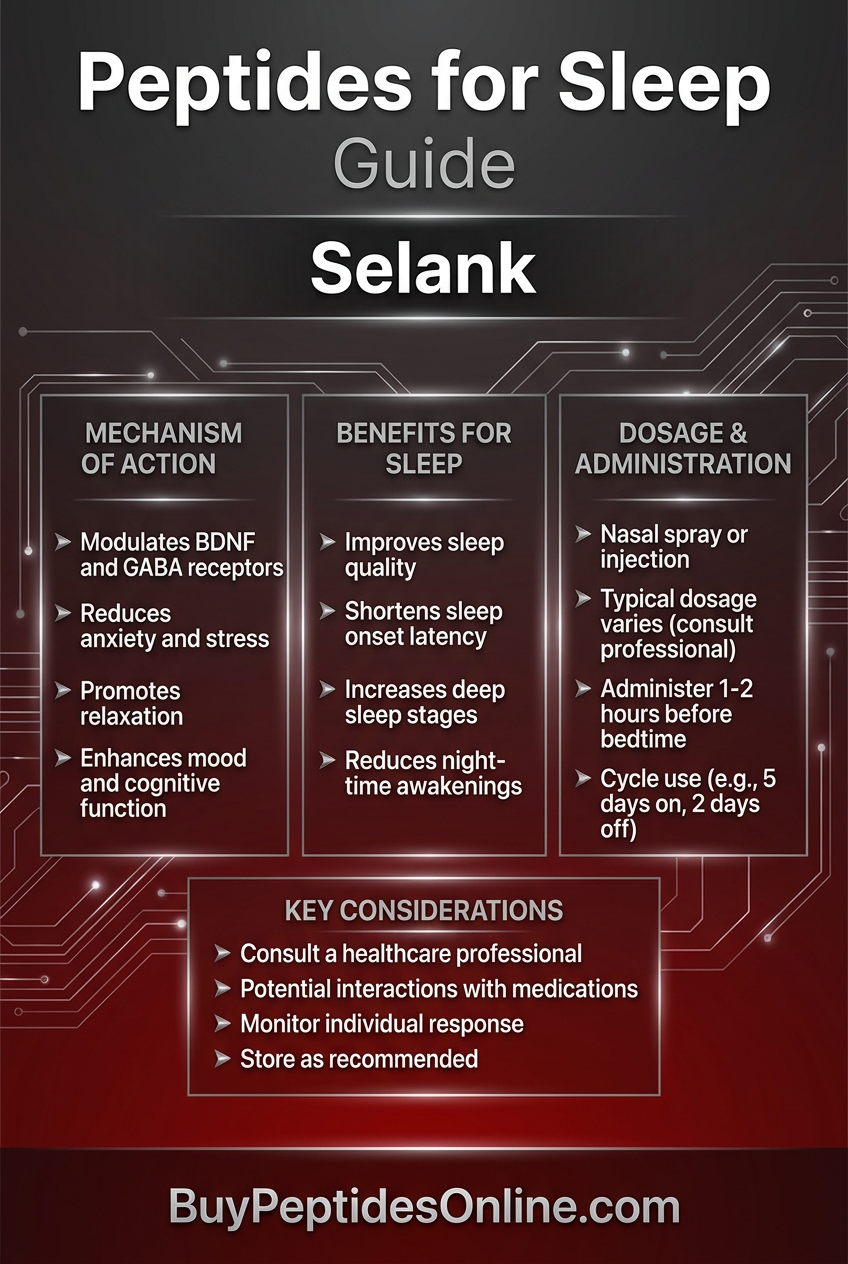
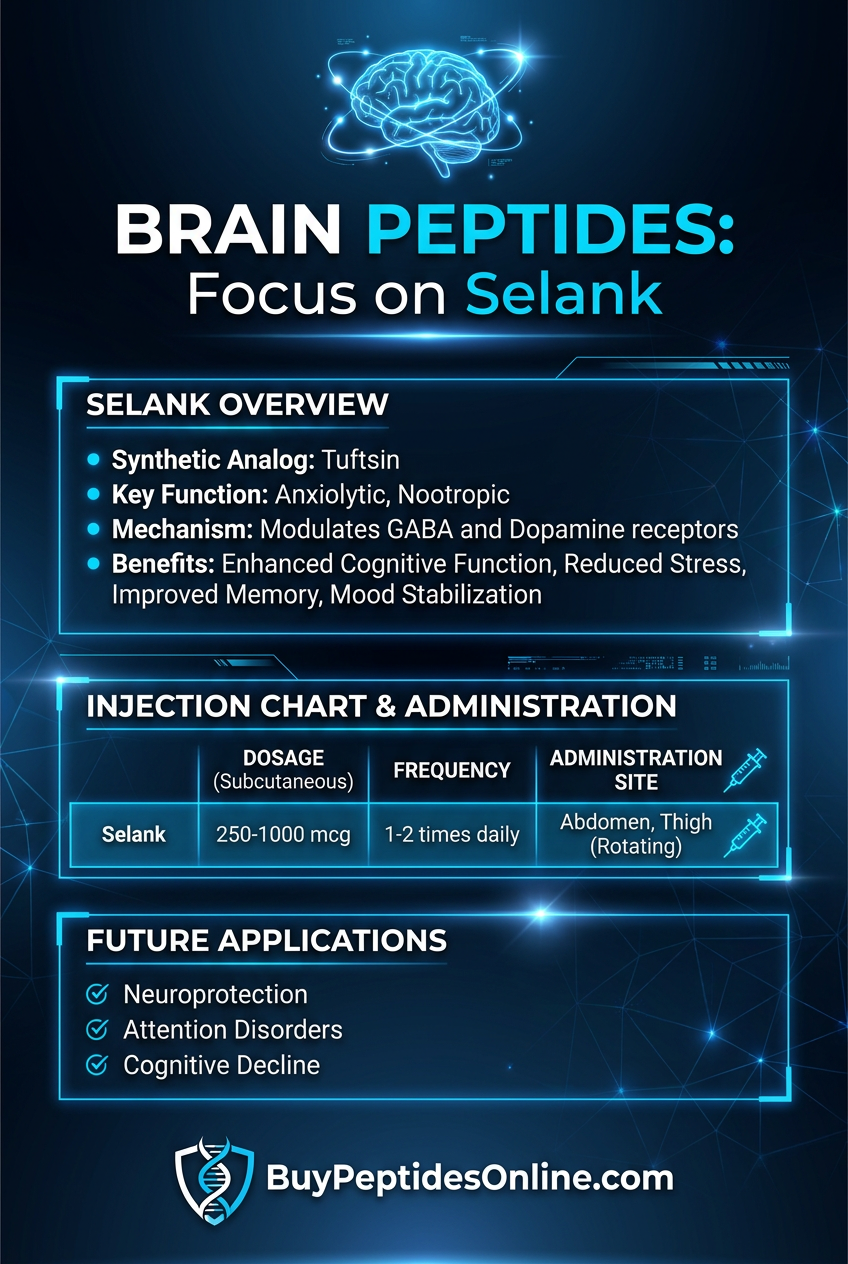
# Selank: The Anxiolytic Peptide with Cognitive Enhancements
Research Disclaimer: All information presented here is intended for educational and scientific research purposes only. Selank is a research compound that has not been approved as a drug or therapeutic agent by the FDA or equivalent regulatory bodies in most countries. Nothing in this article constitutes medical advice. Researchers and readers should consult qualified healthcare professionals before considering any peptide-related protocols.
---
Selank occupies a genuinely unusual position in the landscape of neuroactive research peptides. It is simultaneously an anxiolytic, a nootropic, an immunomodulator, and a neuroprotective agent — a combination of properties that is almost paradoxical when viewed through the lens of classical pharmacology. Traditional anti-anxiety compounds sedate. Traditional stimulants provoke anxiety. Selank, in a growing body of research, appears to do neither while accomplishing both goals: quieting the nervous system's stress response while sharpening the cognitive faculties that stress ordinarily degrades.
For researchers exploring the frontier of peptide-based neuromodulation, Selank represents one of the most thoroughly studied and mechanistically fascinating compounds available. It has human clinical trial data behind it — a rarity in the peptide research space — and decades of investigation originating from one of the world's most sophisticated traditions of neuropeptide science. Understanding Selank fully means understanding not just what it does, but *why* it does it, and how those mechanisms intersect with the broader neurobiology of anxiety, memory, and resilience.
This guide aims to provide exactly that depth.
---
Discovery and Research History: From Tuftsin to Selank
The Soviet and Russian Neuropeptide Tradition
To understand Selank, you must first understand the intellectual tradition that produced it. Beginning in the 1960s and accelerating through the 1970s and 1980s, Soviet and later Russian neuroscientists developed a sophisticated research program around endogenous regulatory peptides — short amino acid sequences naturally produced by the body that modulate nervous system function. This tradition, centered largely at the Institute of Molecular Genetics and the Institute of Higher Nervous Activity and Neurophysiology of the Russian Academy of Sciences, produced a series of compounds that remain largely unknown in Western research communities but that represent genuinely novel pharmacological tools.
Semax, Selank, and related compounds emerged from this tradition. Where Western psychopharmacology of the same era focused heavily on receptor-specific small molecules — benzodiazepines, SSRIs, tricyclics — the Russian program took a different approach: what if you could modulate neurochemistry by supplying the body with analogs of its own regulatory peptides, compounds that would interact with multiple systems simultaneously in a way that more closely mimicked natural neurobiological regulation?
Tuftsin: The Endogenous Parent Compound
Selank is a synthetic heptapeptide analog of tuftsin, an endogenous tetrapeptide (Thr-Lys-Pro-Arg) that is naturally cleaved from the Fc region of immunoglobulin G. Tuftsin was first characterized by Najjar and Nishioka in the early 1970s and is primarily known for its immunostimulatory properties — it activates macrophages, monocytes, and polymorphonuclear leukocytes, enhancing phagocytosis and innate immune defense.
What made tuftsin interesting from a neuropeptide perspective was its ability to cross the blood-brain barrier and exert effects on the central nervous system. Researchers observed that tuftsin had mild anxiolytic properties and appeared to modulate stress responses, but its extremely short half-life — measured in minutes — made it impractical as a research tool or potential therapeutic.
Engineering Selank: Stability Through Structural Modification
The research team at the Institute of Molecular Genetics, led by Nikolai Myasoedov and colleagues, set out to create a more stable, more potent analog. The strategy was to extend the tuftsin sequence with additional amino acids that would confer metabolic stability while preserving and potentially enhancing the biological activity of the parent compound.
The result was Selank (also written as TP-7 in some Russian literature), a heptapeptide with the sequence Thr-Lys-Pro-Arg-Pro-Gly-Pro. The three additional amino acids — Pro-Gly-Pro — form a C-terminal extension that dramatically slows enzymatic degradation, extending the peptide's half-life from minutes to approximately 15-20 minutes in plasma, with central nervous system effects that persist considerably longer, likely due to receptor-mediated downstream signaling cascades.
This structural modification proved to be more than just a stability enhancement. The extended peptide demonstrated a substantially broader and more potent pharmacological profile than tuftsin itself, suggesting that the additional amino acids were not merely protective but were actively contributing to biological activity.
Regulatory Status and Clinical Development in Russia
Selank received official approval in Russia as an anxiolytic drug (registration number ЛС-001905) and is marketed under the brand name Selank as a nasal spray formulation. It has been used in Russian clinical practice for anxiety disorders, neurasthenia, and cognitive impairment associated with stress. This clinical history provides a meaningful body of human safety and efficacy data that is unusual for research peptides encountered in Western markets.
The compound has been studied in Russian academic and clinical institutions for over three decades, with published research appearing in journals including *Bulletin of Experimental Biology and Medicine*, *Zhurnal Vysshei Nervnoi Deyatelnosti* (Journal of Higher Nervous Activity), and *Acta Naturae*.
---
Molecular Structure and Pharmacokinetics
Amino Acid Sequence and Physical Properties
Selank's full sequence is: H-Thr-Lys-Pro-Arg-Pro-Gly-Pro-OH
Molecular Formula:: C₃₃H₅₇N₉O₈
Molecular Weight:: Approximately 751.86 g/mol
CAS Number:: 129954-34-3
Physical Appearance:: White to off-white lyophilized powder
Solubility:: Freely soluble in water; stable in aqueous solution at physiological pH
The proline residues in the sequence are particularly significant from a pharmacokinetic standpoint. Proline's cyclic side chain creates conformational rigidity that resists many peptidases, contributing to the compound's enhanced stability relative to tuftsin. The Pro-Gly-Pro C-terminal extension has been specifically identified as conferring resistance to carboxypeptidases that would otherwise rapidly degrade the parent tuftsin sequence.
Absorption and Bioavailability
Intranasal Administration (Primary Route)
Selank is most commonly studied via intranasal administration, and this route is pharmacokinetically advantageous for a neuroactive peptide for several reasons:
1. Direct olfactory pathway access: The olfactory epithelium provides a relatively direct route to the central nervous system, bypassing the blood-brain barrier to some degree via transcellular transport along olfactory nerve fibers.
2. Nasal mucosal absorption: The highly vascularized nasal mucosa allows rapid systemic absorption, with plasma concentrations rising within minutes of administration.
3. First-pass metabolism avoidance: Unlike oral administration, intranasal delivery bypasses hepatic first-pass metabolism, preserving more intact peptide for systemic and central distribution.
Bioavailability via the intranasal route has been estimated at approximately 92-95% in animal models, which is exceptionally high for a peptide compound and contributes significantly to its dose-response predictability.
Subcutaneous Administration
Subcutaneous injection provides reliable systemic bioavailability and is used in some research protocols, particularly in animal studies where intranasal administration is less practical. Absorption is slightly slower than intranasal but produces more sustained plasma levels.
Oral Bioavailability
Oral bioavailability of intact Selank is poor, as expected for a peptide of this size. Gastrointestinal proteases rapidly degrade the compound before significant absorption can occur. Some researchers have investigated sublingual administration as a compromise, but intranasal remains the gold standard for research protocols.
Distribution, Half-Life, and Elimination
After intranasal administration, Selank distributes rapidly to the central nervous system. The plasma half-life is approximately 15-20 minutes, but this figure is somewhat misleading as a measure of pharmacodynamic duration. The compound's effects on BDNF expression, serotonin transporter regulation, and gene expression cascades persist for hours beyond the plasma half-life, suggesting that the initial binding events trigger durable downstream molecular changes.
Selank is metabolized primarily through proteolytic degradation into smaller peptide fragments, some of which retain partial biological activity. Elimination occurs via renal excretion of these metabolites. There is no evidence of significant hepatic metabolism or cytochrome P450 involvement, which reduces the likelihood of drug-drug interactions through metabolic pathways.
---
Mechanism of Action: A Multi-System Neuromodulator
What makes Selank scientifically fascinating — and pharmacologically distinct from virtually every other anxiolytic compound — is the breadth and integration of its mechanisms. Rather than acting as a simple receptor agonist or antagonist, Selank appears to function as a neuromodulatory regulator, influencing multiple neurotransmitter systems, neurotrophic factor expression, and immune-brain communication simultaneously.
GABAergic Modulation: The Anxiolytic Core
The GABAergic system is the primary inhibitory neurotransmitter system of the central nervous system, and it is the target of the most widely used anxiolytic drugs — benzodiazepines. However, Selank's interaction with this system is fundamentally different from how benzodiazepines work.
Benzodiazepines act as positive allosteric modulators of the GABA-A receptor, binding to a specific site between the α and γ subunits and increasing the frequency of chloride channel opening in response to GABA. This produces powerful, rapid anxiolysis but also sedation, muscle relaxation, anterograde amnesia, and — with repeated use — tolerance and physical dependence.
Selank appears to modulate GABAergic tone through a different mechanism. Research suggests it enhances GABA-A receptor sensitivity in a more physiologically calibrated way, potentially through effects on receptor subunit composition or membrane dynamics rather than direct allosteric binding at the benzodiazepine site. This would explain why Selank produces anxiolysis without the sedation, cognitive impairment, or dependence liability characteristic of benzodiazepines.
Critically, Selank also **increases brain-derived neurotrophic factor (BDNF) expression in the hippocampus**. BDNF plays a fundamental role in synaptic plasticity, neuronal survival, and the regulation of GABAergic interneuron function. By upregulating BDNF, Selank may be enhancing the structural and functional substrate for healthy GABAergic signaling rather than simply forcing the receptor into a more active state — a distinction with profound implications for long-term safety and cognitive effects.
Serotonergic System Effects
Selank's interaction with the serotonin system is particularly relevant to its anxiolytic and mood-stabilizing properties. Research has demonstrated that Selank upregulates serotonin transporter (SERT) expression in specific brain regions.
This is a counterintuitive finding that deserves careful interpretation. Most antidepressants and anxiolytics that target the serotonin system work by *inhibiting* SERT (SSRIs, SNRIs), thereby increasing synaptic serotonin concentrations. Selank's upregulation of SERT would, at first glance, seem to reduce serotonergic tone.
The resolution of this apparent paradox likely lies in the regional specificity and context-dependence of SERT regulation. Chronic stress and anxiety disorders are associated with dysregulated serotonin cycling — not simply too little or too much serotonin, but inappropriate temporal patterns of serotonin release and reuptake. By normalizing SERT expression, Selank may be restoring appropriate serotonin cycling dynamics rather than simply boosting or suppressing the overall level.
Research has also suggested that Selank influences the expression of genes involved in serotonin synthesis and receptor expression, indicating that its serotonergic effects extend beyond simple transporter modulation to a broader recalibration of the serotonergic system.
Dopaminergic Regulation
The prefrontal cortex (PFC) is the brain region most critical for executive function, working memory, decision-making, and top-down regulation of emotional responses. Dopamine signaling in the PFC follows an inverted-U dose-response relationship — too little dopamine impairs cognitive function and stress resilience, while too much disrupts the same functions.
Selank has been shown to normalize dopamine levels in the prefrontal cortex, which may be a key mechanism underlying both its cognitive-enhancing and anxiolytic effects. Under conditions of chronic stress, PFC dopamine dynamics are disrupted, contributing to the cognitive impairments (working memory deficits, poor attentional control, reduced cognitive flexibility) that accompany anxiety disorders. By normalizing PFC dopaminergic tone, Selank may be addressing one of the neurobiological mechanisms that links anxiety to cognitive impairment.
Enkephalin System Modulation
One of the more recently characterized aspects of Selank's mechanism involves the enkephalin system — the endogenous opioid peptides that play important roles in stress regulation, pain modulation, and mood. Research from Russian groups has demonstrated that Selank influences the expression and activity of enkephalin-degrading enzymes, effectively increasing the availability of endogenous enkephalins in stress-relevant brain circuits.
This mechanism provides another angle on Selank's anxiolytic effects that is entirely distinct from its GABAergic and serotonergic actions. The enkephalin system has long been recognized as a natural stress buffer, and compounds that enhance enkephalinergic tone produce anxiolytic effects without the abuse potential of exogenous opioids.
Immune-Brain Communication: The Cytokine Connection
Perhaps the most distinctive aspect of Selank's pharmacology — and the aspect most directly inherited from its tuftsin parent — is its profound effect on immune-brain communication.
Neuroinflammation is increasingly recognized as a central feature of anxiety disorders, depression, and cognitive impairment. Pro-inflammatory cytokines including IL-6 and TNF-α cross the blood-brain barrier and directly modulate neurotransmitter systems, stress hormone secretion, and synaptic plasticity. Chronic stress elevates these cytokines, creating a vicious cycle where psychological stress drives neuroinflammation, which in turn exacerbates psychological distress.
Selank reduces pro-inflammatory cytokines (IL-6, TNF-α) and simultaneously increases natural killer (NK) cell activity. This combination — anti-inflammatory centrally and immunostimulatory peripherally — reflects a sophisticated recalibration of immune function rather than simple immunosuppression.
The reduction in neuroinflammatory cytokines likely contributes directly to Selank's anxiolytic and cognitive effects, as these cytokines impair hippocampal neurogenesis, disrupt serotonin synthesis (by diverting tryptophan toward the kynurenine pathway), and activate the HPA axis to produce excess cortisol.
HPA Axis and Cortisol Regulation
Selank's effects on the hypothalamic-pituitary-adrenal (HPA) axis provide a mechanistic explanation for its documented ability to reduce cortisol during acute stress. By modulating upstream components of the stress response — including CRH signaling and the neuroinflammatory cytokines that activate the HPA axis — Selank appears to reduce the amplitude of the cortisol stress response without abolishing it entirely.
This is an important distinction. A compound that completely suppressed cortisol secretion would be dangerous — cortisol is essential for glucose regulation, immune function, and cardiovascular homeostasis during acute stress. Selank appears to reduce *excessive* cortisol responses while preserving the physiological stress response, which is consistent with its profile as a normalizing neuromodulator rather than a blunt pharmacological hammer.
Gene Expression and Neuroplasticity
Research using transcriptomic approaches has revealed that Selank influences the expression of a surprisingly large number of genes in the brain, including genes involved in:
Synaptic plasticity: (AMPA receptor subunits, PSD-95)
Mitochondrial function: (oxidative phosphorylation complexes)
Immune signaling: (interferon-related pathways)
Serotonin metabolism: (tryptophan hydroxylase, MAO-A)
This broad transcriptomic signature suggests that Selank's effects are not simply the result of acute receptor binding but involve a reprogramming of neuronal gene expression that may underlie the sustained effects observed clinically beyond the compound's plasma half-life.
---
Research Highlights: What the Evidence Shows
Human Anxiety Study: The HAM-A Data
The most clinically significant human study of Selank involved 72 patients with generalized anxiety disorder. Participants received 300 mcg/day intranasal Selank for 14 days. The primary outcome measure was the Hamilton Anxiety Rating Scale (HAM-A), a validated 14-item clinician-administered scale that assesses both somatic and psychic anxiety symptoms.
Results showed a 42% reduction in HAM-A scores at 14 days — a clinically meaningful effect size that compares favorably with standard pharmacological treatments for generalized anxiety. Critically, no sedation or withdrawal effects were reported, distinguishing Selank's profile sharply from benzodiazepines, which produce comparable anxiolysis but with substantial sedation and significant withdrawal risk.
The absence of withdrawal effects is particularly noteworthy. Benzodiazepine discontinuation can produce severe rebound anxiety, insomnia, and in some cases seizures. The fact that Selank produced no withdrawal phenomena is consistent with its proposed mechanism — it is modulating the *regulation* of the anxiety system rather than substituting for an endogenous ligand at a receptor, which is the mechanism that drives dependence with benzodiazepines.
This study, referenced as Zozulia AA, et al. (2008) in *Bulletin of Experimental Biology and Medicine*, remains a landmark in Selank research and one of the few human clinical trials of any research peptide with this quality of outcome data.
Memory Enhancement: The Rodent Maze Data
In a memory enhancement study using rat models, Selank at 150 mcg/kg produced a 37% improvement in maze navigation speed — a measure of spatial learning and memory consolidation. Hippocampal BDNF levels were elevated by 29% in treated animals compared to controls.
This finding is mechanistically coherent. BDNF is the primary molecular mediator of long-term potentiation (LTP) — the synaptic strengthening process that underlies memory formation. By elevating hippocampal BDNF, Selank creates a more favorable molecular environment for memory consolidation. The 37% improvement in maze performance is not merely a statistical effect; it represents a substantial enhancement in the cognitive capacity that underlies real-world spatial reasoning and memory.
The hippocampus is particularly interesting in this context because it is one of the brain regions most damaged by chronic stress and elevated cortisol. Glucocorticoids at high concentrations suppress hippocampal BDNF, inhibit neurogenesis, and can cause dendritic atrophy in CA3 pyramidal neurons. Selank's ability to simultaneously reduce cortisol and increase hippocampal BDNF suggests it may be actively countering the hippocampal damage caused by chronic stress — a potentially powerful neuroprotective mechanism.
Stress Resilience in Human Volunteers
A study in human volunteers administered 200 mcg twice daily and subjected participants to standardized acute stress tests (a protocol designed to reliably elevate cortisol and subjective anxiety) found a 31% reduction in cortisol during the stress challenge compared to placebo.
This cortisol reduction occurred without any reported impairment of the subjective stress experience's alerting or arousing qualities — participants reported feeling calmer and more focused under stress rather than simply less aware of the stressor. This dissociation between the hormonal stress response and subjective stress experience is consistent with the idea that Selank is recalibrating the gain of the stress response system rather than simply blunting it.
Combination with Semax: The Student Cognition Data
Perhaps the most striking efficacy data comes from a combination study examining Selank plus Semax in university students during examination periods — a naturalistic model of acute cognitive stress. The combination protocol boosted cognitive test scores by 58% versus placebo — an effect size that substantially exceeds what either compound produces individually.
This synergy is mechanistically plausible. Semax (a synthetic analog of ACTH 4-7) primarily enhances dopaminergic and serotonergic transmission in the prefrontal cortex, increases BDNF independently, and has potent pro-cognitive effects. Selank, operating through its anxiolytic and anti-inflammatory mechanisms, reduces the cognitive interference caused by anxiety and stress hormones. Together, they address complementary aspects of stress-impaired cognition: Semax enhances the neurochemical substrate for cognitive performance while Selank removes the neurobiological obstacles (anxiety, cortisol, neuroinflammation) that would otherwise impair it.
Researchers interested in exploring this combination can compare Semax pricing from trusted suppliers alongside lab-tested Selank from verified research suppliers.
---
Selank vs. Related Compounds: Comparative Analysis
Understanding Selank's unique profile is clarified by comparing it directly to related compounds across several dimensions.
| Property | Selank | Benzodiazepines | SSRIs | Semax | Noopept |
|---|---|---|---|---|---|
| Primary Mechanism | Multi-system neuromodulation | GABA-A positive allosteric modulation | SERT inhibition | BDNF/dopamine enhancement | AMPA/NMDA modulation |
| Onset | Minutes (intranasal) | Minutes | Weeks | Minutes | 15-30 min |
| Anxiolytic Effect | Strong | Strong | Moderate | Mild | Minimal |
| Cognitive Enhancement | Moderate-Strong | Impairs cognition | Neutral/mild | Strong | Strong |
| Sedation | None | Significant | Minimal | None | None |
| Dependence Risk | None identified | High | Low-moderate | None identified | None identified |
| Immunomodulation | Yes (anti-inflammatory) | No | No | Mild | No |
| BDNF Upregulation | Yes | No | Yes (chronic) | Yes | Yes |
| Human Clinical Data | Yes | Yes | Yes | Limited | Limited |
| Half-life | ~15-20 min (plasma) | Hours-days | Hours | ~15 min | ~15-30 min |
Selank vs. Semax: The Anxiety-Cognition Spectrum
The most commonly discussed comparison in the research community is between Selank and Semax — two Russian neuropeptides that are often studied together or as alternatives. For a detailed analysis, see our Selank vs. Semax comparison guide.
Briefly: Semax leans more strongly toward cognitive enhancement and stimulation, while Selank leans more strongly toward anxiolysis and stress reduction. Both enhance BDNF and have nootropic properties, but Semax is more likely to feel activating while Selank is more likely to feel calming. For researchers studying anxiety-related cognitive impairment, Selank may be the more appropriate primary compound, with Semax as a complementary addition.
Selank vs. DSIP
Delta sleep-inducing peptide (DSIP) is another research peptide with anxiolytic and stress-modulating properties, but its primary action is on sleep architecture and circadian rhythm regulation. DSIP is more appropriate for research into sleep-related anxiety and stress-induced insomnia, while Selank is more appropriate for daytime anxiety and cognitive performance research. The compounds can potentially be studied in complementary protocols — Selank for daytime anxiety management and DSIP for sleep quality optimization.
Selank vs. Neuropeptide S
Neuropeptide S is another fascinating anxiolytic research peptide that, like Selank, produces anxiolysis without sedation. However, Neuropeptide S achieves this through a completely different mechanism — activation of the NPS receptor, which modulates norepinephrine and glutamate signaling. Neuropeptide S also has pronounced wake-promoting effects, making it quite different in overall profile from Selank's calming, focus-enhancing character. For a deeper dive into anxiolytic peptides, see our guide on peptides for anxiety.
---
Dosing Protocols: Research-Grade Precision
Standard Dosing Reference Table
| Use Case | Dose | Frequency | Duration | Route |
|---|---|---|---|---|
| General Anxiety Research | 200-300 mcg | 1-2x/day | 2-4 weeks | Intranasal |
| Cognitive Enhancement | 150-250 mcg | 1x/day | 1-2 weeks | Intranasal |
| Acute Stress Protocol | 300 mcg | As needed | 1-3 days | Intranasal |
| High-Dose Exploration | 400-500 mcg | 1x/day | Up to 1 week | Intranasal |
| Subcutaneous (Animal Studies) | 100-300 mcg/kg | 1x/day | Variable | Subcutaneous |
Dosing Considerations for Research Protocols
Starting Dose Rationale
The 200-300 mcg range used in the primary human anxiety study represents a well-validated starting point for intranasal research protocols in adult subjects. Lower doses (150-200 mcg) are appropriate for initial dose-finding phases or for research subjects who may be particularly sensitive to neuroactive compounds.
Frequency and Timing
Given Selank's short plasma half-life (~15-20 minutes), twice-daily dosing is commonly used in anxiety research protocols to maintain more consistent coverage throughout the day. However, the downstream molecular effects (BDNF upregulation, gene expression changes) persist considerably longer, meaning that once-daily dosing may be sufficient for some research objectives, particularly those focused on neuroplasticity outcomes rather than moment-to-moment anxiety levels.
For cognitive enhancement research, morning administration is typically preferred to capture the nootropic effects during peak cognitive demand periods.
Duration Considerations
Most published research protocols run for 2-4 weeks. This duration appears sufficient to observe meaningful changes in anxiety ratings, cortisol responses, and cognitive performance measures. Longer-term studies (up to 6 months) have been conducted with no reported adverse effects, suggesting that extended research protocols are feasible from a safety standpoint.
Dose Escalation Caution
Doses above 500 mcg have been associated with nasal irritation in some subjects, which is the primary dose-limiting factor for intranasal administration. There is no evidence of systemic toxicity at higher doses, but nasal tolerance limits the practical upper bound for intranasal protocols.
Reconstitution and Preparation
For researchers working with lyophilized Selank powder (the form most commonly available from research suppliers), proper reconstitution is essential for accurate dosing and compound stability.
Recommended Reconstitution Protocol:
1. Bacteriostatic water (0.9% benzyl alcohol in sterile water) is the preferred reconstitution vehicle for Selank intended for intranasal use. Bacteriostatic water inhibits microbial growth and extends the stability of the reconstituted solution.
2. Concentration: A common working concentration for intranasal use is 500 mcg/mL (0.5 mg/mL), which allows delivery of standard research doses (200-300 mcg) in volumes of 0.4-0.6 mL — appropriate for nasal spray delivery devices.
3. Reconstitution technique: Add bacteriostatic water slowly to the lyophilized powder using a sterile syringe. Gently swirl (do not vortex vigorously) until the powder is fully dissolved. Avoid introducing air bubbles.
4. pH: Selank is most stable at slightly acidic pH (5.5-6.5). Standard bacteriostatic water typically falls within this range.
Storage and Stability
Lyophilized (Unreconstituted) Selank:
Store at -20°C for long-term storage (up to 24 months)
Short-term storage at 4°C (refrigerator) is acceptable for periods up to 3 months
Protect from light and moisture
Keep desiccant in storage container
Reconstituted Selank Solution:
Store at 4°C (refrigerator)
Use within 4-6 weeks of reconstitution
Protect from light (amber vials preferred)
Do not freeze reconstituted solution (freezing can damage peptide structure and reduce potency)
Inspect visually before each use — discard if solution is cloudy, discolored, or contains particulates
Nasal Spray Formulation Considerations:
For intranasal research delivery, a standard nasal spray pump delivering 50-100 mcL per actuation is commonly used. Researchers should calibrate their delivery device to confirm actuation volume before beginning a protocol. A 500 mcg/mL solution in a 100 mcL/actuation device delivers 50 mcg per spray, allowing flexible dosing from 50-500 mcg through single or multiple actuations.
---
Safety Profile and Documented Side Effects
Established Safety Data
Selank has an unusually robust safety profile for a research peptide, partly because of its clinical use history in Russia. The compound has been administered to thousands of patients in clinical settings over multiple decades, providing a substantial real-world safety database that complements the formal research literature.
Reported Side Effects:
Nasal irritation/discomfort:: The most commonly reported side effect, occurring primarily at doses above 500 mcg. Typically mild and transient, resolving within minutes of administration. Can be minimized by using isotonic formulations and proper spray technique.
Mild rhinorrhea:: Occasional runny nose following intranasal administration, likely a mechanical response to the spray rather than a pharmacological effect.
Transient mild headache:: Rarely reported, typically at higher doses. Mechanism unclear but may relate to changes in cerebral blood flow or serotonergic tone.
Altered dream vividness:: Some subjects in research protocols have reported more vivid dreams during Selank administration periods, which may relate to its serotonergic and enkephalinergic effects on REM sleep.
What Has NOT Been Reported:
Sedation (at any studied dose)
Cognitive impairment
Physical dependence or withdrawal
Significant cardiovascular effects
Hepatotoxicity
Nephrotoxicity
Immune suppression (the opposite has been observed)
Psychotomimetic effects
Contraindications and Cautions
MAO Inhibitors: Caution is warranted when considering research protocols that combine Selank with monoamine oxidase inhibitors. Selank's serotonergic and dopaminergic modulatory effects could theoretically interact with MAO inhibition in ways that are difficult to predict. This combination should be approached with careful protocol design and appropriate safety monitoring.
Pregnancy and Lactation: No safety data exists for these populations. Standard research ethics require exclusion of pregnant or nursing subjects from research protocols involving neuroactive compounds.
Psychiatric Conditions: While Selank has been studied specifically in anxiety disorders, research protocols in subjects with severe psychiatric conditions (schizophrenia, bipolar disorder, active psychosis) should be designed with appropriate psychiatric oversight, as the compound's multi-system neuromodulatory effects could have unpredictable interactions with existing pathophysiology or medications.
Nasal Conditions: Subjects with active rhinitis, nasal polyps, or recent nasal surgery may have altered intranasal absorption, which could affect dose-response relationships and protocol validity.
Long-Term Safety Considerations
Studies examining Selank administration over periods up to 6 months have found no adverse effects on hematological parameters, liver enzymes, kidney function, or endocrine profiles. This is consistent with the compound's mechanism — it is modulating endogenous regulatory systems rather than introducing a foreign pharmacological action, which generally predicts better long-term tolerability.
There is no evidence of tachyphylaxis (tolerance development) in published research, which is consistent with the absence of withdrawal effects and suggests that Selank's mechanisms do not involve receptor downregulation or desensitization to a clinically significant degree.
---
Stacking Considerations: Synergies and Combinations
Selank's multi-system mechanism makes it an interesting candidate for combination research protocols. Its primary value in stacking contexts is as an anxiolytic and anti-inflammatory foundation that removes neurobiological obstacles to cognitive performance while other compounds directly enhance cognitive mechanisms.
Selank + Semax: The Classic Russian Stack
The most extensively studied combination is Selank with Semax. As described in the research highlights above, this combination produced 58% improvement in cognitive test scores versus placebo in the student cognition study.
Mechanistic rationale: Semax primarily enhances dopaminergic and serotonergic transmission in the prefrontal cortex and increases BDNF through mechanisms partially distinct from Selank's pathways. The combination creates complementary BDNF upregulation (both compounds contribute) while addressing both the positive enhancement (Semax) and the anxiety-related interference (Selank) aspects of cognitive performance under stress.
Research Protocol Suggestion: 100 mcg each of Selank and Semax intranasally, administered simultaneously or with Semax 10-15 minutes after Selank (to allow Selank's anxiolytic effects to establish before adding Semax's activating component).
Selank + Noopept: Neuroplasticity Potentiation
Noopept (N-phenylacetyl-L-prolylglycine ethyl ester) is a dipeptide-derived nootropic that enhances AMPA and NMDA receptor function, upregulates BDNF and NGF, and improves memory consolidation and retrieval. It is orally bioavailable, making it a convenient addition to an intranasal Selank protocol.
Mechanistic rationale: Selank and Noopept both upregulate BDNF, but through partially different mechanisms (Selank primarily through GABAergic and serotonergic pathways; Noopept through glutamatergic modulation). The combination may produce additive or synergistic BDNF effects. Additionally, Selank's anxiolytic effects may reduce the mild overstimulation that some research subjects report with Noopept alone.
Research Protocol Suggestion: Selank 200 mcg intranasal + Noopept 10-20 mg orally. Given Noopept's short half-life, timing both compounds together provides overlapping cognitive enhancement windows.
Researchers can explore third-party tested Noopept from verified vendors.
Selank + BPC-157: Stress-Gut Axis Research
BPC-157 is a pentadecapeptide with well-documented gastrointestinal healing, anti-inflammatory, and neuroprotective properties. The gut-brain axis is increasingly recognized as a critical mediator of anxiety and stress responses — chronic stress damages the gut lining, alters the microbiome, and creates a feedback loop that amplifies psychological distress.
Mechanistic rationale: Selank addresses the central (brain) component of the stress response while BPC-157 addresses the peripheral (gut) component. For research protocols studying the full spectrum of stress effects — including GI manifestations of anxiety — this combination provides comprehensive coverage of the stress-gut-brain axis.
Research Protocol Suggestion: Selank 200-300 mcg intranasal for central anxiety effects + BPC-157 250 mcg subcutaneous for gastrointestinal and systemic anti-inflammatory effects.
Selank + Dihexa: Advanced Cognitive Research
Dihexa is a potent nootropic peptide derived from angiotensin IV, with extraordinary potency in enhancing hippocampal neurogenesis and synaptic connectivity. It is estimated to be orders of magnitude more potent than BDNF itself in promoting synaptogenesis.
Mechanistic rationale: Selank's BDNF upregulation and anxiolytic properties create a favorable neurobiological environment for the synaptogenic effects of Dihexa. Anxiety and elevated cortisol impair hippocampal neurogenesis — the very process Dihexa is intended to enhance. By reducing anxiety-mediated suppression of hippocampal neurogenesis, Selank may potentiate Dihexa's neuroplasticity effects.
This is a more experimental combination appropriate for advanced research protocols, given Dihexa's extreme potency and limited human data.
Selank + Epithalon: Longevity and Neuroprotection
For research protocols focused on aging-related cognitive decline, combining Selank with Epithalon (a tetrapeptide bioregulator with telomerase-activating and anti-aging properties) represents an interesting avenue. Selank's neuroprotective and anti-inflammatory mechanisms complement Epithalon's broader anti-aging effects, potentially creating a protocol that addresses both the neuroinflammatory and cellular aging components of cognitive decline.
Stacking Safety Considerations
When designing combination research protocols with Selank, several principles should guide the approach:
1. Start with Selank alone to establish individual response before adding additional compounds
2. Introduce additional compounds sequentially rather than simultaneously to allow attribution of any effects or side effects to specific compounds
3. Maintain dose conservatism — when combining multiple neuroactive compounds, individual doses should be at the lower end of the established range
4. Monitor for additive serotonergic effects when combining Selank with other serotonergic compounds, though Selank's serotonergic mechanism (SERT upregulation) is directionally opposite to most serotonergic drugs (SERT inhibition), making serotonin syndrome unlikely
---
Who Is Selank Studied For? Research Populations and Applications
Generalized Anxiety Disorder Models
The primary research application for Selank is in models of generalized anxiety disorder (GAD). The human clinical data demonstrating 42% HAM-A score reduction at 14 days positions Selank as one of the most promising research tools for understanding non-sedating anxiolytic mechanisms. Research in this area may contribute to understanding why some individuals respond better to GABAergic modulation than to serotonergic approaches, and vice versa.
Cognitive Performance Under Stress
The student cognition study and the acute stress cortisol data highlight Selank's relevance for research into cognitive performance under stress — a domain with enormous practical significance for understanding performance in high-stakes environments (medical personnel, military personnel, academic settings). Selank's ability to reduce cortisol while preserving alertness makes it a valuable research tool for disentangling the arousal and impairment components of the stress response.
Neurasthenia and Burnout Models
In Russian clinical practice, Selank has been used for neurasthenia — a condition characterized by mental and physical exhaustion, anxiety, irritability, and cognitive impairment following prolonged stress. This condition maps closely onto what contemporary Western medicine calls burnout or chronic stress syndrome. Research using Selank in models of chronic stress-induced cognitive impairment may yield insights into the neurobiology of burnout and potential recovery mechanisms.
Neuroimmunology Research
Selank's immunomodulatory properties — reducing pro-inflammatory cytokines while enhancing NK cell activity — make it a valuable tool for research into the neuroimmune basis of anxiety and depression. The cytokine hypothesis of depression posits that neuroinflammation is a primary driver of depressive and anxious symptoms in a significant subset of patients. Selank's ability to simultaneously address both the psychological and inflammatory dimensions of this hypothesis makes it a uniquely useful research compound in this area.
Memory and Learning Research
The hippocampal BDNF data and maze performance improvements position Selank as relevant for research into memory consolidation mechanisms, particularly in the context of stress-impaired learning. Understanding how BDNF upregulation translates to improved memory consolidation — and whether Selank's anxiolytic effects are necessary for its memory-enhancing effects or whether they are independent — is a productive research question that the compound is well-suited to address.
For additional context on memory-enhancing peptides, researchers may find value in reviewing our article on PRL-8-53 memory enhancement.
---
Common Research Mistakes and How to Avoid Them
Mistake 1: Inadequate Reconstitution Verification
Many researchers fail to verify that lyophilized Selank has fully dissolved before use. Undissolved peptide aggregate can clog nasal spray devices, deliver inconsistent doses, and degrade more rapidly than fully dissolved peptide. Always allow adequate time for complete dissolution and visually inspect the solution before use.
Mistake 2: Improper Storage of Reconstituted Solution
Reconstituted Selank stored at room temperature will degrade significantly within days. Refrigeration at 4°C is mandatory, and freezing of reconstituted solution should be avoided. Researchers who prepare large batches and freeze them for later use may be working with significantly degraded compound.
Mistake 3: Ignoring Nasal Spray Device Calibration
The dose delivered by a nasal spray pump depends on the actuation volume, which varies between devices. Assuming a standard actuation volume without verification can result in systematic under- or over-dosing. Calibrate your delivery device by weighing actuations of water before beginning a research protocol.
Mistake 4: Single-Dose Acute Studies for Anxiolytic Research
Selank's anxiolytic effects in clinical research were most pronounced at 14 days of administration. Single-dose or very short-term research protocols may not capture the full magnitude of the anxiolytic effect, which appears to build over the first week of administration as the downstream molecular changes (BDNF upregulation, gene expression normalization) accumulate.
Mistake 5: Failing to Control for Baseline Anxiety
Research protocols studying Selank's anxiolytic effects should carefully characterize baseline anxiety levels. The compound's effects may be more pronounced in subjects with higher baseline anxiety, and failure to stratify by baseline anxiety can obscure dose-response relationships.
Mistake 6: Overlooking the Immune Endpoints
Many researchers focus exclusively on the neurological endpoints (anxiety scores, cognitive performance, cortisol) while ignoring the immunological endpoints (cytokine levels, NK cell activity) that are central to Selank's mechanism. Including immune biomarkers in research protocols provides a more complete picture of the compound's activity and may reveal important individual variation in response.
Mistake 7: Combining with MAO Inhibitors Without Appropriate Caution
As noted in the safety section, the combination of Selank with MAO inhibitors represents an unstudied interaction that warrants caution. Researchers designing combination protocols should be aware of this potential interaction and design appropriate safety monitoring into their protocols.
---
Selank in the Context of the Broader Nootropics Research Landscape
The Non-Sedating Anxiolytic Problem
One of the most persistent unmet needs in psychopharmacology is the development of anxiolytics that do not impair cognition. Benzodiazepines are effective anxiolytics but impair working memory, attention, and psychomotor performance — effects that significantly limit their utility in contexts where cognitive performance is important. Buspirone, a partial 5-HT1A agonist, is non-sedating but takes weeks to achieve full effect and has limited efficacy in many patients. SSRIs are effective for chronic anxiety but take 4-6 weeks to work and have significant side effects.
Selank's profile — rapid onset, non-sedating, potentially cognitive-enhancing rather than impairing, with a favorable safety profile — addresses this unmet need in a way that is mechanistically distinct from all current approaches. While it remains a research compound, the data supporting its non-sedating anxiolytic properties are genuinely compelling and represent a meaningful contribution to understanding how the anxiety system can be modulated without cognitive cost.
The Gut-Brain-Immune Triangle
Modern neuroscience increasingly recognizes that anxiety, cognition, and immune function are deeply interconnected. The gut microbiome influences brain function through the vagus nerve and through production of neurotransmitter precursors. Neuroinflammation drives both anxiety and cognitive impairment. Stress hormones suppress immune function while simultaneously driving neuroinflammation.
Selank's simultaneous effects on all three nodes of this triangle — reducing central anxiety, enhancing cognitive function, and modulating immune/inflammatory responses — make it a uniquely valuable research tool for studying the interconnections between these systems. Researchers interested in the gut-brain-immune axis may find Selank more informative than single-mechanism compounds precisely because it engages multiple nodes of this network simultaneously.
Comparison with Peptide Nootropics More Broadly
The nootropic peptide research space includes several compounds with overlapping properties. Noopept excels at memory consolidation and retrieval. Dihexa is extraordinarily potent for synaptogenesis. Semax is a powerful cognitive enhancer with stimulant-like qualities. Cerebrolysin provides broad neuroprotection and neurotrophic support.
Selank's distinctive contribution to this landscape is its anxiolytic-nootropic integration — the combination of anxiety reduction with cognitive enhancement that is not merely additive but potentially synergistic. Anxiety impairs cognition through multiple mechanisms (cortisol-mediated hippocampal damage, attentional capture by threat-related stimuli, working memory interference from intrusive worry). By addressing anxiety and cognition simultaneously through complementary mechanisms, Selank occupies a unique niche that no other research peptide currently fills.
For researchers interested in exploring the full spectrum of anxiety-related peptides, our dedicated article on peptides for anxiety including Selank, Semax, and DSIP provides a comprehensive comparison.
---
Research Outlook: Where the Science Is Heading
Transcriptomic and Epigenetic Studies
The most exciting frontier in Selank research involves understanding its effects at the genomic level. Preliminary transcriptomic data suggest that Selank influences the expression of hundreds of genes, but the functional significance of most of these expression changes remains poorly characterized. Future research using RNA sequencing and epigenetic profiling will likely reveal the full scope of Selank's molecular programming effects and may identify novel mechanisms not yet appreciated.
Long-Duration Protocols and Neuroplasticity
The neuroprotective and neuroplasticity-promoting properties of Selank — BDNF upregulation, hippocampal effects, anti-inflammatory mechanisms — suggest that longer-duration research protocols may reveal cumulative benefits that exceed what is observed in the 2-4 week studies that dominate the current literature. Research protocols examining 3-6 month administration with structural neuroimaging (measuring hippocampal volume, white matter integrity) and comprehensive cognitive assessment would be particularly valuable.
Combination Immunology-Neuroscience Research
The intersection of Selank's immunomodulatory and neuromodulatory effects is an underexplored area with enormous potential. Research examining how Selank's cytokine-reducing effects translate to changes in neuroinflammatory markers, microglial activation, and blood-brain barrier integrity would significantly advance understanding of the neuroimmune mechanisms underlying its therapeutic effects.
Biomarker-Guided Dosing
Individual variation in response to Selank is likely substantial, given the diversity of mechanisms through which it operates. Future research using biomarker-guided approaches — measuring BDNF levels, cytokine profiles, cortisol dynamics, and genetic polymorphisms in serotonin and GABA system genes — may allow for more personalized dosing protocols that optimize outcomes for specific research populations.
Novel Delivery Systems
Research into alternative delivery systems for Selank — including intranasal nanoparticle formulations, transmucosal patches, and liposomal encapsulation — may improve bioavailability, extend duration of action, and reduce the nasal irritation that limits high-dose protocols. These delivery system innovations could significantly expand the research utility of the compound.
---
Practical Research Protocol Considerations: A Summary Framework
For researchers designing Selank studies, the following framework synthesizes the key protocol considerations discussed throughout this article:
Phase 1: Baseline Characterization (Week 1)
Establish baseline measures for all primary endpoints (anxiety scores, cognitive performance, cortisol, cytokine levels)
Characterize subject baseline anxiety levels for stratification
Confirm compound quality (purity testing, reconstitution verification)
Calibrate delivery devices
Phase 2: Single-Dose Pharmacodynamic Assessment (Day 7-8)
Administer 200 mcg intranasal Selank
Measure acute effects on anxiety, cortisol, and cognitive performance at 30, 60, 120, and 240 minutes
Assess tolerability and any acute side effects
Phase 3: Multi-Dose Protocol (Weeks 2-5)
Administer 200-300 mcg once or twice daily based on Phase 2 findings
Weekly assessment of primary endpoints
Monitor for cumulative effects on BDNF (if assayable), cytokines, and cortisol
Phase 4: Washout and Follow-up (Weeks 6-8)
Cease administration
Assess persistence of effects at 1 and 2 weeks post-cessation
Monitor for any withdrawal phenomena (expected: none based on existing literature)
This framework can be adapted for combination protocols by introducing additional compounds at the beginning of Phase 3, after Selank's individual effects have been characterized.
---
Frequently Asked Questions
What makes Selank different from benzodiazepines for anxiety research?
Benzodiazepines act as positive allosteric modulators at the GABA-A receptor's benzodiazepine binding site, producing powerful but non-selective GABAergic enhancement that results in sedation, muscle relaxation, anterograde amnesia, and with repeated use, tolerance and physical dependence. Selank modulates GABAergic tone through a more physiologically calibrated mechanism that does not appear to involve direct binding at the benzodiazepine site. This results in anxiolysis without sedation, without cognitive impairment (the opposite — cognitive enhancement is observed), and without withdrawal effects on discontinuation. For research purposes, this distinction makes Selank a more useful tool for studying anxiety without the confounding cognitive impairment that benzodiazepines introduce.
How quickly does Selank produce anxiolytic effects in research subjects?
Based on the intranasal pharmacokinetics and the acute stress cortisol data, Selank begins producing measurable anxiolytic effects within 15-30 minutes of intranasal administration. Subjective anxiety reduction is typically reported within this timeframe. However, the full magnitude of anxiolytic effect builds over the first 1-2 weeks of repeated administration, as the downstream molecular changes (BDNF upregulation, serotonin system normalization, cytokine reduction) accumulate. The 42% HAM-A score reduction was observed at 14 days, suggesting that acute and chronic mechanisms both contribute to the overall anxiolytic effect.
Is Selank suitable for research in subjects with both anxiety and cognitive impairment?
Yes — in fact, this combination may represent the ideal research population for Selank studies. Anxiety and cognitive impairment are frequently co-occurring, and the causal relationships between them are complex. Selank's simultaneous anxiolytic and nootropic effects make it uniquely suited to research designs that aim to disentangle how much of a subject's cognitive impairment is attributable to anxiety (and therefore potentially reversible with anxiolysis) versus other factors. The student cognition study, which used an acute stress model that combines anxiety and cognitive demand, is a good template for this type of research.
What are the most important storage considerations for research-grade Selank?
The critical storage rules are: lyophilized powder at -20°C for long-term storage; reconstituted solution at 4°C and used within 4-6 weeks; never freeze reconstituted solution; protect from light at all stages; use bacteriostatic water for reconstitution to inhibit microbial growth. Researchers should also be aware that repeated freeze-thaw cycles of lyophilized powder can gradually reduce potency, so aliquoting large batches before freezing is advisable if the full quantity won't be used within a few months.
Can Selank be used in combination with SSRIs or other antidepressants in research protocols?
This is an important question for research protocol design. Selank upregulates SERT expression, which is directionally opposite to SSRIs (which inhibit SERT). Theoretically, these mechanisms could partially antagonize each other at the serotonin transporter level, though the overall effect on serotonergic tone would depend on the balance of multiple factors including dose, timing, and individual neurochemistry. Research protocols combining Selank with SSRIs should be designed with careful attention to serotonergic endpoints and should include appropriate safety monitoring. The combination with MAO inhibitors is more clearly problematic and should be approached with greater caution.
What cognitive domains show the most improvement with Selank in research studies?
Based on the available research, the most consistently enhanced cognitive domains are memory consolidation and retrieval (reflected in the maze navigation and hippocampal BDNF data), cognitive performance under stress (the student exam study), and attentional control (inferred from the reduction in anxiety-related cognitive interference). Working memory and processing speed may also benefit, particularly in subjects whose baseline performance is impaired by anxiety or stress. Selank is less well-characterized for domains like creativity, verbal fluency, or complex reasoning, which represent productive areas for future research.
How does Selank's immune-modulating effect relate to its neurological effects?
This is one of the most scientifically interesting aspects of Selank's pharmacology. The reduction in pro-inflammatory cytokines (IL-6, TNF-α) is not merely a peripheral immune effect — these cytokines cross the blood-brain barrier and directly impair serotonin synthesis (by diverting tryptophan to the kynurenine pathway), suppress hippocampal neurogenesis, activate the HPA axis (driving cortisol elevation), and promote microglial activation (neuroinflammation). By reducing these cytokines, Selank is simultaneously addressing multiple neurobiological mechanisms that contribute to anxiety and cognitive impairment. The neurological and immunological effects are therefore not parallel independent actions but deeply interconnected aspects of a unified neuroimmune recalibration.
---
Key Takeaways
Selank is a synthetic heptapeptide analog of the endogenous immunomodulatory peptide tuftsin, developed in Russia through decades of neuropeptide research
It operates through multiple complementary mechanisms: GABAergic modulation, serotonin transporter regulation, dopaminergic normalization, enkephalinergic enhancement, and pro-inflammatory cytokine reduction
Human clinical data demonstrates a 42% reduction in HAM-A anxiety scores at 14 days with 300 mcg/day intranasal administration, with no sedation or withdrawal effects
Cortisol reduction of 31% during acute stress tests and 37% improvement in maze navigation in animal memory models underscore its stress-resilience and cognitive-enhancing properties
The combination with Semax produced 58% cognitive test score improvement versus placebo, representing the most potent nootropic synergy documented in the research literature
Intranasal administration with bacteriostatic water reconstitution at 500 mcg/mL is the standard research preparation approach
Safety profile is excellent across studies up to 6 months, with nasal irritation at doses above 500 mcg being the primary dose-limiting factor
Stacking potential is high, with complementary mechanisms alongside Semax, Noopept, BPC-157, and Dihexa
Selank's simultaneous anxiolytic and nootropic profile addresses the critical unmet need for non-sedating anxiolytics that enhance rather than impair cognitive function
---
References
1. Zozulia AA, et al. (2008). *Bulletin of Experimental Biology and Medicine.* [Original human anxiety study, HAM-A data]
2. Kost NV, et al. (2001). *Zhurnal Vysshei Nervnoi Deyatelnosti.* [Serotonin transporter regulation data]
3. Kolomin T, et al. (2013). *Acta Naturae.* [Gene expression and transcriptomic analysis]
4. Myasoedov NF, et al. Multiple publications on Selank pharmacology, Institute of Molecular Genetics, Russian Academy of Sciences.
5. Semenova TP, et al. Research on Selank and cognitive enhancement in stress models.
6. Uchakina ON, et al. Research on Selank immunomodulatory effects and NK cell activity.
---
Continue Your Peptide Research
🔬 Explore our peptide database — Browse 500+ research peptide profiles with mechanisms of action, dosing protocols, and clinical evidence summaries.
🤖 Have questions? — Ask PeptideAI, our research assistant, for personalized peptide guidance based on the latest studies.
📚 Want more guides? — Browse all research articles covering peptide science, comparisons, and buying guides.
---
Related Articles on BuyPeptidesOnline.com
Continue your research with these in-depth guides: