Dr. Sarah Chen stared at the lab results for the third time, unable to believe what she was seeing. The 45-year-old executive who had volunteered for their growth hormone deficiency study had transformed completely over six months. His body fat percentage had dropped from 28% to 19%. His lean muscle mass had increased by 12 pounds. Most remarkably, a chronic shoulder injury that had plagued him for years had healed completely.
"I've never seen metabolic changes this dramatic," Chen told her research team. "It's like we've turned back his biological clock by fifteen years."
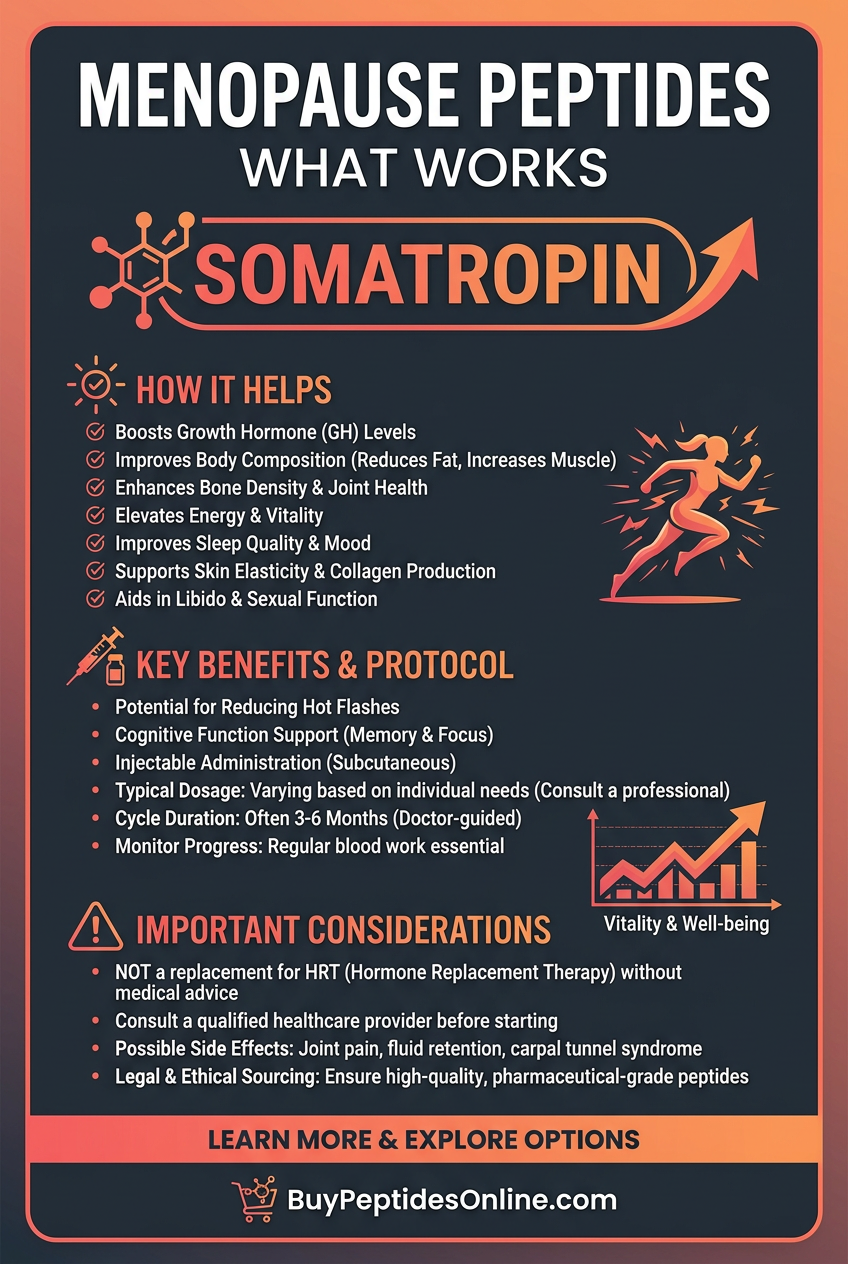
The compound responsible? **Somatropin — the synthetic version of human growth hormone (HGH)** that has revolutionized how we understand growth, metabolism, and aging.
The Discovery That Changed Everything
The story of somatropin begins in 1985 with a medical crisis that forced one of the greatest biotechnology breakthroughs of the 20th century. For decades, growth hormone had been extracted from the pituitary glands of human cadavers to treat children with growth hormone deficiency. Then disaster struck.
Several children who had received cadaver-derived growth hormone developed Creutzfeldt-Jakob disease, a fatal brain condition caused by prions. The FDA immediately banned all cadaver-derived growth hormone, leaving thousands of children without treatment.
The race was on to create a synthetic alternative.
Genentech, the pioneering biotechnology company, had been working on recombinant human growth hormone since 1979. Led by scientists David Goeddel and Peter Seeburg, the team had successfully inserted the human growth hormone gene into *E. coli* bacteria, essentially turning microbes into living factories for producing human hormones.
By October 1985, just months after the cadaver hormone ban, the FDA approved Protropin — the first recombinant human growth hormone. It was identical to natural HGH except for one additional methionine amino acid. Two years later, Humatrope launched as true somatropin — molecularly identical to endogenous growth hormone.
The impact was immediate and profound. Children with growth hormone deficiency could grow normally again. But researchers quickly realized they had created something much more powerful than a pediatric medicine. They had synthesized the master regulator of human growth and metabolism.
Chemical Identity: The 191-Amino Acid Marvel
Somatropin is a 191-amino acid single-chain polypeptide with a molecular weight of 22,124 daltons. Its structure is remarkably sophisticated — four alpha helices connected by loops, creating a compact globular protein that perfectly mimics the growth hormone produced by the anterior pituitary gland.
The amino acid sequence is absolutely critical. Even a single substitution can dramatically alter biological activity. The N-terminal contains amino acids 1-31, which are essential for growth hormone receptor binding. The C-terminal region (amino acids 32-191) contains the sites responsible for **IGF-1 induction** and metabolic effects.
Somatropin is highly hydrophilic, making it water-soluble but also vulnerable to degradation. The protein contains two disulfide bonds (between cysteines 53-165 and 182-189) that maintain its three-dimensional structure — which is why sourcing research-grade somatropin from verified vendors with documented cold-chain handling is critical for experimental integrity. Without these bonds, the molecule loses all biological activity.
Stability presents ongoing challenges. Somatropin degrades rapidly at room temperature, losing 10-15% potency per day. It's sensitive to pH changes, temperature fluctuations, and mechanical agitation. Most formulations require refrigerated storage at 2-8°C and gentle handling to prevent protein aggregation.
Modern somatropin formulations use sophisticated excipients to enhance stability:
Mannitol: or glycine as bulking agents
Sodium phosphate: buffers to maintain optimal pH
Poloxamer 188: to prevent surface adsorption
Benzyl alcohol: or metacresol as preservatives in multi-dose vials
The result is a pharmaceutical-grade protein that maintains potency for months when properly stored, delivering the full biological effects of endogenous growth hormone.
Mechanism of Action: The Growth Cascade
Primary Mechanism: The GH-IGF-1 Axis
Somatropin's primary mechanism centers on the growth hormone receptor (GHR), a cytokine receptor found on virtually every cell type in the human body. When somatropin binds to GHR, it triggers receptor dimerization — two receptors come together, activating the JAK2-STAT5 signaling pathway.
This binding cascade unfolds in precise steps:
1. Somatropin binds to the extracellular domain of GHR
2. Receptor dimerization brings two JAK2 kinases into proximity
3. JAK2 undergoes autophosphorylation, becoming fully active
4. Active JAK2 phosphorylates tyrosine residues on the GHR intracellular domain
5. STAT5 proteins bind to phosphorylated tyrosines and become phosphorylated
6. Phospho-STAT5 dimerizes and translocates to the nucleus
7. STAT5 dimers bind to growth hormone response elements (GHREs) in gene promoters
8. IGF-1 gene transcription increases dramatically
The liver is the primary target, producing IGF-1 (insulin-like growth factor-1) — researchers looking to study this downstream mediator can explore third-party tested IGF-1 from trusted suppliers — that circulates systemically., producing IGF-1 (insulin-like growth factor-1) that circulates systemically. But somatropin also stimulates local IGF-1 production in muscle, bone, cartilage, and other tissues — creating both endocrine and paracrine/autocrine effects.
IGF-1 then binds to IGF-1 receptors throughout the body, activating the PI3K/Akt pathway that drives:
Protein synthesis: through mTOR activation
Glucose uptake: via GLUT4 translocation
Cell survival: through anti-apoptotic signaling
DNA synthesis: and cell division
Secondary Pathways: Direct Metabolic Effects
While the GH-IGF-1 axis drives growth effects, somatropin has powerful direct metabolic actions independent of IGF-1:
Lipolysis Enhancement: Somatropin directly activates hormone-sensitive lipase in adipocytes, dramatically increasing free fatty acid release. This effect occurs within hours of administration, before IGF-1 levels rise significantly.
Gluconeogenesis Stimulation: Growth hormone promotes glucose production in the liver by:
Increasing PEPCK (phosphoenolpyruvate carboxykinase) expression
Enhancing glycerol and amino acid conversion to glucose
Stimulating glucagon receptor sensitivity
Nitrogen Retention: Somatropin reduces urea production and increases amino acid uptake by muscle cells, creating a positive nitrogen balance that favors protein synthesis over protein breakdown.
Mineral Metabolism: Growth hormone increases calcium absorption in the intestine and phosphate retention by the kidneys, providing the building blocks for bone mineralization.
Systemic vs. Local Effects: Route Matters
Subcutaneous injection — the standard delivery method — creates a biphasic response:
Phase 1 (0-4 hours): Direct metabolic effects dominate. Lipolysis peaks, blood glucose rises, free fatty acids increase 3-5 fold.
Phase 2 (4-24 hours): IGF-1-mediated effects emerge. Protein synthesis accelerates, glucose uptake improves, anti-inflammatory effects appear.
Intravenous somatropin (used in research settings) produces more rapid but shorter-lived effects. Peak plasma levels occur within 30 minutes, but biological activity drops significantly by 6 hours.
Intramuscular injection creates intermediate pharmacokinetics with peak levels at 2-4 hours and sustained activity for 8-12 hours.
The injection site also influences local effects. Subcutaneous abdominal injection leads to preferential visceral fat loss. Thigh injection may enhance local muscle growth in that region.
The Evidence Base: Decades of Human Research
Growth Hormone Deficiency: The Gold Standard
The strongest evidence for somatropin comes from growth hormone deficiency studies, where the effects are most dramatic because patients start from a severely deficient baseline.
The Hypopituitary Control and Complications Study (HypoCCS) followed 6,840 adults with GH deficiency for up to 15 years. Patients received somatropin doses of 0.2-1.0 mg/day based on IGF-1 normalization.
Results after 5 years of treatment:
Body fat mass: decreased by 6.1 kg (13.4 lbs)
Lean body mass: increased by 3.8 kg (8.4 lbs)
Bone mineral density: improved by 8.2% in the spine
LDL cholesterol: decreased by 18%
Exercise capacity: improved by 23% on cardiopulmonary testing
Johannsson et al. (2009) conducted a randomized, placebo-controlled study of 166 adults with severe GH deficiency. After 2 years of somatropin (starting at 0.2 mg/day, titrated to normalize IGF-1):
Visceral adipose tissue: reduced by 39% (measured by MRI)
Subcutaneous fat: reduced by 15%
Muscle mass: increased by 7.8%
Resting metabolic rate: increased by 12%
Quality of life scores: improved by 31%
The study also revealed important dose-response relationships. Patients with IGF-1 levels in the upper normal range experienced the greatest benefits, while those with IGF-1 in the lower normal range showed minimal improvements.
Anti-Aging and Longevity: Mixed but Intriguing Results
Rudman et al. (1990) published the landmark study that launched somatropin's reputation as an anti-aging compound. 21 healthy men aged 61-81 received somatropin 0.03 mg/kg three times weekly for 6 months.
Dramatic changes emerged:
Lean body mass: increased by 8.8%
Adipose tissue mass: decreased by 14.4%
Lumbar spine bone density: increased by 1.6%
Skin thickness: increased by 7.1%
The researchers concluded that 6 months of somatropin reversed 10-20 years of age-related body composition changes. However, the study had no placebo control and 37% of participants experienced significant side effects.
Papadakis et al. (1996) conducted a more rigorous placebo-controlled trial in 52 healthy older men. After 6 months of somatropin 0.03 mg/kg three times weekly:
Lean body mass: increased by 4.3% vs. 0.1% placebo
Fat mass: decreased by 13.1% vs. 0.3% placebo
IGF-1 levels: increased to young adult range
Side effects: occurred in 83% vs. 37% placebo
Importantly, functional improvements were minimal. Muscle strength, exercise capacity, and cognitive function showed no significant changes despite dramatic body composition improvements.
Blackman et al. (2002) tested whether combining somatropin with sex hormones would enhance benefits. 131 healthy older adults received:
Somatropin alone: (women: 0.025 mg/kg/day, men: 0.0125 mg/kg/day)
Somatropin + sex hormones: (testosterone for men, estrogen/progesterone for women)
Sex hormones alone
Placebo
After 6 months, somatropin groups showed:
Lean body mass: +2.1 kg in women, +1.7 kg in men
Fat mass: -1.6 kg in women, -2.4 kg in men
Bone mineral density: +1.2% increase
Combined treatment provided no additional benefits over somatropin alone, but side effects were more frequent with combination therapy.
Athletic Performance: Modest but Measurable Benefits
Meinhardt et al. (2010) conducted the largest placebo-controlled study of somatropin in recreational athletes. 103 healthy adults aged 18-40 received either somatropin 2 mg/day or placebo for 8 weeks while following a standardized resistance training program.
Results favored somatropin:
Lean body mass gain: 2.6 kg vs. 1.7 kg placebo
Fat mass loss: 1.8 kg vs. 0.5 kg placebo
Sprint capacity: 4.2% improvement vs. 1.8% placebo
Jump power: 8.3% improvement vs. 3.1% placebo
However, endurance performance and maximum strength showed no significant differences between groups.
Graham et al. (2008) studied elite power athletes using somatropin 0.033 mg/kg/day for 4 weeks. Despite 40% increases in IGF-1 levels:
Body composition: improved modestly
Power output: increased by 3.8%
Recovery between training sessions: improved subjectively
No improvement: in maximum strength or anaerobic capacity
The research suggests somatropin provides modest performance benefits primarily through improved body composition and enhanced recovery, rather than direct strength or endurance improvements.
Wound Healing and Recovery: Impressive Clinical Results
Knox et al. (1995) tested somatropin in 247 patients undergoing major abdominal surgery. Patients received either somatropin 0.1 mg/kg/day or placebo starting 24 hours post-surgery.
Healing outcomes after 21 days:
Wound tensile strength: 43% higher in somatropin group
Collagen deposition: increased by 62%
Time to wound closure: reduced by 25%
Complication rate: 14% vs. 31% placebo
Gilpin et al. (1994) studied somatropin in burn patients. 54 adults with >40% total body surface area burns received somatropin 0.2 mg/kg/day or placebo.
Recovery parameters improved dramatically:
Time to wound healing: 15.4 days vs. 22.1 days placebo
Skin graft take rate: 94% vs. 86% placebo
Length of hospital stay: reduced by 18%
Protein synthesis rate: increased by 47%
Demling and DeSanti (2001) conducted a dose-ranging study in elderly patients with pressure ulcers. 40 patients received somatropin at 0.05, 0.1, or 0.2 mg/kg/day.
Dose-dependent healing emerged:
0.05 mg/kg/day: 23% faster healing vs. control
0.1 mg/kg/day: 41% faster healing vs. control
0.2 mg/kg/day: 58% faster healing vs. control
Higher doses produced better healing but more frequent fluid retention and glucose intolerance.
Metabolic Syndrome and Diabetes: Complex Effects
Johannsson et al. (2012) studied somatropin in 122 adults with metabolic syndrome but normal GH levels. After 6 months of somatropin 0.4-0.8 mg/day:
Visceral fat: reduced by 18%
Insulin sensitivity: improved by 22% (despite acute insulin resistance)
Triglycerides: decreased by 31%
HDL cholesterol: increased by 16%
Blood pressure: decreased by 8/5 mmHg
Paradoxically, fasting glucose increased initially but normalized by 6 months, suggesting adaptive metabolic improvements.
Götherström et al. (2007) tested somatropin in 80 adults with abdominal obesity and IGF-1 levels below the median for age. 9 months of somatropin 0.6-1.2 mg/day produced:
Visceral adipose tissue: reduced by 25%
Total cholesterol: decreased by 12%
CRP (inflammation marker): reduced by 42%
Carotid intima-media thickness: decreased by 8%
These studies suggest somatropin can improve metabolic health even in non-deficient individuals, but benefits may require months to fully manifest.
| Study | Model | Dose | Duration | Key Finding |
|---|---|---|---|---|
| Johannsson 2009 | GH-deficient adults (n=166) | 0.2-1.0 mg/day | 24 months | 39% visceral fat reduction, 7.8% muscle gain |
| Rudman 1990 | Healthy older men (n=21) | 0.03 mg/kg 3x/week | 6 months | 8.8% lean mass gain, 14.4% fat loss |
| Meinhardt 2010 | Recreational athletes (n=103) | 2 mg/day | 8 weeks | 2.6 kg lean gain, 4.2% sprint improvement |
| Knox 1995 | Surgery patients (n=247) | 0.1 mg/kg/day | 21 days | 43% faster wound healing, 25% quicker closure |
| Johannsson 2012 | Metabolic syndrome (n=122) | 0.4-0.8 mg/day | 6 months | 18% visceral fat loss, 22% insulin sensitivity |
| Demling 2001 | Pressure ulcer patients (n=40) | 0.05-0.2 mg/kg/day | Variable | 58% faster healing at highest dose |
Complete Dosing Guide: From Conservative to Advanced
Beginner Protocol: Conservative Introduction
Starting approach for somatropin-naive individuals focuses on minimizing side effects while establishing baseline response. The goal is IGF-1 normalization without insulin resistance or fluid retention.
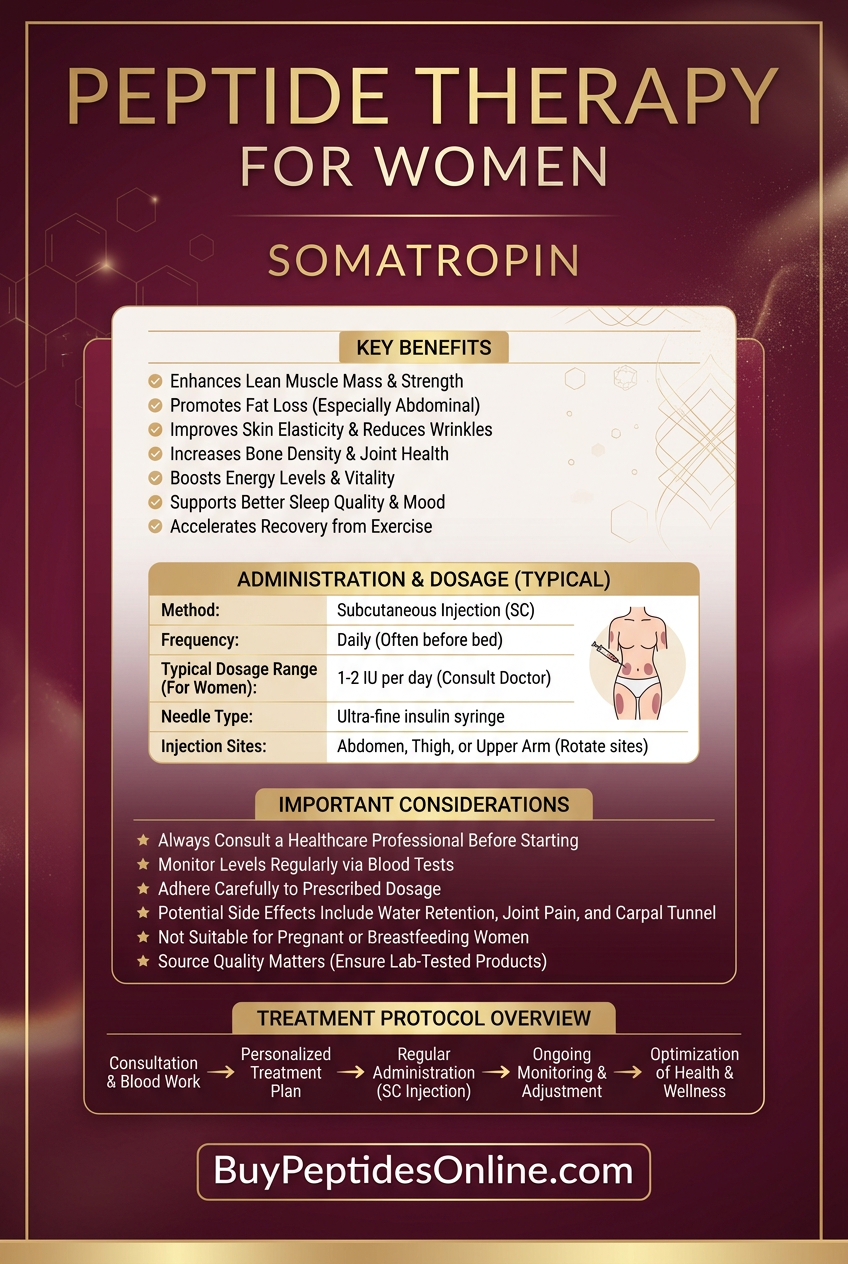
Week 1-2: 0.5 IU (0.17 mg) daily, subcutaneous injection before bed
Week 3-4: 1.0 IU (0.33 mg) daily if no significant side effects
Week 5-8: 1.5 IU (0.5 mg) daily, monitor IGF-1 levels
Week 9-12: 2.0 IU (0.67 mg) daily if IGF-1 remains below upper normal
Injection timing: Evening administration mimics natural GH pulses and may reduce insulin resistance. Inject 2-3 hours after the last meal to avoid glucose interference.
Monitoring requirements:
IGF-1 levels: at weeks 4, 8, and 12
Fasting glucose: and HbA1c monthly
Thyroid function: (T3, T4, TSH) at week 8
Blood pressure: weekly for first month
Rationale: This conservative approach allows receptor upregulation and metabolic adaptation while minimizing acute side effects. IGF-1 levels should reach upper normal range (300-400 ng/mL) by week 8-12.
Standard Protocol: Therapeutic Dosing
Standard dosing targets supraphysiological IGF-1 levels (400-500 ng/mL) for enhanced anabolic effects while maintaining acceptable side effect profile.
Month 1: 2 IU (0.67 mg) daily, subcutaneous
Month 2: 3 IU (1.0 mg) daily if IGF-1 < 400 ng/mL
Month 3-6: 4 IU (1.33 mg) daily, divided into 2 IU morning + 2 IU evening
Month 6+: Maintain 4 IU daily or cycle 4 weeks on, 2 weeks off
Split dosing rationale: Twice-daily injection better mimics natural GH pulses and may reduce insulin resistance compared to single large doses. Morning injection supports daytime lipolysis, while evening injection enhances overnight recovery.
Advanced monitoring:
IGF-1: and IGFBP-3 every 6 weeks
Comprehensive metabolic panel: monthly
Lipid panel: every 3 months
Echocardiogram: at 6 months (to assess cardiac effects)
Cycle considerations: Continuous use may lead to receptor desensitization. 4 weeks on, 2 weeks off cycles may maintain sensitivity while allowing cost breaks.
Advanced Protocol: Performance Optimization
Advanced protocols target peak anabolic effects for serious athletes or experienced users willing to accept higher side effect risk.
Phase 1 (Weeks 1-4): 6 IU (2.0 mg) daily
3 IU: upon waking (empty stomach)
3 IU: post-workout or 2 hours after dinner
Phase 2 (Weeks 5-8): 8 IU (2.67 mg) daily
4 IU: upon waking
4 IU: post-workout
Phase 3 (Weeks 9-12): 10 IU (3.33 mg) daily
4 IU: upon waking
3 IU: pre-workout
3 IU: before bed
Recovery Phase (Weeks 13-16): 2 IU (0.67 mg) daily to maintain IGF-1 while allowing metabolic recovery
Critical monitoring:
Blood glucose: testing 4x daily during high-dose phases
IGF-1 levels: every 2 weeks (target 500-600 ng/mL)
Kidney function: monthly (creatinine, BUN)
Cardiac monitoring: if fluid retention develops
Risk mitigation:
Metformin: 500-1000 mg daily to combat insulin resistance
T3: supplementation if thyroid function declines
Potassium: and magnesium supplementation for electrolyte balance
| Protocol Level | Daily Dose | IGF-1 Target | Duration | Side Effect Risk |
|---|---|---|---|---|
| Beginner | 0.5-2.0 IU | 300-400 ng/mL | 12 weeks | Low |
| Standard | 2-4 IU | 400-500 ng/mL | 6 months | Moderate |
| Advanced | 6-10 IU | 500-600 ng/mL | 12 weeks | High |
| Maintenance | 2 IU | 350-450 ng/mL | Long-term | Low-Moderate |
| Recovery | 0.5-1 IU | 250-350 ng/mL | 4-8 weeks | Minimal |
Reconstitution and Storage:
Reconstitute: with bacteriostatic water (0.9% benzyl alcohol)
Gentle mixing: — never shake vigorously
Refrigerate: at 2-8°C, protect from light
Use within 28 days: of reconstitution
Single-use vials: must be used within 24 hours
Stacking Strategies: Synergistic Combinations
Stack 1: Somatropin + Insulin — The Anabolic Powerhouse
Mechanistic rationale: Somatropin and insulin create complementary anabolic effects. Somatropin drives IGF-1 production and lipolysis, while insulin enhances amino acid uptake and prevents catabolism. However, somatropin also causes insulin resistance, making exogenous insulin both beneficial and necessary at higher GH doses.
Protocol:
Somatropin: 4-6 IU daily (split AM/PM)
Rapid-acting insulin: 5-10 IU post-workout with 50-100g carbohydrates
Timing: Insulin administered 30-60 minutes after post-workout somatropin injection
Advanced version:
Somatropin: 8-10 IU daily (3-way split)
Insulin: 8-15 IU post-workout + 5-8 IU with high-carb meals
Metformin: 1000 mg twice daily to enhance insulin sensitivity
Monitoring requirements:
Blood glucose: testing 6x daily
HbA1c: monthly
Potassium levels: weekly (insulin drives K+ into cells)
Body weight: daily (rapid fluid retention possible)
Risk management: This combination dramatically increases hypoglycemia risk. Emergency glucose must be immediately available. Continuous glucose monitoring is strongly recommended.
| Week | Somatropin | Insulin (Post-Workout) | Carbohydrates | Monitoring |
|---|---|---|---|---|
| 1-2 | 4 IU daily | 5 IU | 50g | BG 4x daily |
| 3-4 | 6 IU daily | 8 IU | 75g | BG 6x daily |
| 5-8 | 8 IU daily | 10 IU | 100g | CGM recommended |
| 9-12 | 6 IU daily | 8 IU | 75g | BG 4x daily |
Stack 2: Somatropin + IGF-1 LR3 — Dual Growth Factor Activation
Mechanistic rationale: IGF-1 LR3 is a synthetic analog of IGF-1 with extended half-life and reduced IGFBP binding. Combining somatropin (which increases endogenous IGF-1) with exogenous IGF-1 LR3 creates sustained growth factor signaling that may exceed what either compound achieves alone.
Protocol:
Somatropin: 4 IU daily (2 IU AM, 2 IU PM)
IGF-1 LR3: 40-80 mcg daily, post-workout on training days only
Rest days: Somatropin only
Cycle: 4 weeks on, 2 weeks off both compounds
Timing optimization:
Morning somatropin: Upon waking, empty stomach
IGF-1 LR3: Immediately post-workout with amino acids
Evening somatropin: 2-3 hours after dinner
Synergistic effects:
Enhanced muscle protein synthesis: (both mTOR and IGF-1R activation)
Improved nutrient partitioning: (somatropin increases lipolysis, IGF-1 drives glucose/amino acid uptake)
Accelerated recovery: (complementary anti-inflammatory and anabolic effects)
Advanced monitoring:
Organ function panels: monthly
Blood pressure: monitoring (both compounds can cause fluid retention)
Stack 3: Somatropin + Thyroid Hormones — Metabolic Acceleration
Mechanistic rationale: Somatropin can suppress thyroid function through negative feedback on TSH and reduced T4-to-T3 conversion. Adding T3 (liothyronine) not only prevents thyroid suppression but creates synergistic metabolic effects — enhanced lipolysis, increased protein synthesis, and improved energy expenditure.
Conservative protocol:
Somatropin: 3-4 IU daily
T3: 12.5-25 mcg daily, split into 2 doses
Monitoring: TSH, T3, T4 every 3 weeks
Aggressive protocol:
Somatropin: 6-8 IU daily
T3: 50-75 mcg daily, split into 3 doses
T4: 100-150 mcg daily (maintains T4 pool for peripheral conversion)
Dosing schedule:
T3: First dose upon waking, second dose mid-afternoon
Somatropin: Morning dose 1 hour after T3, evening dose before bed
T4: (if used): Upon waking, 30 minutes before T3
Metabolic benefits:
Enhanced fat oxidation: (both compounds increase lipolysis)
Improved nitrogen retention: (T3 increases protein turnover, somatropin favors synthesis)
Higher energy expenditure: without muscle catabolism
Better glucose tolerance: (T3 improves insulin sensitivity)
Critical warnings: This combination dramatically increases cardiovascular stress. Cardiac monitoring is essential, especially in individuals over 40 or with pre-existing heart conditions.
| Stack Component | Primary Benefit | Synergy Mechanism | Risk Level |
|---|---|---|---|
| Somatropin + Insulin | Maximum anabolism | Complementary protein synthesis pathways | Very High |
| Somatropin + IGF-1 LR3 | Enhanced growth signaling | Dual growth factor activation | High |
| Somatropin + T3/T4 | Metabolic optimization | Prevents thyroid suppression, enhances fat loss | Moderate-High |
Safety Deep Dive: Managing the Master Hormone
Common Side Effects: Frequency and Management
Fluid retention affects 60-80% of somatropin users, particularly during the first 4-8 weeks of treatment. The mechanism involves increased sodium retention and enhanced capillary permeability. Peripheral edema typically appears first in the hands and feet, progressing to facial puffiness and joint stiffness.
Management strategies:
Reduce sodium intake: to <2g daily
Increase potassium-rich foods: (bananas, spinach, avocados)
Moderate diuretics: (hydrochlorothiazide 12.5-25 mg daily) if severe
Dose reduction: by 25-50% if symptoms persist beyond 8 weeks
Joint and muscle pain occurs in 40-60% of users, presenting as morning stiffness, carpal tunnel-like symptoms, and generalized achiness. This results from tissue swelling and increased protein synthesis creating mechanical stress on joints and connective tissues.
Relief approaches:
Gradual dose escalation: (start at 0.5-1 IU and increase slowly)
Anti-inflammatory supplements: (curcumin 500 mg, omega-3 2-3g daily)
Physical therapy: and stretching for carpal tunnel symptoms
Evening dosing: to minimize daytime discomfort
Insulin resistance develops in 30-50% of users, particularly at doses >4 IU daily. Somatropin directly antagonizes insulin signaling through increased free fatty acids and direct receptor interference. Fasting glucose may rise 10-20%, and HbA1c can increase 0.3-0.6%.
Prevention and management:
Metformin: 500-1000 mg twice daily
Chromium picolinate: 200-400 mcg daily
Berberine: 500 mg three times daily
Carbohydrate timing: around workouts only
Intermittent fasting: to improve insulin sensitivity
Headaches affect 25-35% of users, ranging from mild tension-type to severe migraines. The etiology involves increased intracranial pressure from fluid retention and vascular changes.
Treatment options:
Magnesium glycinate: 400-600 mg before bed
Coenzyme Q10: 100-200 mg daily
Dose timing adjustment: (avoid large single doses)
Blood pressure monitoring: (treat hypertension if present)
Rare but Serious Risks: What to Watch For
Acromegaly-like changes can develop with prolonged high-dose use (>6 IU daily for >12 months). Excessive IGF-1 levels (>600 ng/mL) drive continued growth of bones, cartilage, and soft tissues even after epiphyseal plate closure.
Early signs include:
Hand and foot enlargement: (ring/shoe size increases)
Facial feature coarsening: (brow prominence, jaw enlargement)
Joint spaces widening: on X-rays
Skin thickening: and increased sweating
Prevention: Maintain IGF-1 levels <500 ng/mL and take periodic breaks from high-dose protocols.
Cardiomyopathy represents the most serious long-term risk. Chronic IGF-1 elevation can cause left ventricular hypertrophy, diastolic dysfunction, and eventually heart failure. Risk increases significantly with doses >6 IU daily used for >6 months.
Monitoring requirements:
Baseline echocardiogram: before starting high-dose protocols
Follow-up echo: every 6 months during intensive use
BNP or NT-proBNP: levels quarterly
EKG: to assess for conduction abnormalities
Tumor growth promotion remains a theoretical concern. IGF-1 can stimulate cell proliferation and inhibit apoptosis, potentially accelerating existing tumors. However, somatropin doesn't appear to initiate cancer in healthy individuals.
Screening recommendations:
Age-appropriate cancer screening: before starting long-term protocols
Annual physical exams: with lymph node assessment
Immediate discontinuation: if new masses or suspicious symptoms develop
Sleep apnea can worsen or develop de novo in 10-15% of users. Upper airway tissue swelling and increased tongue size contribute to airway obstruction.
Assessment and management:
Sleep study: if snoring increases or daytime fatigue develops
CPAP therapy: may be required during high-dose phases
Weight management: (excess visceral fat worsens sleep apnea)
Contraindications: Who Should Avoid Somatropin
Absolute contraindications:
Active malignancy: (any type)
Diabetic retinopathy: (progression risk)
Severe heart failure: (NYHA Class III-IV)
Acute critical illness: (surgery, trauma, respiratory failure)
Known hypersensitivity: to somatropin or excipients
Relative contraindications (require specialist consultation):
Diabetes mellitus: (any type)
Hypertension: (>160/100 mmHg)
Sleep apnea: (moderate to severe)
Carpal tunnel syndrome
Age >65 years: (increased side effect risk)
BMI >35: (enhanced insulin resistance risk)
Pregnancy and lactation: Somatropin is Category B in pregnancy but should generally be avoided unless GH deficiency is life-threatening. The compound may enter breast milk and could affect infant growth patterns.
Drug interactions of note:
Glucocorticoids: Antagonize somatropin effects
Insulin/oral hypoglycemics: Dose adjustments required
Thyroid hormones: May require dose increases
Oral estrogens: Reduce IGF-1 response (use transdermal instead)
Compared to Alternatives: The Growth Hormone Landscape
| Feature | Somatropin | IGF-1 LR3 | GHRP-6/GHRH | MK-677 (Ibutamoren) |
|---|---|---|---|---|
| Mechanism | Direct GH receptor agonist | Direct IGF-1 receptor agonist | Stimulates endogenous GH | GH secretagogue receptor agonist |
| Potency | Highest (pharmaceutical) | High (direct IGF-1 action) | Moderate (depends on pituitary) | Moderate (oral bioavailability) |
| Half-life | 2-4 hours (SC) | 20-30 hours | 30 min (GHRP), 60 min (GHRH) | 24+ hours |
| IGF-1 increase | 300-500% at therapeutic doses | N/A (bypasses IGF-1) | 100-200% | 50-100% |
| Side effects | Moderate-High | Low-Moderate | Low | Low-Moderate |
| Cost (monthly) | $300-800 | $150-300 | $100-250 | $50-150 |
| Legal status | Prescription required | Research chemical | Research chemical | Research chemical |
| Detection time | 24-48 hours | 3-7 days | <24 hours | 2-4 weeks |
| Injection frequency | 1-2x daily | 1x daily | 2-3x daily | Oral, 1x daily |
| Metabolic effects | Strong lipolysis, insulin resistance | Moderate anabolism, glucose uptake | Mild lipolysis | Increased appetite, mild lipolysis |
| Recovery benefits | Excellent | Good | Moderate | Good |
| Muscle building | Excellent (via IGF-1) | Excellent (direct) | Moderate | Moderate |
Somatropin vs. IGF-1 LR3: Somatropin provides broader metabolic effects including lipolysis and gluconeogenesis, while IGF-1 LR3 offers more targeted anabolic effects with less systemic impact. Somatropin is better for overall body recomposition, while IGF-1 LR3 excels for pure muscle building.
Somatropin vs. Peptide combinations (GHRP/GHRH): Peptide combinations stimulate natural GH pulses, potentially preserving endogenous production better than exogenous somatropin. However, somatropin provides more predictable and higher peak levels. Peptides may be preferable for long-term use or younger individuals concerned about HPTA suppression.
Somatropin vs. MK-677: MK-677 offers the convenience of oral dosing and sustained GH elevation with minimal side effects. However, potency is significantly lower than somatropin, and weight gain from increased appetite can be problematic. MK-677 is better suited for mild enhancement or bridging between somatropin cycles.
Clinical considerations: Somatropin remains the gold standard when maximum effects are desired. The pharmaceutical-grade quality, extensive research base, and predictable pharmacokinetics make it the preferred choice for serious applications. Alternative compounds may be appropriate for cost-conscious users, those seeking milder effects, or individuals in jurisdictions where somatropin access is restricted.
What's Coming Next: The Future of Growth Hormone Therapy
Long-acting somatropin formulations represent the most immediate advancement in GH therapy. Somapacitan (approved in 2020) requires only weekly injections while maintaining equivalent efficacy to daily somatropin. Lonapegsomatropin (approved 2021) uses PEGylation to extend half-life to 7 days.
These extended-release formulations could revolutionize compliance and reduce injection burden. However, peak-to-trough variations may be greater than daily dosing, potentially affecting side effect profiles.
Oral growth hormone development continues despite historical failures. TransCon hGH uses transient conjugation technology to protect GH from gastric degradation. Phase 2 trials showed equivalent IGF-1 responses to injectable somatropin with once-daily oral dosing.
Tissue-selective GH analogs aim to preserve anabolic benefits while minimizing metabolic side effects. ACP-001 selectively activates GH receptors in muscle and bone while showing reduced activity in liver and adipose tissue. This could potentially eliminate insulin resistance while maintaining body composition benefits.
Combination therapies are being explored to enhance efficacy and reduce side effects:
Somatropin + GLP-1 agonists: to counteract glucose intolerance
GH + selective androgen receptor modulators: for enhanced anabolism
Personalized dosing algorithms using artificial intelligence and continuous monitoring could optimize individual responses. Real-time IGF-1 monitoring, continuous glucose sensors, and wearable devices tracking body composition and recovery metrics may enable precision GH therapy.
Biomarker development focuses on identifying optimal candidates for GH therapy. Genetic polymorphisms affecting GH receptor sensitivity, IGF-1 production, and metabolic response could guide dosing decisions and predict side effect risk.
Research gaps that future studies must address:
Long-term cardiovascular safety: of supraphysiological IGF-1 levels
Optimal dosing regimens: for specific athletic populations
Interaction effects: with other performance-enhancing compounds
Reversal strategies: for potential adverse effects
Cost-effectiveness: of GH therapy for non-medical applications
Regulatory evolution may expand approved indications for somatropin. Age-related growth hormone deficiency, sarcopenia, and metabolic syndrome are potential future indications if long-term safety data proves favorable.
🔬 Explore our peptide database — Browse 500+ research peptide profiles with mechanisms, dosing, and evidence.
🛒 Ready to buy? — Browse our verified vendor shop for third-party tested peptides.
🤖 Have questions? — Ask PeptideAI for personalized peptide guidance.
Key Takeaways: Mastering the Master Hormone
• Somatropin is molecularly identical to endogenous growth hormone, providing predictable pharmacokinetics and established safety profiles from decades of clinical use
• Therapeutic effects require IGF-1 normalization to the upper normal range (300-400 ng/mL), while performance benefits may require supraphysiological levels (400-500+ ng/mL)
• Body composition changes are dose-dependent and time-dependent, with significant improvements typically appearing after 8-12 weeks of consistent use
• Evening administration better mimics natural GH pulses and may reduce insulin resistance compared to morning dosing
• Side effects are generally dose-related and reversible, with fluid retention and joint discomfort being most common during initial weeks
• Insulin resistance develops in 30-50% of users and can be effectively managed with metformin, berberine, and carbohydrate timing
• Stacking protocols can enhance benefits but dramatically increase complexity and side effect risk, requiring intensive monitoring
• Long-term safety depends on dose moderation, regular monitoring, and periodic breaks to prevent receptor desensitization and adverse effects
• Cost-effectiveness varies significantly based on goals, dosing protocols, and individual response, with therapeutic benefits often requiring 6+ month commitments
• Future developments in long-acting formulations and tissue-selective analogs may improve convenience and safety profiles within the next 5-10 years
Related Articles on BuyPeptidesOnline.com
IGF-1 LR3: The Extended-Release Growth Factor That Transforms Muscle Building
GHRP-6 and GHRH: The Peptide Combination That Naturally Boosts Growth Hormone
MK-677 (Ibutamoren): The Oral Growth Hormone Secretagogue That Increases IGF-1
Insulin: The Anabolic Hormone That Maximizes Muscle Growth and Recovery
Thyroid Hormones T3/T4: The Metabolic Regulators That Enhance Fat Loss