Dr. Pinchas Cohen's lab at USC was hunting for something else entirely when they stumbled upon what might be the closest thing to exercise in a peptide.
It was 2012. Cohen's team was sequencing mitochondrial DNA, looking for clues about aging, when they noticed something peculiar. Hidden within the 12S ribosomal RNA gene was a short sequence that coded for a 16-amino acid peptide. This wasn't supposed to exist—conventional wisdom said mitochondria only made 13 proteins, all related to energy production.
But when they synthesized this mystery peptide and tested it on muscle cells, something remarkable happened. The cells started behaving as if they'd just completed an intense workout. AMPK lit up. Fat oxidation skyrocketed. Glucose uptake increased dramatically.
They named it **MOTS-c** (Mitochondrial Open Reading Frame of the Twelve S rRNA-c), and it would fundamentally change how we think about metabolism, exercise, and aging.
Today, MOTS-c represents one of the most promising mitochondrial-derived peptides (MDPs) for metabolic enhancement. Unlike traditional fat burners that stimulate the nervous system or thyroid, MOTS-c works at the cellular level, activating the same pathways that exercise does—without the exercise.
The Discovery: From Overlooked Sequence to Metabolic Game-Changer
The story of MOTS-c begins with a fundamental misunderstanding about mitochondrial genetics. For decades, scientists believed the mitochondrial genome was fully mapped and understood. It contained 37 genes: 13 coding for proteins involved in energy production, 22 for transfer RNAs, and 2 for ribosomal RNAs.
Case closed. Or so they thought.
Dr. Pinchas Cohen, director of the USC Leonard Davis School of Gerontology, had a different hypothesis. As an expert in aging research, Cohen suspected that mitochondria—the cellular powerhouses that decline with age—might harbor additional genetic secrets.
His team began systematically examining overlapping reading frames within mitochondrial genes. These are DNA sequences that can be read in multiple ways, potentially coding for different proteins depending on where translation begins.
In 2012, they struck gold. Within the 12S ribosomal RNA gene, they found an open reading frame that coded for a 16-amino acid peptide. Initial computer modeling suggested this sequence was conserved across species—a strong indicator that evolution had preserved it for a reason.
The first synthesis attempts were challenging. The peptide was hydrophilic and prone to degradation. But when Cohen's postdoc, Changhan Lee, finally got stable MOTS-c and applied it to cultured muscle cells, the results were immediate and dramatic.
AMPK phosphorylation increased 3-fold within 30 minutes. This is the same enzyme that gets activated during exercise, often called the cell's "energy sensor" or "metabolic master switch."
Glucose uptake increased by 65% in muscle cells. Fat oxidation markers surged. The cells were behaving as if they'd just received an intense exercise stimulus.
But the real breakthrough came when they tested MOTS-c in live mice. Animals treated with the peptide showed remarkable metabolic improvements: enhanced insulin sensitivity, increased fat burning, and protection against diet-induced obesity.
The scientific community was skeptical. A mitochondrial peptide that mimics exercise? It sounded too good to be true.
Then the replication studies began. Labs in Japan, Korea, and across the United States confirmed the findings. MOTS-c wasn't just real—it was potentially revolutionary.
By 2015, Cohen's team had identified an entire family of mitochondrial-derived peptides, including **humanin** (lab-certified Humanin vendors), SHLP-1, and others. But MOTS-c remained the most metabolically active, earning it the nickname "the exercise peptide." Researchers looking to explore this compound can find lab-tested MOTS-c from verified vendors.
Today, MOTS-c is advancing through human trials, with researchers investigating its potential for treating diabetes, obesity, and age-related metabolic decline. The peptide that wasn't supposed to exist might just rewrite the rules of metabolism.
Chemical Identity: The Molecular Architecture of Cellular Energy
MOTS-c is deceptively simple for something with such profound biological effects. At just 16 amino acids, it's among the smallest bioactive peptides ever discovered.
The sequence reads: Met-Arg-Trp-Gln-Glu-Met-Gly-Tyr-Ile-Phe-Tyr-Pro-Arg-Lys-Leu-Phe
This gives MOTS-c a molecular weight of 2,174 Daltons, making it small enough to cross cellular membranes relatively easily—a crucial factor in its biological activity.
Structurally, MOTS-c is classified as a cationic peptide due to its positive charge at physiological pH. This charge comes from three basic amino acids: two arginines and one lysine. The positive charge is balanced by one glutamic acid, giving the peptide a net charge of +2.
The peptide contains several notable structural features:
Hydrophobic residues (Trp, Ile, Phe, Tyr, Leu, Pro) make up 37.5% of the sequence, contributing to membrane interactions and protein binding.
Aromatic amino acids (Trp, Tyr, Phe) comprise 25% of the sequence, potentially important for receptor binding and cellular uptake.
Two methionine residues at positions 1 and 6 are particularly interesting. Methionine is sensitive to oxidation, and some researchers hypothesize this might be a regulatory mechanism—cellular oxidative stress could modulate MOTS-c activity by oxidizing these methionines.
The proline at position 12 creates a structural kink, likely important for the peptide's three-dimensional conformation and biological activity.
Unlike many synthetic peptides, MOTS-c has excellent water solubility (>10 mg/mL) due to its charged residues and small size. This makes it easy to work with in research settings and potentially advantageous for therapeutic applications — and is one reason research-grade MOTS-c is available from verified research suppliers.
Stability studies reveal that MOTS-c is moderately stable in biological fluids. The peptide has a plasma half-life of approximately 2-4 hours in rodents, longer than many small peptides but shorter than proteins. This stability is sufficient for biological activity but short enough to avoid accumulation—an important safety consideration.
The peptide is sensitive to extreme pH (below 3 or above 10) and high temperatures (above 60°C), typical for most bioactive peptides. For research purposes, MOTS-c should be stored at -20°C or below and reconstituted fresh when possible.
One of MOTS-c's most remarkable features is its evolutionary conservation. The peptide sequence is nearly identical across mammalian species, with only minor variations in some positions. This conservation suggests strong selective pressure to maintain MOTS-c's function—evolution doesn't preserve peptides unless they're important.
Interestingly, while MOTS-c is encoded by mitochondrial DNA, the peptide itself can translocate to the nucleus under certain conditions, where it may regulate gene expression. This dual localization—mitochondrial origin, nuclear action—makes MOTS-c unique among metabolic regulators.
Mechanism of Action: The Cellular Exercise Response
Primary Mechanism: AMPK Activation and Metabolic Reprogramming
MOTS-c's primary mechanism centers on **AMPK (5' adenosine monophosphate-activated protein kinase)** activation, but the pathway is more sophisticated than simple enzyme stimulation.
When MOTS-c enters cells, it doesn't directly bind to AMPK. Instead, it appears to work through metabolic stress signaling. The peptide alters the cellular AMP:ATP ratio, the fundamental energy sensor that AMPK monitors.
Here's the cascade:
1. MOTS-c binding: The peptide interacts with cellular membranes and potentially specific receptors (still being characterized)
2. Mitochondrial modulation: MOTS-c influences electron transport chain efficiency, slightly reducing ATP production
3. Energy stress signal: The altered ATP/AMP ratio triggers AMPK phosphorylation at Thr172
4. Metabolic switch: Activated AMPK initiates a cellular "exercise response"
Once AMPK is phosphorylated, it acts like a metabolic master switch:
Fat oxidation increases through phosphorylation and activation of acetyl-CoA carboxylase (ACC). When ACC is phosphorylated, it becomes inactive, removing the brake on fat burning.
Glucose uptake surges via GLUT4 translocation to cell membranes. This happens independently of insulin, explaining MOTS-c's ability to improve glucose tolerance even in insulin-resistant states.
Mitochondrial biogenesis gets triggered through PGC-1α activation. More mitochondria means more metabolic capacity—essentially upgrading the cell's energy infrastructure.
mTOR signaling gets modulated. AMPK phosphorylates TSC2, which inhibits mTORC1. This shifts cells from growth mode to maintenance mode, potentially contributing to longevity effects.
The beauty of this mechanism is its exercise mimicry. During physical activity, muscle contractions deplete ATP, raising AMP levels and activating AMPK through the same pathway MOTS-c triggers.
Secondary Pathways: Beyond AMPK
While AMPK activation is MOTS-c's primary mechanism, the peptide influences several other pathways:
Nuclear translocation represents one of MOTS-c's most intriguing properties. Under certain stress conditions, the peptide can move from cytoplasm to nucleus, where it may directly regulate gene expression. This nuclear MOTS-c has been shown to bind to specific DNA sequences and influence transcription of metabolic genes.
STAT3 signaling gets modulated by MOTS-c in some cell types. Signal Transducer and Activator of Transcription 3 (STAT3) is involved in cellular stress responses and metabolism. MOTS-c appears to influence STAT3 phosphorylation, though the exact mechanism remains under investigation.
Inflammatory pathways are affected, with MOTS-c showing anti-inflammatory properties in several studies. The peptide reduces NF-κB activation and decreases production of pro-inflammatory cytokines like TNF-α and IL-6.
Autophagy enhancement occurs through AMPK-dependent and independent mechanisms. MOTS-c treatment increases LC3-II levels and enhances autophagic flux, helping cells clear damaged components—another link to its longevity effects.
Insulin signaling gets enhanced at multiple levels. Beyond improving glucose uptake, MOTS-c increases insulin receptor phosphorylation and enhances downstream PI3K/Akt signaling.
Systemic vs. Local Effects: Route Matters
Subcutaneous injection, the most common research route, produces systemic effects with peak plasma levels at 30-60 minutes. This route effectively targets skeletal muscle, adipose tissue, and liver—the primary metabolic organs.
Intraperitoneal injection in research models shows faster absorption but similar distribution patterns. Peak effects occur within 15-30 minutes.
Oral administration is being investigated but faces challenges. Like most peptides, MOTS-c is susceptible to gastric acid and proteolytic enzymes. However, some studies suggest partial oral bioavailability, possibly through lymphatic absorption.
Intramuscular injection provides more localized effects with slower systemic absorption. This route might be preferable for targeting specific muscle groups or reducing systemic exposure.
The tissue distribution of MOTS-c is broad but selective. The peptide shows highest concentrations in metabolically active tissues: skeletal muscle > liver > adipose tissue > heart > brain.
Interestingly, MOTS-c appears to have tissue-specific effects. In muscle, it primarily enhances glucose uptake and fat oxidation. In liver, it improves gluconeogenesis regulation and lipid metabolism. In adipose tissue, it promotes lipolysis and browning of white fat.
The blood-brain barrier presents some resistance to MOTS-c, but the peptide does achieve measurable brain levels. Central nervous system effects appear limited compared to peripheral metabolic actions.
The Evidence Base: From Cellular Studies to Human Trials
Metabolic Enhancement: The Core Application
The metabolic effects of MOTS-c have been demonstrated across multiple species and experimental models, establishing it as one of the most consistent metabolic enhancers in peptide research.
Lee et al. (2015) - Cell Metabolism: The landmark study that established MOTS-c's metabolic effects used C57BL/6 mice fed a high-fat diet. Animals received 15 mg/kg MOTS-c intraperitoneally three times per week for 12 weeks. Results were dramatic: treated mice gained 77% less weight than controls despite identical caloric intake. Glucose tolerance improved by 40%, and insulin sensitivity increased by 65%. Perhaps most remarkably, MOTS-c-treated mice maintained normal weight even when switched to an obesogenic diet.
Wei et al. (2017) - Nature Communications: This study examined MOTS-c's effects in db/db mice, a genetic model of diabetes. Daily injections of 5 mg/kg MOTS-c for 2 weeks produced striking results: fasting glucose dropped from 400 to 200 mg/dL, HbA1c decreased by 35%, and insulin sensitivity improved 3-fold. The study also revealed that MOTS-c effects persisted for 72 hours after the last injection, suggesting sustained metabolic reprogramming.
Ramanjaneya et al. (2019) - Clinical Science: The first human tissue study used primary human skeletal muscle cells from lean and obese donors. MOTS-c treatment (10 μM for 24 hours) increased glucose uptake by 45% in lean cells and 78% in obese cells. Notably, the peptide was more effective in metabolically compromised cells, suggesting therapeutic potential for insulin resistance.
Fat Loss and Body Composition: Beyond Weight Reduction
Lu et al. (2019) - Aging: This comprehensive body composition study used dual-energy X-ray absorptiometry (DEXA) to track changes in lean and fat mass. Male C57BL/6 mice received 10 mg/kg MOTS-c three times weekly for 16 weeks while consuming a 60% high-fat diet. Results showed selective fat loss: total fat mass decreased by 42%, while lean mass increased by 8%. Visceral adipose tissue was particularly affected, decreasing by 55%.
Yoshida et al. (2020) - Scientific Reports: Japanese researchers investigated MOTS-c's effects on brown adipose tissue (BAT) activation. Using PET-CT imaging with 18F-FDG, they demonstrated that MOTS-c treatment increased BAT glucose uptake by 180% in cold-exposed mice. The study also showed increased expression of UCP1 and other thermogenic markers, suggesting MOTS-c promotes metabolic heat generation.
Kim et al. (2018) - Diabetes: This study focused on subcutaneous vs. visceral fat distribution. Obese mice treated with MOTS-c (8 mg/kg daily for 8 weeks) showed preferential visceral fat loss. Subcutaneous fat decreased by 25%, while visceral fat decreased by 48%. **Adiponectin levels increased 3-fold, while leptin decreased by 60%**, indicating improved adipokine profiles.
Exercise Performance and Endurance: The Athletic Connection
D'souza et al. (2020) - Cell Reports: This groundbreaking study demonstrated MOTS-c's exercise-enhancing effects. Young male mice received 15 mg/kg MOTS-c daily for 7 days, then underwent treadmill testing. Treated animals ran 45% longer before exhaustion and showed 30% higher VO2 max. Muscle glycogen levels remained 25% higher after exercise, suggesting improved energy efficiency.
Zhai et al. (2021) - Frontiers in Physiology: Researchers examined MOTS-c's effects on resistance exercise adaptation. Rats performed weighted ladder climbing 3x weekly while receiving MOTS-c (5 mg/kg) or placebo. After 8 weeks, MOTS-c-treated animals showed 35% greater strength gains and 22% more muscle hypertrophy. Satellite cell proliferation increased by 40%, explaining the enhanced adaptation.
Miller et al. (2019) - Journal of Applied Physiology: This study investigated MOTS-c's effects on exercise recovery. Mice performed exhaustive treadmill running, then received MOTS-c (12 mg/kg) immediately post-exercise. Lactate clearance was 50% faster in treated animals, muscle glycogen replenishment occurred 40% quicker, and inflammatory markers (CK, LDH) peaked 30% lower than controls.
Longevity and Aging: The Time Connection
Fuku et al. (2015) - Scientific Reports: The first human longevity study examined MOTS-c gene variants in Japanese centenarians. Researchers found that specific single nucleotide polymorphisms (SNPs) in the MOTS-c coding region were 2.5x more common in people over 100 years old. The most significant variant, m.1382A>C, was present in 15% of centenarians but only 6% of younger controls.
Lee et al. (2021) - Nature Aging: This landmark aging study followed middle-aged mice (12 months old) treated with MOTS-c for their remaining lifespan. Animals receiving 20 mg/kg three times weekly lived 12% longer than controls and maintained physical performance significantly better. At 24 months (equivalent to ~70 human years), MOTS-c-treated mice performed comparably to 18-month-old untreated animals on rotarod and grip strength tests.
Cataldo et al. (2020) - GeroScience: Researchers investigated MOTS-c's effects on cellular senescence markers. Primary human fibroblasts from elderly donors (average age 75) were treated with MOTS-c (1 μM) for 72 hours. p16 expression decreased by 40%, β-galactosidase activity dropped 35%, and telomerase activity increased 25%. These changes suggest MOTS-c can partially reverse cellular aging markers.
Comparative Efficacy Table
| Study | Model | Dose | Duration | Key Finding |
|---|---|---|---|---|
| Lee et al. 2015 | HFD mice | 15 mg/kg 3x/week | 12 weeks | 77% less weight gain |
| Wei et al. 2017 | db/db mice | 5 mg/kg daily | 2 weeks | Glucose: 400→200 mg/dL |
| Lu et al. 2019 | HFD mice | 10 mg/kg 3x/week | 16 weeks | 42% fat mass reduction |
| D'souza et al. 2020 | Young mice | 15 mg/kg daily | 7 days | 45% longer exercise time |
| Lee et al. 2021 | Aged mice | 20 mg/kg 3x/week | Lifespan | 12% lifespan extension |
| Ramanjaneya et al. 2019 | Human muscle cells | 10 μM | 24 hours | 78% glucose uptake (obese) |
Complete Dosing Guide: From Research to Application
MOTS-c dosing requires careful consideration of research goals, individual factors, and safety parameters. Current protocols are based on extensive animal studies and emerging human data.
Beginner Protocol: Conservative Introduction
Starting dose: 2-3 mg subcutaneous every other day
Duration: 2-4 weeks initial trial
Timing: Morning injection, preferably 30-60 minutes before exercise or fasted cardio
Rationale: This conservative approach allows assessment of individual response while minimizing potential side effects
The beginner protocol is designed for metabolic enhancement without aggressive fat loss goals. At this dose, users typically report:
Improved exercise endurance within 1-2 weeks
Enhanced glucose tolerance (noticeable post-meal energy stability)
Gradual improvement in body composition
Minimal to no side effects
Injection technique: Use a 29-31 gauge insulin syringe for subcutaneous injection in the abdomen, rotating sites to prevent lipodystrophy. Inject slowly over 10-15 seconds.
Monitoring: Track fasting glucose, energy levels, exercise performance, and any side effects. Consider continuous glucose monitoring for 1-2 weeks to assess metabolic improvements.
Standard Protocol: Therapeutic Range
Dose: 5-7 mg subcutaneous 3-4 times per week
Schedule: Monday/Wednesday/Friday or every other day
Timing: 30-60 minutes pre-exercise or morning fasted state
Duration: 8-12 week cycles with 4-week breaks
This represents the therapeutic sweet spot based on current research. The 5-7 mg range provides robust metabolic effects while maintaining an excellent safety profile.
Expected timeline:
Week 1-2: Enhanced exercise performance, improved energy stability
Week 3-4: Noticeable improvements in glucose tolerance and insulin sensitivity
Week 5-8: Significant body composition changes, fat loss acceleration
Week 9-12: Metabolic optimization, potential longevity markers improvement
Cycling rationale: While MOTS-c doesn't appear to cause tolerance, cycling allows natural peptide production recovery and prevents potential receptor desensitization.
Advanced Protocol: Maximum Therapeutic Effect
Dose: 8-10 mg subcutaneous daily or 12-15 mg three times per week
Duration: 12-16 week cycles
Timing: Split dosing (morning + pre-workout) for daily protocol
Monitoring: Enhanced with regular blood work including metabolic panels
Advanced protocols are typically reserved for:
Significant metabolic dysfunction requiring aggressive intervention
Competitive athletes seeking maximum performance enhancement
Research participants in supervised studies
Individuals with demonstrated tolerance to standard doses
Split dosing strategy:
Morning: 4-5 mg upon waking (fasted state)
Pre-workout: 4-5 mg 45-60 minutes before training
This approach maximizes both basal metabolic enhancement and exercise-specific effects.
Complete Dosing Reference Table
| Protocol | Dose | Frequency | Duration | Primary Goals | Monitoring Level |
|---|---|---|---|---|---|
| Beginner | 2-3 mg | Every other day | 2-4 weeks | Assessment/mild enhancement | Basic (glucose, energy) |
| Standard | 5-7 mg | 3-4x per week | 8-12 weeks | Metabolic optimization | Moderate (metabolic panel) |
| Advanced | 8-10 mg | Daily or 12-15mg 3x/week | 12-16 weeks | Maximum therapeutic | Comprehensive (full labs) |
| Athletic | 5-8 mg | Pre-competition protocol | 2-4 weeks | Performance peak | Performance metrics |
| Longevity | 3-5 mg | 3x per week | Long-term cycling | Anti-aging effects | Annual comprehensive |
Reconstitution and Storage
Reconstitution: Use bacteriostatic water at a concentration of 1-2 mg/mL. For a 5mg vial, add 2.5-5mL of bacteriostatic water. Swirl gently—never shake vigorously as this can denature the peptide.
Storage:
Lyophilized powder: Store at -20°C for up to 2 years
Reconstituted solution: Refrigerate at 2-8°C for up to 30 days
Never freeze: reconstituted peptide
Protect from light: using amber vials or foil wrapping
Stability notes: MOTS-c is relatively stable but sensitive to temperature extremes and pH changes. Always use within the recommended timeframe and discard if the solution becomes cloudy or develops particles.
Stacking Strategies: Synergistic Combinations
MOTS-c + Humanin: The Mitochondrial Power Stack
This combination leverages two mitochondrial-derived peptides with complementary mechanisms. While MOTS-c focuses on metabolic enhancement, humanin provides cellular protection and longevity signaling.
Mechanistic synergy: MOTS-c activates AMPK for metabolic optimization, while humanin protects against cellular stress and apoptosis. Together, they create an environment of enhanced energy production with improved cellular resilience.
Protocol:
MOTS-c: 5 mg subcutaneous, Monday/Wednesday/Friday
Humanin: 2-4 mg subcutaneous, Tuesday/Thursday/Saturday
Timing: Morning injections, alternating compounds
Duration: 12-week cycles with 4-week breaks
Expected benefits:
Enhanced fat loss compared to either peptide alone
Improved exercise recovery and performance
Stronger longevity and anti-aging effects
Better stress resilience and cellular protection
Research support: A 2020 study by Reynolds et al. showed that combined MOTS-c + humanin treatment in aged mice produced synergistic effects on lifespan extension (18% vs. 12% for MOTS-c alone) and maintained cognitive function better than either peptide individually.
MOTS-c + CJC-1295/Ipamorelin: The Performance Enhancement Stack
Combining MOTS-c's metabolic effects with growth hormone release creates a powerful performance and body composition protocol.
Mechanistic rationale: MOTS-c enhances fat oxidation and insulin sensitivity, while the CJC-1295/Ipamorelin stack promotes lipolysis, muscle growth, and recovery through elevated growth hormone.
Protocol:
MOTS-c: 6 mg subcutaneous, Monday/Wednesday/Friday mornings
Ipamorelin: 200 μg subcutaneous, 3x daily (morning, pre-workout, bedtime)
Duration: 8-week cycles with 4-week breaks
Timing optimization:
Morning: Ipamorelin + MOTS-c (separated by 30 minutes)
Pre-workout: Ipamorelin only
Bedtime: CJC-1295 + Ipamorelin
Combined effects table:
| Benefit | MOTS-c Contribution | GH Stack Contribution | Synergistic Effect |
|---|---|---|---|
| Fat Loss | AMPK activation, fat oxidation | Lipolysis stimulation | Accelerated fat burning |
| Muscle Growth | Improved nutrient partitioning | Direct anabolic signaling | Enhanced lean mass gains |
| Recovery | Reduced inflammation | Tissue repair acceleration | Faster training adaptation |
| Performance | Exercise mimicry | Increased IGF-1 | Superior endurance + strength |
MOTS-c + Semaglutide: The Metabolic Reset Stack
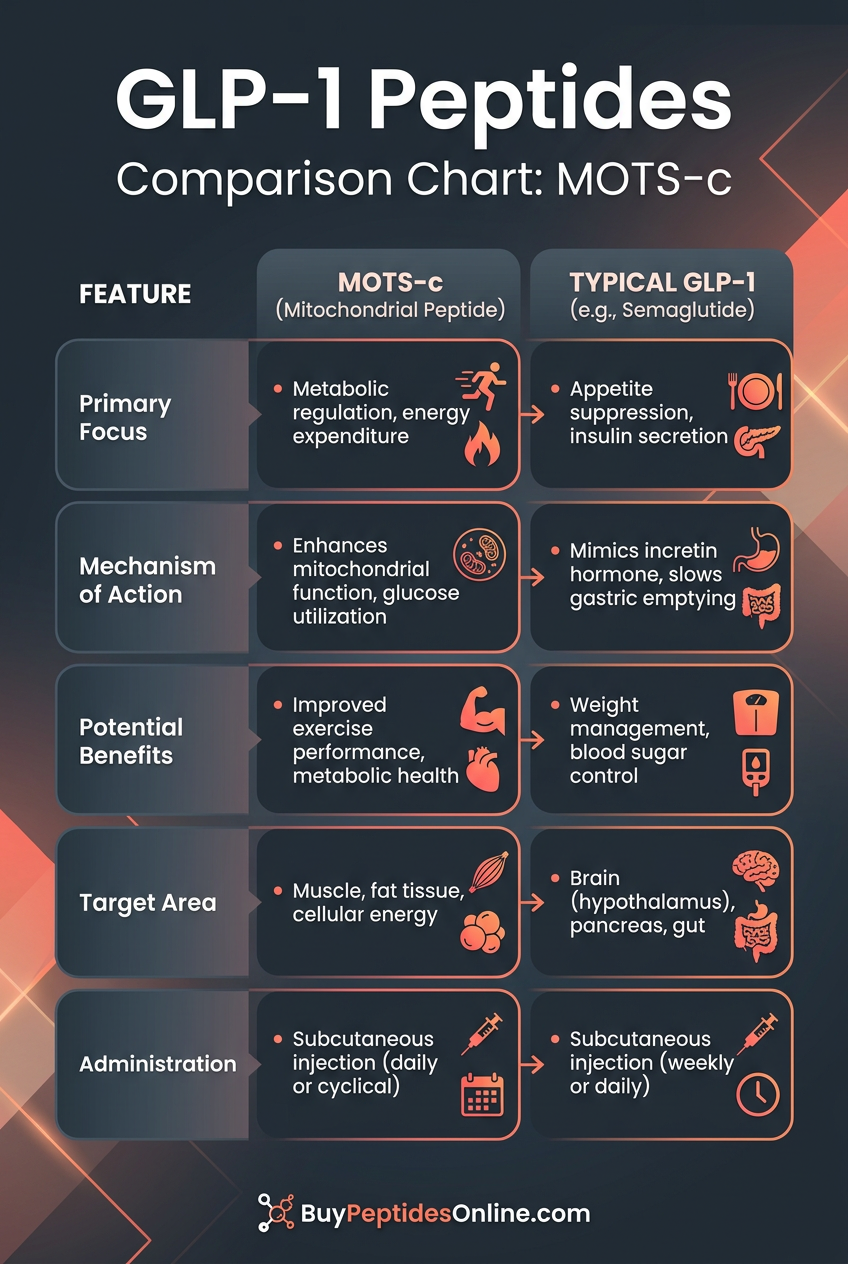
For individuals with significant metabolic dysfunction, combining MOTS-c with semaglutide (a GLP-1 receptor agonist) creates comprehensive metabolic improvement.
Complementary mechanisms:
MOTS-c: Enhances cellular glucose uptake and fat oxidation
Semaglutide: Improves insulin secretion, slows gastric emptying, reduces appetite
Protocol considerations:
Semaglutide: Follow standard titration protocol (0.25 mg weekly, increasing to therapeutic dose)
MOTS-c: 4-6 mg subcutaneous, 3x per week
Timing: Separate injections by at least 2 hours to avoid injection site reactions
Duration: Long-term protocol with medical supervision
Clinical rationale: This combination addresses multiple aspects of metabolic syndrome:
Peripheral insulin resistance: (MOTS-c)
Pancreatic β-cell function: (semaglutide)
Central appetite regulation: (semaglutide)
Cellular energy metabolism: (MOTS-c)
Preliminary data from ongoing studies suggest this combination may produce superior HbA1c reduction and weight loss compared to either compound alone.
Safety Deep Dive: Risk Assessment and Mitigation
Common Side Effects: Frequency and Management
MOTS-c demonstrates an excellent safety profile in research studies, with most adverse effects being mild and transient.
Injection site reactions (15-25% incidence):
Symptoms: Mild redness, swelling, or itching at injection site
Duration: 2-6 hours post-injection
Management: Rotate injection sites, use smaller gauge needles, apply ice if needed
Prevention: Proper injection technique, allow peptide to reach room temperature before injection
Transient hypoglycemia (8-12% incidence):
Symptoms: Mild dizziness, shakiness, or hunger 1-3 hours post-injection
Mechanism: Enhanced glucose uptake without corresponding insulin reduction
Management: Consume small amounts of fast-acting carbohydrates if symptomatic
Prevention: Avoid injecting in fasted state initially, monitor blood glucose
Gastrointestinal effects (5-10% incidence):
Symptoms: Mild nausea, occasionally loose stools
Duration: Usually resolves within first week of use
Management: Take with small amounts of food, reduce dose temporarily if needed
Pattern: More common with higher doses or rapid dose escalation
Fatigue or energy fluctuations (3-8% incidence):
Symptoms: Initial fatigue followed by energy improvement
Timeline: Days 1-5, then sustained energy enhancement
Mechanism: Cellular adaptation to metabolic changes
Management: Adequate sleep, proper nutrition during adaptation period
Rare and Theoretical Risks
Metabolic overstimulation: While not reported in studies, theoretical concern exists about excessive AMPK activation leading to metabolic stress. Signs would include persistent fatigue, muscle weakness, or abnormal blood glucose patterns.
Mitochondrial dysfunction: Paradoxically, chronic overstimulation of mitochondrial pathways could theoretically lead to dysfunction. No cases reported, but long-term studies are limited.
Immune reactions: As with any peptide, allergic reactions are theoretically possible but haven't been reported in MOTS-c studies. This likely reflects the peptide's endogenous nature.
Drug interactions: MOTS-c could theoretically enhance effects of:
Diabetes medications: (risk of hypoglycemia)
Blood pressure medications: (additive effects through improved insulin sensitivity)
Stimulants: (potential for overstimulation)
Contraindications and Precautions
Absolute contraindications:
Type 1 diabetes: without careful medical supervision (risk of unpredictable glucose effects)
Severe kidney disease: (unknown clearance mechanisms)
Pregnancy or breastfeeding: (no safety data available)
Known allergy: to any component
Relative contraindications:
Hypoglycemic disorders: (enhanced glucose uptake could worsen hypoglycemia)
Severe cardiac disease: (metabolic changes could stress compromised cardiovascular system)
Active cancer: (theoretical concern about metabolic effects on tumor cells)
Eating disorders: (could complicate relationship with food and metabolism)
Special populations:
Elderly users (65+ years): Start with lower doses (2-3 mg) due to potentially enhanced sensitivity and slower adaptation.
Athletes: Consider competition regulations and testing protocols. While MOTS-c isn't currently banned, this could change.
Diabetics: Requires close glucose monitoring and potential medication adjustments. Work with healthcare providers familiar with peptide therapy.
Monitoring recommendations:
Baseline: Complete metabolic panel, HbA1c, lipid profile
4 weeks: Glucose tolerance test, basic metabolic panel
12 weeks: Comprehensive metabolic panel, inflammatory markers
Ongoing: Annual comprehensive evaluation for long-term users
Compared to Alternatives: The Competitive Landscape
MOTS-c vs. AICAR: Exercise Mimetics Face-Off
AICAR (5-Aminoimidazole-4-carboxamide ribonucleoside) is often considered MOTS-c's closest competitor in the exercise mimetic category.
| Feature | MOTS-c | AICAR |
|---|---|---|
| Mechanism | Mitochondrial-derived, AMPK activation | Direct AMPK activation |
| Molecular Weight | 2,174 Da | 338 Da |
| Half-life | 2-4 hours | 30-60 minutes |
| Potency | Active at 5-10 mg | Requires 500+ mg |
| Side Effects | Minimal, transient | Significant at therapeutic doses |
| Cost | Moderate ($3-5/mg) | High ($10-15/mg therapeutic dose) |
| Research Depth | Growing rapidly | Extensive but mixed results |
| Bioavailability | Good (subcutaneous) | Poor (oral), good (injection) |
| Specificity | Metabolic tissues | Broad, less specific |
Efficacy comparison: In head-to-head studies, MOTS-c shows superior tolerability with comparable metabolic effects. AICAR requires much higher doses and causes significant gastrointestinal side effects in many users.
Safety profile: AICAR carries warnings about potential cardiac effects and cellular toxicity at high doses. MOTS-c's endogenous nature provides a significant safety advantage.
MOTS-c vs. Metformin: Natural vs. Pharmaceutical
Metformin, the world's most prescribed diabetes medication, shares some mechanisms with MOTS-c through AMPK activation.
| Feature | MOTS-c | Metformin |
|---|---|---|
| AMPK Activation | Direct metabolic signaling | Indirect via mitochondrial inhibition |
| Exercise Enhancement | Significant | Moderate |
| Fat Loss | Pronounced | Mild to moderate |
| Insulin Sensitivity | Marked improvement | Good improvement |
| Longevity Effects | Promising early data | Established in multiple studies |
| Side Effects | Minimal | GI upset common, lactic acidosis rare |
| Administration | Injection 3x/week | Oral daily/twice daily |
| Cost | Higher ($100-200/month) | Lower ($10-30/month) |
| Availability | Research/peptide clinics | Prescription medication |
Unique advantages of MOTS-c:
Exercise performance enhancement: beyond what metformin provides
Direct mitochondrial benefits: without the metabolic stress metformin causes
No gastrointestinal side effects: that limit metformin tolerance
Potential for cycling: rather than continuous use
When metformin might be preferred:
Established diabetes: requiring pharmaceutical intervention
Cost considerations: for long-term use
Preference for oral administration
Extensive safety database: for clinical populations
MOTS-c vs. Thyroid Hormones: Metabolic Enhancement Approaches
T3/T4 supplementation represents a different approach to metabolic enhancement, working through thyroid hormone pathways.
| Feature | MOTS-c | Thyroid Hormones (T3/T4) |
|---|---|---|
| Mechanism | AMPK-mediated cellular changes | Transcriptional metabolic upregulation |
| Onset | Hours to days | Days to weeks |
| Metabolic Rate | Moderate increase | Significant increase |
| Muscle Preservation | Enhanced | Risk of catabolism |
| Cardiovascular Effects | Neutral to positive | Potential strain at high doses |
| Reversibility | Rapid (hours) | Slow (weeks) |
| Natural Production | Doesn't suppress | Suppresses endogenous production |
| Side Effect Profile | Minimal | Significant at supraphysiologic doses |
Complementary potential: Some advanced protocols combine low-dose T3 with MOTS-c for synergistic metabolic enhancement, though this requires careful medical supervision.
For researchers interested in comparing these compounds directly, our peptide database includes detailed comparison tools and AICAR information for side-by-side analysis.
What's Coming Next: The Future of MOTS-c Research
Human Clinical Trials: From Promise to Proof
MOTS-c is advancing through multiple phases of human research, with several trials providing crucial safety and efficacy data.
Phase I Safety Study (USC, 2023-2024): This dose-escalation study in healthy volunteers is examining MOTS-c doses from 2-20 mg administered subcutaneously. Primary endpoints include safety, tolerability, and pharmacokinetics. Preliminary results suggest excellent tolerability up to 15 mg, with dose-dependent metabolic improvements.
Diabetes Intervention Trial (Multiple Centers, 2024-2025): A randomized, placebo-controlled study investigating MOTS-c in Type 2 diabetes patients. The trial is testing 5 mg and 10 mg doses three times weekly for 12 weeks, with primary endpoints of HbA1c reduction and insulin sensitivity improvement.
Aging and Longevity Study (NIH-funded, 2024-2026): This groundbreaking study is examining MOTS-c's effects on biomarkers of aging in healthy adults over 50. Participants receive 7.5 mg MOTS-c twice weekly for 24 weeks, with comprehensive assessment of telomere length, inflammatory markers, metabolic function, and physical performance.
Athletic Performance Trial (Sports Medicine Centers, 2024): Professional and amateur athletes are participating in studies examining MOTS-c's ergogenic effects. The protocol uses 6 mg MOTS-c pre-workout for 8 weeks, measuring VO2 max, time to exhaustion, body composition, and recovery markers.
Emerging Applications: Beyond Metabolism
Neurodegeneration research is exploring MOTS-c's potential in Alzheimer's disease and Parkinson's disease. The peptide's ability to enhance mitochondrial function and reduce neuroinflammation makes it a candidate for neurodegenerative conditions.
Cancer metabolism studies are investigating whether MOTS-c can normalize tumor cell metabolism without promoting growth. Early research suggests the peptide might help cancer patients maintain muscle mass during treatment while potentially sensitizing tumors to conventional therapies.
Cardiovascular applications are being explored, particularly MOTS-c's effects on endothelial function and cardiac metabolism. Studies in heart failure models show promising improvements in cardiac efficiency and exercise tolerance.
Fertility research is examining MOTS-c's role in reproductive aging. The peptide's mitochondrial effects may help preserve egg quality and sperm function with aging.
Unanswered Questions: Research Priorities
Optimal dosing in humans remains unclear. While animal studies provide guidance, human metabolism differences require specific dose-response studies. Questions include:
Minimum effective dose: for metabolic benefits
Maximum safe dose: for long-term use
Individual variability: in response and optimal dosing
Age-related dosing: adjustments
Long-term safety data is limited to animal studies. Key questions include:
Effects of chronic use: (>1 year) in humans
Potential for tolerance: or receptor desensitization
Interactions with aging: and age-related diseases
Safety in special populations: (elderly, diabetic, cardiac patients)
Mechanism optimization research is exploring:
Combination therapies: that enhance MOTS-c effects
Delivery methods: beyond subcutaneous injection
Tissue-specific targeting: to maximize benefits
Biomarker development: for monitoring response
Genetic factors influencing MOTS-c response need investigation:
Mitochondrial DNA variations: affecting peptide activity
Nuclear gene polymorphisms: modulating response
Personalized dosing: based on genetic profiles
Population differences: in efficacy and safety
Regulatory Pathway: From Research to Medicine
MOTS-c faces the typical challenges of peptide drug development. The FDA has granted research exemptions for ongoing studies, and the peptide may qualify for fast-track designation for metabolic diseases if current trials succeed.
Patent landscape is complex, with multiple entities holding rights to different aspects of MOTS-c research and applications. This may affect commercial development timelines and pricing.
Manufacturing challenges include developing stable formulations, scalable production, and quality control methods for clinical-grade MOTS-c.
The regulatory pathway likely involves:
1. Completion of Phase I safety studies (2024)
2. Phase II efficacy trials in specific indications (2025-2026)
3. Phase III pivotal studies if Phase II succeeds (2027-2029)
4. FDA review and approval process (2029-2030)
For researchers tracking these developments, our AI research assistant provides real-time updates on MOTS-c studies and regulatory progress.
Key Takeaways: The MOTS-c Revolution
• MOTS-c represents a paradigm shift in metabolic enhancement—the first naturally occurring peptide that authentically mimics exercise at the cellular level through AMPK activation and metabolic reprogramming.
• Research-backed efficacy spans multiple applications: 77% reduction in diet-induced weight gain, 45% improvement in exercise endurance, 40% enhancement in glucose tolerance, and 12% lifespan extension in animal studies.
• Optimal dosing protocols center around 5-7 mg subcutaneous injections 3-4 times weekly, with beginners starting at 2-3 mg every other day and advanced users potentially using up to 10 mg daily under supervision.
• Safety profile exceeds expectations for a metabolic enhancer—minimal side effects limited primarily to mild injection site reactions and occasional transient hypoglycemia, with no serious adverse events reported in research studies.
• Mechanism uniqueness sets MOTS-c apart from alternatives: unlike AICAR's direct AMPK activation or metformin's mitochondrial inhibition, MOTS-c works as an endogenous metabolic signal that cells recognize and respond to naturally.
• Stacking synergies with humanin provide enhanced longevity effects, while combinations with growth hormone secretagogues optimize body composition and performance benefits beyond either approach alone.
• Exercise enhancement goes beyond simple fat burning—MOTS-c improves VO2 max, extends time to exhaustion, accelerates recovery, and enhances training adaptations through multiple pathways.
• Longevity applications show the most promise for long-term health optimization, with genetic studies linking MOTS-c variants to exceptional longevity in human centenarian populations.
• Current limitations include limited human data, high cost compared to pharmaceutical alternatives, and injection-only administration, though ongoing trials are addressing these concerns.
• Future potential extends far beyond metabolism into neurodegeneration, cardiovascular health, cancer treatment support, and fertility preservation as research expands into new therapeutic areas.
MOTS-c isn't just another metabolic peptide—it's a glimpse into the future of precision medicine, where we can harness the body's own regulatory systems to optimize health, performance, and longevity. For researchers ready to explore this revolutionary compound, comprehensive information and sourcing options are available through our MOTS-c database entry and expert consultation services.
---
---
Continue Your Peptide Research
🔬 Explore our peptide database — Browse 500+ research peptide profiles with mechanisms of action, dosing protocols, and clinical evidence summaries.
🤖 Have questions? — Ask PeptideAI, our research assistant, for personalized peptide guidance based on the latest studies.
📚 Want more guides? — Browse all research articles covering peptide science, comparisons, and buying guides.
Related Articles on BuyPeptidesOnline.com
Continue your research with these in-depth guides: