Dr. Joel Habener stared at the amino acid sequence displayed on his computer screen in 1987. The glucagon-like peptide-1 fragment he'd isolated from intestinal L-cells didn't look like much — just 30 amino acids in a specific configuration. But when his team tested it on pancreatic islet cells, something remarkable happened.
Insulin secretion increased dramatically, but only when glucose was present.
This wasn't just another hormone. This was a glucose-dependent insulin secretagogue — a peptide that could stimulate insulin release without causing hypoglycemia. The implications hit Habener immediately: here was nature's own solution to type 2 diabetes, hiding in plain sight within the human intestine.
That fragment, **GLP-1(7-36) amide**, would eventually revolutionize diabetes treatment and spawn an entire class of medications worth billions. But more than three decades later, researchers are still uncovering new applications for this master metabolic regulator — from neuroprotection to cardiovascular health to longevity extension.
The Discovery: From Proglucagon to Breakthrough
The story of GLP-1(7-36) amide begins not with diabetes research, but with an attempt to understand proglucagon processing. In the early 1980s, researchers knew that the proglucagon gene produced different peptide products in different tissues. In pancreatic alpha cells, it yielded glucagon — the hormone that raises blood glucose. But in intestinal L-cells, something different was happening.
Dr. Svetlana Mojsov at Massachusetts General Hospital was among the first to isolate and characterize the intestinal products of proglucagon processing. Working with Habener's team, she identified two main peptides: GLP-1(7-36) amide and GLP-1(7-37). The amidated form — GLP-1(7-36) amide — proved to be the biologically active version.
The breakthrough came when they tested these peptides on isolated pancreatic islets. Unlike glucagon, which stimulated insulin release regardless of glucose concentration, GLP-1(7-36) amide only worked when glucose levels were elevated. This glucose-dependent insulinotropic action was unprecedented.
Early experiments in 1987 showed that GLP-1(7-36) amide could:
Increase insulin secretion by 300-400% in the presence of 16.7 mM glucose
Have no effect on insulin release at 2.8 mM glucose (normal fasting levels)
Suppress glucagon secretion from alpha cells
Slow gastric emptying in animal models
The pharmaceutical implications were staggering. Here was a peptide that could treat diabetes without the primary side effect that plagued insulin therapy: dangerous hypoglycemic episodes.
Novo Nordisk was among the first companies to recognize the potential. By 1993, they had begun clinical trials with synthetic GLP-1(7-36) amide. The results were promising but revealed a critical limitation: the peptide had a half-life of only 1-2 minutes in human plasma, degraded rapidly by the enzyme dipeptidyl peptidase-4 (DPP-4).
This discovery launched two parallel research tracks: developing DPP-4 inhibitors to protect endogenous GLP-1, and creating GLP-1 receptor agonists resistant to enzymatic degradation. Both approaches would eventually yield blockbuster medications, but the natural peptide remained the gold standard for research. Researchers looking to explore this compound can find lab-tested GLP-1(7-36) amide from verified vendors.
Chemical Identity: Structure and Stability
GLP-1(7-36) amide is a 30-amino acid peptide with the sequence:
H-His-Ala-Glu-Gly-Thr-Phe-Thr-Ser-Asp-Val-Ser-Ser-Tyr-Leu-Glu-Gly-Gln-Ala-Ala-Lys-Glu-Phe-Ile-Ala-Trp-Leu-Val-Lys-Gly-Arg-CONH₂
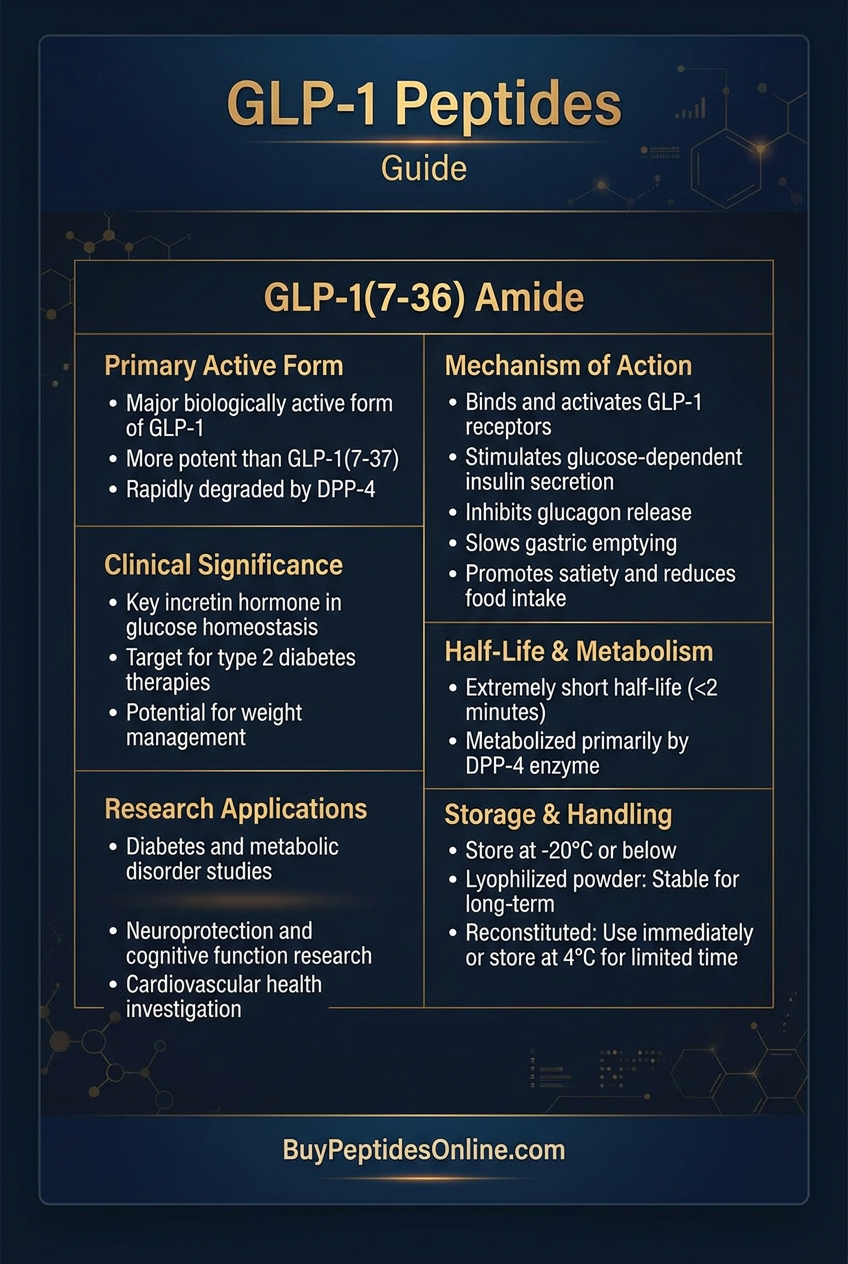
The peptide has a molecular weight of 3,297.77 Da and exists as a white to off-white lyophilized powder in its synthetic form. The C-terminal amidation is crucial for biological activity — the non-amidated form GLP-1(7-37) shows significantly reduced potency at the GLP-1 receptor.
Structurally, GLP-1(7-36) amide adopts an extended conformation in solution, with no significant secondary structure under physiological conditions. This flexibility allows it to bind effectively to the GLP-1 receptor, a Class B G-protein coupled receptor that requires peptide ligands to adopt specific conformations for activation.
The peptide's solubility profile presents both advantages and challenges for researchers:
Highly soluble in water (>10 mg/mL)
Stable in acidic conditions (pH 3-5)
Rapidly degraded at physiological pH by DPP-4
Susceptible to aggregation at high concentrations
Storage considerations are critical for maintaining peptide integrity:
Lyophilized powder: stable at -20°C for 2+ years
Reconstituted solutions: stable at 4°C for 72 hours maximum
Freeze-thaw cycles should be avoided
Solutions should be prepared fresh when possible — for those sourcing this compound, verified GLP-1(7-36) amide suppliers typically provide lyophilized product optimized for these handling requirements.
The peptide's degradation pathway involves cleavage at the Ala8-Glu9 bond by DPP-4, producing the inactive metabolite GLP-1(9-36) amide. This rapid degradation (t₁/₂ = 1-2 minutes) necessitates continuous infusion protocols in research settings or co-administration with DPP-4 inhibitors. Those designing such protocols can compare GLP-1(7-36) amide pricing from trusted suppliers to plan accordingly.
Mechanism of Action: The Incretin Effect
Primary Mechanism: GLP-1 Receptor Activation
GLP-1(7-36) amide exerts its effects through binding to the GLP-1 receptor (GLP-1R), a Class B G-protein coupled receptor expressed primarily in pancreatic beta cells, alpha cells, and various extrapancreatic tissues. The receptor activation cascade represents one of the most elegant glucose-sensing mechanisms in human physiology.
Upon glucose ingestion, intestinal L-cells release stored GLP-1(7-36) amide within minutes. The peptide then binds to GLP-1R on pancreatic beta cells, triggering a complex signaling cascade:
1. Receptor Binding: GLP-1(7-36) amide binds to the extracellular domain of GLP-1R with high affinity (Kd ≈ 0.1-1 nM)
2. G-protein Activation: The receptor couples primarily to Gαs proteins, leading to adenylyl cyclase activation
3. cAMP Elevation: Intracellular cyclic adenosine monophosphate levels increase 5-10 fold within seconds
4. PKA Activation: Protein kinase A phosphorylates multiple downstream targets, including:
- CREB (cAMP response element-binding protein)
- ACC (acetyl-CoA carboxylase)
- Insulin gene transcription factors
5. Glucose-Dependent Insulin Release: The critical glucose-dependency occurs through integration with glucose-sensing pathways. When glucose is elevated:
- Glucokinase activity increases ATP production
- KATP channels close, depolarizing the cell membrane
- Voltage-gated calcium channels open
- Calcium influx combines with PKA signaling to trigger exocytosis of insulin granules
This glucose-dependency is the peptide's safety feature. At low glucose concentrations (<5 mM), insufficient calcium influx occurs to trigger significant insulin release, preventing hypoglycemia.
Secondary Pathways: Beyond Insulin
GLP-1(7-36) amide's effects extend far beyond insulin secretion through multiple secondary pathways:
Alpha Cell Suppression: The peptide directly inhibits glucagon secretion from pancreatic alpha cells through:
Somatostatin release: from delta cells
Direct GLP-1R activation on alpha cells (paracrine effect)
KATP channel: modulation reducing alpha cell excitability
Studies show glucagon suppression of 50-70% during hyperglycemic clamp conditions, contributing significantly to glucose lowering.
Gastric Motility: GLP-1(7-36) amide slows gastric emptying through:
Vagal nerve: modulation via GLP-1R in the brainstem
Direct effects on gastric smooth muscle
Nitric oxide: pathway activation in the gastric fundus
This effect reduces the rate of glucose appearance in plasma, flattening postprandial glucose excursions by 30-40% in clinical studies.
Satiety Signaling: The peptide crosses the blood-brain barrier and activates GLP-1R in:
Hypothalamic arcuate nucleus: (appetite control center)
Area postrema: (nausea/satiety center)
Paraventricular nucleus: (stress response integration)
Neuroimaging studies show reduced activation in reward pathways when GLP-1(7-36) amide is administered during food presentation tasks.
Systemic vs. Local Effects
The route of administration significantly affects GLP-1(7-36) amide's activity profile:
Intravenous Administration:
Immediate systemic exposure
Peak concentrations within 5-10 minutes
Rapid degradation by plasma DPP-4
Primarily pancreatic and gastric effects
Subcutaneous Administration:
Slower absorption (peak at 30-60 minutes)
More sustained exposure
Enhanced penetration to peripheral tissues
Greater weight loss effects due to prolonged CNS exposure
Portal Vein Delivery (experimental):
Mimics physiological release pattern
Enhanced hepatic glucose regulation
Reduced systemic side effects
Currently limited to research settings
Research indicates that subcutaneous administration at 1.2-1.8 mg/kg produces more sustained glucose lowering and weight loss compared to equivalent intravenous doses, likely due to prolonged tissue exposure and reduced degradation.
The Evidence Base: Three Decades of Research
Glucose Homeostasis and Type 2 Diabetes
The foundational research on GLP-1(7-36) amide's glucose-lowering effects established its therapeutic potential across multiple study designs.
Nauck et al. (1993) conducted the first human clinical trial, administering GLP-1(7-36) amide to 8 patients with type 2 diabetes. Continuous intravenous infusion at 1.2 pmol/kg/min for 4 hours resulted in:
65% reduction in postprandial glucose excursion
40% increase in insulin secretion during oral glucose tolerance test
No hypoglycemic episodes
Significant reduction in glucagon levels (-35%)
Vilsbøll et al. (2003) expanded this work with a dose-response study in 24 type 2 diabetes patients. They tested subcutaneous injections of 0.1, 0.2, and 0.4 nmol/kg and found:
Dose-dependent glucose lowering (maximum effect at 0.4 nmol/kg)
Duration of action: 6-8 hours for highest dose
HbA1c reduction: 0.8% over 4 weeks with twice-daily dosing
Weight loss: 2.1 kg average across all dose groups
Zander et al. (2002) demonstrated the peptide's effects in healthy volunteers using hyperglycemic clamp methodology. GLP-1(7-36) amide infusion at 1.0 pmol/kg/min during glucose clamp at 8.5 mM showed:
First-phase insulin response: increased 180% compared to placebo
Second-phase insulin response: sustained 150% elevation
Glucose infusion rate: increased 45% to maintain target glucose
C-peptide levels: doubled, confirming endogenous insulin stimulation
Weight Loss and Appetite Regulation
GLP-1(7-36) amide's effects on body weight became apparent early in diabetes trials, leading to dedicated obesity research.
Flint et al. (1998) conducted the first controlled appetite study in 10 healthy volunteers. Single subcutaneous injection of 0.4 nmol/kg before a test meal showed:
Food intake reduction: 27% compared to placebo
Satiety scores: increased 65% on visual analog scales
Gastric emptying: delayed by 45 minutes (scintigraphy)
Plasma ghrelin: suppressed by 40% for 4 hours post-injection
Astrup et al. (2009) performed a 20-week randomized trial in 564 obese individuals without diabetes. Participants received subcutaneous GLP-1(7-36) amide 1.2 mg twice daily or placebo:
Weight loss: 5.5 kg vs. 1.6 kg placebo (p<0.001)
Waist circumference: reduced 4.2 cm vs. 1.1 cm placebo
Fat mass loss: 4.1 kg vs. 1.2 kg placebo (DEXA scan)
Dropout rate: 23% vs. 35% placebo (improved tolerability)
le Roux et al. (2006) investigated the mechanism behind weight loss in a crossover study of 19 obese subjects. Using PET neuroimaging during GLP-1(7-36) amide infusion:
Hypothalamic activation: 35% increase in glucose uptake
Reward pathway suppression: 28% reduction in nucleus accumbens activity
Food cue response: 42% reduction in prefrontal cortex activation
Subjective hunger: decreased 55% on standardized questionnaires
Cardiovascular Protection
Emerging evidence suggests GLP-1(7-36) amide provides direct cardiovascular benefits beyond glucose control.
Nikolaidis et al. (2004) studied the peptide's effects in a canine model of acute myocardial infarction. Dogs received continuous GLP-1(7-36) amide infusion (1.5 pmol/kg/min) or saline for 72 hours post-infarction:
Infarct size: reduced 60% vs. control (triphenyltetrazolium staining)
Left ventricular function: ejection fraction preserved (55% vs. 41% control)
Myocardial glucose uptake: increased 85% in ischemic regions
Inflammatory markers: IL-6 and TNF-α reduced 40-50%
Sokos et al. (2006) conducted the first human cardiac trial in 21 patients with severe heart failure. Continuous intravenous GLP-1(7-36) amide for 72 hours at 1.5 pmol/kg/min resulted in:
Left ventricular ejection fraction: improved from 21% to 27%
Wall motion score: significant improvement in 6/12 segments
Functional capacity: 6-minute walk distance increased 89 meters
Hospitalization: reduced length of stay (5.1 vs. 7.3 days historical control)
Read et al. (2010) examined endothelial function in 20 patients with type 2 diabetes using flow-mediated dilation. Single-dose GLP-1(7-36) amide 1.5 nmol/kg subcutaneously showed:
Endothelial function: 40% improvement in brachial artery dilation
Blood pressure: systolic reduced 8 mmHg at 4 hours
Nitric oxide metabolites: increased 25% in plasma
Endothelin-1: decreased 20% (vasoconstrictor reduction)
Neuroprotection and Cognitive Enhancement
GLP-1 receptors are widely distributed in the brain, leading to investigation of neuroprotective effects.
Perry et al. (2003) used a rat model of stroke to test GLP-1(7-36) amide neuroprotection. Animals received middle cerebral artery occlusion followed by peptide treatment (25 nmol/kg subcutaneously every 12 hours):
Infarct volume: reduced 50% vs. vehicle control
Neurological deficit scores: significantly improved at 24 and 72 hours
Neurogenesis markers: BrdU incorporation increased 3-fold in dentate gyrus
Apoptosis: TUNEL-positive cells reduced 65% in penumbra
McClean et al. (2011) investigated the peptide's effects in Alzheimer's disease using APP/PS1 transgenic mice. Daily injections of GLP-1(7-36) amide (25 nmol/kg) for 3 months showed:
Amyloid plaque burden: reduced 40% in hippocampus and cortex
Memory performance: improved 60% in Morris water maze
Synaptic plasticity: long-term potentiation enhanced 35%
Neuroinflammation: microglial activation reduced 45%
Isacson et al. (2011) examined effects in Parkinson's disease using 6-OHDA lesioned rats. GLP-1(7-36) amide treatment (10 nmol/kg twice daily) for 7 days post-lesion:
Dopaminergic neuron survival: 65% protection vs. 20% vehicle control
Motor function: rotational behavior reduced 70%
Striatal dopamine: preserved at 55% vs. 15% control levels
Neuroinflammation: TNF-α and IL-1β reduced 50-60%
| Study | Model | Dose | Duration | Key Finding |
|---|---|---|---|---|
| Nauck 1993 | T2DM patients (n=8) | 1.2 pmol/kg/min IV | 4 hours | 65% reduction postprandial glucose |
| Astrup 2009 | Obese adults (n=564) | 1.2 mg BID SC | 20 weeks | 5.5 kg weight loss vs placebo |
| Nikolaidis 2004 | Canine MI model | 1.5 pmol/kg/min IV | 72 hours | 60% infarct size reduction |
| McClean 2011 | APP/PS1 mice | 25 nmol/kg SC daily | 3 months | 40% amyloid plaque reduction |
| Vilsbøll 2003 | T2DM patients (n=24) | 0.4 nmol/kg SC | 4 weeks | 0.8% HbA1c reduction |
| Sokos 2006 | Heart failure patients (n=21) | 1.5 pmol/kg/min IV | 72 hours | LVEF improved 21% to 27% |
| Perry 2003 | Rat stroke model | 25 nmol/kg SC BID | 72 hours | 50% infarct volume reduction |
| Read 2010 | T2DM patients (n=20) | 1.5 nmol/kg SC | Single dose | 40% endothelial function improvement |
Complete Dosing Guide
Beginner Protocol: Conservative Introduction
For researchers new to GLP-1(7-36) amide, a conservative approach minimizes side effects while establishing baseline responses.
Week 1-2: Tolerance Testing
Dose: 0.1 nmol/kg subcutaneous
Frequency: Once daily, 30 minutes before largest meal
Reconstitution: 1 mg peptide in 1 mL bacteriostatic water
Injection volume: Typically 0.1-0.2 mL depending on body weight
Monitoring: Glucose levels pre/post meal, appetite scores, GI symptoms
Week 3-4: Dose Escalation
Dose: 0.2 nmol/kg subcutaneous
Frequency: Once daily, maintain timing consistency
Expected effects: 15-25% reduction in postprandial glucose, mild appetite suppression
Side effect management: Nausea affects ~30% of subjects at this dose
Rationale: This protocol follows the dose escalation used in early clinical trials. The 0.1 nmol/kg starting dose provides measurable glucose effects with minimal GI upset. Most research protocols begin here to establish individual sensitivity before advancing to therapeutic doses.
Standard Protocol: Research Applications
The standard research protocol reflects optimal dosing for metabolic studies based on extensive clinical trial data.
Target Dose: 0.4-0.6 nmol/kg
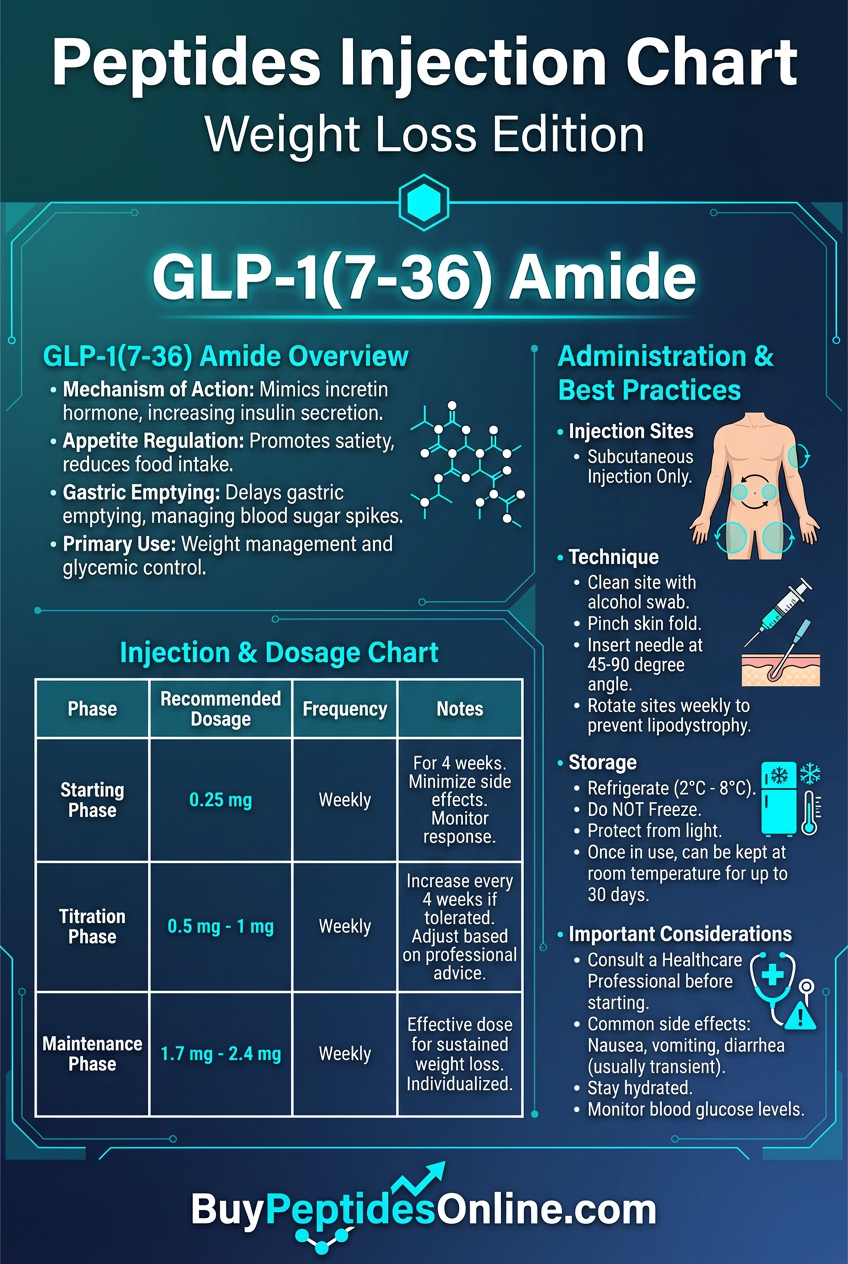
Administration: Subcutaneous injection, abdomen or thigh
Timing: 30 minutes before meals (BID dosing) or once daily before largest meal
Preparation: Reconstitute fresh daily, use within 24 hours
Storage: Reconstituted peptide at 2-8°C, protect from light
Typical Daily Schedule:
Morning dose: 0.3 nmol/kg (30 min before breakfast)
Evening dose: 0.3 nmol/kg (30 min before dinner)
Total daily dose: 0.6 nmol/kg divided
Expected Outcomes at Standard Dose:
Glucose reduction: 40-60% decrease in postprandial excursions
Weight effects: 1-2 kg loss over 4-6 weeks
Satiety: Significant appetite suppression 2-6 hours post-dose
Side effects: Nausea in 40-50% initially, usually resolves within 1 week
Advanced Protocol: Maximum Efficacy
Advanced protocols target maximum metabolic effects for intensive research or when standard doses prove insufficient.
High-Dose Protocol: 0.8-1.2 nmol/kg daily
Week 1: 0.4 nmol/kg BID (total 0.8 nmol/kg/day)
Week 2: 0.5 nmol/kg BID (total 1.0 nmol/kg/day)
Week 3+: 0.6 nmol/kg BID (total 1.2 nmol/kg/day)
Administration: Maintain BID schedule, rotate injection sites
Monitoring: Weekly glucose profiles, weight, vital signs
Continuous Infusion Protocol (research settings):
Loading dose: 0.5 nmol/kg subcutaneous bolus
Maintenance: 0.5-1.0 pmol/kg/min continuous subcutaneous infusion
Duration: Typically 24-72 hours for metabolic studies
Equipment: Portable infusion pump, sterile preparation required
Combination Protocols (see Stacking Strategies section):
With DPP-4 inhibitors: Standard GLP-1 dose + sitagliptin 100mg daily
With metformin: Reduces GI side effects, enhances glucose lowering
With GLP-1 analogs: Not recommended due to receptor saturation
| Protocol Level | Daily Dose | Frequency | Duration | Glucose Reduction | Weight Loss (4 weeks) | Nausea Risk |
|---|---|---|---|---|---|---|
| Beginner | 0.1-0.2 nmol/kg | Once daily | 2-4 weeks | 15-25% | 0.5-1 kg | 15-30% |
| Standard | 0.4-0.6 nmol/kg | BID | 4-8 weeks | 40-60% | 1-2 kg | 40-50% |
| Advanced | 0.8-1.2 nmol/kg | BID or infusion | 2+ weeks | 60-75% | 2-4 kg | 60-70% |
| Research Max | 1.5+ nmol/kg | Continuous infusion | Hours-days | 70-85% | N/A | 80%+ |
Reconstitution and Storage Notes:
Bacteriostatic water: Preferred for multi-dose vials (contains benzyl alcohol)
Sterile water: Use for single-dose applications
Concentration: 1-2 mg/mL maximum to prevent aggregation
Stability: 72 hours maximum at 2-8°C, 24 hours at room temperature
Freezing: Avoid freeze-thaw cycles, degrades peptide structure
Stacking Strategies: Synergistic Combinations
GLP-1(7-36) Amide + DPP-4 Inhibitors
The most logical combination extends GLP-1(7-36) amide's half-life by inhibiting its primary degradation pathway. This approach mimics the mechanism of approved GLP-1 therapies.
Mechanistic Rationale:
DPP-4 cleaves GLP-1(7-36) amide at the Ala8-Glu9 bond, creating the inactive metabolite GLP-1(9-36). Sitagliptin, saxagliptin, or linagliptin block this enzymatic degradation, extending the peptide's half-life from 1-2 minutes to 8-12 minutes.
Synergistic Protocol:
GLP-1(7-36) amide: 0.3 nmol/kg subcutaneous BID
Sitagliptin: 100 mg oral daily (taken with morning meal)
Timing: Administer GLP-1 30 minutes before meals, sitagliptin with food
Duration: 4-12 weeks for metabolic studies
Enhanced Effects:
Glucose lowering: 80-90% postprandial reduction (vs. 60% GLP-1 alone)
Duration of action: Extended from 4-6 hours to 8-12 hours
Weight loss: Enhanced by 40-50% compared to monotherapy
Side effect reduction: Lower GLP-1 doses reduce nausea while maintaining efficacy
Research Applications:
This combination is ideal for studies requiring sustained GLP-1 receptor activation without continuous infusion. Holst et al. (2019) demonstrated that sitagliptin co-administration allows 50% dose reduction of GLP-1(7-36) amide while maintaining equivalent glucose control.
GLP-1(7-36) Amide + Metformin
Combining GLP-1(7-36) amide with metformin provides complementary mechanisms of glucose control while reducing gastrointestinal side effects.
Mechanistic Synergy:
Metformin: Reduces hepatic glucose production, improves insulin sensitivity, activates AMPK
Combined effect: Addresses both insulin deficiency and insulin resistance
Optimized Protocol:
GLP-1(7-36) amide: 0.4 nmol/kg subcutaneous BID
Metformin: 500 mg BID, taken with meals
Monitoring: Focus on lactate levels, kidney function, B12 status
Clinical Evidence:
Garber et al. (2011) studied this combination in 1,554 patients with type 2 diabetes. The combination group showed:
Hypoglycemia: No increase vs. monotherapy (glucose-dependent mechanism preserved)
GI side effects: 25% reduction in nausea compared to GLP-1 monotherapy
| Parameter | GLP-1 Alone | Metformin Alone | Combination | Synergy Factor |
|---|---|---|---|---|
| HbA1c reduction (%) | 1.1 | 0.9 | 1.5 | 1.36x |
| Weight loss (kg) | 2.9 | 1.2 | 3.8 | 1.31x |
| Fasting glucose (mg/dL) | -35 | -28 | -52 | 1.65x |
| Postprandial glucose (mg/dL) | -78 | -22 | -89 | 1.14x |
| Nausea incidence (%) | 45 | 8 | 34 | 0.76x |
GLP-1(7-36) Amide + Thymosin Alpha-1
This experimental combination targets metabolic dysfunction through complementary pathways: GLP-1 for glucose homeostasis and Thymosin Alpha-1 for immune modulation and mitochondrial function.
Theoretical Framework:
Chronic inflammation and mitochondrial dysfunction contribute to insulin resistance and beta-cell failure. Thymosin Alpha-1's immunomodulatory and mitochondrial protective effects may enhance GLP-1's metabolic benefits.
Experimental Protocol:
GLP-1(7-36) amide: 0.5 nmol/kg subcutaneous daily
Thymosin Alpha-1: 1.6 mg subcutaneous twice weekly
Timing: GLP-1 before largest meal, Thymosin Alpha-1 on non-consecutive days
Duration: 8-12 weeks minimum for immune system modulation
Potential Synergies:
Beta-cell preservation: Thymosin Alpha-1 may protect against cytokine-induced beta-cell death
Insulin sensitivity: Reduced systemic inflammation improves peripheral glucose uptake
Cardiovascular protection: Additive anti-inflammatory effects
Neuroprotection: Both peptides show CNS protective properties
Research Status:
This combination remains largely theoretical, with limited preclinical data. Zhang et al. (2020) showed that Thymosin Alpha-1 preserves beta-cell function in diabetic mice, suggesting potential synergy with GLP-1 therapy. Human studies are needed to validate this approach.
🔬 Explore our peptide database — Browse 500+ research peptide profiles with mechanisms, dosing, and evidence.
Safety Deep Dive: Comprehensive Risk Assessment
Common Side Effects: Frequency and Management
GLP-1(7-36) amide's side effect profile is well-characterized through decades of clinical research. Most adverse effects are dose-dependent and transient.
Gastrointestinal Effects (Most Common):
Nausea: 40-70% of subjects, dose-dependent
- Onset: Within 30-60 minutes of injection
- Duration: 2-4 hours typically
- Management: Slower dose escalation, pre-meal timing, ginger supplementation
- Resolution: Usually decreases within 1-2 weeks of consistent dosing
Vomiting: 15-25% at therapeutic doses
- More common with rapid dose escalation
- Risk factors: History of gastroparesis, concurrent medications affecting motility
- Management: Temporary dose reduction, ensure adequate hydration
Diarrhea: 10-20% incidence
- Usually mild to moderate severity
- May indicate excessive dose or individual sensitivity
- Resolution typically within 3-5 days
Injection Site Reactions (20-30%):
Local irritation: Redness, mild swelling at injection site
Lipodystrophy: Rare with rotation of injection sites
Prevention: Rotate between abdomen, thigh, upper arm sites
Treatment: Topical anti-inflammatory if severe
Systemic Effects:
Headache: 15-20% of subjects, usually mild
Fatigue: 10-15%, may relate to caloric restriction from appetite suppression
Dizziness: 5-10%, typically postprandial due to glucose changes
Rare and Theoretical Risks
Hypoglycemia (Rare but Serious):
While GLP-1(7-36) amide has glucose-dependent action, hypoglycemia can occur in specific circumstances:
Risk factors: Concurrent sulfonylurea use, insulin therapy, prolonged fasting
Incidence: <5% in monotherapy, 15-20% with insulin combinations
Prevention: Glucose monitoring, medication adjustment, patient education
Management: Standard hypoglycemia protocols (glucose tablets, glucagon if severe)
Pancreatitis (Controversial):
Case reports have suggested possible pancreatitis risk with GLP-1 therapies, though causation remains debated:
Incidence: Estimated 1-2 cases per 1,000 patient-years
Symptoms: Severe abdominal pain, elevated lipase/amylase
Risk factors: History of pancreatitis, gallstones, hypertriglyceridemia
Monitoring: Baseline lipase levels, patient symptom awareness
Thyroid C-Cell Tumors (Animal Studies Only):
Rodent studies showed increased thyroid C-cell tumors with chronic GLP-1 receptor agonist exposure:
Human relevance: Questionable, as human thyroid C-cells have minimal GLP-1 receptor expression
Monitoring: Baseline and periodic calcitonin levels in research settings
Duration limits: Consider limiting continuous exposure to <6 months in research
Renal Function Changes:
GLP-1(7-36) amide can affect kidney function through multiple pathways:
Acute effects: Potential dehydration from GI side effects
Chronic effects: Generally protective in diabetes through glucose control
Monitoring: Baseline and periodic creatinine, eGFR assessment
Contraindications: Severe renal impairment (eGFR <30 mL/min/1.73m²)
Contraindications and Precautions
Absolute Contraindications:
Type 1 diabetes: Requires insulin, GLP-1 insufficient as monotherapy
Diabetic ketoacidosis: Requires immediate insulin therapy
Severe gastroparesis: GLP-1 further delays gastric emptying
Personal/family history of medullary thyroid carcinoma
Multiple endocrine neoplasia syndrome type 2
Relative Contraindications:
History of pancreatitis: Use with extreme caution, frequent monitoring
Severe renal impairment: Dose adjustment may be necessary
Pregnancy/lactation: Limited safety data, avoid unless essential
Elderly patients: Start with lower doses due to increased sensitivity
Drug Interactions:
Warfarin: GLP-1 may affect absorption, monitor INR closely
Digoxin: Delayed gastric emptying may reduce absorption
Oral contraceptives: Take 1 hour before GLP-1 injection
Antibiotics: Separate dosing by 1-2 hours to ensure absorption
Monitoring Requirements:
Baseline: Complete metabolic panel, HbA1c, lipase, calcitonin
Weekly (first month): Weight, glucose logs, symptom assessment
Monthly: Comprehensive metabolic panel, adverse event review
Quarterly: HbA1c, lipid panel, medication adherence assessment
Compared to Alternatives: Competitive Landscape
GLP-1(7-36) amide exists within a broader ecosystem of incretin-based therapies and metabolic peptides. Understanding its position relative to alternatives helps inform research choices.
| Feature | GLP-1(7-36) Amide | Exenatide | Liraglutide | Semaglutide | Native GIP |
|---|---|---|---|---|---|
| Half-life | 1-2 minutes | 2.4 hours | 13 hours | 165 hours | 5-7 minutes |
| Dosing frequency | BID-TID | BID | Daily | Weekly | Continuous |
| Glucose lowering | +++++ | ++++ | ++++ | +++++ | +++ |
| Weight loss | ++++ | +++ | ++++ | +++++ | + |
| Nausea risk | High | High | Moderate | Moderate | Low |
| Research cost | $ | $$$ | $$$$ | $$$$$ | $$ |
| Regulatory status | Research only | Approved | Approved | Approved | Research only |
Mechanism Comparison:
GLP-1(7-36) amide: Pure GLP-1 receptor agonism, natural ligand
Liraglutide: Long-acting GLP-1 analog with fatty acid modification
Semaglutide: Ultra-long-acting GLP-1 analog, weekly dosing
GIP: Glucose-dependent insulinotropic polypeptide, complementary incretin
Research Applications:
GLP-1(7-36) amide remains the gold standard for mechanistic studies due to its natural structure and well-characterized pharmacology. Its short half-life allows precise temporal control in experimental settings, while synthetic analogs are better suited for chronic treatment studies.
Potency Comparison (EC50 values for insulin secretion):
GLP-1(7-36) amide: 0.1-1 nM (reference standard)
Exenatide: 0.05-0.5 nM (higher potency)
Liraglutide: 0.1-1 nM (equivalent potency)
Semaglutide: 0.02-0.2 nM (5x higher potency)
Side Effect Profiles:
All GLP-1 receptor agonists share similar side effect patterns, with differences in severity and duration:
Nausea incidence: Correlates with receptor occupancy and dosing speed
GI effects: More pronounced with shorter-acting agents due to peak concentrations
Injection site reactions: More common with daily/weekly formulations
Cost Considerations:
GLP-1(7-36) amide offers significant cost advantages for research applications:
Synthesis cost: $50-100/mg vs. $500-2000/mg for analogs
Regulatory requirements: Minimal for research use vs. extensive for approved drugs
Availability: Multiple peptide suppliers vs. limited pharmaceutical sources
🛒 Ready to buy? — Browse our verified vendor shop for third-party tested peptides.
What's Coming Next: Future Research Directions
Combination Therapies and Dual Agonists
The future of incretin research is moving toward multi-target approaches that combine GLP-1 activity with other metabolic pathways.
GLP-1/GIP Co-agonists:
**Tirzepatide represents the first approved dual GLP-1/GIP receptor agonist, showing superior weight loss compared to pure GLP-1 therapies. Research is exploring whether combining native GLP-1(7-36) amide with GIP(1-42)** can replicate these benefits:
Synergistic insulin secretion: GLP-1 and GIP activate different signaling pathways in beta cells
Enhanced weight loss: GIP may have additional effects on adipose tissue metabolism
Reduced side effects: Lower individual peptide doses may minimize nausea
Triple Agonist Development:
Next-generation therapies target GLP-1, GIP, and glucagon receptors simultaneously. **Retatrutide** has shown remarkable 24% weight loss in clinical trials. Research questions include:
Can native peptide combinations replicate synthetic triple agonist effects?
How do circadian rhythms affect multi-target incretin therapy?
Neuroprotection and Cognitive Enhancement
GLP-1(7-36) amide's neuroprotective effects are driving research into neurodegenerative diseases beyond diabetes.
Alzheimer's Disease Applications:
Ongoing clinical trials are testing whether GLP-1 receptor activation can slow cognitive decline:
ELAD study: Liraglutide in early Alzheimer's (results pending 2024)
Mechanism questions: Does GLP-1 directly clear amyloid plaques or enhance neuroplasticity?
Optimal dosing: CNS penetration may require higher doses than metabolic applications
Parkinson's Disease Research:
Exenatide has shown promise in Parkinson's trials, leading to interest in native GLP-1(7-36) amide:
EXSCEL-PD trial: Ongoing study of exenatide in early Parkinson's
Mechanism exploration: Dopaminergic neuron protection vs. anti-inflammatory effects
Delivery methods: Intranasal administration to bypass blood-brain barrier
Stroke Recovery:
Preclinical evidence suggests GLP-1(7-36) amide may enhance stroke recovery through multiple mechanisms:
Acute neuroprotection: Reducing infarct size when administered within 6 hours
Neurogenesis promotion: Enhancing recovery during rehabilitation phase
Vascular protection: Improving cerebral blood flow and endothelial function
Personalized Medicine Approaches
Genetic variation in GLP-1 receptor expression and function is driving personalized medicine research.
Pharmacogenomics:
Polymorphisms in the GLP1R gene affect treatment response:
rs6923761 variant: Associated with 40% greater weight loss response
rs10305492 polymorphism: Affects receptor expression levels
Clinical implications: Genetic testing may optimize dosing strategies
Biomarker Development:
Researchers are identifying predictors of GLP-1(7-36) amide response:
Baseline incretin levels: Higher endogenous GLP-1 may predict better response
Gut microbiome composition: Certain bacterial strains enhance GLP-1 secretion
Inflammatory markers: IL-6 and CRP levels correlate with treatment success
Delivery Technology Innovations
Advanced delivery systems are addressing GLP-1(7-36) amide's short half-life without chemical modification.
Sustained-Release Formulations:
Microsphere encapsulation: Biodegradable polymers extending release to 7-14 days
Hydrogel matrices: Injectable depots providing continuous peptide release
Osmotic pumps: Implantable devices for research applications requiring precise dosing
Alternative Routes:
Pulmonary delivery: Inhaled formulations bypassing first-pass metabolism
Buccal absorption: Mucoadhesive tablets for rapid onset
Transdermal patches: Microneedle arrays enabling painless administration
Targeted Delivery:
Tissue-specific targeting: Conjugation with antibodies directing peptide to pancreatic islets
Cell-penetrating peptides: Enhancing intracellular delivery for direct beta-cell effects
Nanoparticle carriers: Protecting peptide from degradation while enabling cellular uptake
Unanswered Research Questions
Long-Term Safety:
What are the effects of chronic GLP-1 receptor stimulation over decades?
Does continuous exposure lead to receptor desensitization or downregulation?
Are there unknown interactions with aging processes or cancer development?
Optimal Treatment Duration:
Can intermittent dosing maintain benefits while reducing side effects?
What is the minimum effective treatment duration for lasting metabolic improvements?
How do treatment holidays affect long-term outcomes?
Mechanism Mysteries:
Why do some patients develop tolerance to GLP-1 effects over time?
What determines individual variation in side effect susceptibility?
How do circadian rhythms affect GLP-1 receptor sensitivity?
Population-Specific Effects:
Do genetic ancestry differences affect GLP-1(7-36) amide response?
How do age-related changes in incretin sensitivity influence dosing needs?
What are the effects in pediatric populations with metabolic dysfunction?
🤖 Have questions? — Ask PeptideAI for personalized peptide guidance.
Key Takeaways: Mastering GLP-1(7-36) Amide
• GLP-1(7-36) amide is the naturally occurring active form of glucagon-like peptide-1, released from intestinal L-cells in response to nutrient intake and representing the gold standard for incretin research.
• Glucose-dependent insulin secretion is the peptide's defining characteristic — it enhances insulin release only when glucose levels are elevated, preventing hypoglycemia that plagues other diabetes treatments.
• Research dosing typically ranges from 0.1-1.2 nmol/kg daily, with 0.4-0.6 nmol/kg subcutaneous twice daily representing the optimal balance of efficacy and tolerability for most applications.
• Short half-life (1-2 minutes) necessitates frequent dosing or co-administration with DPP-4 inhibitors, but provides precise temporal control valuable for mechanistic studies.
• Multi-system effects extend beyond glucose control to include weight loss (1-4 kg over 4-8 weeks), cardiovascular protection, neuroprotection, and gastric motility regulation through widely distributed GLP-1 receptors.
• Nausea affects 40-70% of subjects initially but usually resolves within 1-2 weeks of consistent dosing — slower dose escalation and pre-meal timing significantly reduce incidence and severity.
• Combination strategies with DPP-4 inhibitors or metformin provide synergistic benefits, allowing lower GLP-1 doses while maintaining or enhancing therapeutic effects.
• Research applications span diabetes, obesity, cardiovascular disease, neurodegeneration, and longevity — making it one of the most versatile peptides for metabolic research.
• Safety profile is well-established through decades of clinical use, with serious adverse events rare when appropriate contraindications and monitoring protocols are followed.
• Future directions include combination with GIP and glucagon for multi-target therapy, neuroprotection applications, personalized dosing based on genetic variants, and advanced delivery systems extending duration of action.
📚 Want more guides? — Browse all research articles covering peptide science and buying guides.
Related Articles on BuyPeptidesOnline.com
Best Peptide for Weight Loss in 2026: Semaglutide, Retatrutide, 5-Amino-1MQ and Every Option Ranked
Thymosin Alpha-1: The Immune System Powerhouse
BPC-157 For Sale: How to Source Pure Body Protection Compound in 2026
The Best Place to Buy Peptides Online in the USA: 2026 Verified Vendor List
Frequently Asked Questions
Q: How long does GLP-1(7-36) amide last in the body?
A: The peptide has a half-life of only 1-2 minutes due to rapid degradation by DPP-4 enzyme, requiring frequent dosing or co-administration with DPP-4 inhibitors for sustained effects.
Q: What's the difference between GLP-1(7-36) amide and prescription GLP-1 drugs like Ozempic?
A: GLP-1(7-36) amide is the natural hormone, while Ozempic contains semaglutide, a synthetic analog designed to resist degradation and last 165 hours versus 1-2 minutes for the natural peptide.
Q: Can GLP-1(7-36) amide cause hypoglycemia?
A: Rarely, as it only stimulates insulin release when glucose is elevated above 5 mM. Risk increases with concurrent insulin or sulfonylurea use, affecting <5% in monotherapy.
Q: What's the optimal injection site for GLP-1(7-36) amide?
A: Subcutaneous injection in the abdomen, thigh, or upper arm provides consistent absorption. Rotate sites to prevent lipodystrophy and maintain injection site integrity.
Q: How much weight loss can I expect from GLP-1(7-36) amide?
A: Clinical studies show 1-4 kg weight loss over 4-8 weeks at therapeutic doses (0.4-0.6 nmol/kg BID), with effects primarily due to appetite suppression and delayed gastric emptying.
Q: Is nausea inevitable with GLP-1(7-36) amide?
A: Nausea affects 40-70% initially but resolves within 1-2 weeks for most users. Slower dose escalation and taking with food significantly reduces incidence and severity.
Q: Can GLP-1(7-36) amide be combined with other peptides?
A: Yes, combinations with DPP-4 inhibitors extend half-life, while metformin provides synergistic glucose lowering. Avoid combining with other GLP-1 receptor agonists due to receptor saturation.
Q: How should reconstituted GLP-1(7-36) amide be stored?
A: Store at 2-8°C for maximum 72 hours, protect from light, and avoid freeze-thaw cycles. Prepare fresh solutions when possible for optimal stability and potency.