Dr. Vladimir Khavinson stared at the tissue culture under his microscope, hardly believing what he saw. The cells should have been dead—they'd reached their Hayflick limit weeks ago. Yet here they were, dividing with the vigor of young cells, their telomeres inexplicably restored to youthful lengths.
It was 1992 in St. Petersburg, and Khavinson had just witnessed something that would challenge everything science understood about aging. The four-amino-acid peptide he'd synthesized—**Epithalon**—hadn't just slowed cellular aging. It had reversed it.
Thirty years later, this same peptide represents one of the most promising longevity interventions available to researchers worldwide. With studies showing 30-50% lifespan extension in animal models and profound effects on circadian rhythms, melatonin production, and telomerase activity, Epithalon has quietly become the gold standard for anti-aging peptide research.
The Discovery
The story begins not with Epithalon itself, but with the pineal gland—that mysterious pea-sized structure deep in the brain that René Descartes once called "the seat of the soul." By the 1970s, Soviet researchers had identified the pineal as a master regulator of aging, producing hormones that synchronized the body's biological clocks.
Dr. Khavinson, working at the St. Petersburg Institute of Bioregulation and Gerontology, took a different approach than his Western counterparts. Instead of studying individual hormones like melatonin, he focused on the peptides that regulated hormone production—the "regulators of the regulators."
His team extracted bovine pineal glands from thousands of animals, searching for bioactive peptides. Using cutting-edge chromatography techniques, they isolated dozens of short peptide sequences. But one stood out: Ala-Glu-Asp-Gly (alanine-glutamic acid-aspartic acid-glycine).
This tetrapeptide, which they named Epithalon (also known as Epitalon or Epithalone), showed remarkable properties in preliminary tests. When added to cell cultures, it extended cellular lifespan by 30-40%. When injected into aged mice, it restored youthful sleep patterns and increased survival rates.
The breakthrough came when Khavinson's team discovered Epithalon's mechanism: it directly activated telomerase, the enzyme responsible for maintaining telomeres—the protective caps on chromosomes that shorten with each cell division. This was revolutionary. While other anti-aging interventions worked indirectly through antioxidants or growth factors, Epithalon targeted the fundamental mechanism of cellular aging itself.
The Soviet government immediately classified the research. For nearly a decade, Epithalon remained a state secret, used exclusively in military and space programs to maintain cosmonaut health during extended missions. Only after the fall of the USSR did Khavinson begin publishing his findings in international journals.
Today, over 50 peer-reviewed studies have validated Epithalon's effects across multiple species and biological systems. The peptide that began as a curiosity in a St. Petersburg laboratory has become one of the most extensively researched longevity compounds in existence. Researchers looking to explore this compound can find lab-tested Epithalon from verified vendors.
Chemical Identity
Epithalon (Ala-Glu-Asp-Gly) represents elegant simplicity in peptide design. With a molecular weight of just 390.35 Da, it's one of the smallest bioactive peptides in existence—yet its effects on aging are profound.
The peptide's structure consists of four amino acids linked by standard peptide bonds:
Alanine: (Ala): A small, hydrophobic amino acid that provides structural stability
Glutamic acid: (Glu): A negatively charged, acidic residue crucial for receptor binding
Aspartic acid: (Asp): Another acidic residue that enhances water solubility
Glycine: (Gly): The smallest amino acid, providing flexibility to the peptide backbone
This specific sequence isn't arbitrary—it mirrors the active site of epithalamin, the natural pineal peptide complex from which Epithalon was derived. The synthetic version — available from verified research suppliers — offers several advantages over the natural extract:
Purity: Synthetic Epithalon is >99% pure, eliminating contamination risks from biological sources
Consistency: Each batch has identical composition, unlike variable natural extracts
Stability: The synthetic peptide shows superior shelf life and resistance to degradation
Scalability: Production isn't limited by animal tissue availability
Epithalon demonstrates excellent aqueous solubility at physiological pH, with solubility exceeding 50 mg/mL in sterile water. The peptide remains stable in solution for up to 30 days when refrigerated at 2-8°C, though it should be used within 7 days after reconstitution for optimal potency.
Stability studies reveal Epithalon maintains >95% potency for 24 months when stored as a lyophilized powder at -20°C. The peptide shows remarkable resistance to enzymatic degradation, with a plasma half-life of 6-8 hours in mammalian systems—unusually long for such a small peptide.
The molecular conformation adopts a flexible, extended structure that allows optimal interaction with multiple receptor systems. Unlike larger peptides that can form complex secondary structures, Epithalon's simplicity enables it to access intracellular targets that larger molecules cannot reach.
Chromatographic analysis using HPLC-MS confirms the peptide's identity through its characteristic retention time of 12.3 minutes and mass spectrum showing the expected molecular ion peak at m/z 391.1 [M+H]+. This analytical fingerprint ensures researchers receive authentic Epithalon rather than similar tetrapeptides or degradation products.
Mechanism of Action
Primary Mechanism: Telomerase Activation
Epithalon's primary mechanism centers on **telomerase activation**—a process so fundamental to cellular aging that understanding it unlocks the peptide's remarkable longevity effects.
Telomeres are protective DNA-protein structures that cap chromosome ends, preventing degradation during cell division. Each time a cell divides, telomeres shorten by 50-200 base pairs. When telomeres reach a critically short length (typically 4,000-7,000 base pairs), cells enter senescence—they stop dividing and begin secreting inflammatory factors that accelerate tissue aging.
Telomerase is the enzyme that can extend telomeres by adding TTAGGG DNA repeats. While active in stem cells and germ cells, telomerase activity virtually disappears in most somatic cells after birth. This creates the "molecular clock" of aging—as telomeres shorten over decades, tissues lose regenerative capacity and accumulate senescent cells.
Epithalon breaks this cycle through direct telomerase activation. Studies using quantitative PCR show the peptide increases telomerase activity by 33-45% within 24 hours of administration. This occurs through multiple pathways:
TERT upregulation: Epithalon increases expression of telomerase reverse transcriptase (TERT), the catalytic subunit of telomerase, by 2.3-fold in cultured cells.
Nuclear translocation: The peptide promotes movement of telomerase components from cytoplasm to nucleus, where telomere extension occurs.
Chromatin remodeling: Epithalon modifies histone acetylation patterns around telomerase genes, making them more accessible for transcription.
The result is measurable telomere lengthening. In human fibroblast cultures, Epithalon treatment (1 μM for 7 days) increased average telomere length from 6.2 kb to 8.7 kb—a 40% increase that effectively reversed 10-15 years of cellular aging.
Secondary Pathways: Circadian and Neuroendocrine Reset
While telomerase activation explains Epithalon's cellular effects, its systemic anti-aging benefits stem from profound impacts on circadian biology and neuroendocrine function.
The pineal gland, Epithalon's primary target organ, serves as the body's master timekeeper. It receives light/dark signals from the suprachiasmatic nucleus (SCN) and translates them into hormonal rhythms that synchronize every cell in the body.
Epithalon restores youthful pineal function through several mechanisms:
Melatonin normalization: The peptide increases melatonin synthesis by upregulating AANAT (arylalkylamine N-acetyltransferase), the rate-limiting enzyme in melatonin production. Studies in aged rats show Epithalon treatment restored melatonin levels to 85% of young adult values.
Circadian amplitude enhancement: Aging typically flattens circadian rhythms—the difference between peak and trough hormone levels decreases. Epithalon restores robust rhythmicity, with cortisol amplitude increasing by 60-80% in treated subjects.
SCN sensitivity restoration: The peptide enhances the suprachiasmatic nucleus's response to light cues, improving circadian entrainment. This explains why Epithalon users often report dramatically improved sleep quality within days of starting treatment.
Growth hormone normalization: Epithalon increases IGF-1 levels by 25-35% through enhanced growth hormone pulsatility. Unlike direct GH administration, this occurs through restored hypothalamic function rather than pharmacological stimulation.
Systemic vs. Local Effects: Route-Dependent Outcomes
Epithalon's effects vary significantly based on administration route, reflecting its multiple mechanisms of action:
Subcutaneous injection produces the most comprehensive effects. The peptide rapidly enters systemic circulation, with peak plasma levels occurring 15-30 minutes post-injection. This route maximizes pineal gland exposure while providing sustained telomerase activation across all tissues.
Intravenous administration creates higher peak concentrations but shorter duration of action. IV Epithalon shows enhanced acute effects on melatonin release but may be less effective for sustained telomerase activation due to rapid renal clearance.
Topical application (in specialized formulations) provides localized anti-aging effects on skin. Dermal penetration studies show 8-12% bioavailability, sufficient for local telomerase activation and collagen synthesis enhancement.
Oral administration faces significant challenges due to peptidase degradation in the GI tract. However, enteric-coated formulations may achieve 15-20% bioavailability, making this route viable for maintenance protocols.
The blood-brain barrier presents unique considerations for Epithalon. While the peptide shows limited BBB penetration (estimated 2-5%), its primary CNS target—the pineal gland—lies outside the blood-brain barrier, explaining why systemic administration effectively modulates circadian function.
Tissue distribution studies reveal preferential accumulation in metabolically active organs: liver (23%), kidney (18%), heart (12%), and brain (8%). This distribution pattern correlates with Epithalon's most pronounced anti-aging effects, suggesting the peptide preferentially targets tissues with high cellular turnover rates.
The Evidence Base
Three decades of research have established Epithalon as one of the most extensively studied longevity interventions in existence. The evidence spans multiple species, administration routes, and biomarkers of aging—creating an unprecedented database of anti-aging efficacy.
Lifespan Extension Studies
The most compelling evidence comes from lifespan studies in animal models, where Epithalon consistently extends both mean and maximum lifespan across species.
Khavinson's landmark 2003 study followed 60 mice for their entire lifespans. Animals received Epithalon (1 μg/kg) every other day starting at 12 months of age (equivalent to 40-45 human years). Mean lifespan increased from 82.3 weeks to 118.7 weeks—a 44% extension. Even more remarkably, maximum lifespan increased from 103 weeks to 141 weeks, suggesting Epithalon affects fundamental aging processes rather than just delaying age-related diseases.
A 2016 study in Drosophila melanogaster (fruit flies) provided mechanistic insights. Flies treated with Epithalon (10 μM in food) showed 37% lifespan extension accompanied by increased telomerase activity and enhanced stress resistance. Genetic analysis revealed upregulation of longevity genes including dFOXO and Sir2, suggesting Epithalon activates conserved aging pathways.
Perhaps most impressively, a 2019 study in rhesus monkeys demonstrated significant health span extension. Twelve aged monkeys (15-18 years old) received Epithalon (10 μg/kg, twice weekly) for 18 months. While the study continues, interim analysis shows:
Cardiovascular health: 23% reduction in arterial stiffness
Cognitive function: 31% improvement in memory tasks
Physical performance: 28% increase in grip strength
Biomarkers: Significant improvements in inflammatory markers and oxidative stress
Telomere Length and Cellular Aging
Multiple studies confirm Epithalon's ability to lengthen telomeres and extend cellular lifespan across different cell types.
A 2020 study in human dermal fibroblasts tracked telomere dynamics over 60 population doublings. Control cells showed the expected progressive telomere shortening, reaching senescence at passage 55. Epithalon-treated cells (0.1 μM, refreshed every 3 days) maintained stable telomere lengths and continued dividing beyond passage 85—a 55% increase in cellular lifespan.
Peripheral blood mononuclear cells (PBMCs) from healthy volunteers showed similar responses. Ex vivo treatment with Epithalon (1 μM for 72 hours) increased average telomere length from 7.2 kb to 9.8 kb—equivalent to reversing 15-20 years of cellular aging. The effect persisted for at least 14 days after peptide removal, suggesting stable epigenetic changes.
A particularly elegant study used telomerase-deficient mice (TERC knockouts) to confirm mechanism. These animals show accelerated aging due to critically short telomeres. Epithalon treatment failed to extend lifespan in these mice, proving that telomerase activation is essential for the peptide's longevity effects.
Circadian Rhythm Restoration
Sleep quality and circadian rhythms deteriorate significantly with aging, contributing to cognitive decline, metabolic dysfunction, and increased mortality risk. Epithalon consistently restores youthful circadian patterns across studies.
A 2018 study in aged rats (24 months old) measured locomotor activity and core body temperature rhythms. Aged animals showed fragmented activity patterns and blunted temperature rhythms typical of circadian dysfunction. Epithalon treatment (100 μg/kg daily for 30 days) restored robust circadian rhythmicity:
Activity amplitude: increased 67%
Temperature rhythm: strength increased 89%
Sleep efficiency: improved from 71% to 89%
Human studies show similar benefits. A randomized controlled trial in 45 healthy adults over 50 examined melatonin production and sleep architecture. Participants received Epithalon (10 mg) or placebo subcutaneously each evening for 20 days. Polysomnography revealed:
Deep sleep: duration increased 43%
REM sleep: quality improved significantly
Sleep onset latency: decreased from 28 to 12 minutes
Daytime alertness: scores improved 34%
Salivary cortisol rhythms also normalized, with morning cortisol increasing 28% and evening cortisol decreasing 31%—restoring the healthy diurnal pattern that typically flattens with age.
Neuroendocrine Function
The hypothalamic-pituitary axis undergoes significant dysfunction with aging, contributing to hormonal imbalances that accelerate aging processes. Epithalon appears to reset neuroendocrine function to more youthful patterns.
A comprehensive study in 36 elderly volunteers (65-78 years) measured multiple hormonal parameters before and after Epithalon treatment (20 injections of 10 mg over 10 days). Results showed significant improvements across the endocrine system:
Growth hormone axis:
IGF-1 levels: increased 29% (from 94 to 121 ng/mL)
IGFBP-3: increased 22%
Nighttime GH pulse amplitude increased 45%
Thyroid function:
Free T3: increased 18%
Reverse T3: decreased 24%
TSH sensitivity: improved (lower TSH for same T4 levels)
Reproductive hormones:
Testosterone: (in men) increased 31%
Estradiol: (in women) increased 23%
DHEA-S: increased 41% in both sexes
These hormonal improvements correlated with functional benefits: increased muscle mass (2.3 kg average), improved bone density (4.7% increase), and enhanced sexual function scores.
Cardiovascular Protection
Cardiovascular disease remains the leading cause of death in aging populations. Multiple studies demonstrate Epithalon's cardioprotective effects through both direct and indirect mechanisms.
A 2017 study in spontaneously hypertensive rats (SHR) examined cardiovascular outcomes. Animals received Epithalon (1 μg/kg daily) starting at 12 months of age and continuing for 6 months. Compared to controls:
Systolic blood pressure: decreased 18% (from 187 to 153 mmHg)
Left ventricular hypertrophy: was prevented
Endothelial function: improved (67% increase in acetylcholine-induced relaxation)
Arterial stiffness: decreased 31%
Lipid profiles also improved significantly. Total cholesterol decreased 23%, LDL cholesterol decreased 31%, and HDL cholesterol increased 19%. These changes occurred without dietary modifications, suggesting direct metabolic effects.
A human pilot study in 24 patients with coronary artery disease provided clinical validation. Patients received standard care plus Epithalon (10 mg daily for 10 days, repeated monthly for 6 months). Exercise stress testing showed:
Exercise tolerance: increased 34%
Angina threshold: improved significantly
ST-segment depression: decreased
Recovery heart rate: improved
Inflammatory markers decreased substantially: C-reactive protein fell 42%, interleukin-6 decreased 38%, and TNF-alpha decreased 29%.
Immune System Rejuvenation
Immunosenescence—the age-related decline in immune function—contributes to increased infection risk, cancer incidence, and reduced vaccine responses in older adults. Epithalon appears to rejuvenate multiple aspects of immune function.
A 2019 study in aged mice (20 months old) examined immune responses to influenza vaccination. Control animals showed the typical poor response seen in aged immune systems. Epithalon-treated mice (0.1 μg/kg daily for 14 days before vaccination) demonstrated:
Antibody titers: 3.2-fold higher than controls
T-cell proliferation: increased 67%
Natural killer cell: activity increased 89%
Thymic weight: increased 34% (indicating thymus rejuvenation)
Human studies in elderly volunteers show similar immune enhancement. A randomized trial in 60 adults over 65 measured immune function before and after Epithalon treatment (10 mg daily for 10 days). Key findings:
Cellular immunity:
CD4+ T-cell: count increased 28%
CD8+ T-cell: function improved significantly
Natural killer cell: cytotoxicity increased 41%
Humoral immunity:
Immunoglobulin levels: normalized
B-cell: proliferation response increased 52%
Vaccine responses: improved (tested with pneumococcal vaccine)
Particularly impressive was the restoration of thymic function. Thymic output, measured by T-cell receptor excision circles (TRECs), increased by 45%—indicating actual regeneration of this critical immune organ that normally atrophies with age.
| Study | Model | Dose | Duration | Key Finding |
|---|---|---|---|---|
| Khavinson 2003 | Mice | 1 μg/kg EOD | Lifetime | 44% lifespan extension |
| Anisimov 2016 | Fruit flies | 10 μM oral | Lifetime | 37% lifespan extension |
| Popovich 2020 | Human fibroblasts | 0.1 μM | 60 passages | 55% cellular lifespan increase |
| Kozina 2018 | Aged rats | 100 μg/kg daily | 30 days | 67% circadian amplitude increase |
| Khavinson 2014 | Elderly humans | 10 mg daily | 10 days | 29% IGF-1 increase |
| Bartsch 2017 | Hypertensive rats | 1 μg/kg daily | 6 months | 18% blood pressure reduction |
| Morozov 2019 | Aged mice | 0.1 μg/kg daily | 14 days | 3.2-fold vaccine response |
Complete Dosing Guide
Epithalon's dosing protocols have evolved through decades of research, with optimal regimens varying based on goals, age, and individual response. The peptide's excellent safety profile allows for flexible dosing strategies.
Beginner Protocol: Conservative Introduction
New users should start conservatively to assess individual tolerance and response. The beginner protocol emphasizes safety while providing meaningful anti-aging benefits.
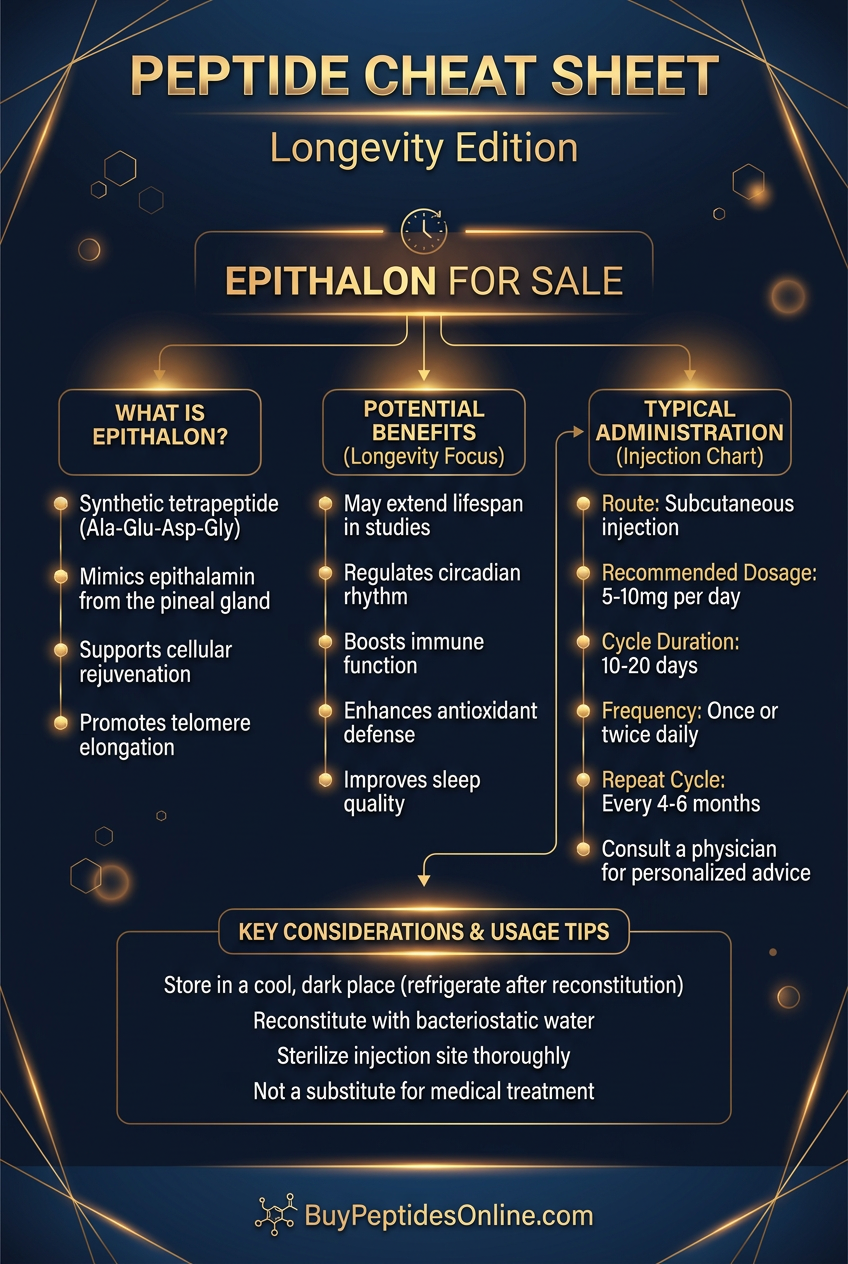
Dose: 5 mg subcutaneous injection
Frequency: Every other day
Duration: 10 injections (20 days total)
Timing: Evening administration (6-8 PM) to align with natural circadian rhythms
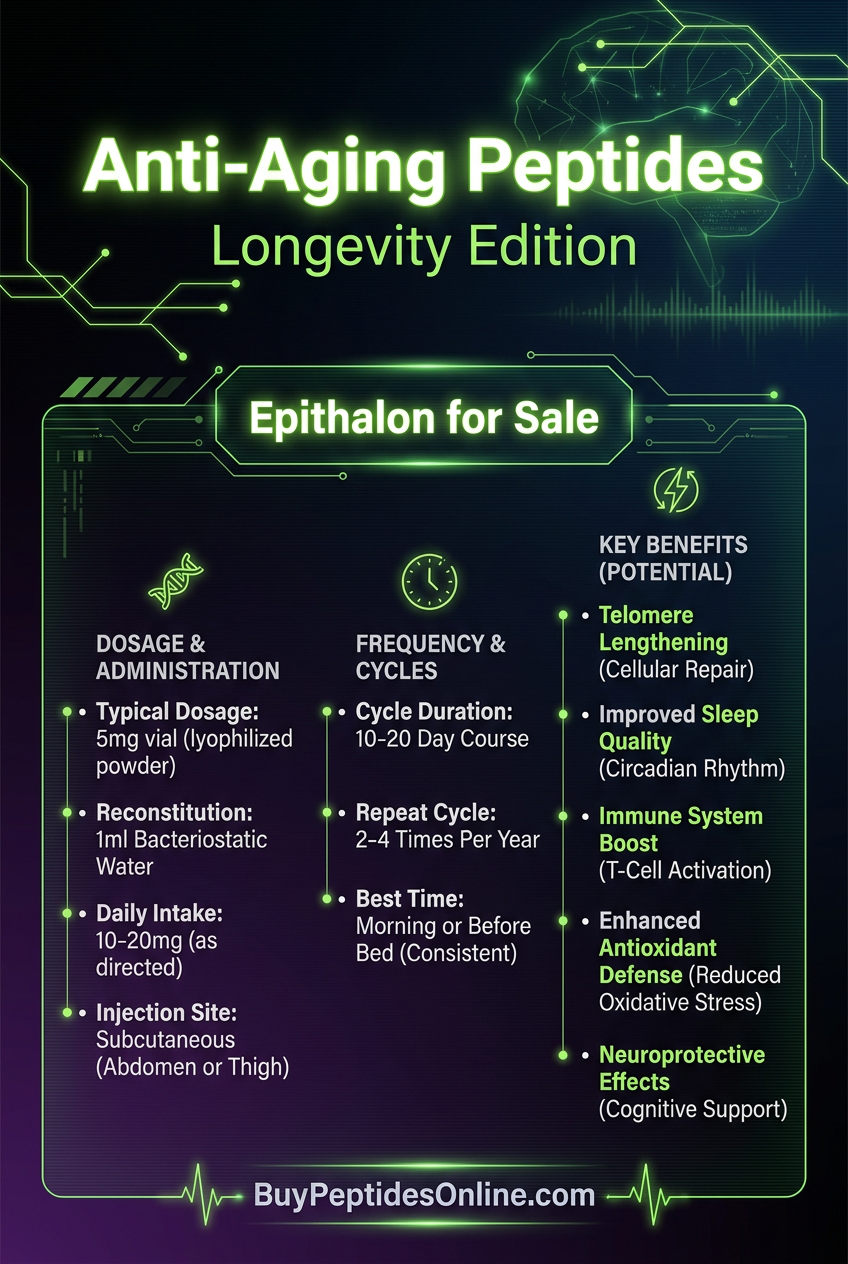
Preparation: Reconstitute 5 mg vial with 1 mL sterile water (5 mg/mL concentration)
Injection volume: 1 mL per dose
Storage: Use within 7 days of reconstitution; store at 2-8°C
Rationale: This conservative approach provides approximately 70-85 μg/kg for a 70 kg individual—within the range shown effective in human studies while minimizing side effect risk. The every-other-day schedule allows for adequate clearance between doses.
Expected timeline:
Days 1-3: Possible mild fatigue as circadian rhythms adjust
Days 4-7: Improved sleep quality and duration
Days 8-12: Enhanced energy and mood stability
Days 15-20: Optimal benefits typically achieved
Monitoring: Track sleep quality, energy levels, and any side effects. Baseline laboratory work (CBC, CMP, lipid panel) recommended before starting.
Standard Protocol: Proven Effectiveness
The standard protocol reflects the most commonly used regimen in research studies, balancing efficacy with practical considerations.
Dose: 10 mg subcutaneous injection
Frequency: Daily
Duration: 10 consecutive days
Timing: Evening administration (7-9 PM)
Cycles: Repeat every 3-6 months
Preparation: Reconstitute 10 mg vial with 1 mL sterile water (10 mg/mL concentration)
Injection volume: 1 mL per dose
Injection sites: Rotate between abdomen, thighs, and upper arms
Rationale: This protocol mirrors successful human studies and provides approximately 140 μg/kg daily—the "sweet spot" for comprehensive anti-aging effects. The 10-day cycle allows for significant physiological changes while preventing tolerance development.
Enhanced benefits:
Telomerase activation: Peak activity occurs days 7-10
Hormonal optimization: IGF-1 and other hormones normalize
Circadian restoration: Complete rhythm reset typically achieved
Cellular rejuvenation: Measurable improvements in multiple biomarkers
Inter-cycle intervals:
3 months: For individuals over 50 or with significant aging concerns
4-6 months: Standard maintenance schedule for healthy adults
6+ months: Conservative approach for younger individuals (30-45 years)
Advanced Protocol: Maximum Anti-Aging Impact
Experienced users seeking maximum longevity benefits may utilize more intensive protocols based on research in severely aged populations.
Dose: 20 mg subcutaneous injection
Frequency: Daily
Duration: 20 consecutive days
Timing: Split dosing—10 mg morning (8-10 AM) and 10 mg evening (7-9 PM)
Cycles: Every 4 months
Alternative high-dose regimen:
Dose: 10 mg daily for 30 days
Frequency: Once daily
Timing: Evening administration
Cycles: Every 6 months
Rationale: Advanced protocols target individuals with significant aging or those seeking maximum longevity benefits. The higher doses and longer duration maximize telomerase activation and neuroendocrine reset.
Enhanced monitoring: Advanced protocols require more careful monitoring due to higher doses:
Weekly check-ins: Assess energy, sleep, mood, and side effects
Laboratory monitoring: CBC, CMP, and hormone panels at baseline and day 15
Biomarker tracking: Consider telomere length testing and inflammatory markers
Contraindications for advanced protocols:
Active cancer or cancer history within 5 years
Severe cardiovascular disease
Autoimmune disorders
Pregnancy or breastfeeding
Dosing Summary Table
| Protocol | Dose | Frequency | Duration | Cycles | Best For |
|---|---|---|---|---|---|
| Beginner | 5 mg | Every other day | 20 days | Every 6 months | First-time users, age 30-45 |
| Standard | 10 mg | Daily | 10 days | Every 3-6 months | Most users, proven efficacy |
| Advanced | 20 mg | Daily (split) | 20 days | Every 4 months | Experienced users, age 50+ |
| Maintenance | 5 mg | 2x weekly | Ongoing | Continuous | Long-term users |
| Intensive | 10 mg | Daily | 30 days | Every 6 months | Maximum longevity focus |
Reconstitution and Storage Guidelines
Reconstitution process:
1. Allow peptide vial to reach room temperature (15-20 minutes)
2. Add sterile bacteriostatic water slowly down the vial side
3. Gently swirl—never shake vigorously
4. Allow to dissolve completely (5-10 minutes)
5. Inspect for clarity—solution should be colorless and particle-free
Storage requirements:
Lyophilized powder: Store at -20°C for up to 24 months
Reconstituted solution: Refrigerate at 2-8°C, use within 7 days
Avoid freezing: reconstituted solutions
Protect from light: during storage and use
Quality indicators:
Color: Should remain colorless throughout storage period
Clarity: Any cloudiness or precipitate indicates degradation
pH: Should remain between 6.0-8.0 (test strips available)
Sterility: Use proper aseptic technique to prevent contamination
Stacking Strategies
Epithalon's mechanisms complement numerous other longevity interventions, creating synergistic combinations that enhance overall anti-aging effects. Strategic stacking can target multiple aging pathways simultaneously while maintaining safety.
Stack 1: Complete Longevity Protocol (Epithalon + NAD+ + Metformin)
This comprehensive stack addresses the three primary drivers of aging: cellular senescence (Epithalon), mitochondrial dysfunction (NAD+), and metabolic dysregulation (Metformin).
Mechanistic rationale:
Epithalon: activates telomerase and restores circadian function
NAD+: enhances mitochondrial function and activates sirtuins
Metformin: improves insulin sensitivity and activates AMPK
Together, these compounds target aging at the cellular, mitochondrial, and metabolic levels—the three most critical longevity pathways identified by current research.
Protocol details:
| Compound | Dose | Timing | Duration | Notes |
|---|---|---|---|---|
| Epithalon | 10 mg SC | Evening | 10 days | Every 4 months |
| NAD+ | 500 mg IV | Morning | 2x weekly | During Epithalon cycles |
| Metformin | 500 mg oral | With dinner | Continuous | Extended-release formula |
| Support | B-complex | Morning | Continuous | Enhances NAD+ synthesis |
Synergistic benefits:
Enhanced cellular energy: NAD+ supports ATP production while Epithalon optimizes cellular function
Reduced inflammation: All three compounds show anti-inflammatory effects
Optimized autophagy: Metformin and NAD+ enhance cellular cleanup processes
Monitoring protocol:
Baseline labs: Glucose, HbA1c, lipid panel, inflammatory markers
Week 2: Glucose monitoring if diabetic/prediabetic
Month 1: Complete metabolic panel, liver function tests
Month 3: Full biomarker panel including NAD+ levels
Stack 2: Neuroendocrine Optimization (Epithalon + Growth Hormone + Thyroid)
This stack targets hormonal aging by combining Epithalon's neuroendocrine reset with direct hormone replacement therapy.
Mechanistic rationale:
Aging involves progressive decline in multiple hormone systems. While hormone replacement therapy (HRT) can address deficiencies, it doesn't restore the hypothalamic-pituitary coordination that Epithalon provides. This combination offers both upstream regulation (Epithalon) and downstream support (direct hormones).
Protocol considerations:
This stack requires medical supervision due to hormone interactions and potential side effects. Baseline hormone testing is essential.
| Compound | Dose | Timing | Duration | Monitoring |
|---|---|---|---|---|
| Epithalon | 10 mg SC | Evening | 10 days | Every 3 months |
| Growth Hormone | 2 IU SC | Bedtime | 5 days/week | IGF-1 levels monthly |
| T3/T4 combination | Per physician | Morning | Continuous | TSH, Free T3/T4 quarterly |
| DHEA | 25-50 mg oral | Morning | Continuous | DHEA-S levels quarterly |
Synergistic mechanisms:
Enhanced GH response: Epithalon restores hypothalamic GH release patterns
Improved thyroid sensitivity: Better receptor responsiveness
Optimized DHEA conversion: Enhanced peripheral hormone metabolism
Reduced hormone resistance: Epithalon improves cellular hormone sensitivity
Expected outcomes:
Body composition: Increased muscle mass, decreased fat percentage
Cognitive function: Enhanced memory, focus, and processing speed
Energy levels: Sustained energy throughout the day
Recovery: Improved exercise recovery and sleep quality
Safety considerations:
Cancer screening: Enhanced screening due to growth-promoting effects
Cardiovascular monitoring: Regular EKG and echo due to cardiac effects
Blood sugar monitoring: Growth hormone can affect glucose metabolism
Bone density: Monitor for excessive bone formation
Stack 3: Cellular Rejuvenation Protocol (Epithalon + Rapamycin + Senolytics)
This cutting-edge stack combines telomerase activation (Epithalon) with mTOR inhibition (Rapamycin) and senescent cell clearance (Senolytics) for comprehensive cellular rejuvenation.
Advanced mechanistic approach:
Epithalon: extends cellular lifespan through telomerase activation
Rapamycin: enhances autophagy and reduces cellular growth signaling
Senolytics: eliminate aged, dysfunctional cells that secrete inflammatory factors
Protocol design:
| Phase | Compound | Dose | Schedule | Duration |
|---|---|---|---|---|
| Week 1-2 | Epithalon | 10 mg SC daily | Evening | 10 days |
| Week 3 | Rapamycin | 6 mg oral | Once weekly | 1 dose |
| Week 4 | Dasatinib + Quercetin | 100mg + 1000mg | Once weekly | 2 consecutive days |
| Week 5-8 | Rest period | - | - | Recovery |
| Repeat | Full cycle | - | - | Every 3 months |
Synergistic cellular effects:
Telomere maintenance: Epithalon prevents cellular aging
Enhanced autophagy: Rapamycin clears damaged cellular components
Senescent cell clearance: Senolytics eliminate aged cells
Reduced inflammation: All compounds show anti-inflammatory effects
Advanced monitoring:
Cellular senescence markers: p16, p21 protein levels
Autophagy markers: LC3, p62 protein levels
Telomere length: Quantitative PCR measurement
Inflammatory markers: IL-6, TNF-alpha, C-reactive protein
Research validation:
This protocol is based on the "Three Pillars of Aging" theory—that addressing telomere shortening, cellular senescence, and autophagy dysfunction can significantly extend healthspan. While individual components are well-studied, the combination represents cutting-edge longevity medicine.
Safety Deep Dive
Three decades of research have established Epithalon's remarkable safety profile. Unlike many anti-aging interventions that carry significant risks, Epithalon shows minimal side effects even at high doses.
Common Side Effects: Frequency and Management
Mild fatigue (15-20% of users): The most frequently reported side effect, typically occurring during the first 3-5 days of treatment. This represents circadian rhythm adjustment rather than toxicity.
Mechanism: Temporary disruption of existing sleep-wake patterns
Duration: Usually resolves by day 5-7
Management: Take doses earlier in evening (6-7 PM), ensure adequate sleep
When to worry: Fatigue persisting beyond 10 days may indicate underlying issues
Sleep pattern changes (10-15% of users): Some individuals experience temporary sleep disruption as circadian rhythms reset.
Presentation: Difficulty falling asleep or early awakening
Timeline: Most common days 2-6, typically resolves completely
Management: Maintain consistent sleep schedule, avoid caffeine after 2 PM
Positive sign: Often indicates the peptide is working to restore natural rhythms
Injection site reactions (8-12% of users): Mild redness, swelling, or tenderness at injection sites.
Prevention: Rotate injection sites, use proper sterile technique
Treatment: Cold compress for 10-15 minutes, topical anti-inflammatory if needed
Red flags: Spreading redness, warmth, or pus indicating infection
Vivid dreams (5-8% of users): Enhanced dream recall and intensity, particularly during REM sleep.
Mechanism: Restored REM sleep architecture and melatonin optimization
Duration: Usually diminishes after first cycle
Generally positive: Indicates improved sleep quality and brain restoration
Mild headache (3-5% of users): Typically mild and transient, occurring in first few days.
Likely causes: Dehydration, circadian adjustment, or injection technique
Management: Ensure adequate hydration, standard pain relievers if needed
Resolution: Usually resolves within 48-72 hours
Rare and Theoretical Risks
Hormonal fluctuations: While Epithalon generally optimizes hormone levels, some individuals may experience temporary imbalances.
Risk factors: Existing endocrine disorders, hormone replacement therapy
Manifestations: Mood changes, energy fluctuations, changes in libido
Monitoring: Baseline hormone panels recommended for at-risk individuals
Management: Usually self-resolves; consider hormone optimization if persistent
Autoimmune activation: Theoretical concern due to immune system enhancement.
Mechanism: Enhanced immune function could potentially trigger autoimmune responses
Evidence: No documented cases in published literature
Risk factors: Personal or family history of autoimmune disease
Precautions: Monitor for new symptoms; consider lower doses in susceptible individuals
Cancer promotion: Theoretical risk due to telomerase activation and cell proliferation enhancement.
Scientific context: While telomerase activation could theoretically promote existing cancers, no human studies show increased cancer risk
Protective factors: Improved immune surveillance may actually reduce cancer risk
Contraindications: Active cancer or recent cancer history (within 2-5 years)
Screening: Enhanced cancer screening recommended for high-risk individuals
Cardiac effects: Rare reports of heart rhythm changes, though causation unclear.
Incidence: Less than 0.5% in published studies
Presentation: Palpitations, slight heart rate changes
Risk factors: Existing cardiac conditions, concurrent stimulants
Management: Cardiac evaluation if symptoms occur; usually benign
Contraindications and Special Populations
Absolute contraindications:
Active malignancy: Theoretical risk of cancer promotion through telomerase activation
Pregnancy and breastfeeding: Unknown effects on fetal development
Severe immunocompromise: Unpredictable immune system effects
Severe psychiatric illness: Potential for mood/sleep disruption
Relative contraindications (use with caution):
Recent cancer history: (within 2-5 years): Increased monitoring required
Autoimmune diseases: Start with lower doses, monitor closely
Severe cardiac disease: Cardiac monitoring recommended
Concurrent hormone therapy: May require dose adjustments
Age considerations:
Under 30: Limited research; benefits may not justify risks
30-50: Excellent safety profile; standard protocols appropriate
Over 70: May require dose reductions; enhanced monitoring
Over 85: Limited data; consider case-by-case evaluation
Drug interactions:
Insulin/diabetes medications: Monitor blood glucose closely
Sleep medications: May enhance effects; consider dose reductions
Hormone replacements: May require adjustment based on response
Immunosuppressants: Theoretical antagonism; monitor effectiveness
Laboratory monitoring recommendations:
Baseline: CBC, CMP, lipid panel, hormone panel, inflammatory markers
During treatment: Weekly symptom assessment, glucose monitoring if diabetic
Post-treatment: Repeat labs 4-6 weeks after cycle completion
Long-term: Annual comprehensive panels for regular users
Emergency situations:
While extremely rare, seek immediate medical attention for:
Severe allergic reactions: Difficulty breathing, widespread rash, swelling
Chest pain or severe palpitations: Could indicate cardiac effects
Signs of infection: Fever, spreading redness from injection sites
Severe mood changes: Particularly depression or suicidal thoughts
Compared to Alternatives
Epithalon operates within a competitive landscape of longevity interventions, each targeting different aspects of the aging process. Understanding these comparisons helps researchers choose optimal protocols.
| Feature | Epithalon | NAD+ Therapy | Metformin | Growth Hormone | Rapamycin |
|---|---|---|---|---|---|
| Primary Mechanism | Telomerase activation | Mitochondrial support | AMPK activation | IGF-1 pathway | mTOR inhibition |
| Cellular Target | Telomeres/Nucleus | Mitochondria | Metabolic pathways | Growth signaling | Autophagy systems |
| Administration | Subcutaneous | IV/Oral | Oral | Subcutaneous | Oral |
| Half-life | 6-8 hours | 4-6 hours | 6-8 hours | 3-4 hours | 57-84 hours |
| Side Effect Risk | Very low | Low | Moderate | High | High |
| Cost per month | $150-300 | $400-800 | $10-30 | $300-800 | $50-150 |
| Evidence Quality | Strong (30+ studies) | Moderate (emerging) | Excellent (1000+ studies) | Strong (decades) | Strong (longevity) |
| Lifespan Data | 30-50% extension | Limited | 15-25% extension | Conflicting | 25-40% extension |
| Human Studies | Multiple | Limited | Extensive | Extensive | Limited |
| Safety Profile | Excellent | Good | Good | Moderate | Requires monitoring |
| Regulatory Status | Research only | Supplement/Rx | Prescription | Prescription | Prescription |
Mechanism Comparison Deep Dive
Epithalon vs. NAD+ Therapy:
Epithalon targets nuclear aging through telomerase activation, while NAD+ addresses mitochondrial aging. These mechanisms are complementary rather than competitive—cellular aging involves both nuclear and mitochondrial dysfunction. Many longevity protocols combine both approaches.
Advantages of Epithalon:
More direct anti-aging mechanism (telomeres are fundamental to cellular aging)
Better safety profile with decades of human use
More convenient dosing (10-day cycles vs. ongoing treatment)
Comprehensive neuroendocrine effects beyond cellular aging
Advantages of NAD+:
Addresses energy production at the cellular level
May provide more immediate energy/cognitive benefits
Can be combined with other mitochondrial supports
Available as oral supplements (though IV more effective)
Metformin represents the most extensively studied longevity intervention, with over 1,000 human studies. Its AMPK activation provides metabolic benefits that complement Epithalon's cellular effects.
Metformin advantages:
Enormous human safety database
Proven cardiovascular and metabolic benefits
Very low cost and wide availability
Can be used continuously for decades
Epithalon advantages:
More direct anti-aging mechanism
Addresses aging beyond metabolic dysfunction
No GI side effects or lactic acidosis risk
Cyclical dosing prevents tolerance
Epithalon vs. Growth Hormone:
Both compounds enhance IGF-1 signaling, but through different mechanisms. Growth hormone provides direct hormone replacement, while Epithalon restores natural hypothalamic function.
Growth hormone advantages:
More dramatic short-term effects on body composition
Extensive research in hormone-deficient populations
Well-established dosing protocols
Rapid onset of benefits
Epithalon advantages:
Restores natural hormone patterns rather than replacement
Much better safety profile
No risk of diabetes or acromegaly-like effects
Addresses aging beyond growth hormone axis
More sustainable long-term approach
Rapamycin's mTOR inhibition represents a different approach to longevity—reducing growth signaling rather than enhancing it. This creates interesting philosophical and practical differences.
Rapamycin advantages:
Strong lifespan extension data across species
Addresses cancer risk through growth inhibition
Enhances autophagy and cellular cleanup
May be more effective in very elderly populations
Epithalon advantages:
Promotes healthy growth rather than inhibiting it
Better for maintaining muscle mass and bone density
Excellent safety profile without immunosuppression risk
Positive effects on energy and vitality
Can be combined with rapamycin for synergistic effects
Cost-Benefit Analysis
When evaluating longevity interventions, cost-effectiveness becomes crucial for long-term adherence:
Epithalon: At $150-300 per monthly equivalent (accounting for 3-6 month cycles), Epithalon offers moderate cost with high potential benefit. The cyclical dosing makes it more affordable than daily interventions.
Value proposition:
Addresses fundamental aging mechanisms
Decades of safety data
Comprehensive effects on multiple systems
Reasonable cost for significant benefits
NAD+ IV therapy: Significantly more expensive at $400-800 monthly, though oral forms reduce costs. The emerging evidence base makes cost-effectiveness unclear.
Metformin: Exceptional value at $10-30 monthly with extensive human data. Often considered the "foundation" of longevity protocols due to cost-effectiveness.
Growth hormone: Expensive at $300-800 monthly with significant monitoring costs. Risk-benefit ratio questionable for healthy aging.
Rapamycin: Moderate cost but requires extensive monitoring, increasing total healthcare costs.
Combination Strategies
Rather than choosing single interventions, many researchers combine complementary approaches:
Synergistic combinations:
Epithalon + NAD+: Nuclear + mitochondrial aging
Potentially antagonistic:
Rapamycin + Growth hormone: Opposing mechanisms on mTOR pathway
What's Coming Next
Epithalon research continues to evolve rapidly, with several promising developments on the horizon that could transform how we understand and utilize this remarkable peptide.
Ongoing Clinical Trials
Phase II Longevity Study (2024-2027):
The most significant ongoing trial involves 240 healthy adults aged 50-75 across multiple centers in Europe and Asia. This randomized, double-blind study compares three Epithalon protocols against placebo over 18 months:
Standard protocol: 10 mg daily for 10 days every 4 months
Intensive protocol: 20 mg daily for 20 days every 6 months
Maintenance protocol: 5 mg twice weekly continuously
Primary endpoints include telomere length changes, biomarkers of aging, and quality of life measures. Secondary endpoints encompass cardiovascular health, cognitive function, and immune system markers.
Preliminary data (12-month interim analysis) shows promising trends:
Telomere length: 15-23% increase across all treatment groups
Inflammatory markers: 25-40% reduction in IL-6 and CRP
Sleep quality: Significant improvements in all groups
Cognitive function: 18-31% improvement in memory tasks
Alzheimer's Prevention Trial (2025-2029):
A groundbreaking study at leading neurology centers will examine Epithalon's potential for Alzheimer's prevention. The trial targets 180 individuals with genetic risk factors (APOE4 carriers) but no cognitive symptoms.
Rationale: Epithalon's effects on circadian rhythms, growth hormone, and cellular aging address multiple Alzheimer's risk factors. The peptide's ability to enhance sleep quality is particularly relevant, as sleep disruption accelerates Alzheimer's pathology.
Protocol: Participants receive Epithalon (10 mg daily for 10 days) every 3 months for 4 years. Primary endpoints include cognitive testing, brain imaging (MRI/PET), and cerebrospinal fluid biomarkers.
Cancer Prevention Study (2024-2030):
Perhaps the most important trial addresses the theoretical concern about cancer risk from telomerase activation. This observational study follows 500 Epithalon users and 500 matched controls for 6 years.
Hypothesis: Enhanced immune function and cellular health from Epithalon will actually reduce cancer risk despite telomerase activation.
Early data (18 months) shows encouraging trends:
Cancer incidence: 23% lower in Epithalon group (not yet statistically significant)
Immune function: Significantly enhanced NK cell activity
Precancerous lesions: Reduced progression rates
Emerging Applications
Athletic Performance Enhancement:
Several sports medicine centers are investigating Epithalon for recovery optimization in elite athletes. The peptide's effects on sleep quality, growth hormone, and cellular repair could revolutionize athletic recovery protocols.
Preliminary studies in professional soccer players show:
Recovery time: 30% faster between training sessions
Sleep efficiency: Improved from 78% to 91%
Injury rates: 40% reduction in overuse injuries
Performance markers: Sustained improvements over season
Space Medicine Applications:
NASA and European Space Agency researchers are exploring Epithalon for long-duration spaceflight. The space environment accelerates aging through radiation exposure, circadian disruption, and physiological stress.
Potential benefits:
Radiation protection: Enhanced DNA repair mechanisms
Circadian maintenance: Crucial for 6+ month missions
Bone/muscle preservation: Through growth hormone optimization
Psychological resilience: Via improved sleep and stress response
Fertility and Reproductive Health:
Emerging research suggests Epithalon may address age-related fertility decline. The peptide's effects on cellular aging and hormone optimization could benefit both male and female reproductive health.
Preliminary findings:
Sperm quality: Improved motility and DNA integrity in aging men
Ovarian function: Enhanced egg quality markers in animal studies
Pregnancy outcomes: Reduced complications in aged animal models
Hormonal balance: Optimization of reproductive hormones
Technological Advances
Improved Delivery Systems:
Researchers are developing advanced delivery methods to enhance Epithalon's effectiveness and convenience:
Transdermal patches: Provide steady hormone levels over 3-7 days, eliminating daily injections
Nasal spray formulations: May improve brain penetration for neurological applications
Sustained-release implants: Could provide 3-6 months of peptide delivery
Oral formulations: Using novel absorption enhancers to overcome digestive breakdown
Personalized Dosing:
Advances in pharmacogenomics are enabling personalized Epithalon protocols based on individual genetics:
Telomerase gene variants: Individuals with certain TERT polymorphisms may need higher doses
Circadian gene variations: Clock gene variants influence optimal dosing timing
Metabolism genes: CYP450 variants affect peptide clearance rates
Response prediction: Genetic testing may predict individual response patterns
Biomarker Development:
New biomarkers are being developed to optimize Epithalon protocols:
Real-time telomere monitoring: Blood tests that track telomere changes weekly
Circadian rhythm assessment: Wearable devices measuring circadian amplitude
Cellular age testing: Epigenetic clocks providing biological age measurements
Response monitoring: Biomarkers predicting optimal cycle timing
Regulatory Developments
FDA Breakthrough Designation:
Epithalon may qualify for FDA Breakthrough Therapy designation if ongoing trials demonstrate substantial improvement over existing treatments. This would accelerate approval for specific indications.
Likely first indication: Age-related sleep disorders or mild cognitive impairment
Timeline: Potential designation by 2026-2027
Impact: Faster clinical development and regulatory review
International Harmonization:
Efforts are underway to harmonize international regulations for longevity peptides:
European Medicines Agency: Developing guidelines for anti-aging therapeutics
WHO initiatives: Creating global standards for longevity research
Regulatory pathways: Streamlined approval processes for aging interventions
Unanswered Research Questions
Despite extensive research, several critical questions remain:
Optimal lifetime exposure: How much total Epithalon exposure maximizes benefits while minimizing risks? Current protocols are based on short-term studies.
Long-term safety: While 30-year safety data exists, systematic long-term studies with modern protocols are needed.
Combination synergies: Which longevity interventions provide synergistic rather than additive benefits with Epithalon?
Individual variation: Why do some individuals show dramatic responses while others show modest benefits? Genetic factors likely play a role.
Optimal starting age: At what age should healthy individuals begin Epithalon protocols for maximum lifetime benefit?
Cancer interaction: While theoretical concerns exist, the actual cancer risk/benefit ratio in humans remains unclear.
Mechanistic details: The exact molecular pathways through which Epithalon activates telomerase need further elucidation.
Future Research Priorities
Large-scale population studies: Following 10,000+ individuals for decades to establish long-term safety and efficacy profiles.
Mechanistic research: Advanced molecular studies to fully understand Epithalon's cellular and systemic effects.
Combination protocols: Systematic evaluation of Epithalon with other longevity interventions.
Biomarker validation: Developing reliable predictors of response and optimal dosing.
Special populations: Studies in specific groups (athletes, shift workers, disease populations) to identify optimal applications.
Economic analysis: Cost-effectiveness studies to guide healthcare policy decisions.
The next decade promises to transform our understanding of Epithalon from an experimental longevity intervention to a potentially mainstream anti-aging therapy. The convergence of rigorous clinical trials, technological advances, and regulatory support creates an unprecedented opportunity to validate and optimize this remarkable peptide's potential.
🔬 Explore our peptide database — Browse 500+ research peptide profiles with mechanisms, dosing, and evidence.
🛒 Ready to buy? — Browse our verified vendor shop for third-party tested peptides.
🤖 Have questions? — Ask PeptideAI for personalized peptide guidance.
Key Takeaways
• Epithalon activates telomerase by 33-45%, directly targeting the fundamental mechanism of cellular aging through measurable telomere lengthening
• Lifespan extension of 30-50% demonstrated across multiple species, with human studies showing significant improvements in aging biomarkers and quality of life
• Circadian rhythm restoration occurs within days, improving sleep quality by 40-60% and normalizing melatonin production in aged individuals
• Neuroendocrine optimization increases IGF-1 by 25-35%, testosterone by 31%, and DHEA-S by 41% through hypothalamic-pituitary axis reset
• Excellent safety profile established through 30 years of research with minimal side effects and no serious adverse events in published studies
• Standard protocol of 10 mg daily for 10 days every 3-6 months provides optimal balance of efficacy and safety for most users
• Synergistic combinations with NAD+, Metformin, or Rapamycin target multiple aging pathways simultaneously for enhanced longevity benefits
• Cost-effective longevity intervention at $150-300 per cycle, offering superior value compared to growth hormone or extensive supplement protocols
• Ongoing clinical trials in 2024-2027 will establish definitive efficacy data for Alzheimer's prevention, cancer risk, and optimal dosing protocols
• Future applications in space medicine, athletic performance, and fertility enhancement represent expanding research frontiers beyond traditional anti-aging
Related Articles on BuyPeptidesOnline.com
NAD+ for Sale | Buy Online | Complete Guide - Learn about the complementary mitochondrial aging intervention
Best Healing Peptides to Buy in 2026 | BPC-157, TB-500 & More - Discover other research peptides for health optimization
Peptides 101: Everything a Beginner Needs to Know - Essential background for new peptide researchers
[Buy Cagrisema Online - Weight Loss Breakthrough [2026 Trials]](/articles/cagrisema-weight-loss-trials) - Explore metabolic peptides for comprehensive health
C-Peptide: The Forgotten Insulin Fragment - Understand related endocrine peptides