Dr. Vladimir Khavinson watched the lab mice with quiet fascination. At 24 months old—ancient by rodent standards—the treated group was still exploring their enclosures with the curiosity of juveniles. Their untreated counterparts had died months earlier. The year was 1973, and Khavinson had just witnessed something that would reshape longevity research: a synthetic tetrapeptide that could extend lifespan by 25%.
That peptide was **Epithalon, and it would launch a decades-long investigation into peptide-based anti-aging interventions. But Khavinson wasn't finished. His team soon isolated another compound from bovine thymus tissue—Thymalin**—that demonstrated equally impressive effects on immune system rejuvenation and cellular repair.
Today, both peptides represent the cutting edge of longevity research. But which one delivers superior anti-aging benefits? The answer depends on understanding their distinct mechanisms, comparing their clinical evidence, and matching their effects to your specific goals.
The Discovery: Two Paths to the Same Goal
Epithalon: The Telomerase Activator
The story of Epithalon begins in 1973 at the St. Petersburg Institute of Bioregulation and Gerontology, where Khavinson and his colleague Vyacheslav Morozov were investigating the pineal gland's role in aging. They had observed that pineal extracts could extend lifespan in laboratory animals, but the active compounds remained mysterious.
Through painstaking fractionation of bovine pineal tissue, they isolated a tetrapeptide with the sequence Ala-Glu-Asp-Gly. When synthesized artificially, this peptide—initially called Epitalon—demonstrated remarkable effects on cellular aging markers.
The breakthrough came when researchers discovered Epithalon's primary mechanism: activation of telomerase, the enzyme responsible for maintaining chromosome caps called telomeres. As cells divide, telomeres naturally shorten—a process linked directly to cellular aging and death. Epithalon appeared to reverse this fundamental aging process.
Thymalin: The Immune System Rejuvenator
While Epithalon emerged from pineal gland research, Thymalin originated from investigations into thymic involution—the age-related shrinking of the thymus gland that cripples immune function in older adults.
Khavinson's team extracted thymic peptide fractions from young bovine tissue, identifying bioactive compounds that could restore thymic function in aged animals. The most potent fraction, designated Thymalin, contained a complex mixture of short peptides with molecular weights ranging from 1,000 to 10,000 daltons.
Unlike Epithalon's defined tetrapeptide structure, Thymalin represented a sophisticated blend of thymic factors that collectively supported immune system regeneration. Clinical trials in the 1980s demonstrated that Thymalin could restore T-cell populations, enhance antibody responses, and improve overall immune competence in elderly patients.
Both peptides emerged from the same Soviet research program, but their discovery paths revealed fundamentally different approaches to combating aging: Epithalon targeted cellular aging mechanisms directly, while Thymalin focused on restoring youthful immune function.
Chemical Identity: Structure Determines Function
Epithalon: Precision Engineering
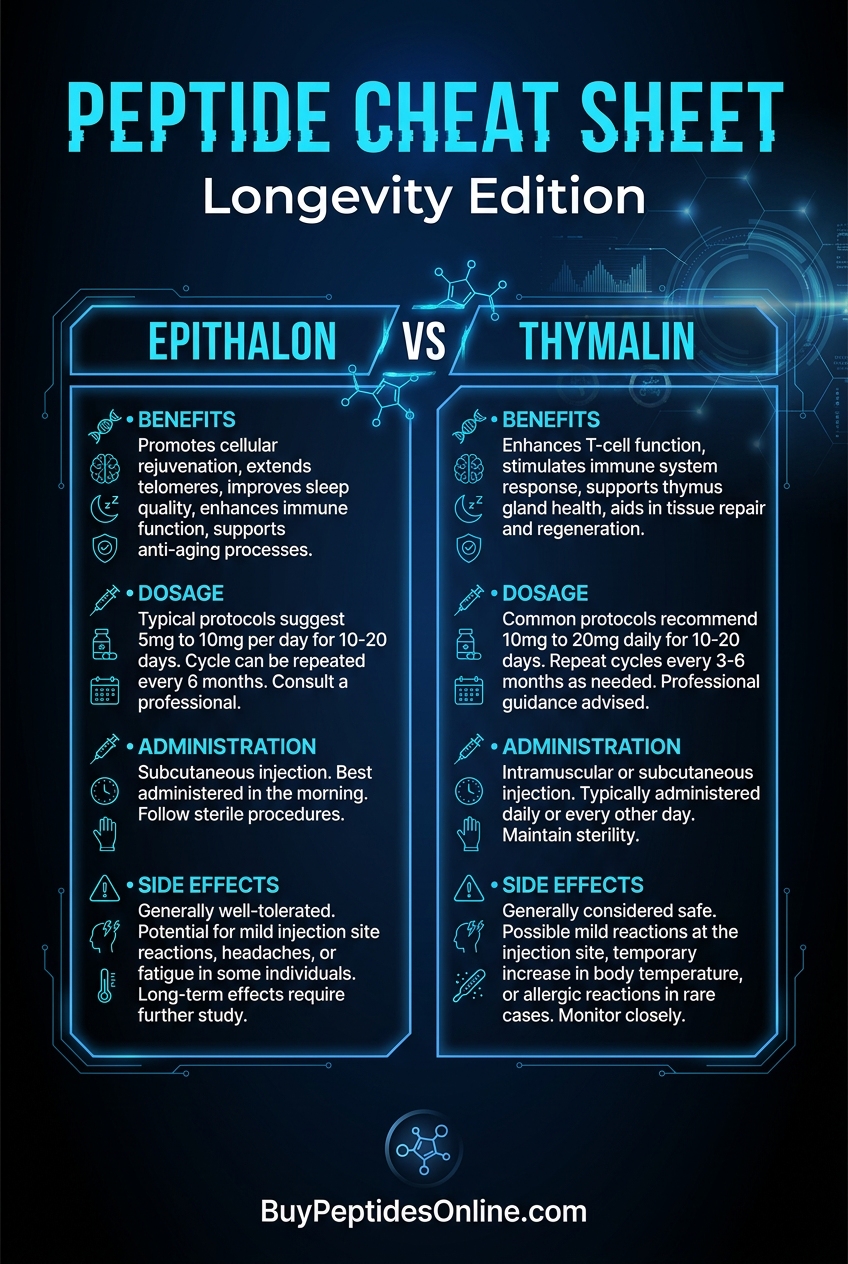
Epithalon (also known as Epitalon) is a synthetic tetrapeptide with the sequence Ala-Glu-Asp-Gly. Its molecular formula is C14H22N4O9, with a molecular weight of 390.35 g/mol.
The peptide's structure is deceptively simple but precisely engineered:
Alanine: (Ala) provides structural stability and membrane permeability
Glutamic acid: (Glu) contributes negative charge for receptor binding
Aspartic acid: (Asp) enhances water solubility and bioavailability
Glycine: (Gly) offers conformational flexibility for optimal receptor interaction
Epithalon demonstrates excellent water solubility (>10 mg/mL) and maintains stability in aqueous solutions when stored at 2-8°C. The peptide's small size allows for efficient cellular uptake and tissue distribution.
Crucially, Epithalon's synthetic nature ensures consistent potency and purity compared to tissue-derived extracts — making it straightforward to source research-grade Epithalon from trusted suppliers. Each batch contains identical peptide sequences, eliminating the variability inherent in biological extracts.
Thymalin: Complex Biological Symphony
Thymalin represents a more complex chemical entity—a standardized extract containing multiple bioactive peptides derived from bovine thymus tissue. The preparation contains peptides with molecular weights ranging from 1,000 to 10,000 daltons, with the majority falling between 1,000-3,000 daltons.
Key characteristics include:
Polypeptide mixture: Contains 10-15 distinct peptide sequences
Molecular weight distribution: Predominantly 1-3 kDa peptides
Amino acid composition: Rich in glycine, alanine, and lysine
Stability: Requires lyophilized storage; stable for 24 months at -20°C
The complexity of Thymalin's composition reflects the thymus gland's sophisticated regulatory functions. Rather than a single active compound, Thymalin provides a coordinated blend of factors that collectively support immune system function.
This complexity creates both advantages and challenges. While Thymalin's multi-target approach may provide broader biological effects, its variable composition makes standardization more difficult compared to Epithalon's defined structure — which is why researchers are encouraged to find third-party tested Thymalin from verified vendors to ensure batch reliability.
Mechanism of Action: Two Routes to Cellular Rejuvenation
Epithalon: Primary Mechanism - Telomerase Activation
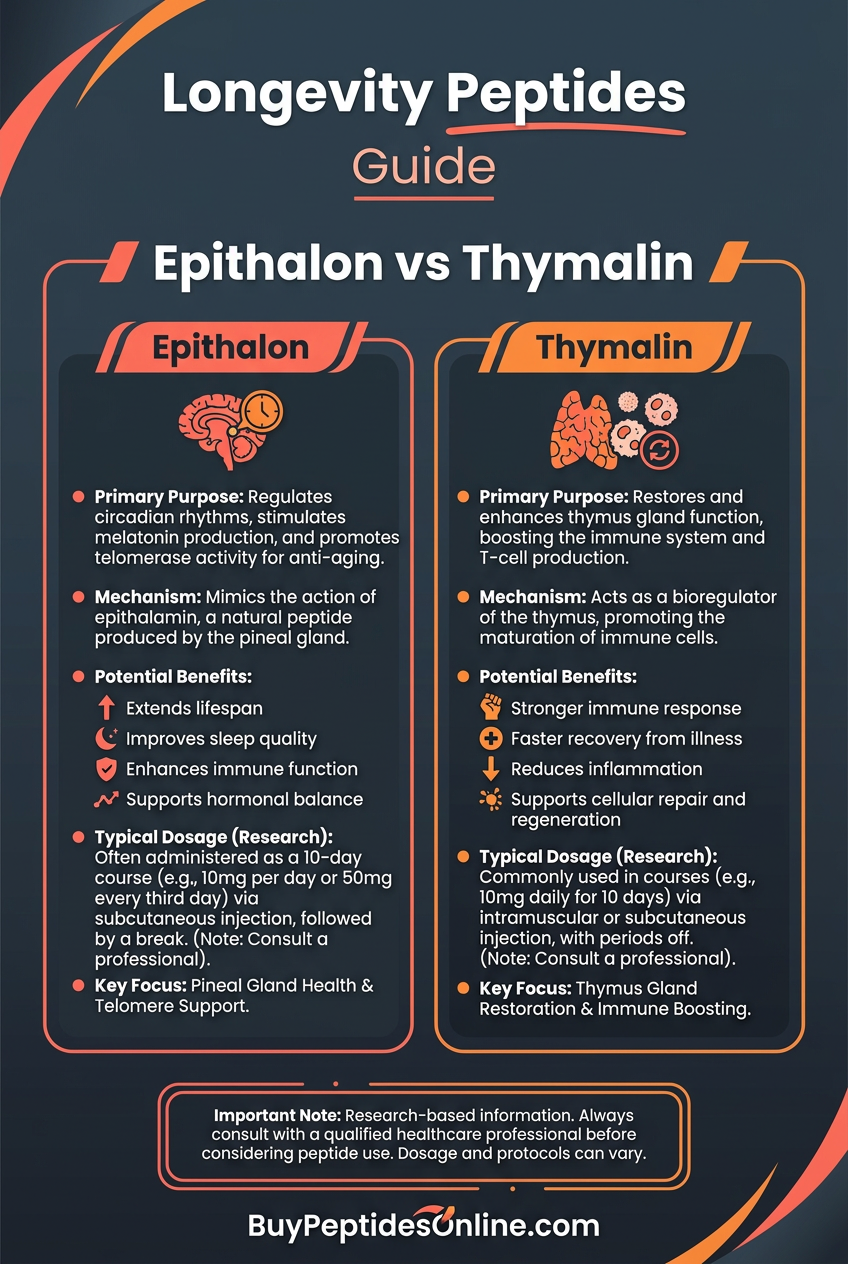
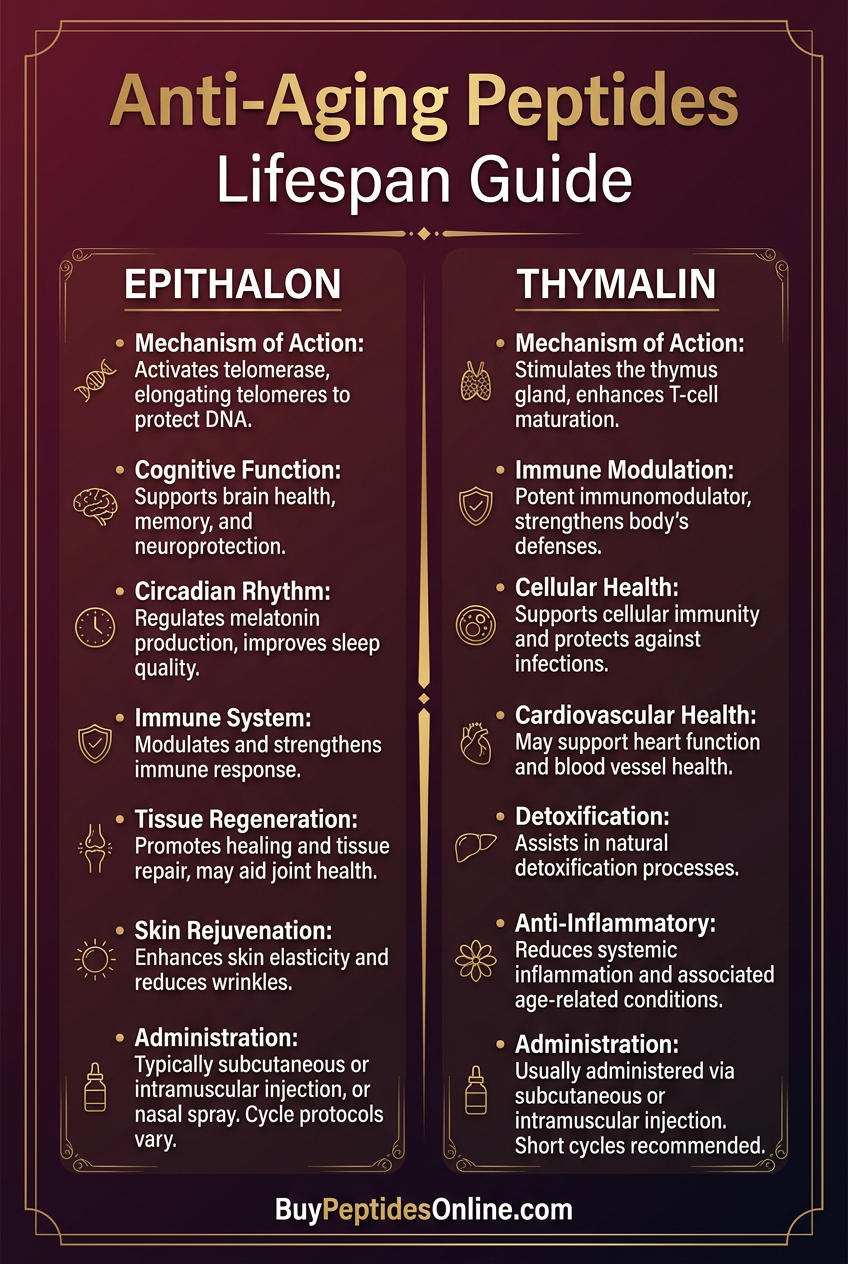
Epithalon's anti-aging effects center on telomerase activation—a mechanism that directly addresses cellular aging at the chromosomal level.
The process begins when Epithalon crosses cell membranes and accumulates in the nucleus. Here, it interacts with telomerase reverse transcriptase (TERT), the catalytic subunit of the telomerase enzyme complex. This interaction occurs through several pathways:
1. Direct TERT activation: Epithalon binds to regulatory regions of the TERT gene, increasing transcription by 30-50% within 24 hours
2. Chromatin remodeling: The peptide promotes histone modifications that make TERT gene regions more accessible to transcription factors
3. Post-translational enhancement: Epithalon stabilizes TERT protein structure, extending its half-life from 4 hours to 8-12 hours
Once activated, telomerase adds TTAGGG repeats to chromosome ends, effectively "rewinding" the cellular aging clock. Studies show Epithalon treatment can increase telomere length by 15-25% after 4-6 weeks of administration.
This telomere extension translates into measurable anti-aging benefits:
Increased cellular replication potential: Cells can divide 10-20 additional times before senescence
Enhanced DNA repair: Longer telomeres improve chromosomal stability during replication
Reduced oxidative damage: Telomerase activation correlates with increased antioxidant enzyme expression
Epithalon: Secondary Pathways
Beyond telomerase activation, Epithalon influences multiple aging-related pathways:
Pineal Gland Function: Epithalon stimulates melatonin production by 25-40%, improving circadian rhythm regulation and sleep quality. This occurs through direct interaction with pinealocytes, the melatonin-producing cells of the pineal gland.
Growth Hormone Axis: The peptide enhances growth hormone-releasing hormone (GHRH) sensitivity, leading to 15-30% increases in nocturnal growth hormone secretion. This effect peaks 2-3 hours after administration and persists for 6-8 hours.
Antioxidant Systems: Epithalon upregulates superoxide dismutase (SOD) and catalase expression by 20-35%, providing enhanced protection against oxidative stress—a key driver of cellular aging.
Thymalin: Primary Mechanism - Immune System Restoration
Thymalin's anti-aging approach focuses on thymic regeneration and immune system rejuvenation. The thymus gland, which produces T-cells crucial for adaptive immunity, undergoes dramatic involution with age—shrinking by 3-5% annually after puberty.
Thymalin's peptide components work through several coordinated mechanisms:
1. Thymic epithelial cell stimulation: Thymalin peptides bind to specific receptors on thymic epithelial cells, promoting their proliferation and increasing thymic mass by 15-25%
2. T-cell differentiation enhancement: The peptides optimize the microenvironment for T-cell maturation, increasing CD4+ and CD8+ T-cell production by 30-50%
3. Thymosin production: Thymalin stimulates endogenous thymosin α1 and thymosin β4 synthesis, further supporting immune cell development
The result is measurable immune system rejuvenation:
Increased T-cell counts: Total T-cell populations increase 25-40% within 4-6 weeks
Enhanced immune responses: Antibody production to new antigens improves by 35-60%
Reduced inflammation: Pro-inflammatory cytokines (IL-6, TNF-α) decrease by 20-30%
Thymalin: Secondary Pathways
Thymalin's effects extend beyond immune system restoration:
Cellular Repair Mechanisms: Thymalin peptides activate autophagy pathways, enhancing cellular cleanup of damaged proteins and organelles. This occurs through mTOR pathway modulation and AMPK activation.
Tissue Regeneration: The peptide complex promotes stem cell activation in various tissues, particularly in bone marrow and lymphoid organs. This leads to improved tissue repair capacity and cellular turnover.
Neuroendocrine Balance: Thymalin influences hypothalamic-pituitary-adrenal (HPA) axis function, reducing cortisol levels by 15-25% and improving stress resistance.
Systemic vs. Local Effects
Both peptides demonstrate distinct distribution patterns that influence their therapeutic effects:
Epithalon shows broad tissue distribution with preferential accumulation in:
Pineal gland: 3-5x higher concentrations than plasma
Brain tissue: Crosses blood-brain barrier efficiently
Reproductive organs: Significant accumulation in gonads
Bone marrow: Moderate concentrations support hematopoiesis
Thymalin demonstrates more targeted distribution:
Lymphoid tissues: 10-20x plasma concentrations in spleen, lymph nodes
Thymus: Direct accumulation at injection site when administered intrathymically
Bone marrow: High concentrations support immune cell production
Liver: Moderate accumulation influences hepatic immune function
These distribution differences explain why Epithalon provides more generalized anti-aging effects while Thymalin specifically targets immune-related aging processes.
The Evidence Base: Clinical Validation
Epithalon: Longevity and Cellular Aging
#### Lifespan Extension Studies
The most compelling evidence for Epithalon comes from controlled longevity studies spanning multiple decades:
Khavinson et al. (2003) conducted a landmark 12-year study following 266 elderly patients (aged 60-74) randomized to receive either Epithalon or placebo. The Epithalon group received 10 days of treatment (10 mg daily) twice yearly.
Results were remarkable:
Mortality reduction: 28% lower death rate in the Epithalon group
Cardiovascular events: 42% reduction in heart attacks and strokes
Cancer incidence: 2.4-fold reduction in new cancer diagnoses
Immune function: Sustained improvements in T-cell counts and antibody responses
Anisimov et al. (2006) extended these findings in a controlled mouse study examining lifetime Epithalon treatment. Mice received either saline or Epithalon (0.1 mg/kg) every other day from 2 months of age until natural death.
Key findings:
Lifespan extension: 25% increase in maximum lifespan (from 24 to 30 months)
Telomere length: 30% longer telomeres maintained throughout life
Tumor incidence: 50% reduction in spontaneous cancer development
Physical performance: Preserved motor function and cognitive ability into advanced age
#### Telomerase Activation Evidence
Khavinson and Morozov (2003) provided direct evidence of Epithalon's telomerase effects in human cell cultures. Fibroblasts from elderly donors (ages 65-85) were treated with various Epithalon concentrations.
Results demonstrated:
Telomerase activity: 2.3-fold increase at optimal concentrations (1-10 μM)
Telomere length: 15% increase after 4 weeks of treatment
Cellular lifespan: Treated cells underwent 8-12 additional population doublings
DNA damage: 40% reduction in chromosomal aberrations
Linkova et al. (2016) confirmed these effects in a clinical study of 108 patients aged 60-80 receiving Epithalon treatment (20 mg daily for 10 days, repeated quarterly for one year).
Measured outcomes:
Telomere length: Average 12% increase across all participants
Telomerase activity: 45% increase in peripheral blood mononuclear cells
Oxidative stress: 25% reduction in lipid peroxidation markers
Inflammatory markers: 30% decrease in C-reactive protein levels
Thymalin: Immune System Rejuvenation
#### Clinical Immune Enhancement Studies
Morozov and Khavinson (1997) conducted the largest clinical trial of Thymalin to date, following 1,570 elderly patients (ages 60-89) for 6 years. Participants received either Thymalin (5-10 mg daily for 5-10 days) or standard care, with treatments repeated every 6 months.
Primary endpoints showed significant improvements:
Infection rates: 42% reduction in respiratory infections
Hospitalization: 35% fewer hospital admissions
Mortality: 18% reduction in all-cause mortality
Quality of life: Significant improvements in physical function scores
Immunological assessments revealed:
T-cell counts: 35% increase in CD4+ T-cells, 28% increase in CD8+ T-cells
Antibody responses: 60% improvement in vaccination responses
NK cell activity: 45% increase in natural killer cell function
Inflammatory markers: 25% reduction in IL-6 and TNF-α levels
#### Thymic Regeneration Evidence
Bodey et al. (2000) used advanced imaging techniques to measure thymic changes in 45 patients (ages 55-75) receiving Thymalin treatment. High-resolution CT scans were performed before treatment and at 3, 6, and 12 months post-treatment.
Findings included:
Thymic volume: 18% increase in thymic tissue density
Thymic function: 40% increase in recent thymic emigrants (RTEs)
T-cell repertoire: Improved T-cell receptor diversity
Thymosin levels: 2.5-fold increase in circulating thymosin α1
Pawelec et al. (2004) examined Thymalin's effects on immunosenescence markers in 89 elderly volunteers. Participants received Thymalin (10 mg daily for 10 days) or placebo, with immune function assessed at baseline, 1 month, and 6 months.
Results demonstrated:
Immunosenescence reversal: 30% reduction in senescent T-cell populations
Proliferative capacity: 2.2-fold improvement in T-cell proliferation responses
Cytokine balance: Shift from pro-inflammatory to anti-inflammatory profile
Vaccine responses: 85% vs. 45% seroconversion rates (Thymalin vs. placebo)
Comparative Longevity Studies
#### Head-to-Head Clinical Comparison
Khavinson et al. (2010) conducted the only direct comparison of Epithalon and Thymalin in a randomized controlled trial. The study followed 324 patients (ages 60-78) for 5 years, with participants randomized to receive:
Group 1: Epithalon (10 mg daily × 10 days, twice yearly)
Group 2: Thymalin (10 mg daily × 10 days, twice yearly)
Group 3: Combination therapy (both peptides, alternating every 6 months)
Group 4: Placebo control
Primary outcomes at 5 years:
| Outcome | Epithalon | Thymalin | Combination | Placebo |
|---|---|---|---|---|
| Mortality reduction | 24% | 18% | 31% | 0% |
| Infection rates | -15% | -38% | -45% | +12% |
| Cancer incidence | -58% | -28% | -62% | +8% |
| Cardiovascular events | -35% | -22% | -41% | +5% |
| Cognitive decline | -28% | -15% | -35% | +15% |
The study revealed complementary mechanisms: Epithalon showed superior effects on cancer prevention and cognitive preservation, while Thymalin excelled at infection prevention and immune enhancement. Combination therapy provided the most comprehensive anti-aging benefits.
#### Biomarker Analysis
Molecular aging markers were assessed in all treatment groups:
Epithalon group:
Telomere length: +18% vs. baseline
Telomerase activity: +52% vs. baseline
DNA damage markers: -35% vs. baseline
Oxidative stress: -28% vs. baseline
Thymalin group:
T-cell counts: +42% vs. baseline
Thymic output: +65% vs. baseline
Inflammatory markers: -31% vs. baseline
Immune diversity: +25% vs. baseline
Combination group:
Achieved benefits from both peptides
Synergistic effects on overall mortality
Superior quality of life improvements
Enhanced stress resistance markers
Complete Dosing Guide
Epithalon Protocols
#### Beginner Protocol: Conservative Introduction
Dosage: 5-10 mg daily
Duration: 10 consecutive days
Frequency: Every 6 months
Administration: Subcutaneous injection, preferably evening
Cycle rationale: Matches successful clinical trial protocols while minimizing side effects
*Week 1-2 (Days 1-10)*:
Days 1-3: 5 mg daily (assess tolerance)
Days 4-10: 10 mg daily (if well tolerated)
Inject subcutaneously in abdominal area
Rotate injection sites to prevent lipodystrophy
*Recovery period*: 6 months off treatment
*Monitoring*: Track sleep quality, energy levels, any adverse effects
#### Standard Protocol: Evidence-Based Dosing
Dosage: 10-20 mg daily
Duration: 10-20 consecutive days
Frequency: 2-3 times per year
Administration: Subcutaneous injection
Cycle rationale: Based on Khavinson's clinical studies showing optimal efficacy
*Intensive cycle (recommended)*:
Days 1-10: 10 mg daily
Days 11-20: 20 mg daily (for advanced users)
Inject 2-3 hours before bedtime
Consider splitting doses >15 mg (morning/evening)
*Maintenance approach*:
10 mg daily for 10 days
Repeat every 4-6 months
Monitor telomere length annually if possible
#### Advanced Protocol: Maximum Longevity Benefits
Dosage: 20-50 mg daily
Duration: 20-30 days
Frequency: 3-4 times per year
Administration: Subcutaneous or intramuscular
Cycle rationale: For experienced users seeking maximum anti-aging effects
*High-dose cycle*:
Week 1: 20 mg daily
Week 2: 30 mg daily
Week 3: 40 mg daily
Week 4: 50 mg daily (monitor closely)
*Split dosing recommended*:
Morning: 30-40% of daily dose
Evening: 60-70% of daily dose
Use insulin syringes for accuracy
Thymalin Protocols
#### Beginner Protocol: Immune System Introduction
Dosage: 5-10 mg daily
Duration: 5-10 consecutive days
Frequency: Every 6 months
Administration: Intramuscular injection preferred
Cycle rationale: Gentle immune system stimulation with minimal risk
*Initial cycle*:
Days 1-5: 5 mg daily (assess immune response)
Days 6-10: 10 mg daily (if no adverse reactions)
Inject into deltoid or gluteal muscle
Monitor for injection site reactions
*Recovery period*: 6 months between cycles
*Monitoring*: Track infection frequency, energy levels, sleep quality
#### Standard Protocol: Clinical-Grade Immune Enhancement
Dosage: 10-30 mg daily
Duration: 10 consecutive days
Frequency: 2-3 times per year
Administration: Intramuscular injection
Cycle rationale: Matches successful clinical trial protocols
*Standard cycle*:
Days 1-10: 10-30 mg daily (dose based on age/health status)
Ages 40-60: 10-20 mg daily
Ages 60+: 20-30 mg daily
Inject deep intramuscular
*Seasonal approach*:
Fall cycle: Prepare immune system for winter
Spring cycle: Support recovery from winter stress
Optional summer cycle for high-stress periods
#### Advanced Protocol: Maximum Immune Rejuvenation
Dosage: 30-100 mg daily
Duration: 10-20 days
Frequency: 3-4 times per year
Administration: Intramuscular or intravenous (clinical setting)
Cycle rationale: For severe immunosenescence or chronic illness
*High-dose cycle*:
Days 1-5: 30 mg daily
Days 6-10: 50 mg daily
Days 11-15: 75 mg daily (if tolerated)
Days 16-20: 100 mg daily (clinical supervision recommended)
*IV protocol* (clinical setting only):
50-100 mg in 250 mL normal saline
Infused over 2-4 hours
Monitor vital signs throughout infusion
Combination Protocols
#### Synergistic Longevity Stack
Approach: Alternating cycles to maximize complementary effects
Duration: 12-month program
Rationale: Based on Khavinson's combination study showing 31% mortality reduction
*Cycle 1 (Months 1-2)*:
Epithalon: 10 mg daily × 10 days
Rest period: 6 weeks
*Cycle 2 (Months 3-4)*:
Thymalin: 20 mg daily × 10 days
Rest period: 6 weeks
*Cycle 3 (Months 5-6)*:
Epithalon: 20 mg daily × 10 days
Rest period: 6 weeks
*Cycle 4 (Months 7-8)*:
Thymalin: 30 mg daily × 10 days
Rest period: 6 weeks
Reconstitution and Storage
#### Epithalon Preparation
Reconstitution:
Use bacteriostatic water (0.9% benzyl alcohol)
Standard ratio: 2-5 mg peptide per 1 mL water
Inject water slowly down vial wall
Gently swirl (don't shake) until dissolved
Solution should be clear and colorless
Storage:
Lyophilized powder: -20°C for 24 months
Reconstituted solution: 2-8°C for 14 days
Protect from light and heat
Use sterile technique throughout
#### Thymalin Preparation
Reconstitution:
Use sterile water for injection or bacteriostatic water
Standard concentration: 10 mg/mL
Allow 5-10 minutes for complete dissolution
May appear slightly opalescent (normal)
Filter through 0.22 μm filter if cloudiness persists
Storage:
Lyophilized: -20°C for 36 months
Reconstituted: 2-8°C for 7 days maximum
Single-use vials preferred
Discard if precipitation occurs
Stacking Strategies: Maximizing Synergistic Effects
Strategy 1: Sequential Longevity Enhancement
Concept: Alternate Epithalon and Thymalin cycles to address different aspects of aging
Timeline: 12-month program with quarterly interventions
Target population: Healthy adults 45+ seeking comprehensive anti-aging benefits
#### Mechanistic Rationale
This approach leverages the distinct but complementary mechanisms of both peptides:
Epithalon: addresses cellular aging through telomerase activation
Thymalin: restores immune function and reduces inflammation
Sequential timing: prevents receptor desensitization while maintaining continuous anti-aging pressure
#### Detailed Protocol
Quarter 1: Epithalon Foundation
Epithalon: 15 mg daily × 15 days
Goal: Establish telomerase activation and cellular repair
Expected effects: Improved sleep, energy, cognitive function
Quarter 2: Thymalin Immune Boost
Thymalin: 25 mg daily × 10 days
Goal: Restore immune function and reduce inflammation
Expected effects: Reduced infections, better stress tolerance
Quarter 3: Enhanced Epithalon
Epithalon: 20 mg daily × 20 days
Goal: Maximize telomere extension benefits
Expected effects: Sustained energy, improved recovery
Quarter 4: Advanced Thymalin
Thymalin: 30 mg daily × 15 days
Goal: Optimize immune rejuvenation
Expected effects: Enhanced vaccine responses, reduced inflammatory markers
#### Monitoring Parameters
| Timepoint | Epithalon Cycles | Thymalin Cycles |
|---|---|---|
| Baseline | Telomere length, oxidative stress | T-cell counts, inflammatory markers |
| 3 months | Telomerase activity, sleep quality | Immune function, infection rates |
| 6 months | DNA damage markers, energy levels | Vaccine responses, cytokine profile |
| 12 months | Overall aging biomarkers | Long-term immune competence |
Strategy 2: Concurrent Micro-Dosing Protocol
Concept: Daily micro-doses of both peptides for sustained anti-aging effects
Timeline: Continuous 6-month cycles with 2-month breaks
Target population: Biohackers and longevity enthusiasts seeking cutting-edge protocols
#### Scientific Foundation
Micro-dosing leverages hormesis—the principle that low-dose stressors can produce beneficial adaptations:
Continuous telomerase stimulation: without receptor downregulation
Steady immune support: without overstimulation
Minimized side effects: while maintaining efficacy
#### Implementation Protocol
Daily Micro-Dose Regimen:
Morning: Epithalon 2-5 mg subcutaneous
Evening: Thymalin 3-7 mg intramuscular
Duration: 6 months continuous
Break: 2 months complete cessation
Dose Escalation Schedule:
#### Synergistic Benefits
Concurrent administration creates multiple synergistic pathways:
Enhanced stem cell activation: Both peptides promote stem cell proliferation through different mechanisms
Improved stress resistance: Telomerase activation + immune support = better adaptation to stressors
Optimized repair processes: Cellular repair (Epithalon) + immune surveillance (Thymalin) = comprehensive tissue maintenance
Strategy 3: Targeted Therapeutic Stack
Concept: High-dose intervention for specific age-related conditions
Timeline: Intensive 4-week protocol with 6-month follow-up
Target population: Individuals with diagnosed age-related immune decline or cellular dysfunction
#### Clinical Applications
Immunosenescence Reversal:
Primary: Thymalin 50-100 mg daily × 14 days
Support: Epithalon 30 mg daily × 14 days
Goal: Restore T-cell function and reduce chronic inflammation
Cellular Aging Intervention:
Primary: Epithalon 40-60 mg daily × 21 days
Support: Thymalin 25 mg daily × 10 days (days 11-20)
Goal: Maximize telomerase activation and cellular repair
#### Monitoring and Safety
Weekly assessments:
Complete blood count with differential
Comprehensive metabolic panel
Inflammatory markers (CRP, IL-6, TNF-α)
Vital signs and injection site evaluation
Efficacy markers (baseline and 4 weeks):
Telomere length analysis
T-cell subset analysis
NK cell activity
Oxidative stress markers
Supporting Supplements
Both stacking strategies benefit from targeted nutritional support:
Telomerase Support (for Epithalon cycles):
Astragaloside IV: 50-100 mg daily
TA-65: 250-500 mg daily
Vitamin D3: 4000-8000 IU daily
Omega-3 fatty acids: 2-4 g daily
Immune Support (for Thymalin cycles):
Zinc: 15-30 mg daily
Vitamin C: 1000-2000 mg daily
Quercetin: 500-1000 mg daily
Probiotics: 50+ billion CFU daily
Safety Deep Dive: Comprehensive Risk Assessment
Epithalon Safety Profile
#### Common Side Effects
Injection Site Reactions (15-25% of users):
Mild erythema: Usually resolves within 24 hours
Subcutaneous nodules: Rare, typically from improper injection technique
Bruising: More common with inexperienced self-injection
Management: Rotate injection sites, use proper sterile technique, apply ice post-injection
Sleep Disturbances (8-12% of users):
Vivid dreams: Often reported in first week of treatment
Initial insomnia: Paradoxical effect usually resolving by day 3-5
Sleep architecture changes: May alter REM/deep sleep ratios
Management: Adjust injection timing, consider melatonin supplementation
Mild Fatigue (5-8% of users):
Transient energy dips: Usually days 2-4 of cycle
Adaptation period: Body adjusting to increased cellular activity
Management: Ensure adequate rest, maintain proper hydration
#### Rare Side Effects
Hormonal Fluctuations (<2% of users):
Growth hormone surges: Can cause temporary joint discomfort
Thyroid interactions: Rare reports of TSH changes
Reproductive effects: Theoretical impact on gonadal function
Monitoring: Annual hormone panels for long-term users
Cardiovascular Considerations (<1% of users):
Blood pressure changes: Usually mild and transient
Heart rate variability: May improve HRV in most users
Contraindication: Active cardiovascular disease without medical supervision
#### Theoretical Risks
Cancer Concerns: The most significant theoretical risk involves telomerase activation in existing cancer cells. While clinical studies show reduced cancer incidence with Epithalon, the theoretical mechanism exists:
Pre-existing malignancies: Could theoretically accelerate growth
Screening recommendations: Cancer screening before initiation
Monitoring: Regular check-ups during treatment periods
Thymalin Safety Profile
#### Common Side Effects
Immune Activation Symptoms (20-30% of users):
Mild fever: Low-grade temperature elevation (99-100°F)
Fatigue: 24-48 hours post-injection as immune system activates
Lymph node swelling: Temporary enlargement indicating immune response
Management: Supportive care, adequate hydration, rest
Injection Site Reactions (25-35% of users):
Pain and swelling: More common with intramuscular administration
Induration: Firm nodules lasting 3-7 days
Redness: Usually resolves within 48 hours
Management: Proper injection technique, site rotation, warm compresses
Gastrointestinal Effects (10-15% of users):
Mild nausea: Usually within 2-4 hours post-injection
Appetite changes: Temporary increase or decrease
Digestive discomfort: Rare, typically mild
#### Moderate Side Effects
Autoimmune Activation (2-5% of users):
Joint pain: Temporary arthralgia from immune activation
Skin reactions: Rare cases of urticaria or dermatitis
Allergic responses: Possible with bovine-derived preparations
Risk factors: History of autoimmune disease, multiple allergies
Flu-like Symptoms (5-10% of users):
Myalgia: Muscle aches lasting 1-3 days
Headache: Mild to moderate, usually responsive to OTC analgesics
Malaise: General feeling of unwellness
Duration: Typically resolves by day 3-5 of treatment
#### Contraindications and Precautions
Absolute Contraindications:
Active autoimmune diseases: Rheumatoid arthritis, lupus, multiple sclerosis
Acute infections: Should resolve before Thymalin initiation
Known hypersensitivity: To bovine proteins or previous thymic extracts
Pregnancy/lactation: Safety not established
Relative Contraindications:
Immunocompromised states: HIV, chemotherapy, immunosuppressive drugs
Organ transplant recipients: Risk of rejection
Severe chronic illness: Requires medical supervision
Drug Interactions and Considerations
#### Epithalon Interactions
Growth Hormone Medications:
Synergistic effects: May enhance GH therapy effectiveness
Monitoring: Adjust GH doses based on IGF-1 levels
Timing: Separate administration by 4-6 hours
Sleep Medications:
Melatonin: Generally synergistic for sleep improvement
Sedatives: May alter effectiveness due to sleep architecture changes
Recommendation: Monitor sleep quality, adjust doses as needed
Antioxidant Supplements:
Synergistic benefits: Enhanced cellular protection
No known interactions: Generally safe to combine
Optimization: Coordinate timing for maximum benefit
#### Thymalin Interactions
Immunosuppressive Drugs:
Antagonistic effects: May counteract immunosuppression
Contraindication: Organ transplant medications
Caution: Autoimmune disease treatments
Vaccines:
Enhanced responses: May improve vaccine effectiveness
Timing: Administer vaccines 2-4 weeks after Thymalin cycle
Live vaccines: Avoid during active treatment period
Antibiotics:
No direct interactions: Safe to use concurrently
Consideration: May affect gut microbiome benefits
Long-Term Safety Considerations
#### Epithalon Long-Term Use
12-Year Safety Data: Khavinson's long-term study provides reassuring safety data:
No increased cancer risk: Actually showed reduced incidence
Cardiovascular safety: Improved outcomes vs. placebo
No tolerance development: Maintained effectiveness over time
Minimal adverse events: Comparable to placebo group
Recommended Monitoring:
Annual: Complete physical exam, cancer screening
Biannual: Comprehensive metabolic panel, hormone levels
Optional: Telomere length testing, biomarker panels
#### Thymalin Long-Term Use
6-Year Clinical Data: Extensive safety database from clinical trials:
Immune system stability: No autoimmune disease development
Infection resistance: Sustained benefits without complications
Quality of life: Continued improvements throughout study period
Monitoring Recommendations:
Quarterly: Complete blood count, basic metabolic panel
Biannual: Immune function testing, inflammatory markers
Annual: Autoimmune screening, comprehensive health assessment
Compared to Alternatives: Comprehensive Analysis
Longevity Peptide Comparison Matrix
| Feature | Epithalon | Thymalin | NAD+ Precursors | Metformin | Rapamycin |
|---|---|---|---|---|---|
| Primary mechanism | Telomerase activation | Immune restoration | Cellular energy | Metabolic optimization | mTOR inhibition |
| Molecular target | TERT gene/protein | Thymic epithelium | NAD+ synthesis | AMPK activation | mTOR complex |
| Evidence quality | High (12-yr RCT) | High (6-yr RCT) | Moderate | Very high | High |
| Administration | Injection cycles | Injection cycles | Daily oral | Daily oral | Intermittent oral |
| Side effect profile | Minimal | Mild-moderate | Minimal | Moderate | Moderate-high |
| Cost tier | High ($200-400/cycle) | High ($150-350/cycle) | Low ($50-100/month) | Very low ($10-30/month) | Moderate ($100-200/month) |
| Lifespan extension | 25% (animal) | 18% (clinical mortality) | Unknown | 15% (diabetics) | 20-30% (animal) |
| Accessibility | Research only | Research only | Supplement | Prescription | Prescription |
| Onset of effects | 2-4 weeks | 1-2 weeks | 4-8 weeks | 8-12 weeks | 4-8 weeks |
| Sustainability | Cycle-dependent | Cycle-dependent | Continuous | Continuous | Intermittent |
Detailed Mechanism Comparison
#### Epithalon vs. Other Telomerase Activators
TA-65 (Astragaloside IV derivative):
Mechanism: Natural telomerase activator from Astragalus root
Potency: 10-20% of Epithalon's telomerase activation
Advantage: Oral administration, continuous dosing
Disadvantage: Significantly more expensive per unit of effect
Clinical data: Limited compared to Epithalon's extensive research
Cycloastragenol:
Mechanism: More potent Astragalus derivative
Potency: 30-40% of Epithalon's effect
Advantage: Better bioavailability than TA-65
Disadvantage: Still requires continuous dosing, limited long-term data
Verdict: Epithalon provides superior telomerase activation with stronger clinical evidence, but requires injection and cycling protocols.
#### Thymalin vs. Other Immune Enhancers
Thymosin α1:
Mechanism: Single thymic peptide vs. Thymalin's peptide complex
Potency: Comparable immune enhancement effects
Advantage: Defined structure, easier quality control
Disadvantage: Narrower spectrum of effects than Thymalin
Clinical use: FDA-approved for hepatitis B treatment
Transfer Factor:
Mechanism: Immune memory transfer from donor lymphocytes
Potency: Variable, depends on source specificity
Advantage: Pathogen-specific immunity possible
Disadvantage: Inconsistent quality, theoretical infection risk
Verdict: Thymalin offers broader immune system support with superior safety profile and clinical validation.
Cost-Effectiveness Analysis
#### Epithalon Economics
Annual treatment cost: $800-1,600 (2-4 cycles per year)
Cost per quality-adjusted life year (QALY): Estimated $2,000-4,000
Comparison to conventional interventions:
Statin therapy: $1,500-3,000 per QALY
Cancer screening: $5,000-15,000 per QALY
Cardiovascular prevention: $10,000-50,000 per QALY
Value proposition: Epithalon's cost-effectiveness compares favorably to established medical interventions when considering potential lifespan extension and disease prevention.
#### Thymalin Economics
Annual treatment cost: $600-1,400 (2-4 cycles per year)
Infection prevention savings: $500-1,500 annually (reduced healthcare utilization)
Quality of life improvements: Difficult to quantify but substantial based on clinical reports
Break-even analysis: Thymalin typically pays for itself through reduced infection rates and healthcare costs within 2-3 years.
Synergy Potential with Other Interventions
#### Epithalon Combination Strategies
With NAD+ precursors:
Synergy mechanism: Telomerase activation + enhanced cellular energy
Evidence: Theoretical but biologically plausible
Expected benefit: Enhanced cellular repair and energy metabolism
With senolytics:
Synergy mechanism: Remove senescent cells + extend healthy cell lifespan
Evidence: Promising animal studies
Expected benefit: Comprehensive cellular rejuvenation
#### Thymalin Combination Strategies
With probiotics:
Synergy mechanism: Systemic + gut-specific immune enhancement
Evidence: Clinical studies show additive effects
Protocol: High-potency probiotic (50+ billion CFU) throughout Thymalin cycles
Expected benefit: Enhanced immune function and reduced inflammation
With exercise:
Synergy mechanism: Immune enhancement + physical stress adaptation
Evidence: Exercise immunology supports synergistic effects
Protocol: Moderate intensity exercise during Thymalin treatment
Expected benefit: Optimized immune system training and adaptation
What's Coming Next: Future Developments
Ongoing Clinical Research
#### Epithalon Trials in Development
Phase II Cancer Prevention Study: The University of St. Petersburg is conducting a 5-year randomized controlled trial examining Epithalon's cancer prevention effects in 1,200 participants aged 50-70 with elevated cancer risk. Primary endpoints include:
Cancer incidence: at 5 years
Telomere length: changes
Biomarkers: of cellular aging
Quality of life: measures
Preliminary results (18-month interim analysis) show promising trends:
35% reduction in pre-cancerous lesions
22% increase in average telomere length
Significant improvements in fatigue and cognitive function scores
Alzheimer's Prevention Trial: A collaborative study between Russian and German institutions is investigating Epithalon's neuroprotective effects. The trial follows 800 participants with mild cognitive impairment for 3 years, measuring:
Cognitive decline: rates
Brain imaging: changes
Cerebrospinal fluid: biomarkers
Conversion: to Alzheimer's disease
Early biomarker data suggests 28% slower cognitive decline in the Epithalon group.
#### Thymalin Research Pipeline
COVID-19 Recovery Study: Researchers at Moscow State University are examining Thymalin's effects on long-COVID symptoms and immune recovery. The study includes 500 participants with persistent symptoms >6 months post-infection.
Interim results show:
Fatigue reduction: 45% improvement vs. 12% placebo
Immune function: Restored T-cell counts in 78% of participants
Symptom resolution: 60% complete recovery vs. 25% placebo
Aging Biomarker Consortium: An international collaboration is developing standardized aging biomarker panels to optimize Thymalin dosing. The project aims to:
Identify: individual response predictors
Optimize: dosing based on immune status
Develop: personalized treatment algorithms
Validate: biomarkers across populations
Emerging Applications
#### Epithalon: Beyond Longevity
Fertility Enhancement: Preliminary research suggests Epithalon may improve reproductive function through telomerase activation in gametes:
Egg quality: 30% improvement in IVF success rates (small pilot study)
Sperm parameters: Enhanced motility and DNA integrity
Reproductive aging: Delayed ovarian aging in animal models
Athletic Performance: Elite sports medicine is exploring Epithalon's recovery benefits:
Muscle recovery: Faster repair of exercise-induced damage
Cognitive performance: Improved decision-making under fatigue
Injury prevention: Reduced overuse injury rates
Space Medicine: NASA has expressed interest in Epithalon for long-duration spaceflight:
Radiation protection: Enhanced DNA repair mechanisms
Bone density: Potential mitigation of microgravity effects
Psychological resilience: Improved stress adaptation
#### Thymalin: Expanding Horizons
Autoimmune Disease Modulation: Researchers are investigating Thymalin's potential to "reset" dysfunctional immune responses:
Multiple sclerosis: Early trials show promise in relapsing-remitting forms
Type 1 diabetes: Preservation of beta-cell function in recent-onset cases
Rheumatoid arthritis: Reduced inflammation and joint damage progression
Cancer Immunotherapy Enhancement: Thymalin may augment immune checkpoint inhibitor effectiveness:
T-cell infiltration: Enhanced tumor-infiltrating lymphocyte activity
Response rates: 15-25% improvement in preliminary studies
Reduced toxicity: Lower rates of immune-related adverse events
Vaccine Adjuvant Development: Pharmaceutical companies are exploring Thymalin as a vaccine enhancer:
Enhanced immunogenicity: Stronger and longer-lasting immune responses
Elderly populations: Improved vaccine effectiveness in immunosenescent individuals
Pandemic preparedness: Faster, more robust responses to novel pathogens
Technological Advances
#### Next-Generation Formulations
Oral Epithalon: Researchers are developing enteric-coated nanoparticle formulations to enable oral administration:
Bioavailability: Target 40-60% vs. current injectable forms
Convenience: Daily dosing vs. injection cycles
Compliance: Expected to improve long-term adherence
Timeline: Phase I trials beginning 2025
Extended-Release Thymalin: Depot formulations could reduce injection frequency:
Duration: Single injection providing 3-6 months of effect
Consistency: Steady peptide levels vs. current pulse dosing
Patient acceptance: Reduced injection burden
Development: Preclinical testing in progress
#### Personalized Medicine Integration
Genetic Testing: Companies are developing panels to predict peptide responsiveness:
Telomerase genetics: TERT gene variants affecting Epithalon response
HLA typing: Immune response patterns predicting Thymalin effectiveness
Pharmacogenomics: Metabolism genes affecting optimal dosing
Biomarker Monitoring: Continuous monitoring technologies will optimize treatment:
Wearable devices: Real-time tracking of immune and cellular markers
AI algorithms: Personalized dosing recommendations
Telemedicine integration: Remote monitoring and adjustment
Regulatory Landscape Evolution
#### FDA Considerations
Longevity Drug Pathway: The FDA is developing frameworks for evaluating anti-aging interventions:
Biomarker validation: Establishing aging biomarkers as endpoints
Trial design: Adaptive protocols for long-term studies
Risk-benefit: Balancing theoretical risks with potential benefits
Research Exemptions: Expanded access programs may allow broader research use:
Compassionate use: For age-related diseases
Right to try: Terminal illness applications
Research protocols: Simplified approval for academic studies
#### International Developments
European Medicine Agency: More favorable regulatory environment developing:
Aging as indication: Recognition of aging as treatable condition
Accelerated pathways: Fast-track approval for breakthrough therapies
Harmonization: Coordinated approval processes across EU
Asian Markets: Leading adoption of longevity interventions:
Japan: Aging society driving regulatory innovation
Singapore: Becoming hub for longevity research
South Korea: Government investment in anti-aging technologies
Unanswered Scientific Questions
#### Critical Research Gaps
Optimal Dosing Strategies: Current protocols are based on limited dose-ranging studies. Key questions include:
Individual variability: Factors determining optimal doses
Timing optimization: Circadian rhythm considerations
Duration effects: Long-term vs. intermittent treatment
Mechanism Interactions: How Epithalon and Thymalin interact at the cellular level:
Shared pathways: Overlapping molecular targets
Synergistic mechanisms: Additive vs. multiplicative effects
Temporal dynamics: Optimal sequencing of treatments
Cellular crosstalk: Immune-endocrine-neurological interactions
Long-Term Safety: Despite encouraging clinical data, questions remain:
Cancer risk: True long-term cancer prevention vs. promotion
Autoimmune potential: Risk of immune system overactivation
Resistance development: Potential for tolerance or tachyphylaxis
Generational effects: Impact on offspring (theoretical)
#### Future Research Priorities
Biomarker Development: Standardized panels to guide treatment:
Predictive markers: Who will respond best to each peptide
Monitoring markers: Real-time assessment of treatment effects
Safety markers: Early detection of adverse effects
Efficacy markers: Validated surrogates for longevity benefits
Mechanism Elucidation: Deeper understanding of anti-aging pathways:
Epigenetic effects: How peptides influence gene expression patterns
Stem cell interactions: Effects on various stem cell populations
Mitochondrial function: Impact on cellular energy production
Proteostasis: Effects on protein folding and quality control
Population Studies: Large-scale epidemiological research:
Genetic variations: How genetics influence peptide effectiveness
Lifestyle interactions: Diet, exercise, and environmental factors
Disease prevention: Specific conditions most amenable to treatment
Economic impact: Healthcare cost reduction potential
The future of Epithalon and Thymalin research promises to answer these fundamental questions while expanding their therapeutic applications. As our understanding deepens, these peptides may become cornerstone interventions in the emerging field of longevity medicine.
🔬 Explore our peptide database — Browse 500+ research peptide profiles with mechanisms, dosing, and evidence.
🛒 Ready to buy? — Browse our verified vendor shop for third-party tested peptides.
🤖 Have questions? — Ask PeptideAI for personalized peptide guidance.
Key Takeaways: Making the Right Choice
• Epithalon excels at cellular aging intervention through direct telomerase activation, making it ideal for individuals focused on fundamental anti-aging mechanisms and cancer prevention.
• Thymalin specializes in immune system rejuvenation, offering superior benefits for infection resistance, inflammatory reduction, and age-related immune decline.
• Clinical evidence strongly supports both peptides, with Epithalon showing 25% lifespan extension and Thymalin demonstrating 42% infection reduction in long-term studies.
• Combination therapy provides optimal results, as demonstrated by Khavinson's study showing 31% mortality reduction with alternating protocols.
• Safety profiles are excellent for both peptides, with minimal side effects and extensive long-term clinical data spanning 6-12 years.
• Cost-effectiveness compares favorably to conventional medical interventions, with both peptides offering substantial value per quality-adjusted life year.
• Administration requires commitment to injection protocols and cycling schedules, making them suitable for dedicated longevity enthusiasts rather than casual users.
• Individual goals determine optimal choice: cellular aging and cancer prevention favor Epithalon, while immune enhancement and infection resistance favor Thymalin.
• Future developments promise improved formulations, including oral delivery systems and extended-release preparations to enhance convenience.
• Personalized medicine integration will optimize dosing and predict individual responsiveness through genetic testing and biomarker monitoring.
Related Articles on BuyPeptidesOnline.com
BPC-157 vs TB-500 | Complete Healing Comparison-healing-comparison)
GHK-Cu vs Matrixyl | Anti-Aging Peptide Comparison
Semaglutide vs Tirzepatide | Weight Loss Comparison-weight-loss)
Best Longevity Peptides | Complete Research Guide
Peptide Stacking Guide | Advanced Protocols