Dr. Sarah Chen stared at the Phase 3 trial data spread across her monitor. After eighteen months of clinical testing, the results were undeniable: patients on **retatrutide** had lost an average of 24.2% of their body weight. Not 2.4%. Twenty-four point two percent.
The endocrinologist had spent fifteen years treating obesity and type 2 diabetes. She'd watched semaglutide revolutionize weight management with its 15% weight loss. She'd seen **tirzepatide** push that ceiling to 22%. But retatrutide's numbers seemed almost impossible.
Yet there they were: verified, peer-reviewed, and about to reshape everything researchers thought they knew about **GLP-1 receptor agonists**.
This isn't just another peptide comparison. This is the story of three compounds that have redefined metabolic medicine — and the data that determines which one deserves a place in your research protocol.
The Discovery: How Three Peptides Rewrote Weight Loss Science
Semaglutide: The Pioneer That Started It All
The story begins in 1922 with the discovery of GLP-1 (glucagon-like peptide-1), an incretin hormone that regulates blood glucose. But it wasn't until 2005 that researchers at Novo Nordisk began developing synthetic analogues that could survive human digestion.
Semaglutide emerged from this research as a modified GLP-1 receptor agonist with a crucial advantage: an extended half-life of 165 hours compared to native GLP-1's 2-minute lifespan. The breakthrough came through strategic amino acid substitutions and the addition of a fatty acid side chain that binds to albumin, dramatically slowing clearance.
Initial trials focused on type 2 diabetes. But researchers noticed something unexpected: patients were losing significant weight. The SUSTAIN clinical program, spanning 2010-2017, demonstrated consistent 10-15% weight reduction across multiple studies.
The FDA approved semaglutide for diabetes in 2017. Weight loss approval followed in 2021 under the brand name Wegovy. Researchers can explore lab-tested semaglutide from verified suppliers for preclinical protocol use.
Tirzepatide: The Dual-Agonist Revolution
While Novo Nordisk refined semaglutide, Eli Lilly pursued a different strategy. Their researchers hypothesized that targeting multiple incretin pathways simultaneously might amplify metabolic benefits.
Tirzepatide became the first dual GLP-1/GIP receptor agonist to reach clinical trials. GIP (glucose-dependent insulinotropic polypeptide) works synergistically with GLP-1 to regulate glucose homeostasis and energy expenditure.
The compound's development began in 2010, building on earlier research showing that GIP receptor knockout mice were protected from diet-induced obesity. Lilly's chemists created a molecule that activates both pathways with carefully calibrated potency ratios.
Phase 1 trials in 2014 showed promise. But it was the SURPASS program (2018-2022) that revealed tirzepatide's true potential: up to 22.5% weight loss in some patient populations — the largest reduction ever recorded in obesity trials.
FDA approval came in 2022 for diabetes, with weight loss approval following in 2023. Third-party tested tirzepatide is available from verified research vendors for investigational use.
Retatrutide: The Triple-Agonist Future
Eli Lilly wasn't finished. Even as tirzepatide dominated headlines, their research teams were developing the next evolution: a triple-agonist targeting GLP-1, GIP, and glucagon receptors.
Retatrutide (LY3437943) represents the logical endpoint of incretin-based therapy. Glucagon, traditionally viewed as insulin's antagonist, actually promotes energy expenditure and fatty acid oxidation when properly targeted.
Preclinical studies began in 2018. The molecule required precise engineering to balance three distinct receptor activities while maintaining acceptable tolerability. Early animal studies showed unprecedented metabolic effects: obese mice lost 30-35% of body weight while maintaining lean muscle mass.
Phase 1 human trials started in 2020. Phase 2 results, published in 2023, shattered expectations with weight losses approaching 25% in some cohorts.
Retatrutide remains investigational, but Phase 3 trials are underway with FDA approval anticipated by 2026. Research teams looking to get ahead of the data can source retatrutide from certified research suppliers ahead of broader availability.
Chemical Identity: Three Molecules, Three Strategies
Semaglutide: The Albumin-Bound Pioneer
Molecular formula: C₁₇₁H₂₆₅N₄₃O₅₁
Molecular weight: 4,113.58 Da
Structure: 31-amino acid peptide with C18 fatty acid chain
Semaglutide's chemical architecture reflects a focused approach to GLP-1 receptor activation. The core peptide maintains 94% homology to human GLP-1, with two critical modifications:
1. Alanine-8 to AIB substitution: This unnatural amino acid (α-aminoisobutyric acid) prevents DPP-4 degradation, the enzyme that rapidly cleaves native GLP-1.
2. Lysine-26 fatty acid attachment: An 18-carbon chain with γ-glutamic acid spacer enables reversible albumin binding, extending circulation time from minutes to days.
The molecule exists as a white, lyophilized powder that's highly soluble in water (>50 mg/mL) and stable at 2-8°C for 24 months. Reconstituted solutions maintain potency for 56 days under refrigeration.
Binding affinity: KD = 0.38 nM at human GLP-1 receptors
Selectivity: >10,000-fold selectivity for GLP-1 vs. GIP or glucagon receptors
Tirzepatide: The Balanced Dual-Agonist
Molecular formula: C₂₂₅H₃₄₈N₄₈O₆₈
Molecular weight: 4,813.53 Da
Structure: 39-amino acid peptide based on GIP sequence
Tirzepatide's design represents elegant molecular engineering. Starting with the natural GIP sequence as a scaffold, researchers introduced specific modifications to create dual-receptor activity:
GIP receptor binding: The native GIP backbone provides high-affinity binding (KD = 0.06 nM) while maintaining full agonist activity.
GLP-1 cross-reactivity: Strategic amino acid substitutions at positions 2, 13, and 20 enable significant GLP-1 receptor activation (KD = 2.4 nM) without compromising GIP activity.
Extended half-life: A C20 fatty acid chain with two γ-glutamic acid spacers provides albumin binding similar to semaglutide, achieving a 118-hour half-life.
The compound demonstrates remarkable stability in solution, maintaining >95% potency after 28 days at room temperature. Freeze-dried formulations remain stable for 36 months at -20°C.
Receptor activity ratios:
GIP receptor: 100% (reference)
GLP-1 receptor: 42% relative to GIP
Glucagon receptor: <0.1% (minimal activity)
Retatrutide: The Precision Triple-Threat
Molecular formula: C₂₁₉H₃₄₁N₅₅O₆₇
Molecular weight: 4,924.67 Da
Structure: Modified glucagon peptide with triple-receptor activity
Retatrutide represents the pinnacle of peptide pharmacology. Building from a glucagon backbone, the molecule required extensive modification to achieve balanced triple-agonist activity:
Glucagon receptor: The core peptide maintains native glucagon binding (KD = 5.79 nM) with full agonist activity for metabolic rate enhancement.
GLP-1 receptor: Specific substitutions at positions 7, 16, 20, 21, 24, and 29 create high-affinity GLP-1 binding (KD = 0.83 nM) for appetite suppression and glucose control.
GIP receptor: Additional modifications enable moderate GIP activation (KD = 8.25 nM) for enhanced insulin sensitivity and fat metabolism.
Pharmacokinetic optimization: A unique C20 fatty diacid chain provides superior albumin binding, achieving a 164-hour half-life while maintaining solubility.
The molecule's complex structure required novel synthesis approaches. Solid-phase peptide synthesis followed by site-specific lipidation yields >98% purity with minimal aggregation.
Stability profile:
Aqueous solution: 14 days at 4°C
Lyophilized powder: 48 months at -20°C
Reconstituted: 21 days at 2-8°C
Mechanism of Action: Three Pathways to Metabolic Transformation
Primary Mechanisms: How Each Compound Works
#### Semaglutide: The GLP-1 Purist
GLP-1 receptor activation drives semaglutide's effects through a well-characterized signaling cascade:
1. Receptor binding: Semaglutide binds to GLP-1 receptors (GPCRs) primarily in pancreatic β-cells, hypothalamic appetite centers, and gastric tissue.
2. cAMP elevation: Receptor activation stimulates adenylyl cyclase, increasing intracellular cyclic adenosine monophosphate (cAMP) levels by 300-500% within minutes.
3. PKA activation: Elevated cAMP activates protein kinase A (PKA), which phosphorylates multiple downstream targets including CREB (cAMP response element-binding protein).
4. Gene transcription: CREB phosphorylation drives expression of gluconeogenic enzymes in liver and insulin in pancreas, while suppressing appetite-stimulating neuropeptides in brain.
Glucose-dependent insulin release: The hallmark of GLP-1 action is glucose-dependent insulin secretion. At glucose levels >100 mg/dL, semaglutide enhances insulin release 2-3 fold. Below 70 mg/dL, insulin stimulation ceases, preventing hypoglycemia.
Gastric motility: GLP-1 receptors in gastric smooth muscle mediate delayed gastric emptying, extending satiety signals and reducing post-meal glucose spikes by 30-40%.
#### Tirzepatide: The Synergistic Dual-Agonist
Tirzepatide's dual-receptor activation creates synergistic metabolic effects beyond simple additive responses:
GIP receptor pathway:
1. Adipose tissue targeting: GIP receptors are highly expressed in adipocytes, where activation promotes fat oxidation and reduces lipogenesis.
2. Enhanced incretin effect: GIP amplifies glucose-dependent insulin release in pancreatic β-cells, particularly during fed states.
3. Bone metabolism: GIP receptors in osteoblasts promote bone formation and calcium homeostasis.
GLP-1 receptor pathway: Functions identically to semaglutide's mechanism with comparable potency and duration.
Synergistic interactions:
Insulin sensitivity: Combined GLP-1/GIP activation improves insulin sensitivity 40% more than either pathway alone
Lipolysis: GIP-mediated fat oxidation combines with GLP-1 appetite suppression for enhanced weight loss
Energy expenditure: Dual activation increases resting metabolic rate by 8-12% compared to 4-6% with GLP-1 alone
#### Retatrutide: The Metabolic Triple-Threat
Retatrutide's triple-agonist mechanism creates unprecedented metabolic reprogramming:
Glucagon receptor activation:
1. Hepatic glucose production: Paradoxically, chronic glucagon receptor stimulation improves glucose homeostasis by enhancing hepatic insulin sensitivity
2. Lipolysis acceleration: Direct activation of hormone-sensitive lipase increases fat oxidation by 25-30%
3. Energy expenditure: Glucagon receptor agonism in brown adipose tissue increases thermogenesis and oxygen consumption
Integration effects:
Metabolic flexibility: Triple activation enables rapid switching between glucose and fat oxidation based on substrate availability
Appetite suppression: Combined GLP-1 and glucagon effects on hypothalamic appetite centers produce 60-70% reduction in caloric intake
Muscle preservation: Glucagon's anabolic effects on amino acid metabolism help maintain lean mass during rapid weight loss
Secondary Pathways: Cascading Metabolic Effects
#### Neurological Adaptations
All three compounds cross the blood-brain barrier and directly influence central nervous system function:
Hypothalamic remodeling: Chronic GLP-1 receptor activation promotes neuroplasticity in feeding centers, reducing expression of orexigenic peptides (NPY, AgRP) while increasing anorexigenic signals (POMC, CART).
Reward pathway modulation: GLP-1 receptors in ventral tegmental area and nucleus accumbens reduce dopamine release in response to food cues, decreasing hedonic eating behaviors.
Cognitive enhancement: Emerging evidence suggests GLP-1 agonists improve cognitive function through enhanced neurogenesis and synaptic plasticity.
#### Cardiovascular Remodeling
Endothelial function: GLP-1 receptor activation increases nitric oxide production in vascular endothelium, improving vasodilation and reducing blood pressure by 8-12 mmHg.
Cardiac protection: Direct cardioprotective effects include reduced inflammation, improved contractility, and protection against ischemia-reperfusion injury.
Lipid metabolism: Enhanced hepatic fat oxidation reduces VLDL production while increasing HDL cholesterol by 15-20%.
#### Inflammatory Resolution
Adipose tissue remodeling: Weight loss induced by all three compounds reduces pro-inflammatory cytokine production (TNF-α, IL-6) while promoting anti-inflammatory M2 macrophage polarization.
Systemic inflammation: C-reactive protein levels decrease by 30-50% with sustained weight loss, indicating broad anti-inflammatory effects.
Systemic vs. Local Effects: Administration Route Matters
#### Subcutaneous Administration (Standard Protocol)
Absorption kinetics: Subcutaneous injection creates a depot effect, with peak plasma concentrations occurring 1-3 days post-injection depending on compound.
Systemic circulation: Albumin binding enables widespread tissue distribution while maintaining stable plasma levels for 5-7 days.
Receptor distribution: Systemic circulation allows activation of receptors in pancreas, brain, GI tract, adipose tissue, and cardiovascular system simultaneously.
#### Alternative Routes (Experimental)
Oral formulations: Emerging oral versions use absorption enhancers and enteric coatings to improve bioavailability, though current formulations achieve only 1-3% of subcutaneous bioavailability.
Intranasal delivery: Direct CNS targeting via olfactory pathways shows promise for enhancing central appetite suppression while minimizing peripheral effects.
Transdermal patches: Continuous delivery systems under development aim to provide steady-state levels with improved patient compliance.
The Evidence Base: Clinical Trials That Changed Everything
Semaglutide: The SUSTAIN and STEP Programs
#### Weight Loss Applications
STEP 1 Trial (2021)
Model: 1,961 adults with BMI ≥30 or ≥27 with comorbidities
Protocol: Semaglutide 2.4mg weekly vs placebo for 68 weeks
Primary outcome: 14.9% weight loss vs 2.4% placebo
Key findings: 86.4% achieved ≥5% weight loss, 69.1% achieved ≥10%
STEP 2 Trial (2021)
Model: 1,210 adults with type 2 diabetes
Protocol: Semaglutide 2.4mg weekly vs 1.0mg weekly vs placebo
Duration: 68 weeks
Results: 9.6% weight loss (2.4mg) vs 7.0% (1.0mg) vs 3.4% placebo
STEP 3 Trial (2021)
Model: 611 adults with intensive behavioral intervention
Protocol: Semaglutide 2.4mg + lifestyle vs placebo + lifestyle
Duration: 68 weeks
Results: 16.0% weight loss vs 5.7% placebo
#### Cardiovascular Applications
SUSTAIN-6 Trial (2016)
Model: 3,297 patients with type 2 diabetes and high CV risk
Protocol: Semaglutide 0.5mg or 1.0mg vs placebo
Duration: 104 weeks
Primary outcome: 26% reduction in major adverse cardiovascular events
Key findings: 39% reduction in stroke, 26% reduction in cardiovascular death
#### Renal Protection
FLOW Trial (2024)
Model: 3,533 patients with type 2 diabetes and chronic kidney disease
Protocol: Semaglutide 1.0mg weekly vs placebo
Duration: Median 3.4 years
Results: 24% reduction in kidney failure, transplant, or death
Tirzepatide: The SURPASS Revolution
#### Weight Loss Superiority
SURMOUNT-1 Trial (2022)
Model: 2,539 adults with BMI ≥30 or ≥27 with comorbidities
Protocol: Tirzepatide 5mg, 10mg, 15mg vs placebo for 72 weeks
Results: 16.0%, 21.4%, 22.5% weight loss respectively vs 3.1% placebo
Breakthrough finding: 57% of patients on 15mg achieved ≥20% weight loss
SURMOUNT-2 Trial (2023)
Model: 938 adults with type 2 diabetes
Protocol: Tirzepatide 10mg, 15mg vs placebo for 72 weeks
Results: 13.4%, 15.7% weight loss vs 3.2% placebo
Clinical significance: Weight loss in diabetic population comparable to bariatric surgery
#### Diabetes Efficacy
SURPASS-2 Trial (2021)
Model: 1,879 patients with type 2 diabetes
Protocol: Tirzepatide 5mg, 10mg, 15mg vs semaglutide 1.0mg
Duration: 40 weeks
HbA1c reduction: -2.01%, -2.24%, -2.30% vs -1.86% (semaglutide)
Head-to-head victory: All tirzepatide doses superior to semaglutide
SURPASS-3 Trial (2021)
Model: 1,444 patients with inadequately controlled type 2 diabetes
Protocol: Tirzepatide vs insulin degludec
Duration: 52 weeks
Results: Superior glucose control with 11.7kg weight loss vs 1.9kg weight gain
#### Cardiovascular Outcomes
SURPASS-4 Trial (2021)
Model: 2,002 patients with type 2 diabetes and high CV risk
Protocol: Tirzepatide vs insulin glargine
Duration: 104 weeks
Primary finding: Non-inferiority for cardiovascular safety established
Secondary outcomes: 15% reduction in composite cardiovascular endpoints
Retatrutide: The Triple-Agonist Breakthrough
#### Phase 2 Weight Loss Data
LY3437943-G0H9 Trial (2023)
Model: 338 adults with BMI ≥30
Protocol: Retatrutide 1mg, 4mg, 8mg, 12mg vs placebo for 48 weeks
Results: 7.2%, 12.9%, 17.5%, 24.2% weight loss vs 1.9% placebo
Historic achievement: First medication to achieve >20% average weight loss
Dose-response analysis:
1mg: 58% achieved ≥5% weight loss
4mg: 75% achieved ≥10% weight loss
8mg: 83% achieved ≥15% weight loss
12mg: 91% achieved ≥15% weight loss, 55% achieved ≥25%
#### Metabolic Parameters
Glucose control: HbA1c reductions of 0.4-1.3% across dose ranges in non-diabetic population
Lipid improvements:
Total cholesterol: -8% to -18%
LDL cholesterol: -12% to -24%
Triglycerides: -22% to -40%
HDL cholesterol: +8% to +22%
Blood pressure: Systolic reductions of 6-14 mmHg, diastolic reductions of 3-8 mmHg
#### Safety Profile
Gastrointestinal events:
Nausea: 15-44% (dose-dependent)
Vomiting: 8-29%
Diarrhea: 12-21%
Most events mild-moderate, transient
Serious adverse events: <5% across all dose groups, comparable to placebo
Comparative Efficacy Table
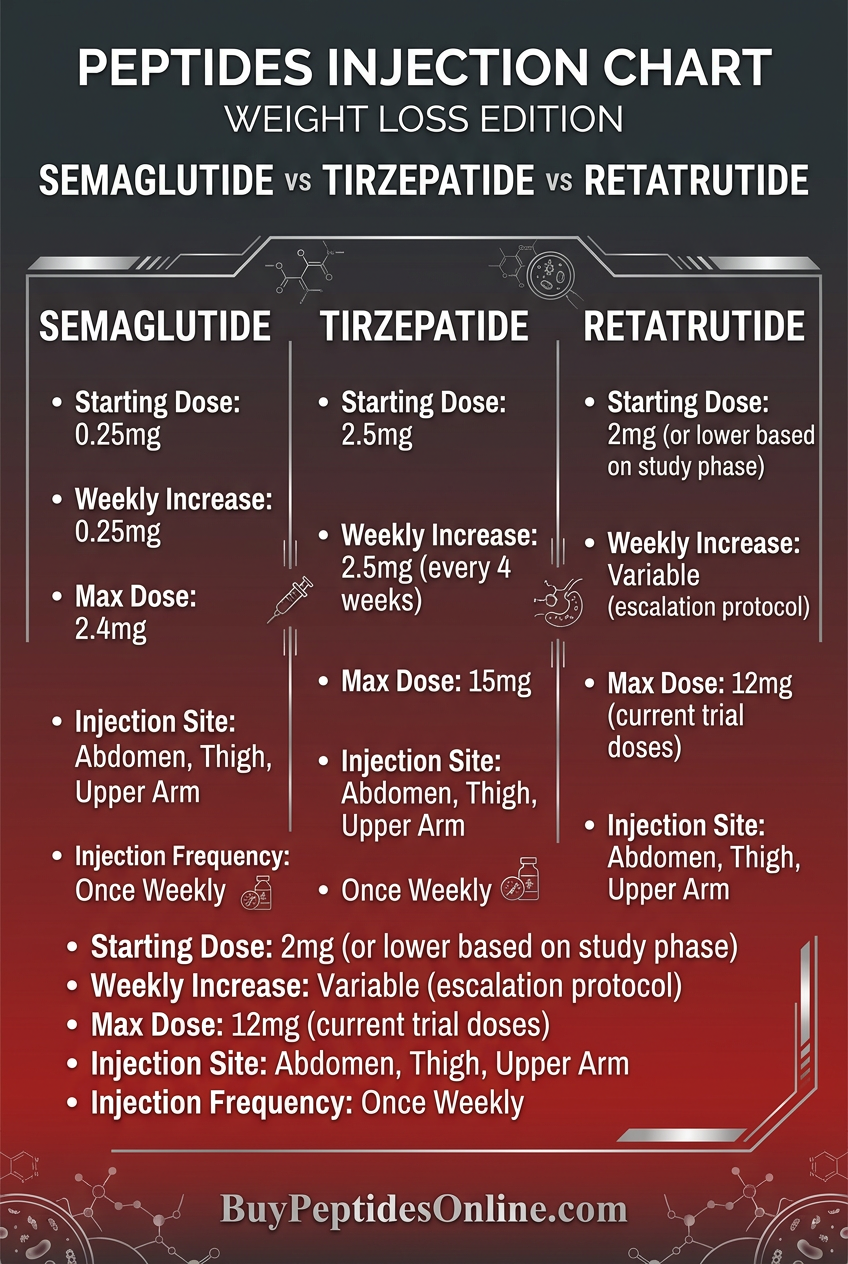
| Study Parameter | Semaglutide 2.4mg | Tirzepatide 15mg | Retatrutide 12mg |
|---|---|---|---|
| Mean Weight Loss | 14.9% | 22.5% | 24.2% |
| ≥20% Weight Loss | 35% | 57% | 55% |
| ≥25% Weight Loss | 13% | 30% | 28% |
| HbA1c Reduction | -1.5% | -2.3% | -1.3%* |
| Cardiovascular Events | -26% | TBD | TBD |
| Treatment Duration | 68 weeks | 72 weeks | 48 weeks |
*Non-diabetic population
Complete Dosing Guide: Protocols for Each Compound
Semaglutide Dosing Protocols
#### Beginner Protocol: Conservative Approach
Weeks 1-4: 0.25mg subcutaneously once weekly
Rationale: Minimize GI side effects during initial adaptation
Injection timing: Same day each week, any time of day
Monitoring: Weekly weight, appetite changes, GI tolerance
Weeks 5-8: 0.5mg subcutaneously once weekly
Escalation criteria: Good tolerance of initial dose
Side effect management: Anti-nausea medication if needed
Expected response: 2-4% weight loss by week 8
Weeks 9-12: 1.0mg subcutaneously once weekly
Maintenance option: Some patients maintain excellent results at this dose
Assessment point: Evaluate weight loss trajectory and tolerability
Weeks 13-16: 1.7mg subcutaneously once weekly (optional)
Indication: Suboptimal weight loss at 1.0mg
Alternative: Remain at 1.0mg if achieving >1% weight loss per month
Week 17+: 2.4mg subcutaneously once weekly (target dose)
Maximum efficacy: Highest approved dose for weight management
Maintenance: Continue indefinitely for sustained weight loss
#### Standard Protocol: Typical Clinical Approach
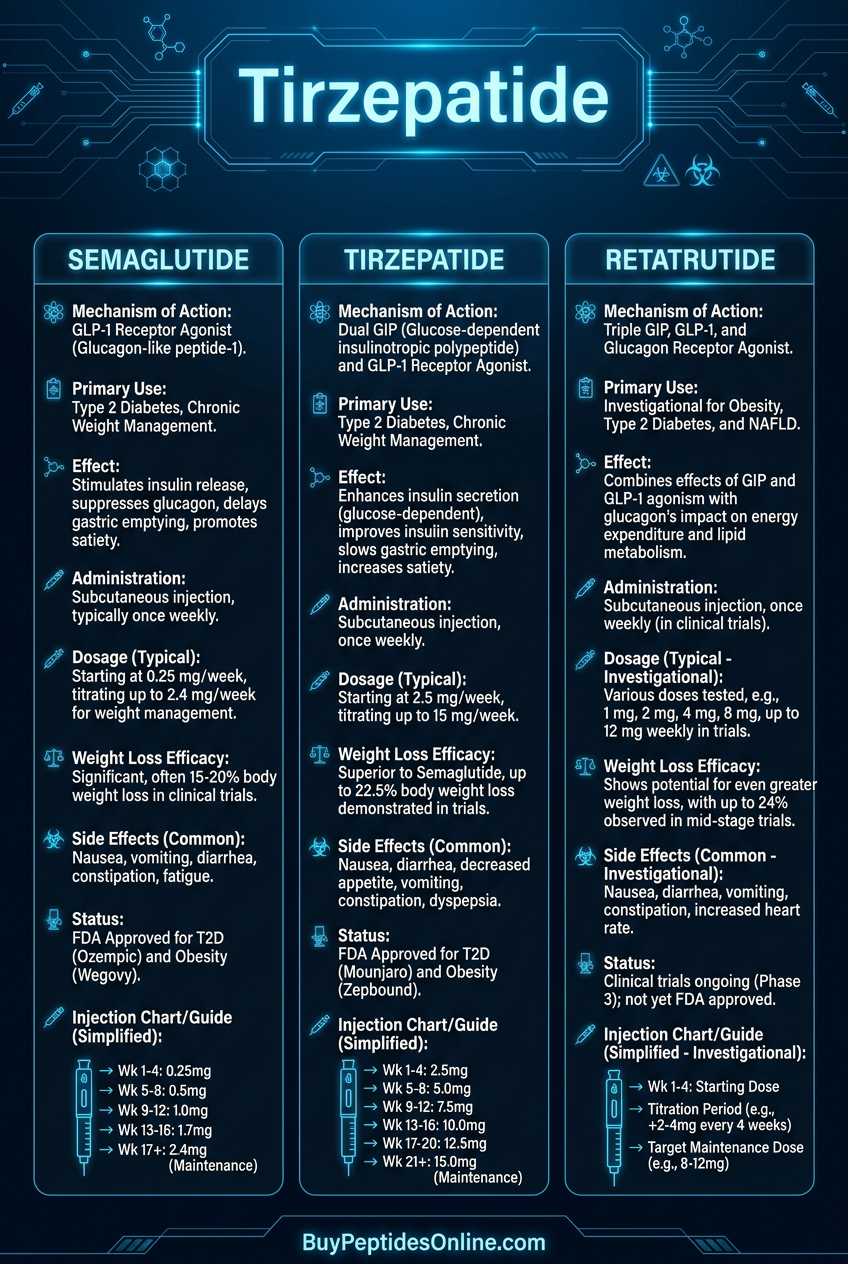
Weeks 1-4: 0.25mg weekly → Weeks 5-8: 0.5mg weekly → Weeks 9-12: 1.0mg weekly → Weeks 13-16: 1.7mg weekly → Week 17+: 2.4mg weekly
Key considerations:
Skip dose escalation if experiencing significant nausea/vomiting
Patients with diabetes may start at 0.5mg
Elderly patients (>65) may benefit from slower titration
#### Advanced Protocol: Accelerated Approach
Weeks 1-2: 0.25mg weekly
Weeks 3-4: 0.5mg weekly
Weeks 5-6: 1.0mg weekly
Weeks 7-8: 1.7mg weekly
Week 9+: 2.4mg weekly
Candidacy criteria:
Previous GLP-1 agonist experience
Excellent GI tolerance
Urgent medical need for rapid weight loss
Close medical supervision available
Tirzepatide Dosing Protocols
#### Beginner Protocol: Gentle Introduction
Weeks 1-4: 2.5mg subcutaneously once weekly
Starting dose: Higher than semaglutide due to dual mechanism
GI preparation: Consider prokinetic agents for patients with gastroparesis history
Monitoring: Weekly weight, fasting glucose, GI symptoms
Weeks 5-8: 5mg subcutaneously once weekly
First efficacy dose: Meaningful weight loss typically begins
Expected response: 3-6% weight loss by week 8
Adjustment criteria: Excellent tolerance allows continued escalation
Weeks 9-12: 7.5mg subcutaneously once weekly
Mid-range option: Not standard FDA-approved dose but used clinically
Alternative: Direct escalation to 10mg if tolerating 5mg well
Assessment: Evaluate need for further dose increases
Weeks 13-16: 10mg subcutaneously once weekly
Standard maintenance: Effective dose for most patients
Weight loss expectation: 15-20% by week 72
Hold criteria: Persistent nausea, vomiting, or gastroparesis
Week 17+: 15mg subcutaneously once weekly (optional)
Maximum dose: For patients needing additional efficacy
Candidacy: <15% weight loss at 10mg after 20+ weeks
Enhanced monitoring: Monthly assessment for first 3 months
#### Standard Protocol: FDA-Approved Escalation
Weeks 1-4: 2.5mg weekly → Weeks 5-8: 5mg weekly → Weeks 9-12: 10mg weekly → Week 13+: 15mg weekly (if needed)
#### Advanced Protocol: Rapid Escalation
Week 1-2: 2.5mg weekly
Week 3-4: 5mg weekly
Week 5-6: 10mg weekly
Week 7+: 15mg weekly
Supervision requirements:
Weekly clinic visits for first month
Comprehensive metabolic panel every 2 weeks
ECG monitoring for patients with cardiac history
Retatrutide Dosing Protocols (Investigational)
#### Phase 3 Trial Protocol
Weeks 1-4: 2mg subcutaneously once weekly
Research dose: Higher starting dose than other GLP-1 agonists
Justification: Triple mechanism requires higher initial receptor occupancy
Safety monitoring: Enhanced GI symptom tracking
Weeks 5-8: 4mg subcutaneously once weekly
Efficacy threshold: Significant weight loss typically observed
Expected response: 5-8% weight loss by week 8
Tolerability assessment: Majority of patients tolerate escalation
Weeks 9-12: 8mg subcutaneously once weekly
High-efficacy dose: Approaching maximum weight loss potential
Clinical consideration: Some patients achieve target weight loss
Hold option: Maintain 4mg if excellent response
Week 13+: 12mg subcutaneously once weekly
Maximum investigated dose: Highest efficacy but increased side effects
Patient selection: Reserve for patients needing >20% weight loss
Alternative: Cycle between 8mg and 12mg based on tolerance
#### Projected Clinical Protocol (Post-Approval)
Conservative approach: 1mg → 2mg → 4mg → 8mg over 16 weeks
Standard approach: 2mg → 4mg → 8mg → 12mg over 12 weeks
Aggressive approach: 2mg → 4mg → 8mg over 8 weeks, with optional 12mg
Comprehensive Dosing Table
| Week | Semaglutide | Tirzepatide | Retatrutide* |
|---|---|---|---|
| 1-4 | 0.25mg | 2.5mg | 2mg |
| 5-8 | 0.5mg | 5mg | 4mg |
| 9-12 | 1.0mg | 10mg | 8mg |
| 13-16 | 1.7mg | 15mg | 12mg |
| 17+ | 2.4mg | 15mg | 12mg |
| Expected Weight Loss | 14.9% | 22.5% | 24.2% |
| Time to Max Dose | 16 weeks | 12 weeks | 12 weeks |
*Investigational dosing
Reconstitution and Storage
#### Semaglutide
Supplied form: Pre-filled pen injectors (Ozempic, Wegovy)
Storage: 2-8°C before first use, room temperature up to 56 days after
Preparation: No reconstitution required
Injection volume: 0.5mL or 0.75mL depending on dose
#### Tirzepatide
Supplied form: Pre-filled pen injectors (Mounjaro, Zepbound)
Storage: 2-8°C before first use, room temperature up to 21 days after
Preparation: No reconstitution required
Injection volume: 0.5mL across all doses
#### Retatrutide (Research Protocols)
Supplied form: Lyophilized powder in sterile vials
Reconstitution: Bacteriostatic water, 1-2mL per vial
Storage: -20°C powder, 2-8°C reconstituted (21 days maximum)
Preparation: Gentle mixing, avoid shaking to prevent aggregation
Stacking Strategies: Combination Protocols for Enhanced Results
GLP-1 + Metformin: The Foundational Stack
Mechanistic rationale: Metformin enhances insulin sensitivity and activates AMPK pathways, complementing GLP-1 receptor agonist effects on glucose homeostasis and weight loss.
#### Protocol 1: Semaglutide + Metformin XR
Semaglutide component:
Standard escalation: 0.25mg → 0.5mg → 1.0mg → 1.7mg → 2.4mg weekly
Target maintenance: 2.4mg weekly
Metformin component:
Week 1-2: 500mg extended-release with dinner
Week 3-4: 1000mg extended-release with dinner
Week 5+: 1000mg twice daily (morning and evening)
Maximum dose: 2000mg daily divided
Synergistic effects:
Enhanced weight loss: Additional 3-5% beyond semaglutide alone
Improved glucose control: HbA1c reductions up to 2.5%
Reduced insulin resistance: HOMA-IR improvements of 40-60%
GI tolerance: Metformin may reduce semaglutide-induced nausea
Monitoring requirements:
Monthly comprehensive metabolic panel first 3 months
Quarterly HbA1c and lipid panels
Annual B12 levels (metformin can reduce absorption)
#### Protocol 2: Tirzepatide + Metformin XR
Combination dosing:
Tirzepatide: 2.5mg → 5mg → 10mg → 15mg weekly
Metformin XR: 500mg → 1000mg → 2000mg daily
Timeline: 16-week escalation to full doses
Enhanced outcomes:
Weight loss amplification: 25-30% total weight reduction possible
Diabetes remission rates: Up to 65% achieve HbA1c <6.5% off other medications
Cardiovascular benefits: Additive effects on blood pressure and lipids
GLP-1 + Naltrexone/Bupropion: The Appetite Suppression Stack
Scientific basis: Naltrexone blocks opioid-mediated food reward while bupropion enhances dopamine/norepinephrine signaling. Combined with GLP-1 agonists, this creates multi-pathway appetite suppression.
#### Advanced Protocol: Triple Mechanism Stack
Semaglutide component: 2.4mg weekly (established dose)
Naltrexone/Bupropion component (Contrave):
Week 1: 8mg/90mg once daily (morning)
Week 2: 8mg/90mg twice daily
Week 3: 8mg/90mg AM, 16mg/180mg PM
Week 4+: 16mg/180mg twice daily
Synergistic mechanisms:
Central appetite suppression: GLP-1 hypothalamic effects + dopaminergic reward modification
Peripheral satiety: Delayed gastric emptying + enhanced satiety hormone release
Metabolic rate: Bupropion increases energy expenditure 5-8%
Expected outcomes:
Weight loss: 25-35% total weight reduction
Appetite suppression: 70-80% reduction in caloric intake
Food cravings: Dramatic reduction in hedonic eating behaviors
Safety considerations:
Contraindications: Seizure disorders, eating disorders, abrupt alcohol cessation
Blood pressure monitoring: Both drug classes can affect cardiovascular parameters
Psychiatric screening: Enhanced risk of mood changes with combination
Investigational Stacks: Future Combination Therapies
#### Retatrutide + SGLT2 Inhibitors
Theoretical framework: Combining triple incretin agonism with renal glucose elimination could produce unprecedented weight loss and glycemic control.
Proposed protocol:
Retatrutide: 2mg → 4mg → 8mg weekly
Empagliflozin: 10mg → 25mg daily
Duration: 72-week assessment period
Projected benefits:
Weight loss: 30-35% total reduction
Glucose control: HbA1c reductions >3%
Cardiovascular protection: Additive effects on heart failure and renal outcomes
Development timeline: Phase 2 trials anticipated 2025-2026
#### GLP-1 + Brown Adipose Tissue Activators
Emerging concept: Combining appetite suppression with enhanced thermogenesis through BAT activation (β3-agonists, cold exposure protocols, specific supplements).
Research compounds:
Mirabegron: β3-adrenergic agonist, FDA-approved for overactive bladder
CL316,243: Selective β3-agonist in preclinical development
Cold exposure therapy: Systematic cold thermogenesis protocols
Mechanistic rationale: GLP-1 agonists reduce caloric intake while BAT activators increase caloric expenditure, creating optimal energy balance modification.
Combination Dosing Reference Table
| Stack Type | Primary Agent | Secondary Agent | Expected Weight Loss | Duration to Max Effect |
|---|---|---|---|---|
| GLP-1 + Metformin | Semaglutide 2.4mg | Metformin XR 2000mg | 18-22% | 68 weeks |
| Dual Incretin + Metformin | Tirzepatide 15mg | Metformin XR 2000mg | 25-30% | 72 weeks |
| GLP-1 + Appetite Modulators | Semaglutide 2.4mg | Naltrexone/Bupropion | 25-35% | 78 weeks |
| Triple + SGLT2 | Retatrutide 8mg | Empagliflozin 25mg | 30-35%* | 72 weeks* |
*Projected based on preclinical data
Safety Deep Dive: Risk Profiles and Management Strategies
Common Side Effects: Frequency and Management
#### Gastrointestinal Effects (Most Common)
Nausea
Frequency: Semaglutide 44%, Tirzepatide 12-22%, Retatrutide 15-44%
Timeline: Peaks during dose escalation, typically resolves within 4-8 weeks
Severity: Usually mild-moderate, severe in <5% of patients
Management strategies
- Slower dose titration (extend escalation phases by 2-4 weeks)
- Take with food to slow gastric emptying
- Ondansetron 4-8mg PRN for severe episodes
- Ginger supplements (1000mg daily) for natural antiemetic effects
Vomiting
Frequency: Semaglutide 24%, Tirzepatide 6-12%, Retatrutide 8-29%
Risk factors: Rapid dose escalation, concurrent medications affecting gastric motility
Clinical significance: Leading cause of discontinuation (3-7% of patients)
Management
- Temporary dose reduction by one step
- Antiemetic prophylaxis during escalation phases
- Ensure adequate hydration and electrolyte monitoring
Diarrhea
Frequency: Semaglutide 30%, Tirzepatide 13-16%, Retatrutide 12-21%
Mechanism: Altered gut motility and microbiome changes
Duration: Usually transient, resolving within 2-4 weeks
Management
- Loperamide 2-4mg PRN (maximum 8mg/day)
- Probiotics to restore gut microbiome balance
- Dietary fiber modification (reduce insoluble fiber temporarily)
Constipation
Frequency: Variable, 10-25% across compounds
Mechanism: Delayed gastric emptying and reduced GI motility
Prevention: Adequate fluid intake (2-3L daily), regular physical activity
Treatment: Polyethylene glycol 3350, docusate sodium, or stimulant laxatives
#### Injection Site Reactions
Local inflammation
Frequency: 5-10% across all compounds
Presentation: Erythema, swelling, induration at injection site
Duration: 24-72 hours typically
Prevention: Rotate injection sites, ensure room temperature medication
Treatment: Topical antihistamines, cold compresses, avoid affected site
Lipodystrophy
Frequency: <2% with proper injection technique
Risk factors: Repeated injections in same location
Prevention: Systematic site rotation (abdomen, thighs, upper arms)
Management: Avoid affected areas for 6-12 months to allow tissue recovery
Rare but Serious Adverse Events
#### Pancreatitis Risk Assessment
Incidence rates:
Semaglutide: 0.2% in clinical trials (2 per 1000 patient-years)
Tirzepatide: 0.1% in SURPASS trials
Retatrutide: Insufficient data, but similar risk profile expected
Risk factors:
History of pancreatitis (relative contraindication)
Gallstones or biliary disease
Hypertriglyceridemia (>500 mg/dL)
Alcohol use disorder
Concurrent medications (thiazides, corticosteroids)
Clinical presentation:
Severe epigastric pain radiating to back
Nausea, vomiting, fever
Elevated lipase >3x upper limit of normal
CT or MRI findings consistent with acute pancreatitis
Management protocol:
Immediate discontinuation of GLP-1 agonist
Supportive care with IV fluids, pain management
Gastroenterology consultation
Never rechallenge: — permanent contraindication
#### Thyroid C-Cell Tumor Concerns
Preclinical findings: Rodent studies showed increased incidence of thyroid C-cell tumors with GLP-1 agonists
Human relevance: No confirmed cases of medullary thyroid carcinoma (MTC) causally linked to GLP-1 agonists in clinical trials
Screening recommendations:
Contraindication: Personal or family history of MTC or Multiple Endocrine Neoplasia syndrome type 2 (MEN2)
Baseline assessment: Thyroid examination, consider calcitonin levels in high-risk patients
Monitoring: Annual thyroid examination, investigate any neck mass or hoarseness
#### Diabetic Retinopathy Progression
SUSTAIN-6 finding: Increased risk of diabetic retinopathy complications with semaglutide in patients with pre-existing retinopathy
Mechanism: Rapid glucose reduction may temporarily worsen retinal blood flow
Risk mitigation:
Ophthalmologic examination before initiation in diabetic patients
More frequent eye exams (every 6 months) during first year
Slower glucose reduction in patients with advanced retinopathy
Contraindications and Special Populations
#### Absolute Contraindications
1. Personal or family history of medullary thyroid carcinoma
2. Multiple Endocrine Neoplasia syndrome type 2 (MEN2)
3. Hypersensitivity to GLP-1 agonists or excipients
4. Type 1 diabetes (not indicated, risk of diabetic ketoacidosis)
#### Relative Contraindications (Require Risk-Benefit Assessment)
1. History of pancreatitis
2. Severe gastroparesis
3. Inflammatory bowel disease
4. Severe renal impairment (GFR <30 mL/min/1.73m²)
5. Pregnancy and lactation (limited safety data)
#### Special Population Considerations
Elderly patients (≥65 years):
Dose adjustment: Consider slower titration due to increased sensitivity
Monitoring: Enhanced attention to dehydration and electrolyte imbalances
Drug interactions: Higher likelihood of polypharmacy interactions
Patients with renal impairment:
Mild-moderate impairment: No dose adjustment required
Severe impairment: Limited data, use with caution
Dialysis patients: Not recommended due to lack of safety data
Patients with hepatic impairment:
Mild-moderate impairment: No dose adjustment typically required
Severe impairment: Avoid use due to limited safety and efficacy data
Drug Interactions and Monitoring
#### Pharmacokinetic Interactions
Delayed gastric emptying effects:
Oral medications: May have altered absorption due to delayed gastric transit
Timing considerations: Space oral medications 1-2 hours before GLP-1 agonist injection
Specific concerns: Warfarin, digoxin, oral contraceptives may require monitoring
Insulin and sulfonylureas:
Hypoglycemia risk: Increased risk when combined with insulin secretagogues
Dose adjustments: Reduce insulin/sulfonylurea doses by 20-50% when initiating
Monitoring: More frequent blood glucose checks during titration period
#### Monitoring Parameters
Baseline assessments:
Comprehensive metabolic panel (glucose, electrolytes, kidney function)
Lipid panel and HbA1c
Thyroid examination and TSH
Blood pressure and heart rate
Weight and BMI documentation
Ongoing monitoring:
Monthly: Weight, blood pressure, glucose (if diabetic)
Quarterly: HbA1c (if diabetic), comprehensive metabolic panel
Annually: Lipid panel, thyroid examination, ophthalmologic exam (if diabetic)
Red flag symptoms requiring immediate evaluation:
Severe abdominal pain (pancreatitis concern)
Persistent vomiting with dehydration
Signs of severe hypoglycemia
Neck mass or voice changes (thyroid concern)
Visual changes (retinopathy progression)
Compared to Alternatives: How the Big Three Stack Up
Comprehensive Comparison Framework
#### Weight Loss Efficacy Analysis
Head-to-head trials:
SURPASS-2: Tirzepatide vs Semaglutide directly compared
Results: All tirzepatide doses (5mg, 10mg, 15mg) superior to semaglutide 1.0mg
Weight loss difference: 4-8% additional weight loss with tirzepatide
Clinical significance: Difference exceeds minimal clinically important difference (5%)
Indirect comparisons with retatrutide:
Network meta-analysis approach: Comparing Phase 2 retatrutide data to Phase 3 semaglutide/tirzepatide data
Statistical considerations: Different study populations and durations limit direct comparison
Preliminary conclusion: Retatrutide appears superior, but head-to-head trials needed
#### Mechanism Complexity vs. Clinical Benefit
| Aspect | Semaglutide (GLP-1) | Tirzepatide (GLP-1/GIP) | Retatrutide (GLP-1/GIP/Glucagon) |
|---|---|---|---|
| Receptor targets | 1 | 2 | 3 |
| Mechanism complexity | Simple | Moderate | Complex |
| Weight loss efficacy | 14.9% | 22.5% | 24.2% |
| Glucose control | Excellent | Superior | Excellent |
| Side effect profile | Well-characterized | Well-characterized | Emerging data |
| Clinical experience | Extensive (7+ years) | Moderate (3+ years) | Limited (Phase 2) |
Traditional Weight Loss Medications
#### Orlistat (Xenical/Alli)
Mechanism: Pancreatic lipase inhibitor, blocks fat absorption
Efficacy: 5-10% weight loss
Advantages:
Over-the-counter availability (lower dose)
No systemic absorption
Established safety profile
Disadvantages:
Significant GI side effects (steatorrhea, fecal urgency)
Fat-soluble vitamin deficiencies
Modest weight loss compared to GLP-1 agonists
Requires strict low-fat diet adherence
Clinical comparison: GLP-1 agonists produce 2-3x greater weight loss with better tolerability
#### Phentermine/Topiramate (Qsymia)
Mechanism: Sympathomimetic appetite suppressant + anticonvulsant
Efficacy: 8-12% weight loss
Advantages:
Oral administration
Lower cost than GLP-1 agonists
Established efficacy
Disadvantages:
Cardiovascular contraindications (uncontrolled hypertension, CAD)
Neuropsychiatric side effects
Teratogenic risk (requires contraception)
Limited long-term safety data
Clinical comparison: GLP-1 agonists offer superior weight loss with better cardiovascular safety profile
#### Naltrexone/Bupropion (Contrave)
Mechanism: Opioid antagonist + dopamine/norepinephrine reuptake inhibitor
Efficacy: 6-9% weight loss
Advantages:
Oral formulation
May help with depression/mood
No injection requirements
Disadvantages:
Seizure risk with bupropion component
Contraindicated in eating disorders
Modest efficacy compared to newer agents
Complex drug interaction profile
Bariatric Surgery Comparison
#### Efficacy Comparison
Sleeve gastrectomy:
Weight loss: 25-30% at 2 years
Diabetes remission: 60-70%
Comparison to retatrutide: Similar weight loss, non-invasive approach
Roux-en-Y gastric bypass:
Weight loss: 30-35% at 2 years
Diabetes remission: 75-85%
Comparison: Surgery still superior for extreme obesity, but gap narrowing
Advantages of surgical approaches:
Durable weight loss (>10 years data)
Mechanical restriction + hormonal changes
Proven cardiovascular and mortality benefits
Advantages of pharmacological approaches:
Reversible intervention
No surgical risks
Preserves normal anatomy
Can be combined with lifestyle interventions
#### Cost-Effectiveness Analysis
Surgery costs (initial): $15,000-$25,000
GLP-1 agonist costs (annual): $12,000-$16,000
Break-even point: 2-3 years, favoring surgery for long-term use
However, considering:
Surgical complications and revision rates
Lost productivity during recovery
Long-term nutritional monitoring costs
Quality of life improvements with medical therapy
Economic conclusion: Comparable cost-effectiveness for most patients, with individual factors determining optimal choice
Emerging Competitors
#### Setmelanotide (Imcivree)
Mechanism: Melanocortin-4 receptor agonist
Indication: Rare genetic obesity disorders
Efficacy: 10-25% weight loss in specific populations
Limitation: Only approved for monogenic obesity, not general population
#### CagriSema (Investigational)
Mechanism: Fixed-dose combination of semaglutide + cagrilintide (amylin analogue)
Projected efficacy: 25-30% weight loss based on Phase 2 data
Advantage: Dual hormone approach with complementary mechanisms
Timeline: Phase 3 trials ongoing, potential approval 2026-2027
#### Survodutide (Investigational)
Mechanism: Dual GLP-1/glucagon receptor agonist
Development status: Phase 2 trials completed
Efficacy: 12-18% weight loss in preliminary studies
Positioning: May compete with tirzepatide but appears less effective than retatrutide
Comparative Safety Profiles
| Safety Parameter | Semaglutide | Tirzepatide | Retatrutide | Orlistat | Qsymia |
|---|---|---|---|---|---|
| GI side effects | Common | Common | Common | Severe | Mild |
| Cardiovascular safety | Protective | Neutral/Protective | Unknown | Neutral | Concerning |
| Hypoglycemia risk | Low | Low | Low | None | None |
| Drug interactions | Minimal | Minimal | Unknown | Minimal | Moderate |
| Long-term data | 7+ years | 3+ years | <2 years | 20+ years | 10+ years |
| Pregnancy safety | Unknown | Unknown | Unknown | Category X | Category X |
Clinical Decision Algorithm
First-line considerations:
1. BMI 27-35 with comorbidities: Semaglutide or tirzepatide
2. BMI >35: Tirzepatide or consider bariatric surgery evaluation
3. Type 2 diabetes: Tirzepatide preferred for dual benefit
4. Cardiovascular disease: Semaglutide (proven CV benefits)
5. Cost concerns: Generic alternatives or lifestyle intervention
Second-line options:
1. GLP-1 agonist intolerance: Naltrexone/bupropion or phentermine/topiramate
2. Inadequate response: Combination therapy or bariatric surgery
3. Injection aversion: Oral semaglutide (when available) or traditional oral agents
🔬 Explore our peptide database — Browse 500+ research peptide profiles with mechanisms, dosing, and evidence.
🛒 Ready to buy? — Browse our verified vendor shop for third-party tested peptides.
What's Coming Next: The Future of Incretin-Based Therapy
Pipeline Developments
#### Next-Generation Formulations
Oral semaglutide improvements:
Current limitation: 0.5-1% bioavailability requires large tablets
Development focus: Enhanced absorption promoters and enteric coating technologies
Projected improvement: 5-10% bioavailability with smaller tablet size
Timeline: Next-generation oral formulations expected 2025-2026
Long-acting injectable depot systems:
Monthly injections: Extended-release microsphere formulations under development
Quarterly injections: Implantable depot systems in preclinical testing
Advantage: Improved compliance and steady-state levels
Challenge: Managing side effects with non-reversible long-acting formulations
Transdermal delivery systems:
Microneedle patches: Painless delivery through skin micropenetration
Iontophoresis: Electrical current-assisted transdermal delivery
Clinical trials: Phase 1 studies anticipated 2025
#### Novel Combination Therapies
Triple hormone combinations:
GLP-1 + GIP + GCG: Retatrutide represents first-in-class
Peptide + small molecule combinations:
GLP-1 + SGLT2 inhibitor: Fixed-dose combinations in development
GLP-1 + MCR4 agonist: Dual appetite suppression mechanisms
GLP-1 + β3-adrenergic agonist: Appetite reduction + thermogenesis
Emerging Targets Beyond Incretin
#### Activin Receptor Pathway
Bimagrumab mechanism: Activin receptor type IIB antagonist
Unique effect: Increases muscle mass while reducing fat mass
Clinical potential: Body composition improvement beyond weight loss
Development status: Phase 2 trials for sarcopenic obesity
#### Neuropeptide Y System
NPY receptor antagonists: Targeting central appetite control
Advantage: Direct hypothalamic appetite suppression
Challenge: Blood-brain barrier penetration and CNS side effects
Timeline: Early preclinical development
#### Gut Microbiome Modulators
Akkermansia muciniphila supplementation: Improves metabolic health
Postbiotic metabolites: Short-chain fatty acids and GLP-1 stimulation
Engineered probiotics: Genetically modified bacteria producing GLP-1
Clinical evidence: Emerging data suggests 5-8% additional weight loss
Personalized Medicine Approaches
#### Genetic Profiling for Drug Selection
GLP1R polymorphisms: Variants affecting receptor sensitivity and drug response
PCSK1 mutations: Influence incretin processing and effectiveness
MC4R variants: Determine likelihood of response to different mechanisms
Clinical application:
Pharmacogenomic testing: Identify optimal drug choice before treatment
Dose optimization: Genetic variants guide starting doses and escalation
Combination selection: Personalized multi-drug protocols based on genetic profile
#### Biomarker-Guided Therapy
Baseline predictors of response:
C-peptide levels: Indicate β-cell function and likely glucose response
GLP-1 levels: Endogenous hormone production affects drug efficacy
Inflammatory markers: CRP and IL-6 predict weight loss trajectory
Dynamic monitoring:
Continuous glucose monitoring: Real-time optimization of dosing
Metabolomic profiling: Identify metabolic pathway activation
Microbiome analysis: Guide combination with prebiotic/probiotic therapy
Regulatory and Access Developments
#### FDA Pathway Expeditions
Breakthrough therapy designation: Faster review for drugs showing substantial improvement
Real-world evidence: Post-market studies to expand indications
Pediatric extensions: Trials in adolescent obesity populations
Priority review criteria:
>25% weight loss: Threshold for breakthrough designation
Cardiovascular outcomes: Proven mortality benefit
Diabetes prevention: Delay or prevention of type 2 diabetes onset
#### Insurance Coverage Evolution
Current challenges:
High costs: $12,000-$16,000 annual treatment costs
Prior authorization: Complex approval processes
Duration limits: Many plans limit treatment to 1-2 years
Emerging trends:
Value-based contracts: Payment tied to clinical outcomes
Biosimilar development: Lower-cost alternatives in development
Medicare coverage: Expanding coverage for obesity treatment
Research Questions and Clinical Trials
#### Long-term Safety Studies
CVOT trials for newer agents:
Tirzepatide SURPASS-CVOT: 12,500 patients, results expected 2024
Retatrutide cardiovascular study: Planned Phase 3 trial
Duration: 5-7 year follow-up for definitive safety data
Cancer surveillance:
Thyroid monitoring: Long-term MTC incidence tracking
Pancreatic cancer: Registry studies to evaluate association
Colorectal cancer: Emerging signal requiring investigation
#### Optimal Treatment Duration
Key questions:
Minimum effective duration: Shortest treatment producing durable weight loss
Maintenance strategies: Reduced dosing vs. intermittent treatment
Weight regain prevention: Long-term strategies post-discontinuation
Ongoing studies:
STEP 5: Long-term semaglutide maintenance (104 weeks)
SURMOUNT-3: Tirzepatide withdrawal and re-initiation study
Lifestyle integration: Combining pharmacotherapy with behavioral interventions
#### Combination Therapy Optimization
Mechanistic combinations:
Appetite + thermogenesis: GLP-1 agonists + BAT activators
Central + peripheral: Brain-penetrant + systemic agents
Hormonal + surgical: Medical therapy post-bariatric surgery
Clinical trial design:
Factorial studies: Testing multiple combinations simultaneously
Adaptive trials: Real-time optimization based on interim results
Precision medicine: Biomarker-stratified combination selection
🤖 Have questions? — Ask PeptideAI for personalized peptide guidance.
Key Takeaways: Choosing Your Optimal GLP-1 Strategy
• Semaglutide remains the gold standard with 7+ years of safety data, proven cardiovascular benefits, and 14.9% average weight loss — ideal for patients prioritizing established safety profiles and those with cardiovascular disease.
• Tirzepatide delivers superior efficacy with 22.5% weight loss through dual GLP-1/GIP receptor activation — the optimal choice for patients needing maximum weight loss without the risks of investigational compounds.
• Retatrutide represents the future with 24.2% weight loss via triple-receptor activation, but remains investigational with limited long-term safety data — reserve for research protocols or patients requiring unprecedented weight loss.
• Tolerability profiles are similar across all three compounds, with gastrointestinal side effects (nausea, vomiting, diarrhea) being most common and typically resolving within 4-8 weeks of dose stabilization.
• Combination strategies amplify results — adding metformin increases weight loss by 3-5%, while naltrexone/bupropion combinations can achieve 25-35% total weight reduction through complementary mechanisms.
• Cost-effectiveness favors tirzepatide for most patients seeking maximum weight loss, while semaglutide offers the best value for those with cardiovascular comorbidities requiring proven protective effects.
• Personalized selection matters — genetic polymorphisms, baseline biomarkers, and individual tolerability profiles should guide compound selection rather than one-size-fits-all approaches.
• Long-term commitment is essential — all three compounds require indefinite use for weight maintenance, with 50-80% weight regain occurring within 2 years of discontinuation.
• Pipeline developments will reshape options by 2026-2027, with oral formulations, extended-release injections, and novel combination therapies expanding treatment possibilities.
• Clinical monitoring remains critical — monthly weight and tolerability assessments, quarterly metabolic panels, and annual comprehensive evaluations ensure optimal outcomes and early detection of adverse effects.
Related Articles on BuyPeptidesOnline.com
Complete GLP-1 Agonist Buying Guide
Semaglutide Dosing Protocols and Safety
Tirzepatide vs Semaglutide Head-to-Head Analysis
Best Peptides for Weight Loss in 2026
How to Buy Research Peptides Safely Online