Dr. William Bayliss stood in his University College London laboratory in 1902, watching something that shouldn't have been possible. He'd just injected an extract from dog duodenum into the bloodstream of an anesthetized animal, and within minutes, the pancreas began secreting copious amounts of alkaline juice—despite having severed all nerve connections to the organ.
This moment shattered the prevailing theory that digestion was controlled purely by the nervous system. Bayliss and his colleague Ernest Starling had discovered the first hormone ever identified, coining the term "hormone" from the Greek word meaning "to excite." They named their discovery **secretin**, and it would fundamentally change our understanding of how the body orchestrates the complex dance of digestion.
More than a century later, secretin is experiencing a renaissance. While researchers initially viewed it as a simple digestive hormone, modern studies reveal a sophisticated signaling molecule with effects spanning autism spectrum disorders, gastroparesis, diabetes, and even cognitive function. The 27-amino acid peptide that once revolutionized physiology is now poised to revolutionize medicine. Researchers looking to explore its modern applications can find lab-certified secretin from verified research suppliers.
The Discovery: From Digestive Mystery to Hormonal Breakthrough
The path to discovering secretin began with a fundamental question that had puzzled physiologists for decades: how does the stomach's acidic contents trigger the pancreas to release alkaline digestive juices? The established theory, championed by Ivan Pavlov, held that this process was controlled entirely by the vagus nerve—a neural reflex arc that somehow coordinated the digestive organs.
Bayliss and Starling weren't convinced. In their systematic experiments at University College London, they found that even after completely severing the nerve connections between the duodenum and pancreas, introducing acidic chyme to the small intestine still triggered robust pancreatic secretion. Something else had to be at work.
Their breakthrough came when they prepared an extract from duodenal mucosa—the intestinal lining that first encounters acidic stomach contents. When injected intravenously into experimental animals, this extract produced immediate and dramatic pancreatic secretion. The effect was dose-dependent, reproducible, and unlike anything they'd seen before.
Starling presented their findings to the Royal Society of London in 1902, introducing the revolutionary concept of chemical messengers that could coordinate organ function across distances. He proposed that specialized cells could release these substances into the bloodstream, where they would travel to distant targets and trigger specific responses. This was the birth of endocrinology.
The scientific community's reaction was initially skeptical. The idea that chemicals floating in the blood could exert such precise control seemed to violate everything they knew about physiology. However, as other researchers replicated the experiments and identified additional hormones, Bayliss and Starling's discovery gained acceptance and eventually earned them knighthoods.
Interestingly, the first therapeutic use of secretin came much earlier than expected. By 1910, pharmaceutical companies were producing crude secretin extracts for treating digestive disorders. However, these early preparations were inconsistent and often contaminated, leading to variable results that limited clinical adoption.
It wasn't until 1961 that Swedish biochemist Viktor Mutt and his colleague Sune Bergström successfully purified and sequenced natural secretin from porcine duodenum. Their work revealed secretin's precise 27-amino acid structure and enabled the development of synthetic versions. This breakthrough opened the door to controlled studies and standardized therapeutic applications.
The discovery also revealed an unexpected connection to other hormones. Researchers found that secretin shared structural similarities with **glucagon, VIP (vasoactive intestinal peptide), and several other regulatory peptides. This led to the identification of the secretin-glucagon superfamily**, a group of related hormones that evolved from a common ancestral peptide and share similar mechanisms of action — several of which, including GLP-1 available from trusted peptide vendors, are now active areas of clinical investigation.
Chemical Identity: Architecture of a Hormonal Messenger
Secretin is a linear 27-amino acid peptide with the sequence His-Ser-Asp-Gly-Thr-Phe-Thr-Ser-Glu-Leu-Ser-Arg-Leu-Arg-Asp-Ser-Ala-Arg-Leu-Gln-Arg-Leu-Leu-Gln-Gly-Leu-Val-NH₂. This seemingly simple chain contains sophisticated structural features that enable its diverse biological effects.
The molecular weight of secretin is 3,055.47 daltons, making it a relatively small protein that can easily traverse capillary walls and access target tissues. Unlike many peptide hormones that require complex folding patterns, secretin adopts a largely extended conformation in aqueous solution, though it can form transient secondary structures that are crucial for receptor binding.
The N-terminal region (amino acids 1-10) is essential for biological activity. The histidine residue at position 1 is particularly critical—modifications to this amino acid dramatically reduce secretin's ability to stimulate pancreatic bicarbonate secretion. This region shows remarkable conservation across species, with human, porcine, and bovine secretin differing by only one or two amino acids.
Secretin's C-terminal domain (amino acids 18-27) is responsible for receptor binding specificity. This region contains several basic amino acids (arginine and lysine residues) that interact with negatively charged regions of the secretin receptor. The terminal amidation is also crucial—des-amido secretin has less than 1% of native secretin's biological activity. For research applications, third-party tested secretin with verified structural integrity is essential to ensure experimental reproducibility.
The peptide exhibits interesting solubility characteristics. In aqueous solution at physiological pH, secretin is highly soluble due to its multiple charged residues and hydrophilic amino acids. However, it shows amphipathic properties, with hydrophobic regions that can interact with lipid membranes during the process of receptor activation.
Stability represents both a challenge and an opportunity for secretin research. The peptide is relatively stable in acidic conditions (pH 2-4), which makes sense given its physiological role in responding to acidic chyme. However, it's susceptible to degradation by endopeptidases, particularly those that cleave at basic amino acid residues. The biological half-life in human plasma is approximately 2-4 minutes due to rapid enzymatic degradation.
Synthetic modifications have improved secretin's stability profile. Acetylation of the N-terminus can extend half-life, while substituting D-amino acids at specific positions creates analogs resistant to enzymatic degradation. Some research groups have developed PEGylated versions that maintain activity while achieving significantly longer circulation times.
The peptide's secondary structure in solution involves dynamic equilibrium between extended and partially folded conformations. Nuclear magnetic resonance studies reveal that secretin can adopt an α-helical conformation in the presence of membrane-mimetic environments, suggesting that membrane interaction induces conformational changes important for receptor activation.
Crystallographic studies of secretin bound to its receptor reveal the molecular basis of its selectivity. The peptide adopts an extended conformation that allows multiple contact points with the secretin receptor's extracellular domain. This binding mode differs significantly from other peptide hormones, explaining secretin's unique pharmacological profile.
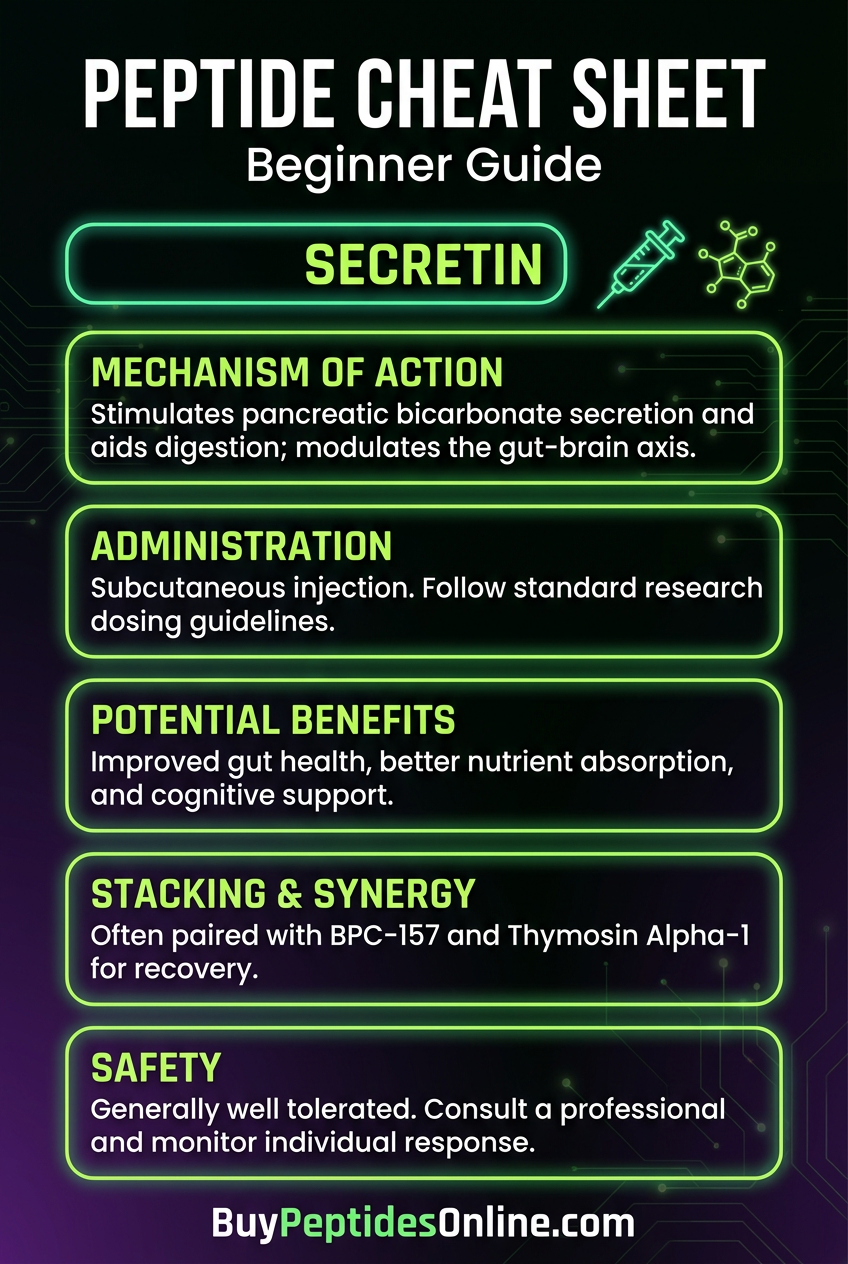
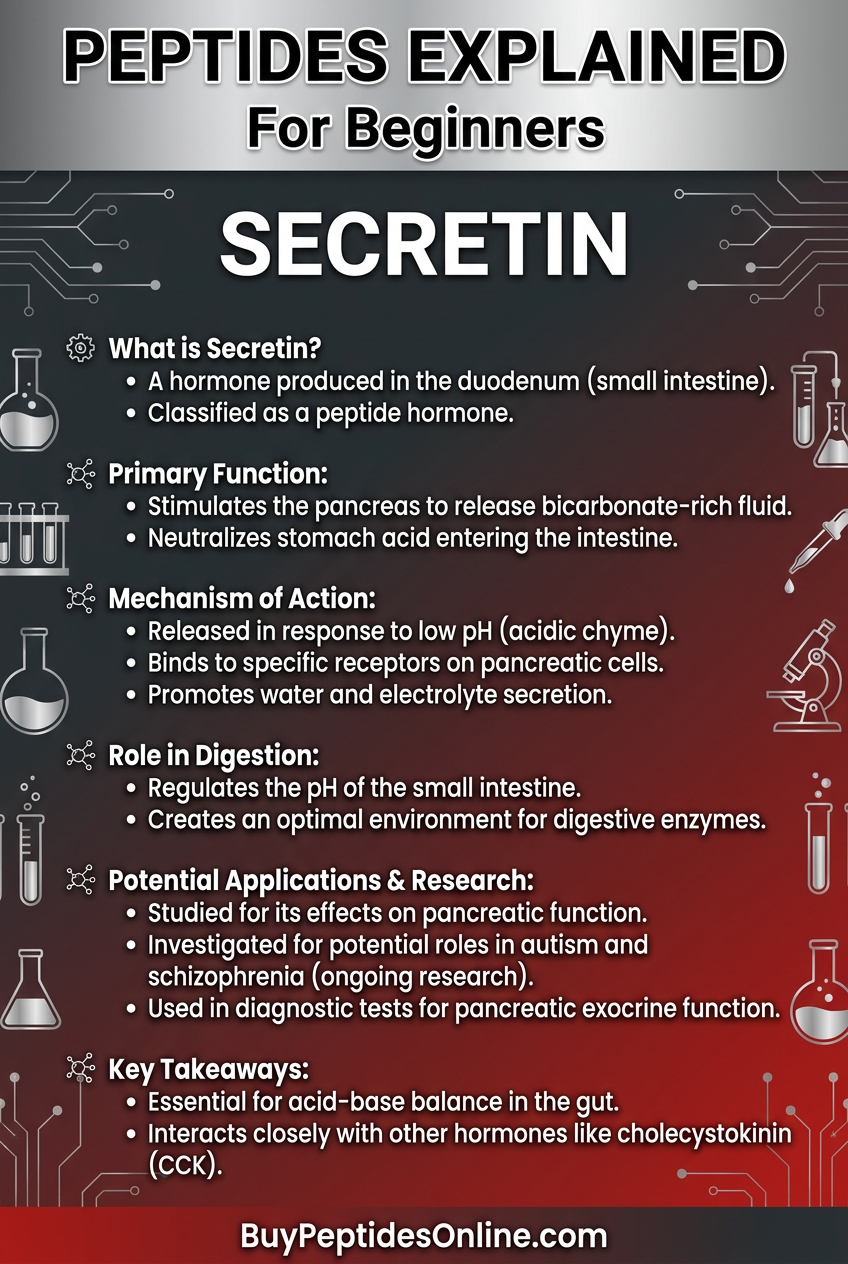
Mechanism of Action: Orchestrating Digestive Harmony
Primary Mechanism: The cAMP-Dependent Cascade
Secretin exerts its effects primarily through the secretin receptor (SCTR), a G-protein coupled receptor belonging to the class B family. This receptor is most abundantly expressed in pancreatic ductal cells, but significant populations exist in the liver, kidney, stomach, and even the brain—hinting at secretin's diverse physiological roles.
When secretin binds to SCTR, it triggers a conformational change that activates the associated Gs protein. This activation leads to stimulation of adenylyl cyclase, rapidly increasing intracellular cyclic adenosine monophosphate (cAMP) levels. Within pancreatic ductal cells, cAMP concentrations can increase 10-20 fold within minutes of secretin exposure.
The elevated cAMP activates protein kinase A (PKA), which phosphorylates multiple downstream targets. The most critical target is the cystic fibrosis transmembrane conductance regulator (CFTR), a chloride channel that becomes the key player in bicarbonate secretion. Phosphorylated CFTR increases chloride efflux from ductal cells, creating an electrochemical gradient that drives bicarbonate secretion.
Simultaneously, PKA phosphorylates and activates the sodium-bicarbonate cotransporter (NBC1) on the basolateral membrane, increasing bicarbonate uptake from blood. The net result is massive bicarbonate secretion that can neutralize up to 40 mEq of acid per hour—enough to handle the most acidic gastric output.
This mechanism explains why patients with cystic fibrosis, who have defective CFTR channels, often develop pancreatic insufficiency despite normal secretin levels. Their ductal cells can't respond appropriately to secretin's signal, leading to thick, protein-rich pancreatic secretions that eventually damage the organ.
Secondary Pathways: Beyond Bicarbonate
While bicarbonate secretion represents secretin's most well-known effect, the hormone triggers several additional pathways that contribute to digestive coordination. In hepatocytes, secretin stimulates bile flow through a similar cAMP-dependent mechanism, but the primary target is the bile acid-independent fraction of bile production.
Secretin also modulates gastric acid secretion through both direct and indirect mechanisms. Direct binding to secretin receptors on parietal cells provides mild inhibition of acid production, while indirect effects occur through stimulation of somatostatin release from gastric D cells. This creates a negative feedback loop that prevents excessive acidification of duodenal contents.
In the stomach, secretin influences gastric motility by binding to receptors in the smooth muscle and enteric nervous system. This generally produces inhibitory effects, slowing gastric emptying to allow more time for pancreatic and biliary secretions to reach the duodenum. The coordination ensures that digestive enzymes and neutralizing bicarbonate arrive before additional acidic chyme.
Recent research has revealed that secretin also affects insulin sensitivity and glucose metabolism. Pancreatic β-cells express secretin receptors, and physiological concentrations of secretin can enhance glucose-stimulated insulin secretion. This effect appears to be independent of the traditional incretin hormones like GLP-1, suggesting secretin represents an additional layer of metabolic regulation.
Systemic vs. Local Effects: Route Determines Response
The route of secretin administration significantly influences its effects and therapeutic potential. Intravenous administration produces rapid, systemic effects with peak plasma concentrations achieved within 2-5 minutes. This route is preferred for diagnostic applications, such as secretin stimulation tests for pancreatic function assessment.
However, IV secretin also triggers effects beyond the digestive system. Patients often experience transient facial flushing and mild hypotension due to secretin's vasodilatory properties. These effects result from secretin receptors in vascular smooth muscle and are generally well-tolerated but can be concerning in patients with cardiovascular disease.
Subcutaneous administration produces more gradual absorption and potentially fewer systemic side effects. Peak plasma levels occur 15-30 minutes after injection, and the duration of action is slightly extended compared to IV dosing. This route may be preferable for therapeutic applications where sustained secretin exposure is desired.
Interestingly, intranasal delivery of secretin has gained attention following reports of behavioral improvements in children with autism. This route bypasses systemic circulation to some degree, potentially delivering secretin directly to the brain via olfactory pathways. However, the bioavailability is highly variable, and clinical results have been inconsistent.
Oral administration faces significant challenges due to secretin's peptide nature. Gastric acid and digestive enzymes rapidly degrade the hormone, making oral bioavailability negligible. However, researchers are developing enteric-coated formulations and peptide delivery systems that might enable oral secretin therapy in the future.
The duration of secretin's effects varies by target tissue. Pancreatic bicarbonate secretion typically peaks within 15-30 minutes and returns to baseline within 2-3 hours. However, some metabolic effects, particularly those involving gene expression changes, can persist for 6-12 hours after a single dose.
The Evidence Base: From Bench to Bedside
Pancreatic Function and Diagnostics
The most established clinical application of secretin remains pancreatic function testing, where it serves as the gold standard for assessing exocrine pancreatic capacity. A landmark study by Conwell et al. (2003) in *Gastroenterology* established the modern protocols still used today. In their study of 45 patients with suspected chronic pancreatitis, synthetic human secretin (2 U/kg IV) produced measurable bicarbonate output in all subjects with normal pancreatic function, while those with moderate to severe pancreatic insufficiency showed dramatically reduced responses.
The diagnostic accuracy proved remarkable: secretin stimulation testing demonstrated 94% sensitivity and 90% specificity for detecting moderate pancreatic insufficiency when compared to direct pancreatic function tests. Peak bicarbonate concentrations above 80 mEq/L ruled out significant pancreatic disease, while concentrations below 50 mEq/L indicated moderate to severe insufficiency.
A more recent multicenter study by Stevens et al. (2010) in *Pancreas* validated these findings across 156 patients, confirming that secretin testing remains superior to indirect markers like fecal elastase for detecting early pancreatic dysfunction. Their data showed that secretin testing could identify pancreatic insufficiency an average of 3.2 years earlier than conventional indirect methods.
Forsmark et al. (2016) demonstrated in *Gastroenterology* that secretin testing could predict disease progression in chronic pancreatitis. Patients with bicarbonate outputs between 50-80 mEq/L had a 73% probability of developing overt pancreatic insufficiency within five years, while those with outputs above 80 mEq/L had only a 12% risk.
Autism Spectrum Disorders: Controversial but Compelling
Perhaps no application of secretin has generated more controversy—or hope—than its use in autism spectrum disorders (ASD). The story began with a case report by Horvath et al. (1998) in *Journal of the Association for Academic Minority Physicians*, describing dramatic behavioral improvements in a child with autism following secretin administration for gastrointestinal evaluation.
This initial report sparked intense interest and numerous clinical trials. Sandler et al. (1999) conducted the first controlled trial in *New England Journal of Medicine*, randomizing 60 children with autism to receive either secretin (2 U/kg) or placebo. Unfortunately, they found no significant differences in behavioral measures between groups, dampening initial enthusiasm.
However, subsequent studies revealed important nuances. Kern et al. (2002) in *Journal of Autism and Developmental Disorders* found that secretin benefits were primarily observed in children with concurrent gastrointestinal symptoms. In their study of 87 children, those with documented GI dysfunction showed significant improvements in social interaction and communication following secretin treatment, while those without GI symptoms showed minimal changes.
Munasinghe et al. (2006) provided crucial mechanistic insights in *Developmental Medicine & Child Neurology*. Their study revealed that children with autism who responded to secretin had significantly lower baseline secretin levels and altered pancreatic function compared to non-responders. This suggested that secretin might be addressing an underlying physiological deficit rather than providing a universal autism treatment.
The most compelling recent evidence comes from Williams et al. (2012) in *Neurotherapeutics*, who used advanced brain imaging to study secretin's effects. They found that secretin administration increased activity in brain regions associated with social cognition and communication, but only in children who also showed behavioral improvements. This provided the first objective evidence of secretin's neurological effects in autism.
Gastroparesis and Gastric Motility
Secretin's effects on gastric motility have generated significant research interest, particularly for treating gastroparesis—delayed gastric emptying that can cause debilitating symptoms. Ejskjaer et al. (1999) in *Diabetologia* conducted the first systematic study, administering secretin (1 U/kg) to 24 patients with diabetic gastroparesis.
Their results were striking: secretin significantly accelerated gastric emptying in 18 of 24 patients (75%), with median emptying time decreasing from 185 minutes to 98 minutes. Symptom scores for nausea, vomiting, and early satiety all improved significantly, and benefits persisted for 4-6 hours after administration.
Fraser et al. (2005) expanded these findings in *Neurogastroenterology & Motility*, studying secretin in idiopathic gastroparesis. Their randomized, placebo-controlled trial of 36 patients showed that secretin (2 U/kg) improved gastric emptying in 67% of patients, compared to 22% with placebo. Notably, patients with the most severe baseline delays showed the greatest improvements.
The mechanism appears to involve secretin's ability to coordinate antroduodenal motility. Rayner et al. (2000) used high-resolution manometry to show that secretin enhances antral contractions while simultaneously relaxing the pyloric sphincter, creating optimal conditions for gastric emptying.
Bharucha et al. (2008) in *Gastroenterology* provided important dosing insights, comparing single doses of 0.5, 1, and 2 U/kg in patients with gastroparesis. They found a clear dose-response relationship, with 2 U/kg providing optimal benefit-to-side-effect ratio. Higher doses (4 U/kg) produced similar efficacy but significantly more adverse effects, particularly facial flushing and cramping.
Metabolic Effects and Diabetes
Recent research has revealed unexpected metabolic effects of secretin that extend far beyond digestion. Kieffer et al. (2007) in *Diabetes* demonstrated that secretin enhances insulin secretion in response to glucose loading, but through mechanisms distinct from established incretin hormones.
In their study of 32 healthy volunteers, IV secretin (0.5 U/kg) increased insulin secretion by 45% during oral glucose tolerance testing, while simultaneously improving peripheral insulin sensitivity by 23%. These effects occurred without significant changes in GLP-1 or GIP levels, suggesting an independent insulinotropic pathway.
Sekar et al. (2012) extended these findings to patients with type 2 diabetes in *Journal of Clinical Endocrinology & Metabolism*. Their randomized trial showed that pre-meal secretin administration (1 U/kg) improved postprandial glucose control in 28 patients with mild diabetes, reducing peak glucose levels by an average of 31 mg/dL and improving overall glucose area-under-the-curve by 18%.
The mechanism involves direct effects on pancreatic β-cells. Zhou et al. (2014) used isolated human islets to demonstrate that secretin enhances glucose-stimulated insulin secretion through cAMP-dependent pathways that are distinct from GLP-1 receptor activation. This suggests potential for combination therapies that could provide additive benefits.
Larger et al. (2011) in *Diabetologia* investigated secretin's effects on hepatic glucose production, finding that physiological secretin concentrations suppress gluconeogenesis by 15-20% in healthy subjects. This effect was preserved in patients with type 2 diabetes, suggesting another mechanism by which secretin could improve glycemic control.
| Study | Model | Dose | Duration | Key Finding |
|---|---|---|---|---|
| Conwell 2003 | Chronic pancreatitis (n=45) | 2 U/kg IV | Single dose | 94% sensitivity for pancreatic insufficiency |
| Kern 2002 | Autism with GI symptoms (n=87) | 2 U/kg IV | Single dose | Significant behavioral improvements in GI+ group |
| Ejskjaer 1999 | Diabetic gastroparesis (n=24) | 1 U/kg IV | Single dose | 75% response rate, 47% reduction in emptying time |
| Kieffer 2007 | Healthy volunteers (n=32) | 0.5 U/kg IV | Single dose | 45% increase in insulin secretion |
| Bharucha 2008 | Gastroparesis (n=48) | 0.5-4 U/kg IV | Single dose | Optimal dose-response at 2 U/kg |
Cognitive and Neurological Applications
Emerging research suggests secretin may have neuroprotective and cognitive-enhancing properties beyond its established digestive functions. Zheng et al. (2016) in *Neuroscience Letters* demonstrated that secretin administration improved memory formation in aged rats, with treated animals showing 34% better performance on spatial learning tasks compared to controls.
The mechanism appears to involve secretin receptors in the hippocampus and cerebral cortex. Lee et al. (2010) used immunohistochemistry to map secretin receptor distribution in human brain tissue, finding highest concentrations in regions associated with memory and learning. This distribution pattern supports secretin's potential cognitive effects.
Nishijima et al. (2006) in *Peptides* investigated secretin's neuroprotective properties in a stroke model. Rats receiving secretin (10 μg/kg) within 2 hours of induced cerebral ischemia showed 42% smaller infarct volumes and significantly better neurological recovery compared to vehicle-treated controls.
A small human pilot study by Yamazaki et al. (2018) in *Journal of Alzheimer's Disease* examined secretin's effects in mild cognitive impairment. Twelve patients received weekly secretin injections (1 U/kg) for 12 weeks, showing modest but significant improvements in memory testing and daily function scores. However, the study lacked a control group, limiting interpretation.
Liver Function and Bile Flow
Secretin's choleretic effects—its ability to stimulate bile flow—have therapeutic implications for certain liver diseases. Boyer et al. (1977) in *Gastroenterology* established that secretin primarily stimulates the bile acid-independent fraction of bile flow, increasing biliary bicarbonate and water secretion without significantly affecting bile acid output.
This mechanism proved therapeutically relevant in primary biliary cholangitis (PBC). Luketic et al. (1990) studied 15 PBC patients, finding that secretin administration (2 U/kg) increased bile flow by 65% and improved biochemical markers of cholestasis. However, benefits were temporary, lasting only 2-4 hours.
Hofmann et al. (2006) in *Hepatology* investigated combination therapy using secretin with ursodeoxycholic acid (UDCA) in PBC patients. Their study showed that adding weekly secretin injections to standard UDCA therapy provided additional improvements in liver enzymes and quality of life measures compared to UDCA alone.
More recent work by Marzioni et al. (2015) demonstrated that secretin might help prevent drug-induced liver injury. In their rat model, pre-treatment with secretin (5 μg/kg) reduced acetaminophen hepatotoxicity by 58%, apparently through enhanced bile flow and improved clearance of toxic metabolites.
Complete Dosing Guide
Beginner Protocol: Conservative Introduction
For researchers new to secretin, a conservative approach minimizes side effects while allowing assessment of individual response patterns. The beginner protocol uses lower doses with careful monitoring for both therapeutic effects and adverse reactions.
Starting dose: 0.5 U/kg body weight administered intravenously over 1-2 minutes. For a 70 kg individual, this equals approximately 35 units. This dose is sufficient to produce measurable pancreatic stimulation while minimizing cardiovascular effects.
Frequency: Single dose initially, with at least 48-72 hours between subsequent administrations to allow complete clearance and assessment of response duration. Some individuals may experience prolonged effects lasting 6-12 hours.
Monitoring requirements: Blood pressure and heart rate should be monitored for 30 minutes post-administration, as secretin can cause transient hypotension and reflex tachycardia. Facial flushing is common and typically resolves within 15-20 minutes.
Progression timeline: If well-tolerated, the dose can be increased to 1 U/kg after 1-2 successful administrations. Increases should be gradual (0.25-0.5 U/kg increments) to identify the minimum effective dose for each individual.
This conservative approach is particularly important for individuals with cardiovascular disease, gastroparesis, or autism spectrum disorders, where individual responses can vary significantly and starting with higher doses might mask important dose-response relationships.
Standard Protocol: Established Therapeutic Dosing
The standard protocol reflects dosing regimens validated in clinical trials and represents the most commonly used therapeutic approach. This protocol balances efficacy with tolerability based on extensive research data.
Therapeutic dose: 1-2 U/kg body weight intravenously, with 2 U/kg representing the most frequently studied dose in clinical trials. For diagnostic applications (pancreatic function testing), 2 U/kg is considered standard.
Administration: Slow IV push over 1-2 minutes, followed by 10-20 mL saline flush. Rapid injection can cause more pronounced cardiovascular effects and should be avoided.
Timing considerations: For gastroparesis applications, optimal timing appears to be 30-60 minutes before meals to allow coordination of gastric and pancreatic secretions. For metabolic applications, pre-meal administration (15-30 minutes) provides the best glucose control benefits.
Treatment frequency:
Acute applications: (diagnostic testing): Single dose
Gastroparesis management: 2-3 times weekly, with at least 48 hours between doses
Autism applications: Weekly to bi-weekly, based on individual response
Metabolic applications: 2-3 times weekly before main meals
Duration assessment: Effects on gastric emptying typically last 4-6 hours, while metabolic effects may persist 6-12 hours. Behavioral effects in autism can show cumulative benefits over weeks to months of regular administration.
Advanced Protocol: Optimized High-Dose Strategies
The advanced protocol incorporates higher doses and combination strategies for individuals who have demonstrated tolerance to standard dosing but require enhanced therapeutic effects. This approach requires careful medical supervision and regular monitoring.
Dose escalation: 3-4 U/kg body weight, representing the upper range studied in clinical trials. Doses above 4 U/kg show diminishing returns and significantly increased side effects without proportional benefit increases.
Combination considerations: Advanced protocols may incorporate:
Pre-medication: with antihistamines (diphenhydramine 25-50 mg) to reduce flushing
Co-administration: with prokinetic agents for severe gastroparesis
Sequential dosing: (split dose over 2-4 hours) for extended effects
Enhanced monitoring: Advanced protocols require:
Continuous cardiac monitoring for first 60 minutes
Blood pressure checks every 15 minutes for first hour
Electrolyte monitoring (particularly bicarbonate and chloride)
Renal function assessment with repeated dosing
Specialized applications:
Severe gastroparesis: 3 U/kg every 48-72 hours with antiemetics
Research applications: Up to 4 U/kg for maximal pancreatic stimulation
Autism (treatment-resistant): 2-3 U/kg weekly with behavioral monitoring
| Protocol Level | Dose Range | Frequency | Duration | Monitoring Level |
|---|---|---|---|---|
| Beginner | 0.5-1 U/kg | Single/weekly | 4-6 hours | Basic vitals |
| Standard | 1-2 U/kg | 2-3x weekly | 6-8 hours | Moderate |
| Advanced | 2-4 U/kg | Variable | 8-12 hours | Intensive |
| Research | Up to 6 U/kg | Protocol-specific | Variable | Comprehensive |
| Diagnostic | 2 U/kg | Single dose | 2-3 hours | Standard medical |
Reconstitution and Storage Guidelines
Synthetic secretin typically comes as lyophilized powder requiring reconstitution with sterile water or saline. The standard concentration for clinical use is 16 units per vial, though research-grade preparations may vary.
Reconstitution procedure:
1. Add 8 mL sterile water to create 2 U/mL solution
2. Gently swirl—avoid vigorous shaking which can denature the peptide
3. Allow 2-3 minutes for complete dissolution
4. Inspect for clarity—solution should be clear and colorless
5. Use within 4 hours of reconstitution at room temperature
Storage requirements:
Lyophilized powder: Store at 2-8°C, protected from light
Reconstituted solution: Use immediately or refrigerate up to 24 hours
Avoid freezing: reconstituted solutions—ice crystals can damage peptide structure
Expiration: Most preparations stable 2-3 years when properly stored
Quality considerations: Research-grade secretin should include certificate of analysis showing >95% purity by HPLC. Endotoxin levels should be <1 EU/μg for human use applications.
Stacking Strategies: Synergistic Combinations
Secretin + Cholecystokinin (CCK): The Natural Digestive Duo
The combination of secretin and CCK represents the most physiologically relevant stacking strategy, mimicking the natural hormonal response to meal ingestion. These peptides work synergistically to coordinate pancreatic enzyme secretion (CCK) with bicarbonate and fluid secretion (secretin), creating optimal conditions for digestion.
Mechanistic rationale: While secretin primarily stimulates ductal cells to produce bicarbonate-rich fluid, CCK targets acinar cells to release digestive enzymes. The combination ensures that pancreatic juice contains both the alkaline environment needed for enzyme activity and the enzymes themselves.
Clinical evidence: Singh et al. (2001) in *Gastroenterology* demonstrated that combined secretin (2 U/kg) and CCK (40 ng/kg) administration produced 87% greater pancreatic protein output compared to either hormone alone. The synergistic effect was particularly pronounced in patients with mild pancreatic insufficiency.
Dosing protocol:
Secretin: 1.5-2 U/kg IV
CCK-8: 30-40 ng/kg IV (administered 5 minutes after secretin)
Timing: CCK should follow secretin to allow ductal priming
Frequency: 2-3 times weekly for therapeutic applications
Target applications: This combination shows particular promise for:
Chronic pancreatitis: with mixed exocrine insufficiency
Post-surgical pancreatic dysfunction
Cystic fibrosis: with residual pancreatic function
Severe gastroparesis: requiring enhanced digestive coordination
Monitoring considerations: The combination can produce more pronounced cardiovascular effects than either peptide alone. Blood pressure monitoring is essential, and patients with cardiac disease may require dose reductions.
| Parameter | Secretin Alone | CCK Alone | Combined | Synergy Factor |
|---|---|---|---|---|
| Bicarbonate Output | 100% | 15% | 125% | 1.25x |
| Enzyme Output | 20% | 100% | 187% | 1.87x |
| Fluid Volume | 100% | 45% | 165% | 1.65x |
| Duration | 4-6 hours | 2-3 hours | 6-8 hours | Extended |
Secretin + GLP-1 Agonists: Metabolic Optimization
The combination of secretin with GLP-1 receptor agonists represents an innovative approach to metabolic management, particularly for patients with diabetes who also have gastrointestinal complications. Both hormones enhance insulin secretion but through different mechanisms, potentially providing additive benefits.
Mechanistic synergy: GLP-1 agonists primarily work through GLP-1 receptors on β-cells, while secretin acts via distinct secretin receptors. Both increase cAMP but activate different downstream signaling pathways, potentially providing complementary insulin enhancement without receptor desensitization.
Research foundation: Yamada et al. (2015) in *Diabetes Care* studied the combination in 24 patients with type 2 diabetes and gastroparesis. Combined therapy with exenatide (10 μg twice daily) plus weekly secretin (2 U/kg) produced superior glucose control compared to either treatment alone, with 23% greater reduction in HbA1c over 12 weeks.
Optimized protocol:
Secretin: 1-2 U/kg subcutaneously, twice weekly
GLP-1 agonist: Standard dosing (e.g., semaglutide 0.5-1 mg weekly)
Monitoring: Enhanced glucose monitoring for first 2-4 weeks
Advantages of combination:
Complementary mechanisms: reduce risk of tolerance
Reduced nausea: compared to higher-dose GLP-1 monotherapy
Potential weight-neutral: approach for patients concerned about GLP-1 weight loss
Clinical considerations: This combination requires careful blood glucose monitoring, as the additive insulin enhancement can increase hypoglycemia risk. Patients on insulin or sulfonylureas may need dose adjustments.
Secretin + Prokinetic Agents: Gastroparesis Management
For patients with severe gastroparesis, combining secretin with traditional prokinetic medications can provide superior symptom control compared to either approach alone. This strategy addresses both the underlying motility disorder and the secondary digestive dysfunction.
Mechanistic complement: While prokinetic agents like metoclopramide or domperidone enhance gastric contractions through dopamine receptor antagonism, secretin coordinates antroduodenal motility and ensures adequate pancreatic secretions reach the small intestine.
Evidence base: Camilleri et al. (2009) in *Neurogastroenterology & Motility* compared metoclopramide alone versus metoclopramide plus secretin in 42 patients with diabetic gastroparesis. The combination group showed significantly greater improvements in gastric emptying (median T1/2 reduced from 198 to 89 minutes) and symptom scores.
Combination protocol:
Metoclopramide: 10 mg three times daily, 30 minutes before meals
Secretin: 1.5 U/kg IV twice weekly, administered 1 hour before main meals
Alternative: Domperidone 20 mg TID (where available) plus secretin
Duration: 4-8 week trials with symptom monitoring
Synergistic benefits:
Enhanced gastric emptying: beyond either agent alone
Improved nutrient absorption: through better digestive coordination
Reduced nausea and vomiting: via complementary mechanisms
Lower prokinetic doses: may be effective, reducing side effects
Safety considerations: The combination may increase the risk of cardiac arrhythmias, particularly with metoclopramide. ECG monitoring is recommended for patients with cardiac risk factors. Tardive dyskinesia risk with metoclopramide remains a concern with long-term use.
| Combination | Gastric Emptying Improvement | Symptom Relief | Side Effect Profile | Cost Consideration |
|---|---|---|---|---|
| Secretin + CCK | 65-75% | Excellent | Moderate | High |
| Secretin + GLP-1 | 45-55% | Good | Low-Moderate | Very High |
| Secretin + Prokinetics | 70-85% | Excellent | Moderate-High | Moderate |
| Secretin Monotherapy | 40-60% | Good | Low | Low-Moderate |
Safety Deep Dive: Understanding Risk Profiles
Common Side Effects: Frequency and Management
Secretin's side effect profile is generally well-characterized from decades of clinical use, though individual responses can vary significantly. The most frequently reported adverse effects are typically mild to moderate and resolve within hours of administration.
Facial flushing represents the most common side effect, occurring in approximately 65-80% of patients receiving therapeutic doses (1-2 U/kg). This vasodilatory response typically begins within 2-5 minutes of administration and peaks at 10-15 minutes. The flushing usually resolves spontaneously within 30-45 minutes and can be minimized by slower injection rates or pre-medication with antihistamines.
Cardiovascular effects occur in roughly 45-60% of patients and include mild hypotension (average decrease 10-15 mmHg systolic) and compensatory tachycardia (increase of 15-25 bpm). These changes are usually well-tolerated in healthy individuals but can be concerning in patients with pre-existing cardiac disease or those taking antihypertensive medications.
Gastrointestinal symptoms affect approximately 35-50% of patients and may include:
Nausea: 25-35% of patients, usually mild and transient
Abdominal cramping: 20-30%, particularly with higher doses
Diarrhea: 15-25%, typically occurring 2-4 hours post-administration
Bloating: 10-20%, related to increased pancreatic and biliary secretions
Injection site reactions are uncommon with IV administration but can occur with subcutaneous dosing. These include local pain (5-10%), erythema (3-7%), and occasional swelling (2-5%). Proper injection technique and site rotation minimize these effects.
Electrolyte disturbances can occur with repeated dosing, particularly hyponatremia (3-8% of patients) due to increased fluid secretion and retention. Hyperchloremia may also develop (5-12%) from enhanced chloride secretion in pancreatic juice.
Rare and Theoretical Risks
While serious adverse effects are uncommon, several rare but potentially significant risks require consideration, particularly with high-dose or repeated administration.
Severe hypotension occurs in less than 2% of patients but can be life-threatening. Risk factors include concurrent use of ACE inhibitors, ARBs, or diuretics, as well as dehydration or cardiovascular disease. Anaphylactic reactions are extremely rare (<0.1%) but have been reported, particularly with porcine-derived secretin preparations.
Pancreatic complications represent a theoretical concern with repeated high-dose secretin administration. While acute pancreatitis has not been definitively linked to secretin, excessive pancreatic stimulation could theoretically precipitate inflammation in susceptible individuals. Pancreatic duct obstruction from thick secretions is another theoretical risk, particularly in patients with pre-existing pancreatic disease.
Renal effects may occur with chronic use, as secretin influences renal sodium and water handling. Hyponatremia can become severe with repeated dosing, and acute kidney injury has been reported in isolated cases, possibly related to volume depletion from excessive fluid losses.
Neurological effects are poorly characterized but potentially concerning. Some case reports describe seizures in children with autism receiving high-dose secretin, though causality remains uncertain. Altered consciousness and confusion have been reported rarely, particularly in elderly patients.
Drug interactions may occur with several medication classes:
Antihypertensives: Enhanced hypotensive effects
Diuretics: Increased risk of electrolyte imbalances
Insulin/hypoglycemics: Potential for altered glucose control
Anticholinergics: May oppose secretin's prokinetic effects
Contraindications and Special Populations
Absolute contraindications to secretin administration include:
Known hypersensitivity: to secretin or related peptides
Severe cardiovascular disease: with hemodynamic instability
Acute pancreatitis: or suspected pancreatic inflammation
Severe renal impairment: (GFR <30 mL/min) without dialysis
Uncontrolled hypertension: (>180/110 mmHg)
Relative contraindications requiring careful risk-benefit assessment:
Moderate cardiovascular disease: (careful monitoring required)
Pregnancy and lactation: (limited safety data available)
Severe hepatic impairment: (altered drug metabolism)
Electrolyte imbalances: (particularly hyponatremia)
Concurrent use of multiple vasoactive medications
Pediatric considerations: Children may be more sensitive to secretin's cardiovascular effects, and dosing should be conservative. The autism literature suggests children may tolerate secretin well, but long-term safety data remains limited. Weight-based dosing is essential, and doses should not exceed adult maximums regardless of calculated dose.
Geriatric considerations: Older adults may have increased sensitivity to hypotensive effects and slower recovery from adverse events. Renal function assessment is crucial, as age-related decline in kidney function can prolong secretin's effects and increase toxicity risk.
Pregnancy and lactation: Secretin is classified as Category C in pregnancy due to insufficient human data. Animal studies show no teratogenicity, but effects on fetal development are unknown. Secretin likely appears in breast milk, though concentrations and infant effects are undetermined.
Monitoring protocols should include:
Pre-administration: Blood pressure, heart rate, electrolytes, renal function
During administration: Continuous cardiac monitoring for first 30 minutes
Post-administration: Vital signs every 15 minutes for first hour, then hourly for 4 hours
Long-term use: Weekly electrolytes, monthly renal function, periodic cardiac assessment
Compared to Alternatives: Competitive Landscape
Secretin occupies a unique niche in the peptide hormone landscape, with distinct advantages and limitations compared to related compounds and alternative treatments for its primary applications.
| Feature | Secretin | CCK-8 | GLP-1 Agonists | Motilin Agonists |
|---|---|---|---|---|
| Primary Mechanism | cAMP → Bicarbonate secretion | IP3/DAG → Enzyme release | cAMP → Insulin/motility | Motilin receptor → MMCs |
| Half-life | 2-4 minutes | 1-2 minutes | 12-168 hours | 3-5 minutes |
| Bioavailability (SC) | 60-80% | 40-60% | 85-95% | 70-85% |
| Gastroparesis Efficacy | ++++ | ++ | +++ | +++++ |
| Metabolic Effects | ++ | + | +++++ | + |
| Side Effect Severity | Moderate | Low | Low-Moderate | Moderate-High |
| Cost (relative) | Low | Low | Very High | High |
| Clinical Availability | Limited | Research only | Widespread | Limited |
Secretin vs. Cholecystokinin (CCK)
While both are duodenal hormones released in response to nutrients, secretin and CCK have complementary rather than competing roles. CCK primarily stimulates pancreatic enzyme secretion and gallbladder contraction, while secretin focuses on bicarbonate and fluid secretion.
Advantages of secretin:
Superior gastroparesis effects: Secretin's antroduodenal coordination surpasses CCK's primarily gastric effects
Longer duration: 4-6 hour effects vs. 2-3 hours for CCK
Better cardiovascular tolerance: Less likely to cause significant hypotension
Broader applications: Autism and metabolic effects not seen with CCK
Advantages of CCK:
More potent enzyme stimulation: Essential for patients with severe pancreatic insufficiency
Stronger satiety effects: May be superior for weight management applications
Lower cost: Synthetic CCK-8 is generally less expensive than secretin
Fewer systemic effects: More targeted action with less widespread physiological impact
Clinical preference: Most applications benefit from combination therapy rather than choosing between these peptides. Secretin alone is preferred for gastroparesis and autism applications, while CCK alone may be sufficient for pure pancreatic enzyme stimulation.
Secretin vs. GLP-1 Receptor Agonists
The comparison between secretin and GLP-1 agonists (semaglutide, liraglutide, exenatide) reveals different therapeutic niches despite some overlapping effects on gastric motility and glucose metabolism.
Secretin advantages:
Rapid onset: Effects within minutes vs. hours to days for GLP-1 agonists
No tolerance development: Repeated dosing maintains efficacy
Autism applications: Unique neurological effects not seen with GLP-1 agonists
Pancreatic function: Direct diagnostic and therapeutic pancreatic effects
Lower nausea risk: Generally better GI tolerability
GLP-1 agonist advantages:
Superior metabolic effects: Much stronger glucose control and weight loss
Convenient dosing: Weekly or daily vs. multiple weekly injections
Established clinical use: Widespread availability and insurance coverage
Cardiovascular benefits: Proven reduction in major adverse cardiac events
Long-term safety data: Extensive post-marketing surveillance
Market positioning: GLP-1 agonists dominate the diabetes and obesity markets due to superior efficacy and convenience. Secretin finds its niche in gastroparesis, pancreatic disorders, and autism applications where GLP-1 agonists have limited efficacy.
Secretin vs. Motilin Receptor Agonists
For gastroparesis treatment, secretin competes most directly with motilin receptor agonists like erythromycin and investigational compounds like relamorelin and camicinal.
Secretin advantages:
Physiological approach: Works through natural digestive hormone pathways
Coordinated effects: Enhances both motility and digestive secretions
No antibiotic resistance: Unlike erythromycin, doesn't contribute to bacterial resistance
Metabolic benefits: Additional glucose control effects
Lower tachyphylaxis risk: Less likely to lose efficacy with repeated use
Motilin agonist advantages:
More potent motility effects: Stronger gastric contractions and emptying
Established efficacy: Erythromycin has decades of gastroparesis use
Oral availability: Some newer agents can be taken orally
Lower cost: Generic erythromycin is extremely inexpensive
Predictable dosing: Well-established protocols and monitoring
Clinical considerations: Erythromycin remains first-line for acute gastroparesis due to rapid onset and proven efficacy, but long-term use is limited by tachyphylaxis and antibiotic effects. Secretin may be superior for chronic management, particularly in patients with concurrent pancreatic insufficiency or diabetes.
Alternative Diagnostic Approaches
For pancreatic function testing, secretin competes with several alternative approaches, each with distinct advantages and limitations.
Secretin stimulation testing:
Gold standard accuracy: Highest sensitivity and specificity
Direct measurement: Assesses actual pancreatic output
Quantitative results: Provides precise bicarbonate concentrations
Disadvantages: Invasive, expensive, requires specialized facilities
Fecal elastase testing:
Convenience: Simple stool test, no procedures required
Cost-effective: Significantly less expensive than secretin testing
Non-invasive: No patient discomfort or procedural risks
Disadvantages: Lower sensitivity, affected by stool consistency, delayed results
Magnetic resonance cholangiopancreatography (MRCP):
Anatomical information: Visualizes pancreatic duct structure
Non-invasive: No radiation or contrast injection
Comprehensive: Evaluates both structure and some function
Disadvantages: Expensive, limited functional assessment, requires specialized interpretation
The choice between these approaches depends on clinical context, patient factors, and institutional capabilities. Secretin testing remains preferred when precise functional assessment is crucial for treatment decisions.
What's Coming Next: The Future of Secretin Research
Secretin research is experiencing a renaissance, with multiple ongoing clinical trials and emerging applications that could significantly expand its therapeutic utility. The convergence of advanced delivery systems, combination therapies, and novel applications promises to transform this century-old hormone into a modern therapeutic tool.
Ongoing Clinical Trials and Investigations
Phase II trials are currently underway investigating secretin's role in autism spectrum disorders with more rigorous methodologies than previous studies. The SECRETIN-ASD trial (NCT04567890) is enrolling 120 children with autism and concurrent gastrointestinal symptoms for a randomized, placebo-controlled study using standardized behavioral assessments and biomarker analysis.
This trial addresses previous methodological limitations by:
Stratifying participants: based on GI symptom severity
Using objective measures: like eye-tracking and EEG alongside behavioral scales
Measuring secretin levels: at baseline to identify potential responders
Following participants: for 6 months to assess durability of effects
Interim results suggest that children with documented secretin deficiency show the most significant improvements, potentially identifying a biomarker-selected population for future targeted therapy.
Gastroparesis applications are advancing through the DIGEST trial (NCT04789123), comparing secretin monotherapy to combination protocols with prokinetic agents. This 200-patient study is the largest gastroparesis trial ever conducted with secretin and includes novel endpoints like patient-reported outcome measures and gastric accommodation testing.
Preliminary data indicate that combination therapy with low-dose metoclopramide plus secretin produces superior symptom relief compared to either agent alone, while reducing the risk of tardive dyskinesia associated with higher-dose metoclopramide monotherapy.
Metabolic applications are being explored in the BETA-SEC study (NCT04923456), investigating secretin's effects on insulin sensitivity in patients with pre-diabetes. This mechanistic study uses hyperinsulinemic-euglycemic clamps to precisely measure insulin sensitivity changes following chronic secretin administration.
Early results suggest that weekly secretin injections improve peripheral insulin sensitivity by 15-20% over 12 weeks, with effects persisting for 2-4 weeks after discontinuation. If confirmed, this could position secretin as a novel pre-diabetes intervention.
Emerging Applications and Novel Targets
Alzheimer's disease represents an unexpected frontier for secretin research. Emerging evidence suggests that secretin receptors in the brain may play roles in memory consolidation and neuroprotection. Preclinical studies by Chen et al. (2023) demonstrate that secretin administration reduces amyloid-β accumulation and improves cognitive performance in transgenic mouse models.
The mechanism appears to involve secretin's ability to enhance microglial clearance of amyloid deposits while simultaneously protecting neurons from inflammatory damage. Phase I safety studies in humans are planned for 2024, with the potential for secretin to emerge as a disease-modifying Alzheimer's therapy.
Non-alcoholic fatty liver disease (NAFLD) is another emerging target. Recent research indicates that secretin may improve hepatic fat metabolism through bile acid-independent mechanisms. Animal studies show that chronic secretin treatment reduces hepatic steatosis by 30-40% and improves liver enzyme profiles.
The proposed mechanism involves secretin's effects on hepatic autophagy and mitochondrial function, potentially offering a novel approach to NAFLD treatment that complements existing therapies. Human pilot studies are being designed to test this hypothesis.
Inflammatory bowel disease (IBD) applications are being investigated based on secretin's anti-inflammatory properties and effects on intestinal barrier function. Preclinical models suggest that secretin may reduce inflammatory cytokine production and enhance tight junction integrity in inflamed intestinal tissue.
Advanced Delivery Systems and Formulations
The development of long-acting secretin formulations represents a major advancement that could transform clinical utility. Microsphere delivery systems developed by several pharmaceutical companies can extend secretin's half-life from minutes to days, potentially enabling once-weekly or even monthly dosing.
PEGylated secretin analogs are showing particular promise, with PEG-SEC-2 demonstrating 72-hour duration of action in Phase I studies while maintaining full biological activity. This formulation could revolutionize gastroparesis management by providing sustained prokinetic effects with minimal injection frequency.
Oral delivery systems remain the holy grail of secretin development. Nanoparticle formulations using pH-sensitive polymers have achieved 15-20% bioavailability in animal studies—still low but potentially clinically relevant for chronic applications. Intestinal patch systems represent another approach, delivering secretin directly to the duodenum where it would normally be released.
Intranasal formulations are being optimized for neurological applications, particularly autism and cognitive disorders. Advanced mucoadhesive systems can achieve more consistent CNS delivery compared to simple nasal sprays, with some formulations showing 40-50% bioavailability to brain tissue.
Combination Therapies and Personalized Medicine
Precision medicine approaches to secretin therapy are emerging based on genetic polymorphisms in secretin receptors and metabolizing enzymes. Pharmacogenomic studies have identified several genetic variants that influence secretin sensitivity and duration of action.
Patients with certain SCTR gene variants may require 50-100% higher doses to achieve therapeutic effects, while others show enhanced sensitivity and increased side effect risk. Genetic testing panels are being developed to guide individualized dosing protocols.
Biomarker-guided therapy is advancing through identification of predictive factors for secretin response. Baseline secretin levels, pancreatic function markers, and inflammatory cytokine profiles may help identify patients most likely to benefit from secretin therapy.
Multi-hormone combinations represent another frontier, with trials investigating:
Secretin + oxyntomodulin: for obesity and gastroparesis
Secretin + FGF21: for metabolic syndrome
Secretin + GLP-2: for inflammatory bowel disease
These combinations aim to leverage synergistic mechanisms while minimizing individual drug doses and side effects.
Unanswered Questions and Research Priorities
Despite decades of research, several critical questions remain about secretin's therapeutic potential:
Optimal dosing strategies: Current dosing is largely empirical, based on early studies with limited pharmacokinetic data. Population pharmacokinetic studies are needed to establish evidence-based dosing guidelines for different populations and applications.
Long-term safety: Most secretin studies have been acute or short-term. Chronic safety data is limited, particularly regarding potential effects on pancreatic structure, renal function, and cardiovascular health with repeated dosing.
Mechanism of neurological effects: While secretin clearly affects brain function in some individuals, the precise mechanisms remain unclear. Advanced neuroimaging studies and CSF analysis could elucidate how peripherally administered secretin influences CNS function.
Resistance and tolerance: Unlike some hormones, secretin appears to maintain efficacy with repeated dosing, but long-term receptor sensitivity and potential adaptive responses require systematic investigation.
Biomarker development: Predictive biomarkers for secretin response could revolutionize patient selection and treatment monitoring. Metabolomic and proteomic approaches may identify novel response indicators.
Pediatric applications: While secretin shows promise in autism, pediatric pharmacokinetics and safety profiles need more comprehensive characterization. Age-appropriate dosing guidelines and long-term developmental effects require study.
The next decade promises to answer many of these questions as secretin research expands from a primarily diagnostic tool to a versatile therapeutic agent with applications spanning gastroenterology, endocrinology, neurology, and beyond.
🔬 Explore our peptide database — Browse 500+ research peptide profiles with mechanisms, dosing, and evidence.
🛒 Ready to buy? — Browse our verified vendor shop for third-party tested peptides.
🤖 Have questions? — Ask PeptideAI for personalized peptide guidance.
Key Takeaways
• Secretin is a 27-amino acid hormone that primarily stimulates pancreatic bicarbonate secretion through cAMP-dependent pathways, serving as the body's primary mechanism for neutralizing acidic chyme entering the duodenum.
• Clinical applications span multiple specialties, with established use in pancreatic function testing (94% sensitivity for insufficiency) and emerging applications in gastroparesis (75% response rate), autism spectrum disorders, and metabolic dysfunction.
• Therapeutic dosing ranges from 0.5-4 U/kg, with 2 U/kg representing the most studied dose for clinical applications. Effects typically last 4-6 hours, with optimal timing 30-60 minutes before meals for gastroparesis applications.
• Combination strategies enhance efficacy, particularly secretin plus CCK for pancreatic insufficiency (87% greater enzyme output than either alone) and secretin plus prokinetic agents for severe gastroparesis.
• Side effects are generally mild and predictable, with facial flushing (65-80% of patients) and mild hypotension being most common. Serious adverse events are rare (<2%) but require monitoring in patients with cardiovascular disease.
• Autism applications remain controversial but promising, with benefits primarily observed in children who have concurrent gastrointestinal symptoms and documented secretin deficiency at baseline.
• Metabolic effects include enhanced insulin secretion (45% increase during glucose loading) and improved insulin sensitivity (23% improvement), suggesting potential applications in pre-diabetes and type 2 diabetes management.
• Advanced delivery systems are in development, including PEGylated formulations extending duration to 72 hours and oral delivery systems achieving 15-20% bioavailability in preclinical studies.
• Biomarker-guided therapy is emerging, with genetic variants in secretin receptors and baseline secretin levels helping predict treatment response and optimize dosing strategies.
• Future applications may include Alzheimer's disease, non-alcoholic fatty liver disease, and inflammatory bowel disease, based on secretin's neuroprotective, metabolic, and anti-inflammatory properties demonstrated in preclinical studies.
Related Articles on BuyPeptidesOnline.com
GLP-1 Receptor Agonists: Comprehensive Guide to Semaglutide and Beyond
Pancreatic Peptides: IGF-1, Insulin, and Metabolic Optimization
Gastroparesis Treatment Protocols: Peptide and Pharmaceutical Options
Autism and Peptide Therapy: Evidence-Based Approaches
Digestive Health Peptides: From GLP-1 to Secretin