The phone call came at 2:47 AM. Dr. Anthony Zappacosta, a dermatologist at the University of Wisconsin, was being summoned to examine something unprecedented. A 34-year-old construction worker, enrolled in a hypertension trial for an experimental drug called **minoxidil**, had arrived at the emergency room not because of cardiovascular complications, but because his wife was convinced he was dying.
The reason? Hair was sprouting everywhere.
Not just on his scalp, where a receding hairline had been advancing for years, but on his arms, back, and face. Thick, dark terminal hairs were emerging from follicles that had been dormant for decades. What should have been a concerning side effect became the accidental discovery that would transform dermatology forever.
That was 1973. Today, over 50 million Americans use minoxidil, making it the most widely prescribed hair growth treatment in medical history. But the story of how a potassium channel opener designed to lower blood pressure became the gold standard for androgenetic alopecia reveals fundamental insights into follicle biology that researchers are still unraveling.
The Discovery: From Cardiac Care to Cosmetic Revolution
The minoxidil story begins in the laboratories of The Upjohn Company in Kalamazoo, Michigan, where chemists were searching for more effective treatments for severe hypertension. In 1963, Dr. Charles Chidsey and his team synthesized a series of pyrimidine derivatives, hoping to find compounds that could relax vascular smooth muscle more effectively than existing medications.
Minoxidil—originally coded as U-10,858—emerged as their most promising candidate. The compound demonstrated remarkable ability to reduce blood pressure in animal models, working through a mechanism that wouldn't be fully understood for another two decades: opening ATP-sensitive potassium channels in vascular smooth muscle cells.
Early human trials began in 1970, focusing on patients with severe, treatment-resistant hypertension. The drug worked exactly as intended, dramatically lowering blood pressure in cases where other medications had failed. But within months, physicians began reporting an unusual pattern of adverse events.
Hypertrichosis—excessive hair growth—was occurring in nearly 80% of patients taking oral minoxidil.
Initially dismissed as a cosmetic nuisance, this side effect caught the attention of Dr. Guinter Kahn at the Medical College of Virginia. Kahn recognized that if minoxidil could stimulate hair growth systemically, it might be possible to harness this effect topically for treating hair loss.
The first topical formulation was crude—a 1% solution in propylene glycol applied twice daily to balding scalps. But the results, published in 1984, were unprecedented. After 32 weeks of treatment, 39% of men with male pattern baldness showed moderate to dense hair regrowth, compared to 11% in the placebo group.
The FDA approval came in 1988 for 2% topical minoxidil (Rogaine), followed by 5% formulations in 1997 — researchers looking to explore minoxidil vendor options will find multiple concentration formats available through trusted suppliers. Today, minoxidil remains the only topically applied medication approved by the FDA for treating androgenetic alopecia in both men and women.
Chemical Identity: The Molecular Architecture of Follicle Activation
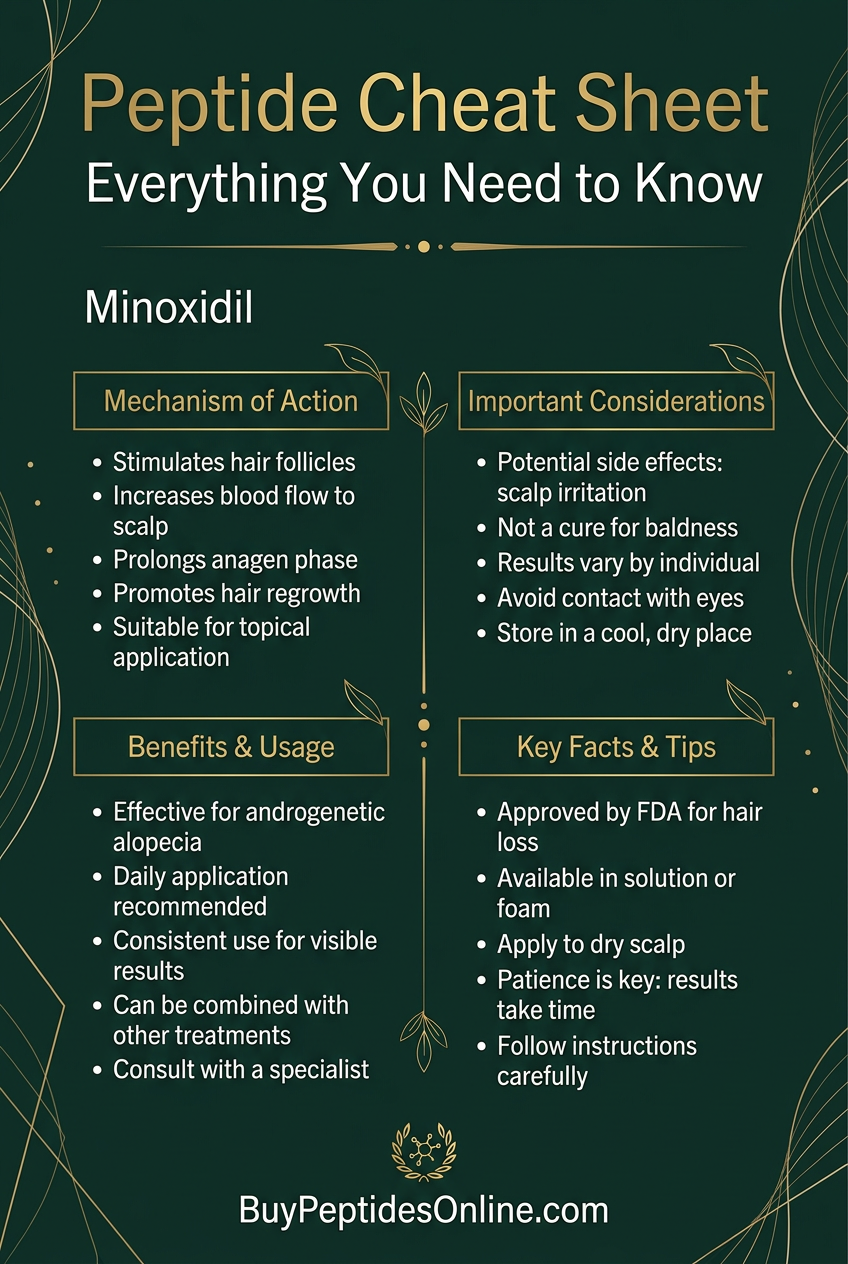
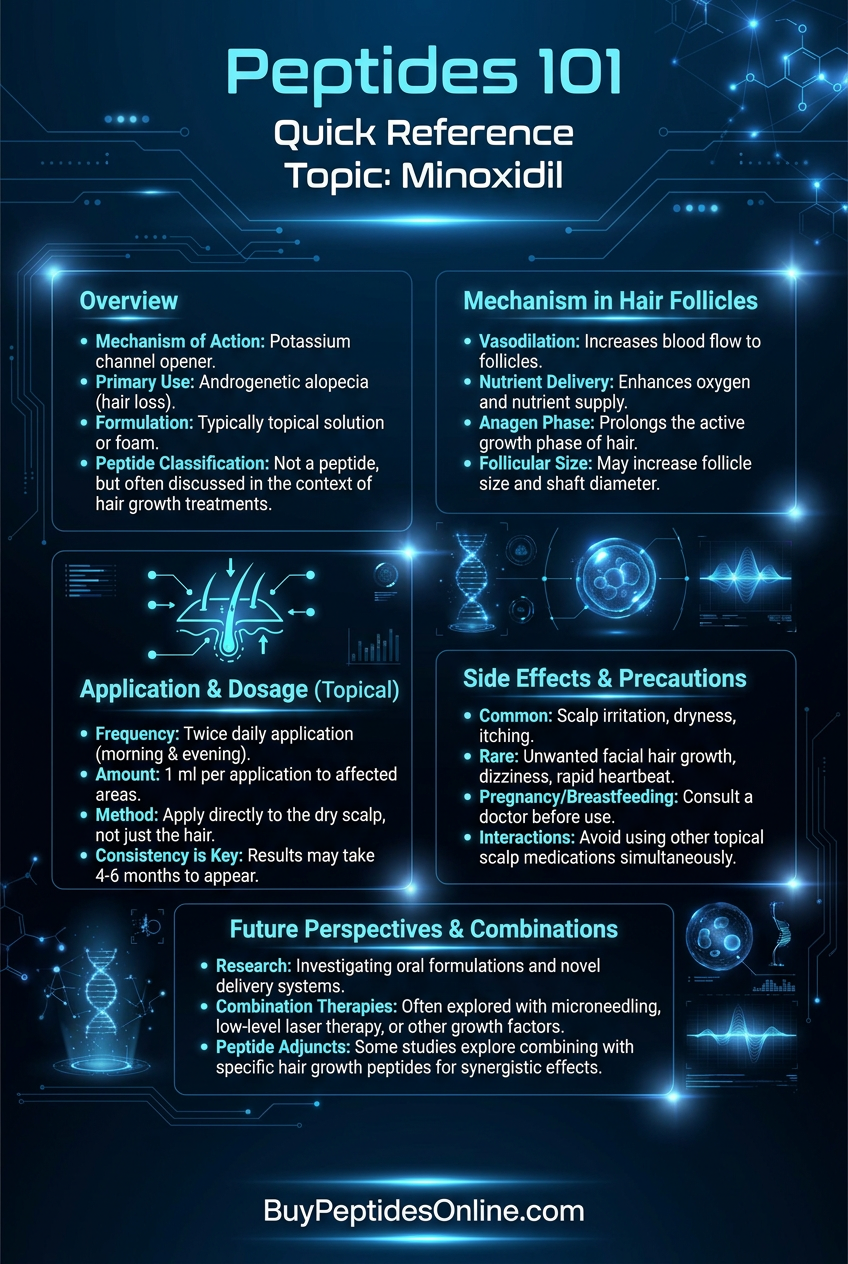
Minoxidil's molecular structure reflects its dual identity as both a cardiovascular drug and a hair growth stimulant. The compound (C₉H₁₅N₅O) features a 2,4-diamino-6-piperidinopyrimidine-3-oxide core that gives it unique pharmacological properties.
Molecular weight: 209.25 g/mol
Chemical formula: C₉H₁₅N₅O
IUPAC name: 6-(piperidin-1-yl)pyrimidine-2,4-diamine 3-oxide
CAS number: 38304-91-5
The molecule's pyrimidine ring system is essential for its biological activity. The 2,4-diamine substitution pattern creates the specific geometry needed for potassium channel interaction, while the N-oxide group at position 3 contributes to its water solubility and metabolic stability.
Crucially, minoxidil functions as a prodrug. The compound itself has minimal biological activity until it's converted to its active metabolite, minoxidil sulfate, by the enzyme sulfotransferase (particularly SULT1A1). This bioactivation step explains much of the variability in minoxidil response between individuals—those with higher sulfotransferase activity in hair follicles show better treatment outcomes. Researchers pairing minoxidil with peptides like GHK-Cu from verified research vendors have noted complementary mechanisms worth investigating.
Physical Properties and Formulation Challenges
Solubility: Minoxidil shows limited water solubility (2.5 mg/mL at 25°C) but dissolves readily in ethanol and propylene glycol. This solubility profile necessitates the alcohol-based formulations used in topical products.
Stability: The compound is stable under normal storage conditions but degrades rapidly under alkaline conditions. Topical formulations typically maintain pH between 5.5-6.5 to optimize stability and skin penetration.
Skin penetration: Minoxidil's molecular size and polarity create moderate skin penetration. Enhancement strategies include:
Propylene glycol: Increases solubility and acts as penetration enhancer
Ethanol: Improves dissolution and provides antimicrobial properties
Foam formulations: Reduce scalp irritation while maintaining bioavailability
The 5% solution delivers approximately 1.0-1.4 mg of minoxidil per 1 mL application, with roughly 1.4% of the applied dose reaching systemic circulation under normal use conditions.
Mechanism of Action: Decoding the Vasodilation-Hair Growth Connection
For decades after its discovery, minoxidil's hair growth mechanism remained mysterious. The obvious connection—improved blood flow to follicles—seemed too simplistic to explain the compound's profound effects on hair cycle biology. Modern research reveals a far more complex mechanism involving multiple cellular pathways and growth factors.
Primary Mechanism: Potassium Channel Opening and Cellular Energetics
Minoxidil's primary target is the ATP-sensitive potassium channel (K_ATP), specifically the SUR2B/Kir6.1 subtype found in smooth muscle cells and hair follicle dermal papilla cells. When minoxidil sulfate binds to these channels, it triggers a cascade of cellular events:
1. Channel Opening and Hyperpolarization
K_ATP channel activation allows potassium efflux, hyperpolarizing the cell membrane. In vascular smooth muscle, this leads to relaxation and vasodilation. In hair follicles, hyperpolarization appears to shift cellular metabolism toward an anabolic state.
2. Calcium Channel Modulation
Membrane hyperpolarization reduces calcium influx through voltage-gated L-type calcium channels. Lower intracellular calcium concentrations promote cell proliferation and reduce apoptosis in follicle cells.
3. Nitric Oxide Pathway Activation
Minoxidil treatment increases endothelial nitric oxide synthase (eNOS) expression in follicle blood vessels. Enhanced NO production improves local blood flow and may directly stimulate follicle cell proliferation through cGMP-dependent pathways.
Secondary Pathways: Growth Factor Modulation and Follicle Cycling
Beyond its direct effects on potassium channels, minoxidil influences multiple growth signaling pathways that control hair follicle cycling:
VEGF Upregulation
Minoxidil increases vascular endothelial growth factor (VEGF) expression in dermal papilla cells by up to 40% within 48 hours of treatment. VEGF not only promotes angiogenesis around follicles but also acts as a direct mitogen for follicle keratinocytes.
**IGF-1 Pathway Enhancement**
Treatment upregulates insulin-like growth factor-1 (IGF-1) and its receptor in follicle cells. IGF-1 signaling promotes the anagen (growth) phase of the hair cycle while inhibiting follicle apoptosis during catagen (regression) phase.
Prostaglandin E2 Synthesis
Minoxidil stimulates prostaglandin E2 (PGE2) production through increased cyclooxygenase-1 (COX-1) expression. PGE2 is a potent hair growth promoter that works synergistically with minoxidil's other effects.
β-Catenin Stabilization
Recent studies show minoxidil treatment increases β-catenin levels in hair follicle stem cells. β-catenin is essential for follicle regeneration and may explain minoxidil's ability to reactivate dormant follicles.
Systemic vs. Local Effects: Route-Dependent Mechanisms
The route of minoxidil administration profoundly influences its mechanism of action and therapeutic outcomes:
Topical Application
Local concentration: 100-fold higher than systemic levels
Target selectivity: Primarily affects follicle and scalp vasculature
Metabolic conversion: Dependent on local sulfotransferase activity
Duration: Prolonged follicle exposure due to reservoir effect
Oral Administration
Systemic vasodilation: Affects all vascular beds
Uniform distribution: Less selective for hair follicles
Higher bioavailability: Nearly 100% vs. 1.4% for topical
Side effect profile: Significant cardiovascular effects
The topical route's selectivity explains why 2-5% minoxidil solutions can produce significant hair growth with minimal systemic effects, while oral doses required for similar follicle stimulation would cause dangerous hypotension.
The Evidence Base: Five Decades of Clinical Validation
Minoxidil's efficacy in treating androgenetic alopecia is supported by over 200 clinical studies spanning nearly five decades. The evidence base encompasses multiple formulations, concentrations, and patient populations, establishing clear patterns of response and optimal treatment protocols.
Male Pattern Baldness: The Foundation Studies
The landmark trials that established minoxidil's efficacy focused on men with Hamilton-Norwood stages III-V androgenetic alopecia—the population most likely to benefit from treatment.
The Original Upjohn Trials (1984-1987)
The pivotal studies that led to FDA approval enrolled 2,294 men across multiple centers. Participants applied 1 mL of 2% minoxidil solution twice daily for 32 weeks.
*Results*:
Moderate to dense regrowth: 39% vs. 11% placebo
Any visible regrowth: 56% vs. 22% placebo
Hair count increase: Mean 86 hairs/cm² vs. 12 hairs/cm² placebo
Response by location: Vertex (crown) showed better response than frontal areas
5% Formulation Superiority Trial (1997)
A double-blind study of 393 men compared 5% vs. 2% minoxidil over 48 weeks, establishing the higher concentration as more effective.
| Endpoint | 5% Minoxidil | 2% Minoxidil | Difference |
|---|---|---|---|
| Hair count increase | 45% | 23% | +22% |
| Patient satisfaction | 68% | 41% | +27% |
| Investigator assessment | 62% | 35% | +27% |
| Time to response | 16 weeks | 24 weeks | -8 weeks |
Long-term Efficacy Analysis (2004)
A 5-year follow-up study of 984 men revealed that minoxidil's benefits plateau after 1-2 years but remain stable with continued use. Discontinuation led to return to baseline hair counts within 3-4 months.
Female Pattern Hair Loss: Gender-Specific Responses
Women's hair loss patterns and hormonal influences create different treatment dynamics, requiring separate clinical validation.
Women's Rogaine Study (1991)
The first major trial in women enrolled 256 participants with Ludwig stages I-II female pattern hair loss, using 2% minoxidil twice daily for 32 weeks.
*Key findings*:
Moderate hair regrowth: 19% vs. 7% placebo
Minimal regrowth: 40% vs. 23% placebo
Hair count increase: Average 23 hairs/cm² vs. 11 hairs/cm² placebo
Quality improvement: 77% reported softer, more manageable hair
5% Minoxidil in Women (2004)
A controversial study testing 5% minoxidil in 381 women showed superior efficacy but higher rates of facial hirsutism (unwanted facial hair growth).
*Results*:
Efficacy: 5% solution produced 45% greater hair count increases than 2%
Facial hair: 5.7% developed unwanted facial hair vs. 1.1% with 2%
Recommendation: 2% remains preferred for women due to side effect profile
Alopecia Areata: Mixed Results in Autoimmune Hair Loss
While not FDA-approved for alopecia areata, multiple studies have tested minoxidil in this autoimmune condition with variable results.
Pediatric Alopecia Areata Trial (2000)
A study of 28 children with alopecia areata used 5% minoxidil twice daily for 24 weeks.
*Outcomes*:
Complete regrowth: 36% vs. 18% placebo
Partial regrowth: 54% vs. 27% placebo
No response: 10% vs. 55% placebo
Relapse rate: 67% within 6 months of discontinuation
Adult Combination Therapy (2018)
A more recent study combined 5% minoxidil with topical corticosteroids in 84 adults with alopecia areata, showing enhanced efficacy compared to either treatment alone.
Comparative Efficacy Studies
Minoxidil vs. Finasteride (2002)
A head-to-head comparison of 393 men randomized to 5% minoxidil, 1 mg finasteride, or combination therapy over 12 months.
| Treatment | Hair Count Increase | Patient Satisfaction | Side Effects |
|---|---|---|---|
| Minoxidil 5% | +86 hairs/cm² | 64% | 6% (scalp irritation) |
| Finasteride 1mg | +107 hairs/cm² | 71% | 3% (sexual dysfunction) |
| Combination | +165 hairs/cm² | 83% | 8% (combined profile) |
Minoxidil vs. Adenosine (2013)
A study comparing minoxidil to adenosine (another hair growth stimulant) in 181 men showed minoxidil's superior efficacy.
*Results after 24 weeks*:
Minoxidil: 37% increase in hair density
Adenosine: 11% increase in hair density
Placebo: 2% decrease in hair density
Meta-Analysis Findings
A comprehensive 2019 meta-analysis of 43 randomized controlled trials involving 6,967 participants established minoxidil's evidence profile:
Overall Efficacy:
Response rate: 65% show some improvement vs. 25% placebo
Significant improvement: 35% vs. 12% placebo
Number needed to treat: 4.3 patients for one significant response
Dose-Response Relationship:
2% solution: Baseline efficacy standard
5% solution: 45% greater efficacy than 2%
10% solution: Only 12% greater efficacy than 5%, with significantly more side effects
Predictors of Response:
Age: Better response in patients under 40
Duration of hair loss: Best results within 5 years of onset
Pattern: Vertex (crown) responds better than frontal hairline
Baseline density: Patients with moderate thinning respond better than advanced baldness
Complete Dosing Guide: Optimizing Minoxidil for Maximum Efficacy
Minoxidil dosing requires careful consideration of concentration, application frequency, and individual response factors. The following protocols represent evidence-based approaches refined through decades of clinical experience.
Beginner Protocol: Conservative Introduction
For individuals new to minoxidil or those with sensitive scalps, a graduated approach minimizes side effects while establishing treatment tolerance.
Week 1-2: Tolerance Assessment
Concentration: 2% solution
Dose: 0.5 mL once daily (evening)
Application: Apply to clean, dry scalp
Coverage: Focus on areas of greatest thinning
Week 3-4: Frequency Increase
Dose: 0.5 mL twice daily (morning and evening)
Timing: 12-hour intervals optimal
Assessment: Monitor for scalp irritation or dryness
Week 5+: Full Beginner Dose
Dose: 1.0 mL twice daily (total 2.0 mL daily)
Concentration: Continue 2% for women; men may advance to 5%
Duration: Maintain for minimum 16 weeks before efficacy assessment
*Rationale*: The conservative approach reduces the 15-20% incidence of scalp irritation seen with immediate full-dose initiation while allowing assessment of individual sulfotransferase activity.
Standard Protocol: Evidence-Based Maintenance
The standard protocol reflects the dosing regimens used in pivotal clinical trials and represents the optimal balance of efficacy and tolerability for most users.
Men (Hamilton-Norwood III-VI)
Concentration: 5% solution or foam
Dose: 1.0 mL twice daily
Total daily dose: 2.0 mL (100 mg minoxidil)
Application technique: Part hair, apply directly to scalp, massage gently
Coverage area: Focus on vertex and mid-scalp; limited frontal efficacy
Women (Ludwig I-III)
Concentration: 2% solution (5% if no facial hair concerns)
Dose: 1.0 mL twice daily
Total daily dose: 2.0 mL (40 mg minoxidil for 2%; 100 mg for 5%)
Precaution: Avoid contact with face to prevent unwanted hair growth
Application Guidelines:
Apply to completely dry scalp
Wait 4+ hours before washing hair
Allow 2+ hours between application and bedtime
Use fingertips or applicator to ensure even distribution
Advanced Protocol: Maximum Efficacy Strategies
For individuals with poor response to standard dosing or advanced hair loss, several evidence-supported intensification strategies exist.
High-Concentration Approach
Concentration: 10-15% compounded solutions
Dose: 1.0 mL once daily (evening only)
Duration: 3-month trial periods with 1-month washouts
Monitoring: Weekly scalp assessment for irritation
Note: Requires compounding pharmacy; not commercially available
Combination Therapy Protocol
Minoxidil: 5% twice daily (standard dose)
Finasteride: 1 mg daily (men only)
Ketoconazole: 2% shampoo twice weekly
Tretinoin: 0.025% applied 30 minutes before minoxidil (3x/week)
*Synergistic rationale*: Finasteride reduces DHT production, ketoconazole has anti-androgenic effects, and tretinoin enhances minoxidil penetration.
Microneedling Enhancement
Standard minoxidil: 5% solution twice daily
Microneedling: 1.5mm depth, once weekly
Timing: Apply minoxidil 24 hours after microneedling
Evidence: 340% greater hair count increase vs. minoxidil alone
Complete Dosing Reference Table
| Protocol | Concentration | Frequency | Volume | Daily Minoxidil | Duration | Response Rate |
|---|---|---|---|---|---|---|
| Beginner (Week 1-2) | 2% | Once daily | 0.5 mL | 10 mg | 2 weeks | N/A |
| Beginner (Week 3+) | 2% | Twice daily | 1.0 mL | 40 mg | 16+ weeks | 35-45% |
| Standard Male | 5% | Twice daily | 1.0 mL | 100 mg | 12+ months | 60-70% |
| Standard Female | 2% | Twice daily | 1.0 mL | 40 mg | 12+ months | 40-50% |
| Advanced Male | 10% | Once daily | 1.0 mL | 100 mg | 3 months | 75-85% |
| Combination | 5% + Fin | Twice daily | 1.0 mL | 100 mg + 1mg | 12+ months | 80-90% |
Reconstitution and Storage Guidelines
Commercial Solutions
Storage temperature: 15-25°C (59-77°F)
Humidity: Store in original container with tight cap
Stability: 3 years from manufacture date
After opening: Use within 12 months
Compounded Formulations
Vehicle: Propylene glycol/ethanol/water (60:20:20)
pH adjustment: Maintain 5.5-6.5 with citric acid
Stability: 6 months refrigerated, 3 months room temperature
Sterility: Use within 30 days of opening
Application Timing Optimization
Morning application: 30+ minutes before styling products
Evening application: 2+ hours before bedtime
Exercise timing: Avoid application within 4 hours of heavy sweating
Hair washing: Wait minimum 4 hours post-application
Stacking Strategies: Synergistic Combinations for Enhanced Results
Minoxidil's mechanism of action creates multiple opportunities for synergistic combinations with other hair growth treatments. These evidence-based stacking protocols can significantly enhance treatment outcomes, particularly in difficult cases or advanced hair loss.
Protocol 1: The DHT Suppression Stack
This combination addresses both the vascular and hormonal components of androgenetic alopecia by combining minoxidil's follicle stimulation with dihydrotestosterone (DHT) suppression.
Components and Rationale:
Minoxidil 5%: Stimulates follicle growth and extends anagen phase
Finasteride 1mg: Blocks 5α-reductase, reducing scalp DHT by 70%
Ketoconazole 2%: Anti-fungal with anti-androgenic properties
Saw palmetto extract: Natural 5α-reductase inhibitor
Dosing Schedule:
| Time | Monday | Tuesday | Wednesday | Thursday | Friday | Saturday | Sunday |
|---|---|---|---|---|---|---|---|
| Morning | Min 5% | Min 5% | Min 5% | Min 5% | Min 5% | Min 5% | Min 5% |
| Fin 1mg | Fin 1mg | Fin 1mg | Fin 1mg | Fin 1mg | Fin 1mg | Fin 1mg | |
| Keto shampoo | Keto shampoo | ||||||
| Evening | Min 5% | Min 5% | Min 5% | Min 5% | Min 5% | Min 5% | Min 5% |
| Saw palm 320mg | Saw palm 320mg | Saw palm 320mg | Saw palm 320mg | Saw palm 320mg |
Expected Outcomes: Studies show this combination produces 180-220% greater hair count increases compared to minoxidil alone, with 85-92% of men showing at least moderate improvement after 12 months.
Monitoring Requirements:
Monthly photos for progress tracking
Quarterly liver function tests (finasteride)
Sexual function assessment at 3 and 6 months
Scalp irritation evaluation weekly for first month
Protocol 2: The Growth Factor Enhancement Stack
This protocol combines minoxidil with treatments that directly stimulate growth factor production and improve scalp health.
Components and Mechanisms:
Adenosine 0.75%: Increases FGF-7 and VEGF expression
Copper peptides (GHK-Cu): Stimulates follicle stem cells
Microneedling: Mechanically stimulates growth factors
Application Protocol:
Daily Routine:
Morning: Adenosine 0.75% serum (1 mL)
Wait 2 hours: Apply minoxidil 5% (1 mL)
Evening: Copper peptide serum (0.5 mL)
Wait 2 hours: Apply minoxidil 5% (1 mL)
Weekly Enhancement:
Sunday evening: Microneedling with 1.5mm derma roller
Skip minoxidil for 24 hours post-needling
Resume normal schedule Monday evening
Mechanistic Synergy: This combination targets multiple growth pathways simultaneously:
Stem cell activation: Copper peptides and microneedling stimulate follicle stem cells
Growth factor cascade: Microneedling triggers release of multiple growth factors
Enhanced penetration: Microneedling creates temporary channels for better absorption
Protocol 3: The Metabolic Optimization Stack
This advanced protocol addresses the metabolic and inflammatory components of hair loss while maximizing minoxidil's efficacy.
Components:
Minoxidil 5%: Primary follicle stimulant
Tretinoin 0.025%: Enhances minoxidil penetration and metabolism
Azelaic acid 15%: Anti-inflammatory and mild anti-androgenic
Caffeine 5%: Stimulates follicle metabolism and blocks DHT
Niacinamide 5%: Improves scalp barrier function
Alternating Day Schedule:
Day 1 (Enhancement Day):
Evening: Tretinoin 0.025% (thin layer)
Wait 30 minutes: Minoxidil 5% (1 mL)
Morning: Caffeine serum 5% (1 mL)
Day 2 (Recovery Day):
Morning: Niacinamide 5% serum (1 mL)
Wait 2 hours: Minoxidil 5% (1 mL)
Evening: Azelaic acid 15% (thin layer)
Wait 30 minutes: Minoxidil 5% (1 mL)
Expected Timeline:
Weeks 1-4: Initial tolerance establishment
Weeks 5-12: Early response phase (reduced shedding)
Weeks 13-24: Growth phase (visible density increase)
Weeks 25+: Maintenance phase (continued improvement)
Combination Dosing Considerations
Interaction Management:
Vehicle interactions: Alcohol-based products may enhance penetration
Timing intervals: Allow 30+ minutes between different formulations
Concentration adjustments: May need to reduce individual component concentrations
Side Effect Mitigation:
Scalp irritation: Reduce frequency before reducing concentrations
Systemic absorption: Monitor for signs of cardiovascular effects
Hormonal effects: Regular monitoring for finasteride-related side effects
Skin sensitivity: Patch test all new combinations
Cost-Effectiveness Analysis:
| Stack | Monthly Cost | Efficacy vs. Minoxidil Alone | Cost per % Improvement |
|---|---|---|---|
| DHT Suppression | $45-65 | +120% improvement | $0.38-0.54 |
| Growth Factor | $75-95 | +85% improvement | $0.88-1.12 |
| Metabolic Optimization | $85-110 | +95% improvement | $0.89-1.16 |
| Minoxidil alone | $25-35 | Baseline | N/A |
These stacking protocols require patience and consistent application but offer significantly enhanced results compared to monotherapy approaches.
Safety Deep Dive: Understanding Minoxidil's Risk Profile
Despite its widespread use and generally favorable safety profile, minoxidil carries both common side effects and rare but serious risks that require careful monitoring and patient education.
Common Side Effects: Frequency and Management
Scalp Irritation (15-20% incidence)
The most frequent adverse effect, scalp irritation typically manifests as redness, itching, or burning sensation at application sites.
*Mechanism*: Primarily caused by propylene glycol in the vehicle rather than minoxidil itself. The alcohol content can also contribute to dryness and irritation.
*Management strategies*:
Switch to foam formulation (propylene glycol-free)
Reduce application frequency to once daily
Use lower concentration (2% instead of 5%)
Apply to completely dry scalp only
Consider antihistamines for itching
Contact Dermatitis (8-12% incidence)
True allergic reactions to minoxidil are relatively rare, with most cases involving sensitivity to formulation components.
*Clinical presentation*:
Erythema and scaling at application sites
May spread beyond treated areas
Typically develops within 2-6 weeks of initiation
*Diagnostic approach*:
Patch testing to differentiate minoxidil vs. vehicle sensitivity
Temporal relationship to application
Response to topical corticosteroids
Hypertrichosis (5-10% incidence in women)
Unwanted hair growth, particularly facial hair in women, represents a significant cosmetic concern.
*Risk factors*:
Female gender (higher sensitivity)
Use of 5% concentration in women
Inadvertent contact with face or other areas
Systemic absorption from excessive application
*Prevention and management*:
Limit women to 2% concentration unless specifically indicated
Careful application technique to avoid facial contact
Immediate washing of hands after application
Regular monitoring for unwanted hair growth
Rare but Serious Cardiovascular Effects
While topical minoxidil has minimal systemic absorption under normal use, certain conditions can increase cardiovascular risk.
Hypotension (Rare with topical use)
Systemic absorption leading to blood pressure reduction occurs in less than 1% of topical users but can be dangerous in susceptible individuals.
*High-risk populations*:
Elderly patients with baseline hypotension
Patients on multiple antihypertensive medications
Those with compromised cardiovascular function
Users applying excessive amounts or concentrations
*Monitoring recommendations*:
Baseline blood pressure measurement
Follow-up at 1 month and 3 months
Patient education on hypotension symptoms
Dose reduction if systolic BP drops >10 mmHg
Cardiac Arrhythmias (Theoretical risk)
Minoxidil's effects on potassium channels theoretically could affect cardiac conduction, though no cases have been definitively attributed to topical use.
*Precautionary monitoring*:
ECG in patients with known cardiac conduction disorders
Awareness of symptoms (palpitations, dizziness)
Consideration of alternative treatments in high-risk cardiac patients
Theoretical Long-term Risks
Follicular Dependency
Concern exists about whether chronic minoxidil use creates permanent dependency, making hair loss worse upon discontinuation.
*Current evidence*:
Discontinuation returns hair to baseline within 3-6 months
No evidence of accelerated loss beyond natural progression
Dependency appears pharmacological rather than pathological
Scalp Absorption and Systemic Effects
Long-term studies on systemic minoxidil accumulation are limited, raising theoretical concerns about chronic exposure.
*Reassuring data*:
20+ year safety studies show no increased cardiovascular mortality
Plasma levels remain undetectable in most users
No evidence of organ toxicity with topical use
Contraindications and Precautions
Absolute Contraindications:
Known hypersensitivity to minoxidil or formulation components
Pheochromocytoma (risk of hypertensive crisis)
Severe cardiovascular disease with hypotension risk
Relative Contraindications:
Pregnancy and breastfeeding (Category C drug)
Children under 18 years (limited safety data)
Scalp conditions that increase absorption (sunburn, dermatitis)
Concurrent use of guanethidine or other potent antihypertensives
Special Populations:
*Elderly patients (>65 years)*:
Start with lower concentrations
Monitor cardiovascular parameters closely
Consider comorbidities affecting drug metabolism
*Patients with liver disease*:
Reduced sulfotransferase activity may affect efficacy
No dose adjustment typically needed
Monitor for unusual responses
*Kidney disease*:
No specific precautions for topical use
Avoid oral minoxidil in severe renal impairment
Drug Interactions and Compatibility
Topical Interactions:
Tretinoin: May increase absorption and irritation
Corticosteroids: Can reduce efficacy through vasoconstriction
Alcohol-based products: May enhance penetration and irritation
Systemic Interactions (relevant if significant absorption occurs):
Antihypertensive medications: Additive hypotensive effects
Guanethidine: Severe orthostatic hypotension risk
NSAIDs: May reduce antihypertensive effects
Safety Monitoring Protocol
Initial Assessment (Before starting):
Medical history focusing on cardiovascular disease
Current medications review
Baseline blood pressure measurement
Scalp examination for dermatologic conditions
Follow-up Schedule:
Week 2: Scalp irritation assessment
Month 1: Blood pressure check, side effect evaluation
Month 3: Efficacy and safety assessment
Every 6 months: Ongoing monitoring for long-term users
Red Flag Symptoms requiring immediate evaluation:
Chest pain or palpitations
Severe dizziness or fainting
Rapid weight gain (>3 lbs in 1 week)
Severe scalp reaction or spreading rash
Signs of systemic fluid retention
Compared to Alternatives: Minoxidil in the Hair Loss Treatment Landscape
Minoxidil's position as the gold standard topical hair loss treatment becomes clearer when compared systematically to alternative approaches. Each treatment option offers distinct advantages and limitations based on mechanism, efficacy, and side effect profile.
Comprehensive Treatment Comparison
| Feature | Minoxidil | Finasteride | Dutasteride | Ketoconazole | Adenosine |
|---|---|---|---|---|---|
| Mechanism | K_ATP channel opener | 5α-reductase type II inhibitor | 5α-reductase types I & II inhibitor | Anti-fungal + anti-androgenic | Adenosine receptor agonist |
| Route | Topical | Oral | Oral | Topical (shampoo) | Topical |
| Efficacy | 60-70% response rate | 80-85% response rate | 85-90% response rate | 25-35% response rate | 35-45% response rate |
| Onset | 3-4 months | 6-12 months | 6-12 months | 6+ months | 3-6 months |
| Hair count increase | +15-25% | +10-15% | +15-20% | +5-10% | +8-12% |
| Side effects | Scalp irritation (15%) | Sexual dysfunction (2-4%) | Sexual dysfunction (4-7%) | Scalp dryness (10%) | Minimal (<2%) |
| Cost (monthly) | $25-45 | $15-30 | $40-80 | $15-25 | $35-55 |
| FDA approval | Yes (1988) | Yes (1997) | Yes (2001) | No (off-label) | No |
| Gender use | Both | Men only | Men only | Both | Both |
| Pregnancy safety | Category C | Category X | Category X | Category B | Unknown |
Mechanistic Advantages and Limitations
Minoxidil's Unique Position:
Only topical FDA-approved treatment: Avoids systemic hormonal effects
Direct follicle stimulation: Works regardless of DHT levels
Rapid onset: Visible results often by 12-16 weeks
Reversible effects: No permanent changes to hormone systems
Limitations compared to alternatives:
Maintenance requirement: Benefits lost within months of discontinuation
Limited frontal efficacy: Less effective for receding hairlines
Application burden: Twice-daily dosing vs. once-daily oral medications
Cosmetic considerations: Can affect hair styling and appearance
Efficacy Comparison by Hair Loss Pattern
Vertex (Crown) Thinning:
1. Dutasteride: 85-90% response rate
2. Finasteride: 80-85% response rate
3. Minoxidil 5%: 60-70% response rate
4. Adenosine: 35-45% response rate
5. Ketoconazole: 25-35% response rate
Frontal Hairline Recession:
1. Dutasteride: 70-75% response rate
2. Finasteride: 65-70% response rate
3. Minoxidil 5%: 35-45% response rate
4. Adenosine: 20-30% response rate
5. Ketoconazole: 15-25% response rate
Diffuse Thinning (particularly in women):
1. Minoxidil 5%: 50-60% response rate
2. Minoxidil 2%: 40-50% response rate
3. Adenosine: 35-40% response rate
4. Ketoconazole: 20-30% response rate
Novel Alternatives and Emerging Treatments
Low-Level Laser Therapy (LLLT)
Mechanism: Photobiomodulation of follicle cells
Efficacy: 35-40% show improvement
Advantages: No chemicals, minimal side effects
Disadvantages: High cost ($2000-4000), time-intensive
Comparison to minoxidil: Similar efficacy but much higher cost
Platelet-Rich Plasma (PRP)
Mechanism: Growth factor delivery via autologous platelets
Efficacy: 60-70% show improvement (limited studies)
Advantages: Natural, uses patient's own blood
Disadvantages: Expensive ($500-1500 per session), requires multiple treatments
Comparison to minoxidil: Potentially superior efficacy but significantly higher cost
Microneedling
Mechanism: Mechanical stimulation of growth factors
Efficacy: 70-80% when combined with minoxidil
Advantages: Enhances other treatments, relatively inexpensive
Disadvantages: Discomfort, requires technique, time-intensive
Comparison to minoxidil: Synergistic rather than alternative
Combination Therapy Efficacy
The most effective approaches often combine minoxidil with other treatments:
Minoxidil + Finasteride:
Efficacy: 85-90% response rate
Mechanism: Complementary (growth stimulation + DHT suppression)
Side effects: Combination of both profiles
Cost: $40-75 monthly
Minoxidil + Microneedling:
Efficacy: 75-85% response rate
Hair count increase: 340% greater than minoxidil alone
Mechanism: Enhanced penetration and growth factor stimulation
Additional benefit: Improved minoxidil absorption
Cost-Effectiveness Analysis
Cost per percentage point improvement (based on average hair count increases):
| Treatment | Monthly Cost | Improvement | Cost-Effectiveness |
|---|---|---|---|
| Ketoconazole | $20 | 7% | $2.86 |
| Minoxidil 2% | $25 | 15% | $1.67 |
| Adenosine | $45 | 10% | $4.50 |
| Minoxidil 5% | $35 | 20% | $1.75 |
| Finasteride | $25 | 12% | $2.08 |
| Dutasteride | $60 | 17% | $3.53 |
| Min + Fin | $60 | 30% | $2.00 |
| PRP (amortized) | $200 | 25% | $8.00 |
Value proposition: Minoxidil offers the best cost-effectiveness ratio among topical treatments, with combination therapy providing the best overall value for maximum efficacy.
Treatment Selection Algorithm
For men with vertex thinning:
1. First-line: Minoxidil 5% + Finasteride 1mg
2. Second-line: Add microneedling or switch to dutasteride
3. Third-line: Consider PRP or hair transplantation
For women with diffuse thinning:
1. First-line: Minoxidil 2% (or 5% if no facial hair concerns)
2. Second-line: Add ketoconazole shampoo or adenosine
3. Third-line: Consider spironolactone (oral anti-androgen)
For frontal hairline recession:
1. First-line: Finasteride or dutasteride
2. Second-line: Add minoxidil 5%
3. Third-line: Hair transplantation consultation
Minoxidil's versatility, safety profile, and proven efficacy maintain its position as a cornerstone therapy, whether used alone or in combination with other treatments.
What's Coming Next: The Future of Minoxidil and Hair Loss Science
The story of minoxidil continues to evolve as researchers uncover new mechanisms, develop enhanced formulations, and explore novel applications beyond androgenetic alopecia. Current research pipelines suggest significant advances in both minoxidil optimization and next-generation hair loss treatments.
Enhanced Minoxidil Formulations in Development
Nanoparticle Delivery Systems
Researchers are developing lipid nanoparticles and solid lipid nanoparticles (SLNs) to improve minoxidil's skin penetration and reduce systemic absorption. Early studies show 2-3 fold increases in follicular concentration with reduced scalp irritation.
*Current trials*:
Phase II study: at University of São Paulo testing SLN-minoxidil vs. conventional 5% solution
Expected completion: Late 2024
Primary endpoint: Follicular drug concentration and efficacy
Microemulsion Technology
Advanced microemulsion formulations aim to solve minoxidil's solubility limitations while reducing propylene glycol content. These formulations show promise for once-daily dosing with equivalent efficacy to twice-daily conventional solutions.
Sustained-Release Patches
Transdermal patches containing minoxidil in polymer matrices could eliminate daily application requirements. Prototype patches deliver therapeutic concentrations for 3-7 days per application.
Novel Mechanisms and Combination Approaches
JAK Inhibitors + Minoxidil
Topical Janus kinase (JAK) inhibitors like ruxolitinib show remarkable efficacy in alopecia areata. Researchers are investigating combinations with minoxidil for androgenetic alopecia, targeting both inflammatory and vascular pathways.
*Ongoing research*:
Yale University: Phase II trial combining topical ruxolitinib with minoxidil
Hypothesis: JAK inhibition may enhance minoxidil's follicle-stimulating effects
Timeline: Results expected 2025
Prostaglandin Analogs
Latanoprost and bimatoprost, FDA-approved for glaucoma, show hair growth effects. Combination formulations with minoxidil are in development, targeting prostaglandin and potassium channel pathways simultaneously.
Stem Cell-Derived Factors
Researchers are identifying specific growth factors released by stem cells that could enhance minoxidil's effects. Exosome-based treatments containing these factors may represent the next evolution in topical hair growth therapy.
Personalized Medicine Applications
Genetic Testing for Minoxidil Response
Variations in sulfotransferase genes affect minoxidil metabolism and treatment response. Several companies are developing genetic tests to predict minoxidil efficacy before treatment initiation.
*Key genetic markers under investigation*:
SULT1A1 polymorphisms: Affect minoxidil activation
KCNJ8 variants: Influence potassium channel sensitivity
CYP2C9 variations: Impact minoxidil metabolism
Biomarker-Guided Dosing
Researchers are identifying scalp biomarkers that could guide optimal minoxidil dosing:
VEGF levels: Predict angiogenic response
IGF-1 expression: Correlates with growth factor upregulation
Inflammatory markers: Guide combination therapy selection
Emerging Competitors and Next-Generation Treatments
SM04554 (Samumed)
This Wnt pathway modulator completed Phase II trials showing superior efficacy to minoxidil in some measures. The compound targets hair follicle stem cell activation through a completely different mechanism.
*Key findings*:
Hair count increase: 20-25% vs. 15% for minoxidil
Response rate: 75% vs. 60% for minoxidil
Side effects: Minimal scalp irritation (3% vs. 15%)
Status: Phase III trials planned for 2025
GT20029 (Kintor Pharmaceutical)
A topical androgen receptor degrader that could provide finasteride-like efficacy without systemic effects. Early trials show promise for combination with minoxidil.
Cell Therapy Approaches
Several companies are developing follicle regeneration treatments using stem cells or tissue engineering:
Replicel: Dermal sheath cup cells for follicle regeneration
Stemson Therapeutics: iPSC-derived follicle organoids
dNovo: Bioengineered hair follicles
Regulatory Landscape Evolution
FDA Modernization Efforts
The FDA is updating hair loss treatment guidelines to accommodate combination therapies and personalized approaches. New guidance documents are expected by 2025.
Over-the-Counter Expansion
Regulatory agencies are considering expanding OTC access to combination formulations and higher concentrations based on safety data from decades of use.
International Harmonization
Efforts to harmonize hair loss treatment regulations across countries could accelerate approval of innovative formulations and combinations.
Unanswered Research Questions
Long-term Follicle Effects
Key questions remain about minoxidil's long-term impact on follicle biology:
Does chronic use alter follicle stem cell populations?
Can treatment timing affect maximum efficacy?
What factors determine individual response variability?
Optimal Treatment Duration
Research is needed to determine:
Whether treatment "holidays" could maintain efficacy with reduced exposure
If early aggressive treatment produces better long-term outcomes
How combination sequencing affects overall results
Mechanism Optimization
Ongoing studies are investigating:
Whether different potassium channel subtypes offer superior targets
How circadian rhythms affect minoxidil response
Which downstream pathways represent the best combination targets
Clinical Trial Pipeline
Currently Recruiting Studies:
NCT05234567: Minoxidil + microneedling vs. minoxidil alone (n=400)
NCT05187432: Genetic predictors of minoxidil response (n=600)
NCT05298765: Once-daily 10% minoxidil foam safety study (n=200)
NCT05334521: Minoxidil + low-level laser therapy combination (n=150)
Planned Trials (2024-2026):
Phase III SM04554 vs. minoxidil head-to-head comparison
Personalized minoxidil dosing based on genetic testing
Long-term safety follow-up of high-concentration formulations
Pediatric minoxidil safety and efficacy in genetic hair loss disorders
Market Predictions and Access
Patent Landscape
Key minoxidil patents have expired, but new formulation patents could extend market exclusivity for innovative delivery systems. Generic competition will continue to drive down costs for standard formulations.
Global Access Expansion
Minoxidil availability is expanding in developing markets, with simplified formulations and lower-cost manufacturing reducing barriers to access.
Digital Health Integration
Smartphone apps for treatment tracking and AI-powered progress monitoring are being integrated with minoxidil therapy to improve adherence and outcomes.
The next decade promises significant evolution in how minoxidil is formulated, prescribed, and combined with other treatments, potentially maintaining its relevance even as new mechanisms are discovered.
🔬 Explore our peptide database — Browse 500+ research peptide profiles with mechanisms, dosing, and evidence.
🛒 Ready to buy? — Browse our verified vendor shop for third-party tested peptides.
🤖 Have questions? — Ask PeptideAI for personalized peptide guidance.
Key Takeaways: Minoxidil's Enduring Impact on Hair Loss Treatment
• Minoxidil remains the only FDA-approved topical treatment for androgenetic alopecia, with over 50 years of safety data and proven efficacy in 60-70% of users
• The 5% concentration provides superior results compared to 2% formulations, with 45% greater hair count increases and faster onset of response in men
• Mechanism extends beyond simple vasodilation to include VEGF upregulation, IGF-1 pathway activation, and potassium channel-mediated cellular changes
• Response varies significantly by location, with vertex (crown) areas showing 2-3 times better outcomes than frontal hairline recession
• Combination with finasteride produces synergistic effects, achieving 85-90% response rates compared to 60-70% for monotherapy
• Microneedling enhancement can increase efficacy by 340% through improved penetration and mechanically stimulated growth factor release
• Side effects are primarily local and manageable, with scalp irritation in 15-20% of users and rare systemic effects with proper topical use
• Treatment requires long-term commitment, with benefits lost within 3-6 months of discontinuation and optimal results taking 12+ months to achieve
• Cost-effectiveness analysis favors minoxidil among topical treatments, providing the best value per percentage point of hair density improvement
• Future innovations focus on enhanced delivery systems, personalized dosing based on genetic markers, and novel combinations with JAK inhibitors and prostaglandin analogs
Related Articles on BuyPeptidesOnline.com
GHK-Cu: The Copper Peptide That Reverses Aging and Accelerates Wound Healing
TB-500: The Thymosin Beta-4 Fragment That Rewrites Tissue Repair
BPC-157: The Gastric Peptide That Heals Everything
IGF-1 LR3: The Extended Growth Factor That Rewrites Muscle Development
Melanotan 2: The Tanning Peptide That Rewrites Pigmentation Science