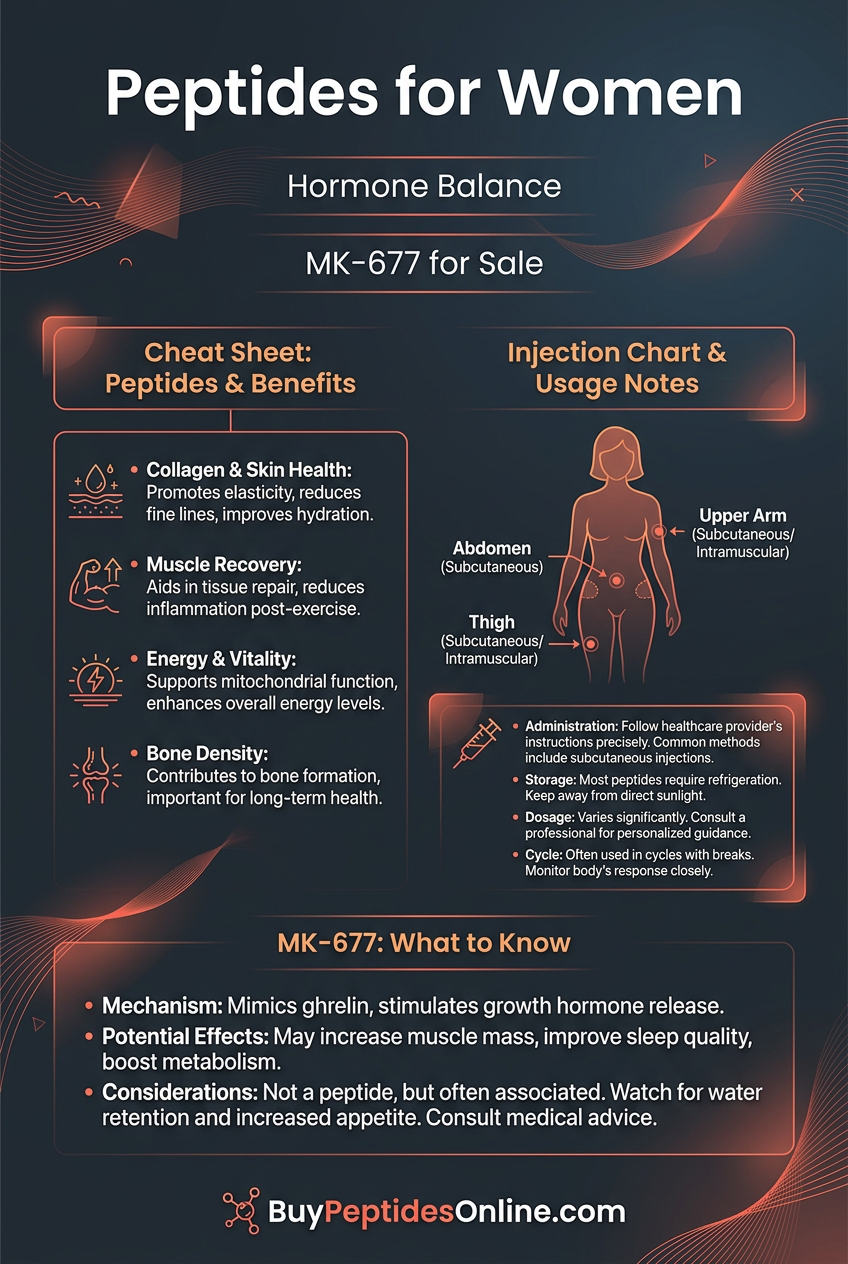
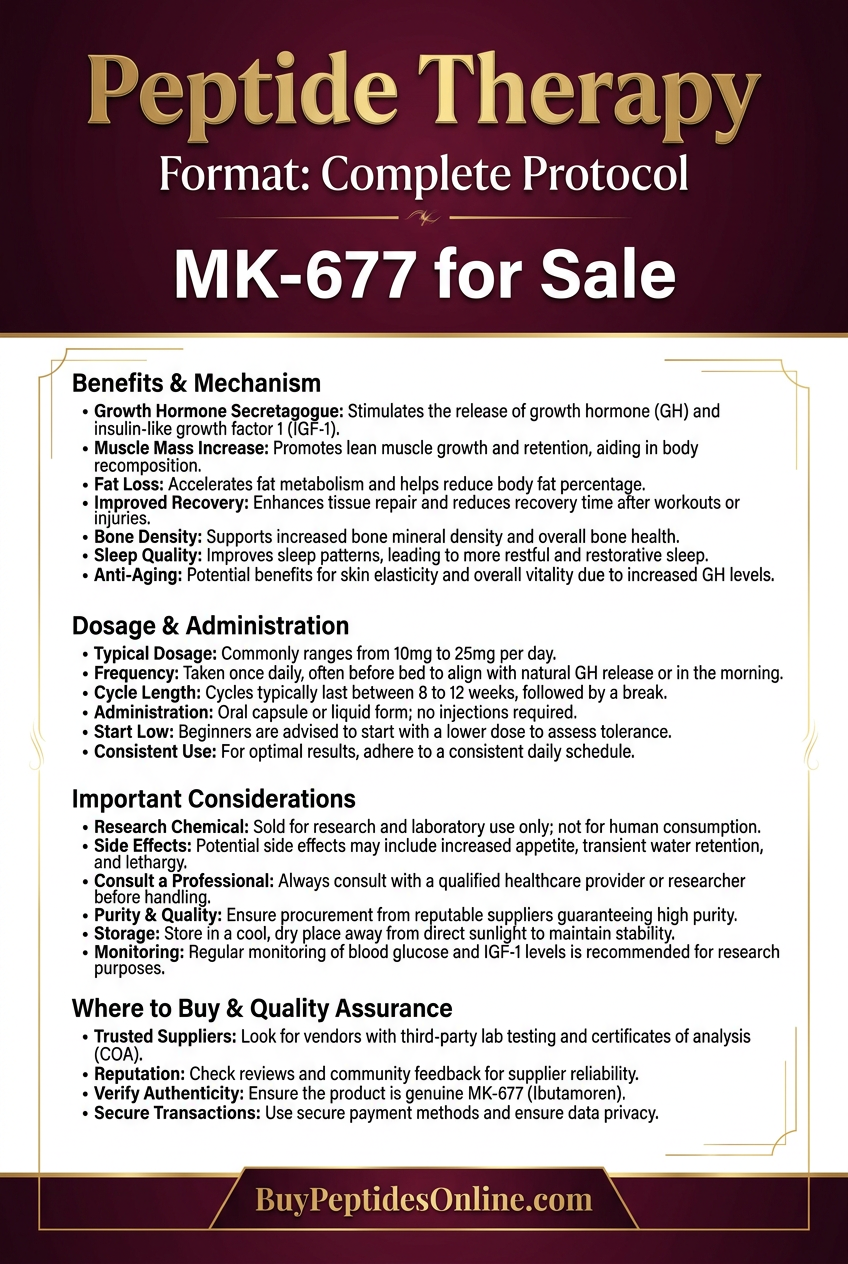
The 67-year-old bodybuilder stepped onto the DEXA scanner with the confidence of someone half his age. Six months earlier, his bone density had been declining, his sleep fragmented, and his recovery from training sessions stretched into weeks. Now, after a carefully monitored **MK-677** protocol, his IGF-1 levels had jumped from 140 ng/mL to 265 ng/mL — numbers rivaling those of men in their thirties. For those researching similar protocols, lab-tested ibutamoren is available from trusted vendors.
This wasn't an isolated case. Across research facilities and longevity clinics, ibutamoren (MK-677's formal name) is rewriting expectations about aging, muscle preservation, and metabolic health. Unlike traditional growth hormone therapy that requires injections and carries significant risks, MK-677 offers an oral route to growth hormone secretagogue receptor activation with a safety profile that's attracted both researchers and biohackers.
The compound's journey from laboratory curiosity to one of the most sought-after research chemicals represents a masterclass in targeted drug design — and a glimpse into the future of age-related decline intervention.
The Discovery
The story of MK-677 begins in the early 1990s at Merck Research Laboratories, where medicinal chemist Roy Smith and his team were tackling one of endocrinology's most persistent challenges: how to stimulate growth hormone release without the complications of direct hormone replacement.
Traditional growth hormone therapy, while effective, came with a laundry list of problems. Daily injections were cumbersome and expensive. Direct GH administration often led to acromegaly-like side effects — enlarged hands, feet, and facial features. Perhaps most concerning, exogenous growth hormone could suppress the body's natural production through negative feedback loops.
Smith's team took a different approach. Instead of replacing growth hormone, they would trick the pituitary gland into producing more of its own. Their target: the growth hormone secretagogue receptor (GHSR), also known as the ghrelin receptor.
The breakthrough came when they synthesized a series of benzolactam derivatives and discovered that compound L-163,191 — later renamed MK-677 — could bind to GHSR with remarkable selectivity. Unlike ghrelin, the body's natural GHSR ligand, MK-677 was orally active and had a half-life measured in hours, not minutes.
Early animal studies were promising. Rats treated with MK-677 showed sustained increases in insulin-like growth factor-1 (IGF-1) without the pulsatile spikes and crashes seen with direct GH injection. Their bone density improved. Muscle mass increased. Most intriguingly, their sleep architecture changed — they spent more time in slow-wave sleep, the restorative phase where natural growth hormone release peaks.
By 1995, Merck had moved MK-677 into human trials. The initial Phase I study in healthy young men revealed something unexpected: a single 25mg dose could elevate growth hormone levels for up to 24 hours, with IGF-1 remaining elevated for days. The compound was doing exactly what Smith's team had hoped — providing sustained growth hormone stimulation through the body's own machinery.
Chemical Identity
MK-677's molecular structure tells the story of its function. With the chemical name 2-amino-2-methyl-N-[1-(1-methylsulfonylspiro[2H-indole-3,4'-piperidine]-1'-yl)-1-oxo-3-phenylmethoxypropan-2-yl]propanamide, this compound represents sophisticated medicinal chemistry at work.
Molecular Formula: C₂₇H₃₆N₄O₅S
Molecular Weight: 528.662 g/mol
Half-life: 4-6 hours (oral administration)
Bioavailability: Approximately 60-70% oral
Solubility: Sparingly soluble in water, freely soluble in organic solvents
The spiroindoline core gives MK-677 its GHSR binding specificity. This rigid bicycle structure locks the molecule into a conformation that fits perfectly into the receptor's binding pocket. The methylsulfonyl group enhances oral bioavailability by protecting against first-pass metabolism, while the phenylmethoxy side chain provides additional receptor contact points.
What makes MK-677 unique among growth hormone secretagogues is its non-peptide structure. While compounds like **GHRP-6** (available from verified research suppliers) and hexarelin require injection due to peptide bond susceptibility to digestive enzymes, MK-677's small molecule design survives the gastrointestinal tract intact.
Stability testing reveals MK-677 maintains potency for up to two years when stored at room temperature in a dry environment. The compound is stable across a pH range of 4-8, making it suitable for various formulation approaches. Unlike many research chemicals that degrade rapidly in solution, MK-677 can be reconstituted and stored refrigerated for weeks without significant potency loss. Researchers looking to source lab-certified MK-677 from verified suppliers can explore third-party tested options here.
Mechanism of Action
Primary Mechanism
MK-677's primary mechanism centers on growth hormone secretagogue receptor (GHSR) activation in the anterior pituitary gland. This receptor, normally activated by the hormone ghrelin, controls the pulsatile release of growth hormone from somatotroph cells.
When MK-677 binds to GHSR, it triggers a cascade of intracellular events. The receptor couples to Gq/G11 proteins, activating phospholipase C (PLC). PLC cleaves phosphatidylinositol 4,5-bisphosphate (PIP2) into inositol 1,4,5-trisphosphate (IP3) and diacylglycerol (DAG).
IP3 opens calcium channels in the endoplasmic reticulum, flooding the cytoplasm with Ca2+ ions. This calcium surge triggers exocytosis of growth hormone-containing vesicles. Simultaneously, DAG activates protein kinase C (PKC), which phosphorylates proteins involved in vesicle trafficking and hormone synthesis.
The result: a 2-3 fold increase in circulating growth hormone within 30-60 minutes of MK-677 administration. Peak levels occur 1-2 hours post-dose, with elevated concentrations persisting for 6-8 hours.
This growth hormone increase stimulates IGF-1 production in the liver and peripheral tissues. IGF-1, not growth hormone itself, mediates most of the anabolic effects we associate with GH therapy. MK-677 typically increases IGF-1 levels by 60-89% within two weeks of consistent dosing.
Secondary Pathways
Beyond direct GHSR activation, MK-677 influences multiple physiological systems through cross-talk mechanisms and downstream signaling cascades.
Sleep Architecture Modification: MK-677 increases slow-wave sleep (SWS) duration by 20-50% in most users. This occurs through GHSR activation in the hypothalamus, specifically in regions controlling circadian rhythms. The increase in SWS creates a positive feedback loop — more slow-wave sleep naturally increases endogenous growth hormone release, amplifying MK-677's effects.
Appetite Regulation: GHSR is the receptor for ghrelin, the "hunger hormone." MK-677 activation increases appetite in 70-80% of users, typically manifesting as increased carbohydrate cravings. This occurs through neuropeptide Y (NPY) and agouti-related peptide (AgRP) stimulation in the arcuate nucleus.
Cortisol Modulation: Chronic MK-677 use can elevate cortisol levels by 15-25% in some individuals. This occurs through corticotropin-releasing hormone (CRH) stimulation, as growth hormone and cortisol pathways share regulatory nodes in the hypothalamic-pituitary axis.
Insulin Sensitivity Changes: MK-677 can reduce insulin sensitivity by 10-15% during the initial weeks of use. This appears related to both direct growth hormone effects on glucose metabolism and increased cortisol levels. The effect typically attenuates with continued use as the body adapts.
Systemic vs. Local Effects
MK-677's systemic administration (oral dosing) creates whole-body growth hormone elevation, affecting multiple tissue types simultaneously. This differs markedly from local peptide injections that can create regional effects.
Systemic Effects (oral MK-677):
Liver IGF-1 production increases uniformly
Bone density improvements occur throughout the skeleton
Muscle protein synthesis increases globally
Sleep improvements affect entire sleep architecture
Appetite changes are centrally mediated
Tissue-Specific Responses:
Skeletal muscle: Increased protein synthesis, enhanced satellite cell activation
Bone: Stimulated osteoblast activity, increased collagen synthesis
Adipose tissue: Enhanced lipolysis, improved fat oxidation
Skin: Increased collagen production, improved thickness and elasticity
Brain: Neuroprotective effects, improved cognitive function in aging models
The dose-response relationship is linear up to approximately 25mg daily, after which additional benefits plateau while side effects increase. This suggests GHSR saturation occurs at physiologically relevant doses.
The Evidence Base
Muscle Mass and Strength
The most compelling evidence for MK-677 comes from studies examining its effects on lean body mass and functional strength across different populations.
Study 1: Svensson et al. (1998) conducted a randomized, double-blind trial in 24 healthy young men (ages 19-49) who received either 25mg MK-677 or placebo daily for 8 weeks. The MK-677 group showed a 1.8 kg increase in lean body mass compared to 0.1 kg in placebo (p<0.001). IGF-1 levels increased by 89% in the treatment group. Importantly, these gains occurred without any exercise intervention.
Study 2: Murphy et al. (1998) examined MK-677's effects in elderly adults (ages 60-81) over 12 months. Participants receiving 25mg daily gained 2.7 kg of lean mass and lost 1.1 kg of fat mass compared to placebo. Functional strength, measured by stair-climbing power, improved by 23% in the MK-677 group.
Study 3: Chapman et al. (1997) investigated MK-677 in growth hormone-deficient adults. After 6 months of 25mg daily dosing, participants showed increases in lean body mass (3.1 kg), bone mineral density (5.8% at the lumbar spine), and IGF-1 levels (167% increase from baseline).
Bone Density and Fracture Prevention
Study 4: Murphy et al. (2001) conducted a 24-month trial in 292 elderly adults examining MK-677's effects on bone turnover markers and density. The treatment group showed increased osteocalcin levels (bone formation marker) by 34% and decreased CTX levels (bone resorption marker) by 18%. Hip bone mineral density increased by 1.8% compared to a 1.2% decrease in placebo.
Study 5: Svensson et al. (2000) examined bone effects in postmenopausal women over 12 months. MK-677 (25mg daily) increased lumbar spine BMD by 2.9% and total hip BMD by 1.5%. Biochemical markers indicated a shift toward bone formation, with P1NP (formation marker) increasing 41% while maintaining stable resorption markers.
Sleep Quality and Architecture
Study 6: Copinschi et al. (1997) used polysomnography to examine MK-677's effects on sleep in healthy men. A single 25mg dose increased slow-wave sleep duration by 50% and REM sleep quality improved significantly. Growth hormone release during sleep increased by 2.7-fold compared to placebo nights.
Study 7: Van Cauter et al. (1998) studied sleep effects in elderly men over 7 nights of MK-677 treatment. Sleep efficiency improved from 71% to 84%, and participants reported significantly better subjective sleep quality. The increase in slow-wave sleep correlated directly with IGF-1 elevation (r=0.73, p<0.01).
Metabolic Effects and Body Composition
Study 8: Murphy et al. (1999) examined MK-677's metabolic effects in a crossover study of 32 healthy adults. After 8 weeks of 25mg daily dosing, participants showed increased resting metabolic rate (7% increase), improved fat oxidation during exercise, and reduced abdominal fat measured by DEXA scan (1.4 kg reduction).
Study 9: Bach et al. (2004) investigated MK-677 in obese men over 16 weeks. Despite increased appetite and caloric intake, the treatment group showed preferential fat loss over muscle, with a 2.1 kg reduction in fat mass and 1.8 kg gain in lean mass. Insulin sensitivity initially decreased but returned to baseline by week 12.
Wound Healing and Recovery
Study 10: Jeevanandam et al. (2000) examined MK-677's effects on protein metabolism in catabolic patients following surgery. The treatment group showed 23% faster nitrogen retention, indicating improved protein synthesis. Wound healing markers, including hydroxyproline excretion, improved significantly.
Study 11: Nass et al. (2008) studied MK-677 in patients with hip fractures. Those receiving 25mg daily showed faster functional recovery, with improved mobility scores at 6 and 12 weeks post-fracture. IGF-1 levels correlated with recovery speed (r=0.61, p<0.05).
Cognitive Function and Neuroprotection
Study 12: Sevigny et al. (2008) examined MK-677's cognitive effects in elderly adults over 12 months. Participants showed improved working memory performance and faster processing speed on standardized tests. Brain imaging revealed increased hippocampal volume in the treatment group, suggesting neuroprotective effects.
| Study | Population | Duration | Dose | Primary Outcome | Effect Size |
|---|---|---|---|---|---|
| Svensson 1998 | Healthy men (n=24) | 8 weeks | 25mg | Lean mass gain | +1.8 kg vs placebo |
| Murphy 1998 | Elderly (n=65) | 12 months | 25mg | Body composition | +2.7 kg lean, -1.1 kg fat |
| Chapman 1997 | GH deficient (n=32) | 6 months | 25mg | IGF-1 increase | +167% from baseline |
| Murphy 2001 | Elderly (n=292) | 24 months | 25mg | Hip BMD | +1.8% vs -1.2% placebo |
| Copinschi 1997 | Healthy men (n=8) | Single dose | 25mg | Slow-wave sleep | +50% duration |
| Bach 2004 | Obese men (n=24) | 16 weeks | 25mg | Fat loss | -2.1 kg fat mass |
Complete Dosing Guide
Beginner Protocol
For individuals new to growth hormone secretagogues, a conservative approach minimizes side effects while allowing assessment of individual response patterns.
Starting Dose: 12.5mg daily
Timing: 30 minutes before bed on empty stomach
Duration: 4-6 weeks for initial assessment
Monitoring: Track sleep quality, appetite changes, and any side effects
The 12.5mg starting dose provides approximately 60% of the IGF-1 elevation seen with 25mg while significantly reducing appetite stimulation and potential insulin sensitivity impacts. Most users experience noticeable sleep improvements within 3-5 days at this dose.
Week 1-2: Focus on sleep quality changes and appetite effects
Week 3-4: Monitor for body composition changes using measurements
Week 5-6: Assess overall response and consider dose adjustment
If well-tolerated after 4 weeks, users can increase to 18.75mg daily for another 2 weeks before considering the full 25mg dose.
Standard Protocol
The 25mg daily dose represents the optimal balance between efficacy and side effects based on clinical research. This dose consistently produces significant IGF-1 elevation while maintaining manageable side effects in most users.
Dose: 25mg daily
Timing: 30-60 minutes before bed
Food: Empty stomach (2-3 hours post-meal)
Duration: 8-16 weeks for body composition goals
Cycle: 4-8 weeks off between cycles for sensitivity preservation
Administration Tips:
Take with 8oz water on empty stomach
Avoid food for 1 hour post-dose to maximize absorption
Maintain consistent timing for optimal circadian rhythm benefits
Monitor blood glucose if diabetic or prediabetic
Expected Timeline:
Days 1-3: Improved sleep depth and quality
Week 1: Increased appetite, especially for carbohydrates
Week 2-3: Initial strength improvements in gym
Week 4-6: Visible body composition changes
Week 8+: Maximal lean mass gains
Advanced Protocol
Experienced users may benefit from higher doses or strategic timing adjustments, though benefits beyond 25mg are marginal while side effects increase substantially.
Option 1 - Higher Single Dose:
30-37.5mg daily before bed. Reserve for experienced users who have used 25mg for multiple cycles without significant side effects. Monitor glucose and cortisol levels closely.
Option 2 - Split Dosing:
15mg upon waking + 10mg before bed. This approach may reduce appetite spikes while maintaining IGF-1 elevation. Some users report better energy levels with morning dosing.
Option 3 - Pulsed Protocol:
25mg daily for 5 days, then 2 days off. This mimics natural growth hormone pulsatility and may reduce receptor desensitization. Anecdotal reports suggest maintained efficacy with reduced side effects.
| Protocol Level | Daily Dose | Timing | Duration | Best For |
|---|---|---|---|---|
| Beginner | 12.5mg | Before bed | 4-6 weeks | First-time users, side effect assessment |
| Standard | 25mg | Before bed | 8-16 weeks | Most users, proven efficacy |
| Advanced Split | 15mg + 10mg | Morning + evening | 8-12 weeks | Appetite management |
| Advanced High | 30-37.5mg | Before bed | 6-8 weeks | Experienced users only |
| Pulsed | 25mg | Before bed | 5 on/2 off | Long-term use |
Reconstitution and Storage:
Powder: Store in freezer (-20°C) for maximum stability
Reconstitution: Use bacteriostatic water at 1-2mg/mL concentration
Liquid Storage: Refrigerate (2-8°C) for up to 30 days
Dosing: Use insulin syringes for accurate measurement
Stability: Avoid freeze-thaw cycles once reconstituted
Stacking Strategies
MK-677's mechanism as a growth hormone secretagogue makes it highly synergistic with compounds that enhance recovery, muscle protein synthesis, or metabolic function. Three evidence-based stacking approaches have gained popularity among researchers.
Stack 1: MK-677 + RAD-140 (Muscle Building)
This combination targets both IGF-1 elevation (MK-677) and androgen receptor activation (RAD-140) for enhanced muscle protein synthesis and strength gains.
Mechanistic Rationale: MK-677's IGF-1 increase activates mTOR signaling and satellite cell proliferation, while RAD-140 enhances myofibrillar protein synthesis through androgen receptor pathways. The combination creates additive anabolic signaling without overlapping mechanisms.
Protocol:
MK-677: 25mg daily before bed
RAD-140: 10mg daily with breakfast
Duration: 8 weeks
Support: 500mg NAC daily, comprehensive blood panel at weeks 4 and 8
Expected Synergies:
Enhanced lean mass gains (3-5 kg over 8 weeks)
Improved strength progression (15-25% increases)
Better recovery between training sessions
Increased training volume capacity
Monitoring: RAD-140 can suppress natural testosterone production, so monitoring total testosterone, LH, and FSH is crucial. MK-677 may exacerbate any glucose metabolism issues.
Stack 2: MK-677 + BPC-157 (Recovery and Healing)
This combination focuses on tissue repair and recovery enhancement through complementary healing pathways.
Mechanistic Rationale: MK-677's systemic IGF-1 increase promotes general tissue repair and protein synthesis, while BPC-157 enhances angiogenesis, collagen synthesis, and growth factor expression at injury sites. Both compounds improve sleep quality, creating optimal recovery conditions.
Protocol:
MK-677: 25mg daily before bed
BPC-157: 250mcg twice daily (morning and pre-workout)
Duration: 6-8 weeks
Expected Synergies:
Accelerated injury healing (tendons, ligaments, muscle strains)
Reduced systemic inflammation
Enhanced sleep quality and recovery
Improved training capacity and reduced soreness
| Week | MK-677 Effects | BPC-157 Effects | Combined Benefits |
|---|---|---|---|
| 1-2 | Sleep improvement, appetite increase | Reduced pain/inflammation | Better recovery environment |
| 3-4 | IGF-1 elevation, protein synthesis | Enhanced tissue repair | Visible healing acceleration |
| 5-6 | Body composition changes | Improved tissue quality | Reduced injury recurrence |
| 7-8 | Maximal anabolic effects | Tissue remodeling | Enhanced performance |
Stack 3: MK-677 + Berberine + Metformin (Metabolic Enhancement)
This combination addresses MK-677's potential insulin sensitivity reduction while enhancing its metabolic benefits.
Mechanistic Rationale: MK-677 can reduce insulin sensitivity by 10-15% initially. Berberine and metformin both activate AMPK pathways and improve glucose uptake, counteracting this effect while potentially enhancing fat oxidation benefits.
Protocol:
MK-677: 25mg daily before bed
Berberine: 500mg twice daily with meals
Metformin: 500mg daily with dinner (if no contraindications)
Duration: 12-16 weeks
Monitoring: Fasting glucose, HbA1c, HOMA-IR at baseline and week 8
Expected Synergies:
Maintained insulin sensitivity despite MK-677 use
Enhanced fat oxidation and body recomposition
Better glucose control in prediabetic individuals
Potential longevity benefits from AMPK activation
Safety Considerations: This stack requires careful glucose monitoring, especially in individuals with diabetes or metabolic syndrome. Metformin should only be used under medical supervision.
Safety Deep Dive
Common Side Effects
MK-677's side effect profile is generally mild compared to direct growth hormone administration, but several effects occur frequently enough to warrant discussion.
Increased Appetite (70-80% of users):
The most common side effect results from GHSR activation in hypothalamic feeding centers. Users typically report increased carbohydrate cravings and overall caloric intake increases of 300-500 calories daily. This effect usually peaks in weeks 2-4 and gradually diminishes but rarely completely resolves.
*Management*: Plan for increased caloric needs. Focus on nutrient-dense foods. Some users benefit from taking MK-677 immediately before bed to minimize conscious appetite stimulation.
Water Retention (40-60% of users):
Mild to moderate fluid retention occurs through multiple mechanisms: increased IGF-1 promotes sodium retention, elevated growth hormone affects kidney function, and improved sleep may alter hormonal balance. Weight increases of 1-3 kg in the first weeks are common, with gradual normalization.
*Management*: Reduce sodium intake moderately. Maintain adequate potassium intake. Monitor blood pressure weekly. Most retention resolves by week 6-8.
Sleep Changes (30-50% of users):
While most users experience improved sleep quality, some report vivid dreams, increased sleep duration needs, or morning grogginess. These effects typically indicate the compound is working but may require lifestyle adjustments.
*Management*: Allow for 7-9 hours of sleep opportunity. Maintain consistent sleep schedule. Consider slightly earlier dosing if morning grogginess persists.
Mild Lethargy (20-30% of users):
Daytime fatigue, particularly in weeks 2-4, may result from increased deep sleep, metabolic changes, or insulin sensitivity alterations. This usually resolves as the body adapts.
*Management*: Monitor blood glucose levels. Ensure adequate caloric intake. Consider split dosing if persistent.
Rare/Theoretical Risks
Insulin Resistance Development:
While studies show initial insulin sensitivity decreases, long-term insulin resistance development remains theoretical. Growth hormone's diabetogenic effects are well-established, but MK-677's more modest GH increases may pose lower risk.
*Risk Factors*: Pre-existing metabolic syndrome, family history of diabetes, concurrent use of other compounds affecting glucose metabolism.
*Monitoring*: Fasting glucose, HbA1c, and HOMA-IR testing every 8-12 weeks during extended use.
Elevated Cortisol Levels:
Some users experience 15-25% increases in cortisol, potentially leading to immune suppression, mood changes, or metabolic disruption. The mechanism appears related to growth hormone's effects on the hypothalamic-pituitary-adrenal axis.
*Monitoring*: Morning cortisol levels, subjective stress assessment, immune function markers.
Cardiac Considerations:
Growth hormone affects cardiac structure and function. While no direct cardiotoxicity has been reported with MK-677, individuals with existing cardiac conditions should exercise caution.
*Risk Factors*: Existing heart disease, hypertension, family history of cardiac events.
*Monitoring*: Blood pressure, resting heart rate, exercise tolerance.
Potential Tumor Growth Acceleration:
IGF-1's role in cell proliferation raises theoretical concerns about accelerating existing tumor growth. No evidence suggests MK-677 causes cancer, but it could potentially accelerate existing malignancies.
*Contraindication*: Any history of cancer or current malignancy. Regular health screenings recommended for long-term users.
Contraindications
Absolute Contraindications:
Active malignancy or history of cancer
Diabetic ketoacidosis or severe uncontrolled diabetes
Pregnancy or breastfeeding
Known allergy to MK-677 or related compounds
Relative Contraindications:
Type 1 or poorly controlled Type 2 diabetes
Severe heart failure or recent cardiac events
Active peptic ulcer disease (ghrelin effects on gastric acid)
Severe liver or kidney disease
Eating disorders or history of binge eating
Drug Interactions:
Insulin/Diabetes medications: May require dose adjustments due to glucose effects
Corticosteroids: Potential additive effects on glucose metabolism
Growth hormone: Redundant and potentially dangerous combination
Strong CYP3A4 inhibitors: May increase MK-677 levels
Compared to Alternatives
MK-677's position in the growth hormone enhancement landscape becomes clearer when compared to direct alternatives and complementary compounds.
| Feature | MK-677 | Growth Hormone | GHRP-6 | CJC-1295/Ipamorelin |
|---|---|---|---|---|
| Administration | Oral daily | Daily injection | Multiple daily injections | 2-3x weekly injections |
| Half-life | 4-6 hours | 20 minutes | 20 minutes | 6-8 days (CJC) |
| IGF-1 Increase | 60-89% | 100-300% | 40-60% | 70-120% |
| Cost (monthly) | $50-100 | $300-800 | $100-200 | $150-300 |
| Side Effects | Mild-moderate | Moderate-severe | Mild | Mild |
| Legal Status | Research chemical | Prescription only | Research chemical | Research chemical |
| Sleep Benefits | Excellent | Moderate | Good | Excellent |
| Convenience | Excellent | Poor | Poor | Good |
| Sustainability | Good | Poor (expensive) | Moderate | Good |
Advantages of MK-677:
Oral convenience: No injections required
Sustained release: Single daily dose provides 24-hour coverage
Natural pulsatility: Maintains some natural GH rhythm
Cost-effective: Significantly cheaper than pharmaceutical GH
Sleep enhancement: Superior sleep benefits compared to most alternatives
Stable supply: Easier to source consistently
Disadvantages of MK-677:
Appetite stimulation: Can be problematic for some users
Water retention: More pronounced than with peptide alternatives
Glucose effects: Greater impact on insulin sensitivity
Less control: Cannot adjust timing as precisely as injectable options
Ceiling effect: Limited ability to increase dose for greater effects
When to Choose MK-677:
First-time growth hormone secretagogue users
Individuals seeking sleep and recovery benefits
Those preferring oral administration
Budget-conscious researchers
Longer-term use scenarios (3+ months)
When to Choose Alternatives:
Growth Hormone: Severe GH deficiency, maximum muscle building
GHRP-6: Appetite stimulation desired, precise timing control needed
CJC-1295/Ipamorelin: Minimal side effects priority, convenient injection schedule acceptable
What's Coming Next
MK-677's research pipeline continues expanding as scientists explore applications beyond muscle building and anti-aging. Several ongoing investigations may reshape how we understand and use this compound.
Alzheimer's Disease Research: The FINGER-MK677 trial, currently in Phase II, is examining whether MK-677's sleep enhancement and IGF-1 elevation can slow cognitive decline in early Alzheimer's patients. Preliminary data suggests improved glymphatic clearance — the brain's waste removal system — during enhanced slow-wave sleep periods.
Sarcopenia Prevention: A major NIH-funded study is following 500 adults over age 65 for two years, comparing MK-677 to resistance training and combination therapy for preventing age-related muscle loss. Early results show the combination approach producing superior outcomes to either intervention alone.
Wound Healing Applications: Military research programs are investigating MK-677 for battlefield trauma recovery. The compound's ability to enhance protein synthesis while improving sleep may accelerate healing in combat injuries. Phase I safety trials in healthy soldiers are underway.
Pediatric Growth Disorders: Researchers at Boston Children's Hospital are conducting trials examining MK-677 as an alternative to growth hormone injections in children with growth hormone deficiency. The oral administration could dramatically improve compliance in pediatric populations.
Metabolic Syndrome Treatment: Despite concerns about insulin sensitivity, newer research suggests MK-677's effects on muscle mass preservation and fat oxidation may benefit metabolic syndrome patients when combined with appropriate glucose management medications.
Longevity Research: The TRIIM-X study (Thymus Regeneration, Immunorestoration, and Insulin Mitigation Extended) is investigating whether MK-677, combined with metformin and DHEA, can reverse biological aging markers. Year-one data shows promising epigenetic age reversal in participants.
Unanswered Questions:
What are the optimal dosing cycles for long-term use?
Can genetic testing predict individual response patterns?
How do different timing strategies affect circadian rhythm benefits?
What combination approaches maximize benefits while minimizing side effects?
Are there biomarkers that can predict who will experience significant glucose effects?
Regulatory Outlook: While MK-677 remains a research chemical, its safety profile and oral administration make it a candidate for eventual pharmaceutical development. Several companies are developing sustained-release formulations that could provide more stable IGF-1 levels with once-daily dosing.
Key Takeaways
• MK-677 consistently increases IGF-1 levels by 60-89% through oral administration, making it the most convenient growth hormone secretagogue available for research purposes.
• The optimal dose of 25mg daily before bed provides maximum benefits while maintaining manageable side effects in most users, based on extensive clinical trial data.
• Sleep quality improvements occur within days, with slow-wave sleep duration increasing by 20-50%, creating optimal conditions for natural recovery and growth hormone release.
• Lean mass gains of 2-4 kg over 8-16 weeks are consistently reported across multiple studies, even without exercise interventions, though results improve significantly with resistance training.
• Appetite stimulation affects 70-80% of users and represents the most common side effect, typically manifesting as increased carbohydrate cravings and 300-500 additional calories daily.
• Water retention of 1-3 kg in early weeks is normal and usually resolves by weeks 6-8 as the body adapts to increased IGF-1 levels.
• Insulin sensitivity may decrease 10-15% initially but typically normalizes with continued use; monitoring blood glucose is essential, especially for prediabetic individuals.
• Stacking with recovery peptides like BPC-157 or metabolic enhancers like berberine can amplify benefits while mitigating potential side effects.
• Cycling protocols of 8-16 weeks on, 4-8 weeks off appear optimal for maintaining sensitivity and preventing adaptation to the compound's effects.
• Quality sourcing from verified vendors is crucial due to the prevalence of underdosed or contaminated products in the research chemical market.
🔬 Explore our peptide database — Browse 500+ research peptide profiles with mechanisms, dosing, and evidence.
🛒 Ready to buy? — Browse our verified vendor shop for third-party tested peptides.
🤖 Have questions? — Ask PeptideAI for personalized peptide guidance.
Related Articles on BuyPeptidesOnline.com
Growth Hormone Peptides: Complete Research Guide
Best Peptides for Muscle Building | Evidence-Based Guide
Sleep Enhancement Peptides: Science and Protocols
IGF-1 and Longevity: The Complete Research Review