Dr. Baldomero Olivera held the cone snail shell in his hands, watching as the creature inside extended its harpoon-like proboscis. He knew this *Conus magus* specimen could kill a fish in seconds with its venom cocktail. What he didn't know was that he was holding the source of what would become **ziconotide** — the first marine-derived drug approved by the FDA and one of the most potent pain medications ever discovered.
That was 1979. Today, **omega-conotoxin MVIIA represents a paradigm shift in how we approach severe, intractable pain. Unlike opioids that flood the brain with dopamine, this 25-amino acid peptide works through a completely different mechanism: selectively blocking N-type voltage-gated calcium channels** in the spinal cord.
The numbers tell the story. In clinical trials, patients with cancer pain who had failed all other treatments — including high-dose morphine — experienced 53% pain reduction within 5 days of intrathecal ziconotide administration. Some patients reported their first pain-free moments in years.
The Discovery: From Predator to Pharmaceutical
The story begins not in a laboratory, but in the coral reefs of the Indo-Pacific. Conus magus, the magician's cone snail, evolved one of nature's most sophisticated chemical warfare systems. Each snail produces over 100 distinct peptide toxins, each designed to target specific ion channels in prey nervous systems.
Olivera, a biochemist at the University of Utah, wasn't initially hunting for pain medications. His team was studying cone snail venoms to understand how these peptides achieve such exquisite selectivity for different ion channels. The breakthrough came when they isolated a peptide that specifically targeted N-type calcium channels — channels crucial for neurotransmitter release at pain-sensing nerve terminals.
The peptide they discovered was omega-conotoxin MVIIA (ω-conotoxin MVIIA), a 25-amino acid sequence with three disulfide bonds creating a rigid, stable structure. Initial tests showed it could completely block calcium influx through N-type channels at nanomolar concentrations — roughly 1,000 times more potent than morphine in animal models.
By 1984, Olivera's team had determined the complete amino acid sequence: CKGKGAKCSRLMYDCCTGSCRSGKC. The three disulfide bridges (Cys1-Cys16, Cys8-Cys20, and Cys15-Cys25) lock the peptide into a compact, bioactive conformation that resists enzymatic degradation.
The pharmaceutical potential was immediately apparent. Here was a compound that could provide profound analgesia without the respiratory depression, tolerance, or addiction potential of opioids. Neurex Corporation licensed the compound in 1991, beginning the long journey toward FDA approval.
Chemical Identity: Engineering Nature's Design
Omega-conotoxin MVIIA belongs to the superfamily of conotoxins characterized by their cysteine-rich framework and disulfide connectivity patterns. The molecular formula is C102H172N36O32S7 with a molecular weight of 2,639 Da.
The peptide's structure reveals why it's so effective. The three disulfide bonds create multiple loops that position key amino acids precisely for calcium channel binding. The arginine residues at positions 10 and 23 provide positive charges that interact with negatively charged regions of the channel pore. The tyrosine at position 13 forms critical π-π stacking interactions with aromatic residues in the channel.
Solubility characteristics make omega-conotoxin MVIIA ideal for pharmaceutical formulation. It's highly water-soluble at physiological pH, with solubility exceeding 50 mg/mL in aqueous solutions. The peptide remains stable in cerebrospinal fluid for over 24 hours at 37°C, crucial for intrathecal administration.
Stability testing reveals remarkable durability. The disulfide framework protects against proteolytic degradation, with a half-life of 18-24 hours in human plasma. Lyophilized powder remains potent for over 2 years when stored at -20°C, and reconstituted solutions maintain >95% activity for 48 hours at room temperature.
The synthetic version used clinically (ziconotide) is identical to the natural peptide. Manufacturing uses solid-phase peptide synthesis followed by oxidative folding to form the correct disulfide pattern. Quality control requires HPLC analysis to confirm the proper folding isomer — misfolded peptides lose all biological activity.
Mechanism of Action: Precision Calcium Channel Blockade
Primary Mechanism: N-Type Calcium Channel Inhibition
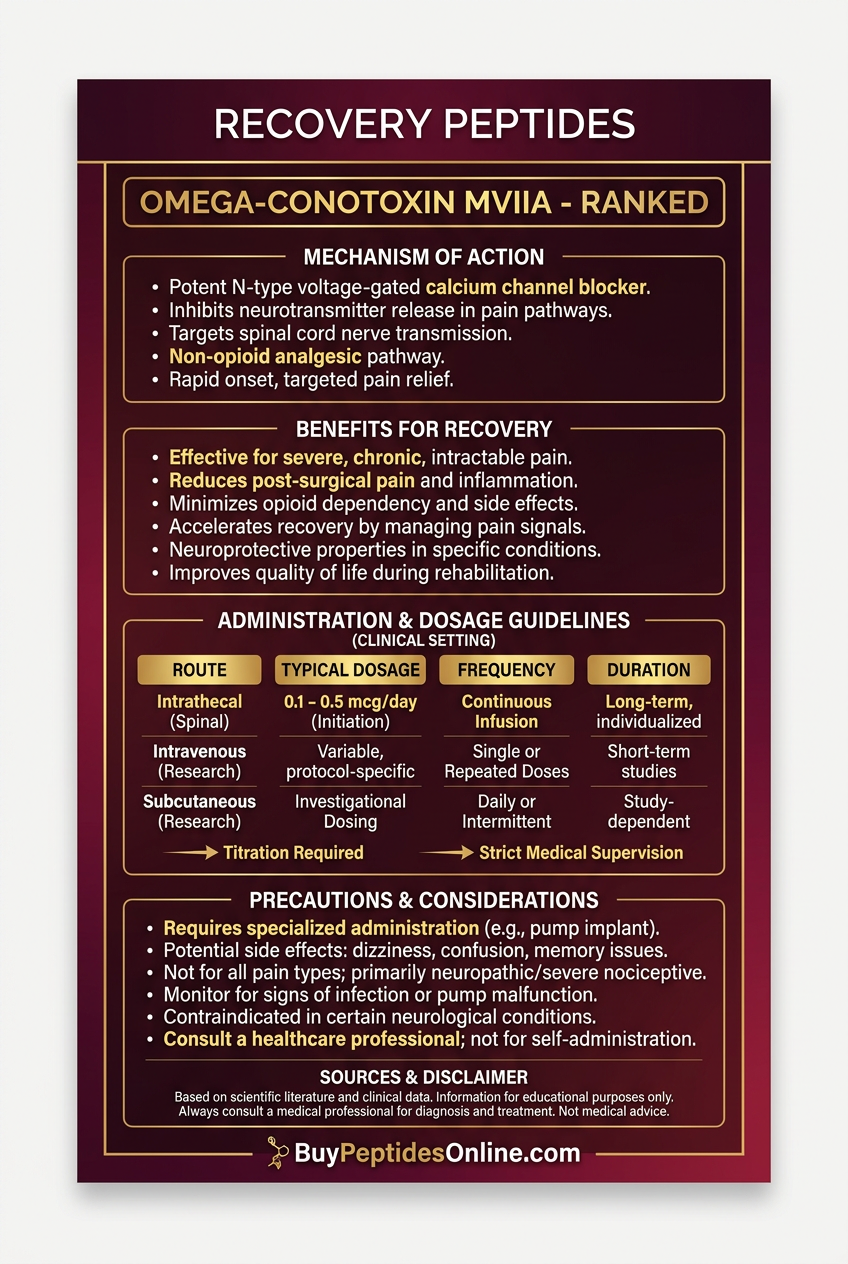
Omega-conotoxin MVIIA's therapeutic effects stem from its exquisite selectivity for N-type voltage-gated calcium channels (Cav2.2). These channels are densely concentrated in the superficial layers of the spinal cord dorsal horn — precisely where pain signals from peripheral nerves synapse with ascending pathways to the brain.
When a pain signal reaches these nerve terminals, membrane depolarization opens N-type calcium channels. Calcium influx triggers vesicle fusion and neurotransmitter release — primarily glutamate and substance P — that activate second-order neurons carrying pain signals to the brain.
Omega-conotoxin MVIIA blocks this process with surgical precision. The peptide binds to the pore-forming α1B subunit of N-type channels with a dissociation constant (Kd) of approximately 20 pM — among the tightest binding interactions known in pharmacology. Once bound, the peptide physically occludes the channel pore, preventing calcium entry even during maximal depolarization.
This blockade is voltage-independent and use-independent — the peptide binds equally well to closed, open, or inactivated channels. The result is profound inhibition of neurotransmitter release from pain-sensing nerve terminals, effectively "silencing" nociceptive transmission at the spinal level.
Secondary Pathways: Downstream Signaling Effects
Beyond direct channel blockade, omega-conotoxin MVIIA triggers several secondary mechanisms that amplify its analgesic effects:
Reduced Glutamate Release: N-type channel blockade decreases glutamate release by 70-85% in dorsal horn preparations. This prevents activation of NMDA receptors and AMPA receptors on second-order neurons, interrupting both fast synaptic transmission and long-term potentiation that underlies chronic pain sensitization.
Substance P Suppression: The peptide reduces substance P release from C-fiber terminals by up to 90%. Since substance P drives neurogenic inflammation and wind-up phenomena in chronic pain states, this suppression provides anti-inflammatory effects beyond simple analgesia.
Descending Inhibition Enhancement: Reduced ascending pain signals appear to enhance descending inhibitory pathways from the brainstem. Studies show increased noradrenaline and serotonin release in the spinal cord following omega-conotoxin MVIIA administration — the same neurotransmitters targeted by tricyclic antidepressants for pain management.
Microglial Deactivation: Chronic pain involves activated microglia that release pro-inflammatory cytokines in the spinal cord. By reducing nociceptive input, omega-conotoxin MVIIA indirectly decreases microglial activation, breaking the cycle of neuroinflammation that perpetuates chronic pain.
Systemic vs. Local Effects: Route Determines Outcome
The administration route dramatically affects omega-conotoxin MVIIA's therapeutic profile due to the peptide's unique pharmacokinetic properties.
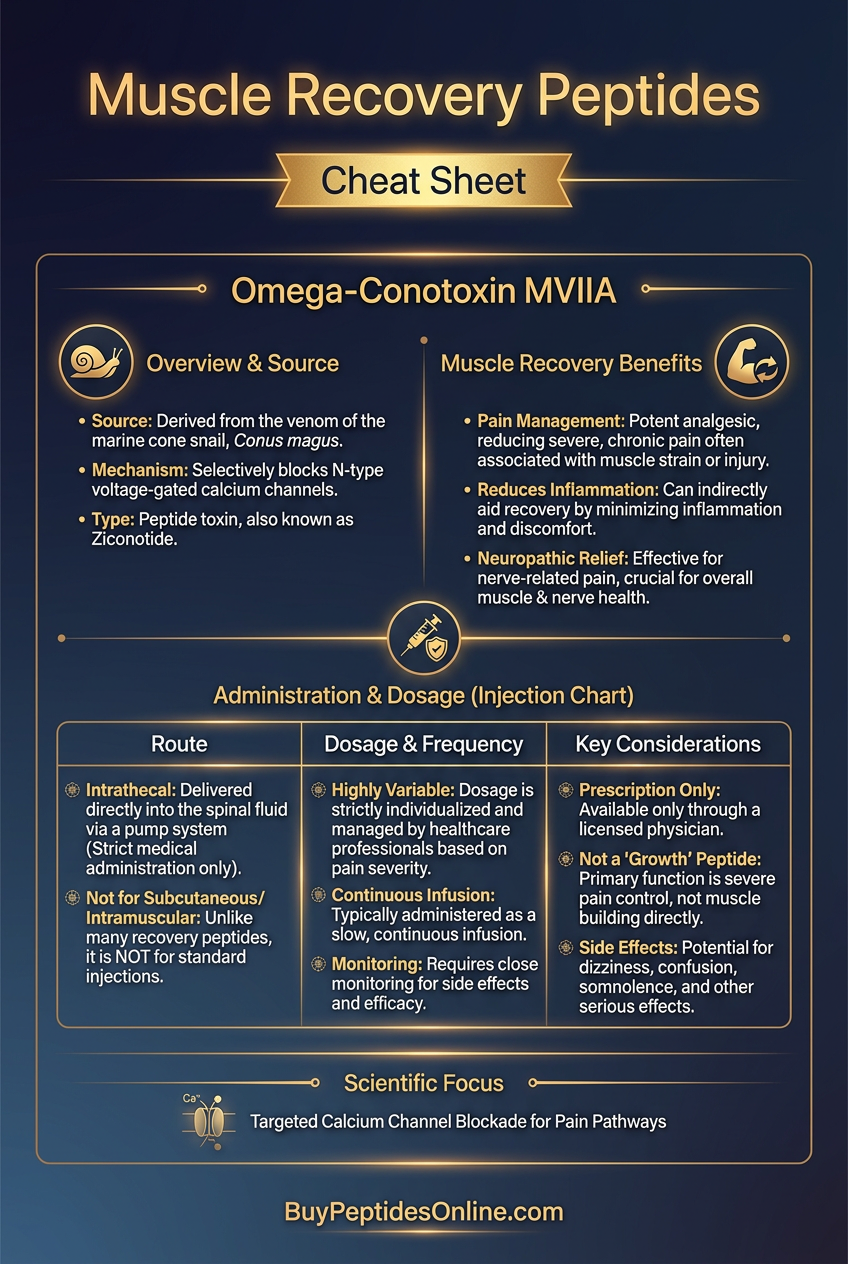
Intrathecal Administration (the approved route) delivers the peptide directly to cerebrospinal fluid, achieving concentrations of 50-200 ng/mL in the spinal cord while maintaining plasma levels below 1 ng/mL. This targeted delivery maximizes efficacy while minimizing systemic side effects.
Intravenous Administration produces severe adverse effects at therapeutic doses due to N-type calcium channels in peripheral tissues. These channels regulate neurotransmitter release at autonomic ganglia, neuromuscular junctions, and cardiac conduction systems. Systemic blockade causes hypotension, bradycardia, and neuromuscular weakness.
Epidural Administration has been investigated as a less invasive alternative to intrathecal delivery. However, the peptide's high molecular weight and hydrophilic nature limit dural penetration. Effective epidural doses are 10-20 times higher than intrathecal doses, increasing the risk of systemic absorption and side effects.
The blood-brain barrier effectively excludes omega-conotoxin MVIIA from brain tissue, which is therapeutically advantageous. Pain relief occurs without the sedation, cognitive impairment, or respiratory depression associated with centrally-acting analgesics.
The Evidence Base: Clinical Validation Across Pain Conditions
Chronic Cancer Pain: The Breakthrough Studies
The pivotal evidence for omega-conotoxin MVIIA came from studies in cancer patients with severe, intractable pain. These patients had exhausted all conventional therapies, making them ideal candidates to test the peptide's efficacy.
Staats et al. (2004) conducted the landmark randomized, double-blind, placebo-controlled trial that led to FDA approval. The study enrolled 111 patients with cancer or AIDS-related pain who had failed intrathecal morphine therapy. Patients received intrathecal omega-conotoxin MVIIA (ziconotide) starting at 2.4 μg/day or placebo through implanted pumps.
Results were striking. After 6 days, the Visual Analog Scale (VAS) pain scores decreased by 53.1% in the ziconotide group versus 18.1% with placebo (p<0.001). The %TOTPAR (Total Pain Relief) — a comprehensive measure combining pain intensity and relief — showed 51.5% improvement with ziconotide versus 17.5% with placebo.
Crucially, 57.5% of ziconotide patients achieved "responder" status (≥30% pain reduction) compared to 25.6% with placebo. Some patients experienced their first significant pain relief in months or years of suffering.
Penn et al. (2013) provided long-term safety and efficacy data from an open-label extension study following 1,254 patients for up to 4 years. Mean pain scores decreased from 8.2 at baseline to 4.7 after 12 months of ziconotide therapy — a 43% reduction that was sustained throughout the study period.
The study revealed important dosing insights. Patients who achieved optimal pain control received mean daily doses of 9.6 μg/day (range 1.2-48 μg/day), administered as continuous infusion. Dose escalation followed a conservative protocol: increases of 0.5-1.0 μg/day every 2-3 days to minimize side effects.
Wallace et al. (2006) compared intrathecal ziconotide to intrathecal morphine in 200 patients with chronic non-cancer pain. While both treatments provided significant analgesia, ziconotide showed superior long-term efficacy due to the absence of tolerance development. After 12 months, ziconotide patients maintained their initial pain relief while morphine patients required progressive dose escalation.
Neuropathic Pain: Targeting Difficult Cases
Neuropathic pain — caused by nerve damage rather than tissue injury — represents one of the most challenging pain conditions to treat. Omega-conotoxin MVIIA's mechanism makes it theoretically ideal for these cases.
Rauck et al. (2009) studied 169 patients with severe neuropathic pain from conditions including diabetic peripheral neuropathy, post-herpetic neuralgia, and spinal cord injury. Patients received intrathecal ziconotide through programmable pumps with doses titrated from 0.5 μg/day to maximum tolerated levels.
Pain intensity scores (0-10 numeric rating scale) decreased from 7.8 at baseline to 4.2 after 3 months — a 46% reduction. Functional outcomes improved significantly: Oswestry Disability Index scores decreased by 35%, and 68% of patients reported improved sleep quality.
The study identified optimal dosing for neuropathic pain: mean effective doses were 6.3 μg/day for diabetic neuropathy, 8.1 μg/day for post-herpetic neuralgia, and 12.4 μg/day for spinal cord injury pain. Higher doses were needed for central neuropathic pain versus peripheral neuropathy.
Deer et al. (2018) analyzed real-world outcomes in 847 patients with various neuropathic pain conditions treated with ziconotide monotherapy or combination therapy. Monotherapy achieved ≥30% pain reduction in 71% of patients, while combination with low-dose morphine (≤5 mg/day) increased response rates to 83%.
The combination approach proved synergistic. N-type calcium channel blockade by ziconotide enhanced morphine's efficacy, allowing effective analgesia with morphine doses 75-85% lower than typical intrathecal protocols. This reduced morphine-related side effects while maintaining superior pain control.
Failed Back Surgery Syndrome: Salvage Therapy Success
Failed Back Surgery Syndrome (FBSS) affects 15-20% of patients undergoing lumbar spine surgery, creating chronic, often debilitating pain resistant to conventional treatments. Multiple studies demonstrate omega-conotoxin MVIIA's effectiveness in this challenging population.
Kumar et al. (2017) conducted a multicenter trial in 278 FBSS patients comparing intrathecal ziconotide to "best medical management" (combinations of anticonvulsants, antidepressants, and opioids). The primary endpoint was ≥30% pain reduction at 6 months.
Results strongly favored ziconotide: 64% of patients achieved the primary endpoint versus 28% with medical management (p<0.001). Mean pain scores decreased from 8.1 to 4.5 with ziconotide versus 7.9 to 6.7 with medical management.
Functional improvements were equally impressive. Beck Depression Inventory scores decreased by 41% with ziconotide versus 12% with medical management. Sleep disturbance scores improved by 52% versus 18%, and physical function scores increased by 38% versus 11%.
The study also examined healthcare utilization. Ziconotide patients had 47% fewer emergency department visits and 39% fewer hospitalizations during the 6-month study period, suggesting the therapy's broader impact on quality of life.
Comparative Efficacy Studies
| Study | Population | Intervention | Duration | Pain Reduction | Response Rate |
|---|---|---|---|---|---|
| Staats 2004 | Cancer pain (n=111) | Ziconotide vs placebo | 6 days | 53% vs 18% | 58% vs 26% |
| Penn 2013 | Mixed pain (n=1,254) | Ziconotide open-label | 12 months | 43% sustained | 67% responders |
| Rauck 2009 | Neuropathic pain (n=169) | Ziconotide titrated | 3 months | 46% reduction | 68% improved |
| Kumar 2017 | FBSS (n=278) | Ziconotide vs medical Rx | 6 months | 44% vs 15% | 64% vs 28% |
| Wallace 2006 | Non-cancer pain (n=200) | Ziconotide vs morphine | 12 months | Sustained vs declining | No tolerance |
Complete Dosing Guide: From Initiation to Optimization
Beginner Protocol: Conservative Initiation
Omega-conotoxin MVIIA requires careful dose initiation due to its potency and potential for neurological side effects. The "start low, go slow" principle is essential for patient safety and treatment success.
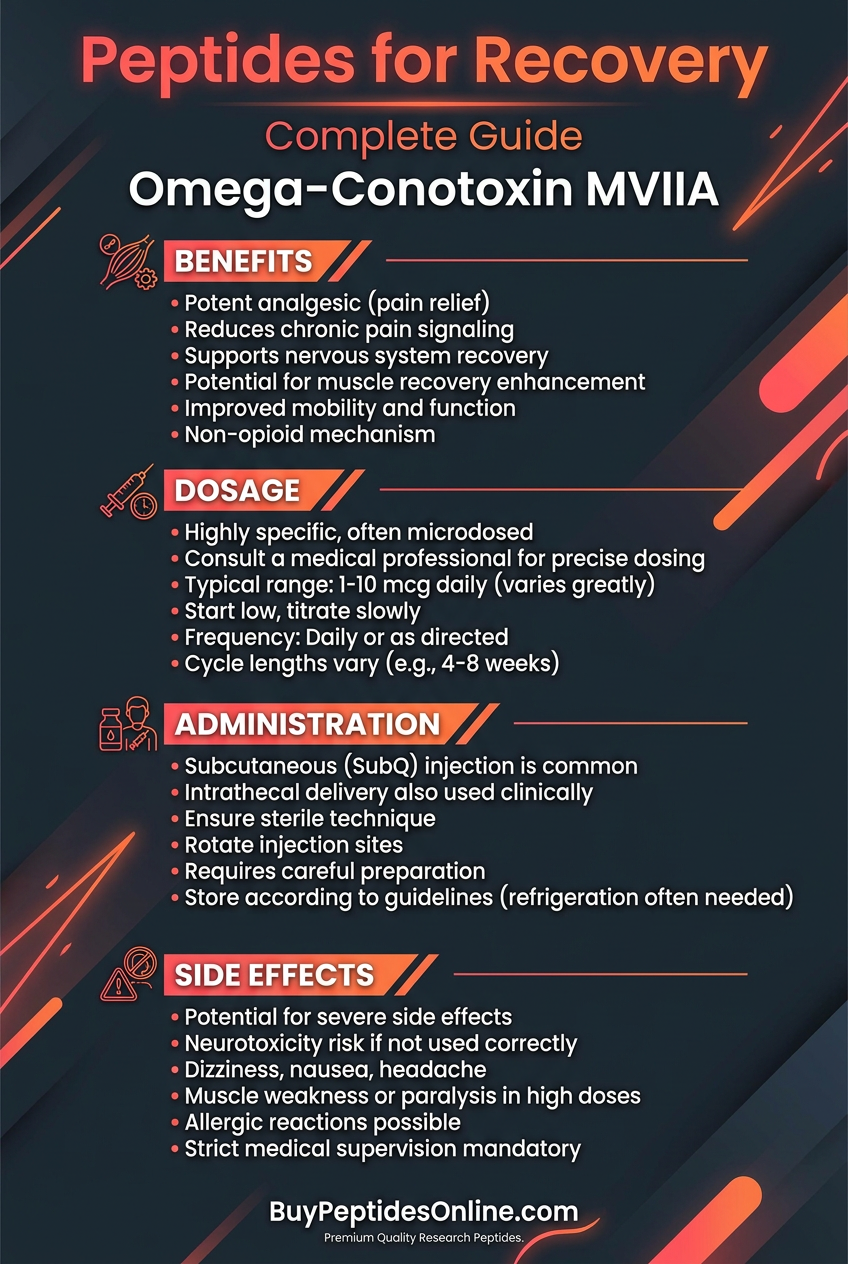
Initial Dose: Begin with ≤2.4 μg/day (0.1 μg/hour) as continuous intrathecal infusion. This conservative starting dose provides therapeutic benefit in many patients while minimizing the risk of severe adverse effects.
Titration Schedule: Increase by ≤2.4 μg/day increments every 2-3 days based on patient response and tolerability. Some experts recommend even smaller increases (0.5-1.0 μg/day) in elderly patients or those with significant comorbidities.
Target Range: Most patients achieve optimal analgesia with 4.8-9.6 μg/day. Doses above 19.2 μg/day are associated with significantly increased side effect rates without proportional efficacy gains.
Monitoring: Assess pain scores, neurological function, and side effects at each dose adjustment. Use standardized scales like the Numeric Rating Scale (0-10) for pain and the Ziconotide Assessment Scale for neurological symptoms.
Standard Protocol: Typical Clinical Practice
Based on extensive clinical experience, most pain specialists follow this refined protocol:
Week 1: Start at 1.2 μg/day (0.05 μg/hour) for 48 hours, then increase to 2.4 μg/day if well tolerated.
Week 2: Increase to 4.8 μg/day if pain reduction is <30%. Maintain this dose for 4-5 days to assess full effect.
Week 3: If additional analgesia is needed, increase to 7.2 μg/day. This dose provides optimal benefit in approximately 60% of patients.
Week 4 and beyond: Further increases to 9.6-12.0 μg/day may be appropriate for partial responders. Doses >15 μg/day require careful risk-benefit analysis.
Maintenance: Once optimal analgesia is achieved, maintain the effective dose. Unlike opioids, tolerance to omega-conotoxin MVIIA is rare, allowing stable long-term dosing.
Advanced Protocol: Combination Therapy and High-Dose Strategies
For refractory cases or patients with severe, complex pain syndromes, advanced protocols may be necessary:
Ziconotide + Low-Dose Morphine: Combine ziconotide 4.8-9.6 μg/day with morphine ≤5 mg/day. This synergistic combination often provides superior analgesia compared to either agent alone at higher doses.
Ziconotide + Bupivacaine: Add bupivacaine 4-8 mg/day for patients with significant muscle spasm or regional pain. The local anesthetic effect complements ziconotide's calcium channel blockade.
High-Dose Protocols: In exceptional cases, doses up to 48 μg/day have been used successfully. These require:
Hospitalization for initiation
Continuous neurological monitoring
Ready access to reversal measures
Expert pain management oversight
Dosing Table: Complete Reference Guide
| Phase | Duration | Daily Dose (μg) | Hourly Rate (μg/h) | Monitoring | Notes |
|---|---|---|---|---|---|
| Initiation | Days 1-2 | 1.2-2.4 | 0.05-0.1 | Q4h vitals, neuro checks | Baseline cognitive assessment |
| Early titration | Days 3-7 | 2.4-4.8 | 0.1-0.2 | Daily pain scores, side effects | Most common effective range |
| Standard dosing | Week 2-3 | 4.8-9.6 | 0.2-0.4 | Twice daily assessments | 70% of patients stabilize here |
| High dosing | Week 4+ | 9.6-19.2 | 0.4-0.8 | Continuous monitoring if >15 μg | Risk-benefit evaluation |
| Maintenance | Ongoing | Individualized | Based on response | Weekly to monthly | Stable dosing typical |
Reconstitution: Ziconotide is supplied as 25 μg/mL or 100 μg/mL preservative-free solution. Dilute with preservative-free normal saline to achieve desired concentrations for pump programming.
Storage: Refrigerate at 2-8°C. Once loaded into intrathecal pumps, solutions remain stable for 40-60 days depending on pump model and concentration.
Stacking Strategies: Combination Protocols for Enhanced Efficacy
Protocol 1: Ziconotide + Low-Dose Opioid Synergy
The combination of omega-conotoxin MVIIA with low-dose intrathecal opioids represents one of the most successful "stacking" strategies in interventional pain management. This approach leverages complementary mechanisms: calcium channel blockade by ziconotide and opioid receptor activation by morphine or hydromorphone.
Mechanistic Rationale: N-type calcium channels and opioid receptors are co-localized on pain-transmitting nerve terminals in the spinal cord dorsal horn. Ziconotide blocks presynaptic calcium influx while opioids hyperpolarize postsynaptic neurons through potassium channel activation. This dual mechanism provides additive analgesia with reduced individual drug requirements.
Dosing Protocol:
Ziconotide: 4.8-7.2 μg/day (lower than monotherapy doses)
Morphine: 1-5 mg/day (75-85% reduction from typical intrathecal doses)
Alternative: Hydromorphone 0.2-1.0 mg/day
Initiation Strategy: Begin with ziconotide monotherapy using standard protocols. Once stable analgesia is achieved (typically 2-4 weeks), add low-dose opioid if additional pain relief is needed. This sequential approach minimizes confusion about which agent is causing side effects.
Clinical Outcomes: Studies show 80-85% of patients achieve ≥50% pain reduction with combination therapy versus 65-70% with ziconotide alone. The opioid-sparing effect reduces tolerance development and withdrawal risks associated with higher opioid doses.
Protocol 2: Ziconotide + Local Anesthetic for Regional Pain
Combining omega-conotoxin MVIIA with local anesthetics creates a powerful approach for patients with significant regional pain components, particularly those with radicular pain, complex regional pain syndrome (CRPS), or post-surgical pain syndromes.
Mechanistic Rationale: Bupivacaine blocks voltage-gated sodium channels, preventing action potential propagation, while ziconotide blocks calcium channels, preventing neurotransmitter release. This combination targets both axonal conduction and synaptic transmission.
Dosing Protocol:
Ziconotide: 6.0-9.6 μg/day
Bupivacaine: 4-12 mg/day (0.167-0.5 mg/hour)
Concentration: Typically 2-4 mg/mL bupivacaine with appropriate ziconotide concentration
Patient Selection: Ideal candidates include:
Radicular pain: with clear dermatomal distribution
CRPS: with allodynia and hyperalgesia
Post-thoracotomy pain syndrome
Intercostal neuralgia
Monitoring Considerations: Local anesthetics can cause motor weakness and sensory changes. Regular neurological examinations are essential, particularly assessment of motor strength and proprioception.
Protocol 3: Triple Therapy for Refractory Cases
For the most challenging cases — typically patients with severe neuropathic pain, multiple pain generators, or failed multiple interventions — triple therapy combining ziconotide, opioid, and local anesthetic may be necessary.
Dosing Protocol:
Ziconotide: 4.8-6.0 μg/day (reduced due to combination)
Morphine: 2-4 mg/day
Bupivacaine: 2-6 mg/day
Combination Rationale: Each agent targets different aspects of pain transmission:
Ziconotide: Presynaptic calcium channel blockade
Morphine: Postsynaptic hyperpolarization via opioid receptors
Bupivacaine: Axonal sodium channel blockade
Risk Management: Triple therapy requires intensive monitoring due to increased side effect risks. Patients should be managed by experienced pain specialists with ready access to reversal agents and emergency care.
Combination Dosing Reference Table
| Protocol | Ziconotide (μg/day) | Opioid (mg/day) | Local Anesthetic (mg/day) | Response Rate | Side Effect Risk |
|---|---|---|---|---|---|
| Monotherapy | 6-12 | - | - | 65-70% | Low-Moderate |
| Zico + Opioid | 4-8 | Morphine 2-5 | - | 80-85% | Moderate |
| Zico + Local | 6-10 | - | Bupivacaine 4-12 | 75-80% | Moderate |
| Triple Therapy | 4-6 | Morphine 2-4 | Bupivacaine 2-6 | 85-90% | High |
Safety Deep Dive: Understanding and Managing Risks
Common Side Effects: Frequency and Management
Omega-conotoxin MVIIA's side effect profile reflects its mechanism of action and route of administration. Understanding these effects is crucial for optimal patient management and therapy success.
Dizziness and Ataxia (40-50% of patients): The most common side effects result from calcium channel effects on cerebellar and vestibular systems. Symptoms typically appear within 24-48 hours of dose initiation or increases.
*Management*: Reduce infusion rate by 25-50% and maintain stable dose for 3-5 days. Most patients develop tolerance to these effects within 1-2 weeks. Vestibular rehabilitation exercises can accelerate adaptation.
Nausea and Vomiting (25-35% of patients): Gastrointestinal effects likely result from calcium channel blockade in the area postrema (chemoreceptor trigger zone) and enteric nervous system.
*Management*: Ondansetron 4-8 mg every 8 hours is highly effective. Metoclopramide should be avoided due to potential for extrapyramidal effects. Symptoms usually resolve within 48-72 hours.
Cognitive Effects (20-30% of patients): Confusion, memory impairment, and slowed thinking can occur, particularly in elderly patients or those receiving higher doses (>12 μg/day).
*Management*: Dose reduction is often necessary. Cognitive effects are typically reversible within 24-48 hours of dose adjustment. Formal cognitive testing may be helpful in borderline cases.
Somnolence (15-25% of patients): Excessive sleepiness can significantly impact quality of life and safety, particularly regarding driving and operating machinery.
*Management*: Adjust dosing schedule to administer higher rates during nighttime hours. Stimulants like modafinil may be helpful in selected cases.
Abnormal Gait (10-20% of patients): Unsteady walking results from cerebellar effects and proprioceptive changes. Fall risk assessment is essential.
*Management*: Physical therapy consultation, assistive devices as needed, and home safety evaluation. Effects are dose-dependent and usually reversible.
Rare but Serious Risks: Critical Safety Considerations
Psychiatric Effects (5-10% of patients): Hallucinations, paranoid ideation, and acute psychosis can occur, particularly with rapid dose escalation or in patients with psychiatric history.
*Management*: Immediate dose reduction or discontinuation. Antipsychotics may be necessary for severe cases. Psychiatric consultation is recommended for patients with significant psychiatric history before therapy initiation.
Meningitis (1-2% of patients): Aseptic meningitis can result from direct CNS irritation or contamination during pump refills. Symptoms include headache, neck stiffness, fever, and altered mental status.
*Management*: Lumbar puncture to differentiate aseptic from infectious meningitis. Discontinue ziconotide if aseptic meningitis is confirmed. Symptoms typically resolve within 24-48 hours of discontinuation.
Rhabdomyolysis (<1% of patients): Rare cases of muscle breakdown with elevated creatine kinase levels have been reported, particularly with high-dose therapy.
*Management*: Monitor CK levels in patients reporting muscle pain or weakness. Discontinue therapy if CK >5 times normal. Ensure adequate hydration and monitor renal function.
Cardiovascular Effects: While systemic absorption is minimal with intrathecal administration, rare cases of bradycardia and hypotension have been reported.
*Management*: Monitor vital signs during dose initiation and escalation. Consider cardiology consultation for patients with significant cardiac history.
Contraindications and Precautions
Absolute Contraindications:
Active CNS infection: Risk of seeding infection along catheter tract
Coagulopathy: Bleeding risk during catheter placement
Allergy to ziconotide or components: Risk of anaphylaxis
Severe psychiatric illness: Risk of exacerbating underlying conditions
Relative Contraindications:
History of psychosis: Increased risk of psychiatric side effects
Cognitive impairment: Difficulty assessing treatment response and side effects
Severe cardiac disease: Potential cardiovascular effects
Pregnancy: Safety not established; use only if clearly necessary
Special Populations:
Elderly patients: Start with lower doses (≤1.2 μg/day) and slower titration
Pediatric use: Safety and efficacy not established in children <18 years
Renal impairment: No dose adjustment necessary due to minimal systemic absorption
Hepatic impairment: No dose adjustment necessary
Risk Mitigation Strategies
Pre-treatment Evaluation:
Comprehensive neurological examination
Cognitive assessment (Mini-Mental State Exam or Montreal Cognitive Assessment)
Psychiatric screening questionnaire
Cardiovascular evaluation in high-risk patients
Monitoring Protocol:
Days 1-7: Daily assessment of pain, neurological function, and side effects
Weeks 2-4: Every 2-3 days during dose titration
Maintenance: Weekly for first month, then monthly
Long-term: Every 3-6 months with annual comprehensive evaluation
Emergency Preparedness:
Patient and family education on recognizing serious side effects
24-hour access to pain management team
Clear protocols for dose reduction or discontinuation
Emergency contact information and action plans
Compared to Alternatives: Competitive Analysis
Omega-conotoxin MVIIA occupies a unique position in the pain management landscape. Understanding how it compares to alternatives helps clinicians and patients make informed treatment decisions.
| Feature | Omega-Conotoxin MVIIA | Intrathecal Morphine | Spinal Cord Stimulation | Systemic Opioids |
|---|---|---|---|---|
| Mechanism | N-type Ca²⁺ channel block | μ-opioid receptor agonist | Gate control theory | μ-opioid receptor agonist |
| Onset | 2-4 hours | 30-60 minutes | Immediate | 15-30 minutes |
| Peak Effect | 24-48 hours | 2-4 hours | Immediate | 1-4 hours |
| Tolerance Risk | Minimal | High | Low | Very High |
| Addiction Risk | None | Low (intrathecal) | None | High |
| Respiratory Depression | None | Significant risk | None | High risk |
| Cognitive Effects | Moderate | Minimal | None | Moderate-High |
| Reversibility | 24-48 hours | 12-24 hours | Immediate | 6-12 hours |
| Cost (Annual) | $15,000-25,000 | $3,000-8,000 | $20,000-35,000 | $5,000-15,000 |
Efficacy Comparisons
Pain Reduction: Head-to-head studies show omega-conotoxin MVIIA provides comparable or superior analgesia to intrathecal morphine for neuropathic pain conditions. For cancer pain, morphine may have slight efficacy advantages, but ziconotide's lack of tolerance makes it superior for long-term management.
Functional Improvement: Ziconotide consistently shows greater improvements in physical function and quality of life measures compared to systemic opioids. This likely reflects the absence of sedation, cognitive impairment, and systemic side effects.
Durability: The lack of tolerance development gives omega-conotoxin MVIIA a significant advantage for chronic pain management. While initial morphine doses may provide excellent analgesia, progressive dose escalation and diminishing returns are common with long-term opioid therapy.
Safety Comparisons
Mortality Risk: Systemic opioids carry significant mortality risk from respiratory depression, particularly when combined with sedatives or alcohol. Intrathecal morphine has lower but still measurable respiratory depression risk. Omega-conotoxin MVIIA has no respiratory depression risk, making it safer for patients with sleep apnea or pulmonary disease.
Addiction Potential: The complete absence of euphoria or reward pathway activation makes omega-conotoxin MVIIA uniquely addiction-resistant. This is particularly valuable for patients with substance abuse history or concerns about long-term dependence.
Withdrawal Syndrome: Discontinuation of omega-conotoxin MVIIA does not produce withdrawal symptoms, unlike opioids which can cause severe abstinence syndromes requiring careful tapering protocols.
Economic Considerations
Direct Costs: While ziconotide has higher medication costs than morphine, the total cost of care may be lower when considering:
Reduced hospitalizations for side effect management
Fewer emergency department visits
Decreased need for addiction treatment services
Lower long-term healthcare utilization
Indirect Costs: The functional improvements and reduced side effect burden often translate to:
Earlier return to work or productive activities
Reduced caregiver burden
Improved quality-adjusted life years (QALYs)
Lower disability payments and social support needs
Clinical Decision Framework
First-Line Candidates for Ziconotide:
Neuropathic pain conditions
History of substance abuse
Respiratory compromise
Failed opioid therapy due to side effects
Young patients requiring long-term therapy
Consider Alternatives When:
Acute pain requiring rapid onset
Limited access to intrathecal therapy
Significant cognitive impairment
Cost constraints without insurance coverage
Patient preference for non-invasive therapy
What's Coming Next: Future Directions and Emerging Applications
Novel Delivery Systems in Development
While intrathecal administration remains the gold standard for omega-conotoxin MVIIA, researchers are developing innovative delivery methods to expand its clinical utility and improve patient acceptance.
Epidural Drug Delivery Systems: Advanced catheter designs and drug formulations are being developed to enhance epidural penetration. Liposomal encapsulation shows promise for sustained release and improved dural crossing. Early studies suggest liposomal ziconotide achieves therapeutic CSF levels with epidural doses only 3-5 times higher than intrathecal doses.
Implantable Osmotic Pumps: Next-generation pumps with programmable pulsatile delivery may optimize ziconotide's therapeutic window. Pulsed delivery every 6-8 hours could maintain efficacy while reducing peak-dose side effects. Clinical trials are planned for 2025-2026.
Nasal Delivery for Breakthrough Pain: Researchers at UC San Diego are developing intranasal ziconotide formulations using permeation enhancers and nanoparticle carriers. While systemic absorption limits this approach, it may provide rapid-onset analgesia for breakthrough pain episodes in patients already on intrathecal therapy.
Combination Formulations and Fixed-Dose Combinations
Pre-mixed Combinations: FDA approval is being sought for standardized ziconotide-morphine combinations in single vials. This would simplify compounding, reduce medication errors, and standardize effective combination ratios based on clinical evidence.
Ziconotide-Bupivacaine Co-formulations: European regulators are reviewing applications for pre-mixed local anesthetic combinations specifically designed for neuropathic pain. These formulations use novel stabilizers to prevent drug interactions and maintain potency.
Triple Therapy Protocols: Standardized protocols for ziconotide-opioid-local anesthetic combinations are being developed through international pain society collaborations. These evidence-based guidelines will help clinicians optimize complex combination therapy while minimizing risks.
Emerging Clinical Applications
Pediatric Pain Management: Despite current age restrictions, research is underway to establish safety and efficacy in pediatric chronic pain conditions. The University of Michigan is leading a multi-center trial in adolescents (14-17 years) with severe neuropathic pain from conditions like CRPS and spinal cord injury.
Acute Post-Surgical Pain: Single-dose or short-term ziconotide therapy is being investigated for major surgical procedures with high rates of chronic post-surgical pain development. The hypothesis is that early, aggressive calcium channel blockade may prevent chronic pain sensitization.
Migraine and Headache Disorders: Intrathecal ziconotide is being studied for refractory cluster headaches and chronic migraine in patients who have failed all conventional therapies. Early case reports show promising results, with some patients experiencing complete headache resolution.
Cancer Pain Prevention: Prophylactic ziconotide therapy is being evaluated in cancer patients at high risk for developing severe pain, particularly those with bone metastases or undergoing radiation therapy. The goal is preventing rather than treating established cancer pain.
Next-Generation Conotoxins
Selective Subtype Targeting: New conotoxins are being developed that target specific N-type calcium channel subtypes (Cav2.2 variants) to potentially reduce side effects while maintaining analgesia. These "smart" peptides could provide the same pain relief with improved tolerability.
Oral Bioavailability: Medicinal chemistry efforts focus on creating orally active conotoxin analogs through cyclization, amino acid substitutions, and novel delivery systems. While challenging due to the peptide nature, success would revolutionize accessibility.
Longer-Acting Variants: Extended-release formulations and modified peptide sequences with longer half-lives are in development. Monthly or even quarterly dosing could dramatically improve patient compliance and quality of life.
Biomarker Development and Personalized Medicine
Genetic Markers: Research is identifying genetic polymorphisms in calcium channel genes that predict ziconotide response. Patients with certain Cav2.2 variants may require different dosing or may be particularly good candidates for therapy.
Pain Phenotyping: Advanced pain assessment tools, including quantitative sensory testing and functional MRI, are being developed to identify patients most likely to benefit from calcium channel blockade versus other mechanisms.
Pharmacogenomic Testing: Commercial tests are being developed to predict optimal ziconotide dosing based on individual genetic profiles, potentially reducing the trial-and-error approach currently required.
Regulatory and Access Improvements
Expanded Indications: FDA applications are pending for additional pain conditions including fibromyalgia, CRPS, and post-herpetic neuralgia. Approval would expand insurance coverage and clinical access.
Simplified Prescribing: Efforts are underway to reduce prescribing restrictions and streamline the approval process for appropriate candidates. This includes developing standardized patient selection criteria and treatment protocols.
Global Access Initiatives: International programs are working to make ziconotide available in developing countries where advanced pain management is limited. Cost reduction strategies and training programs for healthcare providers are key components.
Unanswered Research Questions
Several critical questions remain that could significantly impact omega-conotoxin MVIIA's future clinical role:
Optimal Duration of Therapy: Long-term studies (>5 years) are needed to understand the natural history of ziconotide treatment and identify optimal stopping points or treatment holidays.
Combination Synergies: Systematic research is needed to identify which drug combinations provide truly synergistic rather than merely additive effects, and to optimize ratios and dosing schedules.
Biomarker-Guided Therapy: Development of predictive biomarkers could revolutionize patient selection and dosing, potentially improving response rates from 70% to >90%.
Mechanism of Side Effects: Better understanding of why some patients develop cognitive or psychiatric side effects while others don't could lead to prevention strategies or alternative formulations.
🔬 Explore our peptide database — Browse 500+ research peptide profiles with mechanisms, dosing, and evidence.
🛒 Ready to buy? — Browse our verified vendor shop for third-party tested peptides.
🤖 Have questions? — Ask PeptideAI for personalized peptide guidance.
Key Takeaways: Essential Facts About Omega-Conotoxin MVIIA
• Omega-conotoxin MVIIA is a 25-amino acid marine peptide that selectively blocks N-type calcium channels with 20 pM binding affinity — among the tightest drug-receptor interactions in medicine.
• Clinical efficacy is substantial: 53% pain reduction in cancer patients and 64% response rates in failed back surgery syndrome, with effects maintained long-term without tolerance development.
• Intrathecal administration is required for safety and efficacy, delivering therapeutic concentrations to the spinal cord while maintaining minimal systemic exposure.
• Dosing requires patience: Start with ≤2.4 μg/day and increase slowly every 2-3 days. Most patients achieve optimal analgesia with 6-12 μg/day over 2-4 weeks of titration.
• Side effects are predictable: Dizziness (40-50%), nausea (25-35%), and cognitive effects (20-30%) are most common but usually resolve with dose adjustment or time.
• No addiction or tolerance occurs, making it uniquely valuable for long-term pain management compared to opioid alternatives.
• Combination therapy with low-dose opioids or local anesthetics can enhance efficacy while reducing individual drug requirements and side effects.
• Cost considerations include high medication costs ($15,000-25,000 annually) but potential savings from reduced hospitalizations and healthcare utilization.
• Patient selection is crucial: ideal candidates have neuropathic pain, failed conventional therapies, or contraindications to opioids.
• Future developments include novel delivery systems, combination formulations, and next-generation conotoxins with improved side effect profiles.
Related Articles on BuyPeptidesOnline.com
BPC-157 For Sale: How to Source Pure Body Protection Compound in 2026
Thymosin Alpha-1: The Immune System Powerhouse
TB-500 Dosage Calculator: Exact Protocols for Tendon and Muscle Healing
KPV Peptide: The Tiny Tripeptide with Big Anti-Inflammatory Effects
Best Peptides for Sleep: DSIP, Epitalon, and Evidence-Based Protocols