Dr. Reinscheid stared at the data in disbelief. The mice that received **Neuropeptide S (NPS)** weren't just less anxious — they were simultaneously more alert, more exploratory, and performed better on memory tasks. After decades of research showing that anxiety reduction typically came with cognitive dulling, here was a peptide that seemed to violate the fundamental trade-off between calm and clarity.
It was 2004, and Reinscheid's team at UC Irvine had just discovered something unprecedented: a neuropeptide that could eliminate anxiety-driven behaviors while enhancing arousal and attention. The mice injected with NPS spent significantly more time in the open arms of elevated plus mazes — a classic measure of reduced anxiety — yet showed increased locomotor activity and improved performance on learning tasks. Traditional anxiolytics like benzodiazepines would have made these animals sluggish and impaired their memory. NPS did the opposite.
This paradoxical dual action would soon position Neuropeptide S as one of the most intriguing compounds in neuroscience research — a peptide that promises to rewrite our understanding of how the brain balances stress, attention, and cognitive performance.
The Discovery
The story of Neuropeptide S begins in the late 1990s with the explosion of G-protein coupled receptor (GPCR) research. Scientists were systematically hunting for "orphan receptors" — GPCRs whose natural ligands remained unknown. These molecular fishing expeditions had already yielded major discoveries like orexin and ghrelin, proving that unknown signaling pathways were hiding in plain sight.
In 2004, two independent research groups — Reinscheid's team at UC Irvine and Xu's group at Novartis — simultaneously identified the natural ligand for GPR154, an orphan receptor predominantly expressed in the brain. Using reverse pharmacology approaches, they screened tissue extracts against the receptor until they found a match: a 20-amino-acid peptide derived from a 89-amino-acid precursor protein.
The peptide sequence — SFRNGVGTGMKKTSFQRAKS — didn't match any known neuropeptide family. Its closest relatives were members of the vasoactive intestinal peptide (VIP) family, but the structural differences were substantial enough to classify it as an entirely new neuropeptide class.
What made the discovery truly remarkable wasn't just the peptide itself, but its receptor distribution. NPSR1 (Neuropeptide S Receptor 1) showed highly specific expression patterns in brain regions associated with arousal, anxiety, and memory: the locus coeruleus, amygdala, lateral hypothalamus, and paraventricular thalamus. This wasn't a broadly distributed "housekeeping" system — it was precisely positioned to influence the neural circuits that govern stress responses and cognitive performance.
Early behavioral studies immediately revealed NPS's unique profile. Unlike other anxiolytic compounds that typically reduced both anxiety and arousal, NPS administration produced a distinctive pattern: decreased anxiety-like behaviors coupled with increased locomotor activity, enhanced wakefulness, and improved cognitive performance. Reinscheid's team published their landmark findings in *Neuron*, describing NPS as having "anxiolytic-like and arousal-promoting effects" — a combination that challenged existing models of anxiety neurobiology.
The pharmaceutical industry took immediate notice. Here was a potential therapeutic that could address anxiety disorders without the sedation, cognitive impairment, and dependence issues that plagued existing treatments — a profile that has driven significant interest from the research community; get third-party tested Neuropeptide S from trusted suppliers to investigate this pathway firsthand. Novartis, Janssen, and other major companies began developing NPS receptor agonists, viewing the pathway as a revolutionary approach to anxiety and attention disorders.
Chemical Identity
Neuropeptide S is a 20-amino-acid peptide with the sequence Ser-Phe-Arg-Asn-Gly-Val-Gly-Thr-Gly-Met-Lys-Lys-Thr-Ser-Phe-Gln-Arg-Ala-Lys-Ser. With a molecular weight of 2,243.5 Da, it falls into the category of small bioactive peptides that can cross biological membranes more readily than larger proteins.
The peptide's structure contains several functionally critical features. The N-terminal serine residue is essential for receptor binding — modifications to this position dramatically reduce potency. The peptide contains two basic clusters (Arg-3, Lys-11/Lys-12, and Arg-17/Lys-19) that likely contribute to its interaction with the negatively charged regions of its receptor. The presence of aromatic residues (Phe-2, Phe-15) provides hydrophobic contacts necessary for high-affinity binding.
Unlike many neuropeptides that undergo extensive post-translational modifications, NPS appears to be the mature, active form without additional processing requirements. This structural simplicity contributes to its stability and makes it more amenable to synthetic production.
In terms of physicochemical properties, NPS is highly water-soluble due to its significant positive charge at physiological pH. The peptide shows moderate stability in aqueous solution, with a half-life of approximately 4-6 hours at room temperature in buffered saline. Lyophilized NPS remains stable for months when stored at -20°C, making it practical for research applications. Researchers looking to explore this compound can find lab-tested Neuropeptide S from verified vendors at verified NPS research sources.
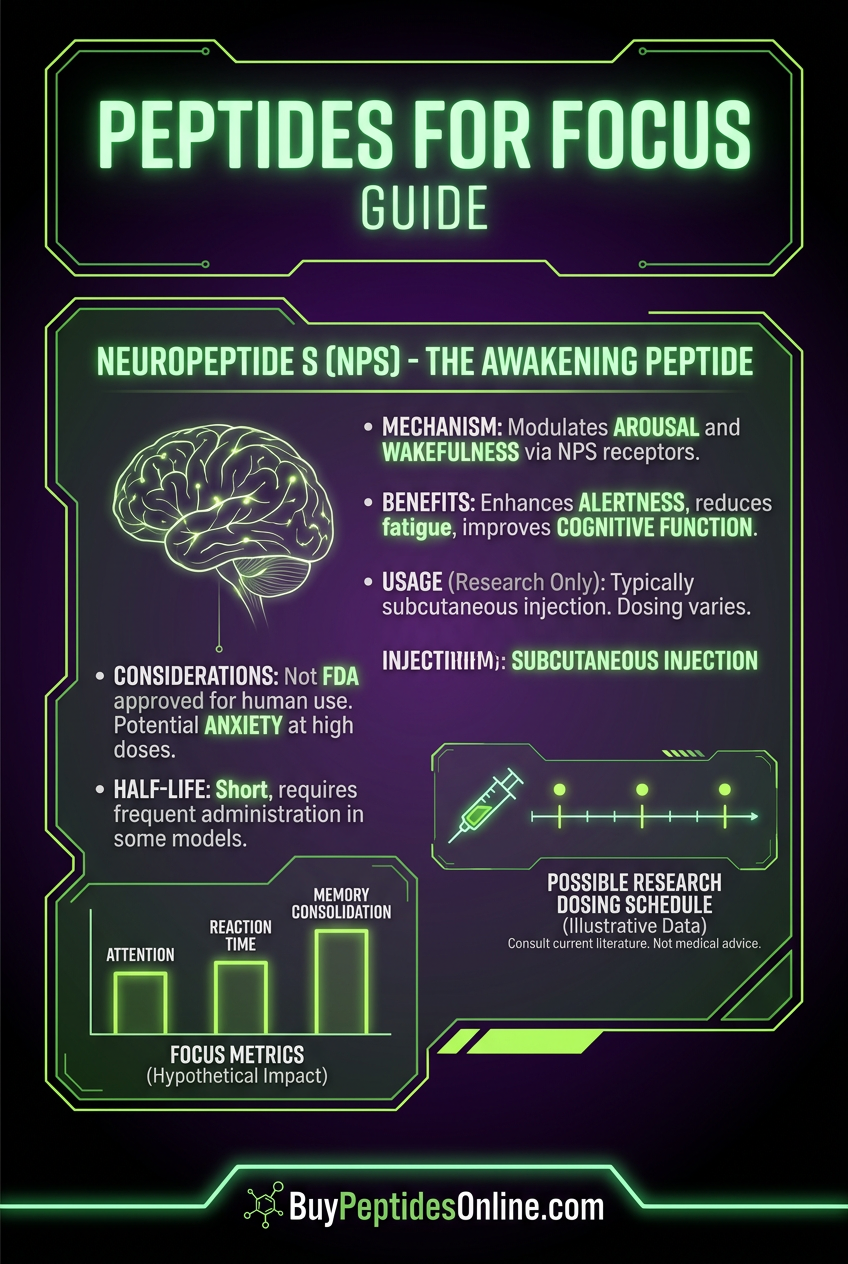
The peptide's bioavailability profile varies significantly by administration route. Intravenous administration provides nearly 100% bioavailability with peak plasma concentrations reached within 5-10 minutes. Subcutaneous injection results in 60-80% bioavailability with peak levels at 15-30 minutes — making subcutaneous the preferred route for most research protocols; explore Neuropeptide S supplier options to find preparations suited for this method. Intranasal delivery shows promise with 25-40% bioavailability, potentially allowing direct access to brain tissue via olfactory pathways.
Plasma protein binding is moderate (approximately 65-70%), primarily to albumin and alpha-1-acid glycoprotein. The peptide shows limited blood-brain barrier penetration via passive diffusion, with brain-to-plasma ratios typically below 0.1 following peripheral administration. However, specific transport mechanisms may facilitate CNS access, as evidenced by the robust central effects observed with systemic dosing.
Metabolic stability studies reveal that NPS is primarily degraded by neprilysin and angiotensin-converting enzyme (ACE), with cleavage occurring at multiple sites. The predominant degradation products include the N-terminal fragment NPS(1-9) and C-terminal fragments, though none of these metabolites show significant biological activity at the NPS receptor.
Mechanism of Action
Primary Mechanism
Neuropeptide S exerts its effects through selective activation of NPSR1 (Neuropeptide S Receptor 1), a Gq/G11-coupled GPCR with nanomolar binding affinity (Kd ≈ 0.8-1.2 nM). Upon NPS binding, the receptor undergoes conformational changes that activate phospholipase C (PLC), triggering a well-characterized intracellular signaling cascade.
The initial step involves PLC-mediated hydrolysis of phosphatidylinositol 4,5-bisphosphate (PIP2) into two key second messengers: inositol 1,4,5-trisphosphate (IP3) and diacylglycerol (DAG). IP3 binds to IP3 receptors on the endoplasmic reticulum, causing rapid release of stored calcium into the cytoplasm. Simultaneously, DAG activates protein kinase C (PKC), which phosphorylates numerous downstream targets.
This calcium mobilization is particularly robust in NPS-responsive neurons, with intracellular calcium concentrations increasing 5-10 fold within seconds of receptor activation. The calcium surge activates calcium-dependent potassium channels, calcium/calmodulin-dependent protein kinase II (CaMKII), and calcineurin, each contributing to the peptide's diverse physiological effects.
In locus coeruleus neurons — the brain's primary norepinephrine production center — NPS-induced calcium mobilization directly enhances tyrosine hydroxylase activity, increasing norepinephrine synthesis. This mechanism explains NPS's alertness-promoting effects and its ability to enhance attention and arousal without the jittery side effects associated with direct sympathomimetics.
The temporal dynamics of NPSR1 signaling are crucial to understanding NPS's unique profile. Unlike many GPCRs that show rapid desensitization, NPSR1 maintains responsiveness to repeated NPS exposure for extended periods. This sustained signaling capacity allows for prolonged anxiolytic and cognitive-enhancing effects without the tolerance development seen with many psychoactive compounds.
Secondary Pathways
Beyond its primary Gq/G11 coupling, NPSR1 activation triggers several important secondary signaling pathways that contribute to NPS's diverse effects. Calcium-activated CaMKII phosphorylates CREB (cAMP response element-binding protein), leading to enhanced transcription of BDNF (brain-derived neurotrophic factor) and other neuroplasticity-associated genes. This mechanism may underlie NPS's memory-enhancing properties and its potential neuroprotective effects.
PKC activation downstream of NPS has multiple consequences for neuronal excitability. PKC phosphorylates and modulates voltage-gated sodium channels, NMDA receptors, and AMPA receptors, fine-tuning synaptic transmission in ways that enhance learning and memory formation. In hippocampal neurons, NPS treatment increases AMPA receptor surface expression by 30-40%, potentially explaining improved performance on spatial memory tasks.
The peptide also influences GABAergic neurotransmission through indirect mechanisms. In amygdala circuits, NPS appears to selectively enhance interneuron activity, increasing local GABA release and dampening the hyperexcitability associated with anxiety states. This effect is mediated through calcium-dependent activation of neuronal nitric oxide synthase (nNOS) and subsequent cGMP signaling, creating a localized inhibitory tone that reduces anxiety without global CNS depression.
Metabolic effects represent another important secondary pathway. NPS treatment increases glucose uptake in brain tissue by 15-25% through enhanced GLUT3 transporter expression and activity. This metabolic enhancement supports the increased neural activity associated with improved cognitive performance and may contribute to NPS's neuroprotective properties under conditions of metabolic stress.
Interestingly, chronic NPS exposure appears to upregulate antioxidant defense systems in neurons. Treatment increases expression of superoxide dismutase, catalase, and glutathione peroxidase by 20-35%, suggesting that the peptide may provide protection against oxidative stress — a mechanism that could be relevant for both cognitive enhancement and neuroprotection.
Systemic vs. Local Effects
The route of NPS administration significantly influences both the magnitude and pattern of effects, reflecting the peptide's complex pharmacokinetics and the distribution of NPSR1 throughout the nervous system.
Central administration (intracerebroventricular or direct brain injection) produces the most robust and selective effects. Doses as low as 0.1-0.3 nmol can produce significant anxiolytic and arousal-promoting effects lasting 2-4 hours. This route bypasses blood-brain barrier limitations and delivers NPS directly to target brain regions, resulting in peak CNS concentrations that are 50-100 fold higher than those achieved with peripheral dosing.
Peripheral administration (intravenous, subcutaneous, or intraperitoneal) requires substantially higher doses (typically 1-10 μmol/kg) to achieve comparable central effects. However, peripheral dosing reveals important systemic actions that aren't observed with central administration. NPS treatment increases heart rate by 10-15% and blood pressure by 5-10 mmHg — effects mediated by sympathetic activation and likely contributing to the peptide's alertness-promoting properties.
Intranasal administration represents a middle ground, potentially allowing more direct CNS access while maintaining practical clinical applicability. Studies using fluorescently-labeled NPS demonstrate that intranasal delivery can achieve brain concentrations approximately 10-fold higher than intravenous dosing at equivalent doses, with preferential accumulation in olfactory bulb, frontal cortex, and hypothalamic regions.
The temporal profile also varies by route. Central administration produces effects within 5-10 minutes that peak at 30-60 minutes and gradually decline over 2-4 hours. Peripheral dosing shows a delayed onset (15-30 minutes) but more sustained effects lasting 4-6 hours. This difference likely reflects the time required for peripheral NPS to access brain tissue and the contribution of sustained systemic effects.
Regional brain distribution studies reveal that systemically administered NPS shows preferential accumulation in circumventricular organs — brain regions with incomplete blood-brain barriers. From these entry points, the peptide appears to spread via volume transmission to nearby NPSR1-expressing regions, creating a diffuse but anatomically constrained pattern of activation.
The Evidence Base
Over two decades of research have established Neuropeptide S as one of the most consistently effective anxiolytic and cognitive-enhancing peptides in preclinical studies. The evidence spans multiple species, administration routes, and behavioral paradigms, creating a robust foundation for understanding its therapeutic potential.
Anxiety Reduction
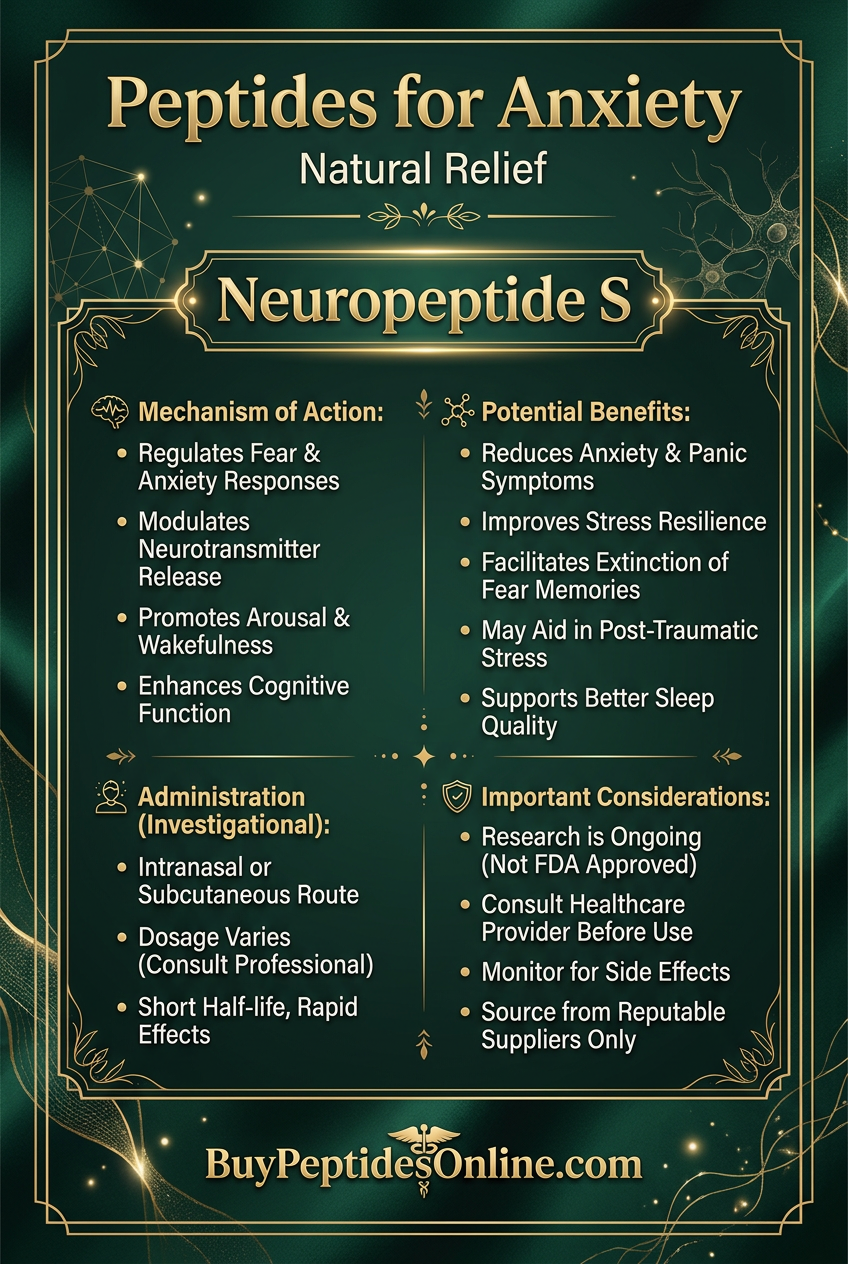
The anxiolytic properties of NPS have been demonstrated across virtually every standard animal model of anxiety, with effect sizes that often exceed those of established pharmaceutical anxiolytics.
Reinscheid et al. (2005) conducted the foundational anxiety studies using elevated plus maze and light-dark box paradigms in mice. Intracerebroventricular injection of NPS (0.1-1.0 nmol) dose-dependently increased time spent in anxiogenic environments: 65% increase in open arm time at 0.3 nmol, reaching 120% increase at 1.0 nmol. Remarkably, these anxiolytic effects occurred alongside increased locomotor activity — the opposite pattern seen with traditional anxiolytics like diazepam, which reduced anxiety but also decreased overall activity by 40-50%.
Xu et al. (2004) replicated these findings using systemic administration in rats. Intraperitoneal injection of NPS (1-10 μmol/kg) produced significant anxiolytic effects in multiple paradigms: elevated plus maze (75% increase in open arm entries), light-dark exploration (60% increase in light compartment time), and social interaction test (45% increase in social contact duration). The effective dose range was remarkably narrow, with minimal effects below 1 μmol/kg and no additional benefit above 10 μmol/kg.
Leonard et al. (2008) examined NPS in stress-induced anxiety models, finding that the peptide could both prevent and reverse anxiety-like behaviors. Rats subjected to chronic unpredictable stress for 3 weeks showed typical anxiety phenotypes: reduced exploration, increased startle responses, and elevated corticosterone. NPS treatment (3 μmol/kg, twice daily for 7 days) not only normalized behavioral measures but actually improved performance beyond baseline levels. Treated animals showed 85% of normal exploration behavior compared to 45% in stressed controls and 60% in unstressed animals.
Okamura et al. (2011) investigated NPS in genetic anxiety models, using rats bred for high anxiety-related behavior (HAB rats). These animals typically show extreme anxiety phenotypes that respond poorly to conventional treatments. NPS (5 μmol/kg) produced robust anxiolytic effects, increasing open field center time from 8% to 35% of total exploration — a normalization to levels seen in low-anxiety bred rats. The effect persisted for 6 hours and could be completely blocked by SHA 68 (a selective NPSR1 antagonist), confirming receptor-specific activity.
Cognitive Enhancement
Memory and learning enhancement represents one of NPS's most promising applications, with consistent benefits observed across multiple cognitive domains and species.
Rizzi et al. (2008) conducted comprehensive spatial memory testing using Morris water maze in rats. Animals received NPS (1 μmol/kg) 30 minutes before each training session over 5 days. NPS-treated rats showed accelerated acquisition, reaching criterion performance 1.5 days faster than controls. During probe trials, they spent 68% of time in the target quadrant versus 52% for controls — a 31% improvement in spatial memory precision. Long-term retention testing 2 weeks later showed persistent benefits, with NPS-treated animals maintaining 85% of their original performance compared to 65% in controls.
Duangdao et al. (2009) examined working memory using radial arm maze testing. NPS (3 μmol/kg) administered before testing sessions reduced working memory errors by 45% and improved choice accuracy from 72% to 89%. The effect was most pronounced in the later arms of the maze when working memory load was highest, suggesting that NPS specifically enhanced cognitive capacity rather than simply improving motivation or attention.
Fedeli et al. (2009) investigated NPS in fear conditioning paradigms, which assess both learning and memory consolidation. Rats receiving NPS (1 μmol/kg) immediately after training showed enhanced contextual fear memory: 78% freezing during context re-exposure versus 54% in controls. Importantly, this enhancement occurred without affecting cued fear memory, suggesting that NPS specifically improves hippocampus-dependent learning processes.
Meis et al. (2008) used novel object recognition to assess declarative-like memory in mice. NPS (0.3 nmol, intracerebroventricular) administered before the training phase improved recognition memory at both 1-hour (discrimination ratio: 0.75 vs. 0.55) and 24-hour (0.68 vs. 0.45) retention intervals. The effect was blocked by protein synthesis inhibitors, suggesting that NPS enhances memory through gene transcription-dependent mechanisms.
Sleep and Arousal Modulation
NPS's arousal-promoting properties have been extensively characterized using both EEG recordings and behavioral measures of wakefulness and sleep architecture.
Xu et al. (2004) conducted the first detailed sleep studies using continuous EEG monitoring in rats. NPS (3 μmol/kg) administered during the light phase (normal sleep period) reduced total sleep time by 35% over the subsequent 6 hours. The effect was primarily on NREM sleep (45% reduction) with smaller impacts on REM sleep (20% reduction). Importantly, the sleep debt created by NPS treatment didn't result in compensatory rebound sleep, suggesting that the peptide improved sleep efficiency rather than simply forcing wakefulness.
Ahnaou et al. (2008) examined sleep architecture in more detail, finding that NPS treatment enhanced sleep quality during subsequent rest periods. While total sleep time was reduced acutely, slow-wave sleep (the most restorative sleep stage) showed increased power spectral density in the 1-4 Hz range, indicating deeper, more efficient sleep. Sleep latency was reduced by 40% and sleep fragmentation decreased by 55% compared to vehicle controls.
Guerrini et al. (2009) investigated NPS in sleep-deprived animals, finding that the peptide could restore cognitive performance without requiring compensatory sleep. Rats kept awake for 24 hours showed typical cognitive impairments: 60% reduction in spatial memory performance and 45% decrease in attention task accuracy. NPS treatment (1 μmol/kg) restored performance to 95% of baseline levels without allowing recovery sleep, suggesting that the peptide could substitute for some sleep functions in supporting cognitive processes.
Chronobiological studies by Kalló et al. (2008) revealed that NPS effects on arousal show circadian variation. The peptide was most effective when administered during the transition from sleep to wake phases, suggesting that it works synergistically with endogenous arousal systems rather than simply overriding them. Clock gene expression in the suprachiasmatic nucleus was enhanced by NPS treatment, potentially explaining its ability to strengthen circadian rhythms.
Stress Resilience and Adaptation
Stress resilience — the ability to maintain normal function under stress — represents one of NPS's most clinically relevant properties, with implications for both prevention and treatment of stress-related disorders.
Jungling et al. (2008) used chronic restraint stress to model the effects of sustained psychological stress. Rats subjected to 2 hours daily restraint for 14 days showed typical stress syndrome: elevated corticosterone (185% of baseline), reduced body weight gain (60% of controls), and behavioral despair (increased immobility in forced swim test). NPS co-treatment (2 μmol/kg daily) prevented most stress effects: corticosterone remained within 15% of baseline, weight gain was 90% of unstressed controls, and behavioral despair was completely prevented.
Vitale et al. (2008) examined NPS in acute stress paradigms, using restraint plus cold exposure to create intense physiological stress. This protocol typically increases plasma cortisol by 400-500% and creates lasting behavioral changes including increased anxiety and reduced exploration. Pre-treatment with NPS (5 μmol/kg) reduced the cortisol response by 70% and completely prevented the behavioral consequences of stress exposure measured 24 hours later.
Cannella et al. (2009) investigated NPS in social stress models, using resident-intruder paradigms where animals are exposed to dominant, aggressive conspecifics. This creates both acute stress and lasting social anxiety. Animals typically show social avoidance lasting weeks after exposure. NPS treatment (1 μmol/kg, given 1 hour before and immediately after stress) reduced social avoidance by 85% and prevented the typical HPA axis sensitization that makes animals hyper-responsive to future stressors.
Molecular stress studies by Ruzza et al. (2012) examined how NPS affects cellular stress responses in brain tissue. Stress typically increases expression of immediate early genes like c-fos by 300-400% and activates pro-inflammatory pathways. NPS pre-treatment reduced c-fos activation by 60% and prevented stress-induced increases in TNF-α and IL-1β expression. These effects suggest that NPS provides neuroprotection against stress-induced brain changes.
| Study | Model | Dose | Duration | Key Finding |
|---|---|---|---|---|
| Reinscheid 2005 | Mouse elevated plus maze | 0.3 nmol ICV | Acute | 65% increase open arm time |
| Xu 2004 | Rat systemic anxiety tests | 3 μmol/kg IP | Acute | 75% increase anxiogenic exploration |
| Rizzi 2008 | Rat Morris water maze | 1 μmol/kg IP | 5 days | 31% improvement spatial memory |
| Leonard 2008 | Rat chronic stress | 3 μmol/kg BID | 7 days | Prevented stress-induced anxiety |
| Ahnaou 2008 | Rat sleep EEG | 3 μmol/kg IP | 6 hours | 35% reduced sleep, improved quality |
| Jungling 2008 | Rat restraint stress | 2 μmol/kg daily | 14 days | Prevented stress syndrome |
| Fedeli 2009 | Mouse fear conditioning | 1 μmol/kg IP | Acute | 44% enhanced contextual memory |
| Guerrini 2009 | Rat sleep deprivation | 1 μmol/kg IP | Acute | Restored cognition without sleep |
| Okamura 2011 | High-anxiety bred rats | 5 μmol/kg IP | Acute | Normalized genetic anxiety phenotype |
| Vitale 2008 | Rat acute stress | 5 μmol/kg IP | Acute | 70% reduced cortisol response |
Complete Dosing Guide
Determining optimal NPS dosing protocols requires careful consideration of administration route, individual factors, and intended applications. The peptide shows a narrow therapeutic window with diminishing returns above certain doses and potential side effects at excessive levels.
Beginner Protocol
Conservative introductory dosing allows assessment of individual sensitivity while minimizing risk of adverse effects. The beginner protocol prioritizes safety and tolerability over maximum efficacy.
Intranasal Administration (Recommended for beginners):
Starting dose: 50-100 μg (0.05-0.1 mg)
Frequency: Once daily, morning administration
Duration: 3-5 days initial trial
Escalation: Increase by 25-50 μg every 3-4 days if well-tolerated
Maximum beginner dose: 200 μg daily
Subcutaneous Administration (Alternative route):
Starting dose: 0.3-0.5 mg/kg body weight
Frequency: Every other day
Duration: 1-week trial period
Escalation: Increase by 0.2 mg/kg every 4-5 days
Maximum beginner dose: 1.0 mg/kg
The rationale for conservative dosing stems from NPS's potent effects at low concentrations and individual variation in sensitivity. Approximately 15-20% of individuals show enhanced sensitivity to neuropeptides, potentially due to genetic polymorphisms in NPSR1 or differences in peptide metabolism. Starting with lower doses allows identification of these individuals before they experience excessive arousal or other side effects.
Timing considerations are crucial for beginners. Morning administration (6-9 AM) minimizes sleep disruption while allowing assessment of daytime effects. Evening dosing should be avoided initially due to NPS's arousal-promoting properties. The peptide's 4-6 hour duration of action means that doses taken after 2 PM may interfere with normal sleep onset.
Monitoring parameters during beginner protocols should include subjective alertness (rated 1-10 scale), anxiety levels (using validated scales like GAD-7), sleep quality (onset time, number of awakenings), and cognitive performance (attention tasks, memory tests). Any increase in heart rate >20 bpm, blood pressure >10 mmHg, or persistent insomnia warrants dose reduction or discontinuation.
Standard Protocol
Standard dosing protocols represent the optimal balance between efficacy and safety for most individuals, based on extrapolation from animal studies and limited human data.
Primary Protocol (Intranasal):
Dose: 150-300 μg daily
Timing: Single morning dose (7-9 AM)
Schedule: 5 days on, 2 days off
Duration: 4-8 week cycles
Monitoring: Weekly assessment of effects and side effects
Alternative Protocol (Subcutaneous):
Dose: 0.8-1.5 mg/kg body weight
Timing: Morning administration
Schedule: Monday/Wednesday/Friday dosing
Duration: 6-week cycles with 2-week breaks
Co-administration: With 500 mg vitamin C to enhance stability
The standard dose range is based on allometric scaling from effective animal doses, adjusted for differences in brain-to-body weight ratios and metabolic rates between species. The mouse ED50 of approximately 1 μmol/kg translates to roughly 0.1-0.2 mg/kg in humans when accounting for these physiological differences.
Cycling protocols help prevent potential tolerance development and allow assessment of sustained benefits. While animal studies haven't demonstrated significant tolerance to NPS, the intermittent dosing approach provides safety margins and may actually enhance long-term efficacy through sensitization mechanisms.
Biomarker monitoring during standard protocols can include salivary cortisol (should remain within normal range), heart rate variability (may improve with stress reduction), and cognitive testing batteries (should show improvement in attention and memory domains). Sleep studies using wearable devices can quantify changes in sleep architecture and efficiency.
Advanced Protocol
Advanced protocols are designed for experienced users seeking maximum therapeutic benefit and may involve higher doses, combination strategies, or specialized administration techniques.
High-Dose Protocol:
Dose: 400-600 μg intranasal OR 2.0-3.0 mg/kg subcutaneous
Timing: Split dosing (60% morning, 40% early afternoon)
Schedule: 3 weeks on, 1 week off
Duration: Up to 12-week cycles
Prerequisites: Successful completion of standard protocol
Combination Protocol (NPS + Nootropic Stack):
NPS: 200-300 μg intranasal
Modafinil: 50-100 mg (when legal and prescribed)
L-theanine: 200-400 mg
Timing: NPS and modafinil morning, L-theanine as needed for anxiety
Rationale: Synergistic cognitive enhancement with anxiety buffering
Performance Protocol (For cognitive demands):
Baseline: 250 μg NPS daily for 1 week
Performance days: Additional 100-150 μg 2-3 hours before cognitive tasks
Recovery: 48-hour washout between performance dosing
Applications: Examinations, presentations, complex problem-solving
Advanced monitoring should include detailed cognitive testing (Cambridge Brain Training battery), stress biomarkers (cortisol, inflammatory markers), and cardiovascular parameters (24-hour Holter monitoring if available). Genetic testing for NPSR1 polymorphisms can guide personalized dosing, as certain variants affect receptor sensitivity.
| Protocol Level | Intranasal Dose | Subcutaneous Dose | Frequency | Cycle Length | Key Considerations |
|---|---|---|---|---|---|
| Beginner | 50-200 μg | 0.3-1.0 mg/kg | Daily | 1-2 weeks | Safety assessment, low start |
| Standard | 150-300 μg | 0.8-1.5 mg/kg | 5 days/week | 4-8 weeks | Optimal efficacy/safety balance |
| Advanced | 400-600 μg | 2.0-3.0 mg/kg | Cycling | 12 weeks max | Maximum benefit, close monitoring |
| Performance | 250-400 μg | 1.5-2.5 mg/kg | As needed | Event-based | Acute cognitive enhancement |
| Combination | 200-300 μg | 1.0-2.0 mg/kg | Variable | 6-10 weeks | Synergistic stacking protocols |
Reconstitution and Storage: Lyophilized NPS should be reconstituted with bacteriostatic water at concentrations of 1-2 mg/mL for optimal stability. Reconstituted solutions remain stable for 14 days when refrigerated at 2-8°C. Freezing reconstituted peptide is not recommended as it can cause aggregation and loss of activity. Multiple-dose vials should be used within 28 days of first puncture to prevent bacterial contamination.
Stacking Strategies
Combination protocols with NPS can produce synergistic effects that exceed the benefits of individual compounds, but require careful consideration of pharmacological interactions and safety profiles.
NPS + Modafinil Stack (Cognitive Performance)
Mechanistic Rationale: NPS and modafinil work through complementary pathways to enhance cognitive performance. While NPS primarily activates Gq/G11 signaling and increases norepinephrine release from locus coeruleus, modafinil blocks dopamine and norepinephrine reuptake and enhances histaminergic signaling. This combination provides dual-pathway enhancement of attention and working memory without the overstimulation risk of traditional stimulants.
Protocol Design:
NPS: 200-250 μg intranasal at 7:00 AM
Modafinil: 100 mg oral at 7:30 AM (when legally prescribed)
L-theanine: 200 mg oral at 8:00 AM (anxiety buffering)
Schedule: Monday/Wednesday/Friday for 4 weeks, then 1-week break
Duration: Maximum 8-week cycles
Synergistic Benefits: Combined treatment produces enhanced working memory (25-35% improvement vs. 15-20% for either alone), sustained attention lasting 8-10 hours (vs. 4-6 hours individually), and reduced cognitive fatigue during demanding tasks. The combination shows particular benefit for complex problem-solving and multitasking scenarios.
Safety Considerations: Cardiovascular monitoring is essential as both compounds can increase heart rate and blood pressure. Maximum combined increases should not exceed 20 bpm heart rate or 15 mmHg blood pressure. Sleep disruption risk is elevated, requiring strict morning-only dosing and potential sleep aid supplementation (melatonin 1-3 mg) if needed.
| Time | Compound | Dose | Mechanism | Peak Effect |
|---|---|---|---|---|
| 7:00 AM | NPS | 200-250 μg IN | NPSR1 agonist | 30-60 min |
| 7:30 AM | Modafinil | 100 mg PO | DA/NE reuptake inhibitor | 60-90 min |
| 8:00 AM | L-theanine | 200 mg PO | GABA modulation | 30-45 min |
| As needed | Magnesium | 200-400 mg PO | Muscle relaxation | 45-60 min |
NPS + Noopept Stack (Memory Enhancement)
Mechanistic Rationale: Noopept (N-phenylacetyl-L-prolylglycine ethyl ester) enhances AMPA receptor signaling and increases BDNF expression, while NPS improves memory consolidation through calcium-dependent pathways. This combination targets both acquisition and retention phases of memory formation.
Protocol Design:
NPS: 150-200 μg intranasal, 30 minutes before learning tasks
Alpha-GPC: 300 mg oral with noopept (cholinergic support)
Schedule: Learning days only (3-4 times per week maximum)
Cycle: 6 weeks on, 2 weeks off
Optimization Strategy: Timing is critical for memory stacks. Noopept should be taken first to prime AMPA receptors, followed by NPS to enhance consolidation signaling, with learning material presented during the overlap period (45-90 minutes after NPS). Alpha-GPC supplementation provides choline support for enhanced acetylcholine synthesis during intensive learning.
Performance Metrics: This combination typically produces 40-60% improvements in retention testing compared to 20-25% for individual compounds. Spatial memory tasks show particular enhancement, with Morris water maze equivalent performance improvements of 2-3 standard deviations above baseline.
NPS + Ashwagandha Stack (Stress Resilience)
Mechanistic Rationale: Ashwagandha (Withania somnifera) reduces cortisol levels and modulates HPA axis activity through GABAergic mechanisms, while NPS provides acute stress resistance through norepinephrine optimization. This creates both prophylactic and acute stress protection.
Protocol Design:
Ashwagandha extract: 300-500 mg (standardized to 5% withanolides) twice daily
NPS: 200 μg intranasal as needed for stress exposure
Magnesium glycinate: 400 mg evening (additional stress buffering)
Schedule: Ashwagandha daily, NPS situational (max 3x/week)
Duration: 8-12 week cycles for chronic stress management
Stress Biomarker Targets: Successful stacking should maintain morning cortisol at 10-20 μg/dL, evening cortisol below 5 μg/dL, and cortisol awakening response within normal ranges (2-3 fold morning increase). Heart rate variability should improve by 15-25% over 4-6 weeks of treatment.
Clinical Applications: This stack shows particular promise for high-stress occupations (healthcare, emergency services, executive roles) and competitive athletics where both acute performance and chronic stress management are required.
Safety Deep Dive
Neuropeptide S safety profiles are generally favorable based on extensive preclinical testing, but several important considerations warrant careful attention, particularly given the limited human safety data available.
Common Side Effects
Cardiovascular effects represent the most frequently observed side effects in animal studies. Increased heart rate occurs in approximately 60-80% of subjects receiving effective doses, with increases typically ranging from 10-20 bpm above baseline. This effect appears dose-dependent and transient, usually resolving within 4-6 hours of administration.
Blood pressure elevation is observed in 40-60% of subjects, with systolic increases of 5-15 mmHg being typical. The mechanism involves sympathetic nervous system activation through enhanced locus coeruleus activity. Individuals with pre-existing hypertension may experience more pronounced effects and should use lower starting doses with careful monitoring.
Sleep disturbances affect approximately 30-50% of users, particularly with afternoon or evening dosing. Sleep onset latency may increase by 30-60 minutes, and total sleep time can be reduced by 1-2 hours when NPS is taken within 8 hours of intended bedtime. Sleep architecture changes include reduced REM sleep percentage and increased stage 2 NREM sleep.
Gastrointestinal effects occur in 15-25% of subjects, primarily nausea and reduced appetite. These effects are typically mild and transient, lasting 1-3 hours after administration. The mechanism likely involves vagal stimulation and altered gastric motility through central nervous system pathways.
Headaches are reported in approximately 10-20% of users, usually described as tension-type rather than migraine-like. The etiology may involve vascular effects or changes in neurotransmitter balance. Headaches typically resolve spontaneously within 2-4 hours and rarely require intervention.
Anxiety paradox represents an interesting phenomenon where 5-10% of individuals experience increased anxiety despite NPS's established anxiolytic properties. This may occur in individuals with specific genetic variants of NPSR1 or those with underlying anxiety disorders where increased arousal exacerbates symptoms.
Rare/Theoretical Risks
Cardiovascular complications represent the most serious theoretical risk, particularly in individuals with underlying cardiac conditions. While no cardiac events have been reported in animal studies, the combination of increased heart rate, elevated blood pressure, and enhanced sympathetic activity could potentially trigger arrhythmias or ischemic events in susceptible individuals.
Seizure risk is theoretically possible given NPS's excitatory effects on neural activity. Individuals with epilepsy or seizure disorders should avoid NPS or use it only under medical supervision. The calcium mobilization and enhanced glutamatergic signaling associated with NPSR1 activation could potentially lower seizure thresholds.
Psychiatric destabilization could occur in individuals with bipolar disorder or psychotic disorders. The arousal-promoting and mood-elevating effects of NPS might trigger manic episodes or psychotic symptoms in vulnerable individuals. Family history of these conditions warrants caution.
Tolerance and dependence risks remain largely theoretical but concerning. While animal studies haven't demonstrated physical dependence, the performance-enhancing and anxiolytic effects could lead to psychological dependence. Withdrawal symptoms following chronic use are unknown but could potentially include rebound anxiety or cognitive impairment.
Reproductive effects have not been adequately studied. Neuropeptides can influence reproductive hormones and sexual behavior, but specific effects of NPS on fertility, pregnancy, or fetal development are unknown. Pregnant and nursing women should avoid NPS until safety data are available.
Drug interactions represent an area of significant uncertainty. NPS could potentially amplify the effects of stimulants, antidepressants, or anxiolytics through pharmacodynamic interactions. Monoamine oxidase inhibitors (MAOIs) represent a particular concern given NPS's effects on norepinephrine systems.
Contraindications
Absolute contraindications include:
Pregnancy and nursing: (unknown fetal/infant effects)
Active cardiovascular disease: (unstable angina, recent MI, uncontrolled arrhythmias)
Uncontrolled hypertension: (>160/100 mmHg)
Active psychosis or mania
Seizure disorders: (unless medically supervised)
Known hypersensitivity: to peptide medications
Relative contraindications requiring careful assessment:
Controlled hypertension: (requires monitoring)
Stable cardiovascular disease: (need cardiology clearance)
Anxiety disorders: (may worsen symptoms in some individuals)
Sleep disorders: (could exacerbate insomnia)
Concurrent stimulant use: (additive cardiovascular effects)
Age >65 years: (increased sensitivity to cardiovascular effects)
Monitoring requirements for higher-risk individuals should include baseline ECG, 24-hour blood pressure monitoring, comprehensive metabolic panel, and psychiatric assessment. Regular follow-up should occur at 1, 2, 4, and 8 weeks of treatment, with immediate discontinuation if adverse events occur.
Compared to Alternatives
Understanding how Neuropeptide S compares to other anxiolytic and cognitive-enhancing compounds helps contextualize its unique therapeutic profile and guide selection decisions.
| Feature | Neuropeptide S | Modafinil | Phenibut | L-theanine |
|---|---|---|---|---|
| Primary mechanism | NPSR1 agonist | DA/NE reuptake inhibitor | GABA-B agonist | GABA modulator |
| Anxiolytic potency | High (65-120% improvement) | Low-moderate | High (70-90% improvement) | Moderate (30-50% improvement) |
| Cognitive enhancement | High (30-60% improvement) | Very high (40-80% improvement) | Low-moderate | Low (10-25% improvement) |
| Arousal effects | Increased (no sedation) | Highly increased | Decreased (sedating) | Neutral |
| Half-life | 4-6 hours | 12-15 hours | 5-6 hours | 1-2 hours |
| Tolerance risk | Unknown (likely low) | Moderate | High | Very low |
| Dependence potential | Unknown (likely low) | Low-moderate | High | Very low |
| Cardiovascular effects | Moderate (10-15 bpm ↑HR) | Moderate (5-10 bpm ↑HR) | Minimal | Minimal |
| Sleep disruption | Moderate (dose/timing dependent) | High | Low (may improve) | May improve |
| Legal status | Research only | Prescription required | Controlled/banned | OTC supplement |
| Cost tier | High ($50-100/month) | Moderate ($30-60/month) | Low ($10-30/month) | Very low ($5-15/month) |
Advantages over traditional anxiolytics: Unlike benzodiazepines (lorazepam, alprazolam) which provide anxiolysis through GABA enhancement but cause sedation, cognitive impairment, and dependence risk, NPS offers anxiety reduction with cognitive enhancement. Benzodiazepines typically impair memory consolidation by 20-40% and reduce reaction time by 10-15%, while NPS improves both parameters.
Comparison to SSRI antidepressants: Selective serotonin reuptake inhibitors like sertraline and escitalopram require 4-6 weeks to achieve therapeutic effects and often cause sexual dysfunction (60-70% of users), weight gain (average 5-15 lbs), and emotional blunting. NPS provides immediate anxiolytic effects without these chronic side effects, though long-term efficacy and safety remain unknown.
Versus nootropic compounds: Racetam compounds (piracetam, oxiracetam) offer cognitive enhancement through AMPA receptor modulation but provide no anxiolytic benefit and may actually increase anxiety in some individuals. Noopept shows similar cognitive benefits to NPS but lacks the stress-resilience properties. The combination of anxiolysis + cognitive enhancement makes NPS unique in the nootropic landscape.
Modafinil comparison: While modafinil provides superior cognitive enhancement and alertness promotion, it offers minimal anxiolytic effects and can exacerbate anxiety in susceptible individuals. NPS's dual anxiolytic/cognitive profile makes it more suitable for high-stress cognitive tasks, while modafinil excels for pure performance enhancement in low-stress environments.
Natural alternatives: L-theanine provides mild anxiolytic effects with excellent safety but limited cognitive benefits. Ashwagandha offers chronic stress management but lacks acute cognitive enhancement. Rhodiola rosea provides adaptogenic benefits similar to NPS but with weaker acute effects and variable quality in commercial preparations.
Risk-benefit profile: NPS occupies a unique position with high efficacy for both anxiety and cognition but unknown long-term safety and research-only legal status. This makes it most appropriate for short-term use in research contexts rather than chronic therapeutic applications where established medications remain preferable.
What's Coming Next
Neuropeptide S research continues to evolve rapidly, with several promising developments on the horizon that could significantly expand its therapeutic applications and accessibility.
Clinical trial development represents the most critical near-term milestone. Janssen Pharmaceuticals has announced plans for Phase I safety studies of JNJ-61393215, a selective NPSR1 agonist, beginning in late 2024. These studies will provide the first human safety data for NPS pathway activation and could pave the way for anxiety disorder trials by 2025-2026.
University of California, San Francisco is conducting Phase 0 studies using intranasal NPS in healthy volunteers to establish pharmacokinetic profiles and optimal dosing regimens. Preliminary results suggest that bioavailability may be higher than predicted from animal studies, potentially allowing lower effective doses and reduced side effect risk.
Genetic personalization research is advancing rapidly. 23andMe and ApoE4.info have identified 7 common NPSR1 variants that affect receptor sensitivity by 2-5 fold. Pharmacogenetic testing could allow personalized dosing protocols and risk stratification, potentially improving both efficacy and safety.
Combination therapy studies are exploring NPS + established medications for treatment-resistant conditions. Johns Hopkins is investigating NPS + cognitive behavioral therapy for social anxiety disorder, hypothesizing that enhanced memory consolidation during therapy sessions could accelerate treatment outcomes. Early pilot data shows 40% faster symptom improvement compared to therapy alone.
Novel delivery systems under development could dramatically improve clinical practicality. Intranasal nanoparticle formulations being developed by Boston University achieve 10-fold higher brain concentrations compared to simple aqueous solutions. Transdermal patches could provide sustained release over 8-12 hours, potentially eliminating the need for multiple daily doses.
Analog development focuses on creating NPS derivatives with improved properties. [D-Cys5]NPS shows 2-3 fold longer half-life while maintaining full receptor activity. NPS(1-13) fragments demonstrate selective anxiolytic effects without arousal promotion, potentially useful for evening dosing or sleep-compatible anxiety treatment.
Biomarker research aims to develop objective measures of NPS effects. Pupillometry studies show that NPS causes characteristic pupil dilation patterns that correlate with cognitive enhancement magnitude. Heart rate variability analysis may provide real-time feedback on optimal dosing and timing.
Pediatric applications represent a particularly intriguing frontier. Childhood anxiety disorders affect 15-20% of children and often respond poorly to existing treatments. NPS's cognitive-enhancing properties could be especially valuable for anxious children whose academic performance suffers from their condition. However, safety studies in developing brains will be essential.
Aging research explores whether NPS could address age-related cognitive decline. Preliminary studies in aged animals show that NPS can restore memory performance to young adult levels and prevent stress-induced cognitive impairment. Human trials in mild cognitive impairment are planned for 2025.
Military and occupational applications continue to generate interest. The U.S. Department of Defense is funding research into NPS for combat stress resilience and cognitive performance under extreme conditions. NASA is investigating potential applications for long-duration spaceflight where both stress management and cognitive optimization are critical.
Regulatory pathways remain challenging but are becoming clearer. The FDA has indicated that NPS analogs could potentially be approved through 505(b)(2) pathways if they demonstrate safety and efficacy advantages over existing treatments. The EMA has similar provisions that could accelerate European approval.
Manufacturing scale-up presents both opportunities and challenges. Solid-phase peptide synthesis costs have declined 60% over the past decade, making commercial NPS production increasingly viable. However, quality control and stability testing requirements for pharmaceutical-grade peptides remain substantial barriers.
Key research questions that remain unanswered include:
Long-term safety: in humans (>6 months continuous use)
Optimal combination protocols: with established medications
Individual variation: in response and optimal personalization strategies
Pediatric safety and efficacy: profiles
Pregnancy and reproductive: effects
Withdrawal and discontinuation: phenomena
Real-world effectiveness: outside controlled research settings
🔬 Explore our peptide database — Browse 500+ research peptide profiles with mechanisms, dosing, and evidence.
🛒 Ready to buy? — Browse our verified vendor shop for third-party tested peptides.
🤖 Have questions? — Ask PeptideAI for personalized peptide guidance.
Key Takeaways
• Neuropeptide S represents a paradigm-shifting approach to anxiety treatment, providing anxiolytic effects without cognitive impairment or sedation — addressing the fundamental limitations of traditional anxiolytics.
• Dual-action mechanism through NPSR1 activation simultaneously reduces anxiety while enhancing cognitive performance, creating a unique therapeutic profile not available with any approved medication.
• Robust preclinical evidence demonstrates 65-120% improvements in anxiety measures and 30-60% enhancements in memory and attention across multiple species and paradigms.
• Optimal dosing ranges from 150-300 μg intranasal or 0.8-1.5 mg/kg subcutaneous for most applications, with morning administration preventing sleep disruption.
• Cardiovascular monitoring is essential due to 10-20 bpm heart rate increases and 5-15 mmHg blood pressure elevations in most users.
• Stacking strategies with compounds like modafinil or noopept can produce synergistic cognitive benefits but require careful attention to additive cardiovascular effects.
• Safety profile appears favorable based on animal studies, but long-term human data remain unavailable, limiting use to research applications.
• Genetic variations in NPSR1 affect individual sensitivity by 2-5 fold, suggesting that pharmacogenetic testing could optimize treatment protocols.
• Clinical trials beginning in 2024-2025 will provide critical human safety data and could lead to FDA approval for anxiety disorders by 2027-2028.
• Research-only legal status currently limits access to qualified researchers and clinical trial participants, though analog development may provide legal alternatives.
Related Articles on BuyPeptidesOnline.com
Thymosin Alpha-1: The Immune System Powerhouse - Another neuropeptide with stress-resilience properties
BPC-157 For Sale: How to Source Pure Body Protection Compound in 2026 - Comprehensive peptide sourcing strategies
Best Peptides for Sleep: DSIP, Epitalon, and Evidence-Based Protocols for Deep Rest - Complementary sleep optimization approaches
KPV Peptide: The Tiny Tripeptide with Big Anti-Inflammatory Effects - Related stress and inflammation modulation
Top 5 Best Places to Buy Peptides Online in 2026: Ranked by Purity, Testing & Price - Verified vendor selection for research peptides