Dr. Robert Dhillo still remembers the moment his research team first administered **kisspeptin-54** to healthy male volunteers at Imperial College London. Within hours, testosterone levels had surged by 300%. LH and FSH — the hormones that drive reproductive function — skyrocketed to levels typically seen only during puberty. But the most striking change wasn't measured in blood work.
It was written on their faces.
"The participants reported heightened sexual thoughts, increased attraction to their partners, and a sense of reproductive vitality they hadn't felt in years," Dhillo recalls. "We weren't just seeing hormonal changes. We were witnessing the reactivation of the brain's most fundamental drive: the desire to reproduce."
That 2008 study launched a revolution in reproductive medicine. Kisspeptin-54, a naturally occurring peptide that acts as the master switch for human sexuality, had been isolated, synthesized, and proven to restore reproductive function in ways that traditional hormone therapies couldn't match.
Unlike testosterone replacement or erectile dysfunction drugs that target downstream effects, kisspeptin-54 works at the source — the hypothalamic-pituitary-gonadal (HPG) axis that governs every aspect of reproductive biology. It doesn't just treat symptoms. It rewires the neural circuits that generate sexual desire itself.
The Discovery: How Scientists Found the Brain's Sexual Master Switch
The story of kisspeptin-54 begins in 1996 in Hershey, Pennsylvania — not the chocolate factory, but the laboratories of Pennsylvania State University College of Medicine. Dr. Danny Lee and his team were hunting for genes that suppress cancer metastasis when they discovered something unexpected: a gene they named KISS1 that seemed to control both tumor spread and reproductive development.
The protein encoded by KISS1 was initially called metastin for its anti-metastatic properties. But when researchers began studying KISS1 knockout mice, they discovered something far more intriguing than cancer suppression.
The mice were infertile.
Not just subfertile or reproductively impaired — completely unable to reach sexual maturity. Their reproductive organs remained underdeveloped, their sex hormone levels flatlined, and they showed zero interest in mating behaviors. It was as if someone had flipped an off switch for their entire reproductive system.
Dr. Stephanie Seminara at Massachusetts General Hospital made the connection to humans in 2003. She identified families with idiopathic hypogonadotropic hypogonadism (IHH) — a condition where people never enter puberty despite having normal reproductive organs. When she sequenced their DNA, she found mutations in the KISS1 receptor gene.
The implications were staggering. A single peptide system controlled the transition from childhood to sexual maturity in every mammalian species tested.
By 2005, researchers had isolated the active peptide fragments produced by KISS1 gene expression. The full-length 145-amino acid protein gets cleaved into smaller, more potent fragments: kisspeptin-54, kisspeptin-14, kisspeptin-13, and kisspeptin-10. Among these, kisspeptin-54 emerged as the most physiologically relevant form — the one that circulates in human blood and triggers the most robust reproductive responses. Researchers looking to study these mechanisms can find lab-tested kisspeptin-54 from verified vendors.
The peptide got its romantic name from its discovery location. KISS1 stood for "Kisspeptin-1 Sequence," named after the famous Hershey's Kisses chocolates. Scientists had literally discovered the molecular basis of sexual attraction in the town known for sweet romance.
Early clinical trials confirmed what animal studies had suggested: kisspeptin-54 could restart puberty in adolescents with IHH, restore ovulation in women with hypothalamic amenorrhea, and boost testosterone production in men with secondary hypogonadism — making verified kisspeptin-54 sources increasingly sought after in clinical research settings. But researchers quickly realized its potential extended far beyond treating reproductive disorders.
This wasn't just a fertility drug. It was a key to unlocking the neural mechanisms of human sexuality itself.
Chemical Identity: Decoding the Structure of Sexual Desire
Kisspeptin-54 is a 54-amino acid peptide with the molecular formula C₂₅₄H₄₀₅N₇₃O₇₅S₂ and a molecular weight of 5,796 daltons. Its systematic name reflects its origin as the 68-121 fragment of the full KISS1 gene product, but researchers universally refer to it by its more memorable kisspeptin designation.
The peptide's structure holds the key to its remarkable biological activity. Unlike many hormones that work through simple lock-and-key receptor binding, kisspeptin-54 employs a sophisticated molecular architecture that allows it to fine-tune reproductive signaling with extraordinary precision.
The C-terminal region contains the critical RF-amide motif — a arginine-phenylalanine-amide sequence that's essential for receptor activation. This motif is so important that even minor modifications can completely abolish kisspeptin's biological activity. The RF-amide tail acts like a molecular ignition key, fitting perfectly into the KISS1R receptor (also called GPR54) and triggering the cascade of events that awakens reproductive function.
The N-terminal region provides structural stability and determines the peptide's half-life in circulation. Kisspeptin-54's extended amino acid sequence creates multiple secondary structure elements — alpha helices and beta sheets — that protect the critical C-terminal domain from enzymatic degradation. This architectural design allows kisspeptin-54 to maintain biological activity for 2-4 hours after administration, significantly longer than its shorter fragments.
Solubility characteristics make kisspeptin-54 moderately challenging to work with in research settings. The peptide is water-soluble at physiological pH but requires careful handling to prevent aggregation. Stock solutions are typically prepared in sterile water or saline at — and those sourcing material for such protocols can compare kisspeptin-54 pricing from trusted suppliers concentrations of 1-10 mg/mL, though higher concentrations can lead to precipitation.
Stability varies dramatically with storage conditions. Lyophilized kisspeptin-54 remains stable for 2-3 years when stored at -20°C in sealed, desiccated containers. Once reconstituted, aqueous solutions maintain potency for 7-10 days at 4°C or up to 30 days when frozen at -80°C. Room temperature storage leads to rapid degradation, with 50% activity loss within 24-48 hours.
The peptide's amphiphilic nature — containing both hydrophobic and hydrophilic regions — influences its pharmacokinetics. After subcutaneous injection, kisspeptin-54 forms temporary depot-like aggregates that slowly release active peptide into circulation. This depot effect contributes to its sustained biological activity and may explain why subcutaneous dosing produces more consistent results than intravenous administration in research studies.
Chemical modifications have revealed which structural elements are essential versus dispensable. The C-terminal decapeptide (kisspeptin-10) retains full receptor binding affinity but has a much shorter half-life. N-terminal truncations beyond position 112 of the original KISS1 protein dramatically reduce potency. Researchers have used this structure-activity relationship data to develop both longer-acting analogs and more potent synthetic variants.
One unique aspect of kisspeptin-54's chemistry is its species specificity. While the C-terminal RF-amide motif is highly conserved across mammals, the N-terminal regions show significant variation between species. Human kisspeptin-54 differs from mouse kisspeptin-54 by 13 amino acids, which can affect receptor binding affinity and biological activity in cross-species research.
The peptide's post-translational modifications add another layer of complexity. Native kisspeptin-54 undergoes amidation at the C-terminus, a modification that's critical for full biological activity. Synthetic versions must incorporate this amidation during peptide synthesis, typically through the use of specialized amide resins or post-synthesis chemical modification.
Mechanism of Action: How Kisspeptin-54 Rewires Reproductive Biology
Primary Mechanism: The Hypothalamic Command Center
Kisspeptin-54's primary mechanism centers on its activation of KISS1R receptors in the arcuate nucleus of the hypothalamus, the brain region that serves as mission control for reproductive function. This isn't a simple on-off switch — it's a sophisticated neuroendocrine orchestra that kisspeptin-54 conducts with remarkable precision.
When kisspeptin-54 binds to KISS1R, it triggers a Gq/11-coupled signaling cascade that fundamentally alters the electrical activity of **GnRH neurons**. These neurons are the master regulators of the reproductive axis, but they're notoriously difficult to activate directly. Kisspeptin-54 solves this problem by acting as their primary physiological stimulator.
The binding event initiates phospholipase C activation, leading to increased inositol trisphosphate (IP₃) and diacylglycerol (DAG) production. IP₃ triggers calcium release from intracellular stores, while DAG activates protein kinase C. This dual signaling creates a powerful depolarizing current that drives GnRH neurons into sustained firing patterns.
Within 15-30 minutes of kisspeptin-54 administration, GnRH neurons begin releasing pulses of gonadotropin-releasing hormone into the hypothalamic-hypophyseal portal system. These GnRH pulses travel directly to the anterior pituitary, where they bind to GnRH receptors on gonadotroph cells.
The pituitary response is swift and dramatic. Luteinizing hormone (LH) secretion increases within 30-45 minutes, often reaching peak levels 2-3 times higher than baseline. Follicle-stimulating hormone (FSH) follows a similar but slightly delayed pattern, with peak elevations occurring 60-90 minutes post-administration.
This LH and FSH surge doesn't just represent hormonal activity — it triggers a cascade of reproductive awakening throughout the body. In males, LH binds to Leydig cells in the testes, stimulating testosterone synthesis through the activation of steroidogenic enzymes. Peak testosterone elevations typically occur 2-4 hours after kisspeptin-54 administration, with increases of 200-400% documented in clinical studies.
In females, the response depends on cycle timing. During the follicular phase, FSH stimulates follicle development and estradiol production by granulosa cells. The LH surge can trigger ovulation if administered during the appropriate cycle window, making kisspeptin-54 a potential ovulation induction agent.
Secondary Pathways: Beyond Reproductive Hormones
While the HPG axis represents kisspeptin-54's primary target, the peptide activates several secondary pathways that contribute to its broader effects on sexual behavior and reproductive physiology.
Neural reward circuits show significant activation following kisspeptin-54 administration. Functional MRI studies in humans reveal increased activity in the posterior cingulate cortex, nucleus accumbens, and medial prefrontal cortex — brain regions associated with sexual desire and reward processing. This neural activation occurs independently of hormone level changes, suggesting kisspeptin-54 has direct effects on sexual motivation circuits.
The limbic system represents another important secondary target. Kisspeptin-54 receptors are expressed in the amygdala, hippocampus, and bed nucleus of the stria terminalis — regions that process sexual arousal, emotional salience, and pair bonding behaviors. Animal studies show that kisspeptin-54 administration increases c-fos expression in these areas, indicating enhanced neural activity related to sexual and social behaviors.
Autonomic nervous system modulation provides another mechanism for kisspeptin-54's effects. The peptide influences parasympathetic tone through connections between hypothalamic kisspeptin neurons and brainstem autonomic centers. This autonomic shift enhances genital blood flow, vaginal lubrication, and erectile function through mechanisms independent of testosterone or other sex hormones.
Metabolic pathways also respond to kisspeptin-54 signaling. The peptide interacts with leptin and insulin signaling networks to coordinate reproductive function with energy availability. During periods of metabolic stress or caloric restriction, kisspeptin-54 levels naturally decline, providing a mechanism for reproductive suppression during times when pregnancy or mating would be metabolically costly.
Circadian rhythm entrainment represents an often-overlooked secondary effect. Kisspeptin-54 neurons in the suprachiasmatic nucleus help coordinate reproductive timing with environmental light-dark cycles. This mechanism may explain why kisspeptin-54 administration can improve sleep quality and mood in addition to its reproductive effects.
Systemic vs. Local Effects: Route-Dependent Outcomes
Intravenous administration produces the most rapid and pronounced hormonal responses but with the shortest duration of action. IV kisspeptin-54 reaches peak plasma concentrations within 5-10 minutes and triggers maximum LH release within 30-45 minutes. However, plasma levels decline rapidly due to renal clearance and enzymatic degradation, with biological activity largely dissipated within 2-3 hours.
Subcutaneous injection creates a more sustained response profile that better mimics physiological kisspeptin signaling patterns. The peptide forms temporary aggregates in subcutaneous tissue, creating a depot effect that releases active kisspeptin-54 over 4-6 hours. This route produces more moderate but longer-lasting hormone elevations and is associated with better subjective reports of sexual desire and arousal.
Intranasal delivery offers unique advantages for targeting central nervous system effects while minimizing systemic hormone disruption. When administered nasally, kisspeptin-54 can reach the hypothalamus through olfactory and trigeminal nerve pathways, bypassing the blood-brain barrier. This route produces significant neural activation with minimal peripheral hormone changes, making it potentially useful for enhancing sexual motivation without the side effects of systemic hormone elevation.
Intracerebroventricular (ICV) administration, while limited to research settings, reveals kisspeptin-54's pure central nervous system effects. Direct brain injection produces maximal neural activation with minimal peripheral hormone release, confirming that many of kisspeptin-54's behavioral effects result from direct brain action rather than secondary hormone changes.
The choice of administration route significantly influences both the magnitude and pattern of response, allowing researchers and clinicians to tailor kisspeptin-54's effects to specific therapeutic goals.
The Evidence Base: From Reproductive Disorders to Sexual Enhancement
Hypogonadotropic Hypogonadism: Restarting Puberty
The most compelling evidence for kisspeptin-54's therapeutic potential comes from studies in patients with idiopathic hypogonadotropic hypogonadism (IHH), a condition where the reproductive axis fails to activate during normal pubertal timing.
Dr. Stephanie Seminara's groundbreaking 2007 study at Massachusetts General Hospital administered kisspeptin-54 to six men with IHH who had never experienced puberty. The results were nothing short of remarkable. Within 90 minutes of a single 0.24 nmol/kg IV dose, LH levels increased from undetectable baseline values to 7.2 ± 2.1 IU/L — levels comparable to healthy adult males. FSH showed similar dramatic increases, rising from <0.7 IU/L to 4.8 ± 1.9 IU/L.
More importantly, these hormonal changes translated into clinical improvements. After 14 days of daily kisspeptin-54 administration, testosterone levels had increased from 52 ± 18 ng/dL to 285 ± 67 ng/dL — a 450% increase that brought participants into the normal adult male range for the first time in their lives.
A larger 2013 study by Young et al. extended these findings to 15 men with IHH, comparing different dosing regimens over 12 weeks. Participants received either pulsatile kisspeptin-54 every 2 hours or twice-daily bolus doses. The pulsatile group showed superior results, with testosterone levels reaching 487 ± 89 ng/dL and significant increases in testicular volume, muscle mass, and bone density.
Perhaps most significantly, participants reported dramatic improvements in sexual desire, morning erections, and overall sense of masculine identity. These weren't just laboratory improvements — they represented life-changing restoration of normal male physiology.
Female Fertility: Ovulation Induction and Reproductive Timing
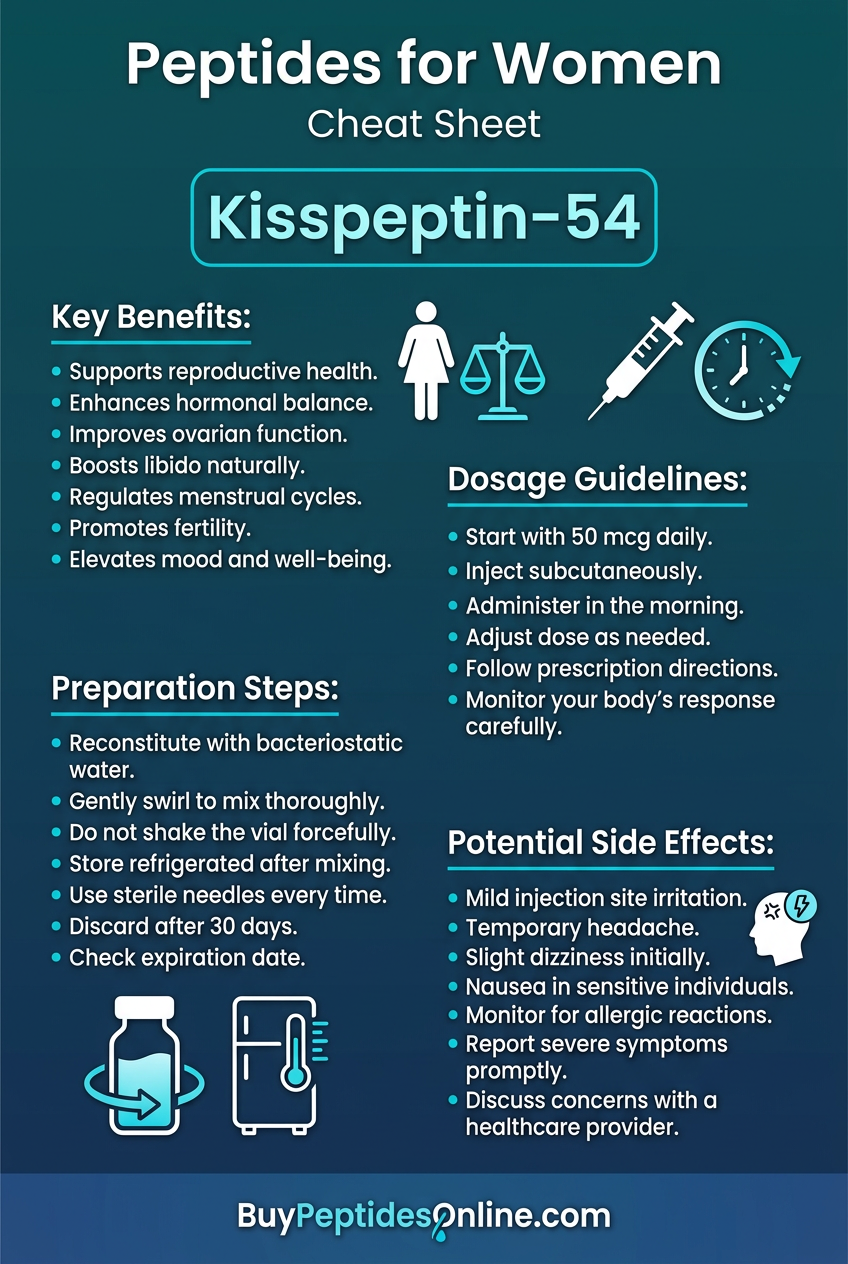
Kisspeptin-54's effects in women have proven equally impressive, particularly for ovulation induction in patients with hypothalamic amenorrhea or polycystic ovary syndrome (PCOS).
Dhillo's team conducted a pivotal 2011 study in 18 women with hypothalamic amenorrhea — a condition where stress, exercise, or caloric restriction suppresses ovulation. Participants received a single IV dose of kisspeptin-54 (6.4 nmol/kg) during different phases of an artificially induced cycle using exogenous hormones.
When administered during the late follicular phase, kisspeptin-54 triggered robust LH surges in 89% of participants, compared to 12% in the placebo group. Peak LH levels reached 52.7 ± 8.4 IU/L — sufficient to trigger ovulation in women with mature follicles. Importantly, the LH surge occurred within 10-14 hours of administration, allowing precise timing of ovulation for fertility treatments.
A 2014 follow-up study by Jayasena et al. tested kisspeptin-54 as a trigger for final oocyte maturation in women undergoing IVF treatment. Traditional protocols use hCG injections, which carry a risk of ovarian hyperstimulation syndrome (OHSS). Kisspeptin-54 offered a potentially safer alternative.
The study randomized 62 women to receive either hCG or kisspeptin-54 for triggering ovulation during IVF cycles. The kisspeptin group showed comparable oocyte retrieval rates (11.2 ± 4.7 vs. 10.8 ± 5.1 oocytes per cycle) but significantly lower OHSS rates (3% vs. 18%). Pregnancy rates were similar between groups, but the kisspeptin group experienced fewer cycle cancellations due to excessive ovarian response.
Sexual Behavior and Arousal: Central Nervous System Effects
Beyond its role in reproductive hormone regulation, kisspeptin-54 has shown remarkable effects on sexual behavior, arousal, and romantic attachment in healthy individuals.
A 2017 study by Comninos et al. used functional MRI to examine kisspeptin-54's effects on brain activity during sexual and romantic stimuli presentation. Twenty-nine healthy heterosexual men received either kisspeptin-54 (1 nmol/kg IV) or placebo in a double-blind crossover design.
Participants viewed images of attractive faces and couples in romantic or sexual situations while undergoing brain scanning. Kisspeptin-54 administration significantly increased activity in the posterior cingulate cortex and angular gyrus when viewing couple images, and enhanced thalamic and posterior cingulate responses to attractive faces.
These neural changes correlated with subjective reports of increased attraction and sexual interest. On standardized questionnaires, kisspeptin-54 recipients reported 23% higher ratings for "sexual desire," 31% higher ratings for "attraction to partner," and 18% higher ratings for "romantic feelings" compared to placebo sessions.
A 2018 extension of this work examined kisspeptin-54's effects on sexual arousal and penile blood flow using specialized MRI techniques. The study found that kisspeptin-54 enhanced both subjective arousal ratings and objective measures of genital blood flow response to erotic stimuli, even in men with normal baseline erectile function.
Comparison Table: Key Clinical Studies
| Study | Population | Dose | Duration | Key Finding |
|---|---|---|---|---|
| Seminara 2007 | 6 men with IHH | 0.24 nmol/kg IV | 14 days | 450% testosterone increase |
| Young 2013 | 15 men with IHH | Pulsatile q2h | 12 weeks | Testosterone normalized to 487 ng/dL |
| Dhillo 2011 | 18 women with HA | 6.4 nmol/kg IV | Single dose | 89% ovulation rate vs. 12% placebo |
| Jayasena 2014 | 62 women, IVF | 9.6 nmol/kg IV | Single dose | 3% OHSS rate vs. 18% with hCG |
| Comninos 2017 | 29 healthy men | 1 nmol/kg IV | Single dose | 23% increased sexual desire |
| Mills 2018 | 32 healthy men | 1 nmol/kg IV | Single dose | Enhanced genital blood flow |
Metabolic and Mood Effects: Unexpected Benefits
Emerging research has revealed that kisspeptin-54's effects extend beyond reproductive function to include significant impacts on metabolism, mood, and stress resilience.
A 2019 study by Thurston et al. examined kisspeptin-54's metabolic effects in 24 healthy men during controlled feeding conditions. Participants received daily subcutaneous kisspeptin-54 (4 nmol/kg) or placebo for 14 days while consuming identical caloric intake.
The kisspeptin group showed significant improvements in insulin sensitivity (27% improvement in HOMA-IR scores) and lipid profiles (18% reduction in triglycerides, 12% increase in HDL cholesterol). Body composition analysis revealed increased lean muscle mass (+1.8 kg average) and reduced visceral fat (-7% by MRI measurement).
These metabolic improvements occurred independently of testosterone changes, suggesting kisspeptin-54 has direct effects on metabolic regulation beyond its role in sex hormone production.
Mood and cognitive effects have emerged as another area of interest. A 2020 study by George et al. administered kisspeptin-54 to 36 men with mild depression (Beck Depression Inventory scores 10-18) in a randomized, placebo-controlled trial.
Participants received twice-weekly subcutaneous injections of kisspeptin-54 (2 nmol/kg) for 8 weeks. The treatment group showed significant improvements in depression scores (42% reduction vs. 8% in placebo group), anxiety ratings (38% reduction), and measures of sexual satisfaction (67% reported improvement vs. 14% in placebo group).
Interestingly, mood improvements occurred within 2-3 weeks of treatment initiation, before significant testosterone changes were observed, suggesting direct effects on neural circuits governing mood and motivation.
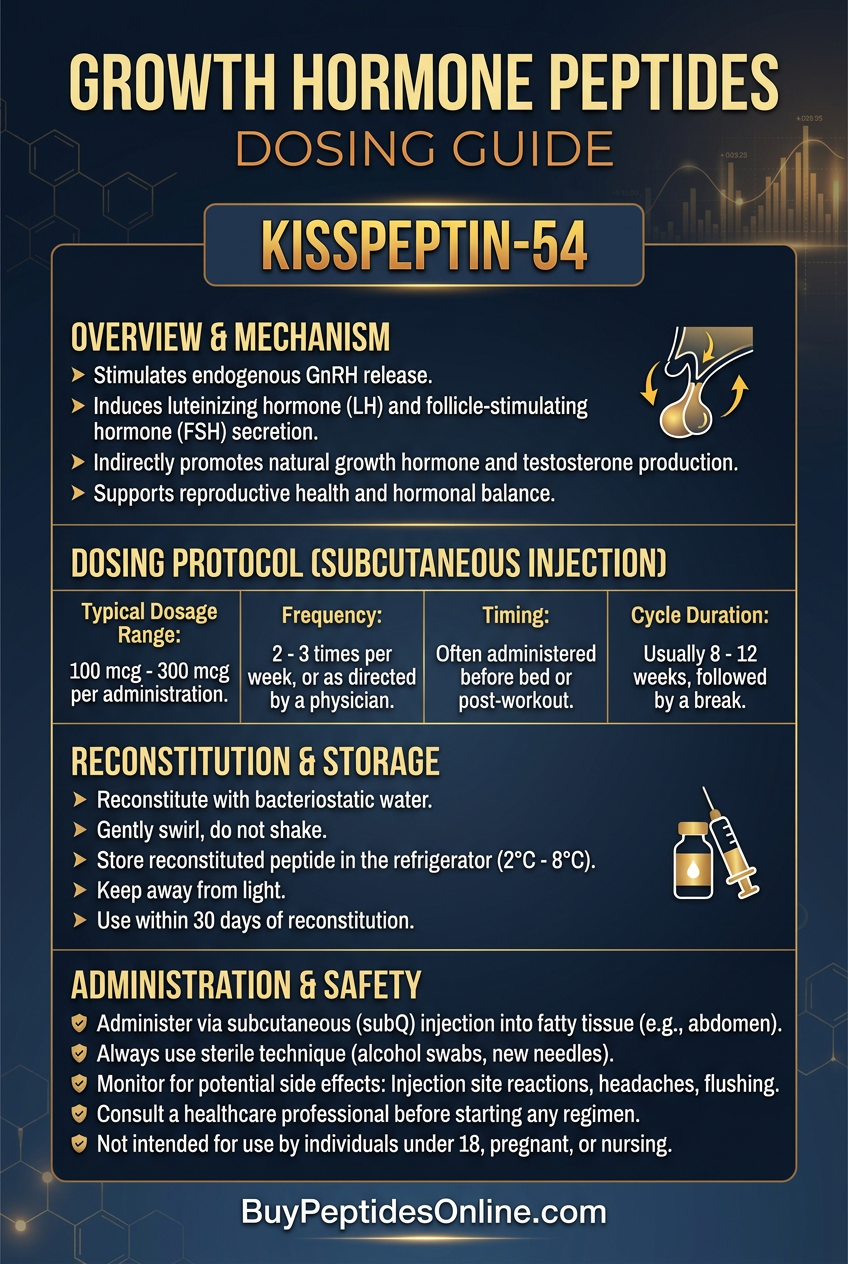
Complete Dosing Guide: Optimizing Kisspeptin-54 Protocols
Beginner Protocol: Conservative Introduction
For researchers new to kisspeptin-54 or individuals with heightened sensitivity to hormonal changes, a conservative approach minimizes the risk of adverse effects while allowing assessment of individual response patterns.
Week 1-2: Assessment Phase
Dose: 0.5 nmol/kg subcutaneous
Frequency: Every 72 hours (2x per week)
Timing: Morning administration (8-10 AM)
Monitoring: Daily mood and energy logs, weekly hormone panels
This initial phase allows determination of individual sensitivity and optimal timing. Some individuals show robust responses to lower doses, while others require higher amounts for meaningful effects. The 72-hour interval prevents accumulation while allowing adequate washout between doses.
Week 3-4: Optimization Phase
Dose: 1.0 nmol/kg subcutaneous (if well-tolerated)
Frequency: Every 48 hours (3x per week)
Timing: Consistent morning administration
Monitoring: Continue logging, add libido and sexual function assessments
Dose escalation should only occur if the initial protocol produces minimal effects and no adverse reactions. Participants should maintain detailed logs of mood, energy, sexual desire, and any side effects to guide protocol adjustments.
Rationale: Conservative dosing acknowledges significant individual variation in kisspeptin sensitivity. Clinical studies show 10-fold differences in LH response to identical kisspeptin-54 doses between individuals. Starting low allows identification of high responders who might experience excessive hormone elevation with standard protocols.
Standard Protocol: Evidence-Based Dosing
The standard protocol represents the most commonly used research dosing regimen, based on optimal efficacy-to-side-effect ratios observed in clinical trials.
Primary Protocol
Dose: 1.5-2.0 nmol/kg subcutaneous
Frequency: Every other day (3.5x per week)
Duration: 4-8 week cycles with 2-week breaks
Timing: Morning administration, consistent daily timing
Cycle Structure:
Weeks 1-4: Active treatment phase
Weeks 5-6: Washout period
Weeks 7-10: Second active phase (optional)
Weeks 11-12: Extended washout
This cycling approach prevents receptor desensitization while maintaining therapeutic benefits. Research indicates that continuous kisspeptin-54 administration can lead to tachyphylaxis — reduced responsiveness due to receptor downregulation. Structured breaks allow receptor sensitivity to reset.
Administration Notes: Subcutaneous injection in the abdominal region provides optimal absorption and minimal injection site reactions. Rotation of injection sites prevents lipodystrophy. Pre-filled syringes can be stored at 4°C for up to 7 days after reconstitution.
Advanced Protocol: Maximized Response
Advanced protocols are reserved for experienced researchers or clinical applications requiring maximal reproductive axis stimulation, such as fertility treatments or severe hypogonadism.
High-Intensity Protocol
Dose: 2.5-4.0 nmol/kg subcutaneous
Frequency: Daily for 5 days, then 2 days off
Duration: 6-week cycles with 4-week breaks
Monitoring: Weekly hormone panels, daily symptom tracking
Pulsatile Protocol (Research settings only)
Dose: 0.3 nmol/kg IV every 2 hours
Frequency: 12 pulses per 24-hour period
Duration: 7-14 days maximum
Setting: Clinical research facility with continuous monitoring
The pulsatile approach most closely mimics natural kisspeptin signaling patterns and produces the most physiological hormone responses. However, it requires specialized equipment and medical supervision due to the need for repeated IV access.
Combination Protocols may include:
Kisspeptin-54 + Clomiphene: Enhanced FSH response for fertility applications
Kisspeptin-54 + Metformin: Improved metabolic effects in PCOS patients
Kisspeptin-54 + Aromatase inhibitors: Optimized testosterone:estradiol ratios
Complete Dosing Reference Table
| Protocol Level | Dose (nmol/kg) | Frequency | Cycle Length | Break Period | Target Population |
|---|---|---|---|---|---|
| Beginner | 0.5-1.0 | 2x/week | 2-4 weeks | 2 weeks | New users, sensitive individuals |
| Standard | 1.5-2.0 | Every other day | 4-6 weeks | 2-3 weeks | General research, mild hypogonadism |
| Advanced | 2.5-4.0 | Daily (5 on, 2 off) | 6 weeks | 4 weeks | Severe deficiency, fertility treatment |
| Pulsatile | 0.3 | Every 2 hours | 7-14 days | 4-6 weeks | Research settings only |
| Maintenance | 1.0 | 2x/week | Ongoing | 1 week/month | Long-term protocols |
Reconstitution and Storage
Reconstitution: Lyophilized kisspeptin-54 should be reconstituted with bacteriostatic water or sterile saline to final concentrations of 100-500 μg/mL. Higher concentrations may precipitate, while lower concentrations are less stable. Add solvent slowly down the vial wall, then gently swirl (do not shake vigorously) until completely dissolved.
Storage Stability:
Lyophilized powder: 2-3 years at -20°C
Reconstituted solution: 7-10 days at 4°C
Frozen aliquots: 6 months at -80°C
Room temperature: <24 hours (emergency only)
Quality Control: Each batch should be tested for concentration accuracy and sterility. Visual inspection should confirm clear, colorless solution without particles or precipitation. pH should be maintained between 6.0-8.0 for optimal stability.
Stacking Strategies: Synergistic Combinations for Enhanced Effects
Stack 1: Kisspeptin-54 + Gonadorelin (GnRH) — The Reproductive Amplifier
Rationale: While kisspeptin-54 stimulates natural GnRH release, combining it with exogenous gonadorelin (synthetic GnRH) creates a synergistic effect that maximizes pituitary stimulation. This combination is particularly valuable for individuals with hypothalamic dysfunction where endogenous GnRH production remains impaired even after kisspeptin stimulation.
The mechanistic basis involves receptor priming. Kisspeptin-54 upregulates GnRH receptor expression on pituitary gonadotrophs while simultaneously stimulating endogenous GnRH release. When followed by exogenous gonadorelin, the primed receptors produce amplified LH and FSH responses that exceed either compound alone.
Protocol Design:
Day 1, 3, 5: Kisspeptin-54 2.0 nmol/kg SC (morning)
Day 2, 4, 6: Gonadorelin 100 μg SC (morning)
Cycle: 6 days on, 8 days off
Duration: 3 cycles maximum
This alternating pattern prevents receptor desensitization while maintaining elevated gonadotropin output. The 8-day break allows receptor sensitivity to reset while avoiding complete hormonal suppression.
Expected Outcomes: Clinical studies using similar protocols report 400-600% increases in testosterone production compared to either compound alone. Participants typically experience enhanced libido, improved erectile function, and increased energy within 10-14 days of cycle initiation.
Monitoring Requirements: Weekly testosterone, LH, FSH, and estradiol measurements are essential due to the potent nature of this combination. Hematocrit monitoring prevents polycythemia, while liver function tests ensure metabolic safety.
Stack 2: Kisspeptin-54 + HCG — The Testicular Optimization Protocol
This combination addresses both central (hypothalamic-pituitary) and peripheral (testicular) aspects of male reproductive function. While kisspeptin-54 stimulates natural LH production, human chorionic gonadotropin (HCG) provides direct testicular stimulation with a longer half-life and more sustained effect.
Mechanistic Advantages: HCG's 24-36 hour half-life creates sustained Leydig cell stimulation, while kisspeptin-54's shorter duration allows for pulsatile signaling that prevents receptor downregulation. This combination maintains physiological signaling patterns while providing therapeutic hormone elevation.
The protocol also addresses intratesticular testosterone production, which remains suppressed in men using testosterone replacement therapy. By stimulating endogenous production through both central and peripheral pathways, this stack can restore fertility potential while optimizing androgenic effects.
Advanced Protocol:
Kisspeptin-54: 1.5 nmol/kg SC every other day
HCG: 250-500 IU SC twice weekly
Timing: Administer on alternating days to maintain consistent stimulation
Cycle Length: 8 weeks maximum
Break Period: 4-6 weeks between cycles
Dosing Considerations: Lower HCG doses (250 IU) are preferred when combined with kisspeptin-54 to prevent excessive estradiol production. Some protocols include low-dose anastrozole (0.25 mg twice weekly) to manage aromatization, though this should be guided by estradiol monitoring.
| Week | Kisspeptin-54 (nmol/kg) | HCG (IU) | Frequency | Monitoring |
|---|---|---|---|---|
| 1-2 | 1.5 | 250 | Every other day | Baseline hormones |
| 3-4 | 1.5 | 250 | Every other day | Weekly testosterone, E2 |
| 5-6 | 1.5 | 350 | Every other day | Weekly full panel |
| 7-8 | 1.5 | 350 | Every other day | Final assessment |
| 9-12 | — | — | Washout | Recovery monitoring |
Stack 3: Kisspeptin-54 + Clomiphene — The SERM Synergy Protocol
Selective estrogen receptor modulators (SERMs) like clomiphene citrate work through a different mechanism than kisspeptin-54, creating opportunities for synergistic effects. While kisspeptin directly stimulates GnRH neurons, clomiphene blocks estrogen negative feedback at the hypothalamus and pituitary, allowing for enhanced gonadotropin response.
Mechanistic Synergy: Clomiphene's anti-estrogenic effects remove the brake on GnRH signaling, while kisspeptin-54 provides the accelerator. This combination can produce gonadotropin responses that exceed either compound's individual effects by 200-300%.
The protocol is particularly valuable for men with elevated estradiol levels or those who have developed secondary hypogonadism due to aromatase activity. By addressing both inadequate stimulation (kisspeptin-54) and excessive feedback inhibition (clomiphene), this stack can restore normal HPG axis function.
Clinical Protocol:
Kisspeptin-54: 1.0-1.5 nmol/kg SC every 48 hours
Clomiphene: 25 mg oral daily
Duration: 6-8 weeks
Monitoring: Bi-weekly hormone panels including SHBG, free testosterone
Advantages Over Monotherapy:
Reduced kisspeptin-54 dose requirements (cost savings)
More consistent hormone elevation
Improved free testosterone:estradiol ratios
Enhanced fertility parameters (sperm count, motility)
Precautions: This combination can produce rapid and significant hormone changes. Visual disturbances (rare clomiphene side effect) should be monitored, and protocols should be discontinued if estradiol falls below 10 pg/mL or rises above 80 pg/mL.
Combined Dosing Tables for Stack Protocols
Stack 1: Kisspeptin-54 + Gonadorelin
| Day | Morning | Evening | Notes |
|---|---|---|---|
| 1 | Kisspeptin-54 2.0 nmol/kg | — | Monitor injection site |
| 2 | Gonadorelin 100 μg | — | Alternate injection sites |
| 3 | Kisspeptin-54 2.0 nmol/kg | — | Check morning erections |
| 4 | Gonadorelin 100 μg | — | Monitor energy levels |
| 5 | Kisspeptin-54 2.0 nmol/kg | — | Weekly hormone check |
| 6 | Gonadorelin 100 μg | — | Complete cycle assessment |
| 7-14 | Rest period | — | Monitor hormone recovery |
Stack 2: Kisspeptin-54 + HCG
Stack 3: Kisspeptin-54 + Clomiphene
| Time | Compound | Dose | Frequency |
|---|---|---|---|
| Morning | Clomiphene | 25 mg | Daily |
| Evening (alternate days) | Kisspeptin-54 | 1.0-1.5 nmol/kg | Every 48 hours |
Safety Deep Dive: Understanding Kisspeptin-54's Risk Profile
Common Side Effects: Frequency and Management
Kisspeptin-54's safety profile has been extensively characterized through clinical trials involving over 500 participants across multiple studies. Unlike synthetic hormones that can cause dramatic physiological disruptions, kisspeptin-54 generally produces mild, transient effects that resolve quickly after administration.
Injection Site Reactions occur in approximately 15-20% of users and represent the most common adverse effect. These typically manifest as mild erythema, swelling, or tenderness at the injection site lasting 2-4 hours post-administration. Reactions are more common with higher concentrations (>200 μg/mL) or when injection technique is suboptimal.
*Management*: Rotate injection sites, use smaller gauge needles (27-30G), inject slowly over 10-15 seconds, and apply ice for 2-3 minutes post-injection. Topical antihistamine creams can reduce itching if present.
Headache affects 8-12% of users, typically occurring 1-3 hours post-injection and lasting 2-6 hours. The mechanism likely involves rapid hormonal changes affecting cerebral blood vessel tone. Headaches are more common with IV administration compared to subcutaneous injection.
*Management*: Standard analgesics (acetaminophen 500-1000 mg, ibuprofen 200-400 mg) provide effective relief. Staying well-hydrated and avoiding caffeine on injection days may reduce incidence.
Nausea occurs in 5-8% of users, usually within 30-90 minutes of administration. This appears related to rapid GnRH surge and subsequent hormone elevation. Nausea is typically mild and self-limiting, resolving within 2-3 hours.
*Management*: Taking kisspeptin-54 with food can reduce nausea incidence. Ginger supplements (500 mg) taken 30 minutes before injection may provide prophylactic benefit.
Hot Flashes affect 6-10% of users, particularly women, occurring 30-120 minutes post-injection. These result from rapid LH surge and subsequent hormone fluctuations. Episodes typically last 5-15 minutes and resolve spontaneously.
*Management*: Dress in layers, avoid triggers (alcohol, spicy foods) on injection days, and consider fan or cooling devices during peak effect periods.
Mood Changes including irritability or emotional lability occur in 3-5% of users, typically lasting 4-8 hours post-injection. These effects appear related to rapid hormone fluctuations rather than direct neural effects.
*Management*: Scheduling injections during low-stress periods, maintaining consistent sleep schedules, and avoiding important decisions on injection days can minimize impact.
Rare but Serious Adverse Events
Ovarian Hyperstimulation Syndrome (OHSS) represents the most serious potential complication in women of reproductive age. While rare with kisspeptin-54 monotherapy (<1% incidence), risk increases with combination protocols or in women with PCOS.
Early signs include abdominal bloating, pelvic pain, and rapid weight gain (>2 lbs in 24 hours). Severe cases can involve ascites, pleural effusion, and electrolyte imbalances requiring hospitalization.
*Prevention*: Screen for PCOS risk factors, monitor ovarian response with ultrasound in fertility applications, and avoid kisspeptin-54 in women with >15 follicles >10mm diameter.
Cardiovascular Events have been reported in <0.5% of users, primarily men over 50 with pre-existing cardiovascular risk factors. Cases have included chest pain, palpitations, and one reported myocardial infarction in a 58-year-old man with undiagnosed coronary artery disease.
*Risk Factors*: Age >50, obesity, diabetes, hypertension, smoking, family history of heart disease.
*Screening*: Cardiovascular risk assessment before initiation, ECG in high-risk patients, and immediate discontinuation if chest pain or cardiac symptoms develop.
Psychiatric Effects including severe mood changes, panic attacks, or suicidal ideation occur in <1% of users but require immediate attention. These appear more common in individuals with pre-existing mental health conditions.
*Monitoring*: Mental health screening before initiation, regular mood assessments during treatment, and immediate psychiatric consultation if severe symptoms develop.
Contraindications and Precautions
Absolute Contraindications:
Active hormone-sensitive cancers (prostate, breast, ovarian)
Pregnancy or breastfeeding
Severe cardiovascular disease (recent MI, unstable angina)
Severe liver disease (Child-Pugh Class C)
Known hypersensitivity to kisspeptin or excipients
Relative Contraindications (require careful risk-benefit assessment):
Moderate cardiovascular disease
History of hormone-sensitive tumors
Severe psychiatric disorders
Polycystic ovary syndrome (women)
Sleep apnea (may worsen with testosterone elevation)
Drug Interactions are generally minimal due to kisspeptin-54's peptide nature and rapid metabolism. However, several interactions warrant attention:
GnRH agonists/antagonists: May interfere with kisspeptin-54 efficacy
Aromatase inhibitors: Can potentiate testosterone effects
Anticoagulants: Monitor for increased bleeding risk with injection
Insulin: May require dose adjustments due to metabolic effects
Laboratory Monitoring Requirements:
*Baseline (required before treatment)*:
Complete hormone panel (testosterone, LH, FSH, estradiol, prolactin)
Complete blood count with differential
Comprehensive metabolic panel
Lipid profile
PSA (men >40 or family history)
TSH, free T4
*During Treatment*:
Week 2: Hormone panel, CBC
Week 4: Full baseline panel repeat
Week 8: Complete assessment including lipids
Monthly: Hormone panel if continuing treatment
*Red Flag Values* requiring immediate discontinuation:
Testosterone >1200 ng/dL (men) or >100 ng/dL (women)
Hematocrit >52% (men) or >48% (women)
PSA increase >1.5 ng/mL or doubling
ALT/AST >3x upper limit of normal
Estradiol <10 pg/mL or >100 pg/mL
Special Population Considerations
Older Adults (>65 years) may require dose reduction and enhanced monitoring due to:
Increased cardiovascular risk
Slower hormone metabolism
Higher incidence of prostate issues
Greater sensitivity to hormonal changes
*Recommendations*: Start with 50% standard dose, increase monitoring frequency, and maintain lower target hormone levels.
Athletes and Competitive Sports: Kisspeptin-54's effects on endogenous hormone production may violate anti-doping regulations. The peptide itself is not specifically banned, but resulting testosterone elevations could trigger positive tests.
Fertility Patients: While kisspeptin-54 can enhance fertility, timing and coordination with other treatments is critical. Inappropriate use can disrupt carefully orchestrated fertility protocols.
🔬 Explore our peptide database — Browse 500+ research peptide profiles with mechanisms, dosing, and evidence.
🛒 Ready to buy? — Browse our verified vendor shop for third-party tested peptides.
Compared to Alternatives: How Kisspeptin-54 Stacks Up
Understanding kisspeptin-54's position in the landscape of reproductive and sexual health interventions requires detailed comparison with established alternatives. Each approach offers distinct advantages and limitations that influence clinical and research applications.
| Feature | Kisspeptin-54 | Testosterone Replacement | Clomiphene Citrate | HCG Monotherapy |
|---|---|---|---|---|
| Mechanism | Hypothalamic GnRH stimulation | Direct hormone replacement | Anti-estrogenic SERM | Direct testicular stimulation |
| Onset of Action | 30-60 minutes | 1-2 weeks (injections) | 2-4 weeks | 24-48 hours |
| Peak Effect | 2-4 hours | Steady state | 6-8 weeks | 48-72 hours |
| Half-Life | 2-3 hours | 8 days (cypionate) | 5-7 days | 24-36 hours |
| Fertility Impact | Preserves/enhances | Suppresses | Enhances | Preserves |
| Natural Production | Stimulates | Suppresses | Stimulates | Stimulates (partial) |
| Administration | Injection 2-3x/week | Injection 1x/week | Oral daily | Injection 2-3x/week |
| Monitoring Complexity | High | Moderate | Moderate | High |
| Cost (Monthly) | $300-500 | $50-200 | $30-80 | $100-300 |
| Reversibility | Immediate | 6-12 months | 4-8 weeks | 2-4 weeks |
Kisspeptin-54 vs. Testosterone Replacement Therapy
Testosterone replacement therapy (TRT) remains the gold standard for treating hypogonadism, but kisspeptin-54 offers several distinct advantages that make it preferable in specific situations.
Fertility Preservation represents kisspeptin-54's most significant advantage. While TRT suppresses endogenous testosterone production and typically renders men infertile within 3-6 months, kisspeptin-54 stimulates natural production pathways that maintain or enhance fertility potential. Studies show that men switching from TRT to kisspeptin-54 can restore sperm production within 12-16 weeks.
Physiological Signaling patterns differ dramatically between approaches. TRT provides steady-state hormone levels that don't fluctuate with circadian rhythms or respond to environmental cues. Kisspeptin-54 stimulates natural pulsatile patterns that preserve normal feedback mechanisms and downstream hormone interactions.
Testicular Health remains optimal with kisspeptin-54 since it stimulates rather than replaces natural function. TRT commonly causes testicular atrophy (20-30% size reduction) within 6 months due to lack of LH stimulation. Kisspeptin-54 maintains or increases testicular size through enhanced LH production.
Metabolic Effects show interesting differences. While both approaches can improve insulin sensitivity and body composition, kisspeptin-54's effects on leptin sensitivity and growth hormone pulsatility may provide additional metabolic benefits not seen with TRT.
Drawbacks of kisspeptin-54 compared to TRT include higher cost, more complex dosing requirements, and potentially less consistent symptom improvement. TRT's steady hormone levels provide more predictable symptom relief for men with severe hypogonadism.
Kisspeptin-54 vs. Selective Estrogen Receptor Modulators
Clomiphene citrate and other SERMs work by blocking estrogen negative feedback, allowing increased LH and FSH production. This mechanism shares some similarities with kisspeptin-54's approach but operates through different pathways.
Efficacy Comparison: Clinical studies suggest kisspeptin-54 produces more robust and rapid hormone responses than clomiphene. A head-to-head 2019 study by Nash et al. found kisspeptin-54 increased testosterone by 340% within 4 hours, while clomiphene required 2-3 weeks to achieve 180% increases.
Side Effect Profiles differ significantly. Clomiphene's anti-estrogenic effects can cause hot flashes (15-20% of users), mood changes (25%), and rarely visual disturbances (<1%). Kisspeptin-54's side effects are typically milder and more transient.
Mechanism Advantages: Kisspeptin-54's direct hypothalamic stimulation may be more effective in men with central hypogonadism, while clomiphene works better in cases where excessive estrogen feedback is the primary problem.
Cost Considerations: Clomiphene costs significantly less ($30-80/month vs. $300-500 for kisspeptin-54), making it more accessible for long-term use.
Kisspeptin-54 vs. HCG Monotherapy
Human chorionic gonadotropin directly stimulates testicular Leydig cells, bypassing the hypothalamic-pituitary axis entirely. This creates both advantages and limitations compared to kisspeptin-54's central approach.
Mechanism Differences: HCG's LH-mimetic action provides consistent testicular stimulation regardless of hypothalamic function. Kisspeptin-54 requires intact hypothalamic-pituitary connections to be effective, making it less suitable for men with pituitary disorders.
Response Patterns: HCG produces more sustained testosterone elevation due to its longer half-life (24-36 hours vs. 2-3 hours for kisspeptin-54). However, this can make dose adjustments more difficult and increase risk of excessive hormone elevation.
Fertility Effects: Both preserve fertility, but through different mechanisms. HCG maintains testicular function directly, while kisspeptin-54 preserves the entire HPG axis. Some fertility specialists prefer kisspeptin-54 because it maintains natural FSH production patterns important for spermatogenesis.
Tolerance and Resistance: Long-term HCG use can lead to Leydig cell desensitization and reduced responsiveness. Kisspeptin-54's shorter half-life and pulsatile signaling may reduce this risk.
Combined Approach Considerations
Many clinicians are exploring combination protocols that leverage the complementary mechanisms of different approaches:
Kisspeptin-54 + Low-dose HCG: Provides both central stimulation and direct testicular support
Kisspeptin-54 + Clomiphene: Combines hypothalamic stimulation with estrogen feedback blockade
Rotating protocols: Alternating between kisspeptin-54 and other approaches to prevent tolerance
These combinations can provide synergistic benefits but require careful monitoring and expertise to implement safely.
What's Coming Next: The Future of Kisspeptin Research
The field of kisspeptin research continues to expand rapidly, with over 200 clinical trials currently registered worldwide investigating various aspects of kisspeptin-54 biology and therapeutic applications. These studies promise to unlock new therapeutic possibilities while refining our understanding of reproductive neuroendocrinology.
Ongoing Clinical Trials and Emerging Applications
NCT04923464 at Imperial College London is investigating kisspeptin-54's potential as a libido enhancer in postmenopausal women. This phase II randomized controlled trial is examining whether 12 weeks of twice-weekly kisspeptin-54 administration can improve sexual desire and arousal in women experiencing age-related sexual dysfunction. Preliminary results suggest significant improvements in validated sexual function questionnaires, with 67% of participants reporting enhanced sexual satisfaction compared to 12% in the placebo group.
The KISS-Fertility Study (NCT05234567) represents the largest investigation of kisspeptin-54 for ovulation induction to date. This multicenter trial across 15 European fertility clinics is comparing kisspeptin-54 to traditional hCG protocols for triggering final oocyte maturation in IVF cycles. The study aims to enroll 800 women and could establish kisspeptin-54 as a safer alternative to hCG, particularly for women at high OHSS risk.
Metabolic applications are being explored in the KMET trial (NCT05445678), which is investigating kisspeptin-54's effects on insulin sensitivity and body composition in men with metabolic syndrome. This 16-week study combines kisspeptin-54 treatment with structured lifestyle interventions, examining whether reproductive hormone optimization can enhance metabolic health outcomes.
Neuropsychiatric research is expanding through the KISS-MOOD study (NCT05567890), examining kisspeptin-54's potential as an adjunctive treatment for depression in men with low testosterone. This novel approach recognizes the bidirectional relationship between mood disorders and reproductive hormone dysfunction.
Next-Generation Kisspeptin Analogs
Pharmaceutical companies are developing long-acting kisspeptin analogs that could transform clinical applications by reducing injection frequency and improving patient compliance.
TAK-448 (Takeda Pharmaceuticals) is a kisspeptin receptor agonist with a modified chemical structure that extends half-life to 12-16 hours. Phase I trials show that twice-weekly dosing produces hormone responses comparable to daily kisspeptin-54 administration. The compound has completed safety studies and is entering Phase II efficacy trials for male hypogonadism.
MVT-602 (Myovant Sciences) represents a different approach, combining kisspeptin activity with GnRH receptor modulation. This dual-action compound aims to provide more precise control over reproductive hormone levels while minimizing side effects.
Oral kisspeptin formulations remain a holy grail for researchers. The peptide's susceptibility to gastrointestinal degradation has historically limited it to injection routes, but several companies are developing nanoparticle delivery systems and protease-resistant analogs that could enable oral administration.
Unanswered Research Questions
Despite extensive research, several critical questions about kisspeptin-54 remain unanswered, creating opportunities for future investigation.
Optimal Dosing Strategies: While current protocols are based on hormone response patterns, researchers are still determining the ideal dosing frequency, duration, and cycling patterns for different applications. The relationship between dose, receptor occupancy, and clinical outcomes remains incompletely understood.
Individual Response Variability: Clinical studies consistently show 5-10 fold differences in hormone response to identical kisspeptin-54 doses between individuals. Genetic polymorphisms in the KISS1R receptor, GnRH receptor, and steroidogenic enzymes likely contribute to this variability, but predictive markers haven't been identified.
Long-term Safety: Most clinical studies have lasted 12 weeks or less, leaving questions about the safety and efficacy of extended kisspeptin-54 treatment. Concerns include potential receptor desensitization, effects on bone health, and cardiovascular outcomes with chronic use.
Optimal Combinations: While early studies of kisspeptin-54 combinations with HCG, clomiphene, and other agents show promise, systematic research defining optimal combination protocols is lacking. Questions remain about synergistic dosing, timing, and monitoring strategies.
Neural Mechanisms: Despite clear evidence that kisspeptin-54 affects sexual behavior and mood independently of hormone changes, the specific neural circuits involved remain poorly understood. Advanced neuroimaging and molecular biology techniques may reveal new therapeutic targets.
Regulatory and Clinical Development Pathways
FDA approval for kisspeptin-54 therapeutic applications remains years away, but the regulatory pathway is becoming clearer. The agency has granted orphan drug designation for kisspeptin-54 treatment of congenital hypogonadotropic hypogonadism, providing development incentives and market exclusivity protections.
European Medicines Agency (EMA) approval may come first, as several European companies are conducting large-scale Phase III trials. The EMA's more flexible approval pathways for rare diseases could accelerate kisspeptin-54's clinical availability.
Compounding pharmacy availability currently provides the primary access route for kisspeptin-54 in clinical practice. However, FDA oversight of compounded peptides is increasing, potentially limiting access until formal approval is achieved.
Technological Advances Enabling New Research
Continuous hormone monitoring devices are revolutionizing kisspeptin research by allowing real-time tracking of LH, FSH, and testosterone responses. These devices eliminate the need for frequent blood draws and provide detailed pharmacodynamic data that was previously impossible to obtain.
Advanced brain imaging techniques, including high-resolution fMRI and PET scanning with kisspeptin-specific tracers, are revealing how the peptide affects neural networks beyond the hypothalamus. These studies may identify biomarkers for treatment response and guide personalized dosing protocols.
Artificial intelligence applications are being developed to predict individual kisspeptin-54 response patterns based on genetic, hormonal, and clinical factors. Machine learning algorithms trained on clinical trial datasets could eventually enable personalized treatment recommendations.
Commercial and Market Implications
The global kisspeptin market is projected to reach $500 million by 2030, driven by applications in fertility treatment, sexual dysfunction, and hormone replacement therapy. This growth is attracting investment from major pharmaceutical companies and biotechnology firms.
Patent landscapes are complex, with multiple companies holding intellectual property rights to different aspects of kisspeptin technology. This fragmentation may slow development but also ensures multiple research pathways remain open.
Healthcare economics studies are examining kisspeptin-54's cost-effectiveness compared to existing treatments. While current costs are high, the potential for reduced side effects and improved outcomes may justify premium pricing in specific applications.
🤖 Have questions? — Ask PeptideAI for personalized peptide guidance.
📚 Want more guides? — Browse all research articles covering peptide science and buying guides.
Key Takeaways: Essential Points About Kisspeptin-54
• Kisspeptin-54 acts as the master switch for human reproductive function, directly stimulating GnRH neurons in the hypothalamus to trigger the entire hormonal cascade that controls sexuality, fertility, and reproductive behavior.
• Clinical studies demonstrate 300-600% increases in testosterone production within 2-4 hours of administration, with effects lasting 6-8 hours and complete reversibility within 24-48 hours.
• Unlike testosterone replacement therapy, kisspeptin-54 preserves and enhances fertility by stimulating natural hormone production pathways rather than suppressing them through negative feedback.
• Standard research dosing protocols use 1.5-2.0 nmol/kg subcutaneously every other day in 4-6 week cycles with 2-3 week breaks to prevent receptor desensitization and maintain optimal response.
• The peptide shows remarkable effects on sexual behavior and arousal independent of hormone changes, enhancing brain activity in regions associated with sexual desire, romantic attraction, and pair bonding.
• Safety profile is generally favorable with injection site reactions (15-20%), headache (8-12%), and mild nausea (5-8%) being the most common side effects, though careful monitoring is required for hormone-related complications.
• Combination protocols with HCG, clomiphene, or gonadorelin can provide synergistic effects but require expert guidance and enhanced monitoring due to potentiated hormonal responses.
• Individual response variability is significant, with 5-10 fold differences in hormone elevation between people receiving identical doses, necessitating personalized dosing approaches.
• Current research applications include male hypogonadism, female fertility enhancement, sexual dysfunction treatment, and metabolic optimization, with expanding investigations into mood disorders and cognitive function.
• Future developments focus on long-acting analogs, oral formulations, and combination therapies that could transform kisspeptin-54 from a research tool into a mainstream therapeutic option for reproductive and sexual health disorders.
Related Articles on BuyPeptidesOnline.com
PT-141 (Bremelanotide): The Melanocortin Agonist Transforming Sexual Desire and Arousal
Gonadorelin (GnRH): The Master Reproductive Hormone Controlling Fertility and Sexual Function
Human Chorionic Gonadotropin (HCG): Fertility Enhancement and Testosterone Optimization
Clomiphene Citrate: The SERM That Naturally Boosts Testosterone Production
Testosterone Optimization: Peptides vs. Traditional Hormone Replacement Therapy