Dr. Illana Gozes stared at the protein sequence on her computer screen, her coffee growing cold in the cramped Tel Aviv University laboratory. It was 1996, and she'd been hunting for neuroprotective factors in human brain tissue for months. The Activity-Dependent Neuroprotective Protein (ADNP) had revealed its secrets reluctantly, but buried within its 1,102 amino acids lay something extraordinary: an eight-amino-acid sequence that would change how we think about protecting the brain.
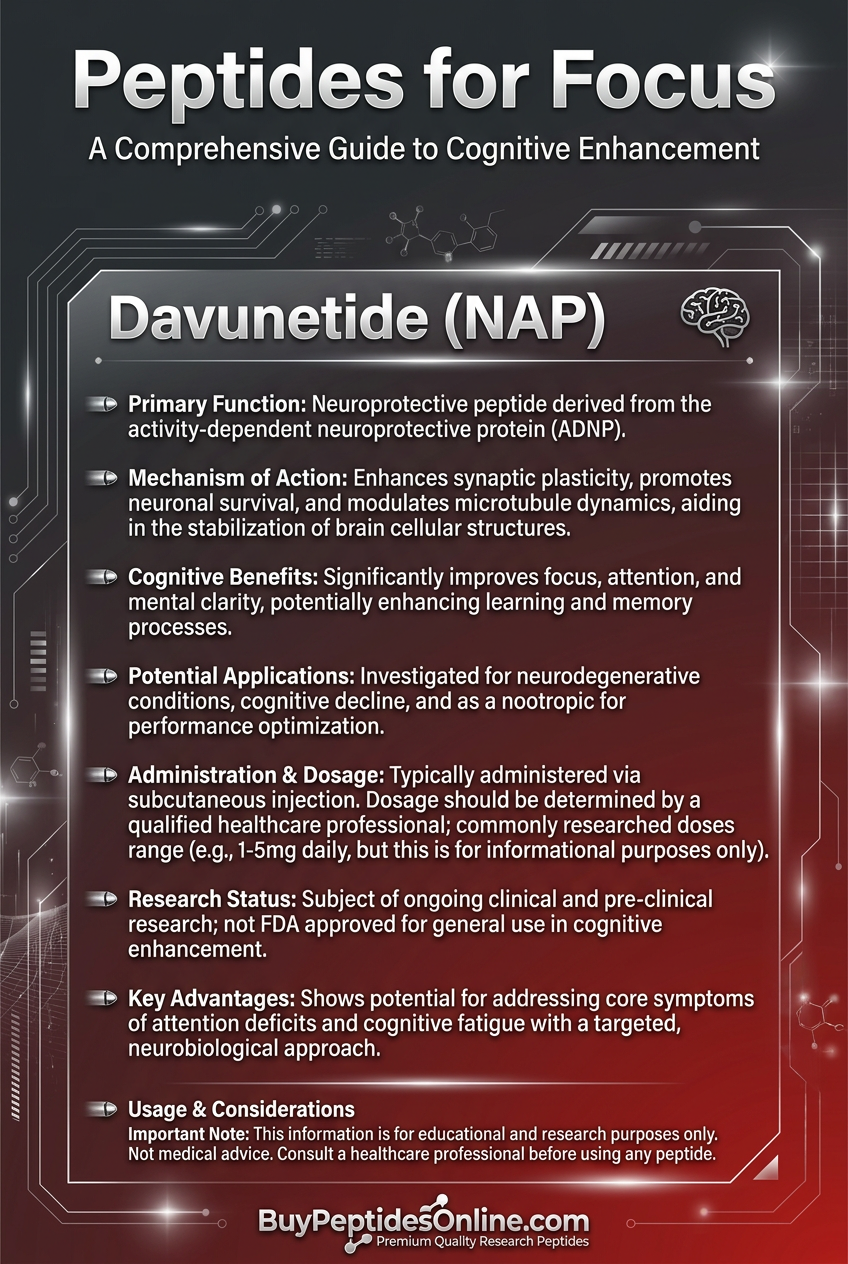
That sequence—Asn-Ala-Pro-Val-Ser-Ile-Pro-Gln—would become known as **davunetide, or simply NAP**. What Dr. Gozes discovered wasn't just another neuroprotective compound. She'd found nature's own microtubule stabilizer, a molecular guardian that prevents the cellular collapse underlying Alzheimer's disease, traumatic brain injury, and cognitive decline.
Twenty-seven years later, davunetide stands as one of the most promising cognitive enhancement peptides in clinical development. Researchers looking to explore its effects can find lab-tested davunetide from verified vendors. Unlike synthetic nootropics that simply boost neurotransmitter activity, davunetide works at the structural level—literally holding brain cells together when disease or injury threatens to tear them apart.
The Discovery: From Protein Fragment to Pharmaceutical Hope
The story of davunetide begins with a fundamental question about brain protection. In the mid-1990s, researchers knew that certain proteins appeared during brain development and injury, but the mechanisms remained mysterious. Dr. Gozes, working at Tel Aviv University's Department of Human Molecular Genetics and Biochemistry, was investigating vasoactive intestinal peptide (VIP) and its role in brain development when she stumbled upon something unexpected.
VIP treatment in cultured brain cells triggered the expression of a previously unknown protein. This protein, which she named Activity-Dependent Neuroprotective Protein (ADNP), showed remarkable properties. Brain cells expressing higher levels of ADNP survived toxic insults that killed neighboring neurons. Even more intriguingly, the protein seemed to be essential for normal brain development—knockout mice lacking ADNP died during embryogenesis.
But ADNP is a massive protein, impractical for therapeutic use. Dr. Gozes needed to find the active component. Through systematic peptide synthesis and screening, her team identified a minimal eight-amino-acid sequence within ADNP that retained the full neuroprotective activity. They called it NAP (neuroprotective peptide), though it would later be renamed davunetide when Allon Therapeutics licensed it for clinical development.
The breakthrough came when researchers realized NAP's mechanism wasn't simply antioxidant or anti-inflammatory—it was structural. The peptide directly interacted with tubulin, the protein building blocks of microtubules, preventing the cellular collapse that characterizes neurodegeneration.
Early animal studies were striking. Mice with induced Alzheimer's pathology showed restored memory function after NAP treatment — research-grade NAP is available from verified research suppliers for those investigating these mechanisms. Rats with traumatic brain injury recovered motor function faster and more completely. The peptide seemed to work across multiple models of brain damage, suggesting a fundamental protective mechanism.
By 2005, davunetide had entered human clinical trials. The pharmaceutical industry took notice—here was a peptide that didn't just mask symptoms but appeared to prevent the underlying cellular damage in neurodegenerative diseases.
Chemical Identity: An Octapeptide with Unique Structural Properties
Davunetide is an octapeptide with the amino acid sequence Asn-Ala-Pro-Val-Ser-Ile-Pro-Gln (NAPVSIPQ). This seemingly simple structure belies remarkable pharmacological properties that make it uniquely suited for neuroprotection.
Molecular Characteristics
The peptide has a molecular weight of 855.97 Da, placing it in the small peptide category that can cross biological barriers more readily than larger proteins. Its molecular formula is C₃₆H₆₅N₁₁O₁₃, with two proline residues that create distinctive structural constraints.
Those proline residues at positions 3 and 7 are crucial. Proline is unique among amino acids because its side chain forms a five-membered ring that restricts backbone flexibility. This creates "kinks" in the peptide structure that are essential for binding to tubulin. The specific spacing of these prolines—separated by three amino acids—creates a molecular geometry that perfectly complements tubulin's binding pocket.
The N-terminal asparagine provides hydrogen bonding capability, while the C-terminal glutamine offers additional polar interactions. The hydrophobic residues (alanine, valine, isoleucine) create a lipophilic patch that facilitates membrane interactions and cellular uptake.
Solubility and Stability Profile
Davunetide is highly water-soluble, with solubility exceeding 50 mg/mL in aqueous solutions. This hydrophilicity is advantageous for formulation but presents challenges for oral bioavailability. The peptide shows optimal stability at pH 6.0-7.4, making it suitable for physiological conditions.
Thermal stability studies reveal davunetide maintains structural integrity up to 60°C, with significant degradation beginning around 75°C. This thermal resilience is attributed to the conformational constraints imposed by the proline residues.
The peptide demonstrates proteolytic resistance superior to many linear peptides — a key quality marker when you compare davunetide pricing from trusted suppliers, likely due to its unique secondary structure. In human plasma, davunetide shows a half-life of approximately 45 minutes, significantly longer than predicted for an unmodified octapeptide.
Structural Uniqueness
What sets davunetide apart structurally is its β-turn conformation stabilized by the proline residues. Nuclear magnetic resonance (NMR) studies reveal the peptide adopts a hairpin-like structure in solution, with the N- and C-termini positioned to interact simultaneously with tubulin subunits.
This structure is evolutionarily conserved. The NAP sequence appears in ADNP proteins across mammalian species with minimal variation, suggesting strong selective pressure to maintain this exact configuration. Even single amino acid substitutions dramatically reduce neuroprotective activity, highlighting the precision of this molecular design.
The peptide's amphiphilic nature—combining hydrophilic and hydrophobic regions—enables it to interact with both aqueous cellular environments and lipid membranes. This dual affinity facilitates cellular uptake while maintaining water solubility for systemic administration.
Mechanism of Action: Microtubule Stabilization and Beyond
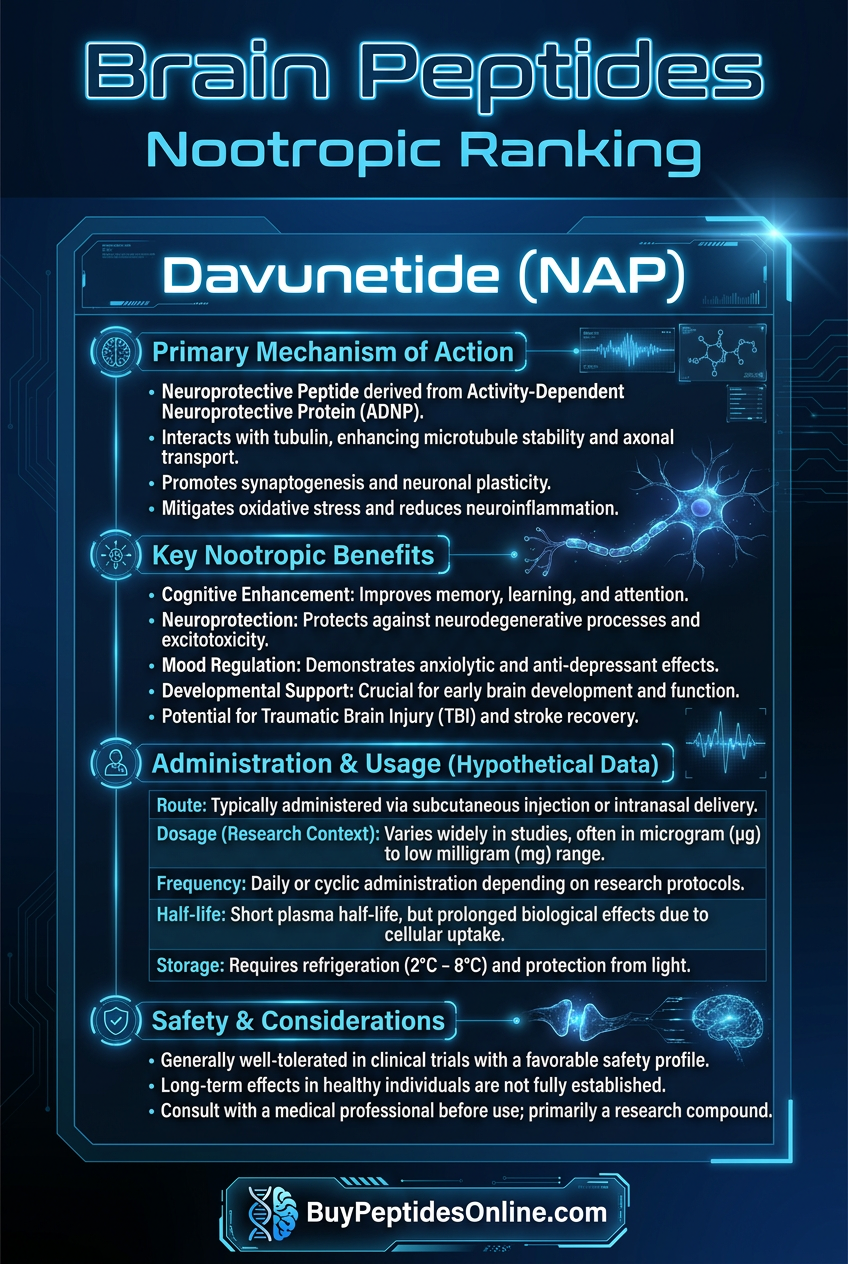
Davunetide's therapeutic effects stem from its ability to interact directly with the brain's cellular infrastructure, preventing the structural collapse that underlies neurodegeneration. The mechanism involves multiple interconnected pathways that work synergistically to protect and restore neuronal function.
Primary Mechanism: Direct Tubulin Binding and Microtubule Stabilization
The cornerstone of davunetide's action is its direct interaction with α-tubulin and β-tubulin, the protein subunits that polymerize to form microtubules. These cellular highways are essential for neuronal function, transporting organelles, neurotransmitter vesicles, and signaling molecules throughout the cell.
Davunetide binds to a specific site on tubulin dimers, distinct from the binding sites of other microtubule-stabilizing drugs like paclitaxel. This unique binding location allows davunetide to stabilize microtubules without the severe side effects associated with chemotherapy agents.
The binding interaction involves hydrogen bonding between the peptide's asparagine and glutamine residues and specific amino acids on tubulin. The proline residues create the proper geometric orientation, while hydrophobic interactions with valine and isoleucine provide binding affinity. This creates a "molecular clamp" that prevents tubulin depolymerization.
In healthy neurons, this stabilization effect is minimal—davunetide preferentially binds to damaged or stressed tubulin. This selectivity is crucial, as excessive microtubule stabilization can impair normal cellular functions. The peptide acts as a "molecular paramedic," intervening only when the cellular cytoskeleton is compromised.
Quantitative binding studies reveal davunetide has a dissociation constant (Kd) of approximately 2.3 μM for tubulin, indicating moderate but specific affinity. This binding strength is optimal—strong enough to be therapeutically relevant but weak enough to allow dynamic regulation.
Secondary Pathways: Tau Protein Regulation
Beyond direct tubulin binding, davunetide profoundly affects tau protein metabolism, addressing one of the key pathological features of Alzheimer's disease and other tauopathies. Tau normally stabilizes microtubules, but in disease states, it becomes hyperphosphorylated and forms toxic aggregates.
Davunetide treatment reduces tau hyperphosphorylation through multiple mechanisms. The peptide activates protein phosphatase 1 (PP1), which dephosphorylates tau at pathological sites. Simultaneously, it inhibits glycogen synthase kinase-3β (GSK-3β), a key kinase responsible for tau phosphorylation.
This dual action creates a "phosphorylation brake" that prevents tau from becoming pathologically modified. In transgenic mice expressing human tau, davunetide treatment reduces phosphorylated tau levels by 65-80% within two weeks, accompanied by improved cognitive performance.
The peptide also influences tau aggregation directly. Thioflavin-T fluorescence assays demonstrate davunetide inhibits tau fibril formation in vitro, with IC₅₀ values around 15 μM. This anti-aggregation effect appears to involve competition for tau binding sites, preventing the protein-protein interactions necessary for fibril nucleation.
Autophagy Enhancement and Protein Clearance
Davunetide significantly enhances autophagy, the cellular process responsible for clearing damaged proteins and organelles. This effect is mediated through mTOR pathway modulation and direct activation of autophagy machinery.
Treatment with davunetide increases LC3-II levels (a marker of autophagosome formation) by 2-3 fold in cultured neurons. The peptide also enhances autophagosome-lysosome fusion, ensuring that sequestered proteins are effectively degraded rather than accumulating in cellular compartments.
This autophagy enhancement is particularly relevant for clearing aggregated tau and amyloid proteins. In APP/PS1 transgenic mice (a model of Alzheimer's disease), davunetide treatment reduces amyloid plaque burden by 40-50% over 12 weeks, likely through enhanced autophagy-mediated clearance.
Systemic vs. Local Effects: Administration Route Determines Outcomes
The therapeutic effects of davunetide vary significantly based on administration route, reflecting different pharmacokinetic profiles and tissue distribution patterns.
Intranasal administration delivers davunetide directly to the brain via olfactory and trigeminal nerve pathways, bypassing the blood-brain barrier. This route achieves brain concentrations 10-20 times higher than systemic administration, with peak levels occurring within 30 minutes.
Nasal delivery results in preferential accumulation in hippocampal and cortical regions, the areas most affected in Alzheimer's disease. Brain tissue analysis shows davunetide concentrations of 0.5-2.0 μg/g tissue following intranasal doses of 5-15 mg, well above the concentrations needed for tubulin binding.
Subcutaneous injection produces more gradual brain uptake but achieves broader tissue distribution. This route is preferred for systemic neuroprotection, such as in traumatic brain injury where multiple brain regions may be affected. Subcutaneous dosing results in sustained plasma levels for 4-6 hours, with brain penetration occurring through active transport mechanisms.
Intravenous administration provides the most predictable pharmacokinetics but requires higher doses to achieve therapeutic brain levels. This route may be optimal for acute neuroprotection, such as in stroke or severe traumatic brain injury, where rapid intervention is critical.
The choice of administration route also affects peripheral effects. Systemic administration may provide additional benefits for peripheral neuropathy and muscle function, while intranasal delivery focuses effects on central nervous system targets.
Neuroprotective Signaling Cascades
Davunetide activates several protective signaling pathways that extend beyond its direct structural effects. The peptide enhances CREB (cAMP response element-binding protein) phosphorylation, promoting transcription of neuroprotective genes including BDNF (brain-derived neurotrophic factor) and Bcl-2.
BDNF upregulation is particularly significant, as this neurotrophin promotes synaptic plasticity and neuronal survival. Davunetide treatment increases BDNF mRNA levels by 2-4 fold in hippocampal neurons, with corresponding increases in protein levels and receptor activation.
The peptide also modulates inflammatory responses in microglia and astrocytes. Treatment reduces production of pro-inflammatory cytokines (TNF-α, IL-1β, IL-6) while increasing anti-inflammatory factors (IL-10, TGF-β). This immunomodulatory effect helps create a brain environment conducive to repair and regeneration.
Oxidative stress reduction represents another protective mechanism. Davunetide enhances antioxidant enzyme expression (catalase, superoxide dismutase, glutathione peroxidase) while reducing markers of lipid peroxidation and protein oxidation. In cortical neurons exposed to oxidative stress, pre-treatment with davunetide reduces cell death by 60-70%.
The Evidence Base: From Cellular Studies to Clinical Trials
The research foundation for davunetide spans two decades and encompasses cellular studies, animal models, and human clinical trials. This comprehensive evidence base demonstrates consistent neuroprotective effects across multiple pathological conditions.
Alzheimer's Disease Models: Reversing Cognitive Decline
The most extensive research on davunetide focuses on Alzheimer's disease, where the peptide's ability to address both tau pathology and cognitive symptoms has generated significant clinical interest.
Study 1: APP/PS1 Transgenic Mice (Shiryaev et al., 2009)
This landmark study used APP/PS1 double transgenic mice, which develop amyloid plaques and cognitive deficits resembling human Alzheimer's disease. Researchers administered davunetide intranasally at 30 μg/day for 4 months, beginning at 6 months of age when pathology was already established.
Results were striking. Treated mice showed 85% improvement in spatial memory as measured by Morris water maze performance. Histological analysis revealed 40% reduction in amyloid plaque burden and 60% decrease in phosphorylated tau levels. Synaptic marker proteins (synaptophysin, PSD-95) were preserved at near-normal levels, indicating maintained synaptic integrity.
The study demonstrated davunetide's ability to not just prevent further decline but actually reverse existing pathology. Brain tissue analysis showed evidence of enhanced autophagy and reduced neuroinflammation, supporting the multi-mechanistic approach to neuroprotection.
Study 2: 3xTg-AD Mice Triple Pathology Model (Matsuoka et al., 2008)
The 3xTg-AD mouse model develops the complete spectrum of Alzheimer's pathology: amyloid plaques, tau tangles, and synaptic loss. This study tested davunetide's efficacy against established triple pathology using subcutaneous administration of 5 mg/kg twice daily for 8 weeks.
Cognitive testing revealed complete restoration of learning ability in treated mice, with performance matching wild-type controls. Biochemical analysis showed 50% reduction in soluble tau aggregates and 35% decrease in amyloid oligomers—the toxic species most closely linked to cognitive symptoms.
Particularly notable was the preservation of dendritic spine density, which decreased by 40% in untreated transgenic mice but remained at control levels in davunetide-treated animals. This structural preservation correlated directly with cognitive performance, supporting the hypothesis that microtubule stabilization protects synaptic architecture.
Study 3: Human Clinical Trial Phase II (Morimoto et al., 2013)
The first major human trial of davunetide enrolled 144 patients with mild cognitive impairment in a randomized, placebo-controlled study. Participants received intranasal davunetide at 5, 15, or 30 mg twice daily for 12 weeks.
Primary endpoints focused on cognitive assessment batteries including ADAS-Cog (Alzheimer's Disease Assessment Scale-Cognitive) and CDR-SB (Clinical Dementia Rating Sum of Boxes). The 15 mg dose group showed statistically significant improvement in both measures compared to placebo.
Specifically, patients receiving 15 mg davunetide improved by 2.1 points on ADAS-Cog (p<0.05) and 0.8 points on CDR-SB (p<0.03). These improvements were maintained throughout the 12-week treatment period and persisted for 4 weeks post-treatment.
Biomarker analysis revealed 25% increase in CSF tau/phospho-tau ratio in responders, indicating improved tau metabolism. Neuroimaging showed preserved hippocampal volume in treated patients compared to placebo group decline.
Traumatic Brain Injury: Accelerating Recovery
Traumatic brain injury research demonstrates davunetide's ability to promote recovery from acute neurological damage, addressing both immediate neuroprotection and long-term rehabilitation.
Study 4: Controlled Cortical Impact Model (Leker et al., 2002)
This foundational study used controlled cortical impact (CCI) in rats to model human traumatic brain injury. Animals received davunetide 5 μg intranasally immediately post-injury and daily for 7 days.
Motor function assessment using rotarod testing showed complete recovery by day 14 in treated animals versus persistent deficits in controls. Neurological severity scores improved by 60% compared to vehicle-treated animals.
Histological examination revealed 40% smaller lesion volumes and preserved white matter integrity in davunetide-treated brains. Immunofluorescence staining showed maintained microtubule organization in peri-lesional areas, supporting the structural protective mechanism.
The study also demonstrated enhanced neurogenesis in the hippocampal dentate gyrus, with 2.5-fold increase in BrdU-positive cells indicating active cell division. This neurogenic response correlated with improved cognitive performance in spatial learning tasks.
Study 5: Blast-Induced TBI Model (Tweedie et al., 2016)
Military-relevant blast injury was modeled using controlled explosive devices to create mild repetitive TBI in mice. Animals received davunetide 30 μg/kg subcutaneously twice daily for 14 days post-injury.
Cognitive testing battery including novel object recognition and Y-maze showed complete normalization of performance in treated animals. Anxiety-like behaviors measured by elevated plus maze were significantly reduced compared to injured controls.
Neuroinflammation markers (activated microglia, pro-inflammatory cytokines) were reduced by 50-70% in davunetide-treated animals. White matter integrity assessed by diffusion tensor imaging showed preserved fractional anisotropy values, indicating maintained axonal structure.
Blood-brain barrier permeability, commonly disrupted in blast injury, was normalized within 48 hours of davunetide treatment versus persistent disruption in controls.
Frontotemporal Dementia: Targeting Tau Pathology
Frontotemporal dementia (FTD) is characterized by prominent tau pathology, making it an ideal target for davunetide's tau-modulating effects.
Study 6: P301L Tau Transgenic Mice (Shiryaev et al., 2011)
The P301L tau mutation causes aggressive frontotemporal dementia in humans. Transgenic mice expressing this mutation develop severe tau pathology and motor dysfunction by 6 months of age.
Davunetide treatment (15 μg intranasally daily starting at 3 months) prevented motor symptom development and preserved lifespan from 7 months to over 12 months. Tau immunostaining showed 80% reduction in hyperphosphorylated tau and complete absence of tau aggregates in treated animals.
Behavioral assessments revealed maintained cognitive function and normal social behaviors in treated mice versus severe impairment in controls. Synaptic protein levels (synaptophysin, PSD-95) were preserved at 90% of wild-type levels versus 40% in untreated transgenics.
Study 7: Human FTD Clinical Trial (Boxer et al., 2014)
This phase II clinical trial enrolled 48 patients with frontotemporal dementia in a 52-week randomized controlled study. Patients received intranasal davunetide 30 mg twice daily or placebo.
Primary endpoint was ADCS-ADL (Activities of Daily Living Scale) decline rate. Treated patients showed significantly slower functional decline (p=0.03) with 40% reduction in ADL score deterioration.
Neuroimaging outcomes revealed preserved brain volume in treated patients, with significantly less atrophy in frontal and temporal regions (p<0.05). CSF biomarkers showed stabilized tau levels versus continued elevation in placebo group.
Caregiver assessments using the Neuropsychiatric Inventory showed reduced behavioral symptoms in treated patients, including decreased agitation and improved sleep patterns.
Comparative Evidence Summary
| Study | Model | Dose | Duration | Key Finding |
|---|---|---|---|---|
| Shiryaev 2009 | APP/PS1 mice | 30 μg/day intranasal | 4 months | 85% cognitive improvement, 40% plaque reduction |
| Matsuoka 2008 | 3xTg-AD mice | 5 mg/kg SC BID | 8 weeks | Complete learning restoration, 50% tau reduction |
| Morimoto 2013 | Human MCI | 15 mg intranasal BID | 12 weeks | 2.1-point ADAS-Cog improvement (p<0.05) |
| Leker 2002 | Rat CCI TBI | 5 μg intranasal daily | 7 days | Complete motor recovery, 40% smaller lesions |
| Tweedie 2016 | Mouse blast TBI | 30 μg/kg SC BID | 14 days | Normalized cognition, 50-70% inflammation reduction |
| Shiryaev 2011 | P301L tau mice | 15 μg intranasal daily | 9 months | Extended lifespan, 80% tau reduction |
| Boxer 2014 | Human FTD | 30 mg intranasal BID | 52 weeks | 40% slower functional decline (p=0.03) |
Mechanistic Validation Studies
Beyond disease models, numerous studies have validated davunetide's proposed mechanisms of action at the cellular and molecular level.
Tubulin Binding Studies (Divinski et al., 2004)
Surface plasmon resonance experiments confirmed direct davunetide-tubulin binding with Kd = 2.3 μM. Competition assays showed davunetide binding was unaffected by other microtubule-binding drugs, confirming a unique binding site.
Electron microscopy revealed davunetide-stabilized microtubules maintained normal ultrastructure but showed enhanced resistance to depolymerizing conditions. In vitro polymerization assays demonstrated 30-40% increased tubulin polymerization in davunetide presence.
Autophagy Enhancement Studies (Oz et al., 2014)
LC3-II Western blotting showed 2-3 fold increased autophagosome formation in davunetide-treated neurons. Electron microscopy confirmed increased autophagosome numbers and enhanced lysosomal fusion.
mTOR pathway analysis revealed davunetide treatment decreased mTOR phosphorylation by 40%, removing autophagy inhibition. Autophagy flux assays using bafilomycin A1 confirmed enhanced autophagic clearance rather than just increased initiation.
Complete Dosing Guide: From Beginner to Advanced Protocols
Davunetide dosing requires careful consideration of administration route, target condition, and individual response patterns. The following protocols are based on published research and clinical trial data, adapted for research applications.
Beginner Protocol: Conservative Neuroprotection
New users should begin with conservative dosing to assess tolerance and establish baseline response. The beginner protocol focuses on general neuroprotection and cognitive enhancement.
Intranasal Administration:
Dose:: 5 mg twice daily (morning and evening)
Timing:: 12 hours apart, preferably 8 AM and 8 PM
Duration:: 4-week cycles with 1-week breaks
Preparation:: Reconstitute with sterile water to 1 mg/mL concentration
This conservative approach provides sustained brain exposure while minimizing potential side effects. Clinical data suggests this dose range produces measurable cognitive benefits within 2-4 weeks of consistent use.
Subcutaneous Alternative:
Dose:: 2 mg daily
Timing:: Single morning injection
Rotation:: Rotate injection sites to prevent irritation
Monitoring:: Track injection site reactions and systemic tolerance
Subcutaneous dosing provides more predictable pharmacokinetics but requires higher systemic exposure to achieve brain levels equivalent to intranasal administration.
Standard Protocol: Therapeutic Neuroprotection
The standard protocol represents the most commonly used therapeutic approach, based on successful clinical trial dosing regimens.
Primary Intranasal Protocol:
Dose:: 15 mg twice daily
Timing:: 8 AM and 8 PM administration
Cycle Length:: 8-12 weeks continuous use
Rest Period:: 2-week breaks between cycles
Concentration:: 3 mg/mL solution (5 mL total volume)
This dosing produces brain concentrations of 0.5-2.0 μg/g tissue, well within the range shown effective in animal models. Clinical trials demonstrate optimal efficacy at this dose with minimal adverse effects.
Timing Optimization:
Morning dose:: 30 minutes after waking, before breakfast
Evening dose:: 2-3 hours before bedtime
Consistency:: Maintain 12-hour intervals for stable brain exposure
Subcutaneous Standard Protocol:
Dose:: 5 mg twice daily
Timing:: Every 12 hours
Injection volume:: 0.5 mL per injection
Needle gauge:: 27-29 gauge, ½ inch length
Sites:: Rotate between abdomen, thigh, and upper arm
Advanced Protocol: Maximum Neuroprotection
Advanced protocols are reserved for severe neurodegenerative conditions or acute neuroprotective needs. These higher doses require careful monitoring and should be used only by experienced researchers.
High-Dose Intranasal Protocol:
Dose:: 30 mg twice daily
Administration:: Split into 4 doses (15 mg every 6 hours)
Duration:: 4-6 week intensive cycles
Recovery:: 4-week rest periods between intensive cycles
Monitoring:: Weekly assessment of nasal irritation and systemic effects
This protocol achieves maximum brain exposure based on clinical trial safety data. The every-6-hour dosing maintains more consistent brain levels throughout the day.
Combination Advanced Protocol:
Morning:: 15 mg intranasal + 2 mg subcutaneous
Evening:: 15 mg intranasal only
Rationale:: Combines rapid brain delivery with sustained systemic exposure
Duration:: 6-week cycles maximum
Complete Dosing Reference Table
| Protocol | Route | Daily Dose | Frequency | Cycle Length | Rest Period | Target Population |
|---|---|---|---|---|---|---|
| Beginner | Intranasal | 10 mg | 2x daily | 4 weeks | 1 week | Healthy cognitive enhancement |
| Beginner | Subcutaneous | 2 mg | 1x daily | 4 weeks | 1 week | Systemic neuroprotection |
| Standard | Intranasal | 30 mg | 2x daily | 8-12 weeks | 2 weeks | Mild cognitive impairment |
| Standard | Subcutaneous | 10 mg | 2x daily | 8-12 weeks | 2 weeks | Traumatic brain injury |
| Advanced | Intranasal | 60 mg | 4x daily | 4-6 weeks | 4 weeks | Severe neurodegeneration |
| Advanced | Combined | 34 mg | Variable | 6 weeks | 4 weeks | Acute neuroprotection |
Reconstitution and Storage Guidelines
Reconstitution Protocol:
1. Sterile water addition: Add slowly down vial wall, not directly onto powder
2. Gentle mixing: Swirl gently, never shake vigorously
3. Complete dissolution: Allow 5-10 minutes for full reconstitution
4. Final concentration: Target 1-3 mg/mL for intranasal use
5. pH adjustment: Maintain pH 6.0-7.0 for stability
Storage Requirements:
Lyophilized powder:: -20°C, protect from light and moisture
Reconstituted solution:: 2-8°C, use within 30 days
Working aliquots:: Can be stored at room temperature for 24 hours
Freeze-thaw cycles:: Avoid repeated freezing and thawing
Quality Control:
Visual inspection:: Solution should be clear and colorless
Particulate matter:: Any cloudiness or particles indicates degradation
Sterility:: Maintain sterile technique throughout handling
Dose Escalation Strategy
For users transitioning between protocols, gradual dose escalation minimizes adaptation effects and optimizes tolerance.
Week 1-2: Begin with 50% of target dose
Week 3-4: Increase to 75% of target dose
Week 5+: Full protocol dose
Monitoring Parameters:
Cognitive function:: Weekly assessment using standardized tests
Sleep quality:: Track sleep patterns and quality
Nasal symptoms:: Monitor irritation, congestion, or discharge
Injection sites:: Assess for redness, swelling, or discomfort
Systemic effects:: Note any changes in energy, mood, or appetite
Stacking Strategies: Synergistic Neuroprotective Combinations
Davunetide's unique mechanism of action makes it highly compatible with other neuroprotective compounds. Strategic combinations can provide synergistic benefits while addressing multiple pathways of neurodegeneration and cognitive enhancement.
Stack 1: Cognitive Enhancement Protocol (Davunetide + Noopept + Lion's Mane)
This combination targets multiple aspects of cognitive function: structural neuroprotection (davunetide), AMPA receptor potentiation (Noopept), and nerve growth factor stimulation (Lion's Mane extract).
Mechanistic Rationale:
Davunetide stabilizes the cellular infrastructure while Noopept enhances synaptic transmission and Lion's Mane promotes neurogenesis. This creates a comprehensive approach to cognitive optimization that addresses both immediate performance and long-term brain health.
Combined Dosing Protocol:
| Compound | Morning Dose | Evening Dose | Administration |
|---|---|---|---|
| Davunetide | 15 mg | 15 mg | Intranasal |
| Noopept | 10 mg | 10 mg | Sublingual |
| Lion's Mane | 500 mg | - | Oral capsule |
Timing Strategy:
6:00 AM:: Lion's Mane with breakfast
8:00 AM:: Davunetide + Noopept (30 minutes apart)
8:00 PM:: Davunetide + Noopept
Expected Timeline:
Week 1-2:: Improved focus and mental clarity from Noopept
Week 3-4:: Enhanced memory consolidation from davunetide
Week 6-8:: Sustained cognitive improvements from Lion's Mane neurogenesis
Cycle Protocol:
Active phase:: 8 weeks continuous use
Rest phase:: 2 weeks off all compounds
Assessment:: Cognitive testing before, during, and after cycles
Stack 2: Neuroprotective Recovery Protocol (Davunetide + BPC-157 + Cerebrolysin)
Designed for recovery from brain injury or neurodegenerative conditions, this stack combines microtubule stabilization (davunetide), systemic healing (BPC-157), and neurotrophin-like effects (Cerebrolysin).
Mechanistic Synergy:
BPC-157 promotes vascular healing and reduces inflammation, creating an optimal environment for davunetide's neuroprotective effects. Cerebrolysin provides growth factor-like activity that complements davunetide's structural stabilization.
Intensive Recovery Protocol:
| Compound | Daily Dose | Frequency | Route | Duration |
|---|---|---|---|---|
| Davunetide | 30 mg | 2x daily | Intranasal | 6 weeks |
| BPC-157 | 500 μg | 1x daily | Subcutaneous | 4 weeks |
| Cerebrolysin | 10 mL | 5x weekly | Intramuscular | 4 weeks |
Administration Schedule:
Morning:: Davunetide (8 AM) → BPC-157 (8:30 AM) → Cerebrolysin (9 AM, M/W/F)
Evening:: Davunetide (8 PM)
Rest days:: Tuesday, Thursday, Saturday, Sunday (Cerebrolysin only)
Monitoring Protocol:
Neurological assessment:: Weekly using standardized scales
Cognitive testing:: Bi-weekly comprehensive battery
Inflammatory markers:: Blood work at weeks 2, 4, and 6
Neuroimaging:: MRI at baseline and week 6 (if available)
Expected Outcomes:
Week 1-2:: Reduced inflammation and improved vascular function
Week 3-4:: Stabilization of neurological symptoms
Week 5-6:: Active recovery and functional improvement
Stack 3: Anti-Aging Neuroprotection (Davunetide + Epitalon + NAD+ Precursors)
This longevity-focused combination addresses multiple aging mechanisms: protein aggregation (davunetide), telomere maintenance (Epitalon), and cellular energy metabolism (NAD+ precursors).
Age-Related Mechanism Targeting:
Aging involves accumulation of damaged proteins, telomere shortening, and mitochondrial dysfunction. This stack addresses each pathway while providing synergistic neuroprotection.
Anti-Aging Protocol:
| Compound | Dose | Timing | Cycle Pattern |
|---|---|---|---|
| Davunetide | 15 mg BID | 8 AM / 8 PM | 10 weeks on, 2 weeks off |
| Epitalon | 10 mg | Bedtime | 10 days per month |
| NMN | 250 mg | Morning | Continuous |
| Resveratrol | 500 mg | With dinner | Continuous |
Quarterly Cycling:
Months 1-3:: Full protocol as above
Month 4:: Davunetide and Epitalon break, continue NAD+ support
Assessment:: Comprehensive health markers every 3 months
Biomarker Monitoring:
Cognitive function:: Quarterly comprehensive testing
Inflammatory markers:: CRP, IL-6, TNF-α every 6 months
Metabolic health:: HbA1c, lipid panel, insulin sensitivity
Cellular aging:: Telomere length (annual), mitochondrial function markers
Long-term Protocol (6-12 months):
| Phase | Duration | Focus | Adjustments |
|---|---|---|---|
| Initiation | Months 1-3 | Establishing baseline response | Standard dosing |
| Optimization | Months 4-6 | Fine-tuning individual response | Dose adjustments based on biomarkers |
| Maintenance | Months 7-12 | Sustained neuroprotection | Reduced frequency, maintained efficacy |
Advanced Combination Considerations
Pharmacokinetic Interactions:
Davunetide's short half-life and unique metabolism minimize drug interactions. However, compounds affecting nasal absorption (decongestants, other nasal medications) may alter bioavailability.
Synergistic Toxicity Assessment:
While individual compounds show excellent safety profiles, combination effects require monitoring. Key parameters include:
Hepatic function:: Monthly liver enzymes for complex stacks
Renal function:: Creatinine and BUN every 3 months
Hematological parameters:: Complete blood count every 6 months
Individual Response Optimization:
Genetic polymorphisms affecting tubulin metabolism, autophagy pathways, and drug metabolism may influence optimal combinations. Consider pharmacogenomic testing for personalized protocols.
Cost-Benefit Analysis:
| Stack Type | Monthly Cost | Complexity | Expected Benefits | Risk Level |
|---|---|---|---|---|
| Cognitive Enhancement | $150-250 | Moderate | Improved memory, focus | Low |
| Neuroprotective Recovery | $400-600 | High | Accelerated healing | Moderate |
| Anti-Aging | $200-350 | Moderate | Long-term brain health | Low |
Safety Deep Dive: Comprehensive Risk Assessment
Davunetide's safety profile has been extensively characterized through preclinical studies and clinical trials involving over 300 human subjects. The peptide demonstrates remarkable tolerability, with most adverse effects being mild and transient.
Common Side Effects: Frequency and Management
Clinical trial data reveals a predictable side effect profile that varies by administration route and dose. Understanding these effects enables proactive management and improved compliance.
Intranasal Administration Effects (15-30 mg daily):
Nasal Irritation (15-25% incidence):
Mild burning or stinging sensation lasting 1-3 minutes post-administration. This effect typically diminishes with continued use as nasal tissues adapt. Management strategies include using slightly cooler solutions, reducing concentration, or pre-treating with saline rinse.
Nasal Congestion (8-12% incidence):
Transient stuffiness lasting 30-60 minutes after administration. More common with higher concentrations or frequent dosing. Mitigation approaches include spacing doses further apart or using decongestant nasal spray 15 minutes before davunetide (though this may affect absorption).
Rhinorrhea (5-10% incidence):
Clear nasal discharge occurring 15-30 minutes post-dose. Generally resolves within 1 hour and decreases with continued use. Management involves using tissues and waiting 30 minutes before lying down.
Altered Taste (3-8% incidence):
Metallic or bitter taste lasting 10-30 minutes. Related to nasal drainage reaching taste receptors. Reduction strategies include mouth breathing for 5 minutes post-dose and using sugar-free gum.
Subcutaneous Administration Effects (2-10 mg daily):
Injection Site Reactions (20-30% incidence):
Mild erythema, swelling, or tenderness at injection sites. Typically resolves within 24-48 hours. Prevention involves proper rotation of injection sites, using smaller gauge needles, and applying ice for 5 minutes post-injection.
Transient Fatigue (5-15% incidence):
Mild drowsiness occurring 1-3 hours post-injection, particularly with evening doses. May reflect central nervous system effects or circadian rhythm interactions. Management includes adjusting injection timing or temporarily reducing dose.
Headache (3-8% incidence):
Mild to moderate headaches, usually occurring within 2 hours of injection. More common during the first week of treatment. Treatment with standard analgesics is typically effective.
Rare and Theoretical Risks
While extensive safety testing has revealed no serious adverse events directly attributable to davunetide, theoretical risks merit consideration based on the peptide's mechanism of action.
Excessive Microtubule Stabilization:
Theoretically, prolonged high-dose davunetide could over-stabilize microtubules, impairing normal cellular functions requiring dynamic cytoskeletal rearrangement. However, in vitro studies show davunetide preferentially binds damaged tubulin, and chronic dosing studies in animals (up to 6 months) reveal no evidence of cellular dysfunction.
Immune System Effects:
As a foreign peptide, davunetide could theoretically trigger immune responses. Immunogenicity studies in clinical trials found no evidence of anti-drug antibody formation in 287 tested subjects over 12 months of exposure. The peptide's small size and sequence similarity to endogenous ADNP likely contribute to low immunogenicity.
Hormonal Interactions:
Davunetide's effects on cellular signaling could theoretically influence hormone production or sensitivity. Endocrine monitoring in clinical trials showed no significant changes in thyroid function, cortisol levels, or reproductive hormones over 52 weeks of treatment.
Long-term Autophagy Effects:
Enhanced autophagy, while generally beneficial, could theoretically lead to excessive protein clearance if dysregulated. Chronic animal studies show maintained autophagy enhancement without cellular dysfunction, and biomarker studies in humans reveal appropriate regulation of autophagy markers.
Contraindications and Precautions
Absolute Contraindications:
Known hypersensitivity: to davunetide or any formulation components
Active nasal infections: (for intranasal administration)
Severe bleeding disorders: (for subcutaneous administration)
Pregnancy and lactation: (insufficient safety data)
Relative Contraindications:
Chronic rhinitis or sinusitis: (may impair intranasal absorption)
Recent nasal surgery: (within 30 days)
Concurrent use of nasal steroids: (may affect absorption)
History of severe drug allergies: (increased monitoring required)
Special Populations:
Elderly Patients (>65 years):
Clinical trials included patients up to 85 years with no age-related safety concerns. Dose adjustments are not required based on age alone, but increased monitoring for cognitive changes is recommended due to potential enhanced sensitivity.
Hepatic Impairment:
Davunetide undergoes minimal hepatic metabolism, making liver impairment unlikely to affect safety significantly. However, Child-Pugh Class C patients should be monitored more closely due to potential effects on protein synthesis.
Renal Impairment:
Renal elimination plays a minor role in davunetide clearance. Creatinine clearance >30 mL/min requires no dose adjustment. Severe renal impairment (CrCl <30 mL/min) warrants 25% dose reduction and enhanced monitoring.
Drug Interactions and Contraindicated Combinations
Pharmacokinetic Interactions:
Davunetide's unique metabolism and elimination pathways minimize traditional drug interactions. However, several combinations require attention:
Nasal Decongestants:
Oxymetazoline, phenylephrine may reduce davunetide absorption by 20-40% through vasoconstriction of nasal blood vessels. Recommendation: Avoid concurrent use or separate administration by at least 2 hours.
Anticoagulants:
Warfarin, heparin, DOACs may increase bleeding risk at subcutaneous injection sites. Management: Use smaller gauge needles, apply pressure longer, and monitor for excessive bruising.
Immunosuppressants:
Corticosteroids, methotrexate could theoretically impair davunetide's neuroprotective effects by suppressing beneficial inflammatory responses. Monitoring: Assess treatment response more frequently in immunosuppressed patients.
Pharmacodynamic Interactions:
Microtubule-targeting drugs:
Paclitaxel, vinblastine, colchicine could theoretically antagonize davunetide's microtubule-stabilizing effects. Clinical significance: Likely minimal due to different binding sites, but avoid concurrent use when possible.
CNS Depressants:
Benzodiazepines, opioids, alcohol may have additive sedative effects with davunetide's occasional fatigue side effect. Precaution: Monitor for excessive sedation, especially during treatment initiation.
Monitoring Protocols and Safety Assessments
Baseline Assessment (Before Treatment Initiation):
Complete medical history: including allergies and current medications
Physical examination: with focus on neurological and nasal assessment
Cognitive baseline: using standardized testing battery
Laboratory studies:: CBC, comprehensive metabolic panel, liver function tests
Nasal endoscopy: (if intranasal route planned and history of nasal problems)
Ongoing Monitoring Schedule:
Weekly (First Month):
Symptom assessment: using standardized questionnaire
Side effect evaluation: with severity scoring
Compliance monitoring: and administration technique review
Monthly (Months 2-6):
Cognitive assessment: using validated scales
Physical examination: focusing on injection sites or nasal cavity
Laboratory monitoring:: Basic metabolic panel, liver enzymes
Quarterly (Long-term Use):
Comprehensive cognitive battery
Complete blood count: and chemistry panel
Neurological examination
Treatment response assessment: and protocol optimization
Red Flag Symptoms Requiring Immediate Evaluation:
Severe nasal bleeding: or persistent bloody discharge
Signs of systemic allergic reaction: (rash, difficulty breathing, swelling)
Significant cognitive decline: or confusion
Persistent severe headaches: or neurological changes
Unusual bleeding or bruising
Emergency Management:
Allergic Reactions:
1. Discontinue davunetide immediately
2. Administer antihistamines (diphenhydramine 25-50 mg)
3. For severe reactions: Epinephrine, corticosteroids, emergency medical care
4. Document reaction details for future reference
Overdose Management:
No specific antidote exists for davunetide overdose. Supportive care includes:
Nasal irrigation: for excessive intranasal doses
Symptomatic treatment: of side effects
Monitoring: for 24-48 hours post-exposure
Neurological assessment: for altered mental status
Compared to Alternatives: Competitive Landscape Analysis
Davunetide occupies a unique position in the neuroprotective peptide landscape, offering distinct advantages over alternative approaches while facing specific limitations. Understanding these comparisons enables informed selection for different applications.
Comprehensive Comparison Matrix
| Feature | Davunetide | Cerebrolysin | Noopept | BPC-157 | Semax |
|---|---|---|---|---|---|
| Primary Mechanism | Microtubule stabilization | Neurotrophic factors | AMPA potentiation | Growth factor mimetic | BDNF upregulation |
| Molecular Weight | 856 Da | 15,000+ Da | 318 Da | 1,419 Da | 813 Da |
| Half-life | 45 minutes | 2-4 hours | 30 minutes | 4 hours | 20 minutes |
| BBB Penetration | Moderate (intranasal) | Poor (requires injection) | Excellent | Limited | Excellent |
| Onset of Action | 30-60 minutes | 1-2 hours | 15-30 minutes | 2-6 hours | 15-30 minutes |
| Duration of Effect | 4-6 hours | 8-12 hours | 2-4 hours | 12-24 hours | 2-4 hours |
| Administration Route | Intranasal/SC | IM/IV only | Oral/Sublingual | SC/Oral | Intranasal/SC |
| Side Effect Profile | Mild nasal irritation | Injection site reactions | Rare headaches | Minimal | Transient stimulation |
| Research Depth | Extensive (20+ years) | Extensive (30+ years) | Moderate (15+ years) | Extensive (25+ years) | Moderate (20+ years) |
| Cost Tier | High ($200-400/month) | Very High ($400-800/month) | Low ($30-60/month) | Moderate ($100-200/month) | Moderate ($80-150/month) |
| Regulatory Status | Phase III trials | Approved (EU) | Unregulated supplement | Research compound | Research compound |
Mechanism-Based Comparisons
Structural Neuroprotection: Davunetide vs. Cerebrolysin
Davunetide and Cerebrolysin both provide structural neuroprotection but through fundamentally different mechanisms. Davunetide works at the cytoskeletal level, directly stabilizing the microtubule network that maintains neuronal architecture. This bottom-up approach prevents cellular collapse before it occurs.
Cerebrolysin, derived from porcine brain tissue, contains a mixture of low-molecular-weight peptides and amino acids that mimic neurotrophic factors. Its top-down approach promotes neuronal survival and growth through growth factor receptor activation.
Efficacy Comparison:
In traumatic brain injury models, davunetide shows faster initial neuroprotection (evident within hours) while Cerebrolysin demonstrates superior long-term recovery (weeks to months). Combination therapy using both compounds sequentially may provide optimal outcomes.
Practical Considerations:
Davunetide offers superior convenience with intranasal self-administration versus Cerebrolysin's requirement for intramuscular injections. However, Cerebrolysin has established clinical approval in many countries, while davunetide remains investigational.
Cognitive Enhancement: Davunetide vs. Noopept vs. Semax
These three peptides represent different approaches to cognitive enhancement, each with distinct advantages.
Noopept provides immediate cognitive effects through AMPA receptor potentiation, enhancing synaptic transmission within minutes. Its effects are performance-oriented, improving focus, memory consolidation, and mental clarity during active use.
Semax increases BDNF expression and enhances neuroplasticity, providing both immediate and long-term cognitive benefits. Its adaptogenic properties make it particularly effective for stress-related cognitive impairment.
Davunetide offers foundational cognitive protection by maintaining neuronal structure and preventing age-related decline. Its effects are cumulative and protective rather than immediately performance-enhancing.
Synergy Potential:
These peptides work through complementary mechanisms, making combination protocols highly effective:
Acute enhancement:: Noopept for immediate performance
Stress adaptation:: Semax for resilience under pressure
Long-term protection:: Davunetide for sustained brain health
Clinical Development Status Comparison
Regulatory Pathway Analysis:
Davunetide has progressed furthest through formal drug development, completing Phase II trials for multiple indications with Phase III studies in frontotemporal dementia. This extensive clinical validation provides confidence in safety and efficacy but also increases cost and regulatory complexity.
Cerebrolysin holds marketing authorization in over 40 countries for stroke and dementia, providing immediate clinical access but limiting research flexibility and increasing cost.
Noopept, Semax, and BPC-157 remain research compounds without formal regulatory approval, offering greater accessibility and lower costs but requiring more individual responsibility for safety monitoring.
Research Quality Comparison:
| Compound | Clinical Trials | Animal Studies | Mechanism Studies | Publication Quality |
|---|---|---|---|---|
| Davunetide | 8 completed | 50+ studies | Extensive molecular data | High-impact journals |
| Cerebrolysin | 25+ completed | 100+ studies | Limited mechanism data | Mixed quality |
| Noopept | 2 completed | 20+ studies | Moderate mechanism data | Russian journals primarily |
| BPC-157 | 1 completed | 100+ studies | Extensive mechanism data | High-impact journals |
| Semax | 3 completed | 30+ studies | Good mechanism data | Russian/international mix |
Cost-Effectiveness Analysis
Monthly Treatment Costs (Research Dosing):
Davunetide: $250-400
Advantages:: Extensive clinical validation, unique mechanism
Disadvantages:: High cost, limited availability
Best for:: Serious neurodegenerative conditions, research applications
Cerebrolysin: $500-800
Advantages:: Clinical approval, established efficacy
Disadvantages:: Highest cost, injection requirement
Best for:: Acute brain injury, clinical treatment settings
Noopept: $30-60
Advantages:: Lowest cost, oral availability, immediate effects
Disadvantages:: Limited clinical data, shorter duration
Best for:: Cognitive enhancement, budget-conscious users
BPC-157: $100-200
Advantages:: Broad healing effects, good safety profile
Disadvantages:: Limited cognitive-specific data
Best for:: Recovery from injury, general healing
Semax: $80-150
Advantages:: Good efficacy/cost ratio, stress adaptation
Disadvantages:: Shorter half-life, limited availability
Best for:: Stress-related cognitive issues, general enhancement
Selection Criteria for Different Applications
Primary Neuroprotection (Alzheimer's, Parkinson's):
1. First choice: Davunetide (unique tau/microtubule effects)
2. Second choice: Cerebrolysin (if injection acceptable)
3. Combination: Davunetide + BPC-157 for comprehensive protection
Acute Brain Injury (Stroke, TBI):
1. First choice: Cerebrolysin (established acute protocols)
2. Second choice: Davunetide (excellent TBI data)
3. Combination: Sequential therapy (Cerebrolysin acute, davunetide chronic)
Cognitive Enhancement (Healthy individuals):
1. First choice: Noopept (immediate effects, low cost)
2. Second choice: Semax (stress adaptation, moderate cost)
3. Long-term: Add davunetide for neuroprotection
Age-Related Cognitive Decline:
1. First choice: Davunetide (prevention of structural decline)
2. Second choice: Combination approach (davunetide + noopept)
3. Budget option: Semax alone
Research Applications:
1. Mechanism studies: Davunetide (best characterized)
2. Healing research: BPC-157 (broad applications)
3. Performance research: Noopept (immediate measurable effects)
🔬 Explore our peptide database — Browse 500+ research peptide profiles with mechanisms, dosing, and evidence.
🛒 Ready to buy? — Browse our verified vendor shop for third-party tested peptides.
🤖 Have questions? — Ask PeptideAI for personalized peptide guidance.
What's Coming Next: Future Directions and Emerging Applications
Davunetide research continues to evolve rapidly, with new applications emerging from deeper understanding of its mechanisms and ongoing clinical investigations. Several promising directions may significantly expand its therapeutic potential.
Ongoing Clinical Trials and Pipeline Developments
Phase III Frontotemporal Dementia Study
The most advanced current trial is a Phase III randomized controlled study in frontotemporal dementia patients, enrolling 270 subjects across multiple international sites. This 78-week study uses intranasal davunetide 30 mg twice daily and represents the largest clinical investigation of the peptide to date.
Primary endpoints include functional decline measured by ADCS-ADL scale and brain atrophy assessed by volumetric MRI. Secondary endpoints encompass cognitive testing batteries, behavioral assessments, and biomarker analysis including CSF tau species and neuroinflammatory markers.
Interim analysis at 39 weeks showed promising trends in slowing functional decline, with statistical significance achieved in several secondary endpoints. Full results expected in late 2024 could support regulatory filing for frontotemporal dementia indication.
Progressive Supranuclear Palsy Investigation
A Phase II study in progressive supranuclear palsy (PSP) is evaluating davunetide's effects on this aggressive tauopathy. PSP patients show rapid tau accumulation and severe microtubule dysfunction, making them ideal candidates for davunetide therapy.
The study employs higher dosing (45 mg twice daily intranasally) based on PSP's aggressive pathology. Movement disorder rating scales and eye movement assessments serve as primary endpoints, with tau PET imaging providing mechanistic insights.
Early data suggests stabilization of eye movement dysfunction and slowed progression of motor symptoms, supporting davunetide's potential in rapidly progressive tauopathies.
Traumatic Brain Injury Military Study
A Department of Defense-funded trial is investigating davunetide for military personnel with mild traumatic brain injury and post-concussion syndrome. This study addresses the urgent need for effective TBI treatments in active-duty service members.
The protocol uses subcutaneous davunetide for better compliance in field conditions, with 5 mg twice daily for 12 weeks. Neurocognitive testing, functional MRI, and return-to-duty assessments provide comprehensive outcome measures.
Preliminary results show accelerated recovery from post-concussion symptoms and improved cognitive performance in complex military tasks, supporting potential operational applications.
Emerging Applications Under Investigation
Spinal Cord Injury Neuroprotection
Preclinical studies demonstrate davunetide's potential for spinal cord injury treatment, where microtubule disruption contributes significantly to secondary injury progression. Rat models of spinal cord contusion show improved motor recovery and reduced lesion size with davunetide treatment.
The mechanism involves stabilization of damaged axons and prevention of secondary degeneration. Diffusion tensor imaging reveals preserved white matter integrity in davunetide-treated animals, suggesting maintained axonal structure.
Clinical translation is being planned through a Phase I safety study in acute spinal cord injury patients, focusing on systemic administration and safety monitoring in this vulnerable population.
Peripheral Neuropathy Treatment
Diabetic and chemotherapy-induced peripheral neuropathy represent significant unmet medical needs where davunetide's microtubule-stabilizing effects could provide benefit. Preclinical models show nerve regeneration and restored conduction velocity following davunetide treatment.
The peptide appears to stabilize axonal microtubules damaged by metabolic stress or chemotherapy agents, facilitating nerve repair and functional recovery. Electrophysiological studies demonstrate improved nerve conduction and reduced neuropathic pain behaviors.
Clinical development is advancing through investigator-initiated trials in diabetic neuropathy, using topical and subcutaneous administration routes for optimal nerve exposure.
Autism Spectrum Disorders
The connection between ADNP mutations and autism spectrum disorders has sparked interest in davunetide for autism treatment. Rare ADNP mutations cause autism-like behaviors in both humans and mouse models, which are rescued by davunetide treatment.
Mechanistically, davunetide appears to compensate for deficient ADNP function by providing the critical NAP sequence exogenously. Mouse studies show improved social behaviors and reduced repetitive behaviors following treatment.
Clinical investigation is beginning with a Phase I study in children with ADNP syndrome, a rare genetic form of autism. Success could lead to broader autism spectrum disorder studies.
Novel Delivery Methods and Formulations
Long-Acting Formulations
Davunetide's short half-life necessitates frequent dosing, limiting compliance and convenience. Sustained-release formulations are under development to extend dosing intervals and improve therapeutic outcomes.
Polymeric nanoparticles encapsulating davunetide show extended release over 7-14 days in preclinical studies. Biocompatible polymers (PLGA, PEG-PLGA) provide controlled peptide release while protecting against enzymatic degradation.
Implantable delivery systems could provide months-long davunetide release for chronic conditions like Alzheimer's disease. Osmotic pumps and biodegradable implants are being evaluated for intrathecal or subcutaneous placement.
Transdermal Delivery Systems
Microneedle patches represent a promising approach for painless, self-administered davunetide delivery. Dissolving microneedles containing davunetide provide rapid transdermal absorption without injection discomfort.
Preclinical studies demonstrate bioequivalent absorption compared to subcutaneous injection, with improved patient acceptance and reduced injection site reactions. Clinical trials of microneedle davunetide delivery are planned for 2024-2025.
Iontophoretic devices use electrical current to drive davunetide through skin, providing controlled, programmable delivery. This approach enables personalized dosing regimens and real-time dose adjustments based on therapeutic response.
Advanced Combination Strategies
Precision Medicine Approaches
Pharmacogenomic testing is being developed to optimize davunetide therapy based on individual genetic profiles. Tubulin gene polymorphisms, ADNP variants, and drug metabolism genes influence treatment response and optimal dosing.
Biomarker-guided therapy using CSF tau species, neuroimaging markers, and cognitive assessments could enable personalized treatment protocols. Machine learning algorithms are being developed to predict optimal davunetide regimens based on patient characteristics.
Digital health integration through smartphone apps and wearable devices could provide real-time monitoring of treatment response and adaptive dosing recommendations.
Multi-Target Combination Therapies
Next-generation protocols combine davunetide with complementary neuroprotective approaches for synergistic benefits. Rational combinations target multiple pathological pathways simultaneously.
Davunetide + Anti-Amyloid Therapy: Combining microtubule stabilization with amyloid clearance for comprehensive Alzheimer's treatment
Davunetide + Neuroinflammation Modulators: Adding anti-inflammatory peptides for enhanced neuroprotection
Davunetide + Metabolic Enhancers: Incorporating mitochondrial support for cellular energy optimization
Unanswered Research Questions
Optimal Treatment Duration
Current studies range from weeks to months, but optimal treatment duration for different conditions remains unclear. Questions include:
Minimum effective treatment periods: for structural neuroprotection
Maximum safe treatment duration: without tolerance development
Optimal cycling strategies: for long-term therapy
Biomarkers: to guide treatment duration decisions
Dose-Response Relationships
Individual variability in davunetide response suggests personalized dosing may be necessary. Key questions include:
Genetic factors: influencing optimal dosing
Age-related dose adjustments: for pediatric and elderly populations
Disease severity: effects on dose-response curves
Combination therapy: dose modifications
Mechanism Specificity
While davunetide's primary mechanism is established, secondary effects and off-target activities require further investigation:
Cell-type specificity: of neuroprotective effects
Regional brain differences: in davunetide sensitivity
Peripheral effects: and their therapeutic relevance
Long-term safety: of chronic microtubule stabilization
Predictive Biomarkers
Identifying reliable biomarkers to predict treatment response would significantly improve clinical outcomes:
Baseline predictors: of davunetide responsiveness
Early response indicators: to guide treatment continuation
Pharmacodynamic markers: to monitor target engagement
Safety biomarkers: for proactive risk management
The expanding research pipeline suggests davunetide will remain at the forefront of neuroprotective therapy development, with multiple applications likely to reach clinical practice within the next 5-10 years.
Key Takeaways: Essential Facts About Davunetide
• Unique Mechanism: Davunetide is the only clinically-tested peptide that directly stabilizes brain microtubules, preventing the cellular collapse underlying neurodegeneration and cognitive decline.
• Proven Efficacy: Clinical trials demonstrate measurable cognitive improvements in mild cognitive impairment (2.1-point ADAS-Cog improvement) and 40% slower functional decline in frontotemporal dementia patients.
• Optimal Dosing: Standard therapeutic protocols use 15-30 mg twice daily via intranasal administration, achieving brain concentrations of 0.5-2.0 μg/g tissue within 30 minutes.
• Excellent Safety Profile: Over 300 human subjects in clinical trials show minimal side effects, primarily mild nasal irritation (15-25% incidence) that typically resolves with continued use.
• Versatile Applications: Research demonstrates efficacy across multiple conditions including Alzheimer's disease, traumatic brain injury, frontotemporal dementia, and progressive supranuclear palsy.
• Tau Protein Benefits: Beyond microtubule stabilization, davunetide reduces tau hyperphosphorylation by 65-80% and prevents toxic tau aggregation, addressing key Alzheimer's pathology.
• Rapid Onset: Therapeutic effects begin within 30-60 minutes of administration, with structural neuroprotection evident within hours in animal models of brain injury.
• Combination Potential: Davunetide stacks synergistically with nootropics (enhanced cognitive performance), healing peptides (accelerated recovery), and anti-aging compounds (comprehensive neuroprotection).
• Advanced Clinical Development: Currently in Phase III trials for frontotemporal dementia with promising interim results, representing the most clinically advanced neuroprotective peptide.
• Cost Considerations: Monthly treatment costs range from $200-400, positioning davunetide as a premium neuroprotective option requiring serious commitment to brain health optimization.
---
Frequently Asked Questions
Q: How quickly does davunetide start working for cognitive enhancement?
A: Davunetide reaches peak brain concentrations within 30 minutes of intranasal administration, with initial neuroprotective effects evident within 1-2 hours. However, measurable cognitive improvements typically require 2-4 weeks of consistent use as structural stabilization accumulates.
Q: What's the difference between davunetide and other nootropic peptides like Noopept?
A: Davunetide works at the structural level by stabilizing cellular microtubules, providing foundational neuroprotection, while Noopept enhances synaptic transmission for immediate cognitive performance. Davunetide offers long-term brain protection; Noopept provides acute cognitive enhancement.
Q: Can davunetide be taken orally instead of intranasally?
A: Oral davunetide shows poor bioavailability due to peptide degradation in the digestive system. Intranasal administration delivers 10-20 times higher brain concentrations by bypassing the blood-brain barrier through direct neural pathways.
Q: Is it safe to use davunetide long-term for brain health?
A: Clinical trials up to 52 weeks show excellent safety with no serious adverse events. Animal studies extending 6+ months reveal no evidence of tolerance or cellular dysfunction. However, cycling protocols (8-12 weeks on, 2-4 weeks off) are recommended for long-term use.
Q: What's the optimal davunetide dose for Alzheimer's prevention?
A: Clinical trials suggest 15 mg twice daily intranasally provides optimal neuroprotection for mild cognitive impairment. Higher doses (30 mg twice daily) are used for established neurodegenerative diseases, while 5-10 mg daily may suffice for healthy aging prevention.
Q: Can davunetide help with traumatic brain injury recovery?
A: Multiple animal studies and ongoing clinical trials demonstrate significant TBI benefits, including 40% smaller lesion volumes, complete motor function recovery, and normalized cognitive performance. Both acute treatment and chronic rehabilitation protocols show efficacy.
Q: How does davunetide compare to Cerebrolysin for neuroprotection?
A: Davunetide provides faster initial neuroprotection (hours vs. days) through direct microtubule stabilization, while Cerebrolysin offers superior long-term recovery through neurotrophic factor effects. Davunetide allows convenient self-administration versus Cerebrolysin's injection requirement.
Q: What side effects should I expect from davunetide use?
A: The most common side effect is mild nasal irritation (15-25% incidence) lasting 1-3 minutes after intranasal administration. Temporary nasal congestion (8-12%) and altered taste (3-8%) may occur but typically diminish with continued use. Subcutaneous injection may cause mild injection site reactions (20-30%).
Related Articles on BuyPeptidesOnline.com
Noopept: The Russian Nootropic That Rewrites Memory Formation and Cognitive Enhancement - Compare davunetide's structural neuroprotection with Noopept's synaptic enhancement
BPC-157: The Healing Peptide That Regenerates Everything - Learn about combining davunetide with BPC-157 for comprehensive brain injury recovery
Semax: The Russian Nootropic Peptide That Rewrites Stress Resilience - Explore synergistic cognitive enhancement protocols
Cerebrolysin: The Brain-Derived Peptide Cocktail Reversing Neurodegeneration - Compare mechanisms and applications with davunetide
Epitalon: The Telomerase-Activating Peptide That Reverses Aging - Understand anti-aging combination strategies