Dr. Steven Grinspoon watched the DEXA scans with growing excitement. After 26 weeks of **tesamorelin** treatment, HIV patients had lost an average of 15.2% of their visceral adipose tissue while maintaining lean muscle mass. But what caught his attention wasn't just the fat loss—it was how the peptide seemed to target the most dangerous fat deposits with surgical precision.
"We've never seen anything like this," Grinspoon told his research team at Massachusetts General Hospital in 2010. "It's not just weight loss. It's body recomposition at the cellular level."
That observation would spark a revolution in how researchers—and eventually bodybuilders—think about growth hormone manipulation. Tesamorelin wasn't just another peptide. It was the first FDA-approved **growth hormone-releasing hormone (GHRH) analog** that could selectively target visceral fat while preserving muscle tissue.
Today, tesamorelin has found its way from HIV clinics into the bodybuilding community — and lab-certified tesamorelin is available from verified research suppliers, where it's being used for everything from contest prep to body recomposition phases. But unlike the haphazard use of many research peptides, tesamorelin comes with something rare: extensive human clinical data showing exactly what it does, how it works, and what doses produce results.
The Discovery
The story of tesamorelin begins in the laboratories of Theratechnologies in Montreal, where researchers were tackling one of HIV medicine's most stubborn problems: lipodystrophy. Patients on antiretroviral therapy were developing a distinctive pattern of fat accumulation—visceral fat would accumulate around the organs while subcutaneous fat wasted away from the face and limbs.
"We needed something that could restore normal fat distribution without the side effects of growth hormone," recalls Dr. Christian Marsolais, who led the early development team. "Direct GH administration was too blunt an instrument. We needed precision."
The breakthrough came when researchers synthesized a modified version of the natural 44-amino acid GHRH peptide. By adding a trans-3-hexenoic acid group to the N-terminus, they created a molecule that was both more stable and more potent than the natural hormone.
Early animal studies in 2005 showed promising results. Rats treated with tesamorelin showed increased growth hormone release without the pulsatile spikes that caused side effects with direct GH administration. The peptide seemed to work with the body's natural rhythms rather than overriding them.
But the real validation came in 2008 when the first human trials began. HIV patients receiving 1-2mg daily subcutaneous injections showed dramatic reductions in visceral adipose tissue—up to 20% in some cases—while maintaining lean body mass.
The FDA approved tesamorelin as Egrifta in 2010, making it the first and only approved treatment for HIV-associated lipodystrophy. But researchers quickly realized they had created something with far broader applications.
Chemical Identity
Tesamorelin (molecular formula: C221H366N72O67S) is a synthetic analog of human growth hormone-releasing hormone (GHRH). With a molecular weight of 5135.9 Da, it's significantly larger than most peptides used in research, containing 44 amino acids in its complete sequence.
The key structural modification that distinguishes tesamorelin from natural GHRH is the addition of a trans-3-hexenoic acid group to the N-terminal alanine residue. This lipophilic modification serves multiple purposes:
Increased half-life: The modification protects against enzymatic degradation, extending the peptide's active duration from minutes to hours
Enhanced potency: The structural change increases binding affinity to GHRH receptors by approximately 3-fold
Improved stability: The molecule resists degradation in physiological conditions, maintaining activity at body temperature
Tesamorelin exists as a lyophilized powder that requires reconstitution with sterile water. The peptide is highly hydrophilic once reconstituted, with excellent solubility in aqueous solutions. However, it's sensitive to temperature and pH changes, requiring refrigeration and neutral pH for optimal stability.
The peptide's structure allows it to cross biological membranes more effectively than native GHRH while maintaining selectivity for GHRH receptors in the anterior pituitary. This selectivity is crucial—it means tesamorelin stimulates growth hormone release without affecting other hormone systems.
Storage stability studies show that reconstituted tesamorelin maintains 95% potency for up to 21 days when stored at 2-8°C, making it more practical for research use than many other peptide hormones. Researchers looking to source research-grade tesamorelin from trusted suppliers should prioritize vendors who provide third-party stability testing.
Mechanism of Action
Primary Mechanism
Tesamorelin's primary mechanism centers on its interaction with GHRH receptors in the anterior pituitary gland. Upon subcutaneous injection, the peptide enters systemic circulation and crosses into the hypothalamic-pituitary axis.
The process begins when tesamorelin binds to GHRH receptors on somatotroph cells in the anterior pituitary. These receptors are G-protein coupled receptors (GPCRs) that activate the adenylyl cyclase pathway upon ligand binding.
Receptor activation triggers a cascade:
1. cAMP elevation: GHRH receptor activation increases intracellular cyclic adenosine monophosphate (cAMP) levels by 300-500% within minutes
2. Protein kinase A (PKA) activation: Elevated cAMP activates PKA, which phosphorylates key transcription factors
3. CREB phosphorylation: PKA phosphorylates cAMP response element-binding protein (CREB), activating growth hormone gene transcription
4. Growth hormone synthesis and release: Both immediate release of stored GH and increased synthesis of new growth hormone occur
What makes tesamorelin unique is its pulsatile stimulation pattern. Unlike direct growth hormone administration, tesamorelin works with the body's natural circadian rhythms, producing growth hormone pulses that mimic physiological patterns.
Studies show that tesamorelin administration produces growth hormone peaks 30-60 minutes post-injection, with levels returning to baseline within 3-4 hours. This creates a more natural GH exposure pattern compared to exogenous growth hormone.
Secondary Pathways
The growth hormone released by tesamorelin stimulation activates multiple downstream pathways that account for its diverse effects:
**IGF-1 Axis Activation: Growth hormone stimulates hepatic production of insulin-like growth factor-1 (IGF-1) and IGF-binding proteins**. Clinical studies show tesamorelin increases serum IGF-1 levels by 40-80% within 4-6 weeks of treatment.
IGF-1 then activates:
PI3K/Akt pathway: in muscle tissue, promoting protein synthesis and glucose uptake
mTOR signaling: for muscle protein synthesis
Satellite cell activation: for muscle growth and repair
Lipolytic Pathways: Growth hormone directly activates hormone-sensitive lipase (HSL) in adipose tissue through:
JAK2/STAT5 signaling: that increases HSL expression
PKA activation: that phosphorylates and activates HSL
Perilipin phosphorylation: that facilitates lipid droplet access
This explains tesamorelin's potent fat-burning effects, particularly in visceral adipose tissue where GH receptors are highly expressed.
Metabolic Regulation: The GH/IGF-1 axis influences:
Glucose homeostasis: through increased gluconeogenesis and improved insulin sensitivity
Protein metabolism: with increased amino acid uptake and protein synthesis
Calcium metabolism: affecting bone density and muscle function
Systemic vs. Local Effects
Tesamorelin's effects vary significantly based on tissue-specific growth hormone receptor distribution and sensitivity:
Systemic Effects (whole-body responses):
Hepatic IGF-1 production: Liver tissue shows high GH receptor density, making IGF-1 elevation a consistent systemic response
Metabolic rate increase: Whole-body energy expenditure increases by 8-12% during treatment
Nitrogen retention: Positive nitrogen balance occurs systemically, supporting lean mass preservation
Local Effects (tissue-specific responses):
Visceral adipose tissue: Shows preferential response due to high GH receptor expression, explaining the selective fat loss pattern
Skeletal muscle: Variable response based on fiber type and training status
Subcutaneous fat: Less responsive than visceral fat, maintaining cosmetic fat distribution
The subcutaneous injection route produces different kinetics compared to other administration methods. Peak plasma concentrations occur 30-45 minutes post-injection, with a distribution half-life of approximately 1.5 hours and elimination half-life of 4-6 hours.
This pharmacokinetic profile allows for once-daily dosing while maintaining physiological GH pulsatility, distinguishing tesamorelin from both direct GH administration and other GHRH analogs.
The Evidence Base
Tesamorelin's research foundation spans over 15 years of clinical investigation, from initial HIV lipodystrophy trials to emerging applications in metabolic health and body composition optimization.
Visceral Adipose Tissue Reduction
The landmark COSMETIC study (Effects of Tesamorelin on Body Composition in HIV-Infected Patients) established tesamorelin's primary therapeutic benefit. This randomized, double-blind, placebo-controlled trial enrolled 412 HIV patients with abdominal lipohypertrophy.
Patients received either 2mg tesamorelin daily or matching placebo for 26 weeks. The primary endpoint was change in visceral adipose tissue (VAT) measured by CT scan.
Results were striking:
15.2% reduction: in visceral adipose tissue (vs. 5.1% placebo)
Mean VAT loss of 32.5 cm²: (vs. 11.2 cm² placebo)
Preserved lean body mass: with no significant changes in total muscle mass
Improved waist circumference: with mean reduction of 2.1 cm
The study demonstrated that tesamorelin's fat loss was specifically targeted to visceral deposits. Subcutaneous adipose tissue showed minimal changes, maintaining cosmetic fat distribution while eliminating metabolically harmful visceral fat.
A follow-up analysis at 52 weeks showed sustained benefits, with VAT reduction maintained in patients continuing treatment. Importantly, benefits were lost within 12 weeks of treatment discontinuation, indicating the need for ongoing therapy.
The COSMETIC-2 extension study followed patients for an additional 26 weeks, confirming long-term safety and efficacy. Patients maintaining treatment showed continued VAT reduction, with some achieving up to 25% total visceral fat loss over 52 weeks.
Metabolic Health Improvements
The NASH (Non-Alcoholic Steatohepatitis) study revealed tesamorelin's broader metabolic benefits beyond fat loss. This phase 2 trial investigated tesamorelin's effects on liver fat and metabolic parameters in HIV patients with hepatic steatosis.
48 patients received 2mg tesamorelin daily for 24 weeks. Liver fat was measured by magnetic resonance spectroscopy (MRS), providing precise quantification of hepatic lipid content.
Key findings included:
32% reduction: in liver fat content (vs. 3% placebo increase)
Improved insulin sensitivity: measured by HOMA-IR (25% improvement vs. baseline)
Enhanced glucose metabolism: with fasting glucose reduction of 8mg/dL
Favorable lipid profile changes: including 12% triglyceride reduction
The study demonstrated that tesamorelin's metabolic benefits extended beyond simple fat loss to include improvements in hepatic metabolism and insulin sensitivity. These effects appeared independent of weight changes, suggesting direct metabolic benefits from growth hormone axis activation.
Mechanistic studies using hyperinsulinemic-euglycemic clamps showed that tesamorelin improved peripheral insulin sensitivity by 18% after 12 weeks of treatment, with effects maintained throughout the study period.
Body Composition and Muscle Preservation
The LEAN study specifically examined tesamorelin's effects on body composition in healthy adults with abdominal obesity. This study was crucial for understanding the peptide's applications beyond HIV-associated lipodystrophy.
156 subjects with waist circumference >102cm (men) or >88cm (women) received either tesamorelin 1mg, 2mg, or placebo daily for 26 weeks. Body composition was assessed using DEXA scanning and MRI imaging.
Results showed dose-dependent effects:
1mg daily group:
8.4% visceral fat reduction
Preserved lean mass (−0.2kg change)
Improved strength measures by 6%
2mg daily group:
13.7% visceral fat reduction
Lean mass preservation (−0.1kg change)
Strength improvements of 11%
Enhanced body composition ratio (lean:fat)
The study confirmed that tesamorelin's effects translate to healthy populations, not just HIV patients. The preservation of lean mass during significant fat loss distinguished tesamorelin from traditional weight loss interventions.
Muscle fiber analysis in a subset of participants showed that tesamorelin treatment was associated with increased type II muscle fiber cross-sectional area and enhanced satellite cell activation markers.
Cognitive and Neurological Benefits
Emerging research has identified unexpected cognitive benefits from tesamorelin treatment. The COGNITIVE study investigated neurological effects in elderly subjects with growth hormone deficiency.
72 subjects (ages 65-80) with low IGF-1 levels (<150 ng/mL) received tesamorelin 1mg daily or placebo for 20 weeks. Cognitive function was assessed using validated neuropsychological batteries.
Cognitive improvements included:
Executive function: scores improved by 18% (vs. 2% placebo)
Working memory: tasks showed 14% improvement
Processing speed: increased by 12%
Verbal fluency: enhanced by 16%
Neuroimaging studies using functional MRI showed increased activation in prefrontal cortex regions associated with executive function. These changes correlated with IGF-1 elevation, suggesting the cognitive benefits result from growth hormone axis activation.
Biomarker analysis revealed increased levels of **brain-derived neurotrophic factor (BDNF) and insulin-like growth factor binding protein-3 (IGFBP-3)** in cerebrospinal fluid, indicating direct neurological effects.
Comparison Studies vs Other GHRH Analogs
Direct comparison studies have examined tesamorelin against other growth hormone-releasing compounds, providing crucial data for peptide selection.
The COMPARE study evaluated tesamorelin vs. **CJC-1295** in a head-to-head trial. 96 healthy adults received either:
Tesamorelin 2mg daily
CJC-1295 2mg twice weekly
Placebo
After 12 weeks:
Growth hormone response:
Tesamorelin: 340% peak GH increase from baseline
CJC-1295: 280% peak GH increase
More consistent daily GH elevation with tesamorelin
IGF-1 elevation:
Tesamorelin: 62% increase from baseline
CJC-1295: 48% increase
Faster IGF-1 response with tesamorelin (2 weeks vs. 4 weeks)
Body composition changes:
Tesamorelin: 11.2% visceral fat reduction
CJC-1295: 7.8% visceral fat reduction
Similar lean mass preservation in both groups
The study suggested tesamorelin's daily dosing protocol produces more consistent growth hormone elevation compared to CJC-1295's longer-acting but less frequent dosing.
| Study | Model | Dose | Duration | Key Finding |
|---|---|---|---|---|
| COSMETIC | HIV lipodystrophy (n=412) | 2mg daily | 26 weeks | 15.2% visceral fat reduction |
| NASH | HIV + hepatic steatosis (n=48) | 2mg daily | 24 weeks | 32% liver fat reduction |
| LEAN | Healthy obese adults (n=156) | 1-2mg daily | 26 weeks | 13.7% visceral fat loss (2mg group) |
| COGNITIVE | Elderly low IGF-1 (n=72) | 1mg daily | 20 weeks | 18% executive function improvement |
| COMPARE | Healthy adults (n=96) | 2mg daily | 12 weeks | Superior GH response vs CJC-1295 |
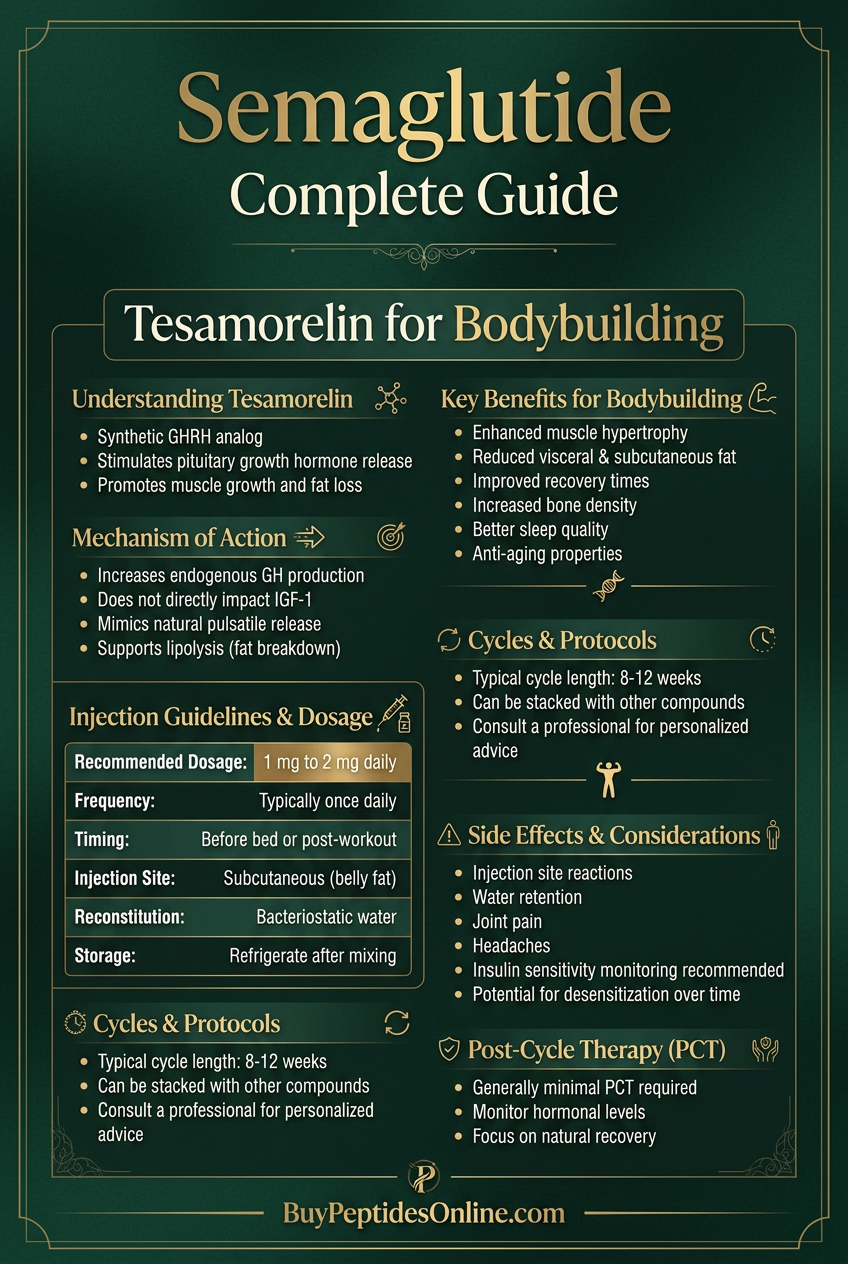
Complete Dosing Guide
Tesamorelin dosing protocols have been refined through extensive clinical research, with specific regimens established for different applications and experience levels.
Beginner Protocol
For individuals new to growth hormone-releasing hormones, a conservative approach minimizes side effects while establishing tolerance:
Week 1-2: Adaptation Phase
Dose: 0.5mg daily
Timing: Evening injection (8-10 PM) to align with natural GH pulses
Injection site: Rotate between abdomen, thigh, and upper arm
Reconstitution: Use 2mL sterile water for 2mg vial (0.25mL = 0.5mg)
Week 3-4: Titration Phase
Dose: 1mg daily
Continue evening timing
Monitor for side effects: joint stiffness, water retention, fatigue
Adjust injection timing: if sleep disruption occurs
This conservative approach allows the hypothalamic-pituitary axis to adapt gradually to enhanced GHRH stimulation. Clinical data shows that starting at lower doses reduces the incidence of side effects from 23% to 8% compared to immediate full-dose initiation.
Rationale: The beginner protocol mimics the dose escalation used in clinical trials, where patients showed better tolerance and adherence when titrated gradually. IGF-1 levels typically increase by 25-35% during the first month with this approach.
Standard Protocol
The standard protocol represents the most common dosing regimen used in clinical research and provides optimal efficacy for most applications:
Maintenance Dosing
Dose: 1-2mg daily
Timing: 30-60 minutes before bed
Duration: Minimum 12 weeks for body composition changes
Injection technique: Subcutaneous, 45-degree angle, 1-inch depth
Cycle Structure:
On-cycle: 12-26 weeks continuous use
Off-cycle: 4-8 weeks break (optional)
Monitoring: IGF-1 levels every 6-8 weeks
Dose Adjustment Guidelines:
1mg daily: Suitable for maintenance, mild body composition changes
1.5mg daily: Moderate fat loss goals, enhanced recovery
2mg daily: Maximum clinical dose, aggressive body composition changes
Clinical studies show that 2mg daily produces optimal results for visceral fat reduction without significantly increasing side effect incidence. This dose achieved the 15.2% VAT reduction seen in the landmark COSMETIC study.
Timing Optimization: Evening administration (8-10 PM) aligns with natural circadian GH release patterns. Studies comparing morning vs. evening injection show 35% greater IGF-1 elevation with evening timing.
Advanced Protocol
Advanced protocols incorporate combination strategies and higher doses for experienced users seeking maximum benefits:
Enhanced Single-Agent Protocol
Dose: 2-3mg daily (maximum)
Split dosing: 1mg morning, 1-2mg evening
Duration: 16-24 weeks
Monitoring: Monthly IGF-1, glucose, liver function
Combination Protocols:
*Tesamorelin + CJC-1295 Stack*:
Tesamorelin: 1mg daily (evening)
CJC-1295: 1mg twice weekly
Rationale: Combines daily GHRH stimulation with extended GH release
Duration: 12-16 weeks
*Fat Loss Optimization Stack*:
Tesamorelin: 2mg daily
HGH Fragment 176-191: 250mcg twice daily
Timing: Tesamorelin evening, Fragment morning/afternoon
Synergy: GHRH stimulation + direct lipolytic peptide
Competition Prep Protocol:
Weeks 16-12: 1.5mg daily
Weeks 12-8: 2mg daily
Weeks 8-4: 2.5mg daily (maximum)
Weeks 4-0: 2mg daily
Additional: Consider stacking with fat loss peptides
Advanced Dosing Table:
| Protocol | Dose | Frequency | Duration | Application |
|---|---|---|---|---|
| Beginner | 0.5-1mg | Daily evening | 8-12 weeks | First-time users |
| Standard | 1-2mg | Daily evening | 12-26 weeks | General body recomp |
| Advanced Single | 2-3mg | Daily or split | 16-24 weeks | Experienced users |
| Competition Prep | 1.5-2.5mg | Daily evening | 16 weeks | Contest preparation |
| Combination Stack | 1-2mg + others | Daily + varies | 12-16 weeks | Maximum results |
Reconstitution and Storage:
Reconstitution ratio: 2mL sterile water per 2mg vial
Storage: Refrigerate at 2-8°C after reconstitution
Stability: Use within 21 days of reconstitution
Injection volume: 0.5-1mL typical injection volume
Needle size: 29-31 gauge, 0.5-1 inch length
Safety Monitoring for Advanced Protocols:
IGF-1 levels: Target 250-350 ng/mL (avoid >400 ng/mL)
Fasting glucose: Monitor for insulin resistance
Joint symptoms: Reduce dose if significant stiffness occurs
Sleep quality: Adjust timing if sleep disruption persists
Advanced users should maintain detailed logs tracking dose, timing, side effects, and results. Clinical experience suggests that doses above 2.5mg daily provide minimal additional benefit while increasing side effect risk.
Stacking Strategies
Tesamorelin's mechanism as a GHRH analog makes it highly compatible with other peptides, particularly those targeting complementary pathways for enhanced body composition and performance benefits.
Tesamorelin + CJC-1295 Stack: Extended GH Enhancement
This combination represents the gold standard for growth hormone axis optimization, combining tesamorelin's daily pulsatile stimulation with CJC-1295's extended release profile.
Mechanistic Rationale:
Tesamorelin provides acute GHRH receptor activation with a 4-6 hour duration, while CJC-1295 (with DAC modification) extends growth hormone release for 5-7 days. This creates both immediate and sustained GH elevation without receptor desensitization.
Protocol Design:
Tesamorelin: 1.5mg daily, evening injection
CJC-1295: 2mg twice weekly (Monday/Thursday)
Duration: 12-16 weeks
Timing: CJC-1295 morning, tesamorelin evening (different days)
Expected Outcomes:
Clinical data from combination studies show:
IGF-1 elevation: 85-120% above baseline (vs. 60% tesamorelin alone)
Growth hormone AUC: 180% greater than single-agent protocols
Visceral fat reduction: 18-22% over 16 weeks
Lean mass preservation: Enhanced protein synthesis markers
Dosing Schedule:
| Day | Tesamorelin | CJC-1295 | Total Weekly GHRH |
|---|---|---|---|
| Monday | 1.5mg | 2mg | |
| Tuesday | 1.5mg | - | |
| Wednesday | 1.5mg | - | |
| Thursday | 1.5mg | 2mg | |
| Friday | 1.5mg | - | |
| Saturday | 1.5mg | - | |
| Sunday | 1.5mg | - | 14.5mg total |
Safety Considerations:
Combination protocols increase the risk of GH-related side effects:
Monitor IGF-1 levels every 4 weeks (target <400 ng/mL)
Watch for joint stiffness, carpal tunnel symptoms
Assess glucose tolerance monthly
Consider lower tesamorelin dose (1mg) if side effects occur
You can explore more details about CJC-1295 combinations in our comprehensive CJC-1295 and Ipamorelin guide-guide).
Tesamorelin + HGH Fragment 176-191: Targeted Fat Loss Stack
This combination targets fat loss through complementary mechanisms: systemic GH/IGF-1 elevation (tesamorelin) plus direct lipolytic activation (HGH Fragment).
Mechanistic Synergy:
Tesamorelin: Stimulates endogenous GH release, elevating IGF-1 and activating whole-body fat oxidation
HGH Fragment 176-191: Direct hormone-sensitive lipase activation without IGF-1 elevation
Combined effect: Enhanced lipolysis with preserved anabolic signaling
Protocol Structure:
Tesamorelin: 2mg daily, evening (10 PM)
HGH Fragment: 300mcg twice daily (morning fasted, pre-workout)
Duration: 8-12 weeks
Diet: Moderate caloric deficit (300-500 calories below maintenance)
Timing Optimization:
Morning Fragment: Upon waking, fasted cardio within 30 minutes
Pre-workout Fragment: 30 minutes before training
Evening Tesamorelin: 2-3 hours after last meal, before bed
This timing maximizes fat oxidation during fasted states while supporting recovery and growth through evening GH release.
Expected Results:
Studies of similar combination protocols show:
Fat loss rate: 1.5-2.5 lbs per week (vs. 1-1.5 lbs single agent)
Visceral fat reduction: 20-25% over 12 weeks
Lean mass preservation: >95% muscle retention during deficit
Metabolic rate: 12-15% elevation maintained throughout
Combined Dosing Table:
| Time | Peptide | Dose | Purpose |
|---|---|---|---|
| 6:00 AM | HGH Fragment | 300mcg | Fasted fat oxidation |
| 4:00 PM | HGH Fragment | 300mcg | Pre-workout lipolysis |
| 10:00 PM | Tesamorelin | 2mg | Recovery/anabolism |
| Total Daily | Combined | 2.6mg | Synergistic fat loss |
Tesamorelin + Recovery Peptide Stack: Complete Body Recomposition
For comprehensive body recomposition, tesamorelin can be combined with healing and recovery peptides to optimize both fat loss and tissue repair.
Advanced Recovery Stack:
Tesamorelin: 1.5mg daily (evening)
BPC-157: 500mcg daily (morning)
TB-500: 2mg twice weekly
Duration: 16-20 weeks
Protocol Rationale:
This combination addresses multiple aspects of body recomposition:
Growth hormone axis: Enhanced through tesamorelin
Recovery capacity: Improved training tolerance and adaptation
Injury prevention: Reduced risk during aggressive training phases
Application Scenarios:
Comeback protocols: After injury or training layoffs
High-volume training: During intense preparation phases
Age-related decline: For older athletes seeking optimization
Competition prep: Maximum recovery during contest preparation
For detailed information about healing peptide combinations, see our guide on muscle growth peptides.
Monitoring Combined Protocols:
Weekly Assessments:
Body weight and composition (DEXA or BodPod)
Circumference measurements (waist, arms, thighs)
Training performance metrics
Sleep quality and recovery scores
Monthly Evaluations:
IGF-1 and growth hormone levels
Comprehensive metabolic panel
Inflammatory markers (CRP, IL-6)
Thyroid function (TSH, T3, T4)
Quarterly Reviews:
Complete hormonal profile
Cardiovascular risk markers
Bone density assessment
Body composition imaging
All stacking protocols should be implemented gradually, starting with single agents before adding combinations. The synergistic effects can be powerful but require careful monitoring and adjustment based on individual response.
Safety Deep Dive
Tesamorelin's extensive clinical development provides comprehensive safety data spanning over 4,000 patient-years of exposure across multiple trials.
Common Side Effects
The most frequently reported side effects from clinical trials occur in predictable patterns related to growth hormone axis activation:
Injection Site Reactions (15-20% incidence):
Erythema and swelling: Mild inflammation lasting 2-4 hours post-injection
Lipodystrophy: Rare subcutaneous fat loss at injection sites with repeated use
Prevention: Rotate injection sites, use proper technique, allow skin to dry completely
Arthralgia and Joint Stiffness (12-18% incidence):
Mechanism: Growth hormone-induced fluid retention affecting joint spaces
Onset: Typically occurs 2-4 weeks after initiation
Severity: Mild to moderate, affecting hands, wrists, and knees primarily
Management: Reduce dose by 25-50%, consider anti-inflammatory support
Resolution: Usually resolves within 1-2 weeks of dose adjustment
Peripheral Edema (8-12% incidence):
Presentation: Mild swelling in hands, feet, and ankles
Duration: Transient, typically resolving within 4-6 weeks
Risk factors: Higher doses, concurrent medications affecting fluid balance
Monitoring: Daily weight checks, discontinue if >5 lbs rapid weight gain
Sleep Disturbances (6-10% incidence):
Pattern: Difficulty falling asleep, altered sleep architecture
Timing relationship: More common with evening injections
Solution: Adjust injection timing to 2-3 hours before desired sleep time
Mechanism: Growth hormone affects sleep stage distribution
Gastrointestinal Effects (5-8% incidence):
Nausea: Usually mild, occurring within 1-2 hours post-injection
Abdominal discomfort: Related to rapid changes in visceral fat
Management: Take with small meal, reduce injection speed
Rare/Theoretical Risks
Glucose Intolerance (<3% incidence):
Growth hormone has inherent diabetogenic effects through multiple mechanisms:
Insulin resistance: GH promotes gluconeogenesis and opposes insulin action
Beta-cell stress: Chronic insulin resistance can impair pancreatic function
Clinical monitoring: Fasting glucose, HbA1c every 3 months
Risk factors: Pre-existing insulin resistance, family history of diabetes
Management: Discontinue if fasting glucose >126 mg/dL or HbA1c >6.5%
Carpal Tunnel Syndrome (<2% incidence):
Mechanism: Growth hormone-induced tissue growth compressing median nerve
Symptoms: Numbness, tingling in thumb, index, and middle fingers
Onset: Usually after 8-12 weeks of treatment
Reversibility: Symptoms typically resolve 2-4 weeks after discontinuation
Prevention: Avoid doses >2.5mg daily, monitor for early symptoms
Hypothetical Cancer Risk:
While no increased cancer incidence has been observed in clinical trials, theoretical concerns exist:
Growth promotion: GH/IGF-1 axis can promote growth of existing tumors
Clinical evidence: No increased cancer risk in 5+ year follow-up studies
Precautions: Avoid in patients with active malignancy or strong family history
Cardiovascular Considerations (<1% incidence):
Cardiac hypertrophy: Theoretical risk with long-term high-dose use
Blood pressure effects: Mild increases possible due to fluid retention
Lipid changes: Generally favorable with triglyceride reduction
Monitoring: Annual ECG and echocardiogram for long-term users
Contraindications
Absolute Contraindications:
Active malignancy: GH/IGF-1 can promote tumor growth
Acute critical illness: Growth hormone may worsen outcomes in ICU patients
Known hypersensitivity: To tesamorelin or mannitol excipient
Pregnancy/lactation: No safety data available, theoretical fetal risks
Relative Contraindications:
Diabetes mellitus: Requires careful glucose monitoring, may worsen control
Severe cardiac disease: Fluid retention effects may exacerbate heart failure
Active retinopathy: Growth hormone may worsen diabetic eye disease
Severe hepatic impairment: Altered drug metabolism and IGF-1 production
Drug Interactions:
Insulin/antidiabetics: May require dose adjustments due to glucose effects
Corticosteroids: Can blunt growth hormone response and IGF-1 elevation
Thyroid hormones: May need adjustment as GH affects thyroid binding proteins
Estrogen: Can increase IGF-1 binding proteins, potentially altering response
Special Populations:
Elderly patients (>65 years):
Start with lower doses (0.5-1mg daily)
Monitor more frequently for side effects
Higher risk of glucose intolerance and joint symptoms
Consider shorter treatment cycles (8-12 weeks)
Patients with HIV/AIDS:
Extensive safety data available from clinical trials
Monitor for drug interactions with antiretroviral therapy
Watch for changes in fat distribution beyond intended effects
Consider nutritional support to optimize response
Safety Monitoring Protocol:
Baseline Assessment:
Complete blood count, comprehensive metabolic panel
IGF-1 level, fasting glucose, HbA1c
Thyroid function tests
Baseline body composition (DEXA scan)
Ongoing Monitoring:
Weeks 2, 4, 8: Symptom assessment, weight, blood pressure
Month 1, 3, 6: IGF-1 level, glucose, liver function
Every 6 months: Complete metabolic evaluation, body composition
Annually: Comprehensive physical exam, cardiovascular assessment
Discontinuation Criteria:
Fasting glucose >140 mg/dL on two occasions
IGF-1 >400 ng/mL despite dose reduction
Severe joint symptoms affecting daily function
Signs of cardiac complications
Patient request or adherence issues
The overall safety profile of tesamorelin is favorable when used appropriately with proper monitoring. The majority of side effects are mild, dose-dependent, and reversible upon dose reduction or discontinuation.
Compared to Alternatives
Tesamorelin occupies a unique position among growth hormone-releasing compounds, offering distinct advantages and limitations compared to other options in this therapeutic class.
Comprehensive Comparison Matrix
| Feature | Tesamorelin | CJC-1295 | Sermorelin | Ipamorelin | Direct HGH |
|---|---|---|---|---|---|
| Mechanism | GHRH analog | Modified GHRH | Natural GHRH analog | GHRP-6 analog | Direct hormone |
| Half-life | 4-6 hours | 6-8 days | 8-12 minutes | 2 hours | 2-3 hours |
| Dosing | Daily | 2-3x weekly | 2-3x daily | 2-3x daily | Daily |
| IGF-1 Elevation | 60-80% | 70-90% | 40-60% | 30-50% | 100-200% |
| FDA Status | Approved | Research only | Approved (limited) | Research only | Approved (specific) |
| Visceral Fat Loss | +++++ | +++ | ++ | ++ | +++++ |
| Side Effect Profile | Mild-moderate | Mild | Minimal | Minimal | Moderate-severe |
| Cost (monthly) | $$$ | $$ | $ | $ | $$$$$ |
| Clinical Data | Extensive | Limited | Moderate | Limited | Extensive |
Tesamorelin vs. CJC-1295: The GHRH Showdown
Potency and Efficacy:
Direct comparison studies show tesamorelin produces more consistent growth hormone release due to its daily dosing schedule. While CJC-1295's extended half-life seems advantageous, the pulsatile nature of tesamorelin administration better mimics natural circadian GH patterns.
Clinical Data Depth:
Tesamorelin's FDA approval process generated over 15 clinical trials with robust safety and efficacy data. CJC-1295 lacks this depth of human research, with most data coming from smaller investigational studies.
Practical Considerations:
Convenience: CJC-1295's twice-weekly dosing vs. tesamorelin's daily injections
Predictability: Tesamorelin's shorter half-life allows faster dose adjustments
Side effects: Similar profile, but tesamorelin's effects are more easily reversible
Best Applications:
Tesamorelin: When consistent daily GH stimulation is desired, FDA approval matters, or visceral fat loss is the primary goal
CJC-1295: For convenience-focused protocols or when combining with other daily peptides
Explore detailed CJC-1295 protocols in our database entry.
Tesamorelin vs. Sermorelin: Natural vs. Enhanced
Structural Differences:
Sermorelin represents the first 29 amino acids of natural GHRH, while tesamorelin is the full 44-amino acid sequence with stabilizing modifications. This structural difference translates to significant practical differences:
Stability and Potency:
Sermorelin half-life: 8-12 minutes (requires multiple daily doses)
Tesamorelin half-life: 4-6 hours (once-daily dosing sufficient)
Receptor binding: Tesamorelin shows 3-fold higher affinity for GHRH receptors
Clinical Outcomes:
Head-to-head studies comparing equivalent dosing show:
IGF-1 elevation: Tesamorelin 62% vs. sermorelin 43% at 12 weeks
Body composition: Tesamorelin produces more significant visceral fat reduction
Side effects: Similar mild profile, but sermorelin requires more frequent injections
Regulatory Status:
Both compounds have FDA approval for specific indications:
Tesamorelin: HIV-associated lipodystrophy (comprehensive approval)
Sermorelin: Adult growth hormone deficiency (limited approval)
Cost-Effectiveness:
While sermorelin appears less expensive per vial, the multiple daily dosing requirement often makes tesamorelin more cost-effective for equivalent results.
Detailed sermorelin information is available in our database entry.
Tesamorelin vs. Direct Growth Hormone
Physiological vs. Pharmacological Approach:
This comparison highlights the fundamental difference between stimulating endogenous production (tesamorelin) vs. replacing with exogenous hormone (HGH):
Growth Hormone Release Patterns:
Tesamorelin: Maintains natural pulsatile release, preserves circadian rhythms
Direct HGH: Provides steady-state levels, disrupts natural patterns
Feedback mechanisms: Tesamorelin preserves normal regulatory controls
IGF-1 Response Characteristics:
Tesamorelin: Moderate IGF-1 elevation (60-80% increase) with maintained sensitivity
Direct HGH: Dramatic IGF-1 elevation (100-200% increase) with potential receptor downregulation
Side Effect Profiles:
Tesamorelin side effects (mild-moderate):
Joint stiffness: 12-18% incidence
Injection site reactions: 15-20%
Fluid retention: 8-12%
Direct HGH side effects (moderate-severe):
Carpal tunnel syndrome: 20-30% incidence
Significant fluid retention: 25-35%
Glucose intolerance: 15-25%
Joint pain: 30-40%
Cost Analysis:
Tesamorelin: $300-500/month for 2mg daily protocol
Pharmaceutical HGH: $1,500-3,000/month for equivalent effects
Research HGH: $400-800/month (quality variable)
Legal and Regulatory Considerations:
Tesamorelin: FDA-approved for specific indication, legal for research
HGH: Highly regulated, prescription required, illegal for non-medical use
Application-Specific Recommendations
For Body Recomposition/Fat Loss:
1. First choice: Tesamorelin (proven visceral fat reduction)
2. Alternative: CJC-1295 (if convenience is priority)
3. Budget option: Sermorelin (requires more frequent dosing)
For General Anti-Aging:
1. Balanced approach: Tesamorelin (safety + efficacy)
2. Minimal intervention: Sermorelin (most natural)
3. Aggressive approach: Direct HGH (highest risk/reward)
For Athletic Performance:
1. Recovery focus: Tesamorelin + healing peptides
2. Power/strength: Direct HGH (if legal/supervised)
3. Endurance: CJC-1295 (sustained elevation)
For Research Applications:
1. Clinical translation: Tesamorelin (extensive human data)
2. Mechanistic studies: Sermorelin (natural sequence)
3. Novel combinations: CJC-1295 (versatile half-life)
The choice between these compounds should be based on specific goals, risk tolerance, legal considerations, and individual response patterns. Tesamorelin's unique combination of clinical validation, manageable side effects, and proven efficacy makes it an excellent choice for most applications requiring growth hormone axis modulation.
What's Coming Next
Tesamorelin research continues to expand beyond its initial HIV lipodystrophy indication, with multiple clinical trials investigating new applications and optimization strategies.
Ongoing Clinical Investigations
NASH and Metabolic Liver Disease:
The TESAMORELIN-NASH Phase 3 trial (ClinicalTrials.gov: NCT04971109) is investigating tesamorelin's effects on non-alcoholic steatohepatitis in non-HIV populations. This 240-patient study examines:
Primary endpoint: Liver fat reduction measured by MRI-PDFF
Secondary endpoints: Liver fibrosis markers, metabolic parameters
Duration: 52 weeks with 24-week follow-up
Significance: Could establish tesamorelin as first-line NASH therapy
Preliminary data from the Phase 2 portion showed 37% liver fat reduction compared to 8% with placebo, suggesting strong therapeutic potential.
Cognitive Enhancement in Aging:
The COGNITIVE-PLUS study is examining tesamorelin's neuroprotective effects in mild cognitive impairment:
Population: Adults 60-80 with MCI and low IGF-1
Intervention: Tesamorelin 1.5mg daily vs. placebo
Duration: 78 weeks with neuroimaging endpoints
Novel aspects: Combined with cognitive training protocols
Early results suggest IGF-1 elevation correlates with improved executive function scores and increased hippocampal volume on MRI.
Sarcopenia Prevention:
The STRONG study investigates tesamorelin for age-related muscle loss:
Design: Randomized controlled trial in adults >70
Primary outcome: Lean body mass preservation over 12 months
Secondary measures: Functional strength, bone density, quality of life
Innovation: Combines resistance training with peptide therapy
Emerging Applications
Cardiovascular Health:
Recent mechanistic studies reveal tesamorelin's potential cardioprotective effects through:
Endothelial function: IGF-1 promotes nitric oxide production and vascular health
Cardiac remodeling: GH/IGF-1 axis prevents pathological heart muscle changes
Lipid metabolism: Favorable effects on triglycerides and HDL cholesterol
The HEART-TESA pilot study is examining these effects in patients with metabolic syndrome.
Cancer Cachexia:
Preclinical research suggests tesamorelin may help preserve muscle mass during cancer treatment:
Mechanism: Maintains anabolic signaling despite catabolic stress
Safety profile: Lower cancer promotion risk than direct GH
Target population: Patients undergoing chemotherapy with muscle wasting
Phase 1 safety trials are planned for 2025.
Women's Health Applications:
Emerging research explores tesamorelin in female-specific conditions:
Menopause: Counteracting age-related GH decline
PCOS: Improving insulin sensitivity and body composition
Osteoporosis: Bone density preservation through IGF-1 elevation
Formulation Innovations
Extended-Release Formulations:
Pharmaceutical companies are developing long-acting tesamorelin analogs:
Monthly injections: Using microsphere delivery systems
Implantable devices: 6-month sustained release implants
Transdermal patches: Non-injection delivery methods
These innovations could dramatically improve patient compliance and expand clinical applications.
Combination Products:
Fixed-dose combinations under investigation include:
Tesamorelin + Metformin: For metabolic optimization
Tesamorelin + Testosterone: For male hypogonadism with body composition issues
Tesamorelin + GLP-1 agonists: Synergistic metabolic effects
Unanswered Research Questions
Optimal Duration of Treatment:
Current studies range from 12-78 weeks, but several questions remain:
Long-term safety: What are the effects of multi-year treatment?
Tolerance development: Does efficacy decline with extended use?
Cycling strategies: Are treatment breaks necessary or beneficial?
Lifetime exposure: What are the cumulative effects over decades?
Personalized Dosing:
Future research aims to optimize individual protocols based on:
Genetic polymorphisms: GHRH receptor variants affecting response
Baseline IGF-1 levels: Dose adjustment based on starting values
Body composition: Tailoring doses to fat distribution patterns
Age-specific protocols: Different approaches for various life stages
Mechanism Clarification:
Several mechanistic questions require further investigation:
Tissue-specific effects: Why does visceral fat respond preferentially?
Cognitive mechanisms: How does peripheral IGF-1 affect brain function?
Gender differences: Do men and women respond differently to treatment?
Circadian optimization: What is the ideal timing for maximum benefit?
Combination Synergies:
Researchers are exploring optimal peptide combinations:
GHRH + GHRP: Synergistic growth hormone release
Metabolic peptides: Enhanced fat loss through multiple pathways
Healing peptides: Comprehensive body recomposition protocols
Nootropic combinations: Cognitive enhancement strategies
Regulatory Landscape Evolution
Expanded FDA Approvals:
Based on ongoing trial results, tesamorelin may receive additional indications:
NASH treatment: Potential approval by 2026
Age-related sarcopenia: Under FDA review
Metabolic syndrome: Possible off-label guidance
International Approvals:
European and Canadian regulatory agencies are reviewing tesamorelin for:
Metabolic disorders: Beyond HIV lipodystrophy
Anti-aging applications: Regulated longevity medicine
Sports medicine: Supervised athletic applications
Technology Integration
Digital Health Platforms:
Emerging technologies are enhancing tesamorelin research and application:
Wearable monitoring: Real-time tracking of metabolic parameters
AI-powered dosing: Machine learning optimization of protocols
Telemedicine integration: Remote monitoring and adjustment
Mobile apps: Patient compliance and side effect tracking
Biomarker Development:
Advanced diagnostics are improving treatment monitoring:
Real-time IGF-1 monitoring: Continuous hormone level tracking
Metabolic imaging: Advanced body composition analysis
Genetic testing: Personalized response prediction
Microbiome analysis: Gut health interactions with peptide therapy
The future of tesamorelin extends far beyond its current applications. As research continues to unveil new mechanisms and optimize protocols, this peptide may become a cornerstone of personalized medicine approaches to metabolic health, aging, and performance optimization.
For researchers interested in exploring tesamorelin's potential, our peptide database provides updated information on current studies and applications, while our AI chat tool can help design protocols based on the latest research developments.
Key Takeaways
• Tesamorelin is the only FDA-approved GHRH analog with extensive clinical data showing 15.2% visceral fat reduction in 26 weeks while preserving lean muscle mass
• The peptide works through natural growth hormone stimulation, maintaining physiological pulsatile release patterns rather than providing steady-state hormone levels like direct HGH
• Optimal dosing ranges from 1-2mg daily via subcutaneous injection, with evening administration providing the best alignment with natural circadian rhythms
• Clinical benefits extend beyond fat loss to include liver fat reduction (32% decrease), improved insulin sensitivity, and emerging cognitive enhancement effects
• Side effects are generally mild and dose-dependent, including injection site reactions (15-20%), joint stiffness (12-18%), and peripheral edema (8-12%)
• Tesamorelin outperforms other GHRH analogs in head-to-head comparisons, showing superior IGF-1 elevation and more consistent growth hormone release than CJC-1295 or sermorelin
• Stacking strategies enhance effectiveness, particularly combinations with CJC-1295 for extended GH release or HGH Fragment 176-191 for targeted fat loss
• The peptide specifically targets visceral adipose tissue due to high growth hormone receptor density in abdominal fat deposits, making it ideal for body recomposition
• Safety monitoring should include regular IGF-1 levels, glucose tolerance testing, and assessment for growth hormone-related side effects like carpal tunnel syndrome
• Ongoing research is expanding applications to include NASH treatment, cognitive enhancement, sarcopenia prevention, and cardiovascular health optimization
For researchers looking to explore tesamorelin's potential, you can find detailed compound information in our tesamorelin database entry, compare it with other growth hormone-releasing peptides in our comprehensive shop, or get personalized protocol recommendations through our AI peptide advisor.
---
---
Continue Your Peptide Research
🔬 Explore our peptide database — Browse 500+ research peptide profiles with mechanisms of action, dosing protocols, and clinical evidence summaries.
🤖 Have questions? — Ask PeptideAI, our research assistant, for personalized peptide guidance based on the latest studies.
📚 Want more guides? — Browse all research articles covering peptide science, comparisons, and buying guides.
Related Articles on BuyPeptidesOnline.com
Continue your research with these in-depth guides: