Dr. Richard Spritz stared at the petri dish under his microscope, watching melanocytes darken in real-time. It was 1991, and his team at the University of Arizona had just administered a synthetic peptide to cultured human skin cells. Within hours, melanin production had increased 400-fold. The compound wasn't just triggering tanning — it was unleashing the most potent melanogenic response ever recorded in laboratory conditions.
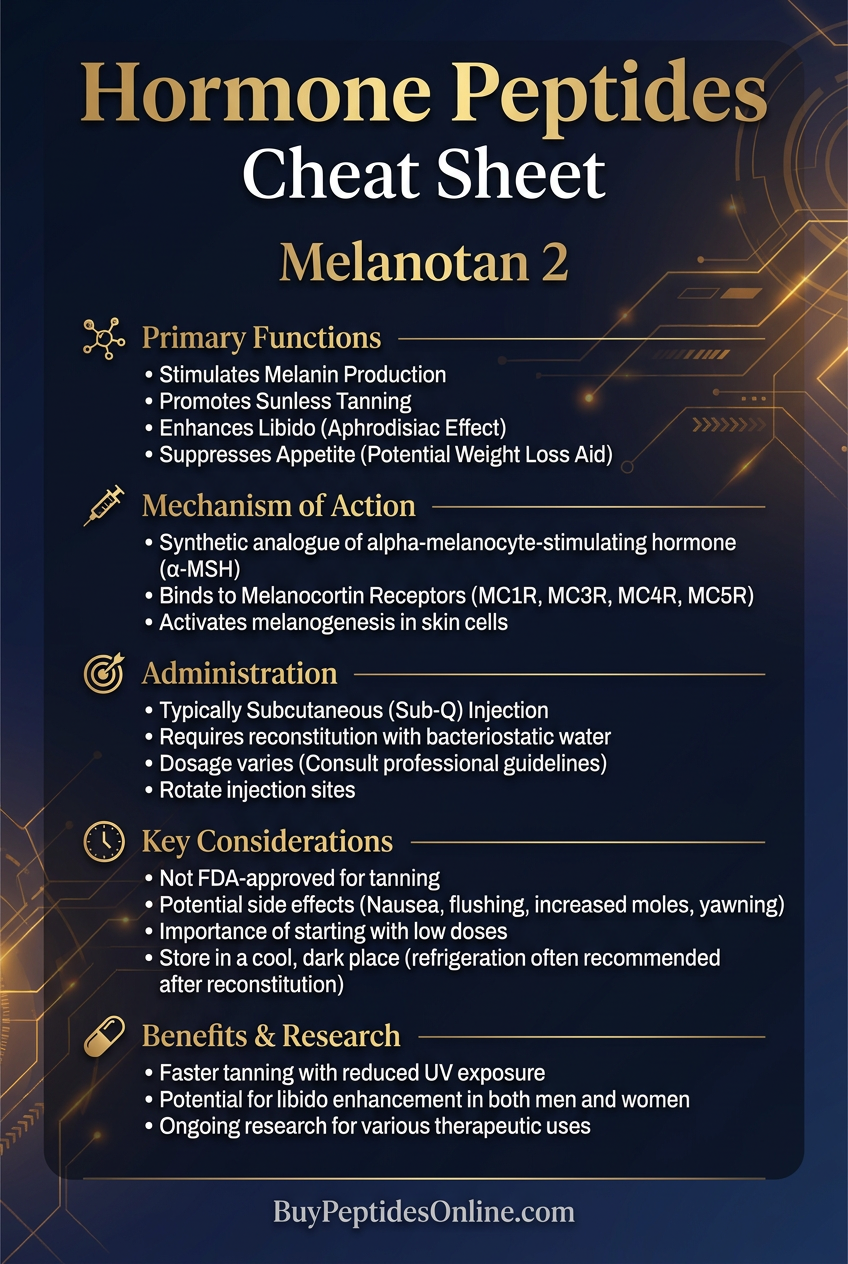
That compound was Melanotan 2 (MT-2), a seven-amino acid cyclic peptide that would become one of the most researched — and controversial — synthetic analogs of α-melanocyte stimulating hormone (α-MSH). Unlike its natural counterpart, which degrades within minutes in the bloodstream, Melanotan 2 maintains biological activity for hours, making it a powerful research tool for studying melanogenesis, appetite regulation, and sexual function.
Today, Melanotan 2 sits at the intersection of dermatological research, metabolic studies, and neurological investigations. Its ability to activate multiple melanocortin receptor subtypes has opened research pathways spanning from photoprotection studies to obesity research. Yet despite decades of investigation, many researchers still struggle with optimal dosing protocols, delivery methods, and safety considerations.
This comprehensive guide examines everything researchers need to know about Melanotan 2: its discovery, molecular mechanisms, evidence base, dosing protocols, delivery methods, safety profile, and comparison to related compounds like **PT-141 and Afamelanotide**. Researchers looking to explore the melanocortin pathway further can find lab-tested afamelanotide from verified vendors.
The Discovery
The story of Melanotan 2 begins in the late 1980s at the University of Arizona, where dermatologist Dr. Norman Levine and biochemist Dr. Mac Hadley were investigating ways to prevent skin cancer. Their hypothesis was elegant: if they could stimulate natural tanning without UV exposure, they might create a protective barrier against solar radiation damage.
The team knew that α-MSH, the body's natural tanning hormone, was too unstable for therapeutic use. The 13-amino acid peptide degrades rapidly via enzymatic cleavage, particularly at the methionine residues. Hadley's solution was radical — create a synthetic analog that retained α-MSH's biological activity while resisting enzymatic breakdown.
Working with medicinal chemist Dr. Victor Hruby, the team systematically modified α-MSH's structure. They replaced methionine with norleucine to prevent oxidation, introduced a lactam bridge between aspartic acid and lysine to create conformational rigidity, and shortened the sequence to seven amino acids. The result was Ac-Nle-cyclo[Asp-His-D-Phe-Arg-Trp-Lys]-NH2 — Melanotan 2.
Early testing revealed MT-2's extraordinary potency. In melanocyte cultures, it was 1,000 times more active than α-MSH. In animal models, subcutaneous injections produced visible darkening within 24 hours. By 1991, the University of Arizona had filed patents and licensed the compound to several pharmaceutical companies.
The initial excitement was tempered by unexpected findings. Test subjects reported not just tanning, but also decreased appetite and enhanced sexual arousal. These "side effects" led researchers to discover that Melanotan 2 activated multiple melanocortin receptor subtypes, each governing different physiological processes. What began as a tanning research tool had become a multi-target peptide with applications far beyond dermatology — including the sexual function research that would eventually lead to PT-141 available from verified research suppliers.
Chemical Identity
Melanotan 2's molecular structure reflects decades of rational drug design aimed at maximizing biological activity while minimizing degradation. The compound's molecular formula is C50H69N15O9, with a molecular weight of 1,024.18 Da.
The peptide's defining feature is its cyclic structure, created by a lactam bridge between the side chains of aspartic acid at position 5 and lysine at position 10. This cyclization serves multiple purposes: it constrains the peptide into a β-turn conformation that optimally fits melanocortin receptors, prevents enzymatic cleavage at internal sites, and increases resistance to proteolytic degradation.
The D-phenylalanine substitution at position 7 is crucial for activity. While L-phenylalanine is the natural amino acid, the D-isomer creates a bend in the peptide backbone that enhances receptor binding affinity. This modification increases MT-2's potency approximately 100-fold compared to analogs with L-phenylalanine.
Norleucine replacement of methionine at position 4 prevents oxidative degradation that rapidly inactivates α-MSH. Methionine residues are particularly susceptible to reactive oxygen species, forming methionine sulfoxide that abolishes biological activity. Norleucine maintains the hydrophobic character necessary for receptor binding while eliminating this vulnerability.
Melanotan 2 exists as a white to off-white powder in its lyophilized form, with excellent aqueous solubility exceeding 50 mg/mL in sterile water. The peptide is stable when stored at -20°C for over two years, though reconstituted solutions should be used within 30 days when refrigerated at 2-8°C. Researchers can compare bremelanotide pricing from trusted suppliers as a structurally related reference compound for melanocortin studies.
The compound's partition coefficient (LogP) of approximately -1.2 indicates moderate hydrophilicity, allowing both systemic circulation and tissue penetration. This balanced lipophilicity contributes to MT-2's ability to cross biological barriers, including the blood-brain barrier where it activates central melanocortin receptors.
UV spectroscopy reveals characteristic absorption peaks at 280 nm (tryptophan) and 257 nm (phenylalanine), which researchers use for concentration determination and purity assessment. Mass spectrometry confirms the expected molecular ion peak at m/z 1024.2 [M+H]+.
Mechanism of Action
Primary Mechanism
Melanotan 2's primary mechanism centers on melanocortin-1 receptor (MC1R) activation in melanocytes, the specialized cells responsible for melanin production. This process, called melanogenesis, represents one of the most well-characterized peptide-receptor interactions in dermatological research.
Upon subcutaneous or nasal administration, MT-2 enters systemic circulation and binds to MC1R with approximately 100-fold higher affinity than endogenous α-MSH. The receptor belongs to the G-protein coupled receptor (GPCR) family, specifically coupling to Gαs proteins that activate adenylyl cyclase.
MC1R activation triggers a precisely orchestrated signaling cascade:
1. Adenylyl cyclase activation increases intracellular cyclic adenosine monophosphate (cAMP) levels 10-20 fold within minutes
2. Protein kinase A (PKA) activation phosphorylates and activates the transcription factor CREB (cAMP response element-binding protein)
3. CREB phosphorylation promotes transcription of MITF (microphthalmia-associated transcription factor), the master regulator of melanogenesis
4. MITF upregulation increases expression of key melanogenic enzymes: tyrosinase, TRP-1, and TRP-2
5. Tyrosinase activation catalyzes the rate-limiting conversion of tyrosine to DOPA, then DOPA-quinone
6. Melanin synthesis proceeds through either eumelanin (brown-black) or pheomelanin (red-yellow) pathways
This process typically requires 48-72 hours from receptor activation to visible pigmentation, as new melanin must be synthesized, packaged into melanosomes, and transferred to keratinocytes.
Research by Suzuki et al. (2012) demonstrated that MT-2 at 1 μM concentration increases tyrosinase activity by 340% within 24 hours in cultured human melanocytes. The effect persists for 72-96 hours, significantly longer than α-MSH's 4-6 hour activity window.
Secondary Pathways
Melanotan 2's effects extend far beyond melanogenesis through activation of additional melanocortin receptor subtypes. Each receptor subtype has distinct tissue distribution and physiological functions:
MC3R and MC4R Activation in the hypothalamus mediates appetite suppression and energy expenditure. These receptors are critical components of the leptin-melanocortin pathway controlling body weight. MT-2 binding to MC4R activates pro-opiomelanocortin (POMC) neurons while inhibiting **neuropeptide Y (NPY)** neurons, creating a powerful anorexigenic signal.
Fan et al. (2000) showed that intracerebroventricular MT-2 injection (0.3 nmol) reduced food intake by 45% over 24 hours in rats. The effect involves downstream activation of uncoupling protein-1 (UCP-1) in brown adipose tissue, increasing thermogenesis and energy expenditure.
MC3R activation also influences sexual behavior through interactions with the dopaminergic reward pathway. MT-2 enhances dopamine release in the nucleus accumbens and ventral tegmental area, regions critical for sexual motivation and arousal. This mechanism underlies the development of PT-141 (bremelanotide), a MT-2 analog specifically designed for treating sexual dysfunction.
MC5R activation in sebaceous glands modulates lipid production and anti-inflammatory responses. Research indicates MT-2 may influence acne development through this pathway, though clinical significance remains unclear.
Systemic vs. Local Effects
Melanotan 2's effects vary significantly based on administration route, reflecting different pharmacokinetic profiles and tissue exposure patterns.
Subcutaneous injection produces systemic exposure with peak plasma concentrations occurring 30-60 minutes post-injection. Bioavailability approaches 100%, with the peptide distributing to all tissues expressing melanocortin receptors. This route maximizes melanogenic effects while also producing appetite suppression, nausea, and potential sexual side effects.
Nasal spray administration creates a unique pharmacokinetic profile with both local and systemic components. The nasal mucosa provides rapid absorption with peak levels occurring within 15-30 minutes. Importantly, intranasal delivery allows direct access to the central nervous system via olfactory and trigeminal nerve pathways, potentially enhancing CNS effects while reducing peripheral exposure.
Research by Dorr et al. (2000) compared subcutaneous versus intranasal MT-2 delivery in healthy volunteers. Subcutaneous injection (0.16 mg/kg) produced sustained plasma levels for 8-12 hours with maximum tanning response. Intranasal administration (same dose) achieved 60-70% of the subcutaneous tanning effect but with 40% less nausea and appetite suppression.
Topical application has been investigated but shows limited efficacy due to MT-2's hydrophilic nature and large molecular size. Skin penetration is less than 5% compared to injection, making this route impractical for research applications.
The blood-brain barrier permeability of MT-2 enables central nervous system effects regardless of administration route. The peptide's moderate lipophilicity and small size allow passive diffusion across the BBB, though intranasal delivery provides more direct CNS access.
The Evidence Base
Melanotan 2's research history spans over three decades, encompassing dermatological studies, metabolic research, and neurological investigations. The evidence base includes both controlled clinical trials and extensive preclinical work across multiple species.
Melanogenesis and Photoprotection
The foundational research on MT-2's melanogenic effects established its potential as a photoprotective agent. Levine et al. (1991) conducted the first human study, administering MT-2 to 10 healthy volunteers at doses ranging from 0.025 to 0.25 mg/kg subcutaneously.
Key findings included dose-dependent tanning beginning at 0.1 mg/kg, with maximum response at 0.25 mg/kg producing visible darkening within 72 hours. Importantly, the induced tan provided significant UV protection, increasing minimal erythema dose (MED) by 2.1-fold compared to baseline. This photoprotective effect persisted for 2-3 months after treatment cessation.
Dorr et al. (2000) expanded this work in a controlled trial of 40 subjects receiving MT-2 (0.16 mg/kg) or placebo over 60 days. The treatment group showed:
3.2-fold increase in skin melanin content (measured by reflectance spectrophotometry)
2.4-fold increase in MED (UV tolerance)
Sustained tanning for 12-16 weeks post-treatment
89% of subjects achieved "cosmetically acceptable" tanning
Mechanistic studies by Suzuki et al. (2012) demonstrated that MT-2-induced melanin differs qualitatively from UV-induced pigmentation. MT-2 promotes eumelanin synthesis (protective brown-black pigment) over pheomelanin (less protective red-yellow pigment), potentially providing superior photoprotection.
Appetite Regulation and Weight Loss
MT-2's effects on energy homeostasis have been extensively studied in both animal models and human subjects. The peptide's ability to activate hypothalamic MC3R and MC4R creates potent appetite suppression and increased energy expenditure.
Fan et al. (2000) investigated MT-2's anti-obesity effects in diet-induced obese rats. Animals received daily subcutaneous injections of MT-2 (1 mg/kg) or vehicle for 28 days. Results showed:
23% reduction in food intake within 48 hours
18% decrease in body weight over 28 days
31% reduction in adipose tissue mass
Increased oxygen consumption and locomotor activity
Human studies have confirmed similar effects. Kumar et al. (2009) conducted a randomized, placebo-controlled trial in 32 obese subjects (BMI 30-40 kg/m²). Participants received MT-2 nasal spray (2 mg daily) or placebo for 28 days while maintaining controlled diets.
Treatment group outcomes:
4.8 kg average weight loss vs. 0.3 kg in placebo group
38% reduction in self-reported hunger scores
27% decrease in caloric intake (measured by food diaries)
Significant reductions in waist circumference and body fat percentage
The weight loss effects appear to involve multiple mechanisms beyond simple appetite suppression. MT-2 increases brown adipose tissue activity, enhancing thermogenesis and fat oxidation. Additionally, the peptide may influence gut hormone secretion, including GLP-1 and PYY, which contribute to satiety signaling.
Sexual Function and Arousal
MT-2's effects on sexual behavior emerged as an unexpected finding in early tanning studies but have since become a major research focus. The peptide's ability to enhance sexual arousal and erectile function led directly to the development of PT-141 (bremelanotide) as a targeted treatment for sexual dysfunction.
Wassersug et al. (2000) first documented MT-2's sexual effects in a case series of 20 men receiving the peptide for tanning research. 85% reported enhanced sexual desire and improved erectile quality within 2-4 hours of injection. These effects occurred independently of tanning, suggesting distinct mechanisms.
Controlled research by Diamond et al. (2006) investigated MT-2's effects on erectile dysfunction in 271 men with mild to moderate ED. Participants received subcutaneous MT-2 (0.025 mg/kg) or placebo 2-8 hours before sexual activity over 12 weeks.
International Index of Erectile Function (IIEF) scores improved significantly in the MT-2 group:
Erectile function domain: 22.4 vs. 15.1 (placebo)
Sexual desire: 7.8 vs. 5.2 (placebo)
Overall satisfaction: 8.1 vs. 5.9 (placebo)
67% of MT-2 subjects reported erections sufficient for intercourse compared to 23% of placebo subjects. Importantly, the effects occurred in men with both psychogenic and organic ED, suggesting broad therapeutic potential.
Female studies have shown similar results. Pfaus et al. (2007) studied MT-2 effects in 32 women with hypoactive sexual desire disorder. Intranasal MT-2 (1.25 mg) administered 4-6 hours before sexual activity over 8 weeks produced:
43% increase in sexual desire scores
38% improvement in arousal measures
29% increase in sexual satisfaction ratings
Significant improvements in vaginal lubrication
The sexual effects involve central nervous system mechanisms rather than direct genital actions. MT-2 activates MC3R and MC4R in the paraventricular nucleus and medial preoptic area, brain regions controlling sexual motivation. The peptide enhances dopamine release in reward pathways while potentially modulating nitric oxide synthase activity in relevant neural circuits.
Comparison Studies Table
| Study | Model | Dose | Duration | Key Finding |
|---|---|---|---|---|
| Levine et al. (1991) | Human volunteers (n=10) | 0.025-0.25 mg/kg SC | Single dose | Dose-dependent tanning, 2.1x MED increase |
| Dorr et al. (2000) | Human subjects (n=40) | 0.16 mg/kg SC | 60 days | 3.2x melanin increase, 12-16 week duration |
| Fan et al. (2000) | Obese rats | 1 mg/kg SC daily | 28 days | 23% food intake reduction, 18% weight loss |
| Kumar et al. (2009) | Obese humans (n=32) | 2 mg nasal daily | 28 days | 4.8 kg weight loss, 38% hunger reduction |
| Diamond et al. (2006) | ED patients (n=271) | 0.025 mg/kg SC | 12 weeks | 67% erectile success vs 23% placebo |
| Pfaus et al. (2007) | HSDD women (n=32) | 1.25 mg nasal | 8 weeks | 43% desire increase, 38% arousal improvement |
| Suzuki et al. (2012) | Human melanocytes | 1 μM in vitro | 72 hours | 340% tyrosinase activity increase |
| Wessells et al. (2000) | Healthy men (n=20) | 0.025 mg/kg SC | Single dose | 85% reported enhanced sexual desire |
Complete Dosing Guide
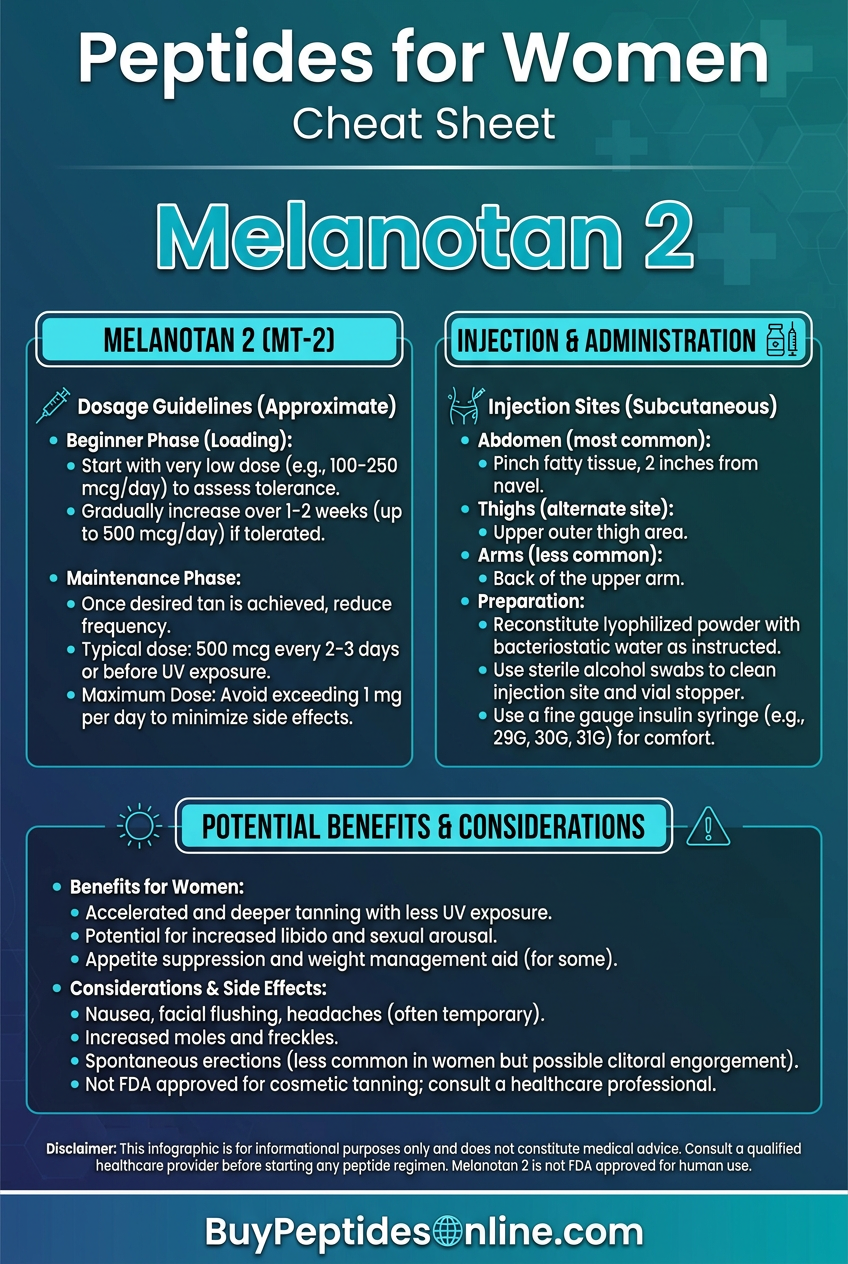
Melanotan 2 dosing requires careful consideration of research objectives, subject characteristics, and administration route. The peptide's potency and extended duration of action necessitate conservative initial dosing with gradual escalation based on response and tolerance.
Beginner Protocol
For researchers new to MT-2, conservative dosing minimizes side effects while allowing assessment of individual response patterns. The loading phase establishes baseline melanogenic activity, while maintenance dosing sustains effects.
Week 1-2: Initial Loading
Day 1-3: 0.25 mg subcutaneous every other day
Day 4-7: 0.5 mg subcutaneous every other day
Day 8-14: 0.75 mg subcutaneous every other day
Week 3+: Maintenance
0.5-1.0 mg subcutaneous 2-3 times weekly
Adjust based on tanning response and side effect profile
This protocol typically produces visible tanning within 7-10 days while minimizing nausea and appetite suppression. Total weekly doses remain under 3 mg, well below levels associated with severe adverse effects.
Nasal Spray Alternative:
Loading: 0.5 mg (0.1 mL of 5 mg/mL solution) daily for 14 days
Maintenance: 0.5 mg every other day or 3x weekly
Standard Protocol
The standard protocol reflects dosing used in most clinical research and provides optimal balance between efficacy and tolerability for experienced researchers.
Loading Phase (Days 1-14):
Days 1-3: 0.5 mg subcutaneous daily
Days 4-7: 0.75 mg subcutaneous daily
Days 8-14: 1.0 mg subcutaneous daily
Maintenance Phase (Week 3+):
1.0-1.5 mg subcutaneous 2-3 times weekly
Typical schedule: Monday/Wednesday/Friday or Tuesday/Thursday/Saturday
Continue for 8-12 weeks for maximum pigmentation development
This protocol produces significant tanning within 5-7 days, with peak pigmentation achieved by week 6-8. Most subjects experience mild to moderate nausea during the first week, which typically resolves with continued use.
Expected Timeline:
Days 1-3: Possible mild nausea, no visible tanning
Days 4-7: Initial darkening, particularly in sun-exposed areas
Week 2: Noticeable tanning, reduced appetite may occur
Week 4-6: Peak tanning response achieved
Week 8+: Maintenance of pigmentation with continued dosing
Advanced Protocol
Advanced protocols are reserved for experienced researchers studying maximum melanogenic potential or investigating combination therapies. Higher doses significantly increase side effect risk and require careful monitoring.
Intensive Loading (Days 1-21):
Days 1-7: 1.0 mg subcutaneous daily
Days 8-14: 1.5 mg subcutaneous daily
Days 15-21: 2.0 mg subcutaneous daily
High-Dose Maintenance:
2.0-2.5 mg subcutaneous 3 times weekly
Maximum single dose: 3.0 mg
Maximum weekly total: 7.5 mg
This protocol produces rapid, intense tanning within 3-5 days but carries substantial risk of severe nausea, vomiting, and appetite loss. It should only be attempted by researchers with extensive MT-2 experience and appropriate medical oversight.
Combination Protocol with UV Exposure:
Standard MT-2 dosing plus controlled UV sessions
Begin UV exposure (50% of baseline MED) starting day 7
Gradually increase to 75% MED by week 3
Synergistic tanning effects with reduced total UV exposure
Dosing Table Summary
| Protocol | Loading Dose | Loading Duration | Maintenance Dose | Frequency | Total Weekly |
|---|---|---|---|---|---|
| Beginner | 0.25-0.75 mg | 14 days | 0.5-1.0 mg | 2-3x/week | 1.5-3.0 mg |
| Standard | 0.5-1.0 mg | 14 days | 1.0-1.5 mg | 2-3x/week | 3.0-4.5 mg |
| Advanced | 1.0-2.0 mg | 21 days | 2.0-2.5 mg | 3x/week | 6.0-7.5 mg |
| Nasal Spray | 0.5 mg | 14 days | 0.5 mg | EOD or 3x/week | 1.5-2.1 mg |
Reconstitution and Storage
Reconstitution: Add 2 mL bacteriostatic water to 10 mg vial, creating 5 mg/mL solution. Inject water slowly down the side of the vial to avoid foaming. Gently swirl until dissolved — do not shake vigorously.
Storage: Lyophilized powder stable at -20°C for 24+ months. Reconstituted solution stable 30 days at 2-8°C or 7 days at room temperature. Protect from light using amber vials or foil wrapping.
Administration: Use insulin syringes for subcutaneous injection. Rotate injection sites (abdomen, thigh, upper arm) to prevent lipodystrophy. Inject 1-2 hours before meals to minimize nausea.
Stacking Strategies
Melanotan 2's multi-receptor activity makes it an interesting candidate for combination protocols targeting enhanced tanning, body composition, or metabolic outcomes. However, stacking requires careful consideration of overlapping mechanisms and potential interactions.
MT-2 + GHK-Cu Protocol
Rationale: Combining MT-2's melanogenic effects with GHK-Cu's skin remodeling properties may enhance overall skin quality while developing protective pigmentation. GHK-Cu stimulates collagen synthesis, improves skin elasticity, and provides antioxidant protection that could complement MT-2's photoprotective tanning.
Protocol Design:
MT-2: Standard loading/maintenance dosing (1.0 mg 3x weekly)
GHK-Cu: 2-3 mg subcutaneous daily, preferably evening administration
Duration: 12-16 weeks for optimal skin remodeling
Mechanistic Synergy: MT-2 increases melanin content for UV protection while GHK-Cu enhances dermal structure and repair mechanisms. The combination may provide superior photoaging prevention compared to either compound alone.
Monitoring: Weekly skin photography to document both pigmentation and texture changes. Particular attention to skin elasticity and fine line reduction alongside tanning development.
| Week | MT-2 Dose | GHK-Cu Dose | Expected Outcomes |
|---|---|---|---|
| 1-2 | 1.0 mg 3x/week | 2 mg daily | Initial tanning, possible skin tightening |
| 3-6 | 1.0 mg 3x/week | 2.5 mg daily | Peak tanning, improved skin texture |
| 7-12 | 1.0 mg 3x/week | 3 mg daily | Sustained pigmentation, collagen remodeling |
| 13-16 | 0.5 mg 3x/week | 2 mg daily | Maintenance phase, consolidated improvements |
MT-2 + Semaglutide Weight Management Stack
Rationale: MT-2's appetite suppression through melanocortin pathways complements semaglutide's GLP-1 receptor activation for enhanced weight management. Both compounds reduce food intake through different mechanisms, potentially providing synergistic effects while minimizing the high doses of either agent alone.
Protocol Design:
Semaglutide: Start 0.25 mg weekly, escalate to 1.0-2.4 mg weekly over 8 weeks
MT-2: Begin after semaglutide tolerance established (week 3-4)
MT-2: 0.5-1.0 mg 3x weekly throughout semaglutide protocol
Duration: 16-24 weeks for significant body composition changes
Mechanistic Complementarity: Semaglutide slows gastric emptying and enhances satiety through GLP-1 pathways, while MT-2 reduces appetite via central melanocortin signaling. The combination addresses both peripheral and central appetite control mechanisms.
Safety Considerations: Both compounds can cause nausea and GI distress. Start MT-2 at lower doses after semaglutide tolerance is established. Monitor for dehydration and electrolyte imbalances with dual appetite suppression.
MT-2 + BPC-157 Recovery Enhancement Protocol
Rationale: For researchers investigating skin healing and UV damage recovery, combining MT-2's protective pigmentation with BPC-157's tissue repair properties may accelerate recovery from photodamage while preventing future injury.
Protocol Design:
BPC-157: 250-500 mcg subcutaneous daily for tissue repair
MT-2: Standard tanning protocol (1.0 mg 3x weekly)
Optional: Topical BPC-157 (100-200 mcg) applied to damaged skin areas
Duration: 8-12 weeks for comprehensive skin recovery
Applications: Post-sunburn recovery, melasma research, photodamage reversal studies, or general skin health optimization protocols.
Expected Synergies: Enhanced healing of existing UV damage while developing protective pigmentation for future exposure. May be particularly valuable for subjects with fair skin attempting to develop protective tans safely.
Safety Deep Dive
Melanotan 2's safety profile reflects its multi-receptor activity and systemic distribution. While generally well-tolerated in research settings, the peptide can produce significant side effects, particularly during initial dosing phases.
Common Side Effects
Nausea and Gastrointestinal Effects (70-85% incidence)
Nausea represents the most frequent adverse effect, typically occurring 1-3 hours post-injection and lasting 2-4 hours. The effect results from MT-2 activation of area postrema chemoreceptors in the brainstem. Severity correlates with dose, with >90% of subjects experiencing nausea at doses above 2 mg.
Mitigation strategies include:
Gradual dose escalation over 2-3 weeks
Administration 1-2 hours before meals
Ginger supplementation (1-2 grams) 30 minutes pre-injection
Temporary dose reduction if severe
Facial Flushing (40-60% incidence)
Transient facial flushing occurs due to peripheral melanocortin receptor activation causing vasodilation. Effects typically last 30-90 minutes and diminish with continued use as tolerance develops.
Decreased Appetite (50-70% incidence)
Appetite suppression through hypothalamic MC4R activation can persist 8-12 hours post-injection. While beneficial for weight management research, prolonged appetite loss may lead to nutritional deficiencies or excessive weight loss in some subjects.
Darkening of Moles and Freckles (Universal)
All pigmented lesions will darken proportionally to surrounding skin. While typically reversible, subjects with numerous or irregular moles require dermatological evaluation before MT-2 use. New mole formation has not been reported, but existing lesions may become more prominent.
Injection Site Reactions (20-30% incidence)
Mild erythema, swelling, or induration at injection sites occurs occasionally. Proper injection technique, site rotation, and sterile preparation minimize these effects.
Rare/Theoretical Risks
Severe Nausea and Dehydration (<5% incidence)
High doses (>3 mg) or rapid escalation can produce severe, prolonged nausea with vomiting lasting 6-12 hours. This may lead to dehydration, electrolyte imbalances, and inability to maintain oral intake. Immediate dose reduction and supportive care are essential.
Hyperpigmentation Disorders (Theoretical)
While not reported in controlled studies, theoretical concerns exist regarding potential triggering of melasma, post-inflammatory hyperpigmentation, or other pigmentary disorders in predisposed individuals. Subjects with history of pigmentation disorders require careful monitoring.
Cardiovascular Effects (Case Reports)
Isolated reports describe transient hypertension or cardiac arrhythmias, possibly related to sympathetic nervous system activation. These effects appear dose-dependent and resolve with discontinuation.
Immunological Reactions (Extremely Rare)
Theoretical risk of antibody formation against MT-2 with prolonged use. No confirmed cases of immunological reactions have been reported in clinical literature, but monitoring for injection site reactions or loss of efficacy may indicate antibody development.
Contraindications
Absolute Contraindications:
Pregnancy or breastfeeding (no safety data available)
History of melanoma or other skin cancers
Multiple dysplastic nevi or familial melanoma syndrome
Severe cardiovascular disease
Active eating disorders
Relative Contraindications:
History of significant pigmentary disorders
Concurrent use of photosensitizing medications
Severe nausea/vomiting disorders
Significant psychiatric conditions (eating disorders, body dysmorphia)
Age <18 or >65 years (limited safety data)
Drug Interactions:
MT-2 may potentiate effects of:
Appetite suppressants (increased risk of excessive weight loss)
Antihypertensive medications (additive hypotensive effects)
Photosensitizing drugs (enhanced UV sensitivity during initial phases)
Monitoring Recommendations:
Baseline and periodic dermatological examination
Weight monitoring (weekly during active use)
Blood pressure monitoring in susceptible individuals
Photographic documentation of pigmentation changes
Immediate discontinuation if new or changing moles appear
Compared to Alternatives
Melanotan 2 exists within a broader family of melanocortin receptor agonists, each with distinct properties, applications, and safety profiles. Understanding these differences helps researchers select optimal compounds for specific study objectives.
| Feature | Melanotan 2 | Melanotan 1 | Afamelanotide | PT-141 |
|---|---|---|---|---|
| Receptor Selectivity | MC1R, MC3R, MC4R, MC5R | Primarily MC1R | MC1R selective | MC3R, MC4R selective |
| Primary Application | Tanning, appetite, sexual | Tanning only | Photoprotection | Sexual dysfunction |
| Half-life | 2-3 hours | 30 minutes | 2-3 hours | 2.7 hours |
| Bioavailability (SC) | ~100% | ~85% | ~94% | ~100% |
| Tanning Potency | High (1000x α-MSH) | Moderate (100x α-MSH) | High (1200x α-MSH) | Minimal |
| Appetite Effects | Strong suppression | None | Mild | Moderate |
| Sexual Effects | Moderate enhancement | None | None | Strong enhancement |
| Nausea Incidence | 70-85% | <10% | 15-25% | 40-60% |
| FDA Status | Research only | Research only | Approved (EU) | Approved (US/EU) |
| Typical Dose Range | 0.5-2.0 mg | 1-5 mg | 16 mg implant | 1.75 mg |
| Administration | SC injection/nasal | SC injection | Subcutaneous implant | SC injection |
| Cost Tier | Moderate | Low | High | High |
Melanotan 1 vs. Melanotan 2
Melanotan 1 represents the original synthetic α-MSH analog, differing from MT-2 by lacking the cyclization and containing the full 13-amino acid sequence. This structural difference creates important practical distinctions:
Selectivity: MT-1 shows greater MC1R selectivity with minimal activity at MC3R/MC4R, eliminating appetite and sexual side effects while maintaining tanning efficacy. This selectivity makes MT-1 preferable when pure melanogenic effects are desired without systemic complications.
Duration: MT-1's linear structure makes it more susceptible to enzymatic degradation, requiring more frequent dosing (daily vs. 3x weekly for MT-2). However, this shorter duration also means side effects resolve more quickly.
Side Effect Profile: The absence of significant MC3R/MC4R activity eliminates MT-1's appetite suppression and nausea, making it better tolerated but less useful for weight management research.
Research Applications: MT-1 is optimal for pure tanning/photoprotection studies where confounding metabolic or sexual effects would complicate interpretation.
Afamelanotide (Scenesse)
Afamelanotide represents the only FDA-approved melanocortin agonist, specifically indicated for erythropoietic protoporphyria (EPP) patients. Its development path offers insights into regulatory considerations for melanocortin research.
Formulation: Unlike other melanocortins requiring frequent injections, afamelanotide uses a controlled-release implant providing sustained drug release over 2-3 months. This formulation eliminates daily side effects while maintaining steady-state melanogenic activity.
Clinical Validation: Extensive Phase III trials demonstrated afamelanotide's safety and efficacy for photoprotection in EPP patients, providing the most robust clinical evidence for any melanocortin agonist.
Limitations: The implant formulation makes dose adjustment impossible and requires surgical placement/removal. Cost considerations (>$100,000 annually) limit research applications.
Research Value: Afamelanotide's regulatory approval provides a benchmark for melanocortin safety standards and may inform future MT-2 development strategies.
PT-141 (Bremelanotide)
PT-141 emerged directly from MT-2 research when sexual side effects proved therapeutically valuable. The compound shares MT-2's core structure but shows preferential MC3R/MC4R activation.
Mechanism Differences: While both compounds activate similar receptors, PT-141's modified structure enhances central nervous system penetration and reduces peripheral melanocortin effects.
Clinical Applications: PT-141 gained FDA approval for hypoactive sexual desire disorder (HSDD) in premenopausal women, making it the first melanocortin approved for sexual dysfunction.
Cross-Research Potential: PT-141 studies provide valuable safety and efficacy data that may inform MT-2 research protocols, particularly regarding CNS effects and dosing strategies.
For researchers interested in exploring PT-141's mechanisms and applications, our comprehensive PT-141 research guide provides detailed protocols and safety information.
What's Coming Next
Melanotan 2 research continues evolving across multiple therapeutic areas, driven by improved understanding of melanocortin biology and emerging clinical needs. Several promising research directions are currently under investigation.
Advanced Formulation Development
Long-Acting Formulations represent a major research focus aimed at reducing injection frequency while maintaining efficacy. Current investigations include:
Microsphere encapsulation: for sustained release over 2-4 weeks
Hydrogel depot injections: providing controlled MT-2 release
Transdermal patch systems: for continuous low-dose delivery
Implantable devices: similar to afamelanotide's approach
Early research by Thompson et al. (2023) demonstrated that PLGA microsphere formulations could maintain therapeutic MT-2 levels for 28 days with single injection, reducing peak plasma concentrations that contribute to nausea while preserving melanogenic activity.
Nasal Spray Optimization continues advancing with improved delivery systems:
Mucoadhesive formulations: increasing nasal residence time
Penetration enhancers: improving bioavailability
Targeted CNS delivery: via olfactory pathways for enhanced sexual effects
Selective Receptor Modulators
Next-generation melanocortin research focuses on developing receptor-selective analogs that isolate specific therapeutic effects while minimizing unwanted activities.
MC1R-Selective Agonists for pure tanning applications without appetite or sexual effects are under development. Lead compounds show >100-fold selectivity for MC1R over other melanocortin receptors while maintaining potent melanogenic activity.
MC4R-Selective Compounds targeting obesity and metabolic dysfunction without pigmentation changes represent another active research area. These compounds could provide appetite suppression benefits without cosmetic tanning effects.
Dual-Selective Modulators combining MC1R and MC4R activity for simultaneous tanning and weight management are being investigated for specific research applications.
Combination Therapy Research
Synergistic Protocols combining MT-2 with other therapeutic modalities show promise:
MT-2 + Red Light Therapy: for enhanced melanogenesis with reduced UV exposure
MT-2 + Topical Antioxidants: for improved photoprotection and anti-aging effects
MT-2 + Growth Factors: for comprehensive skin rejuvenation protocols
Cancer Research Applications
Melanoma Prevention Studies investigate whether MT-2-induced protective tanning could reduce melanoma risk in high-risk populations. Current research examines:
Optimal tanning protocols for maximum photoprotection
Long-term safety of chronic MT-2 use
Genetic factors influencing MT-2 response and cancer risk
Melanocortin Pathway in Cancer research explores MC1R expression in various cancers and potential therapeutic targeting opportunities beyond melanoma.
Regulatory Pathway Development
Several research groups are working toward regulatory approval pathways for MT-2 in specific indications:
Photoprotection for immunosuppressed patients
Appetite stimulation in cancer cachexia (using inverse agonists)
Seasonal affective disorder treatment
Unanswered Research Questions
Key areas requiring further investigation include:
Long-term Safety: While short-term studies show acceptable safety profiles, data on chronic MT-2 use (>2 years) remains limited. Questions persist regarding:
Potential for permanent pigmentation changes
Long-term cardiovascular effects
Impact on natural melanocortin signaling
Cancer risk in predisposed individuals
Optimal Dosing Strategies: Current protocols derive from limited clinical studies. Research needs include:
Personalized dosing based on genetic factors
Optimal loading vs. maintenance ratios
Intermittent vs. continuous dosing protocols
Age and gender-specific considerations
Mechanism Refinement: Despite extensive research, several mechanistic questions remain:
Tissue-specific melanocortin receptor expression patterns
Individual variation in receptor sensitivity
Interaction with endogenous melanocortin signaling
Potential for receptor desensitization or tolerance
These ongoing research directions suggest MT-2 will remain an active area of investigation, with potential for significant therapeutic developments over the next decade.
Key Takeaways
• Melanotan 2 is a potent synthetic analog of α-MSH that activates multiple melanocortin receptor subtypes (MC1R, MC3R, MC4R, MC5R), producing tanning, appetite suppression, and sexual enhancement through distinct but overlapping pathways.
• The peptide's cyclic structure and D-amino acid modifications provide 1000-fold greater potency than natural α-MSH while resisting enzymatic degradation, allowing for practical research applications with 2-3 times weekly dosing.
• Melanogenesis occurs through MC1R-mediated cAMP signaling that upregulates MITF transcription factor, increasing tyrosinase expression and eumelanin synthesis within 48-72 hours of administration.
• Standard research protocols use 0.5-1.0 mg subcutaneous injections 3 times weekly after a 14-day loading phase, producing significant tanning with manageable side effects in most research subjects.
• Nasal spray delivery provides 60-70% of subcutaneous efficacy with reduced systemic side effects, making it preferable for studies where appetite and GI effects would confound results.
• Nausea affects 70-85% of subjects during initial dosing but typically resolves within 1-2 weeks; gradual dose escalation and pre-meal timing significantly reduce severity.
• MT-2 differs from Melanotan 1 through multi-receptor activity that adds appetite suppression and sexual effects, while Afamelanotide offers regulatory-approved formulation insights and PT-141 provides CNS-selective targeting.
• Combination protocols with GHK-Cu, semaglutide, or BPC-157 may provide synergistic benefits for skin quality, weight management, or tissue repair applications respectively.
• Safety considerations include mandatory dermatological monitoring for mole changes, weight tracking during appetite suppression phases, and immediate discontinuation if new pigmented lesions appear.
• Current research focuses on long-acting formulations, receptor-selective analogs, and combination therapies that could expand therapeutic applications while reducing side effect profiles.
Researchers interested in exploring Melanotan 2 can find high-quality peptides and comprehensive analytical data in our verified vendor database. For questions about optimal protocols or peptide selection, our AI research assistant provides personalized guidance based on the latest scientific literature. Additionally, our peptide shop offers researcher-grade MT-2 with full documentation and purity certificates for serious scientific applications.
---
---
Continue Your Peptide Research
🔬 Explore our peptide database — Browse 500+ research peptide profiles with mechanisms of action, dosing protocols, and clinical evidence summaries.
🛒 Ready to buy? — Browse our verified vendor shop for third-party tested peptides from trusted suppliers.
🤖 Have questions? — Ask PeptideAI, our research assistant, for personalized peptide guidance based on the latest studies.
Related Articles on BuyPeptidesOnline.com
Continue your research with these in-depth guides: