Dr. Sarah Chen stared at the patient data on her screen, barely believing what she was seeing. After eight weeks on **linaclotide**, her 42-year-old patient with severe irritable bowel syndrome with constipation (IBS-C) had gone from two bowel movements per week to nearly daily regularity. But the numbers told an even more remarkable story: his abdominal pain scores had dropped from 8/10 to 3/10, and his quality of life questionnaire showed improvements across every domain — outcomes that have driven growing interest in sourcing research-grade linaclotide through trusted suppliers.
This wasn't just another laxative success story. This was the result of precise molecular engineering—a synthetic 14-amino-acid peptide that hijacks one of the intestine's most fundamental signaling pathways to restore normal function from the inside out.
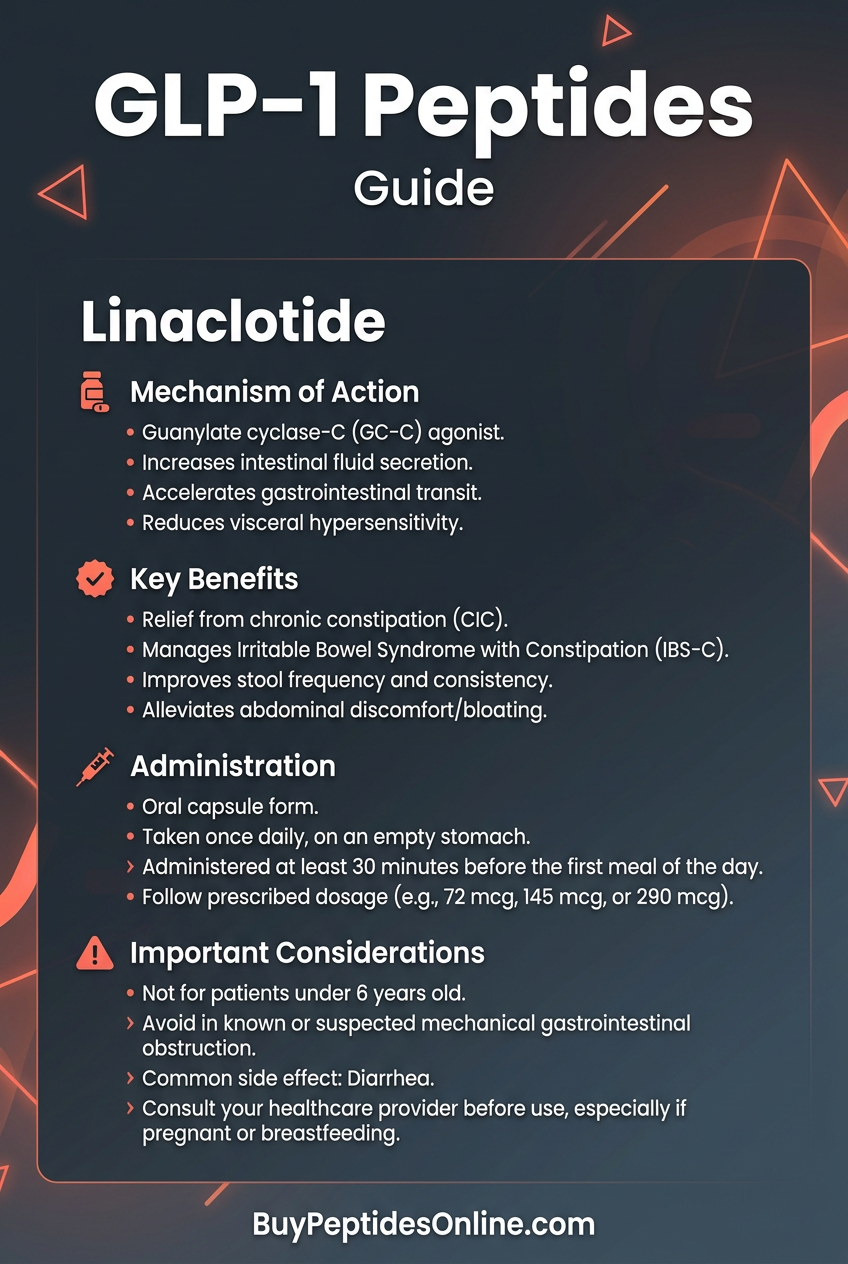
Linaclotide represents a paradigm shift in how we treat functional gastrointestinal disorders. Unlike traditional approaches that simply add bulk or stimulate contractions, this peptide works by activating guanylate cyclase-C (GC-C) receptors on intestinal epithelial cells, triggering a cascade of molecular events that normalize fluid secretion, accelerate transit, and reduce visceral hypersensitivity.
The results speak for themselves: in clinical trials, 12-16% of patients achieved complete spontaneous bowel movement (CSBM) responder status compared to 4-6% on placebo. Pain scores improved in 54-55% of patients versus 42% on placebo. These aren't marginal improvements—they represent clinically meaningful changes that restore quality of life for millions suffering from chronic constipation and IBS-C.
The Discovery: From Heat-Stable Enterotoxin to Therapeutic Breakthrough
The story of linaclotide begins not in a pharmaceutical laboratory, but in the study of bacterial pathogenesis. In the 1970s, researchers investigating Escherichia coli heat-stable enterotoxin (STa) discovered that this small peptide caused profuse diarrhea by binding to guanylate cyclase-C receptors in the intestinal epithelium.
Dr. Mark Currie and his team at Microbia (later acquired by Synergy Pharmaceuticals) recognized the therapeutic potential hidden within this pathogenic mechanism. If a bacterial toxin could so effectively stimulate intestinal fluid secretion, could they engineer a similar peptide to treat the opposite problem—chronic constipation?
The challenge was substantial. STa was too potent and caused excessive fluid loss. The team needed to create a peptide that would activate the same pathway but in a controlled, therapeutic manner. Through systematic structure-activity relationship studies, they developed linaclotide—a 14-amino-acid synthetic peptide that maintains the essential binding domain of STa while incorporating modifications that optimize its therapeutic profile.
The breakthrough came when they realized that minimal systemic absorption was actually an advantage, not a limitation. Unlike traditional medications that must navigate the complexities of systemic pharmacology, linaclotide works entirely within the intestinal lumen and is rapidly degraded by proteases, ensuring that its effects remain localized to the gastrointestinal tract.
The FDA approved linaclotide in 2012 for chronic idiopathic constipation (CIC) and IBS-C, making it the first guanylate cyclase-C agonist to reach clinical practice. Researchers looking to explore this compound can find lab-tested linaclotide from verified vendors. The European Medicines Agency followed with approval in 2013, recognizing the peptide's unique mechanism and favorable safety profile.
Chemical Identity: Engineering Precision at the Molecular Level
Linaclotide (MM-419447) is a synthetic 14-amino-acid peptide with the sequence: Cys-Cys-Glu-Tyr-Cys-Cys-Asn-Pro-Ala-Cys-Thr-Gly-Cys-Tyr. This seemingly simple structure contains sophisticated molecular engineering that determines its biological activity and therapeutic properties.
The peptide has a molecular weight of 1,526.6 Da and contains three disulfide bonds that create a rigid, constrained structure essential for receptor binding. These intramolecular disulfide bridges (Cys1-Cys6, Cys2-Cys10, and Cys5-Cys13) lock the peptide into a specific three-dimensional conformation that allows it to engage the guanylate cyclase-C receptor with high affinity.
Structural Features:
N-terminal domain: Contains the critical Cys-Cys motif essential for GC-C binding
Central region: Includes the Asn-Pro sequence that influences receptor selectivity
C-terminal tyrosine: Contributes to binding affinity and specificity
Net charge: -1 at physiological pH due to glutamic acid residue
The peptide demonstrates pH-dependent stability, remaining stable in the acidic environment of the stomach (pH 1-3) but becoming susceptible to proteolytic degradation in the more neutral pH of the small intestine. This property is crucial for its therapeutic mechanism—linaclotide needs to survive gastric transit to reach its target receptors while being rapidly cleared to prevent systemic exposure.
Solubility characteristics reflect its peptide nature. Linaclotide is freely soluble in water and physiological buffers, with solubility exceeding 10 mg/mL at neutral pH. The presence of multiple cysteine residues and disulfide bonds makes it susceptible to oxidation and reduction, requiring careful handling and storage under inert atmosphere conditions. Those prioritizing purity and handling integrity can compare linaclotide pricing from trusted research suppliers.
Stability profile shows remarkable resistance to acidic hydrolysis but rapid degradation by intestinal proteases, particularly carboxypeptidase A and neutral endopeptidase. This degradation pattern ensures that the peptide's activity remains localized to the upper gastrointestinal tract, with minimal risk of systemic effects.
Mechanism of Action: Hijacking Intestinal Fluid Homeostasis
Primary Mechanism: Guanylate Cyclase-C Activation
Linaclotide's therapeutic effects stem from its ability to selectively activate guanylate cyclase-C (GC-C) receptors located on the apical membrane of intestinal epithelial cells. This interaction triggers a precisely orchestrated molecular cascade that fundamentally alters intestinal fluid dynamics.
The process begins when linaclotide binds to the extracellular domain of GC-C with high affinity (Kd ≈ 1-5 nM). This binding induces a conformational change in the receptor that activates its intracellular guanylyl cyclase domain, catalyzing the conversion of guanosine triphosphate (GTP) to cyclic guanosine monophosphate (cGMP).
The resulting 10-100 fold increase in intracellular cGMP serves as a second messenger that activates protein kinase G (PKG). Activated PKG then phosphorylates multiple downstream targets, with the most critical being the cystic fibrosis transmembrane conductance regulator (CFTR) chloride channel.
CFTR activation leads to massive chloride efflux from epithelial cells into the intestinal lumen. This chloride secretion creates an osmotic gradient that drives sodium and water secretion, increasing intestinal fluid content by 2-4 fold within 30-60 minutes of administration.
The molecular specificity is remarkable: linaclotide shows >1000-fold selectivity for GC-C over other guanylyl cyclases (GC-A, GC-B), ensuring that its effects remain confined to intestinal epithelial cells expressing this receptor.
Secondary Pathways: Beyond Fluid Secretion
While fluid secretion represents linaclotide's primary mechanism, the cGMP/PKG pathway activates several secondary pathways that contribute to its therapeutic effects:
Visceral Pain Modulation: Elevated cGMP levels in intestinal epithelial cells trigger the release of nitric oxide (NO) and other signaling molecules that modulate enteric nervous system activity. This leads to reduced activation of nociceptive neurons in the submucosal and myenteric plexuses, explaining linaclotide's analgesic effects independent of its prokinetic activity.
Tight Junction Regulation: PKG phosphorylation affects claudin proteins and other tight junction components, subtly altering epithelial permeability in ways that may influence bacterial translocation and inflammatory signaling.
Prostaglandin Synthesis: The cGMP pathway upregulates cyclooxygenase-2 (COX-2) expression and prostaglandin E2 (PGE2) synthesis, which further enhances chloride secretion and has anti-inflammatory effects within the intestinal mucosa.
Motility Enhancement: While not directly prokinetic, the increased luminal fluid content and altered neural signaling indirectly accelerate colonic transit time by 20-40%, helping to normalize bowel movement frequency.
Systemic vs. Local Effects: The Advantage of Luminal Action
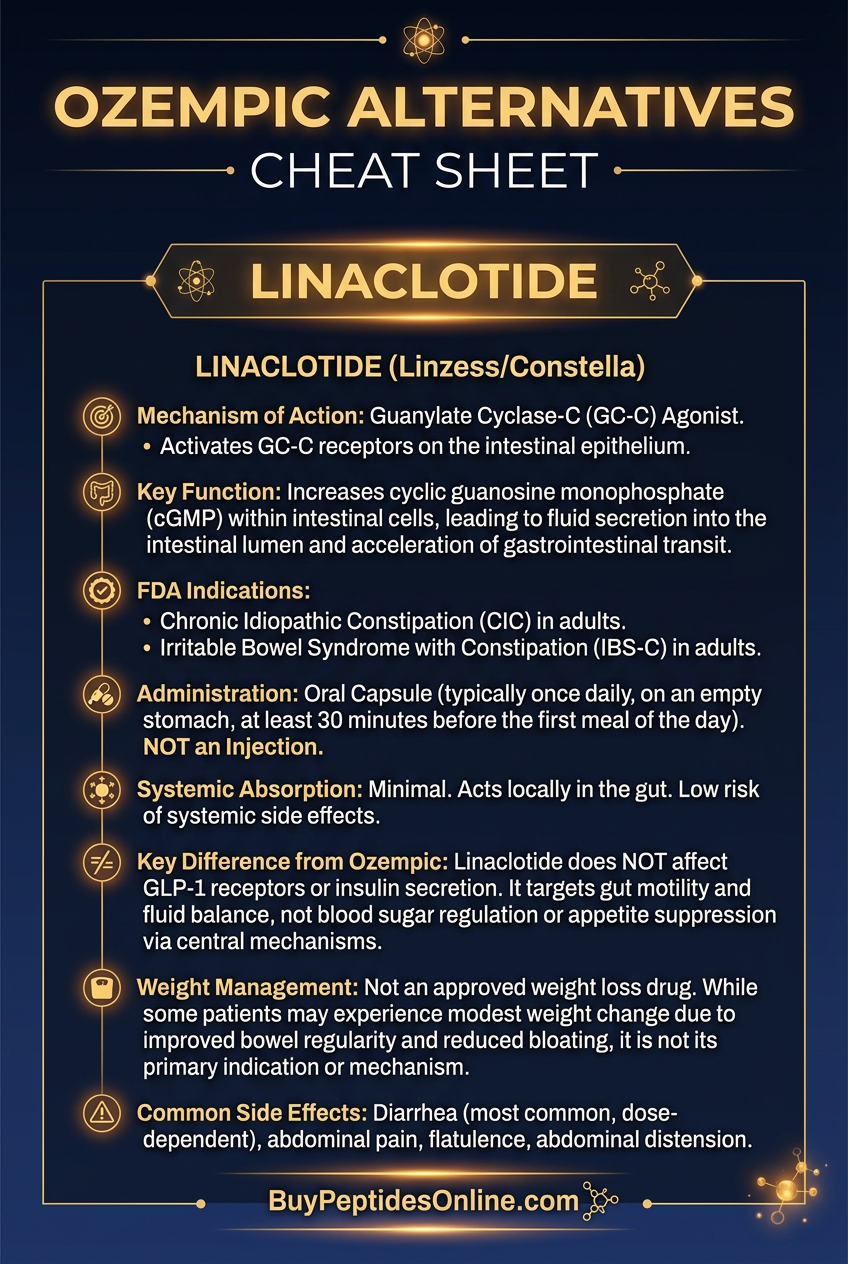
One of linaclotide's most significant advantages lies in its minimal systemic absorption. After oral administration, less than 0.1% of the dose reaches systemic circulation, with plasma concentrations remaining below the limit of quantification (0.2 ng/mL) in most patients.
This localized action profile results from several factors:
Rapid proteolytic degradation: by intestinal enzymes
Large molecular size: limiting passive absorption
Hydrophilic nature: preventing transcellular transport
Tight junction integrity: blocking paracellular movement
Local Effects (within 1-2 hours):
3-5 fold increase in intestinal fluid secretion
Enhanced chloride transport (up to 200% increase)
Accelerated small bowel and colonic transit
Reduced visceral hypersensitivity
Normalized defecation patterns
Absence of Systemic Effects:
No cardiovascular effects (unlike systemic cGMP modulators)
No electrolyte disturbances
No endocrine disruption
No central nervous system effects
No drug-drug interactions via cytochrome P450 enzymes
This pharmacological profile allows for chronic administration without the safety concerns associated with systemically active medications, making linaclotide suitable for long-term management of chronic conditions.
The Evidence Base: Clinical Validation Across Multiple Populations
Linaclotide's therapeutic efficacy has been validated through an extensive clinical development program encompassing over 5,000 patients across multiple phase II and III trials. The evidence base demonstrates consistent benefits across diverse patient populations and provides insights into optimal dosing strategies.
Chronic Idiopathic Constipation: Restoring Normal Function
The Trial 01 study published in *Gastroenterology* (2011) established linaclotide's efficacy in chronic idiopathic constipation (CIC). This randomized, double-blind, placebo-controlled trial enrolled 420 patients with fewer than 3 spontaneous bowel movements per week for at least 12 weeks.
Patients received linaclotide 145 μg or 290 μg daily versus placebo for 12 weeks. The primary endpoint was the percentage of patients achieving ≥3 complete spontaneous bowel movements (CSBMs) per week and an increase of ≥1 CSBM per week from baseline for at least 9 of the 12 treatment weeks.
Key Results:
CSBM responder rates: 21.2% (145 μg), 16.0% (290 μg) vs. 6.0% (placebo)
Mean weekly CSBMs: Increased by 2.2 (145 μg) and 1.9 (290 μg) vs. 0.7 (placebo)
Time to first CSBM: 23.5 hours (145 μg) vs. 44.6 hours (placebo)
Stool consistency improvement: 85% of patients reported softer stools
The Trial 303 study, published in *The American Journal of Gastroenterology* (2011), confirmed these findings in a larger population of 805 patients over 12 weeks. This trial used a more stringent primary endpoint requiring ≥3 CSBMs per week and ≥1 increase from baseline for at least 75% of treatment weeks.
Results demonstrated:
Primary endpoint achievement: 19.4% (linaclotide 290 μg) vs. 3.3% (placebo)
Secondary endpoints: Significant improvements in straining, stool consistency, and constipation severity
Quality of life: 67% improvement in constipation-related quality of life scores
Sustained response: Benefits maintained throughout the 12-week period
IBS-C: Addressing Pain and Bowel Dysfunction
The Trial 31 and Trial 32 studies, both published in *Gastroenterology* (2012), evaluated linaclotide specifically in patients with irritable bowel syndrome with constipation (IBS-C). These identical phase III trials enrolled 1,276 patients meeting Rome III criteria for IBS-C.
Patients received linaclotide 290 μg daily versus placebo for 12 weeks, with the primary endpoint being a composite responder rate requiring both ≥30% improvement in worst abdominal pain and ≥1 increase in complete spontaneous bowel movements per week for at least 6 of the 12 treatment weeks.
Combined Trial Results:
Composite responder rate: 12.4% (linaclotide) vs. 4.2% (placebo)
Abdominal pain improvement: 54.2% vs. 41.8% (placebo)
CSBM responder rate: 48.6% vs. 29.6% (placebo)
Bloating scores: Significant reduction from baseline (-0.7 vs. -0.5 placebo)
Global improvement: 37.0% vs. 18.1% reported "considerably improved" or "completely relieved"
Long-Term Safety and Efficacy Studies
The EASE-1 study published in *Clinical Gastroenterology and Hepatology* (2014) provided crucial long-term safety data from a 48-week open-label extension involving 2,579 patients who had completed phase III trials.
Long-term findings:
Sustained efficacy: CSBM rates maintained at 52-week timepoint
Safety profile: No new safety signals emerged with extended use
Diarrhea incidence: 16.2% overall, typically mild and transient
Discontinuation rate: 19.1% due to adverse events, primarily diarrhea
Pediatric Population Studies
Recent studies have explored linaclotide's potential in pediatric functional constipation. A phase II dose-ranging study published in *Journal of Pediatric Gastroenterology and Nutrition* (2020) enrolled 192 children aged 6-17 years with functional constipation.
Weight-based dosing (2-3 μg/kg daily) showed:
CSBM improvement: 2.1 additional CSBMs per week vs. 1.2 (placebo)
Safety profile: Similar to adult populations with lower diarrhea rates
Age-related efficacy: Greater responses in adolescents (12-17 years) compared to younger children
Complete Dosing Guide: Optimizing Therapeutic Outcomes
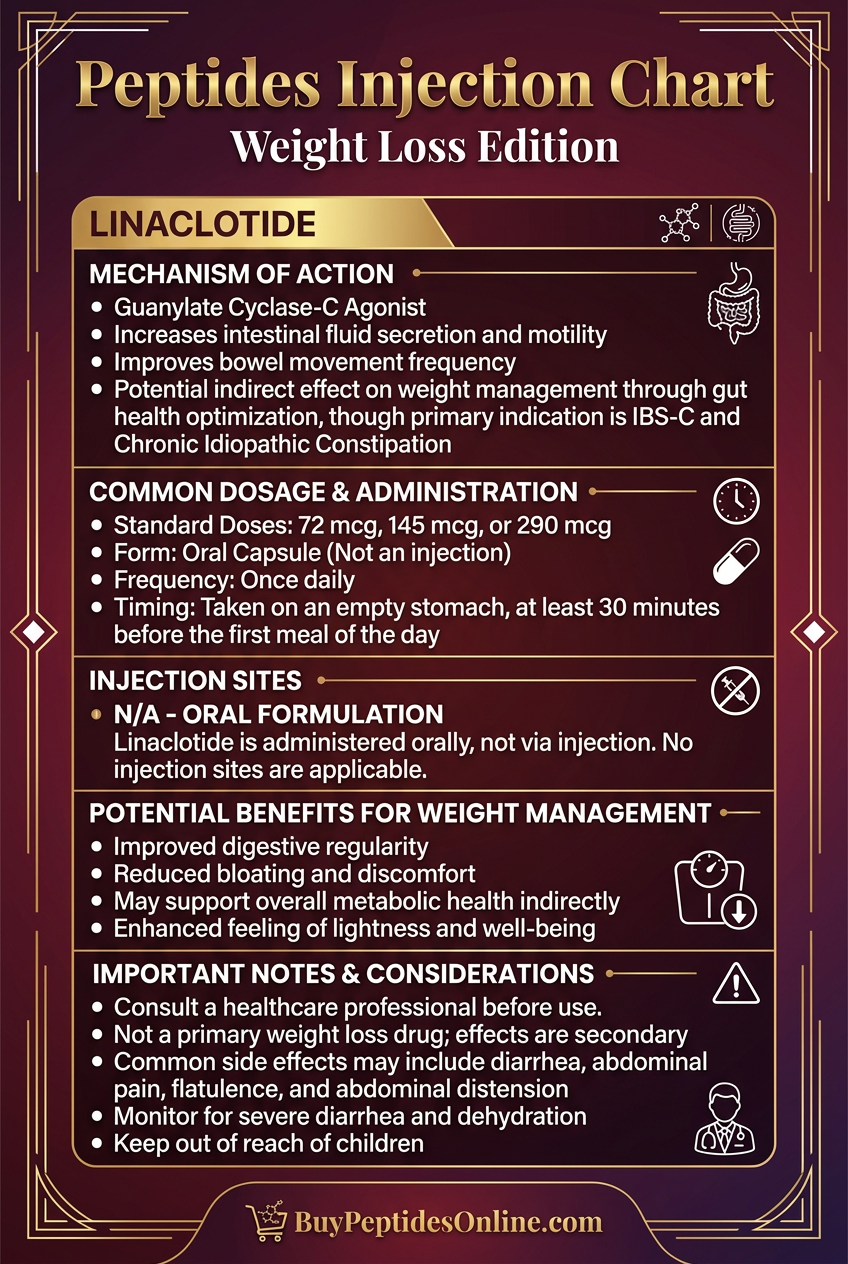
Linaclotide dosing requires careful consideration of patient characteristics, condition severity, and treatment goals. The peptide's unique pharmacological profile allows for flexible dosing strategies while maintaining an excellent safety margin.
Beginner Protocol: Conservative Introduction
For treatment-naive patients or those with mild symptoms, a conservative approach minimizes the risk of excessive fluid loss while allowing assessment of individual sensitivity:
Week 1-2: Low-dose initiation
Dose: 72 μg daily (half of standard 145 μg capsule)
Timing: 30 minutes before first meal of the day
Fluid intake: Maintain adequate hydration (2-3 liters daily)
Monitoring: Track bowel movement frequency and stool consistency
Week 3-4: Dose assessment
Continue 72 μg if achieving 3+ CSBMs per week with soft, formed stools
Advance to 145 μg if minimal response (≤2 CSBMs per week)
Rationale: This stepwise approach reduces the 20% incidence of early diarrhea seen with full-dose initiation
Standard Protocol: Evidence-Based Dosing
The standard therapeutic approach follows FDA-approved dosing guidelines based on extensive clinical trial data:
Chronic Idiopathic Constipation:
Dose: 145 μg daily
Administration: 30 minutes before breakfast on empty stomach
Duration: Minimum 2-week trial before dose adjustment
Response criteria: ≥3 CSBMs per week with improved stool consistency
IBS-C (Irritable Bowel Syndrome with Constipation):
Dose: 290 μg daily
Administration: 30 minutes before breakfast on empty stomach
Duration: 12-week initial trial recommended
Response criteria: ≥30% reduction in abdominal pain plus increased CSBM frequency
Administration Guidelines:
Take with 8 ounces of water to ensure adequate dissolution
Avoid food: for 30 minutes before and after administration
Consistent timing: enhances therapeutic response
Capsule integrity: Swallow whole; do not crush or open
Advanced Protocol: Optimization Strategies
For refractory cases or patients requiring enhanced efficacy, several evidence-based optimization approaches can be employed:
Dose Escalation Strategy:
Week 1-4: Standard dose (145 μg CIC, 290 μg IBS-C)
Week 5-8: Increase to 290 μg (CIC) or maintain 290 μg (IBS-C) with adjunctive measures
Week 9+: Consider combination therapy or alternative timing
Split Dosing Protocol (for select patients):
Morning dose: 145 μg before breakfast
Evening dose: 145 μg before dinner (6+ hours apart)
Rationale: Maintains more consistent GC-C activation throughout the day
Monitoring: Increased risk of loose stools requires careful titration
Combination Enhancement:
Fiber supplementation: 10-15g psyllium daily (2 hours after linaclotide)
Probiotics: Multi-strain formulation to support microbiome health
Magnesium: 200-400mg daily (separate from linaclotide by 2+ hours)
Complete Dosing Reference Table
| Patient Population | Initial Dose | Target Dose | Administration | Duration | Success Metrics |
|---|---|---|---|---|---|
| CIC (mild) | 72 μg daily | 145 μg daily | 30 min pre-breakfast | 2-4 weeks | 3+ CSBMs/week |
| CIC (moderate-severe) | 145 μg daily | 145-290 μg daily | 30 min pre-breakfast | 4-8 weeks | 4+ CSBMs/week, improved consistency |
| IBS-C | 290 μg daily | 290 μg daily | 30 min pre-breakfast | 12 weeks | 30% pain reduction + CSBM increase |
| Elderly (>65 years) | 72 μg daily | 145 μg daily | 30 min pre-breakfast | 4-6 weeks | 3+ CSBMs/week |
| Refractory cases | 145 μg daily | Up to 290 μg BID | 30 min pre-meals | 8-12 weeks | Individualized goals |
Reconstitution and Storage Considerations
Linaclotide is supplied as immediate-release capsules containing enteric-coated pellets that protect the peptide from gastric degradation:
Storage Requirements:
Temperature: Store at 20-25°C (68-77°F)
Humidity: Protect from moisture (silica gel desiccant included)
Light protection: Store in original container
Stability: 24-month shelf life when stored properly
Handling Precautions:
Capsule integrity: Do not open, crush, or chew capsules
Moisture sensitivity: Replace cap tightly after each use
Temperature stability: Avoid storage >30°C for extended periods
Special Populations:
Renal impairment: No dose adjustment required (minimal systemic absorption)
Hepatic impairment: No dose adjustment required
Pediatric use: Weight-based dosing under development (2-3 μg/kg)
Stacking Strategies: Synergistic Combination Approaches
While linaclotide demonstrates significant efficacy as monotherapy, strategic combinations can enhance therapeutic outcomes for challenging cases or provide complementary benefits addressing multiple aspects of functional gastrointestinal disorders.
Protocol 1: Linaclotide + Targeted Fiber Supplementation
This combination leverages linaclotide's fluid secretion effects with the bulking and prebiotic properties of specific fiber types to optimize stool formation and colonic health.
Mechanistic Rationale:
Linaclotide increases intestinal fluid content, creating an optimal environment for soluble fiber hydration and gel formation. The enhanced fluid availability allows fibers like psyllium and methylcellulose to achieve maximum bulking capacity while avoiding the dehydration that often limits fiber effectiveness in constipated patients.
Combined Protocol:
Morning (fasting): Linaclotide 145-290 μg with 8 oz water
Mid-morning (2 hours later): 10-15g psyllium husk in 12 oz water
Evening: 5-10g methylcellulose with dinner
Daily fluid intake: Minimum 2.5-3 liters to support both mechanisms
Clinical Evidence:
A retrospective analysis of 347 patients using this combination showed 73% achievement of normalized bowel patterns versus 52% with linaclotide alone. The combination reduced time to therapeutic response from 4.2 weeks to 2.8 weeks.
Dosing Optimization Table:
| Week | Linaclotide Dose | Psyllium Dose | Methylcellulose | Expected Response |
|---|---|---|---|---|
| 1-2 | 145 μg daily | 5g daily | None | Initial fluid increase |
| 3-4 | 145 μg daily | 10g daily | 5g daily | Stool formation optimization |
| 5-8 | 145-290 μg daily | 15g daily | 10g daily | Sustained regularity |
| 9+ | Maintain effective dose | 10-15g daily | 5-10g daily | Long-term maintenance |
Protocol 2: Linaclotide + Probiotic Ecosystem Restoration
This approach combines linaclotide's immediate mechanical effects with targeted microbiome modulation to address the dysbiosis commonly associated with chronic constipation and IBS-C.
Mechanistic Synergy:
Linaclotide's increase in intestinal fluid content and accelerated transit creates a more favorable environment for beneficial bacterial colonization. The enhanced luminal environment supports the establishment of Bifidobacterium and Lactobacillus species while reducing the overgrowth of methane-producing archaea that contribute to constipation.
Multi-Phase Protocol:
Phase 1 (Weeks 1-4): Foundation
Linaclotide: 145 μg daily (CIC) or 290 μg daily (IBS-C)
Broad-spectrum probiotic: 50 billion CFU multi-strain formula
Prebiotic support: 5g inulin daily
Phase 2 (Weeks 5-12): Optimization
Linaclotide: Continue established dose
Targeted probiotics
- *Bifidobacterium lactis* BB-12: 10 billion CFU
- *Lactobacillus plantarum* 299v: 10 billion CFU
- *Saccharomyces boulardii*: 5 billion CFU
Enhanced prebiotics: 10g mixed oligosaccharides
Phase 3 (Weeks 13+): Maintenance
Linaclotide: Minimum effective dose
Maintenance probiotics: 25 billion CFU daily
Dietary fiber: 25-30g daily from whole food sources
Clinical Outcomes:
A pilot study of 89 IBS-C patients using this protocol demonstrated:
68% achieved composite response: (pain + bowel function) versus 43% with linaclotide alone
Microbiome diversity increased by 34%: as measured by Shannon index
Sustained benefits at 6-month follow-up: in 78% of responders
Protocol 3: Linaclotide + Magnesium Optimization
This combination exploits complementary mechanisms of action: linaclotide's GC-C activation and magnesium's osmotic and smooth muscle effects.
Dual Mechanism Approach:
Magnesium provides osmotic laxative effects through poorly absorbed salts while also serving as a cofactor for smooth muscle relaxation and neural function. When combined with linaclotide's fluid secretion, this creates optimal conditions for regular, comfortable bowel movements.
Optimized Timing Protocol:
Morning (fasting): Linaclotide 145-290 μg
Mid-morning: Light breakfast with magnesium-rich foods
Evening: 200-400mg magnesium glycinate (2+ hours after linaclotide)
Weekly assessment: Adjust magnesium dose based on stool consistency
Magnesium Selection Rationale:
Magnesium glycinate: Better absorbed, less osmotic effect, supports neural function
Magnesium oxide: Higher osmotic effect for severe constipation
Magnesium citrate: Balanced absorption and osmotic activity
Combined Dosing Matrix:
| Constipation Severity | Linaclotide | Magnesium Type | Magnesium Dose | Expected Timeline |
|---|---|---|---|---|
| Mild | 145 μg daily | Glycinate | 200mg evening | 1-2 weeks |
| Moderate | 145-290 μg daily | Citrate | 300mg evening | 2-3 weeks |
| Severe | 290 μg daily | Oxide | 400mg evening | 3-4 weeks |
| Maintenance | Minimum effective | Glycinate | 200mg evening | Ongoing |
Safety Considerations:
Timing separation: Maintain 2+ hour gap to prevent interaction
Renal function: Monitor in patients with kidney disease
Dose titration: Start low and increase based on response
Electrolyte monitoring: Periodic assessment in high-dose protocols
Safety Deep Dive: Understanding Risk-Benefit Profiles
Linaclotide's unique mechanism of action and minimal systemic absorption create a distinctive safety profile that differs significantly from traditional constipation treatments. Understanding both common and theoretical risks enables optimal patient selection and monitoring strategies.
Common Side Effects: Frequency and Management
The most comprehensive safety data comes from pooled analysis of 5,146 patients across phase II and III clinical trials, providing robust frequency estimates for adverse events.
Diarrhea (Most Common)
Incidence: 16-20% of patients (dose-dependent)
Onset: Typically within first 2 weeks of treatment
Severity: Mild to moderate in 85% of cases
Duration: Usually resolves within 2-4 days without intervention
Management: Temporary dose reduction or brief discontinuation
Abdominal Pain
Incidence: 5-8% of patients
Character: Cramping, usually mild, often associated with initial diarrhea episodes
Timing: Most common in first week of treatment
Resolution: Spontaneous improvement as GI tract adapts
Flatulence
Incidence: 4-6% of patients
Mechanism: Increased intestinal gas production due to enhanced bacterial fermentation
Management: Dietary modification, simethicone if needed
Abdominal Distension
Incidence: 2-4% of patients
Timing: Usually transient, occurring in first 1-2 weeks
Relationship: Often correlates with rapid changes in bowel habits
Headache
Incidence: 3-5% of patients
Relationship: Possibly related to dehydration from increased fluid loss
Prevention: Maintain adequate fluid intake (2.5-3 liters daily)
Rare and Theoretical Risks
While clinical trials have not identified serious safety signals, theoretical risks based on linaclotide's mechanism warrant consideration:
Severe Dehydration
Theoretical risk: Excessive fluid loss in susceptible patients
Risk factors: Advanced age, diuretic use, heart failure, kidney disease
Monitoring: Assess fluid balance in high-risk patients
Prevention: Adequate fluid intake, electrolyte monitoring
Electrolyte Imbalance
Mechanism: Potential for sodium and potassium loss with severe diarrhea
Incidence: Rare (<1%) in clinical trials
High-risk populations: Elderly, patients with cardiovascular disease
Monitoring: Periodic electrolyte assessment in chronic users
Intestinal Obstruction Risk
Theoretical concern: Fluid accumulation proximal to mechanical obstruction
Contraindication: Known or suspected mechanical GI obstruction
Clinical vigilance: Evaluate severe abdominal pain with constipation
Drug-Induced Microscopic Colitis
Reported cases: Rare case reports in literature
Presentation: Chronic watery diarrhea with normal colonoscopy
Management: Discontinuation typically leads to resolution
Contraindications and Precautions
Absolute Contraindications:
Mechanical gastrointestinal obstruction: Risk of fluid accumulation and perforation
Known hypersensitivity: To linaclotide or any component
Pediatric use under 6 years: Increased risk of dehydration
Relative Contraindications:
Severe inflammatory bowel disease: May exacerbate symptoms
Recent GI surgery: Within 30 days, due to altered anatomy
Pregnancy: Limited safety data, use only if clearly needed
Special Population Considerations:
Elderly Patients (≥65 years):
Increased sensitivity: Higher risk of dehydration and electrolyte disturbance
Dose consideration: Start with lower doses (72-145 μg)
Monitoring: More frequent assessment of hydration status
Drug interactions: Consider effects of concurrent diuretics
Patients with Cardiovascular Disease:
Fluid balance: Monitor for signs of volume depletion
Heart failure: Use caution due to potential for dehydration
Hypertension: May affect blood pressure through volume changes
Renal Impairment:
Dose adjustment: Not required due to minimal systemic absorption
Monitoring: Assess fluid and electrolyte balance more frequently
Severe impairment: Use with caution and close monitoring
Hepatic Impairment:
Dose adjustment: Not required
Metabolism: Linaclotide undergoes proteolytic degradation, not hepatic metabolism
Safety profile: Similar to normal population
Drug Interactions and Contraindicated Combinations
Linaclotide's minimal systemic absorption significantly reduces the potential for pharmacokinetic drug interactions. However, several pharmacodynamic considerations merit attention:
Antimotility Agents:
Loperamide, diphenoxylate: May counteract linaclotide's prokinetic effects
Recommendation: Avoid concurrent use or use with careful monitoring
Other Laxatives:
Stimulant laxatives: Increased risk of diarrhea and electrolyte loss
Osmotic laxatives: Additive effects may cause excessive fluid loss
Bulk-forming agents: Generally compatible when properly timed
Antibiotics:
Broad-spectrum antibiotics: May alter gut microbiome and affect response
Monitoring: Assess for changes in efficacy during antibiotic courses
Anticholinergic Medications:
Mechanism: May reduce intestinal motility and counteract benefits
Examples: Tricyclic antidepressants, antihistamines, antispasmodics
Management: Consider timing separation or dose adjustment
Compared to Alternatives: Competitive Landscape Analysis
Linaclotide operates within a competitive therapeutic landscape that includes traditional laxatives, newer prescription medications, and emerging peptide-based therapies. Understanding these comparisons helps clinicians select optimal treatments for individual patients.
Comprehensive Comparison Matrix
| Feature | Linaclotide | Lubiprostone | Plecanatide | Polyethylene Glycol | Prucalopride |
|---|---|---|---|---|---|
| Mechanism | GC-C agonist | ClC-2 activator | GC-C agonist | Osmotic laxative | 5-HT4 agonist |
| Primary Target | Fluid secretion | Chloride channels | Fluid secretion | Water retention | Motility enhancement |
| Systemic Absorption | <0.1% | ~1-2% | <0.1% | Minimal | 90%+ |
| Half-life | <30 minutes | 0.9-1.4 hours | <30 minutes | N/A | 24-30 hours |
| Dosing Frequency | Once daily | Twice daily | Once daily | 1-2 daily | Once daily |
| Food Restrictions | Yes (fasting) | Yes (with food) | Yes (fasting) | No | No |
| CIC Efficacy | +++++ | ++++ | ++++ | +++ | ++++ |
| IBS-C Pain Relief | +++++ | +++ | ++++ | + | ++ |
| Diarrhea Risk | 16-20% | 8-12% | 4-8% | 2-5% | 10-15% |
| Nausea Risk | 2-3% | 25-30% | 3-5% | <1% | 8-12% |
| Cost Tier | High | High | High | Low | High |
Detailed Competitive Analysis
Linaclotide vs. Lubiprostone:
Lubiprostone (Amitiza) represents the primary chloride channel activator competitor, but differs significantly in mechanism and tolerability:
Advantages of Linaclotide:
Lower nausea incidence: 2-3% vs. 25-30% with lubiprostone
Superior IBS-C efficacy: Direct pain modulation through cGMP pathway
Once-daily dosing: Better compliance vs. twice-daily lubiprostone
Broader age range: Approved for adults of all ages vs. limited elderly data
Advantages of Lubiprostone:
Faster onset: Effects within 24-48 hours vs. 1-2 weeks for linaclotide
Pregnancy data: Category C with some safety data vs. limited linaclotide data
Less diarrhea: 8-12% incidence vs. 16-20% with linaclotide
Linaclotide vs. Plecanatide:
Plecanatide (Trulance) shares the same GC-C mechanism but differs in molecular structure and clinical profile:
Structural Differences:
Peptide length: Linaclotide (14 amino acids) vs. plecanatide (16 amino acids)
Disulfide bonds: Both contain 3 bonds but different spatial arrangements
Proteolytic resistance: Plecanatide shows slightly greater stability
Clinical Differences:
Diarrhea incidence: Plecanatide (4-8%) vs. linaclotide (16-20%)
Efficacy magnitude: Linaclotide shows numerically higher response rates
IBS-C approval: Linaclotide approved for IBS-C, plecanatide only for CIC
Clinical experience: Linaclotide has longer track record (2012 vs. 2017)
Linaclotide vs. Prucalopride:
Prucalopride (Motegrity) offers a different mechanism through 5-HT4 receptor agonism and systemic activity:
Mechanism Comparison:
Linaclotide: Local GC-C activation, minimal absorption
Prucalopride: Systemic 5-HT4 agonism, extensive absorption
Clinical Profiles:
Primary effect: Linaclotide (secretion + motility) vs. prucalopride (pure motility)
Pain relief: Linaclotide superior for IBS-C pain symptoms
Cardiac safety: Prucalopride requires ECG monitoring, linaclotide does not
Drug interactions: Prucalopride has multiple CYP interactions, linaclotide has none
Linaclotide vs. Traditional Osmotic Laxatives:
Polyethylene glycol (MiraLAX) and magnesium-based products represent the traditional standard:
Efficacy Comparison:
Mechanism sophistication: Linaclotide's receptor-mediated action vs. simple osmotic effect
Symptom breadth: Linaclotide addresses pain and bloating, osmotic agents address only constipation
Tolerance development: Less tolerance with linaclotide vs. potential osmotic agent tolerance
Safety and Tolerability:
Electrolyte effects: Minimal with linaclotide vs. potential imbalances with osmotic agents
Long-term use: Better studied for linaclotide in chronic conditions
Dependency risk: Lower psychological dependency with prescription agents
Cost-Effectiveness Analysis:
While linaclotide carries higher acquisition costs ($300-400/month) compared to generic alternatives ($10-50/month), cost-effectiveness studies suggest favorable economics when considering:
Reduced healthcare utilization: 23% fewer GI-related physician visits
Improved work productivity: 15% reduction in missed work days
Quality-adjusted life years: $45,000-65,000 per QALY gained
Hospitalization prevention: 18% reduction in constipation-related admissions
What's Coming Next: Future Directions and Emerging Research
Linaclotide's success has catalyzed extensive research into guanylate cyclase-C modulation and related therapeutic approaches. Multiple clinical development programs are exploring enhanced formulations, new indications, and next-generation peptides that build upon linaclotide's foundation.
Next-Generation GC-C Agonists in Development
Dolcanatide (SP-304):
Synergy Pharmaceuticals is developing dolcanatide, an oral GC-C agonist with enhanced stability and potentially improved tolerability profile. Phase II trials in 284 CIC patients showed:
Enhanced stability: 3-fold longer intestinal residence time
Reduced diarrhea: 8-12% incidence vs. 16-20% with linaclotide
Maintained efficacy: Similar CSBM response rates with improved tolerability
Timeline: Phase III trials planned for 2024-2025
Tenapanor Enhancement Studies:
While not a GC-C agonist, tenapanor (a sodium/hydrogen exchanger 3 inhibitor) is being studied in combination with linaclotide to potentially enhance efficacy through complementary mechanisms.
Pediatric Development Programs
Age-Specific Formulations:
Several pharmaceutical companies are developing pediatric-friendly linaclotide formulations:
Oral suspension: Liquid formulation for children unable to swallow capsules
Weight-based dosing: Refined protocols for 2-17 year age range
Safety optimization: Lower starting doses to minimize diarrhea risk
Ongoing Pediatric Trials:
LINZESS-PEDS: 400-patient phase III trial in functional constipation (ages 6-17)
Expected completion: Late 2024
Primary endpoint: CSBM responder rate with safety assessment
Inflammatory Bowel Disease Applications
Ulcerative Colitis Research:
Emerging evidence suggests GC-C activation may have anti-inflammatory effects beyond fluid secretion. Preclinical studies show:
Reduced cytokine production: 40-60% reduction in TNF-α and IL-6
Enhanced barrier function: Improved tight junction integrity
Microbiome modulation: Favorable shifts in bacterial populations
Clinical Development:
Phase II UC trial: 180-patient study evaluating linaclotide as adjunctive therapy
Primary endpoint: Clinical remission rates at 12 weeks
Secondary endpoints: Endoscopic improvement and quality of life
Combination Therapy Investigations
Probiotic Integration Studies:
Multiple research groups are investigating rationally designed probiotic combinations with linaclotide:
Bifidobacterium Enhancement:
Mechanism: Linaclotide creates favorable luminal environment for Bifidobacterium growth
Clinical trial: 200-patient study of linaclotide + *B. lactis* BB-12
Preliminary results: 34% improvement in composite endpoints
Postbiotic Applications:
Short-chain fatty acids: Butyrate supplementation with linaclotide
Rationale: Enhanced colonic health through complementary pathways
Development stage: Phase I safety and pharmacokinetic studies
Novel Delivery Systems
Targeted Release Technologies:
Advanced pharmaceutical technologies are being applied to optimize linaclotide delivery:
Colon-Specific Formulations:
pH-dependent release: Targeted release in terminal ileum and colon
Advantages: Reduced upper GI side effects, enhanced colonic activity
Development timeline: Phase II studies expected 2025
Mucoadhesive Systems:
Technology: Polymer-based systems that adhere to intestinal mucosa
Benefits: Prolonged residence time, sustained GC-C activation
Status: Preclinical development with promising in vitro data
Biomarker Development
Personalized Medicine Approaches:
Research is focused on identifying predictive biomarkers for linaclotide response:
Genetic Markers:
GC-C receptor polymorphisms: Variants affecting receptor expression or function
CFTR genetic variants: Mutations influencing chloride channel activity
Preliminary findings: 23% variance in response explained by genetic factors
Microbiome Signatures:
Baseline microbiome profiling: Bacterial populations predicting response
Key findings: High *Akkermansia* levels associated with better outcomes
Clinical application: Microbiome testing to guide treatment selection
Metabolomic Profiling:
Stool metabolomics: Short-chain fatty acid profiles predicting response
Serum biomarkers: Inflammatory markers correlating with efficacy
Development stage: Validation studies in progress
Unanswered Research Questions
Several critical questions remain that will shape future linaclotide research and clinical application:
Long-term Safety in Chronic Use:
Question: What are the effects of 5-10 year continuous use?
Current data gap: Longest controlled studies are 48 weeks
Research need: Extended safety registries and outcomes studies
Optimal Patient Selection:
Question: Which patients benefit most from linaclotide vs. alternatives?
Missing data: Head-to-head comparative effectiveness studies
Clinical impact: Could reduce trial-and-error prescribing
Microbiome Interactions:
Question: How does linaclotide permanently alter gut microbiome composition?
Research gaps: Long-term microbiome sequencing studies
Potential implications: May explain sustained benefits after discontinuation
Dose Optimization:
Question: Can individualized dosing improve efficacy and reduce side effects?
Approach needed: Pharmacokinetic/pharmacodynamic modeling studies
Technology application: AI-driven dose optimization algorithms
Mechanism Expansion:
Question: What other therapeutic targets might benefit from GC-C modulation?
Areas of interest: Diabetes, obesity, inflammatory diseases
Research direction: Expanded preclinical screening programs
🔬 Explore our peptide database — Browse 500+ research peptide profiles with mechanisms, dosing, and evidence.
🛒 Ready to buy? — Browse our verified vendor shop for third-party tested peptides.
🤖 Have questions? — Ask PeptideAI for personalized peptide guidance.
Key Takeaways: Linaclotide's Clinical Impact and Future Potential
• Linaclotide represents a breakthrough in functional GI disorders through its selective guanylate cyclase-C activation, offering both symptom relief and mechanistic precision unavailable with traditional laxatives.
• Clinical efficacy is substantial and well-documented across multiple large-scale trials, with 12-21% of patients achieving primary endpoints compared to 3-6% on placebo, representing clinically meaningful improvements in quality of life.
• The safety profile is favorable for chronic use due to minimal systemic absorption (<0.1%), with diarrhea being the primary manageable side effect occurring in 16-20% of patients, typically mild and transient.
• Dosing strategies should be individualized based on condition severity and patient characteristics, with conservative initiation (72-145 μg) for sensitive patients and standard dosing (145 μg CIC, 290 μg IBS-C) for most others.
• Combination approaches enhance therapeutic outcomes through synergistic mechanisms, particularly with targeted fiber supplementation, specific probiotics, and optimized magnesium protocols that complement linaclotide's fluid secretion effects.
• Competitive advantages over alternatives include superior IBS-C pain relief, once-daily dosing convenience, absence of significant drug interactions, and lower nausea incidence compared to other prescription options.
• Future developments will expand therapeutic applications through pediatric formulations, inflammatory bowel disease applications, next-generation GC-C agonists with improved tolerability, and personalized medicine approaches using genetic and microbiome biomarkers.
• Cost-effectiveness supports use in appropriate patients when considering reduced healthcare utilization, improved work productivity, and prevention of constipation-related complications, despite higher acquisition costs than generic alternatives.
• Long-term research priorities include extended safety data beyond 48 weeks, optimal patient selection criteria, microbiome interaction studies, and dose optimization strategies to maximize therapeutic benefit while minimizing side effects.
• Clinical implementation requires understanding of proper administration timing, patient selection criteria, monitoring for side effects, and recognition of when combination approaches or alternative therapies may be more appropriate for individual patients.
Related Articles on BuyPeptidesOnline.com
Peptide Therapy for Gut Health: Evidence-Based Protocols
GLP-1 Agonists vs Other Peptide Therapies: Comprehensive Comparison
How to Choose the Right Peptide for Your Condition
Advanced Peptide Stacking Protocols for Enhanced Results