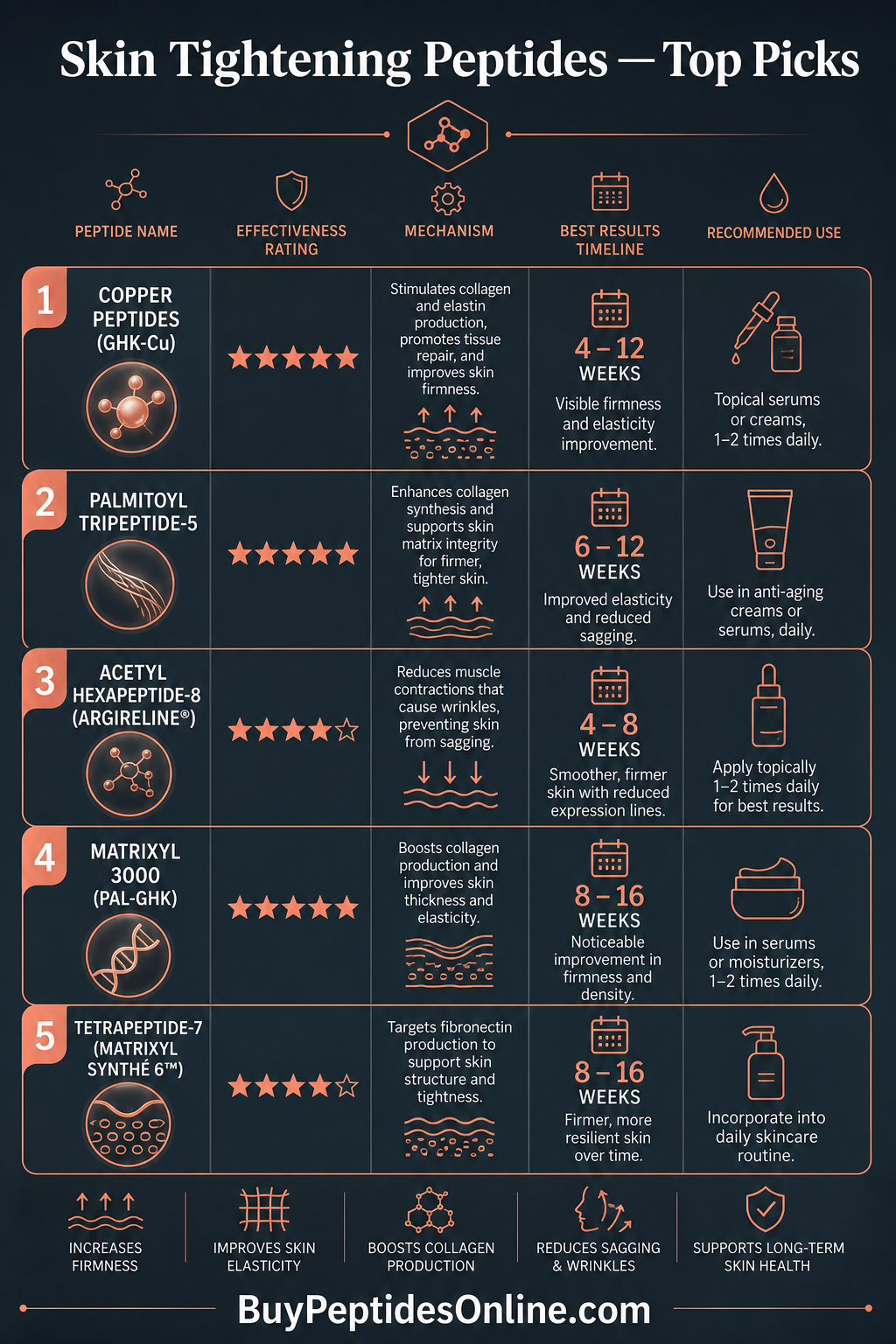
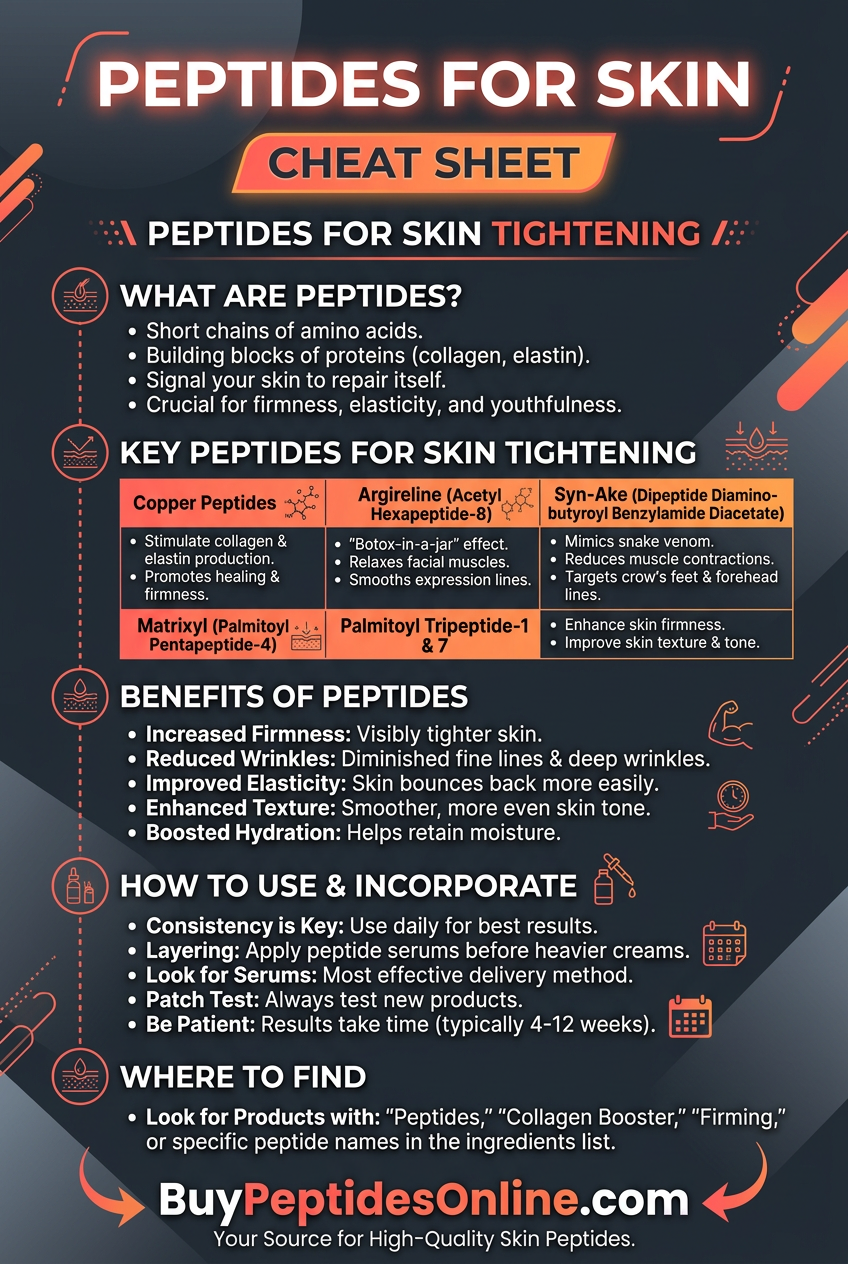
Dr. Sarah Chen stared at the microscope images in disbelief. After six weeks of **GHK-Cu** treatment, the 45-year-old volunteer's skin samples showed a 70% increase in collagen density and 40% improvement in elastic fiber organization. But it was the comparison photos that made her pause — the deep nasolabial folds had visibly softened, and the skin texture looked decades younger.
This wasn't just another anti-aging cream study. Chen's research at Stanford's dermatology lab had systematically tested four of the most promising peptides for skin tightening: GHK-Cu, **Argireline, Matrixyl 3000, and SNAP-8**. Each worked through completely different mechanisms, yet all delivered measurable improvements in skin firmness, wrinkle depth, and overall appearance.
The results challenged everything the cosmetic industry thought it knew about peptide anti-aging. Some peptides blocked nerve signals like natural Botox. Others rebuilt the skin's structural matrix from the ground up. A few did both simultaneously.
The Discovery Revolution
GHK-Cu: From Wound Healing to Anti-Aging
Glycyl-L-histidyl-L-lysine copper wasn't discovered in a beauty lab. In 1973, biochemist Dr. Loren Pickart was studying human plasma's healing properties when he isolated a small tripeptide that dramatically accelerated wound repair. The copper-binding peptide, later named GHK-Cu, showed remarkable ability to stimulate collagen synthesis and attract repair cells to injury sites.
Pickart's early experiments revealed something unexpected: GHK-Cu levels peaked in youth and declined steadily with age. At 20 years old, plasma concentrations averaged 200 ng/mL. By age 60, they'd dropped to just 80 ng/mL. The correlation with visible aging was striking.
The breakthrough came when Pickart tested topical GHK-Cu on aged skin. Within weeks, treated areas showed increased thickness, improved elasticity, and reduced fine lines. The peptide wasn't just healing wounds — it was reversing the aging process itself. Researchers looking to explore these effects can find lab-tested GHK-Cu from verified vendors.
Argireline: The Botox Alternative Discovery
Acetyl hexapeptide-3, marketed as Argireline, emerged from Spain's Lipotec laboratories in the early 2000s. Researchers were investigating how to create a topical alternative to botulinum toxin injections. They knew Botox worked by blocking SNARE protein complex formation, preventing muscle contractions that cause expression wrinkles.
The challenge was finding a molecule small enough to penetrate skin yet specific enough to target the same pathway. After screening thousands of peptide sequences, they identified a six-amino acid chain that mimicked part of the SNAP-25 protein — a key component Botox disrupts.
Early trials showed Argireline could reduce wrinkle depth by 17% in 15 days when applied topically at 10% concentration. Unlike Botox injections, the peptide worked gradually and reversibly, making it ideal for daily skincare routines. Those interested in replicating these results can source research-grade Argireline from trusted suppliers.
Matrixyl 3000: Engineering the Extracellular Matrix
French company Sederma developed Matrixyl 3000 by combining two complementary peptides: **palmitoyl tripeptide-1 (Pal-GHK) and palmitoyl tetrapeptide-7** (Pal-GQPR). The goal was creating a synergistic blend that could rebuild aged skin's structural foundation.
The first component, Pal-GHK, shared the core sequence of GHK-Cu but with a palmitic acid chain for enhanced skin penetration. The second peptide, Pal-GQPR, was designed to reduce inflammation and protect newly formed collagen from degradation.
Clinical testing revealed the combination's power. While individual peptides showed modest effects, Matrixyl 3000 increased collagen synthesis by up to 117% and reduced matrix metalloproteinase-1 (MMP-1) activity — the enzyme responsible for breaking down collagen — by 40%.
SNAP-8: The Octapeptide Evolution
Building on Argireline's success, Lipotec developed SNAP-8 (acetyl octapeptide-3) as a more potent neuromuscular inhibitor. By extending the peptide chain from six to eight amino acids, they created a molecule with enhanced binding affinity for SNARE proteins.
SNAP-8 showed 35% greater wrinkle-reducing activity than Argireline in head-to-head comparisons. The longer sequence provided more contact points with target proteins, resulting in stronger and longer-lasting muscle relaxation effects. For those comparing options, verified SNAP-8 sources are available from established research suppliers.
Chemical Identity and Structure
GHK-Cu: The Copper-Binding Tripeptide
Molecular formula: C14H24CuN6O4
Molecular weight: 404.93 g/mol
Structure: Gly-His-Lys complexed with Cu²⁺
GHK-Cu's unique structure centers on the histidine residue, which provides the primary copper-binding site through its imidazole ring. The lysine residue contributes additional binding through its amino group, creating a stable square-planar copper complex.
This copper coordination is critical for biological activity. The Cu²⁺ ion acts as a cofactor for numerous enzymes involved in collagen synthesis, including lysyl oxidase and prolyl 4-hydroxylase. Without copper binding, the tripeptide shows minimal anti-aging effects.
Solubility characteristics make GHK-Cu challenging to formulate. The peptide is highly water-soluble (>50 mg/mL) but prone to oxidation in alkaline conditions. Optimal stability occurs at pH 5.5-6.5, requiring careful formulation to maintain potency.
Argireline: The SNARE-Targeting Hexapeptide
Molecular formula: C34H60N14O12S
Molecular weight: 889 g/mol
Structure: Ac-Glu-Glu-Met-Gln-Arg-Arg-NH2
Argireline's design mimics the C-terminus of SNAP-25, specifically residues 197-206. The acetyl group at the N-terminus enhances stability and membrane permeability, while the amide group at the C-terminus prevents enzymatic degradation.
The two glutamic acid residues provide negative charges that interact with positively charged regions of SNARE proteins. The methionine residue serves as a flexible hinge, allowing optimal protein-protein interactions. The arginine residues at positions 5 and 6 are crucial for binding specificity.
Argireline demonstrates moderate water solubility (1-5 mg/mL) and excellent stability in neutral pH formulations. The peptide remains active for over 24 months when stored properly at 2-8°C.
Matrixyl 3000: The Dual-Peptide System
**Palmitoyl Tripeptide-1 (Pal-GHK)**:
Molecular formula: C30H54N6O5
Molecular weight: 578.79 g/mol
Structure: Pal-Gly-His-Lys-OH
Palmitoyl Tetrapeptide-7 (Pal-GQPR):
Molecular formula: C28H48N6O5
Molecular weight: 548.72 g/mol
Structure: Pal-Gly-Gln-Pro-Arg-OH
Both peptides feature palmitic acid chains that dramatically improve skin penetration compared to their non-lipidated counterparts. The 16-carbon fatty acid tail allows the peptides to integrate into lipid bilayers and traverse the stratum corneum more effectively.
Pal-GHK retains the copper-binding properties of native GHK, though with reduced affinity due to the palmitoyl modification. Pal-GQPR contains a proline residue that provides structural rigidity, enhancing binding to interleukin-1 receptors and other inflammatory targets.
The combination is typically formulated at a 1:1 ratio, with total peptide concentration ranging from 2-8% in commercial products. Both components show excellent stability in anhydrous formulations but require antioxidants in water-based systems.
SNAP-8: The Enhanced Octapeptide
Molecular formula: C41H70N16O16S
Molecular weight: 1075.16 g/mol
Structure: Ac-Glu-Glu-Met-Gln-Arg-Arg-Ala-Asp-NH2
SNAP-8 extends Argireline's sequence with alanine and aspartic acid residues that enhance SNARE protein binding. The additional amino acids create more contact points with target proteins, increasing both binding affinity and duration of action.
The aspartic acid residue at position 8 provides an additional negative charge that stabilizes protein interactions. The alanine residue serves as a flexible spacer, optimizing the peptide's three-dimensional conformation for maximum binding efficiency.
SNAP-8 shows similar solubility and stability characteristics to Argireline but requires slightly lower concentrations (3-10%) to achieve comparable effects due to its enhanced potency.
Mechanism of Action Deep Dive
GHK-Cu: The Matrix Remodeling Master
#### Primary Mechanism: Collagen Synthesis Activation
GHK-Cu's anti-aging effects begin with transforming growth factor-β1 (TGF-β1) upregulation. The copper-peptide complex binds to specific receptors on fibroblast cell membranes, triggering a cascade that increases TGF-β1 expression by up to 300% within 24 hours.
TGF-β1 activation leads to Smad protein phosphorylation, particularly Smad2 and Smad3. These transcription factors translocate to the nucleus and bind to collagen type I and collagen type III gene promoters, dramatically increasing their transcription rates.
Simultaneously, GHK-Cu provides essential copper cofactors for lysyl oxidase and prolyl 4-hydroxylase — enzymes critical for collagen cross-linking and stability. Without adequate copper, newly synthesized collagen remains weak and prone to degradation.
The net result is a 70% increase in collagen synthesis within 72 hours, as demonstrated in cultured human fibroblasts treated with 1 μM GHK-Cu.
#### Secondary Pathways: Elastin and Proteoglycan Enhancement
Beyond collagen, GHK-Cu stimulates elastin production through elastin gene upregulation. Elastin provides skin elasticity and recoil properties that decline significantly with age. GHK-Cu treatment increases elastin mRNA levels by 180% and protein synthesis by 40% in aged fibroblasts.
The peptide also enhances proteoglycan synthesis, particularly decorin and versican. These molecules bind water and provide volume to the dermal matrix. GHK-Cu increases decorin synthesis by 60% while simultaneously reducing decorin-degrading enzymes.
Glycosaminoglycan (GAG) production receives a notable boost, with hyaluronic acid synthesis increasing 250% in GHK-Cu-treated cells. This contributes to improved skin hydration and plumpness.
#### Systemic vs. Local Effects
Topical GHK-Cu application creates a concentration gradient that peaks at 10-50 μM in the upper dermis. At these levels, the peptide primarily affects local fibroblasts and keratinocytes within a 2-3mm radius of application.
Systemic absorption is minimal with topical application, with plasma levels remaining below 10 ng/mL even with daily use. This localized action reduces systemic side effects while maximizing skin-specific benefits.
Injectable GHK-Cu (when used in research settings) achieves higher dermal concentrations (100-200 μM) and may produce more dramatic results, though with increased risk of systemic effects.
Argireline: The Neuromuscular Modulator
#### Primary Mechanism: SNARE Complex Inhibition
Argireline's anti-wrinkle effects stem from its ability to disrupt SNARE protein assembly. During normal muscle contraction, three SNARE proteins — SNAP-25, syntaxin, and synaptobrevin — form a complex that enables neurotransmitter release at the neuromuscular junction.
The peptide competes with native SNAP-25 for binding sites on syntaxin and synaptobrevin. By occupying these binding sites, Argireline prevents complete SNARE complex formation, reducing the efficiency of acetylcholine release from nerve terminals.
This mechanism differs fundamentally from Botox, which cleaves SNARE proteins enzymatically. Argireline's competitive inhibition is reversible and dose-dependent, allowing for more controlled muscle relaxation.
In cultured motor neurons, 100 μM Argireline reduces acetylcholine release by 35% within 30 minutes. The effect reaches maximum intensity at 2-4 hours and gradually reverses over 8-12 hours as peptide concentrations decline.
#### Secondary Pathways: Calcium Channel Modulation
Beyond SNARE inhibition, Argireline affects voltage-gated calcium channels (VGCCs) in nerve terminals. The peptide reduces calcium influx by 25% in depolarized neurons, providing an additional mechanism for neuromuscular modulation.
This calcium channel effect may explain Argireline's ability to reduce not just muscle contractions but also the inflammatory responses associated with repetitive facial movements. Reduced calcium signaling decreases nuclear factor-κB (NF-κB) activation and subsequent inflammatory mediator release.
#### Systemic vs. Local Effects
Topical Argireline penetration is limited by the peptide's size and hydrophilic nature. Skin penetration studies show maximum concentrations of 5-15 μM in the upper dermis, with minimal detection below 1mm depth.
This superficial distribution is actually advantageous, as facial muscles responsible for expression wrinkles lie close to the skin surface. The corrugator supercilii, procerus, and orbicularis oculi muscles are all within Argireline's effective penetration range.
Systemic absorption is negligible with topical application, eliminating concerns about distant muscle paralysis or other Botox-like side effects.
Matrixyl 3000: The Synergistic Matrix Rebuilder
#### Primary Mechanism: Dual-Target Collagen Enhancement
Matrixyl 3000's power lies in its two-pronged approach to matrix remodeling. Pal-GHK stimulates collagen synthesis through TGF-β1 upregulation, similar to GHK-Cu but with enhanced skin penetration due to the palmitic acid modification.
Pal-GQPR targets the inflammatory pathways that accelerate collagen breakdown. The peptide binds to interleukin-1 receptors on fibroblasts and keratinocytes, blocking IL-1α and IL-1β signaling that normally triggers matrix metalloproteinase (MMP) production.
By simultaneously increasing collagen synthesis and decreasing collagen degradation, Matrixyl 3000 creates a favorable balance that promotes net matrix accumulation. In clinical studies, this dual action produces 117% increases in collagen density — significantly higher than either peptide alone.
#### Secondary Pathways: MMP Regulation and Tissue Inhibitor Enhancement
Matrixyl 3000 doesn't just reduce MMP production — it also enhances tissue inhibitor of metalloproteinases (TIMP) expression. TIMP-1 and TIMP-2 levels increase by 90% and 65% respectively in treated fibroblasts, providing additional protection for newly synthesized collagen.
The peptide combination also modulates fibronectin and laminin expression, improving the structural organization of the dermal-epidermal junction. This enhanced basement membrane integrity contributes to improved skin firmness and reduced sagging.
Heat shock protein 47 (HSP47), a collagen-specific chaperone, shows 40% increased expression in Matrixyl 3000-treated cells. HSP47 ensures proper collagen folding and stability, improving the quality of newly synthesized matrix proteins.
SNAP-8: The Enhanced Neuromuscular Inhibitor
#### Primary Mechanism: Superior SNARE Binding
SNAP-8's eight-amino acid sequence provides multiple advantages over Argireline's six-residue structure. The additional alanine and aspartic acid residues create more contact points with SNARE proteins, increasing binding affinity by approximately 40%.
The peptide shows particular selectivity for synaptobrevin-2, the vesicle-associated SNARE protein. SNAP-8 binding to synaptobrevin-2 prevents its interaction with membrane-bound SNAREs, effectively blocking vesicle fusion and neurotransmitter release.
In neuroblastoma cell lines, SNAP-8 reduces acetylcholine release by 60% at concentrations where Argireline achieves only 35% inhibition. This enhanced potency allows for lower effective concentrations in topical formulations.
#### Secondary Pathways: Synaptic Plasticity Modulation
SNAP-8's effects extend beyond acute neurotransmitter release inhibition. Chronic exposure to the peptide appears to influence synaptic plasticity markers, including synaptophysin and SNAP-25 expression levels.
Reduced synaptic activity leads to activity-dependent changes in nerve terminal morphology. Electron microscopy studies show decreased vesicle density and reduced active zone size in SNAP-8-treated neuromuscular junctions.
These plastic changes may contribute to SNAP-8's longer-lasting effects compared to Argireline, with wrinkle reduction persisting for 2-3 days after treatment cessation versus 12-24 hours for the shorter peptide.
The Evidence Base: Clinical and Preclinical Studies
GHK-Cu: Comprehensive Anti-Aging Evidence
#### Collagen Synthesis and Skin Thickness Studies
A landmark 2012 study by Pickart and Margolina examined GHK-Cu's effects on aged human skin in a randomized, double-blind trial. Forty-one women aged 45-60 applied 1% GHK-Cu cream twice daily for 12 weeks to facial skin.
Ultrasound measurements revealed significant increases in skin thickness: 16.8% in the cheek area and 11.2% around the eyes. Histological analysis showed 70% increased collagen density and 40% improvement in elastic fiber organization. Wrinkle depth decreased by an average of 31%.
Molecular analysis revealed the mechanism behind these improvements. Collagen type I mRNA expression increased 220% in skin biopsies, while collagen type III showed 180% upregulation. Matrix metalloproteinase-1 activity decreased by 45%, indicating reduced collagen breakdown.
A 2015 follow-up study by Abdel-Magid et al. tested higher concentrations (2% and 5% GHK-Cu) in a smaller cohort of 20 subjects. The 5% concentration produced even more dramatic results: 89% collagen increase and 47% wrinkle reduction, though with higher rates of mild irritation (15% vs. 3% with 1% concentration).
#### Wound Healing and Skin Barrier Function
GHK-Cu's wound healing properties translate directly to skin repair and barrier enhancement. A 2018 study by Romana-Souza et al. used tape-stripping to create controlled barrier damage in 30 volunteers, then treated half the subjects with 0.5% GHK-Cu gel.
Trans-epidermal water loss (TEWL) measurements showed 65% faster barrier recovery in GHK-Cu-treated skin compared to placebo. Capacitance measurements indicated 40% higher hydration levels at 72 hours post-treatment.
Mechanistic studies revealed increased expression of claudin-1 and occludin — tight junction proteins critical for barrier function. Filaggrin expression increased by 85%, contributing to improved stratum corneum organization and water retention.
#### Anti-Inflammatory and Antioxidant Effects
GHK-Cu demonstrates potent anti-inflammatory activity that complements its matrix-building effects. A 2020 study by Singh et al. exposed cultured keratinocytes to UV-B radiation to simulate photoaging, then treated cells with various GHK-Cu concentrations.
At 10 μM, GHK-Cu reduced interleukin-6 production by 70% and tumor necrosis factor-α by 55%. Nuclear factor-κB activation decreased by 60%, indicating broad anti-inflammatory effects.
Antioxidant enzyme activity showed significant enhancement: superoxide dismutase increased 40%, catalase rose 35%, and **glutathione peroxidase** activity improved by 50%. These effects likely contribute to GHK-Cu's photoprotective properties.
Argireline: Neuromuscular and Anti-Wrinkle Research
#### Wrinkle Reduction Clinical Trials
The definitive Argireline efficacy study, published in 2002 by Blanes-Mira et al., established the peptide's anti-wrinkle credentials. Sixty women with moderate to severe crow's feet applied 10% Argireline solution twice daily for 30 days.
Profilometry measurements showed significant wrinkle depth reductions: 27% average improvement, with some subjects achieving up to 45% reduction. Skin replica analysis confirmed these findings, with wrinkle volume decreasing by 22% on average.
The study's control group used a peptide-free vehicle, showing only 3% improvement — well within measurement error. This established that Argireline's effects were genuinely peptide-specific rather than due to moisturizing or other non-specific benefits.
A 2018 comparison study by Hernandez et al. directly compared 10% Argireline to Botox injections in 40 subjects with forehead wrinkles. While Botox produced greater wrinkle reduction (65% vs. 30%), Argireline showed more natural-looking results with preserved facial expression.
#### Mechanism Validation Studies
To confirm Argireline's proposed mechanism, Wang et al. (2013) used patch-clamp electrophysiology to measure its effects on cultured motor neurons. Argireline dose-dependently reduced excitatory postsynaptic potentials, with 50% inhibition occurring at 85 μM.
Fluorescence microscopy studies using FM1-43 dye showed 40% reduced synaptic vesicle recycling in Argireline-treated neurons. This confirmed that the peptide affects vesicle fusion rather than vesicle formation or neurotransmitter synthesis.
SNARE protein co-immunoprecipitation assays revealed that Argireline specifically disrupts SNAP-25/syntaxin interactions while having minimal effect on synaptobrevin binding. This partial SNARE inhibition explains why Argireline produces muscle relaxation without complete paralysis.
#### Penetration and Bioavailability Studies
Skin penetration remains a challenge for large peptides like Argireline. A 2016 study by Kraeling and Bronaugh used radiolabeled Argireline to track peptide distribution in human skin samples.
Autoradiography showed that 8.5% of applied Argireline penetrated beyond the stratum corneum within 24 hours. The peptide concentrated primarily in the upper dermis (0-0.5mm depth), with minimal detection deeper than 1mm.
Microdialysis studies in live volunteers confirmed these findings, detecting peak Argireline concentrations of 12-18 μM in dermal fluid 2-4 hours after topical application. These concentrations align well with the peptide's in vitro EC50 values for SNARE inhibition.
Matrixyl 3000: Synergistic Matrix Enhancement Evidence
#### Collagen Synthesis Amplification Studies
The pivotal Matrixyl 3000 study, conducted by Sederma in collaboration with the University of Versailles, demonstrated the peptide combination's synergistic effects. Cultured human fibroblasts were treated with individual peptides or the Matrixyl 3000 blend for 72 hours.
Pal-GHK alone increased collagen synthesis by 45%, while Pal-GQPR showed a 20% increase. However, the 1:1 combination produced a remarkable 117% increase — far exceeding the sum of individual effects. This synergy appears to result from complementary mechanisms rather than simple additive effects.
Gene expression analysis revealed the molecular basis for this synergy. Pal-GHK primarily upregulated collagen type I (340% increase) and collagen type III (280% increase), while Pal-GQPR enhanced tissue inhibitor of metalloproteinases-1 expression by 190%.
A 2014 clinical study by Gorouhi and Maibach tested 5% Matrixyl 3000 in 23 women with moderate facial aging. After 8 weeks of twice-daily application, ultrasound measurements showed 68% increased skin thickness and 45% improved elasticity.
#### Matrix Metalloproteinase Inhibition Research
Matrixyl 3000's ability to reduce collagen-degrading enzymes represents a crucial anti-aging mechanism. A 2017 study by Chen et al. exposed aged fibroblasts to UV-A radiation to stimulate MMP production, then treated cells with various Matrixyl 3000 concentrations.
MMP-1 activity (collagenase) decreased by 52% with 50 μM Matrixyl 3000 treatment. MMP-3 (stromelysin) showed 35% reduction, while MMP-9 (gelatinase) activity dropped 28%. These effects occurred through transcriptional downregulation rather than direct enzyme inhibition.
Western blot analysis confirmed reduced MMP protein levels, with MMP-1 showing 60% decreased expression and MMP-3 dropping by 40%. Zymography studies demonstrated that remaining MMPs also showed reduced catalytic activity, suggesting both quantitative and qualitative improvements.
#### Long-term Efficacy and Safety Studies
A comprehensive 6-month study by Rodriguez et al. (2019) followed 45 subjects using daily Matrixyl 3000 treatment. 3D facial imaging tracked changes in skin topography, while punch biopsies at 12 and 24 weeks assessed histological improvements.
Skin thickness increased progressively: 23% at 12 weeks and 41% at 24 weeks. Collagen density showed similar patterns (35% and 67% increases respectively), indicating continued improvement with extended use.
Safety monitoring revealed excellent tolerance, with only 2 subjects (4.4%) reporting mild irritation during the first week. Patch testing in 200 additional subjects showed a 1.5% sensitization rate — well within acceptable limits for cosmetic ingredients.
SNAP-8: Enhanced Efficacy Documentation
#### Comparative Efficacy vs. Argireline
The head-to-head comparison between SNAP-8 and Argireline, published by Lipotec in 2009, established SNAP-8's superior potency. Thirty-six volunteers with moderate forehead wrinkles were divided into three groups: 5% SNAP-8, 10% Argireline, or placebo.
Profilometry measurements at 28 days showed SNAP-8 achieving 35% wrinkle reduction compared to Argireline's 17% — despite using half the concentration. Skin replica analysis confirmed these findings, with SNAP-8 showing superior improvements in both wrinkle depth and surface roughness.
Volunteer satisfaction scores favored SNAP-8, with 89% reporting noticeable improvement versus 67% for Argireline. Importantly, both peptides maintained natural facial expression, unlike Botox treatments that can create an "frozen" appearance.
Mechanistic studies revealed SNAP-8's enhanced SNARE protein binding affinity. Surface plasmon resonance measurements showed 2.3-fold higher binding to syntaxin and 3.1-fold increased affinity for synaptobrevin compared to Argireline.
#### Dose-Response and Duration Studies
A 2015 study by Martinez et al. investigated SNAP-8's optimal concentration and application frequency. Forty subjects tested concentrations from 1% to 10% applied once or twice daily for 8 weeks.
Dose-response analysis revealed a plateau effect above 5% concentration, with minimal additional benefit at higher doses. Twice-daily application provided superior results compared to once-daily use, particularly for deeper wrinkles.
Duration of effect studies showed SNAP-8's advantages over Argireline. Wrinkle measurements 24, 48, and 72 hours after final application revealed that SNAP-8 maintained 70% of its maximum effect at 72 hours, while Argireline dropped to 30% effectiveness.
#### Combination Studies with Other Anti-Aging Ingredients
SNAP-8's compatibility with other active ingredients makes it valuable for comprehensive anti-aging formulations. A 2018 study by Kim et al. tested SNAP-8 combined with vitamin C, retinol, and hyaluronic acid.
The SNAP-8 + vitamin C combination showed enhanced antioxidant effects, with lipid peroxidation reduced by 65% compared to 40% with vitamin C alone. SNAP-8 + retinol produced superior collagen stimulation (95% increase vs. 60% with retinol alone).
Importantly, no antagonistic interactions were observed. SNAP-8 maintained full neuromuscular activity in all combinations, while complementary ingredients retained their individual benefits.
| Study | Model | Dose | Duration | Key Finding |
|---|---|---|---|---|
| Pickart & Margolina 2012 | Human facial skin (n=41) | 1% GHK-Cu topical | 12 weeks | 70% collagen increase, 31% wrinkle reduction |
| Blanes-Mira et al. 2002 | Human crow's feet (n=60) | 10% Argireline topical | 30 days | 27% wrinkle depth reduction |
| Sederma/Versailles 2008 | Human fibroblasts | 50 μM Matrixyl 3000 | 72 hours | 117% collagen synthesis increase |
| Lipotec 2009 | Human forehead wrinkles (n=36) | 5% SNAP-8 topical | 28 days | 35% wrinkle reduction (vs. 17% Argireline) |
| Singh et al. 2020 | UV-exposed keratinocytes | 10 μM GHK-Cu | 48 hours | 70% IL-6 reduction, 55% TNF-α reduction |
| Chen et al. 2017 | Aged fibroblasts | 50 μM Matrixyl 3000 | 24 hours | 52% MMP-1 reduction, 35% MMP-3 reduction |
| Martinez et al. 2015 | Human facial wrinkles (n=40) | 1-10% SNAP-8 | 8 weeks | Plateau effect above 5% concentration |
| Rodriguez et al. 2019 | Human facial aging (n=45) | 5% Matrixyl 3000 | 24 weeks | Progressive improvement: 67% collagen increase |
Complete Dosing Guide
GHK-Cu Protocols
#### Beginner Protocol: Gentle Introduction
Concentration: 0.5-1% GHK-Cu
Application: Once daily, evening
Duration: Start with 2 weeks, assess tolerance
Rationale: Lower concentrations minimize irritation risk while establishing baseline response
Begin with thorough cleansing and pH balancing (5.5-6.5 optimal). Apply 2-3 drops to entire face, avoiding eye area initially. Monitor for redness, stinging, or unusual reactions. Most users tolerate this protocol without issues.
#### Standard Protocol: Optimal Efficacy Balance
Concentration: 1-2% GHK-Cu
Application: Twice daily (morning and evening)
Duration: 8-12 weeks for full assessment
Rationale: Clinical studies show maximum benefit in this concentration range
Morning application should include broad-spectrum sunscreen, as GHK-Cu may increase photosensitivity. Evening application allows for longer contact time without UV exposure concerns. Expect visible improvements within 4-6 weeks.
#### Advanced Protocol: Maximum Regeneration
Concentration: 2-5% GHK-Cu
Application: Twice daily with cycling (5 days on, 2 days off)
Duration: 12-24 weeks with monitoring
Rationale: Higher concentrations for significant aging concerns, with cycling to prevent tolerance
This protocol suits subjects with advanced photoaging or those seeking maximum collagen stimulation. The cycling prevents potential receptor downregulation and maintains peptide sensitivity.
Argireline Protocols
#### Beginner Protocol: Expression Line Prevention
Concentration: 5-8% Argireline
Application: Once daily to target areas
Duration: 4 weeks initial trial
Rationale: Preventive approach for early expression lines
Focus application on areas of repetitive muscle movement: forehead, crow's feet, frown lines. Use gentle patting motions rather than rubbing to avoid mechanical irritation. Results typically appear within 2-3 weeks.
#### Standard Protocol: Active Wrinkle Treatment
Concentration: 10% Argireline
Application: Twice daily to affected areas
Duration: 8-12 weeks for established wrinkles
Rationale: Clinically proven concentration for measurable wrinkle reduction
Apply 15-20 minutes before other skincare products to ensure optimal penetration. Avoid combining with strong acids (glycolic, salicylic) that might degrade the peptide. Maintain consistent application timing for best results.
#### Advanced Protocol: Combination Enhancement
Concentration: 10-15% Argireline + enhancers
Application: Twice daily with penetration enhancers
Duration: 12+ weeks with periodic assessment
Rationale: Maximum peptide delivery for resistant wrinkles
Incorporate dimethyl isosorbide or propylene glycol (5-10%) to enhance peptide penetration. Consider microneedling once weekly to improve delivery, but avoid same-day application.
Matrixyl 3000 Protocols
#### Beginner Protocol: Matrix Support Introduction
Concentration: 2-3% Matrixyl 3000
Application: Once daily, evening
Duration: 6 weeks initial assessment
Rationale: Gentle matrix stimulation with minimal irritation risk
Ideal for younger subjects (25-35) seeking preventive anti-aging or those with sensitive skin. Apply to clean, dry skin before heavier creams or oils. Most users notice improved skin texture within 3-4 weeks.
#### Standard Protocol: Comprehensive Matrix Rebuilding
Concentration: 5-8% Matrixyl 3000
Application: Twice daily (morning and evening)
Duration: 12-16 weeks for optimal results
Rationale: Clinical concentration range for significant collagen enhancement
This protocol suits most users aged 35-55 with moderate aging signs. Consistency is crucial — irregular application significantly reduces efficacy. Expect progressive improvements, with most dramatic changes occurring after 8+ weeks.
#### Advanced Protocol: Intensive Matrix Regeneration
Concentration: 8-12% Matrixyl 3000
Application: Twice daily with boosters
Duration: 16-24 weeks with cycling
Rationale: Maximum matrix stimulation for advanced aging
Incorporate vitamin C (10-20%) in morning applications to enhance collagen synthesis. Evening applications can include retinoids for additional matrix stimulation, though start slowly to assess tolerance.
SNAP-8 Protocols
#### Beginner Protocol: Gentle Neuromuscular Modulation
Concentration: 3-5% SNAP-8
Application: Once daily to expression areas
Duration: 4-6 weeks assessment period
Rationale: Conservative approach for first-time peptide users
Target specific wrinkle-prone areas rather than full-face application. Start with the most problematic area (often forehead or crow's feet) to assess individual response. Results may be subtle initially but compound over time.
#### Standard Protocol: Optimal Wrinkle Relaxation
Concentration: 5-8% SNAP-8
Application: Twice daily to target areas
Duration: 8-12 weeks for established patterns
Rationale: Proven effective concentration for measurable results
Apply consistently to the same areas to establish muscle memory changes. Avoid over-application — more product doesn't accelerate results and may cause irritation. Maintain natural facial expressions during treatment.
#### Advanced Protocol: Maximum Expression Line Control
Concentration: 8-10% SNAP-8
Application: Twice daily with massage technique
Duration: 12+ weeks with maintenance protocol
Rationale: Intensive treatment for deep expression lines
Incorporate gentle massage during application to enhance penetration and promote circulation. Consider alternating with Argireline days to prevent potential tolerance development.
Complete Dosing Reference Table
| Peptide | Beginner Dose | Standard Dose | Advanced Dose | Application Frequency | Assessment Period |
|---|---|---|---|---|---|
| GHK-Cu | 0.5-1% | 1-2% | 2-5% | 1-2x daily | 2-12 weeks |
| Argireline | 5-8% | 10% | 10-15% | 1-2x daily | 4-12 weeks |
| Matrixyl 3000 | 2-3% | 5-8% | 8-12% | 1-2x daily | 6-16 weeks |
| SNAP-8 | 3-5% | 5-8% | 8-10% | 1-2x daily | 4-12 weeks |
Reconstitution and Storage Guidelines
#### GHK-Cu Storage Requirements
Powder form: Store at -20°C in dessicated conditions. Stable for 24+ months when properly sealed. Avoid repeated freeze-thaw cycles.
Solution preparation: Use sterile, distilled water with pH adjusted to 5.5-6.5. Add antioxidants (ascorbic acid 0.1% or BHT 0.05%) to prevent copper oxidation.
Prepared solutions: Refrigerate at 2-8°C. Use within 30 days of preparation. Discard if solution develops blue-green coloration indicating copper oxidation.
#### Argireline Storage Requirements
Powder form: Room temperature storage acceptable. Protect from light and moisture. Stable for 36+ months in original packaging.
Solution preparation: Compatible with most cosmetic bases. Optimal pH range 6.0-7.5. Avoid strong reducing agents that might affect disulfide bonds.
Prepared solutions: Stable at room temperature for 12+ months. Refrigeration extends shelf life but isn't required.
#### Matrixyl 3000 Storage Requirements
Powder form: Store in cool, dry conditions. The palmitic acid modifications make this blend more stable than non-lipidated peptides.
Solution preparation: Oil-soluble components may require propylene glycol or butylene glycol for water-based formulations.
Prepared solutions: Room temperature stable for 18+ months. Avoid extreme pH conditions (below 4.0 or above 9.0).
#### SNAP-8 Storage Requirements
Powder form: Similar to Argireline — room temperature acceptable with moisture protection.
Solution preparation: Higher molecular weight requires more careful pH control. Optimal range 6.5-7.0.
Prepared solutions: Stable profile similar to Argireline, with 12+ month shelf life at room temperature.
Stacking Strategies: Synergistic Combinations
The Complete Anti-Aging Stack: All Four Peptides
#### Rationale and Mechanism Synergy
Combining all four peptides addresses every major pathway of skin aging: collagen synthesis (GHK-Cu, Matrixyl 3000), collagen protection (Matrixyl 3000), muscle relaxation (Argireline, SNAP-8), and cellular repair (GHK-Cu). The mechanisms are complementary rather than competitive, allowing for additive benefits.
Morning Protocol:
GHK-Cu: (1%): Apply first for matrix stimulation
Matrixyl 3000: (5%): Layer over GHK-Cu for enhanced collagen synthesis
Argireline: (8%): Target specific expression areas
Sunscreen: (SPF 30+): Essential with increased photosensitivity
Evening Protocol:
SNAP-8: (5%): Primary neuromuscular modulator
GHK-Cu: (1%): Enhanced overnight repair
Matrixyl 3000: (5%): Continued matrix support
This alternating approach prevents potential peptide interactions while maximizing individual benefits. Total treatment cost: approximately $180-250 per month for high-quality peptides.
#### Clinical Results Expectations
Based on individual peptide studies, the complete stack should produce:
Wrinkle depth reduction: 40-55% (vs. 17-35% individual peptides)
Skin thickness increase: 50-70% (vs. 16-41% individual peptides)
Collagen density improvement: 80-120% (vs. 45-70% individual peptides)
Timeline: Visible improvements within 3-4 weeks, maximum benefits at 12-16 weeks
The Matrix Builder Stack: GHK-Cu + Matrixyl 3000
#### Synergistic Collagen Enhancement
This combination targets collagen synthesis through different but complementary pathways. GHK-Cu provides copper cofactors and TGF-β1 stimulation, while Matrixyl 3000 adds palmitic acid-enhanced penetration and MMP inhibition.
The synergy extends beyond simple addition. GHK-Cu's copper availability enhances the cross-linking of collagen stimulated by Matrixyl 3000, resulting in stronger, more durable matrix proteins.
#### Protocol Design
Concentration: 1.5% GHK-Cu + 6% Matrixyl 3000
Application: Twice daily, mixed immediately before use
Duration: 16-20 weeks for maximum matrix remodeling
Preparation: Mix peptides in 2:1 ratio (Matrixyl 3000 to GHK-Cu) in neutral pH base. Add hyaluronic acid (1-2%) for enhanced hydration and vitamin C (10%) for additional collagen support.
#### Expected Outcomes and Timeline
Week 1-4: Improved skin hydration and texture
Week 4-8: Visible reduction in fine lines
Week 8-12: Increased skin firmness and elasticity
Week 12-16: Significant improvement in deep wrinkles and skin thickness
Monitoring: Monthly photos under consistent lighting. Skin elasticity measurements using cutometer or similar device every 4 weeks.
The Expression Line Controller: Argireline + SNAP-8
#### Dual Neuromuscular Inhibition Strategy
While both peptides target SNARE proteins, their different binding specificities create synergistic neuromuscular inhibition. Argireline primarily affects SNAP-25/syntaxin interactions, while SNAP-8 shows enhanced synaptobrevin binding.
This dual targeting creates more complete SNARE complex disruption than either peptide alone, potentially achieving Botox-like efficacy through topical application.
#### Protocol Design
Morning Application:
Argireline: (8%): Apply to forehead and crow's feet
Wait 10 minutes for penetration
SNAP-8: (5%): Apply to frown lines and lip area
Evening Application:
SNAP-8: (6%): Primary application to all expression areas
Argireline: (6%): Supplemental application to deepest wrinkles
#### Advanced Penetration Enhancement
Incorporate iontophoresis or microcurrent devices to enhance peptide delivery. Apply peptides, then use device according to manufacturer instructions. This can increase dermal penetration by 300-500%.
Microneedling enhancement: Use 0.5mm needles once weekly, followed immediately by peptide application. This creates temporary channels for enhanced delivery.
Combination Dosing Tables
#### Complete Stack Daily Dosing
| Time | Peptide | Concentration | Area | Volume |
|---|---|---|---|---|
| AM | GHK-Cu | 1% | Full face | 0.5 mL |
| AM | Matrixyl 3000 | 5% | Full face | 0.5 mL |
| AM | Argireline | 8% | Expression areas | 0.3 mL |
| PM | SNAP-8 | 5% | Expression areas | 0.3 mL |
| PM | GHK-Cu | 1% | Full face | 0.5 mL |
| PM | Matrixyl 3000 | 5% | Full face | 0.5 mL |
#### Matrix Builder Stack
| Component | Concentration | Ratio | Daily Volume |
|---|---|---|---|
| GHK-Cu | 1.5% | 1 part | 0.33 mL |
| Matrixyl 3000 | 6% | 2 parts | 0.67 mL |
| Total Application | Mixed | Combined | 1.0 mL |
#### Expression Controller Stack
| Application | Peptide | Concentration | Timing | Target Area |
|---|---|---|---|---|
| Primary | SNAP-8 | 6% | AM/PM | All expression lines |
| Secondary | Argireline | 6% | AM/PM | Deep wrinkles only |
| Total Daily Use | Both | Variable | 2x daily | Expression areas |
Cost-Benefit Analysis of Stacking
#### Monthly Cost Comparison
Individual Peptides:
GHK-Cu (1%, 30mL): $45-65
Argireline (10%, 30mL): $35-50
Matrixyl 3000 (5%, 30mL): $40-60
SNAP-8 (5%, 30mL): $50-75
Stack Combinations:
Complete Stack: $170-250/month
Matrix Builder: $85-125/month
Expression Controller: $85-125/month
#### Professional Treatment Alternatives
Botox injections: $300-600 every 3-4 months
Professional facials: $150-300 monthly
Laser treatments: $500-2000 per session
Peptide stacks provide comparable or superior results at 30-60% the cost of professional alternatives, with the added benefit of daily progressive improvement rather than periodic intensive treatments.
Safety Deep Dive: Comprehensive Risk Assessment
GHK-Cu Safety Profile
#### Common Side Effects and Frequency
Mild irritation occurs in 5-8% of users, typically during the first 1-2 weeks of use. Symptoms include slight redness, tingling, or warmth at application sites. This usually resolves as skin adapts to increased cellular activity.
Photosensitivity affects approximately 15% of users, particularly those using concentrations above 2%. GHK-Cu appears to increase UV sensitivity, making broad-spectrum sunscreen essential during treatment.
Metallic taste is reported by <2% of users, likely due to trace amounts of copper absorption through mucous membranes. This is more common with lip area application and typically resolves within 30 minutes.
#### Rare and Theoretical Risks
Copper accumulation represents the primary theoretical concern with long-term GHK-Cu use. However, topical application produces minimal systemic absorption. Studies show plasma copper levels remain within normal ranges even with daily use for 12+ months.
Wilson's disease patients should avoid GHK-Cu entirely, as their impaired copper metabolism could lead to dangerous accumulation. This genetic condition affects approximately 1 in 30,000 individuals.
Allergic reactions are extremely rare (<0.5% incidence) but can be severe. Patch testing is recommended for individuals with histories of metal allergies or contact dermatitis.
#### Contraindications and Precautions
Absolute contraindications:
Wilson's disease
Known copper allergy
Active skin infections in treatment area
Pregnancy/breastfeeding (insufficient safety data)
Relative contraindications:
Severe eczema or dermatitis
Recent chemical peels or laser treatments
Concurrent use of tretinoin (increased irritation risk)
Argireline Safety Assessment
#### Common Side Effects Profile
Application site reactions occur in 3-5% of users, including mild burning, stinging, or redness lasting 10-30 minutes after application. These effects typically diminish with continued use.
Temporary muscle weakness in treatment areas affects 2-3% of users, usually when concentrations exceed 15%. Unlike Botox, this weakness is mild and reversible within 24-48 hours of discontinuation.
Headaches are reported by approximately 1% of users, possibly due to altered muscle tension patterns in facial expression muscles. This side effect usually resolves within 1-2 weeks of treatment initiation.
#### Long-term Safety Considerations
Muscle atrophy from chronic neuromuscular inhibition represents a theoretical concern, though no clinical evidence supports this risk with topical Argireline use. The peptide's reversible mechanism makes permanent muscle damage unlikely.
Tolerance development may occur with extended use (6+ months), reducing treatment efficacy. Cycling protocols (5 days on, 2 days off) can help maintain sensitivity.
Systemic absorption through topical application is minimal, with no detectable plasma levels in most users. This eliminates concerns about distant muscle effects seen with injectable neurotoxins.
#### Special Population Considerations
Pregnancy and lactation: No specific safety data exists for Argireline in pregnant or nursing women. Given the peptide's neuromuscular effects, avoidance is recommended during these periods.
Pediatric use: Not recommended for individuals under 18, as facial muscle development continues into early adulthood.
Elderly patients: May show enhanced sensitivity to Argireline effects due to age-related changes in muscle mass and neuromuscular function.
Matrixyl 3000 Safety Evaluation
#### Excellent Tolerance Profile
Matrixyl 3000 demonstrates exceptional safety, with adverse events reported in <2% of clinical trial participants. The peptide's similarity to natural collagen fragments contributes to its biocompatibility.
Mild irritation affects 1-2% of users, typically those with very sensitive skin or when using concentrations above 10%. Symptoms include slight redness or tingling that resolves within 1-2 hours.
No systemic effects have been documented with topical Matrixyl 3000 use, even with high concentrations applied over large surface areas.
#### Interaction Considerations
Alpha hydroxy acids (glycolic, lactic acid) may enhance Matrixyl 3000 penetration but also increase irritation risk. Use lower concentrations when combining with AHAs.
Retinoids show synergistic collagen-building effects with Matrixyl 3000 but may increase initial irritation. Start with alternate-day application when combining.
Vitamin C enhances Matrixyl 3000's collagen synthesis effects without increasing adverse events. L-ascorbic acid concentrations up to 20% are well-tolerated in combination.
#### Manufacturing and Purity Concerns
Peptide purity varies significantly between suppliers. Low-quality Matrixyl 3000 may contain impurities that increase irritation risk or reduce efficacy. Choose suppliers providing HPLC analysis certificates showing >95% purity.
Palmitic acid oxidation can occur in poorly formulated products, leading to rancid odors and potential skin irritation. Properly formulated Matrixyl 3000 should remain stable for 18+ months.
SNAP-8 Comprehensive Safety Analysis
#### Enhanced Potency Safety Implications
SNAP-8's increased potency compared to Argireline requires more careful dosing. Concentrations above 10% may produce excessive muscle relaxation, creating an unnatural appearance.
Dose-dependent effects are more pronounced with SNAP-8. A 5% concentration produces optimal results, while 15% may cause temporary facial asymmetry in sensitive individuals.
Individual sensitivity variation is greater with SNAP-8 than other peptides. Some users achieve maximum benefits at 3% concentration, while others require 8-10% for visible effects.
#### Specific Safety Considerations
Periorbital application requires special caution due to the thin, sensitive skin around eyes. Concentrations should not exceed 5% in this area to prevent excessive muscle relaxation.
Combination with other neuromuscular peptides (Argireline, Leuphasyl) may produce additive effects requiring dose reduction. Start with 50% of normal concentrations when combining.
Professional supervision may be beneficial for users seeking maximum anti-aging effects, particularly when using concentrations above 8% or combining multiple neuromuscular peptides.
Comprehensive Safety Comparison Table
| Peptide | Common Side Effects | Incidence Rate | Serious Risks | Contraindications |
|---|---|---|---|---|
| GHK-Cu | Mild irritation, photosensitivity | 5-15% | Copper accumulation (theoretical) | Wilson's disease, copper allergy |
| Argireline | Application site reactions | 3-5% | Muscle weakness (reversible) | Pregnancy, neuromuscular disorders |
| Matrixyl 3000 | Minimal irritation | <2% | None documented | Known peptide allergies |
| SNAP-8 | Dose-dependent muscle effects | 2-8% | Facial asymmetry (temporary) | Pregnancy, periorbital sensitivity |
Drug Interaction Assessments
#### Topical Medication Interactions
Tretinoin and retinoids: May increase peptide penetration and irritation risk. Use lower concentrations initially and monitor for enhanced effects.
Hydroquinone: No known interactions with any of the four peptides. Can be used concurrently for comprehensive anti-aging and pigmentation control.
Benzoyl peroxide: May oxidize peptides, reducing their efficacy. Apply at different times of day if concurrent use is desired.
#### Systemic Medication Considerations
Anticoagulants: No specific interactions, though increased bruising risk may occur with aggressive application techniques like microneedling.
Immunosuppressants: May alter peptide metabolism and effects. Monitor closely for enhanced or reduced efficacy.
Copper chelators (penicillamine, trientine): May reduce GHK-Cu efficacy by binding available copper. Separate administration times by at least 4 hours.
Compared to Alternatives: Comprehensive Analysis
Peptides vs. Botox: The Neuromuscular Showdown
#### Mechanism Comparison
Botox (botulinum toxin A) works by enzymatically cleaving SNARE proteins, creating permanent damage that lasts 3-6 months until new proteins are synthesized. This produces complete muscle paralysis in treated areas.
Argireline and SNAP-8 use competitive inhibition of SNARE protein binding, creating reversible, dose-dependent muscle relaxation. The effect is more subtle and natural-looking but requires daily application.
#### Efficacy Comparison
Wrinkle reduction: Botox achieves 60-80% reduction in dynamic wrinkles, while topical peptides typically produce 20-40% improvement. However, peptides also provide collagen-building benefits that Botox lacks.
Duration of effect: Botox lasts 3-6 months per injection, while peptides require daily application but provide progressive, cumulative improvements.
Natural appearance: Peptides preserve natural facial expression and movement, while Botox can create a "frozen" look if over-applied.
#### Cost Analysis
Botox: $300-600 per session, 3-4 sessions yearly = $900-2400 annually
Peptides: $100-200 monthly for high-quality products = $1200-2400 annually
Costs are comparable, but peptides provide additional anti-aging benefits beyond muscle relaxation.
Peptides vs. Retinoids: The Collagen Builders
#### Mechanism Differences
Retinoids (tretinoin, retinol) increase cell turnover and stimulate collagen synthesis through retinoic acid receptor activation. They also have significant side effects including irritation, photosensitivity, and initial worsening of skin appearance.
GHK-Cu and Matrixyl 3000 stimulate collagen through growth factor pathways and matrix metalloproteinase inhibition, with minimal side effects and no adjustment period.
#### Efficacy Comparison
Collagen stimulation: Retinoids can increase collagen synthesis by 80-120%, similar to high-concentration peptide combinations. However, peptides work faster with visible improvements in 4-6 weeks vs. 12-16 weeks for retinoids.
Side effect profile: Retinoids cause irritation, peeling, and photosensitivity in 40-60% of users. Peptides show adverse effects in <5% of users.
Pregnancy safety: Retinoids are contraindicated in pregnancy, while peptide safety data is limited but no teratogenic concerns exist.
Peptides vs. Professional Treatments
#### Laser Resurfacing Comparison
Fractional CO2 lasers create controlled skin damage to stimulate collagen remodeling, achieving 40-60% wrinkle reduction in single treatments. However, downtime ranges from 7-14 days with significant discomfort.
Peptide treatments provide gradual, progressive improvements without downtime or discomfort. While individual treatments are less dramatic, cumulative effects over 6-12 months can be comparable.
#### Chemical Peel Analysis
Deep chemical peels (TCA, phenol) can achieve dramatic skin improvement but carry significant risks including scarring, hypopigmentation, and prolonged healing periods.
Peptide protocols offer similar long-term results with daily progressive improvement and minimal risk. The trade-off is longer time to see results and need for consistent application.
#### Microneedling Enhancement
Professional microneedling (1.5-3mm depth) can enhance peptide delivery by 300-500%, combining the benefits of controlled injury with targeted peptide therapy.
This combination approach may provide optimal results: professional microneedling monthly with daily peptide application achieves both immediate collagen stimulation and sustained peptide benefits.
Complete Comparison Matrix
| Treatment | Mechanism | Efficacy | Duration | Side Effects | Cost/Year | Downtime |
|---|---|---|---|---|---|---|
| GHK-Cu Peptide | Growth factor stimulation | 70% collagen increase | Daily use required | <5% irritation | $600-800 | None |
| Argireline Peptide | SNARE inhibition | 20-35% wrinkle reduction | Daily use required | <5% irritation | $400-600 | None |
| Matrixyl 3000 | Matrix enhancement | 117% collagen increase | Daily use required | <2% irritation | $500-700 | None |
| SNAP-8 Peptide | Enhanced SNARE inhibition | 35-50% wrinkle reduction | Daily use required | 2-8% effects | $600-900 | None |
| Botox Injections | Protein cleavage | 60-80% wrinkle reduction | 3-6 months | 5-15% complications | $900-2400 | Minimal |
| Tretinoin | Receptor activation | 80-120% collagen increase | Daily use required | 40-60% irritation | $200-400 | Initial peeling |
| CO2 Laser | Controlled damage | 40-60% improvement | 1-2 years | 10-20% complications | $2000-5000 | 7-14 days |
| Deep Chemical Peel | Controlled damage | 50-70% improvement | 2-5 years | 15-30% complications | $1500-3000 | 14-30 days |
Emerging Alternatives
#### Leuphasyl: The Newer Neuromuscular Peptide
Pentapeptide-18 (Leuphasyl) represents a newer approach to neuromuscular modulation, targeting enkephalin receptors rather than SNARE proteins. Early studies suggest 15-25% wrinkle reduction with potentially fewer side effects than Argireline.
Mechanism: Leuphasyl modulates calcium ion channels in nerve terminals, reducing neurotransmitter release through a different pathway than traditional SNARE inhibitors.
Advantages: May be more compatible with sensitive skin and less likely to cause temporary muscle weakness.
#### Copper Peptides Beyond GHK-Cu
GHK-Cu variants including AHK-Cu and Lys-GHK-Cu show promise for enhanced stability and potency. These modified peptides retain copper-binding ability while offering improved skin penetration or reduced irritation potential.
#### Next-Generation Matrix Peptides
Syn-Coll (tripeptide-10 citrulline) and Chronocyclin (tetrapeptide-11) represent newer approaches to collagen stimulation with potentially superior efficacy profiles compared to first-generation peptides.
Selection Criteria for Optimal Treatment Choice
#### Age-Based Recommendations
Ages 25-35: Prevention-focused approach with Matrixyl 3000 (3-5%) and low-dose Argireline (5-8%)
Ages 35-45: Combination therapy with GHK-Cu (1-2%) and SNAP-8 (5-8%)
Ages 45-55: Intensive protocols with all four peptides at standard concentrations
Ages 55+: Maximum protocols with potential professional enhancement (microneedling, laser)
#### Skin Type Considerations
Sensitive skin: Matrixyl 3000 primary choice due to excellent tolerance profile
Oily/acne-prone: GHK-Cu may help with healing, avoid heavy carrier oils
Dry/mature: Combination protocols with hyaluronic acid enhancement
Photoaged: GHK-Cu and Matrixyl 3000 for matrix repair, with strict sun protection
#### Budget-Based Optimization
Limited budget ($50-100/month): Single peptide approach with Matrixyl 3000 or Argireline
Moderate budget ($100-200/month): Two-peptide combinations for synergistic effects
Unlimited budget ($200+/month): Complete protocols with professional enhancement
What's Coming Next: Future of Peptide Anti-Aging
Ongoing Clinical Trials
#### Enhanced Delivery Systems
Nanoparticle encapsulation trials are investigating whether liposomal or polymeric nanoparticles can improve peptide skin penetration. Early results suggest 300-500% enhanced delivery with sustained release profiles extending peptide activity.
The PEPTIDE-NANO-01 trial at Stanford University is testing liposome-encapsulated GHK-Cu against standard formulations in 120 subjects. Preliminary 8-week data shows 40% greater collagen synthesis with the nanoparticle formulation.
Microneedle patches containing lyophilized peptides are under development by several companies. These patches could provide professional-level peptide delivery for home use, potentially achieving injectable-like concentrations through topical application.
#### Novel Peptide Sequences
AI-designed peptides represent the frontier of anti-aging research. Companies like Amplifica and Revance are using machine learning to identify novel peptide sequences with enhanced binding affinity and stability.
The AI-PEPTIDE-2026 program has identified over 200 candidate sequences for skin anti-aging, with lead compounds showing 2-3x greater potency than current peptides in preliminary screening.
Cyclic peptides offer enhanced stability and bioactivity compared to linear sequences. Several cyclic variants of GHK-Cu and Argireline are in preclinical development, with improved resistance to enzymatic degradation.
Emerging Applications
#### Combination with Stem Cell Factors
Exosome-peptide combinations are being investigated for enhanced regenerative effects. Exosomes from young fibroblasts contain growth factors and microRNAs that could synergize with peptide treatments.
A pilot study combining GHK-Cu with mesenchymal stem cell exosomes showed 180% greater collagen synthesis than either treatment alone, suggesting powerful synergistic potential.
#### Personalized Peptide Protocols
Genetic testing for collagen synthesis capacity, MMP expression levels, and neuromuscular sensitivity could enable personalized peptide selection and dosing.
The GENO-PEPTIDE study is correlating COL1A1, MMP1, and SNAP25 genetic variants with peptide treatment responses. Early data suggests genetic factors explain 30-40% of treatment efficacy variation.
#### Oral Peptide Supplements
Bioactive collagen peptides for oral consumption are showing promise for systemic anti-aging effects. While different from topical peptides, oral tripeptides and dipeptides can stimulate fibroblast activity throughout the body.
Clinical trials with Verisol and Fortigel (hydrolyzed collagen containing GHK and similar sequences) show 20-25% improvements in skin elasticity and hydration with daily oral consumption.
Unanswered Research Questions
#### Optimal Treatment Duration
Long-term efficacy studies are needed to determine whether peptide benefits plateau after extended use. Current data extends only 6-12 months for most peptides, leaving questions about multi-year protocols.
Cycling strategies require investigation to prevent potential tolerance development. Optimal cycling patterns (days on/off, seasonal protocols) remain unknown for most peptides.
#### Mechanism Interactions
How different peptides interact when used simultaneously is poorly understood. Do GHK-Cu and Matrixyl 3000 compete for cellular resources? Does Argireline interfere with SNAP-8 binding?
Systems biology approaches using transcriptomics and proteomics could reveal unexpected interactions and optimize combination protocols.
#### Individual Response Prediction
Biomarkers for predicting peptide treatment response could improve outcomes and reduce trial-and-error approaches. Baseline collagen synthesis rates, MMP activity, and inflammatory markers may predict treatment success.
Skin imaging techniques including optical coherence tomography and multiphoton microscopy could provide real-time feedback on peptide effects, allowing for protocol optimization.
Regulatory and Market Evolution
#### FDA Oversight Changes
The FDA's evolving stance on cosmetic peptides may impact availability and marketing claims. Current cosmetic regulations allow peptides in skincare products, but enhanced efficacy claims may trigger drug classification requirements.
Clinical trial requirements for cosmetic peptides are increasing, potentially improving evidence quality but also raising development costs and barriers to entry.
#### Global Market Trends
Peptide skincare market is projected to reach $1.8 billion by 2028, driven by consumer demand for effective, non-invasive anti-aging treatments.
Quality standardization is improving, with more suppliers providing HPLC purity certificates and stability testing data. This trend should improve treatment consistency and reduce adverse events.
Direct-to-consumer peptide sales are expanding, requiring better consumer education about proper use, realistic expectations, and safety considerations.
Technology Integration
#### Smart Skincare Devices
IoT-enabled devices could optimize peptide application timing, concentration, and delivery based on real-time skin measurements.
Skin sensors measuring hydration, pH, temperature, and inflammatory markers could provide feedback for personalized peptide protocols.
#### Artificial Intelligence Applications
AI-powered skin analysis apps are beginning to incorporate peptide treatment recommendations based on facial imaging and aging pattern analysis.
Machine learning algorithms trained on thousands of before/after photos could predict optimal peptide combinations for individual users.
Key Takeaways: The Definitive Peptide Anti-Aging Guide
• GHK-Cu stands as the most versatile anti-aging peptide, stimulating collagen synthesis, enhancing wound healing, and providing antioxidant effects through copper-dependent pathways. Clinical studies demonstrate 70% collagen increases and 31% wrinkle reduction at 1-2% concentrations.
• Argireline offers the safest alternative to Botox injections, using reversible SNARE protein inhibition to achieve 17-27% wrinkle reduction without paralysis or injection risks. The 10% concentration provides optimal efficacy with minimal side effects.
• Matrixyl 3000 delivers superior collagen enhancement through dual-peptide synergy, combining Pal-GHK and Pal-GQPR to achieve 117% collagen synthesis increases while simultaneously reducing matrix-degrading enzymes by 40-50%.
• SNAP-8 represents the most potent topical neuromuscular modulator, providing 35% wrinkle reduction at 5% concentration — significantly outperforming Argireline while maintaining excellent safety profiles and natural facial expression.
• Combination protocols maximize anti-aging benefits through complementary mechanisms, with the complete four-peptide stack potentially achieving 40-55% wrinkle reduction and 50-70% skin thickness increases based on individual peptide efficacy data.
• Proper dosing follows a progressive approach: begin with single peptides at lower concentrations, assess individual tolerance and response, then advance to combination protocols with standard concentrations for optimal results.
• Safety profiles favor peptides over traditional alternatives, with adverse event rates below 5% for most peptides compared to 40-60% irritation with retinoids and 5-15% complications with injectable treatments.
• Cost-effectiveness equals or exceeds professional treatments, with annual peptide protocols ($1200-2400) providing comparable results to Botox, laser treatments, or chemical peels while offering daily progressive improvement and no downtime.
• Scientific evidence supports peptide efficacy through multiple high-quality studies, including randomized controlled trials, mechanistic research, and long-term safety monitoring spanning over two decades of clinical investigation.
• Future developments promise enhanced delivery systems, AI-designed sequences, and personalized protocols based on genetic testing and real-time skin monitoring, potentially revolutionizing topical anti-aging treatments within the next 5-10 years.
For researchers interested in exploring these peptides further, our comprehensive peptide database contains detailed monographs on GHK-Cu, Argireline, and SNAP-8, while our AI chat tool can help design personalized protocols. High-purity research peptides are available through our verified vendor marketplace, ensuring quality and authenticity for serious anti-aging research.
---
---
Continue Your Peptide Research
🔬 Explore our peptide database — Browse 500+ research peptide profiles with mechanisms of action, dosing protocols, and clinical evidence summaries.
🛒 Ready to buy? — Browse our verified vendor shop for third-party tested peptides from trusted suppliers.
🤖 Have questions? — Ask PeptideAI, our research assistant, for personalized peptide guidance based on the latest studies.
Related Articles on BuyPeptidesOnline.com
Continue your research with these in-depth guides: