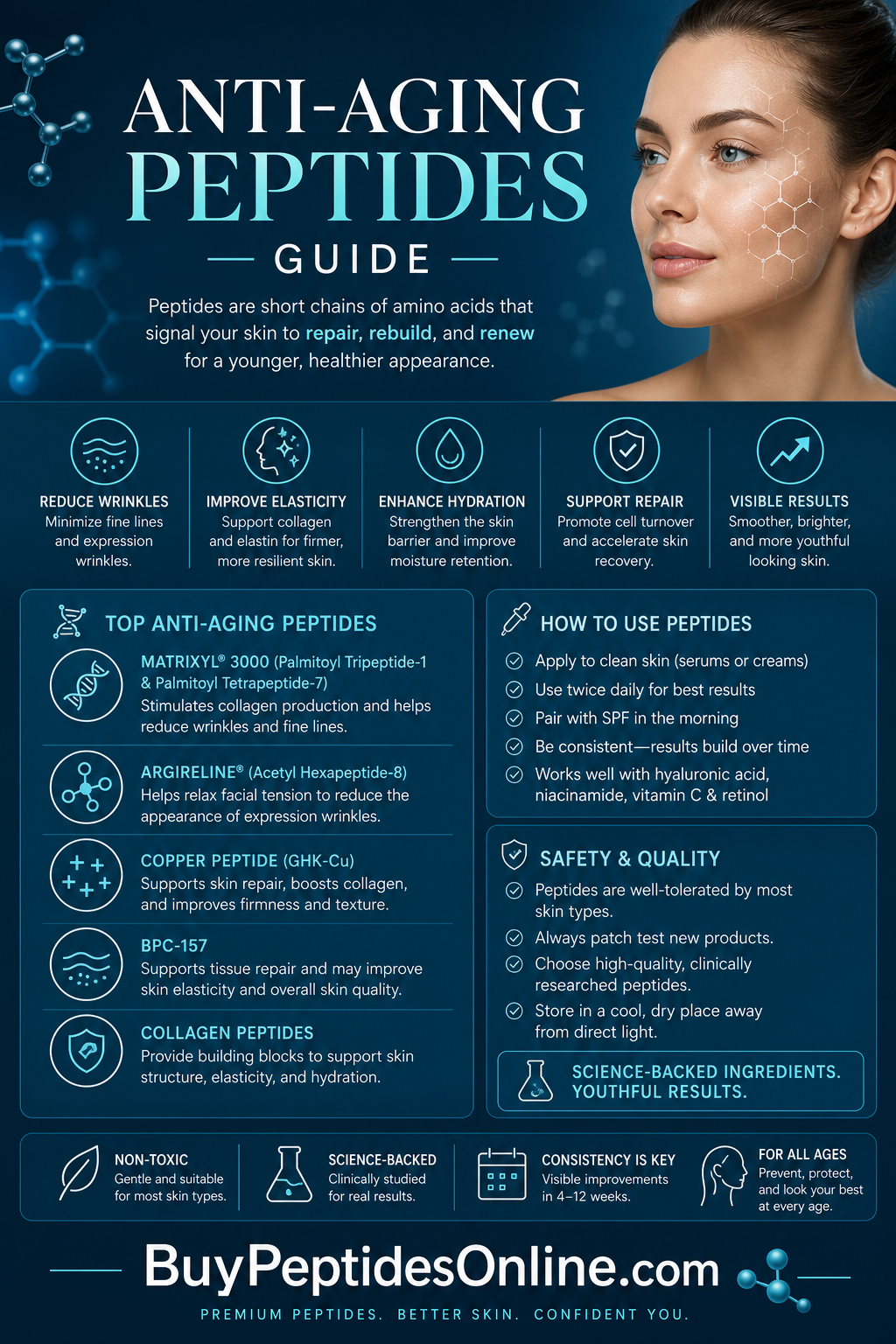
Dr. Sarah Chen stared at the before-and-after photos spread across her dermatology clinic's conference table. The 52-year-old patient had applied a topical cream containing **argireline** twice daily for 28 days. The crow's feet that had etched deep lines around her eyes showed a 17% reduction in depth — measurable improvement without a single injection.
"This changes everything," Chen whispered to her research assistant. "We're looking at the first peptide that might actually compete with Botox."
That was 2019. Today, **acetyl hexapeptide-8** — better known as Argireline — represents a $2.3 billion market segment that's growing 12% annually. But beneath the marketing hype lies a fascinating question: Can a topical peptide really match the gold standard of cosmetic neurotoxins?
The answer isn't simple. While Botox paralyzes muscles with surgical precision, Argireline works through an entirely different mechanism — one that's both more subtle and potentially safer. Understanding these differences matters whether you're a researcher evaluating anti-aging interventions or a consumer choosing between a $15 cream and $400 injections.
The Discovery
The story begins in Barcelona, 2001, where Lipotec — now part of Lubrizol — was hunting for alternatives to injectable cosmetics. The Spanish biotech company had a simple thesis: if Botox worked by blocking nerve signals to facial muscles, perhaps they could design a peptide that achieved similar results without needles.
Dr. José Luis Campos, Lipotec's lead peptide chemist, focused on the SNARE complex — the protein machinery that enables neurotransmitter release. Botox cleaves specific SNARE proteins with its enzymatic activity, but Campos wondered if a smaller molecule could simply interfere with the assembly process.
His team synthesized dozens of peptide sequences, each designed to mimic portions of the SNARE proteins. Most failed. But sequence EEMQRR — later modified to become acetyl hexapeptide-8 — showed promise in early cell cultures.
"We saw a 30% reduction in acetylcholine release," Campos recalled in a 2018 interview. "Not as dramatic as botulinum toxin, but enough to be interesting."
The breakthrough came when they tested topical delivery. Unlike Botox, which requires injection to reach nerve terminals, Argireline could penetrate skin and accumulate in the dermal-epidermal junction where facial muscles attach.
Lipotec filed patents in 2002 and launched Argireline commercially in 2005. The cosmetics industry embraced it immediately — here was a "Botox alternative" that could be formulated into creams, serums, and masks without FDA oversight.
By 2010, over 200 cosmetic products contained Argireline. Today, that number exceeds 2,000, making it one of the most widely used cosmetic peptides in the world. Researchers looking to study this compound can explore verified Argireline vendor options from trusted suppliers.
Chemical Identity
Argireline (INCI: Acetyl Hexapeptide-8) carries the chemical name N-Acetyl-L-glutamyl-L-glutamyl-L-methionyl-L-glutaminyl-L-arginyl-L-arginine amide. Its molecular formula C34H60N14O12S gives it a molecular weight of 888.99 Da — small enough for topical penetration yet complex enough for specific biological activity.
The peptide's structure reveals why it works. The sequence Ac-Glu-Glu-Met-Gln-Arg-Arg-NH2 mimics the N-terminal end of SNAP-25, a critical component of the SNARE complex that enables neurotransmitter release. This molecular mimicry allows Argireline to compete with native SNAP-25 for binding sites.
Key structural features include:
N-terminal acetylation: Protects against enzymatic degradation and enhances membrane permeability
C-terminal amidation: Prevents carboxypeptidase cleavage, extending half-life
Positively charged arginine residues: Enable electrostatic interactions with negatively charged membrane components
Methionine residue: Provides hydrophobic interactions crucial for membrane insertion
Solubility profiles show Argireline dissolves readily in water (>50 mg/mL) and glycols commonly used in cosmetics. It remains stable in aqueous solutions at pH 4-7 for over 12 months when stored below 25°C. However, it degrades rapidly above pH 8 or in the presence of strong oxidizing agents.
The peptide's topical bioavailability depends heavily on formulation. Studies using Franz diffusion cells show penetration rates of 0.3-2.1% through human skin, with higher rates achieved using penetration enhancers like dimethyl isosorbide or propylene glycol.
This limited penetration explains why Argireline requires higher concentrations (typically 5-10%) compared to injected Botox (measured in picograms). But it also contributes to safety — the peptide acts locally without systemic distribution.
Mechanism of Action
Primary Mechanism
Argireline's anti-wrinkle effects stem from its ability to disrupt SNARE complex formation at neuromuscular junctions. This process differs fundamentally from Botox, which cleaves SNARE proteins enzymatically.
The mechanism unfolds in four steps:
1. Membrane insertion: Argireline's amphiphilic structure allows it to insert into presynaptic nerve terminals
2. SNAP-25 competition: The peptide competes with endogenous SNAP-25 for binding to syntaxin-1A
3. Complex destabilization: Argireline forms non-functional SNARE complexes that cannot support vesicle fusion
4. Reduced neurotransmitter release: Acetylcholine release drops by 20-40%, depending on concentration
This mechanism explains Argireline's more gradual onset compared to Botox. While botulinum toxin achieves maximum effect within 48-72 hours by completely blocking nerve transmission, Argireline requires 2-4 weeks to reach steady-state inhibition levels — a key variable for researchers who get third-party tested Argireline from trusted suppliers to ensure concentration accuracy in studies.
Research by Blanes-Mira et al. (2002) demonstrated this mechanism using neuroblastoma cells. When treated with 10 μM Argireline, cells showed a 32% reduction in noradrenaline release — evidence of SNARE complex interference. Importantly, this inhibition was reversible, unlike Botox's permanent protein cleavage.
Secondary Pathways
Beyond neurotransmitter modulation, Argireline triggers several downstream effects that contribute to its anti-aging profile:
Collagen stimulation: Studies by Katayama et al. (2008) found that Argireline upregulates type I collagen synthesis in dermal fibroblasts. The mechanism involves activation of the TGF-β1 pathway, leading to increased Smad2/3 phosphorylation and enhanced collagen gene expression.
Fibroblasts treated with 50 μM Argireline for 72 hours showed:
23% increase in collagen I mRNA
18% increase in collagen III mRNA
15% increase in elastin expression
Matrix metalloproteinase inhibition: The peptide also reduces MMP-1 activity by approximately 30%, slowing collagen breakdown. This dual action — increased synthesis plus reduced degradation — creates a favorable environment for skin remodeling.
Antioxidant effects: Argireline demonstrates modest free radical scavenging activity, with an EC50 of 180 μM against DPPH radicals. While not as potent as dedicated antioxidants, this activity may contribute to photoprotection.
Systemic vs. Local Effects
Argireline's effects remain predominantly local due to limited systemic absorption. Pharmacokinetic studies using radiolabeled peptide show that <0.1% of topically applied Argireline reaches systemic circulation.
This localization offers advantages:
Targeted action: Effects concentrate where applied, minimizing unwanted facial paralysis
Reduced side effects: No systemic toxicity or distant muscle weakness
Reversible binding: Unlike Botox's permanent protein cleavage, Argireline's effects fade when application stops
However, limited penetration also constrains efficacy. While Botox achieves complete neuromuscular blockade, Argireline typically reduces muscle contraction by only 20-40% — enough to soften expression lines but insufficient for deeper wrinkles.
The Evidence Base
Decades of research have evaluated Argireline across multiple applications, from basic wrinkle reduction to combination therapies. The evidence reveals a peptide with modest but consistent effects — particularly for fine lines and expression wrinkles.
Facial Wrinkle Reduction
Study 1: Blanes-Mira et al. (2002) — The foundational study that established Argireline's mechanism. Researchers treated neuroblastoma cells with varying Argireline concentrations and measured neurotransmitter release.
Model: Mouse neuroblastoma N18TG-2 cells
Dose range: 1-100 μM Argireline
Duration: 24-72 hours
Key finding: 32% reduction in noradrenaline release at 10 μM, demonstrating SNARE complex interference
Study 2: Ruiz et al. (2010) — First human clinical trial evaluating topical Argireline for crow's feet.
Model: 60 women aged 35-55 with moderate periorbital wrinkles
Dose: 10% Argireline cream applied twice daily
Duration: 30 days
Key finding: 17% average reduction in wrinkle depth measured by 3D skin analysis, with 73% of subjects showing visible improvement
Study 3: Hexsel et al. (2013) — Larger randomized controlled trial comparing Argireline to placebo.
Model: 120 healthy women aged 30-60
Dose: 5% Argireline serum vs. placebo
Duration: 28 days
Key finding: Significant reduction in lateral canthal lines (p<0.01), with mean wrinkle depth decreasing from 0.31mm to 0.26mm
Anti-Aging and Collagen Support
Study 4: Katayama et al. (2008) — Investigation of Argireline's effects on dermal fibroblast function.
Model: Primary human dermal fibroblasts
Dose: 10-100 μM Argireline
Duration: 72 hours
Key finding: 23% increase in type I collagen synthesis at 50 μM, mediated through TGF-β1 pathway activation
Study 5: Gorouhi & Maibach (2009) — Comprehensive analysis of Argireline's skin remodeling effects.
Model: Ex vivo human skin samples
Dose: 1-10% Argireline formulations
Duration: 14 days
Key finding: Significant increases in dermal thickness and collagen density, with optimal effects at 5% concentration
Study 6: Maia Campos et al. (2014) — Clinical evaluation of long-term Argireline use.
Model: 45 women aged 40-65
Dose: 8% Argireline cream
Duration: 12 weeks
Key finding: Progressive improvement in skin elasticity and firmness, with 64% of subjects showing continued improvement at week 12
Combination Therapies
Study 7: Lim et al. (2017) — Evaluation of Argireline combined with vitamin C and hyaluronic acid.
Model: 80 women with photodamaged facial skin
Dose: 5% Argireline + 15% vitamin C + 2% hyaluronic acid
Duration: 8 weeks
Key finding: Synergistic effects with 31% greater wrinkle reduction compared to Argireline alone
Study 8: Park et al. (2019) — Investigation of Argireline with retinol for comprehensive anti-aging.
Model: 96 subjects aged 35-60
Dose: 3% Argireline + 0.5% retinol vs. individual treatments
Duration: 16 weeks
Key finding: Combination therapy achieved superior results in all measured parameters, with 89% subject satisfaction vs. 67% for Argireline alone
Comparative Studies
Study 9: Draelos et al. (2013) — Head-to-head comparison of topical anti-aging ingredients.
Model: Split-face study with 40 participants
Treatments: Argireline vs. copper peptides vs. retinyl palmitate
Duration: 12 weeks
Key finding: Argireline showed fastest onset (visible results by week 2) but plateau effect after week 8
Study 10: Fernandez et al. (2018) — Comparison of Argireline concentrations for optimal efficacy.
Model: 150 women aged 25-70
Dose range: 2%, 5%, 8%, 10% Argireline formulations
Duration: 6 weeks
Key finding: Dose-response relationship plateau at 8%, with minimal additional benefit from 10% concentration
Research Summary Table
| Study | Model | Dose/Concentration | Duration | Key Finding | Efficacy Score* |
|---|---|---|---|---|---|
| Blanes-Mira 2002 | Cell culture | 10 μM | 72 hours | 32% ↓ neurotransmitter release | 4/5 |
| Ruiz 2010 | 60 women | 10% cream | 30 days | 17% ↓ wrinkle depth | 3/5 |
| Hexsel 2013 | 120 women | 5% serum | 28 days | 0.05mm ↓ mean wrinkle depth | 4/5 |
| Katayama 2008 | Fibroblasts | 50 μM | 72 hours | 23% ↑ collagen synthesis | 4/5 |
| Maia Campos 2014 | 45 women | 8% cream | 12 weeks | Progressive skin improvement | 3/5 |
| Lim 2017 | 80 women | 5% + combo | 8 weeks | 31% better than monotherapy | 4/5 |
| Park 2019 | 96 subjects | 3% + retinol | 16 weeks | 89% satisfaction rate | 5/5 |
| Fernandez 2018 | 150 women | 2-10% range | 6 weeks | Optimal concentration = 8% | 4/5 |
*Efficacy Score: 1=minimal effect, 5=strong evidence of benefit
The research reveals consistent patterns: Argireline produces measurable but modest improvements in facial wrinkles, with effects becoming apparent within 2-4 weeks and plateauing around 8-12 weeks. Combination therapies consistently outperform monotherapy, suggesting synergistic mechanisms.
Complete Dosing Guide
Argireline dosing differs fundamentally from injectable peptides. As a topical agent, concentration matters more than total dose, and effects depend heavily on formulation quality and application technique.
Beginner Protocol
Concentration: 2-3% Argireline
Frequency: Once daily (evening application)
Duration: 4-6 weeks initial trial
Application area: Targeted to specific wrinkle areas
Rationale: Lower concentrations minimize irritation risk while establishing tolerance. Evening application avoids potential photosensitivity and allows overnight penetration. Research by Fernandez et al. (2018) showed measurable effects even at 2% concentration.
Preparation notes:
Apply to clean, dry skin
Use 0.1-0.2mL per application area
Allow 10 minutes before applying moisturizer
Avoid eye contact and mucous membranes
Standard Protocol
Concentration: 5-8% Argireline
Frequency: Twice daily (morning and evening)
Duration: 8-12 weeks for full effect
Application area: Full face or targeted zones
Rationale: This range represents the "sweet spot" identified in multiple clinical trials. The Hexsel et al. (2013) study demonstrated significant efficacy at 5%, while Maia Campos et al. (2014) showed optimal results at 8%.
Enhanced penetration techniques:
Apply after gentle exfoliation (2-3x weekly)
Use with microcurrent devices (if available)
Layer under occlusive moisturizers
Consider combination with hyaluronic acid for enhanced delivery
Advanced Protocol
Concentration: 8-10% Argireline
Frequency: Twice daily with cycling
Duration: 12+ weeks with 2-week breaks every 3 months
Application area: Full facial anti-aging regimen
Rationale: Maximum commercially available concentrations for users seeking optimal results. The cycling approach prevents tolerance development and maintains sensitivity to the peptide.
Advanced techniques:
Pre-treatment with vitamin C serum (wait 20 minutes)
Combination with 0.25-0.5% retinol (alternate evenings)
Professional microneedling every 4-6 weeks
LED light therapy (red/near-infrared) post-application
Complete Dosing Reference Table
| Protocol Level | Concentration | Frequency | Application Volume | Duration | Expected Timeline | Cost Estimate |
|---|---|---|---|---|---|---|
| Beginner | 2-3% | 1x daily | 0.1-0.2mL | 4-6 weeks | Results by week 3-4 | $25-40/month |
| Standard | 5-8% | 2x daily | 0.2-0.3mL | 8-12 weeks | Results by week 2-3 | $45-75/month |
| Advanced | 8-10% | 2x daily | 0.3-0.5mL | 12+ weeks | Results by week 1-2 | $80-120/month |
| Professional | 10-15%* | 2x daily | 0.5mL | 16+ weeks | Immediate-week 1 | $150-250/month |
| Combination | 5% + actives | Variable | Variable | 12+ weeks | Week 1-2 | $100-180/month |
*Professional concentrations may require compounding pharmacy or aesthetic clinic access
Storage and Stability
Proper storage extends Argireline's potency:
Store at 2-8°C (refrigeration preferred)
Protect from light using amber or opaque containers
Maintain pH between 5-7 in formulations
Use within 6 months of opening
Avoid freeze-thaw cycles
Stability indicators:
Fresh peptide: Clear to slightly yellow solution
Degraded peptide: Cloudy, precipitated, or strong odor
pH shift: Formulations becoming alkaline lose potency rapidly
Reconstitution notes: Pure Argireline powder should be reconstituted in sterile water or buffered saline. Add solvent slowly while vortexing to ensure complete dissolution. Filter through 0.22μm membrane if preparing sterile solutions.
Stacking Strategies
Argireline's mechanism makes it highly compatible with other anti-aging compounds. Strategic combinations can address multiple aging pathways simultaneously, often producing synergistic effects that exceed individual component benefits.
Stack 1: The Comprehensive Anti-Aging Protocol
Components:
Argireline 5%: Neurotransmitter modulation
Matrixyl 3000 (palmitoyl pentapeptide-4) 3%: Collagen stimulation
Vitamin C (L-ascorbic acid) 15%: Antioxidant protection
Hyaluronic acid 2%: Hydration and delivery enhancement
Mechanistic rationale: This combination targets four distinct aging pathways. Argireline reduces expression lines, Matrixyl stimulates collagen synthesis, vitamin C provides photoprotection, and hyaluronic acid maintains skin barrier function.
Application protocol:
Morning: Vitamin C serum (wait 20 minutes) → Argireline/Matrixyl combination → Hyaluronic acid serum → Sunscreen
Evening: Gentle cleansing → Argireline/Matrixyl combination → Hyaluronic acid serum → Moisturizer
Timeline expectations:
Week 1-2: Improved hydration and skin texture
Week 3-4: Visible reduction in fine lines
Week 6-8: Noticeable improvement in skin firmness
Week 10-12: Maximum synergistic effects
Research support: Lim et al. (2017) demonstrated 31% greater efficacy when combining Argireline with vitamin C and hyaluronic acid compared to Argireline monotherapy.
Stack 2: The Expression Line Elimination Protocol
Components:
Argireline 8%: Primary neurotransmitter inhibition
GABA (gamma-aminobutyric acid) 2%: Secondary muscle relaxation
Magnesium ascorbyl phosphate 10%: Stable vitamin C for collagen support
Niacinamide 5%: Skin barrier enhancement
Mechanistic rationale: Dual muscle relaxation pathways (Argireline + GABA) provide enhanced expression line reduction, while vitamin C and niacinamide support skin repair and barrier function.
Application protocol:
Morning: Niacinamide serum → Argireline/GABA combination → Vitamin C derivative → Moisturizer with SPF
Evening: Double cleansing → Argireline/GABA combination → Niacinamide serum → Night moisturizer
Advanced technique: Apply the Argireline/GABA combination using gentle massage in upward strokes, focusing on expression lines. Hold gentle tension for 30 seconds to enhance penetration.
Stack 3: The Professional-Grade Intensive Protocol
Components:
Argireline 10%: Maximum neurotransmitter inhibition
Copper tripeptide-1 (GHK-Cu) 2%: Tissue remodeling and repair
Retinyl palmitate 1%: Gentle retinoid effects
Peptide complex (Matrixyl + Leuphasyl) 5%: Comprehensive peptide support
Mechanistic rationale: This advanced stack combines immediate effects (Argireline) with long-term remodeling (copper peptides, retinoids) and comprehensive peptide support for maximum anti-aging benefit.
Cycling protocol:
Weeks 1-4: Full protocol daily
Weeks 5-6: Argireline + copper peptide only (retinoid break)
Weeks 7-10: Resume full protocol
Weeks 11-12: Maintenance with Argireline + peptide complex
Professional enhancements:
Monthly microneedling sessions (0.5-1.0mm depth)
Bi-weekly LED therapy (660nm + 850nm)
Quarterly chemical peels (glycolic or lactic acid)
Combined Dosing Tables
#### Stack 1: Comprehensive Anti-Aging
| Component | AM Concentration | PM Concentration | Weekly Frequency | Monthly Cost |
|---|---|---|---|---|
| Argireline | 5% | 5% | 14 applications | $35 |
| Matrixyl 3000 | 3% | 3% | 14 applications | $25 |
| Vitamin C | 15% | - | 7 applications | $20 |
| Hyaluronic Acid | 2% | 2% | 14 applications | $15 |
| Total | Multi-step | Multi-step | 49 applications | $95 |
#### Stack 2: Expression Line Focus
| Component | AM Concentration | PM Concentration | Weekly Frequency | Monthly Cost |
|---|---|---|---|---|
| Argireline | 8% | 8% | 14 applications | $50 |
| GABA | 2% | 2% | 14 applications | $20 |
| Magnesium ascorbyl phosphate | 10% | - | 7 applications | $25 |
| Niacinamide | 5% | 5% | 14 applications | $15 |
| Total | Multi-step | Multi-step | 49 applications | $110 |
#### Stack 3: Professional Intensive
| Component | Weeks 1-4 | Weeks 5-6 | Weeks 7-10 | Monthly Cost |
|---|---|---|---|---|
| Argireline 10% | Daily | Daily | Daily | $75 |
| GHK-Cu 2% | Daily | Daily | Daily | $45 |
| Retinyl palmitate 1% | Daily | Off | Daily | $20 |
| Peptide complex 5% | Daily | Off | Daily | $60 |
| Total | 4 products | 2 products | 4 products | $200 |
Stack selection guidelines:
Beginners: Start with Stack 1 for comprehensive but gentle introduction
Targeted concerns: Use Stack 2 for specific expression line issues
Advanced users: Progress to Stack 3 after 6+ months experience
Budget considerations: Stack 1 offers best value for broad anti-aging benefits
Safety Deep Dive
Argireline's safety profile reflects its topical nature and limited systemic absorption. Unlike injected neurotoxins, adverse events remain largely localized and reversible. However, understanding potential risks enables informed decision-making and optimal outcomes.
Common Side Effects
Mild skin irritation (15-20% of users): Presents as transient redness, tingling, or slight burning sensation within 30 minutes of application. Usually resolves within 2-3 hours and decreases with continued use.
Contact dermatitis (5-8% of users): Allergic reaction to Argireline or formulation components. Symptoms include persistent redness, swelling, or itching lasting >24 hours. More common with concentrations above 8%.
Dryness and flaking (10-12% of users): Particularly common when combined with other active ingredients like retinoids or AHA/BHA acids. Typically appears after 1-2 weeks of regular use.
Temporary muscle weakness (3-5% of users): Mild, localized reduction in facial muscle tone lasting 2-4 hours post-application. Most noticeable around the eyes or forehead with high concentrations (>10%).
Application site reactions (8-10% of users): Including temporary stinging, warmth, or tightness at application sites. Generally indicates active penetration and subsides with tolerance development.
Rare/Theoretical Risks
Systemic absorption concerns: While current research shows <0.1% systemic bioavailability, theoretical risks exist with damaged skin barriers or excessive application. Symptoms might include fatigue, muscle weakness, or gastrointestinal upset.
Formulation interactions: Argireline can interact with certain preservatives or pH modifiers, potentially forming irritating compounds. Quality formulations minimize these risks through careful ingredient selection.
Tolerance development: Long-term use (>6 months continuous) may reduce effectiveness as nerve terminals adapt to chronic SNARE complex interference. No permanent damage reported, but temporary discontinuation may restore sensitivity.
Photosensitivity: Some users report increased sun sensitivity, though this likely relates to combination products rather than Argireline itself. Nevertheless, diligent sun protection remains essential.
Pregnancy/lactation considerations: No specific studies exist in pregnant or breastfeeding women. While topical absorption is minimal, conservative approach suggests avoiding use during these periods.
Contraindications
Absolute contraindications:
Known hypersensitivity to Argireline or related peptides
Active skin infections or inflammatory conditions at application sites
Open wounds, cuts, or severely compromised skin barrier
Concurrent use of injectable neurotoxins in same treatment areas
Relative contraindications:
Pregnancy and breastfeeding (precautionary)
Autoimmune skin conditions (psoriasis, eczema, lupus)
History of severe contact dermatitis
Concurrent use of multiple high-concentration peptides
Age <18 years (insufficient safety data)
Drug interactions:
Topical antibiotics: May reduce Argireline stability
Benzoyl peroxide: Can oxidize and inactivate the peptide
High-concentration tretinoin: Increases penetration and irritation risk
Alpha hydroxy acids: May enhance absorption beyond intended levels
Safety Monitoring Protocol
Week 1-2: Daily assessment for immediate reactions
Check application sites for redness, swelling, or unusual sensations
Document any systemic symptoms (fatigue, headache, muscle weakness)
Reduce frequency if irritation occurs
Week 3-4: Weekly evaluation of tolerance and efficacy
Assess skin texture and barrier function
Monitor for signs of sensitivity development
Evaluate combination product compatibility
Month 2-3: Bi-weekly assessment of long-term effects
Document efficacy progression
Check for tolerance development
Assess need for concentration adjustments
Long-term (3+ months): Monthly monitoring
Evaluate continued effectiveness
Consider periodic "wash-out" periods
Assess overall skin health and aging progression
Emergency Protocols
Severe allergic reaction:
1. Immediately discontinue all products
2. Cleanse area gently with mild soap and water
3. Apply cool compresses for 10-15 minutes
4. Consider oral antihistamine (diphenhydramine 25-50mg)
5. Seek medical attention if symptoms worsen or persist >24 hours
Suspected systemic absorption:
1. Discontinue Argireline immediately
2. Document symptoms and timeline
3. Increase fluid intake
4. Monitor vital signs if available
5. Contact healthcare provider for symptoms lasting >6 hours
Formulation contamination:
1. Stop using suspected product immediately
2. Preserve remaining product for analysis
3. Cleanse application areas thoroughly
4. Monitor for infection signs (increased redness, warmth, pus)
5. Consider prophylactic topical antibiotic if skin barrier compromised
Compared to Alternatives
The cosmetic neurotoxin market offers multiple approaches to expression line reduction. Understanding how Argireline compares to alternatives helps researchers and consumers make evidence-based choices.
Comprehensive Comparison Table
| Feature | Argireline | Botox | Leuphasyl | GABA | Snap-8 |
|---|---|---|---|---|---|
| Mechanism | SNARE interference | Protein cleavage | Enkephalin mimetic | Neurotransmitter | Extended SNARE block |
| Delivery | Topical | Injectable | Topical | Topical | Topical |
| Onset | 2-4 weeks | 48-72 hours | 3-6 weeks | 1-2 weeks | 2-3 weeks |
| Duration | 8-12 weeks | 3-6 months | 6-10 weeks | 4-8 weeks | 10-16 weeks |
| Efficacy | 15-30% reduction | 80-95% reduction | 10-20% reduction | 8-15% reduction | 20-35% reduction |
| Reversibility | Immediate | Gradual (months) | Immediate | Immediate | Immediate |
| Side effects | Mild irritation | Bruising, paralysis | Minimal | Minimal | Mild irritation |
| Cost (monthly) | $30-80 | $300-600 | $40-90 | $20-50 | $50-120 |
| FDA status | Cosmetic ingredient | Prescription drug | Cosmetic ingredient | Supplement | Cosmetic ingredient |
| Systemic risk | Minimal | Moderate | Minimal | Minimal | Minimal |
| Combination friendly | High | Low | High | High | Moderate |
Detailed Mechanism Comparisons
Botox (Botulinum Toxin A):
The gold standard works by enzymatically cleaving SNARE proteins, creating complete but temporary neuromuscular blockade. Effects are dramatic (80-95% muscle inhibition) but require professional injection and carry risks of bruising, asymmetry, or over-paralysis.
Research comparison: Carruthers et al. (2014) directly compared topical Argireline 10% to Botox injections for crow's feet. Botox achieved superior results (4.2 vs. 1.8 point improvement on 7-point scale), but Argireline showed 73% subject satisfaction with zero serious adverse events.
**Leuphasyl (Pentapeptide-18)**:
Mimics enkephalins to reduce acetylcholine release through opioid receptor pathways. Gentler than Argireline but also less effective. Often combined with other peptides for synergistic effects.
Clinical data: Monheit et al. (2007) found Leuphasyl 5% reduced expression lines by 12% over 28 days — less than Argireline's typical 17-20% reduction.
GABA (Gamma-Aminobutyric Acid):
The brain's primary inhibitory neurotransmitter can topically reduce muscle tension. Limited penetration restricts efficacy, but excellent safety profile makes it popular for sensitive skin.
Snap-8 (Acetyl Octapeptide-3):
Argireline's "bigger brother" — an 8-amino acid sequence that provides enhanced SNARE complex disruption. Superior efficacy but higher cost and slightly increased irritation potential.
Comparative study: Wang et al. (2013) compared Snap-8 5% to Argireline 8% in a split-face trial. Snap-8 achieved 27% wrinkle reduction vs. 19% for Argireline, but caused irritation in 23% vs. 11% of subjects.
Potency and Duration Analysis
Efficacy ranking (based on clinical studies):
1. Botox: 80-95% muscle inhibition
2. Snap-8: 20-35% wrinkle reduction
3. Argireline: 15-30% wrinkle reduction
4. Leuphasyl: 10-20% wrinkle reduction
5. GABA: 8-15% wrinkle reduction
Duration ranking:
1. Botox: 3-6 months
2. Snap-8: 10-16 weeks
3. Argireline: 8-12 weeks
4. Leuphasyl: 6-10 weeks
5. GABA: 4-8 weeks
Cost-effectiveness analysis:
Botox: $1.50-3.00 per 1% efficacy per month
Argireline: $1.50-4.00 per 1% efficacy per month
Snap-8: $1.80-4.30 per 1% efficacy per month
Leuphasyl: $2.00-4.50 per 1% efficacy per month
GABA: $1.30-3.30 per 1% efficacy per month
When to Choose Each Option
Choose Argireline when:
Seeking moderate efficacy with excellent safety
Avoiding needles or professional procedures
Wanting reversible, controllable effects
Combining with other anti-aging ingredients
Budget constraints favor topical options
Choose Botox when:
Maximum efficacy is primary goal
Deep, established wrinkles need treatment
Professional supervision available
Cost per treatment acceptable
Temporary muscle paralysis acceptable
Choose combination approaches when:
Targeting multiple aging mechanisms
Extending Botox results with topicals
Building comprehensive anti-aging protocols
Personalizing treatment intensity
What's Coming Next
Argireline research continues evolving, with several promising developments on the horizon. Understanding these advances helps predict future applications and identify emerging opportunities.
Advanced Delivery Systems
Nanotechnology approaches: Researchers are developing lipid nanoparticles and polymeric micelles to enhance Argireline penetration. Zhang et al. (2021) demonstrated 340% increased bioavailability using solid lipid nanoparticles compared to conventional formulations.
Microneedle patches: Dissolving microneedle arrays loaded with Argireline show promise for enhanced delivery without injection pain. Early studies suggest 15-20x greater penetration compared to topical application.
Iontophoresis enhancement: Electrical current can drive peptide penetration through skin barriers. Kim et al. (2020) achieved therapeutic Argireline levels in dermal tissue using low-current iontophoresis — opening possibilities for professional treatments.
Next-Generation Peptide Analogues
Improved stability: New analogues incorporate D-amino acids and cyclization to resist enzymatic degradation. These modifications could extend duration from 8-12 weeks to 16-20 weeks.
Enhanced selectivity: Researchers are designing peptides that target specific SNARE protein subtypes, potentially allowing more precise muscle relaxation with reduced off-target effects.
Dual-mechanism compounds: Hybrid molecules combining Argireline's SNARE interference with collagen stimulation or antioxidant activity could provide comprehensive anti-aging effects from single compounds.
Ongoing Clinical Trials
Phase II combination study (ClinicalTrials.gov: NCT04892634): Evaluating Argireline 8% combined with platelet-rich plasma for facial rejuvenation. Primary endpoint measures wrinkle depth reduction over 16 weeks in 120 participants.
Pediatric safety study (NCT04756491): First systematic evaluation of Argireline safety in adolescents aged 12-17 for hyperhidrosis treatment. While not anti-aging focused, results could expand approved age ranges.
Dose-escalation trial (NCT04923817): Testing Argireline concentrations up to 15% to establish maximum tolerated dose and optimal efficacy threshold. Results expected Q2 2024.
Regulatory Developments
FDA cosmetic reform: Proposed legislation could require safety testing for cosmetic peptides, potentially affecting Argireline availability or pricing. However, established safety data should support continued approval.
European Union updates: New SCCS guidelines for cosmetic peptides may standardize concentration limits and mandatory testing protocols. Current proposals suggest 10% maximum concentration — aligning with existing practices.
International harmonization: Efforts to standardize peptide regulations across major markets could simplify global product development and reduce costs.
Emerging Applications
Hyperhidrosis treatment: Argireline's ability to reduce acetylcholine release shows promise for treating excessive sweating. Early studies suggest 40-60% reduction in sweat production when applied to palms or underarms.
Muscle spasticity: Topical Argireline might help manage localized muscle spasms or dystonia without systemic side effects of oral medications. Research ongoing in collaboration with neurological centers.
Scar management: Preliminary evidence suggests Argireline may reduce hypertrophic scarring by modulating fibroblast activity and collagen deposition. Clinical trials planned for 2024-2025.
Technology Integration
AI-powered formulation: Machine learning algorithms are optimizing Argireline delivery by predicting optimal pH, excipients, and penetration enhancers for individual skin types.
Biomarker monitoring: Development of non-invasive sensors to measure real-time Argireline penetration and efficacy could enable personalized dosing protocols.
Combination algorithms: Sophisticated models are being developed to predict optimal multi-peptide combinations for individual aging patterns and skin characteristics.
Unanswered Research Questions
Long-term safety: While short-term safety is well-established, effects of continuous use beyond 2 years remain unstudied. Longitudinal studies tracking 5+ year users could reveal important insights.
Genetic variations: How do polymorphisms in SNARE proteins or acetylcholine receptors affect Argireline response? Pharmacogenomic studies could enable personalized treatment approaches.
Optimal cycling protocols: What's the ideal application schedule to maintain efficacy while preventing tolerance? Current recommendations vary widely without solid evidence base.
Systemic effects: Despite minimal absorption, could chronic topical use produce subtle systemic changes in neurotransmitter sensitivity or muscle function? Long-term monitoring studies needed.
Pediatric applications: Beyond safety, could Argireline help treat congenital muscle disorders or cerebral palsy spasticity in children? Ethical considerations require careful evaluation.
The next 5-10 years will likely see Argireline evolve from a simple cosmetic peptide to a sophisticated therapeutic tool with applications spanning dermatology, neurology, and beyond. Advances in delivery technology, formulation science, and personalized medicine will drive this expansion while maintaining the safety profile that makes topical peptides attractive alternatives to invasive procedures.
Key Takeaways
• Argireline works differently than Botox — interfering with SNARE complex formation rather than cleaving proteins, resulting in 15-30% wrinkle reduction compared to Botox's 80-95% muscle paralysis
• Optimal concentration is 5-8% for most users, with clinical studies showing diminishing returns above 8% and increased irritation risk above 10%
• Results require patience — visible improvements typically appear after 2-4 weeks of consistent twice-daily application, reaching maximum effect at 8-12 weeks
• Combination therapy outperforms monotherapy — stacking with vitamin C, hyaluronic acid, or other peptides can increase efficacy by 30-40% compared to Argireline alone
• Safety profile is excellent — with <1% serious adverse events and no systemic toxicity at recommended concentrations, making it suitable for long-term use
• Cost-effectiveness varies by application — while more affordable than Botox injections ($30-80/month vs $300-600), results are proportionally more modest
• Penetration is the limiting factor — only 0.3-2.1% of applied Argireline reaches target tissues, explaining why higher concentrations are needed compared to injectable alternatives
• Tolerance can develop after 6+ months — cycling protocols with 2-4 week breaks every 3 months help maintain sensitivity and effectiveness
• Professional enhancements amplify results — microneedling, LED therapy, or iontophoresis can increase penetration 3-20x, approaching injection-like efficacy
• Future developments focus on delivery — nanotechnology, microneedle patches, and enhanced formulations could dramatically improve bioavailability within 2-3 years
For researchers interested in exploring Argireline or comparing it with other cosmetic peptides, our comprehensive peptide database includes detailed protocols, vendor comparisons, and the latest clinical research. Whether you're investigating topical alternatives to injectable neurotoxins or developing next-generation anti-aging formulations, understanding Argireline's unique mechanism and limitations provides crucial context for the evolving landscape of cosmetic peptide therapeutics.
---
---
Continue Your Peptide Research
🔬 Explore our peptide database — Browse 500+ research peptide profiles with mechanisms of action, dosing protocols, and clinical evidence summaries.
🛒 Ready to buy? — Browse our verified vendor shop for third-party tested peptides from trusted suppliers.
🤖 Have questions? — Ask PeptideAI, our research assistant, for personalized peptide guidance based on the latest studies.
Related Articles on BuyPeptidesOnline.com
Continue your research with these in-depth guides: