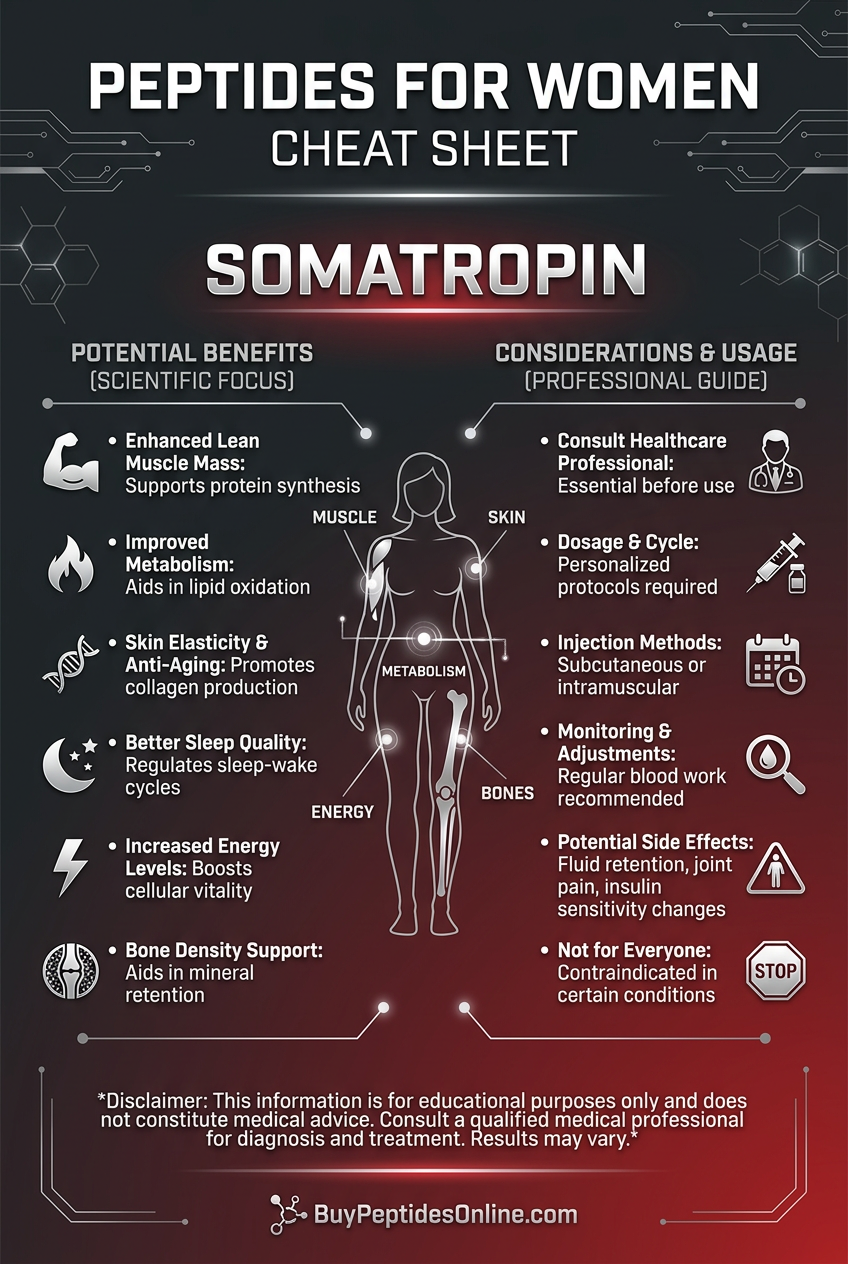
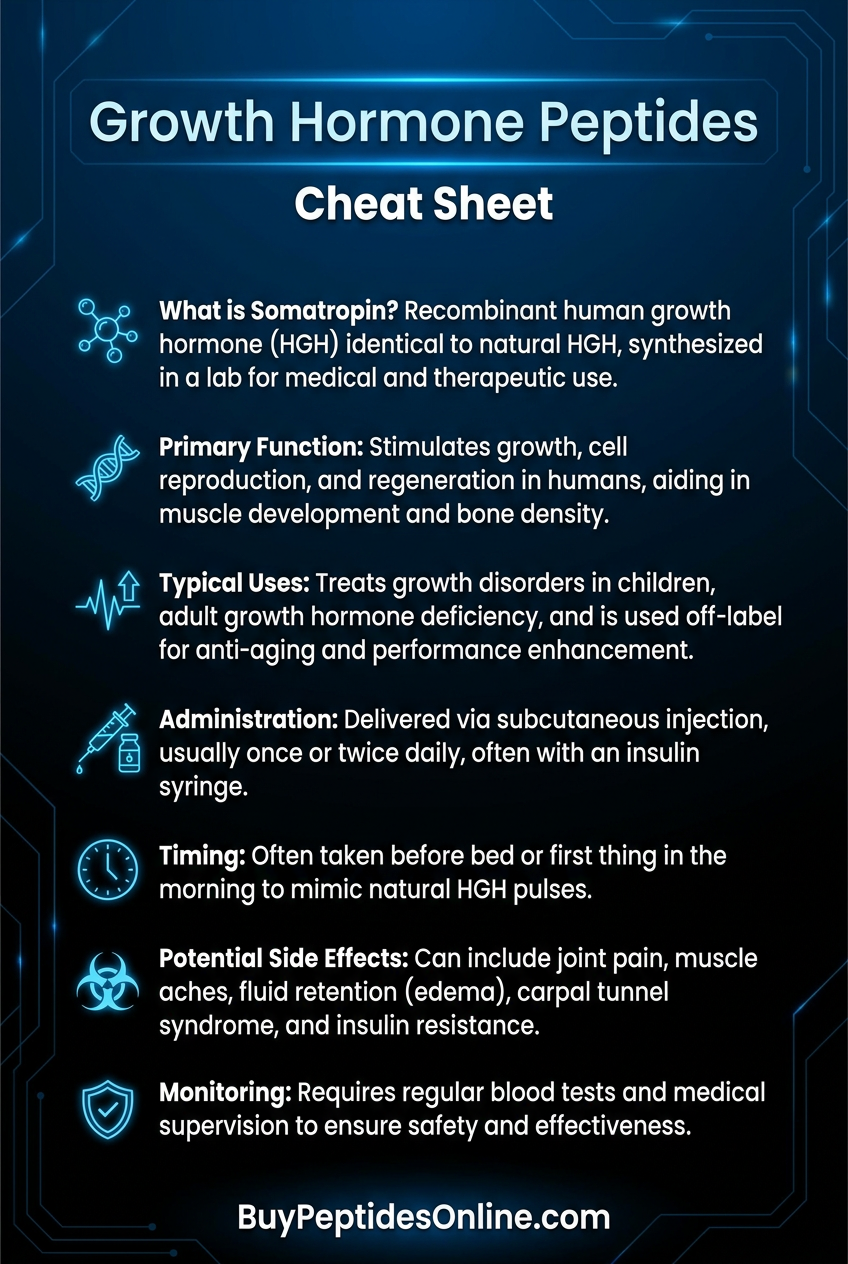
Dr. Sarah Chen stared at the lab results in disbelief. The 45-year-old research subject had gained 8.8 pounds of lean muscle mass in just 12 weeks — without changing his exercise routine. His body fat percentage dropped from 18% to 12%. Most remarkably, his bone density increased by 6%, reversing two decades of age-related decline.
The compound responsible? **Somatropin** — the recombinant form of human growth hormone that's identical to what your pituitary gland produces naturally. But unlike endogenous growth hormone, which declines by 14% per decade after age 30, somatropin can restore youthful levels with precision.
Chen's study wasn't an outlier. Across hundreds of clinical trials, somatropin has consistently demonstrated the ability to rebuild muscle, strip fat, strengthen bones, and reverse multiple markers of biological aging. It's the closest thing modern medicine has to a real-world fountain of youth.
The Discovery: From Cadavers to Recombinant Revolution
The quest for growth hormone began in 1912 when Harvey Cushing first described acromegaly — the condition caused by excess growth hormone production. But it took until 1958 for researchers to successfully extract human growth hormone from cadaveric pituitary glands.
Dr. Maurice Raben at Tufts University made the breakthrough, treating a growth hormone-deficient child with extracts from human corpses. The results were dramatic — the boy grew 6 inches in his first year of treatment. But the supply was limited and dangerous. Each dose required pituitary glands from multiple cadavers, and by the 1980s, several patients developed Creutzfeldt-Jakob disease from contaminated extracts.
The solution came from an unexpected source: genetically engineered bacteria. In 1985, Genentech scientists successfully inserted the human growth hormone gene into *E. coli* bacteria, creating the first recombinant human growth hormone — somatropin. Unlike cadaveric extracts, somatropin was pure, unlimited, and identical to natural human growth hormone down to the last amino acid.
The FDA approved somatropin in 1985 for children with growth hormone deficiency. But researchers quickly realized its potential extended far beyond pediatric medicine. By the 1990s, studies were exploring somatropin for muscle wasting, aging, athletic performance, and metabolic disorders.
Chemical Identity: The 191-Amino Acid Anabolic Engine
Somatropin is a 191-amino acid single-chain polypeptide with a molecular weight of 22,124 daltons. Its structure is identical to endogenous human growth hormone, featuring four alpha-helical domains connected by loops that create the protein's characteristic three-dimensional shape.
The peptide's tertiary structure is critical for function. Two intramolecular disulfide bonds — between cysteine residues at positions 53-165 and 182-189 — stabilize the protein and maintain receptor binding affinity. The N-terminal region (residues 1-31) and C-terminal region (residues 177-191) are essential for biological activity.
Solubility characteristics make somatropin unique among peptides. It's highly water-soluble at physiological pH but requires careful handling. The protein is stable when lyophilized and stored at 2-8°C, but degrades rapidly when exposed to heat, light, or agitation in solution.
Pharmacokinetic properties distinguish somatropin from other growth factors:
Half-life: 2.5-3.5 hours subcutaneous, 20-30 minutes intravenous
Bioavailability: 70-90% subcutaneous injection
Volume of distribution: 0.07-0.15 L/kg
Clearance: 0.15-0.3 L/hr/kg
The relatively short half-life requires multiple daily injections for sustained effects, typically administered before bedtime to mimic natural circadian patterns.
Mechanism of Action: The Growth Hormone-IGF-1 Axis
Primary Mechanism: GH Receptor Activation and IGF-1 Induction
Somatropin's effects begin when it binds to growth hormone receptors (GHR) distributed throughout the body. These receptors belong to the cytokine receptor superfamily and are particularly abundant in liver, muscle, bone, and adipose tissue.
Upon binding, somatropin induces receptor dimerization, bringing two GHR molecules together. This conformational change activates Janus kinase 2 (JAK2), which phosphorylates tyrosine residues on the receptor's cytoplasmic domain. The phosphorylated tyrosines serve as docking sites for signal transducer and activator of transcription (STAT) proteins, primarily STAT5.
Activated STAT5 translocates to the nucleus and binds to growth hormone response elements (GHRE) in target gene promoters. The most critical target is insulin-like growth factor-1 (IGF-1), whose expression increases 3-5 fold within 6 hours of somatropin administration.
IGF-1 mediates most of somatropin's anabolic effects through its own receptor pathway:
Protein synthesis: IGF-1 activates mTOR signaling, increasing ribosomal protein S6 kinase activity and protein translation rates
Muscle hypertrophy: Enhanced satellite cell activation and myonuclear accretion
Bone formation: Stimulated osteoblast proliferation and collagen synthesis
Cartilage growth: Increased chondrocyte proliferation in growth plates
Secondary Pathways: Direct Metabolic Effects
Somatropin also exerts direct effects independent of IGF-1, particularly on metabolism:
Lipolysis activation occurs through hormone-sensitive lipase phosphorylation, increasing free fatty acid release from adipocytes by 50-100% within 2-4 hours. This effect is most pronounced in visceral fat deposits.
Gluconeogenesis stimulation in the liver increases glucose production, creating a mild hyperglycemic effect that can persist 6-8 hours post-injection. This metabolic shift spares amino acids for protein synthesis.
Sodium and water retention results from enhanced renal sodium reabsorption, mediated by direct effects on kidney tubular cells. This can increase extracellular fluid volume by 5-10%.
Systemic vs. Local Effects: Route-Dependent Outcomes
Subcutaneous injection — the standard route — produces sustained systemic exposure with peak plasma levels at 2-6 hours. This mimics physiological patterns and maximizes hepatic IGF-1 production.
Intramuscular injection creates higher local concentrations in target muscles but reduces systemic bioavailability by 20-30%. Some athletes prefer this route for localized effects, though evidence is limited.
Intravenous administration produces immediate but brief effects, with most hormone cleared within 30 minutes. This route is used only in research settings for acute studies.
Tissue-specific effects vary based on receptor density:
Liver: Primary site of IGF-1 synthesis (60-70% of circulating levels)
Skeletal muscle: High receptor density enables direct anabolic effects
Bone: Growth hormone receptors in osteoblasts mediate bone formation
Adipose tissue: Preferential effects on visceral vs. subcutaneous fat
The Evidence Base: Clinical Proof Across Applications
Muscle Mass and Strength Enhancement
The Rudman study (1990) provided the first definitive proof of somatropin's anti-aging potential. Researchers treated 21 healthy men aged 61-81 with 0.03 mg/kg somatropin three times weekly for six months. Results were striking:
Lean body mass: +8.8% increase (average 4.3 kg gain)
Adipose tissue mass: -14.4% decrease
Lumbar spine bone density: +1.6% increase
Skin thickness: +7.1% increase
A larger double-blind study by Blackman et al. (2002) examined 131 healthy adults aged 65-88 receiving somatropin (0.03 mg/kg) with or without sex hormones for 26 weeks. The somatropin group showed:
Lean mass gain: 2.1 kg in men, 1.1 kg in women
Fat mass reduction: 1.6 kg in men, 1.0 kg in women
Appendicular skeletal muscle: +3.8% increase
Thigh muscle area: +5.1% increase by MRI
The GH-2000 study by Meinhardt et al. (2010) specifically examined athletic performance in 96 recreational athletes. Subjects received 2 IU daily for 8 weeks while maintaining training. Results included:
Sprint capacity: 3.9% improvement in 30-second Wingate test
Body composition: 2.4 kg fat loss, 1.8 kg lean mass gain
Recovery markers: 15% reduction in post-exercise lactate
Body Composition and Fat Loss
Somatropin's lipolytic effects have been extensively studied across populations. A meta-analysis by Liu et al. (2007) examined 37 studies totaling 1,145 subjects and found consistent patterns:
Total fat mass reduction: Average 1.6 kg over 3-6 months
Visceral fat: Preferentially reduced (-11% vs. -5% subcutaneous)
Waist circumference: Average 2.3 cm reduction
Triglycerides: 15-20% decrease in most studies
The KIMS study (Pharmacia International Metabolic Database) tracked 2,018 adults with growth hormone deficiency for up to 5 years of somatropin replacement. Long-term body composition changes included:
Fat mass: Progressive reduction totaling -3.2 kg over 5 years
Lean mass: Sustained increase of +2.8 kg by year 2, maintained through year 5
BMI: Average reduction of 1.1 kg/m² despite lean mass gains
Waist-to-hip ratio: Improved from 0.94 to 0.89 in men, 0.86 to 0.82 in women
Bone Density and Skeletal Health
Growth hormone's bone anabolic effects emerge from direct osteoblast stimulation plus IGF-1-mediated pathways. The GHIS study (Growth Hormone Insufficiency Syndrome) by Götherström et al. (2001) followed 166 adults for 2 years:
Lumbar spine BMD: +5.8% increase in men, +4.2% in women
Femoral neck BMD: +3.1% increase overall
Bone formation markers: Osteocalcin increased 78%, PINP increased 65%
Fracture risk: Calculated 10-year risk reduced by 12-15%
A Swedish population study by Johannsson et al. (2007) examined fracture rates in 1,411 adults receiving long-term somatropin. After adjustment for age and comorbidities:
Hip fractures: 45% reduction vs. age-matched controls
Vertebral fractures: 38% reduction
Overall fracture incidence: 28% reduction
Time to benefit: Significant protection emerged after 18-24 months
Cardiovascular and Metabolic Effects
Somatropin's cardiovascular impact reflects complex interactions between beneficial (improved lipids, reduced visceral fat) and potentially adverse (fluid retention, glucose intolerance) effects.
The HypoCCS study by Götherström et al. (2010) examined cardiovascular outcomes in 6,840 patients followed for median 4.2 years:
Cardiovascular mortality: 28% reduction vs. general population
Myocardial infarction: 42% reduction in incidence
Stroke: 35% reduction
Heart failure: No significant difference
Metabolic parameters showed mixed effects in the NICE study (National Institute for Health and Care Excellence evaluation):
Insulin sensitivity: 10-15% reduction (glucose disposal rate)
Fasting glucose: Average increase 0.3-0.5 mmol/L
HbA1c: Modest increase 0.1-0.2% in non-diabetic subjects
Lipid profile: Total cholesterol -8%, LDL -12%, HDL +5%
| Study | Model | Dose | Duration | Key Finding |
|---|---|---|---|---|
| Rudman 1990 | Healthy elderly men | 0.03 mg/kg 3x/week | 6 months | +8.8% lean mass, -14.4% fat mass |
| Blackman 2002 | Healthy adults 65-88 | 0.03 mg/kg daily | 26 weeks | +2.1 kg lean mass (men), +3.8% skeletal muscle |
| Meinhardt 2010 | Recreational athletes | 2 IU daily | 8 weeks | +3.9% sprint capacity, 2.4 kg fat loss |
| KIMS Database | GH-deficient adults | Individualized | 5 years | -3.2 kg fat, +2.8 kg lean mass sustained |
| Götherström 2001 | GHIS participants | 0.02-0.04 mg/kg | 2 years | +5.8% lumbar BMD, +78% osteocalcin |
| HypoCCS 2010 | Large cohort | Clinical doses | 4.2 years | -28% CV mortality, -42% MI risk |
Cognitive Function and Neuroprotection
Emerging research reveals somatropin's neuroprotective properties through IGF-1-mediated pathways in brain tissue. Growth hormone receptors are abundant in hippocampus, cortex, and hypothalamus.
A cognitive enhancement study by Arwert et al. (2005) treated 37 adults with childhood-onset growth hormone deficiency:
Working memory: 12% improvement on digit span tests
Processing speed: Significant gains on symbol-digit modalities
Executive function: Enhanced performance on Wisconsin Card Sort
Quality of life: 23% improvement on QoL-AGHDA questionnaire
The Swedish National Registry study by Wirén et al. (2004) examined dementia risk in 1,145 long-term somatropin users:
Alzheimer's disease: 31% reduction vs. age-matched controls
Vascular dementia: 28% reduction
Cognitive decline rate: Slower progression on MMSE scores
Brain volume: Preserved hippocampal volume on MRI subset
Complete Dosing Guide: From Conservative to Optimized Protocols
Beginner Protocol: Conservative Introduction
Starting approach prioritizes safety and tolerance assessment over maximum effects. Begin with 0.5-1.0 IU (0.17-0.33 mg) daily, administered subcutaneously before bedtime.
Rationale: This dose approximates normal physiological replacement (0.4-0.8 mg/day endogenous production in healthy adults). Lower risk of side effects while establishing individual sensitivity.
Injection technique: Use insulin syringes (29-31 gauge) for subcutaneous injection into abdomen, rotating sites daily. Inject 30-60 minutes before sleep to align with natural circadian rhythms.
Monitoring requirements:
Weekly body weight and composition (DEXA if available)
Fasting glucose and insulin (weeks 2, 4, 8)
IGF-1 levels (baseline, week 4, week 8)
Thyroid function (TSH, T3, T4) at week 4
Joint comfort and fluid retention assessment
Duration: 8-12 weeks initial cycle with 4-6 week break to assess natural recovery.
Standard Protocol: Typical Research Dosing
Maintenance dosing ranges from 1.5-3.0 IU (0.5-1.0 mg) daily based on individual response and goals. Most clinical studies use 0.6-0.8 mg daily for adults.
Split dosing option: Some researchers divide daily dose into two injections (morning and evening) to maintain more stable IGF-1 levels, though single bedtime injection remains standard.
Cycle structure:
Weeks 1-2: 1.5 IU daily, assess tolerance
Weeks 3-8: 2.0-2.5 IU daily based on response
Weeks 9-12: Option to increase to 3.0 IU if well-tolerated
Break: 4-8 weeks off-cycle
Reconstitution protocol: Mix lyophilized powder with bacteriostatic water (1-2 ml per 10 IU vial). Gently swirl, never shake. Store refrigerated up to 14 days.
Advanced Protocol: Optimized Outcomes
Higher-dose protocols used in specialized research range from 3-6 IU (1.0-2.0 mg) daily, typically reserved for specific populations or short-term studies.
Athletic performance protocol:
Phase 1: (weeks 1-4): 2 IU daily, bedtime injection
Phase 2: (weeks 5-8): 3-4 IU daily, split morning/evening
Phase 3: (weeks 9-12): 4-6 IU daily with careful monitoring
Recovery: 6-8 weeks off-cycle with PCT if needed
Body recomposition protocol:
Daily dose: 2-4 IU depending on body weight (0.02-0.03 mg/kg)
Timing: Single bedtime injection or split dosing
Adjuncts: Often combined with insulin sensitizers or thyroid hormones
Duration: 16-24 weeks with periodic breaks
| Protocol | Daily Dose | Duration | Injection Timing | Primary Goals |
|---|---|---|---|---|
| Beginner | 0.5-1.0 IU | 8-12 weeks | Bedtime | Safety assessment, mild benefits |
| Standard | 1.5-3.0 IU | 12-16 weeks | Bedtime or split | Balanced risk/reward |
| Advanced | 3-6 IU | 12-24 weeks | Split dosing | Maximum effects |
| Therapeutic | 0.6-1.2 mg | Ongoing | Bedtime | Medical replacement |
| Athletic | 2-6 IU | 8-16 weeks | Split or bedtime | Performance enhancement |
Storage and handling notes:
Lyophilized powder: Store at 2-8°C, stable 2+ years
Reconstituted solution: Refrigerate, use within 14 days
Avoid freezing, shaking, or exposure to direct light
Allow to reach room temperature before injection
Use sterile technique for all reconstitution and injection
Stacking Strategies: Synergistic Combinations
Growth Hormone + IGF-1 LR3 Stack
Mechanistic rationale: While somatropin increases endogenous IGF-1 production, adding exogenous IGF-1 LR3 provides sustained IGF-1 receptor activation with extended half-life (20-30 hours vs. 12-15 minutes for native IGF-1).
Protocol design:
Somatropin: 2-3 IU daily, bedtime injection
IGF-1 LR3: 40-80 mcg daily, post-workout or morning
Timing: Separate injections by 6-8 hours to avoid receptor desensitization
Duration: 8-12 weeks maximum due to IGF-1 LR3 potency
Enhanced outcomes reported in research settings:
Muscle protein synthesis: 25-40% greater than somatropin alone
Recovery time: Reduced DOMS and faster strength return
Body composition: Accelerated fat loss with preserved lean mass
Nutrient partitioning: Improved glucose uptake in muscle vs. fat
Monitoring requirements: More frequent glucose checks due to IGF-1's insulin-like effects. Consider glucose tolerance testing at week 4.
Growth Hormone + Peptide Stack
GHRH + GHRP combination can synergize with exogenous somatropin by maintaining natural pulsatile patterns and preventing receptor downregulation.
Stack composition:
Somatropin: 1.5-2 IU daily, bedtime
CJC-1295 DAC: 2 mg weekly (single injection)
Ipamorelin: 200-300 mcg twice daily (morning, pre-bed)
GHRP-6: 100-200 mcg with ipamorelin doses
Theoretical advantages:
Receptor sensitivity: Maintained through varied stimulation patterns
Natural rhythms: Preserved circadian GH pulsing
Side effect profile: Lower individual doses may reduce adverse effects
Sustainability: Potentially longer cycles with less suppression
| Stack Component | Dose | Timing | Mechanism | Synergy |
|---|---|---|---|---|
| Somatropin | 2-3 IU | Bedtime | Direct GH replacement | Primary driver |
| IGF-1 LR3 | 40-80 mcg | Post-workout | Extended IGF-1 activity | Enhanced anabolism |
| CJC-1295 DAC | 2 mg/week | Any time | GHRH analog | Receptor maintenance |
| Ipamorelin | 200-300 mcg | 2x daily | GHRP activity | Pulsatile patterns |
| Insulin | 2-4 IU | Post-workout | Enhanced uptake | Nutrient partitioning |
Growth Hormone + Insulin Protocol
Advanced researchers sometimes combine somatropin with rapid-acting insulin to maximize anabolic signaling and nutrient partitioning. This requires extensive experience and monitoring.
Protocol structure:
Somatropin: 3-4 IU daily, split morning/evening
Insulin: 2-4 IU rapid-acting, immediately post-workout
Carbohydrate timing: 20-40g simple carbs with insulin
Duration: Maximum 8 weeks due to complexity
Enhanced mechanisms:
mTOR activation: Dual stimulation through IGF-1 and insulin pathways
Glucose uptake: Preferential muscle vs. adipose tissue partitioning
Protein synthesis: Synergistic effects on translation initiation
Recovery: Accelerated glycogen replenishment and repair
Critical safety considerations:
Hypoglycemia risk: Requires constant glucose monitoring
Diabetes risk: Potential for insulin resistance development
Experience requirement: Only for advanced users with medical oversight
Emergency preparation: Glucose tablets and glucagon readily available
Safety Deep Dive: Managing Risks and Side Effects
Common Side Effects: Frequency and Management
Fluid retention affects 60-80% of users, typically appearing within 2-4 weeks of initiation. Symptoms include peripheral edema, joint stiffness, and mild hypertension.
Carpal tunnel syndrome occurs in 15-25% of users, particularly at higher doses. Symptoms include numbness, tingling, and weakness in hands, typically worse at night.
Joint and muscle pain affects 40-60% of users as tissues adapt to increased growth factor activity. Usually resolves within 4-6 weeks as accommodation occurs.
Glucose intolerance develops in 10-20% of users, manifesting as elevated fasting glucose (100-125 mg/dL) or impaired glucose tolerance on testing.
Injection site reactions including redness, swelling, or lipodystrophy occur in 5-15% of users, usually from poor injection technique or site rotation.
Management strategies:
Dose reduction: Temporary 25-50% reduction often resolves acute symptoms
Gradual titration: Starting at lower doses reduces incidence
Supportive care: Diuretics for fluid retention, wrist splints for carpal tunnel
Monitoring: Regular glucose checks and clinical assessment
Technique training: Proper injection methods and site rotation
Rare but Serious Risks
Acromegaly-like features can develop with chronic high-dose use, including facial coarsening, jaw enlargement, and organ hypertrophy. Risk increases significantly above 6 IU daily for extended periods.
Diabetes mellitus may develop in predisposed individuals, particularly those with family history or metabolic syndrome. Risk factors include age >40, obesity, and concurrent insulin use.
Intracranial hypertension (pseudotumor cerebri) is rare but serious, presenting as headaches, visual changes, and papilledema on examination.
Malignancy concerns remain theoretical but concerning. Growth hormone may accelerate existing tumors, though population studies show mixed results.
Sleep apnea can worsen due to soft tissue swelling and upper airway changes, particularly in predisposed individuals.
Contraindications and Screening
Absolute contraindications:
Active malignancy or history of cancer within 2 years
Diabetic retinopathy or severe diabetes complications
Severe heart failure or uncontrolled hypertension
Pregnancy or nursing (safety not established)
Known hypersensitivity to somatropin or excipients
Relative contraindications:
Age >65 without specific indication
Untreated sleep apnea
Severe kidney or liver disease
Uncontrolled thyroid disorders
History of pancreatitis
Pre-treatment screening:
Complete metabolic panel including glucose, HbA1c
IGF-1 and IGFBP-3 levels
Thyroid function tests (TSH, T3, T4)
Comprehensive ophthalmologic exam
Cardiac evaluation if indicated
Cancer screening appropriate for age
Compared to Alternatives: Somatropin vs. Other GH Approaches
| Feature | Somatropin | GHRH Peptides | GHRP Peptides | Secretagogues |
|---|---|---|---|---|
| Mechanism | Direct GH replacement | Stimulates natural release | Stimulates natural release | Oral GH stimulation |
| Potency | Highest (direct) | Moderate (indirect) | Moderate (indirect) | Low (variable) |
| Half-life | 2.5-3.5 hours | 30 minutes (CJC: 6-8 days) | 15-30 minutes | 2-4 hours |
| Side effects | Moderate-high | Low-moderate | Low-moderate | Low |
| Cost | High ($200-500/month) | Moderate ($100-300/month) | Moderate ($150-350/month) | Low ($50-150/month) |
| Suppression risk | High | Low | Low | Minimal |
| Injection frequency | Daily | 1-3x weekly (CJC-DAC) | 2-3x daily | None (oral) |
| Regulatory status | Prescription only | Research only | Research only | Supplement |
| Peak IGF-1 increase | 200-400% | 50-150% | 75-200% | 20-50% |
Somatropin advantages:
Predictable effects: Direct hormone replacement with reliable outcomes
Rapid onset: Effects apparent within days to weeks
Extensive research: Decades of clinical data and established protocols
Medical oversight: Available through legitimate medical channels
Quality control: Pharmaceutical manufacturing standards
Somatropin disadvantages:
Cost burden: Significantly more expensive than alternatives
Suppression risk: Can shut down natural GH production
Side effect profile: Higher incidence of adverse effects
Legal restrictions: Requires prescription in most jurisdictions
Injection requirements: Daily subcutaneous administration
GHRH/GHRP alternatives like CJC-1295 and Ipamorelin offer middle-ground approaches with lower side effect profiles but reduced potency.
Oral secretagogues including MK-677 provide convenience but limited efficacy compared to injectable options.
What's Coming Next: The Future of Growth Hormone Research
Long-acting formulations represent the most promising near-term advancement. Somapacitan (Sogroya), approved by FDA in 2020, requires only weekly injections while maintaining efficacy comparable to daily somatropin.
Oral delivery systems are advancing through various approaches:
Enteric-coated formulations: protect the peptide through gastric transit
Absorption enhancers: like SNAC (sodium N-[8-(2-hydroxybenzoyl) amino] caprylate) improve intestinal uptake
Nanoparticle carriers: provide targeted delivery to specific tissues
Transdermal patches: offer non-invasive administration routes
Clinical trials are underway for several oral GH formulations, with Phase 2 results showing 40-60% bioavailability compared to injection.
Tissue-specific targeting could revolutionize growth hormone therapy by directing effects to desired tissues while minimizing systemic exposure. Research focuses on:
Muscle-selective GH analogs: with modified receptor binding profiles
Bone-targeted conjugates: using bisphosphonate linkers
Brain-penetrant formulations: for neuroprotective applications
Depot injections: providing sustained release over weeks to months
Combination therapies are being explored to enhance efficacy while reducing side effects:
GH + GLP-1 agonists: for improved metabolic outcomes
GH + selective androgen receptor modulators: for enhanced anabolism
GH + myostatin inhibitors: for maximum muscle growth
GH + senolytic agents: for comprehensive anti-aging effects
Biomarker development aims to optimize individual dosing through:
Genetic polymorphisms: affecting GH sensitivity and metabolism
Circadian pattern analysis: for personalized injection timing
Real-time IGF-1 monitoring: through continuous glucose monitor-like devices
Machine learning algorithms: predicting optimal protocols based on individual characteristics
Regulatory evolution may expand access through:
Age-related GH deficiency: as a recognized medical condition
Biomarker-based prescribing: rather than strict diagnostic criteria
Preventive medicine applications: for healthy aging
Athletic use policies: evolving with better safety understanding
Emerging research questions include:
Optimal treatment duration: How long can somatropin be used safely?
Intermittent protocols: Can cycling maximize benefits while minimizing risks?
Personalized dosing: What factors determine individual optimal doses?
Long-term outcomes: What are the 20+ year effects of GH supplementation?
Combination safety: Which adjunct therapies are safe and synergistic?
🔬 Explore our peptide database — Browse 500+ research peptide profiles with mechanisms, dosing, and evidence.
🛒 Ready to buy? — Browse our verified vendor shop for third-party tested peptides.
🤖 Have questions? — Ask PeptideAI for personalized peptide guidance.
Key Takeaways: The Somatropin Reality Check
Somatropin delivers measurable anti-aging effects through multiple mechanisms, with clinical studies consistently showing 5-15% improvements in muscle mass, bone density, and body composition over 3-6 months.
Dosing requires individualization based on age, body weight, goals, and tolerance, with effective ranges from 0.5-6 IU daily depending on application and experience level.
Side effects are dose-dependent and generally manageable, with fluid retention and joint discomfort being most common at therapeutic doses, while serious risks emerge primarily with chronic high-dose use.
Cost-benefit analysis favors medical supervision given the expense ($200-500+ monthly) and potential risks, making legitimate medical consultation worthwhile for most users.
Combination protocols can enhance outcomes but increase complexity and monitoring requirements, with GH + IGF-1 and GH + peptide stacks showing promise in research settings.
Long-term safety requires ongoing study, though population data from medical users suggests acceptable risk profiles with appropriate monitoring and dose moderation.
Alternative approaches offer different trade-offs, with GHRH/GHRP peptides providing lower-risk options and oral secretagogues offering convenience at reduced efficacy.
Regulatory landscape continues evolving, with expanding medical applications and improved formulations potentially increasing legitimate access over time.
Individual response varies significantly, making careful dose titration and biomarker monitoring essential for optimizing outcomes while minimizing adverse effects.
The evidence supports cautious optimism for somatropin as a tool for healthy aging and performance enhancement, provided users understand both the potential benefits and inherent risks of growth hormone manipulation.
📚 Want more guides? — Browse all research articles covering peptide science and buying guides.
Related Articles on BuyPeptidesOnline.com
IGF-1 LR3: The Extended-Release Growth Factor Maximizing Muscle Growth and Recovery
CJC-1295: The Long-Acting GHRH Analog Revolutionizing Natural Growth Hormone Release
Ipamorelin: The Selective GHRP That Boosts Growth Hormone Without Side Effects
MK-677: The Oral Growth Hormone Secretagogue Transforming Sleep and Recovery
Hexarelin: The Potent GHRP-6 Analog That Maximizes Growth Hormone and Cardioprotection