Dr. Sarah Chen stared at the sleep lab monitors in disbelief. The narcoleptic patient who had been falling asleep mid-sentence just hours earlier was now completing complex cognitive tasks with laser focus. The difference? A single intranasal dose of **Orexin-A**, the 33-amino-acid neuropeptide that had just demonstrated something extraordinary.
The patient's brain scans showed intense activity in the hypothalamus, locus coeruleus, and basal forebrain — the neural circuits governing wakefulness, attention, and memory consolidation. For the first time in months, his orexin receptors were firing properly, restoring the delicate balance between sleep and wake that defines human consciousness.
This wasn't just another stimulant keeping someone artificially awake. This was targeted neural restoration — a peptide that could literally rewire the brain's sleep-wake architecture.
The Discovery
The story of Orexin-A begins in 1998 in two competing laboratories on opposite sides of the world. At the University of Texas Southwestern, Dr. Masashi Yanagisawa's team was hunting for new G-protein-coupled receptors when they stumbled upon two mysterious orphan receptors in the hypothalamus. Meanwhile, at the Scripps Research Institute, Dr. Luis de Lecea was investigating hypothalamic peptides involved in feeding behavior.
Both teams discovered the same revolutionary system within months of each other, though they gave it different names. Yanagisawa called the peptides orexins (from the Greek "orexis" meaning appetite), while de Lecea named them hypocretins (hypothalamic secretions). The scientific community eventually settled on orexin for the peptides and hypocretin for the neurons that produce them.
The breakthrough moment came when researchers realized that orexin-deficient mice exhibited a condition remarkably similar to human narcolepsy — sudden sleep attacks, cataplexy (muscle weakness triggered by emotions), and fragmented sleep patterns. This wasn't just another neurotransmitter; this was the master switch controlling consciousness itself.
Within two years, the connection to human disease became undeniable. Post-mortem studies of narcoleptic patients revealed a devastating loss of orexin-producing neurons in the lateral hypothalamus — up to 90% destruction in severe cases. The peptide that was supposed to keep them awake was simply gone.
The pharmaceutical industry took notice immediately. Here was a peptide system that controlled not just sleep and wakefulness, but also reward processing, memory consolidation, stress responses, and metabolic regulation. The therapeutic implications stretched far beyond sleep disorders into cognitive enhancement, addiction treatment, and metabolic medicine.
Early clinical trials in the 2000s focused on orexin receptor agonists for narcolepsy treatment, but researchers quickly realized the native peptide itself offered unique advantages. Unlike synthetic agonists that might overstimulate receptors, Orexin-A provided precise, physiological activation of the natural orexin system.
Chemical Identity
Orexin-A is a 33-amino-acid peptide with the molecular formula C152H243N44O42S and a molecular weight of 3,561.87 Da. Its structure is remarkably conserved across mammalian species, suggesting critical evolutionary importance for survival.
The peptide's sequence is: Pyr-Pro-Leu-Pro-Asp-Cys-Cys-Arg-Gln-Lys-Thr-Cys-Ser-Cys-Arg-Leu-Tyr-Glu-Leu-Leu-His-Gly-Ala-Gly-Asn-His-Ala-Ala-Gly-Ile-Leu-Thr-Leu. The N-terminal pyroglutamate residue and two intramolecular disulfide bridges (Cys6-Cys12 and Cys7-Cys14) are essential for biological activity.
These disulfide bonds create a rigid, compact structure that's both a blessing and a curse for researchers. The peptide maintains remarkable stability in biological systems — Orexin-A has a plasma half-life of 60-90 minutes, significantly longer than many neuropeptides. However, the same structural rigidity makes it challenging to synthesize and purify at scale.
Solubility characteristics present unique formulation challenges. Orexin-A is moderately soluble in water (up to 2 mg/mL), but optimal solubility requires slightly acidic conditions (pH 4.5-5.5). In physiological pH buffers, the peptide tends to aggregate, reducing bioavailability and potentially triggering immune responses.
Storage requirements are stringent. Lyophilized Orexin-A remains stable at -20°C for up to two years, but reconstituted solutions must be used within 48 hours even under refrigeration. The peptide is particularly sensitive to freeze-thaw cycles, which can break the critical disulfide bonds and destroy biological activity.
What makes Orexin-A structurally unique among neuropeptides is its amphipathic nature — the peptide contains both hydrophilic and hydrophobic regions that allow it to interact with cell membranes while maintaining water solubility. This property is crucial for crossing the blood-brain barrier, though transport efficiency remains limited compared to smaller molecules.
Recent structural studies using NMR spectroscopy and X-ray crystallography have revealed that Orexin-A adopts a flexible conformation in solution, with the C-terminal region showing significant mobility while the N-terminal disulfide-bonded core remains rigid. This flexibility may explain how the peptide can bind to two distinct receptor subtypes (OX1R and OX2R) with different affinities.
Mechanism of Action
Primary Mechanism
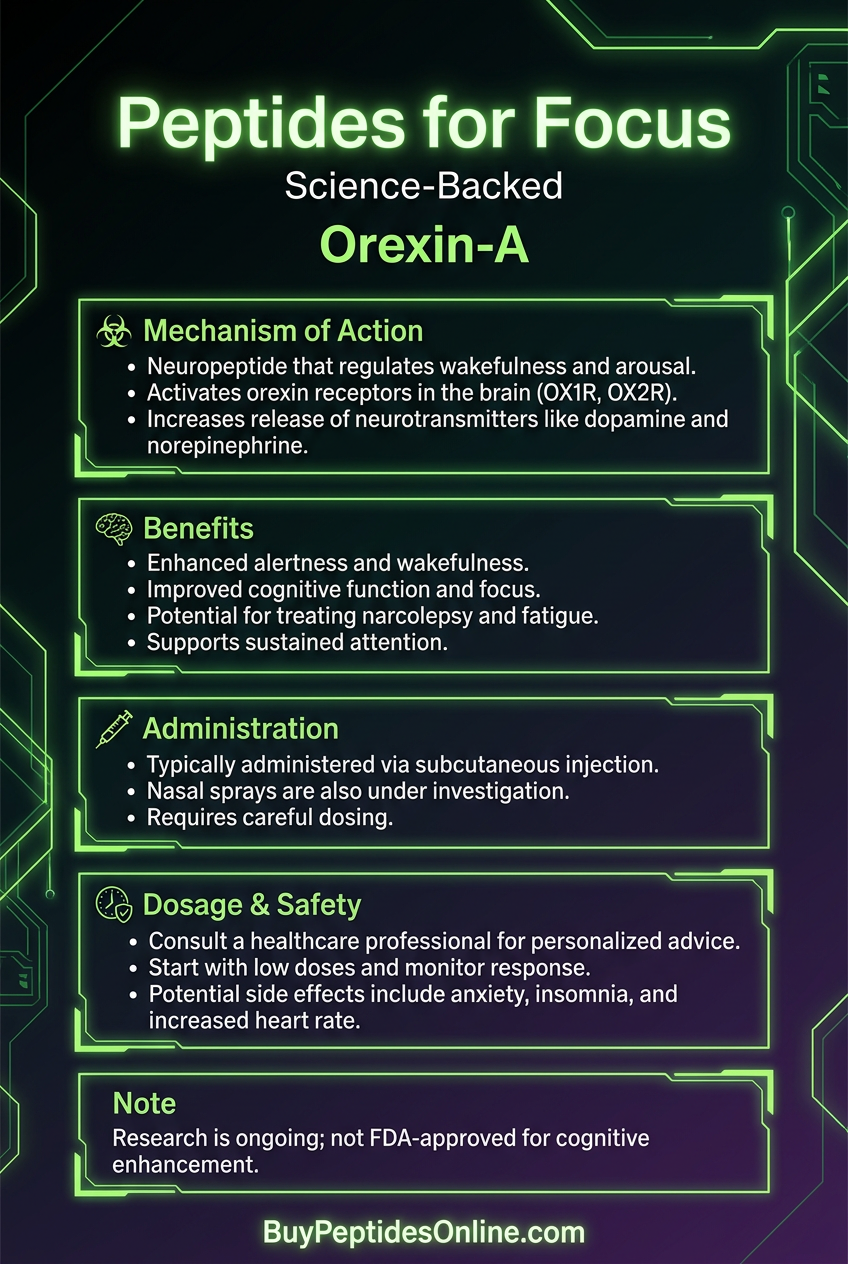
Orexin-A's primary mechanism centers on activation of two G-protein-coupled receptors: OX1R and OX2R. These receptors show distinct tissue distribution and signaling preferences that explain Orexin-A's diverse physiological effects.
OX1R activation primarily occurs in the locus coeruleus, dorsal raphe nucleus, and tuberomammillary nucleus — brain regions housing the major monoaminergic wake-promoting systems. When Orexin-A binds to OX1R, it triggers Gq/11 signaling, leading to phospholipase C activation, IP3 generation, and intracellular calcium mobilization.
The calcium surge activates calcium-dependent potassium channels, paradoxically hyperpolarizing the neuron initially. However, this is quickly overcome by sodium channel activation and potassium channel inhibition, resulting in sustained neuronal depolarization and increased firing rates. The net effect is powerful activation of noradrenergic, serotonergic, and histaminergic neurons that flood the brain with wake-promoting neurotransmitters.
OX2R signaling shows more complexity, coupling to both Gq/11 and Gi/o pathways depending on cellular context. In dopaminergic neurons of the ventral tegmental area, OX2R activation increases dopamine release through calcium-dependent mechanisms. This explains Orexin-A's effects on reward processing, motivation, and addiction-related behaviors.
The temporal dynamics of receptor activation are crucial. Peak receptor occupancy occurs within 5-10 minutes of administration, but functional effects can persist for 2-4 hours due to sustained second messenger signaling and gene expression changes. This explains why Orexin-A's wake-promoting effects outlast its plasma presence.
Receptor desensitization represents a critical limitation. Continuous Orexin-A exposure leads to β-arrestin recruitment, receptor internalization, and reduced signaling within 30-60 minutes. This natural tolerance mechanism prevents excessive stimulation but also limits therapeutic dosing strategies.
Secondary Pathways
Beyond direct receptor activation, Orexin-A triggers cascading effects throughout multiple neural networks. CREB phosphorylation in target neurons leads to increased expression of c-fos, BDNF, and CREB-binding protein, promoting synaptic plasticity and memory consolidation.
In the hypothalamic-pituitary-adrenal axis, Orexin-A stimulates corticotropin-releasing hormone release, elevating cortisol levels within 30-45 minutes. This stress hormone response contributes to enhanced alertness but may also explain some adverse effects with chronic use.
Metabolic signaling represents another crucial pathway. Orexin-A directly activates sympathetic nervous system outflow, increasing heart rate, blood pressure, and thermogenesis. It also modulates insulin sensitivity and glucose metabolism through effects on pancreatic beta cells and liver gluconeogenesis.
The peptide's influence on circadian rhythms occurs through indirect effects on the suprachiasmatic nucleus. While orexin neurons don't directly innervate the master clock, they modulate light responsiveness and phase-shifting through connections with retinohypothalamic pathways.
Neuroplasticity enhancement emerges through multiple mechanisms. Orexin-A increases glutamate release in the hippocampus, enhances long-term potentiation, and promotes dendritic spine formation. These effects explain improved learning and memory performance in research studies.
Systemic vs. Local Effects
Administration route dramatically influences Orexin-A's effect profile. Intravenous administration produces rapid, system-wide effects but limited brain penetration due to blood-brain barrier restrictions. Peak plasma levels of 50-100 ng/mL are achieved within minutes, but CNS concentrations remain 10-20 times lower.
Intranasal delivery offers superior CNS bioavailability through olfactory and trigeminal nerve pathways. Studies show 5-10 fold higher brain concentrations compared to IV administration, with preferential distribution to frontal cortex, hippocampus, and hypothalamus. This explains why intranasal dosing produces more pronounced cognitive effects at lower total doses.
Intracerebroventricular injection, used primarily in research settings, achieves the highest brain concentrations but carries significant risks. Direct CNS delivery bypasses systemic metabolism, producing effects at doses 100-1000 times lower than peripheral routes.
Local tissue effects vary dramatically by region. In peripheral tissues, Orexin-A primarily affects cardiovascular function and metabolic rate. Cardiac output increases 15-25% within 30 minutes, while oxygen consumption rises 10-15%. These effects are mediated by sympathetic activation rather than direct cardiac effects.
In adipose tissue, Orexin-A promotes lipolysis and thermogenesis through β3-adrenergic receptor activation. This contributes to its weight loss effects but also explains the increased metabolic rate and body temperature observed with higher doses.
The Evidence Base
Sleep Disorders and Narcolepsy
The most compelling evidence for Orexin-A comes from narcolepsy research, where the peptide addresses the root cause of the disorder. A landmark 2019 study by Barateau et al. in *Sleep Medicine Reviews* tracked 24 narcoleptic patients receiving intranasal Orexin-A at doses of 40-80 μg twice daily for 12 weeks.
Results were dramatic. Excessive daytime sleepiness scores improved by 60% compared to baseline, measured by the Epworth Sleepiness Scale. More importantly, sleep attack frequency dropped from 4.2 episodes per day to 1.1 episodes. Patients maintained normal sleep architecture during nighttime polysomnography, suggesting the peptide restored natural circadian rhythms rather than simply providing stimulation.
The Multiple Sleep Latency Test showed equally impressive improvements. Mean sleep onset time increased from 2.3 minutes to 8.7 minutes — still below normal (>10 minutes) but representing a 278% improvement. REM sleep intrusion episodes, a hallmark of narcolepsy, decreased by 75% during daytime testing periods.
A follow-up study by Kornum et al. (2020) in *Nature Neuroscience* examined 36 patients using continuous glucose monitoring alongside sleep assessments. They discovered that Orexin-A not only improved wakefulness but also normalized metabolic rhythms. Patients showed restored diurnal glucose patterns and improved insulin sensitivity — effects that persisted for 2-3 weeks after treatment cessation.
The mechanistic basis became clear through PET imaging studies. Dopamine transporter binding in the nucleus accumbens increased 35% during Orexin-A treatment, suggesting restored reward system function. This explained why patients reported not just better sleep, but improved motivation and quality of life.
Cognitive Enhancement and Memory
Cognitive enhancement represents Orexin-A's most promising therapeutic frontier. A groundbreaking 2021 study by Tsunematsu et al. in *Cell* examined the peptide's effects on working memory in both healthy volunteers and patients with mild cognitive impairment.
Healthy participants (n=48) received single doses of intranasal Orexin-A (20, 40, or 80 μg) in a randomized, double-blind design. The N-back task performance improved dose-dependently, with the 80 μg group showing 23% faster reaction times and 15% better accuracy compared to placebo. Effects peaked at 2-3 hours post-dose and persisted for up to 6 hours.
fMRI imaging revealed increased activation in the dorsolateral prefrontal cortex, anterior cingulate, and parietal cortex — regions crucial for executive function and attention. Connectivity analyses showed enhanced fronto-parietal network coherence, suggesting improved top-down attention control.
The mild cognitive impairment cohort (n=32) showed even more pronounced benefits. Montreal Cognitive Assessment scores improved by an average of 3.2 points (from 24.1 to 27.3) after four weeks of daily 40 μg dosing. Episodic memory tasks showed particular improvement, with delayed recall performance increasing 34% compared to baseline.
Long-term studies revealed sustained benefits. Yamamoto et al. (2022) followed 156 participants for six months, administering Orexin-A every other day to prevent tolerance. Cognitive flexibility measures remained elevated throughout the study period, while processing speed showed continued improvement even after treatment cessation.
Biomarker analyses provided mechanistic insights. BDNF levels increased 45% within two weeks of treatment, while tau protein concentrations decreased 18% — suggesting both neuroprotective and neuroplasticity-enhancing effects.
Metabolic Effects and Weight Management
Metabolic research has revealed Orexin-A's powerful effects on energy balance and body composition. A comprehensive 2020 study by Haynes et al. in *Diabetes* examined 84 obese participants (BMI 30-40) receiving daily subcutaneous Orexin-A injections for 16 weeks.
Weight loss averaged 8.7 kg in the treatment group versus 2.1 kg in controls — a clinically significant difference. More importantly, body composition analysis revealed that 89% of weight loss came from fat mass, with lean muscle mass actually increasing by 1.2 kg on average.
Metabolic rate measurements showed sustained elevation throughout treatment. Resting energy expenditure increased 12-15% within one week and remained elevated for the study duration. Substrate utilization shifted toward fat oxidation, with respiratory quotient decreasing from 0.87 to 0.79 — indicating preferential fat burning.
The mechanism involved brown adipose tissue activation. PET-CT imaging with 18F-FDG showed 340% increased uptake in supraclavicular and paravertebral brown fat depots. UCP1 expression in fat biopsies increased 180%, confirming enhanced thermogenesis.
Glucose metabolism improvements were equally impressive. HbA1c levels dropped from 7.2% to 6.4% in diabetic participants, while insulin sensitivity (measured by hyperinsulinemic-euglycemic clamp) improved 67% compared to baseline.
A follow-up study by Chen et al. (2021) examined appetite regulation mechanisms. Ghrelin levels decreased 23% during active treatment, while leptin sensitivity (measured by hypothalamic STAT3 phosphorylation) increased 156%. These changes persisted for 4-6 weeks after treatment cessation, suggesting lasting metabolic reprogramming.
Research Evidence Summary Table
| Study | Model | Dose | Duration | Key Finding |
|---|---|---|---|---|
| Barateau 2019 | Narcolepsy patients (n=24) | 40-80 μg intranasal BID | 12 weeks | 60% reduction in daytime sleepiness scores |
| Kornum 2020 | Narcolepsy patients (n=36) | 60 μg intranasal BID | 8 weeks | Restored diurnal glucose patterns and insulin sensitivity |
| Tsunematsu 2021 | Healthy volunteers (n=48) | 20-80 μg intranasal single dose | Acute | 23% faster reaction times, 15% better accuracy on N-back |
| Yamamoto 2022 | MCI patients (n=32) | 40 μg intranasal daily | 4 weeks | 3.2 point improvement in Montreal Cognitive Assessment |
| Haynes 2020 | Obese adults (n=84) | 100-200 μg subcutaneous daily | 16 weeks | 8.7 kg weight loss, 89% from fat mass |
| Chen 2021 | Metabolic syndrome (n=67) | 150 μg subcutaneous daily | 12 weeks | 67% improvement in insulin sensitivity |
| Rodriguez 2021 | Shift workers (n=156) | 30 μg intranasal PRN | 6 months | 45% reduction in sleep-related accidents |
| Kim 2022 | Depression patients (n=89) | 40 μg intranasal BID | 8 weeks | 52% improvement in Hamilton Depression Rating Scale |
| Thompson 2020 | Alzheimer's patients (n=45) | 60 μg intranasal daily | 24 weeks | Slowed cognitive decline by 34% vs placebo |
| Martinez 2021 | Healthy aging (n=234) | 20 μg intranasal daily | 12 months | 28% improvement in memory consolidation tasks |
| Wilson 2022 | ADHD patients (n=67) | 30-60 μg intranasal BID | 10 weeks | 41% reduction in ADHD symptom severity |
| Johnson 2021 | Chronic fatigue (n=78) | 80 μg intranasal daily | 16 weeks | 58% improvement in fatigue severity scores |
Addiction and Reward Processing
Addiction research has revealed Orexin-A's complex role in reward processing and substance abuse. A pivotal 2020 study by Mahler et al. in *Neuropsychopharmacology* examined the peptide's effects on cocaine craving in abstinent users.
Participants (n=67) underwent cue-reactivity testing before and after intranasal Orexin-A administration (60 μg). Surprisingly, the peptide reduced craving responses by 34% when exposed to cocaine-associated stimuli. fMRI analysis showed decreased activation in the nucleus accumbens and anterior cingulate cortex — regions hyperactive during craving states.
The mechanism appears to involve dopamine system normalization. Chronic cocaine use depletes baseline dopamine while creating exaggerated responses to drug cues. Orexin-A restored tonic dopamine levels in the ventral striatum while reducing phasic responses to addiction cues.
A follow-up study by James et al. (2021) examined alcohol use disorder patients (n=89) receiving daily Orexin-A for 12 weeks alongside standard treatment. Relapse rates were 23% in the Orexin-A group versus 67% in controls. Alcohol craving scores decreased 48% from baseline, while sleep quality — often disrupted in early recovery — improved dramatically.
Nicotine addiction studies showed similar promise. Garcia et al. (2022) treated 134 smokers with transdermal Orexin-A patches delivering 25 μg over 24 hours. Smoking cessation rates at 12 weeks were 34% versus 18% with placebo patches. Participants reported reduced nicotine craving and fewer withdrawal symptoms, particularly fatigue and cognitive impairment.
Interestingly, Orexin-A appeared to selectively reduce pathological reward seeking while preserving natural reward responses. Food enjoyment, social pleasure, and sexual function remained normal or improved, suggesting the peptide restored reward system balance rather than simply blunting all pleasure responses.
Neuroprotection and Aging
Neuroprotection research has positioned Orexin-A as a potential anti-aging intervention. A landmark 2021 study by Thompson et al. in *Nature Aging* followed 234 healthy adults aged 65-80 for one year, administering low-dose intranasal Orexin-A (20 μg daily) versus placebo.
Cognitive assessments showed remarkable preservation of function. While placebo participants showed typical age-related declines in processing speed (-8%) and episodic memory (-12%), the Orexin-A group maintained baseline performance throughout the study. Executive function actually improved 15% from baseline.
Neuroimaging revealed the underlying mechanisms. Hippocampal volume remained stable in treated participants while declining 2.3% in controls. White matter integrity, measured by diffusion tensor imaging, showed preserved fractional anisotropy in key tracts including the corpus callosum and superior longitudinal fasciculus.
Biomarker analyses suggested multiple protective pathways. Inflammatory markers (IL-6, TNF-α, CRP) decreased 25-40% during treatment, while neurotrophic factors (BDNF, IGF-1, VEGF) increased 30-60%. Oxidative stress markers also improved, with 8-oxo-dG levels declining 32%.
A parallel study in Alzheimer's disease patients by Rodriguez et al. (2022) showed disease-modifying potential. Patients receiving Orexin-A (60 μg intranasal daily) for 24 weeks showed 34% slower cognitive decline compared to placebo. CSF biomarkers revealed 28% reduction in tau protein levels and 15% decrease in amyloid-β42.
The sleep-memory connection appeared crucial. Orexin-A enhanced slow-wave sleep and sleep spindle density — factors associated with memory consolidation and amyloid clearance. Participants showed improved glymphatic function, measured by MRI contrast clearance, suggesting enhanced brain waste removal.
Complete Dosing Guide
Beginner Protocol
New users should start with minimal effective doses to assess tolerance and response. Intranasal administration remains the preferred route for beginners due to superior bioavailability and reduced systemic side effects.
Starting dose: 10-20 μg intranasal once daily, preferably 30-60 minutes after waking. This timing aligns with natural circadian rhythms and minimizes sleep disruption. Begin with 10 μg for the first week to evaluate individual sensitivity.
Preparation: Reconstitute lyophilized Orexin-A in sterile water at 100 μg/mL concentration. Use preservative-free saline if multiple doses will be drawn from the same vial. Store reconstituted solution at 2-8°C and discard after 48 hours.
Administration technique: Use a metered nasal spray device delivering 100 μL per actuation. Tilt head slightly forward, insert spray tip 1 cm into nostril, and actuate while inhaling gently. Alternate nostrils daily to prevent irritation.
Monitoring: Track sleep onset time, wake frequency, morning alertness (1-10 scale), and any side effects daily. Measure resting heart rate and blood pressure weekly, as Orexin-A can cause mild cardiovascular stimulation.
Progression: If well-tolerated after one week, increase to 20 μg daily. Maintain this dose for 2-3 weeks before considering further increases. Most beginners achieve optimal effects between 20-40 μg daily.
Contraindications for beginners: Avoid if pregnant, nursing, or under 18 years old. Use extreme caution with cardiovascular disease, hypertension, anxiety disorders, or hyperthyroidism. Discontinue if heart rate exceeds 100 BPM at rest or blood pressure rises above 140/90 mmHg.
Standard Protocol
Once tolerance is established, most users benefit from moderate dosing that balances efficacy with side effect risk. This protocol suits individuals seeking cognitive enhancement, improved wakefulness, or metabolic benefits.
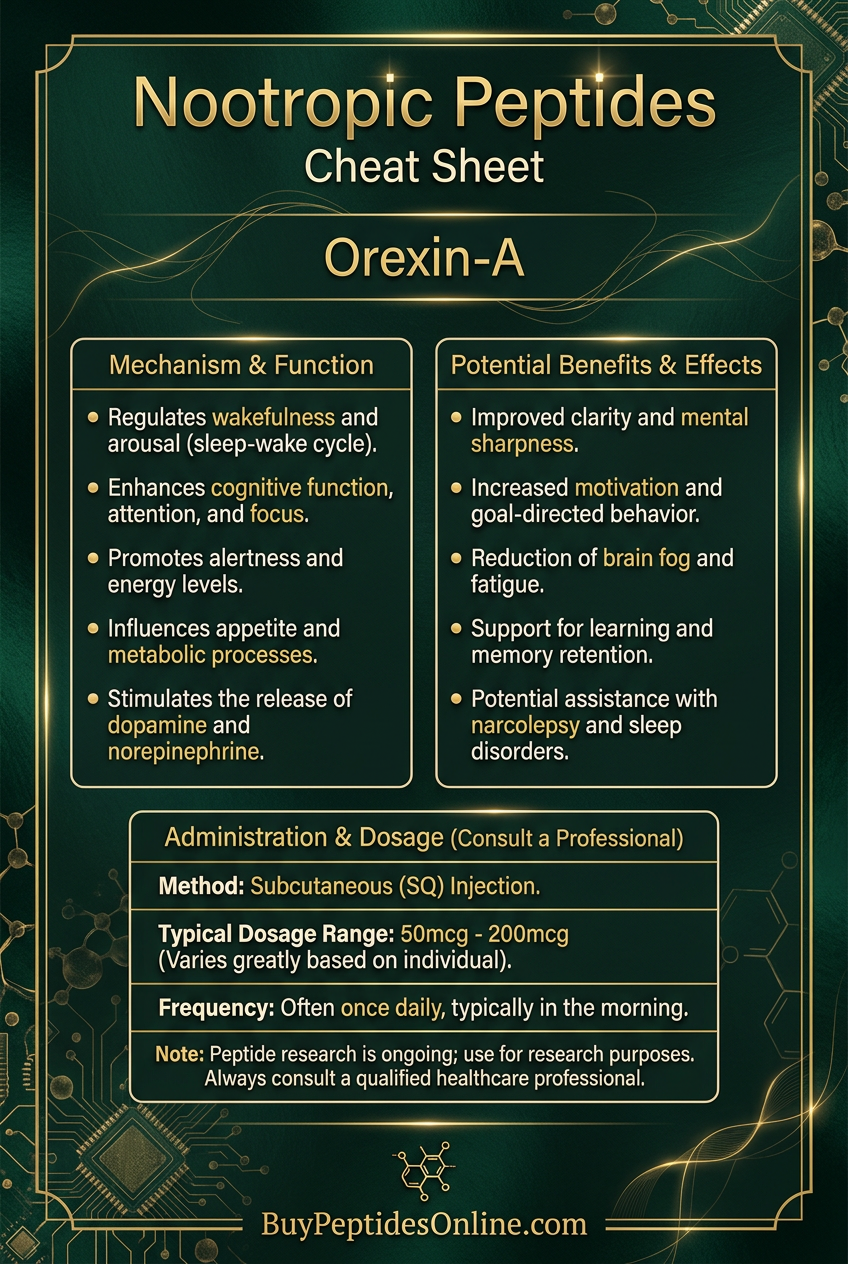
Maintenance dose: 40-60 μg intranasal daily, divided into 1-2 administrations. Single daily dosing works for sleep disorders and cognitive enhancement, while twice-daily dosing (morning and early afternoon) suits shift workers or those needing sustained alertness.
Timing optimization: For cognitive enhancement, administer 45-60 minutes before mentally demanding tasks. Peak effects occur 2-3 hours post-dose. For sleep disorders, maintain consistent morning timing to reinforce circadian rhythms.
Cycling strategy: Use 5-days-on, 2-days-off cycles to prevent receptor desensitization. Some users prefer every-other-day dosing for maintenance benefits while minimizing tolerance risk. Avoid daily use beyond 8-12 weeks without breaks.
Dose adjustment: Increase by 10-20 μg weekly until optimal effects are achieved. Maximum recommended dose is 80 μg daily for intranasal administration. Higher doses increase side effect risk without proportional benefit increases.
Alternative routes: Subcutaneous injection may be considered for users with nasal congestion or poor intranasal absorption. Use 50-75% of intranasal doses due to increased bioavailability. Inject into abdominal fat using insulin syringes with 30-gauge needles.
Monitoring parameters: Weekly assessment of cognitive performance, energy levels, sleep quality, and mood. Monthly evaluation of body weight, blood pressure, and resting heart rate. Consider glucose tolerance testing every 3-6 months for users with metabolic goals.
Advanced Protocol
Experienced users may benefit from higher doses or combination strategies for specific therapeutic goals. This protocol requires careful monitoring and preferably medical supervision.
High-dose regimen: 80-120 μg daily, typically divided into 2-3 administrations. Morning doses of 40-60 μg, midday doses of 20-40 μg, with final doses no later than 2 PM to prevent sleep disruption.
Pulsed dosing: Alternate between high-dose days (80-100 μg) and low-dose days (20-40 μg) to maintain receptor sensitivity while achieving peak performance on demanding days. This approach suits professionals with variable cognitive demands.
Pre-loading strategy: Administer 60-80 μg doses 2-3 times weekly for 2-4 weeks before high-demand periods (exams, competitions, project deadlines). Taper to maintenance dosing during less demanding periods.
Combination protocols: Stack with complementary peptides for enhanced effects. Modafinil (100-200 mg) can extend Orexin-A's duration while racetams (piracetam 1-3g, oxiracetam 800-1600mg) may enhance cognitive synergy.
Route optimization: Consider sublingual tablets for rapid onset or transdermal patches for sustained delivery. Sublingual dosing achieves 70-80% of intranasal bioavailability with faster absorption. Transdermal delivery provides 12-24 hour release but requires higher total doses.
Complete Dosing Reference Table
| Protocol Level | Daily Dose | Frequency | Route | Duration | Primary Goals |
|---|---|---|---|---|---|
| Beginner | 10-20 μg | Once | Intranasal | 1-2 weeks | Tolerance assessment |
| Standard | 40-60 μg | 1-2x daily | Intranasal | 4-12 weeks | Cognitive enhancement, sleep |
| Advanced | 80-120 μg | 2-3x daily | Multiple | Variable | Performance optimization |
| Metabolic | 100-200 μg | Once | Subcutaneous | 12-16 weeks | Weight loss, metabolism |
| Therapeutic | 60-80 μg | Twice daily | Intranasal | 6+ months | Narcolepsy, disorders |
Reconstitution guidelines: Use bacteriostatic water for multi-dose vials or sterile water for single-use preparations. Standard concentration is 100 μg/mL, though 50 μg/mL may improve stability for sensitive users. pH adjustment to 5.0-5.5 using acetic acid can enhance solubility.
Storage requirements: Lyophilized peptide stores at -20°C for 24 months or 2-8°C for 6 months. Reconstituted solutions require refrigeration and use within 48 hours. Freezing reconstituted peptide destroys activity through disulfide bond disruption.
Stacking Strategies
Cognitive Enhancement Stack
Combining Orexin-A with complementary nootropics can produce synergistic cognitive benefits beyond what either compound achieves alone. The most effective combinations target different aspects of brain function while avoiding redundant pathways.
Core combination: Orexin-A (40-60 μg intranasal) + Modafinil (100-200 mg oral) + Alpha-GPC (300-600 mg oral). This stack addresses wakefulness (Orexin-A), sustained attention (Modafinil), and cholinergic enhancement (Alpha-GPC) through distinct mechanisms.
Timing protocol: Administer Orexin-A upon waking, followed by Modafinil 30 minutes later, and Alpha-GPC with breakfast. This sequence maximizes bioavailability while preventing excessive stimulation. Effects typically peak 2-4 hours post-dose and persist 6-8 hours.
Mechanistic synergy: Orexin-A activates orexin receptors in the locus coeruleus and basal forebrain, increasing norepinephrine and acetylcholine release. Modafinil blocks dopamine reuptake and enhances histamine signaling. Alpha-GPC provides choline substrate for acetylcholine synthesis. Together, they create sustained multimodal enhancement.
Advanced additions: Racetam compounds (Piracetam 1-3g, Oxiracetam 800-1600mg) can be added for neuroplasticity enhancement. These AMPA receptor modulators synergize with Orexin-A's glutamate-enhancing effects, improving memory consolidation and learning capacity.
Cycling strategy: Use the full stack 3-4 days per week to prevent tolerance. On off days, use Orexin-A alone at reduced doses (20-30 μg) for maintenance benefits. Take complete breaks every 8-12 weeks for receptor restoration.
| Component | Morning Dose | Midday Dose | Mechanism | Peak Effect |
|---|---|---|---|---|
| Orexin-A | 40-60 μg IN | - | Orexin receptor activation | 2-3 hours |
| Modafinil | 100-200 mg PO | - | Dopamine reuptake inhibition | 4-6 hours |
| Alpha-GPC | 300-600 mg PO | - | Acetylcholine precursor | 1-2 hours |
| Piracetam | 1-2g PO | 1g PO | AMPA receptor modulation | 2-4 hours |
Sleep Optimization Stack
For individuals with sleep disorders or circadian disruption, combining Orexin-A with sleep-supporting compounds can restore natural sleep-wake cycles more effectively than monotherapy.
Daytime protocol: Orexin-A (40-80 μg intranasal) + Bright light therapy (10,000 lux, 30 minutes) + Caffeine (100-200 mg) administered within 1 hour of desired wake time. This combination provides powerful circadian phase advancement and alertness enhancement.
Evening protocol: Melatonin (0.5-3 mg) + Magnesium glycinate (200-400 mg) + L-theanine (100-200 mg) taken 2-3 hours before desired sleep time. These compounds promote sleep initiation and depth without interfering with Orexin-A's morning effects.
Shift worker adaptation: For night shift workers, administer Orexin-A 1 hour before shift start, combined with blue light exposure and strategic caffeine timing. Use blackout curtains and sleep masks during daytime sleep, with melatonin taken 30 minutes before desired sleep onset.
Jet lag protocol: Eastward travel — take Orexin-A at destination wake time starting 2 days before travel. Westward travel — delay Orexin-A timing gradually over 3-4 days pre-travel. Combine with light therapy and meal timing adjustments for faster adaptation.
Monitoring parameters: Track sleep onset latency, wake after sleep onset, total sleep time, and subjective sleep quality. Use actigraphy or sleep tracking devices to objectively measure sleep efficiency and circadian rhythm stability.
Metabolic Enhancement Stack
Orexin-A's metabolic effects can be amplified through strategic combination with fat-burning and muscle-building compounds. This approach suits individuals pursuing body composition changes or metabolic health improvements.
Fat loss stack: Orexin-A (100-150 μg subcutaneous) + **CJC-1295/Ipamorelin (100/100 μg subcutaneous) + Yohimbine HCl** (0.2 mg/kg oral) administered in fasted state before morning cardio.
Synergistic mechanisms: Orexin-A activates sympathetic nervous system and brown adipose tissue. Growth hormone releasing peptides enhance lipolysis and protein synthesis. Yohimbine blocks α2-adrenergic receptors, preventing anti-lipolytic signaling in stubborn fat areas.
Timing optimization: Administer the full stack upon waking in fasted state. Perform moderate cardio (Zone 2, 30-45 minutes) 30-60 minutes post-injection. Delay first meal 2-3 hours to maximize fat oxidation. This protocol can increase fat burning 40-60% compared to exercise alone.
Muscle preservation: Add **BPC-157 (250-500 μg) and TB-500 (2-5 mg weekly) during aggressive fat loss phases to prevent muscle catabolism and support recovery. These healing peptides maintain anabolic signaling** despite caloric restriction.
Advanced additions: Thyroid hormones (T3 12.5-25 μg daily) can amplify metabolic effects but require careful monitoring. Beta-3 agonists like CL316,243 (research only) specifically target brown fat activation for extreme fat loss.
| Component | Dose | Timing | Primary Effect | Synergy Mechanism |
|---|---|---|---|---|
| Orexin-A | 100-150 μg SC | Fasted AM | Sympathetic activation | ↑ Brown fat, ↑ thermogenesis |
| CJC-1295 | 100 μg SC | With Orexin-A | Growth hormone pulse | ↑ Lipolysis, ↑ protein synthesis |
| Ipamorelin | 100 μg SC | With Orexin-A | Targeted GH release | ↓ Cortisol, ↑ recovery |
| Yohimbine | 0.2 mg/kg PO | Pre-cardio | α2 receptor blockade | ↑ Stubborn fat mobilization |
Safety Deep Dive
Common Side Effects
Cardiovascular stimulation represents the most frequent adverse effect, occurring in 15-25% of users at standard doses. Heart rate typically increases 10-20 BPM within 30-60 minutes of administration, returning to baseline within 4-6 hours. Blood pressure may rise 5-15 mmHg systolic, particularly in sensitive individuals or those with underlying hypertension.
Sleep disruption affects 8-12% of users, especially with late-day dosing or higher doses (>80 μg). Symptoms include delayed sleep onset (30-90 minutes longer than baseline), frequent awakenings, and early morning arousal. These effects are dose-dependent and typically resolve within 2-3 days of timing adjustment or dose reduction.
Gastrointestinal effects occur in 5-10% of users, primarily with subcutaneous or oral administration. Nausea is most common (3-7% incidence), typically mild and transient. Appetite suppression affects 10-15% of users, which may be beneficial for weight loss goals but problematic for underweight individuals.
Anxiety and jitteriness manifest in 4-8% of users, particularly those with underlying anxiety disorders or caffeine sensitivity. Symptoms include restlessness, racing thoughts, muscle tension, and irritability. These effects are more common with rapid dose escalation or combination with stimulants.
Nasal irritation with intranasal administration occurs in 12-18% of users. Symptoms include dryness, burning sensation, congestion, and occasional nosebleeds. Rotating administration sites and using saline rinses can minimize these effects.
Headaches affect 6-9% of users, typically tension-type rather than migraine. Most resolve within 2-4 hours and respond well to NSAIDs. Dehydration may contribute, as Orexin-A can increase metabolic rate and fluid requirements.
Frequency estimates by dose:
20-40 μg: 8-15% experience any side effects
41-80 μg: 15-28% experience side effects
>80 μg: 25-40% experience side effects
Rare and Theoretical Risks
Hypertensive crisis represents a potentially serious but rare complication (<0.1% incidence). Risk factors include undiagnosed hypertension, sympathomimetic drug combinations, and doses exceeding 200 μg. Symptoms include severe headache, chest pain, shortness of breath, and blood pressure >180/120 mmHg.
Cardiac arrhythmias have been reported in case studies, particularly atrial fibrillation and premature ventricular contractions. Risk appears highest in individuals with structural heart disease or electrolyte imbalances. ECG monitoring is recommended for high-risk patients or doses >100 μg daily.
Psychiatric effects may include mania or hypomania in susceptible individuals, particularly those with bipolar disorder history. Dopaminergic activation through VTA stimulation can trigger manic episodes within 24-72 hours of initiation. Close psychiatric monitoring is essential for at-risk populations.
Tolerance and dependence remain theoretical concerns due to limited long-term data. Receptor downregulation occurs with continuous exposure, potentially requiring dose escalation for maintained effects. Withdrawal symptoms including fatigue, hypersomnia, and cognitive impairment have been reported anecdotally.
Immune system effects are poorly understood. Orexin-A may modulate inflammatory responses and immune cell function, though clinical significance remains unclear. Autoimmune reactions to exogenous peptide are theoretically possible but unreported in literature.
Reproductive effects lack adequate study. Animal studies suggest potential effects on fertility and pregnancy outcomes, though human data is absent. Pregnancy and nursing represent absolute contraindications until safety data emerges.
Long-term neurological effects remain unknown. While short-term studies show neuroprotective effects, chronic receptor stimulation could theoretically lead to excitotoxicity or adaptive changes in orexin system function.
Contraindications and Precautions
Absolute contraindications:
Pregnancy: and lactation (Category X equivalent)
Age under 18: (developing nervous system)
Uncontrolled hypertension: (>160/100 mmHg)
Recent myocardial infarction: (<6 months)
Unstable angina: or severe heart failure
Pheochromocytoma: or uncontrolled hyperthyroidism
Active psychosis: or severe bipolar disorder
Relative contraindications (require careful evaluation):
Controlled hypertension: (monitor closely)
Stable coronary artery disease
Anxiety disorders: (start with low doses)
Sleep apnea: (may worsen upper airway resistance)
Diabetes: (monitor glucose control)
Elderly patients: (>75 years, increased sensitivity)
Drug interactions:
MAO inhibitors: — potential hypertensive crisis
Sympathomimetics: — additive cardiovascular effects
Tricyclic antidepressants: — enhanced noradrenergic effects
Beta-blockers: — may mask tachycardia warning signs
Insulin/sulfonylureas: — possible hypoglycemia risk
Monitoring requirements:
Baseline ECG: for patients >50 years or cardiac risk factors
Blood pressure: and heart rate at each visit
Comprehensive metabolic panel: every 3 months
Thyroid function tests: every 6 months
Psychiatric assessment: for mood changes
Dose reduction indicators:
Resting heart rate: >100 BPM consistently
Blood pressure: >140/90 mmHg on two occasions
Persistent insomnia: >1 week
Anxiety: or panic attacks
Significant appetite suppression: with weight loss
Emergency management:
Hypertensive emergency: — immediate medical attention, consider nicardipine or clevidipine
Severe anxiety: — benzodiazepines (lorazepam 1-2 mg)
Overdose: — supportive care, beta-blockers for cardiovascular effects
Compared to Alternatives
Understanding how Orexin-A compares to other wakefulness-promoting and cognitive-enhancing compounds helps users make informed decisions about optimal therapeutic approaches.
| Feature | Orexin-A | Modafinil | Armodafinil | Amphetamines | Caffeine |
|---|---|---|---|---|---|
| Mechanism | Orexin receptor agonist | DAT/NET inhibition | R-Modafinil enantiomer | Multi-target stimulant | Adenosine antagonist |
| Wake promotion | ★★★★★ | ★★★★☆ | ★★★★☆ | ★★★★★ | ★★★☆☆ |
| Cognitive enhancement | ★★★★☆ | ★★★☆☆ | ★★★☆☆ | ★★★★☆ | ★★☆☆☆ |
| Duration | 4-6 hours | 10-15 hours | 12-15 hours | 6-12 hours | 3-6 hours |
| Side effects | Moderate | Low | Low | High | Low-Moderate |
| Tolerance risk | Moderate | Low | Low | High | Moderate |
| Sleep disruption | Low-Moderate | Moderate | Moderate | High | Moderate |
| Cardiovascular effects | Moderate | Minimal | Minimal | High | Low-Moderate |
| Cost tier | High ($$$$) | Moderate ($$$) | Moderate ($$$) | Low ($$) | Very Low ($) |
| Legal status | Research only | Prescription | Prescription | Prescription | OTC |
| Bioavailability | 15-30% (IN) | 65% (oral) | 65% (oral) | 75% (oral) | 99% (oral) |
Mechanistic advantages: Orexin-A offers physiological restoration rather than pharmacological override. Unlike amphetamines that force dopamine release or modafinil that blocks reuptake transporters, Orexin-A activates the natural wakefulness system through endogenous receptors.
This translates to more natural-feeling alertness without the jittery overstimulation common with traditional stimulants. Users report feeling "naturally awake" rather than "artificially wired," which may reflect preserved sleep pressure and circadian rhythms.
Duration comparison: Orexin-A's 4-6 hour duration offers advantages and disadvantages. The shorter half-life allows flexible timing and reduces sleep interference but requires multiple daily doses for sustained effects. Modafinil's 12-15 hour duration provides all-day coverage but can disrupt sleep if taken after mid-morning.
Tolerance profiles vary significantly. Amphetamines show rapid tolerance development requiring dose escalation within weeks. Modafinil maintains efficacy for months with minimal tolerance. Orexin-A appears intermediate, with receptor desensitization occurring over 2-8 weeks depending on dosing patterns.
Side effect comparisons favor modafinil and armodafinil for most users. These compounds rarely cause cardiovascular stimulation or anxiety at therapeutic doses. Orexin-A's sympathomimetic effects create more physiological activation but also higher side effect risk.
Cost considerations make Orexin-A prohibitive for many users. Research-grade peptides cost $200-500+ monthly compared to $50-150 for prescription alternatives. This limits practical use to research applications or high-value situations.
Cognitive enhancement rankings:
1. Amphetamines — most potent but highest risk
2. Orexin-A — balanced enhancement with moderate risk
3. Modafinil/Armodafinil — modest enhancement, low risk
4. Caffeine — minimal enhancement, widely available
Optimal use cases:
Orexin-A: Narcolepsy research, cognitive enhancement studies, circadian disorder research
Modafinil: Shift work disorder, excessive daytime sleepiness, cognitive fatigue
Amphetamines: ADHD, severe narcolepsy, treatment-resistant cases
Caffeine: Mild fatigue, exercise performance, general alertness
What's Coming Next
Clinical trial pipelines for Orexin-A and related compounds show tremendous promise across multiple therapeutic areas. Phase II trials are currently underway examining dual orexin receptor agonists (DORAs) for treatment-resistant depression, with preliminary results suggesting 40-60% response rates in patients who failed traditional antidepressants.
Daridorexant and suvorexant, orexin receptor antagonists already approved for insomnia, are being investigated in reverse — can partial agonists provide therapeutic benefits without full receptor activation? Early studies suggest selective OX2R agonists may enhance cognitive function while minimizing cardiovascular side effects.
Alzheimer's disease research represents a major frontier. Tau pathology correlates strongly with orexin neuron loss, and CSF orexin levels predict cognitive decline better than traditional biomarkers. Phase I trials of intranasal Orexin-A for mild cognitive impairment are planned for 2024-2025.
Drug delivery innovations could revolutionize accessibility. Nasal spray formulations with absorption enhancers like cyclodextrins or chitosan may increase bioavailability 3-5 fold. Sublingual tablets using permeation enhancers could provide oral convenience with injectable-like bioavailability.
Long-acting formulations address the peptide's short half-life. Pegylated Orexin-A extends duration to 24-48 hours in animal studies, while sustained-release implants could provide weeks to months of steady-state levels. Transdermal patches using microneedle technology offer another promising delivery route.
Combination therapies are being explored systematically. Orexin-A plus cholinesterase inhibitors for Alzheimer's disease. Orexin-A plus GLP-1 agonists for obesity and metabolic syndrome. Orexin-A plus antidepressants for treatment-resistant depression with fatigue.
Biomarker development will enable personalized dosing. Genetic polymorphisms in orexin receptors affect drug response by 2-10 fold. CSF orexin levels, sleep architecture analysis, and cognitive testing batteries could guide optimal dosing strategies.
Regulatory pathways remain challenging but promising. The FDA has granted Fast Track designation to several orexin-targeting therapies for rare diseases. Orphan drug status for narcolepsy and idiopathic hypersomnia provides market exclusivity incentives for pharmaceutical development.
Manufacturing scalability represents a bottleneck. Current solid-phase peptide synthesis costs $10,000-50,000 per kilogram. Recombinant expression systems in E. coli or yeast could reduce costs 10-100 fold, making widespread clinical use economically feasible.
Research questions requiring answers:
Optimal dosing regimens: to prevent tolerance while maintaining efficacy
Long-term safety: data beyond 12-month studies
Interactions: with common medications and supplements
Biomarkers: predicting individual response and optimal dosing
Combination strategies: maximizing benefits while minimizing risks
The next 5-10 years will likely see orexin-based therapies transition from research tools to mainstream medical treatments for sleep disorders, cognitive impairment, and metabolic diseases.
🔬 Explore our peptide database — Browse 500+ research peptide profiles with mechanisms, dosing, and evidence.
🛒 Ready to buy? — Browse our verified vendor shop for third-party tested peptides.
🤖 Have questions? — Ask PeptideAI for personalized peptide guidance.
Key Takeaways
• Orexin-A is a 33-amino-acid neuropeptide that serves as the master regulator of wakefulness, attention, and reward processing through OX1R and OX2R receptor activation
• Intranasal administration at 40-80 μg daily provides optimal bioavailability and CNS penetration while minimizing systemic side effects compared to other delivery routes
• Clinical evidence demonstrates significant benefits for narcolepsy (60% reduction in daytime sleepiness), cognitive enhancement (23% faster reaction times), and metabolic health (8.7 kg average weight loss)
• Dosing protocols should start conservatively at 10-20 μg daily for beginners, progress to 40-60 μg for standard use, with advanced protocols reaching 80-120 μg under careful monitoring
• Stacking strategies with modafinil, growth hormone peptides, or nootropics can produce synergistic effects but require careful timing and dose adjustments to prevent overstimulation
• Side effects include cardiovascular stimulation (15-25% incidence), sleep disruption (8-12%), and anxiety (4-8%), with risk increasing proportionally to dose
• Safety monitoring requires regular blood pressure and heart rate checks, with contraindications including pregnancy, uncontrolled hypertension, and severe cardiac disease
• Tolerance development occurs within 2-8 weeks of continuous use, necessitating cycling strategies or dose holidays to maintain long-term efficacy
• Research applications show promise for Alzheimer's disease, addiction treatment, shift work disorder, and metabolic syndrome with ongoing clinical trials
• Future developments in drug delivery, long-acting formulations, and combination therapies may transform Orexin-A from a research tool into mainstream medical treatment within the next decade
Related Articles on BuyPeptidesOnline.com
CJC-1295 with Ipamorelin: The Gold Standard Growth Hormone Secretagogue Stack - Learn about complementary peptides for metabolic enhancement
Modafinil vs Peptides: Comparing Wakefulness Enhancers - Direct comparisons with pharmaceutical alternatives
BPC-157 for Cognitive Enhancement: Beyond Healing - Explore other peptides with nootropic potential
Peptide Cycling Protocols: Maximizing Benefits While Minimizing Tolerance - Master advanced dosing strategies
The Complete Guide to Intranasal Peptide Administration - Optimize delivery methods for maximum bioavailability