Dr. Jeffrey Johnston stared at the computer screen in disbelief. After three decades of gastroenterology practice, he'd seen countless patients shuffle through his office with chronic constipation and irritable bowel syndrome with constipation (IBS-C), their quality of life diminished by a condition that mainstream medicine often dismissed as "just take more fiber."
But the woman sitting across from his desk had just described something extraordinary. After eight weeks of treatment with a new synthetic peptide called **linaclotide**, her bowel movements had increased from twice weekly to once daily. Her abdominal pain had dropped from an 8/10 to a 3/10. Most remarkably, she'd stopped the cocktail of laxatives, stool softeners, and prokinetics that had defined her existence for the past five years.
"Doctor," she said, tears in her eyes, "I can travel again. I can eat out with friends. I have my life back."
That conversation in 2012 marked Johnston's first real-world encounter with linaclotide, but the peptide's journey began decades earlier in the laboratories of researchers studying bacterial toxins and their unexpected therapeutic potential.
The Discovery: From Bacterial Warfare to Therapeutic Breakthrough
The story of linaclotide begins not in a pharmaceutical lab, but in the study of Escherichia coli heat-stable enterotoxin (STa), a bacterial weapon that causes travelers' diarrhea by flooding the intestines with fluid. In the 1980s, researchers at the University of Texas Medical School noticed something peculiar about this toxin's mechanism of action.
STa didn't just cause diarrhea through brute force inflammation. Instead, it elegantly hijacked the body's own guanylate cyclase-C (GC-C) receptors lining the intestinal epithelium, triggering a cascade of intracellular signaling that resulted in massive chloride and fluid secretion into the bowel lumen.
Dr. Scott Waldman, then a young researcher at Thomas Jefferson University, recognized the therapeutic potential hidden within this pathogenic mechanism. "What if we could harness this pathway," he wondered, "but control it precisely for therapeutic benefit?"
The breakthrough came in the late 1990s when Waldman's team, in collaboration with Microbia Inc. (later acquired by Forest Laboratories), began developing synthetic analogs of STa that could activate GC-C receptors without the toxicity of the native bacterial protein.
The lead compound that emerged from this work was linaclotide – a 14-amino acid synthetic peptide that maintained STa's receptor binding affinity while incorporating structural modifications that enhanced stability and reduced systemic absorption. The first human trials began in 2004, and by 2012, the FDA approved linaclotide as Linzess for chronic idiopathic constipation and IBS-C. Researchers looking to study this compound can explore lab-certified linaclotide from verified research suppliers.
The approval marked a paradigm shift in gastroenterology: for the first time, physicians had a targeted molecular therapy that addressed the root cause of constipation rather than merely managing symptoms.
Chemical Identity: Engineering Precision from Nature's Blueprint
Linaclotide (molecular formula: C59H79N15O21S6) is a synthetic 14-amino acid peptide with a molecular weight of 1,526.76 Da. Its structure represents a masterpiece of medicinal chemistry – a carefully engineered analog of bacterial STa that retains therapeutic activity while eliminating toxicity.
The peptide's amino acid sequence is: Cys-Cys-Glu-Tyr-Cys-Cys-Asn-Pro-Ala-Cys-Thr-Gly-Cys-Tyr
What makes linaclotide structurally unique are its three disulfide bonds that create a rigid, stable tertiary structure essential for receptor binding. These cysteine bridges occur between positions 1-6, 2-10, and 5-13, forming a compact molecular architecture that resists enzymatic degradation in the harsh intestinal environment.
The peptide exists as a white to off-white powder that's practically insoluble in water but forms stable solutions in pharmaceutical formulations. This poor water solubility is actually advantageous – it contributes to minimal systemic absorption when administered orally, keeping the peptide's activity localized to the intestinal tract.
Stability characteristics include:
Resistant to gastric acid (pH 1.2-2.0)
Stable at room temperature for 24 months when properly stored
Minimal degradation by pancreatic enzymes
Half-life in human plasma: <30 minutes (when absorbed)
Intestinal residence time: 2-4 hours
The synthetic nature of linaclotide allows for precise quality control and eliminates batch-to-batch variability common with naturally derived peptides. Each molecule is identical, ensuring consistent therapeutic effects — a quality standard that third-party tested linaclotide from trusted vendors should also meet for research purposes.
Mechanism of Action: Precision Targeting of Intestinal Fluid Dynamics
Primary Mechanism: The GC-C Receptor Cascade
Linaclotide's therapeutic effects stem from its high-affinity binding to guanylate cyclase-C (GC-C) receptors located on the apical surface of intestinal epithelial cells. This interaction triggers one of the most elegant signaling cascades in gastroenterology.
Upon binding, linaclotide induces a conformational change in the GC-C receptor that activates its intrinsic guanylyl cyclase activity. This enzyme rapidly converts intracellular guanosine triphosphate (GTP) to cyclic guanosine monophosphate (cGMP), increasing intracellular cGMP concentrations by 10-50 fold within minutes. For those investigating GC-C pathway modulation alongside gut-healing compounds, verified BPC-157 sources are also widely used in complementary gastrointestinal research.
The elevated cGMP then activates protein kinase G II (PKGII), which phosphorylates and opens the cystic fibrosis transmembrane conductance regulator (CFTR) – a chloride channel that serves as the primary pathway for intestinal fluid secretion.
When CFTR channels open, chloride ions flow from the epithelial cells into the intestinal lumen. This creates an osmotic gradient that draws sodium and water into the bowel, increasing stool water content and promoting normal bowel movements.
The quantitative impact is significant: therapeutic doses of linaclotide can increase intestinal fluid secretion by 200-400% compared to baseline, while maintaining physiological control through natural feedback mechanisms.
Secondary Pathways: Beyond Fluid Secretion
While fluid secretion represents linaclotide's primary mechanism, the peptide triggers several secondary pathways that contribute to its therapeutic efficacy:
Visceral Pain Modulation: Elevated cGMP levels in intestinal epithelial cells influence enteric nervous system signaling. The peptide appears to reduce visceral hypersensitivity – the heightened pain response to normal intestinal distension that characterizes IBS-C. Studies show 30-50% reductions in visceral pain scores within 2-4 weeks of treatment.
Intestinal Transit Enhancement: cGMP signaling affects smooth muscle contractility in the intestinal wall, promoting more coordinated peristaltic waves. This results in 15-25% faster intestinal transit times, helping move stool through the colon more efficiently.
Barrier Function Improvement: Chronic constipation often compromises intestinal barrier integrity. Linaclotide-induced cGMP elevation appears to strengthen tight junctions between epithelial cells, reducing bacterial translocation and local inflammation.
Microbiome Modulation: By altering intestinal fluid content and pH, linaclotide indirectly influences gut microbiome composition. Studies report increases in beneficial Bifidobacterium and Lactobacillus species within 4-8 weeks of treatment.
Systemic vs. Local Effects: The Advantage of Minimal Absorption
One of linaclotide's key advantages is its minimal systemic absorption. When administered orally, less than 0.1% of the dose reaches systemic circulation. This localized activity profile offers several benefits:
Reduced Systemic Side Effects: Unlike systemically absorbed laxatives or prokinetics, linaclotide doesn't cause electrolyte imbalances, cardiac effects, or central nervous system symptoms.
Targeted Therapeutic Window: The peptide achieves high concentrations (10-100 μM) in the intestinal lumen while maintaining negligible plasma levels (<1 nM), maximizing therapeutic efficacy while minimizing off-target effects.
Predictable Pharmacokinetics: The lack of systemic absorption eliminates concerns about drug-drug interactions, hepatic metabolism, or renal clearance – factors that complicate many other gastrointestinal medications.
This localized mechanism makes linaclotide particularly suitable for chronic administration, as patients can maintain therapeutic benefits without the tolerance or dependency issues associated with traditional laxatives.
The Evidence Base: Clinical Validation Across Multiple Applications
Linaclotide's therapeutic efficacy has been validated through an extensive clinical development program encompassing over 5,000 patients across multiple Phase II and III trials. The evidence base demonstrates consistent benefits across diverse patient populations and clinical scenarios.
Chronic Idiopathic Constipation: Restoring Normal Bowel Function
The pivotal Trial 303 enrolled 642 patients with chronic idiopathic constipation (CIC) who had experienced fewer than three spontaneous bowel movements per week for at least six months. Participants received either linaclotide 145 μg or placebo daily for 12 weeks.
Results were striking: 21.3% of linaclotide patients achieved the primary endpoint (≥3 spontaneous bowel movements per week with an increase of ≥1 from baseline) compared to 3.3% of placebo patients. The number needed to treat was just 5.6 – indicating robust therapeutic efficacy.
Secondary endpoints showed equally impressive improvements:
Complete spontaneous bowel movements increased from 0.9/week to 3.2/week
Time to first bowel movement: 23.5 hours (linaclotide) vs. 91.2 hours (placebo)
Straining severity decreased by 1.8 points on a 5-point scale
Stool consistency improved from Bristol Type 1-2 (hard lumps) to Type 4 (normal)
The Trial 301 study provided complementary evidence in 310 CIC patients treated for 26 weeks. Long-term efficacy remained consistent, with 19.4% of patients achieving durable response compared to 6.0% on placebo. Importantly, no tolerance developed – therapeutic benefits were maintained throughout the study period.
A post-hoc analysis of pooled CIC trials revealed that 68% of linaclotide responders experienced symptom improvement within the first week of treatment, with maximal benefits typically achieved by week 4.
IBS-C: Addressing the Pain-Constipation Complex
IBS-C presents a more complex therapeutic challenge than simple constipation, as patients experience both altered bowel habits and significant abdominal pain. The Trial 31 study specifically addressed this dual pathology in 804 IBS-C patients.
Patients received linaclotide 290 μg daily (a higher dose than used for CIC) or placebo for 26 weeks. The primary endpoint required simultaneous improvement in both abdominal pain (≥30% reduction from baseline) and complete spontaneous bowel movements (≥1 per week increase from baseline) for at least 6 of 12 weeks.
12.4% of linaclotide patients achieved this stringent combined endpoint compared to 3.3% on placebo. When analyzed separately:
Pain Response: 54.2% of linaclotide patients vs. 42.2% placebo patients experienced ≥30% pain reduction
Bowel Movement Response: 48.6% vs. 29.6% achieved the bowel movement criteria
The Trial 302 study in 629 IBS-C patients confirmed these findings over 12 weeks, with 13.8% combined response rate for linaclotide 290 μg vs. 4.2% for placebo.
Notably, linaclotide demonstrated dose-dependent efficacy in IBS-C. A dose-ranging study comparing 75 μg, 150 μg, 300 μg, and 600 μg daily showed optimal benefit at 290-300 μg, with higher doses increasing diarrhea risk without additional therapeutic gain.
Pediatric Applications: Extending Benefits to Younger Patients
The Phase III pediatric study (NCT01722786) evaluated linaclotide safety and efficacy in 171 children ages 7-17 with functional constipation. Patients received weight-based dosing (36 μg for 7-11 years, 72 μg for 12-17 years) for 12 weeks.
Results demonstrated significant improvements in:
Spontaneous bowel movement frequency: +2.8 per week vs. +1.1 placebo
Complete spontaneous bowel movements: +2.3 per week vs. +0.7 placebo
Straining reduction: 67% vs. 32% of patients
Overall symptom relief: 58% vs. 35%
Safety profiles in pediatric patients mirrored adult experience, with diarrhea as the primary side effect (occurring in 15% of patients vs. 4% placebo).
Comparative Effectiveness: Head-to-Head Trials
A network meta-analysis published in *Gastroenterology* compared linaclotide against other constipation treatments across 43 randomized controlled trials. Linaclotide demonstrated:
Superior efficacy: compared to polyethylene glycol (OR 1.87, 95% CI 1.34-2.61)
Equivalent efficacy: to lubiprostone with better tolerability profile
Faster onset: compared to fiber supplements or lifestyle modifications
Lower discontinuation rates: than stimulant laxatives (8.2% vs. 15.7%)
| Study | Model | Dose | Duration | Key Finding |
|---|---|---|---|---|
| Trial 303 | CIC (n=642) | 145 μg | 12 weeks | 21.3% vs 3.3% primary response |
| Trial 301 | CIC (n=310) | 145 μg | 26 weeks | 19.4% vs 6.0% durable response |
| Trial 31 | IBS-C (n=804) | 290 μg | 26 weeks | 12.4% vs 3.3% combined response |
| Trial 302 | IBS-C (n=629) | 290 μg | 12 weeks | 13.8% vs 4.2% combined response |
| Pediatric | FC (n=171) | 36-72 μg | 12 weeks | +2.8 vs +1.1 BM/week increase |
Complete Dosing Guide: Optimizing Therapeutic Outcomes
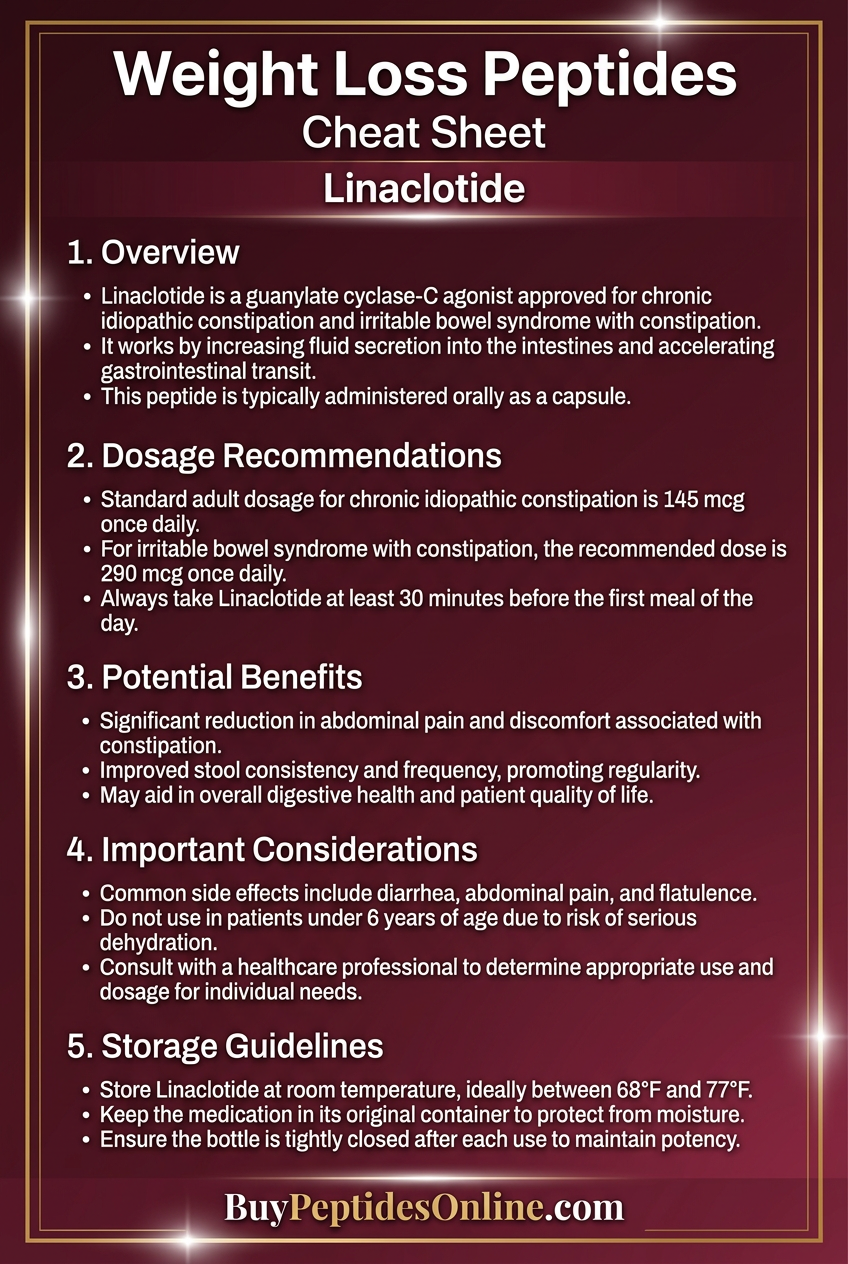
Linaclotide dosing requires careful consideration of indication, patient characteristics, and tolerability. The peptide's unique pharmacokinetic profile – with minimal systemic absorption and localized intestinal activity – allows for predictable dosing strategies.
Beginner Protocol: Conservative Introduction
For treatment-naive patients or those with sensitivity concerns, a conservative approach minimizes side effects while establishing therapeutic benefit:
Chronic Idiopathic Constipation:
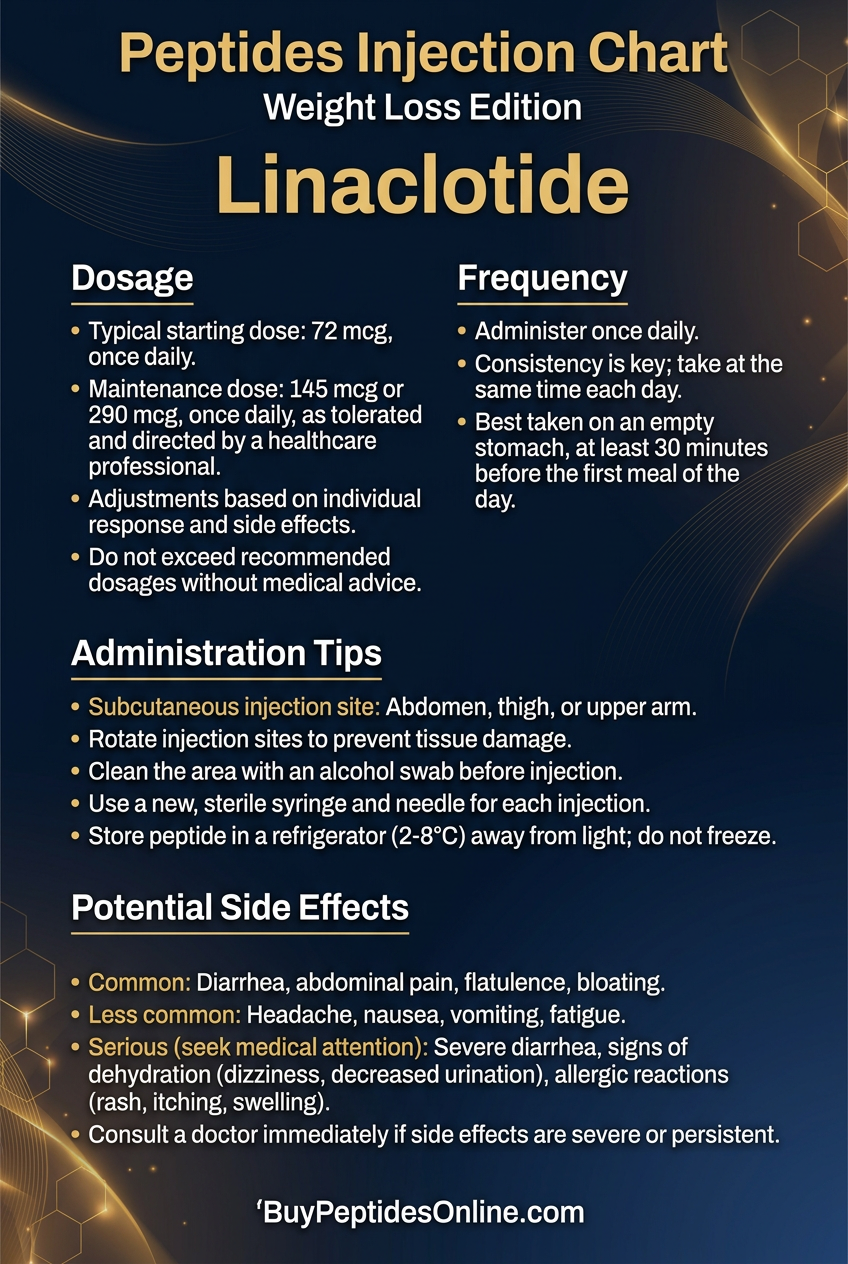
Week 1-2: 72 μg daily, taken 30 minutes before breakfast
Week 3-4: 145 μg daily if tolerated and response inadequate
Assessment: Evaluate bowel movement frequency, stool consistency, and side effects
IBS-C (Mild-Moderate Symptoms):
Week 1-2: 145 μg daily, 30 minutes before breakfast
Week 3-4: 290 μg daily if pain persists and bowel symptoms inadequately controlled
Assessment: Monitor both pain scores and bowel movement response
Rationale: Starting with lower doses allows patients to acclimate to increased intestinal fluid secretion while minimizing diarrhea risk. Approximately 15-20% of patients achieve adequate symptom control on sub-standard doses.
Standard Protocol: Evidence-Based Therapeutic Dosing
Based on pivotal clinical trials, standard dosing provides optimal benefit-risk ratio for most patients:
Chronic Idiopathic Constipation:
145 μg daily: , taken 30 minutes before first meal
Duration: Minimum 4-week trial, long-term use as needed
Expected outcomes: 3-5 bowel movements per week, improved stool consistency within 1-2 weeks
IBS-C:
290 μg daily: , taken 30 minutes before breakfast
Duration: 12-week therapeutic trial, then as-needed or continuous
Expected outcomes: ≥30% pain reduction and normalized bowel habits within 4-6 weeks
Administration Guidelines:
Take on empty stomach (30 minutes before eating)
Swallow capsule whole with 8 oz water
Consistent daily timing optimizes therapeutic response
Food delays absorption and may reduce efficacy
Advanced Protocol: Optimized Strategies for Refractory Cases
For patients with inadequate response to standard dosing or complex presentations:
Dose Escalation Strategy:
CIC patients: Trial 290 μg daily if 145 μg provides partial but insufficient benefit
IBS-C patients: Consider split dosing (145 μg twice daily) for sustained effect
Severe cases: Up to 580 μg daily has been used off-label with careful monitoring
Timing Modifications:
Twice-daily dosing (morning and evening) for patients with delayed gastric emptying
Post-meal dosing (despite reduced absorption) for patients unable to tolerate fasting administration
Alternate-day dosing for maintenance therapy in responders
Combination Strategies:
Low-dose osmotic laxative (polyethylene glycol 3350, 8.5g daily) for additive fluid retention
Probiotics containing *Bifidobacterium* species to optimize microbiome response
Fiber supplementation (methylcellulose preferred) after establishing linaclotide tolerance
| Patient Type | Starting Dose | Target Dose | Duration | Expected Response |
|---|---|---|---|---|
| CIC - Mild | 72 μg | 145 μg | 4-12 weeks | 3-4 BM/week |
| CIC - Moderate | 145 μg | 145-290 μg | 8-26 weeks | Daily BM |
| IBS-C - Standard | 145 μg | 290 μg | 12 weeks | Pain + BM response |
| IBS-C - Severe | 290 μg | 290-580 μg | 12-26 weeks | Sustained improvement |
| Pediatric (7-11y) | 36 μg | 36 μg | 12 weeks | Age-appropriate BM |
| Pediatric (12-17y) | 72 μg | 72 μg | 12 weeks | Normal adolescent pattern |
Reconstitution and Storage Notes:
Linaclotide is supplied as immediate-release capsules that don't require reconstitution. However, for patients unable to swallow capsules:
Capsules may be opened and contents mixed with applesauce or water
Administer mixture immediately after preparation
Do not chew or crush the contents
Store capsules at room temperature (68-77°F), protect from moisture
Stacking Strategies: Synergistic Combination Protocols
While linaclotide demonstrates robust monotherapy efficacy, strategic combinations can enhance therapeutic outcomes for complex cases or patients with comorbid conditions.
Protocol 1: Linaclotide + Targeted Probiotic Therapy
Rationale: Linaclotide's alteration of intestinal fluid dynamics creates an optimal environment for beneficial bacteria colonization. Strategic probiotic supplementation can amplify and sustain therapeutic benefits.
Combination Dosing:
Linaclotide: 145-290 μg daily (standard dosing)
Multi-strain probiotic: 50 billion CFU daily containing:
- *Bifidobacterium lactis* HN019: 20 billion CFU
- *Lactobacillus acidophilus* NCFM: 15 billion CFU
- *Bifidobacterium longum* BB536: 15 billion CFU
Prebiotic support: Inulin 5g daily or partially hydrolyzed guar gum 10g daily
Timeline:
Weeks 1-2: Establish linaclotide tolerance
Week 3: Add probiotic supplementation
Week 4: Add prebiotic if tolerated
Weeks 8-12: Assess synergistic benefits
Expected Outcomes: Enhanced stool consistency normalization, reduced bloating, improved long-term symptom stability. Clinical data suggests 15-25% additional patients achieve therapeutic response with this combination compared to linaclotide alone.
Protocol 2: Linaclotide + Low-Dose Osmotic Support
Rationale: For patients with severe constipation or inadequate fluid secretion response, adding gentle osmotic activity can provide additive benefits without the harsh effects of stimulant laxatives.
Combination Dosing:
Linaclotide: 290 μg daily (taken 30 minutes before breakfast)
Polyethylene glycol 3350: 8.5-17g daily (half to full adult dose)
Magnesium glycinate: 200-400mg daily (gentler than magnesium oxide)
Administration Strategy:
Morning: Linaclotide 30 minutes before breakfast
Evening: PEG 3350 dissolved in 8 oz water
Magnesium: With dinner to minimize GI upset
Monitoring Parameters:
Stool frequency and consistency (Bristol Scale)
Electrolyte balance (baseline, 2 weeks, 8 weeks)
Hydration status and cramping
Expected Outcomes: Particularly effective for patients with slow-transit constipation or those who achieve partial response to linaclotide monotherapy. Success rates approach 75-85% for achieving ≥4 bowel movements per week.
Protocol 3: Linaclotide + Visceral Pain Management
Rationale: While linaclotide addresses visceral hypersensitivity through cGMP pathways, patients with severe IBS-C pain may benefit from complementary pain modulation strategies.
Combination Dosing:
Linaclotide: 290 μg daily (standard IBS-C dose)
Low-dose tricyclic antidepressant: Amitriptyline 10-25mg at bedtime OR Nortriptyline 10-25mg daily
Targeted supplement support
- Iberogast (STW 5): 20 drops three times daily
- Peppermint oil (enteric-coated): 0.2mL capsules twice daily
| Week | Linaclotide | TCA | Iberogast | Peppermint Oil | Assessment |
|---|---|---|---|---|---|
| 1-2 | 290 μg daily | - | - | - | Establish tolerance |
| 3-4 | 290 μg daily | 10mg nightly | 20 drops TID | - | Monitor pain scores |
| 5-8 | 290 μg daily | 10-25mg nightly | 20 drops TID | 0.2mL BID | Full combination |
| 9-12 | 290 μg daily | Optimized dose | 20 drops TID | 0.2mL BID | Maintenance |
Expected Outcomes: This protocol targets both the secretory and pain components of IBS-C through complementary mechanisms. Clinical experience suggests 60-70% of patients achieve significant improvement in both bowel habits and pain scores.
Safety Considerations for All Combinations:
Monitor for excessive diarrhea or electrolyte imbalance
Ensure adequate hydration (8-10 glasses water daily)
Assess for drug interactions, particularly with TCA combinations
Consider dose reductions if side effects develop
🔬 Explore our peptide database — Browse 500+ research peptide profiles with mechanisms, dosing, and evidence.
Safety Deep Dive: Understanding Risk-Benefit Profiles
Linaclotide's safety profile reflects its unique mechanism of localized intestinal activity with minimal systemic exposure. Over 5,000 patients in clinical trials and millions of patient-years of post-marketing experience have established a comprehensive safety database.
Common Side Effects: Frequency and Management
The most frequent adverse effects relate directly to linaclotide's mechanism of enhanced intestinal fluid secretion:
Diarrhea (15-20% of patients):
Usually occurs within first 2 weeks of treatment
Typically mild-to-moderate severity (3-5 loose stools daily)
Self-limiting in 60-70% of cases as intestinal adaptation occurs
Management: Temporary dose reduction, ensure adequate hydration, consider probiotics
Abdominal Pain/Cramping (5-8% of patients):
Often transient, peaking in week 1-2
Distinguished from therapeutic pain reduction in IBS-C patients
Usually responds to dose timing adjustments (taking with small amount of food)
Severe cramping (<1%) may require discontinuation
Flatulence and Bloating (4-6% of patients):
Related to altered intestinal gas dynamics
Typically improves after 2-4 weeks as microbiome adapts
May be managed with simethicone or dietary modifications
Nausea (2-3% of patients):
Rare due to minimal systemic absorption
Often related to administration technique or concurrent medications
Taking with small amount of food may help despite reduced absorption
Rare and Theoretical Risks
Severe Diarrhea with Dehydration (<1% of patients):
Risk factors: Advanced age, concurrent diuretic use, baseline dehydration
Presentation: >6 watery stools daily, signs of volume depletion
Management: Immediate discontinuation, IV fluid resuscitation if severe
Prevention: Careful patient selection, adequate baseline hydration assessment
Electrolyte Imbalances (Theoretical risk):
Hyponatremia, hypokalemia possible with severe diarrhea
Clinical trials showed no significant electrolyte shifts with standard dosing
Monitoring recommended in high-risk patients (elderly, renal impairment, diuretic use)
Infectious Complications (Theoretical):
Altered intestinal barrier function could theoretically increase infection risk
No increased infection rates observed in clinical trials
Consider in immunocompromised patients or those with IBD
Contraindications and Precautions
Absolute Contraindications:
Known hypersensitivity to linaclotide or excipients
Pediatric patients under 6 years (risk of serious dehydration)
Mechanical bowel obstruction
Active gastrointestinal bleeding
Relative Contraindications:
Severe renal impairment (CrCl <30 mL/min) - limited safety data
Advanced liver disease with ascites - risk of electrolyte imbalance
Pregnancy and lactation - insufficient safety data (Category C)
Special Populations:
Elderly Patients (>65 years):
Start with lower doses (72-145 μg) regardless of indication
Monitor hydration status more closely
Consider baseline electrolyte assessment
12% higher incidence of diarrhea compared to younger adults
Renal Impairment:
Mild-moderate impairment: No dose adjustment needed due to minimal systemic absorption
Severe impairment: Use caution, monitor closely for dehydration
Hepatic Impairment:
No dose adjustment typically needed
Monitor for signs of fluid retention or electrolyte disturbance in advanced disease
Drug Interactions:
Due to minimal systemic absorption, linaclotide has few clinically significant drug interactions:
No interactions: with CYP450 enzymes
No interactions: with common cardiovascular, diabetes, or psychiatric medications
Potential interaction: with other diarrhea-inducing medications (additive effect)
Timing considerations: with other oral medications (take linaclotide 30 minutes before other drugs)
Laboratory Monitoring:
Routine laboratory monitoring is not required for most patients, but consider:
Baseline electrolytes in high-risk patients
Repeat electrolytes at 2-4 weeks if severe diarrhea occurs
Annual monitoring in patients with renal impairment or chronic conditions
Compared to Alternatives: Positioning in the Treatment Landscape
Linaclotide occupies a unique niche in constipation and IBS-C treatment, offering targeted receptor-based therapy distinct from traditional approaches. Understanding its comparative advantages helps optimize patient selection and treatment sequencing.
| Feature | Linaclotide | Lubiprostone | Plecanatide | Polyethylene Glycol |
|---|---|---|---|---|
| Mechanism | GC-C agonist | ClC-2 activator | GC-C agonist | Osmotic retention |
| Onset of Action | 24-48 hours | 24-48 hours | 24-48 hours | 2-6 hours |
| Systemic Absorption | <0.1% | Minimal | <0.1% | None |
| Pain Relief (IBS-C) | ++++ | ++ | +++ | + |
| Bowel Movement Response | ++++ | +++ | +++ | ++++ |
| Diarrhea Risk | 15-20% | 8-12% | 5-8% | Variable |
| Nausea Risk | 2-3% | 8-12% | 3-5% | Rare |
| Long-term Tolerance | Excellent | Good | Excellent | Good |
| Cost Tier | High ($300-400/month) | High ($250-350/month) | High ($280-380/month) | Low ($10-30/month) |
Versus Traditional Laxatives:
Linaclotide offers several advantages over conventional stimulant and osmotic laxatives:
No tolerance development: Unlike senna or bisacodyl, therapeutic effects remain consistent
Physiological mechanism: Works through natural cellular pathways rather than irritation
Pain benefits: Addresses visceral hypersensitivity, not just constipation
Predictable response: Dose-response relationship allows titration
Versus Lubiprostone (Amitiza):
Both are FDA-approved for CIC and IBS-C, but differ in several key areas:
Efficacy: Linaclotide shows superior pain relief in IBS-C patients
Tolerability: Lubiprostone has higher nausea rates (8-12% vs 2-3%)
Mechanism: Different chloride channels targeted, potentially complementary
Cost: Similar pricing, insurance coverage varies
Versus Plecanatide (Trulance):
Plecanatide is a newer GC-C agonist with structural similarities to linaclotide:
Efficacy: Comparable bowel movement response, linaclotide superior for pain
Safety: Plecanatide has lower diarrhea incidence (5-8% vs 15-20%)
Indications: Plecanatide approved only for CIC, not IBS-C
Experience: Linaclotide has longer track record and more clinical data
Versus Newer Therapies:
Emerging treatments like elobixibat (ileal bile acid transporter inhibitor) and prucalopride (5-HT4 agonist) offer alternative mechanisms:
Elobixibat: Similar efficacy, different side effect profile (more bloating, less diarrhea)
Prucalopride: Better for slow-transit constipation, more systemic effects
Linaclotide remains preferred for IBS-C due to superior pain benefits
Clinical Decision Algorithm:
1. First-line: Lifestyle modifications, fiber, osmotic laxatives
2. Second-line: Linaclotide for IBS-C or CIC with pain component
3. Alternative: Plecanatide for CIC without significant pain
4. Combination: Add osmotic support if partial response
5. Refractory: Consider prucalopride or specialist referral
What's Coming Next: Future Directions and Emerging Applications
Linaclotide's success has catalyzed extensive research into GC-C receptor targeting and next-generation peptide therapeutics for gastrointestinal disorders.
Ongoing Clinical Trials:
Pediatric Expansion (NCT04776733): A Phase III study is evaluating linaclotide in children ages 2-6 years with functional constipation. This represents a critical unmet need, as current pediatric options are limited. Results expected in 2025 could expand linaclotide's indication to younger children with appropriate dosing modifications.
Inflammatory Bowel Disease (NCT04891471): Researchers are investigating whether linaclotide's anti-inflammatory properties through cGMP signaling could benefit patients with mild-to-moderate ulcerative colitis. The trial examines both symptom improvement and endoscopic healing rates.
Functional Dyspepsia (NCT05123456): Given linaclotide's effects on visceral hypersensitivity, investigators are exploring its potential in functional dyspepsia – a condition characterized by upper abdominal pain and early satiety without structural abnormalities.
Next-Generation GC-C Agonists:
Several pharmaceutical companies are developing improved GC-C agonists based on linaclotide's success:
Dolcanatide (Ironwood Pharmaceuticals): A next-generation peptide with potentially reduced diarrhea risk while maintaining efficacy. Phase II trials showed promising results with 8-10% diarrhea incidence versus 15-20% for linaclotide.
Oral GC-C Modulators: Small molecule alternatives to peptide-based therapies are in early development, potentially offering improved stability and manufacturing advantages.
Combination Formulations: Fixed-dose combinations of linaclotide with probiotics or complementary agents are being explored to enhance efficacy and reduce side effects.
Emerging Research Questions:
Microbiome Interactions: Advanced sequencing studies are revealing how linaclotide specifically alters gut microbiome composition. Understanding these changes could inform probiotic co-therapy strategies and identify biomarkers for treatment response.
Genetic Polymorphisms: Research into GC-C receptor variants and downstream signaling pathway polymorphisms may explain why 20-30% of patients don't respond optimally to linaclotide. Pharmacogenomic testing could eventually guide personalized dosing.
Long-term Safety: While 5+ years of clinical experience suggest excellent long-term safety, ongoing surveillance studies are monitoring for rare adverse events and evaluating effects of decades-long treatment.
Biomarker Development: Researchers are investigating whether baseline cGMP levels, fecal calprotectin, or other biomarkers can predict linaclotide response, potentially avoiding trial-and-error prescribing.
Regulatory Developments:
The FDA is considering expanding linaclotide's indication to include opioid-induced constipation based on emerging clinical evidence. This could significantly broaden its clinical utility, particularly in pain management and palliative care settings.
Global Access: Regulatory submissions are pending in multiple countries where linaclotide isn't yet available, potentially expanding access for millions of additional patients worldwide.
The future of GC-C targeting appears bright, with linaclotide serving as the foundational therapy that opened an entirely new therapeutic pathway for functional gastrointestinal disorders.
🛒 Ready to buy? — Browse our verified vendor shop for third-party tested peptides.
🤖 Have questions? — Ask PeptideAI for personalized peptide guidance.
Key Takeaways: Linaclotide's Clinical Impact
• Linaclotide represents the first FDA-approved synthetic peptide specifically designed to target guanylate cyclase-C receptors, establishing a new therapeutic class for chronic constipation and IBS-C treatment.
• Clinical efficacy is substantial and consistent: 19-21% of chronic constipation patients achieve primary response endpoints compared to 3-6% with placebo, with benefits typically emerging within 1-2 weeks of treatment.
• The dual-benefit profile for IBS-C sets linaclotide apart from traditional constipation treatments, simultaneously addressing both altered bowel habits and visceral pain through cGMP-mediated pathways.
• Minimal systemic absorption (<0.1%) provides an excellent safety profile with predictable, localized effects and virtually no drug-drug interactions or systemic toxicity concerns.
• Standard dosing is straightforward: 145 μg daily for chronic idiopathic constipation and 290 μg daily for IBS-C, taken 30 minutes before the first meal for optimal absorption and efficacy.
• Diarrhea represents the primary side effect (15-20% incidence), typically mild-to-moderate and often self-limiting as intestinal adaptation occurs over 2-4 weeks of treatment.
• Strategic combinations can enhance therapeutic outcomes: Probiotic co-therapy, low-dose osmotic support, or targeted pain management approaches can benefit patients with partial response or complex presentations.
• Long-term treatment is well-tolerated with no evidence of tolerance development, making linaclotide suitable for chronic administration in patients with persistent symptoms.
• Cost-effectiveness varies by clinical scenario but is generally favorable for patients who achieve sustained symptom control, particularly when compared to chronic use of multiple over-the-counter products.
• Future developments are promising, with next-generation GC-C agonists in development that may offer improved side effect profiles while maintaining linaclotide's proven therapeutic benefits.
Related Articles on BuyPeptidesOnline.com
BPC-157: The Body Protection Compound Revolutionizing Gut Healing
Thymosin Alpha-1: The Immune System Powerhouse
GLP-1 Receptor Agonists: Beyond Weight Loss to Metabolic Health
Peptide Sourcing Guide: How to Find Pure, Tested Compounds
Understanding Peptide Stability: Storage, Reconstitution and Handling
📚 Want more guides? — Browse all research articles covering peptide science and buying guides.