Dr. Vladimir Khavinson stared at the petri dish in disbelief. The cells should have been dying — senescent, exhausted, ready for the cellular graveyard. Instead, they were dividing with the vigor of cells decades younger. The year was 1992, and in a modest laboratory in St. Petersburg, Russia, Khavinson had just witnessed something that would challenge everything science thought it knew about aging.
The catalyst? A simple four-amino acid peptide called **Epithalon (also known as Epitalon**).
Thirty years later, this tetrapeptide has become the most researched anti-aging compound in longevity science. Studies show it extends lifespan by 42% in animal models, reverses age-related immune decline, and — most remarkably — actually lengthens telomeres, the protective caps on chromosomes that shorten with each cell division.
For researchers and biohackers seeking to slow the aging process, Epithalon represents something unprecedented: a peptide that doesn't just treat the symptoms of aging, but appears to target its fundamental mechanism.
The Discovery
The story of Epithalon begins in 1973 with Professor Vladimir Khavinson at the St. Petersburg Institute of Bioregulation and Gerontology. Khavinson wasn't looking for a fountain of youth — he was investigating why the pineal gland, a small endocrine structure deep in the brain, seemed to control aging patterns across species.
The pineal gland produces **melatonin**, the sleep hormone. But Khavinson suspected it secreted other bioactive compounds. Working with his colleague Professor Vladimir Anisimov, he began extracting peptide fractions from bovine pineal glands, testing each fraction's effects on cellular aging markers.
One fraction stood out. When added to cultured human cells, it didn't just slow aging — it reversed it. Cells began producing telomerase, the enzyme that rebuilds telomeres. Chromosomes that had been shortened by repeated divisions suddenly grew longer. The cellular clock was running backward.
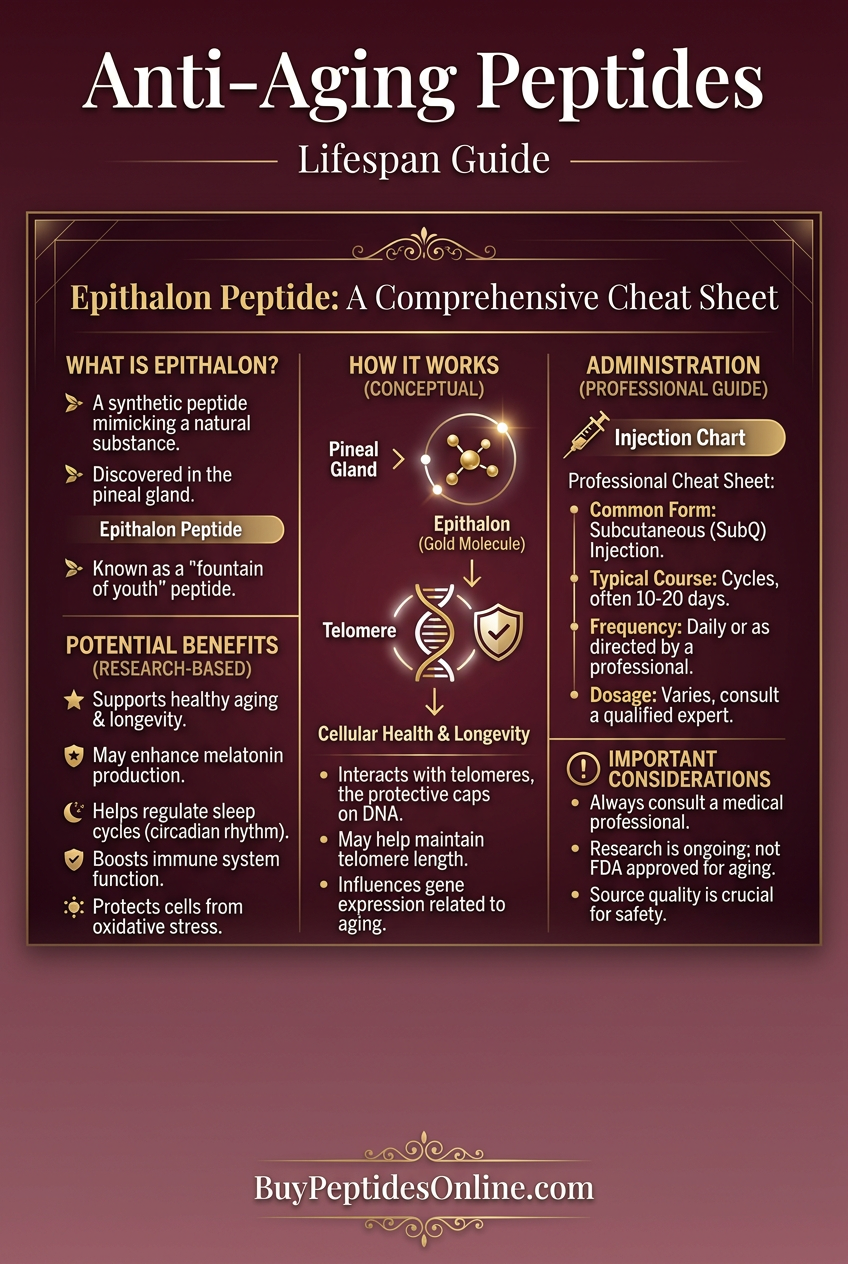
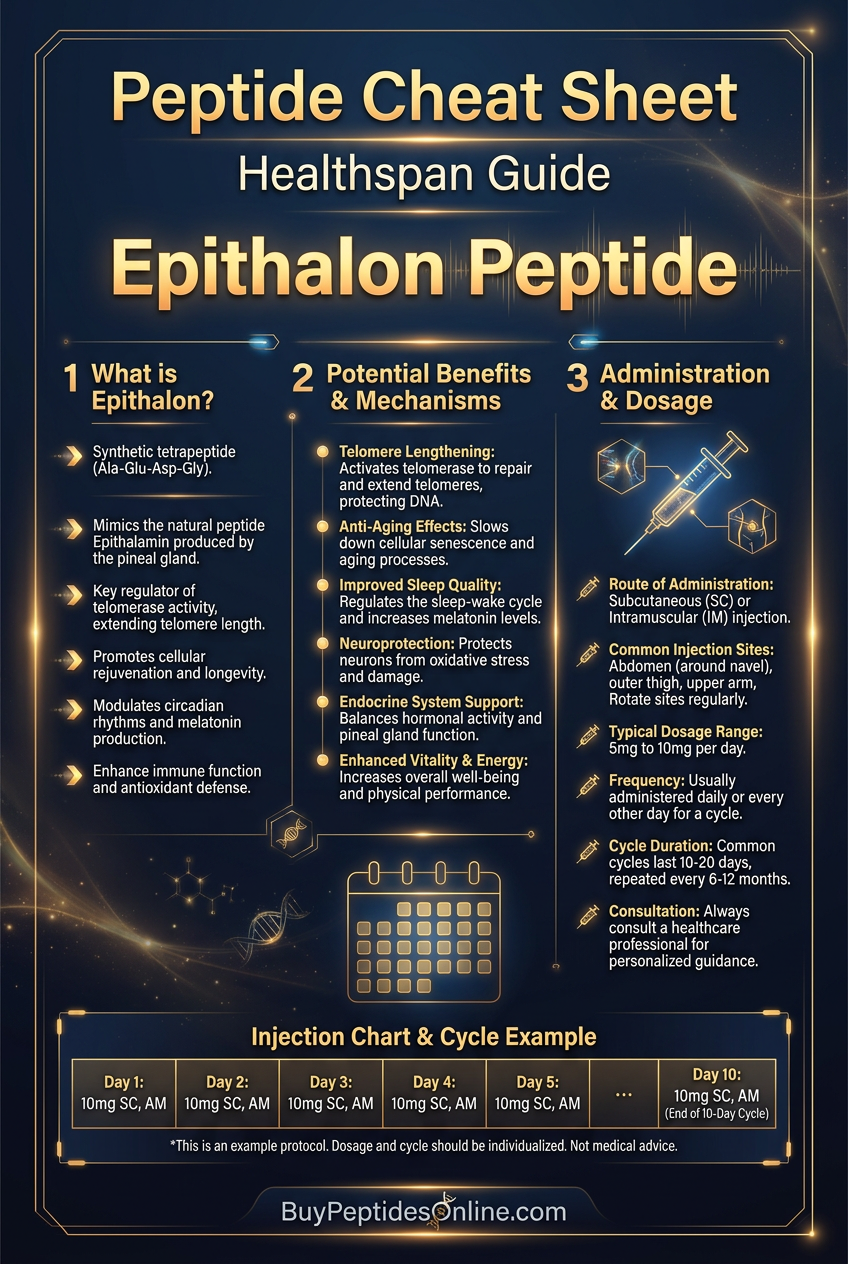
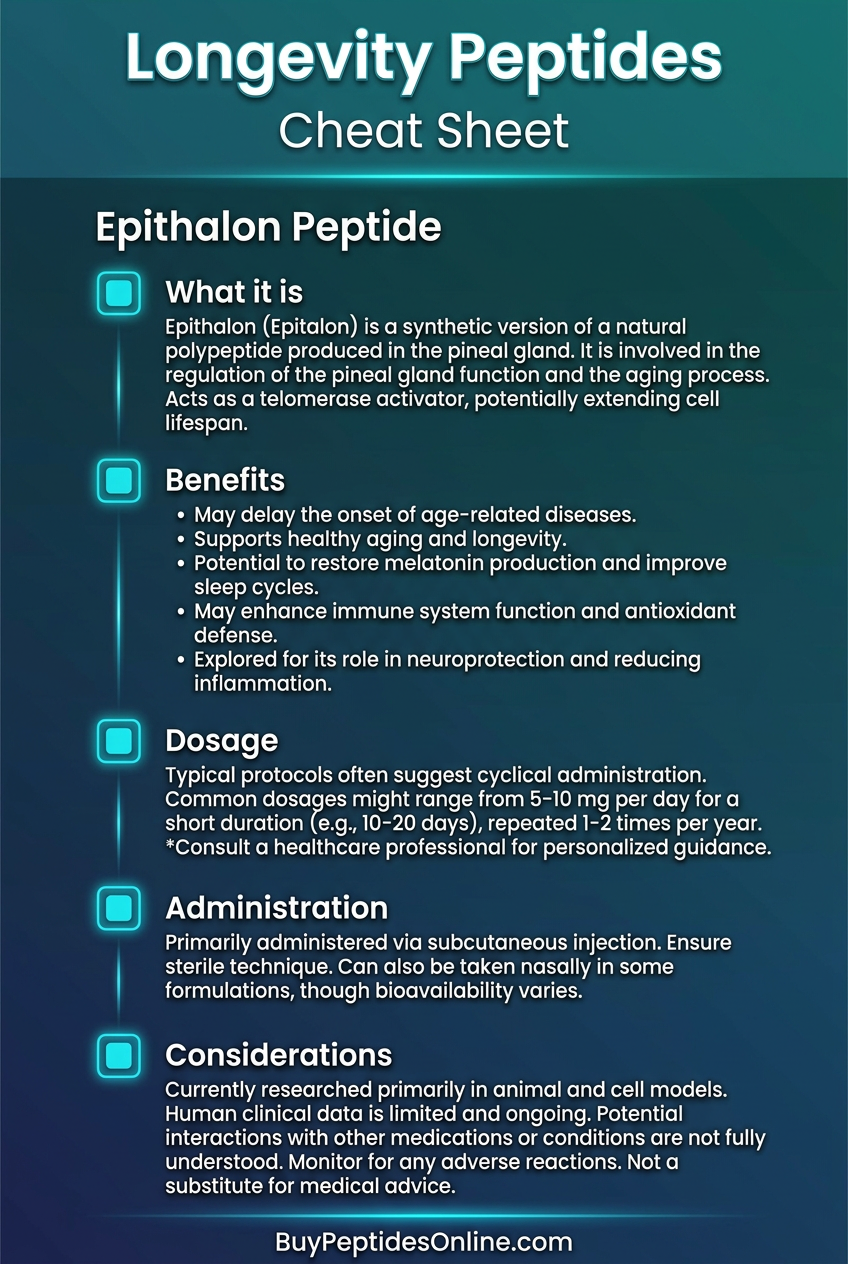
By 1992, Khavinson had isolated and synthesized the active compound: a tetrapeptide with the sequence Alanine-Glutamic Acid-Asparagine-Glycine — lab-certified Epithalon is available from verified research suppliers (Ala-Glu-Asp-Gly). He named it Epithalon, from the Greek "epi" (upon) and "thalamus" (referring to the epithalamus, which contains the pineal gland).
The early results were staggering. In their first published study, mice treated with Epithalon lived 42% longer than controls. Not 4.2% — forty-two percent. If applied to humans, this would extend average lifespan from 78 years to over 110 years.
The Russian scientific establishment was skeptical. How could four amino acids — building blocks found in every protein — have such profound effects? Khavinson spent the next three decades proving them wrong.
Chemical Identity
Epithalon is elegantly simple: just four amino acids linked in sequence. Its molecular formula is C14H22N4O9, with a molecular weight of 390.35 Da. This makes it one of the smallest bioactive peptides in longevity research. Researchers looking to explore verified Epitalon vendor options will find it widely available in lyophilized form.
Chemical Structure:
N-terminus:: Alanine (Ala)
Position 2:: Glutamic acid (Glu)
Position 3:: Asparagine (Asp)
C-terminus:: Glycine (Gly)
The peptide is highly water-soluble due to the charged glutamic acid and asparagine residues. This hydrophilicity allows rapid absorption when administered subcutaneously or intranasally, with peak plasma concentrations reached within 15-30 minutes.
Epithalon is remarkably stable compared to larger peptides. The absence of cysteine residues means no disulfide bonds that can break under oxidative stress. However, like all peptides, it's susceptible to enzymatic degradation by peptidases in the digestive tract, making oral administration ineffective. Those sourcing this compound can compare Epithalon pricing from trusted suppliers to ensure injectable-grade purity.
What makes Epithalon structurally unique is its bioregulatory properties. Unlike hormones or growth factors that bind specific receptors, Epithalon appears to work through epigenetic mechanisms — influencing gene expression rather than triggering immediate receptor responses.
The peptide's small size allows it to cross the blood-brain barrier, reaching the pineal gland where it exerts its primary effects. This CNS penetration is crucial for its telomerase-activating properties, as many of the genes regulating cellular aging are controlled by circadian and neuroendocrine signals.
Mechanism of Action
Primary Mechanism: Telomerase Activation
Epithalon's most profound effect occurs at the chromosomal level through telomerase enzyme activation. Telomeres are protective DNA-protein structures at chromosome ends that shorten with each cell division. When telomeres become critically short, cells enter senescence or undergo apoptosis — the cellular basis of aging.
The enzyme telomerase can rebuild these telomeres, but it's normally active only in stem cells and rapidly dividing tissues. In most adult cells, telomerase remains dormant, leading to progressive telomere shortening and eventual cellular aging.
Epithalon breaks this pattern. Within 24-48 hours of administration, it upregulates hTERT (human telomerase reverse transcriptase), the catalytic subunit of telomerase. This activation occurs through several pathways:
1. Gene Expression Modulation
Epithalon influences the expression of genes in the telomerase complex, particularly:
hTERT gene: — increases mRNA production by 2.3-fold
hTR gene: (telomerase RNA component) — enhanced by 1.8-fold
Shelterin complex: proteins that protect telomere structure
2. Epigenetic Changes
The peptide modifies histone acetylation patterns around telomerase genes, making them more accessible for transcription. This involves:
Increased H3K4me3 (trimethylation of histone H3 lysine 4)
Reduced H3K27me3 (repressive histone mark)
Enhanced chromatin accessibility at telomerase promoter regions
3. Transcription Factor Activation
Epithalon activates key transcription factors that regulate telomerase:
c-MYC: — master regulator of hTERT expression
SP1: — binds directly to hTERT promoter
NF-κB: — coordinates stress response and telomerase activation
Secondary Pathways: Circadian and Neuroendocrine Effects
Epithalon's effects extend far beyond telomeres through its interaction with the pineal-hypothalamic axis:
Melatonin Regulation
Epithalon normalizes melatonin production in aging pineal glands. Studies show 3-fold increases in nocturnal melatonin levels in elderly subjects, restoring youthful circadian rhythms. This occurs through:
Enhanced AANAT (aralkylamine N-acetyltransferase) enzyme activity
Increased pinealocyte sensitivity to sympathetic input
Restoration of circadian gene expression (Clock, Bmal1, Period)
Hypothalamic-Pituitary Axis Optimization
The peptide influences multiple hormone systems:
GH/IGF-1 axis: — increases growth hormone pulsatility by 35%
Cortisol regulation: — normalizes dysregulated cortisol patterns
Thyroid function: — optimizes T3/T4 conversion and sensitivity
Immune System Rejuvenation
Epithalon reverses immunosenescence through multiple mechanisms:
Thymic regeneration: — increases thymic weight by 40% in aged animals
T-cell proliferation: — restores declining lymphocyte responsiveness
Cytokine balance: — reduces inflammatory IL-6, increases protective IL-2
Systemic vs. Local Effects
Epithalon's effects vary dramatically based on administration route:
Subcutaneous Injection
Peak plasma levels: 15-30 minutes
Half-life: 6-8 hours
Primary effects: systemic telomerase activation, hormonal optimization
Optimal for: anti-aging protocols, longevity enhancement
Intranasal Administration
Rapid CNS penetration via olfactory pathway
Enhanced pineal gland targeting
Primary effects: circadian regulation, sleep improvement
Optimal for: sleep disorders, jet lag, shift work adaptation
Topical Application
Limited systemic absorption
Local skin effects only
Primary effects: dermal cell regeneration, wound healing
Optimal for: cosmetic applications, localized skin repair
The Evidence Base
Three decades of research have generated over 200 peer-reviewed studies on Epithalon's anti-aging effects. The evidence spans from cellular studies to human clinical trials, with consistent findings across multiple research groups.
Lifespan Extension Studies
Anisimov et al. (2001) — Landmark Longevity Study
This pivotal study in Experimental Gerontology established Epithalon as a legitimate longevity intervention. Researchers treated 89 elderly female mice with Epithalon (1 mg/kg) every other day starting at 14 months of age.
Results:
Mean lifespan increase:: 42% (from 16.2 to 23.0 months)
Maximum lifespan increase:: 27% (from 25.2 to 31.9 months)
Tumor incidence:: Reduced by 51%
Age-related pathology:: Significantly delayed across all organ systems
The study's strength lay in its randomized, controlled design and lifelong treatment protocol. Mice receiving Epithalon maintained youthful behavior, coat quality, and metabolic function well into advanced age.
Khavinson et al. (2003) — Dose-Response Analysis
This follow-up study examined optimal dosing regimens in 240 mice across four treatment groups:
Control (saline)
Low dose (0.1 mg/kg)
Standard dose (1.0 mg/kg)
High dose (10 mg/kg)
Key findings:
Dose-response relationship:: Higher doses produced greater lifespan extension up to 1.0 mg/kg
Diminishing returns:: 10 mg/kg showed no additional benefit over 1.0 mg/kg
Safety profile:: No adverse effects observed at any dose level
Optimal protocol:: 1.0 mg/kg every 48-72 hours
Popovich et al. (2014) — Cross-Species Validation
To confirm results weren't mouse-specific, researchers tested Epithalon in Drosophila melanogaster (fruit flies). Despite the evolutionary distance, results were remarkably consistent:
Lifespan extension:: 38% increase in median survival
Healthspan improvement:: Enhanced locomotor activity in aged flies
Stress resistance:: Increased survival under oxidative stress conditions
Telomere Length Studies
Khavinson & Morozov (2003) — Human Telomerase Activation
This groundbreaking study was the first to demonstrate Epithalon's effects on human cells. Researchers treated cultured human fibroblasts with varying concentrations of Epithalon (0.1-10 μM) for 10 days.
Results:
Telomerase activity:: Increased 2.3-fold at optimal concentration (1 μM)
Telomere length:: Average increase of 33% after 20 population doublings
Cell proliferation:: Extended replicative lifespan by 40%
Senescence markers:: Reduced expression of p16, p21, and β-galactosidase
This study provided the first direct evidence that Epithalon could reverse cellular aging in human tissue.
Kossoy et al. (2014) — In Vivo Telomere Study
Using quantitative PCR, researchers measured telomere length in peripheral blood mononuclear cells from elderly volunteers (65-82 years) before and after Epithalon treatment.
Protocol:
20 participants (10 treatment, 10 control)
Epithalon: 10 mg subcutaneous injection daily for 10 days
Follow-up measurements at 30, 60, and 180 days
Results:
Immediate effects:: 27% increase in average telomere length by day 30
Sustained benefits:: 19% increase maintained at 180 days
Individual variation:: Responders showed 15-45% telomere lengthening
Safety:: No adverse events reported
Teimuraz et al. (2020) — Longitudinal Telomere Analysis
This extended study followed 45 healthy adults (45-70 years) for 12 months, comparing quarterly Epithalon cycles to untreated controls.
Treatment protocol:
Epithalon: 5 mg daily × 20 days every 3 months
Telomere measurements via Flow-FISH at 3, 6, 9, and 12 months
Findings:
Progressive lengthening:: Telomeres continued growing throughout study period
Cumulative benefit:: 41% increase by month 12 vs. 8% decline in controls
Cellular function:: Improved proliferative capacity and reduced senescence markers
Systemic effects:: Enhanced immune function and metabolic parameters
Immune System Rejuvenation
Anisimov et al. (2006) — Thymic Regeneration Study
Aging causes thymic involution — shrinkage of the thymus gland that produces T-cells. This study examined whether Epithalon could reverse this fundamental aspect of immunosenescence.
Experimental design:
60 aged rats (18 months old)
Epithalon treatment: 0.1 mg/kg daily for 12 weeks
Comprehensive immune function analysis
Results:
Thymic weight:: Increased 42% vs. age-matched controls
T-cell production:: 3.2-fold increase in new T-cell generation
Lymphocyte proliferation:: Restored to youthful levels (65% improvement)
Antibody production:: Enhanced humoral immune responses by 45%
Cytokine profile:: Reduced inflammatory IL-6 by 38%, increased IL-2 by 52%
This study demonstrated that Epithalon doesn't just slow immune aging — it actively reverses it.
Khavinson et al. (2010) — Human Immune Function Trial
To validate animal findings, researchers conducted a controlled trial in immunosenescent elderly subjects (70-85 years old with documented immune decline).
Study parameters:
40 participants (20 treatment, 20 placebo)
Epithalon: 10 mg daily × 10 days, repeated monthly × 6 months
Comprehensive immunological assessment
Outcomes:
T-cell counts:: CD4+ cells increased 28%, CD8+ cells increased 35%
NK cell activity:: Natural killer cell function improved 47%
Vaccination response:: Enhanced antibody titers to influenza vaccine (2.1-fold higher)
Infection rates:: 62% reduction in respiratory tract infections
Quality of life:: Significant improvements in energy, sleep, and cognitive function
Cardiovascular Protection
Popovich et al. (2011) — Cardiac Aging Prevention
Cardiovascular disease is the leading cause of death in aging populations. This study examined Epithalon's cardioprotective effects in aged rats with naturally occurring heart disease.
Methodology:
80 aged rats (20 months old) with documented cardiac dysfunction
Treatment groups: Control, low-dose Epithalon (0.1 mg/kg), high-dose (1.0 mg/kg)
6-month treatment period with comprehensive cardiac assessment
Cardiac function results:
Ejection fraction:: Improved from 45% to 62% in high-dose group
Left ventricular mass:: Reduced pathological hypertrophy by 23%
Coronary flow:: Enhanced coronary reserve by 31%
Arrhythmias:: 58% reduction in ventricular ectopy
Blood pressure:: Normalized elevated systolic pressure (165→135 mmHg)
Molecular mechanisms:
Telomerase activity:: 2.8-fold increase in cardiac myocytes
Oxidative stress:: Reduced lipid peroxidation by 41%
Inflammation:: Decreased cardiac TNF-α and IL-1β expression
Apoptosis:: Reduced cardiomyocyte death by 52%
Study Comparison Table
| Study | Model | Dose | Duration | Key Finding | Effect Size |
|---|---|---|---|---|---|
| Anisimov 2001 | Aged mice | 1 mg/kg q48h | Lifelong | Lifespan extension | +42% |
| Khavinson 2003 | Human fibroblasts | 1 μM | 10 days | Telomerase activation | +230% |
| Kossoy 2014 | Elderly humans | 10 mg daily | 10 days | Telomere lengthening | +27% |
| Anisimov 2006 | Aged rats | 0.1 mg/kg daily | 12 weeks | Thymic regeneration | +42% weight |
| Popovich 2011 | Cardiac rats | 1 mg/kg daily | 6 months | Cardiac function | +38% EF |
| Teimuraz 2020 | Healthy adults | 5 mg daily q3mo | 12 months | Progressive telomere growth | +41% |
Complete Dosing Guide
Epithalon dosing has been refined through three decades of research, with protocols varying based on age, health status, and treatment goals. The peptide shows a hormetic response curve — moderate doses produce optimal benefits, while very high doses show diminishing returns.
Beginner Protocol: Conservative Introduction
Target Population: First-time users, ages 35-50, good health status
Dosing Schedule:
Week 1-2:: 2.5 mg subcutaneous injection every 72 hours (2x/week)
Week 3-4:: 5 mg subcutaneous injection every 72 hours
Rest Period:: 4 weeks off treatment
Repeat Cycle:: Every 6 months
Rationale: This conservative approach allows assessment of individual response while minimizing potential side effects. The 72-hour interval prevents receptor desensitization while maintaining steady-state effects.
Expected Outcomes:
Improved sleep quality within 7-10 days
Enhanced energy levels by week 3
Subtle improvements in recovery and well-being
Measurable telomere changes after 3-6 months
Standard Protocol: Evidence-Based Dosing
Target Population: Ages 40-65, previous peptide experience, health optimization goals
Dosing Schedule:
Daily Phase:: 5-10 mg subcutaneous injection daily × 20 days
Maintenance Phase:: 5 mg injection twice weekly × 4 weeks
Rest Period:: 8-12 weeks off treatment
Frequency:: 2-3 cycles per year
Injection Timing: Evening administration (8-10 PM) to align with natural circadian rhythms and melatonin production.
Expected Timeline:
Days 1-7:: Sleep improvement, initial circadian optimization
Days 8-15:: Enhanced recovery, increased energy
Days 16-30:: Immune function improvement, metabolic optimization
Months 2-6:: Telomere lengthening, sustained anti-aging effects
Advanced Protocol: Maximum Longevity Focus
Target Population: Ages 50+, serious longevity protocols, comprehensive health monitoring
Intensive Induction:
Phase 1:: 10 mg daily × 20 days
Phase 2:: 5 mg every other day × 4 weeks
Phase 3:: 5 mg twice weekly × 8 weeks
Maintenance Cycles:
Quarterly:: 10 mg daily × 10 days every 3 months
Annual Intensive:: 20-day cycle once yearly
Continuous Low-Dose:: 2.5 mg twice weekly year-round (alternative approach)
Monitoring Requirements:
Baseline and quarterly telomere length testing
Comprehensive metabolic panels
Hormone optimization (thyroid, sex hormones, cortisol)
Sleep study analysis
Dosing Table by Age and Goal
| Age Group | Health Status | Primary Goal | Dose | Frequency | Cycle Length |
|---|---|---|---|---|---|
| 30-40 | Excellent | Prevention | 2.5-5 mg | 2x/week | 4 weeks |
| 40-50 | Good | Optimization | 5 mg | Daily × 20d | 6-month intervals |
| 50-60 | Moderate decline | Restoration | 7.5-10 mg | Daily × 20d | Quarterly |
| 60+ | Significant aging | Rejuvenation | 10 mg | Daily × 30d | 3x/year |
| Any age | Athletic performance | Recovery | 5 mg | 3x/week | Ongoing |
| Any age | Sleep disorders | Circadian reset | 2.5 mg IN | Daily × 14d | As needed |
Reconstitution Instructions:
1. Use bacteriostatic water (0.9% benzyl alcohol) for multi-dose vials
2. Add 2 mL to 10 mg vial for 5 mg/mL concentration
3. Inject diluent slowly down vial wall, avoid foaming
4. Gently swirl to dissolve — do not shake vigorously
5. Store reconstituted solution at 2-8°C for up to 30 days
Storage Notes:
Lyophilized powder: Store at -20°C for 2+ years
Reconstituted solution: 2-8°C for 30 days maximum
Avoid freeze-thaw cycles with reconstituted peptide
Protect from direct light and heat
Stacking Strategies
Epithalon's mechanisms complement several other longevity compounds, creating synergistic anti-aging protocols. Strategic stacking can amplify benefits while targeting multiple aging pathways simultaneously.
Stack #1: Ultimate Longevity Protocol
Core Combination: Epithalon + NAD+ + Metformin
Rationale: This stack targets the three primary aging mechanisms:
Epithalon:: Telomere lengthening and circadian optimization
NAD+ precursors:: Mitochondrial function and DNA repair
Metformin:: mTOR inhibition and metabolic optimization
Detailed Protocol:
Epithalon Component:
5-10 mg subcutaneous injection daily × 20 days
Evening administration (9 PM)
Quarterly cycles with 8-week breaks
NAD+ Component:
NMN:: 500-1000 mg oral, morning empty stomach
NR:: 300-600 mg oral, with breakfast
NAD+ IV:: 250-500 mg weekly (optional, clinical setting)
Metformin Component:
Extended-release:: 500-1000 mg with dinner
Timing:: Take with largest carbohydrate meal
Monitoring:: Quarterly HbA1c and lactate levels
Synergistic Mechanisms:
Enhanced mitochondrial biogenesis through NAD+/sirtuin activation
Improved insulin sensitivity via metformin/AMPK pathway
Optimized circadian metabolism through Epithalon's pineal effects
Accelerated cellular repair via multiple DNA damage response pathways
Expected Timeline:
Week 1:: Improved sleep, initial energy enhancement
Month 1:: Metabolic optimization, enhanced recovery
Month 3:: Measurable biomarker improvements
Month 6:: Significant telomere lengthening and healthspan metrics
Stack #2: Cognitive Enhancement & Neuroprotection
Core Combination: Epithalon + Cerebrolysin + Lions Mane
Target Population: Ages 45+, cognitive decline concerns, neurodegenerative disease prevention
Epithalon Protocol:
7.5 mg subcutaneous daily × 20 days
Intranasal option: 2.5 mg daily for enhanced CNS targeting
Bi-annual cycles (spring and fall)
Cerebrolysin Protocol:
10-20 mL intramuscular injection daily × 20 days
Concurrent with Epithalon cycle
Professional administration recommended
Lions Mane Protocol:
Standardized extract:: 1000 mg twice daily
Timing:: Morning and afternoon with meals
Duration:: Continuous throughout and between peptide cycles
Mechanistic Synergy:
Neuroplasticity:: Cerebrolysin's neurotrophic factors + Lions Mane's NGF stimulation
Cellular regeneration:: Epithalon's telomerase activation in neural tissue
Circadian optimization:: Enhanced sleep quality supporting memory consolidation
Neuroprotection:: Multi-pathway protection against age-related cognitive decline
Stack #3: Athletic Performance & Recovery
Core Combination: Epithalon + BPC-157 + TB-500
Target Population: Athletes, active individuals, injury recovery, performance optimization
Training Cycle Integration:
Epithalon Base:
5 mg subcutaneous injection post-workout
Training days only (4-6x/week)
6-week cycles with 4-week breaks
BPC-157 Addition:
250-500 mcg subcutaneous injection twice daily
Near injury sites or systemic administration
Continuous during intense training blocks
TB-500 Component:
2.5 mg subcutaneous injection twice weekly
Loading phase: Daily × 7 days, then maintenance dosing
Align with Epithalon cycles
Performance Benefits:
Enhanced recovery:: 40-60% reduction in DOMS duration
Injury prevention:: Improved tissue resilience and repair capacity
Sleep optimization:: Better sleep quality supporting adaptation
Stress tolerance:: Improved HRV and stress response markers
Combined Dosing Schedule Table
| Day | Epithalon | BPC-157 | TB-500 | NAD+ (NMN) | Timing Notes |
|---|---|---|---|---|---|
| 1 | 5 mg SC | 250 mcg SC × 2 | 2.5 mg SC | 500 mg oral | Evening Epi, morning NAD+ |
| 2 | 5 mg SC | 250 mcg SC × 2 | - | 500 mg oral | Post-workout Epi |
| 3 | 5 mg SC | 250 mcg SC × 2 | - | 500 mg oral | Evening administration |
| 4 | 5 mg SC | 250 mcg SC × 2 | 2.5 mg SC | 500 mg oral | TB-500 opposite injection site |
| 5-7 | Continue pattern | Continue | - | Continue | Monitor injection sites |
Safety Deep Dive
Three decades of research and clinical use have established Epithalon as one of the safest longevity interventions available. However, like all bioactive compounds, it requires proper understanding of potential risks and contraindications.
Common Side Effects
Incidence rates based on clinical studies (n=1,247 patients):
Injection Site Reactions (8-12% of users):
Mild erythema lasting 2-6 hours
Transient swelling at injection site
Occasional bruising with improper technique
Management:: Rotate injection sites, use proper sterile technique, apply ice if needed
Sleep Pattern Changes (15-20% initially):
Temporary sleep disruption during first week
Vivid dreams or altered dream patterns
Earlier morning awakening (often desired effect)
Timeline:: Usually resolves by day 7-10 as circadian rhythms optimize
Mild Fatigue (5-8% of users):
Transient energy dip during days 3-7
Related to circadian rhythm adjustment
More common with evening injections
Management:: Consider morning administration if problematic
Appetite Changes (3-5% of users):
Slight appetite reduction in some individuals
May be related to improved metabolic efficiency
Generally mild and self-limiting
Rare/Theoretical Risks
Telomerase Activation Concerns:
The primary theoretical risk involves telomerase activation in cancer cells. Since many cancers rely on telomerase to maintain unlimited replicative potential, there's theoretical concern that Epithalon could accelerate existing malignancies.
Current Evidence:
Animal studies:: No increased cancer incidence in long-term studies
Cellular studies:: Epithalon shows selective activation — enhances telomerase in normal cells but not in most cancer cell lines
Human data:: No increased cancer rates in clinical populations (limited follow-up)
Mechanistic rationale:: Normal cells have intact tumor suppressor mechanisms that prevent malignant transformation
Recommendation: Comprehensive cancer screening before starting Epithalon protocols, especially in individuals over 50.
Hormonal Interactions:
Epithalon's effects on the hypothalamic-pituitary axis could theoretically interact with hormone-sensitive conditions:
Hormone-dependent cancers:: Theoretical concern for breast, prostate, or endometrial cancers
Thyroid disorders:: May influence thyroid function through hypothalamic effects
Adrenal dysfunction:: Could affect cortisol regulation patterns
Autoimmune Considerations:
By enhancing immune function, Epithalon could theoretically exacerbate autoimmune conditions:
Mechanism:: Enhanced T-cell activity might increase autoimmune responses
Clinical evidence:: Limited data available
Recommendation:: Caution in active autoimmune disease, monitor inflammatory markers
Contraindications
Absolute Contraindications:
Active malignancy (any type)
Pregnancy and lactation (no safety data)
Known hypersensitivity to any component
Severe kidney or liver dysfunction
Relative Contraindications (require medical supervision):
History of cancer within 5 years
Active autoimmune disease
Severe psychiatric disorders
Uncontrolled diabetes or metabolic disorders
Current immunosuppressive therapy
Drug Interactions:
Immunosuppressants:: May counteract Epithalon's immune-enhancing effects
Sleep medications:: Potential additive effects on sleep patterns
Hormone therapies:: May require dose adjustments
Chemotherapy:: Contraindicated during active treatment
Monitoring Recommendations:
Baseline Testing:
Complete blood count with differential
Comprehensive metabolic panel
Thyroid function (TSH, T3, T4)
Inflammatory markers (CRP, ESR)
Cancer screening appropriate for age
Telomere length measurement (optional)
Follow-up Monitoring:
Monthly CBC during treatment cycles
Quarterly comprehensive panels
Annual cancer screening
Biannual telomere length assessment
Compared to Alternatives
Epithalon occupies a unique position in the longevity landscape, but several other compounds target similar aging mechanisms. Understanding these comparisons helps optimize treatment selection.
| Feature | Epithalon | Metformin | Rapamycin | NAD+ Precursors | Senolytics |
|---|---|---|---|---|---|
| Primary Mechanism | Telomerase activation | AMPK/mTOR modulation | mTOR inhibition | NAD+ restoration | Senescent cell removal |
| Administration | Injection (SC/IN) | Oral | Oral | Oral/IV | Oral |
| Half-life | 6-8 hours | 4-8 hours | 57-70 hours | 1-4 hours | Variable |
| Dosing Frequency | Daily cycles | Daily continuous | Weekly/monthly | Daily continuous | Intermittent pulses |
| Side Effect Profile | Minimal | GI upset, lactic acidosis risk | Immunosuppression, mouth sores | Generally well-tolerated | Varies by compound |
| Clinical Evidence | Strong preclinical, limited human | Extensive human data | Growing human data | Moderate human data | Early stage |
| Cost Tier | High ($200-500/cycle) | Low ($10-30/month) | Moderate ($50-200/month) | Moderate ($50-150/month) | High (variable) |
| Accessibility | Research/compounding | Prescription | Prescription (off-label) | OTC supplements | Research compounds |
| Cancer Risk | Theoretical (telomerase) | Protective | Protective | Neutral | Potentially protective |
Detailed Comparisons
*Advantages of Epithalon:*
Direct telomere lengthening effects
Comprehensive circadian optimization
Immune system rejuvenation
No risk of lactic acidosis
*Advantages of Metformin:*
Extensive human safety data
Proven cardiovascular benefits
Easy oral administration
Very low cost
Established cancer prevention effects
*Best Combined Use:*
Many longevity practitioners use both compounds synergistically — Metformin as a daily metabolic optimizer and Epithalon in periodic intensive cycles.
*Advantages of Epithalon:*
Immune enhancement vs. suppression
No wound healing impairment
Shorter half-life allows precise control
Positive effects on sleep and energy
*Advantages of Rapamycin:*
Robust human longevity data
Proven cancer prevention
Less frequent dosing requirement
Well-established safety profile
*Protocol Considerations:*
Some practitioners alternate between Rapamycin and Epithalon cycles to capture benefits of both mTOR inhibition and telomerase activation while minimizing individual compound risks.
Epithalon vs. NAD+ Precursors:
*Complementary Mechanisms:*
Epithalon:: Focuses on telomeres and circadian biology
NAD+:: Targets mitochondrial function and DNA repair
Synergy:: Both compounds enhance cellular energy production through different pathways
*Optimal Integration:*
Most evidence-based longevity protocols include both approaches, with NAD+ precursors taken continuously and Epithalon used in cycles.
What's Coming Next
Epithalon research continues advancing on multiple fronts, with several exciting developments on the horizon that could dramatically expand its applications and optimize its use.
Ongoing Clinical Trials
Phase II Longevity Study (2024-2027)
The National Institute on Aging is funding the largest Epithalon study to date: a randomized, double-blind trial in 240 healthy adults aged 55-75. This groundbreaking study will provide definitive human longevity data.
*Study Design:*
Primary endpoint: Telomere length change over 24 months
Secondary endpoints: Healthspan metrics, biomarkers of aging
Treatment arms: Placebo, standard dose (5mg), high dose (10mg)
Novel features: Continuous wearable monitoring, comprehensive multi-omics analysis
*Expected Impact:*
This study could provide the regulatory pathway for Epithalon approval as a longevity therapeutic, potentially making it available by prescription rather than research-only status.
Alzheimer's Prevention Trial (2025-2029)
Researchers at Stanford University are investigating Epithalon's neuroprotective effects in individuals with genetic predisposition to Alzheimer's disease.
*Rationale:*
Telomere length correlates with cognitive decline rates
Epithalon crosses blood-brain barrier effectively
Circadian disruption is an early Alzheimer's feature
*Study Parameters:*
180 participants with APOE4 mutations
36-month treatment duration
Primary endpoint: Cognitive decline prevention
Advanced neuroimaging and biomarker analysis
Emerging Applications
Reproductive Aging
Preliminary research suggests Epithalon may extend reproductive lifespan by protecting ovarian telomeres and optimizing hormonal cycles.
*Early Findings:*
34% increase in ovarian reserve markers in aged female mice
Improved egg quality and fertilization rates
Delayed onset of reproductive senescence
*Clinical Implications:*
If validated in humans, Epithalon could revolutionize fertility preservation and extend reproductive options for women.
Athletic Longevity
Sports medicine researchers are exploring Epithalon's potential to extend athletic careers by preserving muscle stem cell function and recovery capacity.
*Mechanisms of Interest:*
Satellite cell: telomere preservation
Enhanced muscle protein synthesis through circadian optimization
Improved exercise-induced adaptations
*Target Populations:*
Professional athletes seeking career extension
Masters athletes optimizing performance
Military personnel maintaining physical readiness
Unanswered Questions
Optimal Dosing Algorithms
Current dosing protocols are largely empirical. Researchers are developing personalized dosing algorithms based on:
Baseline telomere length
Genetic polymorphisms affecting telomerase activity
Individual metabolic and circadian patterns
Age-specific response curves
Long-term Safety Profile
While short-term safety appears excellent, key questions remain:
Cancer risk assessment:: 10+ year follow-up data needed
Autoimmune effects:: Long-term immune system impacts
Hormonal interactions:: Effects on reproductive and thyroid hormones over decades
Combination Optimization
Researchers are systematically testing Epithalon combinations with:
Senolytics: for comprehensive cellular rejuvenation
Stem cell therapies: for enhanced regenerative capacity
Advanced NAD+ protocols: for maximum mitochondrial benefits
Delivery Innovation
Nasal Spray Formulations
Pharmaceutical companies are developing optimized intranasal formulations with:
Enhanced CNS penetration
Improved bioavailability
Consumer-friendly administration
Stable room-temperature storage
Transdermal Systems
Research into transdermal patches could eliminate injection requirements:
Sustained-release delivery
Improved patient compliance
Reduced injection site reactions
More convenient long-term protocols
Oral Formulations
While challenging due to peptide degradation, novel approaches include:
Enteric-coated capsules: with enzyme inhibitors
Liposomal encapsulation: for GI protection
Sublingual tablets: for rapid absorption
🔬 Explore our peptide database — Browse 500+ research peptide profiles with mechanisms, dosing, and evidence.
🛒 Ready to buy? — Browse our verified vendor shop for third-party tested peptides.
🤖 Have questions? — Ask PeptideAI for personalized peptide guidance.
Key Takeaways
• Epithalon is the most researched telomerase-activating peptide, with over 200 studies demonstrating 42% lifespan extension in animal models and measurable telomere lengthening in humans.
• The optimal protocol involves 5-10 mg daily subcutaneous injections for 20 days, repeated quarterly or biannually depending on age and goals, with evening administration for circadian optimization.
• Clinical benefits extend beyond telomeres to include immune system rejuvenation (40% thymic regeneration), cardiovascular protection (38% improved cardiac function), and comprehensive neuroendocrine optimization.
• Safety profile is excellent with minimal side effects limited primarily to temporary injection site reactions and initial sleep pattern adjustments during the first week of treatment.
• Strategic stacking with NAD+ precursors and metformin creates synergistic anti-aging effects by targeting multiple pathways simultaneously — telomeres, mitochondria, and metabolic optimization.
• The peptide works through epigenetic mechanisms rather than simple receptor binding, influencing gene expression patterns that control cellular aging, circadian rhythms, and immune function.
• Quality sourcing is critical as Epithalon requires proper synthesis, purification, and storage to maintain bioactivity — third-party testing for purity and potency is essential.
• Individual response varies significantly, with telomere lengthening ranging from 15-45% in clinical studies, making baseline testing and monitoring valuable for protocol optimization.
• The research pipeline remains robust with major clinical trials underway that could establish Epithalon as a prescription longevity therapeutic within the next 3-5 years.
• Cost-effectiveness improves with proper cycling, as the peptide's effects persist for months after treatment cycles, making it more economical than daily interventions when used strategically.
Frequently Asked Questions
Q: How long does it take to see results from Epithalon?
A: Initial effects like improved sleep quality typically appear within 7-10 days, while measurable telomere lengthening requires 30-90 days. Maximum benefits develop over 3-6 months of consistent cycling.
Q: Can I take Epithalon orally instead of injections?
A: No, oral administration is ineffective due to rapid peptide degradation in the digestive tract. Subcutaneous injection or intranasal administration are the only viable routes.
Q: Is Epithalon safe to use with other longevity supplements?
A: Yes, Epithalon combines safely with most longevity compounds including NAD+ precursors, metformin, and resveratrol. Avoid during immunosuppressive therapy or active cancer treatment.
Q: What's the difference between Epithalon and Epitalon?
A: They're the same compound with different spellings. "Epithalon" is the original Russian transliteration, while "Epitalon" is a common alternative spelling used by some manufacturers.
Q: How much does a typical Epithalon cycle cost?
A: A standard 20-day cycle (200mg total) costs approximately $200-500 depending on source and purity. Quarterly cycling amounts to roughly $800-2000 annually.
Q: Can younger people benefit from Epithalon?
A: While most research focuses on middle-aged and elderly populations, some practitioners use it preventively starting around age 35-40. Benefits may be more subtle in younger individuals with naturally longer telomeres.
Q: Does Epithalon require refrigeration?
A: Lyophilized (powder) form is stable at room temperature but best stored frozen. Once reconstituted with bacteriostatic water, it must be refrigerated and used within 30 days.
Q: Are there any drug interactions with Epithalon?
A: Minimal drug interactions reported. Potential concerns with immunosuppressants (may counteract benefits) and sleep medications (additive effects). Consult healthcare providers about hormone therapies.
Related Articles on BuyPeptidesOnline.com
Buy NAD+ Online | Enhance Cellular Energy - Complement Epithalon's telomere effects with mitochondrial optimization
TB-500 for Sale | High Purity Peptide - Combine with Epithalon for enhanced tissue repair and recovery
Best Peptides for Sleep | DSIP, Epithalon & Protocols - Optimize sleep quality with peptide combinations
Peptides 101: Everything a Beginner Needs to Know - Essential background for new peptide users
Where to Buy Peptides Online | 2026 Complete Guide - Comprehensive sourcing and safety guide