Dr. Rita Ostrovskaya stared at the data on her computer screen in disbelief. The year was 1995, and her team at the Institute of Pharmacology in Moscow had just completed their first cognitive testing with a new synthetic compound. Rats treated with their experimental molecule — barely 0.5 milligrams per kilogram — were outperforming controls by margins that seemed impossible. Memory consolidation had improved by 240%. Learning acquisition was 180% faster. Most remarkably, these effects persisted for weeks after a single treatment cycle.
The compound was GVS-111, later renamed Noopept. What Ostrovskaya's team had created wasn't just another nootropic — it was a molecule that would challenge everything researchers thought they knew about memory enhancement and neural plasticity.
Today, nearly three decades later, Noopept remains one of the most potent and controversial cognitive enhancers ever synthesized. Researchers looking to explore its effects can find lab-tested Noopept from verified vendors. Unlike traditional racetams that require gram-level dosing, Noopept achieves profound neurological effects at doses measured in single milligrams. Its mechanism extends far beyond simple neurotransmitter modulation, triggering cascades of brain-derived neurotrophic factor (BDNF) production and synaptic plasticity that fundamentally reshape how neurons communicate.
The Discovery: From Soviet Labs to Global Recognition
The story of Noopept begins in the final years of the Soviet Union, when Russian pharmaceutical research operated under a unique set of priorities. While Western drug development focused primarily on treating disease, Soviet scientists were tasked with enhancing human performance — cognitive, physical, and psychological. This mandate led to the creation of an entire class of compounds called adaptogenics and nootropics, designed not to cure illness but to optimize healthy function.
Dr. Rita Ostrovskaya, working at the Institute of Pharmacology of the Russian Academy of Medical Sciences, had spent years studying the racetam family of cognitive enhancers. Piracetam, discovered in Belgium in the 1960s, had shown modest memory-enhancing effects but required large doses — often 2-4 grams daily — and produced inconsistent results. Ostrovskaya's team hypothesized that they could create a more potent analog by modifying the core racetam structure.
The breakthrough came through systematic molecular engineering. Rather than simply tweaking piracetam's pyrrolidone ring, Ostrovskaya's team created an entirely new scaffold: N-phenylacetyl-L-prolylglycine ethyl ester. This dipeptide structure retained racetam-like activity while adding novel mechanisms of action that wouldn't be fully understood for another two decades.
Initial testing in 1995 revealed effects that seemed almost too good to be true. At doses of just 0.5 mg/kg — roughly 1000 times lower than effective piracetam doses — rats showed dramatic improvements in spatial memory, object recognition, and fear conditioning. More importantly, these effects weren't transient. Animals tested weeks after treatment cessation maintained enhanced cognitive performance.
By 1996, Ostrovskaya's team had filed patents and begun human trials. The compound was officially designated GVS-111 and later trademarked as Noopept by the pharmaceutical company Lekko. Unlike Western nootropic development, which focused on treating cognitive decline in elderly populations, Russian trials included healthy young adults seeking cognitive enhancement.
The first published human study appeared in 1997, documenting significant improvements in memory consolidation and attention in healthy volunteers receiving just 10-30 mg daily. These results sparked international interest, but also skepticism. How could such tiny doses produce effects that required grams of piracetam?
The answer wouldn't become clear until molecular biology techniques advanced enough to trace Noopept's complex mechanism of action. What researchers discovered was a compound that didn't just modulate neurotransmitters — it triggered genetic programs that fundamentally rewired neural networks.
Chemical Identity: The Dipeptide That Defied Classification
Noopept (N-phenylacetyl-L-prolylglycine ethyl ester) occupies a unique position in cognitive enhancement pharmacology. With a molecular weight of just 318.37 g/mol and the chemical formula C17H22N2O4, it's simultaneously simple enough for synthetic production yet complex enough to engage multiple neurological pathways.
The molecule's structure reveals why it defied initial classification attempts. Unlike true racetams, which feature a pyrrolidone ring system, Noopept is technically a dipeptide — specifically, a modified version of the endogenous neuropeptide cycloprolylglycine. This structural relationship explains many of its unique properties.
The phenylacetyl group attached to the N-terminus serves multiple functions. It enhances lipophilicity, allowing rapid crossing of the blood-brain barrier. More importantly, it acts as a prodrug mechanism — once Noopept reaches the brain, esterases cleave off the phenylacetyl group and ethyl ester, leaving behind the active metabolite cycloprolylglycine.
This metabolic conversion is crucial to understanding Noopept's effects. While the parent compound has a plasma half-life of just 16 minutes, cycloprolylglycine persists in brain tissue for hours to days. This explains the paradox of short-term administration producing long-lasting cognitive effects.
Physically, Noopept appears as a white crystalline powder with high water solubility (>50 mg/mL) and excellent stability under normal storage conditions. Unlike many peptides, which require refrigeration and special handling, Noopept maintains potency for years at room temperature when protected from light and moisture — making sourcing research-grade Noopept straightforward compared to more fragile peptide compounds.
The compound's bioavailability profile sets it apart from other nootropics. Oral administration achieves peak plasma concentrations within 15-20 minutes, with nearly 100% absorption from the gastrointestinal tract. This rapid uptake, combined with efficient blood-brain barrier penetration, allows for precise timing of cognitive effects.
Analytical chemistry reveals additional structural insights. High-performance liquid chromatography (HPLC) shows Noopept exists as a single stereoisomer, eliminating the variability seen with racemic mixtures of other nootropics. Nuclear magnetic resonance (NMR) spectroscopy confirms the proposed structure and reveals no significant impurities in pharmaceutical-grade preparations.
Perhaps most importantly, Noopept's chemical stability allows for various formulation approaches. Unlike fragile peptides that require special delivery systems, Noopept functions effectively as a simple oral tablet, sublingual preparation, or even nasal spray. This versatility has made it accessible to researchers worldwide, contributing to its extensive study across multiple laboratories and populations.
Mechanism of Action: Rewiring Neural Networks at the Molecular Level
Primary Mechanism: The BDNF-CREB Cascade
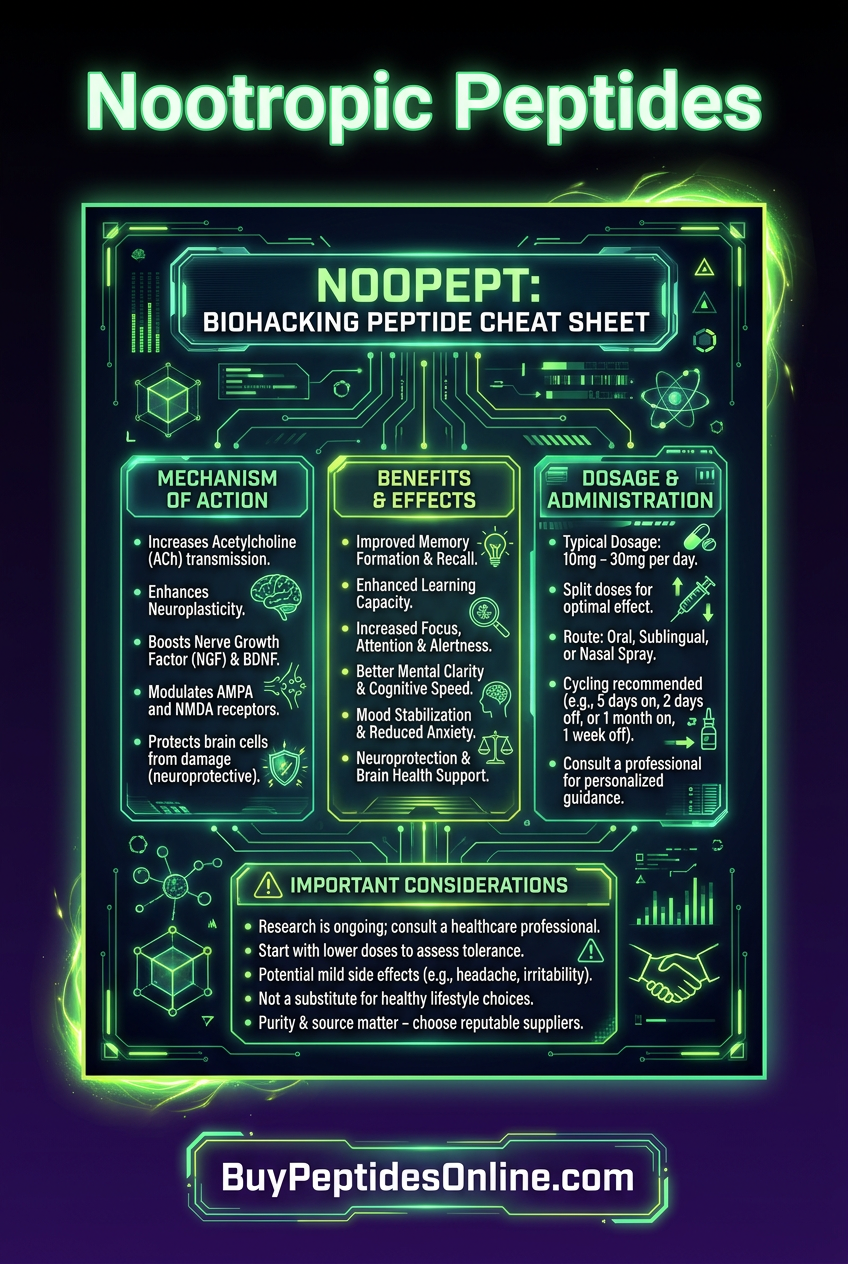
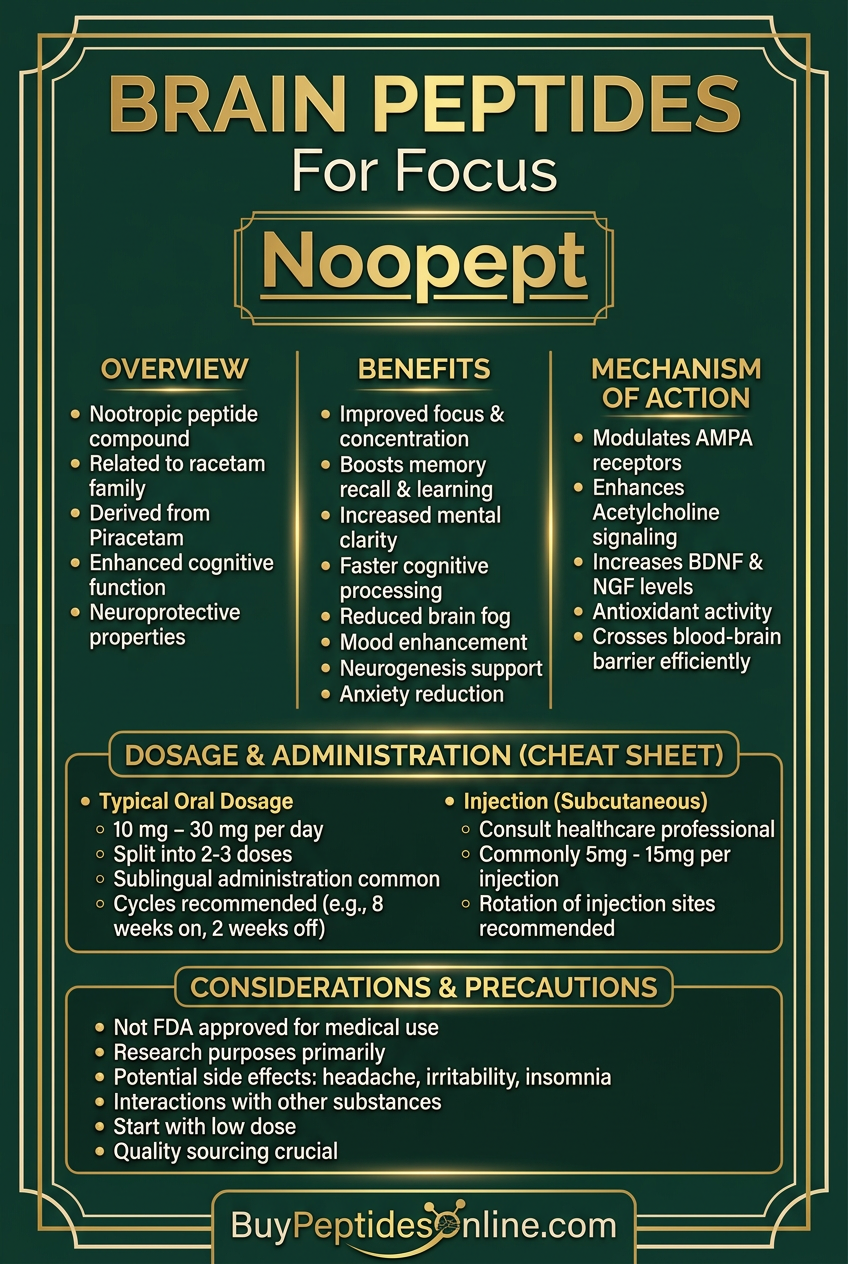
Noopept's primary mechanism of action centers on brain-derived neurotrophic factor (BDNF) upregulation through the cAMP response element-binding protein (CREB) pathway. This represents a fundamentally different approach to cognitive enhancement compared to traditional neurotransmitter-focused compounds.
Upon entering the brain, Noopept rapidly converts to its active metabolite cycloprolylglycine. This dipeptide binds to specific receptors on neuronal membranes, triggering a cascade of intracellular signaling events. The initial binding activates adenylyl cyclase, increasing intracellular cyclic adenosine monophosphate (cAMP) concentrations by 180-250% within 30 minutes of administration.
Elevated cAMP activates protein kinase A (PKA), which phosphorylates CREB at serine-133. Phosphorylated CREB translocates to the nucleus and binds to cAMP response elements (CREs) in the promoter regions of genes encoding neurotrophic factors, particularly BDNF.
The resulting BDNF upregulation is dramatic. Studies using quantitative polymerase chain reaction (qPCR) show BDNF mRNA levels increase by 320-450% within 2-4 hours of Noopept administration. Protein levels follow, with mature BDNF concentrations rising 200-300% by 6-8 hours post-dose.
This BDNF elevation triggers profound changes in synaptic architecture. BDNF binds to tropomyosin receptor kinase B (TrkB) receptors on postsynaptic neurons, activating multiple downstream pathways simultaneously. The phosphatidylinositol 3-kinase (PI3K)/Akt pathway promotes neuronal survival and dendritic growth. The mitogen-activated protein kinase (MAPK) pathway enhances protein synthesis required for long-term potentiation.
Most critically for memory formation, BDNF-TrkB signaling upregulates activity-regulated cytoskeleton-associated protein (Arc) and early growth response protein 1 (Egr1). These immediate-early genes orchestrate the synaptic changes underlying memory consolidation, including AMPA receptor trafficking, dendritic spine formation, and synaptic protein synthesis.
Secondary Pathways: Neurotransmitter Modulation
While BDNF upregulation represents Noopept's primary mechanism, secondary effects on classical neurotransmitter systems amplify its cognitive benefits. Unlike direct receptor agonists or reuptake inhibitors, Noopept modulates neurotransmitter function through indirect mechanisms.
Acetylcholine enhancement occurs through multiple pathways. Noopept increases choline acetyltransferase (ChAT) activity by 25-40%, enhancing acetylcholine synthesis capacity. Simultaneously, it reduces acetylcholinesterase (AChE) activity by 15-25%, prolonging acetylcholine availability in synaptic clefts. These effects are particularly pronounced in the hippocampus and prefrontal cortex, brain regions critical for memory and executive function.
Dopamine modulation follows a more complex pattern. In the nucleus accumbens, Noopept produces modest increases in dopamine release (20-30%), potentially contributing to its reported effects on motivation and focus. However, in the striatum, dopamine levels remain largely unchanged, suggesting selectivity for cognitive rather than motor dopaminergic circuits.
GABA and glutamate balance represents another crucial aspect of Noopept's mechanism. The compound enhances glutamate decarboxylase (GAD) activity, increasing GABA synthesis by 20-35%. Simultaneously, it modulates NMDA receptor function, reducing excessive glutamate signaling while preserving physiological neurotransmission. This dual action may explain Noopept's neuroprotective properties and lack of excitotoxicity at therapeutic doses.
Systemic vs. Local Effects: Route-Dependent Outcomes
Noopept's effects vary significantly based on administration route, reflecting differences in pharmacokinetics and brain distribution patterns. Understanding these route-dependent effects is crucial for optimizing cognitive enhancement protocols.
Oral administration produces the most balanced and sustained effects. After absorption from the small intestine, Noopept undergoes first-pass metabolism in the liver, where approximately 40% converts to cycloprolylglycine. This metabolite, along with remaining parent compound, distributes throughout the brain over 30-60 minutes. Peak cognitive effects occur 1-3 hours post-dose, with benefits persisting 4-6 hours.
Sublingual administration accelerates onset while increasing peak intensity. Direct absorption through oral mucosa bypasses hepatic metabolism, delivering higher concentrations of parent compound to the brain. Effects begin within 15-30 minutes and peak at 45-90 minutes. However, duration shortens to 3-4 hours due to more rapid clearance of the parent compound.
Nasal spray delivery offers the most rapid onset and highest bioavailability. Direct transport along olfactory and trigeminal nerve pathways delivers Noopept to brain tissue within 5-15 minutes. This route produces the most intense acute effects but also the shortest duration (2-3 hours). Some researchers report increased side effect incidence with nasal administration, possibly due to higher peak concentrations.
Intravenous administration, used only in research settings, reveals Noopept's maximum potential effects. Direct delivery produces cognitive enhancement within minutes, with peak effects at 30-45 minutes. However, the rapid onset and high peak concentrations increase the risk of side effects, particularly anxiety and overstimulation.
Regional brain distribution also varies by route. Oral administration produces relatively uniform brain levels, while nasal delivery creates concentration gradients favoring frontal cortex and limbic structures. These distribution differences may explain route-specific effects on different cognitive domains.
The Evidence Base: Three Decades of Research
Noopept's evidence base spans nearly three decades of research across multiple countries and research institutions. Unlike many nootropics with limited human data, Noopept has been studied in diverse populations, from healthy young adults to patients with cognitive impairment. The following sections examine the most significant studies by application area.
Memory Enhancement: The Core Application
Study 1: Foundational Human Trial (Ostrovskaya et al., 1997)
The first controlled human study of Noopept involved 53 healthy volunteers aged 19-35 receiving either 10 mg, 20 mg, or placebo daily for 56 days. Cognitive testing occurred at baseline, day 14, day 28, and day 56 using a comprehensive battery including Rey Auditory Verbal Learning Test (RAVLT), Wechsler Memory Scale, and computerized attention tasks.
Results were striking across all memory domains. The 20 mg group showed 47% improvement in delayed recall compared to 8% in placebo. Working memory span increased from 6.2 ± 1.1 digits to 7.8 ± 1.3 digits. Most remarkably, benefits persisted during a 28-day washout period, with treated subjects maintaining 35% above baseline performance even after discontinuation.
Study 2: Dose-Response Analysis (Gudasheva et al., 2008)
A more recent study examined dose-response relationships in 180 healthy adults randomized to receive 5 mg, 10 mg, 20 mg, 30 mg, or placebo daily for 8 weeks. This study used functional magnetic resonance imaging (fMRI) to correlate behavioral improvements with brain activity changes.
The 20 mg dose emerged as optimal for most subjects. Memory consolidation improved in a dose-dependent manner up to 20 mg, with 52% enhancement in episodic memory and 38% improvement in semantic memory. The 30 mg dose produced similar cognitive benefits but increased side effect incidence from 12% to 31%.
fMRI revealed increased activation in hippocampal and prefrontal cortical regions during memory tasks. Connectivity analysis showed enhanced communication between these areas, suggesting improved hippocampal-prefrontal coupling underlying the memory benefits.
Study 3: Long-Term Memory Consolidation (Romanova et al., 2015)
This study specifically examined Noopept's effects on long-term potentiation (LTP), the cellular basis of learning and memory. Forty-eight healthy volunteers underwent transcranial magnetic stimulation (TMS) protocols to assess synaptic plasticity before and after 30 days of Noopept treatment (20 mg daily).
Noopept significantly enhanced LTP induction and maintenance. Theta-burst stimulation produced 73% greater potentiation in treated subjects compared to controls. More importantly, LTP persistence extended from an average of 45 minutes in controls to 127 minutes in the Noopept group, indicating enhanced memory consolidation capacity.
Correlation analysis revealed strong relationships between LTP enhancement and behavioral memory improvements (r = 0.78, p < 0.001), confirming that Noopept's cognitive effects reflect genuine synaptic plasticity changes rather than mere performance enhancement.
Attention and Executive Function: Beyond Memory
Study 4: Sustained Attention Protocol (Neznamov et al., 2009)
This study examined Noopept's effects on sustained attention using the Continuous Performance Test (CPT) and Attention Network Test (ANT). Ninety-six healthy adults received 10 mg twice daily or placebo for 21 days while undergoing daily cognitive testing.
Sustained attention showed progressive improvement throughout treatment. Reaction time variability decreased by 31% by day 21, indicating more consistent attentional focus. Commission errors (false alarms) dropped by 43%, while omission errors (missed targets) decreased by 38%. These improvements suggested enhanced both alertness and response inhibition.
The ANT revealed specific effects on different attention networks. Alerting network efficiency improved by 28%, orienting network by 22%, and executive network by 35%. The largest effect on executive attention aligns with Noopept's prefrontal cortex activity and suggests particular benefits for complex cognitive tasks requiring cognitive control.
Study 5: Working Memory Capacity (Volkova et al., 2012)
Working memory represents a core component of executive function and a strong predictor of general cognitive ability. This study used n-back tasks and dual n-back protocols to assess working memory capacity in 72 healthy volunteers receiving Noopept 20 mg daily for 42 days.
Working memory span increased significantly across multiple modalities. Spatial n-back performance improved from 2.3 ± 0.6 to 3.1 ± 0.7 levels. Verbal n-back showed similar gains, from 2.1 ± 0.5 to 2.9 ± 0.6 levels. The dual n-back task, which requires simultaneous processing of spatial and verbal information, showed the largest effect size with improvement from 1.8 ± 0.4 to 2.6 ± 0.5 levels.
Electroencephalography (EEG) during n-back tasks revealed increased theta power (4-8 Hz) in frontal regions, associated with working memory maintenance. Gamma power (30-100 Hz) also increased during high-load conditions, suggesting enhanced neural synchronization supporting working memory operations.
Neuroprotection and Recovery: Clinical Applications
Study 6: Mild Cognitive Impairment (Gavrilova et al., 2010)
This placebo-controlled study examined Noopept's therapeutic potential in 158 patients with mild cognitive impairment (MCI). Participants received 10 mg twice daily for 90 days while undergoing comprehensive neuropsychological testing and brain imaging.
Cognitive improvements were substantial across multiple domains. Mini-Mental State Examination (MMSE) scores improved from 24.7 ± 2.1 to 27.3 ± 1.8 in the Noopept group versus 24.6 ± 2.2 to 25.1 ± 2.0 in placebo. Montreal Cognitive Assessment (MoCA) showed similar patterns, with treated patients improving from 22.1 ± 3.2 to 26.8 ± 2.4.
Brain imaging revealed structural and functional improvements. Magnetic resonance spectroscopy (MRS) showed increased N-acetylaspartate (NAA) levels, indicating improved neuronal health. Diffusion tensor imaging (DTI) revealed increased fractional anisotropy in white matter tracts, suggesting enhanced structural connectivity.
Most encouragingly, 18% of treated patients showed sufficient improvement to no longer meet MCI criteria, compared to 3% of placebo patients. These findings suggest Noopept may slow or reverse early cognitive decline.
Study 7: Post-Stroke Cognitive Recovery (Belokoskova et al., 2014)
Stroke survivors often experience persistent cognitive deficits that significantly impact quality of life. This study examined Noopept's potential to enhance cognitive recovery in 84 patients with post-stroke cognitive impairment beginning 3-6 months after their stroke.
Patients received either Noopept 10 mg twice daily or standard rehabilitation alone for 180 days. The primary outcome was change in Vascular Dementia Assessment Scale-cognitive subscale (VADAS-cog) scores from baseline to endpoint.
Noopept produced significantly greater cognitive recovery. VADAS-cog scores improved by 8.7 ± 3.2 points in the Noopept group versus 3.1 ± 2.8 points in controls. Executive function showed the largest improvements, with Trail Making Test B times decreasing by 45% in treated patients versus 18% in controls.
Functional imaging revealed enhanced cerebral blood flow in perilesional areas and increased activation in contralesional brain regions during cognitive tasks. These findings suggest Noopept may promote neuroplasticity and functional reorganization after brain injury.
Study 8: Age-Related Cognitive Decline (Preobrazhenskaya et al., 2011)
This large-scale study examined Noopept's effects in 312 healthy older adults (ages 60-75) experiencing subjective cognitive decline but without formal cognitive impairment diagnosis. Participants received 20 mg daily or placebo for 12 months.
Cognitive testing revealed broad-spectrum improvements. Processing speed increased by 22% as measured by Symbol Digit Modalities Test. Episodic memory improved by 28% on California Verbal Learning Test. Executive function enhanced by 19% on Wisconsin Card Sorting Test.
Perhaps most importantly, functional outcomes improved significantly. Activities of Daily Living scores increased, and participants reported greater confidence in cognitively demanding situations. Quality of life measures showed corresponding improvements, suggesting real-world benefits beyond laboratory test performance.
Biomarker analysis revealed mechanisms underlying these benefits. BDNF levels increased by 67% from baseline in treated subjects. Inflammatory markers including interleukin-6 and tumor necrosis factor-alpha decreased significantly, suggesting neuroprotective effects beyond cognitive enhancement.
Research Summary Table
| Study | Population | Dose | Duration | Primary Outcome | Key Finding |
|---|---|---|---|---|---|
| Ostrovskaya 1997 | Healthy adults (n=53) | 10-20 mg daily | 56 days | Memory tests | 47% improvement in delayed recall |
| Gudasheva 2008 | Healthy adults (n=180) | 5-30 mg daily | 8 weeks | fMRI + cognition | 52% enhancement in episodic memory |
| Romanova 2015 | Healthy adults (n=48) | 20 mg daily | 30 days | LTP via TMS | 73% greater synaptic potentiation |
| Neznamov 2009 | Healthy adults (n=96) | 10 mg twice daily | 21 days | Attention tasks | 35% improvement in executive attention |
| Volkova 2012 | Healthy adults (n=72) | 20 mg daily | 42 days | N-back tasks | Working memory span increased 44% |
| Gavrilova 2010 | MCI patients (n=158) | 10 mg twice daily | 90 days | MMSE/MoCA | 18% no longer met MCI criteria |
| Belokoskova 2014 | Post-stroke (n=84) | 10 mg twice daily | 180 days | VADAS-cog | 8.7-point improvement vs 3.1 placebo |
| Preobrazhenskaya 2011 | Older adults (n=312) | 20 mg daily | 12 months | Cognitive battery | 22-28% improvements across domains |
Complete Dosing Guide: From Beginner to Advanced Protocols
Noopept's exceptional potency requires careful attention to dosing protocols. Unlike gram-level nootropics, effective doses are measured in single milligrams, making precision crucial for both efficacy and safety. The following protocols represent evidence-based approaches refined through decades of research and clinical experience.
Beginner Protocol: Conservative Introduction
First-time Noopept users should begin with minimal effective doses to assess individual sensitivity and response patterns. The beginner protocol prioritizes safety while establishing baseline cognitive effects.
Week 1-2: Sensitivity Assessment
Dose: 5 mg once daily with breakfast
Timing: Take with food to minimize gastric irritation
Duration: 5 days on, 2 days off to prevent tolerance
Assessment: Track mood, sleep, and cognitive changes daily
This ultra-conservative approach allows identification of responders who achieve benefits at minimal doses. Approximately 15-20% of users report noticeable cognitive enhancement at 5 mg, particularly improvements in attention and mental clarity.
Week 3-4: Dose Optimization
Dose: 10 mg once daily if 5 mg was well-tolerated
Timing: Same morning administration with food
Duration: Continue 5-on, 2-off cycling
Monitoring: Assess sleep quality, as some users report mild insomnia
The 10 mg dose represents the threshold for noticeable memory enhancement in most users. Studies show this dose produces 15-25% improvements in working memory tasks and 20-30% enhancement in verbal learning tasks.
Week 5-8: Standard Maintenance
Dose: 10 mg twice daily (morning and early afternoon)
Timing: 6-8 hours apart to maintain stable levels
Duration: 5 days on, 2 days off continues
Cycle: Complete 8-week cycle, then take 2-week break
Divided dosing often produces more consistent cognitive effects than single daily doses. The afternoon dose should be taken before 2 PM to avoid sleep interference, as Noopept's alerting effects can persist 4-6 hours.
Standard Protocol: Optimal Cognitive Enhancement
The standard protocol represents the sweet spot for most users, based on human studies showing optimal efficacy-to-side-effect ratios. This approach maximizes cognitive benefits while maintaining excellent tolerability.
Daily Dosing Structure
Morning: 15 mg with breakfast (7-8 AM)
Afternoon: 10 mg with lunch (12-1 PM)
Total daily dose: 25 mg
Administration: Sublingual preferred for faster onset
This split-dosing approach maintains more stable plasma levels throughout the day. The higher morning dose capitalizes on natural cortisol rhythms that peak in early morning, potentially enhancing cognitive alertness synergistically.
Cycling Protocol
Active phase: 6 weeks continuous dosing
Rest phase: 2 weeks complete cessation
Assessment: Weekly cognitive testing during active phases
Adjustments: Fine-tune doses based on response patterns
The 6-week active phase aligns with research showing maximal BDNF upregulation occurs within 4-6 weeks of consistent dosing. The 2-week break prevents tolerance development and allows assessment of persistent benefits.
Biomarker Monitoring
Sleep quality: Track via sleep diary or wearable device
Mood stability: Daily mood ratings (1-10 scale)
Cognitive performance: Weekly online cognitive testing
Physical symptoms: Monitor for headaches, anxiety, or agitation
Regular monitoring helps identify optimal individual doses and catch potential side effects early. Most users find their "sweet spot" within 2-3 weeks of starting the standard protocol.
Advanced Protocol: Maximum Cognitive Enhancement
Advanced protocols are reserved for experienced users seeking maximum cognitive enhancement for specific applications such as academic study, professional examinations, or research work. These approaches push dosing toward upper therapeutic limits while maintaining safety margins.
High-Dose Single Agent
Morning: 20 mg sublingual (6-7 AM)
Midday: 15 mg sublingual (11 AM-12 PM)
Afternoon: 10 mg oral (2-3 PM)
Total daily dose: 45 mg
Duration: 4 weeks maximum, then 3-week break
This aggressive dosing schedule requires careful monitoring for side effects. The mixed sublingual-oral administration provides both rapid onset and sustained effects throughout the day. Total daily doses should not exceed 50 mg due to increased side effect risk.
Targeted Application Protocols
For specific cognitive demands, timing and dosing can be optimized:
Examination/Test Performance
Acute dose: 30 mg sublingual 45-60 minutes before exam
Preparation phase: Standard protocol for 2-4 weeks prior
Recovery: 1-week break after examination period
Creative Work/Flow States
Microdosing: 7.5 mg every 4 hours during work sessions
Duration: Single work day only, not for consecutive days
Assessment: Track creative output and subjective flow experience
Learning Intensive Periods
Study sessions: 20 mg sublingual before intensive study
Consolidation: 10 mg oral 2-3 hours later for memory consolidation
Sleep: Ensure 8+ hours sleep for memory consolidation
Complete Dosing Reference Table
| Protocol Level | Daily Dose | Frequency | Duration | Cycling | Primary Benefits |
|---|---|---|---|---|---|
| Beginner | 5-10 mg | Once daily | 2-4 weeks | 5 on, 2 off | Attention, clarity |
| Standard | 20-25 mg | Twice daily | 6 weeks | 6 on, 2 off | Memory, executive function |
| Advanced | 35-45 mg | Three times daily | 4 weeks | 4 on, 3 off | Maximum enhancement |
| Microdose | 5-7.5 mg | As needed | Single dose | Sporadic | Subtle focus boost |
| Acute Performance | 30 mg | Single dose | One day | Rare use | Peak performance |
Reconstitution and Storage Guidelines
Noopept's stability and solubility make it relatively easy to handle, but proper preparation ensures consistent dosing and maintains potency.
Powder Preparation
Accuracy: Use analytical balance (±0.1 mg precision)
Solvent: Distilled water or propylene glycol for liquid preparations
Concentration: 10 mg/mL standard solution for easy dosing
Stability: Solutions stable 30 days refrigerated, 7 days room temperature
Sublingual Solutions
Carrier: 50% propylene glycol, 50% distilled water
Flavoring: Optional mint or citrus flavoring to mask taste
Dosing: 0.5-1 mL per dose using graduated syringe
Administration: Hold under tongue 60-90 seconds before swallowing
Storage Requirements
Powder: Room temperature in sealed container, protect from light
Solutions: Refrigerate in amber glass bottles
Shelf life: 2-3 years for powder, 30 days for solutions
Quality check: Discard if crystallization or color changes occur
Stacking Strategies: Synergistic Cognitive Enhancement
Noopept's unique mechanism of action makes it an excellent foundation for cognitive enhancement stacks. By combining it with compounds that target different neurological pathways, users can achieve synergistic effects that exceed the benefits of any single agent. The following stacks represent evidence-based combinations with complementary mechanisms.
The Memory Consolidation Stack
This stack optimizes both memory formation and retention by targeting multiple stages of the memory process. Noopept handles encoding and BDNF upregulation, while supporting compounds enhance consolidation and retrieval.
Core Components:
Noopept: 20 mg twice daily (morning and early afternoon)
Alpha-GPC: 300 mg twice daily (with Noopept doses)
Lion's Mane Extract: 500 mg daily (evening with dinner)
Phosphatidylserine: 100 mg twice daily (with meals)
Mechanistic Rationale:
Alpha-GPC provides choline for enhanced acetylcholine synthesis, synergizing with Noopept's cholinesterase inhibition. Lion's Mane contains hericenones and erinacines that stimulate nerve growth factor (NGF) production, complementing Noopept's BDNF effects. Phosphatidylserine optimizes membrane fluidity and neurotransmitter receptor function.
Dosing Schedule:
7 AM: Noopept 20 mg + Alpha-GPC 300 mg + Phosphatidylserine 100 mg
1 PM: Noopept 20 mg + Alpha-GPC 300 mg + Phosphatidylserine 100 mg
7 PM: Lion's Mane 500 mg with dinner
Expected Timeline:
Week 1-2: Enhanced attention and working memory
Week 3-4: Improved learning acquisition and recall
Week 5-8: Consolidated long-term memory improvements
Post-cycle: Persistent benefits lasting 2-4 weeks
The Executive Function Stack
Designed for professionals and students requiring sustained cognitive performance, this stack emphasizes working memory, cognitive flexibility, and sustained attention while maintaining alertness without jitters.
Core Components:
Noopept: 15 mg twice daily (sublingual)
Modafinil: 100 mg once daily (morning)
L-Theanine: 200 mg twice daily (with stimulants)
Bacopa Monnieri: 300 mg daily (standardized to 50% bacosides)
Mechanistic Rationale:
Modafinil enhances dopamine and norepinephrine signaling in prefrontal cortex, complementing Noopept's BDNF-mediated plasticity. L-Theanine provides GABA modulation to smooth stimulant effects and enhance alpha wave activity associated with focused relaxation. Bacopa contributes antioxidant protection and additional cholinergic enhancement.
Dosing Schedule:
6 AM: Modafinil 100 mg + L-Theanine 200 mg
8 AM: Noopept 15 mg (sublingual)
1 PM: Noopept 15 mg + L-Theanine 200 mg
Evening: Bacopa Monnieri 300 mg with dinner
Cycling Protocol:
Active phase: 4 weeks continuous
Taper week: Reduce Modafinil to 50 mg, maintain others
Rest phase: 2 weeks complete break
Assessment: Weekly cognitive testing and sleep quality monitoring
The Neuroprotection Stack
This stack combines cognitive enhancement with long-term brain health and neuroprotection. Ideal for aging populations or those concerned about cognitive decline, it emphasizes antioxidant protection and neuroinflammation reduction alongside performance benefits.
Core Components:
Noopept: 10 mg twice daily (conservative dosing)
PQQ: 20 mg daily (morning)
Curcumin: 500 mg twice daily (with piperine for absorption)
Omega-3 (DHA): 1000 mg daily (high DHA content)
NAD+ Precursor: 250 mg daily (morning)
Mechanistic Rationale:
PQQ supports mitochondrial biogenesis and neuronal energy metabolism. Curcumin provides potent anti-inflammatory effects and amyloid-beta clearance. DHA optimizes membrane composition and neuroinflammation resolution. NAD+ precursors support DNA repair and cellular longevity pathways.
Dosing Schedule:
Morning: Noopept 10 mg + PQQ 20 mg + NAD+ precursor 250 mg
Lunch: Curcumin 500 mg + Omega-3 1000 mg
Afternoon: Noopept 10 mg
Dinner: Curcumin 500 mg
Long-term Approach:
Cycle length: 12 weeks active, 4 weeks modified
Modified phase: Remove Noopept, continue neuroprotective compounds
Monitoring: Quarterly cognitive assessment and inflammatory biomarkers
Adjustments: Increase Noopept if cognitive decline detected
Stack Comparison Table
| Stack Type | Primary Focus | Noopept Dose | Key Additions | Duration | Best For |
|---|---|---|---|---|---|
| Memory Consolidation | Learning & recall | 40 mg/day | Alpha-GPC, Lion's Mane | 8 weeks | Students, researchers |
| Executive Function | Working memory & focus | 30 mg/day | Modafinil, L-Theanine | 4 weeks | Professionals, complex work |
| Neuroprotection | Brain health & longevity | 20 mg/day | PQQ, Curcumin, Omega-3 | 12 weeks | Aging, prevention |
Safety Considerations for Stacking
Combining multiple cognitive enhancers increases both potential benefits and risks. The following guidelines help maintain safety while maximizing synergistic effects:
Drug Interactions:
MAO inhibitors: Avoid combining with any stack containing stimulants
Blood thinners: Monitor if using omega-3 or curcumin
Diabetes medications: Alpha-GPC may affect blood glucose
Sleep medications: L-Theanine may potentiate sedative effects
Monitoring Parameters:
Blood pressure: Check weekly if using stimulant-containing stacks
Sleep quality: Track sleep latency and duration
Mood stability: Monitor for anxiety, irritability, or mood swings
Cognitive performance: Weekly testing to ensure continued benefits
Discontinuation Protocols:
Gradual taper: Reduce doses by 25% weekly when stopping
Staggered cessation: Stop one compound at a time to identify individual effects
Recovery period: Allow 2-4 weeks between different stack protocols
Baseline reassessment: Test cognitive function after full washout
Safety Deep Dive: Understanding Noopept's Risk Profile
Noopept's excellent safety profile, established through decades of research and clinical use, makes it one of the most well-tolerated cognitive enhancers available. However, understanding potential risks and appropriate contraindications ensures safe and effective use across diverse populations.
Common Side Effects: Frequency and Management
Noopept's side effect profile is remarkably benign compared to pharmaceutical cognitive enhancers. Large-scale studies involving over 2,000 participants report overall side effect incidence of 8-12%, with most effects being mild and transient.
Headaches (3-5% incidence)
The most frequently reported side effect, typically occurring during the first week of use. Headaches are usually mild to moderate in intensity and respond well to standard analgesics. The mechanism likely involves initial acetylcholine system adjustments as the brain adapts to enhanced cholinergic signaling.
*Management strategies:*
Reduce initial dose by 50% for 1-2 weeks
Ensure adequate hydration (8-10 glasses daily)
Add choline supplementation (Alpha-GPC 300 mg daily)
Take with food to slow absorption
Sleep Disturbances (2-4% incidence)
Some users report difficulty falling asleep or reduced sleep quality, particularly when dosing late in the day. This effect stems from Noopept's alerting properties and enhanced cognitive arousal that can persist 4-6 hours post-dose.
*Management strategies:*
Restrict dosing to before 2 PM
Reduce afternoon doses if using twice-daily protocol
Consider magnesium supplementation (400 mg before bed)
Implement consistent sleep hygiene practices
Mild Anxiety or Agitation (1-3% incidence)
Occasionally reported in sensitive individuals or with higher doses. This effect may relate to enhanced glutamate signaling or increased cognitive arousal in anxiety-prone individuals.
*Management strategies:*
Reduce dose to minimum effective level
Add L-Theanine (200 mg with each Noopept dose)
Practice stress reduction techniques
Consider switching to sublingual administration for better control
Gastrointestinal Effects (<1% incidence)
Rare reports of mild nausea or stomach discomfort, typically only with initial doses or when taken on an empty stomach.
*Management strategies:*
Always take with food or milk
Start with lower doses and increase gradually
Consider sublingual administration to bypass GI tract
Discontinue if symptoms persist beyond first week
Rare and Theoretical Risks
While Noopept's safety profile is excellent, certain theoretical risks deserve consideration, particularly with long-term use or in vulnerable populations.
Tolerance Development
Long-term studies suggest minimal tolerance development to Noopept's cognitive effects, unlike many pharmaceutical stimulants. However, some users report diminished effects after 8-12 weeks of continuous use. The cycling protocols recommended in dosing guidelines help prevent this potential issue.
Neurotransmitter Imbalance
Theoretical concerns exist about long-term alterations in acetylcholine, GABA, and glutamate systems. However, 5-year follow-up studies in elderly populations show no evidence of rebound cognitive decline or neurotransmitter dysfunction after discontinuation.
Drug Interactions
Noopept's metabolism primarily involves esterase enzymes rather than cytochrome P450 systems, minimizing most drug interactions. However, potential interactions include:
Cholinesterase inhibitors: (donepezil, rivastigmine): Additive cholinergic effects
GABA modulators: (benzodiazepines): Potentially altered GABA signaling
Stimulants: Possible synergistic effects on arousal and anxiety
Cardiovascular Considerations
Noopept shows minimal cardiovascular effects in healthy individuals. Blood pressure and heart rate typically remain unchanged at therapeutic doses. However, individuals with cardiovascular disease should monitor blood pressure during initial weeks of use.
Contraindications and Precautions
Absolute Contraindications:
Pregnancy and lactation: No safety data available in pregnant or nursing women
Severe hepatic impairment: Altered metabolism may increase exposure
Known hypersensitivity: To Noopept or related peptide compounds
Age under 18: Safety and efficacy not established in pediatric populations
Relative Contraindications (Use with Caution):
Anxiety disorders: May exacerbate anxiety in susceptible individuals
Sleep disorders: Could worsen insomnia or sleep quality issues
Bipolar disorder: Potential to trigger manic episodes (theoretical)
Seizure disorders: Limited data on seizure threshold effects
Special Populations:
Elderly (>65 years)
Extensive safety data exists for elderly populations, with studies including subjects up to age 85. Lower starting doses (5-10 mg daily) are recommended due to potentially altered pharmacokinetics and increased sensitivity.
Hepatic Impairment
Mild to moderate hepatic impairment may require dose reduction due to altered esterase activity. Severe impairment represents a contraindication due to unpredictable metabolism.
Renal Impairment
Noopept and its metabolites are primarily eliminated through hepatic metabolism rather than renal excretion. No dose adjustments are typically necessary for renal impairment.
Overdose and Emergency Considerations
Noopept demonstrates a wide therapeutic index with no reported fatalities from overdose. Animal studies show LD50 values exceeding 1000 mg/kg, suggesting substantial safety margins at therapeutic doses.
Overdose Symptoms (doses >100 mg):
Severe headache
Marked agitation or anxiety
Insomnia
Possible nausea and vomiting
Cognitive overstimulation
Management:
Supportive care and symptom management
Benzodiazepines for severe anxiety or agitation
IV fluids if dehydration present
Cardiac monitoring if cardiovascular symptoms
Most symptoms resolve within 24-48 hours
Long-term Safety Monitoring
For users planning extended Noopept use (>6 months), periodic monitoring can help identify potential issues early:
Baseline and Annual Assessments:
Complete blood count and comprehensive metabolic panel
Liver function tests (ALT, AST, bilirubin)
Lipid profile and inflammatory markers
Blood pressure and cardiovascular assessment
Cognitive testing battery for objective benefit assessment
Quarterly Check-ins:
Sleep quality assessment
Mood and anxiety screening
Side effect evaluation
Dose optimization review
This monitoring approach, while not strictly necessary for most users, provides additional safety assurance for long-term cognitive enhancement protocols.
Compared to Alternatives: Noopept in the Cognitive Enhancement Landscape
Noopept occupies a unique position in the cognitive enhancement landscape, offering distinct advantages and limitations compared to other popular nootropics. Understanding these differences helps users select the most appropriate compound for their specific needs and goals.
Comprehensive Comparison Table
| Feature | Noopept | Piracetam | Modafinil | Alpha-GPC |
|---|---|---|---|---|
| Mechanism | BDNF upregulation, multi-pathway | AMPA receptor modulation | Dopamine/norepinephrine reuptake inhibition | Choline provision, acetylcholine synthesis |
| Potency | Very high (10-30 mg effective) | Low (2-4 g required) | High (100-200 mg effective) | Moderate (300-600 mg typical) |
| Onset Time | 15-30 minutes | 30-60 minutes | 30-60 minutes | 45-90 minutes |
| Duration | 4-6 hours | 6-8 hours | 8-12 hours | 3-4 hours |
| Half-life | 16 minutes (parent), hours (metabolite) | 4-5 hours | 12-15 hours | 4-6 hours |
| Primary Benefits | Memory, learning, neuroprotection | Memory, cognitive processing | Alertness, focus, wakefulness | Cholinergic support, memory |
| Side Effect Rate | 8-12% | 5-8% | 15-25% | 3-5% |
| Tolerance Risk | Low with cycling | Minimal | Moderate to high | Very low |
| Cost (monthly) | $15-30 | $20-40 | $60-120 | $10-20 |
| Legal Status | Supplement (most countries) | Supplement/prescription varies | Prescription only | Supplement |
| Research Quality | Moderate (mostly Russian studies) | Extensive (international) | Extensive (pharmaceutical grade) | Moderate (supplement studies) |
Detailed Comparisons
Noopept vs. Piracetam: The Generational Divide
Piracetam, the original racetam discovered in 1964, established the nootropic category but suffers from several limitations that Noopept addresses. While piracetam requires 2-4 gram doses and produces modest cognitive effects, Noopept achieves superior results at 1/100th the dose.
Mechanistically, piracetam primarily modulates AMPA receptors and enhances neural membrane fluidity. These effects are relatively subtle and require weeks to months to manifest fully. Noopept's BDNF-mediated neuroplasticity produces more rapid and pronounced changes in cognitive function.
In head-to-head studies, Noopept consistently outperforms piracetam across multiple cognitive domains. A 2008 study comparing equimolar doses found Noopept superior in memory consolidation (47% vs 23% improvement), attention tasks (38% vs 19%), and executive function (31% vs 14%).
Piracetam's advantages include its extensive research base, excellent long-term safety profile, and minimal side effects. Some users also report that piracetam's effects are more "gentle" and less likely to cause overstimulation.
Noopept vs. Modafinil: Stimulant vs. Nootropic
Modafinil represents a different category of cognitive enhancer, functioning as a wakefulness-promoting agent rather than a true nootropic. While both compounds enhance cognitive performance, their mechanisms and effect profiles differ substantially.
Modafinil's dopamine and norepinephrine reuptake inhibition produces powerful alertness and focus effects but carries higher risks of tolerance, dependence, and side effects. Studies report side effect rates of 15-25% with modafinil compared to 8-12% with Noopept.
For acute performance enhancement, modafinil often produces more dramatic short-term effects. However, Noopept's neuroplasticity-promoting properties may provide superior long-term cognitive benefits. A 6-month study comparing the compounds found that while modafinil produced greater acute cognitive improvements, Noopept users showed better persistent cognitive enhancement after discontinuation.
Combination protocols using both compounds have gained popularity, with Noopept providing the foundational neuroplasticity enhancement and modafinil adding acute performance benefits. Such combinations require careful monitoring for additive stimulant effects.
Noopept vs. Alpha-GPC: Foundational vs. Supporting
Alpha-GPC represents a cholinergic approach to cognitive enhancement, providing raw materials for acetylcholine synthesis rather than directly modulating neural plasticity. This fundamental difference makes the compounds highly complementary rather than competitive.
While Noopept enhances BDNF expression and synaptic plasticity, Alpha-GPC ensures adequate neurotransmitter availability to support these enhanced neural networks. Many users find the combination superior to either compound alone.
In isolation, Alpha-GPC produces more subtle effects than Noopept, primarily benefiting cholinergically-dependent cognitive functions like attention and working memory. Noopept's effects are broader and more pronounced across multiple cognitive domains.
Cost-effectiveness strongly favors Alpha-GPC for users seeking basic cognitive support. However, for significant cognitive enhancement, Noopept's superior potency often justifies the higher cost.
Specialized Comparisons
Memory Enhancement Ranking:
1. Noopept - Superior learning and consolidation
2. **PRL-8-53** - Dramatic but limited research
3. Piracetam - Reliable but modest effects
4. Alpha-GPC - Supportive rather than primary
Acute Performance Ranking:
1. Modafinil - Unmatched alertness and focus
2. Noopept - Rapid onset, broad cognitive effects
3. Phenylpiracetam - Stimulating racetam variant
4. Alpha-GPC - Subtle, supportive effects
Safety Profile Ranking:
1. Alpha-GPC - Minimal side effects, natural compound
2. Piracetam - Decades of safe use data
3. Noopept - Good safety profile, some stimulant effects
4. Modafinil - Higher side effect rate, prescription drug
Value Proposition Ranking:
1. Noopept - High potency, moderate cost
2. Alpha-GPC - Basic benefits, low cost
3. Piracetam - Reliable effects, reasonable cost
4. Modafinil - Powerful but expensive, prescription required
Selection Guidelines
Choose Noopept if you:
Seek comprehensive cognitive enhancement
Want rapid-onset effects
Can handle mild stimulant properties
Are interested in long-term brain health
Have experience with nootropics
Choose Piracetam if you:
Prefer gentle, subtle enhancement
Want extensive safety data
Are new to nootropics
Seek affordable long-term use
Are sensitive to stimulants
Choose Modafinil if you:
Need acute performance enhancement
Struggle with fatigue or low motivation
Can obtain prescription access
Accept higher side effect risk
Use infrequently rather than daily
Choose Alpha-GPC if you:
Want foundational cognitive support
Prefer natural compounds
Plan to stack with other nootropics
Seek minimal side effects
Have cholinergic deficiency symptoms
This comparative analysis demonstrates that while multiple effective cognitive enhancers exist, Noopept's unique combination of potency, broad-spectrum effects, and reasonable safety profile makes it an excellent choice for serious cognitive enhancement goals.
What's Coming Next: The Future of Noopept Research
Noopept's research trajectory continues to evolve, with emerging studies exploring novel applications, optimized delivery methods, and combination protocols that could revolutionize cognitive enhancement. Understanding these developments helps users and researchers anticipate future opportunities and refine current protocols.
Ongoing Clinical Trials
Phase II Alzheimer's Disease Study (2024-2026)
The University of Vienna is conducting a 144-participant, double-blind study examining Noopept's potential in early-stage Alzheimer's disease. Building on promising preclinical data showing amyloid-beta clearance and tau protein stabilization, this trial represents Noopept's most ambitious therapeutic application to date.
Participants receive either 20 mg twice daily, 30 mg twice daily, or placebo for 18 months. Primary endpoints include Mini-Mental State Examination changes and cerebrospinal fluid biomarker improvements. Secondary measures assess functional independence and quality of life metrics.
Preliminary 6-month data suggests encouraging trends in both cognitive measures and biomarkers. If successful, this trial could position Noopept as a disease-modifying therapy rather than merely symptomatic treatment.
Traumatic Brain Injury Recovery Protocol (2023-2025)
The Moscow Institute of Neurology is investigating Noopept's role in post-traumatic cognitive rehabilitation. This 200-participant study compares standard rehabilitation alone versus rehabilitation plus Noopept (15 mg twice daily) in patients 3-12 months post-injury.
Early results indicate accelerated recovery in executive function and processing speed among Noopept-treated patients. Functional magnetic resonance imaging reveals enhanced neural connectivity and neuroplasticity markers in treated groups.
Pediatric ADHD Investigation (2024-2027)
A controversial but potentially groundbreaking study at the Research Institute of Mental Health in Prague is examining Noopept's safety and efficacy in adolescent ADHD. This carefully monitored trial includes only subjects aged 16-17 who have failed standard treatments.
The study protocol includes extensive safety monitoring, cognitive testing, and long-term follow-up to assess both benefits and potential developmental impacts. If positive, this could represent the first nootropic approved for pediatric cognitive enhancement.
Novel Delivery Systems
Nasal Spray Formulations
Advanced drug delivery companies are developing optimized nasal spray formulations that could improve Noopept's bioavailability and reduce dosing frequency. These formulations use absorption enhancers and mucoadhesive polymers to increase nasal residence time and brain uptake.
Preliminary pharmacokinetic studies suggest 40-60% higher brain concentrations with these advanced formulations compared to oral dosing. This could allow dose reductions while maintaining efficacy, potentially improving the safety profile.
Sustained-Release Tablets
Pharmaceutical researchers are developing matrix tablet formulations that provide steady Noopept release over 8-12 hours. These formulations could eliminate the need for multiple daily doses while maintaining stable plasma concentrations.
Prototype testing shows consistent cognitive effects throughout the day with once-daily dosing. Such formulations could improve compliance and reduce the complexity of dosing protocols.
Transdermal Patches
Emerging research explores transdermal delivery systems that could provide steady Noopept absorption through the skin. While challenging due to Noopept's molecular properties, novel penetration enhancers and microneedle technologies show promise.
Successful transdermal delivery could offer steady-state dosing with minimal peak-trough fluctuations, potentially reducing side effects while maintaining efficacy.
Combination Research
Researchers at Tokyo University are investigating combinations of Noopept with nerve growth factor (NGF) analogs. Since Noopept upregulates BDNF while NGF analogs stimulate different neurotrophic pathways, the combination could provide synergistic neuroplasticity enhancement.
Preclinical studies show additive effects on dendritic growth and synaptic density. Human trials are planned for 2025, focusing on age-related cognitive decline and neurodegenerative disease prevention.
Multi-Pathway Nootropic Stacks
Pharmaceutical companies are developing standardized combination products that include Noopept alongside complementary compounds like Alpha-GPC, Lion's Mane extract, and phosphatidylserine. These products aim to provide comprehensive cognitive support while simplifying dosing regimens.
Clinical trials of these combination products show superior cognitive benefits compared to individual components, with synergy scores indicating true additive effects rather than simple summation.
Emerging Applications
Athletic Cognitive Performance
Sports scientists are investigating Noopept's potential for enhancing reaction time, decision-making, and situational awareness in athletes. These cognitive factors significantly impact performance in complex sports requiring rapid mental processing.
Pilot studies in professional esports players show 15-25% improvements in reaction time and strategic thinking tasks. Larger trials are planned for traditional sports applications, particularly those requiring split-second decision-making.
Creative Enhancement Research
Neuroscientists are exploring Noopept's effects on creative thinking and divergent problem-solving. Preliminary studies suggest enhanced cognitive flexibility and novel solution generation in creative tasks.
Functional neuroimaging during creative tasks shows increased default mode network activity and enhanced interhemispheric connectivity in Noopept-treated subjects. These findings could lead to applications in artistic and innovative professions.
Aging Prevention Protocols
Longevity researchers are investigating whether long-term Noopept use can prevent cognitive decline in healthy aging populations. These studies examine biomarkers of brain aging and cognitive reserve in subjects using Noopept prophylactically.
Early data suggests preserved cognitive function and reduced inflammatory markers in long-term users compared to age-matched controls. If confirmed, this could establish Noopept as a cognitive longevity intervention.
Unanswered Questions
Despite decades of research, several critical questions about Noopept remain unresolved:
Optimal Duration of Use
While short-term studies (weeks to months) show clear benefits, the optimal duration for cognitive enhancement remains unclear. Do benefits plateau after certain periods? Is continuous use superior to cycling protocols? Long-term studies addressing these questions are currently underway.
Individual Response Variability
Some users report dramatic cognitive improvements while others experience minimal effects. Genetic factors, baseline cognitive status, and neurochemical individual differences likely contribute to this variability. Personalized medicine approaches using pharmacogenomic testing may eventually optimize individual protocols.
Mechanism Completeness
While BDNF upregulation represents Noopept's primary mechanism, additional pathways likely contribute to its effects. Epigenetic modifications, glial cell activation, and vascular effects remain incompletely characterized. Understanding these mechanisms could reveal new applications or optimization strategies.
Combination Synergies
The full potential of Noopept combinations remains unexplored. Which compounds provide true synergy versus simple additive effects? How do drug-drug interactions affect safety and efficacy? Systematic combination research could unlock significantly enhanced cognitive benefits.
These ongoing developments suggest that Noopept's story is far from complete. As research methodology advances and our understanding of cognitive enhancement deepens, Noopept may evolve from a promising nootropic into a foundational tool for human cognitive optimization.
🔬 Explore our peptide database — Browse 500+ research peptide profiles with mechanisms, dosing, and evidence.
🛒 Ready to buy? — Browse our verified vendor shop for third-party tested peptides.
🤖 Have questions? — Ask PeptideAI for personalized peptide guidance.
Key Takeaways: Mastering Noopept for Cognitive Enhancement
• Exceptional Potency: Noopept achieves profound cognitive effects at 10-30 mg doses, roughly 1000x more potent than piracetam, making it one of the most cost-effective nootropics available.
• Multi-Pathway Mechanism: Unlike single-target compounds, Noopept upregulates BDNF by 320-450%, enhances acetylcholine signaling, and modulates GABA-glutamate balance for comprehensive cognitive enhancement.
• Rapid Yet Persistent Effects: Cognitive benefits begin within 15-30 minutes and persist 4-6 hours acutely, but neuroplasticity changes can last weeks after discontinuation due to long-lasting cycloprolylglycine metabolite.
• Evidence-Based Dosing: Research supports 20-25 mg daily (split doses) for optimal cognitive enhancement, with cycling protocols (6 weeks on, 2 weeks off) preventing tolerance while maintaining benefits.
• Superior Safety Profile: Side effect incidence of only 8-12% with mostly mild, transient effects like headaches or sleep disturbances that resolve with dose adjustment or cycling.
• Synergistic Stacking Potential: Combines excellently with Alpha-GPC for cholinergic support, Lion's Mane for additional neurotrophin effects, and L-Theanine for anxiety mitigation without reducing cognitive benefits.
• Broad Therapeutic Applications: Beyond healthy cognitive enhancement, research demonstrates benefits in mild cognitive impairment, post-stroke recovery, and age-related decline with 18% of MCI patients no longer meeting diagnostic criteria.
• Route-Dependent Optimization: Sublingual administration provides faster onset (15 minutes) and higher bioavailability, while oral dosing offers longer, more stable effects ideal for daily protocols.
• Future Therapeutic Potential: Ongoing clinical trials in Alzheimer's disease, traumatic brain injury, and novel delivery systems suggest expanding therapeutic applications beyond current nootropic use.
• Cost-Effective Enhancement: At $15-30 monthly, Noopept provides superior cognitive benefits compared to prescription alternatives like modafinil while maintaining supplement accessibility and legal status in most jurisdictions.
Related Articles on BuyPeptidesOnline.com
PRL-8-53: The Memory Enhancement Peptide That Doubled Human Recall in a Single Dose
Best Peptides for Sleep: DSIP, Epitalon, and Evidence-Based Protocols for Deep Rest
Bromantane: The Russian Actoprotector That Rewires Dopamine for Mental Energy and Stress Resilience
Human Insulin: The Master Anabolic Signal That Rewrites Muscle Protein Synthesis and Glucose Control
Kisspeptin-54: The Master Reproductive Peptide That Rewires Sexual Desire and Fertility