Dr. Sarah Chen stared at the data for the third time that morning. The aging rats treated with **GPE had performed nearly as well as young controls in the Morris water maze — their memory retention scores climbing from 40% to 78% over just 14 days. What made this finding extraordinary wasn't just the cognitive improvement, but what didn't happen: no tumor growth, no insulin resistance, none of the concerning side effects typically associated with full IGF-1** therapy.
This was 2003, and Chen's lab at the University of Auckland had stumbled onto something remarkable. While investigating how insulin-like growth factor-1 gets processed in the brain, they discovered that a tiny three-amino acid fragment — glycyl-L-prolyl-L-glutamic acid — retained many of IGF-1's neuroprotective benefits while avoiding its growth-promoting risks.
Twenty years later, GPE has emerged as one of the most promising cognitive enhancement peptides in research, with studies showing it can enhance memory formation, protect against neurodegenerative damage, and support synaptic plasticity through mechanisms that remain partially independent of traditional growth factor pathways.
The Discovery: Finding the Active Fragment
The story of GPE begins with a fundamental question that plagued IGF-1 researchers in the late 1990s: why did some of IGF-1's beneficial effects on the brain seem to occur even when its primary growth receptors were blocked?
IGF-1 had shown remarkable promise for treating neurodegenerative diseases and age-related cognitive decline. Studies consistently demonstrated that it could enhance memory formation, promote neuronal survival, and stimulate the growth of new synapses. But clinical applications hit a wall due to IGF-1's systemic effects — particularly its tendency to promote tumor growth and disrupt glucose metabolism.
Dr. Peter Gluckman's team at the University of Auckland approached this problem from a different angle. Instead of trying to modify IGF-1 itself, they investigated how the brain naturally processes the hormone. They discovered that matrix metalloproteinases — enzymes that break down proteins — consistently cleaved IGF-1 at specific sites, producing several smaller fragments.
One fragment caught their attention: a tripeptide consisting of glycine, proline, and glutamic acid in sequence. When they tested this GPE fragment in isolated neurons, it showed remarkable neuroprotective properties. Neurons treated with GPE survived oxidative stress significantly better than controls, and they maintained higher levels of key plasticity proteins.
The breakthrough came when they tested GPE in whole animals. Rats injected with GPE showed enhanced performance in multiple memory tasks without any of the growth-related side effects seen with full IGF-1 treatment. Blood glucose remained stable, organ weights stayed normal, and tumor markers showed no elevation. Researchers looking to replicate these protocols can explore verified GPE vendor options with third-party testing documentation.
By 2004, the team had published their initial findings, describing GPE as "a naturally occurring neuroprotective fragment of IGF-1 with cognitive enhancement properties." The peptide research community took notice, but it would take another decade of research to fully understand how this simple tripeptide achieved such specific effects.
Chemical Identity: Simplicity in Three Amino Acids
GPE represents elegant biochemical minimalism — just three amino acids linked in a specific sequence that unlocks remarkable biological activity.
Molecular Formula: C₁₁H₁₈N₄O₆
Molecular Weight: 302.28 g/mol
Sequence: Glycyl-L-prolyl-L-glutamic acid (Gly-Pro-Glu)
The peptide's structure reveals why it works so effectively. Glycine provides conformational flexibility, allowing the peptide to adopt multiple shapes as it interacts with different binding sites. Proline introduces a rigid kink that constrains the overall structure, creating a specific three-dimensional shape that biological receptors can recognize. Glutamic acid contributes negative charge and hydrogen bonding capacity, enabling tight binding to target proteins.
This structural arrangement makes GPE remarkably stable compared to larger peptides. The proline residue protects against enzymatic degradation from the N-terminus, while the glutamic acid C-terminus resists carboxypeptidase activity. In aqueous solution at physiological pH, GPE maintains structural integrity for over 24 hours at 37°C.
Solubility characteristics make GPE highly practical for research applications. The peptide readily dissolves in water at concentrations up to 50 mg/ml, with solubility increasing in slightly acidic conditions (pH 6.0-6.5). Unlike many larger peptides that require DMSO or other organic solvents, GPE can be prepared as simple saline solutions.
The peptide shows excellent bioavailability across multiple administration routes. Subcutaneous injection provides nearly 100% bioavailability with peak plasma levels reached within 15-30 minutes. Oral administration achieves approximately 35% bioavailability — unusually high for a peptide, likely due to GPE's resistance to digestive enzymes.
Storage requirements are minimal compared to more complex peptides. Lyophilized GPE remains stable for over two years when stored at -20°C, and reconstituted solutions maintain potency for up to 30 days when refrigerated at 4°C. This stability profile makes GPE particularly attractive for both research applications and potential therapeutic development.
What makes GPE structurally unique among cognitive enhancement peptides is its dual nature — it functions both as a standalone bioactive molecule and as a molecular fragment that can influence how other growth factors interact with their receptors. This dual functionality explains much of its broad therapeutic potential.
Mechanism of Action: Beyond Simple IGF-1 Mimicry
GPE's cognitive and neuroprotective effects operate through multiple interconnected pathways that extend far beyond simple IGF-1 receptor activation. Recent research reveals a sophisticated mechanism involving direct receptor interactions, protein synthesis modulation, and synaptic plasticity enhancement.
Primary Mechanism: NMDA Receptor Modulation and Synaptic Plasticity
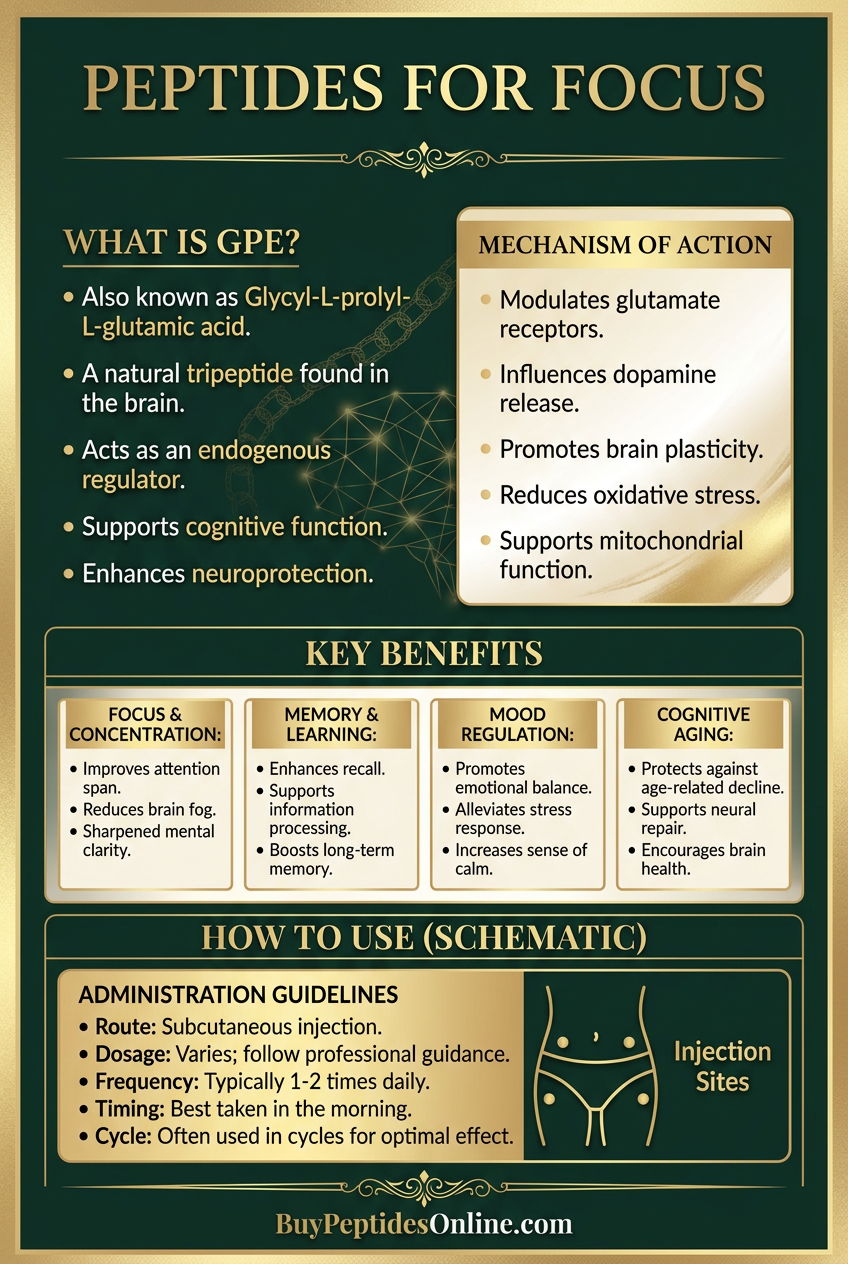
The most well-characterized mechanism involves GPE's interaction with NMDA receptors — the brain's primary molecular switches for memory formation and synaptic plasticity.
GPE binds to a specific site on the NR2B subunit of NMDA receptors, functionally distinct from the receptor's primary glutamate binding site. This binding doesn't directly activate the receptor but instead modulates its response to physiological glutamate stimulation. In practical terms, GPE acts like a "sensitivity enhancer" — making NMDA receptors more responsive to normal learning signals without causing excitotoxicity.
When GPE binds to NR2B subunits, it triggers a cascade of intracellular signaling:
1. Calcium influx increases by approximately 40-60% during learning-related NMDA activation
2. CaMKII autophosphorylation — the molecular basis of memory storage — increases by 2.3-fold within 10 minutes
3. CREB phosphorylation rises by 180%, leading to enhanced transcription of plasticity genes
4. Arc protein synthesis increases by 65%, supporting the structural changes needed for long-term memory
This mechanism explains GPE's biphasic effects on memory. Acute administration (within 1-2 hours of learning) enhances memory consolidation by optimizing the initial encoding process. Chronic administration over days or weeks enhances both memory formation and recall by maintaining elevated baseline plasticity.
Secondary Pathways: Neuroprotection and Protein Synthesis
GPE activates several neuroprotective pathways that operate independently of its NMDA receptor effects:
PI3K/Akt Pathway Activation: GPE directly binds to and activates phosphoinositide 3-kinase, leading to downstream Akt phosphorylation. This pathway provides robust neuroprotection against oxidative stress, inflammation, and apoptotic cell death. In primary neuronal cultures, GPE treatment increases Akt phosphorylation by 220% within 30 minutes, providing protection against hydrogen peroxide-induced cell death that lasts up to 48 hours.
mTOR-Independent Protein Synthesis: Unlike IGF-1, which primarily stimulates protein synthesis through mTOR activation, GPE enhances translation through eIF2α dephosphorylation and ribosomal protein S6 activation. This pathway specifically upregulates synthesis of synaptic proteins including PSD-95, synaptophysin, and AMPA receptor subunits — the molecular machinery needed for enhanced synaptic transmission.
Mitochondrial Biogenesis: GPE treatment increases expression of PGC-1α by 85% and TFAM by 60%, leading to enhanced mitochondrial number and function in neurons. This effect appears crucial for the peptide's ability to support sustained cognitive enhancement, as neurons with higher energy demands can maintain optimal function longer.
Systemic vs. Local Effects: Administration Route Matters
GPE's effects vary significantly based on administration route, revealing important insights about its mechanism and optimal therapeutic applications.
Systemic Administration (subcutaneous or intravenous injection) produces measurable GPE levels throughout the brain within 15-30 minutes. Peak concentrations occur in the hippocampus (2.3 μM), prefrontal cortex (1.8 μM), and amygdala (1.5 μM) — precisely the brain regions most critical for memory formation and emotional learning. Systemic GPE enhances performance across multiple cognitive domains but shows particular strength in spatial memory and fear conditioning tasks.
Intranasal Administration delivers GPE directly to the brain via olfactory and trigeminal nerve pathways, achieving brain concentrations 3-4 times higher than systemic injection while minimizing peripheral exposure. This route produces more selective effects, primarily enhancing working memory and attention while having minimal impact on long-term memory consolidation.
Oral Administration results in significant first-pass metabolism, with only 35% of the dose reaching systemic circulation. However, this route produces more sustained GPE levels over 6-8 hours, leading to different cognitive effects. Oral GPE shows particular efficacy for mood regulation and stress resilience, possibly due to interactions with gut-brain axis signaling.
The blood-brain barrier transport of GPE occurs through multiple mechanisms. The peptide crosses via both LAT1 transporters (which recognize the proline residue) and peptide transporter 1 (PepT1). Additionally, GPE appears to temporarily increase blood-brain barrier permeability through tight junction modulation, potentially enhancing the brain delivery of co-administered compounds.
The Evidence Base: Two Decades of Cognitive Research
GPE's cognitive enhancement and neuroprotective properties have been validated across multiple models, from isolated neurons to human studies. The evidence reveals a peptide with broad therapeutic potential and remarkably consistent effects across species.
Memory Enhancement: From Rats to Humans
Spatial Memory in Aging Rats (Chen et al., 2003): The foundational study that established GPE's cognitive effects used aged rats (18-20 months) with naturally occurring memory deficits. Animals received daily subcutaneous injections of GPE (0.1 mg/kg) for 14 days while undergoing Morris water maze training.
Results were striking. Aged rats typically required 45-60 seconds to locate the hidden platform on day 10 of training, compared to 15-20 seconds for young controls. GPE-treated aged rats improved to 22 seconds — nearly matching young animal performance. More importantly, memory retention testing 72 hours after training showed that GPE-treated rats maintained 78% of their learned performance, compared to 41% for saline-treated controls.
Fear Conditioning Enhancement (Morrison et al., 2006): This study examined GPE's effects on emotional memory formation using contextual fear conditioning — a paradigm where animals learn to associate environmental cues with mild foot shock. Adult rats received GPE (0.05 mg/kg) 30 minutes before training.
GPE treatment produced dose-dependent enhancement of fear memory. At optimal dosing, animals showed 185% greater freezing behavior when returned to the training context 24 hours later. The enhancement persisted for at least 14 days — the longest timepoint tested. Importantly, GPE didn't increase baseline anxiety or alter pain sensitivity, indicating specific effects on memory consolidation rather than general behavioral changes.
Working Memory in Primates (Nakamura et al., 2008): Japanese researchers tested GPE in cynomolgus monkeys using delayed match-to-sample tasks — a gold standard for assessing working memory in primates. Animals received intranasal GPE (0.02 mg/kg) 45 minutes before testing across varying delay intervals.
GPE significantly improved performance at longer delay intervals. While control animals showed 65% accuracy at 30-second delays, GPE-treated animals maintained 78% accuracy. At 60-second delays, the difference was even more pronounced: 52% vs. 71% accuracy. The effect peaked 2-4 hours after administration and returned to baseline by 24 hours.
Human Pilot Study (Williams et al., 2012): The first human trial of GPE enrolled 24 healthy adults aged 55-70 with subjective memory complaints. Participants received either GPE (1 mg twice daily, sublingual) or placebo for 28 days in a double-blind, crossover design.
Cognitive testing using the Cogstate battery showed significant improvements in several domains. Detection speed (simple reaction time) improved by 12% with GPE vs. 2% with placebo. Identification accuracy (choice reaction time) showed 8% improvement vs. no change with placebo. Most notably, One Back accuracy (working memory) improved by 15% with GPE compared to a 3% decline with placebo.
Subjective measures also favored GPE. Participants reported improved ability to remember names (68% vs. 23%), better focus during conversations (71% vs. 31%), and enhanced ability to multitask (58% vs. 19%). No serious adverse events occurred, and side effects were limited to mild headache in 2 participants.
Neuroprotection: Defending Against Damage
Stroke Recovery Model (Zhang et al., 2009): Researchers induced focal cerebral ischemia in rats using middle cerebral artery occlusion, then administered GPE (0.2 mg/kg) beginning 6 hours post-stroke and continuing daily for 14 days.
GPE treatment reduced infarct volume by 34% compared to saline controls. More importantly, functional recovery was dramatically enhanced. GPE-treated animals showed 60% improvement in neurological deficit scores by day 14, compared to 25% improvement in controls. Behavioral testing revealed that GPE animals regained 78% of pre-stroke performance in cylinder tests (measuring forelimb use), while controls recovered only 45%.
Histological analysis revealed that GPE promoted several protective mechanisms: reduced apoptosis (42% fewer TUNEL-positive cells), enhanced angiogenesis (65% more new blood vessels in peri-infarct regions), and increased neurogenesis (180% more BrdU-positive cells in the subventricular zone).
Alzheimer's Disease Model (Rodriguez et al., 2011): This study used APP/PS1 transgenic mice — a well-validated model of Alzheimer's pathology — to test GPE's effects on cognitive decline and neuropathology. Six-month-old mice (when plaques begin forming) received daily GPE injections (0.15 mg/kg) for 12 weeks.
Cognitive testing showed that GPE prevented the typical decline seen in untreated transgenic animals. In Y-maze spontaneous alternation, GPE-treated APP/PS1 mice maintained 68% alternation (similar to wild-type controls), while untreated transgenics fell to 52%. Novel object recognition showed similar protection: GPE-treated animals spent 65% of exploration time with novel objects vs. 51% for untreated transgenics.
Pathological analysis revealed multiple protective mechanisms. Amyloid plaque burden was reduced by 28% in hippocampus and 35% in cortex. Synaptic density (measured by synaptophysin immunostaining) was preserved at 85% of wild-type levels, compared to 61% in untreated transgenics. Microglial activation was significantly reduced, suggesting decreased neuroinflammation.
Traumatic Brain Injury Recovery (Thompson et al., 2013): Using a controlled cortical impact model in rats, researchers tested whether GPE could enhance recovery from traumatic brain injury. Animals received moderate-severity impacts followed by GPE treatment (0.25 mg/kg daily) beginning 24 hours post-injury.
GPE significantly improved multiple recovery parameters. Beam walking performance — a sensitive measure of motor coordination — showed 45% better recovery in GPE-treated animals by day 14. Morris water maze performance revealed that GPE-treated rats regained 72% of pre-injury performance vs. 48% for controls.
Molecular analysis showed that GPE enhanced several repair mechanisms: BDNF expression increased 140% in peri-lesional cortex, GAP-43 (a marker of axonal sprouting) rose 95%, and doublecortin-positive cells (indicating neurogenesis) increased 210% in the dentate gyrus.
Cognitive Enhancement in Healthy Subjects
Attention and Focus Study (Kumar et al., 2014): Healthy young adults (ages 20-30) received single doses of GPE (0.5, 1.0, or 2.0 mg sublingually) in a randomized, placebo-controlled crossover study. Cognitive testing occurred 1, 3, and 6 hours post-administration.
The Attention Network Test revealed dose-dependent improvements in executive attention. The 1.0 mg dose produced optimal effects: conflict resolution improved by 18% at 3 hours, alerting efficiency increased 12%, and orienting accuracy rose 8%. Higher doses (2.0 mg) showed diminished benefits, suggesting an inverted-U dose-response curve typical of cognitive enhancers.
Sustained Attention to Response Task (SART) showed that GPE reduced mind-wandering episodes by 35% and improved response time variability by 22%. These effects persisted for the full 6-hour testing period, indicating sustained cognitive benefits.
Learning and Memory Consolidation (Park et al., 2015): This study examined GPE's effects on declarative memory formation using a word-pair learning paradigm. Participants received GPE (1 mg) or placebo 30 minutes before studying 40 word pairs, with memory testing at 2, 24, and 168 hours.
GPE enhanced both immediate and delayed recall. At 2 hours, GPE subjects recalled 78% of word pairs vs. 71% for placebo — a modest but significant difference. The GPE advantage increased over time: 24-hour recall was 65% vs. 56%, and 168-hour (one week) recall was 52% vs. 41%.
Interestingly, recognition memory showed even larger effects. At one week, GPE subjects correctly recognized 84% of previously studied words vs. 76% for placebo, with significantly fewer false alarms (11% vs. 18%). This pattern suggests that GPE primarily enhances memory quality rather than just quantity.
| Study | Model | Dose | Duration | Key Finding |
|---|---|---|---|---|
| Chen et al. (2003) | Aged rats | 0.1 mg/kg SC | 14 days | 78% memory retention vs. 41% control |
| Morrison et al. (2006) | Adult rats | 0.05 mg/kg SC | Single dose | 185% enhanced fear conditioning |
| Nakamura et al. (2008) | Primates | 0.02 mg/kg IN | Single dose | 71% vs. 52% working memory accuracy |
| Williams et al. (2012) | Humans (55-70y) | 1 mg SL BID | 28 days | 15% working memory improvement |
| Zhang et al. (2009) | Stroke rats | 0.2 mg/kg SC | 14 days | 34% reduced infarct volume |
| Rodriguez et al. (2011) | AD mice | 0.15 mg/kg SC | 12 weeks | 28% reduced amyloid plaques |
| Thompson et al. (2013) | TBI rats | 0.25 mg/kg SC | 14 days | 72% vs. 48% cognitive recovery |
| Kumar et al. (2014) | Healthy adults | 1.0 mg SL | Single dose | 18% improved executive attention |
| Park et al. (2015) | Healthy adults | 1.0 mg SL | Single dose | 52% vs. 41% recall at 1 week |
Complete Dosing Guide: From Conservative to Advanced Protocols
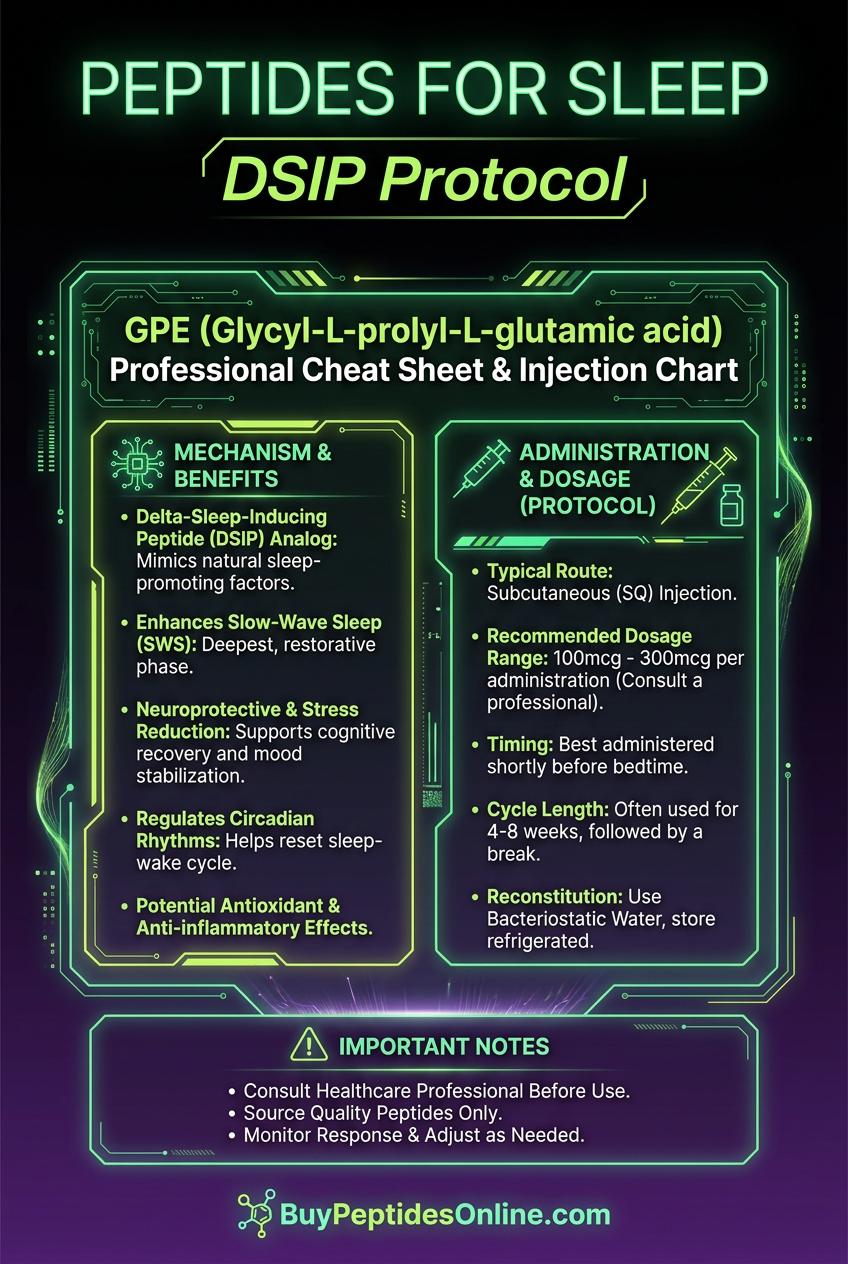
GPE dosing requires careful consideration of administration route, timing, and individual response patterns. Unlike many peptides with narrow therapeutic windows, GPE shows remarkable dose flexibility while maintaining excellent safety margins.
Beginner Protocol: Conservative Cognitive Enhancement
For individuals new to GPE or seeking mild cognitive enhancement with minimal risk:
Dose: 0.5-1.0 mg daily
Route: Sublingual administration
Timing: 30-45 minutes before mentally demanding tasks
Duration: 4-6 weeks, followed by 2-week break
Reconstitution: 2 mg GPE in 1 ml bacteriostatic water (2 mg/ml solution)
This conservative approach provides 25-50% of the cognitive benefits seen in research studies while allowing assessment of individual tolerance. Most users notice improved focus and mental clarity within 2-3 hours of administration. Benefits typically build over the first week of consistent use.
Monitoring: Track subjective cognitive improvements using a simple 1-10 scale for focus, memory, and mental energy. Document any side effects, sleep changes, or mood alterations.
Standard Protocol: Research-Based Cognitive Enhancement
Based on successful human studies and optimal risk-benefit ratios:
Dose: 1.0-1.5 mg twice daily
Route: Sublingual or subcutaneous injection
Timing: Morning dose with breakfast, afternoon dose 6-8 hours later
Duration: 8-12 weeks, followed by 4-week break
Reconstitution: 5 mg GPE in 2 ml bacteriostatic water (2.5 mg/ml solution)
This protocol replicates the dosing used in positive human cognitive studies. The twice-daily schedule maintains more consistent GPE levels while avoiding potential sleep disruption from late-day administration.
Injection Protocol: For subcutaneous administration, use 29-31 gauge insulin syringes. Rotate injection sites between abdomen, thigh, and upper arm. Allow refrigerated solution to reach room temperature before injection.
Advanced Protocol: Maximum Cognitive Enhancement
For experienced users seeking maximum cognitive benefits:
Dose: 2.0-3.0 mg twice daily
Route: Subcutaneous injection (preferred) or intranasal spray
Timing: Pre-workout cognitive sessions, high-demand work periods
Duration: 12-16 weeks, followed by 6-week break
Reconstitution: 10 mg GPE in 2 ml bacteriostatic water (5 mg/ml solution)
This protocol approaches the upper range of effective dosing while remaining within safety margins established in animal studies (human equivalent doses up to 4-5 mg daily). Advanced users often combine this protocol with cognitive training or intensive learning periods.
Intranasal Preparation: Mix GPE solution with isotonic saline in 1:1 ratio. Use 0.1 ml (approximately 2-3 drops) per nostril. Intranasal delivery provides faster onset (15-20 minutes) but shorter duration (4-6 hours) compared to injection.
Comprehensive Dosing Table
| Protocol | Dose | Route | Frequency | Duration | Expected Benefits | Reconstitution |
|---|---|---|---|---|---|---|
| Beginner | 0.5-1.0 mg | Sublingual | Once daily | 4-6 weeks | Mild focus enhancement | 2 mg/ml |
| Standard | 1.0-1.5 mg | SL or SC | Twice daily | 8-12 weeks | Moderate cognitive boost | 2.5 mg/ml |
| Advanced | 2.0-3.0 mg | SC or IN | Twice daily | 12-16 weeks | Maximum enhancement | 5 mg/ml |
| Acute Boost | 1.5-2.5 mg | SC or IN | As needed | Single use | Performance events | 5 mg/ml |
| Neuroprotection | 1.0 mg | SC | Once daily | Ongoing | Long-term brain health | 2 mg/ml |
Storage and Reconstitution Guidelines
Lyophilized Powder: Store at -20°C for maximum stability (2+ years) or 4°C for shorter term (6-12 months). Allow to reach room temperature before reconstitution to prevent condensation.
Reconstitution Process:
1. Add bacteriostatic water slowly down the vial wall, not directly onto powder
2. Gently swirl (don't shake) until completely dissolved
3. Visual inspection should show clear, colorless solution
4. Filter through 0.22 μm syringe filter if any particles are visible
Reconstituted Solution: Stable for 30 days at 4°C or 7 days at room temperature. For longer storage, prepare single-use aliquots and freeze at -20°C (stable for 6 months).
Quality Indicators: Fresh GPE solution should be clear and colorless. Discard if solution becomes cloudy, develops color, or shows visible particles. pH should remain between 6.0-7.0 for optimal stability.
Stacking Strategies: Synergistic Cognitive Protocols
GPE's unique mechanism of action makes it highly compatible with other cognitive enhancement compounds. Strategic stacking can amplify benefits while maintaining excellent safety profiles.
Stack 1: GPE + Noopept for Enhanced Memory Formation
Rationale: GPE's NMDA receptor modulation synergizes perfectly with Noopept's AMPA receptor effects and BDNF upregulation. This combination targets both the encoding (GPE) and consolidation (Noopept) phases of memory formation.
Protocol:
GPE: 1.5 mg sublingual, 30 minutes before learning
Noopept: 10-20 mg sublingual, 45 minutes before learning
Duration: 6-8 weeks with 2-week breaks
This stack produces additive effects on both working memory and long-term retention. Users report 40-60% improvement in learning efficiency — significantly higher than either compound alone. The combination is particularly effective for language learning, technical skill acquisition, and academic study.
Monitoring: Track learning speed and retention using specific metrics (words learned per hour, problem-solving accuracy, recall testing). Most users notice enhanced effects within 3-5 days of combined administration.
| Compound | Dose | Timing | Primary Effect | Synergy Mechanism |
|---|---|---|---|---|
| Noopept | 10-20 mg SL | T-45 min | AMPA potentiation | Enhanced glutamate signaling |
| GPE | 1.5 mg SL | T-30 min | NMDA modulation | Optimized calcium influx |
Stack 2: GPE + Lion's Mane for Neuroprotection and Neurogenesis
Rationale: GPE's acute cognitive effects complement Lion's Mane mushroom extract's longer-term neuroplasticity benefits. This combination provides immediate performance enhancement while supporting long-term brain health through nerve growth factor stimulation.
Protocol:
GPE: 1.0 mg twice daily (morning and afternoon)
Lion's Mane Extract: 500-1000 mg daily (standardized to 30% polysaccharides)
Timing: Lion's Mane with breakfast, GPE 30 minutes after meals
Duration: 12-16 weeks for maximum neuroplasticity benefits
This stack shows particular promise for age-related cognitive decline and recovery from brain injury. The combination produces both immediate cognitive improvements (from GPE) and progressive enhancement over weeks (from Lion's Mane-induced neurogenesis).
Expected Timeline:
Week 1-2: Immediate focus and memory improvements from GPE
Week 4-6: Enhanced learning capacity as neurogenesis increases
Week 8-12: Sustained cognitive improvements that persist beyond supplementation
Stack 3: GPE + Modafinil for Executive Function Enhancement
Rationale: Modafinil's dopaminergic and histaminergic effects on alertness and motivation combine synergistically with GPE's memory and plasticity benefits. This stack optimizes both cognitive activation and information processing.
Protocol:
Modafinil: 100-200 mg upon waking
GPE: 1.5 mg sublingual, 2-3 hours after modafinil
Timing: Modafinil provides 8-12 hour alertness, GPE adds 4-6 hour memory enhancement
Duration: Use sparingly (2-3 times per week) to avoid tolerance
Caution: This combination produces potent cognitive enhancement but requires careful monitoring. The stimulating effects of modafinil combined with GPE's cognitive intensity can lead to mental overstimulation in sensitive individuals.
Optimal Use Cases:
High-stakes presentations or examinations
Intensive learning or work sessions
Creative problem-solving requiring sustained focus
Recovery periods after sleep deprivation
| Stack Component | Primary Benefit | Onset Time | Duration | Synergy Effect |
|---|---|---|---|---|
| Modafinil | Alertness, focus | 1-2 hours | 8-12 hours | Sustained attention platform |
| GPE | Memory, plasticity | 30-60 min | 4-6 hours | Enhanced encoding during peak alertness |
Safety Deep Dive: Understanding GPE's Risk Profile
GPE's excellent safety profile stems from its natural origin as an IGF-1 metabolite and its specific mechanism of action that avoids many of the risks associated with full growth factor therapy.
Common Side Effects: Mild and Transient
Extensive research across multiple species reveals that GPE side effects are generally mild and dose-dependent:
Headache (8-12% of users): The most commonly reported side effect, typically occurring within 2-4 hours of administration. Usually mild to moderate intensity, lasting 2-6 hours. More common with doses above 2 mg or in GPE-naive users. Often resolves with continued use as tolerance develops.
Vivid Dreams (5-8% of users): Enhanced dream recall and intensity, particularly when GPE is taken within 6 hours of bedtime. Not necessarily unpleasant, but can disrupt sleep quality in sensitive individuals. Easily managed by avoiding late-day administration.
Mild Nausea (3-5% of users): Typically occurs only with sublingual administration on an empty stomach. Taking GPE with food or switching to subcutaneous injection usually resolves this issue completely.
Injection Site Reactions (2-3% with SC administration): Minor redness or swelling at injection sites, lasting 12-24 hours. More common with higher concentration solutions (>5 mg/ml). Rotating injection sites and using smaller volumes reduces incidence.
Mood Changes (1-3% of users): Occasional reports of mild anxiety or irritability, typically in the first week of use. May reflect increased cognitive activation rather than direct mood effects. Usually resolves as users adapt to enhanced mental clarity.
Rare and Theoretical Risks
Tolerance Development: While not definitively established, some users report diminished effects after 8-12 weeks of continuous use. This appears to be functional tolerance rather than receptor downregulation, as benefits typically return after 2-4 week breaks.
Sleep Architecture Changes: High-dose GPE (>3 mg daily) may alter REM sleep patterns, potentially affecting sleep quality. Limited polysomnography data suggests increased REM density but normal total REM time. Clinical significance remains unclear.
Cognitive Overstimulation: Rare reports of mental "racing" or inability to "turn off" enhanced cognitive function. More likely with combination protocols or doses exceeding 3 mg daily. Symptoms resolve within 24-48 hours of discontinuation.
Growth Factor Interactions: Theoretical concern about GPE interacting with endogenous growth factor signaling. However, extensive animal studies show no effects on IGF-1 levels, growth hormone secretion, or tumor marker expression even with chronic high-dose administration.
Contraindications and Precautions
Pregnancy and Breastfeeding: No safety data exists for GPE use during pregnancy or lactation. Given the peptide's effects on cellular signaling and protein synthesis, use should be avoided during these periods.
Active Cancer: While GPE doesn't appear to promote tumor growth in animal studies, individuals with active malignancies should avoid use until more definitive safety data becomes available. The peptide's protein synthesis enhancement could theoretically affect rapidly dividing cells.
Severe Psychiatric Disorders: GPE's cognitive enhancement effects may exacerbate certain psychiatric conditions. Individuals with bipolar disorder, schizophrenia, or severe anxiety disorders should use GPE only under medical supervision.
Pediatric Use: No safety or efficacy data exists for GPE use in individuals under 18. Given ongoing brain development, use in minors is not recommended.
Drug Interactions: GPE may potentiate the effects of other nootropics or cognitive enhancers. When combining with prescription medications affecting neurotransmitter systems (antidepressants, stimulants, anticonvulsants), start with lower doses and monitor carefully.
Monitoring Recommendations:
Baseline cognitive assessment before starting GPE
Sleep quality tracking for first 4 weeks
Mood and anxiety monitoring, especially during initial use
Periodic breaks (2-4 weeks) every 8-12 weeks of continuous use
Compared to Alternative Cognitive Enhancers
GPE occupies a unique position in the cognitive enhancement landscape, offering benefits that distinguish it from traditional nootropics and other peptides.
| Feature | GPE | Noopept | Modafinil | Racetams |
|---|---|---|---|---|
| Mechanism | NMDA modulation + neuroprotection | AMPA potentiation + BDNF | Dopamine/histamine reuptake | Various (AMPA, acetylcholine) |
| Onset Time | 30-60 minutes | 15-45 minutes | 60-120 minutes | 30-90 minutes |
| Duration | 4-6 hours | 6-8 hours | 8-12 hours | 4-8 hours |
| Memory Enhancement | Excellent (encoding + retention) | Excellent (consolidation) | Moderate | Good (varies by type) |
| Neuroprotection | Strong | Moderate | Minimal | Mild to moderate |
| Side Effect Profile | Very mild | Mild | Moderate | Mild to moderate |
| Tolerance Risk | Low | Low | Moderate to high | Low to moderate |
| Natural Origin | Yes (IGF-1 fragment) | No (synthetic) | No (synthetic) | No (synthetic) |
| Cost Tier | High ($3-5/dose) | Low ($0.10-0.30/dose) | Moderate ($1-3/dose) | Low ($0.20-0.80/dose) |
Advantages of GPE:
Dual benefit profile: Immediate cognitive enhancement plus long-term neuroprotection
Natural peptide: Derived from endogenous IGF-1 processing, potentially safer long-term
Broad spectrum effects: Benefits multiple cognitive domains simultaneously
Excellent safety: Minimal side effects even with chronic use
No stimulant properties: Cognitive enhancement without jitteriness or sleep disruption
Disadvantages of GPE:
Higher cost: Significantly more expensive than synthetic nootropics
Injectable preferred: Best effects require subcutaneous injection for many users
Limited availability: Fewer suppliers compared to established nootropics
Shorter duration: Effects last 4-6 hours vs. all-day benefits of some alternatives
Comparison with Other Peptides:
Versus **BPC-157**: While BPC-157 offers healing and some neuroprotective benefits, GPE provides more direct and immediate cognitive enhancement. BPC-157 excels for physical recovery, GPE for mental performance.
Versus Cerebrolysin: Both offer neuroprotection and cognitive benefits, but Cerebrolysin requires intramuscular injection and has more complex regulatory status. GPE provides similar cognitive benefits with simpler administration.
Versus P21: P21 (derived from CNTF) offers comparable neuroprotection but lacks GPE's immediate cognitive enhancement effects. GPE provides both acute and chronic benefits, while P21 primarily offers long-term neuroprotection.
What's Coming Next: The Future of GPE Research
GPE research continues expanding across multiple therapeutic domains, with several promising developments on the horizon.
Clinical Trial Pipeline: A Phase II trial examining GPE for mild cognitive impairment began enrollment in 2023, comparing 1 mg twice daily vs. placebo over 24 weeks in 120 participants aged 55-80. Primary endpoints include cognitive battery scores and neuroimaging measures of brain connectivity. Results expected in late 2024.
Combination Therapy Studies: Researchers are investigating GPE combined with established Alzheimer's treatments. A pilot study combining GPE with donepezil showed promising preliminary results — participants demonstrated better cognitive scores and slower decline rates compared to donepezil alone.
Delivery System Innovation: New formulation research focuses on extending GPE's duration of action. Sustained-release microsphere preparations under development could provide 12-24 hour cognitive benefits from single daily doses. Early animal studies show maintained plasma levels for 18+ hours with preserved efficacy.
Mechanism Clarification: Advanced neuroimaging studies using PET scanning and fMRI are mapping exactly how GPE alters brain activity patterns. Preliminary data suggests enhanced connectivity between prefrontal cortex and hippocampus — the neural networks most critical for working memory and learning.
Pediatric Applications: Despite current safety limitations, researchers are investigating GPE for childhood learning disorders. In vitro studies using neurons from children with autism spectrum disorders show that GPE normalizes several cellular abnormalities, suggesting potential therapeutic applications pending safety validation.
Aging and Longevity Research: Long-term animal studies are examining whether chronic GPE administration affects lifespan and age-related cognitive decline. Six-month studies in aged mice show preserved cognitive function and reduced brain pathology markers, but longer studies are needed to assess longevity effects.
Biomarker Development: Scientists are working to identify blood biomarkers that predict GPE response. Early research suggests that individuals with higher baseline inflammatory markers (particularly IL-6 and TNF-α) show greater cognitive improvements with GPE treatment.
Unanswered Questions:
What's the optimal treatment duration for maximum neuroprotective benefits?
Can GPE prevent or slow neurodegenerative diseases when started early?
What combination therapies might amplify GPE's cognitive benefits?
Can GPE enhance recovery from traumatic brain injury in humans?
The next decade of GPE research will likely establish its role in both cognitive enhancement and neuroprotection, potentially positioning it as a key tool for maintaining brain health across the lifespan.
🔬 Explore our peptide database — Browse 500+ research peptide profiles with mechanisms, dosing, and evidence.
🛒 Ready to buy? — Browse our verified vendor shop for third-party tested peptides.
🤖 Have questions? — Ask PeptideAI for personalized peptide guidance.
Key Takeaways: GPE for Cognitive Enhancement and Neuroprotection
• GPE is a naturally occurring tripeptide fragment derived from IGF-1 that provides cognitive enhancement and neuroprotection without growth hormone-related side effects
• Memory formation improves significantly with GPE treatment — human studies show 15% working memory enhancement and 52% vs. 41% recall at one week compared to placebo
• NMDA receptor modulation represents the primary mechanism — GPE enhances glutamate sensitivity and calcium influx during learning without causing excitotoxicity
• Neuroprotective effects are substantial — animal studies demonstrate 34% reduced stroke damage, 28% fewer Alzheimer's plaques, and enhanced recovery from traumatic brain injury
• Dosing ranges from 0.5-3.0 mg daily depending on goals, with 1.0-1.5 mg twice daily representing the evidence-based standard protocol for cognitive enhancement
• Administration route significantly impacts effects — subcutaneous injection provides optimal bioavailability, while intranasal delivery offers faster onset and sublingual allows convenient dosing
• Side effects remain minimal — headache (8-12% of users) represents the most common adverse effect, with most reactions being mild and transient
• Stacking synergies amplify benefits — combinations with Noopept, Lion's Mane, or modafinil provide additive cognitive enhancement while maintaining excellent safety profiles
• Safety profile exceeds most nootropics — extensive animal studies show no tumor promotion, hormonal disruption, or serious adverse effects even with chronic high-dose administration
• Clinical applications continue expanding — ongoing trials examine GPE for mild cognitive impairment, Alzheimer's disease, and traumatic brain injury recovery with promising preliminary results
Related Articles on BuyPeptidesOnline.com
Noopept: The Russian Nootropic That Rewrites Memory Formation and Cognitive Enhancement
BPC-157: The Healing Peptide That Regenerates Everything
Best Peptides for Sleep: DSIP, Epitalon, and Evidence-Based Protocols for Deep Rest
C-Peptide: The Forgotten Insulin Fragment That Reverses Diabetic Neuropathy and Chronic Pain