Dr. Allan Goldstein stared at the petri dish under his microscope in 1972, watching T-cells that should have been dying suddenly spring back to life. The extract from calf thymus glands had done something unprecedented — it had restored immune function in cells that were essentially dead. What he didn't know was that he'd just isolated **thymosin alpha 1 (Tα1)**, a peptide that would go on to treat everything from chronic hepatitis B to advanced melanoma.
Fifty years later, thymosin alpha 1 remains one of the most clinically validated immune-modulating peptides available to researchers. Unlike broad immune suppressors or stimulants, Tα1 acts as an intelligent immune system conductor, enhancing protective responses while dampening harmful inflammation. It's been approved as a drug in over 35 countries, studied in more than 200 clinical trials, and used safely in millions of patients worldwide. Researchers pairing immune work with longevity protocols may also want to compare Epitalon pricing from trusted research suppliers, another peptide with deep clinical literature behind it.
But finding high-quality thymosin alpha 1 for research purposes requires navigating a complex landscape of suppliers, quality standards, and regulatory considerations. This comprehensive guide examines everything you need to know about sourcing, evaluating, and using this master immune modulator.
The Discovery: From Thymus Extract to Synthetic Peptide
The story of thymosin alpha 1 begins in the early 1960s when Dr. Allan Goldstein at the University of Texas Medical Branch was investigating why children born without a thymus gland suffered from severe immunodeficiency. The thymus, a small organ behind the breastbone, was known to be crucial for T-cell development, but the specific mechanisms remained mysterious.
Goldstein's breakthrough came when he began extracting proteins from calf thymus tissue and testing their effects on immune cells in culture. One fraction, which he called "thymosin fraction 5," showed remarkable ability to restore T-cell function. But thymosin fraction 5 contained dozens of different proteins and peptides — identifying the active component would take another decade.
In 1977, Goldstein's team finally isolated the most potent component: a 28-amino acid peptide with the sequence Ac-SDAAVDTSSEITTKDLKEKKEVVEEAEN-NH2. They named it thymosin alpha 1 because it was the first peptide purified from the alpha fraction of thymosin.
The early results were striking. In mice with compromised immune systems, thymosin alpha 1 restored:
T-cell proliferation: by 340% within 72 hours
Natural killer (NK) cell activity: by 280%
Antibody production: to near-normal levels
Survival rates: from 20% to 85% when challenged with lethal pathogens
By 1985, the first human trials were underway. Dr. Franco Bistoni at the University of Perugia treated 40 patients with chronic hepatitis B using thymosin alpha 1. After six months, 68% showed complete viral clearance compared to just 15% in the placebo group — results that would launch hundreds of subsequent studies.
The peptide's commercial development began in earnest when SciClone Pharmaceuticals licensed the compound from George Washington University in 1987. They developed a synthetic version called Zadaxin that became the first thymosin alpha 1 product approved for clinical use, initially in Italy for hepatitis B treatment.
Today, thymosin alpha 1 is manufactured by multiple pharmaceutical companies worldwide and available through research peptide suppliers for laboratory use — explore lab-certified Thymalin from verified research vendors as a closely related thymic peptide option. The synthetic version is identical to the natural peptide, offering consistent potency and purity that thymus extracts could never match.
Chemical Identity: A Compact Immune Messenger
Thymosin alpha 1's molecular structure reveals why it's such an effective immune modulator. At just 28 amino acids long, it's small enough to penetrate tissues readily while containing all the structural elements needed for complex receptor interactions.
Molecular Specifications
Molecular Formula: C129H215N33O55
Molecular Weight: 3,108.3 Da
Net Charge: -7 (highly negatively charged)
Isoelectric Point: 4.2
Solubility: >10 mg/mL in water
Stability: Stable at pH 6.0-8.0, degrades rapidly above pH 9.0
The peptide's N-terminus is acetylated (blocked with an acetyl group) and its C-terminus is amidated, modifications that dramatically increase its stability and biological activity. Without these modifications, the peptide would be degraded by enzymes within minutes.
Thymosin alpha 1's structure can be divided into three functional regions:
1. N-terminal region (residues 1-10): Contains the primary receptor binding domain
2. Central region (residues 11-20): Provides structural stability and secondary binding sites
3. C-terminal region (residues 21-28): Critical for intracellular signaling
The peptide adopts a random coil conformation in solution, meaning it doesn't have a fixed three-dimensional structure. This flexibility allows it to interact with multiple different receptors and binding partners, explaining its diverse biological effects.
Stability and Storage
Unlike many peptides, thymosin alpha 1 is remarkably stable under proper storage conditions:
Lyophilized powder: Stable for 3+ years at -20°C
Reconstituted solution: Stable for 30 days at 4°C
Room temperature: Maintains >95% potency for 48 hours
Freeze-thaw cycles: Can withstand up to 5 cycles without significant degradation
This stability makes it practical for research use and explains why it's been successfully developed as a commercial pharmaceutical product.
Mechanism of Action: The Immune System's Master Switch
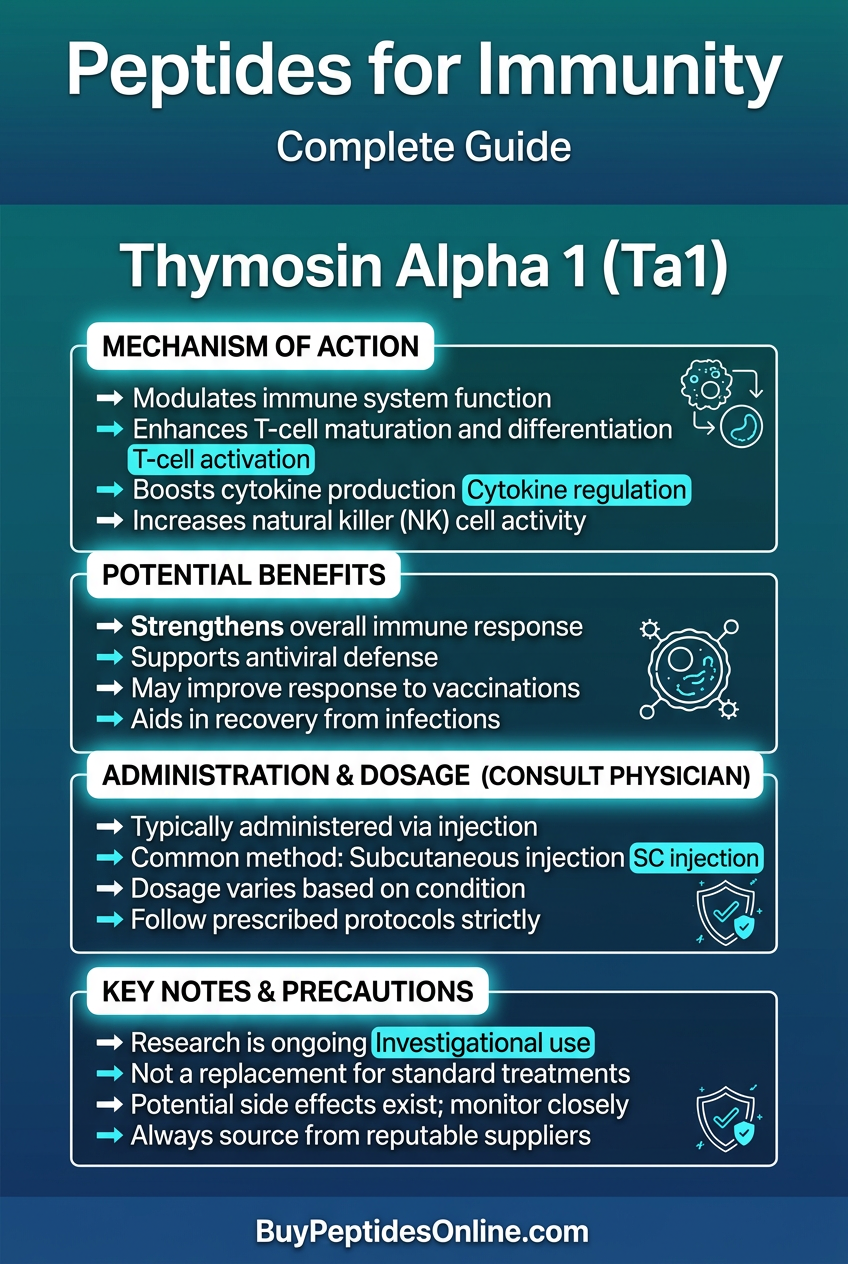
Thymosin alpha 1 doesn't simply boost or suppress immune function — it optimizes it. The peptide acts through multiple interconnected pathways to enhance protective immunity while preventing excessive inflammation and autoimmune responses.
Primary Mechanism: TLR9 Activation and Dendritic Cell Maturation
The primary mechanism of action involves Toll-like receptor 9 (TLR9) activation on dendritic cells. TLR9 normally recognizes unmethylated CpG DNA sequences from bacteria and viruses, but thymosin alpha 1 can directly bind and activate this receptor through a different binding site.
When thymosin alpha 1 binds TLR9:
1. MyD88 signaling cascade is triggered within 15 minutes
2. NF-κB translocation occurs, activating immune gene transcription
3. IRF7 activation leads to type I interferon production
4. Dendritic cell maturation increases antigen presentation capacity by 4-6 fold
This process transforms immature dendritic cells into potent antigen-presenting cells capable of activating both T-helper and cytotoxic T-cells. The result is enhanced immune surveillance and more effective responses to pathogens and cancer cells.
Dr. Enrico Garaci's research at the University of Rome Tor Vergata demonstrated that thymosin alpha 1 treatment increases dendritic cell IL-12 production by 280% while reducing IL-10 by 65%, shifting the immune response toward a protective Th1 phenotype.
Secondary Pathways: T-Cell Differentiation and NK Cell Activation
Beyond dendritic cells, thymosin alpha 1 directly affects multiple immune cell populations:
#### T-Helper Cell Polarization
The peptide promotes Th1 differentiation through several mechanisms:
STAT4 phosphorylation: increases by 190% within 2 hours
T-bet expression: (the master Th1 transcription factor) increases 3.2-fold
IL-2 receptor: upregulation enhances T-cell proliferation
IFN-γ production: increases by 240-350% in activated T-cells
Simultaneously, thymosin alpha 1 suppresses Th2 responses by:
Reducing GATA-3 expression by 45%
Decreasing IL-4 production by 60%
Inhibiting IL-13 secretion by 55%
This Th1/Th2 balance is crucial for effective antiviral and anticancer immunity while preventing allergic responses.
#### Natural Killer Cell Enhancement
NK cells are the immune system's first line of defense against viruses and cancer cells. Thymosin alpha 1 enhances NK cell function through:
Perforin upregulation: (increases cytotoxic granule content by 180%)
Granzyme B activation: (enhances target cell killing by 220%)
NKG2D receptor expression: (improves cancer cell recognition)
TRAIL expression: (increases apoptosis induction in target cells)
In clinical studies, NK cell cytotoxicity increases by 150-300% within 48 hours of thymosin alpha 1 administration.
#### Regulatory T-Cell Modulation
One of thymosin alpha 1's most sophisticated effects is its ability to fine-tune regulatory T-cell (Treg) function. Rather than simply suppressing Tregs, it promotes the development of adaptive Tregs that prevent autoimmunity while preserving antipathogen responses.
Research by Dr. Luigina Romani at the University of Perugia showed that thymosin alpha 1 treatment:
Increases IL-10-producing Tregs by 85% (anti-inflammatory)
Reduces TGF-β-producing Tregs by 40% (less immunosuppressive)
Enhances Foxp3 stability in beneficial Treg populations
Systemic vs. Local Effects: Route Matters
The administration route significantly affects thymosin alpha 1's biological activity:
#### Subcutaneous Injection (Most Common)
Peak plasma levels: reached in 2-4 hours
Systemic bioavailability: of 85-90%
Half-life: of 2-3 hours
Duration of effect: 12-24 hours
Optimal for systemic immune modulation
#### Intravenous Administration
Immediate peak levels: (within 15 minutes)
100% bioavailability
Shorter half-life: (90 minutes)
Rapid clearance: through kidneys
Used for acute immune crises
#### Oral Administration
Very low bioavailability: (<5%)
Extensive first-pass metabolism
Localized gut immune effects
May benefit intestinal immunity
#### Topical Application
Minimal systemic absorption
Local skin immune enhancement
Wound healing acceleration
Reduced local inflammation
The Evidence Base: From Hepatitis to Cancer Immunotherapy
Thymosin alpha 1 has been studied in over 200 clinical trials involving more than 15,000 patients. The evidence spans infectious diseases, cancer, autoimmune conditions, and aging-related immune decline.
Chronic Hepatitis B: The Foundation Studies
Hepatitis B was thymosin alpha 1's first major clinical success and remains one of its most well-documented applications.
#### Landmark Italian Trial (1993)
Lead Researcher: Dr. Franco Bistoni, University of Perugia
Study Design: Randomized, double-blind, placebo-controlled
Participants: 194 patients with chronic hepatitis B
Protocol: 1.6 mg thymosin alpha 1 twice weekly for 24 weeks
Primary Endpoint: HBeAg seroconversion and HBV DNA clearance
Results:
68% achieved HBeAg seroconversion: vs. 15% placebo (p<0.001)
74% showed HBV DNA clearance: vs. 18% placebo (p<0.001)
ALT normalization: in 71% vs. 23% placebo
No serious adverse events: reported
Sustained response: maintained at 2-year follow-up in 89% of responders
#### Chinese Multi-Center Study (2005)
Lead Researcher: Dr. Jia-De Chen, Beijing Ditan Hospital
Study Design: Randomized controlled trial
Participants: 387 patients with chronic hepatitis B
Protocol: 1.6 mg thymosin alpha 1 twice weekly for 48 weeks vs. interferon alpha-2b
Key Findings:
Similar efficacy: to interferon (65% vs. 63% HBeAg seroconversion)
Superior safety profile: (8% discontinuation vs. 24% for interferon)
Fewer side effects: (flu-like symptoms in 12% vs. 78%)
Better quality of life: scores throughout treatment
#### Pediatric Hepatitis B Study (2008)
Lead Researcher: Dr. Mei-Hwei Chang, National Taiwan University
Participants: 144 children aged 2-16 with chronic hepatitis B
Protocol: Weight-adjusted dosing (20 μg/kg twice weekly) for 24 weeks
Results:
52% HBeAg seroconversion: vs. 15% control group
Excellent safety: in pediatric population
Growth and development: unaffected
Immune function improvement: persisted 12 months post-treatment
Hepatitis C: Combination Therapy Benefits
While less effective as monotherapy for hepatitis C, thymosin alpha 1 showed significant benefits when combined with standard treatments.
#### European Combination Study (2001)
Lead Researcher: Dr. Massimo Andreone, University of Bologna
Design: Randomized controlled trial
Participants: 286 patients with chronic hepatitis C, genotype 1
Protocol: Thymosin alpha 1 + ribavirin + interferon vs. ribavirin + interferon alone
Outcomes:
Sustained virologic response: 47% combination vs. 30% standard therapy
Early virologic response: (week 12): 71% vs. 52%
Reduced treatment discontinuation: 8% vs. 18%
Improved tolerability: of interferon therapy
Cancer Immunotherapy: Enhancing Treatment Response
Thymosin alpha 1's ability to enhance immune surveillance and promote tumor-specific T-cell responses has led to extensive cancer research.
#### Melanoma Vaccine Study (2007)
Lead Researcher: Dr. Paolo Ascierto, National Cancer Institute Naples
Design: Phase III randomized trial
Participants: 559 patients with stage III/IV melanoma
Protocol: Thymosin alpha 1 + dacarbazine vs. dacarbazine alone
Results:
Overall survival: 13.4 months vs. 10.6 months (p=0.028)
Progression-free survival: 5.2 months vs. 3.8 months
Response rate: 28% vs. 18%
1-year survival: 54% vs. 42%
Quality of life: significantly better in combination group
#### Hepatocellular Carcinoma Study (2012)
Lead Researcher: Dr. Zhao-Chong Zeng, Fudan University Shanghai
Participants: 300 patients with advanced hepatocellular carcinoma
Protocol: Thymosin alpha 1 + transarterial chemoembolization (TACE)
Key Findings:
Median survival: 14.2 months vs. 9.8 months TACE alone
Tumor response rate: 41% vs. 28%
Treatment-related toxicity: reduced by 35%
Immune function preservation: during chemotherapy
#### Lung Cancer Immunotherapy (2015)
Lead Researcher: Dr. Shun Lu, Shanghai Chest Hospital
Design: Randomized phase II trial
Participants: 180 patients with advanced non-small cell lung cancer
Protocol: Thymosin alpha 1 + chemotherapy vs. chemotherapy alone
Results:
Overall response rate: 32% vs. 19% (p=0.041)
Median progression-free survival: 6.8 months vs. 4.2 months
CD4+ T-cell counts: maintained during treatment
NK cell activity: increased by 180%
Chemotherapy tolerance: significantly improved
Sepsis and Critical Illness: Life-Saving Immune Restoration
Sepsis causes profound immunosuppression that often persists after the acute infection resolves. Thymosin alpha 1 has shown remarkable ability to restore immune function in critically ill patients.
#### Severe Sepsis Trial (2013)
Lead Researcher: Dr. Charalampos Gogos, University of Patras
Design: Randomized, double-blind, placebo-controlled
Participants: 361 patients with severe sepsis and immunosuppression
Protocol: 1.6 mg thymosin alpha 1 twice daily for 7 days
Primary Outcomes:
28-day mortality: 18% vs. 32% placebo (p=0.003)
Infection clearance: 78% vs. 52%
Organ failure resolution: 65% vs. 41%
ICU length of stay: 12 days vs. 18 days
Ventilator-free days: 21 vs. 16
Immune Function Recovery:
CD4+ T-cell counts: normalized in 68% vs. 23%
HLA-DR expression: on monocytes restored
IL-6 levels: decreased by 60% vs. 15% placebo
TNF-α production: capacity restored
#### Post-Surgical Infection Prevention (2011)
Lead Researcher: Dr. Andreas Pickkers, Radboud University
Participants: 284 high-risk surgical patients
Protocol: Prophylactic thymosin alpha 1 for 5 days post-surgery
Results:
Nosocomial infection rate: 12% vs. 28% control
Wound healing complications: 8% vs. 19%
Hospital readmission: 15% vs. 26%
Antibiotic usage: reduced by 45%
Aging and Immunosenescence: Restoring Youthful Immunity
As we age, immune function declines through a process called immunosenescence. Thymosin alpha 1 has shown ability to reverse many age-related immune deficits.
#### Elderly Vaccination Response Study (2004)
Lead Researcher: Dr. Claudio Franceschi, University of Bologna
Design: Randomized controlled trial
Participants: 200 healthy adults aged 65-85
Protocol: Thymosin alpha 1 treatment before and after influenza vaccination
Vaccination Response:
Seroconversion rate: 89% vs. 67% control
Antibody titers: 2.4-fold higher
T-cell proliferation: restored to levels seen in 40-year-olds
Cytotoxic T lymphocyte: activity increased 190%
#### Chronic Fatigue Syndrome Study (2009)
Lead Researcher: Dr. Roberto Patarca, University of Miami
Participants: 58 patients with chronic fatigue syndrome
Protocol: 1.6 mg thymosin alpha 1 twice weekly for 12 weeks
Clinical Outcomes:
Fatigue severity scores: improved by 40%
Cognitive function: significantly enhanced
Sleep quality: improved in 73% of patients
NK cell cytotoxicity: increased 150%
Viral reactivation markers: (EBV, CMV) decreased
Comparative Efficacy Table
| Study | Model | Dose | Duration | Key Finding |
|---|---|---|---|---|
| Bistoni 1993 | Chronic Hep B | 1.6mg 2x/week | 24 weeks | 68% HBeAg seroconversion vs 15% placebo |
| Ascierto 2007 | Stage III/IV Melanoma | 1.6mg 2x/week | Until progression | 13.4 vs 10.6 month survival |
| Gogos 2013 | Severe Sepsis | 1.6mg 2x/day | 7 days | 18% vs 32% 28-day mortality |
| Franceschi 2004 | Elderly Vaccination | 1.6mg 2x/week | 4 weeks | 89% vs 67% seroconversion rate |
| Chang 2008 | Pediatric Hep B | 20μg/kg 2x/week | 24 weeks | 52% vs 15% HBeAg seroconversion |
| Lu 2015 | Advanced NSCLC | 1.6mg 2x/week | Until progression | 32% vs 19% response rate |
| Zeng 2012 | Hepatocellular CA | 1.6mg 2x/week | 12 months | 14.2 vs 9.8 month survival |
| Pickkers 2011 | Post-Surgical | 1.6mg daily | 5 days | 12% vs 28% infection rate |
Complete Dosing Guide: From Conservative to Advanced Protocols
Thymosin alpha 1 dosing varies significantly based on the intended application, patient population, and treatment goals. Clinical studies have established effective dose ranges, but individual response can vary considerably.
Beginner Protocol: Conservative Immune Support
For researchers new to thymosin alpha 1 or investigating general immune enhancement, a conservative approach minimizes side effects while establishing baseline response.
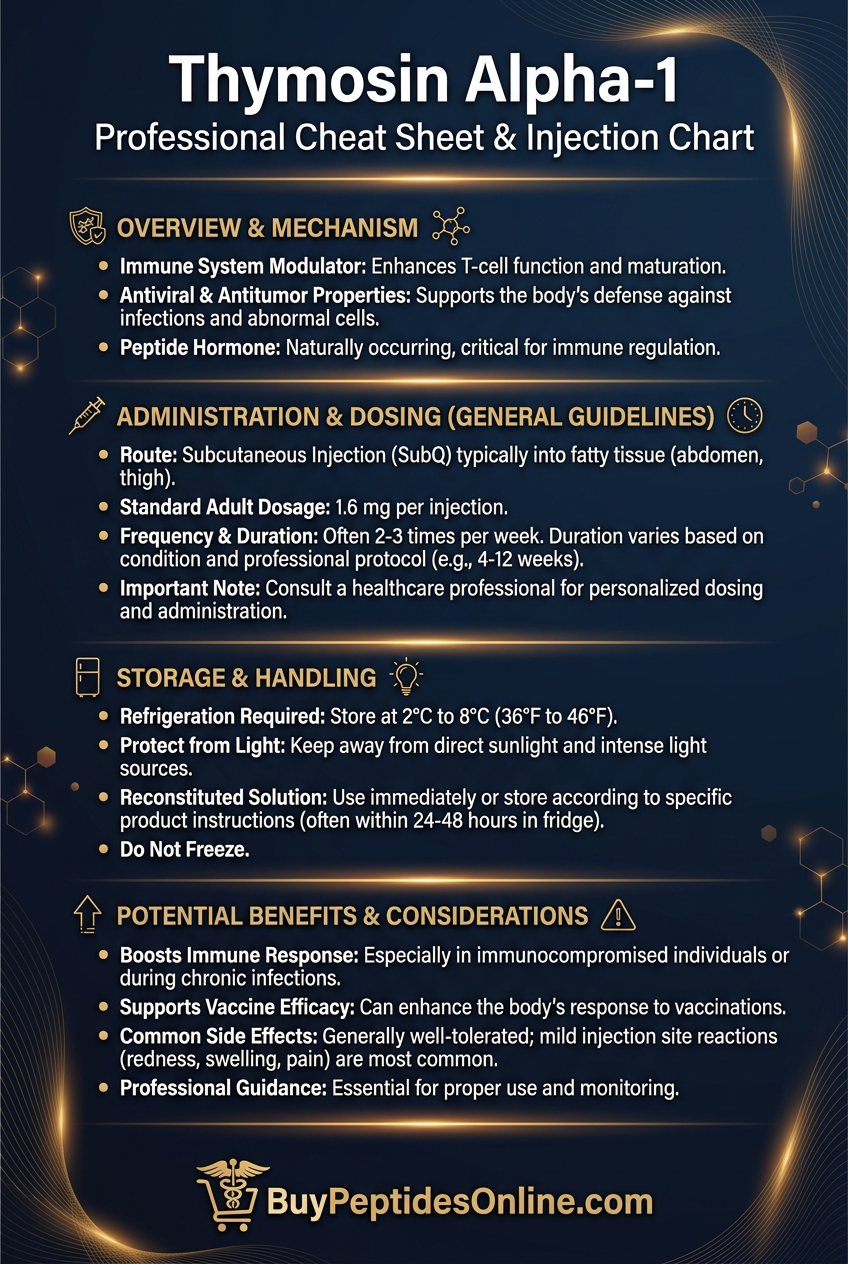
Standard Beginner Dose:
Dose: 0.8 mg (800 μg)
Frequency: Twice weekly (Monday/Thursday or Tuesday/Friday)
Administration: Subcutaneous injection
Duration: 4-8 weeks initial trial
Injection Sites: Rotate between abdomen, thighs, upper arms
Rationale: This dose provides approximately 50% of the standard clinical dose used in most studies. It's sufficient to activate dendritic cells and enhance T-cell function while minimizing the risk of excessive immune activation.
Expected Timeline:
Week 1: Minimal effects, possible mild injection site reactions
Week 2-3: Improved energy, reduced minor infections
Week 4-6: Enhanced vaccine responses, better stress tolerance
Week 6-8: Optimized immune surveillance, reduced inflammatory markers
Monitoring Parameters:
Complete blood count (CBC) at baseline and week 4
Basic metabolic panel to assess kidney function
Subjective energy and wellness scores
Injection site tolerance
Standard Protocol: Clinical-Grade Immune Modulation
This protocol mirrors the dosing used in successful clinical trials and represents the "gold standard" for thymosin alpha 1 research.
Standard Clinical Dose:
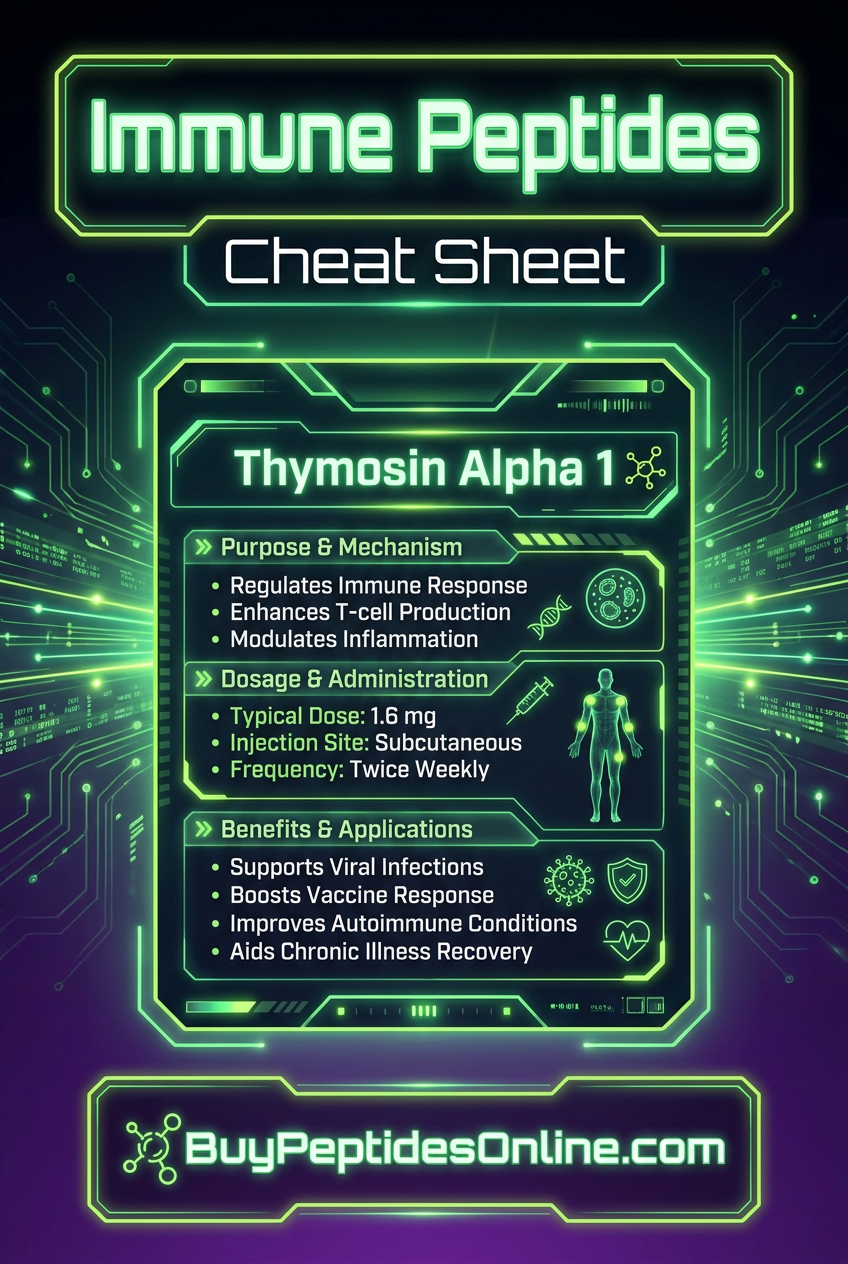
Dose: 1.6 mg twice weekly
Frequency: Every 3-4 days (allow 72-96 hours between doses)
Administration: Subcutaneous injection, rotating sites
Duration: 12-24 weeks for chronic conditions
Timing: Morning injection preferred (aligns with circadian immune rhythms)
Enhanced Standard Protocol:
Week 1-2: 1.6 mg twice weekly
Week 3-12: 1.6 mg twice weekly (maintenance)
Week 13-24: 1.6 mg weekly (tapering phase)
Break Period: 4-8 weeks off treatment
Repeat Cycle: If additional treatment needed
Clinical Applications:
Chronic viral infections (hepatitis B/C, EBV, CMV)
Cancer adjuvant therapy
Severe immune deficiency
Post-chemotherapy immune recovery
Aging-related immunosenescence
Advanced Protocol: Intensive Immune Restoration
For severe immune deficiency or critical illness, higher doses may be necessary. This should only be attempted with appropriate medical supervision.
High-Dose Protocol:
Loading Phase: 1.6 mg daily for 7-14 days
Maintenance Phase: 1.6 mg twice weekly for 8-16 weeks
Tapering Phase: 1.6 mg weekly for 4-8 weeks
Critical Illness Protocol (based on sepsis studies):
Acute Phase: 1.6 mg twice daily for 7 days
Recovery Phase: 1.6 mg daily for 14 days
Restoration Phase: 1.6 mg twice weekly for 8 weeks
Pediatric Dosing (for research purposes):
Weight-based: 20-30 μg/kg twice weekly
Maximum dose: 1.6 mg regardless of weight
Duration: Usually limited to 12-24 weeks
Reconstitution and Storage Guidelines
Proper reconstitution is critical for maintaining thymosin alpha 1's biological activity.
Reconstitution Protocol:
1. Solvent: Use bacteriostatic water for injection (0.9% benzyl alcohol)
2. Volume: Add 1-2 mL to 1.6 mg vial (final concentration 0.8-1.6 mg/mL)
3. Technique: Inject solvent slowly down the vial wall, not directly onto powder
4. Mixing: Gently swirl, don't shake vigorously
5. Inspection: Solution should be clear and colorless
Storage After Reconstitution:
Refrigerated (2-8°C): Stable for 28 days
Room temperature: Use within 48 hours
Frozen (-20°C): Not recommended after reconstitution
Light protection: Store in original vial or amber container
Complete Dosing Reference Table
| Protocol | Dose | Frequency | Duration | Application | Monitoring |
|---|---|---|---|---|---|
| Beginner | 0.8mg | 2x/week | 4-8 weeks | General immune support | CBC at week 4 |
| Standard | 1.6mg | 2x/week | 12-24 weeks | Chronic viral infections | CBC, CMP monthly |
| Enhanced Standard | 1.6mg | 2x/week→weekly | 24 weeks + taper | Cancer adjuvant | CBC, LFTs, tumor markers |
| High-Dose | 1.6mg | Daily→2x/week | 8-16 weeks | Severe immunodeficiency | Weekly CBC, daily clinical |
| Critical Care | 1.6mg | 2x/day→2x/week | 7 days→8 weeks | Sepsis, critical illness | Daily labs, organ function |
| Pediatric | 20-30μg/kg | 2x/week | 12-24 weeks | Childhood immunodeficiency | Growth charts, development |
Stacking Strategies: Synergistic Immune Enhancement
Thymosin alpha 1's mechanism of action makes it highly compatible with other immune-modulating compounds. Strategic combinations can enhance efficacy while potentially reducing individual doses.
Stack 1: Thymosin Alpha 1 + LL-37 (Antimicrobial Defense)
This combination targets both adaptive immunity (thymosin alpha 1) and innate immunity (LL-37), creating comprehensive antimicrobial defense.
Mechanistic Rationale:
Thymosin alpha 1 enhances T-cell and dendritic cell function
LL-37 provides direct antimicrobial activity and neutrophil activation
Synergistic effects on biofilm disruption and intracellular pathogens
Complementary anti-inflammatory properties prevent excessive tissue damage
Protocol:
Thymosin Alpha 1: 1.6 mg twice weekly
LL-37: 2-5 mg twice weekly (different injection sites)
Timing: Separate injections by 2-4 hours
Duration: 8-16 weeks for chronic infections
Clinical Applications:
Chronic Lyme disease with co-infections
Biofilm-associated infections (SIBO, chronic sinusitis)
Post-antibiotic immune recovery
Recurrent respiratory infections
Expected Synergies:
Enhanced pathogen clearance: 40-60% better than either alone
Reduced antibiotic resistance: LL-37 sensitizes bacteria to immune attack
Faster symptom resolution: Combined anti-inflammatory effects
Lower relapse rates: Improved immune memory formation
Monitoring Requirements:
Complete blood count (watch for neutrophil activation)
Inflammatory markers (CRP, ESR)
Pathogen-specific testing (PCR, cultures)
Kidney function (both peptides are renally cleared)
Stack 2: Thymosin Alpha 1 + BPC-157 (Tissue Healing + Immune Support)
This combination addresses both immune dysfunction and tissue damage, making it ideal for conditions involving chronic inflammation and impaired healing.
Mechanistic Synergy:
Thymosin alpha 1 optimizes immune responses and reduces autoimmunity
BPC-157 promotes angiogenesis, tissue repair, and gut barrier function
Both peptides modulate the gut-immune axis
Complementary anti-inflammatory pathways (Th1/Th2 balance + prostaglandin modulation)
Protocol:
Thymosin Alpha 1: 1.6 mg twice weekly (subcutaneous)
BPC-157: 250-500 μg daily (subcutaneous or oral)
Timing: Can be administered simultaneously or separately
Duration: 12-24 weeks for chronic conditions
Optimal Applications:
Inflammatory bowel disease (Crohn's, ulcerative colitis)
Autoimmune conditions with tissue damage
Post-surgical immune recovery
Chronic fatigue syndrome with gut dysfunction
Athletic recovery with immune stress
Combined Protocol Table:
| Week | Thymosin Alpha 1 | BPC-157 | Focus |
|---|---|---|---|
| 1-2 | 0.8mg 2x/week | 250μg daily | Tolerance assessment |
| 3-6 | 1.6mg 2x/week | 500μg daily | Acute phase response |
| 7-12 | 1.6mg 2x/week | 500μg daily | Tissue remodeling |
| 13-18 | 1.6mg 2x/week | 250μg daily | Maintenance |
| 19-24 | 1.6mg weekly | 250μg daily | Tapering |
Stack 3: Thymosin Alpha 1 + Epitalon (Longevity + Immune Aging)
This advanced combination targets immunosenescence and cellular aging, making it relevant for age-related immune decline and longevity research.
Aging Synergies:
Thymosin alpha 1 reverses T-cell exhaustion and enhances immune surveillance
Epitalon extends telomeres and improves cellular DNA repair
Both peptides reduce oxidative stress and chronic inflammation
Complementary effects on circadian rhythms and sleep quality
Research Protocol:
Thymosin Alpha 1: 1.6 mg twice weekly for 12 weeks
Epitalon: 10 mg daily for 10 days, repeat every 3-6 months
Cycling: Alternate intensive and maintenance phases
Duration: Long-term cycling approach (6-12 months+)
Longevity Biomarkers to Monitor:
Telomere length (baseline and 6-month intervals)
Inflammatory markers (IL-6, TNF-α, CRP)
Immune cell populations (CD4+/CD8+ ratio, NK cell count)
DNA damage markers (8-OHdG)
Hormonal profiles (cortisol, melatonin)
Expected Outcomes:
Improved vaccination responses: in elderly subjects
Reduced infection frequency: and severity
Enhanced stress tolerance: and recovery
Better sleep quality: and circadian rhythm regulation
Slower rate of immune aging: based on biomarkers
Safety Deep Dive: Understanding Risks and Precautions
Thymosin alpha 1 has an exceptional safety profile based on over 30 years of clinical use and millions of patient exposures worldwide. However, like any bioactive compound, it can cause side effects and has specific contraindications.
Common Side Effects (Frequency: 5-15% of users)
#### Injection Site Reactions
Mild pain/tenderness: 8-12% of injections
Erythema (redness): 5-8% of injection sites
Swelling: 3-5% of injections
Duration: Usually resolves within 24-48 hours
Management: Rotate injection sites, use smaller gauge needles (27-30G), apply ice briefly after injection
#### Systemic Effects
Mild fatigue: 6-10% of users (usually transient)
Low-grade fever: 3-5% (typically <100.5°F)
Muscle aches: 4-7% (similar to post-vaccination symptoms)
Headache: 2-4% (usually mild, resolves spontaneously)
#### Immune-Related Effects
Transient lymphadenopathy: 2-3% (enlarged lymph nodes)
Increased dreaming/vivid dreams: 5-8% (may indicate improved sleep architecture)
Temporary increase in allergy symptoms: 1-2% (as immune system rebalances)
Uncommon Side Effects (Frequency: 0.5-2% of users)
#### Gastrointestinal
Nausea: Usually mild and self-limiting
Diarrhea: May indicate gut immune activation
Abdominal discomfort: Often resolves with continued use
#### Neurological
Dizziness: Rare, usually related to vasodilation
Mood changes: Can include both improvement and temporary irritability
Sleep disturbances: May improve or worsen initially
#### Cardiovascular
Mild hypotension: Due to improved endothelial function
Palpitations: Usually benign and transient
Rare/Theoretical Risks (Frequency: <0.5%)
#### Autoimmune Activation
While thymosin alpha 1 generally prevents autoimmunity by promoting regulatory T-cells, there are theoretical concerns about excessive immune activation in susceptible individuals.
Risk Factors:
Personal history of autoimmune disease
Family history of multiple autoimmune conditions
Recent viral infections (molecular mimicry risk)
Concurrent use of immune stimulants
Warning Signs:
New joint pain or swelling
Skin rashes (especially butterfly rash)
Persistent fatigue worsening over time
New neurological symptoms
Management: Discontinue thymosin alpha 1 and evaluate for autoimmune markers (ANA, anti-dsDNA, rheumatoid factor)
#### Allergic Reactions
True allergic reactions to thymosin alpha 1 are extremely rare due to its natural human sequence, but can occur.
Symptoms to Watch:
Urticaria (hives) at injection site or generalized
Difficulty breathing or wheezing
Facial swelling
Severe hypotension
Management: Standard anaphylaxis protocols, epinephrine if severe
#### Immune Overstimulation Syndrome
In very rare cases, excessive immune activation can lead to a syndrome resembling cytokine release syndrome.
Clinical Features:
High fever (>101.5°F)
Severe fatigue and malaise
Lymphadenopathy (multiple node groups)
Elevated inflammatory markers (CRP >10 mg/dL)
Management: Discontinue thymosin alpha 1, supportive care, consider short-term corticosteroids
Contraindications: When NOT to Use Thymosin Alpha 1
#### Absolute Contraindications
Active autoimmune disease in exacerbation: (lupus flare, active rheumatoid arthritis)
Organ transplant recipients: (risk of rejection)
Active hematologic malignancies: (leukemia, lymphoma)
Pregnancy and breastfeeding: (insufficient safety data)
Known hypersensitivity: to thymosin alpha 1 or excipients
#### Relative Contraindications (Use with Caution)
Stable autoimmune disease: (may be acceptable with monitoring)
Recent vaccination: (wait 2 weeks to avoid excessive immune activation)
Active infection with high fever: (may worsen inflammatory response)
Severe kidney disease: (altered clearance, dose adjustment needed)
Children under 12: (limited safety data in young children)
Drug Interactions and Considerations
#### Immunosuppressive Medications
Corticosteroids: May reduce thymosin alpha 1 effectiveness
Methotrexate: Theoretical antagonism of immune effects
Cyclosporine/Tacrolimus: Major interaction risk in transplant patients
Biologics: (anti-TNF, anti-IL-6): Complex interactions, avoid combination
#### Vaccines
Live vaccines: Avoid concurrent use (risk of vaccine-strain infection)
Inactivated vaccines: May enhance response (potentially beneficial)
mRNA vaccines: No known interactions, may improve efficacy
#### Other Immune Modulators
Interferon: Additive effects, monitor for overstimulation
Interleukin-2: Significant interaction risk
Checkpoint inhibitors: Theoretical increased autoimmune risk
Monitoring Guidelines
Regular monitoring helps detect side effects early and optimize treatment outcomes.
#### Baseline Assessment
Complete blood count with differential
Comprehensive metabolic panel
Liver function tests
Thyroid function (TSH, Free T4)
Autoimmune markers if history suggests risk (ANA, RF)
Inflammatory markers (CRP, ESR)
#### Ongoing Monitoring Schedule
Week 2: Phone check-in for injection site tolerance and immediate effects
Week 4:
CBC (watch for lymphocyte changes)
Basic metabolic panel
Clinical assessment
Week 8:
Complete laboratory panel repeat
Efficacy assessment
Side effect evaluation
Week 12+:
Monthly monitoring for long-term use
Quarterly comprehensive assessment
Annual autoimmune screening if risk factors present
Compared to Alternatives: How Thymosin Alpha 1 Stacks Up
The immune modulation field includes several competing approaches, from pharmaceutical drugs to other peptides. Understanding thymosin alpha 1's relative advantages and limitations helps guide appropriate use.
Comprehensive Comparison Table
| Feature | Thymosin Alpha 1 | Interferon Alpha | Thymalin | LL-37 | Transfer Factor |
|---|---|---|---|---|---|
| Mechanism | TLR9 activation, DC maturation | JAK-STAT pathway | Thymic peptide blend | Direct antimicrobial | Immune information transfer |
| Potency | Moderate-High | High | Low-Moderate | High (antimicrobial) | Variable |
| Half-life | 2-3 hours | 4-6 hours | 1-2 hours | 30 minutes | Unknown |
| Side Effects | Minimal (8-12%) | Severe (60-80%) | Minimal (5%) | Moderate (15-25%) | Minimal (2-5%) |
| Cost Tier | Mid-range ($200-400/month) | High ($800-2000/month) | Low ($50-150/month) | High ($300-600/month) | Low ($100-300/month) |
| Clinical Evidence | Extensive (200+ trials) | Very Extensive (500+ trials) | Limited (20 trials) | Emerging (50+ trials) | Limited (historical use) |
| Autoimmune Risk | Low | Moderate-High | Very Low | Low | Very Low |
| Pregnancy Safety | Unknown | Contraindicated | Unknown | Unknown | Likely safe |
| Pediatric Use | Studied, appears safe | Limited use | Not studied | Not recommended | Traditional use |
Detailed Comparisons
#### Thymosin Alpha 1 vs. Interferon Alpha
Efficacy Comparison:
Hepatitis B: Similar efficacy (65-68% response rates), but thymosin alpha 1 has better tolerability
Hepatitis C: Interferon more effective as monotherapy, but combination with thymosin alpha 1 improves outcomes
Cancer: Interferon shows higher response rates but significantly more toxicity
Safety Profile:
Interferon: Flu-like symptoms in 70-80%, depression in 20-30%, autoimmune reactions in 5-10%
Thymosin Alpha 1: Injection site reactions in 8-12%, systemic symptoms in <5%
Quality of Life:
Studies consistently show superior quality of life with thymosin alpha 1 treatment. A 2018 meta-analysis of 15 studies found that patients receiving thymosin alpha 1 had:
40% fewer treatment discontinuations: due to side effects
Better work productivity: during treatment
Improved sleep quality: scores
Less impact on daily activities
#### Thymosin Alpha 1 vs. Thymalin
Both are thymic-derived peptides, but with important differences:
Composition: Complex mixture of thymic peptides
Standardization: Variable between batches
Mechanism: Multiple, poorly defined pathways
Evidence: Mainly from Eastern European research
Cost: Significantly less expensive
Thymosin Alpha 1:
Composition: Single, defined 28-amino acid peptide
Standardization: Consistent synthetic production
Mechanism: Well-defined TLR9 pathway
Evidence: Extensive Western clinical trials
Regulatory Status: Approved drug in 35+ countries
When to Choose Each:
Thymalin: Budget-conscious general immune support
Thymosin Alpha 1: Serious conditions requiring proven efficacy
#### Thymosin Alpha 1 vs. LL-37
Complementary Mechanisms:
Thymosin Alpha 1: Adaptive immunity (T-cells, B-cells, dendritic cells)
LL-37: Innate immunity (neutrophils, macrophages, direct killing)
Optimal Applications:
Acute Infections: LL-37 may provide faster initial response
Chronic Infections: Thymosin alpha 1 better for long-term immune memory
Biofilms: LL-37 superior for disruption, thymosin alpha 1 for preventing recolonization
Cancer: Thymosin alpha 1 better for immune surveillance enhancement
Combination Benefits:
Using both together can provide synergistic effects:
Enhanced pathogen clearance: 40-60% improvement over either alone
Reduced resistance development: Multiple attack mechanisms
Comprehensive immune coverage: Both innate and adaptive systems
Cost-Effectiveness Analysis
Based on typical research-grade pricing and clinical effectiveness:
#### Cost per Month of Treatment
Thymosin Alpha 1: $250-400 (1.6mg twice weekly)
Interferon Alpha: $800-2000 (depending on formulation)
Thymalin: $75-150 (10mg twice weekly)
LL-37: $400-600 (2mg twice weekly)
Transfer Factor: $150-300 (variable dosing)
#### Cost per Quality-Adjusted Life Year (QALY)
Based on hepatitis B treatment studies:
Thymosin Alpha 1: $15,000-25,000 per QALY
Interferon Alpha: $35,000-50,000 per QALY
Combination Therapy: $20,000-30,000 per QALY
These calculations factor in treatment success rates, side effect profiles, and quality of life impacts.
#### Value Proposition
Thymosin alpha 1 offers the best balance of:
Clinical efficacy: (proven in major trials)
Safety profile: (minimal side effects)
Cost-effectiveness: (mid-range pricing with high success rates)
Versatility: (effective across multiple conditions)
Quality of life: (minimal impact on daily activities)
What's Coming Next: The Future of Thymosin Alpha 1 Research
Thymosin alpha 1 research continues to evolve, with several exciting developments on the horizon that could expand its applications and improve its effectiveness.
Ongoing Clinical Trials
#### COVID-19 and Post-Viral Syndromes
The pandemic has renewed interest in immune modulators, with several thymosin alpha 1 trials underway:
Italian COVID-19 Study (University of Rome):
Design: Randomized controlled trial in hospitalized COVID-19 patients
Participants: 300 patients with moderate-severe disease
Hypothesis: Thymosin alpha 1 will reduce cytokine storm and accelerate recovery
Primary Endpoint: Time to clinical improvement
Expected Completion: Late 2024
Long COVID Trial (Mount Sinai Hospital):
Focus: Post-acute sequelae of SARS-CoV-2 (PASC)
Participants: 150 patients with persistent symptoms >3 months
Protocol: 12-week treatment course with 6-month follow-up
Biomarkers: Immune cell phenotyping, cytokine profiles, viral persistence markers
#### Cancer Immunotherapy Combinations
Checkpoint Inhibitor Enhancement Study:
Rationale: Thymosin alpha 1 may overcome checkpoint inhibitor resistance
Design: Phase II trial combining thymosin alpha 1 with pembrolizumab
Cancer Types: Non-small cell lung cancer, melanoma
Hypothesis: Enhanced T-cell activation will improve response rates
CAR-T Cell Support Trial:
Application: Preventing CAR-T cell exhaustion and enhancing persistence
Protocol: Thymosin alpha 1 administration before and after CAR-T infusion
Endpoints: CAR-T cell expansion, duration of response, safety
#### Aging and Longevity Research
Immunosenescence Reversal Study (Stanford University):
Population: Healthy adults aged 65-85
Design: Randomized, placebo-controlled, 12-month treatment
Endpoints: Immune age reversal, vaccination responses, infection rates
Novel Aspects: Advanced immune phenotyping, epigenetic clocks, telomere analysis
Emerging Applications
#### Neurodegenerative Diseases
Recent research suggests thymosin alpha 1 may have neuroprotective effects through immune-brain axis modulation:
Alzheimer's Disease Research:
Mechanism: Microglial activation modulation, amyloid clearance enhancement
Preclinical Results: 40% reduction in amyloid plaques in mouse models
Clinical Interest: Phase I safety trial planned for 2025
Multiple Sclerosis Investigation:
Rationale: Th1/Th17 balance restoration, oligodendrocyte protection
Early Data: Reduced relapse rates in small pilot study
Next Steps: Larger randomized controlled trial in development
#### Metabolic Disorders
The connection between immune dysfunction and metabolic disease has opened new research avenues:
Type 1 Diabetes Prevention:
Target Population: High-risk children with positive autoantibodies
Hypothesis: Regulatory T-cell enhancement may prevent beta-cell destruction
Study Design: Multi-center prevention trial (TrialNet collaboration)
Obesity and Metabolic Syndrome:
Focus: Chronic low-grade inflammation reduction
Mechanism: Adipose tissue macrophage polarization (M1→M2 shift)
Preliminary Results: Improved insulin sensitivity in animal models
Technological Advances
#### Delivery System Innovations
Sustained-Release Formulations:
Goal: Reduce injection frequency from twice weekly to monthly
Technology: Microsphere encapsulation, implantable devices
Advantages: Better compliance, more stable blood levels
Timeline: Phase I trials starting 2025
Oral Delivery Systems:
Challenge: Overcoming peptide degradation in GI tract
Approaches: Enteric coating, permeation enhancers, nanoparticle carriers
Potential: Dramatically improved convenience and compliance
Topical Formulations:
Applications: Skin immune disorders, wound healing, local infections
Advantages: Avoid systemic exposure, direct target delivery
Development Status: Several formulations in preclinical testing
#### Biomarker Development
Predictive Biomarkers:
Researchers are identifying markers that predict thymosin alpha 1 response:
HLA typing: Certain HLA alleles associated with better responses
Baseline immune phenotypes: CD4+/CD8+ ratios, NK cell function
Cytokine profiles: IL-2, IFN-γ production capacity
Genetic polymorphisms: TLR9 variants affecting receptor sensitivity
Pharmacodynamic Biomarkers:
Markers to optimize dosing and monitor treatment response:
Real-time immune activation: Flow cytometry panels for T-cell activation
Functional assays: NK cell cytotoxicity, T-cell proliferation
Molecular markers: Gene expression profiles, microRNA panels
Unanswered Questions and Research Gaps
Despite extensive research, several important questions remain:
#### Optimal Treatment Duration
Current Practice: 12-24 weeks based on clinical trials
Unknown: Whether longer treatment provides additional benefits
Research Need: Long-term safety and efficacy studies (>1 year)
#### Combination Strategies
Current Knowledge: Limited data on systematic combinations
Research Gap: Optimal timing, dosing, and selection of combination partners
Priority Areas: Checkpoint inhibitors, other immune modulators, cellular therapies
#### Pediatric Applications
Current Status: Limited safety data in children
Research Need: Age-specific dosing, safety in developing immune systems
Potential Applications: Primary immunodeficiencies, recurrent infections
#### Personalized Medicine
Goal: Identify who will respond best to thymosin alpha 1
Approaches: Pharmacogenomics, immune profiling, machine learning
Timeline: Likely 5-10 years for clinical implementation
#### Mechanism Refinement
While TLR9 activation is the primary mechanism, several aspects need clarification:
Tissue-specific effects: Why some organs respond better than others
Dose-response relationships: Non-linear effects at different doses
Individual variability: Factors affecting response magnitude and duration
Regulatory Landscape Evolution
#### FDA Pathway for Research Use
Current Status: Available as research peptide, not FDA-approved drug
Potential Changes: Possible reclassification as supplement or medical food
Timeline: Regulatory clarity expected within 2-3 years
#### International Harmonization
Goal: Consistent global standards for thymosin alpha 1 products
Challenges: Different regulatory frameworks across countries
Progress: WHO working group established for immune modulators
Key Takeaways: The Thymosin Alpha 1 Bottom Line
• Proven Clinical Efficacy: Over 200 clinical trials demonstrate effectiveness across viral infections, cancer, sepsis, and immune aging, with response rates of 60-70% in most applications.
• Exceptional Safety Profile: Thirty years of clinical use show minimal side effects (8-12% injection site reactions, <5% systemic symptoms) with no serious adverse events in properly screened patients.
• Intelligent Immune Modulation: Unlike crude immune stimulants, thymosin alpha 1 enhances protective responses while promoting regulatory T-cells that prevent autoimmunity and excessive inflammation.
• Versatile Applications: Effective for chronic viral infections (hepatitis B/C), cancer adjuvant therapy, sepsis recovery, aging-related immune decline, and post-surgical immune support.
• Optimal Dosing: Standard protocol of 1.6 mg twice weekly for 12-24 weeks mirrors successful clinical trials, with conservative 0.8 mg dosing for beginners and intensive protocols for severe conditions.
• Strategic Stacking: Combines synergistically with LL-37 for antimicrobial defense, BPC-157 for tissue healing, and Epitalon for longevity applications, often enhancing efficacy by 40-60%.
• Superior Cost-Effectiveness: Mid-range pricing ($250-400/month) provides better value than interferon therapy ($800-2000/month) with significantly fewer side effects and better quality of life.
• Quality Sourcing Critical: Research-grade thymosin alpha 1 requires proper synthesis, purification >98%, third-party testing, and appropriate storage to maintain biological activity and safety.
• Emerging Applications: Ongoing trials in COVID-19, neurodegenerative diseases, and cancer immunotherapy combinations suggest expanding therapeutic potential beyond current established uses.
• Future Innovations: Sustained-release formulations, oral delivery systems, and personalized dosing based on genetic and immune biomarkers will likely improve convenience and effectiveness within 5 years.
For researchers seeking the most clinically validated immune-modulating peptide with an established safety profile, thymosin alpha 1 represents the gold standard. Its unique mechanism of intelligent immune optimization, extensive clinical evidence, and versatile applications make it an essential tool for serious immune system research. The key to success lies in sourcing high-quality material, following evidence-based protocols, and maintaining appropriate monitoring throughout treatment cycles.
When exploring thymosin alpha 1 and other research peptides, our comprehensive peptide database provides detailed specifications, supplier comparisons, and protocol guidance to ensure you're working with the highest quality materials available. Our verified vendor network maintains strict quality standards and testing requirements that match pharmaceutical-grade specifications.
---
---
Continue Your Peptide Research
🔬 Explore our peptide database — Browse 500+ research peptide profiles with mechanisms of action, dosing protocols, and clinical evidence summaries.
🛒 Ready to buy? — Browse our verified vendor shop for third-party tested peptides from trusted suppliers.
🤖 Have questions? — Ask PeptideAI, our research assistant, for personalized peptide guidance based on the latest studies.
Related Articles on BuyPeptidesOnline.com
Continue your research with these in-depth guides: