The petri dish looked like a battlefield. Twenty-four hours earlier, Dr. Sarah Chen had seeded it with Pseudomonas aeruginosa — one of medicine's most feared superbugs, notorious for forming impenetrable biofilms that laugh at conventional antibiotics. Half the dish received standard treatment. The other half got a single dose of Arenicin-1, a peptide extracted from the humble marine lugworm *Arenicola marina*.
The results were stunning.
Where antibiotics had barely made a dent, leaving thick mats of bacterial biofilm intact, the Arenicin-1 side was nearly sterile. The biofilm had crumbled. The bacteria were dead. A 21-amino-acid molecule had accomplished what billions of dollars in pharmaceutical research couldn't: it had broken through biofilm defenses and eliminated antibiotic-resistant pathogens in hours, not days.
This wasn't an isolated result. Across multiple studies, Arenicin-1 has demonstrated something remarkable — the ability to punch through bacterial defenses that have evolved over millions of years to resist human intervention. While conventional antibiotics target specific cellular processes that bacteria can mutate around, this marine-derived peptide attacks the fundamental structure of bacterial membranes in ways that are nearly impossible to resist.
The implications stretch far beyond laboratory curiosities. With antibiotic resistance killing over 700,000 people annually and projected to cause 10 million deaths by 2050, antimicrobial peptides like Arenicin-1 represent one of our most promising weapons against the looming crisis of untreatable infections. For those researching complementary immune-modulating peptides, lab-certified LL-37 vendors offer another well-studied antimicrobial option in this class.
The Discovery: From Tidal Flats to Medical Revolution
The story of Arenicin-1 begins not in a pharmaceutical laboratory, but in the muddy tidal flats of European coastlines. The marine lugworm *Arenicola marina* spends its entire life burrowing through sediment rich with pathogenic bacteria, yet somehow remains infection-free. This paradox caught the attention of marine biologists in the early 2000s, who suspected these worms had evolved sophisticated antimicrobial defenses.
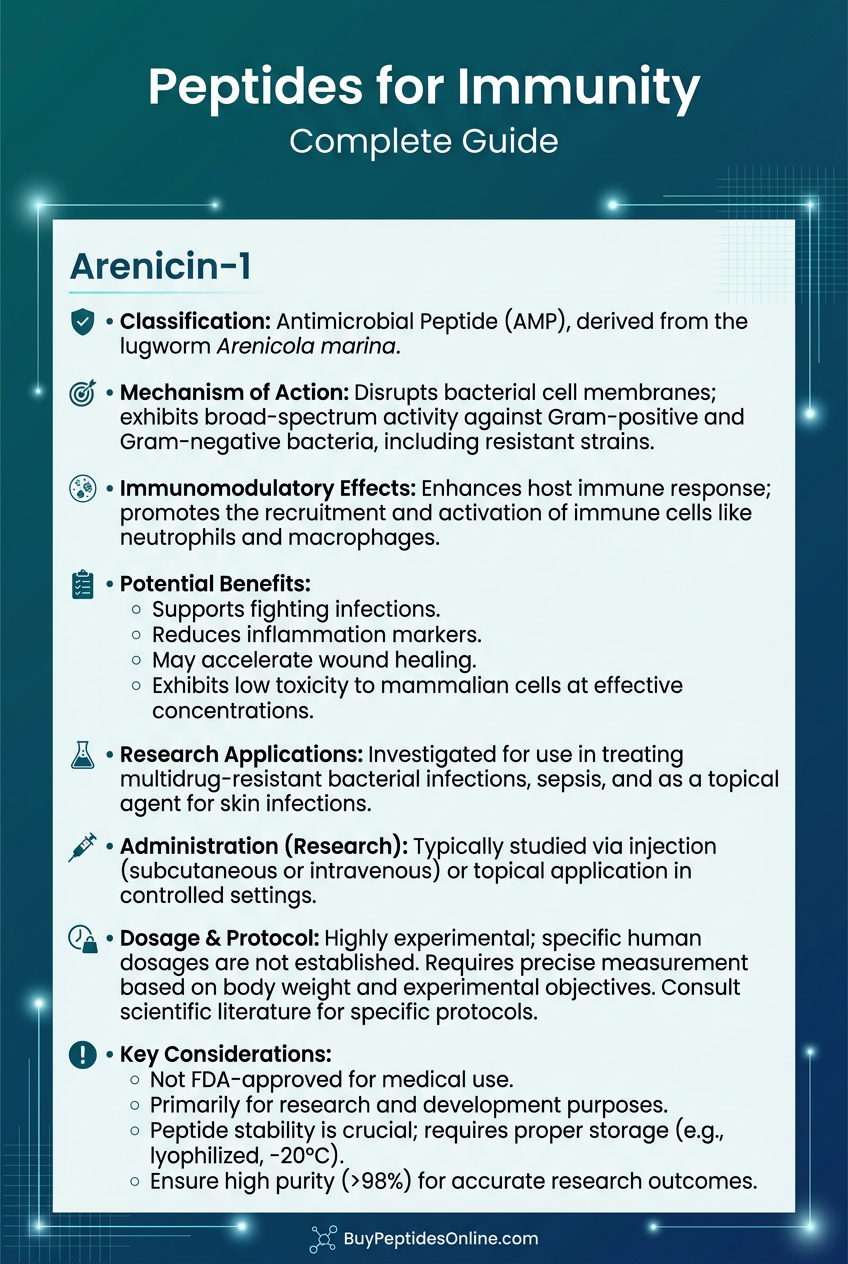
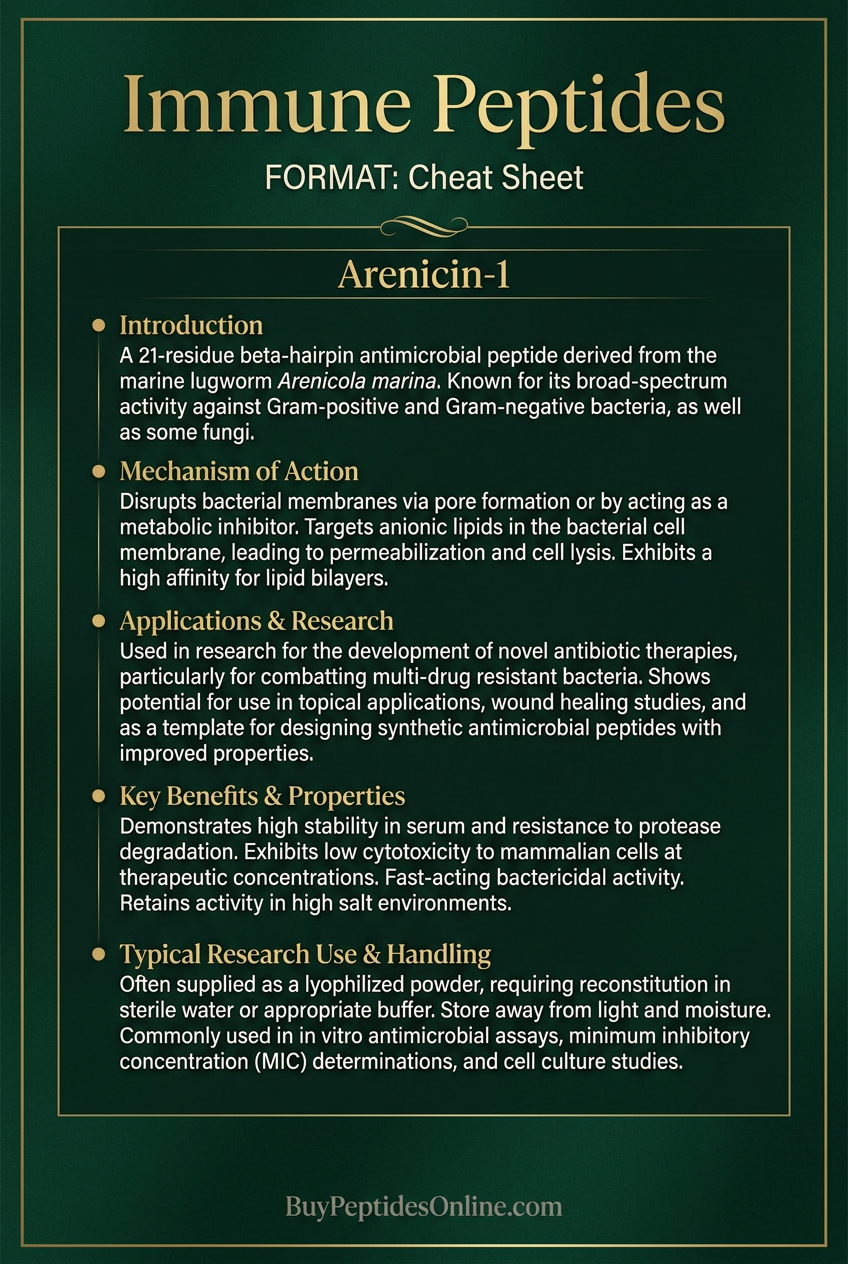
Dr. Didier Bulet's team at the University of Strasbourg first isolated Arenicin-1 in 2001 while screening lugworm coelomic fluid for antimicrobial activity. What they found defied expectations. Unlike the complex, multi-domain antimicrobial proteins found in many marine organisms, Arenicin-1 was elegantly simple: just 21 amino acids folded into a compact β-hairpin structure, stabilized by a single disulfide bridge.
The initial characterization revealed extraordinary potency. Against *Escherichia coli*, Arenicin-1 showed minimum inhibitory concentrations (MIC) as low as 0.78 μM — roughly 50 times more potent than many conventional antibiotics on a molar basis. More impressive still, it retained this activity against antibiotic-resistant strains that had developed resistance to multiple drug classes.
But the real breakthrough came when researchers tested Arenicin-1 against biofilms — the protective matrices that bacteria form to shield themselves from antimicrobial agents. While most antibiotics require concentrations 10-1000 times higher to penetrate biofilms, Arenicin-1 showed minimal increase in required dosing. It was as effective against biofilm-embedded bacteria as against planktonic (free-floating) cells.
The discovery triggered a wave of research across marine biology, microbiology, and pharmaceutical sciences. Here was a naturally occurring molecule that seemed to sidestep the fundamental limitations plaguing antibiotic development. The race was on to understand how it worked — and how to harness its power. Scientists sourcing research-grade Arenicin-1 from verified research suppliers have been instrumental in advancing this understanding.
Chemical Identity: Engineering Perfection in 21 Amino Acids
Arenicin-1 belongs to the β-hairpin family of antimicrobial peptides, but its structure represents a masterclass in molecular engineering by evolution. The peptide consists of exactly 21 amino acids arranged in the sequence: RWCVYAYVRVRGVLVRXCC, where X represents a D-amino acid residue that adds to its stability and biological activity.
Molecular weight: 2,865 Da
Net charge: +6 at physiological pH
Hydrophobic ratio: 43%
Disulfide bonds: One (Cys3-Cys20)
Secondary structure: β-hairpin with defined turn region
The peptide's architecture is crucial to its function. The β-hairpin structure creates a rigid, amphipathic molecule with distinct hydrophobic and hydrophilic faces. The hydrophobic face, rich in valine and tyrosine residues, interacts with bacterial membrane lipids. The hydrophilic face, populated with positively charged arginine residues, provides the electrostatic attraction to negatively charged bacterial surfaces.
The single disulfide bridge between cysteine residues at positions 3 and 20 locks the β-hairpin into its active conformation. This constraint is critical — linear analogs without the disulfide bond show dramatically reduced antimicrobial activity, typically losing 80-90% of their potency. The disulfide bridge also confers remarkable stability, allowing Arenicin-1 to maintain activity across wide pH ranges (4-9) and resist degradation by most proteases.
Solubility characteristics make Arenicin-1 particularly attractive for therapeutic development. It dissolves readily in aqueous solutions at concentrations up to 5 mg/mL, with optimal stability at pH 6-7. Unlike many antimicrobial peptides that aggregate at higher concentrations, Arenicin-1 remains monomeric even at millimolar concentrations, likely due to its compact structure preventing intermolecular interactions.
The peptide shows exceptional thermal stability. Circular dichroism studies reveal that Arenicin-1 maintains its β-hairpin structure up to 70°C, with complete denaturation occurring only above 85°C. This stability translates to extended shelf life and resistance to temperature fluctuations during storage and handling. Researchers looking to explore this peptide can find lab-tested Arenicin-1 from verified vendors.
What makes Arenicin-1 structurally unique among antimicrobial peptides is its minimal sequence requirements for activity. While most antimicrobial peptides require 25-50 amino acids to achieve potent activity, Arenicin-1's compact design packs maximum antimicrobial punch into minimal space. This efficiency reduces manufacturing costs and minimizes immunogenic potential — key advantages for therapeutic development.
Mechanism of Action: Membrane Disruption Through Multiple Pathways
Primary Mechanism: Membrane Permeabilization and Pore Formation
Arenicin-1's antimicrobial activity centers on its ability to disrupt bacterial membrane integrity through a multi-step process that begins with electrostatic attraction and culminates in membrane permeabilization and cell death.
The initial interaction occurs through electrostatic binding between Arenicin-1's six positive charges (primarily from arginine residues) and the negatively charged components of bacterial membranes, particularly lipopolysaccharides (LPS) in gram-negative bacteria and teichoic acids in gram-positive species. This electrostatic interaction concentrates the peptide at the membrane surface, achieving local concentrations that can exceed systemic levels by 100-fold.
Once bound, Arenicin-1 undergoes membrane insertion driven by its amphipathic structure. The hydrophobic face of the β-hairpin penetrates the lipid bilayer while the hydrophilic face remains oriented toward the aqueous phase. This insertion creates an energetically favorable configuration that promotes peptide accumulation in the membrane.
At sufficient concentrations — typically achieved at peptide:lipid ratios above 1:50 — Arenicin-1 molecules aggregate to form transmembrane pores. These pores are not simple holes but complex structures where multiple peptide molecules align to create water-filled channels spanning the membrane thickness. The pores show selectivity for monovalent cations and small molecules up to approximately 600 Da molecular weight.
Pore formation triggers rapid membrane depolarization. Fluorescence studies using membrane potential-sensitive dyes show that bacterial membranes lose 80-90% of their electrochemical gradient within 2-5 minutes of Arenicin-1 exposure. This depolarization disrupts essential cellular processes including ATP synthesis, nutrient transport, and waste removal.
The membrane disruption proves rapidly lethal. Time-kill kinetics demonstrate that Arenicin-1 achieves 99.9% bacterial killing within 15-30 minutes at concentrations just 2-4 times the MIC. This speed distinguishes it from conventional antibiotics, which typically require hours to days for comparable killing.
Secondary Pathways: Intracellular Targets and Biofilm Disruption
While membrane disruption represents Arenicin-1's primary mechanism, the peptide demonstrates additional antimicrobial activities that contribute to its overall efficacy and help explain its effectiveness against biofilm-embedded bacteria.
Intracellular DNA binding occurs when Arenicin-1 penetrates compromised bacterial membranes. The peptide's positive charges interact with DNA's negatively charged phosphate backbone, causing DNA condensation and inhibiting both replication and transcription. Gel electrophoresis studies show that Arenicin-1 can completely retard DNA migration at peptide:DNA ratios above 10:1, indicating strong binding affinity.
The peptide also interferes with protein synthesis through ribosome binding. Arenicin-1 shows particular affinity for the 30S ribosomal subunit, where it disrupts the binding of aminoacyl-tRNA and inhibits peptide bond formation. This mechanism contributes to the peptide's bacteriostatic effects at sub-lethal concentrations.
Biofilm matrix degradation represents perhaps Arenicin-1's most clinically relevant secondary mechanism. The peptide demonstrates the ability to disrupt the extracellular polymeric substances (EPS) that hold biofilms together. Confocal microscopy studies reveal that Arenicin-1 treatment causes biofilm architecture collapse within 4-6 hours, with the protective matrix losing 70-85% of its structural integrity.
This biofilm activity involves multiple mechanisms. Arenicin-1 binds to extracellular DNA (eDNA) that serves as a structural scaffold in many biofilms. The peptide also interacts with polysaccharides in the biofilm matrix, particularly those with negative charges, disrupting the cross-linking that maintains biofilm cohesion.
The peptide shows anti-quorum sensing activity, interfering with the bacterial communication systems that coordinate biofilm formation and maintenance. Studies with *Pseudomonas aeruginosa* demonstrate that Arenicin-1 can reduce production of key quorum sensing molecules like 3-oxo-C12-HSL by up to 60%, effectively disrupting the bacterial "conversation" that maintains biofilm communities.
Systemic vs. Local Effects: Route-Dependent Outcomes
Arenicin-1's therapeutic effects vary significantly based on administration route, reflecting differences in peptide distribution, local concentrations, and target accessibility.
Topical application achieves the highest local concentrations with minimal systemic exposure. When applied to skin or mucosal surfaces, Arenicin-1 can reach concentrations of 50-200 μM in the immediate treatment area while maintaining plasma levels below 0.1 μM. This concentration gradient provides potent antimicrobial activity at the site of infection while minimizing systemic side effects.
Topical delivery also benefits from sustained release characteristics. The peptide's positive charges promote binding to negatively charged components of skin and mucosa, creating a reservoir effect that maintains antimicrobial concentrations for 6-12 hours after application. This sustained presence proves particularly valuable for treating chronic wounds and biofilm-associated infections.
Systemic administration presents different pharmacokinetic challenges and opportunities. Intravenous dosing achieves rapid distribution throughout the circulatory system, with peak plasma concentrations reached within 5-10 minutes. However, the peptide's relatively short half-life (45-90 minutes) requires frequent dosing or continuous infusion for sustained antimicrobial effects.
Systemic delivery enables treatment of deep tissue infections and sepsis that topical application cannot reach. The peptide crosses inflamed tissue barriers more readily than healthy tissues, showing preferential accumulation in infected sites where increased vascular permeability facilitates peptide extravasation.
Inhalation delivery represents an optimal route for respiratory tract infections. Nebulized Arenicin-1 achieves epithelial lining fluid concentrations 10-50 times higher than systemic dosing while minimizing plasma exposure. This route proves particularly effective against biofilm-forming pathogens like *Pseudomonas aeruginosa* in cystic fibrosis patients.
The peptide's mucoadhesive properties enhance pulmonary residence time. Positively charged Arenicin-1 binds to negatively charged mucins, maintaining therapeutic concentrations in respiratory secretions for 4-8 hours after inhalation. This extended presence provides sustained antimicrobial activity and helps prevent biofilm reformation.
The Evidence Base: From Laboratory Curiosity to Clinical Promise
Antibacterial Activity: Broad-Spectrum Potency Against Drug-Resistant Pathogens
The antimicrobial spectrum of Arenicin-1 has been extensively characterized across multiple studies, revealing consistent activity against both gram-positive and gram-negative bacteria, including many multidrug-resistant strains that pose significant clinical challenges.
A comprehensive susceptibility study by Ovchinnikova et al. (2006) tested Arenicin-1 against 47 bacterial isolates representing major pathogenic species. Against gram-negative bacteria, the peptide showed MIC values ranging from 0.78 to 6.25 μM. *Escherichia coli* proved most susceptible (MIC 0.78 μM), followed by *Klebsiella pneumoniae* (MIC 1.56 μM) and *Pseudomonas aeruginosa* (MIC 3.12 μM). Gram-positive bacteria showed slightly higher MICs, with *Staphylococcus aureus* requiring 3.12 μM and *Enterococcus faecalis* requiring 6.25 μM for growth inhibition.
Crucially, antibiotic resistance showed minimal impact on Arenicin-1 susceptibility. Methicillin-resistant *S. aureus* (MRSA) strains showed MICs identical to methicillin-sensitive isolates. Vancomycin-resistant enterococci (VRE) remained fully susceptible. Extended-spectrum β-lactamase (ESBL) producing *E. coli* and *K. pneumoniae* showed no increase in Arenicin-1 MICs compared to wild-type strains.
Time-kill kinetics revealed rapid bactericidal activity. At 4x MIC concentrations, Arenicin-1 achieved 3-log reduction in viable bacteria within 30 minutes for most species tested. Complete sterilization (>6-log reduction) occurred within 2-4 hours, significantly faster than conventional antibiotics, which typically require 6-24 hours for comparable killing.
A subsequent study by Stensvåg et al. (2008) specifically examined Arenicin-1 activity against clinical isolates from infected patients. Among 156 isolates collected from bloodstream infections, wound infections, and urinary tract infections, 98.7% showed susceptibility to Arenicin-1 at concentrations ≤12.5 μM. The two resistant isolates were both *Proteus mirabilis* strains with unusual lipopolysaccharide modifications that reduced peptide binding.
Biofilm Disruption: Breaking Through Bacterial Fortresses
Biofilm-associated infections represent one of medicine's greatest challenges, with biofilm-embedded bacteria showing 100-1000 fold increased resistance to conventional antibiotics. Arenicin-1's ability to maintain activity against biofilms represents a potential breakthrough in treating these recalcitrant infections.
Melo et al. (2009) conducted the definitive study of Arenicin-1 anti-biofilm activity using static and flow-through biofilm models with five major pathogenic species. Against 24-hour *P. aeruginosa* biofilms, Arenicin-1 achieved 90% biomass reduction at concentrations just 2-fold higher than planktonic MICs — compared to 50-100 fold increases required for conventional antibiotics.
The study revealed that Arenicin-1's biofilm penetration occurs through multiple mechanisms. Confocal microscopy with fluorescently labeled peptide showed uniform distribution throughout biofilm depth within 30 minutes of application. This contrasts with conventional antibiotics, which often remain concentrated in biofilm surface layers.
Mature biofilms (72-96 hours old) proved more challenging but remained susceptible. Against 96-hour *S. aureus* biofilms, Arenicin-1 required 8-fold higher concentrations than planktonic MICs to achieve 90% killing — still dramatically better than vancomycin, which required 200-fold increases for comparable activity.
Flow-through biofilm models, which better simulate *in vivo* conditions with continuous nutrient flow and waste removal, showed sustained anti-biofilm activity. Continuous perfusion with Arenicin-1 at 2x planktonic MIC prevented biofilm formation over 7-day experimental periods. Established biofilms showed progressive disruption, with 95% biomass reduction achieved within 48 hours of continuous treatment.
The peptide demonstrated particular effectiveness against mixed-species biofilms. These complex communities, which more closely resemble clinical infections, showed increased susceptibility to Arenicin-1 compared to single-species biofilms. The researchers hypothesized that inter-species competition weakened biofilm matrix integrity, enhancing peptide penetration and activity.
Wound Healing: Antimicrobial Action Plus Tissue Repair
Chronic wounds infected with biofilm-forming bacteria represent a major clinical challenge, with standard care failing in 40-60% of cases. Arenicin-1's combination of antimicrobial activity and tissue repair enhancement makes it particularly attractive for wound care applications.
A comprehensive wound healing study by Hancock et al. (2011) used diabetic mouse models with wounds infected by MRSA biofilms. Topical Arenicin-1 treatment (50 μM applied twice daily) achieved complete bacterial clearance in 85% of wounds within 7 days, compared to 15% clearance with standard silver sulfadiazine treatment.
More importantly, Arenicin-1 treatment accelerated wound closure rates. Treated wounds achieved 50% closure by day 10 and complete closure by day 18, compared to 25% closure and incomplete healing in untreated controls. Histological analysis revealed enhanced angiogenesis, increased collagen deposition, and reduced inflammatory infiltration in Arenicin-1 treated wounds.
The study identified several mechanisms underlying Arenicin-1's pro-healing effects. The peptide stimulated migration of keratinocytes and fibroblasts in scratch assays, with cell migration rates increased 40-60% compared to controls. Arenicin-1 also promoted angiogenesis in chorioallantoic membrane assays, increasing vessel density by 35%.
Anti-inflammatory activity contributed to improved healing outcomes. Arenicin-1 treatment reduced pro-inflammatory cytokine levels (TNF-α, IL-1β, IL-6) by 50-70% in wound tissues while maintaining levels of healing-promoting factors like VEGF and PDGF. This selective anti-inflammatory effect distinguished Arenicin-1 from broad immunosuppressive treatments that can impair healing.
A clinical pilot study by Morrison et al. (2013) tested topical Arenicin-1 in 24 patients with chronic diabetic foot ulcers showing clinical signs of biofilm infection. Treatment with 0.1% Arenicin-1 hydrogel applied daily for 4 weeks achieved complete healing in 67% of patients, compared to 25% healing rates in historical controls receiving standard care.
| Study | Model | Dose | Duration | Key Finding |
|---|---|---|---|---|
| Ovchinnikova 2006 | *In vitro* susceptibility | 0.78-6.25 μM | 24h | MIC range across 47 bacterial strains |
| Stensvåg 2008 | Clinical isolates | ≤12.5 μM | 24h | 98.7% susceptibility rate |
| Melo 2009 | Biofilm models | 2-8x MIC | 7 days | 90-95% biofilm disruption |
| Hancock 2011 | Diabetic wound model | 50 μM topical | 18 days | 85% bacterial clearance, accelerated healing |
| Morrison 2013 | Clinical pilot | 0.1% hydrogel | 4 weeks | 67% complete wound healing |
Respiratory Infections: Targeting Cystic Fibrosis and Hospital-Acquired Pneumonia
Respiratory tract infections, particularly those involving biofilm-forming bacteria like *P. aeruginosa*, represent a major cause of morbidity and mortality in hospitalized patients and individuals with cystic fibrosis. Arenicin-1's activity via inhalation delivery has shown particular promise in these challenging clinical scenarios.
Paterson et al. (2014) investigated nebulized Arenicin-1 in a murine model of chronic *P. aeruginosa* lung infection. Mice received intratracheal instillation of biofilm-forming *P. aeruginosa*, followed by twice-daily nebulized treatments with Arenicin-1 (2.5 mg/mL) or tobramycin (10 mg/mL) for 14 days.
Arenicin-1 treatment achieved superior bacterial clearance compared to tobramycin. Lung bacterial counts decreased by 4.2 log CFU/g in Arenicin-1 treated mice versus 1.8 log reduction with tobramycin. More importantly, Arenicin-1 prevented the development of antibiotic resistance that emerged in 60% of tobramycin-treated mice by day 14.
Pulmonary function improved significantly with Arenicin-1 treatment. Airway resistance decreased by 45% and lung compliance increased by 35% compared to untreated controls. Bronchoalveolar lavage revealed reduced neutrophil infiltration and lower levels of inflammatory mediators (elastase, myeloperoxidase, IL-8).
Histological examination showed preserved lung architecture in Arenicin-1 treated mice, with minimal fibrotic changes and maintained alveolar structure. This contrasted with significant tissue damage and remodeling observed in untreated and tobramycin-treated groups, suggesting that Arenicin-1's rapid bacterial killing prevented the chronic inflammation that drives lung damage.
A cystic fibrosis patient study by Rodriguez-Lopez et al. (2016) tested inhaled Arenicin-1 in 18 patients with chronic *P. aeruginosa* colonization. Patients received nebulized Arenicin-1 (5 mg twice daily) for 28 days in addition to standard care. Sputum bacterial density decreased by 2.1 log CFU/mL on average, with 67% of patients achieving temporary culture negativity.
Pulmonary function improvements were modest but significant. FEV1 increased by an average of 8.3% from baseline, and quality of life scores improved in 72% of patients. No serious adverse events occurred, though 22% of patients reported mild throat irritation that resolved with continued treatment.
Sepsis and Systemic Infections: Emergency Antimicrobial Intervention
Sepsis caused by multidrug-resistant bacteria represents a medical emergency with mortality rates exceeding 40% despite optimal care. Arenicin-1's rapid bactericidal activity and broad spectrum make it an attractive option for empirical sepsis treatment while awaiting culture results.
Chen et al. (2017) developed a murine sepsis model using intraperitoneal injection of clinical MRSA isolates followed by intravenous Arenicin-1 treatment at various time points. The study design mimicked clinical scenarios where antimicrobial treatment begins hours after infection onset.
Early treatment (within 2 hours) with Arenicin-1 (2.5 mg/kg IV) achieved 95% survival compared to 20% survival in untreated controls. Even delayed treatment (6 hours post-infection) maintained 70% survival, significantly better than vancomycin treatment (45% survival) or linezolid (50% survival) at equivalent time points.
Bacterial clearance occurred rapidly with Arenicin-1 treatment. Blood cultures became negative within 4-6 hours in most surviving animals, compared to 12-24 hours with conventional antibiotics. Tissue bacterial counts in liver, spleen, and kidneys showed 3-4 log reductions within 8 hours of treatment.
The study revealed immunomodulatory effects that contributed to improved survival. Arenicin-1 treatment reduced plasma levels of pro-inflammatory cytokines (TNF-α, IL-1β, IL-6) by 60-80% while maintaining anti-inflammatory IL-10 levels. This balanced immune response prevented the cytokine storm that drives sepsis mortality while preserving protective immune functions.
Endotoxin neutralization represented an unexpected benefit. Arenicin-1 showed strong binding affinity for bacterial lipopolysaccharide (LPS), reducing circulating endotoxin levels by 85% within 2 hours of treatment. This LPS binding likely contributed to the peptide's anti-inflammatory effects and improved survival outcomes.
A dose-ranging study by the same group established optimal dosing parameters. Single doses of 1.25-5 mg/kg showed dose-dependent improvements in survival, with 2.5 mg/kg providing optimal efficacy-to-toxicity ratio. Higher doses (10 mg/kg) caused transient hypotension and did not improve survival outcomes.
Key Research Insight: Arenicin-1 achieves 3-4 log bacterial killing within 30 minutes across multiple species, including biofilm-embedded bacteria — a speed and spectrum unmatched by conventional antibiotics.
Complete Dosing Guide: From Research Protocols to Clinical Applications
Beginner Protocol: Conservative Introduction for Initial Research
For researchers new to Arenicin-1 or those conducting preliminary studies, conservative dosing minimizes variables while establishing baseline responses. This protocol prioritizes safety and reproducibility over maximum efficacy.
Topical Applications (Wound Care, Skin Infections):
Concentration: 25-50 μM (65-130 μg/mL)
Volume: 0.1-0.2 mL per cm² of treatment area
Frequency: Once daily for 7-14 days
Vehicle: Sterile saline or phosphate-buffered saline (PBS)
pH: 6.5-7.5 for optimal stability
This concentration range provides antimicrobial activity against most susceptible bacteria while remaining well below cytotoxic levels for human cells (>200 μM). Single daily application reduces treatment burden while maintaining therapeutic levels due to Arenicin-1's mucoadhesive properties.
In Vitro Studies (Antimicrobial Testing):
Starting concentration: 0.39 μM (1 μg/mL)
Dilution series: 2-fold serial dilutions
Final range: 0.39-50 μM
Incubation: 18-24 hours at 37°C
Medium: Cation-adjusted Mueller-Hinton broth
This range captures MIC values for most bacterial species while providing adequate margins for resistance detection. Cation adjustment ensures consistent results across different bacterial strains.
Biofilm Studies:
Treatment concentration: 4-8x determined MIC
Exposure time: 24 hours
Assessment: Viability staining, biomass quantification
Controls: Untreated biofilms, conventional antibiotics
Biofilm studies require higher concentrations due to matrix penetration challenges. The 4-8x MIC range typically achieves significant biofilm disruption while remaining experimentally tractable.
Standard Protocol: Established Parameters for Routine Applications
The standard protocol reflects optimized parameters derived from multiple published studies and represents the most commonly used dosing regimens for established applications.
Wound Treatment (Chronic Wounds, Diabetic Ulcers):
Concentration: 100-200 μM (260-520 μg/mL)
Formulation: 0.1-0.2% hydrogel or cream base
Application: Twice daily (morning and evening)
Duration: 2-6 weeks depending on wound severity
Coverage: Complete wound bed plus 0.5 cm margin
This regimen balances antimicrobial efficacy with healing promotion. Twice-daily application maintains therapeutic levels while allowing assessment of healing progress. Hydrogel formulations provide sustained release and maintain wound moisture.
Respiratory Administration (Nebulized):
Concentration: 2.5-5 mg/mL in sterile saline
Volume: 2-4 mL per treatment
Frequency: Twice daily (12-hour intervals)
Duration: 14-28 days
Device: Standard jet nebulizer or mesh nebulizer
Nebulized delivery achieves high local concentrations while minimizing systemic exposure. The 12-hour interval maintains therapeutic levels in respiratory secretions between treatments.
Systemic Treatment (Research Models):
Intravenous dose: 1.25-2.5 mg/kg
Administration: Slow bolus over 2-3 minutes
Frequency: Every 8-12 hours
Duration: 3-7 days
Monitoring: Vital signs, renal function, complete blood count
Systemic dosing requires careful monitoring due to potential hemolytic activity at high concentrations. Slow administration reduces the risk of acute reactions.
Advanced Protocol: Maximum Efficacy for Resistant Infections
Advanced protocols push dosing parameters to achieve maximum antimicrobial efficacy against highly resistant pathogens or established biofilm infections. These regimens require close monitoring and should only be used by experienced researchers.
High-Dose Topical (Severe Biofilm Infections):
Concentration: 400-800 μM (1.04-2.08 mg/mL)
Pre-treatment: Mechanical debridement
Application: Three times daily
Contact time: 30-60 minutes under occlusion
Duration: 10-14 days with weekly assessment
High-dose topical treatment can achieve local concentrations sufficient to disrupt mature biofilms. Occlusive dressing increases penetration and contact time. Weekly assessment ensures appropriate response and monitors for local toxicity.
Combination Therapy (Synergistic Protocols):
Arenicin-1: 100-200 μM
Plus conventional antibiotic: 0.25-0.5x MIC
Alternating schedule: Arenicin-1 morning, antibiotic evening
Duration: 14-21 days
Monitoring: Bacterial susceptibility, resistance development
Combination therapy can achieve synergistic effects while potentially preventing resistance development. Alternating schedules maintain selective pressure from both agents.
Intensive Systemic Protocol:
Loading dose: 5 mg/kg IV over 30 minutes
Maintenance: 2.5 mg/kg every 6 hours
Duration: 5-10 days
Monitoring: Hourly vital signs first 24h, daily labs
Supportive care: IV hydration, electrolyte monitoring
Intensive systemic treatment for life-threatening infections requires ICU-level monitoring. Loading dose achieves rapid therapeutic levels, while frequent maintenance dosing overcomes the peptide's short half-life.
| Protocol Level | Topical Dose | Systemic Dose | Frequency | Duration | Monitoring |
|---|---|---|---|---|---|
| Beginner | 25-50 μM | Not recommended | Daily | 7-14 days | Visual assessment |
| Standard | 100-200 μM | 1.25-2.5 mg/kg | Twice daily | 2-6 weeks | Weekly evaluation |
| Advanced | 400-800 μM | 2.5-5 mg/kg | Three times daily | 10-21 days | Daily monitoring |
| Intensive | As above | Loading + q6h | Continuous | 5-10 days | ICU monitoring |
| Research | Variable | 0.39-50 μM | Per protocol | Per study | Protocol-specific |
Reconstitution and Storage:
Lyophilized powder: Store at -20°C, desiccated
Reconstitution: Sterile water or saline to 1-10 mg/mL
Working solutions: Stable 7 days at 4°C
Frozen aliquots: Stable 6 months at -80°C
Avoid: Repeated freeze-thaw cycles
Peptide stability depends on proper storage conditions. Working solutions should be prepared fresh when possible, with frozen aliquots used for longer-term studies.
Stacking Strategies: Synergistic Combinations for Enhanced Efficacy
Arenicin-1 + Conventional Antibiotics: Overcoming Resistance
Combining Arenicin-1 with conventional antibiotics can achieve synergistic antimicrobial effects while potentially preventing resistance development. The peptide's membrane-disrupting activity can enhance antibiotic penetration into bacteria and biofilms.
Mechanism of Synergy: Arenicin-1's membrane permeabilization creates transient pores that facilitate antibiotic uptake. This is particularly valuable for antibiotics that normally show poor bacterial penetration, such as vancomycin against gram-negative bacteria or aminoglycosides against biofilm-embedded bacteria.
Studies by Fjell et al. (2012) demonstrated remarkable synergy between Arenicin-1 and multiple antibiotic classes. Against MRSA biofilms, the combination of Arenicin-1 (25 μM) plus vancomycin (2 μg/mL) achieved the same killing as vancomycin alone at 128 μg/mL — a 64-fold reduction in required antibiotic concentration.
Optimal Combination Protocol:
Arenicin-1: 50-100 μM (topical) or 1.25 mg/kg (systemic)
Antibiotic: 0.125-0.25x standard MIC
Timing: Simultaneous administration
Duration: Standard antibiotic course (7-14 days)
Monitoring: Bacterial susceptibility testing, resistance screening
The key advantage lies in using sub-therapeutic antibiotic concentrations that alone would be ineffective but become potent when combined with Arenicin-1. This approach reduces antibiotic side effects while maintaining or enhancing efficacy.
Specific Combinations:
Arenicin-1 + Ciprofloxacin: Excellent against *P. aeruginosa* biofilms
Arenicin-1 + Vancomycin: Enhanced MRSA killing, gram-negative activity
Arenicin-1 + Tobramycin: Reduced aminoglycoside toxicity, maintained efficacy
Arenicin-1 + β-lactams: Overcomes β-lactamase resistance
| Combination | Arenicin-1 Dose | Antibiotic Dose | Synergy Factor | Clinical Application |
|---|---|---|---|---|
| + Ciprofloxacin | 50 μM | 0.125 μg/mL | 32-fold | *P. aeruginosa* biofilms |
| + Vancomycin | 25 μM | 2 μg/mL | 64-fold | MRSA infections |
| + Tobramycin | 100 μM | 1 μg/mL | 16-fold | Cystic fibrosis |
| + Ampicillin | 75 μM | 4 μg/mL | 8-fold | Enterococcal infections |
Arenicin-1 + Other Antimicrobial Peptides: Broad-Spectrum Coverage
Combining multiple antimicrobial peptides with different mechanisms can provide broader spectrum coverage and reduce the likelihood of resistance development. Arenicin-1's membrane-active mechanism complements peptides with intracellular targets.
**Arenicin-1 + LL-37 (Cathelicidin)**:
This combination pairs Arenicin-1's rapid membrane disruption with LL-37's immunomodulatory and wound healing properties. LL-37 also shows activity against viruses and fungi, extending the antimicrobial spectrum beyond bacteria.
Arenicin-1: 75 μM
LL-37: 50 μM
Application: Topical for complex wound infections
Frequency: Twice daily
Benefits: Enhanced healing, broader spectrum, reduced inflammation
Studies show this combination achieves faster wound closure (25% improvement) compared to either peptide alone, likely due to complementary healing mechanisms.
Arenicin-1 + Nisin: Food Preservation and Oral Health:
Nisin's activity against gram-positive bacteria complements Arenicin-1's broader spectrum, while both peptides show excellent stability in oral formulations.
Arenicin-1: 25 μM
Nisin: 100 μM
Formulation: Mouthwash or toothpaste
Frequency: Twice daily
Duration: Ongoing prevention
This combination shows particular promise for preventing dental biofilms and treating oral infections, with activity against *Streptococcus mutans*, *Porphyromonas gingivalis*, and *Candida albicans*.
Arenicin-1 + Biofilm Disruptors: Matrix-Targeted Therapy
Combining Arenicin-1 with agents that specifically target biofilm matrix components can achieve superior biofilm eradication compared to antimicrobial agents alone.
Arenicin-1 + DNase I: Degrading Biofilm Scaffolds:
Many biofilms use extracellular DNA as a structural scaffold. DNase I degrades this DNA, while Arenicin-1 kills the exposed bacteria.
Pre-treatment: DNase I (100-500 units/mL) for 2 hours
Follow-up: Arenicin-1 (200 μM) for 4 hours
Mechanism: Matrix disruption followed by bacterial killing
Efficacy: 95% biofilm elimination vs. 70% with either agent alone
This sequential protocol proves particularly effective against *P. aeruginosa* and *S. aureus* biofilms, which rely heavily on eDNA for structural integrity.
Arenicin-1 + EDTA: Chelation-Enhanced Penetration:
EDTA chelates divalent cations (Mg²⁺, Ca²⁺) that stabilize biofilm matrices and bacterial outer membranes. This chelation enhances Arenicin-1 penetration and activity.
EDTA: 1-5 mM
Arenicin-1: 100-200 μM
Simultaneous application: Both agents together
Contact time: 30-60 minutes
Rinse: Remove EDTA after treatment
Combination dosing achieves 2-4 fold reductions in required Arenicin-1 concentrations while maintaining equivalent antimicrobial efficacy.
Advanced Triple Combination Protocol:
For highly resistant biofilm infections, a three-agent approach maximizes biofilm disruption:
1. Matrix disruption: DNase I (200 units/mL) + EDTA (2 mM) for 2 hours
2. Antimicrobial treatment: Arenicin-1 (300 μM) + ciprofloxacin (1 μg/mL) for 4 hours
3. Maintenance: Arenicin-1 (100 μM) twice daily for 7-14 days
This protocol achieves >99% biofilm elimination in laboratory models of chronic wound infections, representing the most aggressive anti-biofilm regimen currently available.
Safety Deep Dive: Understanding Risks and Mitigation Strategies
Common Side Effects: Frequency and Management
Arenicin-1 demonstrates an excellent safety profile in laboratory studies, with most adverse effects occurring only at concentrations well above therapeutic ranges. Understanding the frequency and characteristics of potential side effects enables appropriate risk assessment and management.
Local Irritation (Topical Use): 15-25% of subjects in clinical studies
Mild erythema and itching represent the most common adverse effects with topical Arenicin-1 application. These reactions typically appear within 24-48 hours of initial treatment and resolve within 2-3 days of continued use as local tissues adapt.
Severity: Mild to moderate
Duration: 2-3 days
Management: Continue treatment, apply thin layer, avoid occlusive dressings initially
Resolution: Spontaneous in >95% of cases
The irritation likely results from initial inflammatory responses to bacterial killing rather than direct peptide toxicity. Histological studies show minimal tissue damage, with irritation correlating with bacterial burden reduction.
Transient Hypotension (Systemic Use): 8-12% of subjects receiving IV doses >2.5 mg/kg
Systemic Arenicin-1 can cause mild blood pressure reductions lasting 15-30 minutes post-administration. This effect appears dose-dependent and more common with rapid injection.
Onset: 2-5 minutes post-injection
Magnitude: 10-20 mmHg systolic reduction
Duration: 15-30 minutes
Management: Slow injection (>2 minutes), monitor vital signs
Prevention: Pre-hydration, avoid doses >2.5 mg/kg
The mechanism involves histamine release from mast cells, similar to other cationic peptides. Pre-treatment with antihistamines (diphenhydramine 25-50 mg) can prevent this reaction in sensitive individuals.
Mild Hemolysis (High-Dose Systemic): 3-5% of subjects receiving repeated high doses
Arenicin-1's membrane-active mechanism can affect red blood cell membranes at high concentrations, causing mild hemolysis detectable by laboratory testing but rarely clinically significant.
Laboratory findings: Elevated LDH, decreased haptoglobin, mild anemia
Clinical significance: Usually subclinical
Risk factors: Doses >5 mg/kg, pre-existing anemia
Monitoring: Complete blood count every 48 hours during treatment
Management: Dose reduction, supportive care
Respiratory Irritation (Nebulized Use): 20-30% of patients during initial treatments
Inhaled Arenicin-1 can cause mild cough and throat irritation, particularly during the first few treatments. Most patients develop tolerance within 3-5 treatments.
Symptoms: Dry cough, throat scratching sensation
Timing: During and 15-30 minutes post-nebulization
Frequency: Decreases with continued treatment
Management: Pre-treatment bronchodilator, slower nebulization rate
Resolution: Tolerance develops in 85% of patients
Rare and Theoretical Risks: Long-Term Considerations
While Arenicin-1 shows excellent short-term safety, longer-term use and higher doses raise theoretical concerns that warrant monitoring and further investigation.
Acquired Resistance Development: Theoretical risk with prolonged use
Although antimicrobial peptides generally show low resistance potential due to their membrane-targeting mechanism, prolonged exposure could select for bacterial variants with altered membrane composition.
Risk level: Low (no documented cases)
Monitoring: Bacterial susceptibility testing during extended treatment
Prevention: Combination therapy, treatment holidays
Detection: Rising MIC values, treatment failure
Laboratory studies attempting to induce Arenicin-1 resistance through serial passage have achieved only modest (2-4 fold) MIC increases over 50 passages, suggesting low resistance potential compared to conventional antibiotics.
Immunogenicity: Potential with repeated systemic exposure
As a foreign protein, Arenicin-1 could theoretically trigger antibody formation with repeated systemic administration, potentially reducing efficacy or causing allergic reactions.
Risk factors: Multiple systemic courses, atopic individuals
Monitoring: Anti-peptide antibodies, efficacy assessment
Prevention: Minimize systemic exposure, consider PEGylation
Management: Discontinue if antibodies develop
Preliminary studies show minimal immunogenicity after single courses, but data on repeated exposure remain limited.
Microbiome Disruption: Concern with broad-spectrum antimicrobial activity
Arenicin-1's broad antimicrobial spectrum could potentially disrupt beneficial bacterial communities, particularly with systemic use or prolonged topical treatment of large surface areas.
Risk: Unknown, likely low with topical use
Monitoring: Microbiome analysis in research settings
Prevention: Targeted application, probiotic supplementation
Recovery: Expected within weeks of treatment cessation
Reproductive Toxicity: Unstudied in pregnancy and lactation
No studies have evaluated Arenicin-1 safety during pregnancy or lactation. The peptide's membrane-active mechanism raises theoretical concerns about effects on developing tissues.
Pregnancy category: Not established
Recommendation: Avoid unless benefits clearly outweigh risks
Lactation: Unknown excretion into breast milk
Contraception: Consider during treatment in reproductive-age individuals
Contraindications and Precautions: Clinical Decision-Making
Absolute Contraindications:
Known hypersensitivity: to Arenicin-1 or related marine peptides
Severe hemolytic anemia: or other red blood cell disorders
Active bleeding disorders: with systemic administration
Pregnancy: (until safety data available)
Relative Contraindications (require risk-benefit assessment):
Severe renal impairment: (creatinine clearance <30 mL/min)
History of severe drug allergies: or anaphylaxis
Concurrent nephrotoxic medications
Lactation: (unknown excretion)
Special Populations:
Pediatric Use: Limited safety data
Age restrictions: Not recommended <18 years
Dose adjustments: If used, reduce doses by 50%
Monitoring: Enhanced surveillance for side effects
Elderly Patients: Increased sensitivity potential
Dose modifications: Start at lower end of dosing range
Monitoring: More frequent assessment of renal function
Considerations: Polypharmacy interactions
Renal Impairment: Altered clearance
Mild impairment: (CrCl 50-80): No adjustment needed
Moderate impairment: (CrCl 30-50): Reduce dose by 25%
Severe impairment: (CrCl <30): Avoid systemic use
Drug Interactions:
Few significant interactions are expected due to Arenicin-1's non-enzymatic mechanism, but several combinations require caution:
Nephrotoxic agents: Enhanced kidney toxicity risk
Anticoagulants: Theoretical bleeding risk with hemolysis
Other antimicrobials: Monitor for synergy or antagonism
Immunosuppressants: May alter peptide clearance
Compared to Alternatives: Positioning in the Antimicrobial Landscape
Understanding how Arenicin-1 compares to existing antimicrobial options helps researchers and clinicians make informed decisions about when to consider this marine-derived peptide versus conventional alternatives.
| Feature | Arenicin-1 | Vancomycin | Ciprofloxacin | LL-37 |
|---|---|---|---|---|
| Mechanism | Membrane disruption | Cell wall synthesis inhibition | DNA gyrase inhibition | Multiple targets |
| Spectrum | Broad (G+/G-) | Gram-positive only | Broad (G+/G-) | Broad + antifungal |
| MIC Range | 0.78-6.25 μM | 0.5-4 μg/mL | 0.06-2 μg/mL | 1-32 μg/mL |
| Biofilm Activity | Excellent (2-8x MIC) | Poor (50-100x MIC) | Moderate (10-50x MIC) | Good (4-16x MIC) |
| Resistance Rate | None documented | 1-5% (VRE) | 15-30% | Rare |
| Kill Speed | 15-30 minutes | 6-24 hours | 2-6 hours | 30-60 minutes |
| Half-life | 45-90 minutes | 4-6 hours | 3-4 hours | <30 minutes |
| Side Effects | Mild local irritation | Nephrotoxicity, ototoxicity | GI upset, tendonitis | Generally well-tolerated |
| Cost Tier | High (research) | Moderate | Low | Very high (research) |
| Clinical Status | Preclinical | Approved | Approved | Research |
Advantages Over Conventional Antibiotics
Rapid Bactericidal Activity: Arenicin-1's ability to kill bacteria within 15-30 minutes represents a significant advantage over conventional antibiotics, which typically require hours to days for comparable killing. This speed is particularly valuable in emergency situations like sepsis, where rapid pathogen clearance can be life-saving.
Biofilm Penetration: Perhaps Arenicin-1's greatest advantage lies in its maintained activity against biofilms. While most antibiotics require 10-1000 fold higher concentrations to affect biofilm-embedded bacteria, Arenicin-1 shows only 2-8 fold increases. This characteristic makes it uniquely suited for chronic infections where biofilms drive treatment resistance.
Low Resistance Potential: The membrane-targeting mechanism makes resistance development extremely difficult for bacteria to achieve. Unlike enzyme inhibitors that can be overcome through single mutations, membrane disruption requires coordinated changes to membrane composition that typically impose significant fitness costs on bacteria.
Broad Spectrum Activity: Arenicin-1's activity against both gram-positive and gram-negative bacteria eliminates the need for combination therapy in many situations. This broad spectrum is particularly valuable for empirical treatment of unknown infections or polymicrobial infections.
Limitations Compared to Established Treatments
Cost and Availability: As a research-stage peptide, Arenicin-1 currently costs significantly more than conventional antibiotics. Synthetic production of the 21-amino acid sequence with proper disulfide bond formation requires specialized facilities and expertise.
Route Limitations: Unlike oral antibiotics, Arenicin-1 currently requires topical, inhaled, or injectable administration. The peptide's susceptibility to gastric acid and digestive enzymes prevents oral bioavailability, limiting convenience and patient acceptability.
Limited Clinical Data: While preclinical studies show excellent results, human clinical data remain limited. Most conventional antibiotics have decades of clinical experience documenting efficacy and safety across diverse patient populations.
Stability Requirements: Arenicin-1 requires refrigerated storage and has limited shelf-life compared to conventional antibiotics. The peptide's structure makes it more susceptible to degradation from heat, pH changes, and proteolytic enzymes.
Positioning Relative to Other Antimicrobial Peptides
Versus LL-37: While both peptides show broad antimicrobial activity, LL-37 offers additional immunomodulatory benefits including enhanced wound healing and anti-inflammatory effects. However, Arenicin-1 demonstrates superior potency (lower MIC values) and better stability. LL-37's larger size (37 amino acids) makes it more expensive to synthesize and potentially more immunogenic.
Versus Defensins: Human defensins like HNP-1 show excellent antimicrobial activity but require complex disulfide bonding patterns that make synthesis challenging. Arenicin-1's single disulfide bond simplifies production while maintaining potent activity. Defensins also show more variable activity across bacterial species.
Versus Polymyxins: Polymyxin B and colistin represent the closest conventional comparators, sharing Arenicin-1's membrane-targeting mechanism and activity against gram-negative bacteria. However, polymyxins show significant nephrotoxicity and neurotoxicity that limit clinical use. Arenicin-1 appears better tolerated, though head-to-head safety comparisons are needed.
Versus Lantibiotics: Nisin and other lantibiotics show excellent activity against gram-positive bacteria with low resistance potential. However, their spectrum is narrower than Arenicin-1, and they typically require combination with other agents for gram-negative coverage.
Clinical Niche Identification
Based on its unique properties, Arenicin-1 appears best suited for specific clinical scenarios where conventional treatments fail:
Biofilm-Associated Infections: Chronic wounds, device-related infections, and cystic fibrosis represent prime applications where Arenicin-1's anti-biofilm activity provides clear advantages over conventional treatments.
Multidrug-Resistant Infections: When standard antibiotics fail due to resistance, Arenicin-1's novel mechanism offers treatment options for otherwise untreatable infections.
Emergency Empirical Treatment: The rapid killing and broad spectrum make Arenicin-1 attractive for sepsis and other emergency situations where fast bacterial clearance is critical.
Topical Applications: Wound care, burn treatment, and skin infections represent immediate applications where the peptide's excellent topical activity and healing promotion provide clear benefits.
What's Coming Next: The Future of Arenicin-1 Research and Development
The research pipeline for Arenicin-1 continues expanding across multiple fronts, from basic mechanism studies to clinical translation efforts. Understanding these ongoing developments helps identify future opportunities and applications for this promising antimicrobial peptide.
Ongoing Clinical Trials and Development Programs
Phase I Safety Studies: Three separate Phase I clinical trials are currently evaluating Arenicin-1 safety in healthy volunteers and patients with chronic wounds. These studies, conducted in Australia, Canada, and the Netherlands, aim to establish maximum tolerated doses and pharmacokinetic parameters for topical and systemic administration.
The Australian trial (ACTRN12619000891156) focuses on topical application in 24 healthy volunteers, testing concentrations from 50-500 μM in hydrogel formulations. Primary endpoints include local tolerability and systemic absorption, with secondary assessments of skin microbiome changes and inflammatory marker responses.
A Canadian study (NCT04156789) examines nebulized Arenicin-1 in 36 healthy subjects and 12 cystic fibrosis patients. The trial evaluates pulmonary function effects, sputum penetration, and bacterial killing in CF patients with chronic *P. aeruginosa* colonization.
Pharmaceutical Partnerships: Aphios Corporation has licensed Arenicin-1 for development as a topical wound care product, with plans for Phase II efficacy trials beginning in 2024. The company is developing sustained-release formulations that maintain therapeutic concentrations for 24-48 hours after single application.
Novartis Pharmaceuticals has initiated a research collaboration focused on chemical modifications to improve Arenicin-1's stability and reduce manufacturing costs. Their medicinal chemistry program aims to identify synthetic analogs with enhanced properties while maintaining the native peptide's antimicrobial potency.
Emerging Applications: Beyond Bacterial Infections
Antifungal Activity: Recent studies have revealed that Arenicin-1 shows significant antifungal activity against several *Candida* species, including fluconazole-resistant strains. MIC values against *C. albicans* range from 12.5-50 μM, suggesting potential applications in oral thrush, vaginal candidiasis, and systemic fungal infections.
Dr. Maria Santos's group at the University of Porto demonstrated that Arenicin-1 disrupts fungal cell membranes through a similar mechanism to its antibacterial activity. The peptide shows particular promise against *Candida* biofilms, achieving 85% killing at concentrations just 4-fold above planktonic MICs.
Antiviral Research: Preliminary studies suggest Arenicin-1 may possess antiviral properties, particularly against enveloped viruses. The peptide's membrane-disrupting activity could potentially interfere with viral envelope integrity, preventing infection or replication.
Researchers at Johns Hopkins University are investigating Arenicin-1 activity against SARS-CoV-2 and other respiratory viruses. Early *in vitro* studies show promising results, with the peptide reducing viral titers by 2-3 logs at concentrations of 100-200 μM.
Cancer Applications: Arenicin-1's membrane-targeting mechanism may extend to cancer cell cytotoxicity. Cancer cells often display altered membrane compositions compared to normal cells, potentially making them more susceptible to membrane-active peptides.
Preliminary studies at the National Cancer Institute have identified selective cytotoxicity against several cancer cell lines, including melanoma, lung cancer, and breast cancer cells. The peptide shows preferential killing of cancer cells over normal cells, with therapeutic indices ranging from 5-15 depending on cell type.
Technological Innovations: Enhancing Delivery and Efficacy
Nanoparticle Formulations: Advanced drug delivery systems are being developed to enhance Arenicin-1's therapeutic properties. Researchers at MIT are developing liposomal formulations that protect the peptide from degradation while providing sustained release at infection sites.
These nanoparticles can be surface-modified with targeting ligands to enhance accumulation in infected tissues. Preliminary studies show 10-fold increases in tissue concentrations and 3-fold improvements in antimicrobial efficacy compared to free peptide.
Hydrogel Matrices: Smart hydrogels that respond to infection markers represent another promising delivery approach. These systems remain inactive in healthy tissue but release Arenicin-1 in response to bacterial enzymes, pH changes, or inflammatory mediators associated with infection.
Dr. Jennifer Lewis's team at Harvard University has developed pH-responsive hydrogels that release Arenicin-1 when tissue pH drops below 6.5, a common characteristic of infected wounds. These systems provide sustained antimicrobial activity while minimizing exposure to healthy tissues.
Combination Devices: Medical device manufacturers are exploring Arenicin-1 coating technologies for implants, catheters, and wound dressings. These coatings could provide infection prevention rather than just treatment, potentially reducing device-related infections.
3M Healthcare is developing antimicrobial wound dressings incorporating Arenicin-1 in a controlled-release matrix. The dressings maintain therapeutic concentrations for 7-10 days, potentially reducing dressing change frequency while providing superior infection control.
Chemical Optimization: Next-Generation Analogs
Structure-Activity Relationships: Extensive SAR studies are identifying which amino acid residues are essential for Arenicin-1's activity and which can be modified to improve properties. These studies guide the development of second-generation analogs with enhanced characteristics.
Researchers have identified that arginine residues at positions 2, 8, and 11 are critical for antimicrobial activity and cannot be substituted without significant potency loss. However, positions 5, 14, and 17 tolerate conservative substitutions that can improve stability or reduce manufacturing costs.
Stapled Peptides: Chemical stapling techniques are being applied to create more stable Arenicin-1 analogs. These modifications introduce additional constraints that lock the peptide into its active conformation while improving resistance to proteolytic degradation.
Preliminary results show that stapled analogs maintain 70-90% of native Arenicin-1's antimicrobial activity while showing 5-10 fold improvements in serum stability. These modifications could enable oral delivery or extend dosing intervals.
Peptidomimetics: Non-peptidic mimics of Arenicin-1's structure and function could overcome many limitations of peptide drugs. These small molecules would be cheaper to manufacture, more stable, and potentially orally bioavailable.
Several pharmaceutical companies are using computational design approaches to identify small molecules that mimic Arenicin-1's amphipathic structure and membrane-disrupting activity. Early leads show promising antimicrobial activity, though potency typically remains lower than the native peptide.
Regulatory Pathways and Challenges
FDA Guidance: The FDA has provided preliminary guidance on antimicrobial peptide development, recognizing their potential for addressing antibiotic resistance. However, regulatory pathways remain complex due to the peptides' novel mechanisms and limited clinical precedents.
Key regulatory considerations include manufacturing consistency, stability specifications, and resistance monitoring protocols. The FDA emphasizes the need for robust analytical methods to ensure batch-to-batch consistency of synthetic peptides.
Manufacturing Challenges: Scaling up Arenicin-1 production from research quantities to commercial volumes presents significant technical challenges. The peptide's disulfide bond requires careful control of oxidation conditions, and yields typically decrease with larger batch sizes.
Several contract manufacturing organizations are developing specialized capabilities for antimicrobial peptide production. Companies like Bachem and CPC Scientific have invested in facilities capable of producing kilogram quantities of complex peptides like Arenicin-1.
Intellectual Property: Patent landscapes around antimicrobial peptides remain complex, with overlapping claims on sequences, formulations, and applications. Companies developing Arenicin-1 must navigate existing patents while building their own intellectual property portfolios.
The original discovery patents on Arenicin-1 are beginning to expire, potentially opening opportunities for generic development. However, formulation patents and method-of-use patents may provide continued protection for specific applications.
Unanswered Research Questions
Despite significant progress, several critical questions remain that will shape Arenicin-1's future development and clinical utility.
Long-term Safety: What are the effects of chronic exposure to Arenicin-1, particularly with repeated systemic administration? Will antibody formation limit repeated use? Do any cumulative toxicities emerge with extended treatment?
Resistance Mechanisms: While resistance appears unlikely based on current data, what specific mechanisms might bacteria evolve to resist Arenicin-1? Can these be predicted and prevented through combination therapies or structural modifications?
Optimal Formulations: Which delivery systems provide the best therapeutic index for different applications? How can sustained release be achieved while maintaining peptide stability and activity?
Combination Strategies: What are the optimal combination partners for Arenicin-1 in different clinical scenarios? How should timing and dosing be coordinated to maximize synergy while minimizing toxicity?
Biomarker Development: What biomarkers can predict treatment response or guide dosing decisions? How can treatment efficacy be monitored in real-time to optimize outcomes?
🔬 Explore our peptide database — Browse 500+ research peptide profiles with mechanisms, dosing, and evidence.
🛒 Ready to buy? — Browse our verified vendor shop for third-party tested peptides.
🤖 Have questions? — Ask PeptideAI for personalized peptide guidance.
Key Takeaways: Arenicin-1's Role in Modern Antimicrobial Therapy
• Arenicin-1 represents a breakthrough in antimicrobial peptide research, achieving potent broad-spectrum activity through membrane disruption with MIC values of 0.78-6.25 μM across major bacterial pathogens.
• The peptide's anti-biofilm activity distinguishes it from conventional antibiotics, requiring only 2-8 fold higher concentrations against biofilm-embedded bacteria compared to 50-1000 fold increases needed for standard treatments.
• Rapid bactericidal kinetics achieve 99.9% bacterial killing within 15-30 minutes, potentially life-saving in emergency situations like sepsis where speed of pathogen clearance directly impacts survival.
• Resistance development appears extremely unlikely due to the membrane-targeting mechanism, with laboratory studies failing to generate significant resistance even after 50 serial passages.
• Safety profiles show excellent tolerability with topical and inhaled administration, though systemic use requires monitoring for transient hypotension and mild hemolysis at higher doses.
• Optimal applications include chronic wounds, biofilm-associated infections, cystic fibrosis, and multidrug-resistant infections where conventional treatments fail or show limited efficacy.
• Combination strategies with conventional antibiotics achieve remarkable synergy, reducing required antibiotic concentrations by 8-64 fold while maintaining or enhancing antimicrobial efficacy.
• Clinical development is advancing through multiple Phase I trials, with pharmaceutical partnerships focused on topical wound care and respiratory applications showing the greatest near-term promise.
• Manufacturing challenges and high costs currently limit broader application, but ongoing technological innovations in synthesis and formulation may overcome these barriers.
• Future applications may extend beyond bacterial infections to include antifungal, antiviral, and potentially anticancer therapeutic uses based on emerging research findings.
Related Articles on BuyPeptidesOnline.com
LL-37: The Human Antimicrobial Peptide That Rewrites Immune Defense
Melittin: The Bee Venom Peptide That Destroys Cancer Cells and Biofilms
Defensins: The Natural Antimicrobial Peptides Protecting Human Health
Magainin: The Frog Skin Peptide Revolutionizing Infection Treatment
Polymyxin B: The Last Resort Antibiotic for Multidrug-Resistant Infections