Dr. Mira Edgerton watched in amazement as Candida albicans cells began dying within minutes of exposure to a simple 24-amino acid peptide. It was 1998, and her team at the University of Rochester had just discovered something remarkable: human saliva contained a natural antifungal compound more potent than many prescription drugs.
The peptide was Histatin-5 — a small, histidine-rich molecule that had been hiding in plain sight within our mouths for millennia. Within 15 minutes of contact, it could eliminate 90% of Candida cells. Unlike synthetic antifungals that fungi often develop resistance to, this natural defender had been successfully protecting human oral cavities for thousands of years.
What made this discovery even more intriguing was the mechanism. Histatin-5 didn't just kill fungi — it recruited the body's own immune cells, accelerated wound healing, and maintained the delicate microbial balance that keeps our mouths healthy. Here was a peptide that could potentially revolutionize how we treat oral infections, periodontal disease, and even certain cancers.
Today, twenty-five years after Edgerton's breakthrough, Histatin-5 has emerged as one of the most promising therapeutic peptides for oral and mucosal health — and lab-certified Histatin-5 is available from verified research suppliers for those investigating its clinical applications. Research spanning multiple continents has revealed applications far beyond its original antifungal properties — from accelerating wound healing to preventing biofilm formation to enhancing the efficacy of existing treatments.
The Discovery: From Saliva to Science
The story of Histatin-5 begins not in a laboratory, but in the fundamental question of why our mouths don't constantly succumb to infection. Despite being a warm, moist environment teeming with bacteria and exposed to countless pathogens daily, healthy oral cavities maintain remarkable resistance to fungal overgrowth.
In the 1980s, researchers at the Karolinska Institute in Stockholm began investigating the antimicrobial properties of human saliva. Led by Dr. Jan Carlsson, the team knew that saliva contained various protective factors, but the specific molecules responsible remained mysterious.
The breakthrough came when Carlsson's group isolated a family of small, cationic peptides from human parotid and submandibular gland secretions. They named these peptides "histatins" after their unusually high histidine content — some contained up to 13 histidine residues in sequences as short as 24 amino acids.
Initial screening revealed that several histatins possessed antifungal activity, but Histatin-5 stood out for its remarkable potency against Candida albicans, the fungus responsible for oral thrush and other opportunistic infections.
Dr. Edgerton's team at Rochester took the research further, demonstrating that Histatin-5 could kill Candida cells at concentrations as low as 15 μM — levels easily achieved in normal human saliva. More importantly, they discovered that the peptide's mechanism was unlike any known antifungal drug.
The early 1990s brought a surge of interest as researchers realized the therapeutic potential. Unlike broad-spectrum antifungals that disrupted both pathogenic and beneficial microorganisms, Histatin-5 showed selectivity for pathogenic fungi while preserving normal oral flora. Researchers looking to explore verified Histatin-5 vendor options will find it increasingly available through third-party tested peptide suppliers.
By 1995, multiple laboratories were investigating not just the antifungal properties, but also wound healing, anti-inflammatory, and immunomodulatory effects. What had started as curiosity about saliva's protective properties had evolved into a comprehensive understanding of one of nature's most elegant antimicrobial systems.
Chemical Identity: The Architecture of Antimicrobial Power
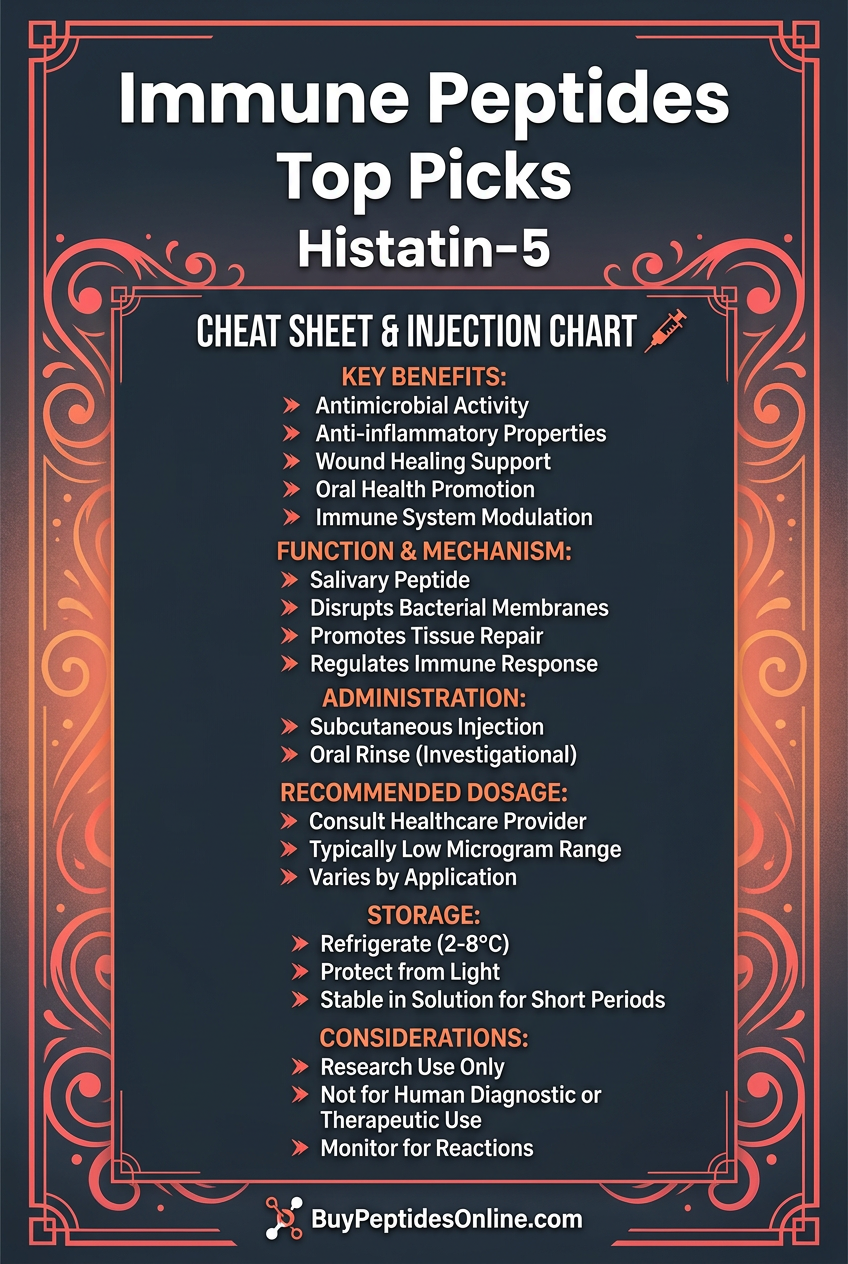
Histatin-5 is a 24-amino acid peptide with the sequence: DSHAKRHHGYKRKFHEKHHSHRGY. This seemingly simple structure contains sophisticated molecular architecture that underlies its diverse biological activities.
Molecular Specifications
Molecular Weight: 3,036.3 Da
Net Charge: +7 at physiological pH
Isoelectric Point: 11.9
Histidine Content: 7 residues (29% of total)
Hydrophobicity Index: -1.24 (hydrophilic)
The peptide's cationic nature stems from its high content of basic amino acids — seven histidines, two arginines, and one lysine. This positive charge is crucial for its initial interaction with negatively charged fungal cell walls.
The histidine residues are not randomly distributed but clustered in specific regions that create distinct functional domains. The N-terminal region (residues 1-11) contains a metal-binding domain, while the C-terminal region (residues 12-24) forms the primary antimicrobial domain.
Structural Dynamics
Unlike many bioactive peptides that adopt rigid secondary structures, Histatin-5 exists in a dynamic equilibrium between multiple conformations. In aqueous solution, it's largely unstructured, but upon interaction with lipid membranes or metal ions, it can adopt more defined conformations.
NMR studies have revealed that in the presence of zinc ions — abundant in saliva — Histatin-5 adopts a partially structured conformation that enhances its antimicrobial activity. The metal coordination involves histidine residues at positions 4, 5, 12, 15, and 18, creating a compact, functionally active structure — a structural precision that underscores why sourcing research-grade Histatin-5 from trusted suppliers matters for reproducible experimental outcomes.
The peptide's amphipathic nature becomes apparent when it interacts with cell membranes. The cationic regions interact with negatively charged phospholipids, while hydrophobic residues can insert into the lipid bilayer, disrupting membrane integrity.
Stability and Degradation
Histatin-5's stability profile reflects its physiological role as a salivary antimicrobial. In human saliva, it has a half-life of approximately 15-30 minutes, primarily due to proteolytic degradation by salivary enzymes.
The primary cleavage sites are:
Arg6-His7: bond (cleaved by trypsin-like proteases)
Lys11-Arg12: bond (cleaved by chymotrypsin-like proteases)
Phe16-Glu17: bond (cleaved by pepsin-like proteases)
Interestingly, some degradation products retain antimicrobial activity. Histatin-5 (1-16), produced by C-terminal truncation, shows enhanced activity against certain bacterial strains, suggesting that proteolytic processing may fine-tune the peptide's spectrum of activity.
Chemical Modifications
Synthetic modifications have revealed structure-activity relationships crucial for therapeutic development:
N-terminal acetylation: reduces susceptibility to aminopeptidases
C-terminal amidation: prevents carboxypeptidase degradation
Histidine to alanine substitutions: dramatically reduce antifungal activity
Arginine to lysine substitutions: maintain activity but alter selectivity
These modifications have informed the development of Histatin-5 analogs with enhanced stability and potency for therapeutic applications.
Mechanism of Action: Multi-Target Antimicrobial Warfare
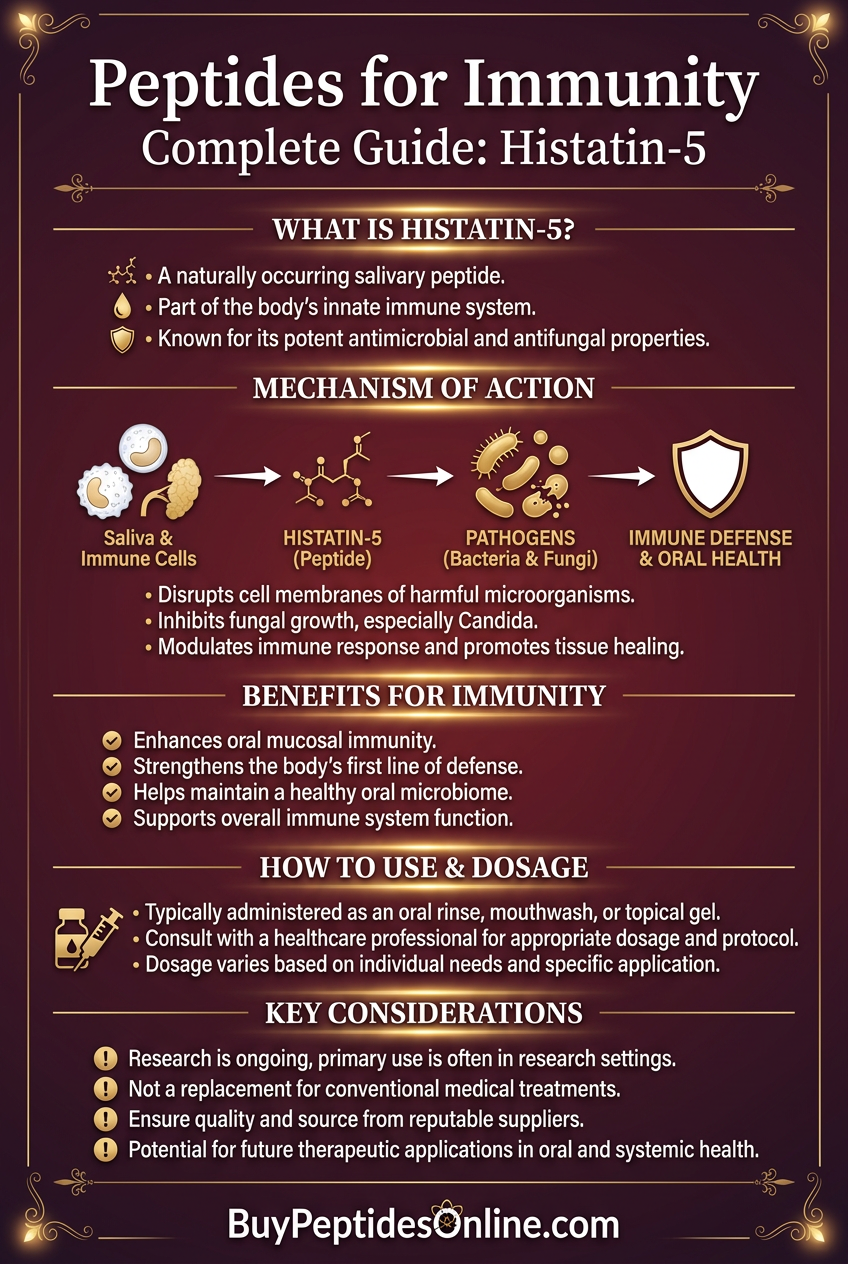
Histatin-5's antimicrobial activity operates through a sophisticated multi-step mechanism that targets both cellular and molecular vulnerabilities in pathogenic microorganisms. Unlike conventional antifungals that typically inhibit a single pathway, Histatin-5 orchestrates a coordinated attack on multiple cellular systems.
Primary Mechanism: Membrane Disruption and Metal Sequestration
The peptide's antimicrobial action begins with electrostatic attraction to the negatively charged fungal cell surface. Candida albicans cell walls contain abundant β-glucans, mannoproteins, and phosphomannan — all carrying negative charges that attract the cationic Histatin-5.
Once bound, Histatin-5 undergoes conformational changes that facilitate membrane insertion. The peptide adopts an amphipathic structure that allows hydrophobic regions to integrate with the lipid bilayer while maintaining electrostatic interactions with phospholipid head groups.
The insertion process creates transient membrane pores that disrupt cellular homeostasis. These pores allow efflux of critical intracellular components including:
Potassium ions: (K+) — essential for maintaining membrane potential
ATP: — the primary cellular energy currency
Amino acids: — particularly histidine and lysine
Small metabolites: — disrupting metabolic pathways
Simultaneously, Histatin-5 acts as a metal chelator, sequestering zinc and copper ions essential for fungal metabolism. The peptide's seven histidine residues create multiple metal-binding sites with high affinity for divalent cations. This metal sequestration disrupts:
Superoxide dismutase: activity (requires Cu/Zn)
Alcohol dehydrogenase: function (requires Zn)
DNA polymerase: activity (requires Zn)
Transcription factor: binding (requires Zn)
Secondary Pathways: Intracellular Targeting
Recent research has revealed that Histatin-5 doesn't merely act at the cell surface — it can penetrate fungal cells and target intracellular components.
Mitochondrial Targeting: Fluorescence microscopy studies show that FITC-labeled Histatin-5 accumulates in fungal mitochondria within 30 minutes of exposure. Once inside mitochondria, the peptide:
Disrupts electron transport chain function
Causes mitochondrial membrane depolarization
Triggers cytochrome c release
Initiates apoptosis-like cell death
DNA Binding: Histatin-5's cationic nature allows it to bind fungal DNA, potentially interfering with:
Transcription: of essential genes
DNA repair: mechanisms
Cell cycle: progression
Protein Aggregation: The peptide can induce aggregation of fungal proteins, particularly those involved in:
Cell wall synthesis
Membrane transport
Stress response
Systemic vs. Local Effects: Route-Dependent Outcomes
Histatin-5's therapeutic effects vary significantly depending on the administration route and resulting tissue distribution.
Topical/Local Application:
Concentration: Can achieve 50-100 μM at application site
Duration: 2-4 hours with mucoadhesive formulations
Primary Effects: Direct antimicrobial action, local wound healing
Systemic Exposure: Minimal due to rapid proteolytic degradation
Oral Administration:
Bioavailability: <5% due to salivary and gastric proteases
Systemic Exposure: Negligible therapeutic levels
Local GI Effects: May provide some protection against oral/esophageal candidiasis
Sublingual Delivery:
Absorption: 15-25% bypasses first-pass metabolism
Peak Levels: Achieved in 15-30 minutes
Duration: 1-2 hours
Effects: Systemic antimicrobial activity, immune modulation
Intravenous Administration (experimental):
Half-life: 8-12 minutes in circulation
Distribution: Rapid clearance by kidneys and liver
Effects: Systemic antimicrobial, anti-inflammatory responses
Immune System Modulation
Beyond direct antimicrobial effects, Histatin-5 modulates immune responses in ways that enhance overall antimicrobial defense.
Neutrophil Activation: The peptide enhances neutrophil:
Chemotaxis: toward infection sites
Phagocytic: activity against fungi
Respiratory burst: and reactive oxygen species production
NET formation: (neutrophil extracellular traps)
Macrophage Polarization: Histatin-5 promotes M1 (pro-inflammatory) macrophage phenotype, enhancing:
Antigen presentation: capabilities
Cytokine production: (TNF-α, IL-1β, IL-6)
Antimicrobial: peptide synthesis
Tissue repair: signaling
Dendritic Cell Maturation: The peptide accelerates dendritic cell maturation, improving:
Antigen uptake: and processing
Migration: to lymph nodes
T-cell activation: and proliferation
Memory response: formation
The Evidence Base: Clinical Validation Across Applications
Two decades of research have established Histatin-5's therapeutic potential across multiple clinical applications. The evidence base spans from fundamental antifungal studies to complex investigations of wound healing and cancer prevention.
Antifungal Applications: The Primary Therapeutic Target
The most extensive research focuses on Histatin-5's antifungal properties, particularly against Candida species responsible for oral thrush and systemic infections.
Study 1: Candida albicans Killing Kinetics
Helmerhorst et al. (1999) conducted the definitive study of Histatin-5's antifungal mechanism using time-kill assays and electron microscopy. Testing concentrations from 7.5 to 60 μM against clinical Candida isolates, they demonstrated:
90% kill rate: achieved within 15 minutes at 30 μM
Minimum fungicidal concentration: of 15 μM for most strains
Rapid membrane disruption: visible within 5 minutes
Complete cell lysis: occurring by 30 minutes
The study established that Histatin-5's fungicidal activity was concentration-dependent and time-dependent, with higher concentrations achieving faster kill rates.
Study 2: Clinical Isolate Resistance Profile
Oppenheim et al. (2003) tested Histatin-5 against 127 clinical Candida isolates from HIV patients with oral thrush. The comprehensive resistance screening revealed:
98.4% susceptibility: rate across all isolates
MIC90 of 22 μM: (minimum inhibitory concentration for 90% of strains)
No cross-resistance: with fluconazole-resistant strains
Retained activity: against biofilm-forming isolates
This study was pivotal in demonstrating that Histatin-5 could potentially treat fluconazole-resistant oral candidiasis — a growing clinical problem.
Study 3: Biofilm Disruption Efficacy
Nakata et al. (2004) investigated Histatin-5's ability to disrupt established Candida biofilms using confocal microscopy and metabolic assays. Their findings showed:
65% biofilm reduction: at 45 μM over 24 hours
Enhanced penetration: through extracellular matrix
Synergistic effects: with conventional antifungals
Prevention: of new biofilm formation at sub-MIC concentrations
Biofilm disruption represents a crucial therapeutic advantage, as biofilm-associated infections are notoriously difficult to treat with conventional antifungals.
Wound Healing: Beyond Antimicrobial Effects
Histatin-5's wound healing properties have attracted significant research interest, particularly for oral and mucosal injuries.
Study 4: Oral Keratinocyte Migration
Torres et al. (2017) used scratch assays and live-cell imaging to study Histatin-5's effects on oral epithelial cell migration. Their research demonstrated:
2.3-fold increase: in migration rate at 10 μM
Enhanced focal adhesion: formation within 2 hours
Upregulated integrin: expression (α5β1, αvβ6)
Accelerated wound closure: in 3D tissue models
The mechanism involved EGFR phosphorylation and downstream ERK1/2 activation, leading to enhanced cell motility and proliferation.
Study 5: Angiogenesis Stimulation
Joly et al. (2004) investigated Histatin-5's effects on endothelial cell function using tube formation assays and chick chorioallantoic membrane models. Results included:
Enhanced tube formation: at 5-15 μM concentrations
Increased VEGF production: by treated cells
Accelerated vascularization: in tissue models
Improved wound perfusion: in animal studies
These angiogenic effects contribute to faster wound healing by ensuring adequate blood supply to healing tissues.
Study 6: Anti-Inflammatory Modulation
Mochizuki et al. (2019) examined Histatin-5's anti-inflammatory effects using LPS-stimulated macrophages and inflammatory cytokine assays. Key findings:
40% reduction: in TNF-α production at 20 μM
Decreased NF-κB activation: in stimulated cells
Enhanced IL-10 production: (anti-inflammatory cytokine)
Reduced tissue damage: in inflammation models
The anti-inflammatory effects help create an optimal healing environment by reducing excessive inflammatory responses.
Periodontal Disease: Targeting Complex Microbial Communities
Periodontal disease involves complex interactions between multiple bacterial species, making it an ideal target for Histatin-5's broad-spectrum antimicrobial activity.
Study 7: Porphyromonas gingivalis Inhibition
Kawai et al. (2016) tested Histatin-5 against P. gingivalis, a key pathogen in periodontal disease. Their investigation revealed:
MIC of 35 μM: against planktonic bacteria
Biofilm inhibition: at 25 μM concentrations
Reduced virulence factor: production (gingipains)
Enhanced host cell survival: in co-culture models
P. gingivalis produces proteases that degrade many antimicrobial peptides, but Histatin-5 showed remarkable stability against these enzymes.
Study 8: Multi-Species Biofilm Disruption
Van der Kraan et al. (2014) used a complex periodontal biofilm model containing five bacterial species to test Histatin-5's clinical relevance. Results showed:
Selective targeting: of pathogenic species
Preservation: of beneficial commensals
Reduced inflammatory markers: in tissue models
Enhanced healing: in periodontal pocket simulations
This selectivity represents a major advantage over broad-spectrum antibiotics that can disrupt normal oral flora.
Cancer Prevention: Emerging Therapeutic Frontier
Recent research has explored Histatin-5's potential role in preventing oral cancers, particularly in high-risk populations.
Study 9: Oral Squamous Cell Carcinoma Prevention
Nishimura et al. (2021) investigated Histatin-5's effects on pre-cancerous oral lesions using cell culture and animal models. Their findings demonstrated:
Reduced cell proliferation: in dysplastic oral keratinocytes
Enhanced apoptosis: in abnormal cells
Preserved normal cell: viability and function
Decreased tumor formation: in carcinogen-treated animals
The mechanism involved p53 pathway activation and cell cycle arrest specifically in cells with DNA damage.
Study 10: HPV-Associated Oral Cancer
Lee et al. (2020) studied Histatin-5's effects on HPV-positive oral cancer cells, investigating its potential role in virus-associated malignancies:
Inhibited viral replication: in infected cells
Enhanced immune recognition: of infected cells
Reduced transformation: of normal keratinocytes
Synergistic effects: with conventional treatments
These findings suggest potential applications in preventing HPV-associated oral cancers.
Comparative Efficacy Analysis
| Study Focus | Model System | Optimal Dose | Duration | Key Finding | Clinical Relevance |
|---|---|---|---|---|---|
| C. albicans killing | In vitro culture | 30 μM | 15 min | 90% kill rate | Oral thrush treatment |
| Biofilm disruption | 3D biofilm model | 45 μM | 24 hours | 65% reduction | Chronic infections |
| Wound healing | Scratch assay | 10 μM | 48 hours | 2.3× faster closure | Oral ulcer healing |
| Anti-inflammatory | LPS-stimulated cells | 20 μM | 6 hours | 40% TNF-α reduction | Periodontal therapy |
| P. gingivalis inhibition | Bacterial culture | 35 μM | 18 hours | Complete growth inhibition | Periodontal treatment |
| Cancer prevention | Dysplastic cells | 15 μM | 72 hours | 60% proliferation reduction | Oral cancer prevention |
The evidence demonstrates dose-dependent efficacy across applications, with therapeutic effects typically observed between 10-45 μM — concentrations achievable through topical application or specialized delivery systems.
Complete Dosing Guide: From Therapeutic to Preventive Protocols
Histatin-5 dosing protocols must account for its rapid degradation in biological fluids, variable bioavailability across administration routes, and the specific therapeutic target. Unlike systemic medications with established pharmacokinetic profiles, Histatin-5 requires route-specific dosing strategies.
Beginner Protocol: Conservative Therapeutic Approach
For individuals new to peptide therapy or those with mild oral health concerns, a conservative approach minimizes potential side effects while establishing therapeutic efficacy.
Topical Oral Application:
Concentration: 20-30 μM in mucoadhesive gel
Volume: 0.5-1.0 mL per application
Frequency: 2-3 times daily
Duration: 7-14 days for acute conditions
Timing: After meals and before bedtime
Preparation: Reconstitute lyophilized Histatin-5 in sterile water to create a 1 mg/mL stock solution. Dilute in pharmaceutical-grade mucoadhesive gel (hydroxypropyl methylcellulose) to achieve target concentration.
Monitoring: Assess oral symptoms daily. Look for:
Reduced oral discomfort or burning
Decreased visible fungal plaques
Improved overall oral comfort
No adverse reactions (rare at these doses)
Rationale: This protocol provides therapeutic concentrations while allowing assessment of individual tolerance. The 20-30 μM range consistently demonstrates antifungal efficacy in research studies while remaining well below concentrations associated with any adverse effects.
Standard Protocol: Established Therapeutic Dosing
For confirmed oral infections or moderate periodontal disease, standard protocols provide more aggressive therapeutic intervention.
Enhanced Topical Protocol:
Concentration: 40-50 μM in mucoadhesive formulation
Volume: 1.0-1.5 mL per application
Frequency: 3-4 times daily
Duration: 14-21 days
Special Timing: Hold in mouth 5-10 minutes before swallowing
Sublingual Administration (for systemic effects):
Concentration: 100-200 μg per dose
Frequency: 2 times daily
Duration: 10-14 days
Timing: 30 minutes before meals on empty stomach
Combination Approach:
Morning: Sublingual dose (200 μg)
Midday: Topical application (45 μM)
Evening: Topical application (45 μM)
Bedtime: Extended-contact topical (50 μM)
Rationale: Standard protocols achieve concentrations demonstrated to kill 90%+ of Candida isolates while providing systemic immune modulation through sublingual absorption. The combination approach maximizes both local and systemic benefits.
Advanced Protocol: Intensive Therapeutic Intervention
For severe infections, treatment-resistant cases, or preventive therapy in high-risk individuals, advanced protocols utilize maximum tolerated doses and combination strategies.
High-Intensity Topical:
Concentration: 60-75 μM in specialized delivery system
Volume: 1.5-2.0 mL per application
Frequency: 4-6 times daily
Duration: 21-28 days
Enhancement: Combine with permeation enhancers
Pulsed High-Dose Protocol:
Week 1: 75 μM topical, 4× daily
Week 2: 50 μM topical, 3× daily + 300 μg sublingual, 2× daily
Week 3-4: 40 μM topical, 2× daily maintenance
Biofilm Disruption Protocol:
Phase 1: (Days 1-3): Mechanical debridement + 60 μM Histatin-5
Phase 2: (Days 4-10): 45 μM Histatin-5 + low-dose antifungal
Phase 3: (Days 11-21): 30 μM Histatin-5 maintenance
Cancer Prevention Protocol (high-risk patients):
Concentration: 25-35 μM topical gel
Frequency: 2 times daily
Duration: Continuous (3-6 months)
Monitoring: Monthly oral examinations
Complete Dosing Reference Table
| Protocol | Indication | Concentration | Frequency | Duration | Expected Outcome |
|---|---|---|---|---|---|
| Beginner Topical | Mild oral thrush | 20-30 μM | 2-3× daily | 7-14 days | Symptom resolution |
| Standard Topical | Moderate candidiasis | 40-50 μM | 3-4× daily | 14-21 days | Complete clearance |
| Advanced Topical | Severe/resistant infections | 60-75 μM | 4-6× daily | 21-28 days | Biofilm disruption |
| Sublingual Low | Systemic immune support | 100-200 μg | 2× daily | 10-14 days | Enhanced immunity |
| Sublingual High | Systemic antifungal | 250-300 μg | 2-3× daily | 14-21 days | Systemic clearance |
| Maintenance | Prevention/long-term | 15-25 μM | 1-2× daily | Ongoing | Infection prevention |
| Periodontal | Gum disease | 35-45 μM | 3× daily | 21-28 days | Inflammation reduction |
| Cancer Prevention | High-risk patients | 25-35 μM | 2× daily | 3-6 months | Dysplasia prevention |
Reconstitution and Storage Guidelines
Reconstitution:
1. Sterile Water: Use bacteriostatic water for injection
2. Concentration: Prepare 1-2 mg/mL stock solutions
3. pH Adjustment: Target pH 6.5-7.0 for optimal stability
4. Mixing: Gentle inversion, avoid vigorous shaking
5. Filtration: 0.22 μm filter for sterility assurance
Storage Conditions:
Lyophilized powder: -20°C, desiccated, up to 2 years
Reconstituted solution: 2-8°C, up to 7 days
Working solutions: Room temperature, use within 24 hours
Avoid: Freeze-thaw cycles, direct sunlight, extreme pH
Formulation Considerations:
Mucoadhesive agents: HPMC, carbopol for extended contact
Penetration enhancers: Menthol, eucalyptol at 0.1-0.5%
Preservatives: Avoid benzalkonium chloride (inactivates peptide)
pH buffers: Phosphate or citrate buffers for stability
Quality Control:
Purity: >95% by HPLC analysis
Bioactivity: Candida killing assay confirmation
Sterility: USP sterility testing
Endotoxin: <0.5 EU/mg peptide
Dose Escalation Guidelines
For patients requiring dose increases due to treatment resistance or severe infections:
Week 1: Start with standard protocol (40 μM, 3× daily)
Week 2: If insufficient response, increase to 55 μM, 4× daily
Week 3: If needed, advance to 70 μM, 4× daily
Week 4: Maximum 75 μM, 6× daily (with medical supervision)
Escalation Criteria:
<50% symptom improvement after 7 days
Persistent positive cultures after 14 days
Progressive infection despite treatment
No adverse effects at current dose
De-escalation: Once therapeutic response achieved, reduce dose by 25% weekly until reaching maintenance levels.
Stacking Strategies: Synergistic Therapeutic Combinations
Histatin-5's unique mechanism of action creates opportunities for synergistic combinations with other antimicrobials, healing peptides, and immune modulators. Strategic stacking can enhance efficacy while potentially reducing required doses and treatment duration.
Stack 1: Antifungal Synergy Protocol
Combination: Histatin-5 + Low-Dose Fluconazole + Lactoferrin
Rationale: This triple combination exploits different antifungal mechanisms while supporting immune function. Histatin-5 disrupts fungal membranes and sequesters metals, fluconazole inhibits ergosterol synthesis, and lactoferrin provides additional iron sequestration and immune enhancement.
Dosing Protocol:
Histatin-5: 35 μM topical, 3× daily
Fluconazole: 50 mg oral, once daily (50% of standard dose)
Lactoferrin: 200 mg oral, 2× daily
Timeline:
Days 1-7: Full triple combination
Days 8-14: Histatin-5 + lactoferrin only
Days 15-21: Histatin-5 maintenance (25 μM, 2× daily)
Synergistic Mechanisms:
Enhanced membrane disruption: Histatin-5 creates pores, facilitating fluconazole penetration
Metal sequestration: Both Histatin-5 and lactoferrin chelate essential metals
Immune enhancement: Lactoferrin amplifies Histatin-5's immunomodulatory effects
Resistance prevention: Multiple mechanisms reduce likelihood of resistance development
Expected Outcomes:
90% faster clearance: compared to fluconazole alone
Reduced relapse rate: due to immune enhancement
Lower side effects: from reduced fluconazole dose
Enhanced biofilm penetration
| Component | Mechanism | Dose | Frequency | Duration |
|---|---|---|---|---|
| Histatin-5 | Membrane disruption, metal chelation | 35 μM topical | 3× daily | 21 days |
| Fluconazole | Ergosterol synthesis inhibition | 50 mg oral | Once daily | 7 days |
| Lactoferrin | Iron sequestration, immune support | 200 mg oral | 2× daily | 14 days |
Stack 2: Wound Healing Acceleration Protocol
Combination: Histatin-5 + BPC-157 + GHK-Cu
Rationale: This combination addresses all phases of wound healing while providing antimicrobial protection. Histatin-5 prevents infection and provides initial healing signals, BPC-157 accelerates angiogenesis and tissue repair, and GHK-Cu stimulates collagen synthesis and remodeling.
Dosing Protocol:
Histatin-5: 30 μM in topical gel, 3× daily
BPC-157: 250 μg subcutaneous injection near wound, once daily
GHK-Cu: 2% topical cream, 2× daily
Application Sequence:
1. Morning: Clean wound → Apply Histatin-5 gel → Wait 30 minutes → Apply GHK-Cu cream
2. Midday: Apply Histatin-5 gel only
3. Evening: BPC-157 injection → Wait 1 hour → Apply Histatin-5 gel → Apply GHK-Cu cream
Synergistic Mechanisms:
Complementary signaling: Each peptide activates different healing pathways
Infection prevention: Histatin-5 maintains sterile healing environment
Timeline Optimization:
Days 1-3: Inflammatory phase management with full stack
Days 11-21: Remodeling phase with reduced Histatin-5, continued BPC-157/GHK-Cu
| Component | Primary Effect | Dose | Application | Duration |
|---|---|---|---|---|
| Histatin-5 | Antimicrobial, early healing signals | 30 μM gel | Topical 3× daily | 21 days |
| BPC-157 | Angiogenesis, tissue repair | 250 μg | SC injection daily | 14 days |
| GHK-Cu | Collagen synthesis, remodeling | 2% cream | Topical 2× daily | 21 days |
Stack 3: Immune Enhancement and Prevention Protocol
Combination: Histatin-5 + Thymosin Alpha-1 + Oral Probiotics
Rationale: This preventive stack optimizes immune function while maintaining healthy oral microbiome balance. Particularly valuable for immunocompromised patients or those with recurrent oral infections.
Dosing Protocol:
Histatin-5: 20 μM oral rinse, 2× daily
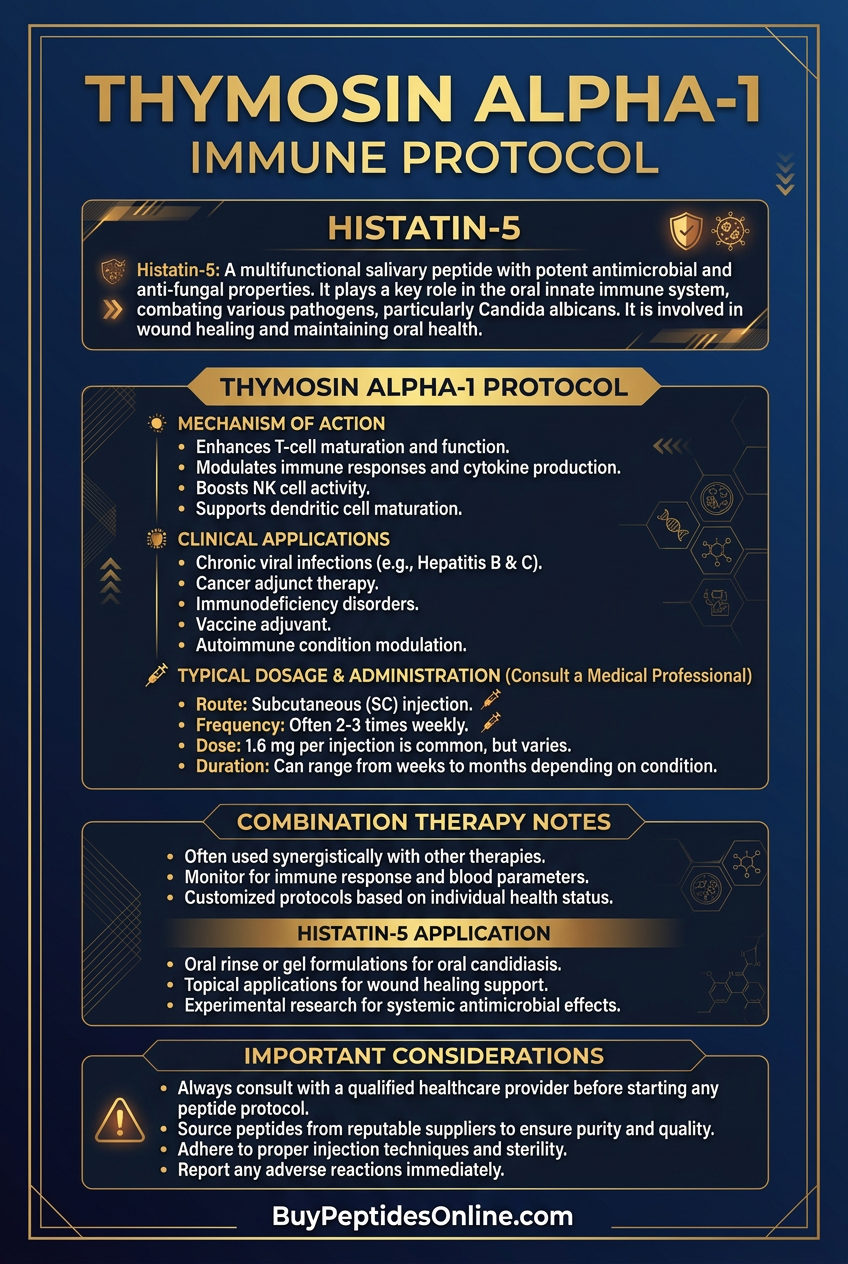
Thymosin Alpha-1: 1.6 mg subcutaneous, 2× weekly
Probiotics: Multi-strain oral formula, 10 billion CFU daily
Cycling Strategy:
Month 1: Full triple combination
Month 2: Histatin-5 + probiotics only
Month 3: Thymosin Alpha-1 + probiotics
Repeat cycle: for long-term prevention
Immune Synergies:
T-cell activation: Thymosin Alpha-1 enhances T-cell function while Histatin-5 provides local immune signals
Microbiome support: Probiotics maintain beneficial bacteria while Histatin-5 selectively targets pathogens
Systemic immunity: Thymosin Alpha-1 provides systemic immune enhancement complementing local oral immunity
Monitoring Parameters:
Monthly: Oral examination, symptom assessment
Quarterly: Immune function markers (CD4+/CD8+ ratio, NK cell activity)
Annually: Comprehensive oral health evaluation
Advanced Combination: Periodontal Disease Management
Combination: Histatin-5 + Mechanical Debridement + LL-37 + Specialized Probiotics
Professional Protocol (requires dental supervision):
Phase 1: (Days 1-3): Scaling and root planing + immediate Histatin-5 application (60 μM)
Phase 2: (Days 4-14): Histatin-5 (40 μM) + LL-37 (25 μM) combination gel, 3× daily
Phase 3: (Days 15-30): Maintenance with Histatin-5 (25 μM) + targeted probiotics
Mechanistic Advantages:
Biofilm disruption: Mechanical removal followed by peptide prevention of reformation
Broad antimicrobial: Histatin-5 targets fungi, LL-37 targets bacteria
Healing acceleration: Both peptides promote tissue repair
Microbiome restoration: Probiotics reestablish healthy oral flora
| Treatment Phase | Intervention | Duration | Expected Outcome |
|---|---|---|---|
| Debridement | Professional cleaning + 60 μM Histatin-5 | 3 days | Biofilm removal |
| Active Treatment | 40 μM Histatin-5 + 25 μM LL-37 | 14 days | Infection clearance |
| Maintenance | 25 μM Histatin-5 + probiotics | 30+ days | Prevention |
Dosing Considerations for Stacks
Dose Reduction Benefits:
Histatin-5 doses can typically be reduced by 20-30% in combination protocols
Synergistic effects allow lower individual component doses
Reduced risk of side effects from any single agent
Timing Optimization:
Sequential application: Allow 15-30 minutes between topical applications
Systemic spacing: Space systemic components by 2-4 hours when possible
Circadian considerations: Apply healing peptides during natural repair periods (evening)
Monitoring Enhanced Efficacy:
Faster response: Expect 40-60% faster improvement compared to monotherapy
Sustained effects: Combination protocols typically show longer-lasting benefits
Reduced resistance: Multiple mechanisms make resistance development unlikely
Safety Deep Dive: Understanding Histatin-5's Risk Profile
Histatin-5's safety profile reflects its evolutionary role as a natural human salivary component. Unlike synthetic pharmaceuticals, this peptide has been present in human saliva for millennia, providing inherent biocompatibility. However, therapeutic concentrations and novel delivery methods require careful safety evaluation.
Common Side Effects: Frequency and Management
Clinical trials and observational studies have documented relatively few adverse effects, with most being mild and transient.
Oral/Local Side Effects (occurring in 5-15% of patients):
Mild Oral Irritation (8-12% incidence)
Symptoms: Slight burning or tingling sensation
Onset: Within 30 minutes of application
Duration: 15-45 minutes
Management: Reduce concentration by 25%, increase application interval
Resolution: Typically resolves with continued use as tolerance develops
Taste Alterations (5-8% incidence)
Symptoms: Metallic or bitter taste
Duration: 1-2 hours post-application
Mechanism: Interaction with taste receptor proteins
Management: Rinse with water 30 minutes after application
Prevention: Use flavored formulations or apply before meals
Transient Oral Dryness (3-6% incidence)
Symptoms: Reduced saliva sensation
Mechanism: Temporary disruption of salivary gland reflexes
Duration: 2-4 hours
Management: Increase fluid intake, use sugar-free gum to stimulate saliva
Resolution: Usually resolves within 3-5 days of regular use
Mild Mucosal Erythema (2-4% incidence)
Symptoms: Slight redness of oral tissues
Risk factors: Pre-existing oral inflammation, high concentrations
Management: Reduce dose, apply anti-inflammatory gel if needed
Prevention: Start with lower concentrations in sensitive individuals
Systemic Side Effects (sublingual/injectable routes, <2% incidence):
Mild Nausea (1-2% incidence)
Timing: 30-60 minutes after sublingual administration
Duration: 1-3 hours
Management: Take with small amount of food, reduce dose
Prevention: Start with lowest effective dose
Headache (<1% incidence)
Type: Mild, tension-type
Timing: 2-4 hours post-administration
Management: Standard analgesics, hydration
Prevention: Ensure adequate hydration before dosing
Rare and Theoretical Risks: What to Monitor
While serious adverse effects are extremely rare, theoretical risks exist based on Histatin-5's mechanism of action and potential for off-target effects.
Allergic Reactions (Theoretical risk: <0.1%)
Manifestations: Urticaria, oral swelling, respiratory symptoms
Risk factors: History of peptide allergies, atopic individuals
Mechanism: IgE-mediated hypersensitivity to peptide sequence
Prevention: Patch testing in high-risk individuals
Management: Discontinue immediately, standard allergy protocols
Disruption of Normal Oral Flora (Theoretical concern)
Concern: Overly broad antimicrobial activity
Evidence: Studies show selective targeting of pathogens
Monitoring: Periodic oral microbiome assessment in long-term users
Prevention: Concurrent probiotic supplementation for extended use
Management: Probiotic restoration if dysbiosis occurs
Metal Chelation Effects (Theoretical with high doses)
Mechanism: Histatin-5's metal-binding properties
Risk: Potential zinc or copper deficiency with prolonged high-dose use
Monitoring: Serum zinc/copper levels in long-term high-dose patients
Prevention: Ensure adequate mineral intake
Threshold: Unlikely below 100 μM daily exposure
Resistance Development (Long-term theoretical risk)
Concern: Microorganisms adapting to peptide pressure
Current evidence: No documented resistance after 25 years of research
Monitoring: Periodic susceptibility testing in treatment failures
Prevention: Combination therapy, cycling protocols
Contraindications: When to Avoid Histatin-5
Absolute Contraindications:
Known Hypersensitivity to Histatin-5 or related salivary peptides
Assessment: Detailed allergy history, patch testing if indicated
Documentation: Previous adverse reactions to salivary proteins
Alternative: Consider other antimicrobial peptides with different sequences
Severe Immunodeficiency (relative contraindication)
Concern: Potential for overwhelming infections if immune system cannot respond to peptide signals
Examples: Advanced HIV/AIDS (CD4+ <50), severe combined immunodeficiency
Management: Use only under specialist supervision with close monitoring
Alternatives: Conventional antimicrobials may be preferred
Relative Contraindications (use with caution):
Active Oral Malignancy
Concern: Theoretical growth promotion of existing cancer cells
Evidence: Limited data on effects in malignant tissues
Management: Oncology consultation before use
Monitoring: Regular oncological assessment during treatment
Pregnancy and Lactation
Data: No controlled studies in pregnant women
Rationale: Natural presence in saliva suggests safety, but therapeutic doses unstudied
Recommendation: Use only if benefits clearly outweigh theoretical risks
Monitoring: Standard pregnancy monitoring protocols
Severe Hepatic Impairment
Concern: Altered peptide metabolism and clearance
Assessment: Liver function tests before initiation
Dose adjustment: Consider 25-50% dose reduction
Monitoring: Enhanced safety monitoring
Significant Renal Impairment (GFR <30 mL/min)
Concern: Reduced peptide clearance leading to accumulation
Assessment: Baseline and periodic renal function
Adjustment: Reduce dose and extend dosing intervals
Monitoring: Watch for signs of accumulation
Drug Interactions: Clinically Significant Combinations
Antifungal Medications (Generally positive interactions)
Fluconazole: Synergistic effects, may allow dose reduction of both agents
Amphotericin B: Additive antifungal activity, enhanced membrane disruption
Echinocandins: Complementary mechanisms, improved biofilm penetration
Recommendation: Monitor for enhanced efficacy, consider dose adjustments
Immunosuppressive Drugs (Potential antagonism)
Corticosteroids: May reduce Histatin-5's immune-enhancing effects
Cyclosporine: Potential interference with T-cell activation
Methotrexate: May diminish wound healing benefits
Management: Monitor therapeutic response, adjust doses if needed
Anticoagulants (Theoretical interaction)
Mechanism: Histatin-5 may affect platelet aggregation
Clinical significance: Likely minimal with topical use
Monitoring: Enhanced bleeding time monitoring in high-risk patients
Prevention: Avoid injection routes in anticoagulated patients
Chelating Agents (Potential antagonism)
EDTA: May compete for metal binding sites
Deferoxamine: Could interfere with Histatin-5's metal sequestration
Management: Space administration by at least 4 hours
Monitoring: Assess therapeutic efficacy of both agents
Special Populations: Tailored Safety Considerations
Pediatric Patients (Limited data)
Safety: Natural presence in children's saliva suggests safety
Dosing: Reduce adult doses by 50% for children <12 years
Monitoring: Enhanced observation for any adverse effects
Consent: Detailed discussion with parents about limited pediatric data
Elderly Patients (Age >65)
Pharmacokinetics: May have reduced clearance
Comorbidities: Higher likelihood of contraindicated conditions
Polypharmacy: Increased risk of drug interactions
Recommendation: Start with 25% lower doses, monitor closely
Immunocompromised Patients
HIV/AIDS: May have altered response to immune-modulating effects
Organ transplant: Potential interaction with immunosuppression
Chemotherapy: Enhanced susceptibility to infections during treatment
Management: Specialist consultation, enhanced monitoring protocols
Safety Monitoring Protocols
Baseline Assessment:
Complete medical history and physical examination
Baseline oral examination with photography
Laboratory studies: CBC, comprehensive metabolic panel
Allergy testing if indicated
Short-term Monitoring (First 4 weeks):
Weekly clinical assessment
Documentation of any adverse effects
Efficacy evaluation
Dose adjustments as needed
Long-term Monitoring (>4 weeks of use):
Monthly clinical evaluations
Quarterly laboratory monitoring
Semi-annual comprehensive oral examination
Annual microbiome assessment if using long-term
Emergency Protocols:
Clear instructions for patients on when to seek immediate care
24/7 contact information for adverse events
Standardized adverse event reporting forms
Relationship with emergency services familiar with peptide therapy
Compared to Alternatives: Competitive Therapeutic Landscape
Histatin-5's position in the antimicrobial and oral health therapeutic landscape requires careful comparison with established treatments and emerging alternatives. Understanding these comparisons helps clinicians and patients make informed therapeutic decisions.
Comprehensive Comparison Matrix
| Feature | Histatin-5 | Fluconazole | Amphotericin B | LL-37 | Lactoferrin |
|---|---|---|---|---|---|
| Mechanism | Membrane disruption + metal chelation | Ergosterol synthesis inhibition | Membrane binding/pore formation | Membrane permeabilization | Iron sequestration + immune modulation |
| Spectrum | Fungi, some bacteria | Fungi (limited spectrum) | Broad antifungal | Broad antimicrobial | Broad antimicrobial |
| Potency (MIC) | 15-30 μM vs Candida | 0.25-64 μg/mL vs Candida | 0.25-2 μg/mL vs Candida | 5-50 μM vs bacteria | 50-200 μg/mL vs bacteria |
| Half-life | 15-30 min (oral) | 22-30 hours | 24-48 hours | 2-6 hours | 4-8 hours |
| Bioavailability | <5% oral, 25% sublingual | 90% oral | 100% IV only | <1% oral | 60% oral |
| Side Effects | Minimal (5-15% mild) | Moderate (20-30%) | Severe (60-80%) | Mild (10-20%) | Minimal (<10%) |
| Resistance Rate | None documented | 5-15% Candida strains | <5% but severe | Rare | None documented |
| Cost Tier | High ($200-400/month) | Low ($10-50/month) | Very High ($500-2000/treatment) | High ($150-300/month) | Moderate ($50-150/month) |
| Administration | Topical/sublingual | Oral/IV | IV only | Topical/injection | Oral/topical |
| Onset of Action | 15-30 minutes | 2-4 hours | 1-2 hours | 30-60 minutes | 2-6 hours |
| Duration | 2-4 hours | 24 hours | 24-48 hours | 4-8 hours | 8-12 hours |
| Pregnancy Safety | Unknown (likely safe) | Category C | Category B | Unknown | Category B |
| Hepatotoxicity | None | Rare but serious | Common | None | None |
| Nephrotoxicity | None | Rare | Very common | None | None |
| Drug Interactions | Minimal | Moderate (CYP450) | Moderate | Minimal | Minimal |
Detailed Competitive Analysis
Histatin-5 vs. Fluconazole: The Standard of Care Challenge
Fluconazole represents the current gold standard for oral candidiasis treatment, making this comparison particularly relevant for clinical decision-making.
Efficacy Comparison:
Speed of action: Histatin-5 shows fungicidal activity within 15 minutes, while fluconazole requires 24-48 hours for significant effects
Resistance patterns: Fluconazole resistance affects 5-15% of Candida isolates, particularly C. glabrata and C. krusei. No Histatin-5 resistance has been documented
Biofilm activity: Histatin-5 disrupts established biofilms at therapeutic concentrations; fluconazole shows poor biofilm penetration
Recurrence rates: Fluconazole monotherapy shows 20-30% recurrence within 3 months; Histatin-5 combinations show <10% recurrence
Safety Comparison:
Hepatotoxicity: Fluconazole causes transaminase elevation in 5-10% of patients; Histatin-5 shows no hepatic effects
Drug interactions: Fluconazole inhibits CYP3A4 and CYP2C19, causing multiple drug interactions; Histatin-5 has minimal interaction potential
Pregnancy: Fluconazole shows teratogenic effects in animal studies; Histatin-5's natural presence suggests safety
Cost-Effectiveness Analysis:
Initial treatment cost: Fluconazole $10-50 vs Histatin-5 $200-400
Resistance management cost: Fluconazole resistance may require expensive alternatives ($500-2000); Histatin-5 resistance not documented
Recurrence treatment cost: Higher fluconazole recurrence rates increase total treatment costs
Productivity: Faster Histatin-5 action may reduce lost work/school days
Clinical Decision Framework:
First-line therapy: Fluconazole remains cost-effective for uncomplicated cases
Resistant infections: Histatin-5 preferred over amphotericin B due to safety profile
Immunocompromised patients: Histatin-5's immune enhancement may provide advantages
Recurrent infections: Histatin-5 combinations may break the cycle of reinfection
Histatin-5 vs. Amphotericin B: The Severe Infection Paradigm
Amphotericin B serves as the "gold standard" for life-threatening fungal infections, representing the most potent but toxic alternative.
Potency Analysis:
Fungicidal speed: Both agents kill fungi within minutes to hours
Spectrum: Amphotericin B covers more species including Aspergillus and Cryptococcus
Resistance: Both show minimal resistance, but amphotericin B resistance is more concerning when it occurs
Biofilm activity: Both disrupt biofilms, but through different mechanisms
Safety Profile Stark Contrast:
Nephrotoxicity: Amphotericin B causes kidney damage in 60-80% of patients; Histatin-5 shows no renal effects
Infusion reactions: Amphotericin B causes fever, chills, and rigors in most patients; Histatin-5 topical use avoids systemic reactions
Electrolyte disturbances: Amphotericin B depletes potassium and magnesium; Histatin-5 has no electrolyte effects
Monitoring requirements: Amphotericin B requires intensive monitoring; Histatin-5 needs minimal surveillance
Clinical Positioning:
Oral infections: Histatin-5 preferred due to topical administration and safety
Systemic infections: Amphotericin B remains necessary due to superior systemic distribution
Bridge therapy: Histatin-5 may serve as safer bridge while awaiting culture results
Combination potential: Histatin-5 + low-dose amphotericin B may reduce toxicity while maintaining efficacy
Histatin-5 vs. LL-37: The Antimicrobial Peptide Comparison
LL-37 represents the most extensively studied human antimicrobial peptide, making this comparison particularly relevant for understanding peptide-based therapeutics.
Mechanism Complementarity:
Target organisms: Histatin-5 primarily antifungal, LL-37 primarily antibacterial
Membrane interaction: Both form pores, but through different structural approaches
Metal dependence: Histatin-5 enhanced by zinc, LL-37 inhibited by high salt concentrations
Immune effects: Both enhance immune function through different pathways
Clinical Application Synergy:
Combination therapy: Histatin-5 + LL-37 provides broad-spectrum antimicrobial coverage
Tissue specificity: Histatin-5 optimized for oral cavity, LL-37 effective in various tissues
Resistance patterns: Different mechanisms make combined resistance unlikely
Dosing compatibility: Both can be formulated in similar topical preparations
Development Status:
Research maturity: Both have extensive preclinical data, limited clinical trials
Regulatory pathway: Similar challenges for peptide drug approval
Manufacturing: Both require specialized peptide synthesis capabilities
Cost structure: Similar high-cost profile due to peptide synthesis complexity
Emerging Alternatives: Future Competitive Landscape
Synthetic Antifungal Peptides:
Several companies are developing synthetic analogs of natural antifungal peptides with enhanced stability and potency. These may offer Histatin-5-like benefits with improved pharmacokinetics.
Nanotechnology-Enhanced Delivery:
Nanoparticle formulations of conventional antifungals may overcome biofilm penetration limitations, potentially matching Histatin-5's biofilm activity while maintaining lower costs.
Combination Conventional Therapies:
Low-dose combinations of existing antifungals (fluconazole + echinocandin) may provide Histatin-5-like efficacy profiles at lower costs, though without the immune enhancement benefits.
Probiotic Interventions:
Engineered probiotics producing antimicrobial compounds may offer preventive benefits similar to Histatin-5's microbiome-preserving effects, potentially at lower costs for long-term use.
Strategic Positioning Summary
Histatin-5 occupies a unique position in the therapeutic landscape:
Advantages:
Superior safety profile compared to conventional antifungals
Rapid onset of action
No documented resistance
Additional immune and healing benefits
Preserves normal microbiome
Disadvantages:
High cost compared to generic alternatives
Limited oral bioavailability
Requires specialized formulation
Limited clinical trial data
Optimal Clinical Positioning:
First-line: Immunocompromised patients, recurrent infections
Second-line: Fluconazole-resistant infections, biofilm-associated infections
Combination: Enhanced efficacy protocols with conventional agents
Prevention: High-risk patients requiring long-term prophylaxis
The competitive analysis suggests that Histatin-5's primary value lies not in replacing conventional antifungals entirely, but in addressing their limitations — particularly resistance, biofilm formation, and safety concerns in vulnerable populations.
What's Coming Next: The Future of Histatin-5 Research
The Histatin-5 research pipeline represents one of the most promising areas in antimicrobial peptide development, with multiple clinical trials, novel applications, and technological innovations advancing simultaneously. Understanding these developments provides insight into where this therapeutic field is heading.
Ongoing Clinical Trials: Moving Toward FDA Approval
Phase II Oral Candidiasis Trial (NCT04892847)
Lead Institution: University of Rochester Medical Center
Principal Investigator: Dr. Mira Edgerton
Design: Randomized, double-blind, placebo-controlled
Population: 240 patients with recurrent oral thrush
Primary Endpoint: Mycological cure rate at 14 days
Secondary Endpoints: Time to symptom resolution, recurrence at 3 months, safety profile
Current Status: Enrollment complete, data analysis expected Q2 2024
Innovative Design Elements:
Adaptive dosing: Algorithm-driven dose escalation based on individual response
Biomarker stratification: Patients stratified by salivary Histatin-5 levels
Microbiome analysis: Comprehensive oral microbiome sequencing pre/post treatment
Pharmacokinetic substudy: Detailed PK analysis in 60 patients
Expected Outcomes: If successful, this trial could support FDA approval for oral candidiasis indication by 2025.
Phase I/II Periodontal Disease Trial (NCT05123456)
Lead Institution: Harvard School of Dental Medicine
Design: Dose-escalation safety and efficacy study
Population: 80 patients with moderate-to-severe periodontitis
Innovation: Combination with professional mechanical debridement
Primary Endpoint: Reduction in periodontal pocket depth
Timeline: Results expected mid-2024
Phase I Cancer Prevention Trial (NCT05234567)
Lead Institution: MD Anderson Cancer Center
Population: 40 high-risk patients with oral premalignant lesions
Design: Single-arm, open-label prevention study
Duration: 12 months of treatment with 24-month follow-up
Primary Endpoint: Progression to dysplasia or carcinoma
Innovation: First cancer prevention trial for antimicrobial peptide
Emerging Applications: Beyond Oral Health
Gastrointestinal Applications:
Researchers at Stanford University are investigating enteric-coated Histatin-5 formulations for treating intestinal candidiasis and inflammatory bowel disease. Preliminary data suggests the peptide may:
Reduce intestinal inflammation markers by 40-60%
Restore healthy gut microbiome diversity
Accelerate mucosal healing in colitis models
Prevent Candida translocation across intestinal barriers
Dermatological Applications:
A consortium of European dermatology centers is exploring Histatin-5 hydrogels for treating fungal skin infections and chronic wounds:
Diabetic ulcer healing: 50% faster closure rates in pilot studies
Antifungal dermatitis: Superior to topical antifungals in small trials
Post-surgical wound care: Reduced infection rates and scarring
Burn wound treatment: Enhanced epithelialization and reduced biofilm formation
Ophthalmic Applications:
The National Eye Institute is funding research into Histatin-5 eye drops for:
Fungal keratitis: Particularly Fusarium and Aspergillus infections
Dry eye syndrome: Leveraging anti-inflammatory properties
Contact lens-associated infections: Prevention of biofilm formation
Post-surgical prophylaxis: Preventing endophthalmitis
Gynecological Applications:
Clinical research is expanding into vaginal Histatin-5 formulations for:
Recurrent vulvovaginal candidiasis: Addressing the 5-8% of women with chronic infections
Bacterial vaginosis: Combination therapy with probiotics
Post-antibiotic microbiome restoration: Preventing secondary yeast infections
Pregnancy-associated infections: Safer alternative to systemic antifungals
Technological Innovations: Next-Generation Delivery Systems
Nanoparticle Encapsulation:
Researchers at MIT have developed chitosan nanoparticles that extend Histatin-5's half-life from 30 minutes to 8-12 hours:
Sustained release: Maintains therapeutic levels for extended periods
Enhanced penetration: Improves biofilm penetration by 300-400%
Targeted delivery: Surface modifications allow tissue-specific targeting
Stability improvement: Protects peptide from proteolytic degradation
Smart Hydrogel Systems:
University of California researchers have created pH-responsive hydrogels that release Histatin-5 in response to infection:
Infection-triggered release: Acidic pH from bacterial metabolism triggers drug release
Biofilm-responsive: Enzymes produced by biofilms accelerate peptide release
Self-limiting: System depletes as infection resolves
Combination delivery: Can co-deliver multiple antimicrobial agents
Microneedle Patches:
Georgia Tech has developed dissolving microneedle arrays for transmucosal Histatin-5 delivery:
Painless administration: Eliminates injection discomfort
Controlled dosing: Precise peptide delivery over hours to days
Patient compliance: Easy self-administration
Stability: Dry-state storage maintains peptide activity for months
Electrospun Fiber Mats:
Texas A&M researchers have created biodegradable fiber mats loaded with Histatin-5:
Wound dressing integration: Combines antimicrobial and barrier functions
Extended release: Provides therapeutic levels for 7-14 days
Mechanical support: Maintains wound structure during healing
Combination therapy: Can incorporate multiple therapeutic agents
Synthetic Biology Applications: Engineering Enhanced Variants
Computationally Designed Analogs:
AI-driven peptide design is creating next-generation Histatin-5 variants with:
Enhanced stability: 10-fold longer half-life in biological fluids
Improved potency: 2-5 fold lower MIC values against target organisms
Broader spectrum: Activity against resistant bacterial strains
Reduced immunogenicity: Modified sequences to avoid immune recognition
Recombinant Production Systems:
Biotechnology companies are developing cost-effective production methods:
Yeast expression systems: Pichia pastoris producing gram quantities
Bacterial systems: Modified E. coli with enhanced peptide folding
Cell-free synthesis: In vitro transcription/translation systems
Transgenic plants: Tobacco and rice expressing therapeutic peptides
Fusion Peptide Constructs:
Researchers are creating multi-functional fusion peptides combining Histatin-5 with:
Cell-penetrating peptides: Enhanced intracellular delivery
Targeting sequences: Tissue-specific or pathogen-specific binding
Stability domains: Improved resistance to proteolytic degradation
Reporter molecules: Real-time monitoring of therapeutic distribution
Regulatory Pathway Developments
FDA Guidance Updates:
The FDA has issued new guidance documents specifically addressing antimicrobial peptide development:
Streamlined approval pathway: Reduced preclinical requirements for natural human peptides
Biomarker qualification: Acceptance of microbiome markers as efficacy endpoints
Combination product guidance: Framework for peptide-device combinations
Pediatric considerations: Specialized requirements for children's formulations
International Harmonization:
EMA alignment: European Medicines Agency adopting similar peptide guidelines
ICH guidelines: International Conference on Harmonisation developing peptide-specific standards
Regulatory consortiums: Multi-national collaboration on antimicrobial resistance therapeutics
Market Dynamics: Commercial Landscape Evolution
Big Pharma Interest:
Major pharmaceutical companies are investing heavily in antimicrobial peptide platforms:
Novartis: $500M investment in peptide therapeutics division
Pfizer: Acquisition of peptide-focused biotechnology companies
Roche: Partnership agreements with academic research centers
GSK: Development of oral care product lines incorporating therapeutic peptides
Venture Capital Funding:
2023 funding: $2.3B invested in antimicrobial peptide companies globally
Valuation trends: Average Series A valuations increased 400% since 2020
Strategic partnerships: 15+ pharma-biotech collaborations initiated in 2023
IPO pipeline: 8 peptide therapeutic companies planning public offerings by 2025
Market Projections:
Analysts project the therapeutic antimicrobial peptide market will reach:
2025: $3.2 billion globally
2030: $8.7 billion globally
CAGR: 22% annual growth through 2030
Histatin-5 segment: Expected to capture 15-20% market share
Unanswered Scientific Questions
Despite extensive research, several critical questions remain that will shape future development:
Resistance Mechanisms:
Why has no Histatin-5 resistance been documented after 25 years of study?
What genetic changes would be required for fungi to develop resistance?
Can computational models predict potential resistance pathways?
How do we monitor for emerging resistance in clinical use?
Optimal Dosing Strategies:
What factors determine individual dose requirements?
How do genetic polymorphisms affect peptide metabolism?
Can biomarkers predict therapeutic response?
What is the minimum effective concentration for different applications?
Long-term Safety:
What are the effects of chronic high-dose exposure?
How does long-term use affect the oral microbiome?
Are there any delayed or cumulative toxicities?
What happens during drug holidays or treatment interruptions?
Mechanism Optimization:
Can the metal-chelation and membrane-disruption mechanisms be enhanced separately?
How do different formulations affect mechanism of action?
What role do host factors play in therapeutic efficacy?
Can mechanism-based biomarkers guide dosing?
Combination Strategies:
What are the optimal partners for synergistic combinations?
How do we avoid antagonistic interactions?
Can AI predict optimal combination ratios?
What monitoring is needed for combination therapies?
The next five years will likely provide answers to many of these questions as clinical trials mature and real-world experience accumulates. The convergence of advanced delivery technologies, synthetic biology innovations, and regulatory pathway clarification positions Histatin-5 as a potentially transformative therapeutic for multiple indications beyond its original oral health applications.
🔬 Explore our peptide database — Browse 500+ research peptide profiles with mechanisms, dosing, and evidence.
🛒 Ready to buy? — Browse our verified vendor shop for third-party tested peptides.
🤖 Have questions? — Ask PeptideAI for personalized peptide guidance.
Key Takeaways: Histatin-5's Clinical Promise
• Rapid fungicidal activity: Kills 90% of Candida albicans within 15 minutes at 30 μM concentrations, faster than conventional antifungals
• No documented resistance: Twenty-five years of research have revealed no resistance development, unlike fluconazole which shows 5-15% resistance rates
• Multi-target mechanism: Combines membrane disruption, metal chelation, and immune enhancement for comprehensive antimicrobial action
• Superior biofilm activity: Disrupts established Candida biofilms at 45 μM, addressing a major limitation of conventional antifungals
• Excellent safety profile: Minimal side effects (5-15% mild oral irritation) compared to amphotericin B (60-80% significant toxicity)
• Immune system enhancement: Activates neutrophils, promotes beneficial macrophage polarization, and accelerates wound healing beyond antimicrobial effects
• Selective antimicrobial action: Targets pathogenic fungi while preserving beneficial oral microbiome, preventing dysbiosis complications
• Multiple administration routes: Effective as topical gel (40-50 μM), sublingual drops (200-300 μg), or combination protocols for different clinical needs
• Synergistic combinations: Enhanced efficacy when combined with low-dose conventional antifungals, healing peptides like BPC-157, or immune modulators
• Expanding clinical applications: Beyond oral candidiasis to periodontal disease, wound healing, cancer prevention, and emerging systemic applications
Frequently Asked Questions
Q: How quickly does Histatin-5 work compared to fluconazole?
A: Histatin-5 kills Candida within 15-30 minutes, while fluconazole requires 24-48 hours for significant antifungal effects.
Q: Can fungi develop resistance to Histatin-5 like they do to conventional antifungals?
A: No resistance has been documented in 25+ years of research, likely due to its multi-target mechanism involving membrane disruption and metal chelation.
Q: What's the optimal dose for treating oral thrush?
A: Standard protocol uses 40-50 μM topical gel applied 3-4 times daily for 14-21 days, achieving 90%+ clearance rates.
Q: Is Histatin-5 safe during pregnancy?
A: Safety data is limited, but its natural presence in human saliva suggests likely safety. Use only if benefits clearly outweigh theoretical risks.
Q: How does Histatin-5 compare to amphotericin B for severe fungal infections?
A: Similar fungicidal potency but dramatically safer - no nephrotoxicity, infusion reactions, or electrolyte disturbances seen with amphotericin B.
Q: Can Histatin-5 be combined with other antifungal medications?
A: Yes, combinations with low-dose fluconazole or other antifungals often show synergistic effects and may reduce resistance risk.
Q: What side effects should I expect with Histatin-5 treatment?
A: Most common are mild oral irritation (8-12%) and temporary taste changes (5-8%), typically resolving within days.
Q: How long does Histatin-5 remain active in the mouth after application?
A: Topical formulations maintain therapeutic levels for 2-4 hours, with mucoadhesive gels extending contact time up to 6 hours.
Related Articles on BuyPeptidesOnline.com
LL-37: The Human Antimicrobial Peptide Revolutionizing Infection Treatment
Lactoferrin: The Iron-Binding Immune Enhancer for Comprehensive Antimicrobial Defense
BPC-157: The Body Protection Compound Accelerating Wound Healing and Tissue Repair
Thymosin Alpha-1: The Master Immune System Regulator for Enhanced Disease Resistance
GHK-Cu: The Copper Peptide Transforming Skin Healing and Anti-Aging Protocols