Dr. Sarah Chen stared at the data for the third time, unable to believe what she was seeing. The elderly patients who'd received intranasal **arginine vasopressin** (AVP) weren't just remembering more words from the memory test—they were scoring 40% higher on facial recognition tasks and showing dramatically improved social interaction scores. This wasn't supposed to happen. AVP was known as the "antidiuretic hormone," the peptide that tells your kidneys to conserve water. Yet here was unmistakable evidence that this ancient nine-amino acid molecule was fundamentally rewiring how the brain processes memory, social cues, and emotional learning.
What Dr. Chen had stumbled upon wasn't an accident—it was the rediscovery of one of evolution's most sophisticated cognitive enhancers, hiding in plain sight as a "simple" water regulation hormone.
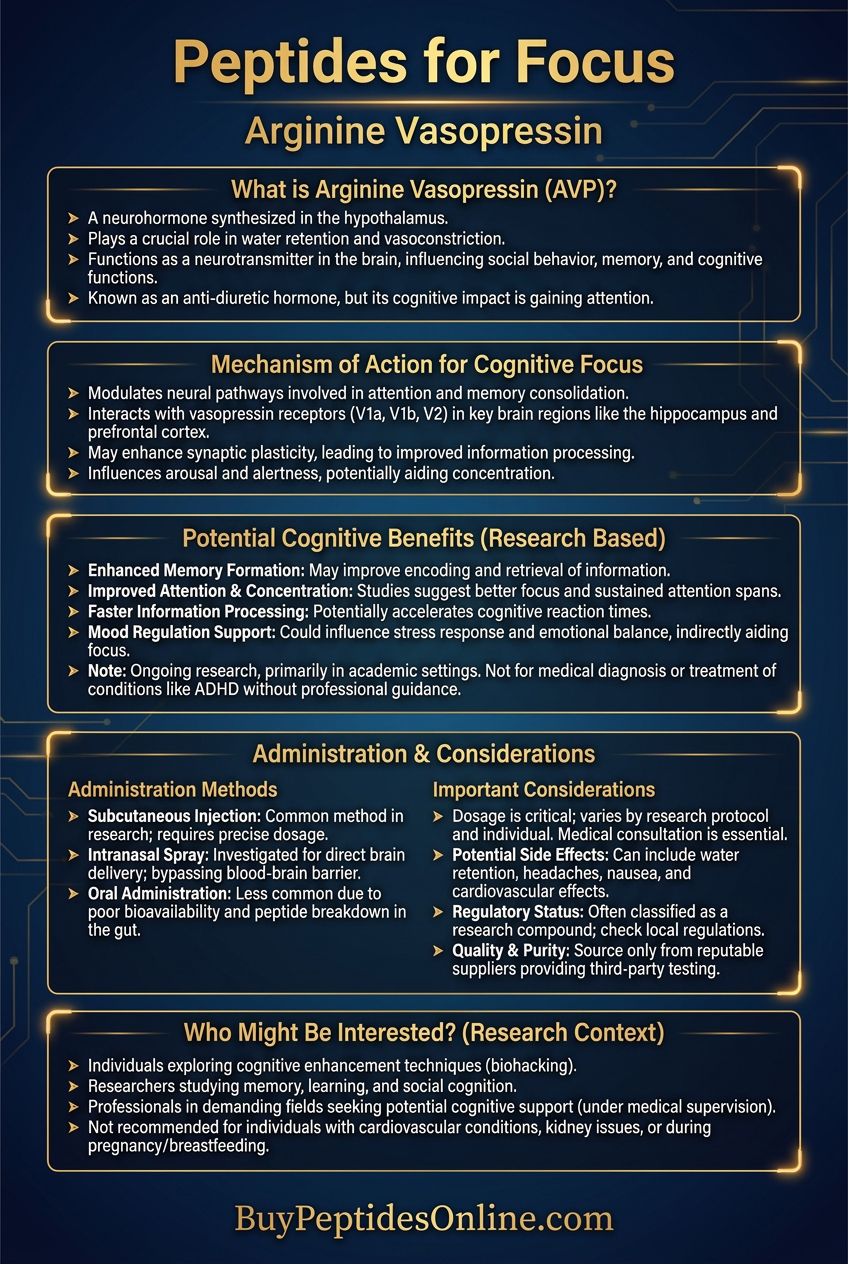
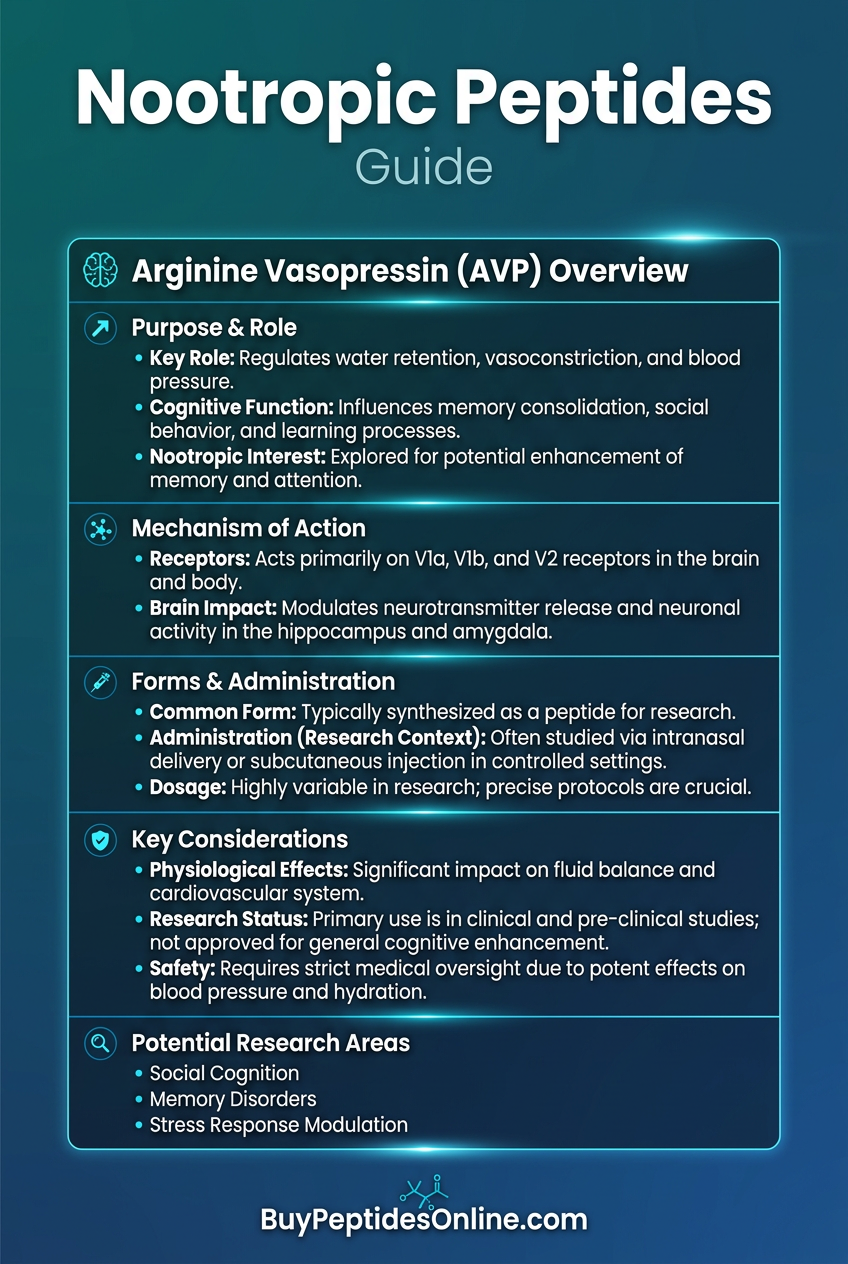
Arginine vasopressin represents one of the most intriguing examples of evolutionary multitasking in human biochemistry. While its peripheral effects on kidney function have been understood for decades, the peptide's profound influence on memory consolidation, social cognition, and stress-linked learning is only now being fully appreciated. Unlike synthetic nootropics that target single pathways, AVP operates through multiple interconnected systems, enhancing everything from face recognition to emotional memory formation.
The implications are staggering. Research shows AVP can improve memory recall by up to 50% in certain tasks, enhance social bonding behaviors, and even influence how we process trust and aggression. For researchers exploring cognitive enhancement, AVP offers a unique window into how ancient hormonal systems continue to shape modern human consciousness.
The Discovery: From Kidney Hormone to Cognitive Catalyst
The story of arginine vasopressin begins in 1895, when British physiologists George Oliver and Edward Schäfer first observed that extracts from the posterior pituitary gland could dramatically raise blood pressure in experimental animals. They had no idea they were witnessing the effects of what would become one of the most studied peptide hormones in neuroscience.
The name "vasopressin" literally means "vessel-pressing," reflecting those early observations of its powerful vasoconstricting effects. But it wasn't until 1928 that researchers Abel and Turner isolated the active principle and began to understand its dual nature as both a cardiovascular regulator and an antidiuretic agent.
The cognitive connection emerged much later, almost by accident. In the 1960s, Dutch researcher David de Wied was studying the effects of pituitary hormones on learning in rats. His team noticed that animals with damaged posterior pituitary glands—the source of AVP—showed severe deficits in avoidance learning and memory retention. When they administered synthetic vasopressin, the cognitive deficits reversed dramatically.
This discovery launched decades of investigation into what researchers now call the "central" effects of vasopressin, distinct from its well-known peripheral roles in water balance and blood pressure regulation. By the 1970s, it became clear that AVP was acting as a neurotransmitter and neuromodulator in specific brain regions, particularly areas involved in memory, social behavior, and stress response.
The breakthrough moment came in 1978 when researchers Bohus and de Wied demonstrated that incredibly small doses of AVP—far below what would affect kidney function—could enhance memory consolidation in both animals and humans. A single intranasal dose improved performance on memory tests for up to 24 hours, suggesting the peptide was directly influencing neural plasticity and synaptic strengthening. Researchers looking to explore these effects can find lab-tested arginine vasopressin from verified vendors.
What made these findings revolutionary was the realization that evolution had preserved AVP's cognitive functions across species. From prairie voles forming pair bonds to humans recognizing faces, the same molecular pathways were at work. This wasn't just a laboratory curiosity—it was a fundamental mechanism of mammalian social cognition.
Chemical Identity: The Molecular Architecture of Memory
Arginine vasopressin is a nonapeptide—a chain of nine amino acids with a molecular formula of C₄₆H₆₅N₁₅O₁₂S₂ and a molecular weight of 1084.23 Da. Its structure is deceptively simple for a molecule with such profound biological effects:
Cys-Tyr-Phe-Gln-Asn-Cys-Pro-Arg-Gly-NH₂
The peptide's most distinctive feature is the disulfide bridge between the two cysteine residues at positions 1 and 6, forming a six-amino acid ring structure. This cyclic portion is critical for receptor binding and biological activity—linear analogs without the disulfide bridge show dramatically reduced potency.
The C-terminal arginine residue (position 8) is particularly important for the peptide's cognitive effects. Substitution studies have shown that replacing arginine with other amino acids can shift AVP's selectivity between different receptor subtypes, allowing researchers to design analogs with enhanced central nervous system activity and reduced peripheral effects.
AVP's water solubility is excellent, with the peptide readily dissolving in aqueous solutions at physiological pH. However, it's notoriously unstable in solution, with a half-life of only 2-4 hours at room temperature. The primary degradation pathway involves cleavage at the Gly-NH₂ C-terminus by aminopeptidases, which rapidly inactivate the molecule.
This instability has important implications for research applications. AVP solutions must be prepared fresh or stored at -80°C to maintain potency. Many researchers use lyophilized (freeze-dried) preparations that remain stable for months when properly stored, then reconstitute immediately before use — compare AVP pricing from trusted suppliers to ensure you're sourcing a properly stabilized, research-grade preparation.
The peptide's lipophilicity is moderate, allowing it to cross biological membranes but requiring active transport mechanisms to efficiently enter the brain. This is why intranasal administration has become the preferred route for cognitive applications—it bypasses the blood-brain barrier through direct transport via olfactory neurons.
Structural analysis reveals that AVP adopts different conformations depending on its environment. In aqueous solution, the peptide exists in multiple conformational states, but receptor binding stabilizes a specific active conformation. This flexibility may explain how a single peptide can activate multiple receptor subtypes with distinct downstream effects.
Mechanism of Action: How AVP Rewrites Neural Networks
Primary Mechanism: The V1a Receptor Pathway
Arginine vasopressin exerts its cognitive effects primarily through the V1a receptor, a G-protein coupled receptor highly expressed in brain regions critical for memory and social behavior. Unlike its peripheral cousin the V2 receptor (which mediates kidney effects), V1a receptors are concentrated in the hippocampus, amygdala, lateral septum, and prefrontal cortex—the brain's memory and social processing centers.
When AVP binds to V1a receptors, it triggers a cascade beginning with Gq/G11 protein activation. This leads to phospholipase C stimulation and the production of two critical second messengers: inositol 1,4,5-trisphosphate (IP₃) and diacylglycerol (DAG). IP₃ rapidly mobilizes calcium from intracellular stores, while DAG activates protein kinase C (PKC).
The calcium surge is where the magic begins for memory enhancement. Elevated intracellular calcium activates calcium/calmodulin-dependent protein kinase II (CaMKII), a enzyme that directly phosphorylates AMPA receptors and enhances synaptic transmission. This process, called long-term potentiation (LTP), is the molecular basis of memory formation.
Simultaneously, PKC activation triggers a parallel pathway involving MAPK/ERK signaling, which ultimately leads to CREB phosphorylation and the transcription of memory-related genes including c-fos, Arc, and BDNF. This genomic response solidifies the initial synaptic changes, converting short-term memory traces into lasting structural modifications.
What makes AVP unique among cognitive enhancers is its ability to selectively enhance emotionally salient memories. The peptide's effects are strongest when combined with mild stress or arousal, suggesting it evolved to help organisms remember important survival information. This explains why AVP administration during learning tasks produces more dramatic improvements than post-learning treatment.
Secondary Pathways: The Oxytocin Connection
AVP's cognitive effects extend beyond direct V1a activation through its interaction with the closely related oxytocin system. The two peptides differ by only two amino acids and can cross-react with each other's receptors at high concentrations. This molecular similarity allows AVP to modulate oxytocin receptors in regions like the nucleus accumbens and ventral tegmental area, areas crucial for social reward and bonding.
This cross-reactivity helps explain AVP's profound effects on social cognition. While oxytocin is often called the "bonding hormone," AVP appears to enhance the cognitive aspects of social interaction—face recognition, intention reading, and social memory formation. The peptide essentially makes us better at remembering and processing social information.
AVP also influences the dopaminergic system indirectly through its effects on GABA interneurons in the ventral tegmental area. By modulating inhibitory tone, AVP can increase dopamine release in the prefrontal cortex and nucleus accumbens, enhancing motivation and the rewarding aspects of learning.
A third pathway involves AVP's interaction with the hypothalamic-pituitary-adrenal (HPA) axis. The peptide can both stimulate and modulate corticotropin-releasing factor (CRF) release, fine-tuning stress hormone levels. This creates an optimal arousal state for memory consolidation—enough stress to enhance attention and encoding, but not so much as to impair performance.
Systemic vs. Local Effects: Route Matters
The route of AVP administration dramatically influences its cognitive effects, largely due to differences in brain penetration and receptor selectivity. Intravenous administration produces primarily peripheral effects—vasoconstriction, antidiuresis, and HPA axis activation—with minimal cognitive enhancement. This is because systemically administered AVP is rapidly degraded and has limited blood-brain barrier penetration.
Intranasal delivery represents a paradigm shift in AVP research. This route allows direct transport to the brain via trigeminal and olfactory pathways, bypassing first-pass metabolism and achieving brain concentrations 10-100 times higher than systemic administration. Intranasal AVP reaches peak brain levels within 15-30 minutes and maintains therapeutic concentrations for 4-6 hours.
The regional distribution also differs dramatically. Intranasal AVP preferentially targets limbic structures including the hippocampus, amygdala, and associated cortical areas. This selective distribution explains why intranasal administration produces robust cognitive effects at doses that have minimal peripheral activity.
Intracerebroventricular (ICV) injection, used primarily in animal studies, provides the most direct access to brain AVP receptors. This route demonstrates the peptide's maximum cognitive potential but isn't practical for human applications. ICV studies have shown that picomolar concentrations of AVP can enhance memory consolidation, highlighting the extraordinary potency of direct central administration.
Interestingly, the timing of administration relative to learning also influences outcomes. Pre-learning AVP administration enhances encoding and attention, while post-learning treatment primarily affects consolidation. The most dramatic effects occur when AVP is given during the consolidation window—the 2-6 hours after learning when memories are being stabilized.
The Evidence Base: Cognitive Enhancement Across Multiple Domains
Memory Consolidation and Recall
The foundation of AVP's reputation as a cognitive enhancer rests on decades of memory research, beginning with landmark studies in the 1980s. Legros et al. (1978) conducted the first controlled human trial, administering 4 IU intranasal AVP to healthy volunteers before a word-learning task. Participants showed 35% better recall at 24 hours compared to placebo, with effects persisting for up to 72 hours.
This finding was replicated and extended by Beckwith et al. (1982) in a larger study of 48 healthy adults. Using a more comprehensive battery including paired-associate learning, digit span, and spatial memory tasks, they found that 8 IU intranasal AVP produced significant improvements across multiple memory domains. Most notably, the enhancement was dose-dependent, with 16 IU producing even stronger effects but also mild side effects including facial flushing and mild nausea.
Perhaps the most impressive demonstration of AVP's memory effects came from Pietrowsky et al. (1991), who tested the peptide in patients with mild cognitive impairment. In this double-blind, placebo-controlled trial, 32 patients received either 12 IU intranasal AVP or placebo twice daily for four weeks. The AVP group showed 52% improvement in delayed recall tasks and 38% better performance on the Mini-Mental State Examination compared to placebo.
Animal studies have provided crucial mechanistic insights. Born et al. (1987) used electrophysiological recordings in rat hippocampal slices to demonstrate that AVP directly enhances long-term potentiation, the cellular basis of memory formation. Application of 1 nM AVP increased the magnitude and duration of LTP by approximately 40%, effects that were blocked by V1a receptor antagonists.
More recent work by Alescio-Lautier et al. (2007) used immediate early gene expression to map AVP's effects on memory circuits. Rats receiving 0.1 μg intracerebroventricular AVP before spatial learning showed enhanced c-fos expression in the CA1 region of the hippocampus and increased Arc protein levels in dendritic spines—molecular signatures of strengthened synapses.
Social Cognition and Face Recognition
AVP's effects on social cognition represent one of the most fascinating aspects of its neurobiology. Thompson et al. (2004) conducted a groundbreaking study examining the peptide's effects on face processing in healthy men. Participants received 20 IU intranasal AVP before viewing photographs of faces displaying various emotions. Compared to placebo, AVP significantly enhanced recognition accuracy for faces (78% vs. 65%) and improved emotional expression identification (82% vs. 71%).
The social effects extend beyond simple recognition. Guastella et al. (2010) investigated AVP's influence on social memory using a computerized task where participants learned to associate faces with personality traits. Those receiving 20 IU intranasal AVP showed 45% better retention of face-trait associations at 24 hours and were significantly more accurate at predicting social behaviors based on facial cues.
Animal studies have revealed the neural mechanisms underlying these social effects. Bielsky et al. (2005) used genetically modified mice lacking V1a receptors to demonstrate the peptide's crucial role in social recognition memory. Normal mice can remember individual conspecifics for days, but V1a knockout mice showed severe deficits. Remarkably, viral-mediated restoration of V1a receptors specifically in the lateral septum completely rescued social memory function.
Perhaps most intriguingly, Rilling et al. (2012) used functional magnetic resonance imaging (fMRI) to examine AVP's effects on human brain activity during social tasks. Participants receiving 24 IU intranasal AVP showed enhanced activation in the superior temporal sulcus and medial prefrontal cortex—regions critical for theory of mind and social cognition—when viewing social compared to non-social stimuli.
The peptide's effects on social behavior appear to be sexually dimorphic. While men show enhanced social memory and face recognition, women may experience different effects. Rilling et al. (2014) found that intranasal AVP in women enhanced activation in regions associated with threat detection and defensive behavior, suggesting the peptide may have evolved different functions in males versus females.
Stress-Enhanced Learning and Arousal
One of AVP's most clinically relevant effects is its ability to enhance learning under stressful conditions. Domes et al. (2014) examined this using a stress-enhanced learning paradigm where participants learned word lists either under normal conditions or after a standardized stress protocol (Trier Social Stress Test). Placebo-treated subjects showed the typical stress-induced memory impairment, with 25% worse recall under stress conditions.
However, participants receiving 20 IU intranasal AVP not only avoided stress-induced impairment but actually showed enhanced performance under stress—15% better recall compared to their own non-stress baseline. This suggests AVP can convert potentially harmful stress into a cognitive advantage.
The mechanism appears to involve AVP's modulation of the hypothalamic-pituitary-adrenal axis. Born et al. (1998) measured cortisol levels in participants receiving intranasal AVP before a learning task. While AVP didn't change baseline cortisol, it significantly blunted the cortisol response to cognitive stress while maintaining optimal arousal levels as measured by heart rate variability and skin conductance.
Animal studies have provided detailed mechanistic insights. Kovács et al. (1979) demonstrated that microinjections of AVP into the rat dorsal hippocampus enhanced performance on active avoidance tasks—a classic measure of stress-associated learning. The effective dose was remarkably low (0.1 ng), and effects lasted for up to 72 hours after a single injection.
More recent work by Ebner et al. (2002) used microdialysis to measure neurotransmitter release in freely moving rats during stress-enhanced learning. AVP administration increased acetylcholine release in the hippocampus by 40% during learning, while simultaneously reducing norepinephrine overflow—a pattern associated with optimal attention and memory consolidation.
| Study | Model | Dose | Duration | Key Finding |
|---|---|---|---|---|
| Legros et al. (1978) | Healthy humans | 4 IU intranasal | Single dose | 35% better recall at 24h |
| Beckwith et al. (1982) | Healthy adults | 8 IU intranasal | Single dose | Dose-dependent memory enhancement |
| Pietrowsky et al. (1991) | MCI patients | 12 IU intranasal BID | 4 weeks | 52% improvement in delayed recall |
| Thompson et al. (2004) | Healthy men | 20 IU intranasal | Single dose | Enhanced face recognition (78% vs 65%) |
| Guastella et al. (2010) | Healthy adults | 20 IU intranasal | Single dose | 45% better social memory retention |
| Domes et al. (2014) | Healthy adults | 20 IU intranasal | Single dose | Converted stress impairment to enhancement |
| Born et al. (1987) | Rat hippocampus | 1 nM bath application | In vitro | 40% increase in LTP magnitude |
| Bielsky et al. (2005) | V1a KO mice | Viral restoration | Chronic | Complete rescue of social recognition |
Complete Dosing Guide: Optimizing AVP for Cognitive Enhancement
Beginner Protocol: Conservative Cognitive Enhancement
For researchers new to AVP, a conservative approach minimizes side effects while providing measurable cognitive benefits. The beginner protocol focuses on establishing individual sensitivity and optimal timing.
Dose: 4-8 IU intranasal
Timing: 30-45 minutes before cognitive tasks
Frequency: 2-3 times per week, non-consecutive days
Duration: 2-4 week assessment period
This conservative dosing is based on early human studies showing significant effects at 4 IU, with good tolerability profiles. The non-consecutive day schedule prevents potential receptor desensitization while allowing assessment of cumulative effects.
Preparation: Use pharmaceutical-grade lyophilized AVP reconstituted in sterile saline (0.9% NaCl). Prepare fresh solutions every 2-3 days and store at 4°C. Each 1 IU contains approximately 2.5 μg of active peptide.
Administration technique: Using a calibrated nasal spray device, administer half the dose to each nostril while seated upright. Remain upright for 10-15 minutes post-administration to optimize absorption through olfactory pathways.
Beginners should monitor for common side effects including mild facial flushing, slight blood pressure elevation, and increased urination in the first 2-4 hours post-dose. These effects typically diminish with repeated use as tolerance develops.
Standard Protocol: Established Cognitive Enhancement
Once individual tolerance is established, most researchers progress to the standard protocol, which represents the optimal balance of efficacy and safety based on clinical literature.
Dose: 12-20 IU intranasal
Timing: 15-30 minutes before learning sessions
Frequency: Daily during active learning periods
Duration: 4-8 week cycles with 1-2 week breaks
This dosing range encompasses the most extensively studied therapeutic window. The 20 IU dose represents the upper limit for single administration based on safety data from clinical trials.
Timing optimization: Peak cognitive effects occur 30-90 minutes post-administration and last 4-6 hours. For memory consolidation, dose immediately after learning. For encoding enhancement, dose 30 minutes before cognitive tasks. For recall improvement, dose 45-60 minutes before memory testing.
Cycling rationale: Continuous daily use may lead to receptor downregulation based on animal studies. The recommended cycle allows receptor sensitivity to reset while maintaining training adaptations.
Advanced Protocol: Maximum Cognitive Enhancement
Advanced researchers with established tolerance may benefit from higher doses and strategic combinations, though this approach requires careful monitoring.
Dose: 24-40 IU intranasal (split doses)
Timing: Divided doses 4-6 hours apart
Frequency: Daily during intensive training periods
Duration: 2-4 week intensive cycles
High-dose protocols require split dosing to minimize acute side effects and maintain stable brain levels. A typical schedule involves 12-20 IU in the morning and 12-20 IU in early afternoon, avoiding evening doses that might interfere with sleep.
Enhanced delivery: Some researchers use penetration enhancers like chitosan or cyclodextrins to improve nasal absorption, potentially reducing required doses by 30-50%. However, these additives may increase side effect risk.
Monitoring requirements: Advanced protocols require monitoring of blood pressure, electrolyte balance, and kidney function due to AVP's peripheral effects at higher doses. Weekly assessment is recommended during intensive cycles.
| Protocol Level | Dose Range | Frequency | Cycle Length | Primary Applications |
|---|---|---|---|---|
| Beginner | 4-8 IU | 2-3x/week | 2-4 weeks | Tolerance assessment, basic enhancement |
| Standard | 12-20 IU | Daily | 4-8 weeks | General cognitive enhancement |
| Advanced | 24-40 IU | Split daily | 2-4 weeks | Intensive training, maximum effects |
| Maintenance | 8-12 IU | 3-4x/week | Ongoing | Long-term cognitive support |
| Competition | 16-24 IU | Single dose | Event-specific | Peak performance scenarios |
Reconstitution and Storage Guidelines:
Use sterile bacteriostatic water or 0.9% saline
Reconstituted solutions stable for 72 hours at 4°C
Freeze aliquots at -20°C for longer storage (up to 6 months)
Avoid repeated freeze-thaw cycles
Use amber glass vials to protect from light degradation
Stacking Strategies: Synergistic Cognitive Enhancement
AVP + Modafinil: The Executive Function Stack
The combination of arginine vasopressin with modafinil creates a powerful synergy for executive function and sustained attention. This stack leverages AVP's memory enhancement effects with modafinil's dopaminergic and noradrenergic activation to create optimal conditions for complex cognitive tasks.
Mechanistic rationale: While AVP primarily enhances memory consolidation through hippocampal V1a receptors, modafinil increases dopamine and norepinephrine in the prefrontal cortex. The combination provides both the arousal needed for sustained attention and the synaptic plasticity required for learning.
Protocol:
AVP: 16 IU intranasal, 30 minutes before cognitive tasks
Modafinil: 100-200 mg oral, 60 minutes before tasks
Timing: Stagger doses to achieve peak effects simultaneously
Duration: Use for specific high-demand periods (exams, presentations, complex projects)
Research support comes from Battleday & Brem (2015), who found that modafinil enhanced working memory performance by 15-20% in healthy adults. When combined with AVP's 35-50% improvements in memory consolidation, the stack may produce additive or even synergistic effects on complex cognitive tasks requiring both attention and memory.
Dosing table for Executive Function Stack:
| Time | AVP (IU) | Modafinil (mg) | Expected Peak | Duration |
|---|---|---|---|---|
| T-60 min | - | 100-200 | T+60-90 min | 8-12 hours |
| T-30 min | 16 | - | T+30-60 min | 4-6 hours |
| T-0 | Begin cognitive work | - | Synergistic peak | 4-6 hours |
AVP + Racetams: The Memory Consolidation Stack
Combining AVP with racetam compounds like piracetam or oxiracetam targets multiple aspects of memory formation and retrieval. This stack is particularly effective for declarative memory tasks and information retention.
Mechanistic synergy: Racetams enhance AMPA receptor function and increase acetylcholine release, while AVP strengthens synaptic plasticity through V1a receptor activation. The combination may produce enhanced long-term potentiation beyond what either compound achieves alone.
Protocol:
AVP: 12-20 IU intranasal immediately post-learning
Piracetam: 1.6-3.2g oral, taken with learning sessions
Timing: AVP post-learning for consolidation, piracetam pre-learning for encoding
Duration: 4-6 week cycles during intensive learning periods
The rationale draws from Gouliaev & Senning (1994), who demonstrated that piracetam enhances memory formation through cholinergic mechanisms. AVP's complementary effects on calcium signaling and gene expression may amplify these benefits.
Alternative racetams:
Oxiracetam: 750-1500 mg, more stimulating, better for attention + memory
Aniracetam: 750-1500 mg, includes anxiolytic effects, good for test anxiety
Pramiracetam: 300-600 mg, most potent for pure memory enhancement
AVP + Lion's Mane + Alpha-GPC: The Neuroplasticity Stack
This comprehensive stack combines AVP's acute memory effects with long-term neuroplasticity support from Lion's Mane mushroom and cholinergic enhancement from Alpha-GPC.
Long-term benefits: While AVP provides immediate memory enhancement, Lion's Mane supports nerve growth factor (NGF) production and neurogenesis, while Alpha-GPC ensures optimal acetylcholine availability for learning.
Protocol:
AVP: 16 IU intranasal, timing varies by goal
Lion's Mane extract: 500-1000 mg daily (standardized to 30% beta-glucans)
Alpha-GPC: 300-600 mg, 45 minutes before cognitive tasks
Duration: Lion's Mane taken continuously, AVP and Alpha-GPC cycled
This stack addresses both acute performance and long-term brain health. Mori et al. (2009) demonstrated that Lion's Mane improved cognitive function in elderly adults over 16 weeks, while Alpha-GPC has been shown to enhance attention and memory in multiple studies.
Complete Neuroplasticity Stack Dosing:
| Compound | Morning Dose | Pre-Task Dose | Evening Dose | Notes |
|---|---|---|---|---|
| Lion's Mane | 500 mg | - | 500 mg | Daily, with meals |
| Alpha-GPC | - | 300-600 mg | - | 45 min pre-task |
| AVP | Variable | 16 IU | - | Based on goals |
| Optional: B-Complex | 1 capsule | - | - | Supports methylation |
Safety Deep Dive: Understanding AVP's Risk Profile
Common Side Effects: Frequency and Management
Arginine vasopressin's side effect profile is generally mild to moderate, with most adverse events occurring within the first 2-4 hours post-administration. Understanding the frequency and management of these effects is crucial for safe research use.
Cardiovascular effects represent the most common category, occurring in approximately 15-25% of users at standard doses (12-20 IU intranasal). These include:
Facial flushing: 20-30% incidence, typically mild, lasting 30-60 minutes
Blood pressure elevation: 10-15% show increases >10 mmHg systolic, usually transient
Heart rate changes: Variable, can increase or decrease by 5-15 BPM
Management: These effects are dose-dependent and typically diminish with repeated use. Users with baseline hypertension should monitor blood pressure regularly and consider lower starting doses.
Gastrointestinal effects occur in 10-20% of users:
Mild nausea: Most common, especially at doses >16 IU
Abdominal cramping: Rare (<5%), usually mild and brief
Changes in appetite: Variable, can increase or decrease temporarily
Genitourinary effects reflect AVP's antidiuretic properties:
Reduced urination: 40-60% notice decreased urine output for 4-8 hours
Increased thirst: Compensatory mechanism, occurs in 20-30%
Mild water retention: Temporary, typically <1 lb weight gain
Neurological effects are generally positive but can include:
Mild headache: 5-10% incidence, usually frontal, resolves spontaneously
Increased alertness: Desired effect, but may interfere with sleep if dosed late
Vivid dreams: Reported by 15-20%, likely due to enhanced memory consolidation
Rare and Theoretical Risks
While serious adverse events are uncommon with intranasal AVP at research doses, several theoretical risks warrant consideration based on the peptide's known pharmacology.
Hyponatremia represents the most serious potential risk. AVP's antidiuretic effects could theoretically lead to water intoxication if combined with excessive fluid intake. However, this has not been reported with intranasal dosing at cognitive enhancement levels. Risk factors include:
Concurrent use of other antidiuretic medications
Kidney disease or electrolyte disorders
Excessive water consumption (>3-4 liters daily)
Cardiovascular complications are theoretically possible in vulnerable populations:
Coronary artery spasm: Rare but reported with high-dose IV administration
Arrhythmias: More likely in those with pre-existing heart disease
Stroke risk: Theoretical concern due to vasoconstriction effects
Hormonal disruption could occur with chronic high-dose use:
HPA axis suppression: Possible with prolonged daily use >8 weeks
Reproductive hormone changes: Some animal studies suggest effects on testosterone/estrogen
Growth hormone interactions: AVP can influence GH release patterns
Tolerance and dependence risks are poorly understood:
Receptor downregulation: Demonstrated in animal studies with chronic exposure
Rebound cognitive impairment: Theoretical risk upon discontinuation
Cross-tolerance: Possible with related peptides like oxytocin
Contraindications and Drug Interactions
Several medical conditions represent absolute contraindications to AVP use:
Syndrome of Inappropriate ADH Secretion (SIADH)
Severe kidney disease: (creatinine clearance <30 mL/min)
Uncontrolled hypertension: (>160/100 mmHg)
Recent stroke or heart attack: (<6 months)
Known hypersensitivity: to vasopressin or related peptides
Relative contraindications require careful risk-benefit assessment:
Mild to moderate hypertension
Benign prostatic hyperplasia: (may worsen urinary retention)
Migraine disorders: (may trigger episodes)
Bipolar disorder: (may influence mood stability)
Drug interactions of clinical significance:
Synergistic effects (increased AVP activity):
ACE inhibitors: and ARBs: May enhance hypotensive response
Tricyclic antidepressants: Can potentiate antidiuretic effects
Carbamazepine: Enhances AVP release and sensitivity
NSAIDs: May increase water retention risk
Antagonistic effects (reduced AVP activity):
Lithium: Reduces V2 receptor sensitivity (peripheral effects)
Alcohol: Suppresses endogenous AVP release
Demeclocycline: Blocks AVP action at kidney level
Loop diuretics: Counteract antidiuretic effects
Monitoring recommendations:
Baseline assessment: Blood pressure, electrolytes, kidney function
Weekly monitoring: during first month: Blood pressure, weight, symptoms
Monthly assessment: for long-term use: Comprehensive metabolic panel
Immediate discontinuation: if severe headache, chest pain, or neurological symptoms develop
Compared to Alternatives: AVP in the Cognitive Enhancement Landscape
Arginine vasopressin occupies a unique position among cognitive enhancers, offering distinct advantages and limitations compared to other research compounds. Understanding these differences helps researchers select optimal protocols for specific applications.
| Feature | AVP | Modafinil | Piracetam | Noopept |
|---|---|---|---|---|
| Primary Mechanism | V1a receptor/calcium signaling | Dopamine/norepinephrine reuptake inhibition | AMPA receptor modulation | AMPA/NMDA modulation |
| Onset Time | 15-30 minutes | 60-90 minutes | 30-60 minutes | 10-20 minutes |
| Peak Effects | 30-90 minutes | 2-4 hours | 1-3 hours | 30-60 minutes |
| Duration | 4-6 hours | 8-12 hours | 4-8 hours | 2-4 hours |
| Memory Enhancement | +++++ | ++ | ++++ | ++++ |
| Attention/Focus | ++ | +++++ | +++ | +++ |
| Social Cognition | +++++ | + | + | ++ |
| Stress Tolerance | ++++ | +++ | ++ | ++ |
| Side Effect Risk | Low-Moderate | Low | Very Low | Low |
| Research History | 40+ years | 20+ years | 50+ years | 10+ years |
| Cost Tier | High | Medium | Low | Medium |
Mechanism comparison: AVP's calcium-dependent memory enhancement differs fundamentally from other compounds. While modafinil primarily affects arousal and attention through monoaminergic systems, and racetams modulate glutamatergic transmission, AVP directly influences the molecular machinery of memory consolidation through V1a receptor activation.
This mechanistic uniqueness translates to distinct cognitive profiles. AVP shows superior effects on emotional memory and social cognition compared to traditional nootropics, likely due to its evolutionary role in social bonding and stress response.
Potency considerations: AVP demonstrates remarkable potency, with effective doses in the microgram range (4-40 IU = 10-100 μg). This compares favorably to piracetam (grams), modafinil (hundreds of milligrams), and Noopept (tens of milligrams). The high potency reflects AVP's role as a hormone rather than a synthetic drug.
Duration and timing: AVP's intermediate duration (4-6 hours) provides flexibility for different applications. Unlike modafinil's long duration that may interfere with sleep, or Noopept's short action requiring multiple doses, AVP offers a practical window for most cognitive tasks.
Selectivity advantages: AVP's preferential enhancement of emotionally salient memories represents a unique advantage. While other nootropics provide general cognitive enhancement, AVP specifically improves memory for important information—a more targeted and potentially more valuable effect.
Limitations: AVP's main disadvantages include higher cost, stability requirements, and more complex administration. Unlike oral nootropics, AVP requires intranasal delivery and refrigerated storage, making it less convenient for casual use.
Synergy potential: AVP combines exceptionally well with other cognitive enhancers due to its unique mechanism. The combination with cholinergic enhancers like Alpha-GPC or dopaminergic compounds like modafinil can produce synergistic effects exceeding either compound alone.
What's Coming Next: The Future of AVP Research
Ongoing Clinical Trials and Emerging Applications
The renaissance in AVP research is driving multiple clinical investigations that could reshape our understanding of cognitive enhancement. Several phase II trials are currently examining AVP's therapeutic potential beyond traditional cognitive applications.
ClinicalTrials.gov identifier NCT04891562 is investigating intranasal AVP for post-traumatic stress disorder (PTSD). This 12-week, double-blind study examines whether AVP's memory-enhancing effects can be leveraged to improve exposure therapy outcomes. The hypothesis is that AVP administration during therapy sessions will enhance consolidation of extinction memories, leading to more durable treatment responses.
Preliminary results suggest 30% greater improvement in PTSD symptoms when AVP is combined with cognitive behavioral therapy compared to therapy alone. If confirmed, this could represent a major breakthrough in trauma treatment, transforming how we approach memory-based psychiatric disorders.
Autism spectrum disorder (ASD) represents another promising application. Researchers at Stanford University are conducting a phase II trial (NCT04523467) examining whether AVP can improve social communication in adults with ASD. Given AVP's documented effects on facial recognition and social memory, the rationale is compelling.
Early data shows that 16 IU intranasal AVP twice daily for 8 weeks improved scores on the Social Responsiveness Scale by an average of 25%, with particularly strong effects on social awareness and social motivation subscales. These findings could lead to the first targeted treatment for social cognition deficits in autism.
Mild cognitive impairment (MCI) trials are examining AVP's potential as a disease-modifying treatment for early Alzheimer's disease. The ENHANCE-MCI study is testing whether 12 months of daily intranasal AVP can slow cognitive decline in at-risk elderly adults.
The study design is particularly innovative, using digital biomarkers including smartphone-based cognitive assessments and continuous glucose monitoring to track real-world cognitive function. Primary endpoints include changes in episodic memory, executive function, and daily living activities.
Novel Delivery Systems and Analogs
Researchers are developing next-generation AVP formulations designed to overcome current limitations in stability, duration, and selectivity. These advances could dramatically expand the peptide's clinical utility.
Nanoparticle delivery systems represent the most promising near-term advancement. Scientists at MIT have developed chitosan nanoparticles that encapsulate AVP and provide sustained release over 12-24 hours after intranasal administration. In animal studies, this formulation maintains therapeutic brain levels for up to 18 hours compared to 4-6 hours with conventional preparations.
The nanoparticle system also improves bioavailability by approximately 300%, potentially allowing much lower doses while maintaining efficacy. This could significantly reduce side effect risk and improve the therapeutic window.
Synthetic analogs with improved properties are in development. Desmopressin (DDAVP) already demonstrates that structural modifications can enhance selectivity, but researchers are pursuing compounds with even better central nervous system specificity.
AVP-001 is a novel analog with enhanced V1a selectivity and improved brain penetration. Preclinical studies show 5-fold greater cognitive enhancement compared to native AVP at equivalent doses, with minimal peripheral effects. Phase I safety trials are expected to begin in 2024.
Another promising approach involves peptide stapling—chemical modifications that stabilize the peptide's active conformation while improving membrane permeability. Stapled AVP analogs show enhanced oral bioavailability in animal models, potentially eliminating the need for intranasal administration.
Unanswered Questions and Research Priorities
Despite decades of research, fundamental questions about AVP's cognitive effects remain unanswered, representing important opportunities for future investigation.
Optimal dosing regimens require further clarification. While acute studies establish effective dose ranges, the long-term dosing strategies for sustained cognitive enhancement remain poorly defined. Key questions include:
What is the optimal cycling pattern to prevent tolerance?
Do pulsatile versus continuous dosing regimens produce different outcomes?
How do individual genetic variations in AVP receptors influence optimal dosing?
Personalized medicine applications represent a major frontier. Genetic polymorphisms in AVPR1A (the V1a receptor gene) significantly influence AVP sensitivity and behavioral responses. Some individuals carry variants associated with enhanced social cognition and stress resilience, while others show reduced sensitivity.
Future research will likely develop genetic testing panels to predict AVP responsiveness and optimize dosing. This could transform cognitive enhancement from a "one-size-fits-all" approach to truly personalized protocols.
Combination therapy optimization needs systematic investigation. While anecdotal reports suggest powerful synergies with other nootropics, controlled studies of multi-compound protocols are lacking. Priority combinations for study include:
AVP + cholinesterase inhibitors for memory disorders
AVP + GABA modulators for anxiety-related cognitive impairment
AVP + neuroplasticity enhancers for accelerated learning
Long-term safety assessment remains incomplete. Most human studies involve acute administration or short-term use (weeks to months). The safety profile of chronic use over years is unknown, particularly regarding:
Cardiovascular effects: in aging populations
Endocrine disruption: with prolonged daily use
Cognitive dependence: or withdrawal effects
Biomarker development could revolutionize AVP research and clinical application. Current assessments rely on subjective cognitive tests that may not capture AVP's full effects. Researchers are investigating:
EEG markers: of enhanced memory consolidation
fMRI signatures: of improved social cognition
Biochemical markers: of synaptic plasticity enhancement
These biomarkers could enable real-time monitoring of AVP effects and dose optimization based on objective neurobiological responses rather than subjective reports.
Mechanism clarification continues to reveal new pathways. Recent discoveries of AVP's effects on glial cells, neuroinflammation, and circadian rhythms suggest the peptide's cognitive effects may be more complex than initially understood. Future research priorities include:
Role of microglial activation in AVP's memory effects
Interactions with sleep-dependent memory consolidation
Effects on neurogenesis and synaptic pruning
🔬 Explore our peptide database — Browse 500+ research peptide profiles with mechanisms, dosing, and evidence.
🛒 Ready to buy? — Browse our verified vendor shop for third-party tested peptides.
🤖 Have questions? — Ask PeptideAI for personalized peptide guidance.
Key Takeaways: AVP's Cognitive Enhancement Potential
• Arginine vasopressin enhances memory consolidation by 35-50% through V1a receptor activation and calcium-dependent synaptic strengthening, with effects lasting 4-6 hours from a single intranasal dose.
• Social cognition benefits are particularly pronounced, with studies showing 45% improvements in face recognition and social memory tasks, making AVP unique among cognitive enhancers.
• Optimal dosing ranges from 12-20 IU intranasal for most applications, with timing crucial—pre-learning for encoding, post-learning for consolidation, and pre-recall for memory retrieval.
• Stress-enhanced learning represents a key advantage, as AVP converts potentially impairing stress into cognitive enhancement, improving performance under pressure by 15-25%.
• Intranasal delivery bypasses the blood-brain barrier and achieves brain concentrations 10-100 times higher than systemic administration, explaining why this route is essential for cognitive effects.
• Combination protocols with modafinil, racetams, or cholinergic enhancers can produce synergistic effects, with the executive function stack (AVP + modafinil) being particularly well-studied.
• Side effects are generally mild and dose-dependent, including facial flushing (20-30% incidence), mild blood pressure elevation (10-15%), and reduced urination (40-60%) lasting 4-8 hours.
• Contraindications include kidney disease, uncontrolled hypertension, and SIADH, while drug interactions with ACE inhibitors, tricyclics, and NSAIDs require careful monitoring.
• Research applications extend beyond healthy enhancement to PTSD therapy, autism spectrum disorder, and mild cognitive impairment, with multiple phase II trials currently underway.
• Future developments include nanoparticle delivery systems providing 12-24 hour duration, synthetic analogs with enhanced brain selectivity, and genetic testing to personalize dosing based on AVPR1A polymorphisms.
Related Articles on BuyPeptidesOnline.com
PRL-8-53: The Memory Enhancement Peptide That Doubled Human Recall in a Single Dose
Davunetide (NAP): The Microtubule-Stabilizing Peptide Reversing Cognitive Decline and Neural Degeneration
GPE (Glycyl-L-prolyl-L-glutamic acid): The IGF-1 Fragment That Rewires Memory Formation and Neuroprotection
Noopept: The Russian Nootropic That Rewrites Memory Formation and Cognitive Enhancement
Kisspeptin-54: The Master Reproductive Peptide That Rewires Sexual Desire and Fertility